After our extremely long travel day, we arrived at our final destination in Costa Rica — Manuel Antonio National Park. We’re here for five days, and are moving at a pretty relaxed pace — especially given the heat and humidity. (I’ve been moving at a particularly slow pace, as I found myself sidelined for a couple of days with nausea and stomach ailments. But yesterday I pulled out the 80-pound medical kit that I’ve been hauling all over the continent, and decided to hit it from all angles — immodium, rehydration salts, antibiotics. I’m not sure what worked, but I’m much better now.)
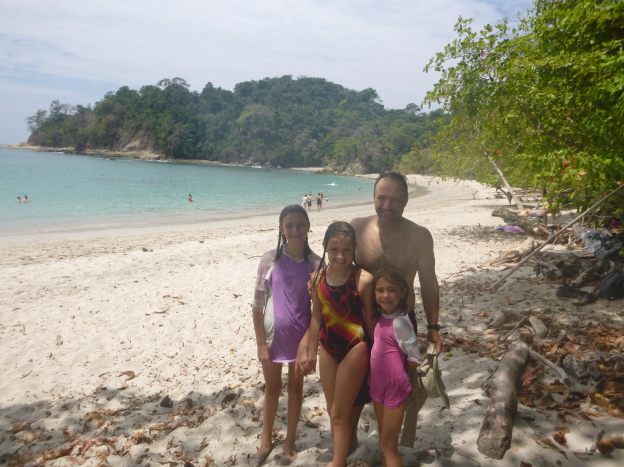
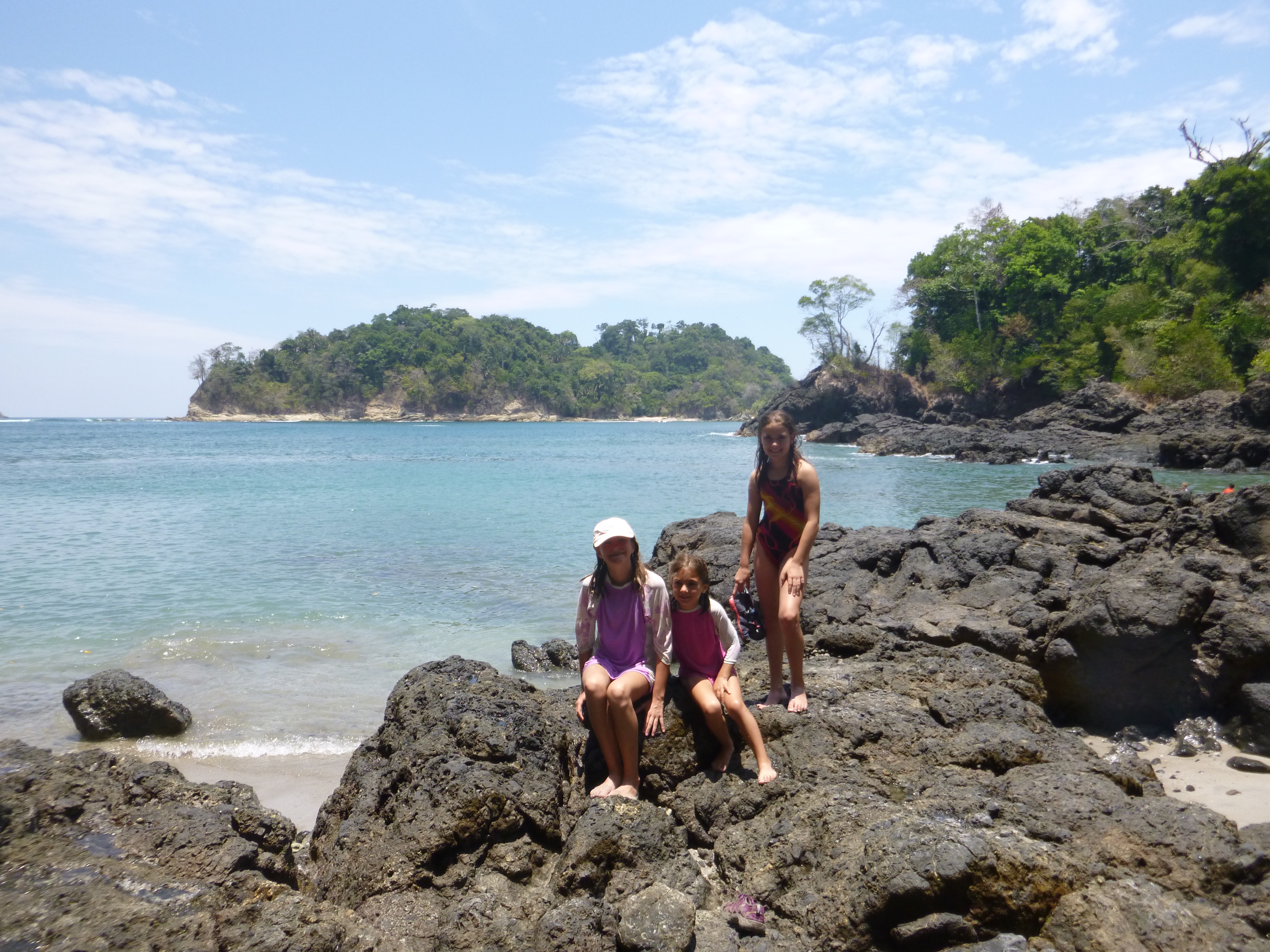
Today we headed for the park itself, which consists of a string of beaches with reefs offshore, bordered by jungle that rises sharply into high hills. Even the bus ride was beautiful, with the blue-green Pacific stretching out far below us. And the park certainly did not disappoint.
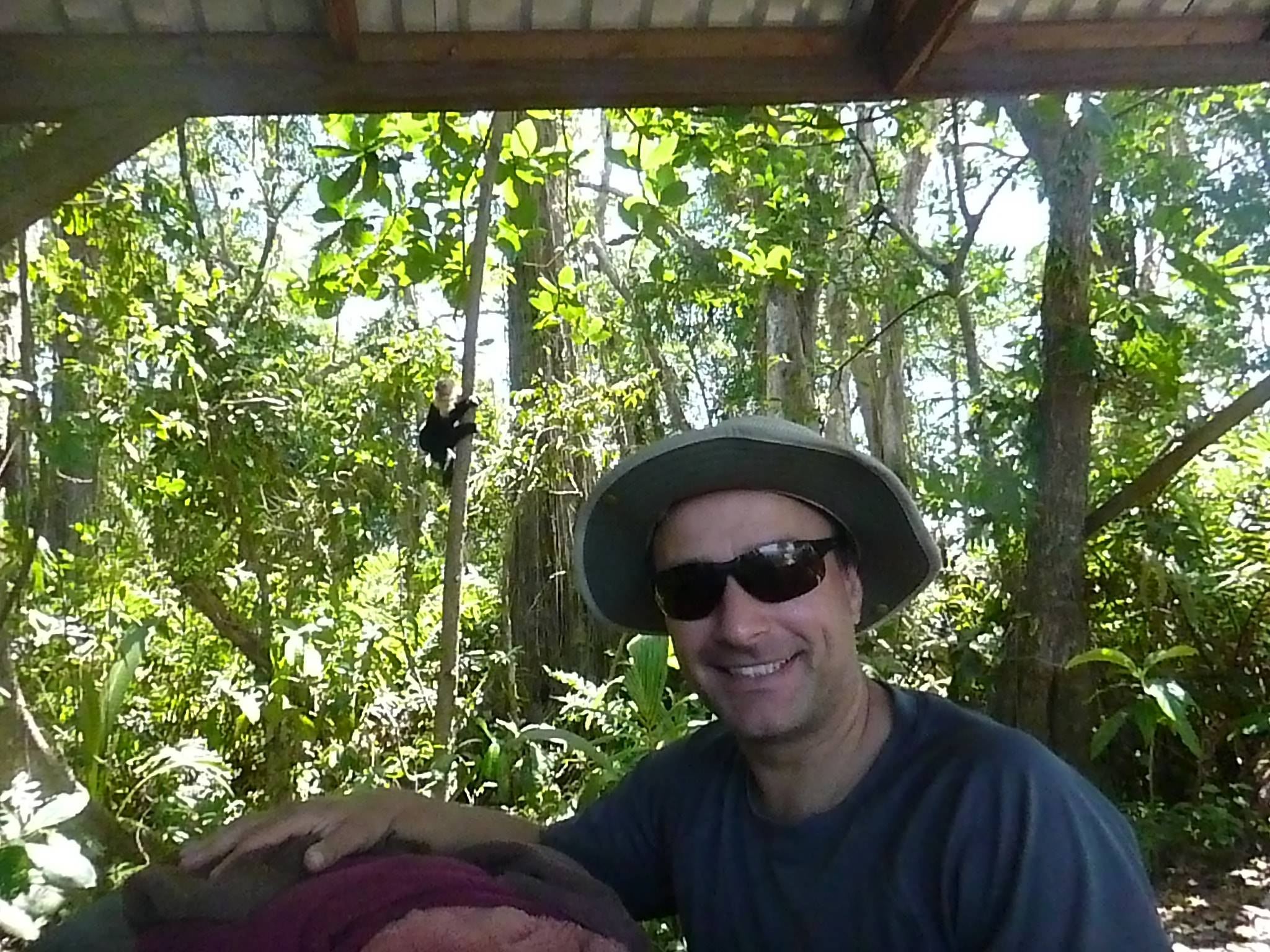
Bob and I pretty quickly determined that if someone wanted to go just one place in Costa Rica, this would be a pretty solid choice. The beaches were amazingly beautiful. There were miles of trails through the jungles. And the animals — well, it was hard to believe. In most place you have to really cross your fingers that (a) the animals will be around, and (b) you will be able to find them (which generally requires a guide). But here, it was like the animals were all auditioning for the next National Geographic
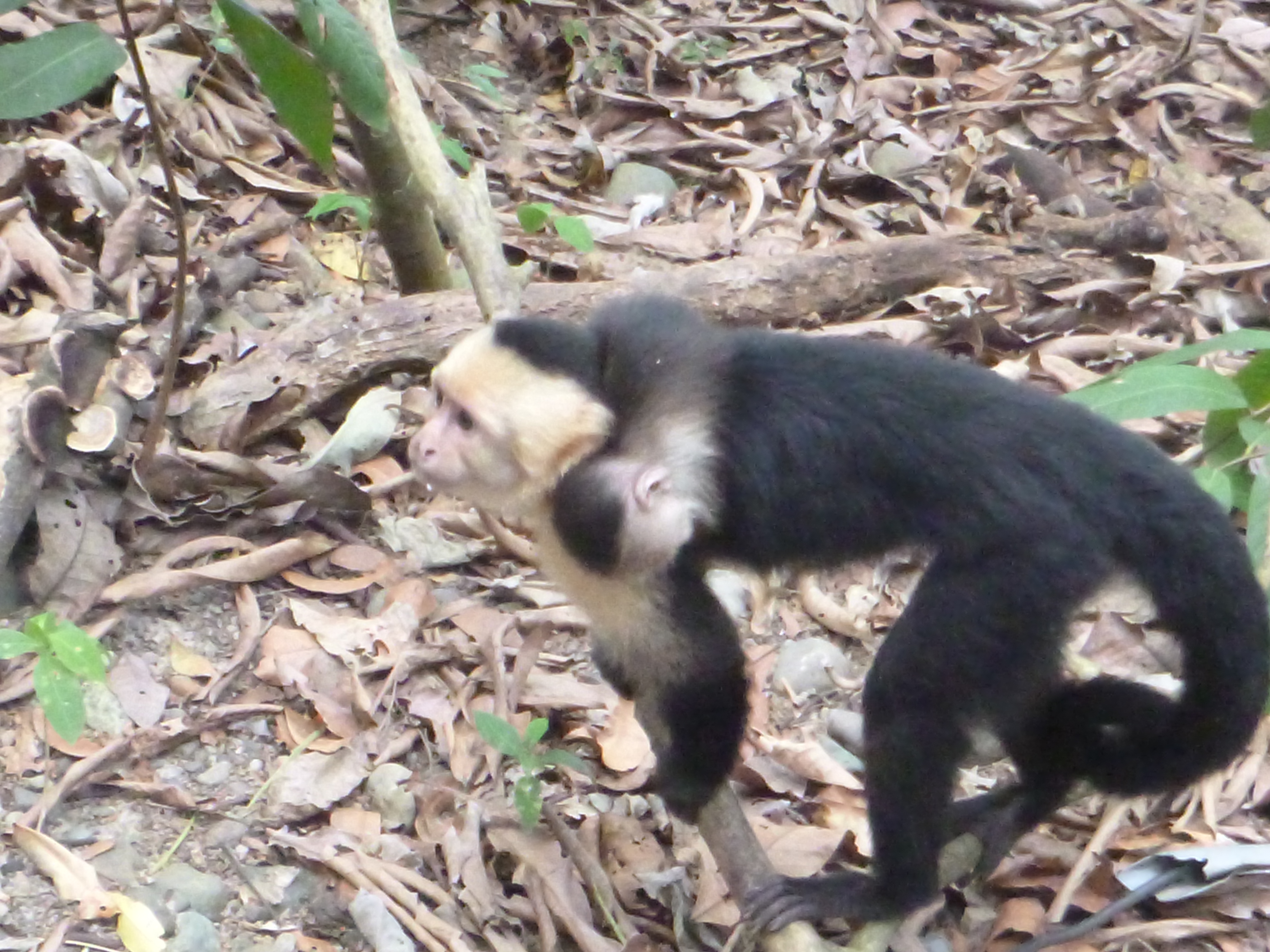
Mama capuchin with very new baby
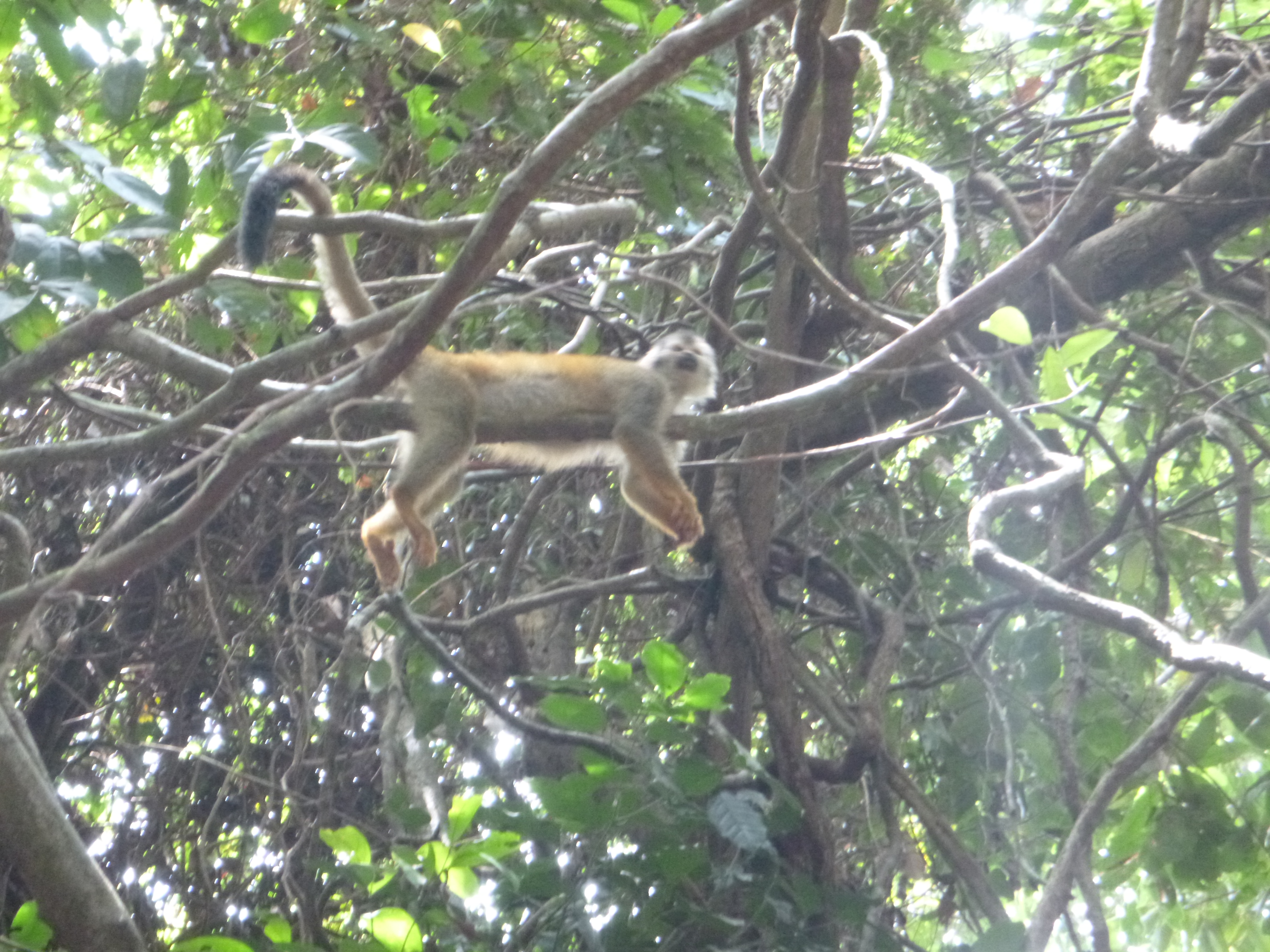
centerfold. Monkeys, sloths, deer, raccoons were all practically throwing themselves in our path. Monkeys, in particular, were everywhere, including a troop of the supposedly rare, elusive, and endangered squirrel monkey, which are endemic to this park. Many of the monkeys were carrying adorable little babies on their backs.
You could hike up through the rain forest to a high lookout point with an amazing Pacific view, commune with the monkeys for a while, then loop back down and cool off with a dip in that same Pacific. What could be better?
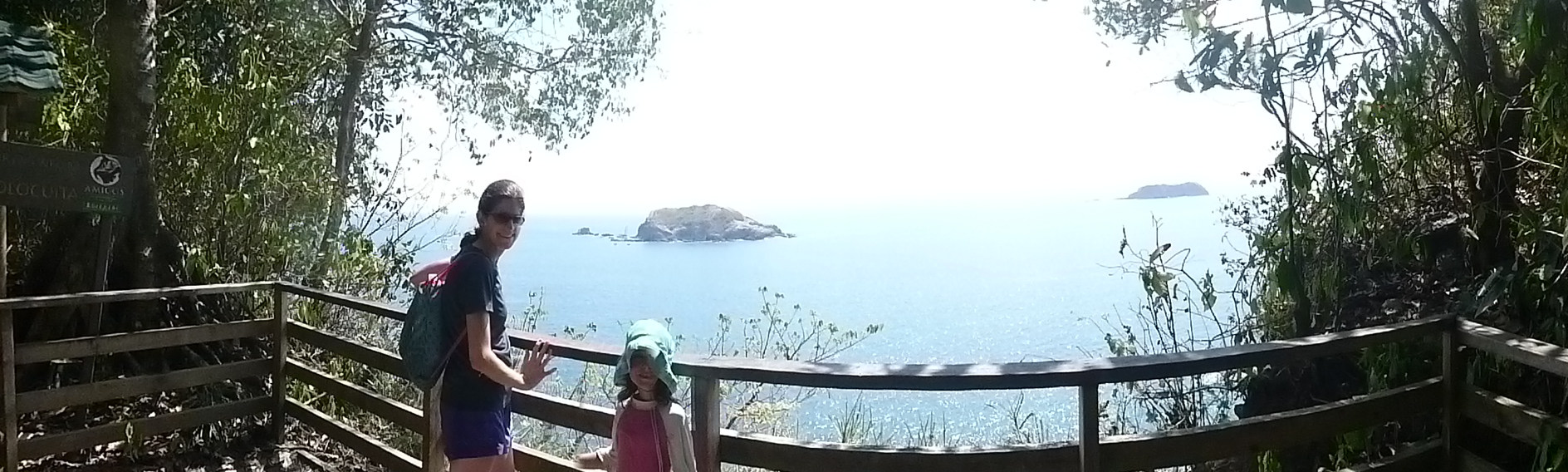
Panoramic shot at Cathedral Point
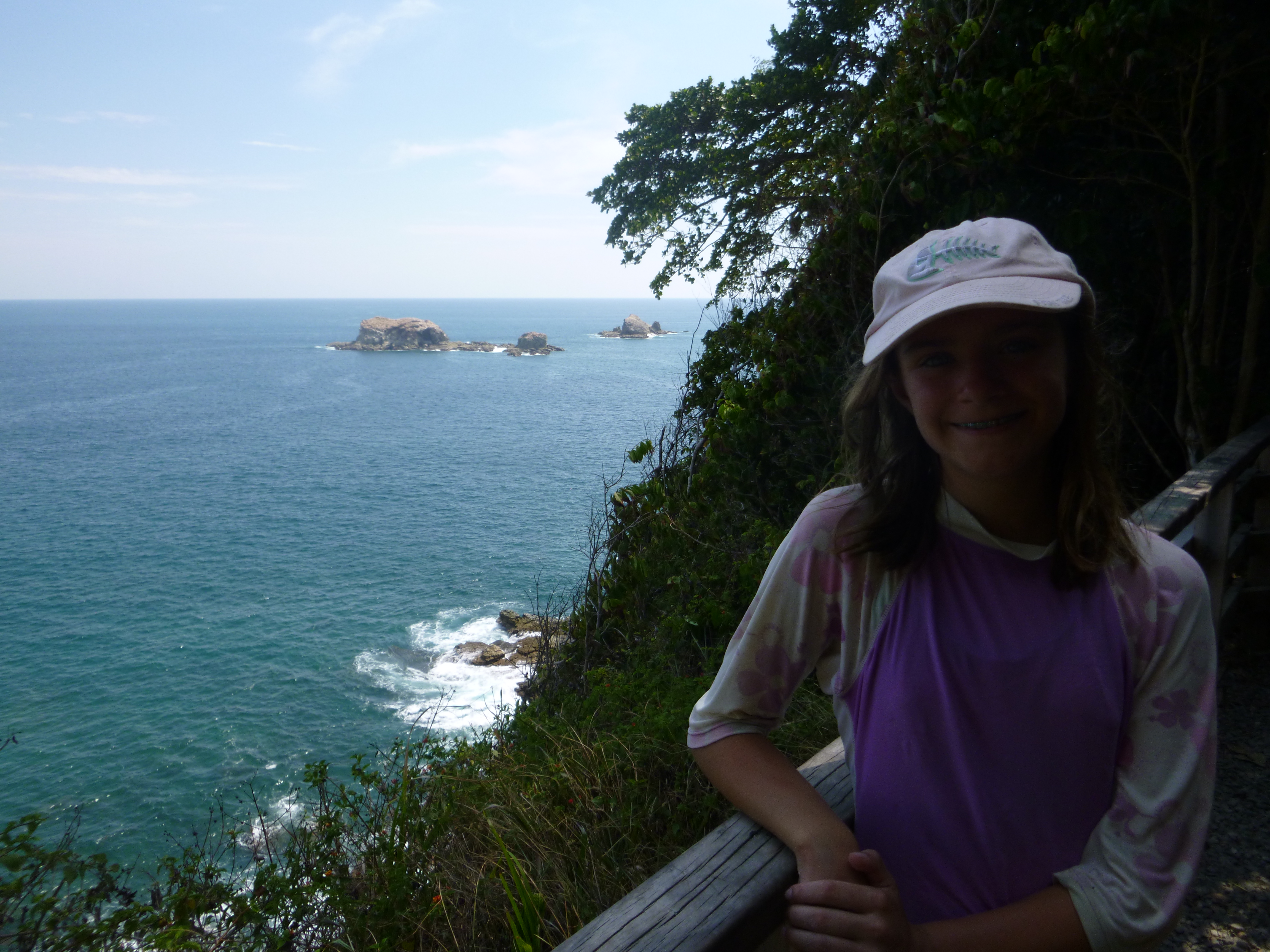
View from the Cathedral Point trail
Well, there is one thing. The observation Bob and I made seems to have been shared by some other people. A LOT of other people, in fact. All of whom were here today also, cluttering up the paths and poking us with their cameras and blocking our views. We’re not used to that in Central America. (Apparently most of them are Americans. Someone asked me about the beach on the path today (in Spanish! and I answered!) and then asked where I was from. When I said the U.S., the woman he was with shook her head and said, “Encore!” Too bad for her that I haven’t completely forgotten my high school French (though learning Spanish has irretrievably messed it up) and knew that she was saying, “Again?!” rather than asking for a repeat performance of my masterful Spanish.)
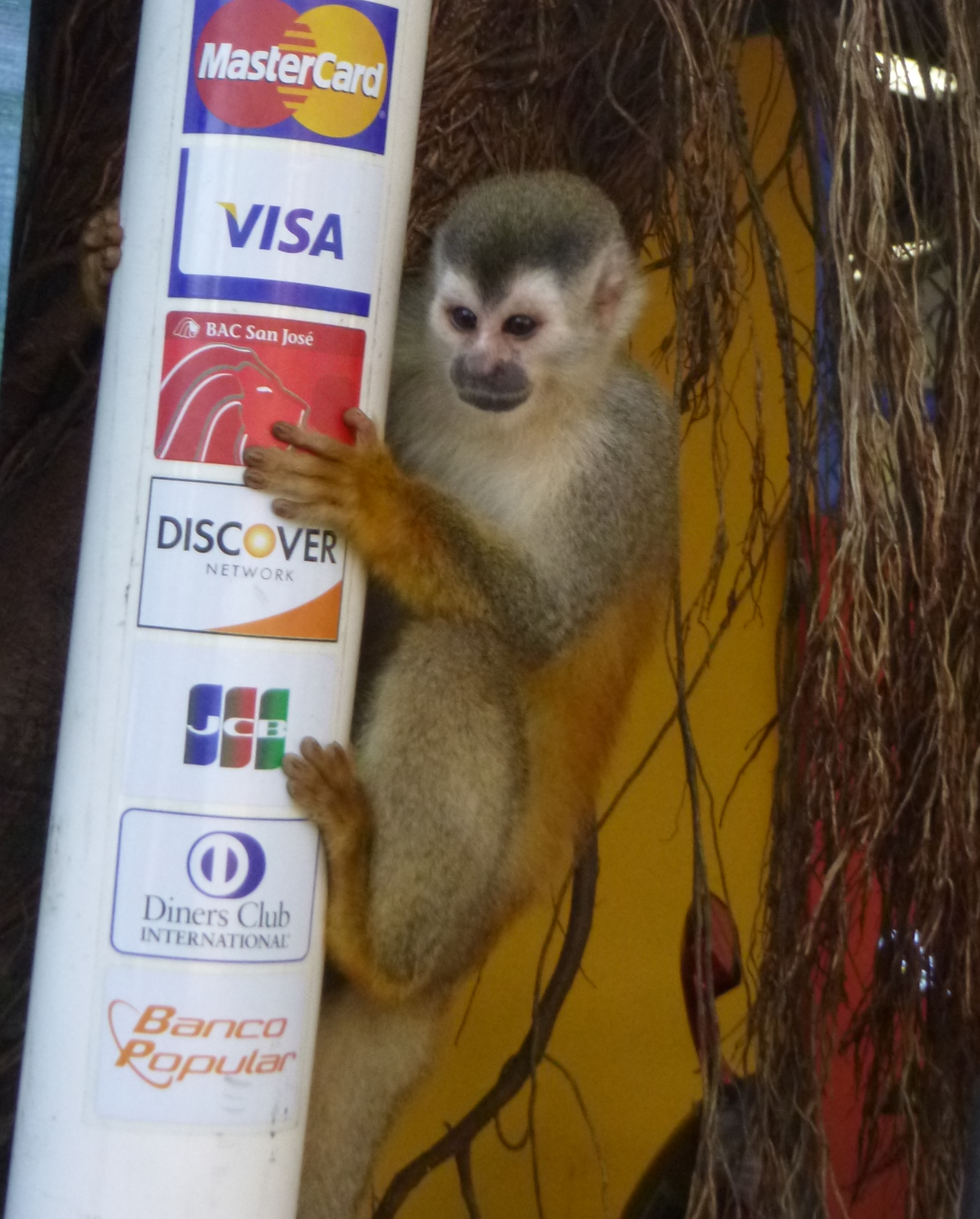
The “rare” and “elusive” squirrel monkey
Anyway, this place is an excellent closer for Costa Rica. I’m glad we came here late in the trip. Otherwise, some of our other wildlife experiences, with less promiscuous animals, might have seemed disappointing. Tomorrow we have one more day of relaxing (sunset and possibly surfing on the beach is planned) and then off to our final two weeks in Belize!
The main Spanish vocabulary that the girls have learned involves ice cream flavors.
We’re here in the Caribbean lowlands, and boy has the weather changed. It is HUMID here, as well as hot. Most of the other places we’ve been so far have been only one or the other (apart from Arenal, but we had air conditioning there so we didn’t notice so much). We hang our damp bathing suits up to dry, and the next morning they don’t feel any different.
We have a great little house here in Cahuita, tucked away into the jungle but just a short walk from the beach, town, and national park. Bob and I, at any rate, are happy to be rid of the car.
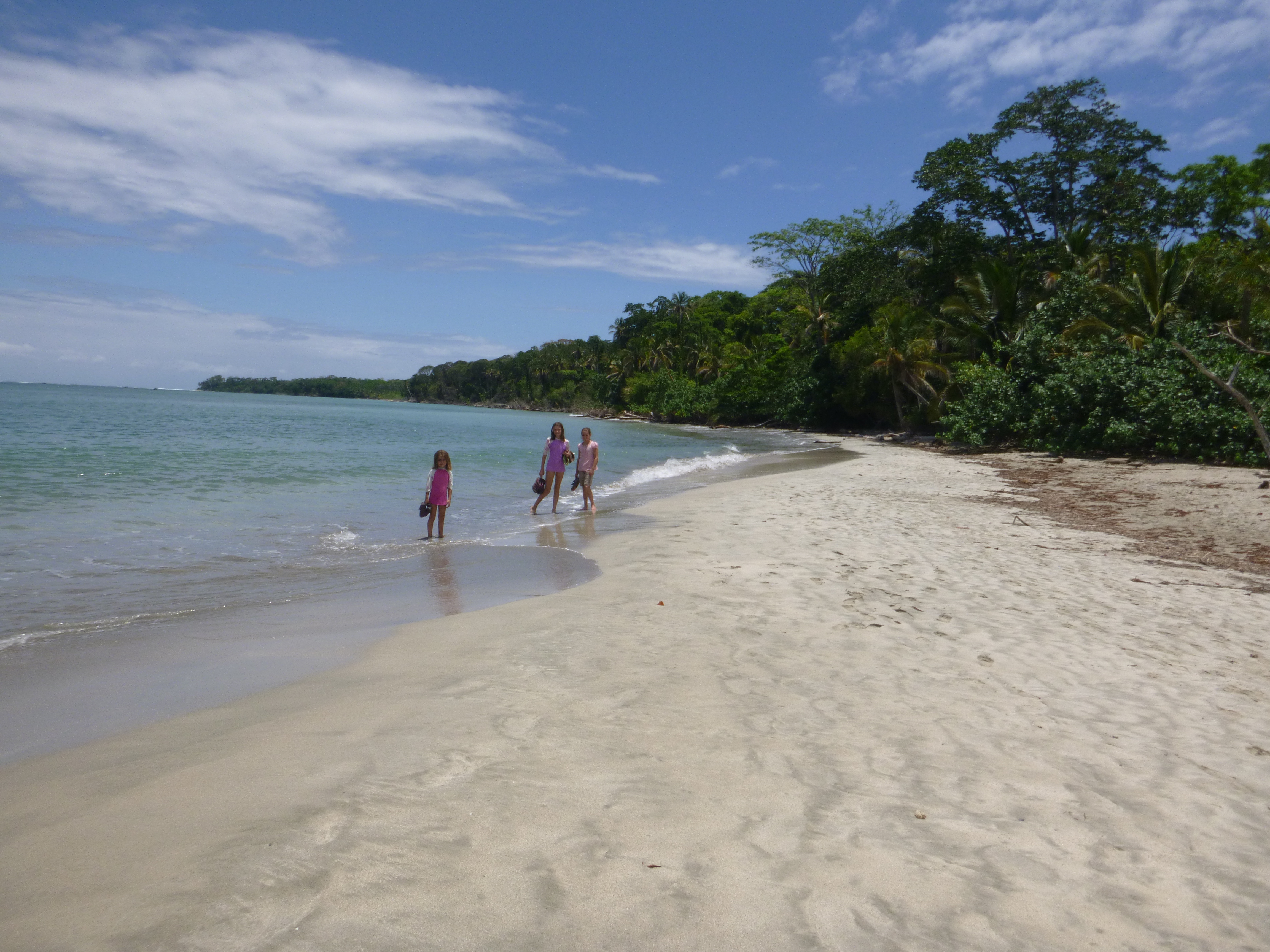
Cahuita is a tiny town, but with a very cool vibe that’s different from anywhere else we’ve been. It’s our first trip to the Caribbean, and the influence of the early immigrants from Jamaica and the other West Indies is obvious. Brightly colored shacks and stands line the roads and reggae music blasts from the bars and shops. White sand beaches curve away from town in both directions, with the beautiful blue/green hue of the Caribbean just beyond.
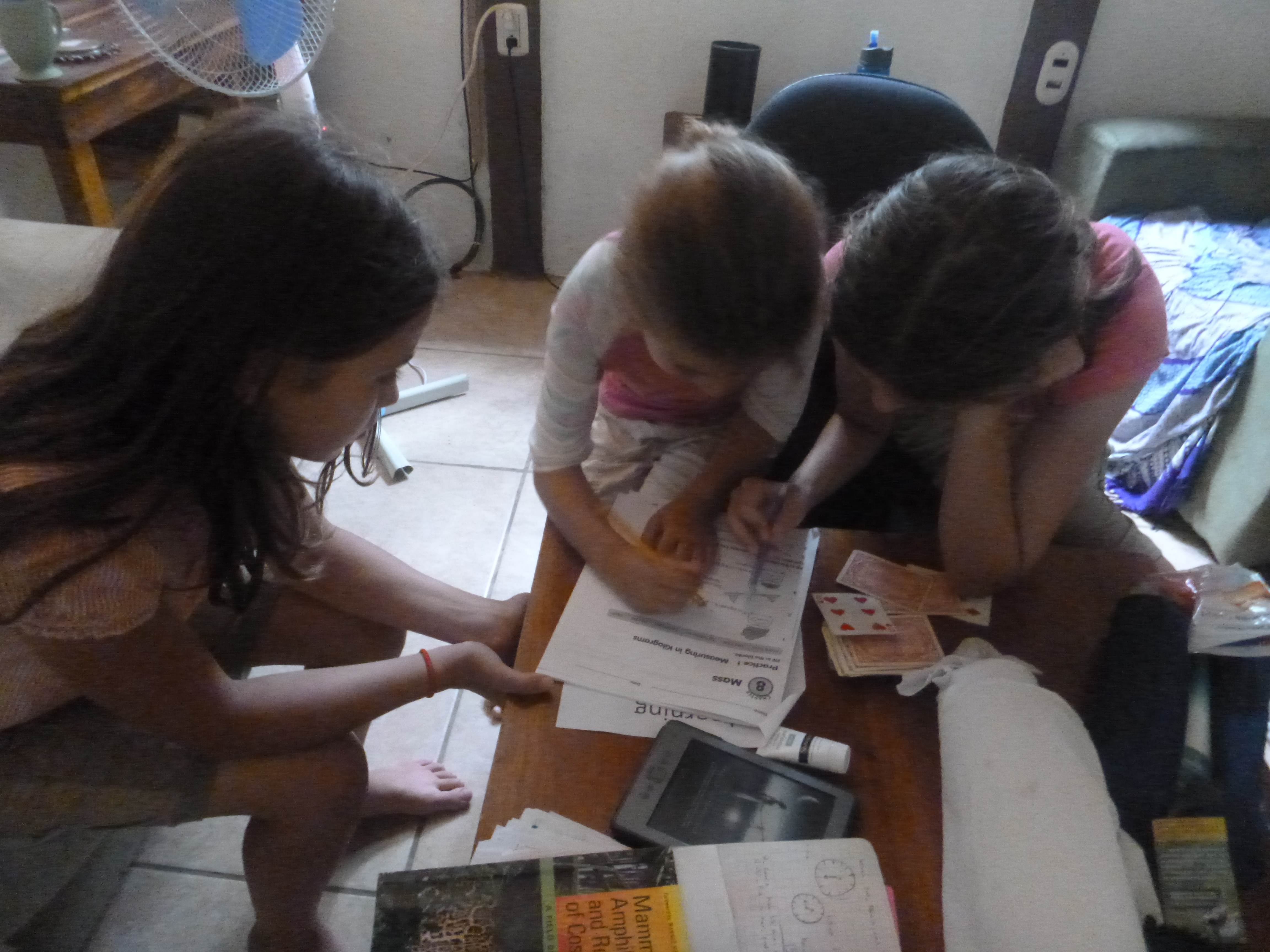
Catching up on some homework
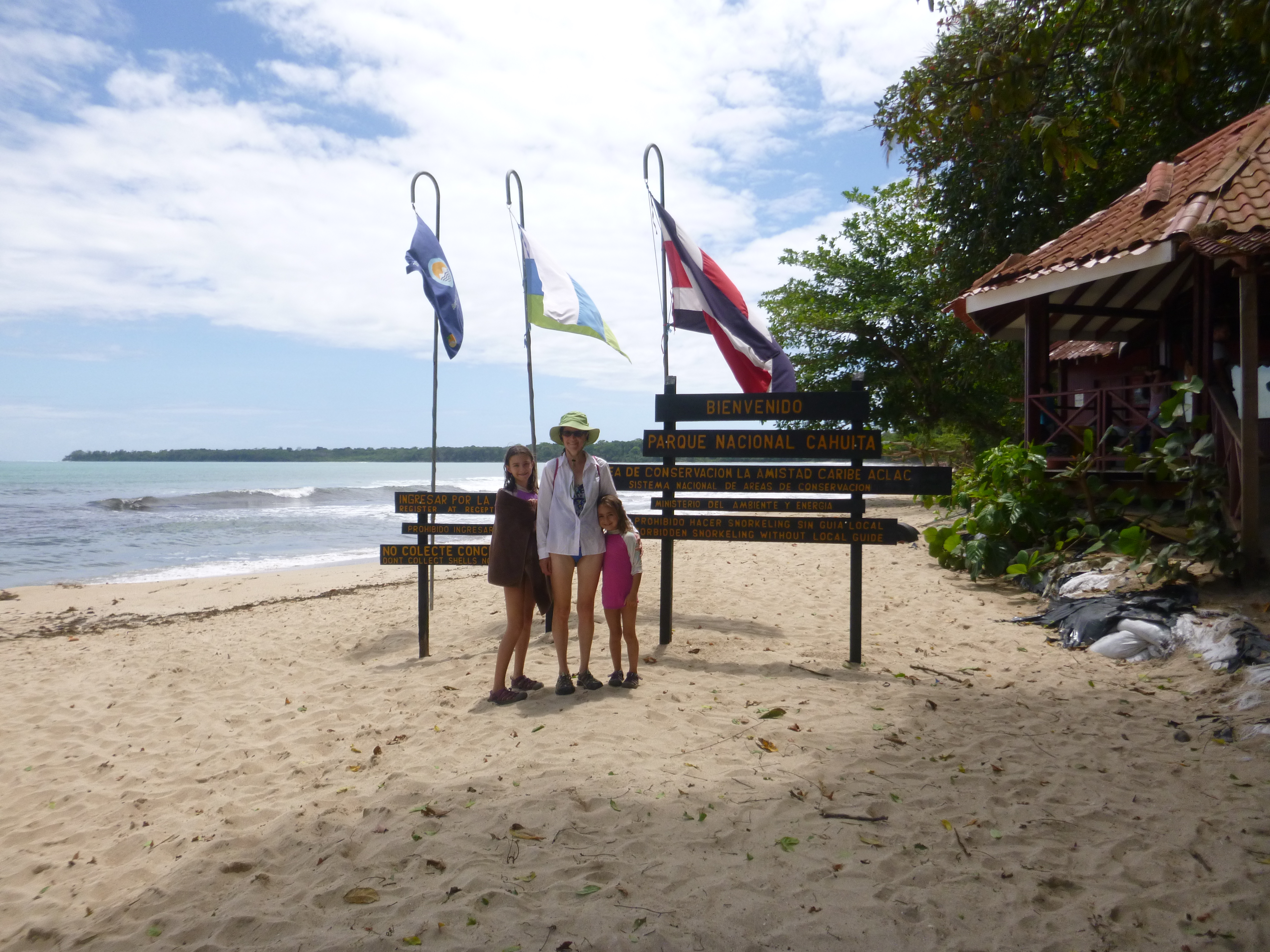
We’ve had a pretty relaxing time here, catching up on schoolwork and strolling the beaches and town streets — and running to the little local market approximately 6 times a day. (You don’t have to plan well when the market is a five-minute walk.) Apart from snorkeling, our big outing was to Cahuita National Park, which was created to preserve the offshore reef as well as the beach and rainforest. (As an aside, there are a lot of national parks in Costa Rica, but they are not remotely on the same scale as what you would see in a US park. Cahuita, for example, consists of a single trail in the jungle that runs parallel and just next to the beach.)
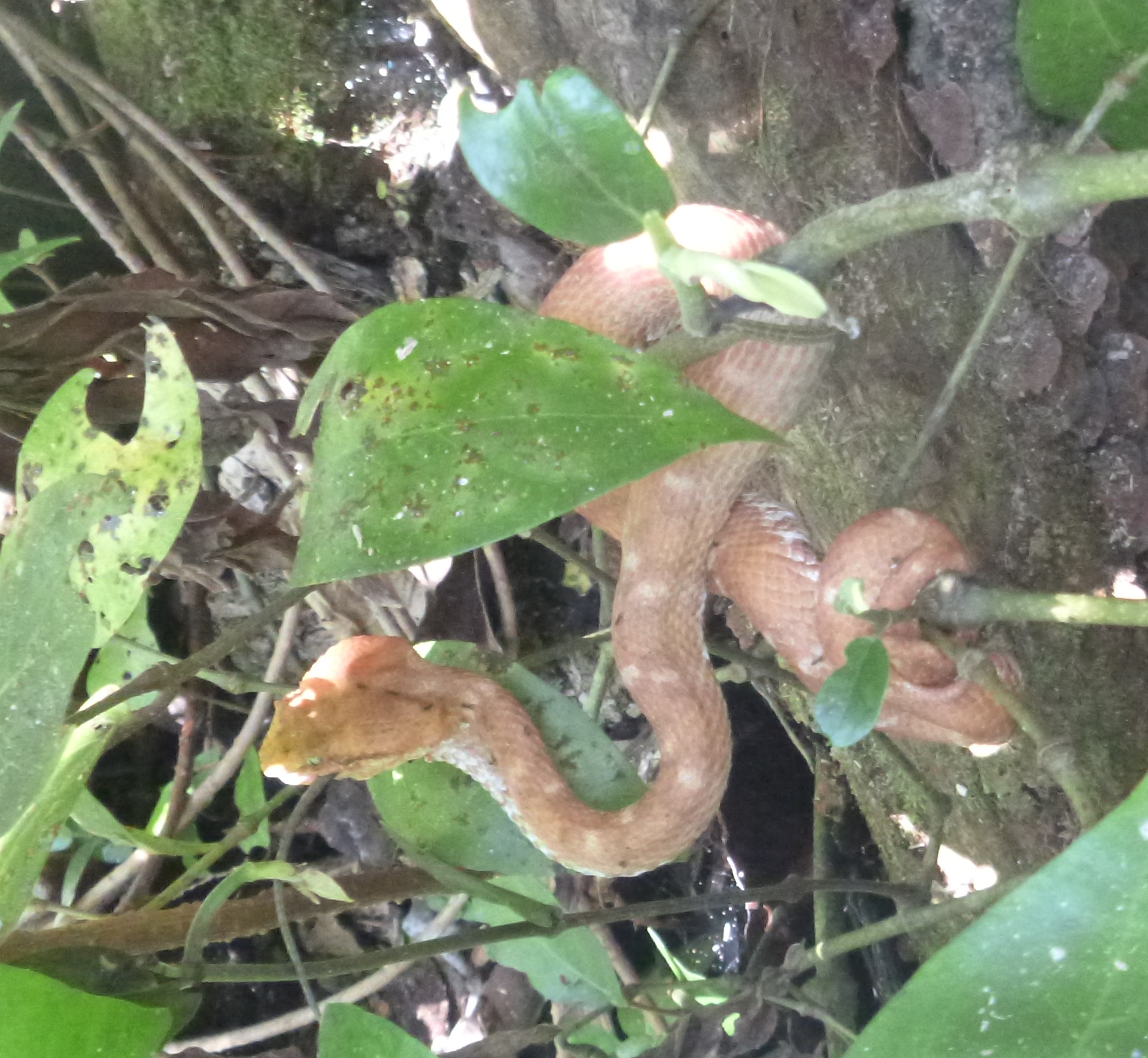
Snake eating a lizard! Kind of hard to see but theres a tail sticking out of his mouth.
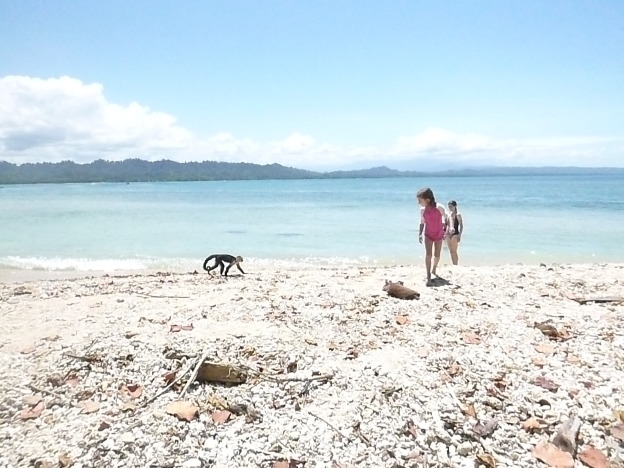
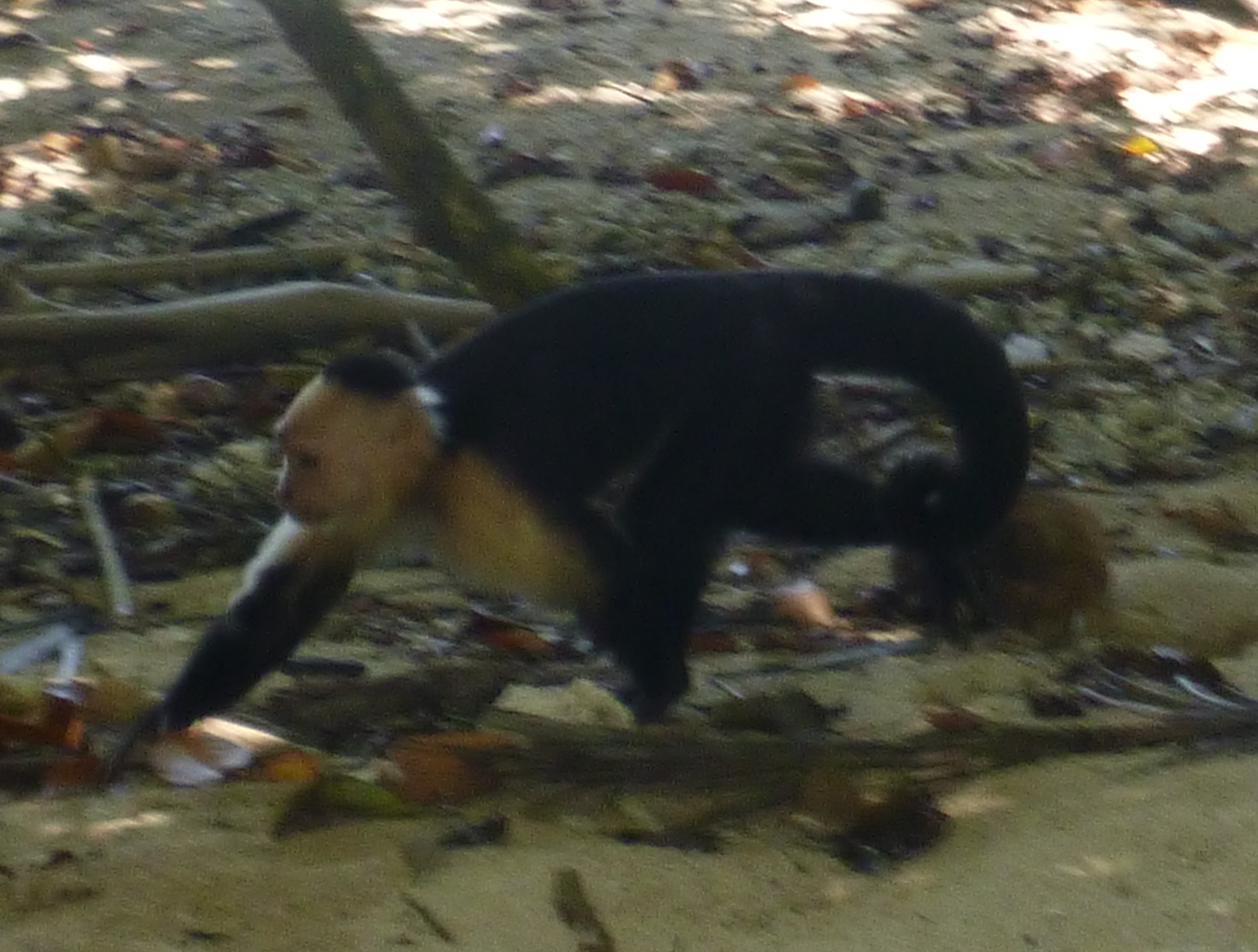
We hiked along the trail, jungle to one side of us and gorgeous beaches to the other. There was plenty of wildlife to be seen. Most notable were the Capuchin monkeys, which became increasingly populous as we got further from the entrance. By the time we got to our endpoint, Punta Cahuita, they were all over the place, scurrying through the trees and eyeing our lunches.
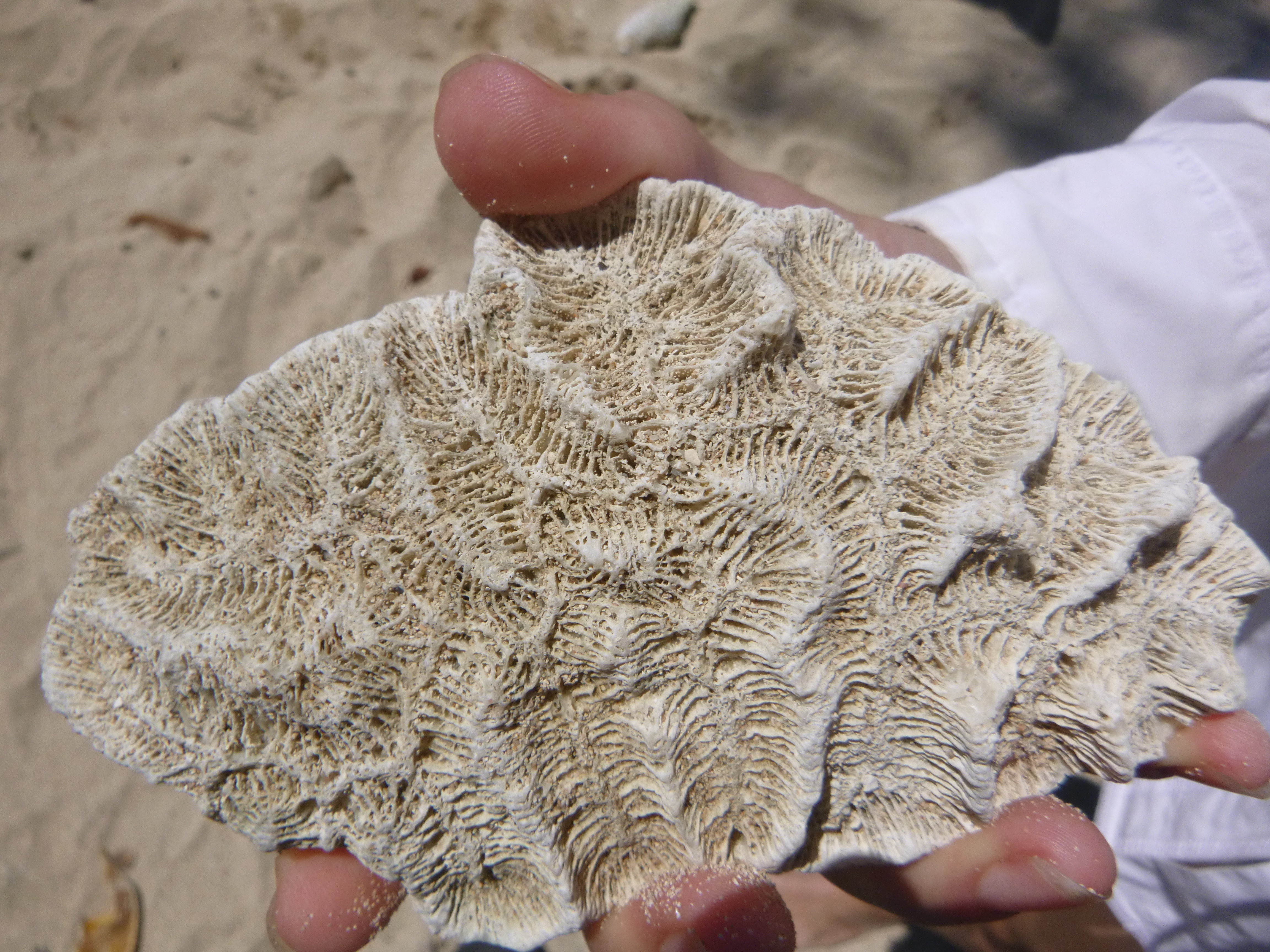
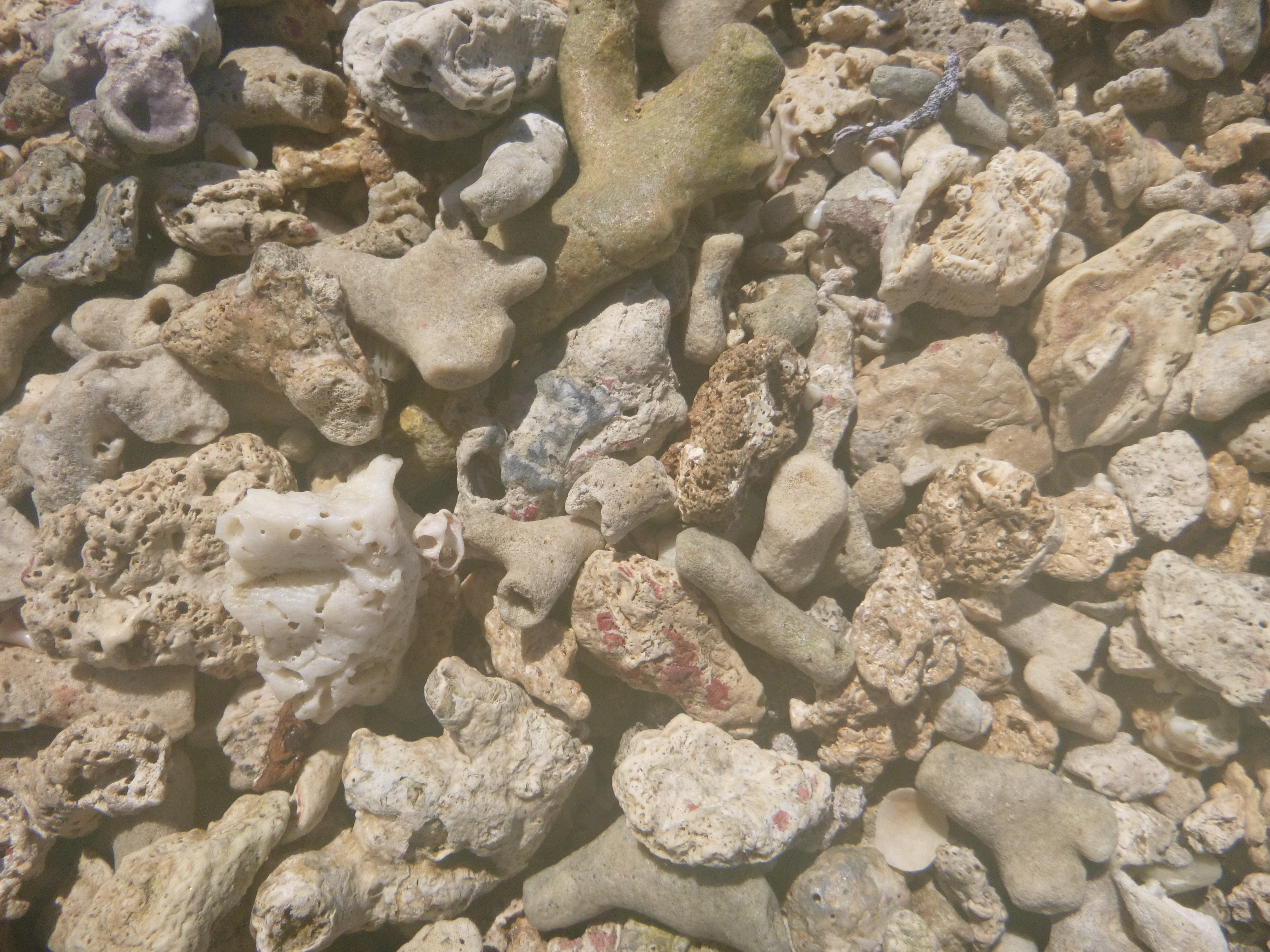
There were also a huge number of horseshoe crabs in all shapes and sizes. The girls spent a substantial amount of time rounding these up into sandy pens and looking around for larger, empty shells to try to entice them to upgrade. We determined that there’s a bit of a hermit crab housing crisis, though, because we couldn’t find anything. Punta Cahuita is entirely composed of bits of different corals and shells, which made for hurting feet but was also beautiful and fascinating to comb through.
Monkey scheming to get our lunch.
The coral and shell beach at Punta Cahuita
Other than that trip, we’ve been taking a cue from our surroundings and taking it easy. We go swimming in the warm blue waters, browse through the shops in town, or hang out in the yard of our house. (The other day we saw a sloth fall out of a tree just outside our yard. It seemed to recover.) Bob and I even walked down to the nearby Reggae Bar one night after getting the kids to bed. (It took three nights for us to work up the energy for this, even though we started talking about it the first day.)
Crowded beaches
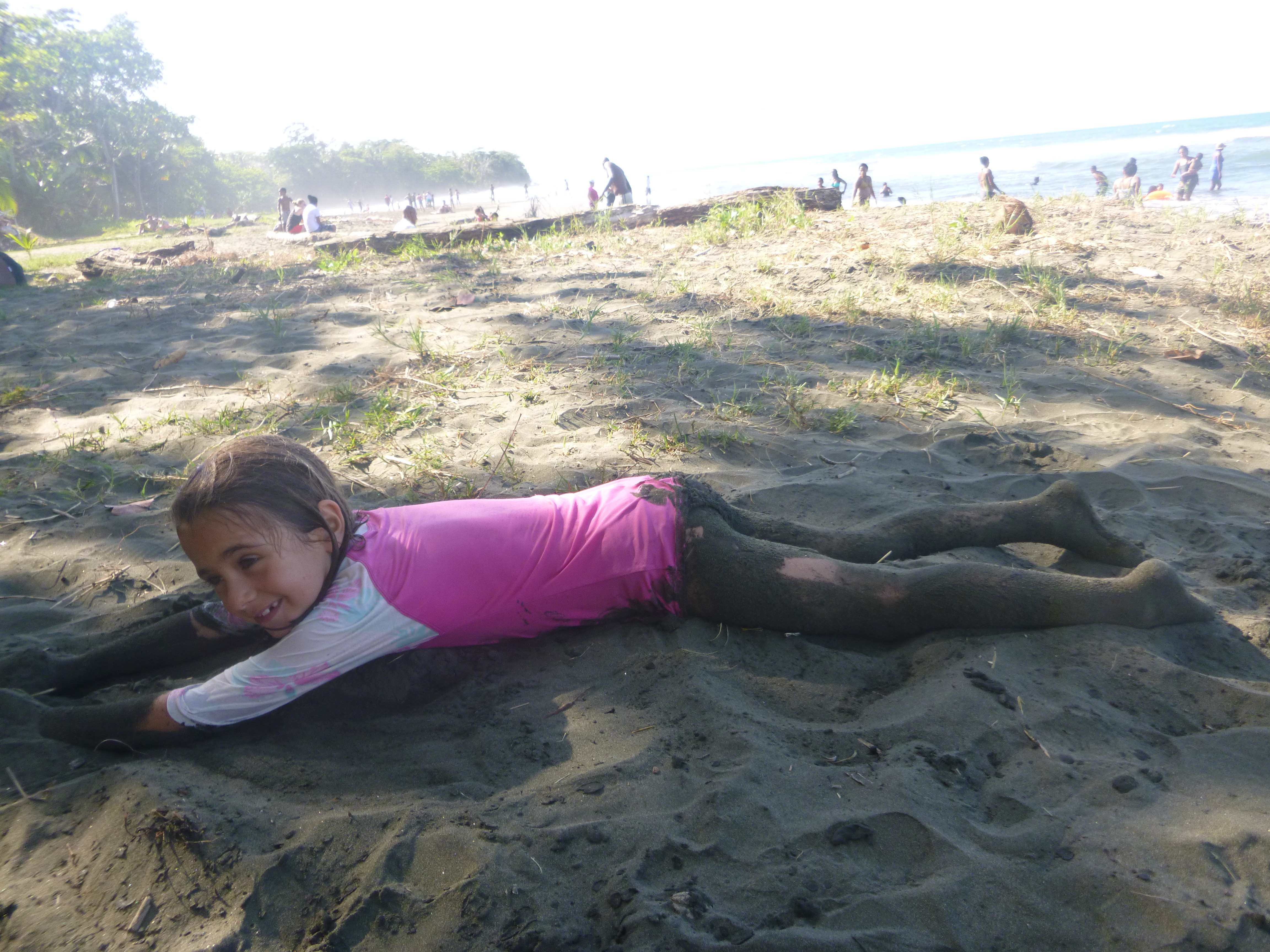
It’s just as well we don’t have a strict agenda, because things are a bit crazy here this week. Semana Santa (Holy Week) is a big deal here, with the whole country on break and flocking to the beaches. The usually deserted beaches and sleepy town were thronged with locals. At one point we looked around the crowded beach and concluded that we were the only obviously international tourists in sight.
On our last night we decided to have a roving dinner of all the delicious-looking street food that we’ve seen being cooked up, and it did not disappoint. Pura vida!
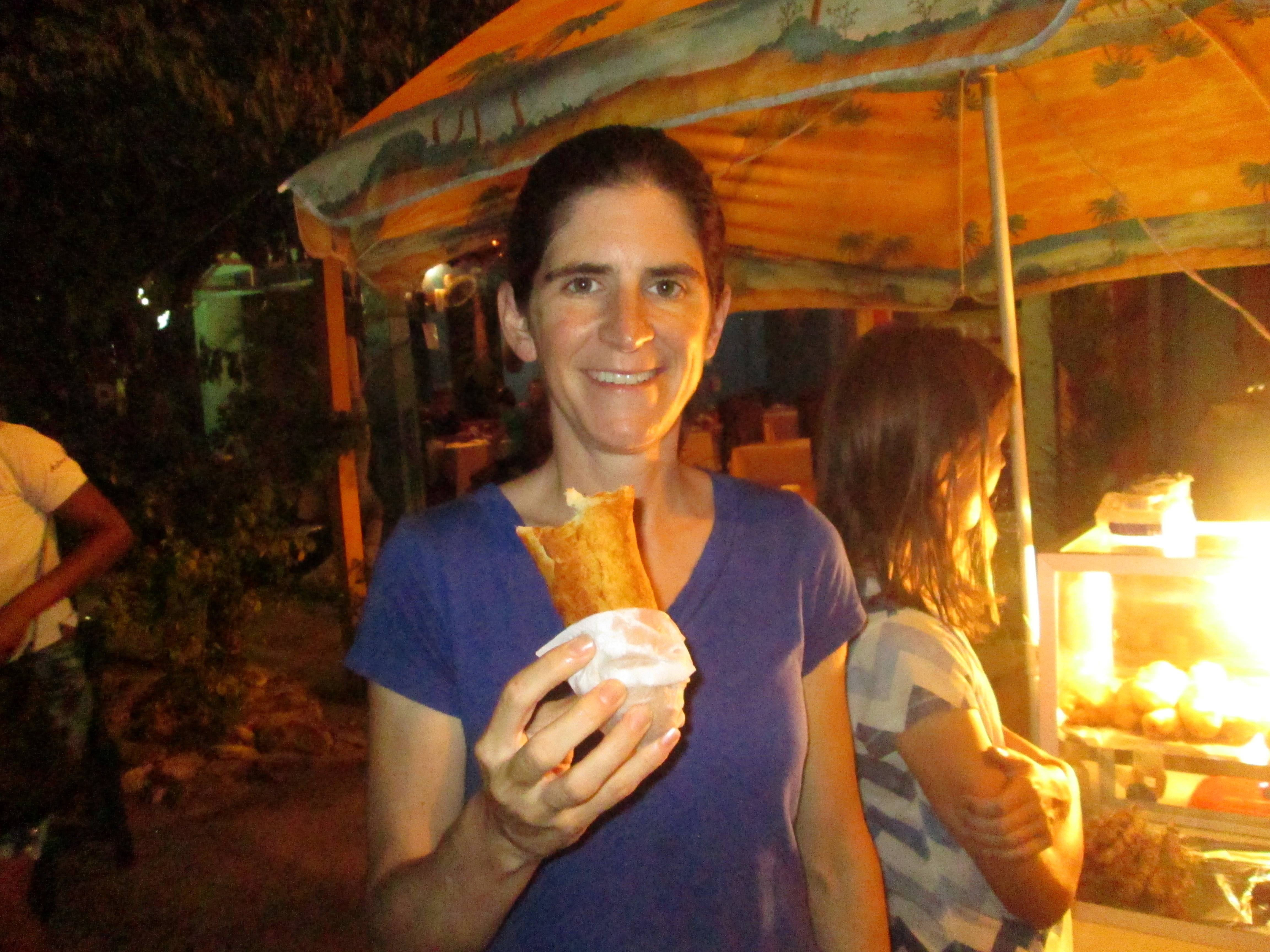
I don’t know exactly what this thing was, but it was delicious.
We’re settled into life here in Costa Rica, which has largely meant making peace with seeing the money flying out of our bank account. We sure ain’t in Nicaragua anymore.
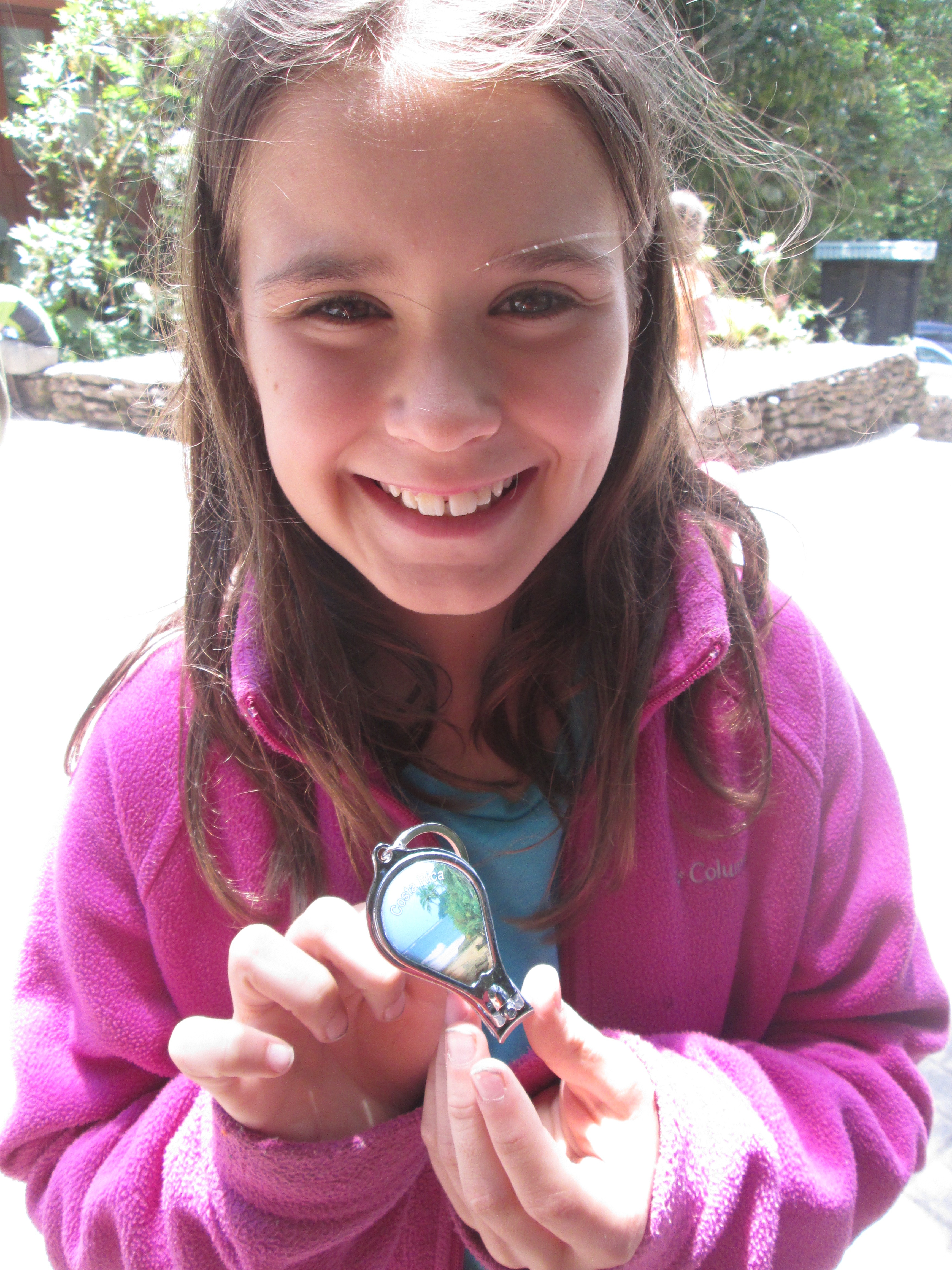
Nadia contributes to the economy by adding another country to her growing toenail clipper/bottle opener collection.
To be fair, the two main places we’ve stayed thus far — Monteverde Cloud Forest and Arenal Volcano — are major tourist destinations. There are many, many things to do — and all of them cost big bucks. We were very happy that we’d done ziplining and some guided cloud and rainforest tours in Nicaragua. The main thing that’s killing us is that here, everything is charged per person. This makes sense to us for some things, but perplexes us when it comes to hiring a tour guide. If one of us wanted a guided tour, the guide would take that person around for $18. But if five of us want to tag along — well, now we’re up to $18 * 5.
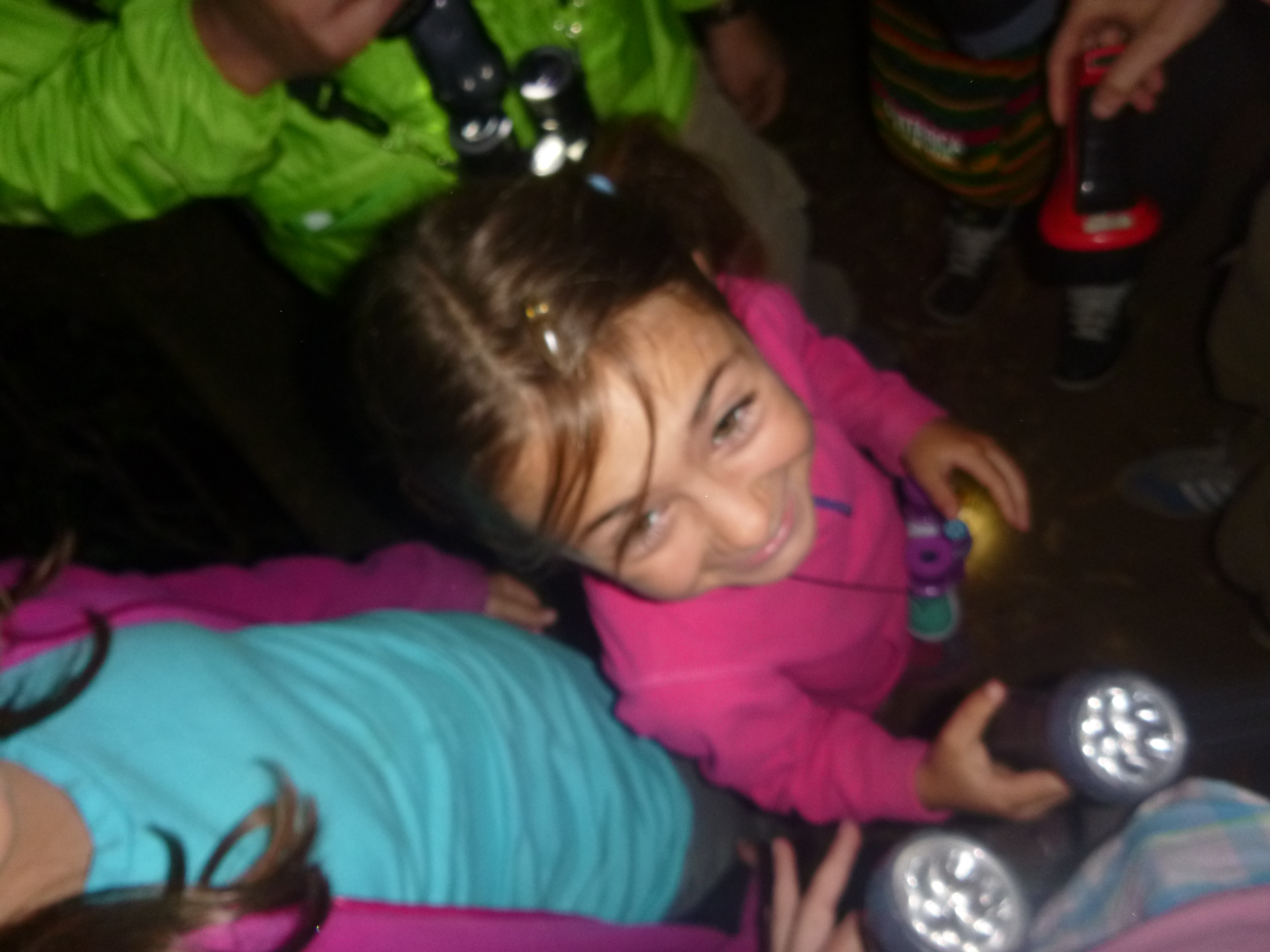
For obvious reasons, we don’t have many good pictures from the night tour. This is a phosphorescent beetle, kind of like a firefly, on Lanie’s head.
So, we’ve been pretty selective on which of the vast array of available activities to pursue. In Monteverde, we signed up for a night tour of the cloud forest, but skipped the guided daytime tour and just walked around on our own. The night tour was pretty cool, and we saw some interesting animals — a sloth, an olingo (which apparently is related to the kinkajou), a tarantula, a porcupine, and a glowing beetle — but the place we did it was mobbed with groups of tourists, all crowding around the same trees and bumping into each other in the dark. (We also did the El Trapiche tour, as previously described, and this was unanimously felt to be worth the hefty price tag based on the food samples provided.)
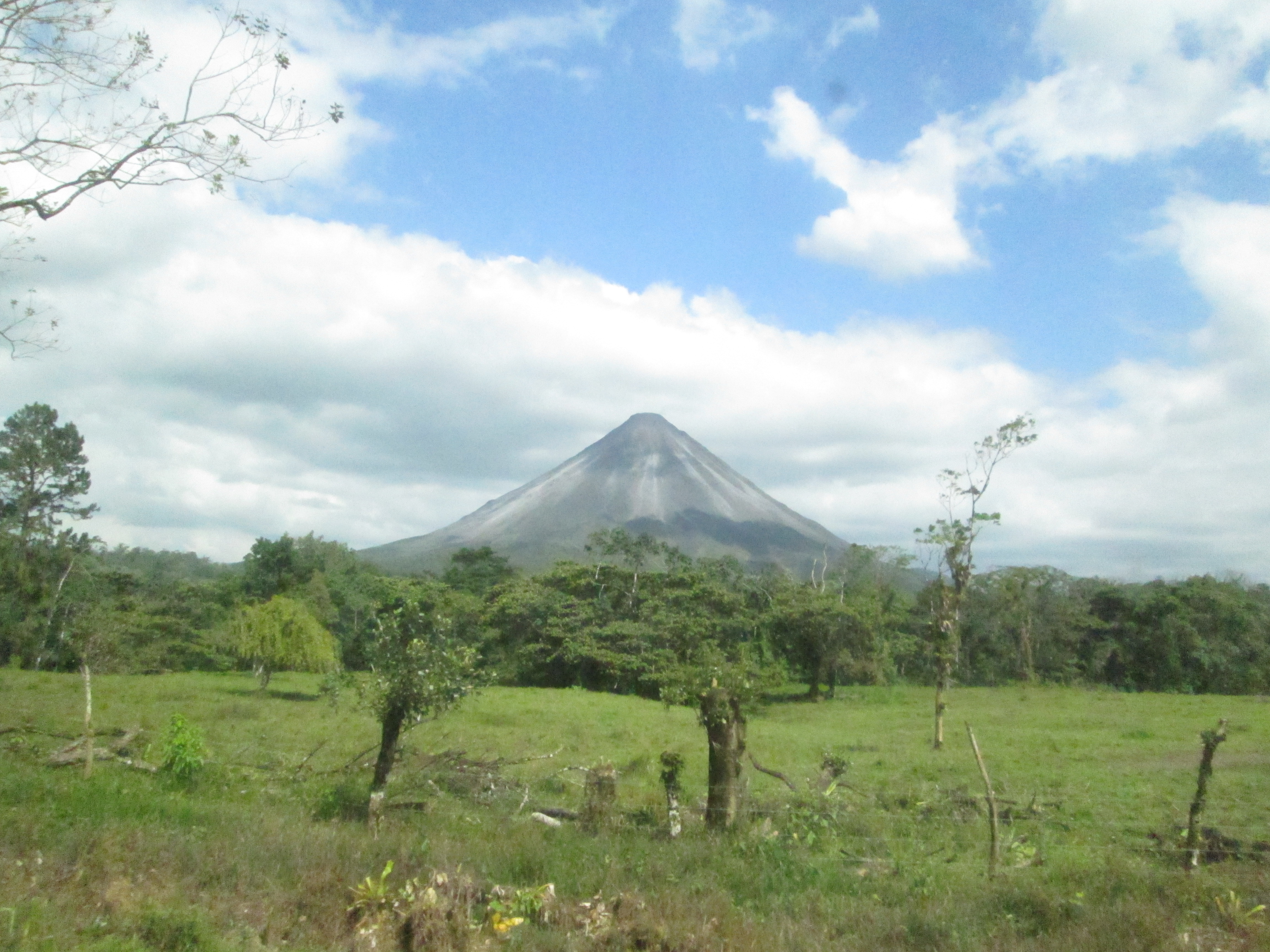
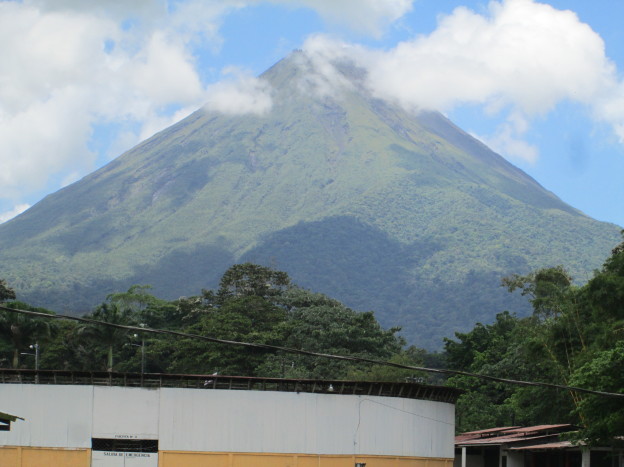
Our first view of Volcan Arenal.
We set out for our next destination, Arenal Volcano, with some trepidation. I think we may have failed to describe the drive to Monteverde because we’re trying to block it out of our memories, but “harrowing” would be a good word to describe the boulder-strewn barely-a-road through the mountains (surrounded by beautiful scenery that we were unable to appreciate because of (a) motion sickness, and (b) the terror that at any moment the car would break an axle or get a flat tire). When we finally arrived, we parked the car in the driveway and pretty much didn’t move it again until it was time to leave.
It’s five o’clock somewhere.
If you look at a map, Monteverde and Arenal seem to be quite close together. However, because the drive involves 45km on a dirt road followed by a long drive around a lake, it takes 3-4 hours. Bob and I focused our thoughts on the microbrewery that we had read was halfway to our destination, and forced ourselves into the car.
This drive, though terrible by ordinary standards, turned out to be a little easier than the previous one, so we were pleasantly surprised. The car only made horrible clunking noises (as it hit the rocky road) a few times, and we only stalled a couple. For the most part, we didn’t need to shift into first and chant, “I think I can…” to make it up the hills. And oh, that magical moment when we got to Lake Arenal and the pavement began.
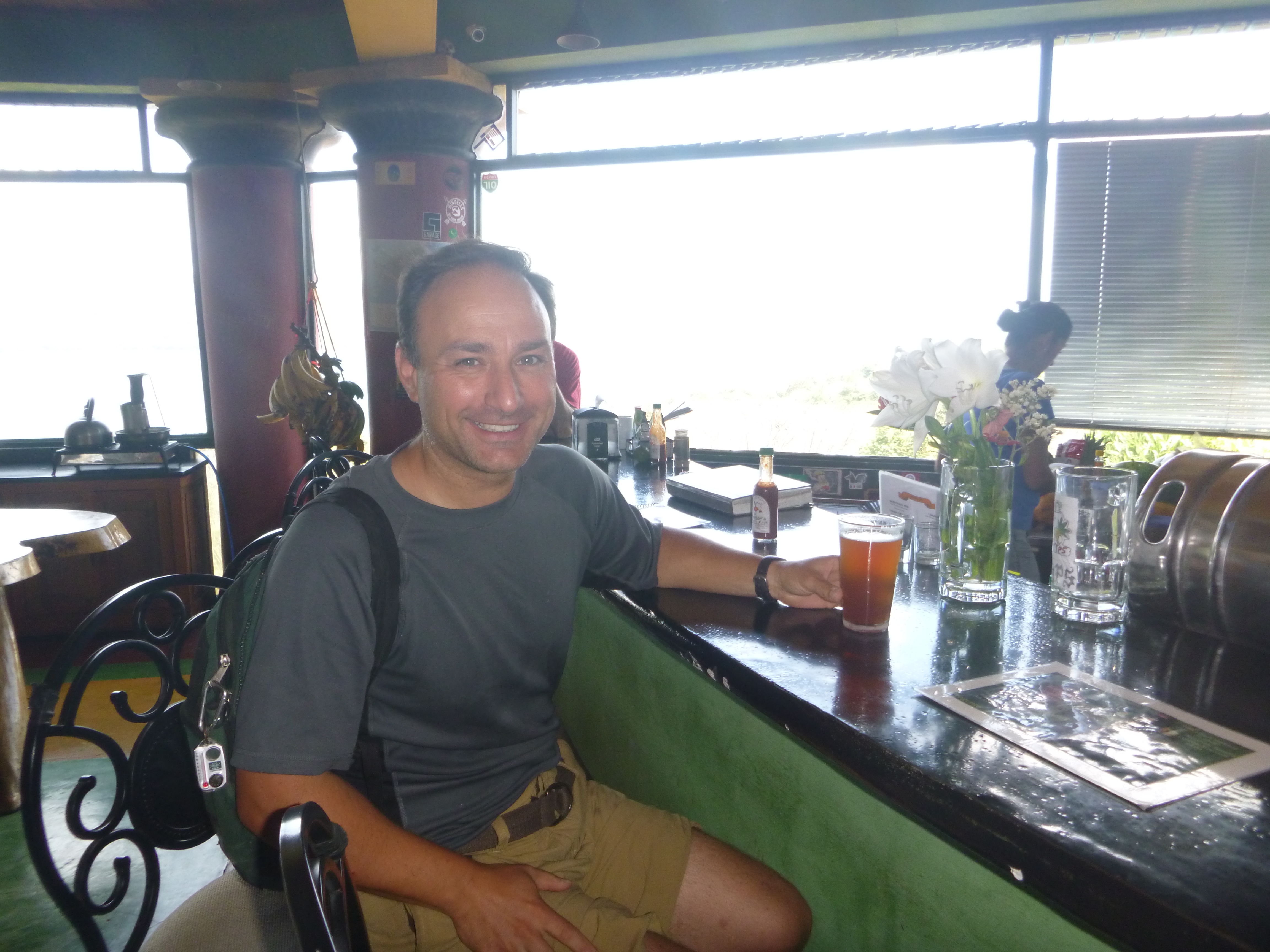
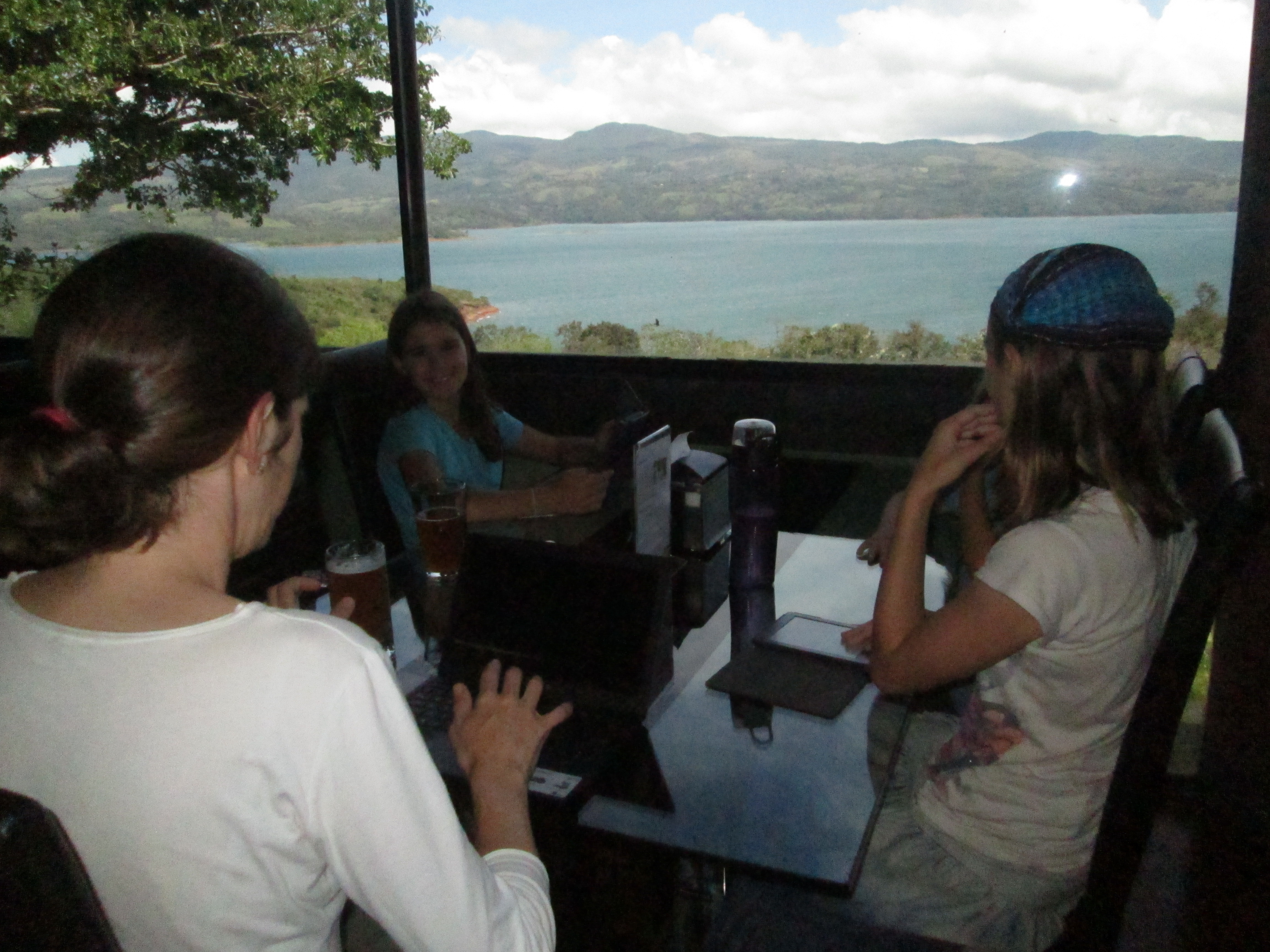
Things went so well that we actually arrived at the brewpub, our planned lunch destination, about 10:30. Fortunately the owner was friendly, and happy to have us sit there for a while using their free wifi — and Bob and I decided to stretch a point on “appropriate hours for beer consumption.” The brew pub was gorgeous, with huge windows overlooking the lake, but the beer was rather disappointing. (I tried a pineapple beer, which sounded quite exciting, but turned out, like the other beer we tried, to not taste like too much.)
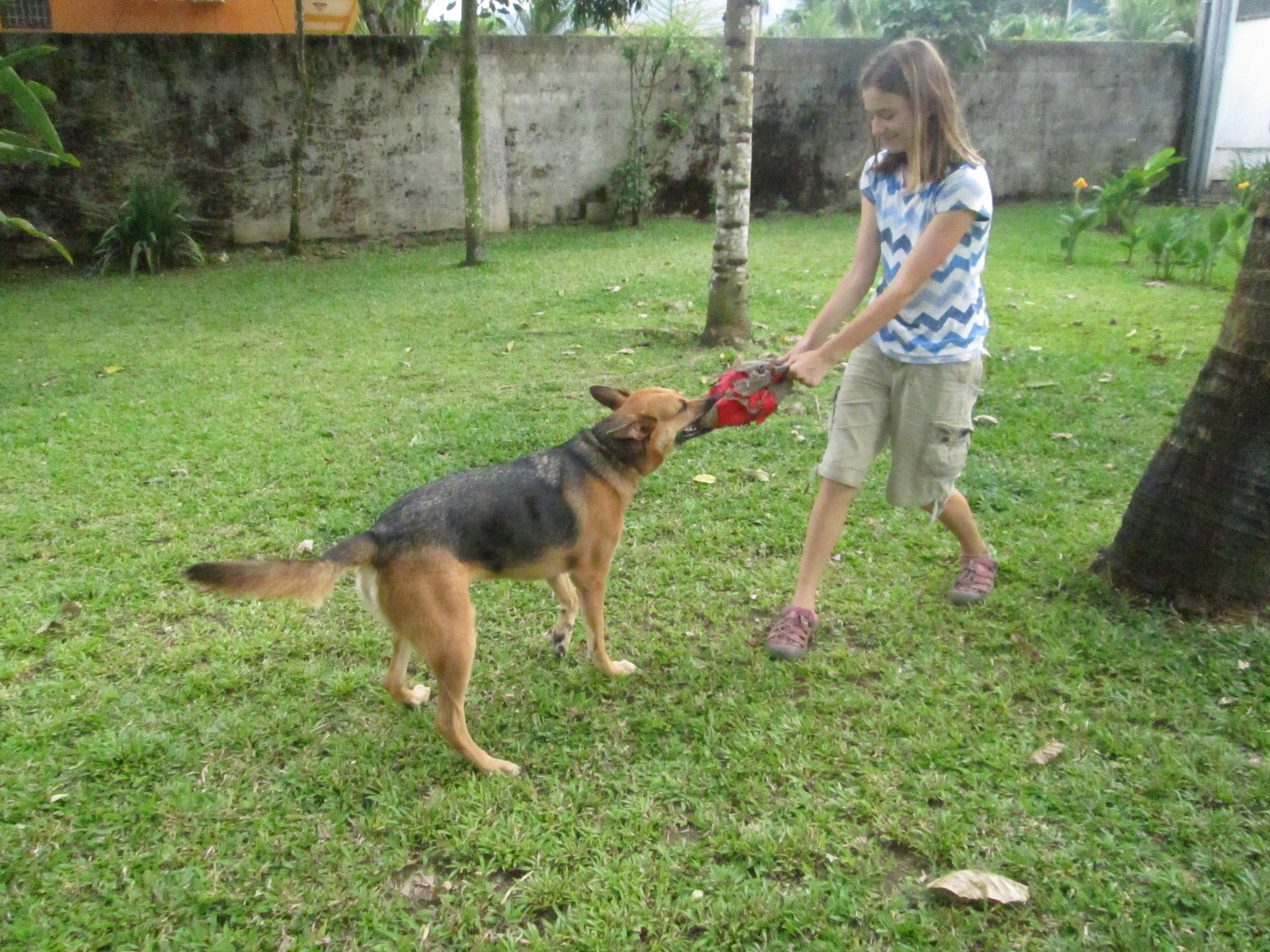
And our apartment in La Fortuna, at the base of the dramatic Volcan Arenal, turned out to be terrific. The minute we arrived, the owner William, who lived the next apartment over, had brought his dog out to play with the girls and was proudly showing us all the edible plants that were growing in the yard and up for grabs. The apartment was just a block or two from the town center, easy to find (probably the first time we didn’t have to reverse
La Fortuna
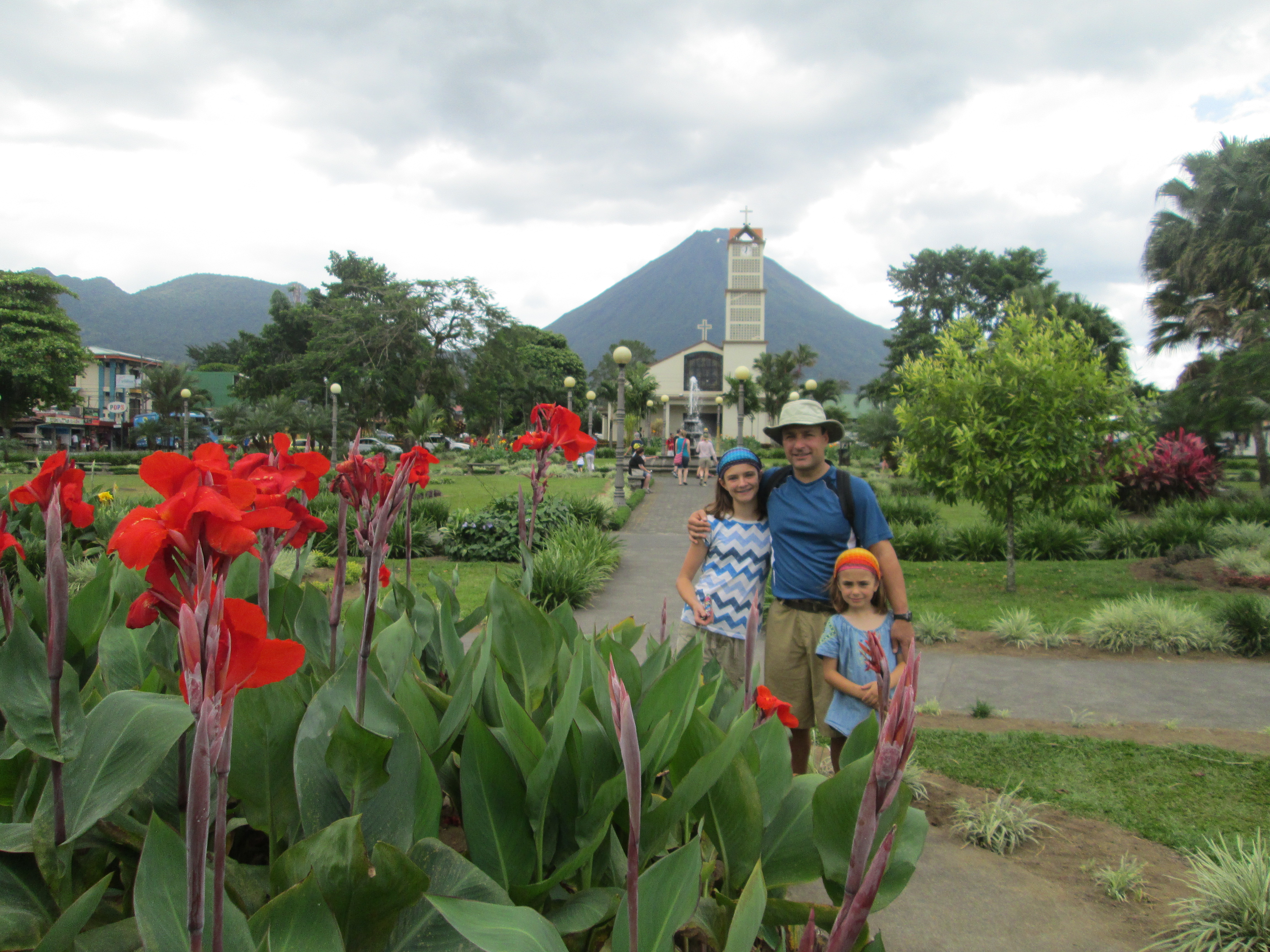
our tracks multiple times!), and had everything we needed. The volcano photo at the top of this post is the view from our living room window. The town was cute (though very touristy), with a lovely town square featuring lots of flowers and dramatic views of the volcano rising above the pretty church.
We took our first day pretty easy, getting some schoolwork in and walking to a nearby (free!) swimming hole. (This was absolutely beautiful, with twin waterfalls gushing into a deep blue pool under the trees, but we were warned so thoroughly about theft that we didn’t bring our camera
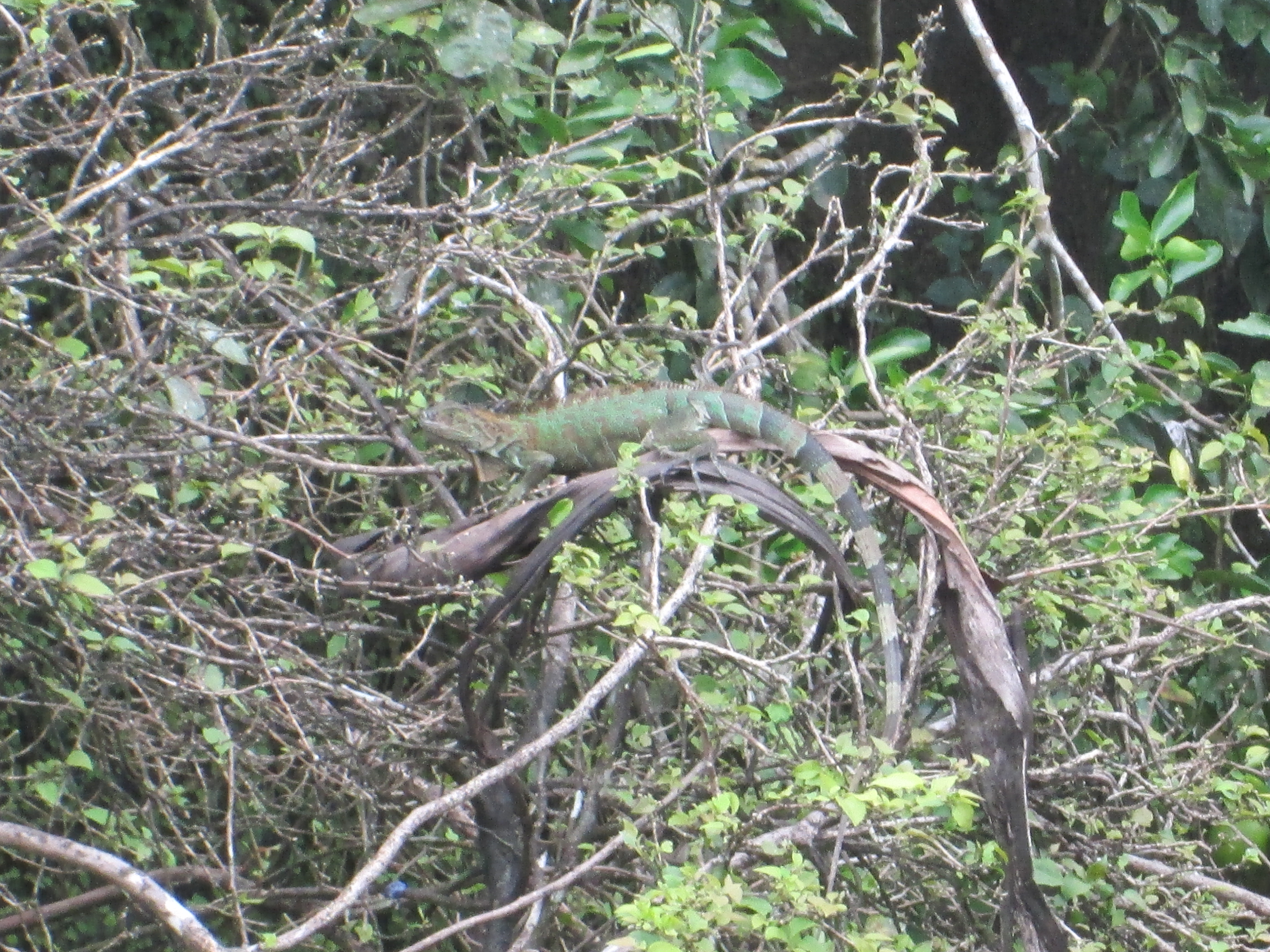
Also, our apartment has iguanas in the yard.
with us.) On the advice of our host, we’d booked an animal-watching tour the next day — 5:30am sharp! Read all about it from Lanie tomorrow.
Now that we have left Nicaragua behind, below is a round-up of the favorite Nicaragua experiences of each member of the family. There is a bit of overlap, but not as much as you might think! To read our original posts on these subjects, click the underlined link.
Bob’s List
None more white.
Tour of Leon Cathedral roof: This surpassed any expectation I had by at least 1,000 percent. Never have I seen such a pristinely white environment (at least one that did not involve snow). The sight of it was shocking. The sensation of walking barefoot on the clean roof, with its warm — but not hot — surface was a pleasant experience and also a good lesson in why things in sunny places get painted white. If the roof were black, it would have been at least 30 degrees warmer up there and significantly less comfortable inside the cathedral. The contrast between the crumbling facade of the cathedral (it was still beautiful, in a rustic way) and the gleaming roof was also interesting. It is pristine like nothing else we’ll experience in Central America — certainly the antithesis of the nearby (and scarringly sordid) folklore museum. At $9 per adult, this is expensive for Nicaragua, but to me it was definitely worth it.
Crew at La Mariposa. There’s a real diversity here — people young and old, from various countries of origin.
Dinners at La Mariposa School: I think I’ll comment on the food at Mariposa elsewhere, but the environment at the school reached is high point, in my opinion, at dinner time. It was quiet and calm once the teachers and day students went home. Those staying at the hotel gathered at the sound of a bell and enjoyed conversation (almost entirely in English), a $2 Tona or two, and whatever food they served up on a given night. There was no troublesome plowing through menus and ordering. We got what we got, and at it all up. I did, at least. Usually, I ate some of the girls’ leftovers, too. If the Spanish classes, excursions and interactions with staff helped us get used to Central American culture, the dinners helped us acclimate to the physical environment, eating outside in shorts and t-shirts in February was a palpable, if slightly guilty, pleasure. The warm silky breezes and “tranquilo” atmosphere helped soothe any culture shock we experienced during the day. We happily noted the absolute absence of mosquitoes. The compound’s dogs and cats were always close by, often enjoying the attention of a pet-starved child. These dinners also allowed the girls to display a previously hidden talent: conversing with adults. This is something they tend to do at home only under extreme duress. Without other children to talk to, ZN+L chatted happily with our fellow adult guests, many of them grandparents who clearly delighted in talking to young people. Jen and I enjoyed multiple compliments about them.
Picture the UNH Outdoor Pool with a tarzan swing.
Ojos de Agua: I thought swimming in this natural spring-fed pool was enjoyable until Jen commented on its similarity to the now-destroyed UNH Outdoor Pool. She was onto something. There were surely differences: palm trees, a slack line and tarzan rope, waiters carrying trays of food (we never found out how to order any). The similarities became more obvious as I looked for them. The clear, bluish-tinted water was cool and comfortable. The sides of the pool were concrete and stone (and a little muddy at points). People were there to swim and socialize and relax. It should be noted that this attraction featured the best mix of tourist and locals of any place we’ve visited in Central America. We even saw a car with a Costa Rican license plate in the parking lot. One of the workers at our hotel told Jen that the Ojos de Agua is one of his favorite places in the world. My favorite part, though, was that I felt a little like a time traveler, able to skip back into the near past to snatch one more afternoon of an experience that I never thought I’d get to have again. Anyone missing the UNH pool can find solace that it still exists, in spirit at least, on Ometepe.
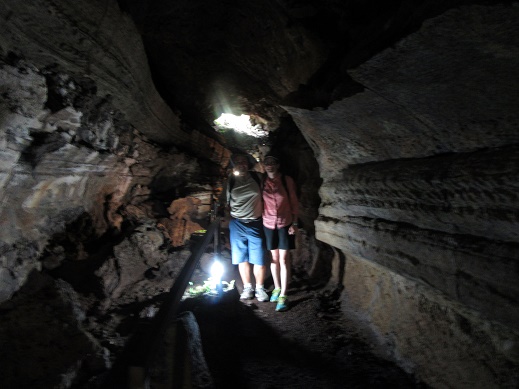
I’ve already written about this extensively, but it remains a highlight in my memory. I think part of the appeal was that we had no idea what to expect. If we had arranged (and paid for) this tour ourselves, we would have known what to expect every step of the way. But since this was done through La Mariposa, the extent of our preparation was signing up on the whiteboard. And as it turned out, it was one fabulous experience after another: the steam pouring from the active crater, the beautiful sunset from the highest point in the park, the awe-inspiring spectacle of thousands of bats issuing forth for the night, the cool walk deep into the mountain through a lava tube. It was a magical evening.
Our hotel on Ometepe (La Omaja) has to be one of the best places in the world to watch the sunset. Located in the lower slopes of a volcano, it features an open-air restaurant (with great mojitos), fronted by an infinity pool and hot tub, with Lake Nicaragua stretching away in the distance. To the right is the dramatic cone of the Volcan Conception, rising 1,600 meters above the lake. Behind the restaurant, Volcan Maderas rises in green waves.
It was the latter that we’d hiked that day, and it was an extreme challenge to us. Having left the hotel at 7:30 am, we staggered back in at 5:30, just in time for the nightly display. Sinking our exhausted bodies into the warm hot tub as the sky glowed with every color of the rainbow was an exquisite pleasure. Later we would eat enormous dinners poolside, then return to the hot tub as the colors faded and thousands of brilliant stars (far more than we have ever seen at home) emerged above our heads.
Though we loved our time at La Miraflor cloud forest, Granada presented a welcome contrast – hot, sunny, full of people and life. In the late afternoon, the glare of the mid-day sun would soften, and cool breezes from the lake seemed to blow away the day’s heat in the blink of an eye. Around the corner from our hotel was a pedestrian thoroughfare with a grand old church at each end. The street was lined with colorful buildings housing bars, restaurants, and shops, with café tables scattered across the cobblestones outside. The air was filled with laughter and the sounds of roving musicians playing traditional music (and thrilled to serenade you for a $1 tip). For another $1 we could enjoy a mojito made with fresh mint, lime and Nicaraguan rum. It felt graceful and old-fashioned, like something out of a Hemingway novel.
Part way through our trip, we hiked to a giant strangler fig in the cool, misty cloud forest of La Miraflor. The fig had killed the tree it had lived on long ago, and was completely hollow in the center. We ducked through an opening in the interlocking vines and into the cave–like space inside. It was cool and damp and filled with shafts of sunlight from holes in the web of tendrils. I grabbed a vine and started to climb. The fig’s bark felt cool and rough beneath my fingers, and the different strands were the perfect size for me to wrap my hands around. When I looked up and down, the fig was like a vertical tunnel made of intricate patterns and designs. I could see my family standing in the small circle of packed earth far below. I felt as if I could keep climbing all the way up to the tree’s topmost branches high above. I peeked out of the small windows made by the fig’s stems and waved to my dad standing on the ground outside the tree. When I climbed down, I wanted to do it again.
In the city of Granada, Mom booked us a tour of a chocolate museum, but not just any tour. This was a workshop where we got to see how chocolate is made and make some ourselves. This was the perfect tour for me because I love both chocolate and cooking. It was really cool to see how one of my favorite foods is made. Central American chocolate is different from the chocolate we have in the U.S., which is made from beans grown in Africa. It has a darker, richer flavor. I liked it. Even the plain roasted Central American beans taste good. We got to try them after roasting them ourselves over an open fire and peeling them by hand. Then, we ground them using a mortar and pestle. The whole beans seemed dry, but once they were ground, the oily cocoa butter seemed to appear from nowhere. After that, we used the cocoa paste to make two chocolate drinks. The first was made by the Aztecs. It had chili peppers in it. It was much too spicy for me! I liked the second though. It was made by the Spanish and tasted like hot chocolate. At the end, we got pre-churned chocolate to make our own bars. We could put anything we wanted in them. I put coffee, sea salt, almonds, and nibs (pieces of roasted cocoa beans) in mine.
My whole family learned to surf in Jiquilillo, a town on the beach. We all took surfing lessons. I loved surfing and rented a board for the next couple of days. I surfed a lot during those days, but one time stood out. Jiquilillo had beautiful sunsets and we would go to the beach to watch them, but I wanted to keep surfing. So I surfed during the sunset. It was amazing. When you watch a sunset over water from land, the glows orange from the reflected sun. While I surfed, that color was all around me. It was like surfing on the sun.
It was my favorite because I really missed riding and I had a lot of fun because I got to canter a lot. The ride went through the countryside, a village, and some woods. I rode the same horse but I can’t remember his name. He was a brown and white paint.
It was my second favorite thing because the gelato tasted really good. It also reminded me of Italy. The flavors were also very unique. It was special because there isn’t much gelato in Nicaragua.
Zip-lining was my third favorite thing because it was really fun. I was a little scared at first, but by the end I wasn’t. It was special because it was a really unique and singular experience. We also got to fly with a guide, go upside down, and swing on a long rope.
On our last day at La Mariposa, we had a party with great music in Spanish, dancing and piñata breaking. Zoe, Nadia and I made the piñatas with our teachers and went into town to buy candy for them. I felt happy, excited and good. I liked the taste of the candy and the smell of the fresh air. It was special to me having my friends from La Mariposa all gathered around me.
I felt as light as a feather. I was zip-lining at Volcan Mombacho. It was special because I felt a good sense of accomplishment. I tried going upside down, and the guy was jiggling my legs as we zip-lined.
The volcano hike was hiking up a volcano to see the sun set, then hiking to see two caves. I felt very good. It was nice to walk in to a nice cool cave. It was one of the best experiences of my life because I got to see so many cool things.
After this I didn’t walk anywhere at night without my headlamp.
Our second-to-last day in Nicaragua, we found a tarantula in our hotel room. The next day, we found a scorpion attempting to hitch a ride in Lanie’s backpack. Apparently we were no longer welcome in Nicaragua, so it’s just as well that we headed to the border the next day.
Look who wants to come home with us.
Costa Rica logistics have already proven to be far more complicated, for some reason. For the few days preceding our travels, I was spending much of my time hunched over the computer, trying to figure out where we were going to go and how we were going to get there. In the end, we were forced to conclude that we’d need to rent a car for a while.
Our travel day looked like this:
9 am ferry from Ometepe to the mainland
Taxi ride to the border (we’d been planning to take a taxi to the bus terminal and the bus to the border, but for $25 we decided to take the shortcut)
Walk across the no-man’s-land border area, which involved having our passports checked three times by Nicaragua and three times by Costa Rica.
Bus to Liberia, Costa Rica.
Taxi to the Liberia airport where we picked up our rental car. (In shock from the price of the cab ($40! For 9 km! Nicaragua, we miss you already), we go the cheaper route and do not get an SUV. We will regret this decision later.)
Drive for a couple of hours to the place I’d managed to rent last-minute for the night, from airbnb. It was not exactly a palace, and was in the middle of nowhere, but the drive was beautiful.
Drive back out to the nearest town to stock up on groceries, since we have a kitchen.
Drive back to the house because Bob forgot his wallet.
Drive back to the store again and back to the house again. (For the most part we haven’t lost/forgotten things too much on this trip. But this house proved to be some kind of Bermuda-triangle type location with a magnetic pull over our belongings. This will also come up again later.)
I guess the novelty of restaurants really has worn off, because the kids were thrilled to shop for groceries and cook dinner. Bob and I were instructed to sit down and mostly stay out of the way while they worked together to whip up pasta with chorizo, garlic, olive oil, tomatoes, and cheese. (Afterwards, they fought bitterly for about four hours about who would sleep where. But it was nice while it lasted.)
In the middle of the night, Bob and I were abruptly awakened by a very loud, very strange sound. It sounded like someone saying, “HHHHHHahhhhh” in this raspy voice, and must have been right outside the window. (It was so loud, we initially thought it was inside the house.) Bob asked the caretakers here about it the next day, and it turns out we heard an ocelot! (They called it a “tigrillo”.)
Being more aware of the road conditions, we decided we were too far to attempt our original plan of spending a day in Rincon de la Vieja National Park. Instead, we went to a nearby resort that featured hot springs, mud baths, and pools, plus hiking along a beautiful canyon in the forest, with a warm thermal river running through the middle.
It was a very fancy place (though bizarrely, as it was even more in the middle of nowhere) with fluffy white towels and deferential waiters. However, the price for a day’s admission seemed exorbitant. We elected, therefore, to forgo add-ons like zip-lining and white-water tubing. It was very pleasant soaking in the hot river in the middle of the woods, and took the last of the soreness out of our muscles from our previous hike.
Dinner brought another misadventure. We thought we were buying salt in the grocery store, when we saw a packet of white crystals labeled, “Sal ingleterre”. Nadia put some into her signature guacamole, then grimaced as she tasted it. We quickly determined that whatever it was that we’d bought, it was not edible (Epsom salts, maybe?) It was horribly wrenching for us to throw away that big bowl of otherwise perfect guacamole. (Luckily there was another bowl that was untainted.)
As we packed up and headed out the next day, the Bermuda triangle effect struck again. About 20 minutes into our journey, Bob asked, “Did you take the water bottles out of the fridge?” Nope, even though I’d checked the place about 20 times, we’d forgotten all our water and bottles. Back we went, down the rough dirt road, to the amusement of the caretakers. On the road again! Except, about 15 minutes later, Nadia: “I don’t remember packing up my kindle!” After a check of the bags, AGAIN we headed back. This last time, Bob told them, “Anything else we left here is yours.”
…or at least, they looked us over, raised their eyebrows, and smiled condescendingly when we said we were going to try to hike the Volcan Madera on Ometepe Island.
I actually thought they were probably right. We had read and heard a lot about how hard the hike was — 9 km one way, much of it straight up. But we figured we’d give it a shot and maybe at least get to one of the viewpoints partway up. So we hired our guide, ordered sandwiches from our hotel, filled up all available water bottles, and headed out at 7:30 the next morning.
Petroglyph on the mountain
Ometepe is a figure-eight shaped island composed entirely of two volcanoes — one active, one inactive. The active one, Concepcion, is a steep, smooth brown cone, rising dramatically from the lake like a child’s drawing of a volcano. Madera is slightly smaller and more irregular, covered with trees and vegetation. We thought we were attempting the easier of the two, but our guide disabused us of this notion. “No, that one is longer, but less hard. You walk the whole way. This one…” Here he mimed climbing vertically with hands and feet, a look of great exertion on his face.
Undeterred, we set off through the already hot sun. Adding insult to injury is that our hotel is on the slopes of Volcan Madera, but in order to get to the trail we had to descend the long, steep driveway — only to climb back up on the trail about a quarter mile down the road.
The previous day, we had cleverly stocked up on small candies to distribute as bribes when the going got tough. The kids began asking for them about half a kilometer in, but we managed to hold off for two or three. The first half of the hike was not easy — it was pretty steeply uphill, and we were all huffing and puffing — but we were still walking upright. A couple of hours in we weren’t hot anymore; we’d entered the cloud forest and a damp wind made us chilly.
We had expected this hike to be long. We’d expected it to be strenuous. What we’d failed to foresee — and what no one had warned us about — is that hiking in a perpetual cloud forest means mud. As we ascended, the ground got ever more wet and slippery, at the same time that it grew ever more steep. Soon we needed to use our hands to grab roots and pull us up the slippery inclines. Did I mention that we were hiking in Keen sandals? Soon we were covered in wet mud, squelching along with every step.
At this point Bob and I began to fixate on an unpleasant prospect: getting back down. We were afraid it would be just too treacherous, especially with our legs growing more tired by the minute. Bob talked to the guide, who suggested a good turn-around spot about half an hour distant, and we resolved to give up our attempt on the top.
Well, 3/5 of the family resolved this. When we eventually reached the spot in question, Zoe and Lanie were extremely determined to go on. A couple of hikers from our hotel passed us on their way back from the summit, and said it was only another 45 minutes or so. This convinced Nadia that we should try as well. Our guide, impassive the whole day, said it was up to us — so in a moment of weakness, we agreed to go for it.
Our guide (who, by the way, was 68 years old and had done this hike for the past 7 days running) shepherds Lanie to the summit ridge.
At this point the really difficult part began — at least for Bob and I. The kids were now in their element, because scrambling up the almost vertical inclines was easier and more fun for them than plodding up hills on foot. They were ahead of us with the guide, who, now that we’d committed, clearly wanted to get it over with as quickly as possible. (We kept hearing his voice ahead: “Keep going.” Resting was not permitted.)
And half an hour later, muscles aching and soaked with mud, we made it. And we were rewarded for our efforts. Usually the summit of the mountain is in a permanent cloud, and hikers who complete the arduous journey get rewarded with only a view of swirling white. But our day was crystal clear (according to our guide, the first clear day in at least four weeks). We were able to peer down into the crater and see the hidden lake within it, and look down the other side and see the two perfect circular coastlines of the island, Volcan Concepcion looming between them and Lake Nicaragua stretching away into the distance beyond.
Going down was as bad as we’d feared. Lanie, who had shown truly superhuman strength in making it the whole way up, had a very hard time getting back down once the adrenaline of the ascent had left her. The rest of us weren’t feeling so great either. Unlike most hikes, the descent was the worst part of this one, and seemed truly intermnable.
By the time we’d gotten back to the hotel (this involved going back UP the steep hill, which nearly finished me off) I was definitely at the end of my strength, which made me further marvel at the kids’ accomplishment. Our first stop had to be at the outdoor shower outside the pool, where we discovered that the mud was more tenacious than we’d hoped. Days, and several showers, later, I still don’t think we’re 100% clean. And I’m pretty certain our shoes will never be the same.
But after an outdoor shower, followed by an indoor shower, we had the reward we’d been thinking about all the way down — sinking into the hot tub as the sun set brilliantly behind the lake. Eventually we were able to drag ourselves out and consume large dinners before staggering off to bed.
Backpacker-type people will sniff about Granada being a town that caters to tourists. This is indisputably true — but I say, it’s not such a bad thing to be catered to once in a while.
We already took a day trip to Granada when we were at La Mariposa. Though we enjoyed it, we weren’t necessarily planning a return trip — until we did some calculations and found that trying to get from the cloud forest of La Miraflor to our next destination of Ometepe Island would involve at least three buses, four taxis, and a ferry, which we weren’t Herculean enough to attempt in a single day. Luckily, Granada was in the middle, and a couple of days of city life, with all its attendant comforts, didn’t sound bad at all.
Granada is the perfect city for strolling, with its houses of every color, striking churches, and vibrant market. Our hotel was right around the corner from a cobblestone street that was closed to cars (although, inexplicably, one still rolled by every now and then) and lined with bars and restaurants with outdoor tables. As the lake breezes swept the heat of the day away, it was heavenly to sit outside with a mojito (2 for $2), listening to the roaming musicians and the Latin music drifting out of the bars.
Of course, the other side of the tourist coin is the street vendors that approach every few seconds, looking to sell you sunglasses, cashews, hammocks, and jewelry. However, in almost all cases we find that they retreat immediately when we say, “No, gracias”, so they really aren’t so bad. (Sometimes they’re even convenient. One day the girls decided they wanted to buy sunglasses, and had them in hand about 5 minutes later. And once we ALL were wearing sunglasses, the sunglass vendors at any rate no longer approached.)
Bob and I snuck out for happy hour around the corner.
And there is still plenty of genuine Nicaragua around the edges. One day, looking to arm ourselves for a picnic, we headed into the huge street market, which takes up a couple of blocks with warrens of vendor stalls. (Bizarrely, there were seemingly hundreds of stalls all selling the same types of fruits and vegetables — I don’t know how they possibly survived.) There were booths with huge sacks full of beans and grains, being sold by weight (also dog food!) We successfully procured avocados, tomatoes, a lime, and a stack of homemade tortillas.
Serenaded by street performers during dinner. Bob was very excited about the lefty guitar player.
It was crowded and chaotic, but as with everywhere in Nicaragua pretty much everyone was polite and helpful to us. And with the exception of cab drivers, we haven’t found anyone who has tried to cheat us, despite our sometimes shaky grasp of exchange rates. (You can pay with dollars anywhere here, but you usually get your change in cordobas.) Yesterday we were walking through another section of the market on our way to the bus station, weaving through the crowds and stalls while wearing all our possessions on our backs, and someone started shouting, “Rivas? Rivas?” (This is the name of the town where we were headed by bus.) My instinct is to ignore things like this, assuming they either want to sell us something or somehow get our money, but luckily Bob has more faith in humanity. He said “yes” to the man, who then helpfully told us that we should take a left at the next corner since the bus station is hard to find. Not an experience I’ve ever had in an American city!
One of our family’s favorite children’s books is James Herriot’s Treasury for Children, with its funny and heartwarming stories about Herriot’s life as a country vet. My favorite part is the gorgeous illustrations — and based on those, I’d say La Miraflor greatly resembles the Yorkshire Dales in the early part of the 20th century.
As you stroll down the rocky dirt track, you see fields and mountains rolling away into the distance. All manner of livestock graze in nearby fields (or often in the road itself). Dogs and cats stare curiously from the roadside. There are no power lines or telephone lines, and almost
Our bungalow
no traffic. Frequently people ride by on horseback, which is the main form of transportation. A few times a day the peace is shattered by the bus, which rumbles slowly by while blaring its horn to alert the nearby house of its approach (and to encourage livestock to move out of the road).
We have had a tranquil few days up here, moving at the slow pace that the place seems to inspire. We’ve had lots of time for reading, playing games, and playing with the resident animals (which include three dogs, two cats, a baby kitten, innumerable poultry, and several horses). Our stay includes three large and delicious meals per day, homemade with ingredients from their own vegetable garden (and, in some cases, some of the aforementioned poultry). Our favorite is breakfast, which starts with organic coffee grown here, along with a big pitcher of steamed milk from their own small dairy herd. I have never had such delicious milk! The girls have taken to drinking cups full of it with a small splash of coffee added.
Morning entertainment was watching Marciel shoe a horse. Like everything else, this was done the old-fashioned way, with a simple hammer and knife.
Bob gallantly helps harvest the bok choy.
Our latest adventure here was a horseback ride, which Nadia has been eagerly awaiting the whole week. Marciel led us down the road for a few miles, up and down a few steep hills, and eventually to a lovely waterfall nestled into the woods. There is a very deep pool at the base of the falls for swimming — but alas, the water comes from mountain streams and is very cold. Only Zoe was brave enough to jump into the pool, and even she only did it once.
Soon we’ll be back in the 21st century, with wifi and phones and reliable electricity. Katharina says that they’re supposed to pave the road soon, and that her neighbor wants to put in a large hotel. But I’m glad we got to see it as it is now, bumpy roads and all.
When we told Nicaraguans in Leon and Jiquilillo that we were headed to Esteli, up in the mountains, they’d often give a little shiver and say, “frio” (cold). And when we told people in Esteli that we were heading further up into La Miraflor (a large cooperatively-managed farming community/nature preserve), they had the same reaction.
Both sets of people had a point. Compared to the blistering heat of the coast, Esteli was cool and breezy. (Mostly this was very pleasant, except when we were freezing our tails off in Somoto Canyon.) And now that we’re here at the Finca Lindos Oyos in La Miraflor, we’re wearing all of our layers.
I should start with the journey, which was quite an adventure. After our excitement at the bus station, we set off on a repurposed school bus. The ceiling was painted with bright-colored patches in every color of the rainbow, and the side of the door that faced inward (the doors are never closed on these buses) was covered with an elaborate picture of Jesus hovering benevolently over the earth. (On the other window, next to the driver, was another Jesus. This one looked considerably more grim, wearing his crown of thorns and glaring inward. I wouldn’t have liked it much if I were the driver, but maybe it kept him from falling asleep or something. Note: Bob believed that this one was Che Guevara, not Jesus. I am still convinced by the crown of thorns.) The overhead racks were totally full, so we had our large bags stuffed awkwardly onto our laps.
The river crossing
In looking at a map, I couldn’t figure out how the farm could possibly be two and a half hours away, but it soon became apparent. A few miles out of town, the bus turned off onto a rocky dirt track that climbed into the forest. It did not appear to be a track that was meant for any kind of traffic, never mind a school bus. At one point we actually forded a small river. (I heard Zoe in front of me saying, “What do they do in the rainy season?”)
We climbed up and up, going about 5 mph along rocky, winding paths with sheer drops off to one side and cliffs rising sharply from the other. (Maybe this was the reason for all the Jesuses.) Gradually the sun disappeared as we ascended into the clouds, and eventually rain began to fall. The savvy locals around us were gradually pulling their layers out of their bags, but ours were mostly inaccessible.
I was fascinated by watching the men who worked the bus. The buses here have roof racks to hold various cargo, and one of the bus men had the unenviable job of climbing up on the roof to hand down boxes and bags of rice and steel girders and lots of other random objects (no chickens, though). Sometimes as the bus started up again a foot would appear outside our window, and the man would swing himself back into the bus. Eventually, though, I guess the stops were frequent enough that he just perched up there in the chilly rain.
Did I mention that this bus, which was traveling into the absolute middle of nowhere, was completely packed? It’s amazing to me that you can easily get a bus to virtually anywhere here. Finally it was time for us to disembark, and the bus continued along its way to god-knows-where.
Despite the weather (which we’ve been told us unusual, even way up here in the cloud forest) we all like it here. Our little bungalow is cozy, if a bit chilly. Our porch looks out over the fields and mountains and forest, and horses graze around it. There are dogs and cats and ducks and chickens and a mean goose. It was a novelty to pull out the fleece jackets and raincoats that we’ve been lugging around with us. Dinner was amazing, even if we did eat it in almost total darkness. (We found out later that there was an issue with the solar panels.)
We’re the only guests here, and given the seclusion of this place, we thought we might have our first quiet night since arriving in the country. Alas, the storm gathered strength overnight, and we were immersed in the sounds of falling rain and howling wind coming in through the insubstantial walls and roof. We can only hope that the sun will come out tomorrow.
You tend to imagine, if you’re traveling through a foreign third-world country where you have no previous acquaintances, that you have a certain degree of anonymity. You could do anything and be anyone! However, if you’re traveling with your three children, you might want to think again.
The city of Esteli is fairly large – population over 100,000. But it might as well be Podunk, KS for us. I’m getting the idea that the places we’re going don’t see a lot of families of five.
Our hostel in Esteli
Our first hint of this was as we were just arriving in our hostel in Esteli. As we stood outside the door, laden with baggage, a man stood up in the back of a passing pickup truck and started yelling something. As a rule, I ignore strange men yelling from trucks, so I just kept walking. Bob heard something that made him turn his head, though, and then wave back. It turns out the man was yelling, “Jen! It must be Jen! I’m Brian!” It took a few minutes of perplexity for us to remember that when we’d made a reservation for the Somoto Canyon tour (located a couple of hours away) the next day, the person with whom I’d corresponded was named Brian. Brian stopped by to see us a little later, and it turned out we’d identified him correctly.
Later in the restaurant across the street someone else accosted me by name. It proved to be the owner of the hostel, whom I’d spoken with on the phone but had never met. (All our accommodations have recognized us right away, of course – but not usually when we’re elsewhere in the city!)
Luckily no one seemed to notice us at the Italian restaurant…
…or the ice cream parlor.
Friday was a bit more unsettling. We were standing in the bustling Esteli bus station (well, the north station, which is about 4 blocks from the south station), trying to figure out which bus we were supposed to board. (We were heading to an organic coffee farm, Finca Lindos Oyos, in the cloud forest north of Esteli, and had rather inadequate directions.) Bob had gone off to look at the notice board, leaving his bag behind. As the crowds swirled around us, a woman suddenly walked up and I thought she said, “Finca Lindos Oyos?” I nodded uncertainly, and she suddenly beckoned, said something in Spanish, grabbed a few of our bags, and took off through the crowd. Running after her, I saw her bring our things onto a bus, while I shouted what I thought was “Stop!” in Spanish but in actuality, Bob later confirmed, was just nonsense.
Imagining various horror stories of unsuspecting tourists being lured onto wrong buses and robbed of their possessions, I was at a loss for how to proceed. I saw the kids had followed me,
Maybe it’s Rose the well-traveled turtle that they’re recognizing.
so I yelled for them to go back and stay with Bob’s bag, hoping it wasn’t already gone. Then I boarded the bus and saw that the woman was gesturing to some seats. She must have read my thoughts because she yelled to another young woman that she should explain to me in English. This other woman turned out to be the daughter of the owners of the finca, and said that she’d come to save us seats because otherwise we might not have gotten them. She had enough details about us and where we were going to put my mind at ease – and we were grateful for the intervention, because even though we were half an hour early the bus was getting pretty full. (As it turned out, we ended up sitting with all our bags in our lap.)
We’ve seen people we actually do know, as well. It seems that there’s a fairly well-worn tourist path for people who are looking for eco-conscious, socially responsible travel in Nicaragua. At the Hostel Luna, we saw people from both La Mariposa and Ranch Esperanza.
So, it turns out we won’t be going on the lam or starting a drug ring on this trip. Too famous for that.