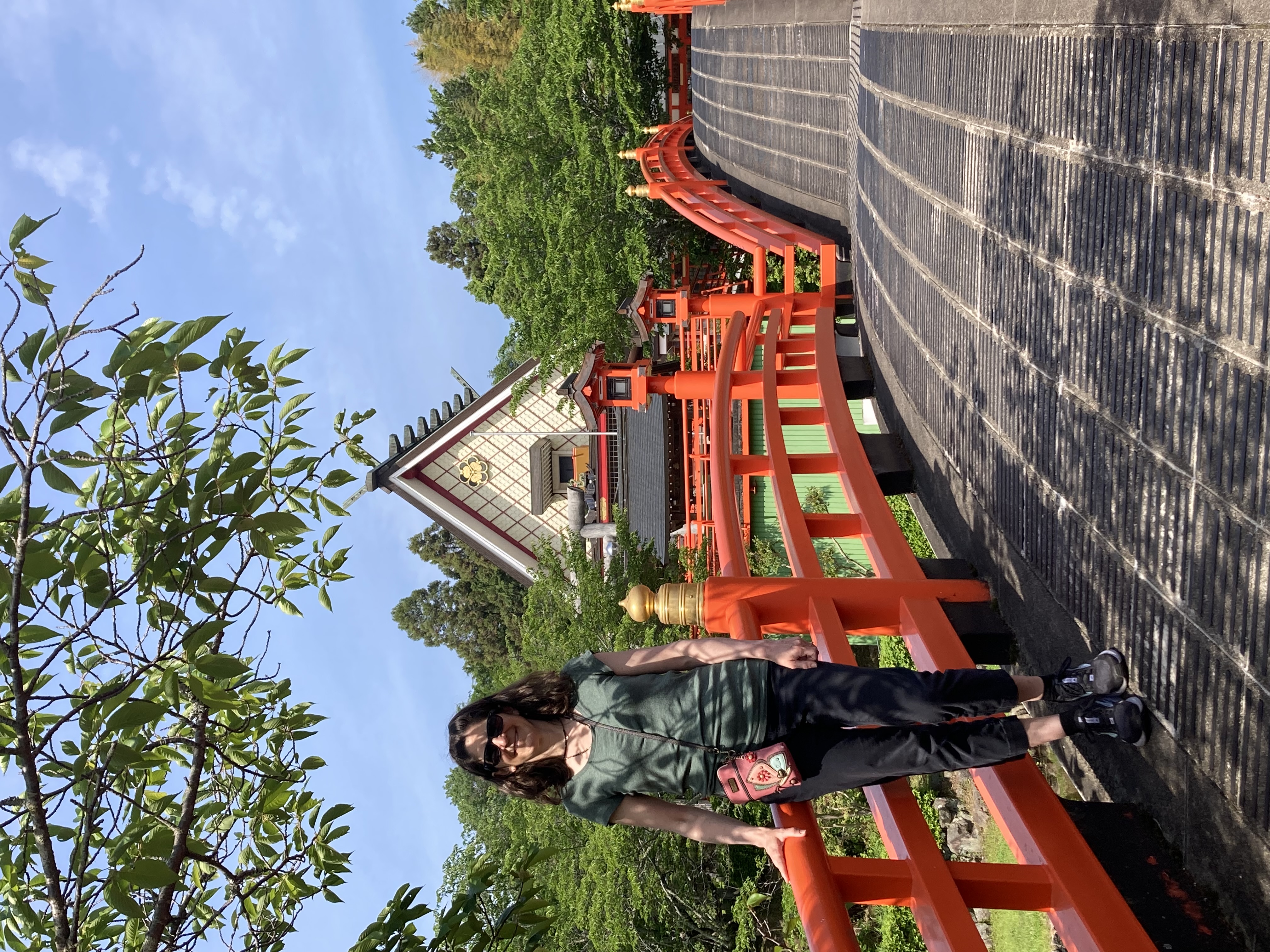
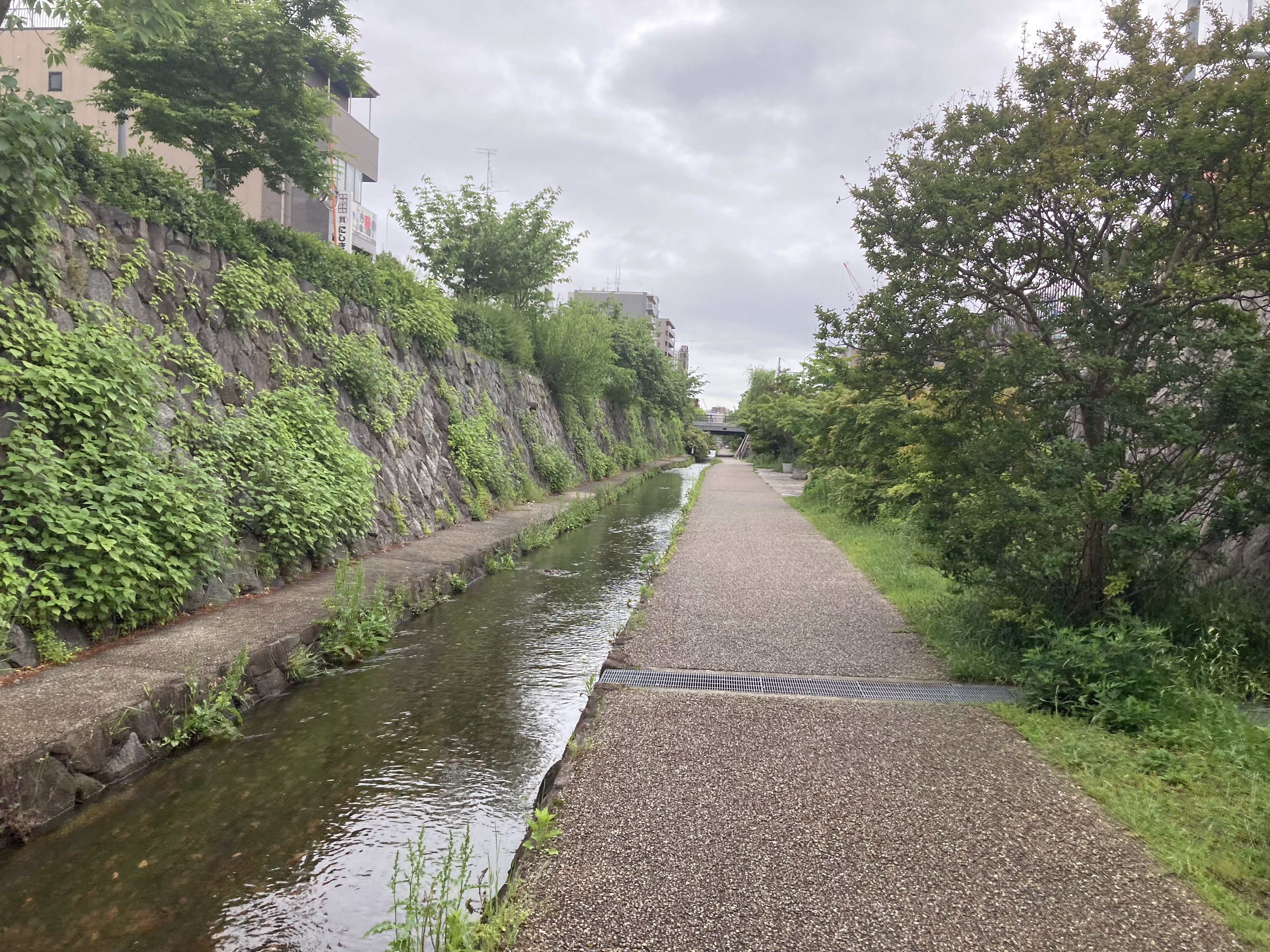
Bridge to the Nara neighborhood shrine
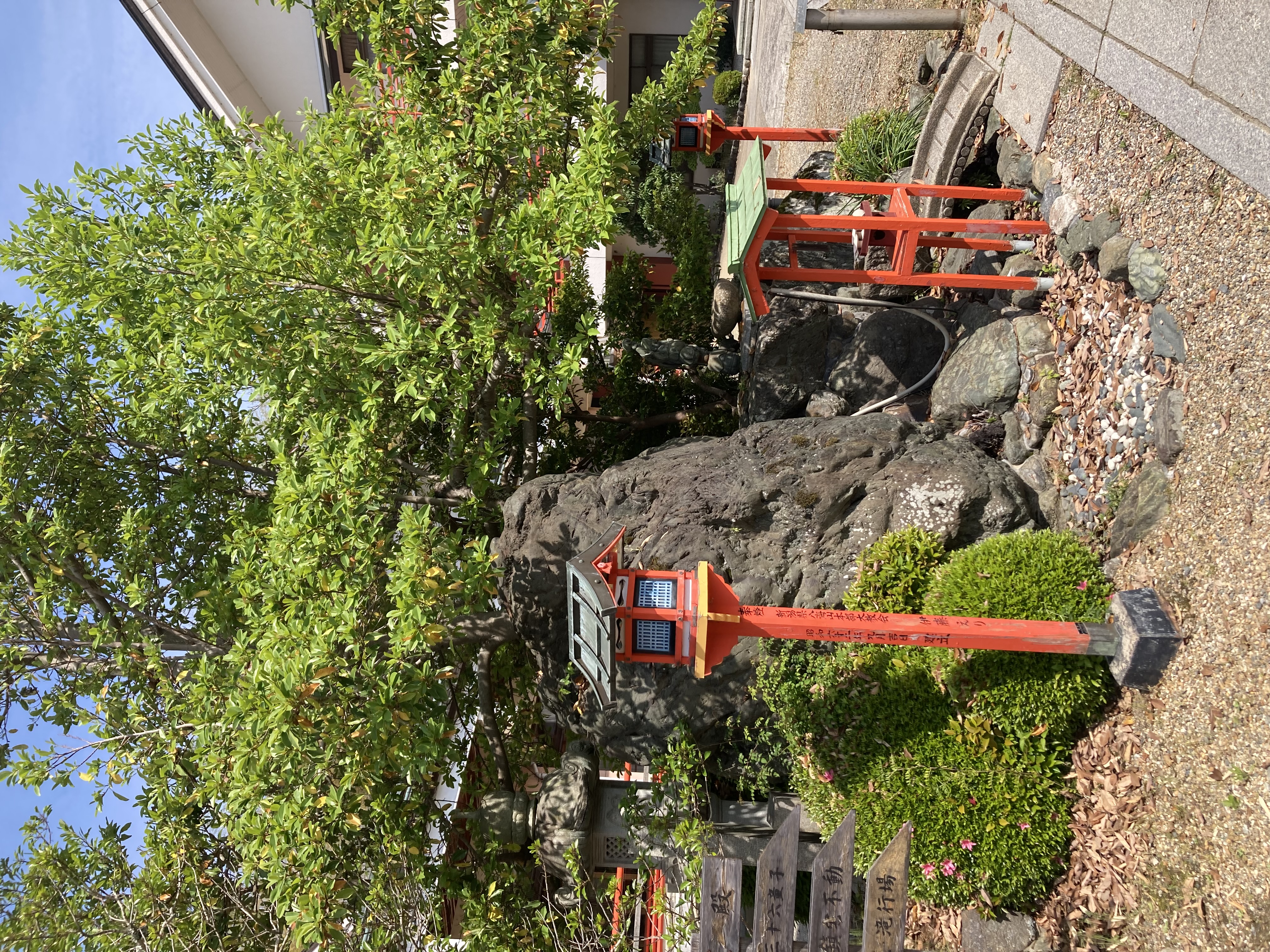
We had a bit of time in the morning, and Non had one more treat in store for me. She took me on a walk in her neighborhood to visit her “local shrine”. I was expecting something small and modest, but the shrine was absolutely beautiful. Best of all, we had it all to ourselves. Frequently when looking at these beautiful places in Kyoto, I was sighing to myself about how the crowds took away from the experience, and thinking how wonderful it would be to visit in peace and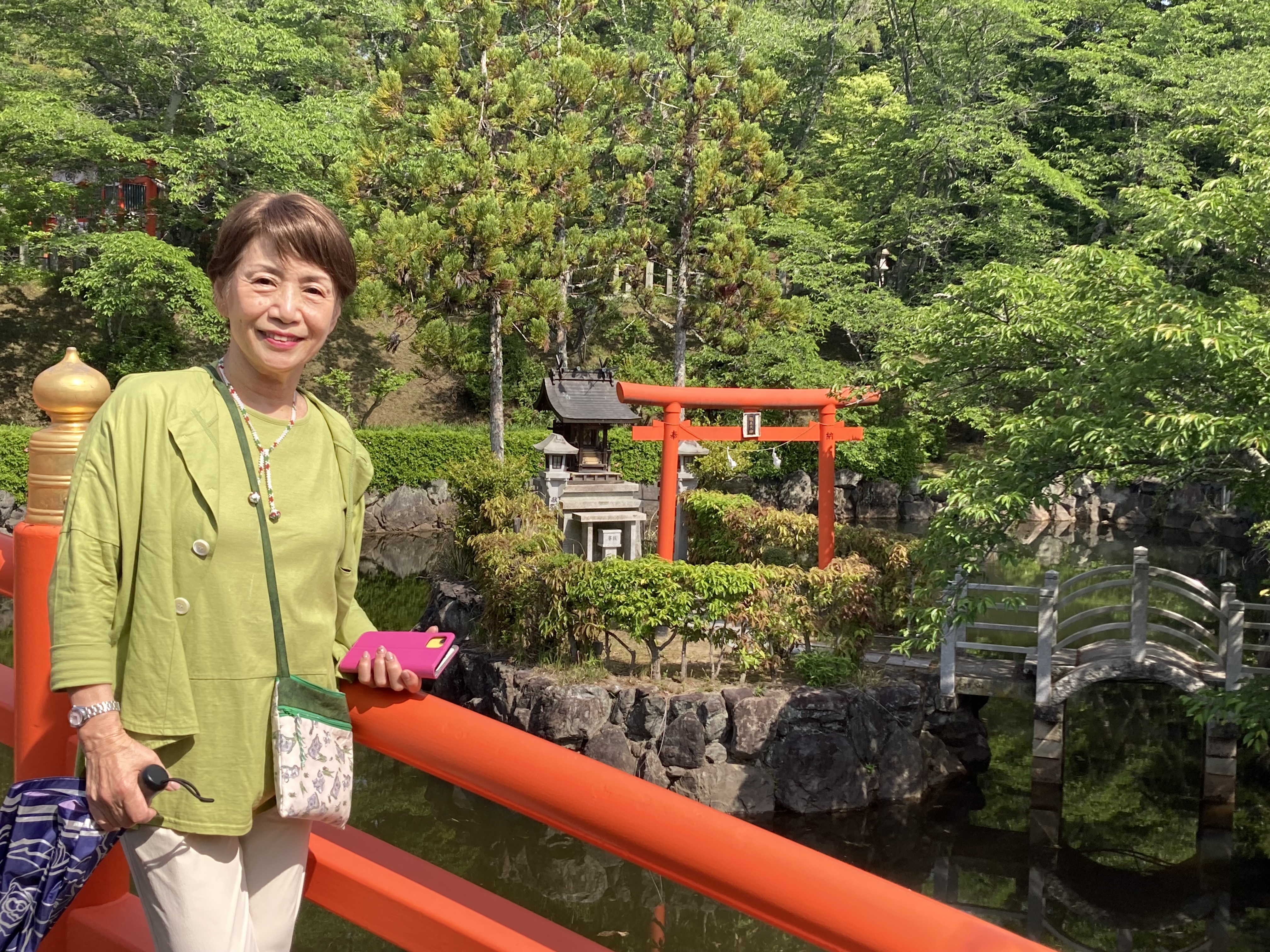 stillness. Today I got my wish. The only other person around was a monk, chanting and beating a drum from within the shrine. Non explained the significance of the various statues and writings around the shrine, and showed me a round marble ball engraved with good wishes for various aspects of life (including one for successful travel). (I thought it would be easy to look up the name of this shrine, but I have been foiled — so I’ll need to ask Non and update this later.)
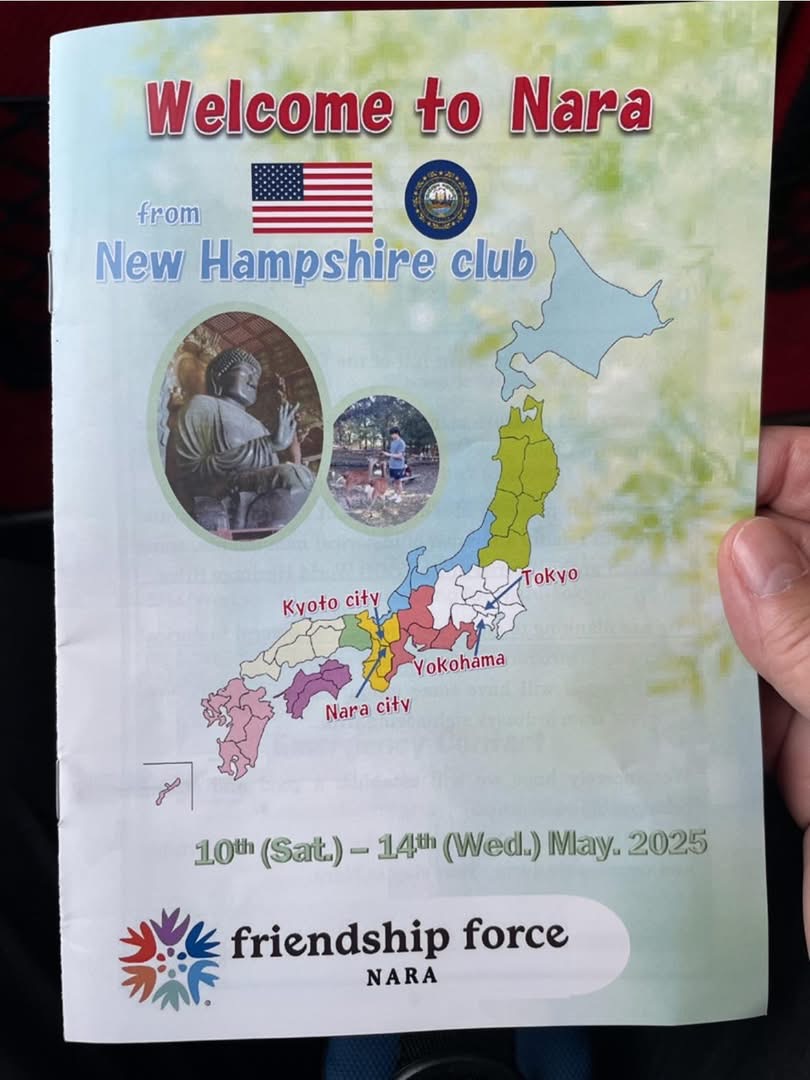
Soon it was time to say goodbye. We met the other members of the Nara club at the station. As always, they demonstrated their kindness and generosity by sending us off with individually packed lunch bags for the train. We very much hope that they’ll take us up on our offer to visit us in New Hampshire soon.
 We had to take one train from Nara back to Kyoto, then get on the bullet train (Shinkansen) bound for Tokyo. We had a bit of a snag because we’d lined up in the wrong place for our assigned seats, and had to race to get everyone on the train in time. (Japan trains are extremely reliable — even one minute late is considered unacceptable — so there is no wiggle room if you’re too slow to get on.) We were still on the wrong car, so we had to traipse through several cars full of curious school children, hauling our luggage behind us and probably bumping into people left and right. Despite some trepidation we managed to navigate Kyoto Station successfully, figure out where to line up, and get onto the right train car. (In Japan, people line up in neat queues when waiting for a bus or train.)
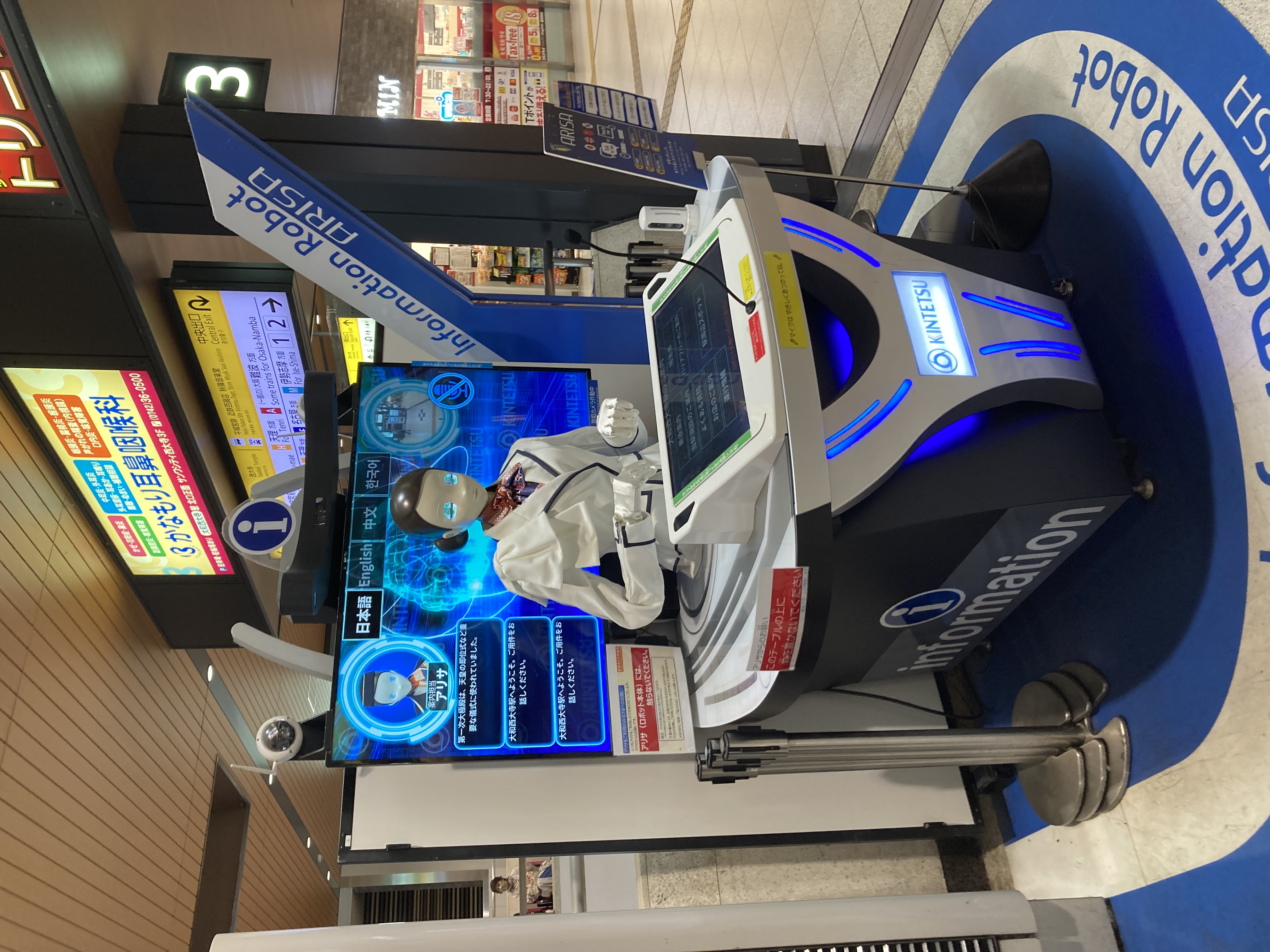
Robot assistant at Kyoto Station
The bullet train was a fun experience — clean, fast, and comfortable (like all the trains here). Our Nara hosts had told us what time to look out the window, and we were very excited to catch a glimpse of the top of Mt. Fuji, emerging dramatically above the clouds, seemingly impossibly high up. It was also very interesting watching the conductors. First off, there were multiple train staff walking through the carriage throughout the journey, ensuring that everything was clean and in order. We were sitting at the front of the carriage and saw that they would stop and bow before entering each time. They also performed a set sequence of movements — with a sort of military precision — where they would point to each item on their checklist (bathroom, trash bin, etc). as they went through their checks. We’ve noticed that people seem to really take pride in their work here, even jobs that we would consider fairly menial.
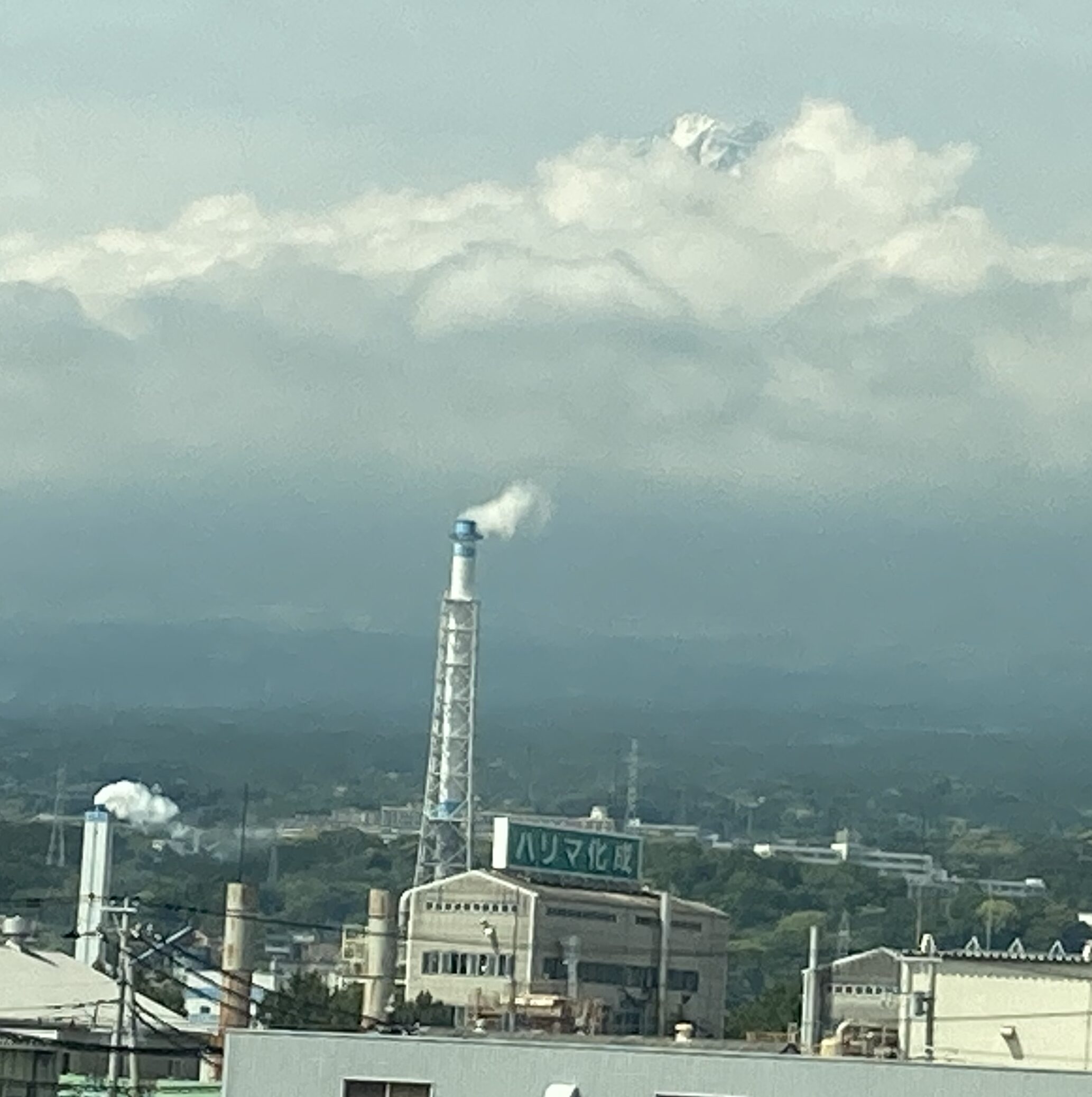
Peak of Mt. Fuji above the clouds!
In under three hours, we had arrived at our destination west of Tokyo. Our hosts are the “West Tokyo” group, and we found that this is not centered in a specific town, but rather a collection of people who live in the western suburbs of Tokyo. We got off the train to find an enthusiastic welcome committee smiling and waving. From there we dispersed with our hosts to various train lines leading to the different cities and towns in the area. I’m very glad we didn’t have to figure out the train system on our own — it was extremely efficient and brought you anywhere you wanted to go, but also seemed fearsomely complicated.
Margaret and I are staying together, with a host named Yoshie. She is a very interesting woman who has traveled all over the world and lived in Qatar for a time when her husband was a diplomat there. We took the train to nearby Yokohama, where Yoshie lives. Yokohama is a major city in its own right — the third-largest in Japan. Yoshie was a wonderful host. Despite being in a more urban area where space is at a premium, we each had our own comfortable room. Yoshie took us for a walk around her neighborhood and to a cool, tree-lined park, which was just the right antidote to a day of travel.
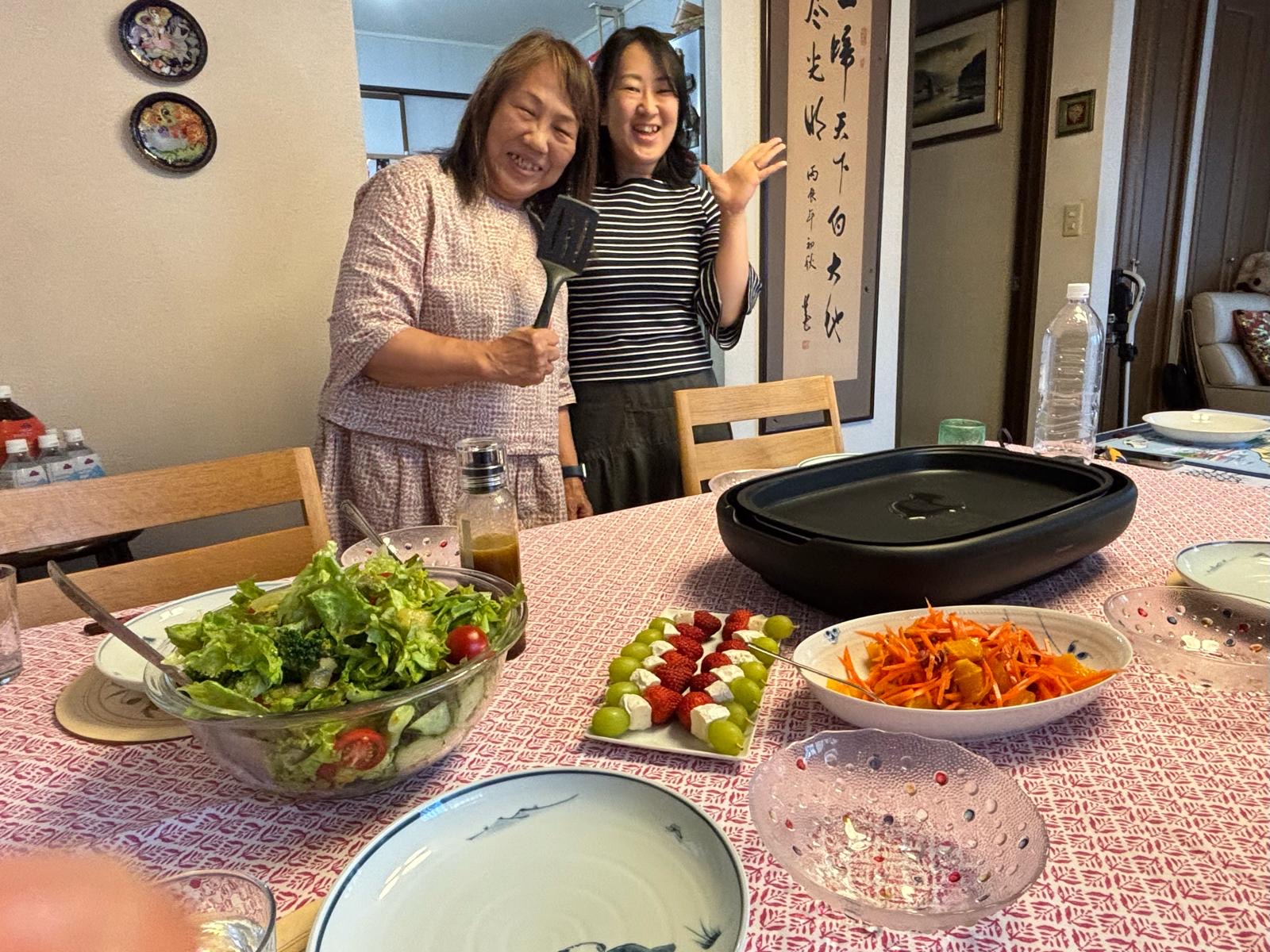
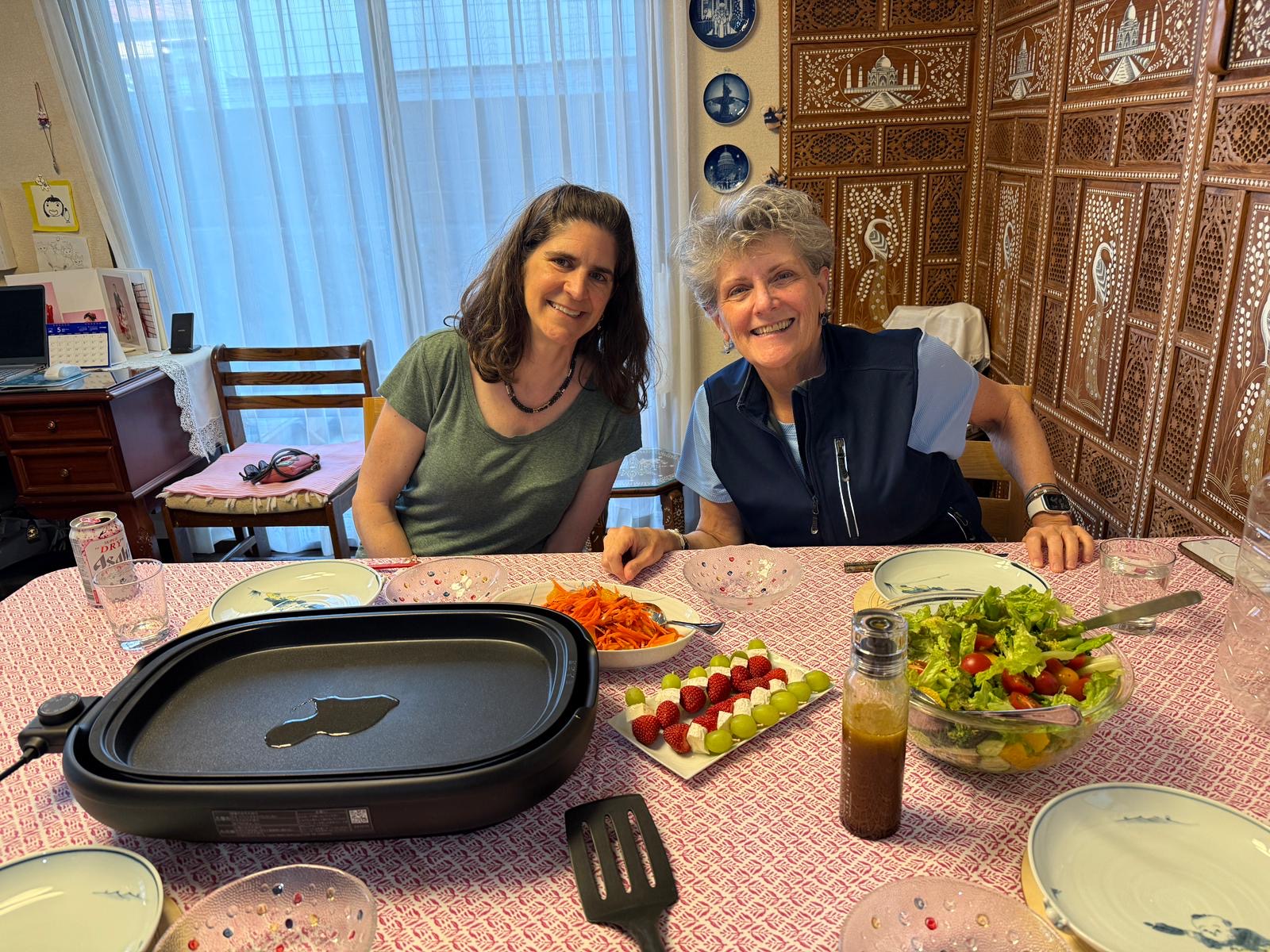 A little later on Yoshie’s daughter came over to help prepare dinner for us. She made okonomiyaki — Japanese pancakes with cabbage, egg, yam, and seafood (which Yoshie calls “Japanese soul food”) — similar to what we’d had in Nara. It was delicious, just as before. Yoshie’s daughter was also very kind and welcoming (and as seems to be the norm, looked far younger than her age of 38). Later on Yoshie’s granddaughter, age 12, joined us as well, after completing her school day. She goes to a private school, and has class 6 days a week — plus long days and homework.
We loved the hustle and bustle of our time in Nara, but it was also nice to have a more laid-back day today as well. We’re resting up for more exploration tomorrow.
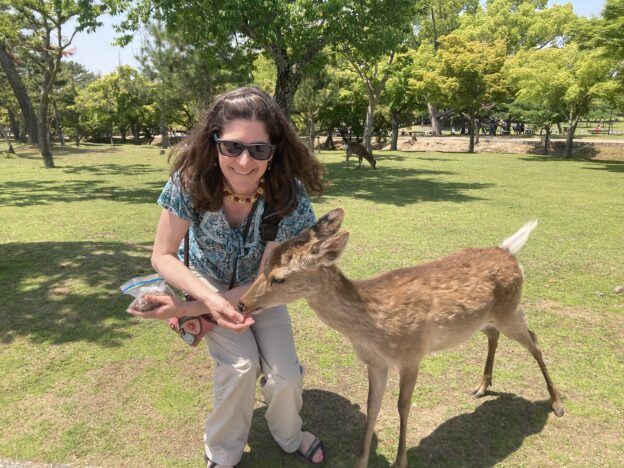
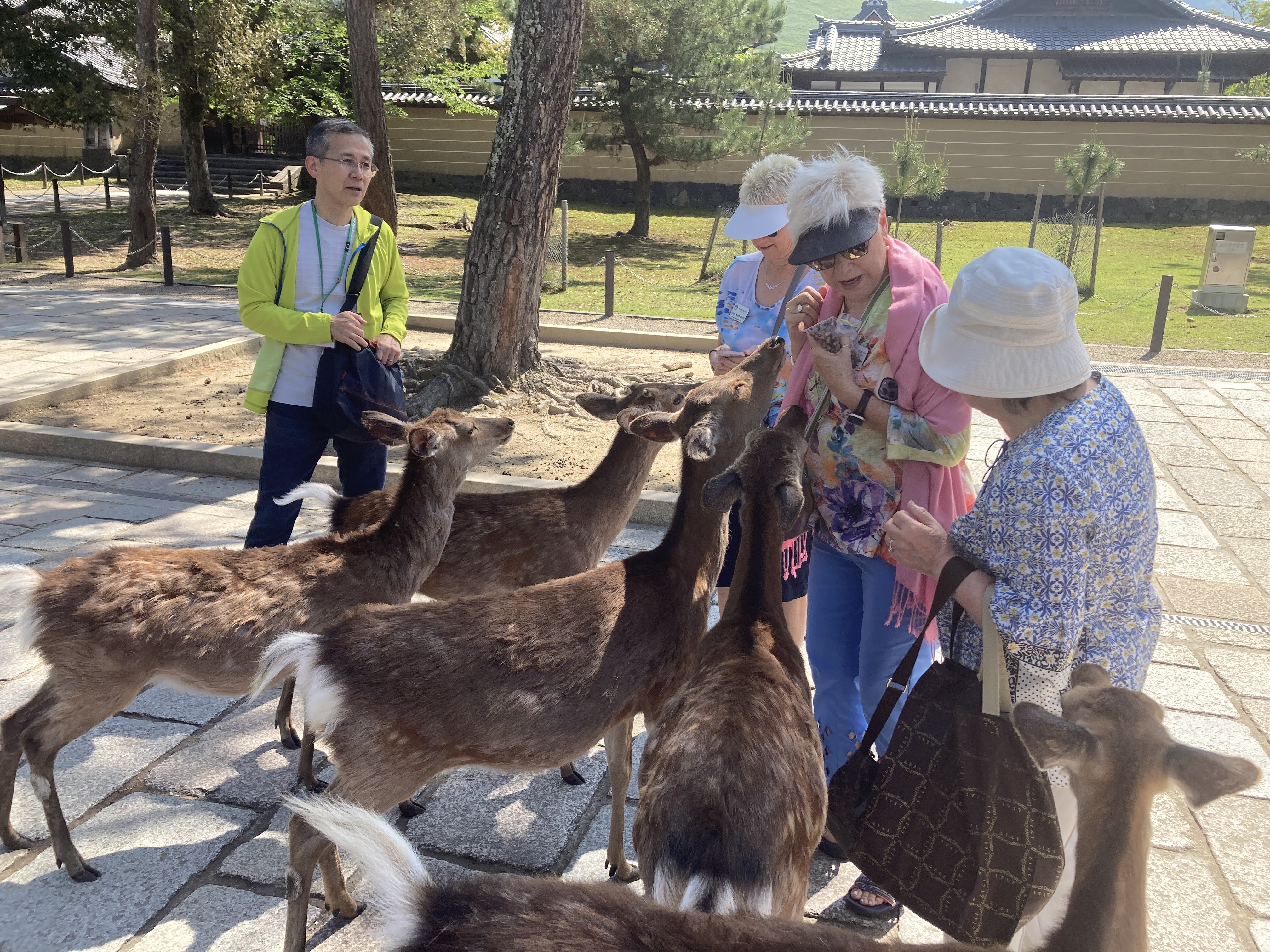
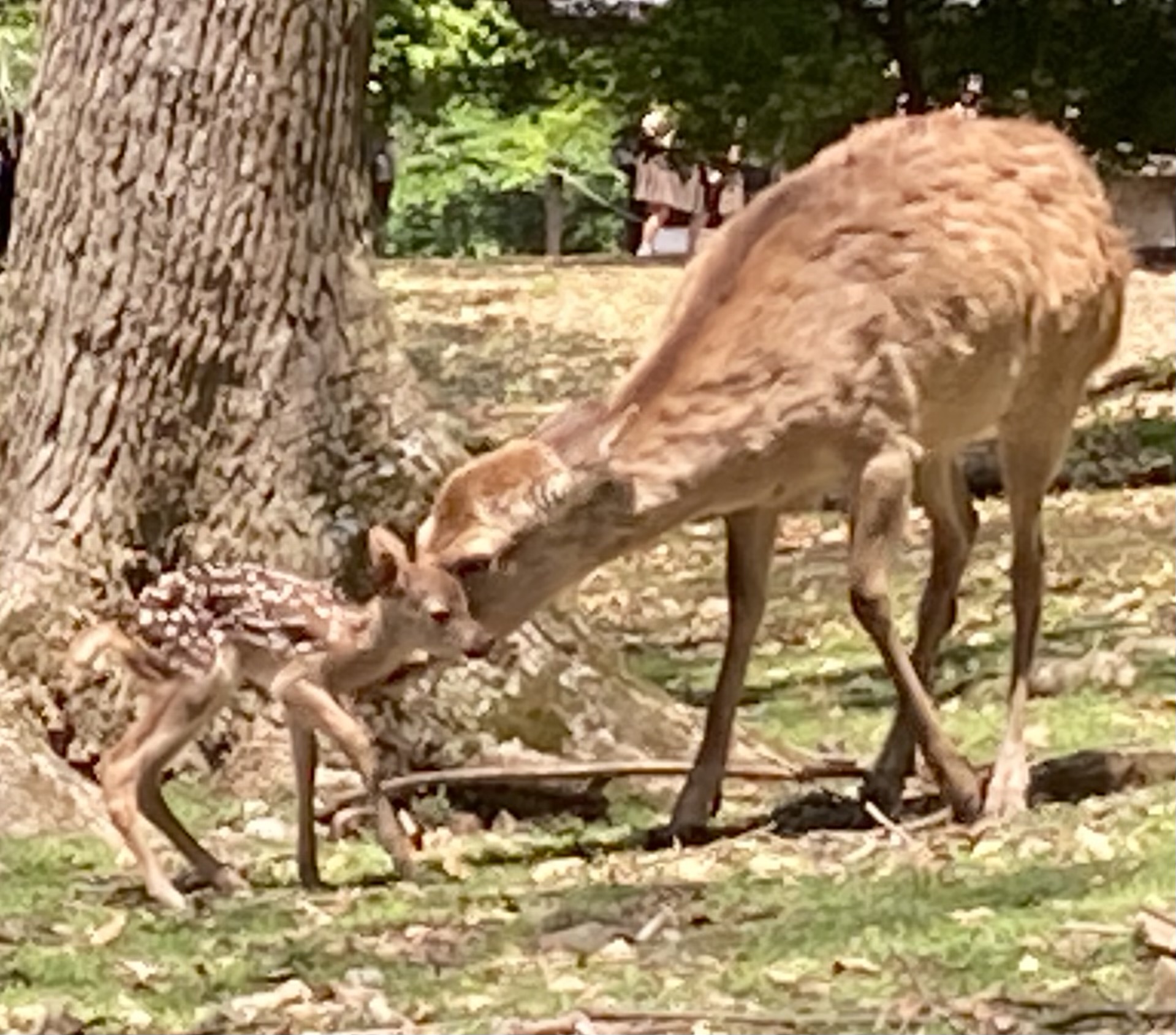
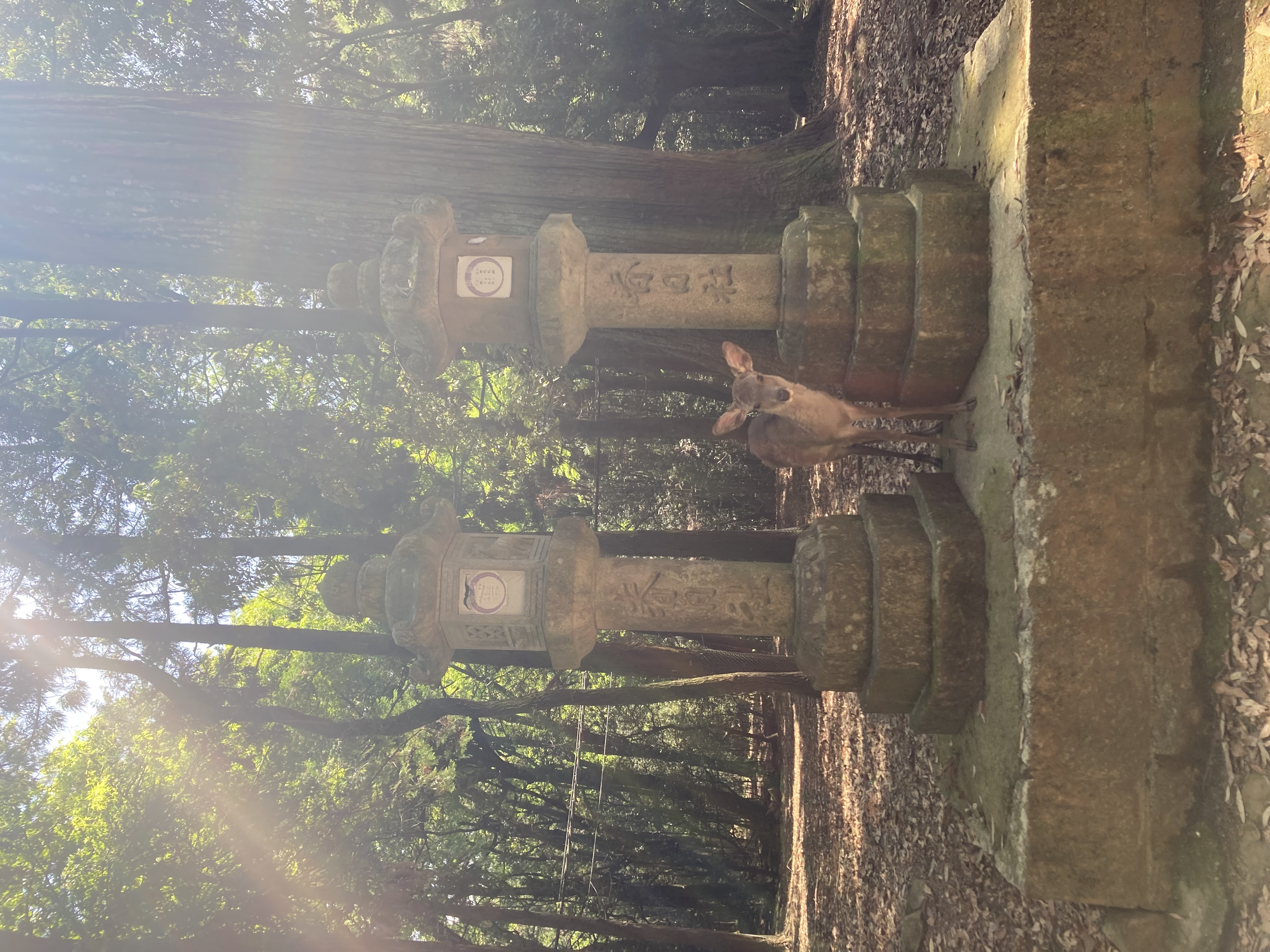
 protected in this park for over 1300 years, and have become very tame. Yoshi, the club member who was our guide in the park, told us that the deer have been studied, and have different DNA than regular wild deer. Tourists come to the park to feed the deer special deer crackers, but one of our hosts kindly took the time to gather each of us a large bag of acorns to use as deer food. Amazingly, the deer have learned to bow to you when asking for food. It’s very cute — until you come upon
  one of the few aggressive deer who doesn’t want to take no for an answer. Then you have to make a quick retreat before your acorn bag is snatched from your hand.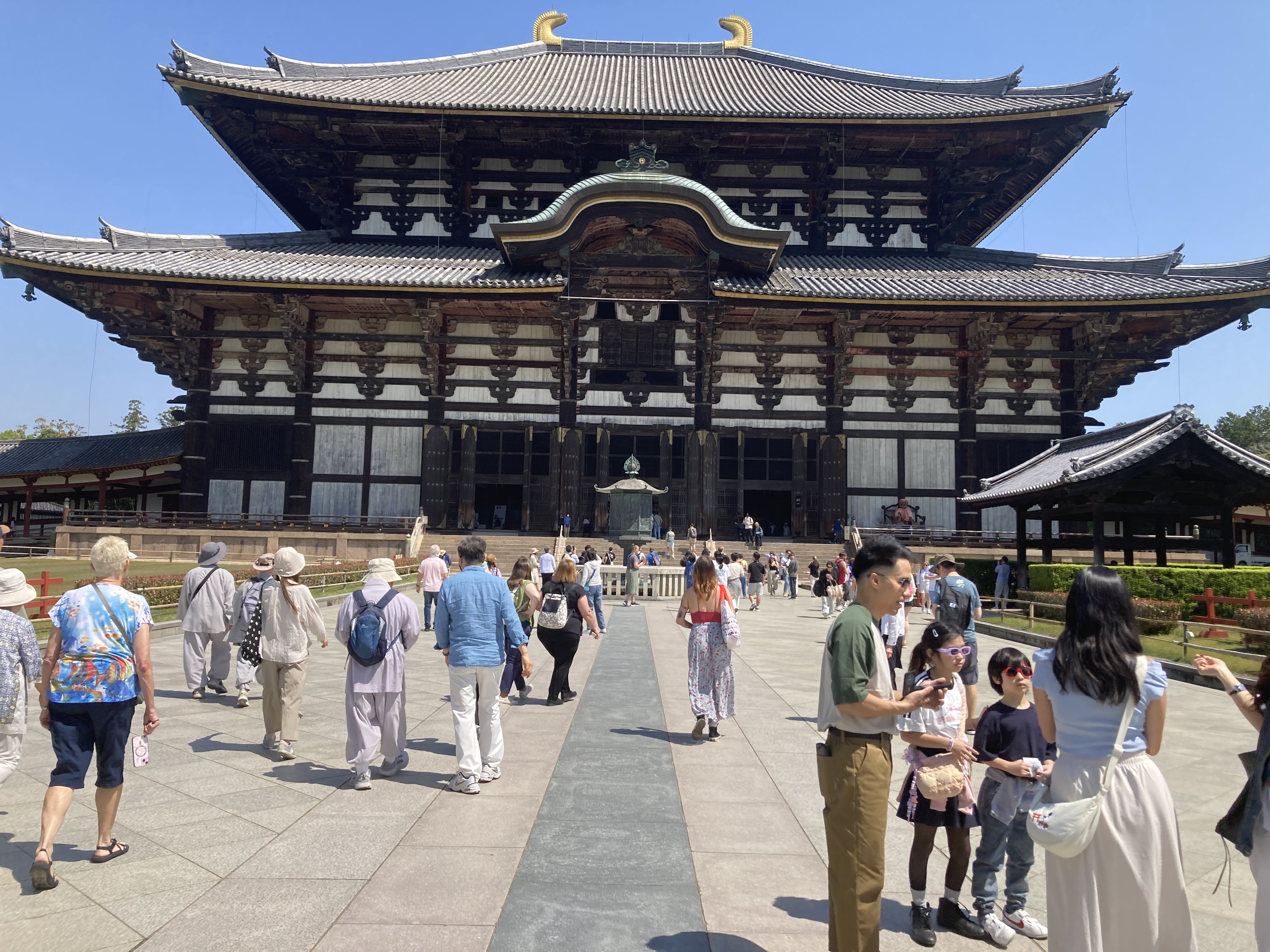
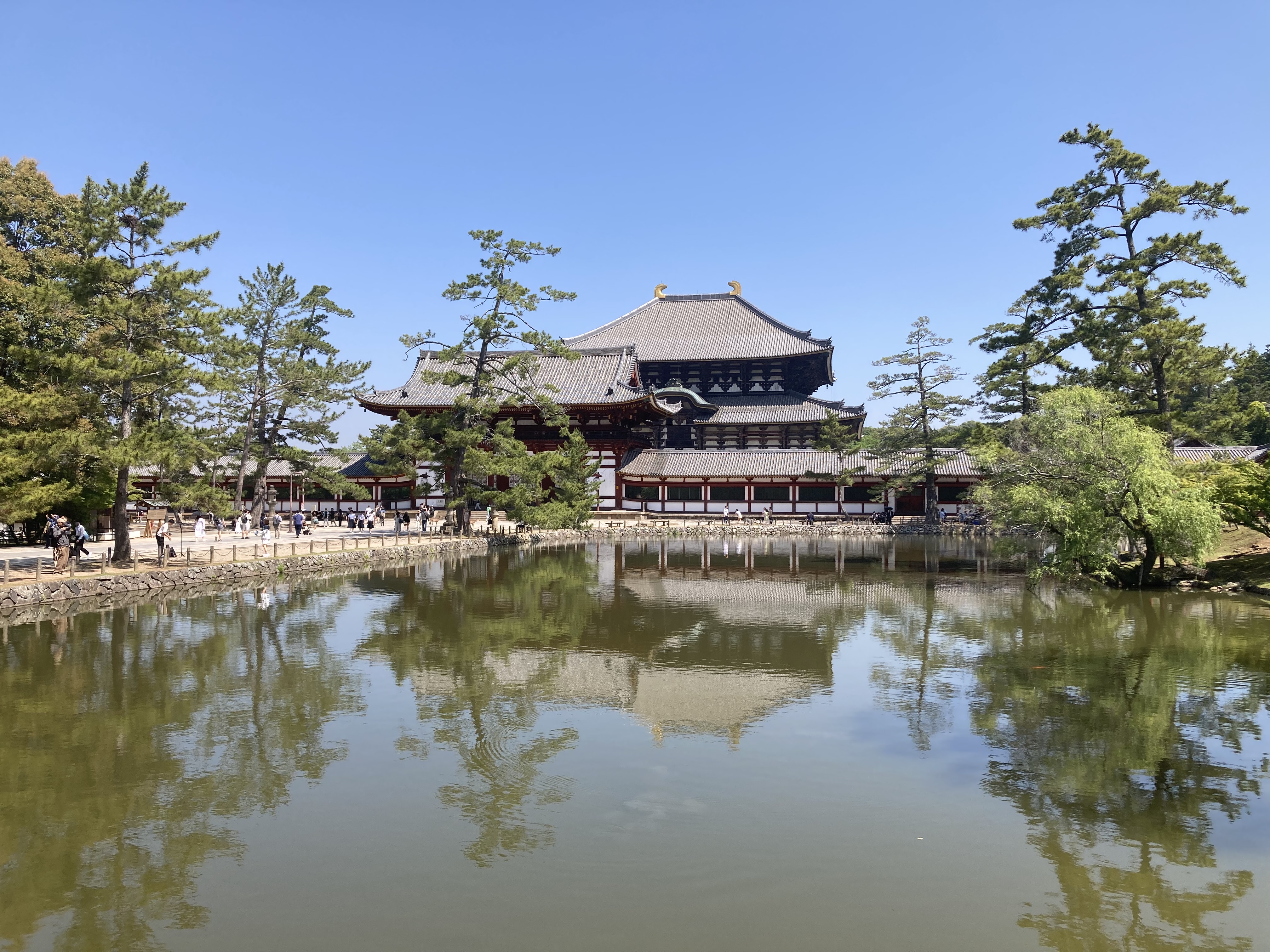
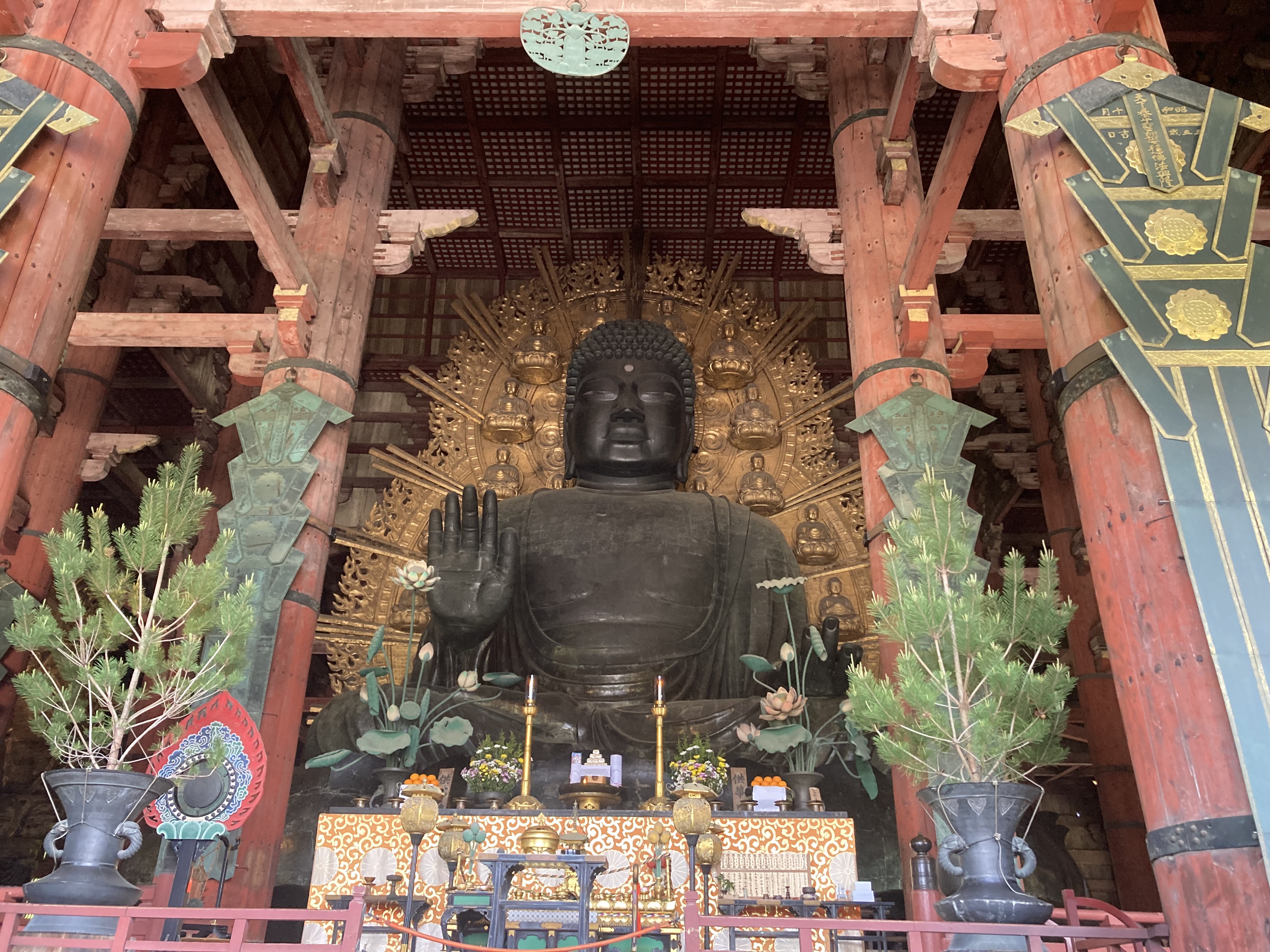
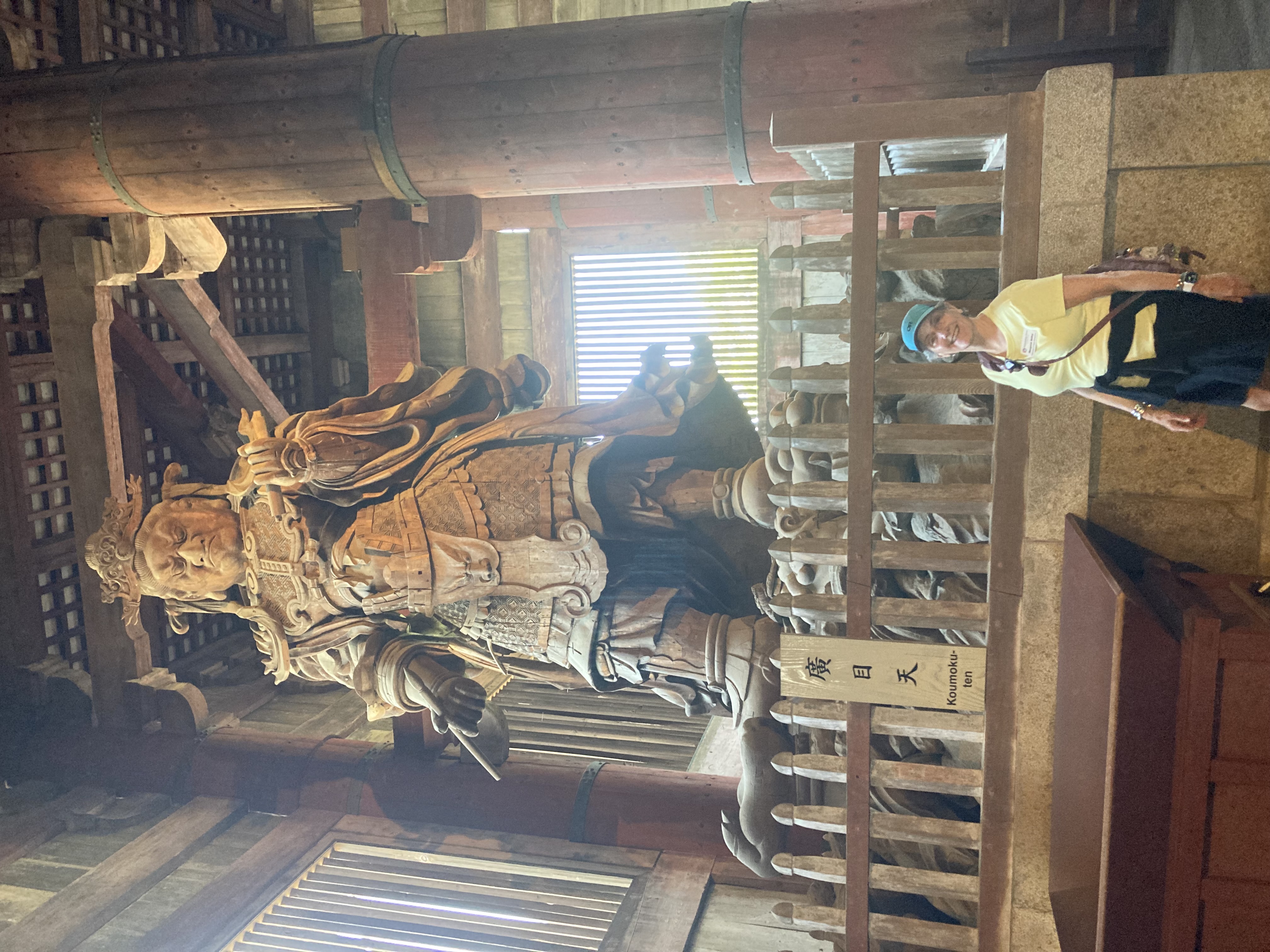 The main building is huge, with soaring ceilings, to accommodate multiple enormous statues, including a huge golden Buddha. Until recently it was the largest wooden building in the world — but prior to its destruction by fire a few hundred years ago, it was 1.5 times larger! Yoshi led us through and explained the significance of all the different elements. At the base of one of the pillars is a hole that is the same size as the giant Buddha’s nostril. You can squeeze through it for good luck. None of us attempted this feat, but we saw many schoolchildren doing it.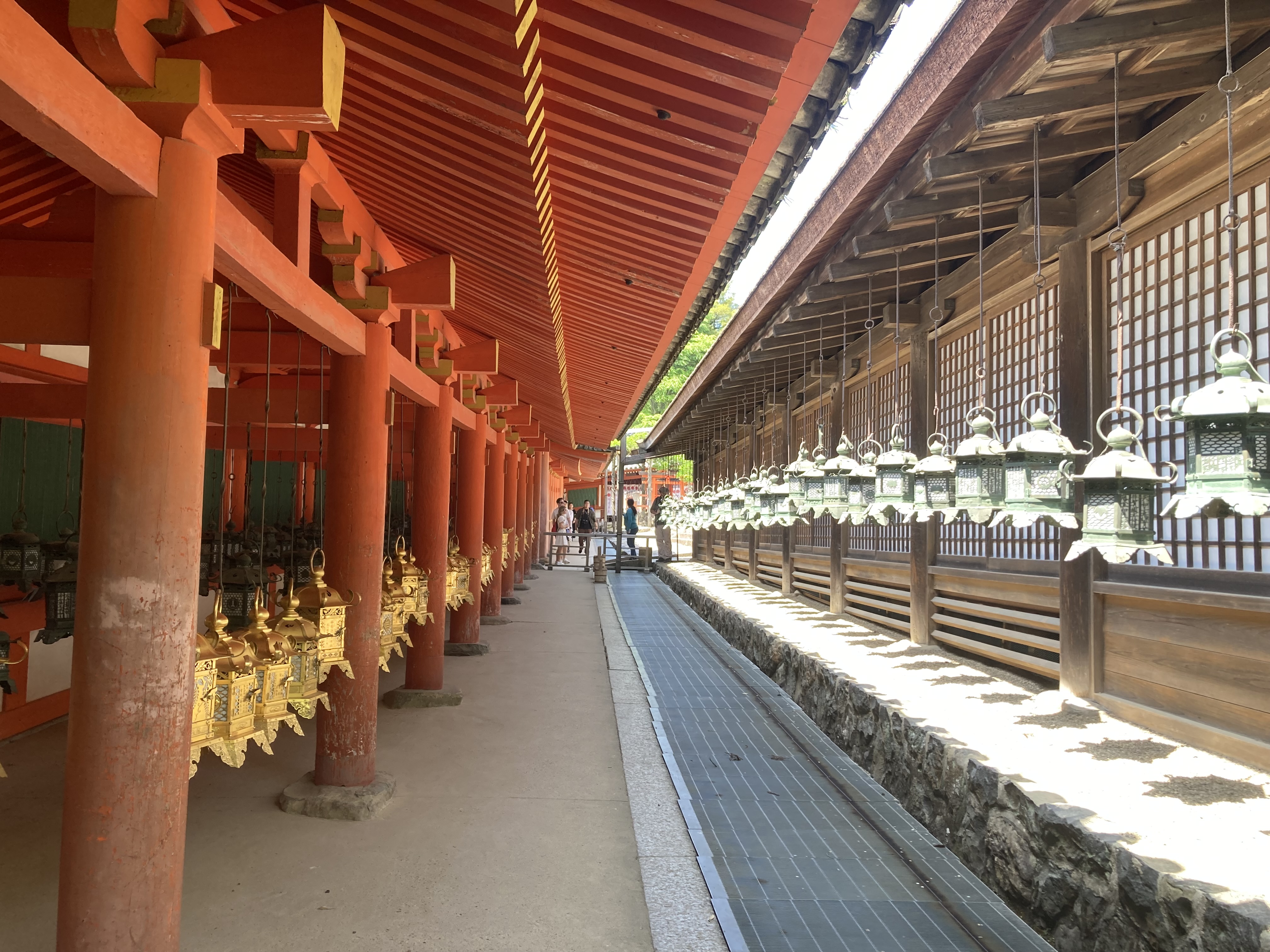
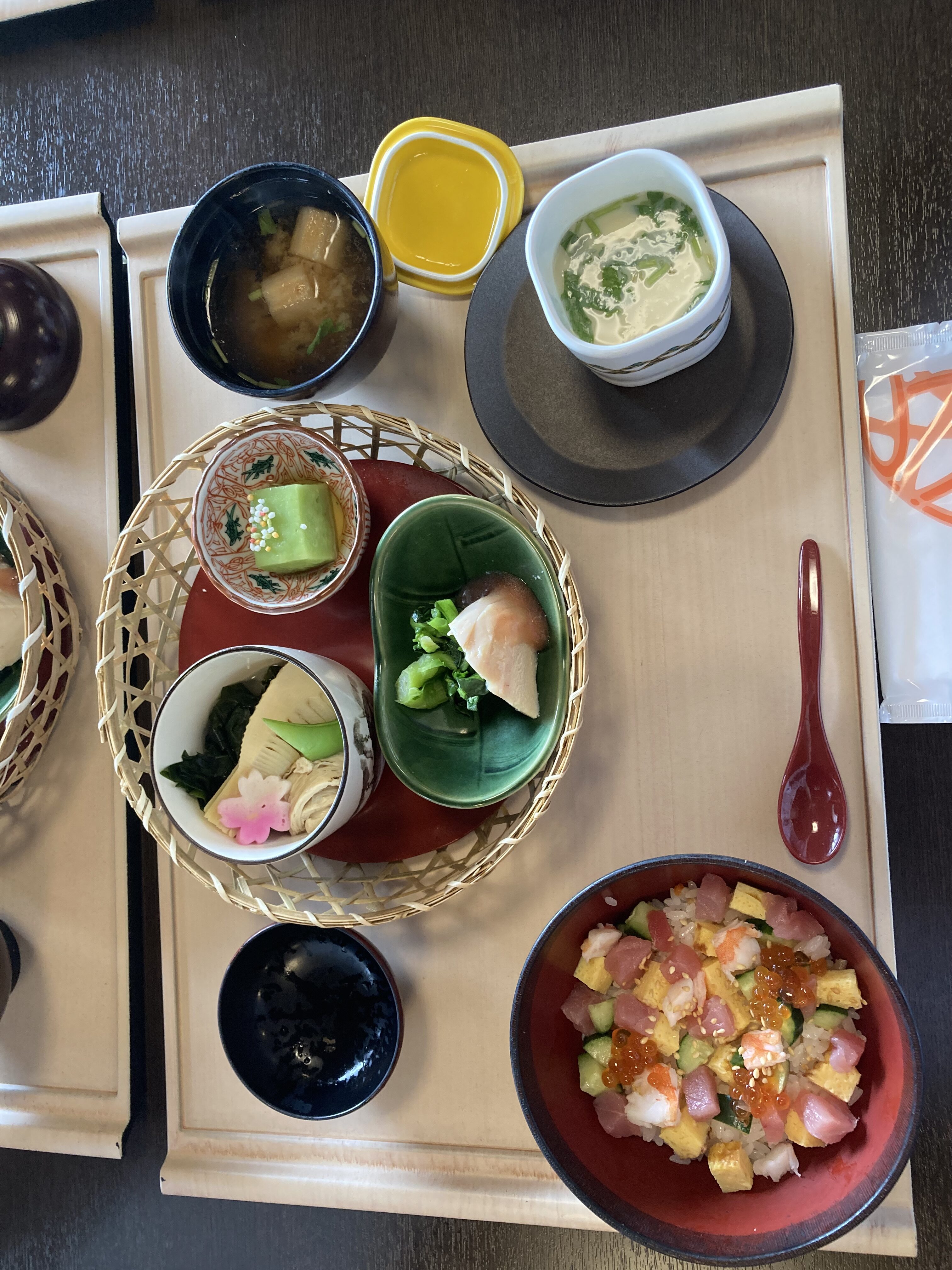
 For lunch we were provided with another classic Japanese experience — the bento box. In the kind of
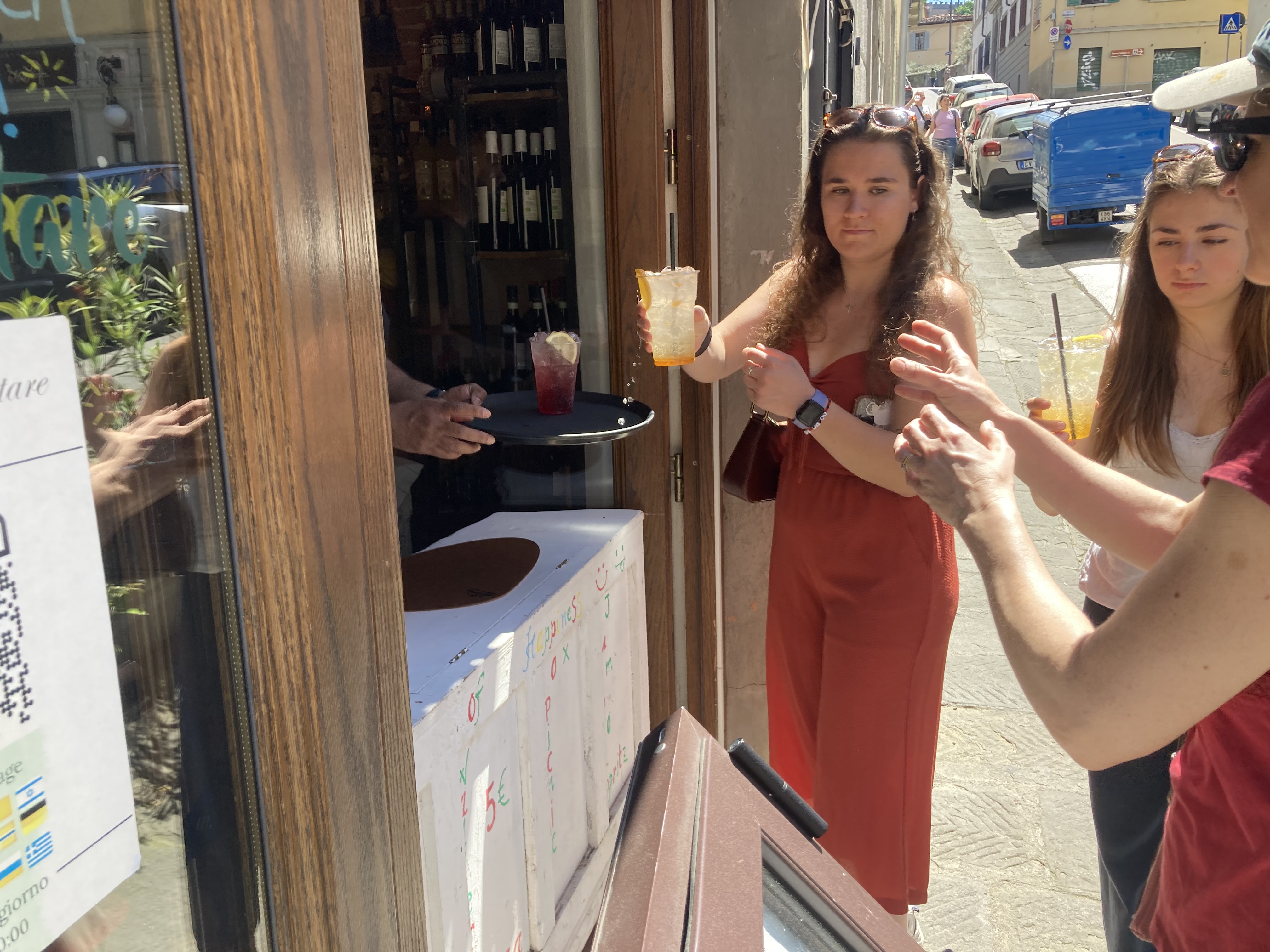
 After the park we did a little shopping then refreshed ourselves with lemonade and iced lattes at a nearby cafe. (It was a pretty hot day. Even though the thermometer only registers in the seventies, we’ve found the “real feel” to be much hotter here.) When we got home, Non said we had 30 minutes until leaving for dinner. I was thinking about a bit of a rest and cleaning up from the day, but not five minutes later she was calling me to head out. Toko and her husband had arrived in a bright pink car to ferry us to the farewell
 dinner.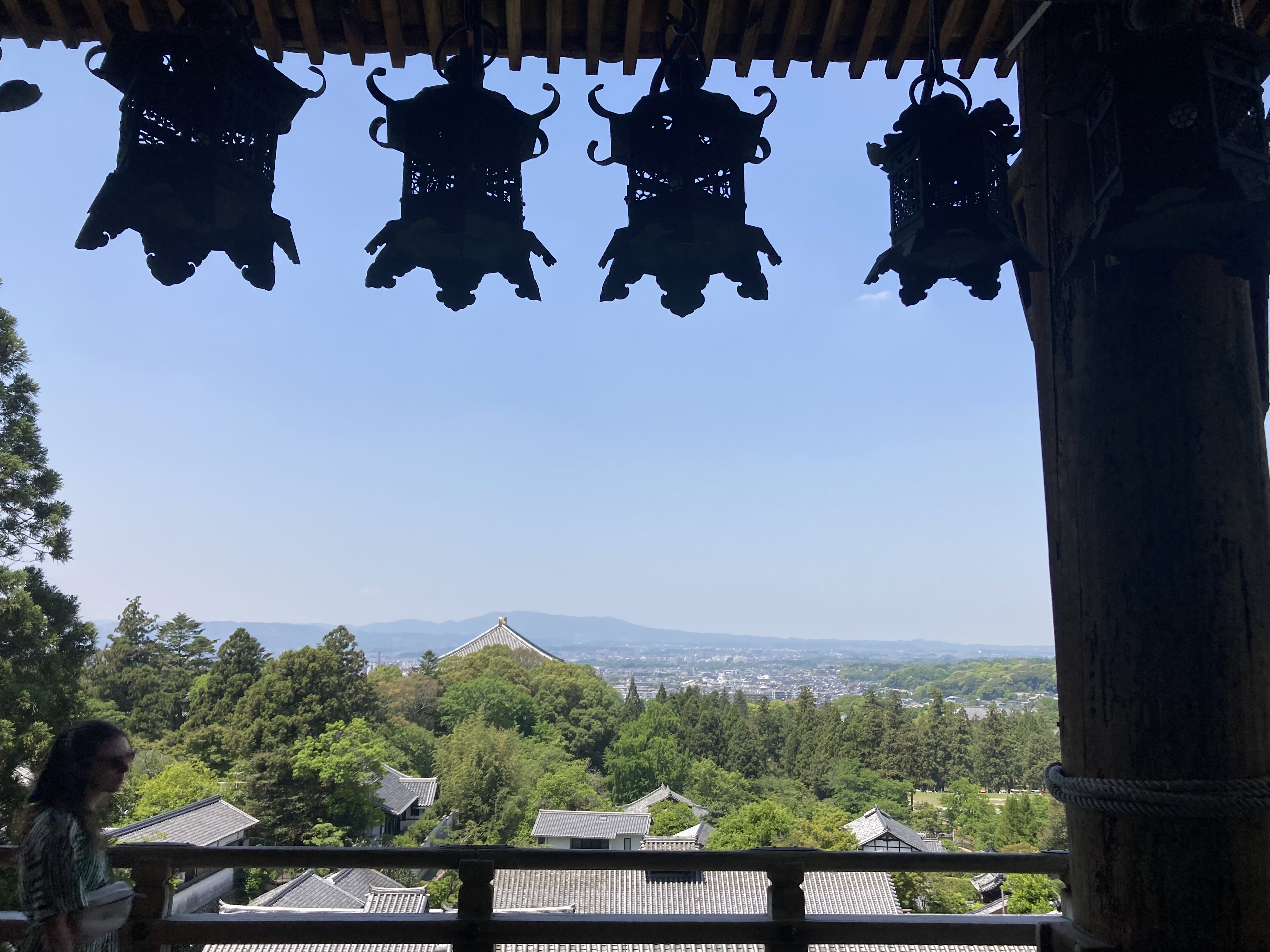

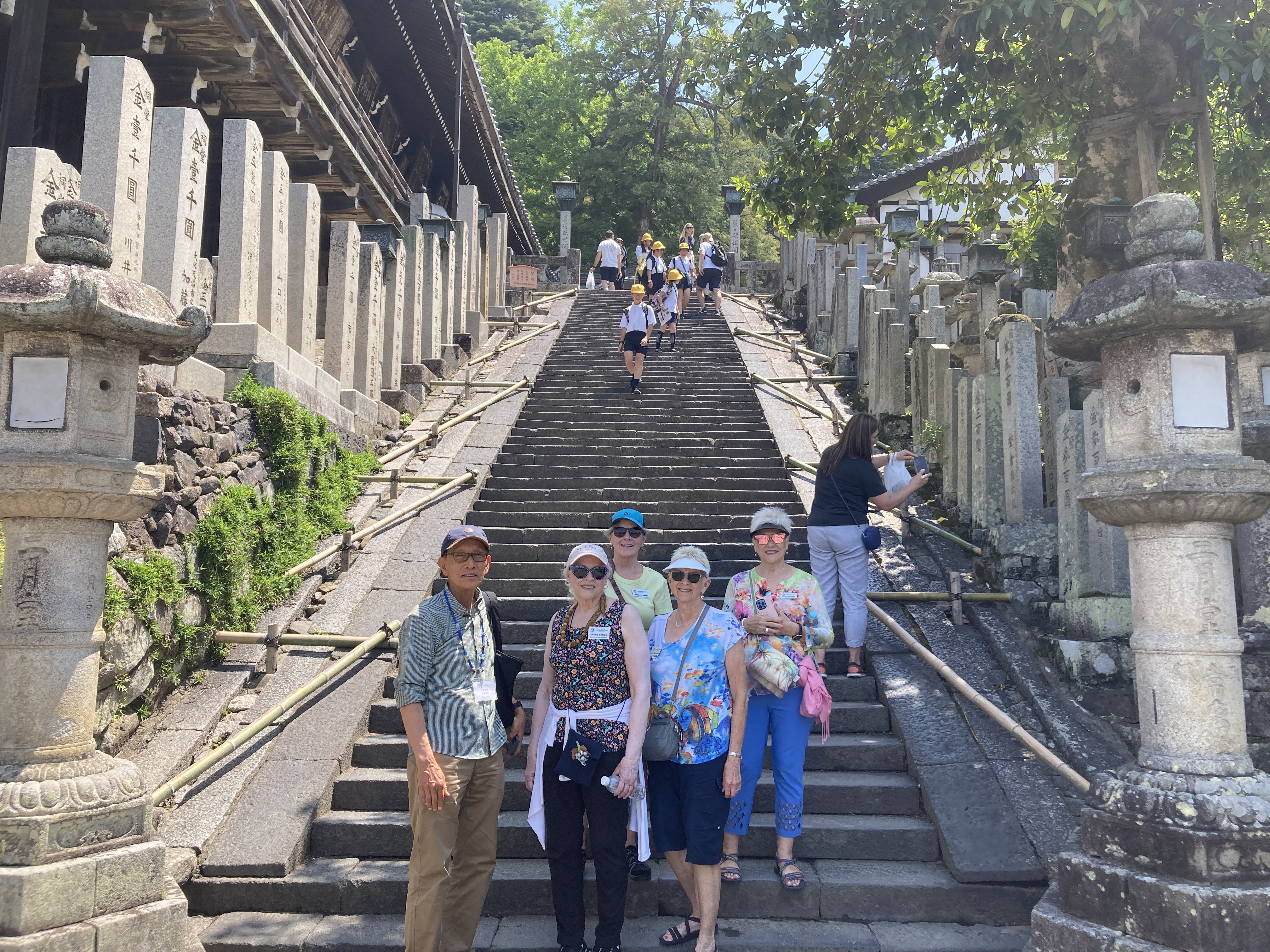
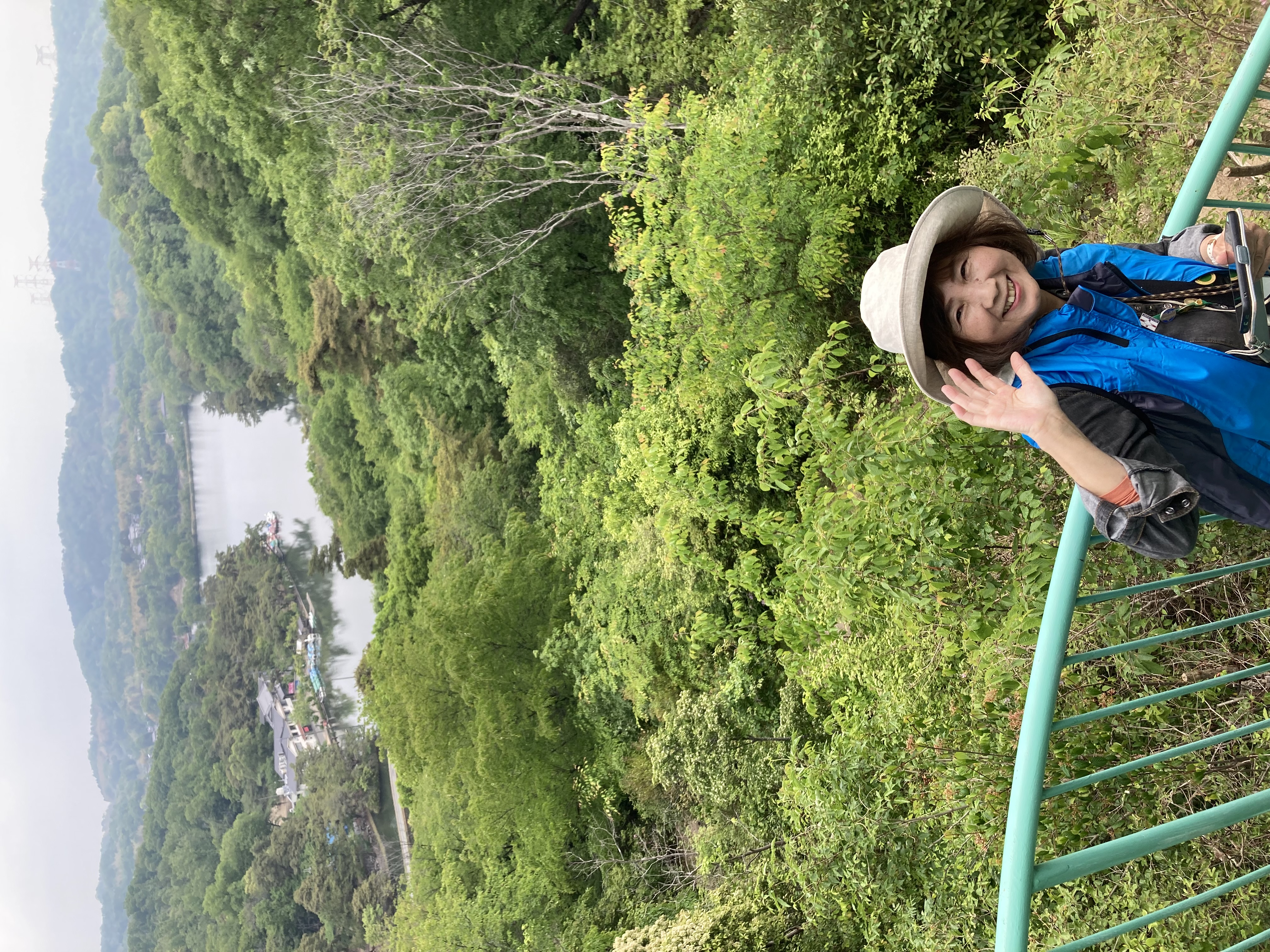
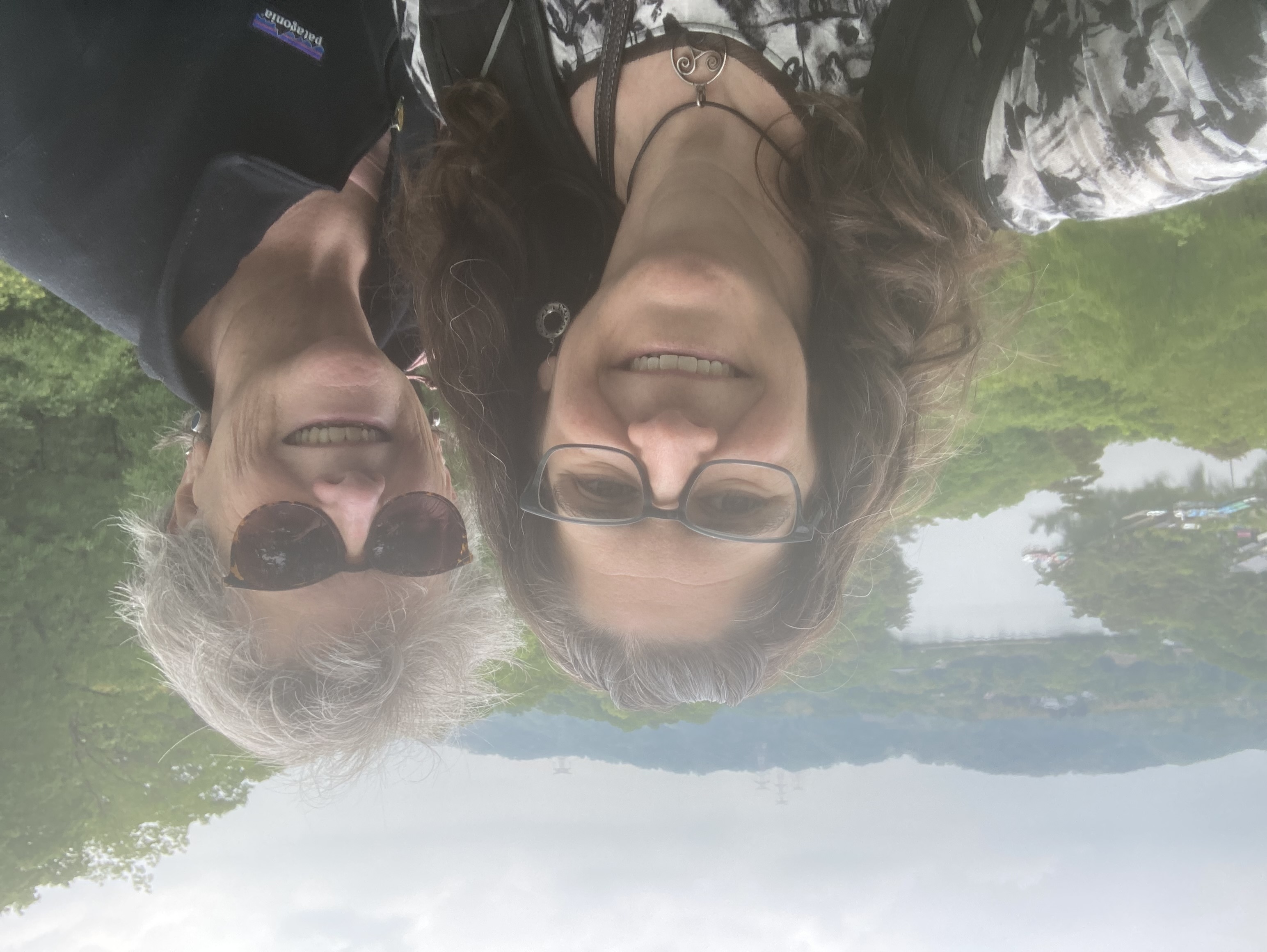 Today began with a hike and picnic in a nearby park. We walked along a path around a pond, and up quite a lot of stairs to get to a viewpoint across Nara. Many of the Japan club members hiked with us, including their oldest member — who we think we heard was 85. It was amazing seeing her climb all those steps.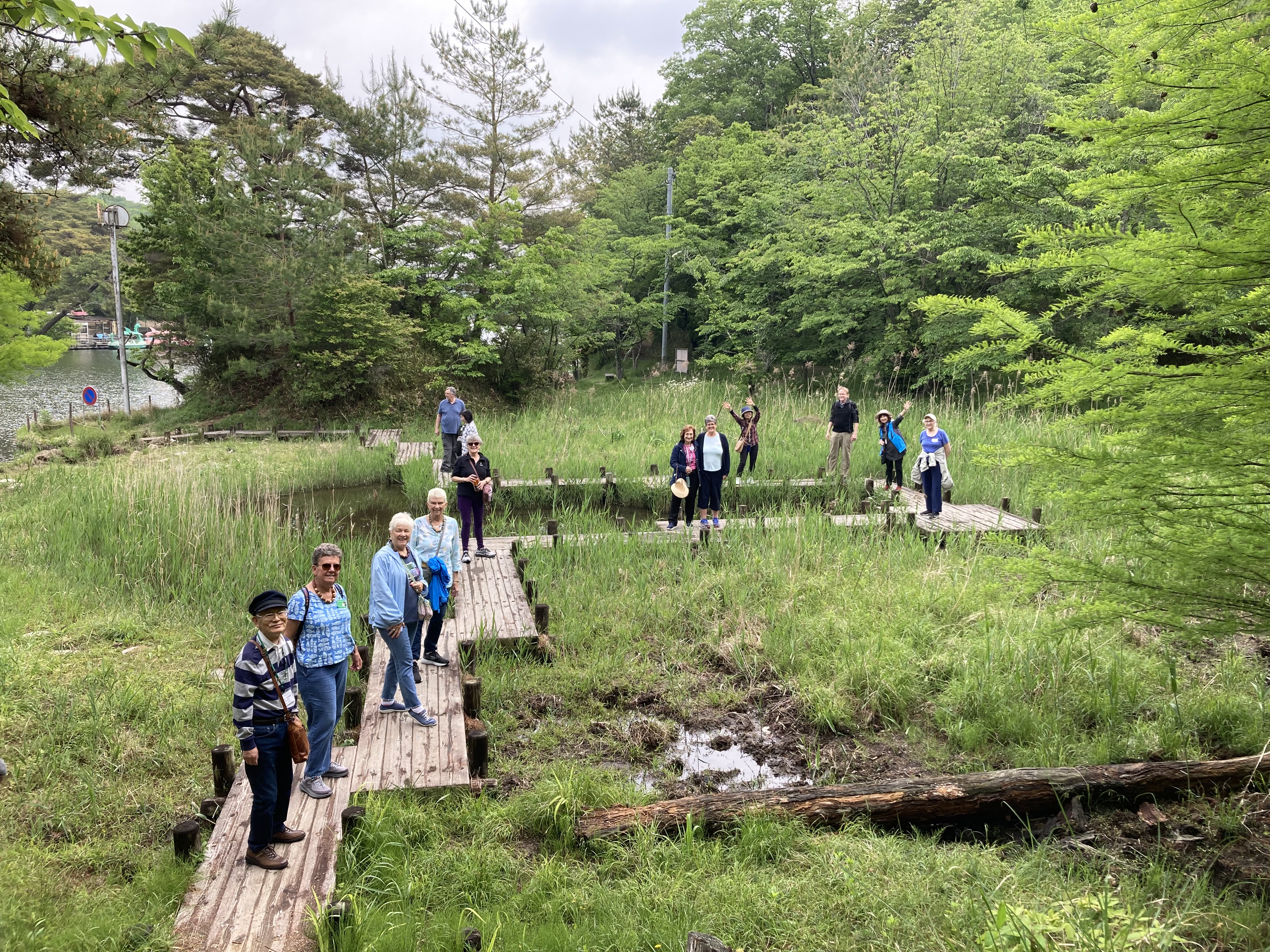
 welcomed by other club members who hadn’t been on the hike. They were dressed in beautiful kimono, and whisked us into a dressing room to be prepared for a Japanese tea ceremony.
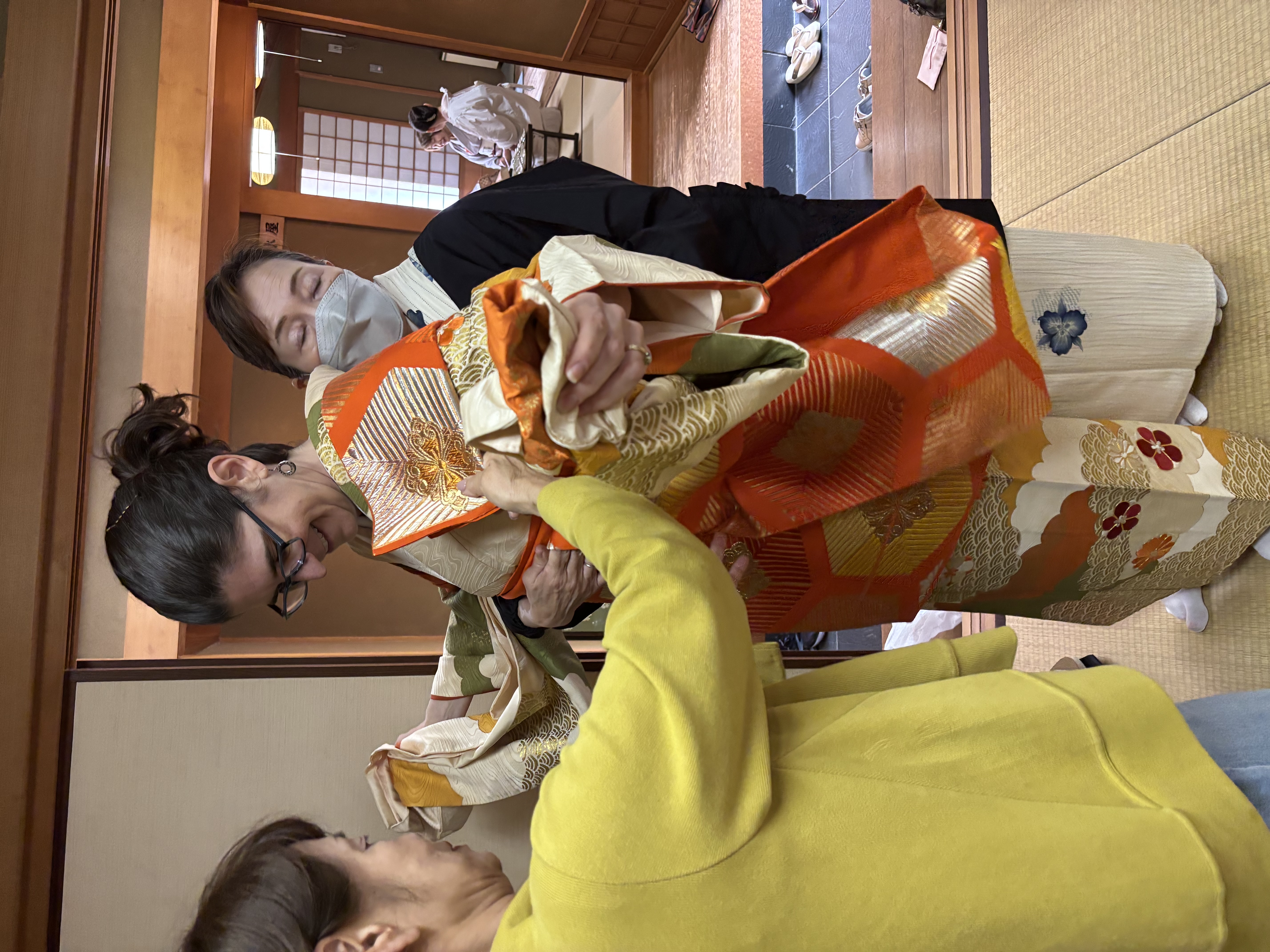
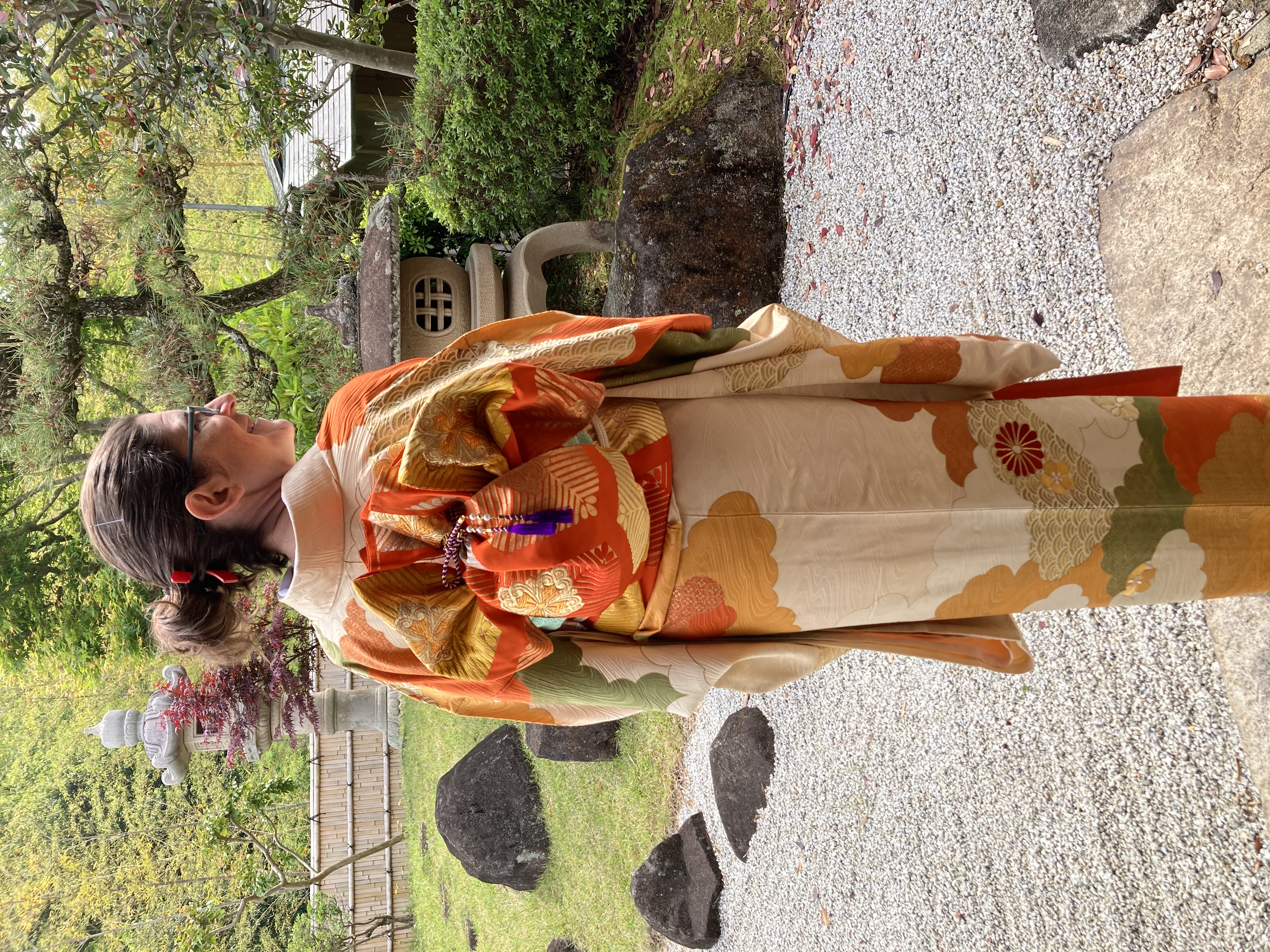 share with us, which made the event even more special. Non’s friend Toko brought me a kimono to wear that had been hers when she was 20 years old — over 50 years ago! It was still in perfect condition. Toko used to work in a kimono shop, so I had a real professional taking care of me. I have no idea how women manage to put on a kimono by themselves — both Toko and Non were working hard, one in front and one in back, to
  get me strapped in. There were innumerable belts and ties to hold the kimono (and your ribcage) tightly in place, and many many different layers of fabrics. We felt a bit like the women in the old movies who had to hold on to the bedpost while their maids laced them into corsets. My kimono fit me reasonably well, but I couldn’t take a very deep breath and had to take very small steps.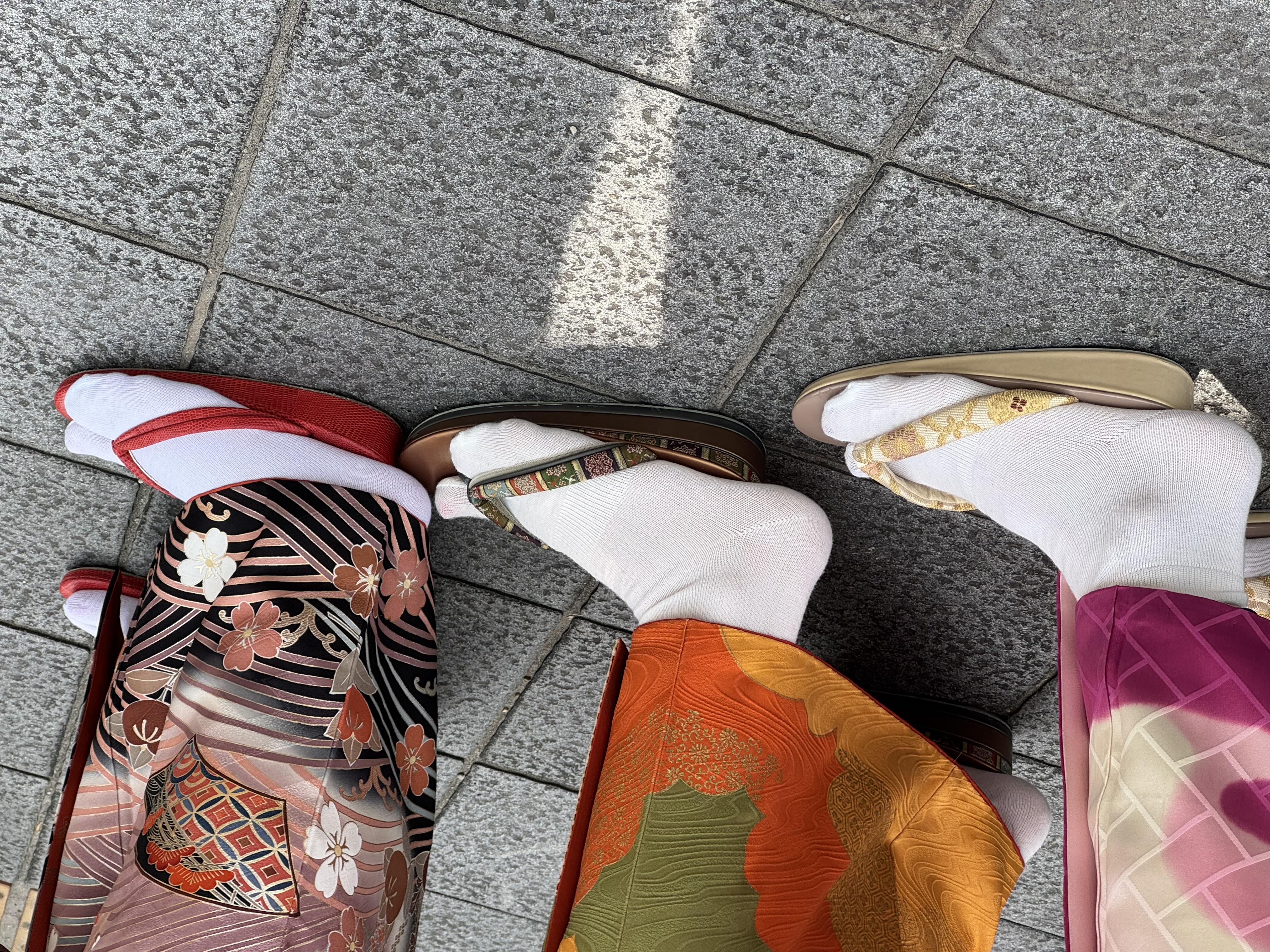
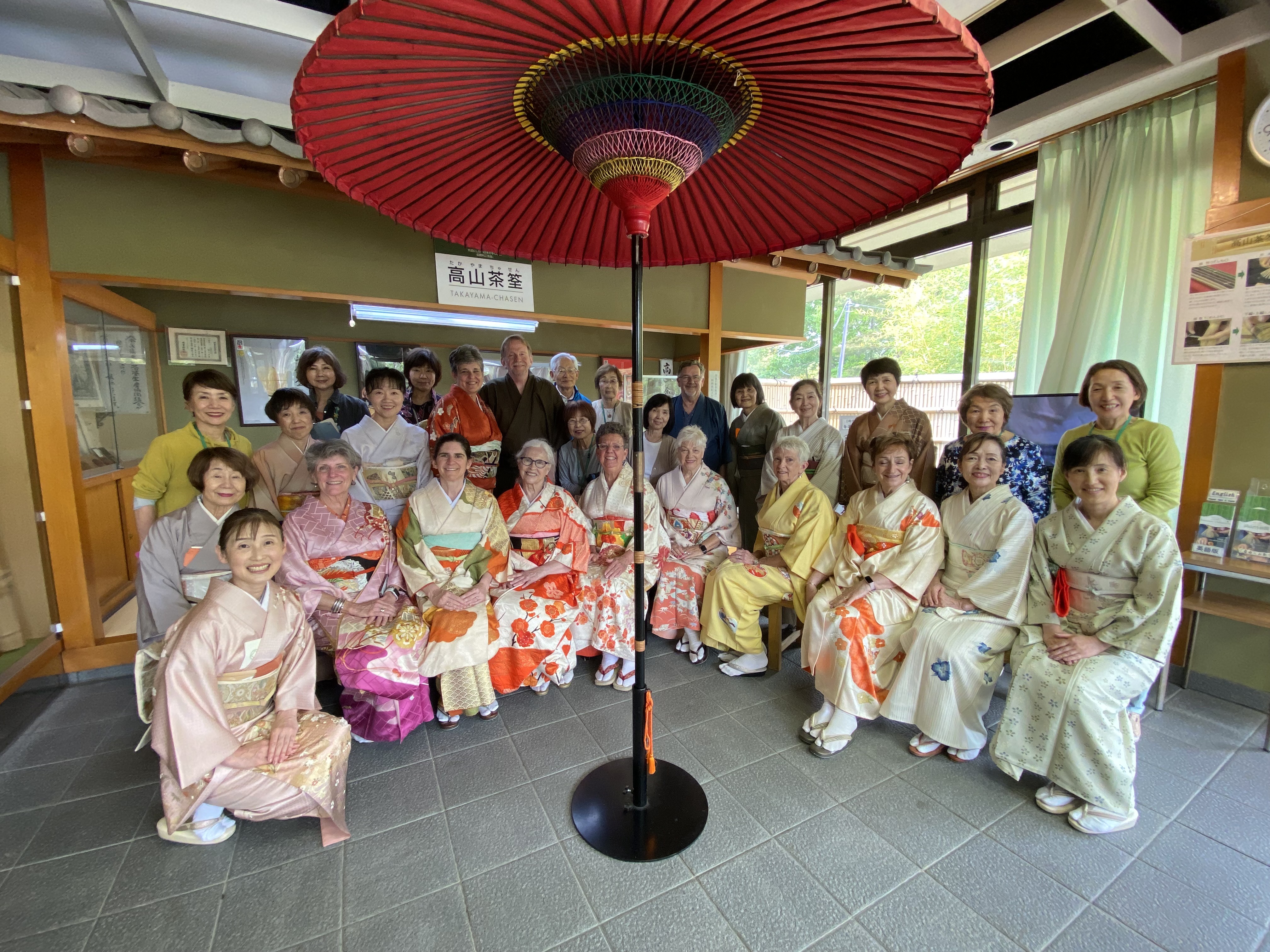
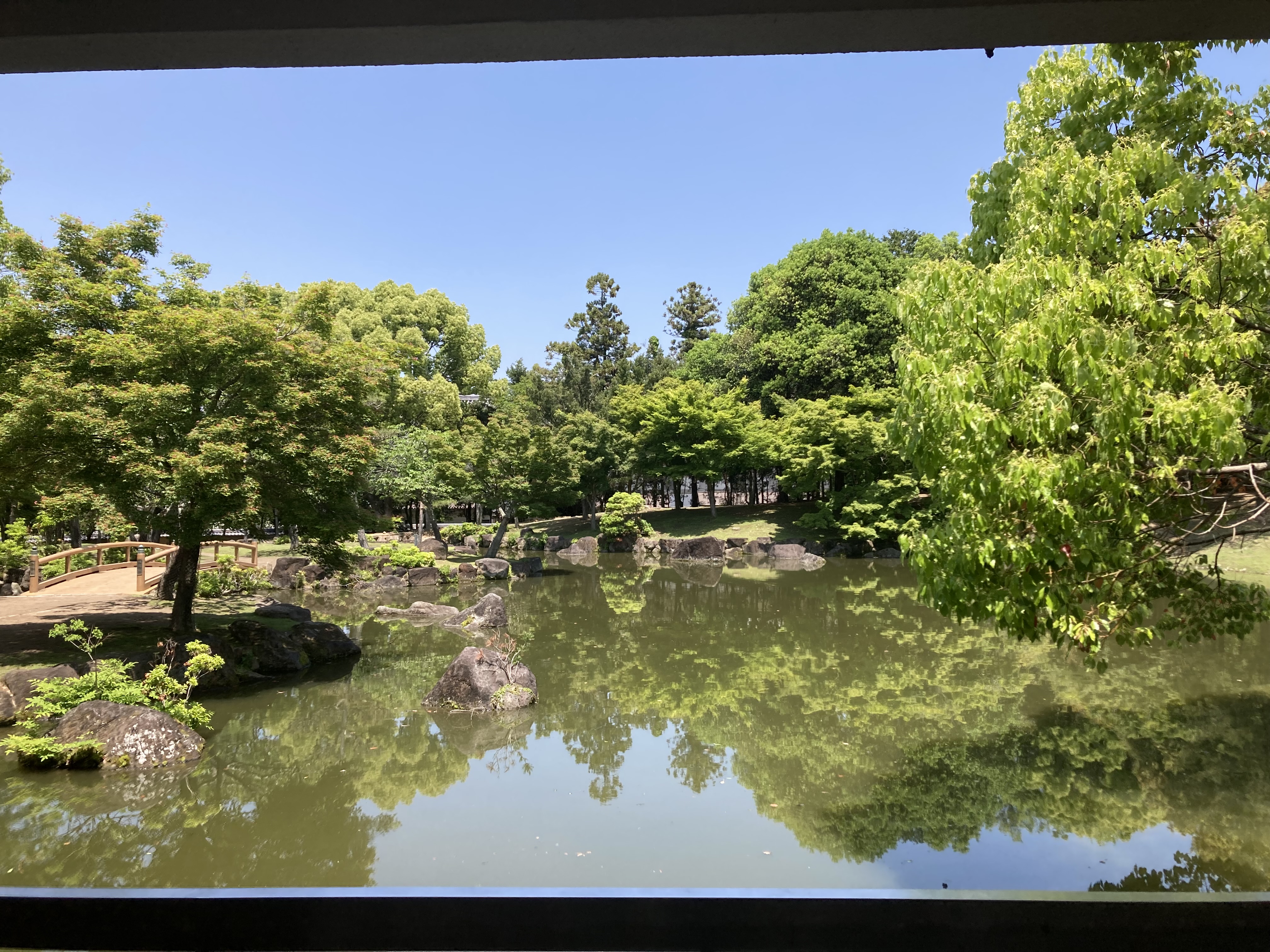
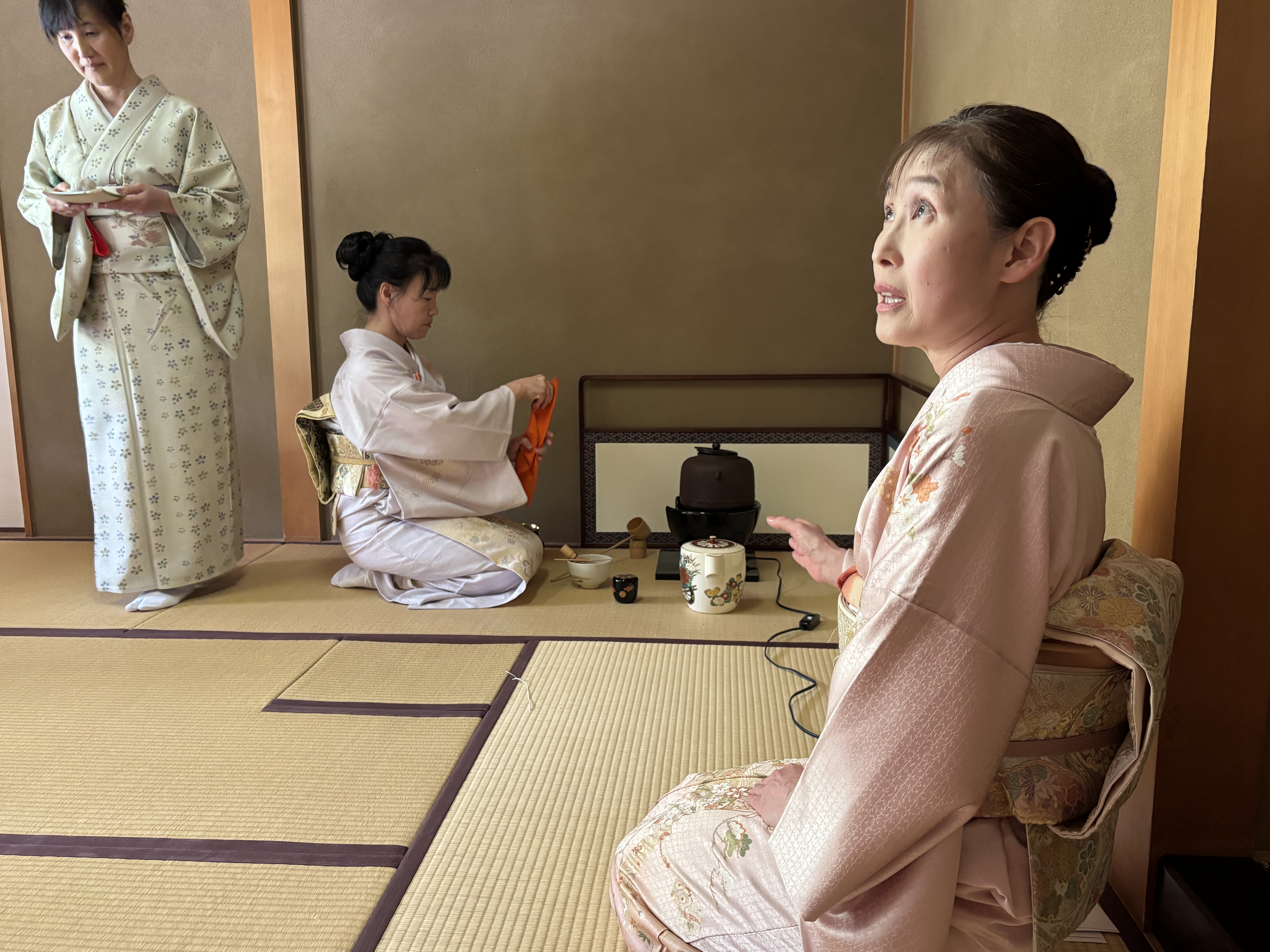 The building featured a beautiful Zen garden with lovely landscaping and the ground covered with stone raked into a spiral pattern. The traditional tea ceremony room looked out onto the garden. One of the members led a traditional tea ceremony, with others helping to serve. We had the customary sweet Ichigo Daifuku, which is mochi (a rice dough) stuffed with sweet bean paste and a whole strawberry inside. This was meant to counteract the bitterness of the bright green matcha tea that was served next. We all really enjoyed the whole experience and were so grateful to the Nara club members who worked so hard to make it
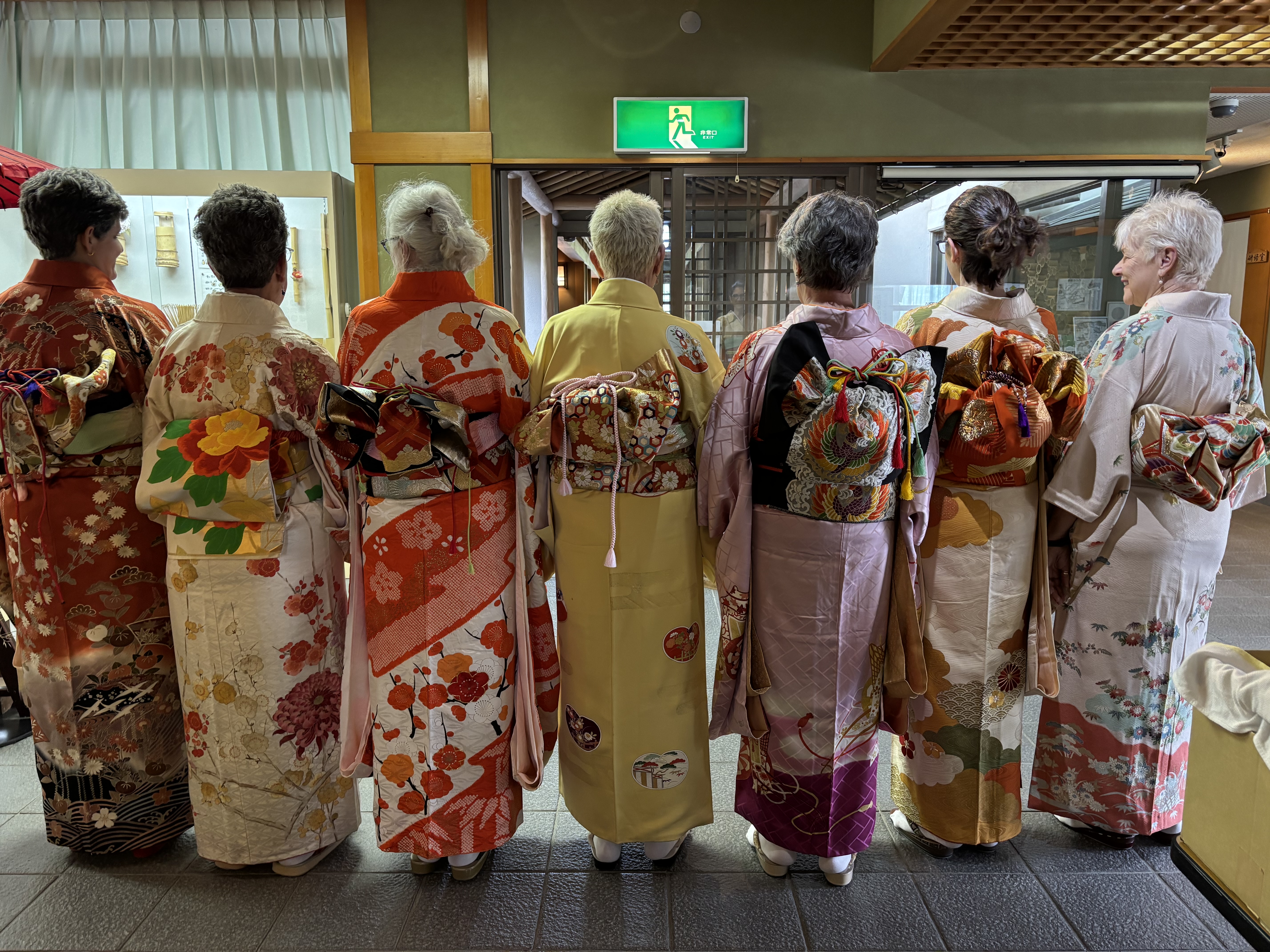
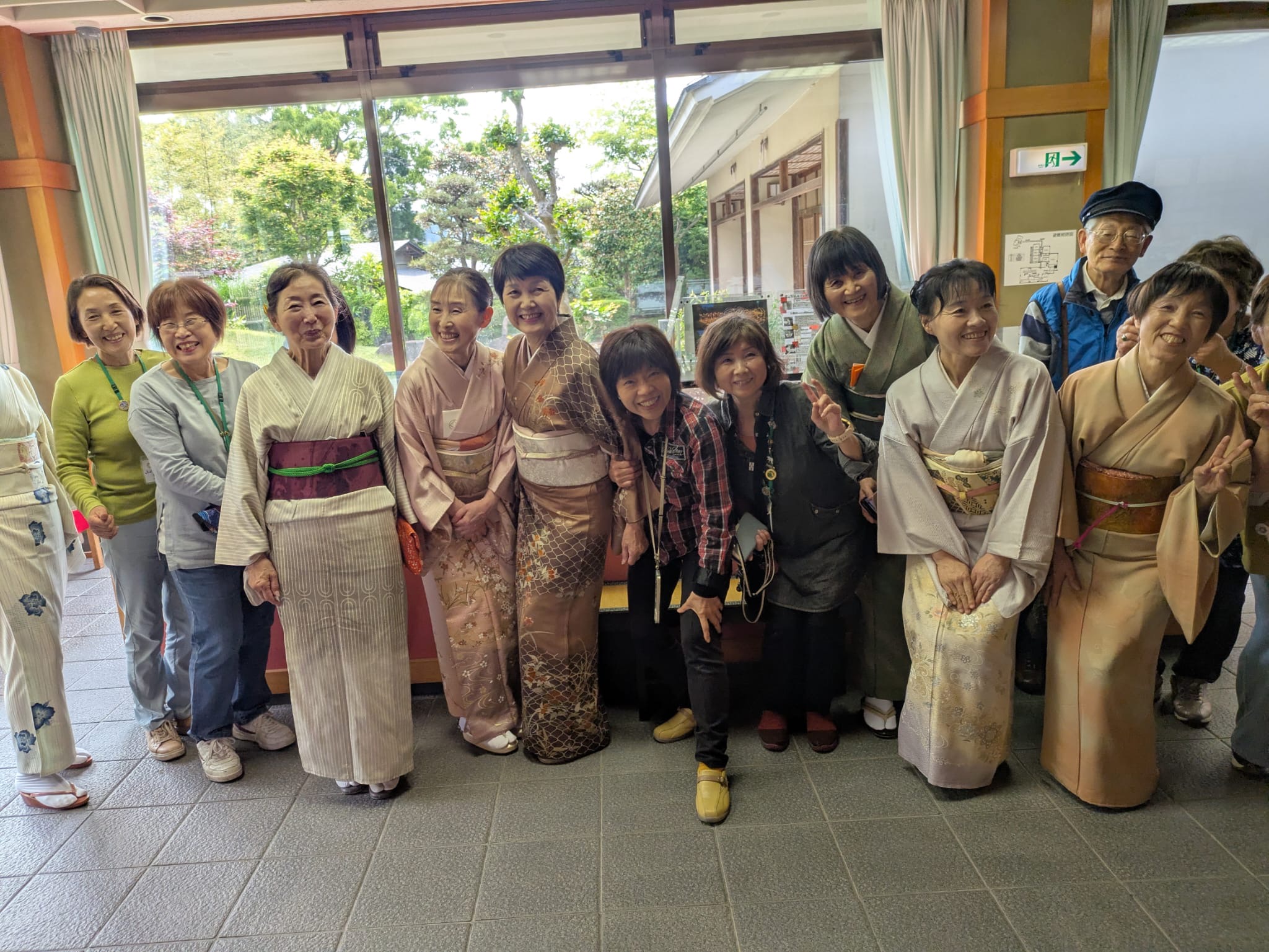 happen. (We were also grateful to get out of our kimono and back into our own comfortable clothing after a few more pictures! It was amazing to watch the Japanese ladies pack up the kimonos so efficiently and yet with such precision — it was almost like they were doing origami.)
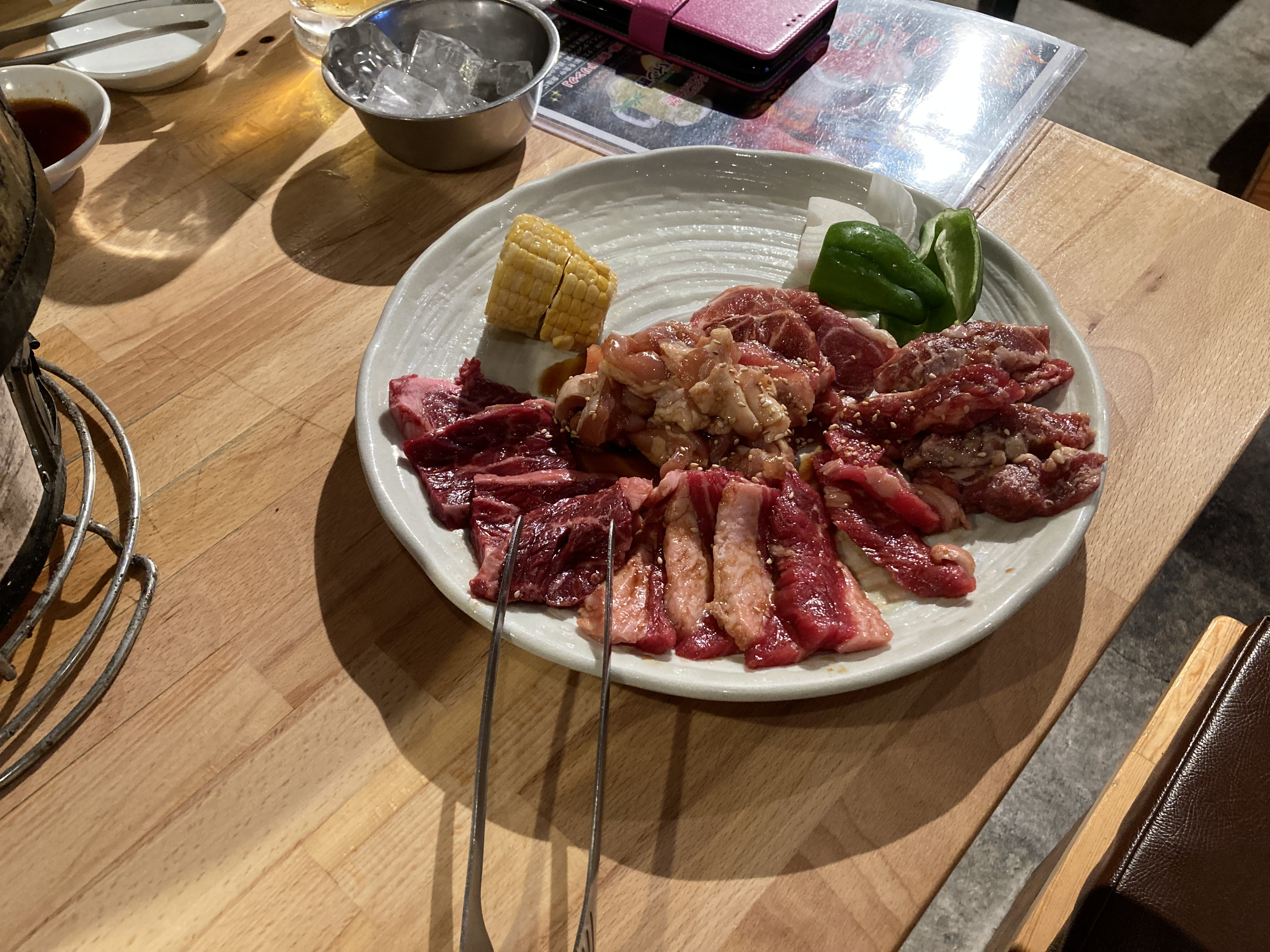 restaurant, there is a small charcoal grill at your table when you arrive (with coals in just the right state; you have to reserve ahead). You order various kinds of meat, fish, and vegetables, and grill them yourself right at your table. Non and Toko ordered us a nice variety of things to try and everything was delicious. We’ve also been sampling sake at each of our dinners — this time we had sweet sake, served warm, at the end of the meai. As a special treat, on the way home we stopped for tea and to check out the house that Toko rents out on airbnb — highly recommend if you are coming to Nara!
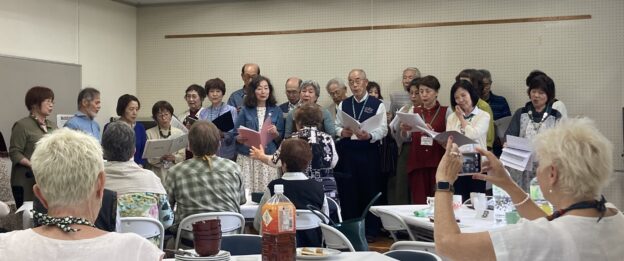
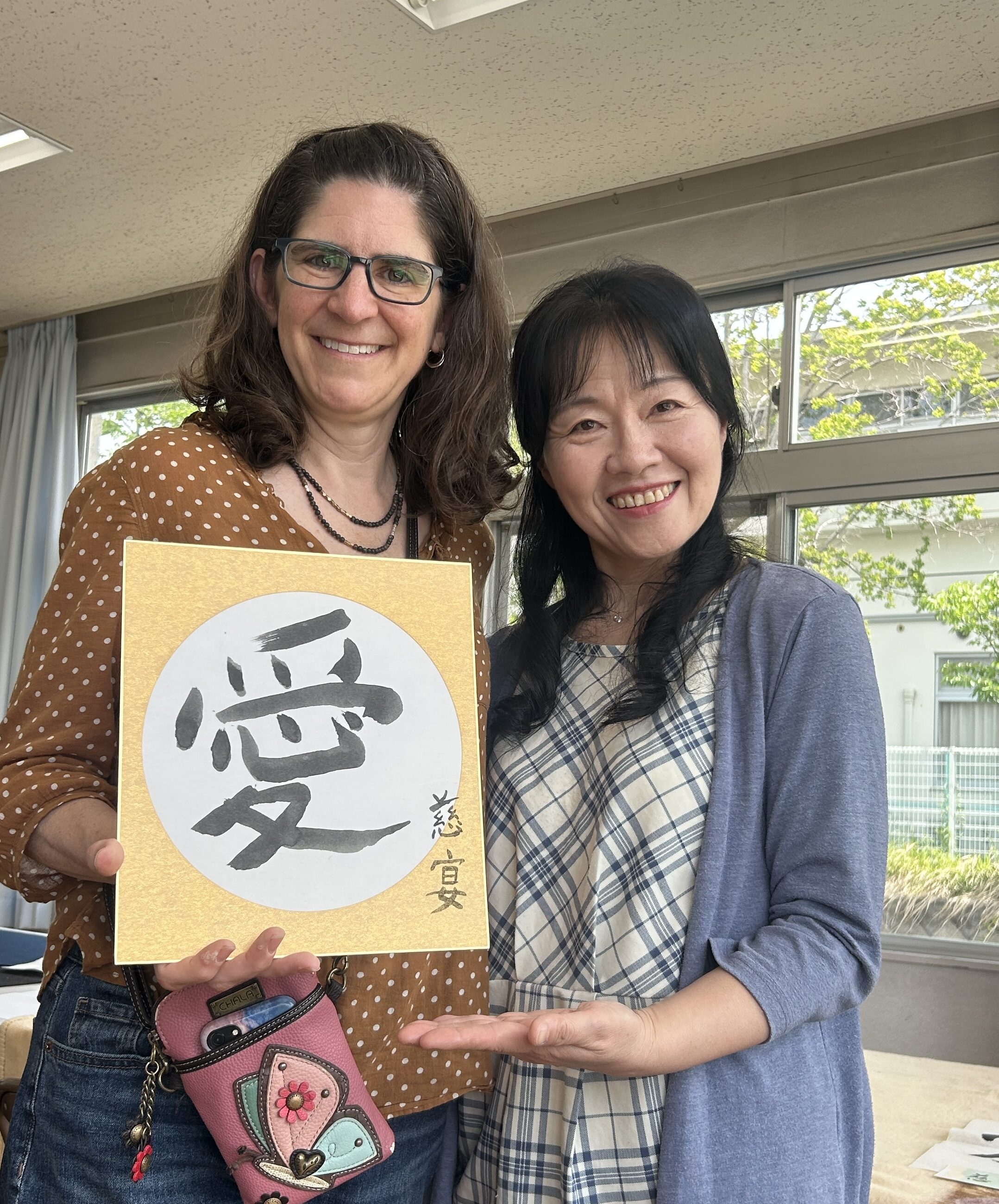 My day began bright and early with a delicious and substantial breakfast, excellently prepared and meticulously presented. It was a lot more food than I usually eat in the morning, but my inner clock is 13 hours off, so I was actually somewhat hungry. Soon, Kazumi and Margaret picked us up for the day’s activities.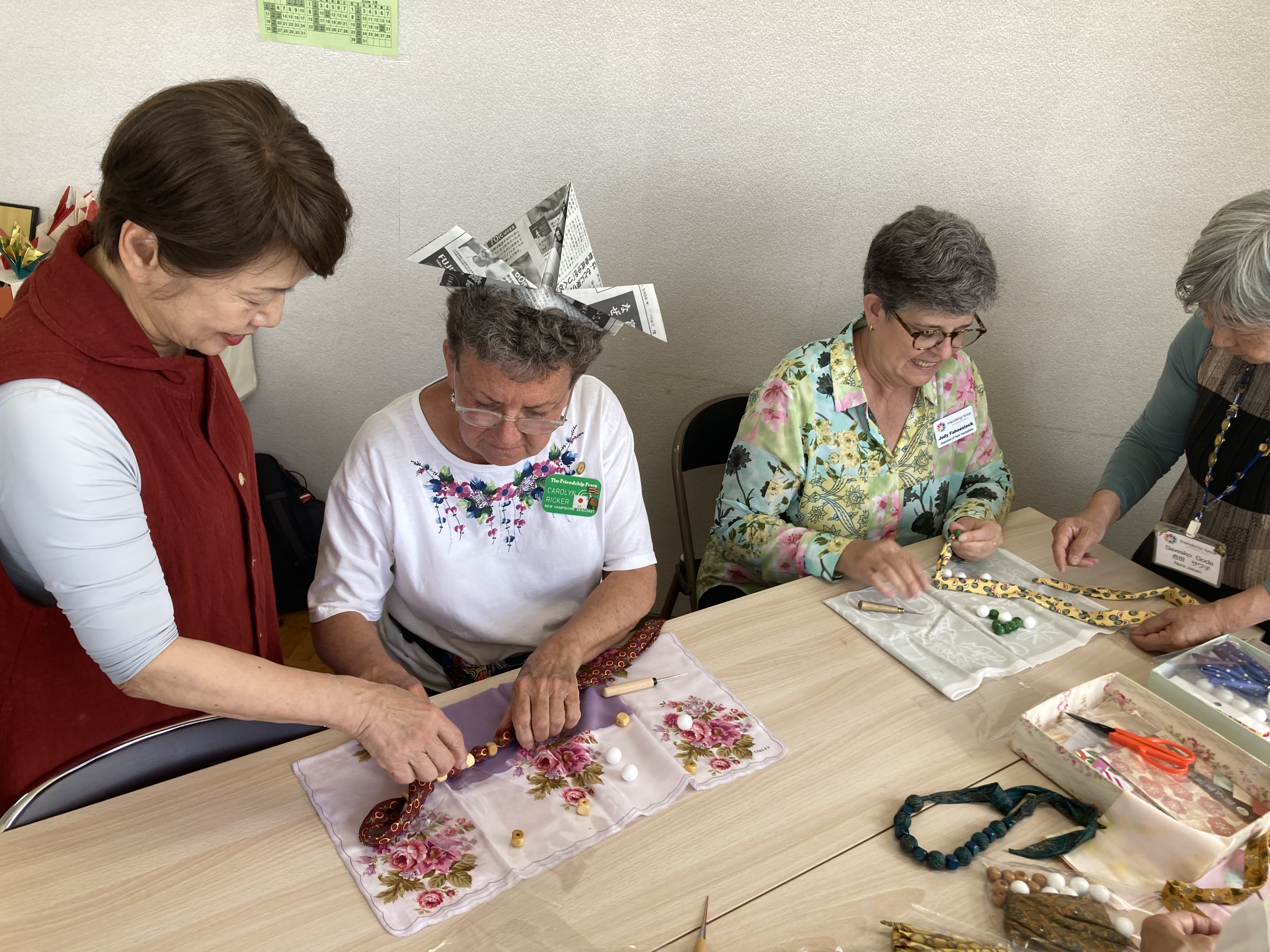
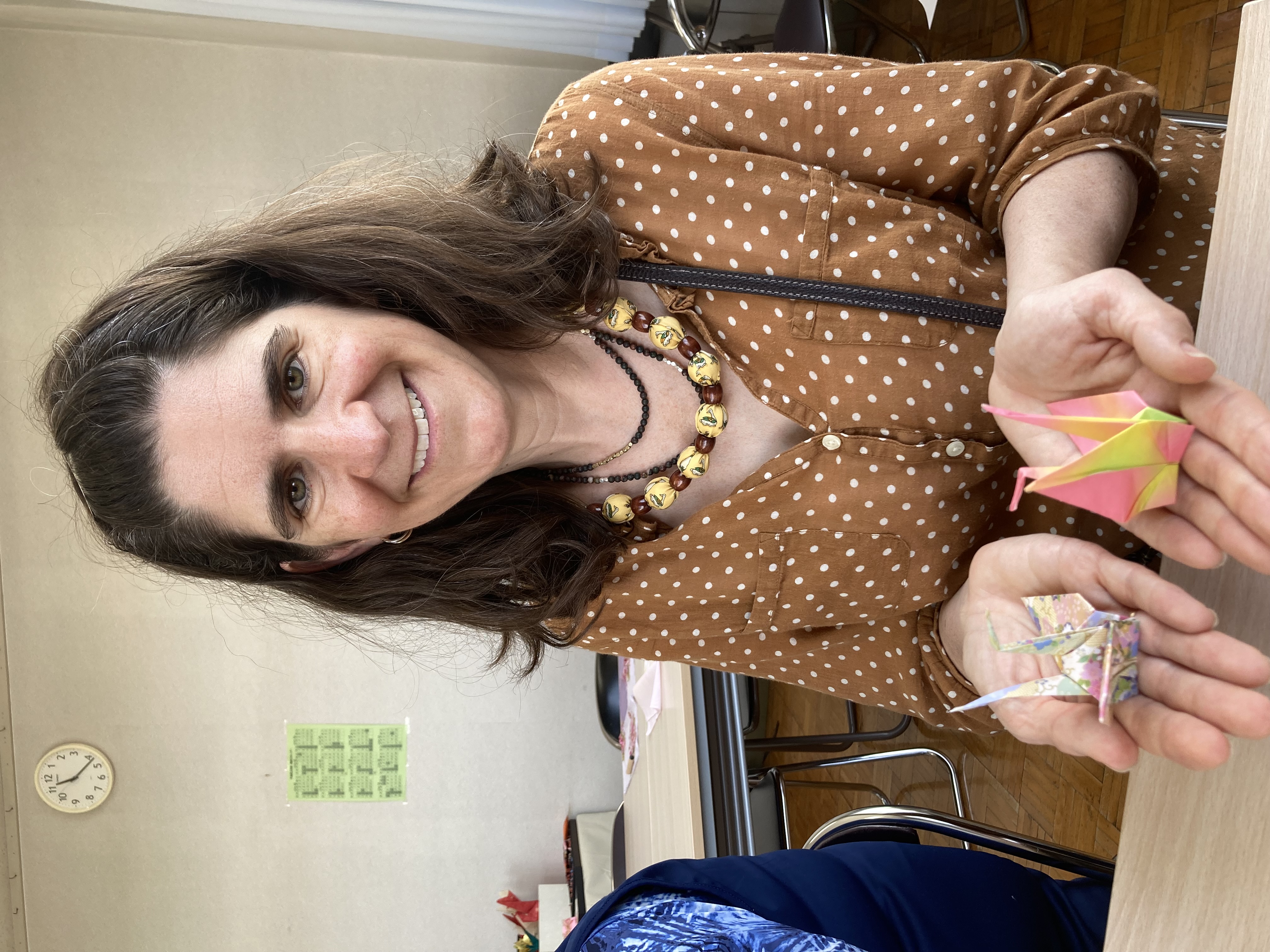
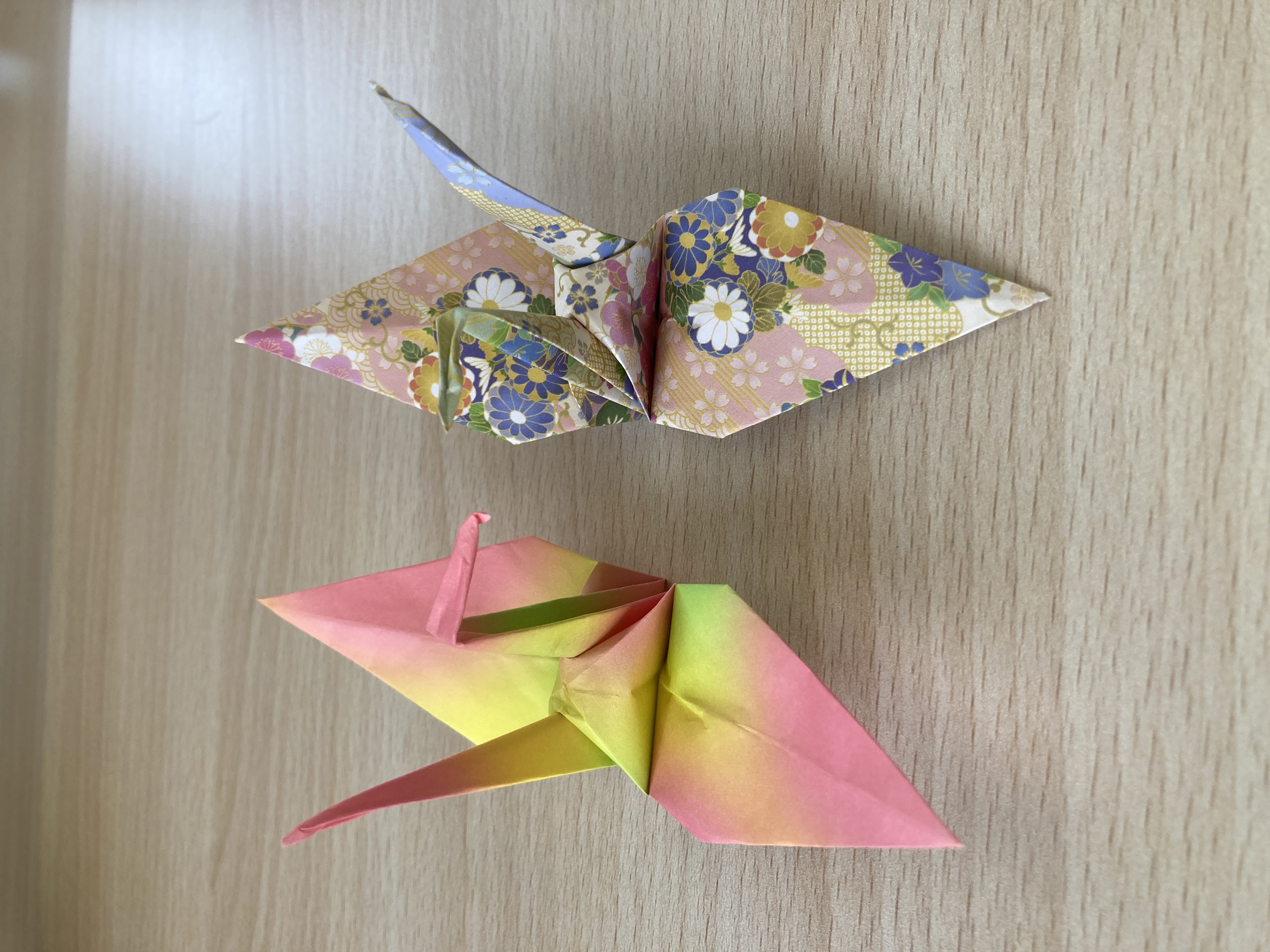 Finally, I moved to the origami table. Luckily my friend joined me again, and walked me through the process of making a crane. Next up we tried out a peacock, although even she needed a little help with that one. Some others made deer in honor of Nara’s famous deer park (which we’ll visit later in the week). We’ve noticed that origami is incorporated into a lot of things here, like a wrapper that comes around chopsticks.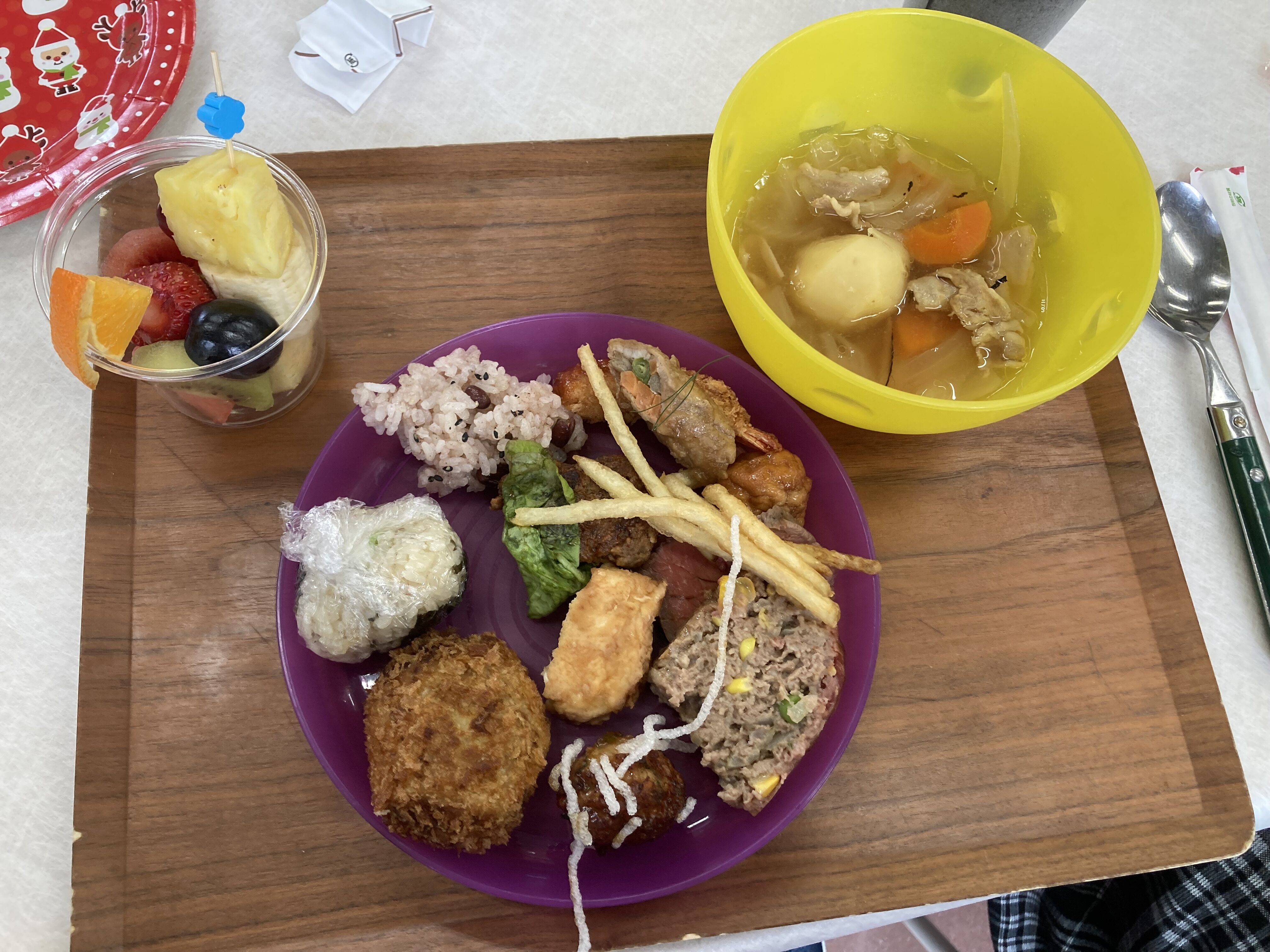
 woman who played the piano beautifully. (We later found out that she’s performed in Carnegie Hall!) They sang some Japanese songs, as well as some sing-a-longs like Edelweiss and It’s a Small World. They brought down the house with a sing-and-dance-along tune called “Oh, Champs-Elysee”, which I remember learning in high school French class.
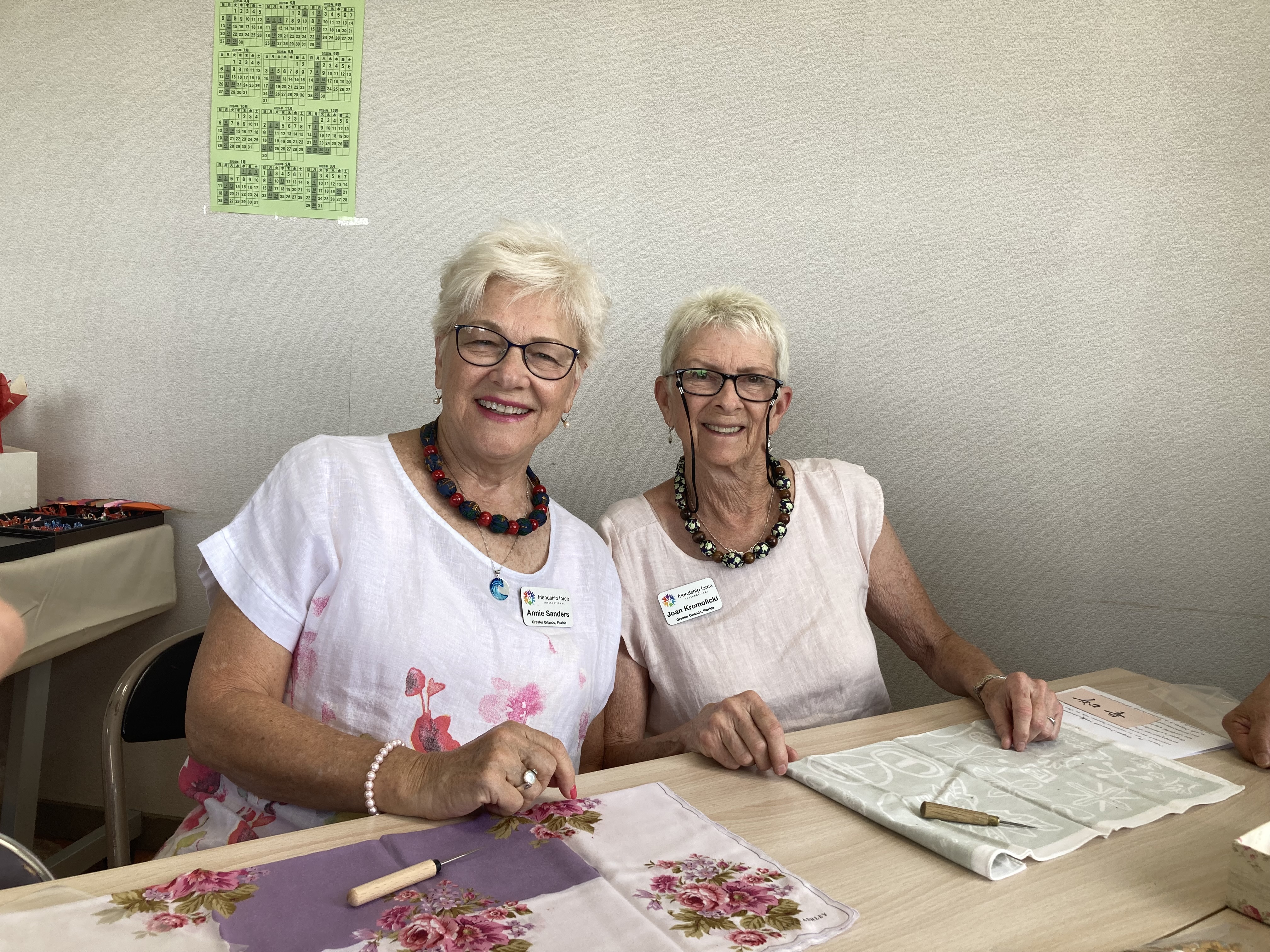
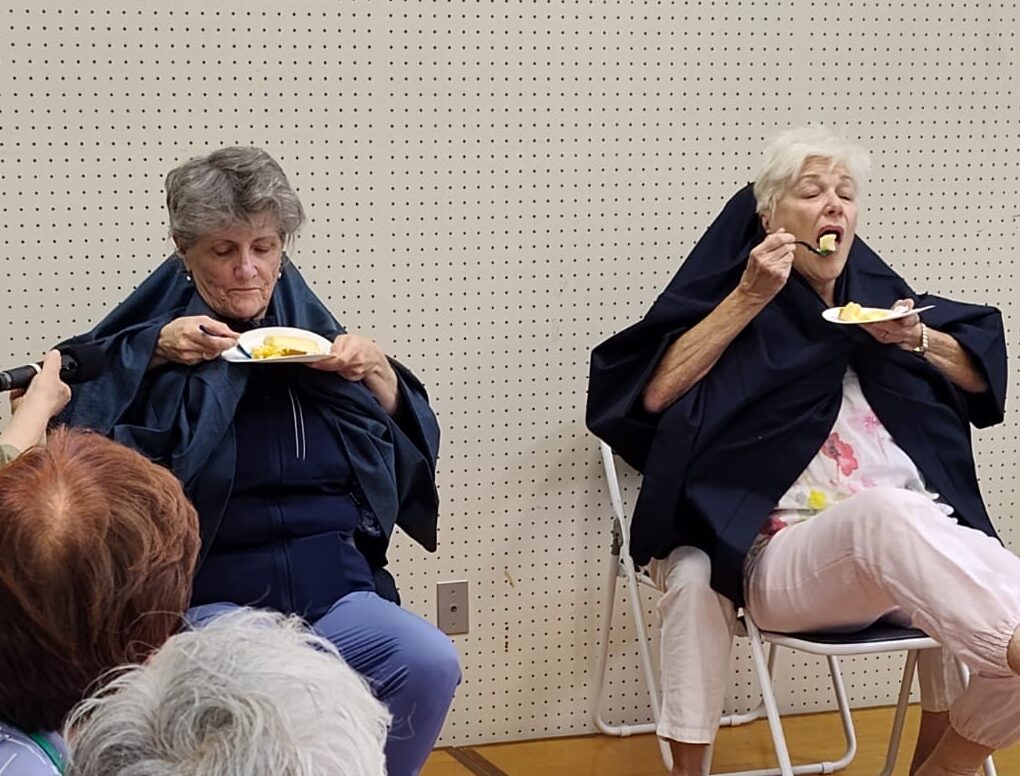 Next up they had a game planned that definitely destroyed the stereotype that Japanese people are always very formal. Four men got up — two sat in chairs and the other two got under large kimono coats with their hands sticking out. They had to sit behind the other and be their “arms” — trying to feed them a piece of cake while not being able to see. Then it was our turn. First the couples went up (with the women immediately volunteering to be under the kimono rather than eating the cake), but then we’d run out of men. Margaret and I, and Joan and Annie from Florida, were brought up next. Margaret kindly agreed to eat the cake, even though both of us were very full by this point. It was difficult work under the kimono but we managed to get the job done with minimal mess. The activity was such a good ice-breaker and had everyone
 laughing together immediately (though none of the Japanese women volunteered!)
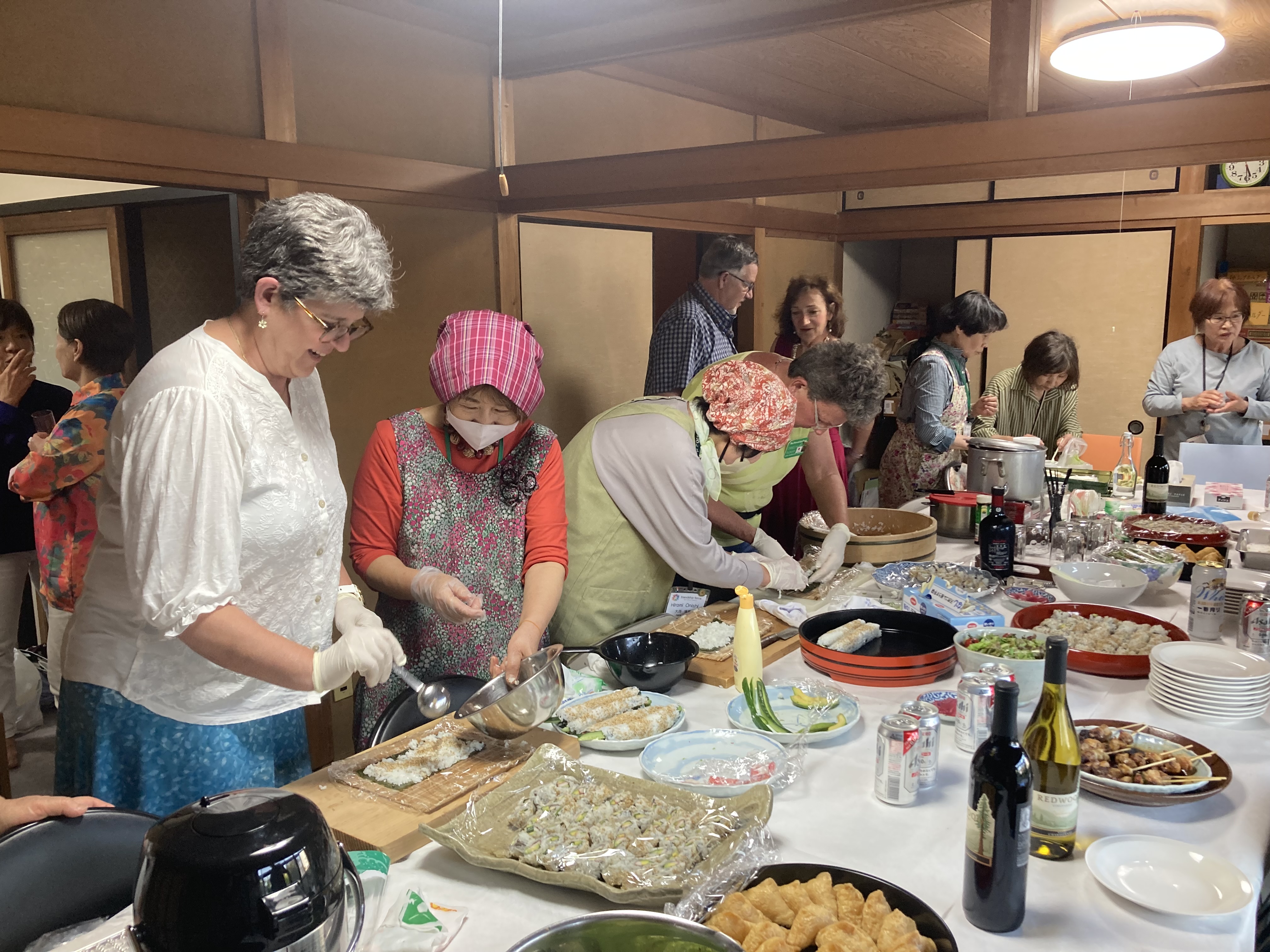
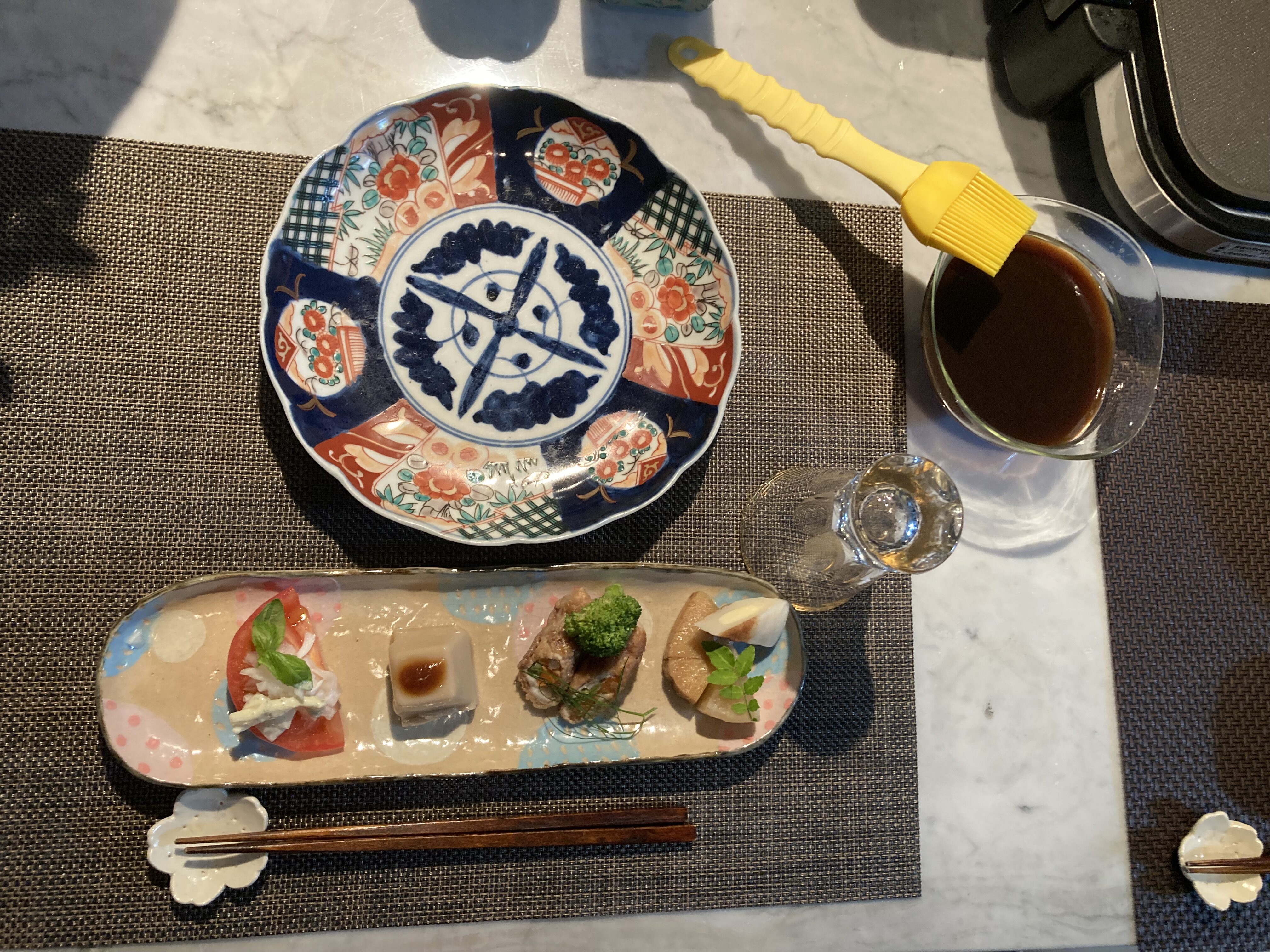
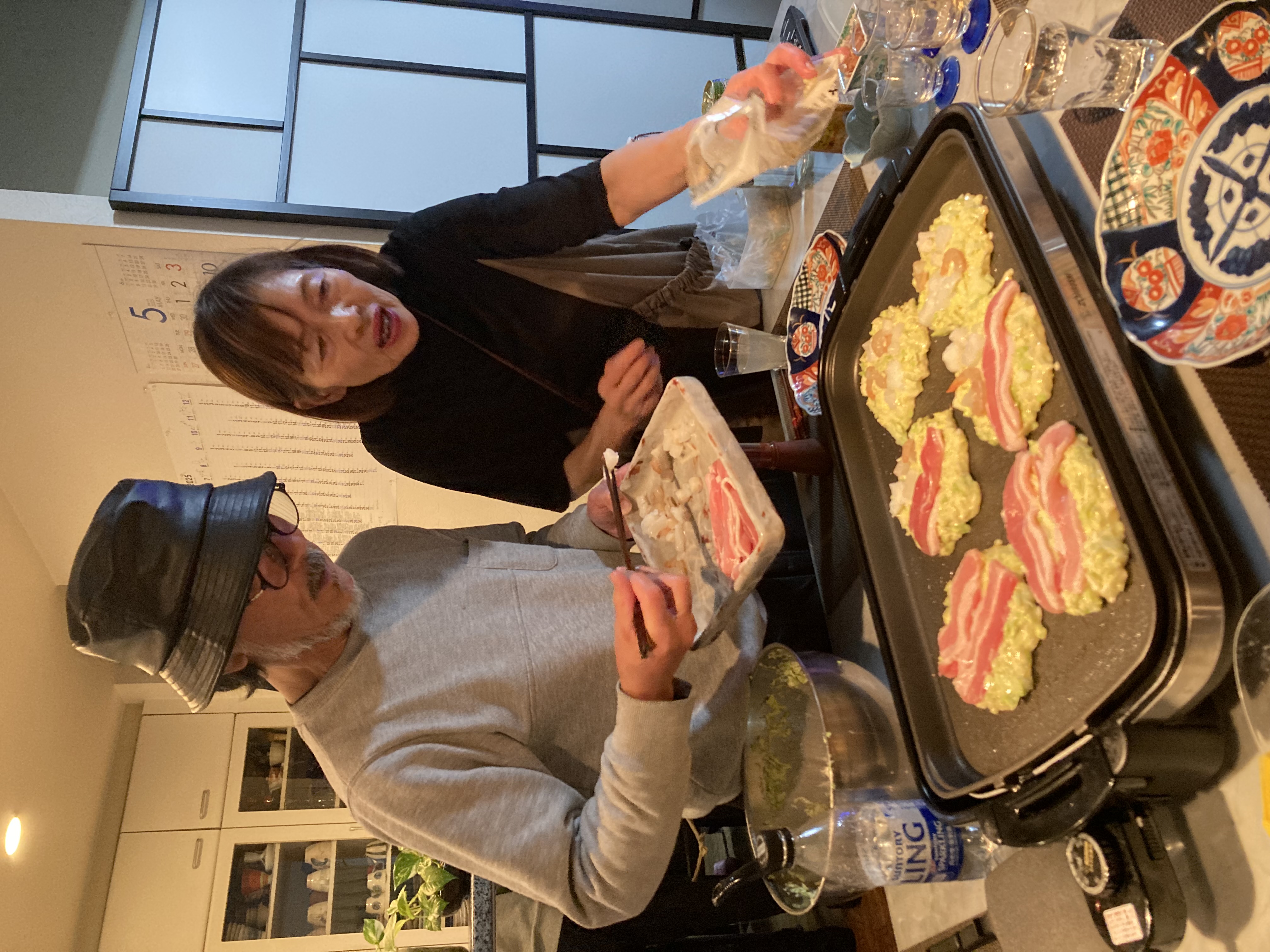 husband topped the pancakes with pork, shrimp, and scallops. When ready they were flipped and cooked on the other side. To eat, we topped them with mayonnaise, a special okonomiyaki sauce, bonito flakes, and nori flakes. Then there was a second round of pancakes with leeks and potato. (They made one with fermented soybeans also. They gave me a bit to try but told me I probably wouldn’t like it and that I didn’t have to eat it. I guess it is an acquired taste.) Everything was delicious, but I felt like I’d have to roll home (especially after we then had dessert).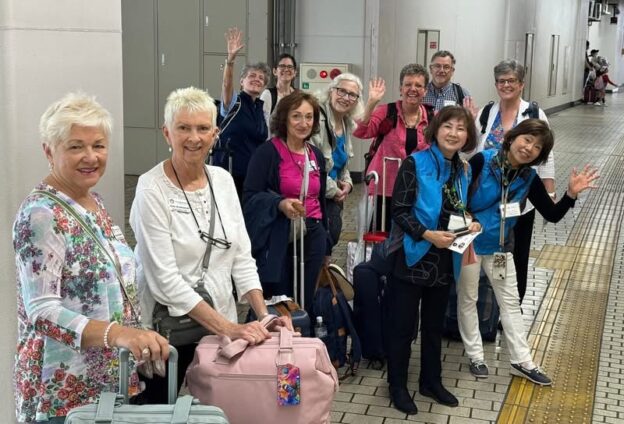

 We’d gotten onto the platform by scanning our credit cards at the turnstile, as instructed by Kei and Kazumi– then grabbed a group of seats together. After we got onto the train, there was a series of announcements indicating that on this train, you needed both a reservation and a ticket to ride, and if you didn’t have a reservation, you must exit the train immediately. Again, on our own we probably would have panicked at this point, but Kei and Kuzomi seemed unmoved, so we stayed put. No one ever checked our tickets, so I’m not actually sure if we somehow had a reservation, or if we were being scofflaws.
 they’ve become more fluent that I would have though possible. They have so much energy, even those that are in their 80s. I think of them like hummingbirds — beautiful, dainty, and in constant motion. (We Americans are more like Golden Retriever puppies —we mean well and try to please, but tend to bumble around and knock things over )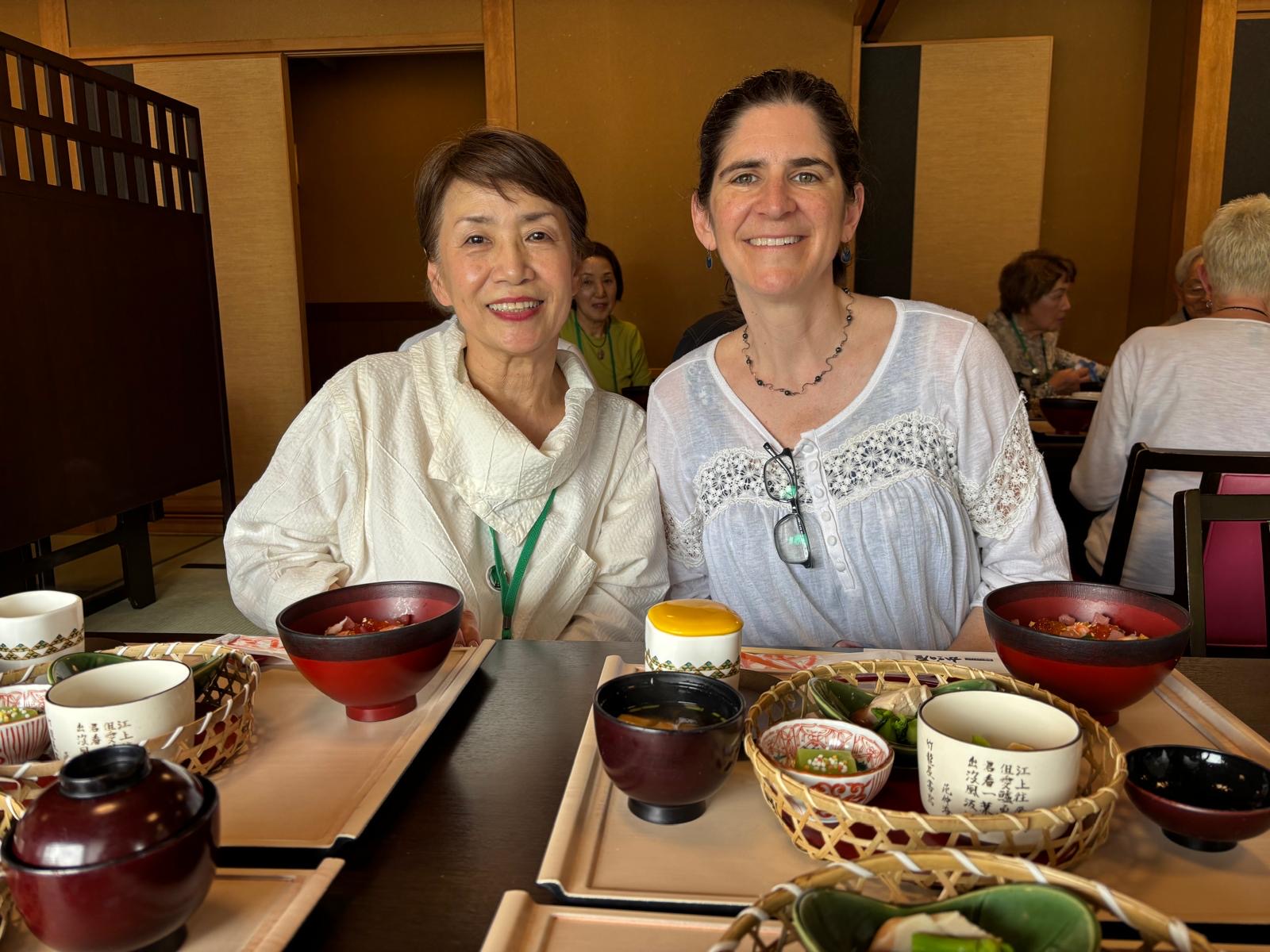
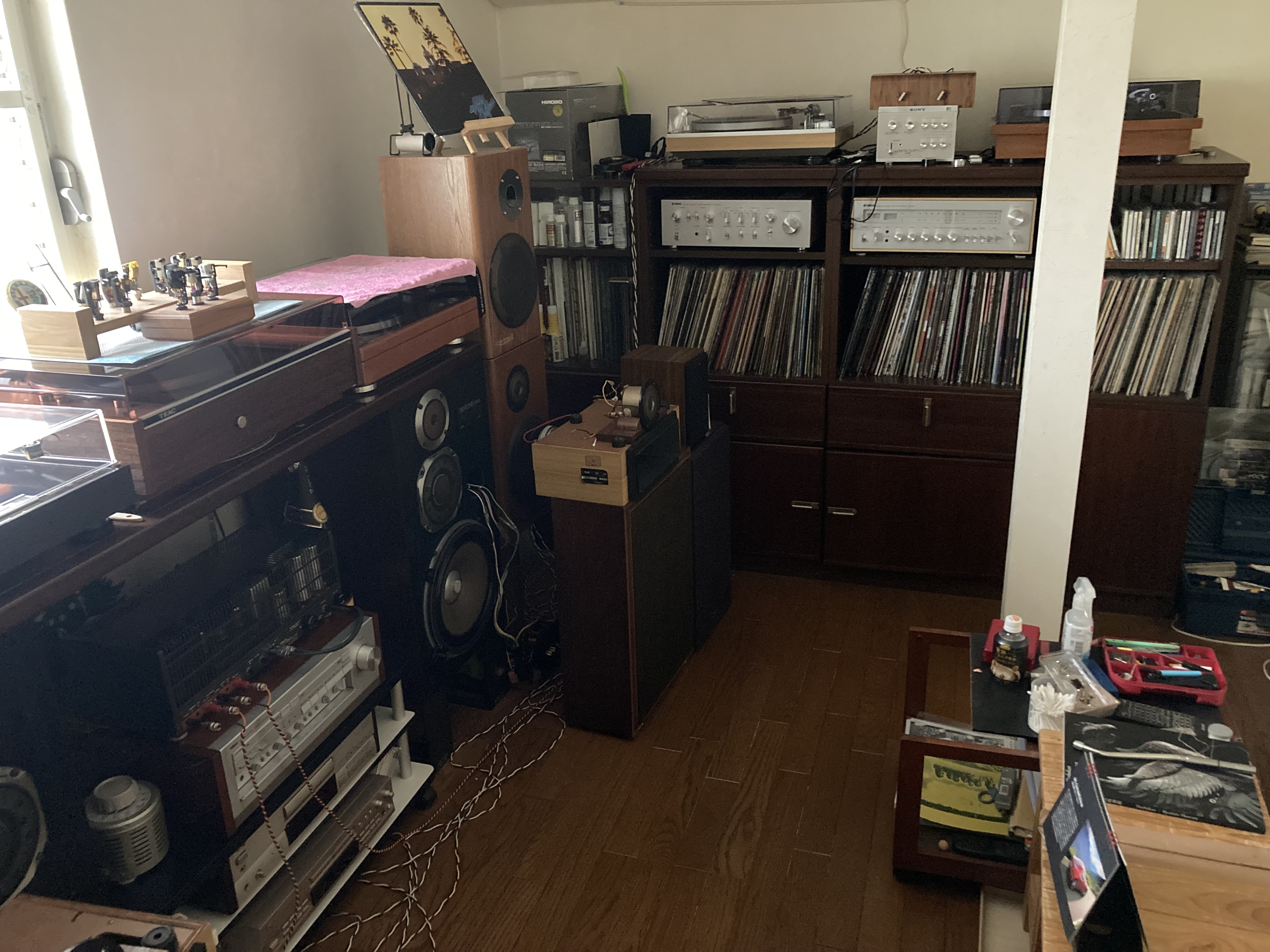 speakers and loves to come up here to listen to music.
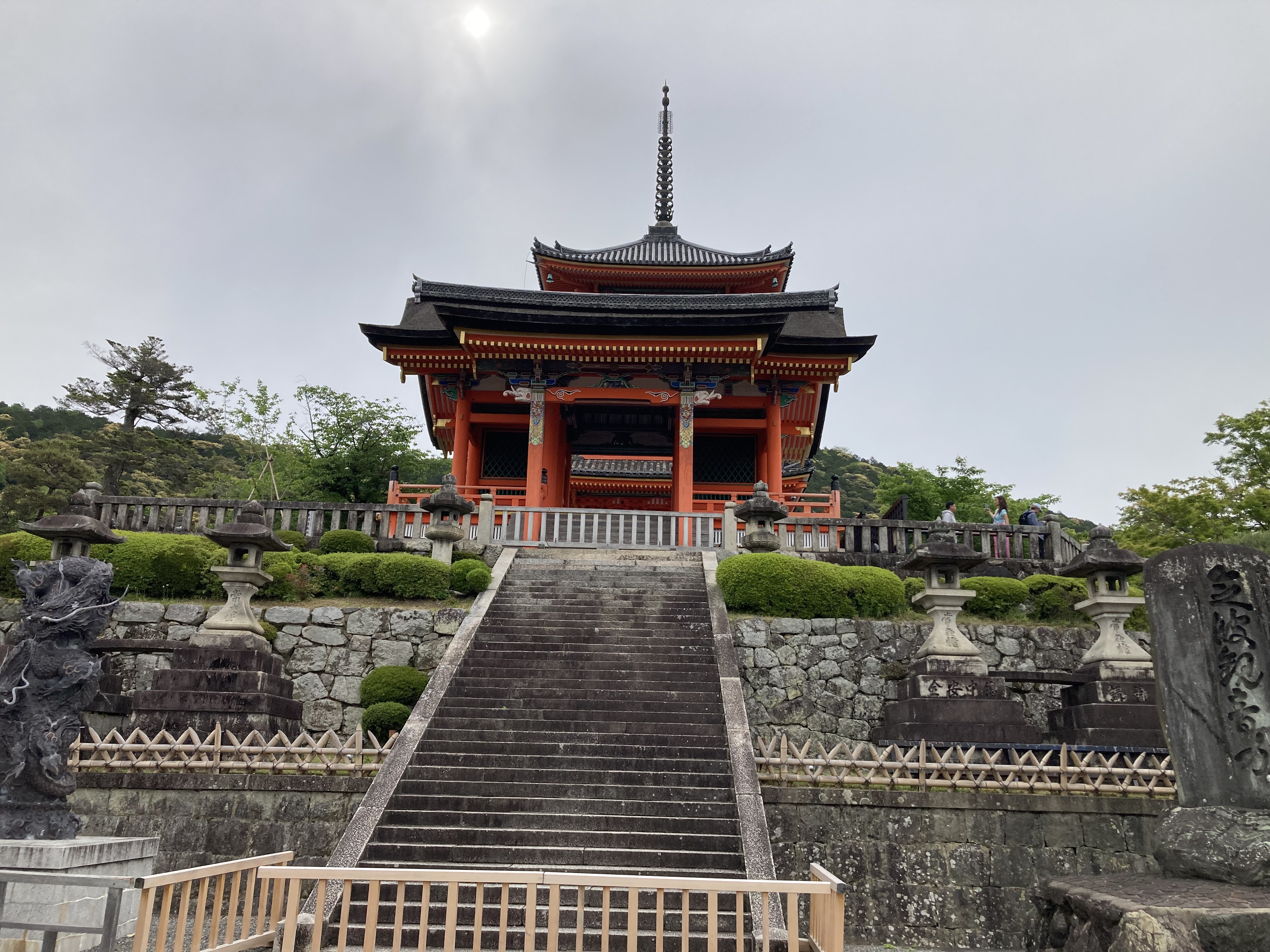 Today we planned a day-long tour to get the most our of our last day in Kyoto. We had to catch the 7:20am shuttle from our hotel to Kyoto Station to meet our tour guide, so Margaret and I had to get out to the 7-11 pretty early. We found the selection to be even better. Today for breakfast I had Japanese-style spicy fried chicken and an egg roll. Margaret had some salmon sushi. Once again, a quality breakfast.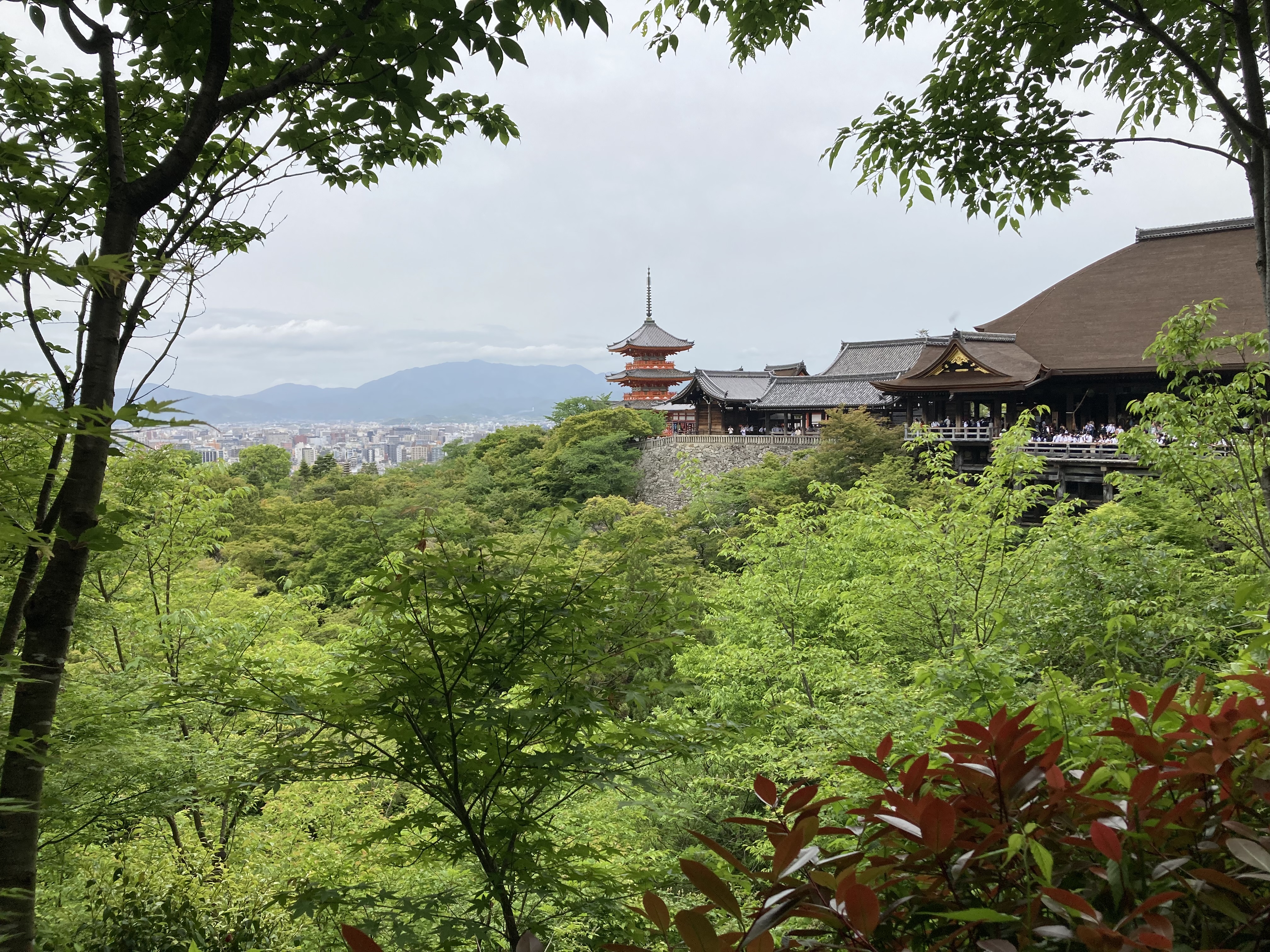
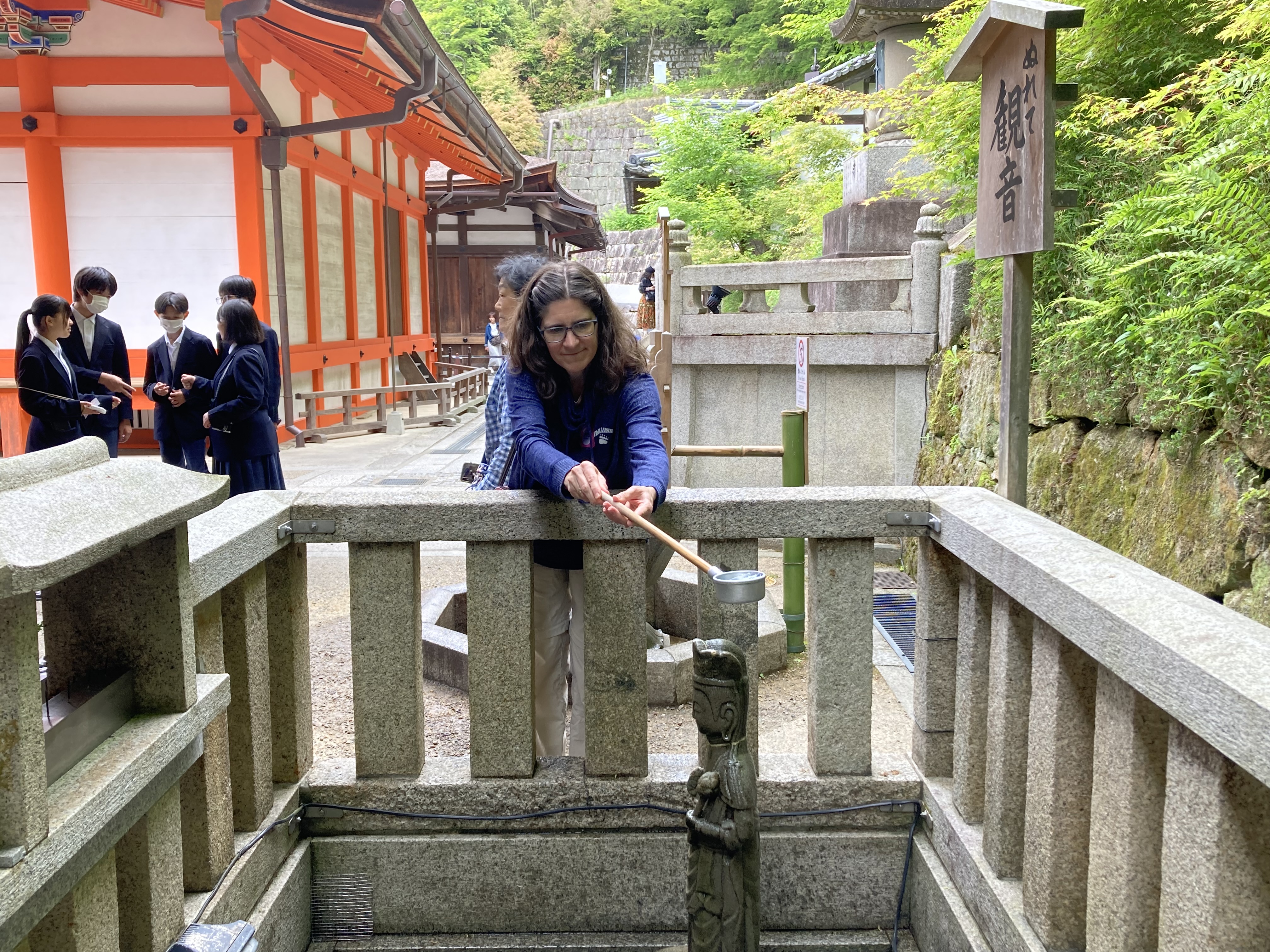
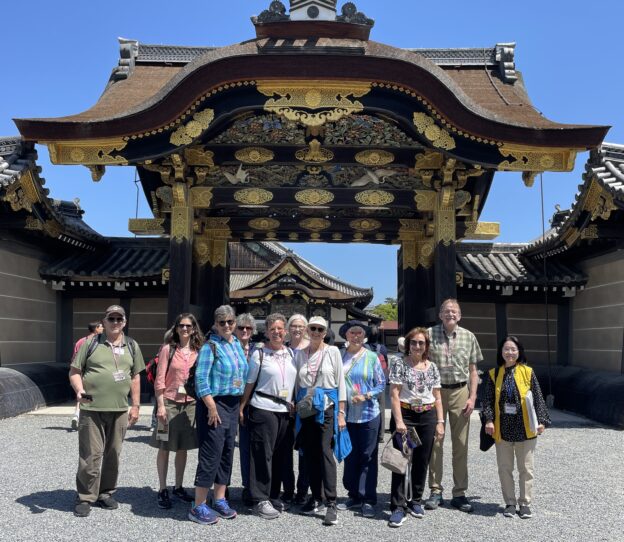
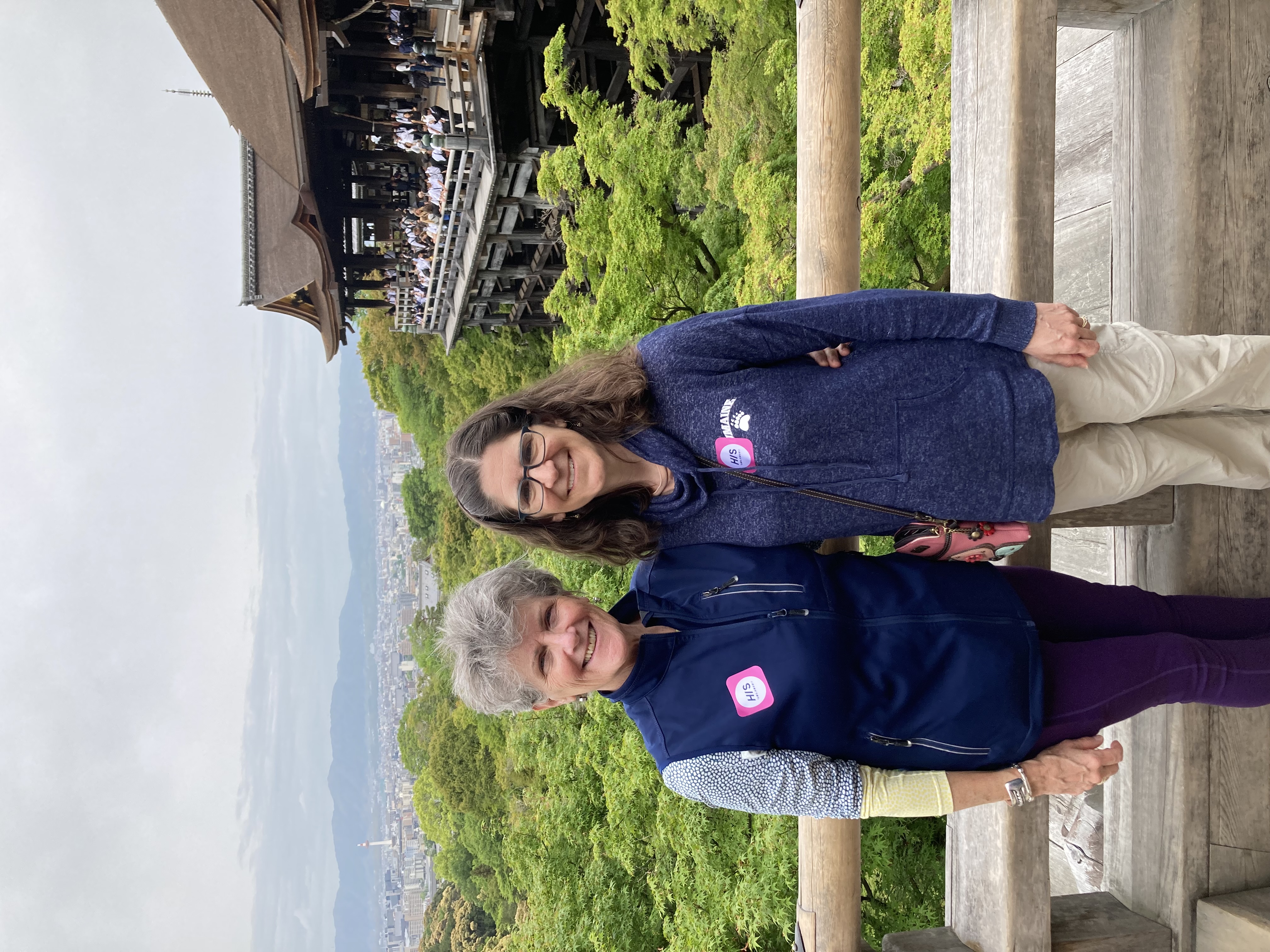 taught us how to throw a coin offering, then perform the correct series of bows and claps while making a wish. (Reflecting on how things are going in the US right now, I think many of us shared a similar wish.) Here we also saw what was to be a constant for the day: huge crowds of tourists. Much like Florence, we were surrounded by people from all over the world come to see the sights of Kyoto.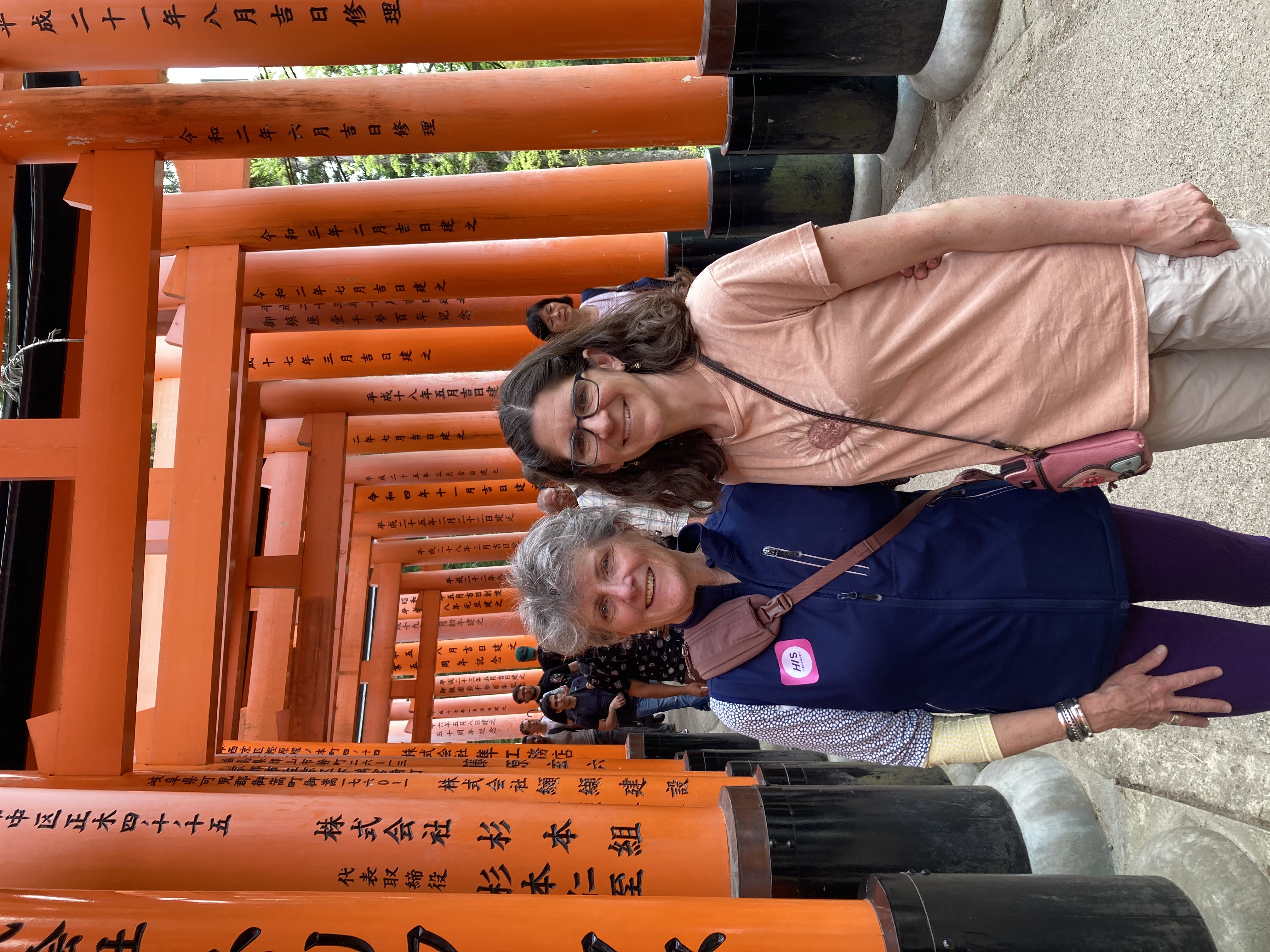
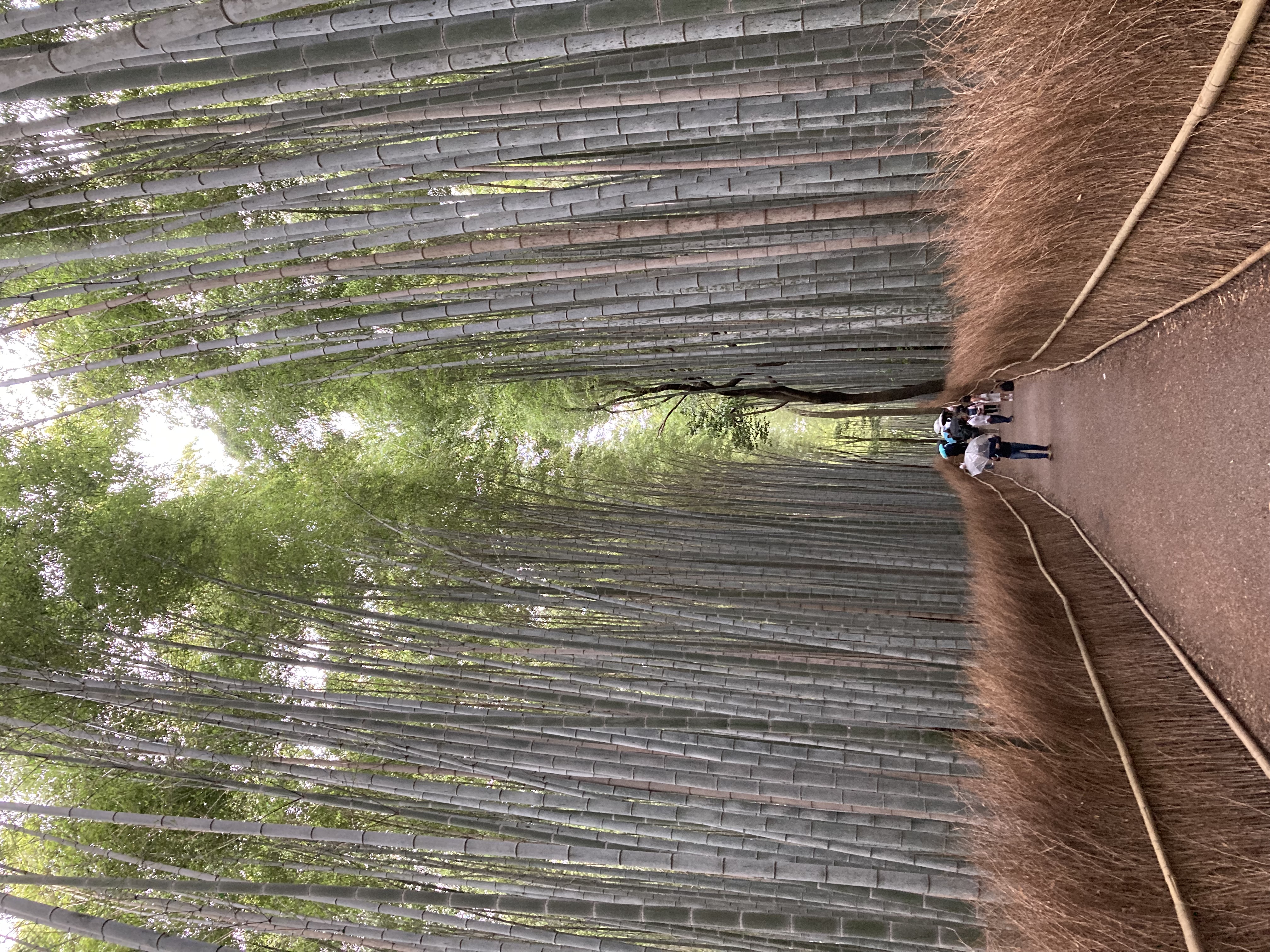
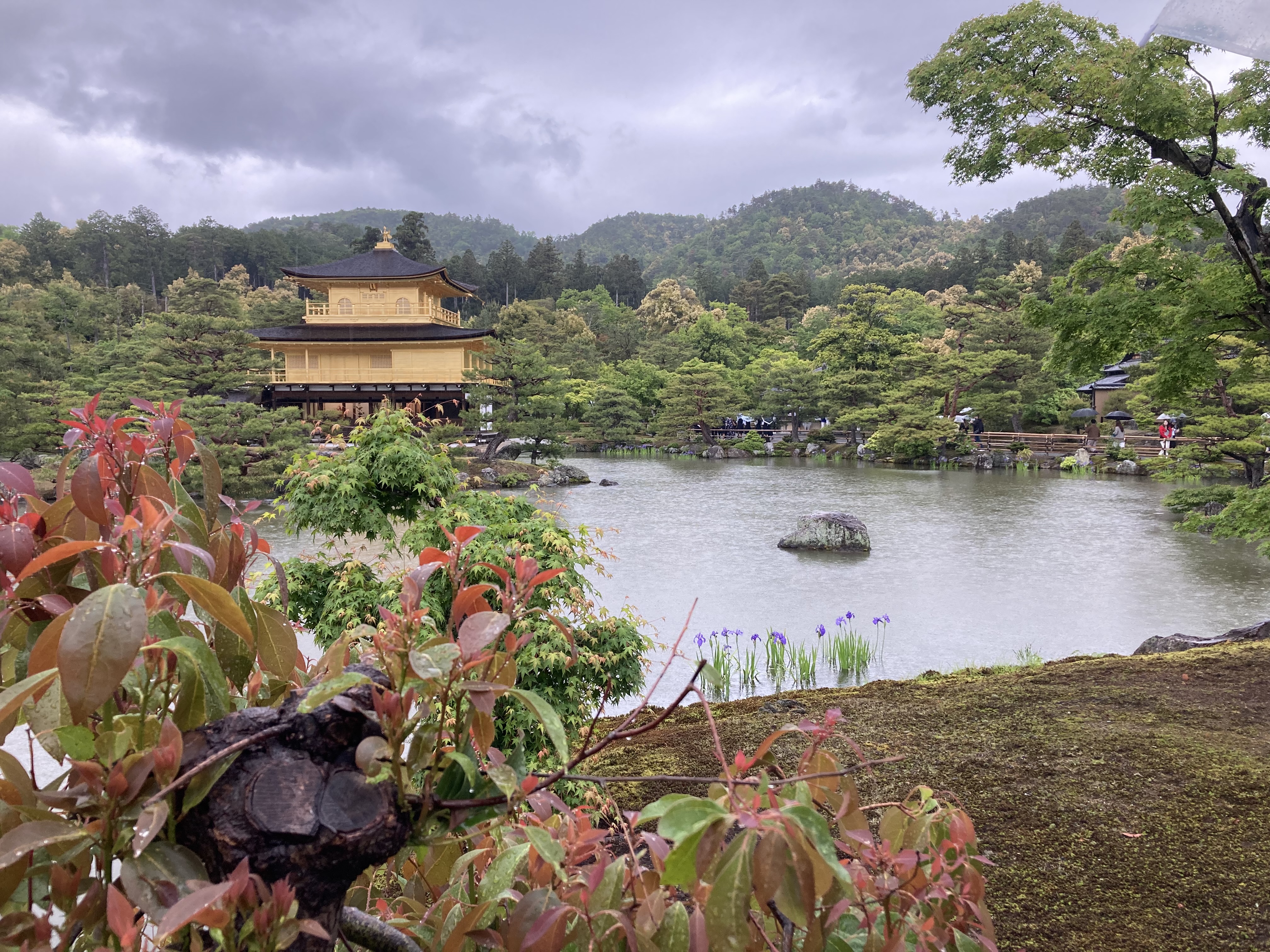
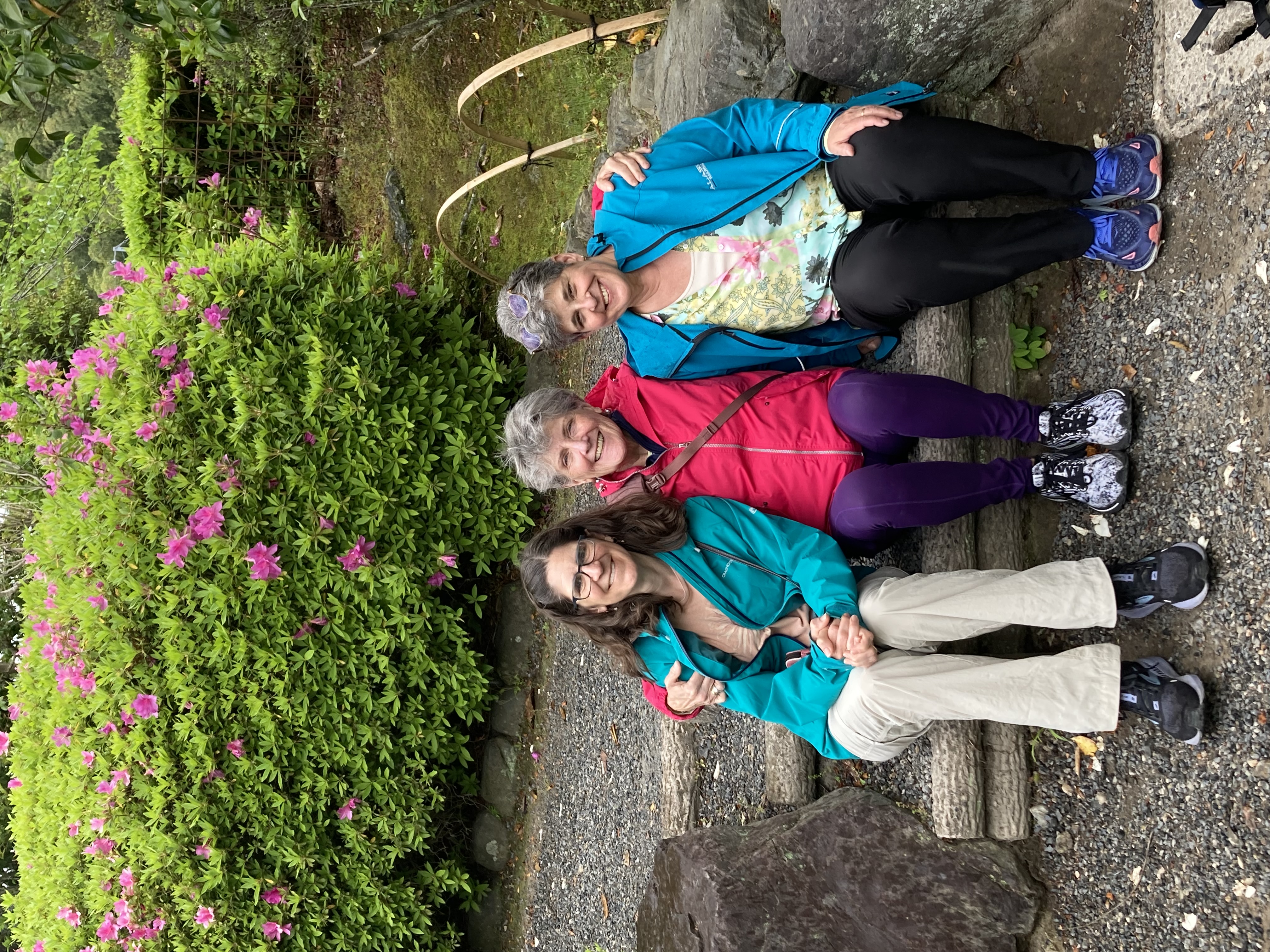
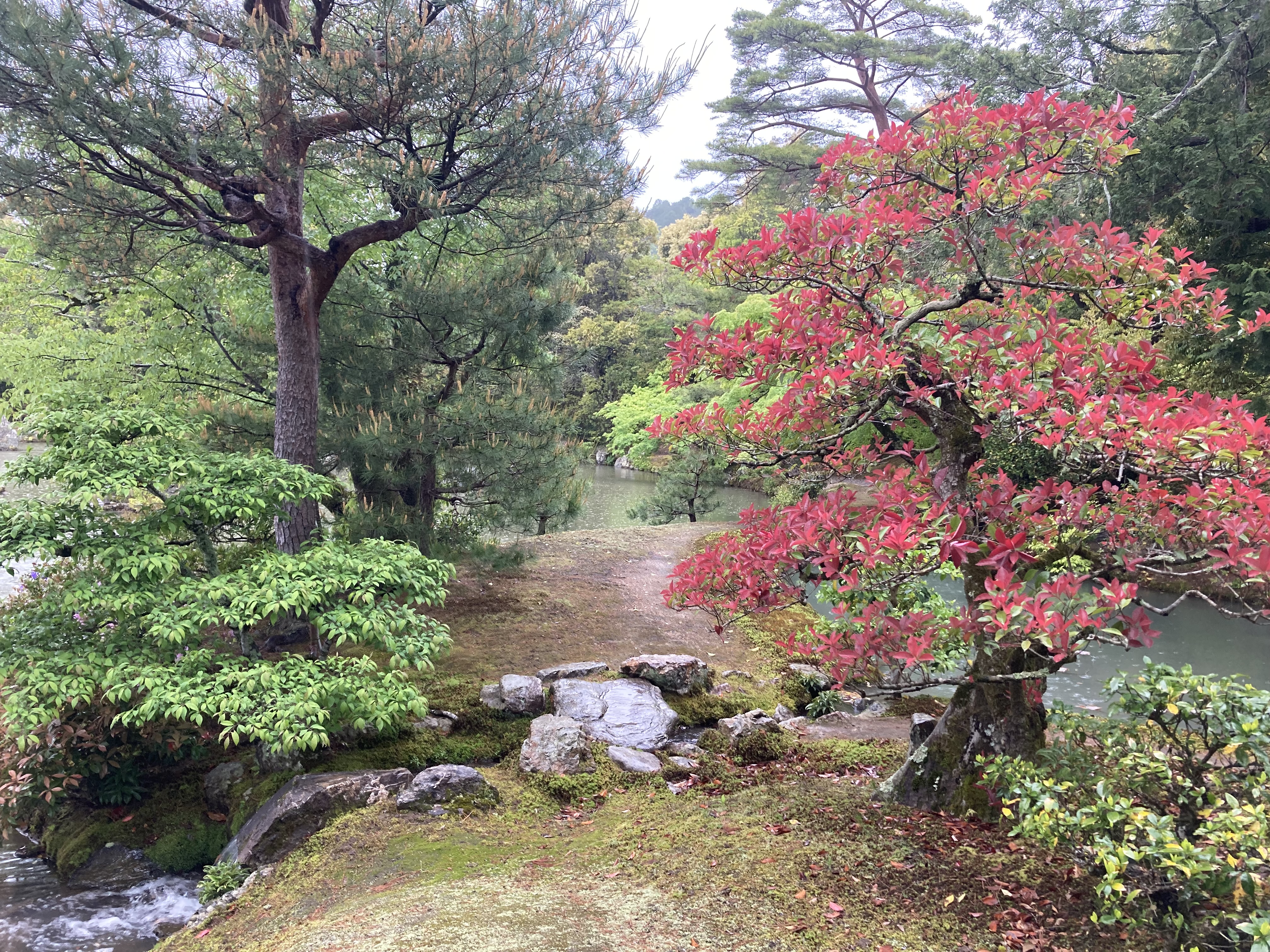 time in order to create the perfect effect. Judy, Margaret, and I spent a fair amount of time wandering the various paths around a pond and across a hillside, even though by then it was raining. The many paths of the garden, and the rain, also allowed us to escape the crowds for a bit!
 Our final stop was one more temple — the Kinkakuji Temple, known as the Golden Pavilion. This temple is covered in gold-plating, and shines out dramatically behind a large pond. We weren’t
  able to go inside, but the grounds around the temple again were stunningly beautiful and meticulously cared for.
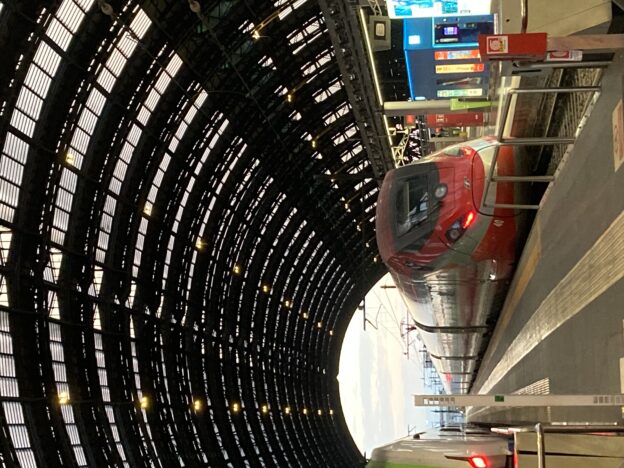
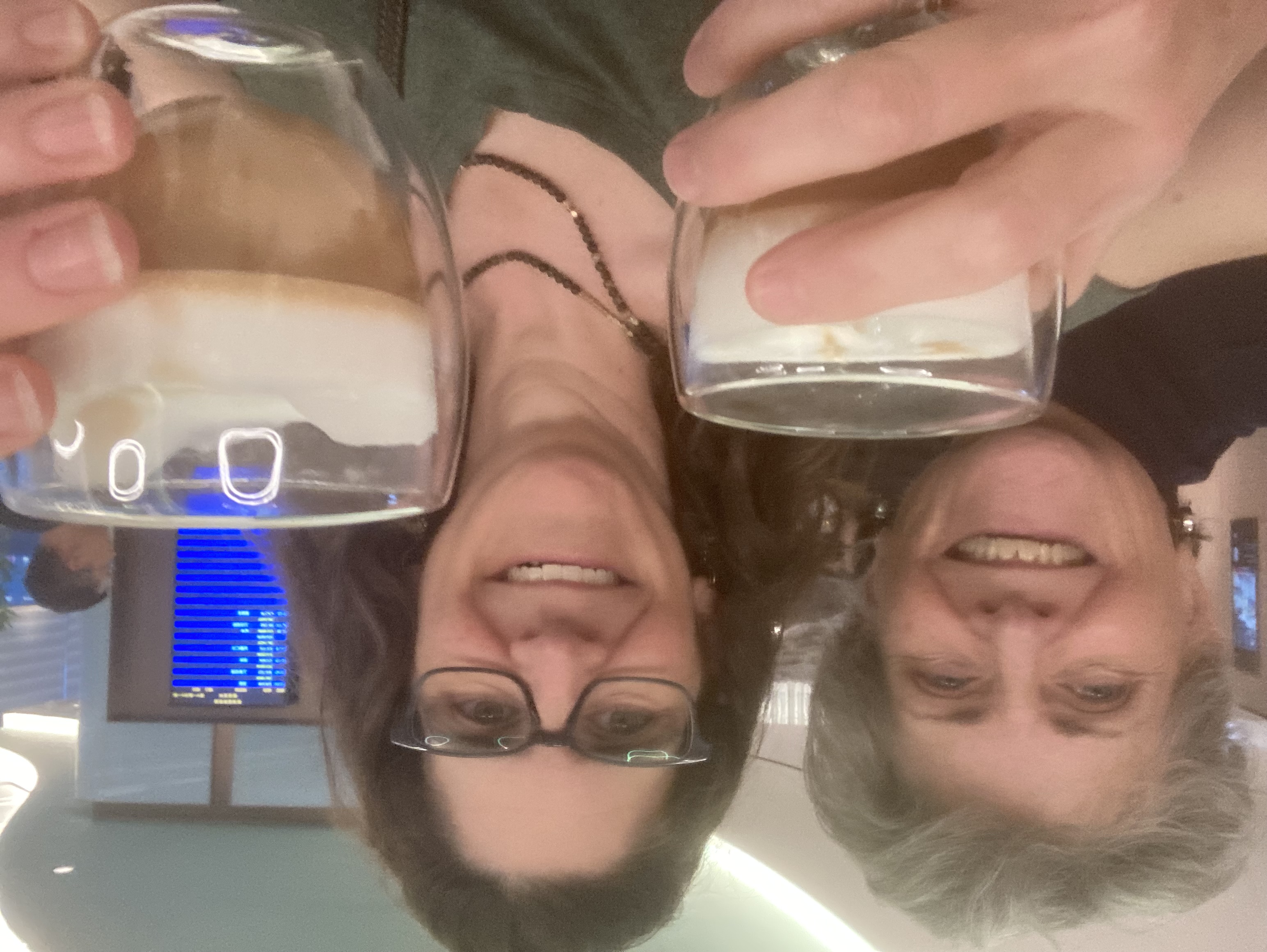
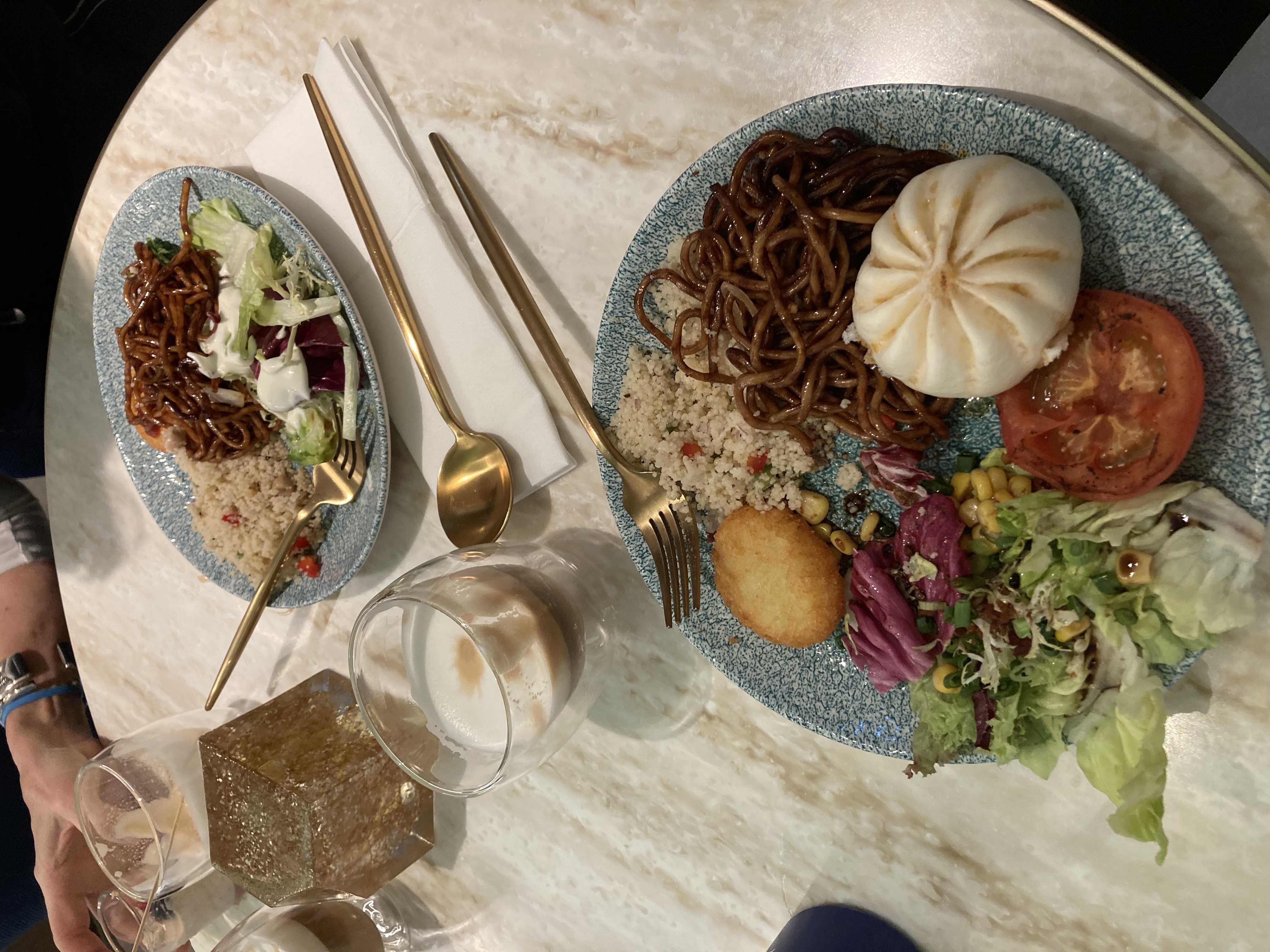
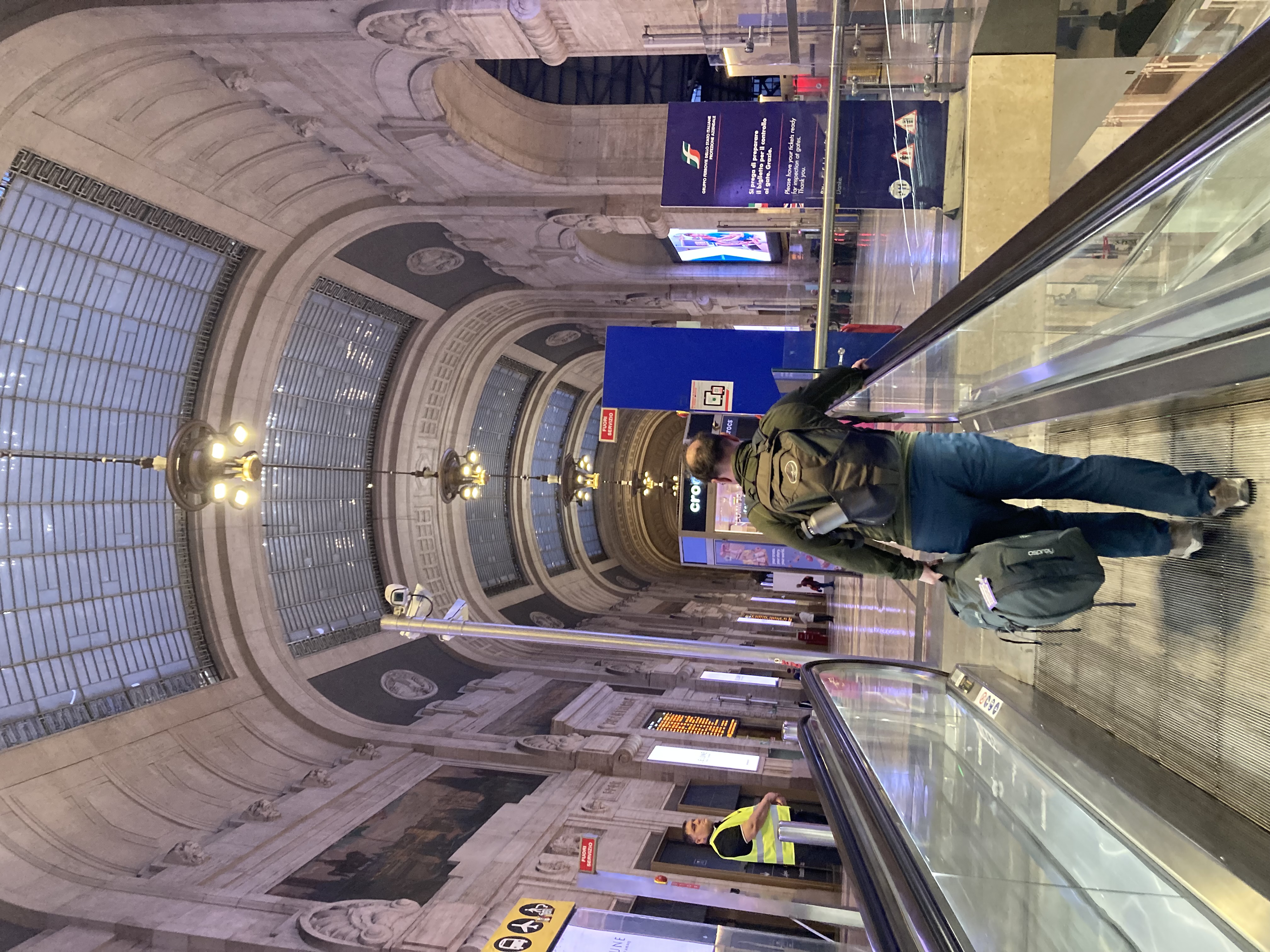 Our travel day home went pretty smoothly, despite a very early start and extremely long passport-control lines at Logan. Thanks to the Milan airport, we were finally able to try out an airport lounge! We declined to hit the bar at 8am (though some other people had to compunctions), but we did get a nice breakfast, cappucino, and a relaxing place to sit.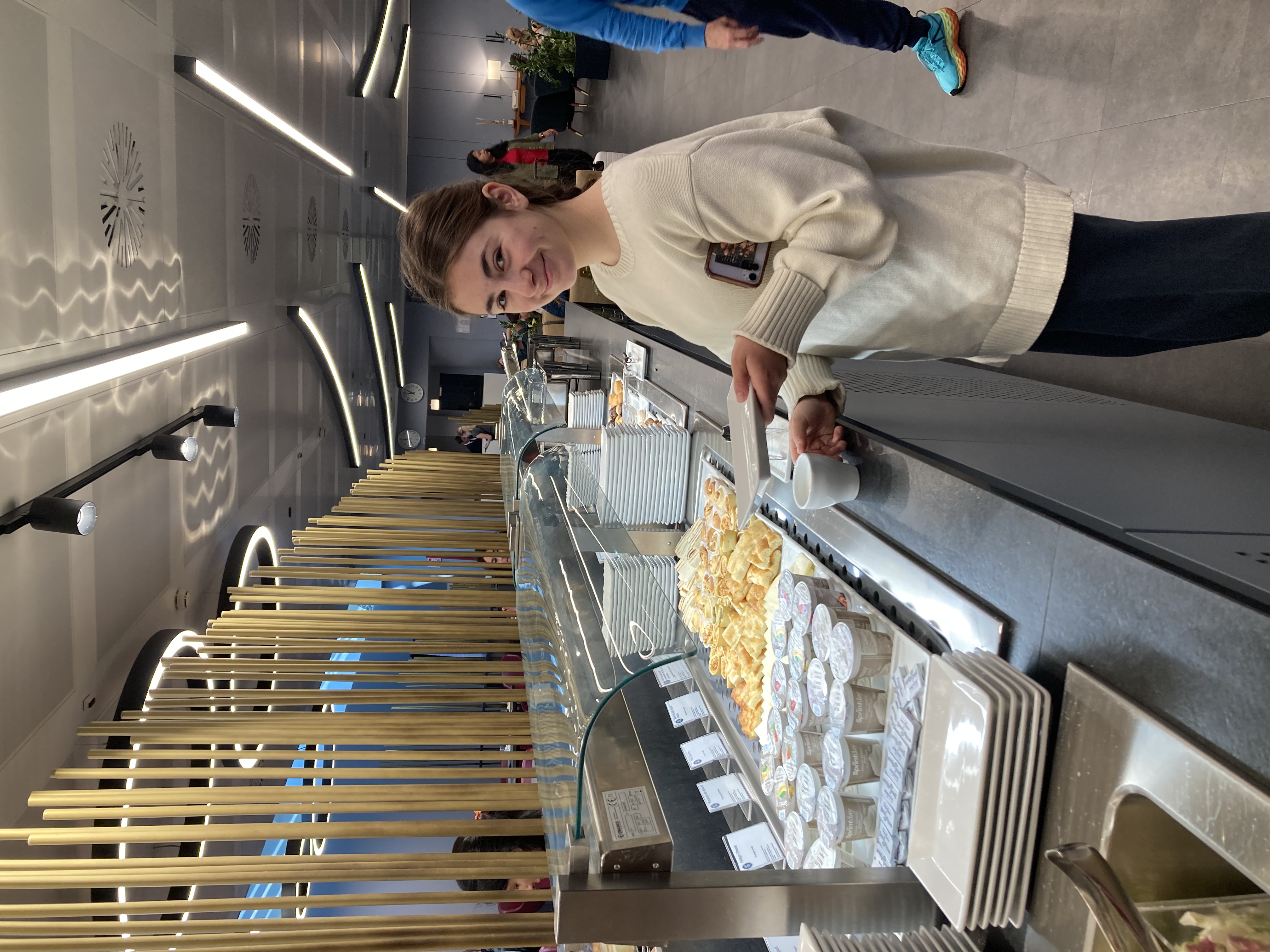

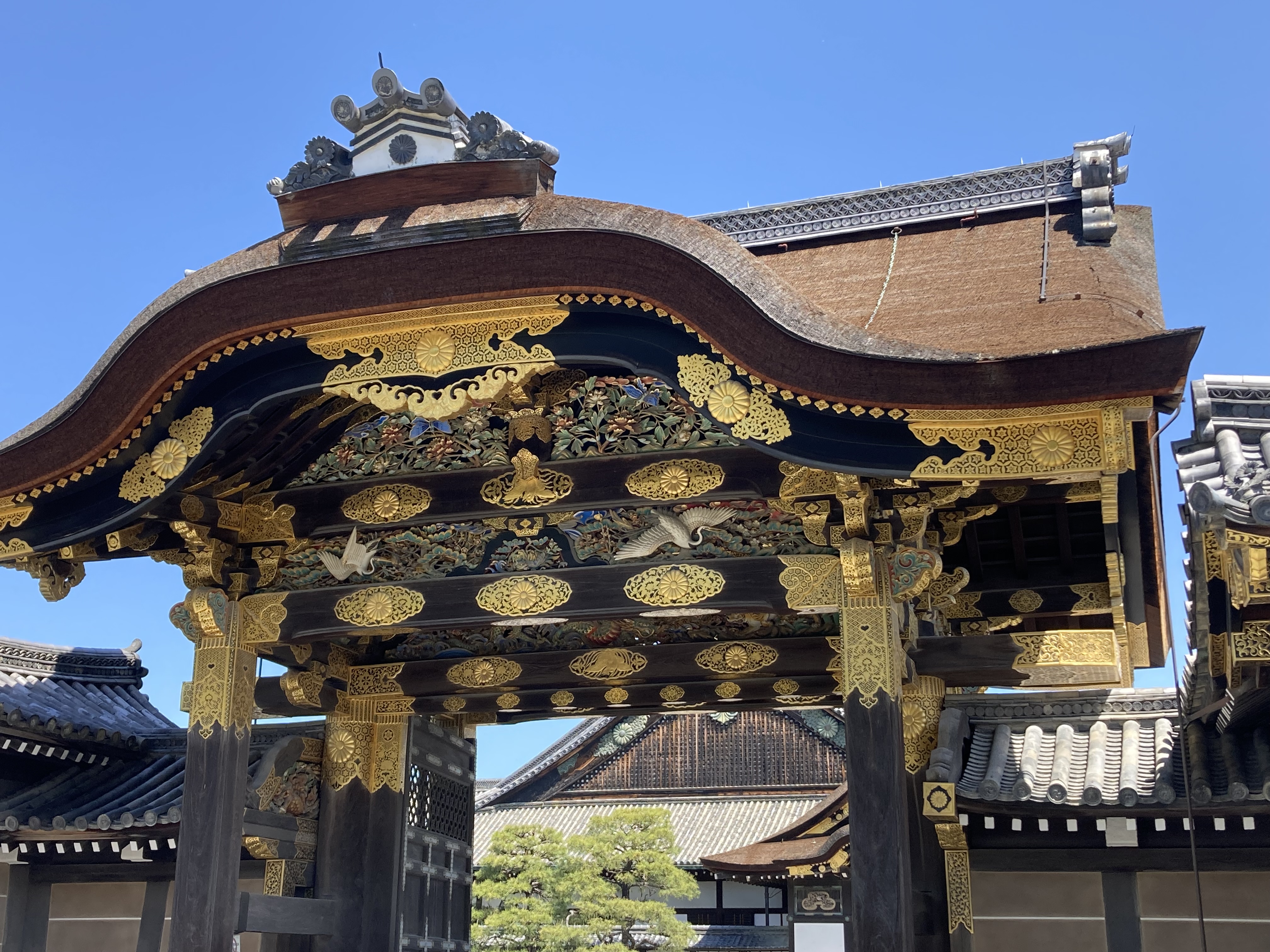
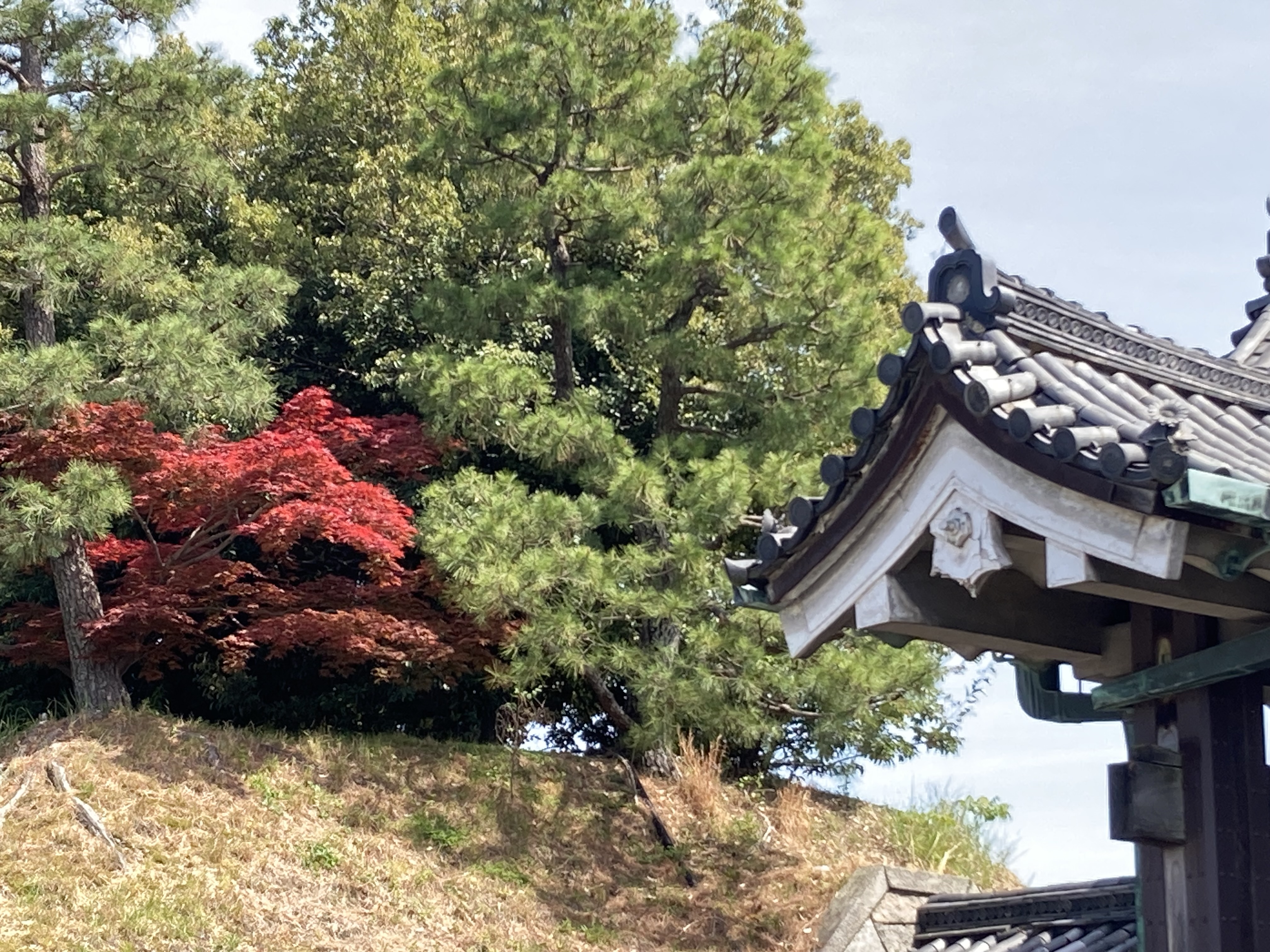
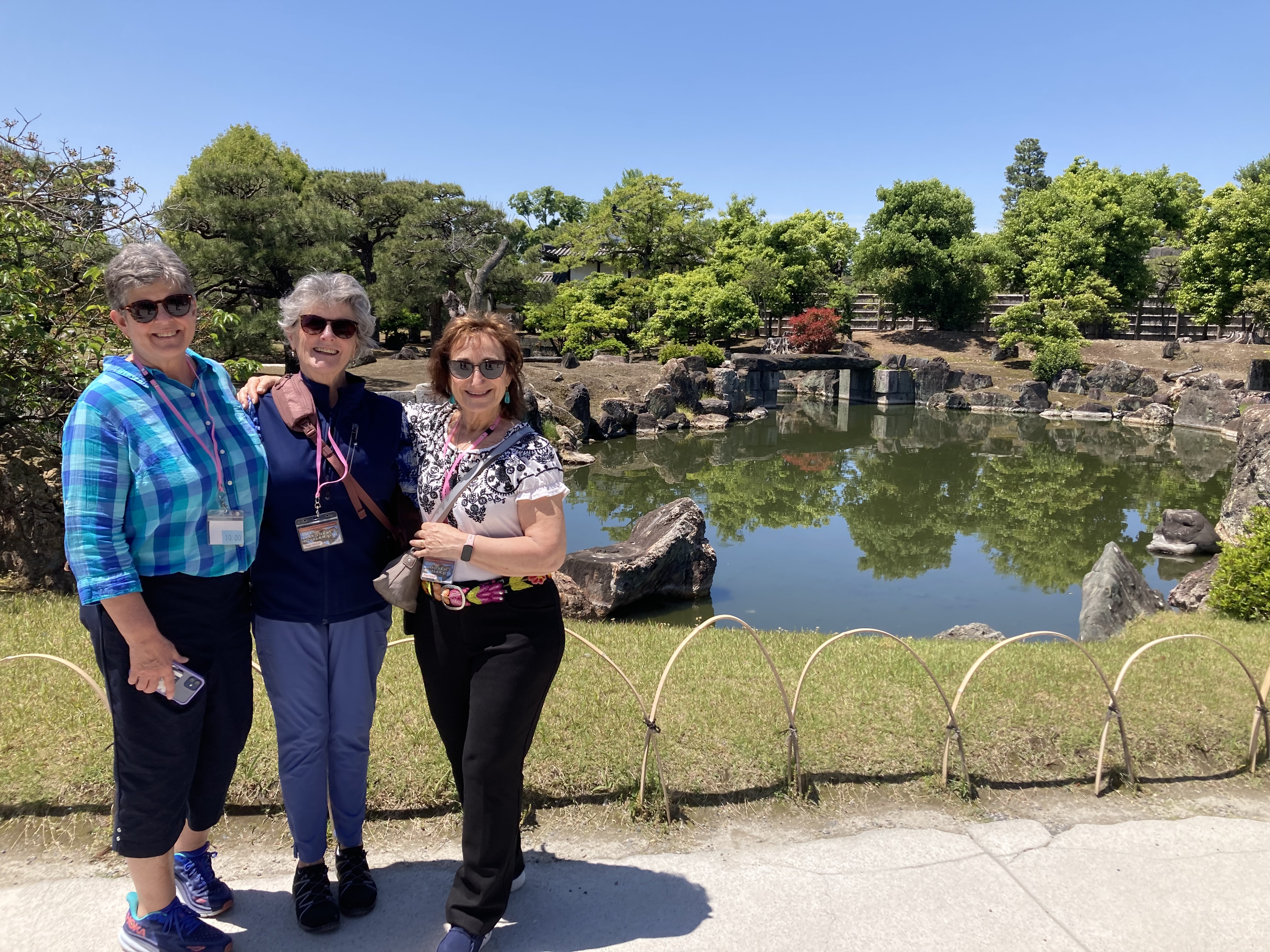 Japanese philosophy of making rooms multi-functional. When you wanted to do something in a room — say, eat dinner — furnishings like a table would be brought in from a storage room. After use, they’d be put back, leaving the room empty for another use.
 expensive).
 bamboo mats to lay our towels on). The palace’s painting and wallpaper were gorgeous, and the atmosphere was quiet and calm since the number of visitors at a time is strictly limited.
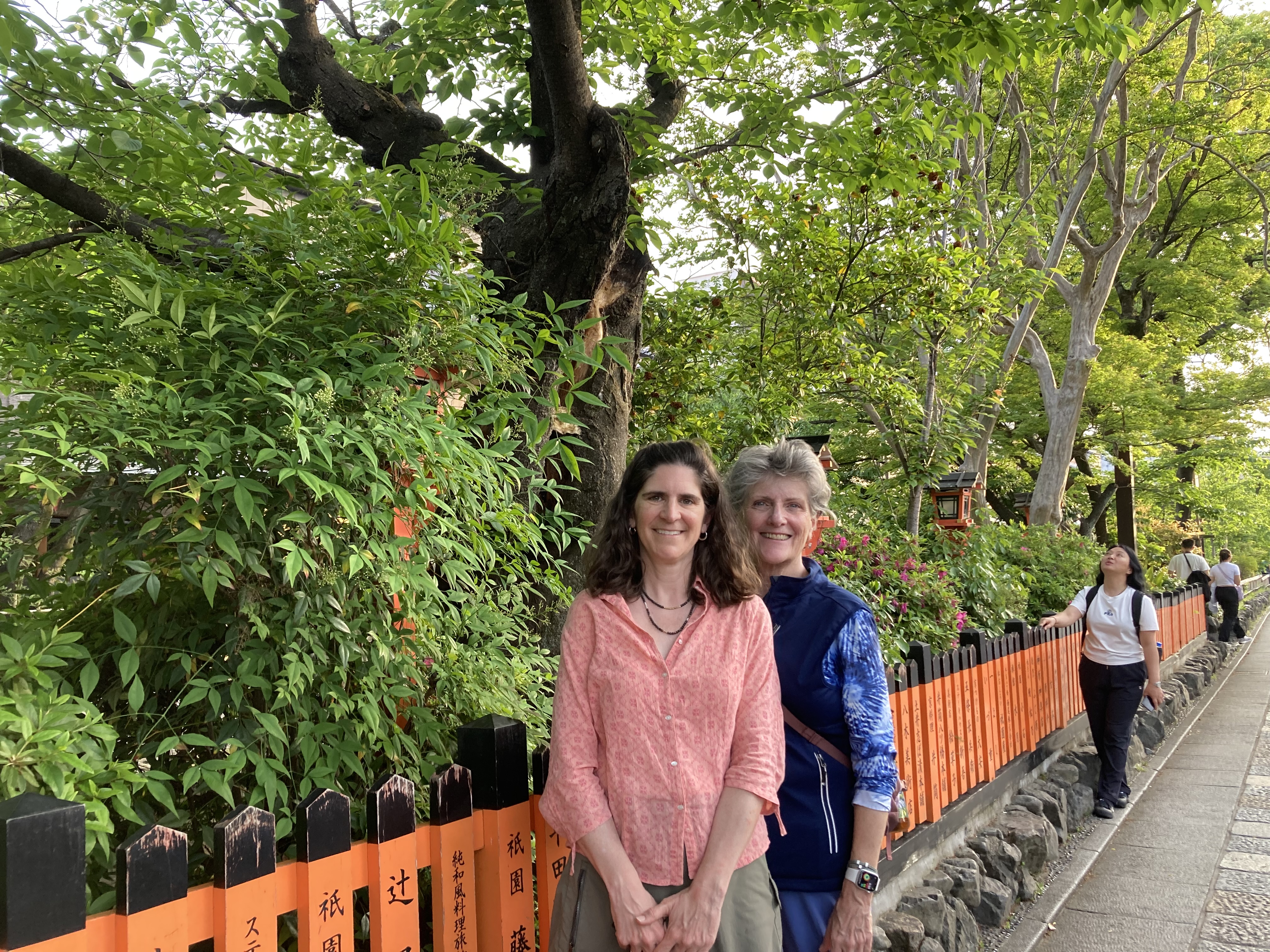
 large amounts of money that they make afterwards). Some interesting factoids: (1) Geishas in training have to wear their hair a specific way that takes several hours of styling, so they can only get it done once a week. To preserve the hair they have to sleep on these special tiny pillows that looked extremely uncomfortable. (2) Kimono worn by geishas are hand-made and cost $30,000-$60,000 apiece. (3) Men can be geishas, but not in Kyoto. Foreigners can also be geisha, but must be fluent in Japanese. (I think Margaret is considering a second career.) We only caught sight of one actual geisha, sitting in a cab, but the walk through narrow, old fashioned streets and along the river was charming regardless.
 After the tour we had to find dinner, and this proved a bit of a challenge. Margaret and I, in search of vegetarian food for her, ended up at a vegan restaurant. It was extremely tiny — 8 seats total along a bar, with the kitchen right behind. I think the whole place was smaller than our hotel room. It was populated almost entirely with Westerners — I don’t
 think the Japanese are big on veganism — except for this one slightly drunk Japanese gentleman who hit on Margaret. (His opening line was “You and me — same age!”, which didn’t really get things off on the right foot, since he turned out to be about 80.) The food was amazing and the two women running the place were friendly and kind. It was a very memorable experience.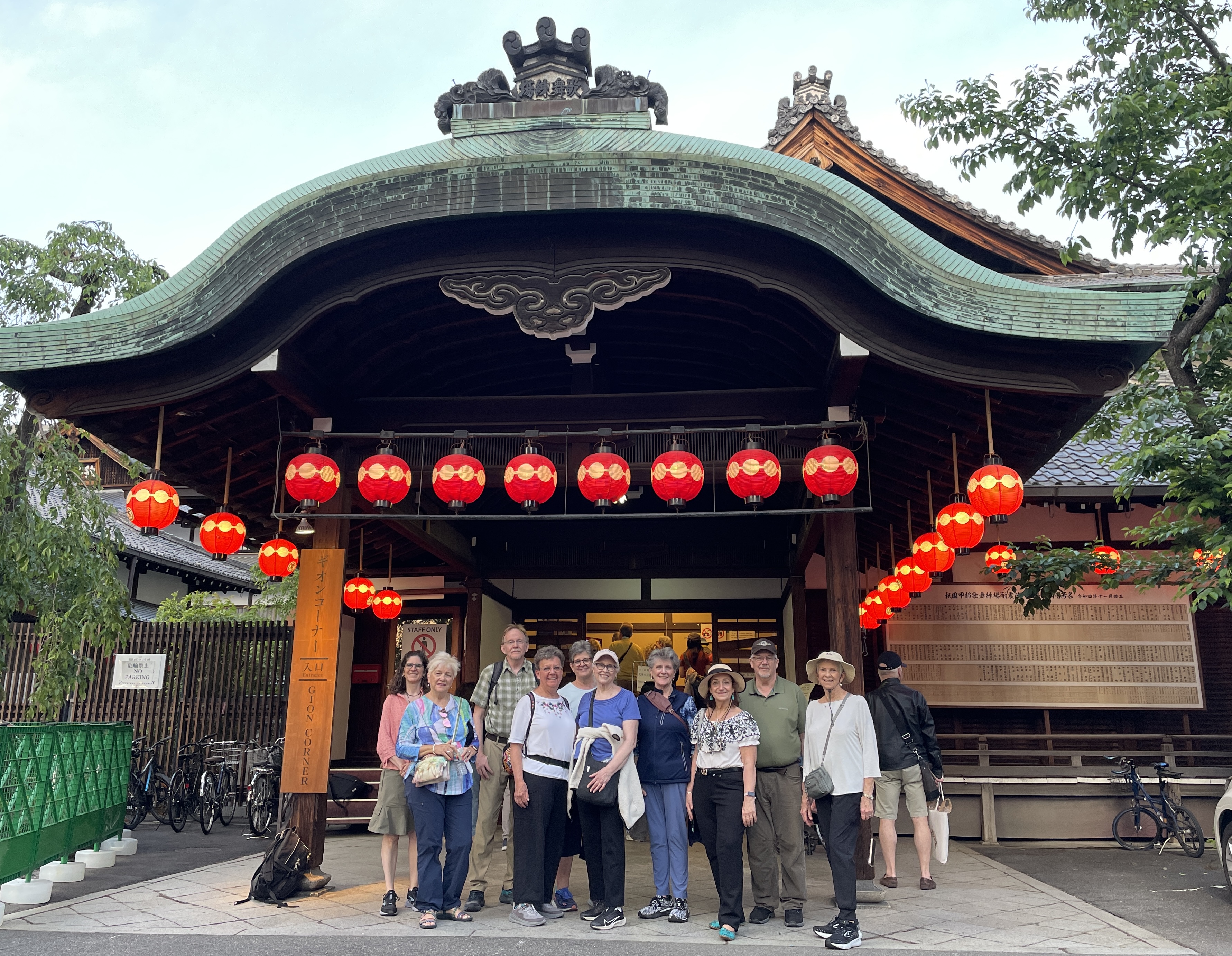
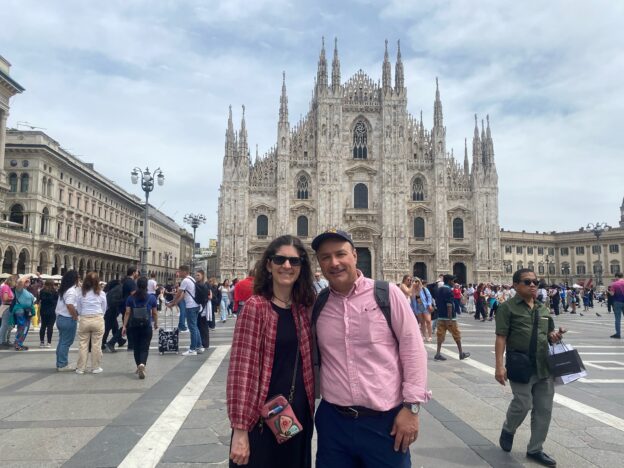
 After all the excitement of the past several days, we decided to take it a bit easier today. We hadn’t planned or reserved anything, and didn’t really have any must-see agenda items. (The biggest attraction here is the Duomo cathedral/museum complex, and we half-heartedly checked for tickets in the morning, but none were available. Given all the art and churches that we’ve seen, no one was too devastated by this.) Bob and I let the girls sleep, and it was a record 11:30 before we made it out of the hotel.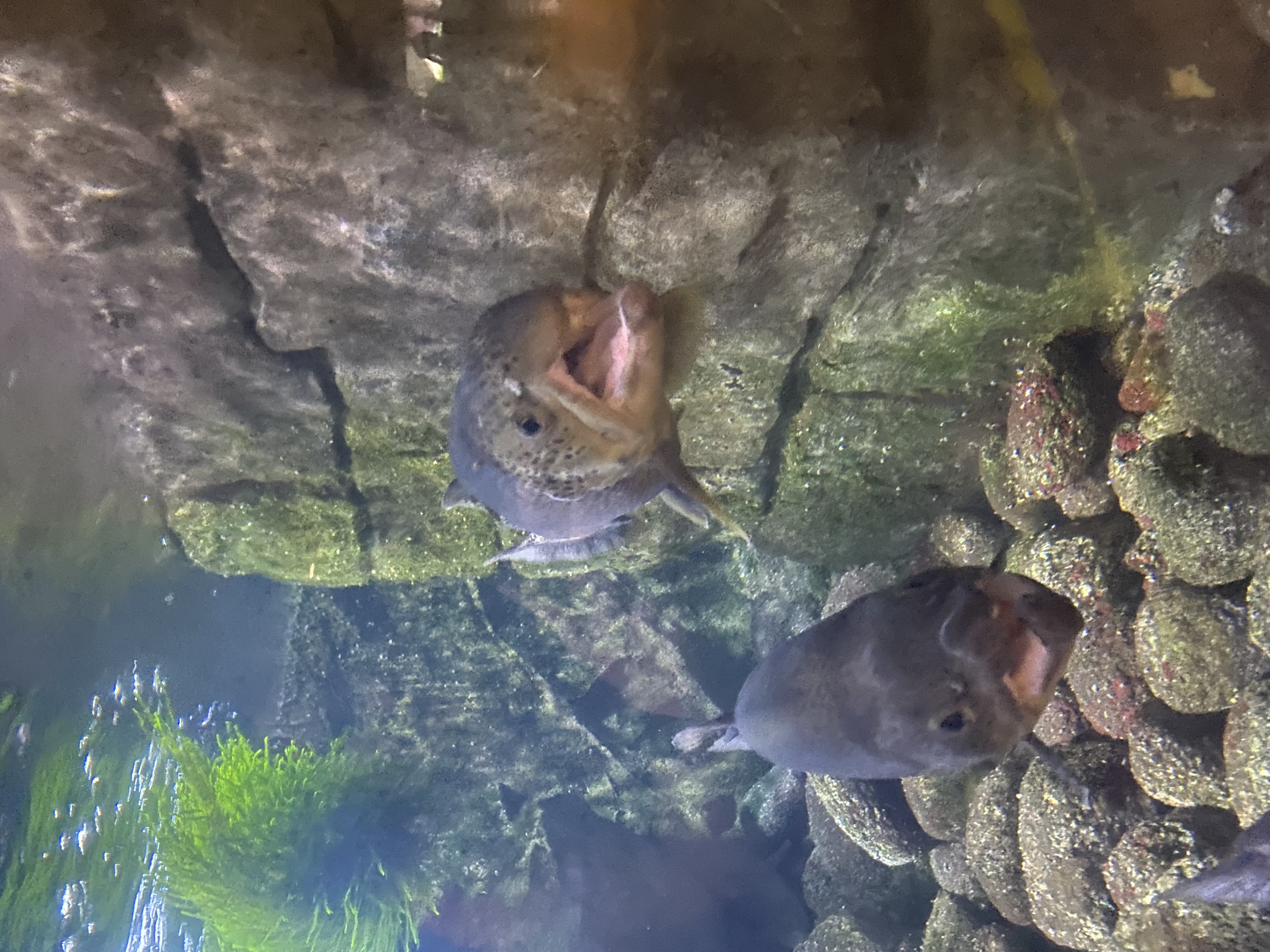
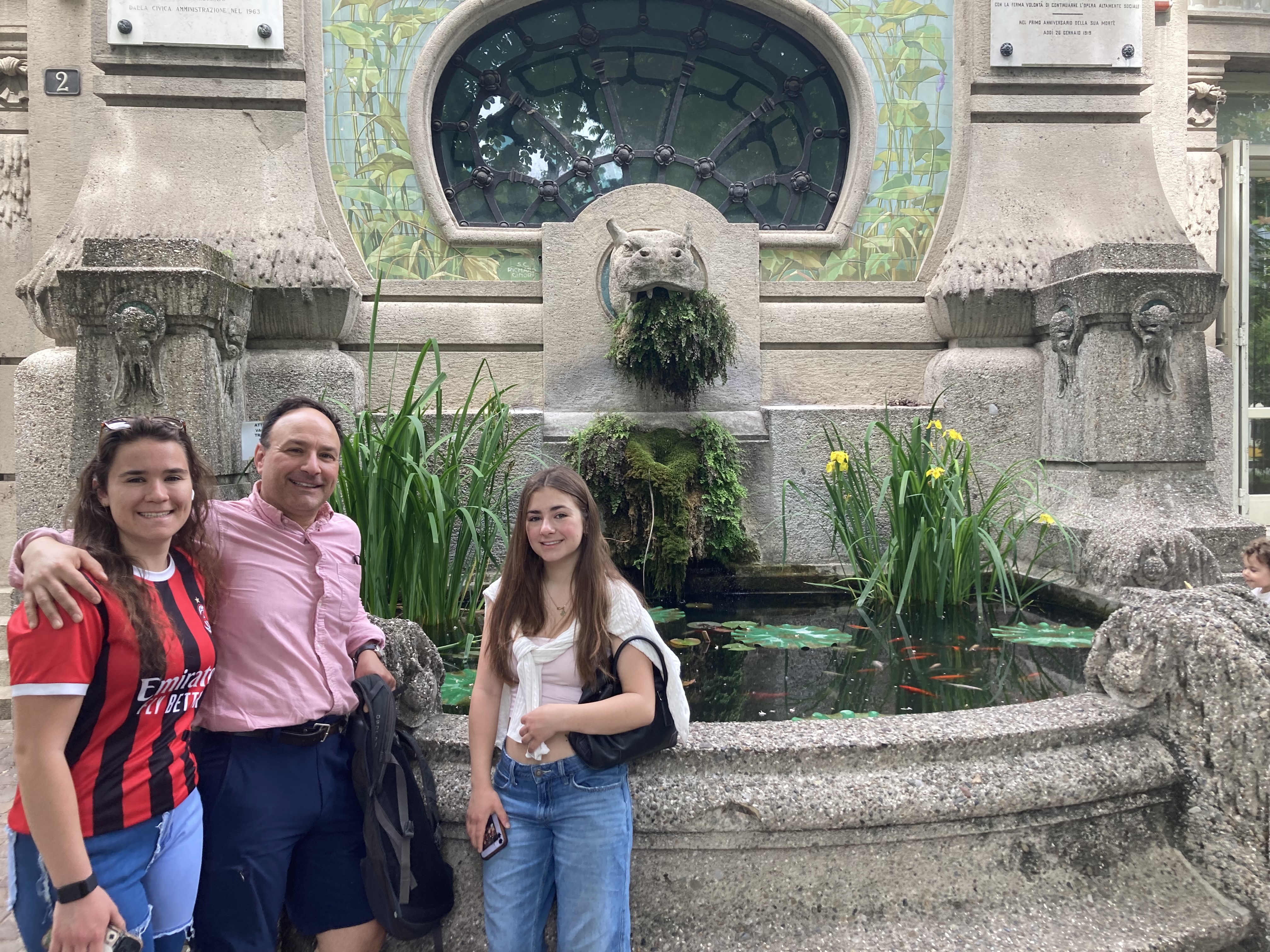
 Nadia loves aquariums — so we made that our first stop. It was in a beautiful old building with a cool fountain out front, and — being pretty small and low-key — was the perfect antidote to all the crowds that we’ve been encountering everywhere. We spent a relaxing hour or two strolling through the exhibits and gardens. (One of the coolest things was that in a random corner of the basement, near the bathrooms, we found a gorgeous shell collection — and saw that some of them were from the collections of Linnaeus and Lemarck.) Total cost: 13 euro (about $15) for all four of us.
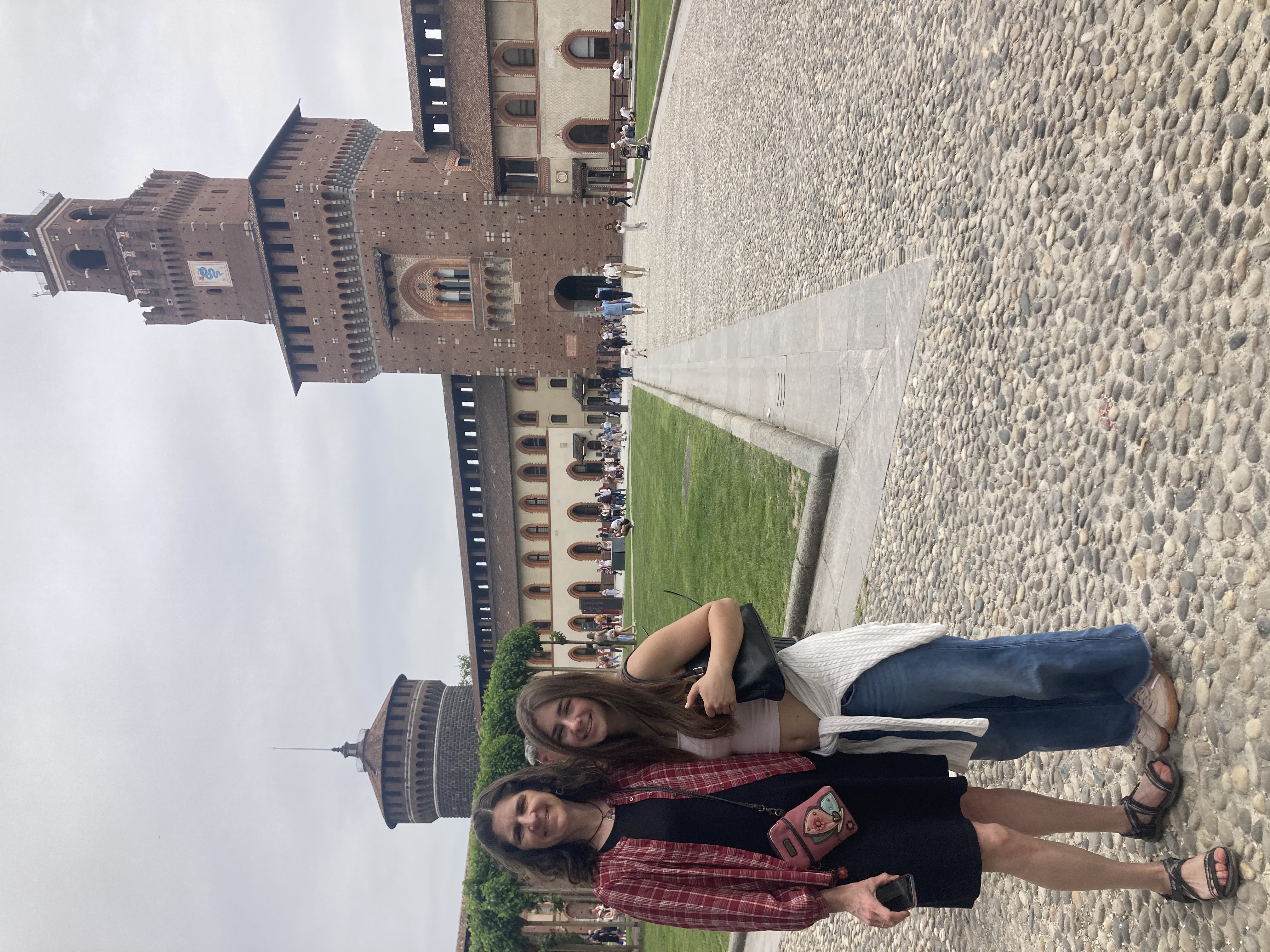
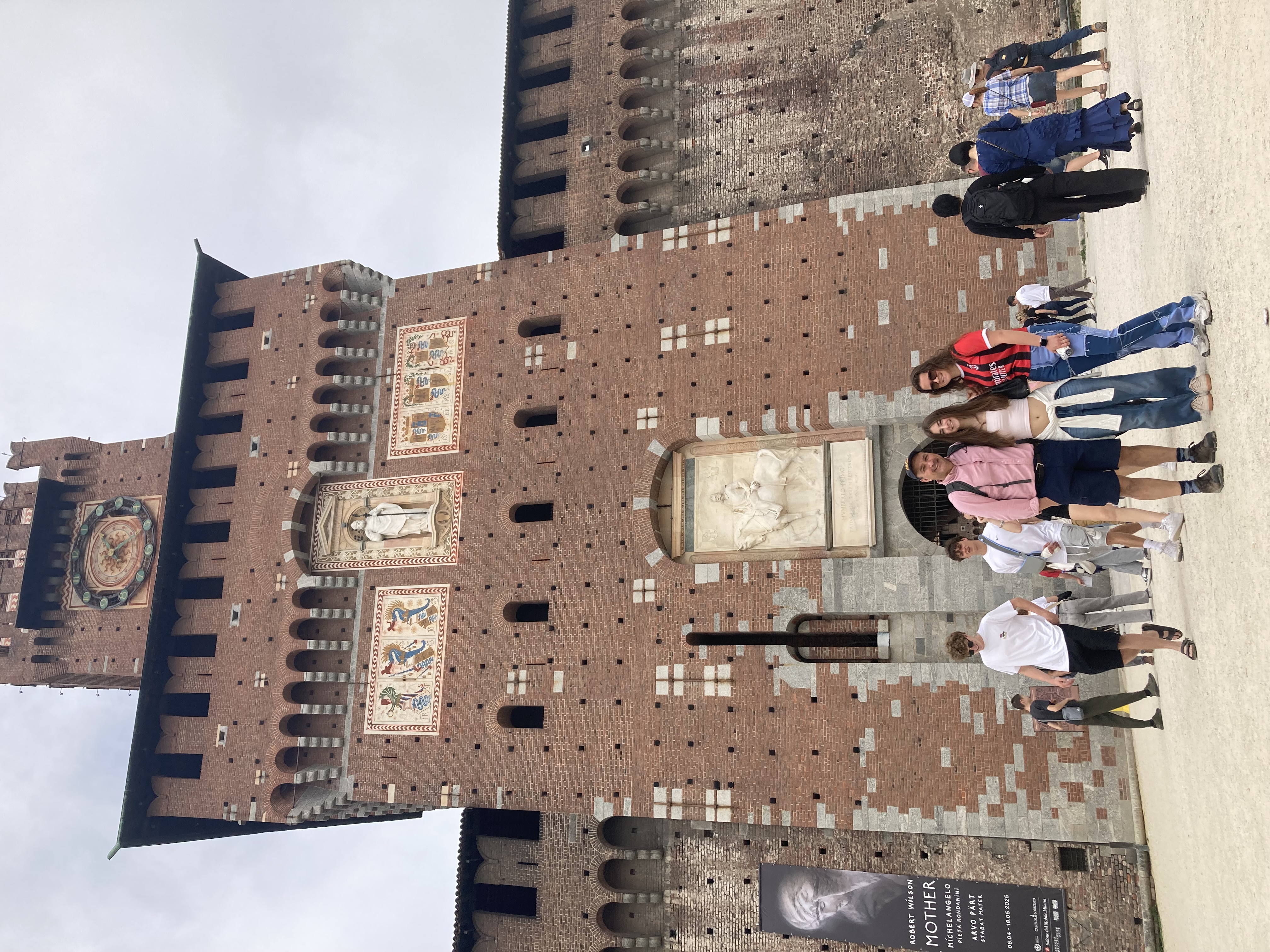
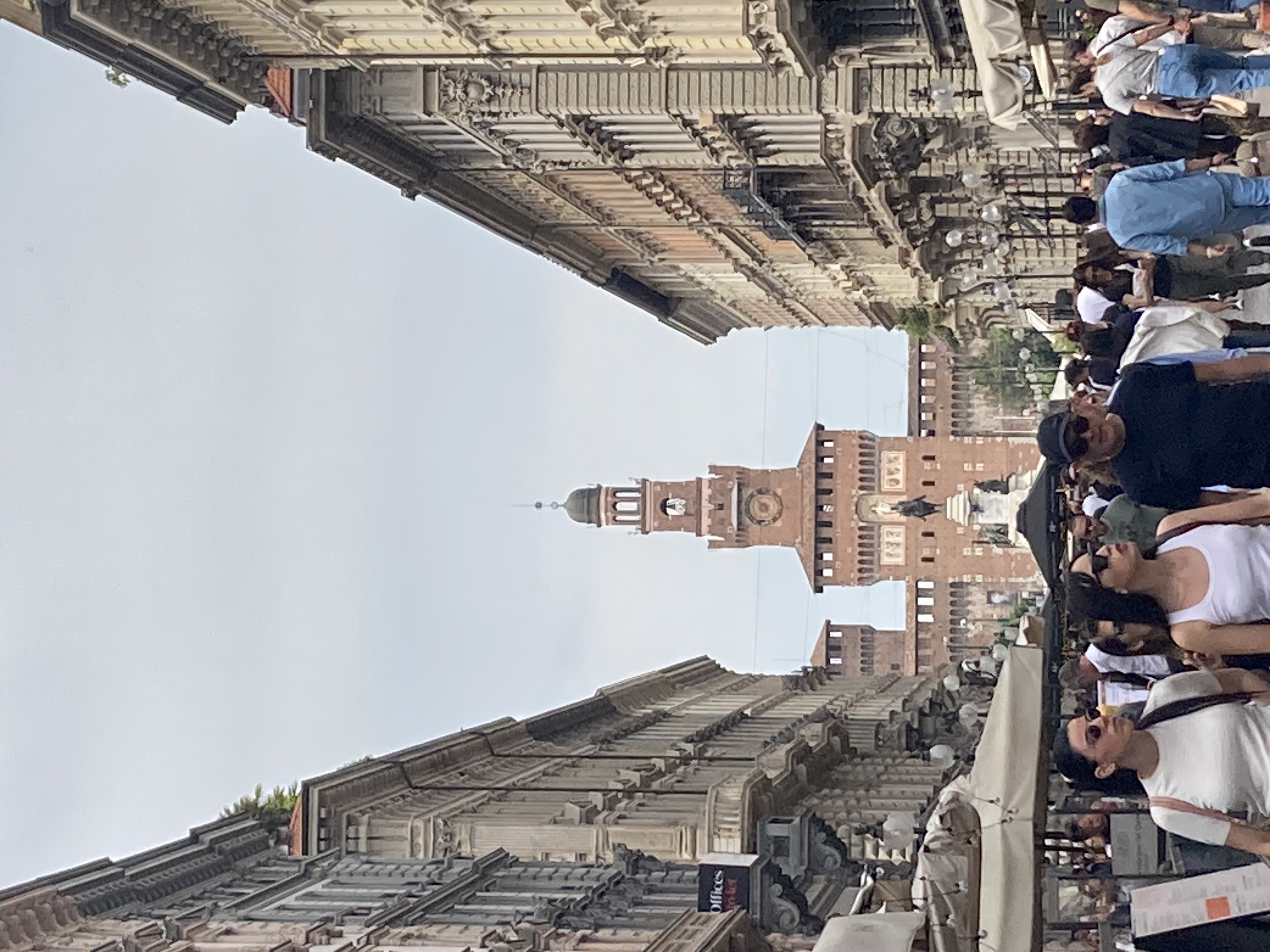 we didn’t go into, but just the exterior areas were very impressive. (I was tempted to buy tickets for the Panoramic Battlements Walk, but wasn’t sensing a lot of interest from the troops in climbing a bunch of stairs.)
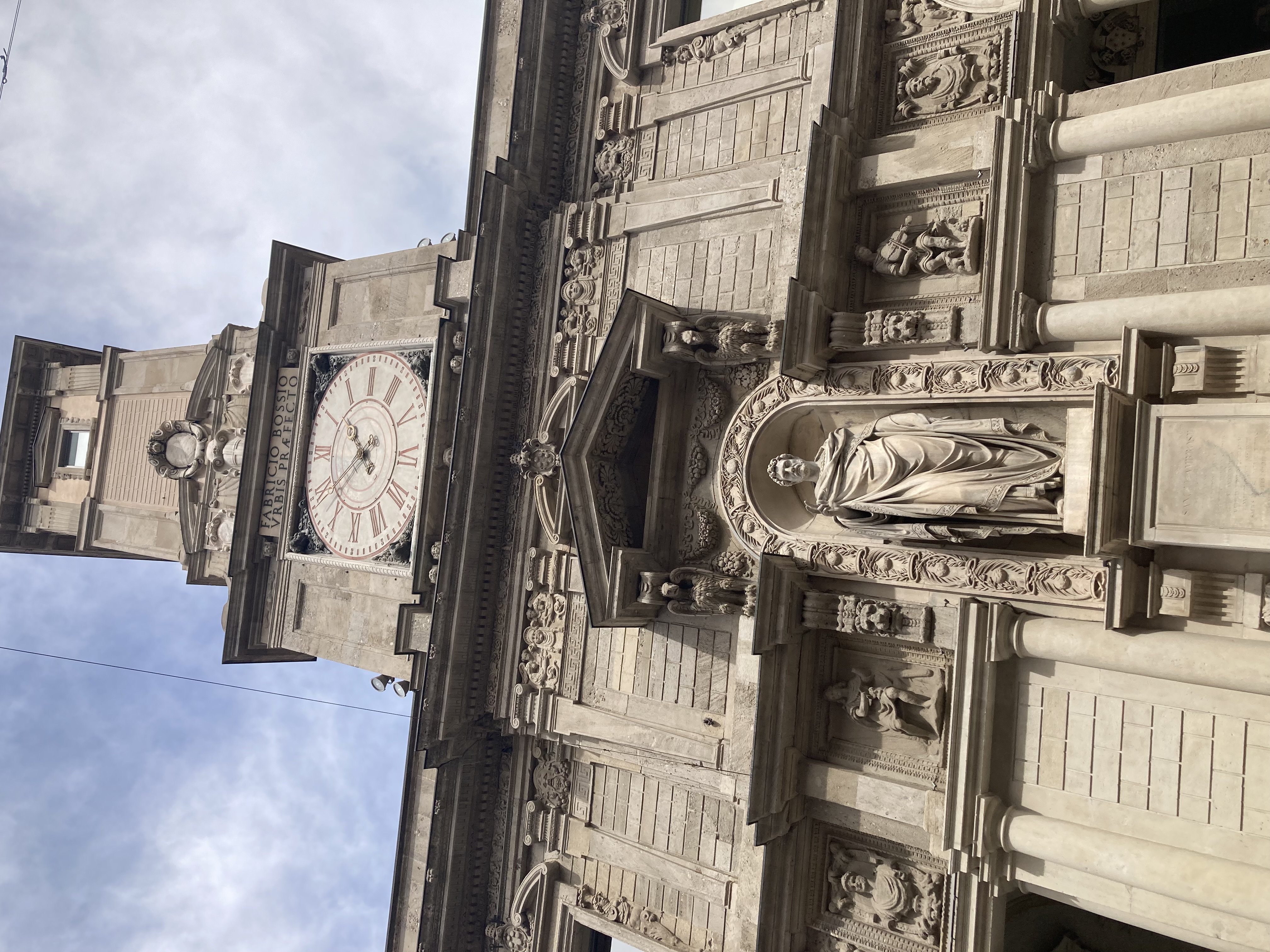 modern, but we found that the area around the Duomo is much more like Florence, but with even more beautiful architecture everywhere you looked. (Despite the crowds, walking was considerably easier because Milan has created actual pedestrian areas, rather than streets that appear to be pedestrian until a random taxi or delivery truck edges by.) It was definitely worth the trip to see the Duomo and all the amazing buildings around it.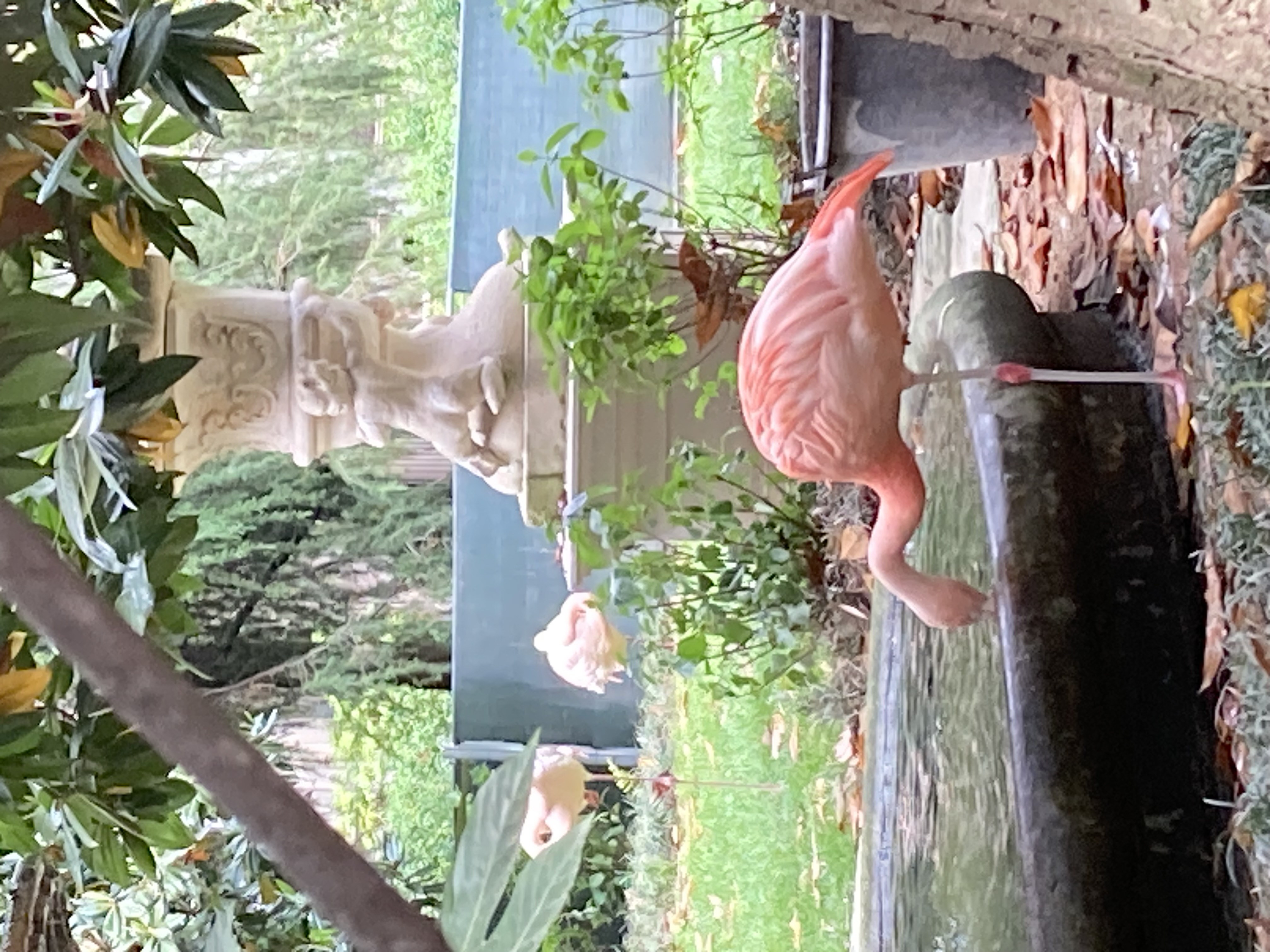
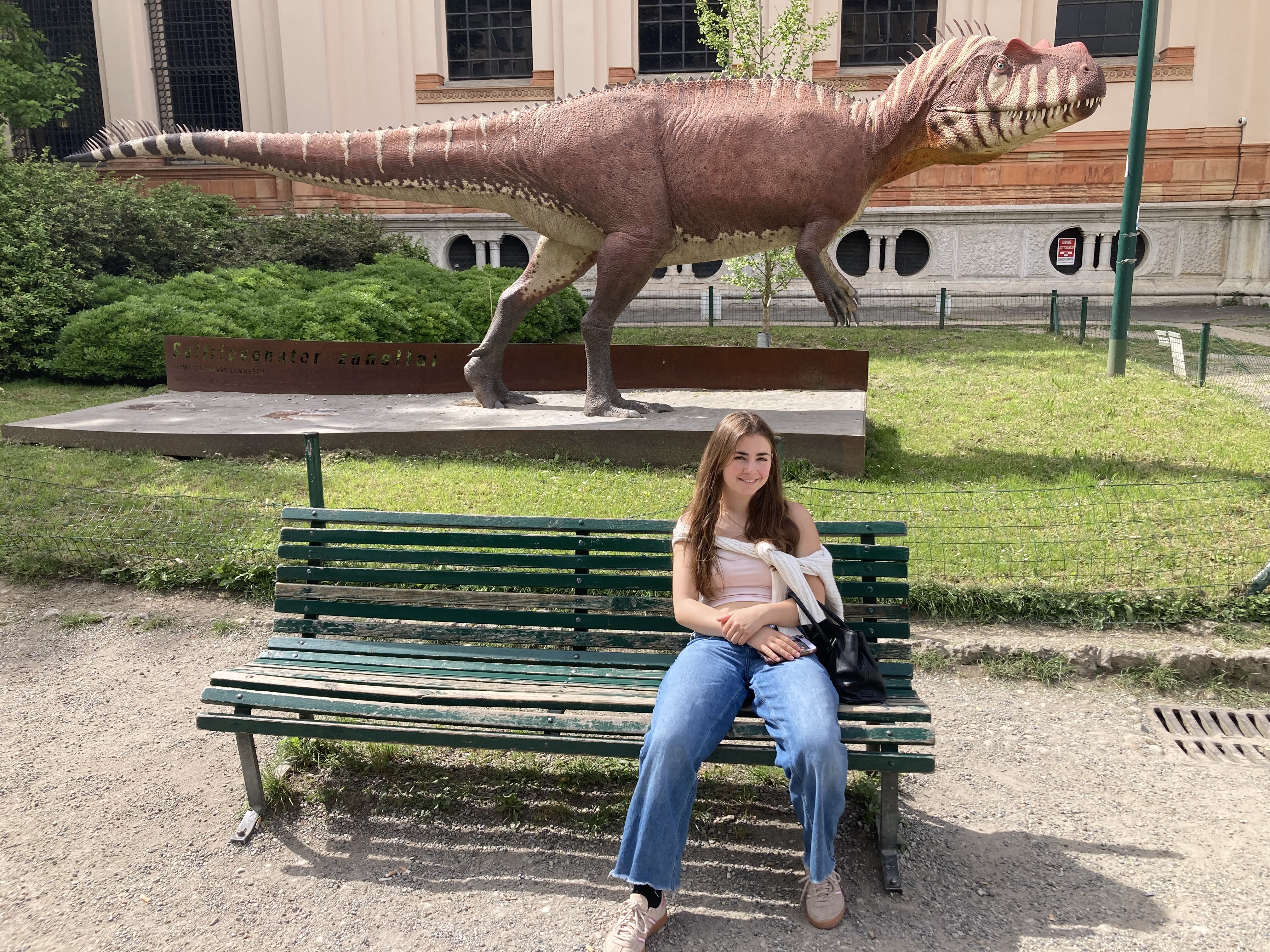
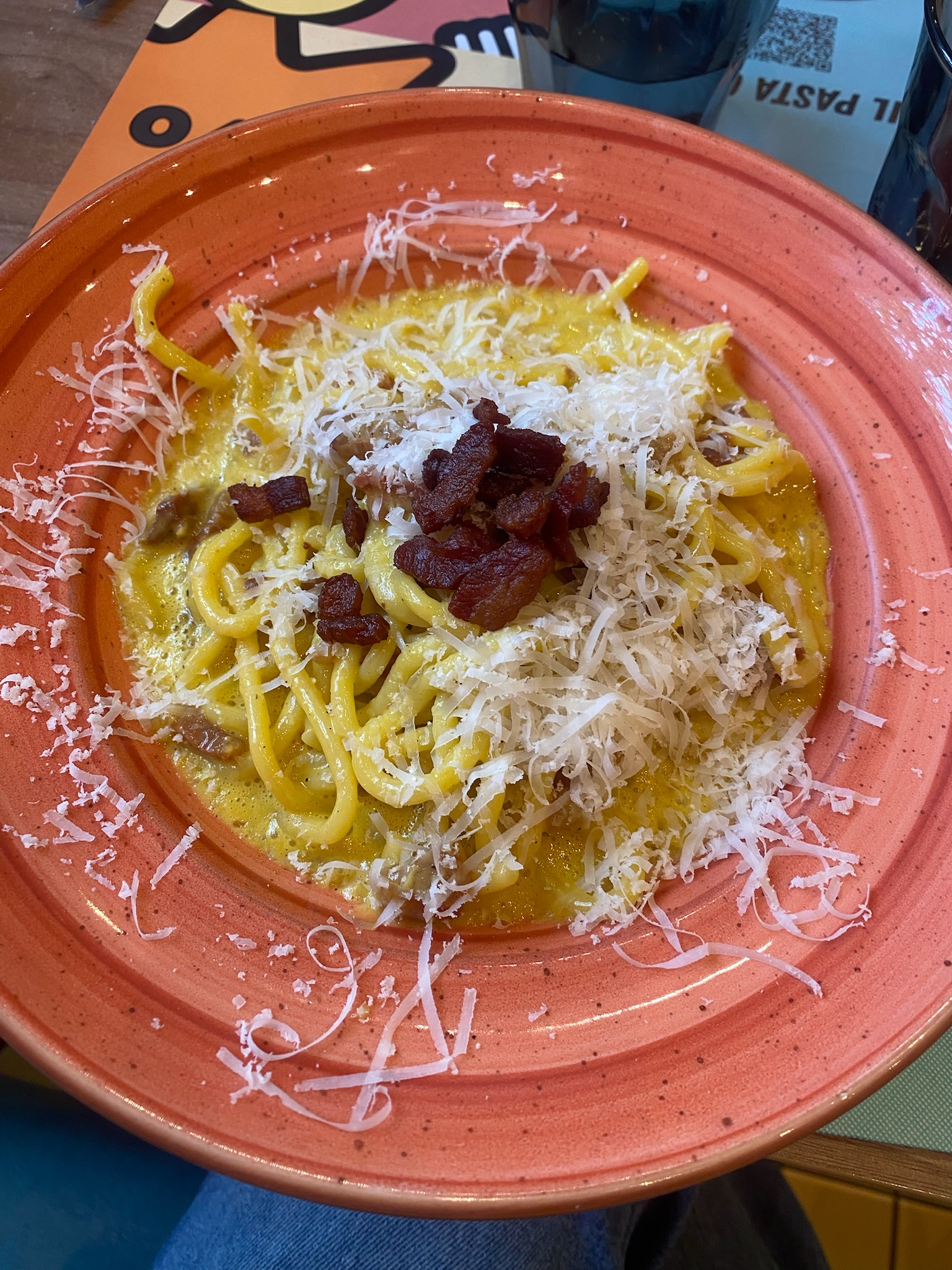 tourist track again to find a place for a late lunch. We found ourselves walking through what was clearly a wealthy area of quiet streets and picturesque buildings. At one point we saw a tall wrought iron fence surrounding an area of greenery, with a few people peering inside. To our surprise we found that it was a large enclosed yard full of flamingos. We didn’t see any signs or public access, so we can only assume this was some rich person’s backyard. Eventually we got out of the wealthy area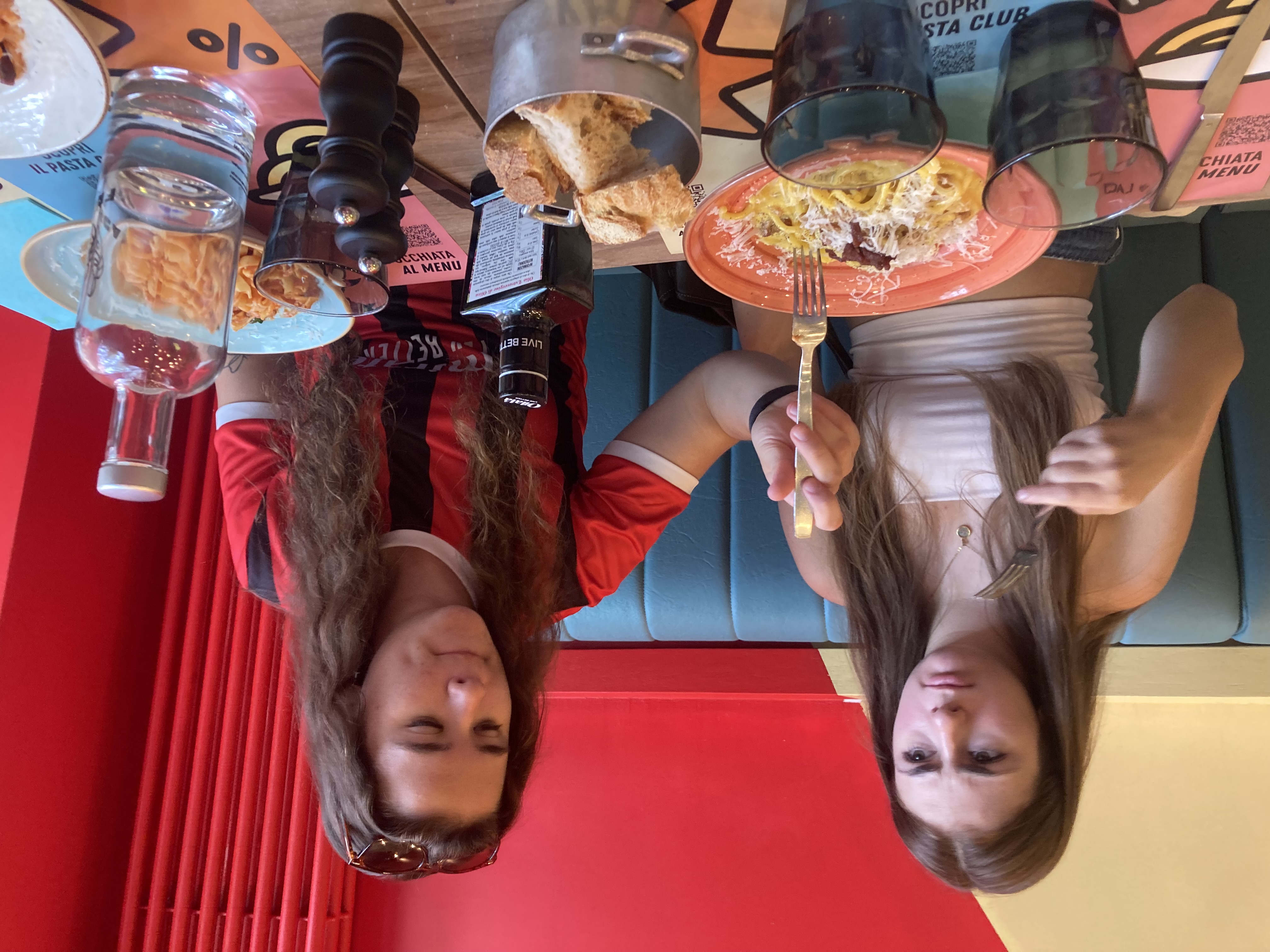
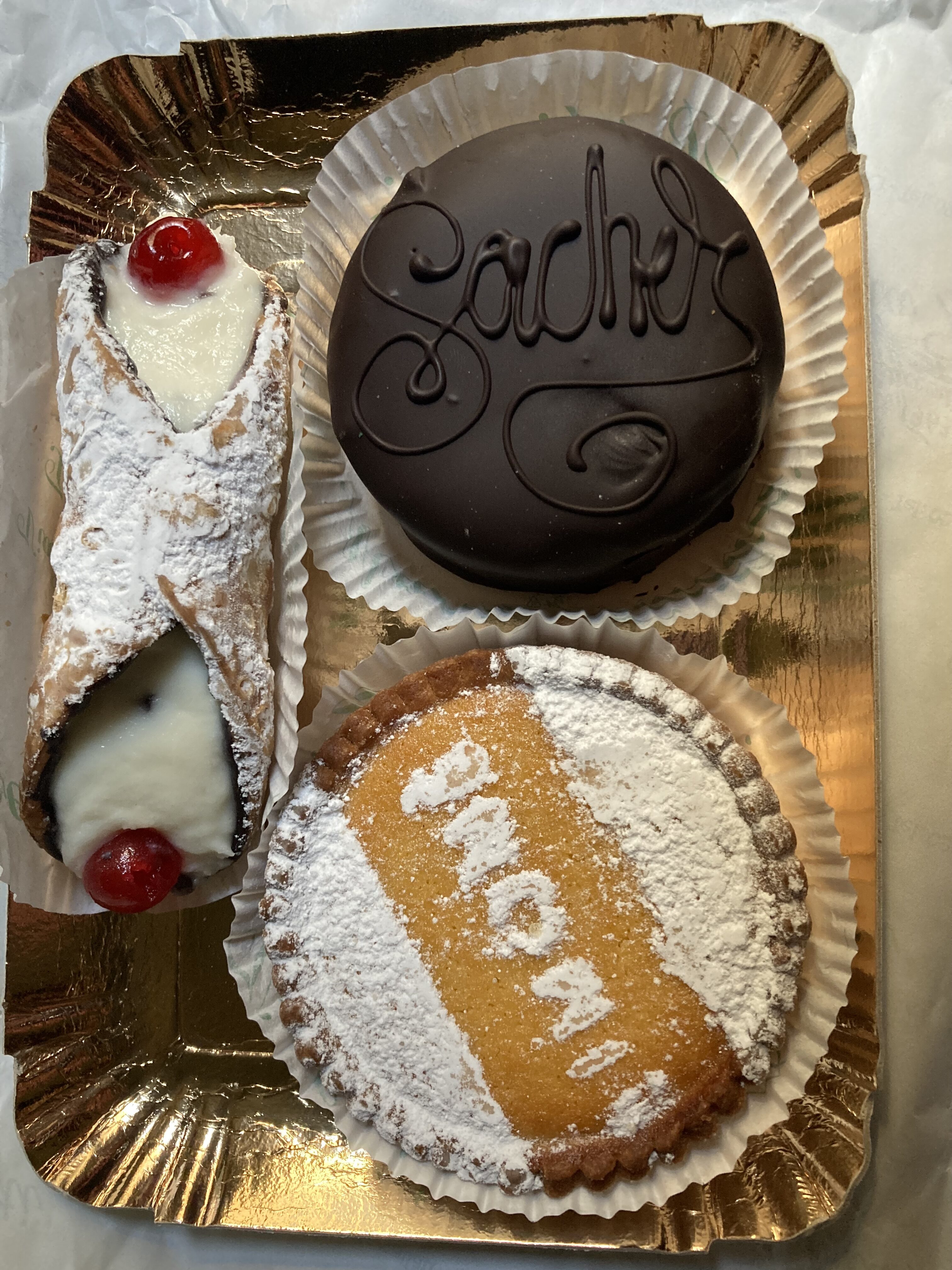 pastries from a local bakery.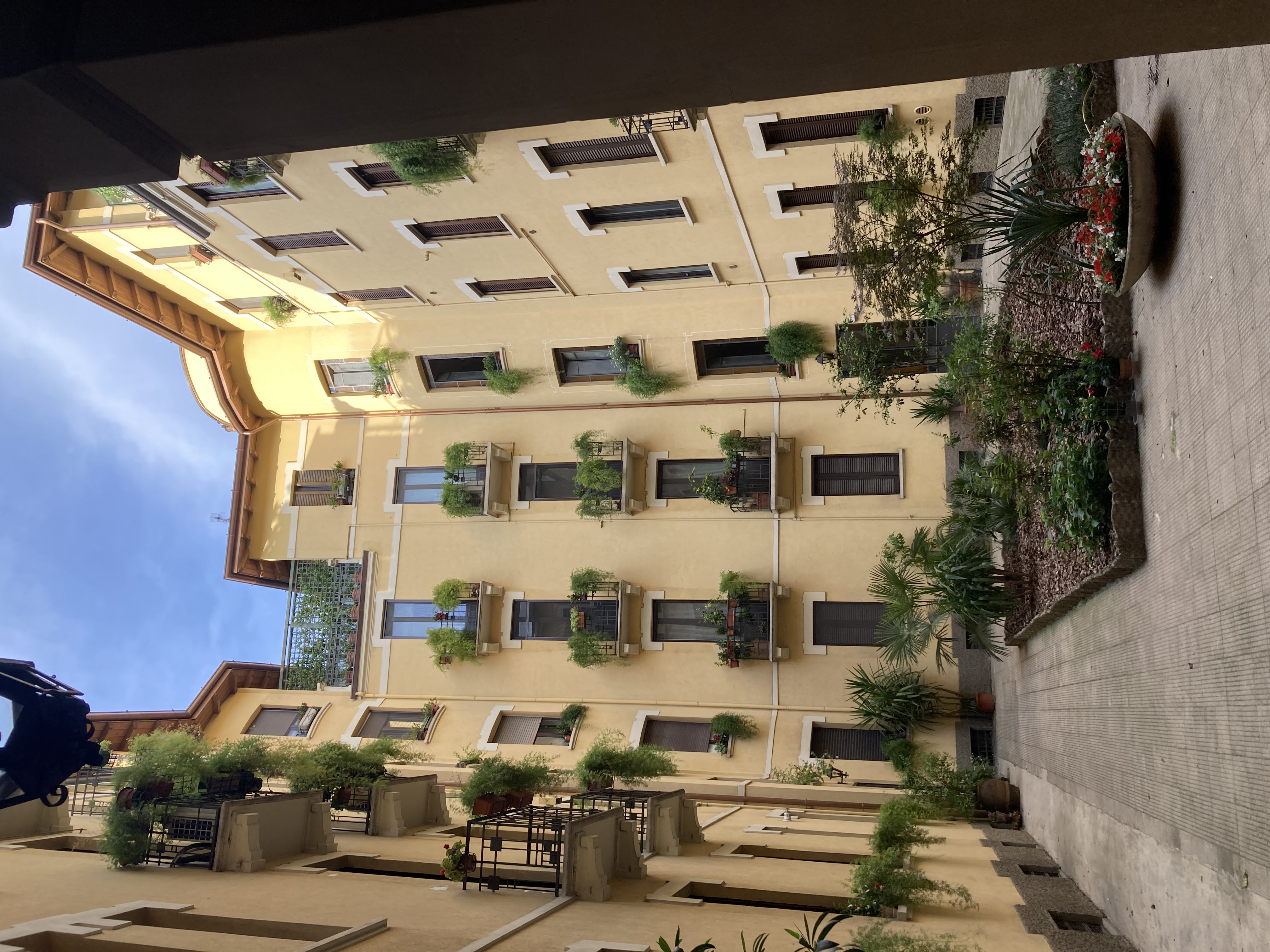
 There are clearly many surprises left to be discovered in Florence (like, who, exactly is sitting behind those little doors in the wall waiting to dispense glasses of wine?), but we have limited time here. Today gave us our last few hours of exploring.
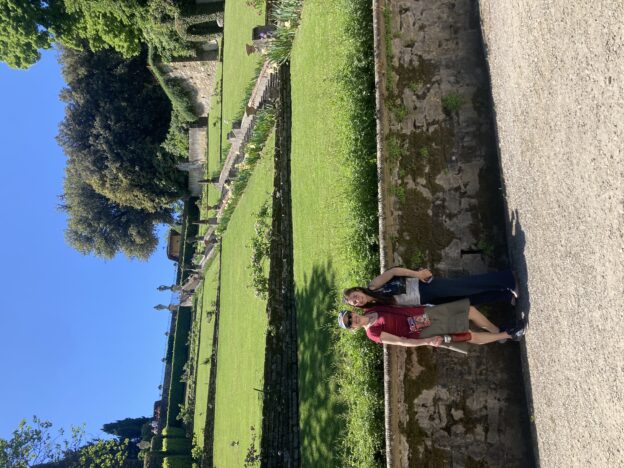
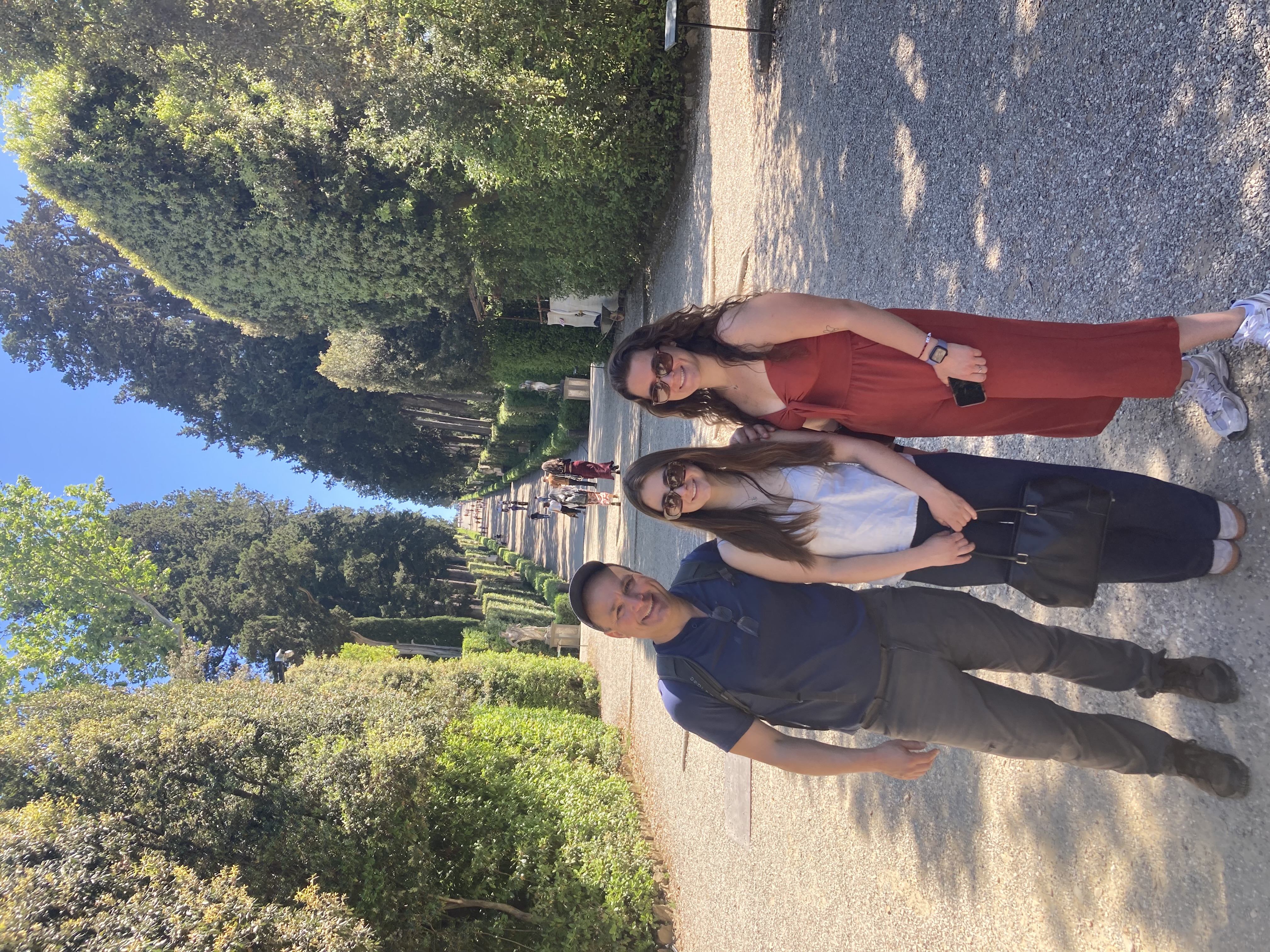
 our bags for the day (about 18 euro for three bags in an automated locker facility near the train station). Then we headed off to the Boboli Gardens for a pre-planned rendezvous with Nadia.
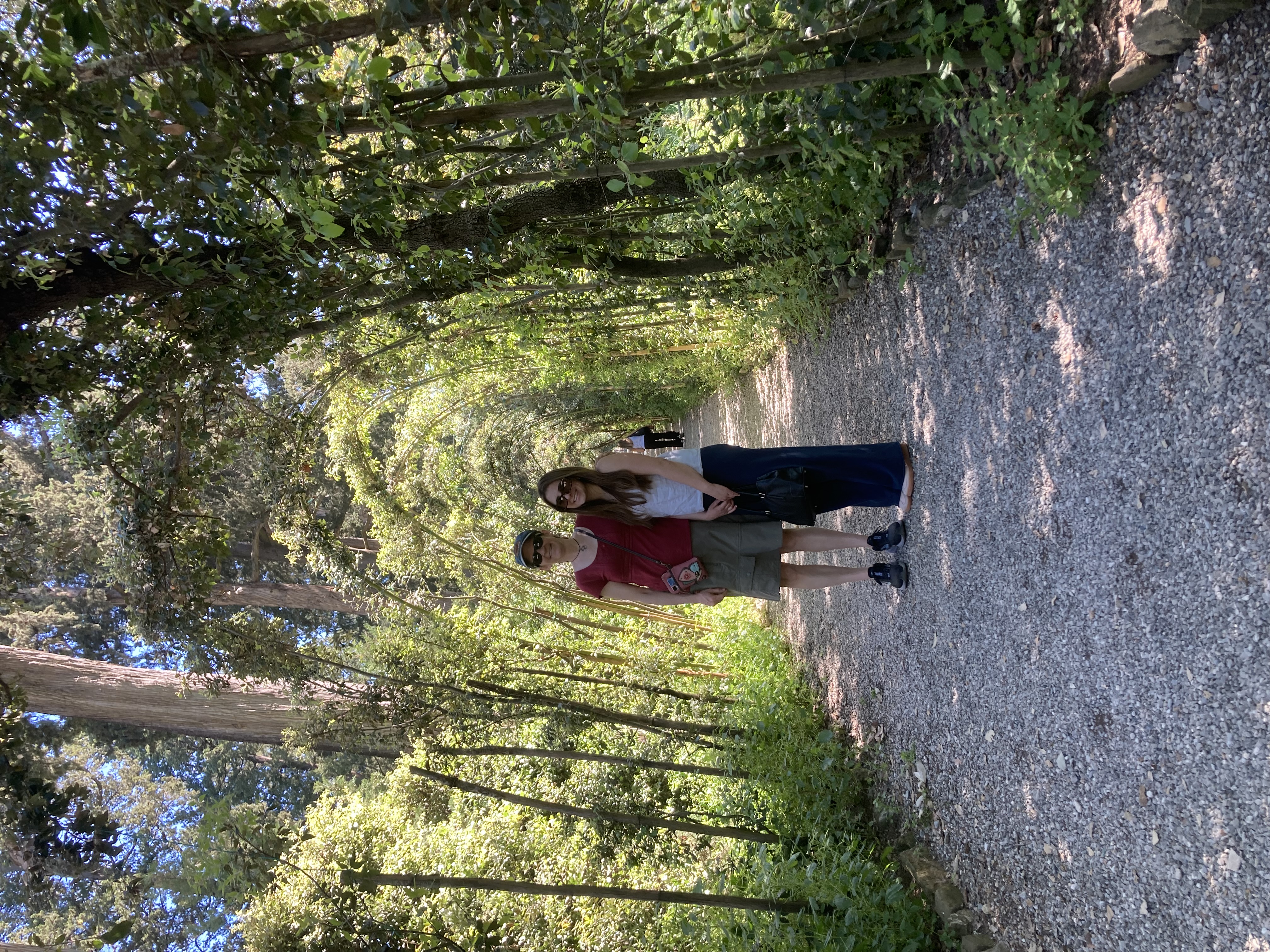
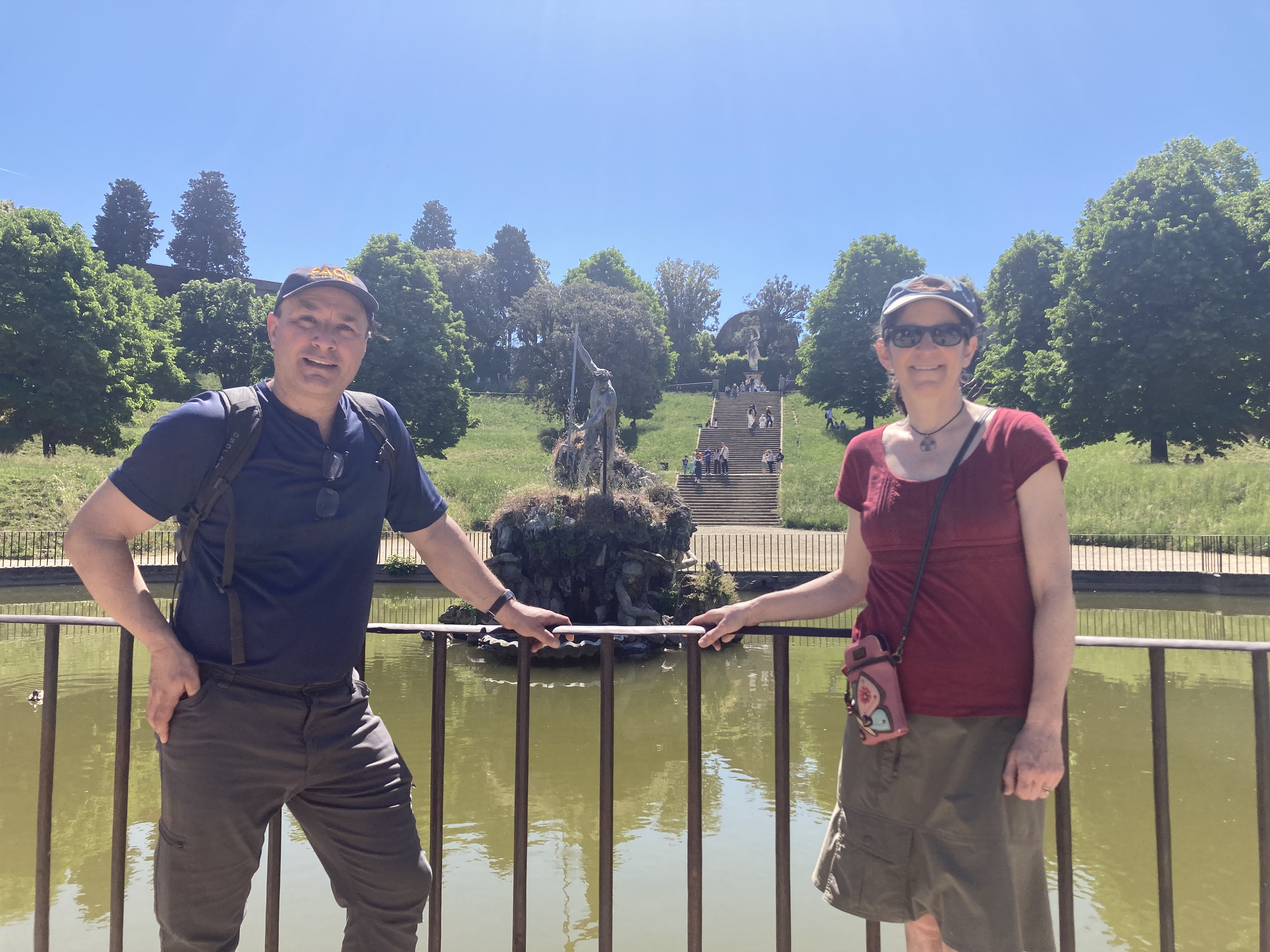 A few seasons back, our family favorite show The Amazing Race visited Florence and there was a pivotal sequence that took place on a veranda above the city. Nadia was able to locate the site and pointed it out to us — it’s right across the river from her apartment. We have since been trying to get up there, and the Boboli Gardens provided our route. After strolling the upper portion of the gadens for a while — taking care not to follow any appealing trails back down towards the city, we found an exit that was only a five-minute (relatively level) walk to the Villa Bardini, which houses the famous (to us) Amazing Race Terrace.
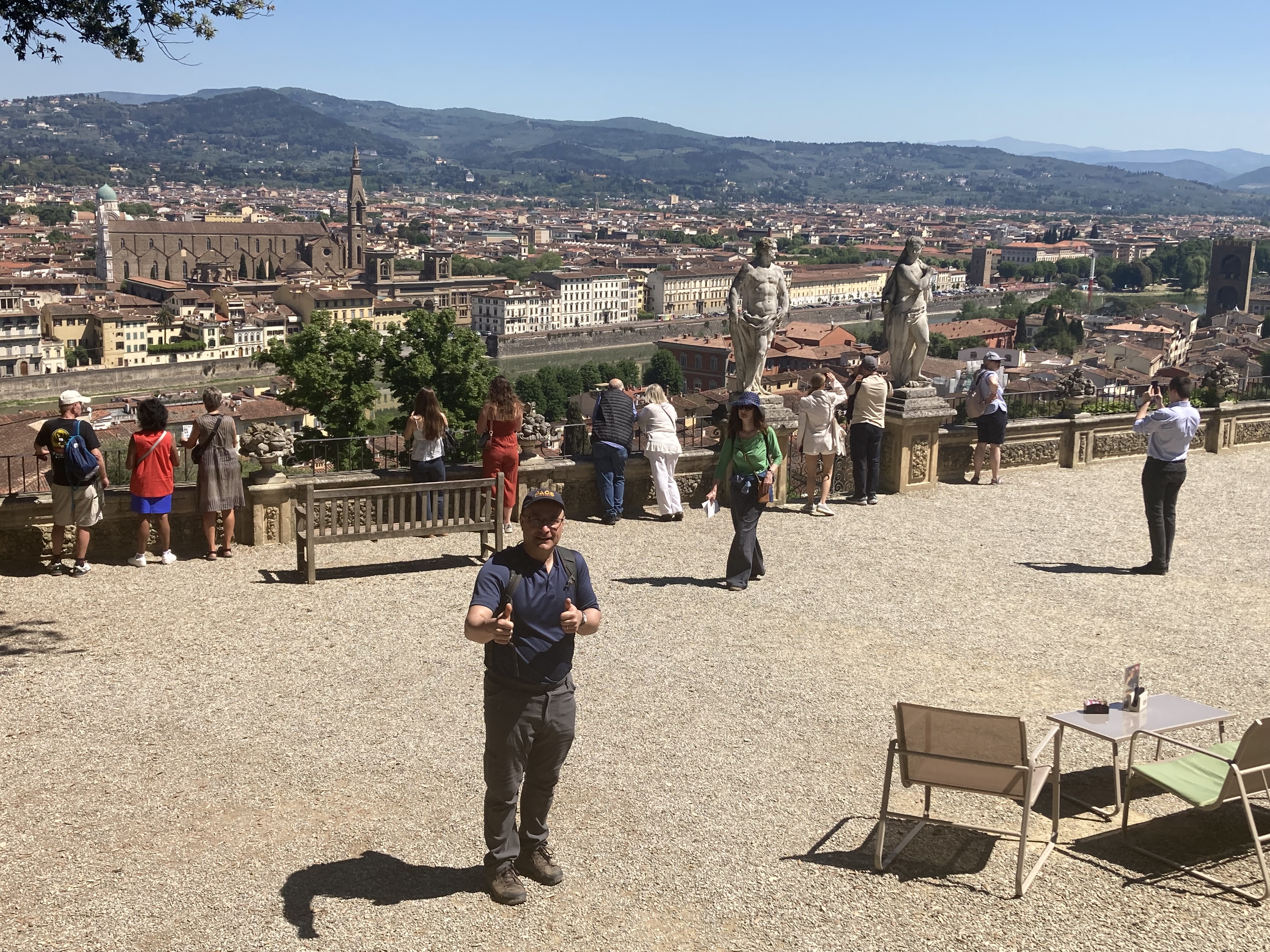 Before we knew it, we were in the very same place where the Amazing Race contestant — who was a life coach and motivational speaker — came very close to having a complete breakdown because she could not figure out the task of carving a model of Michaelangelo’s David (that guy is literally everywhere you turn in Florence) from a block of plaster. Right behind it was the patio where teammates had to sit and watch the action take place. It’s a coffee shop now.
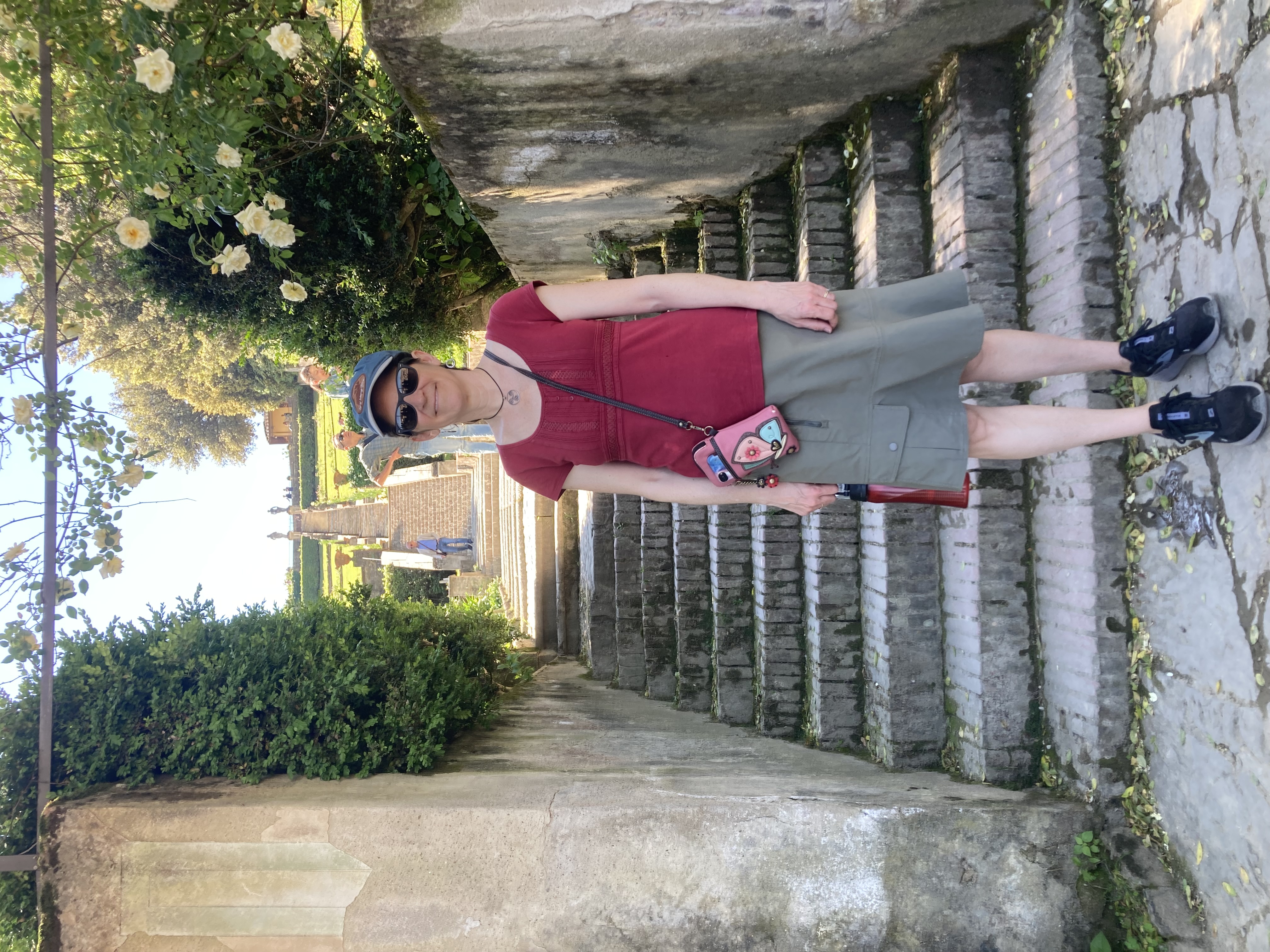 We reveled in reliving such a momentous event (this particular team wound up eliminated from the race, largely because of what happened on the Bardini terrace). It also has a very nice view of the city.
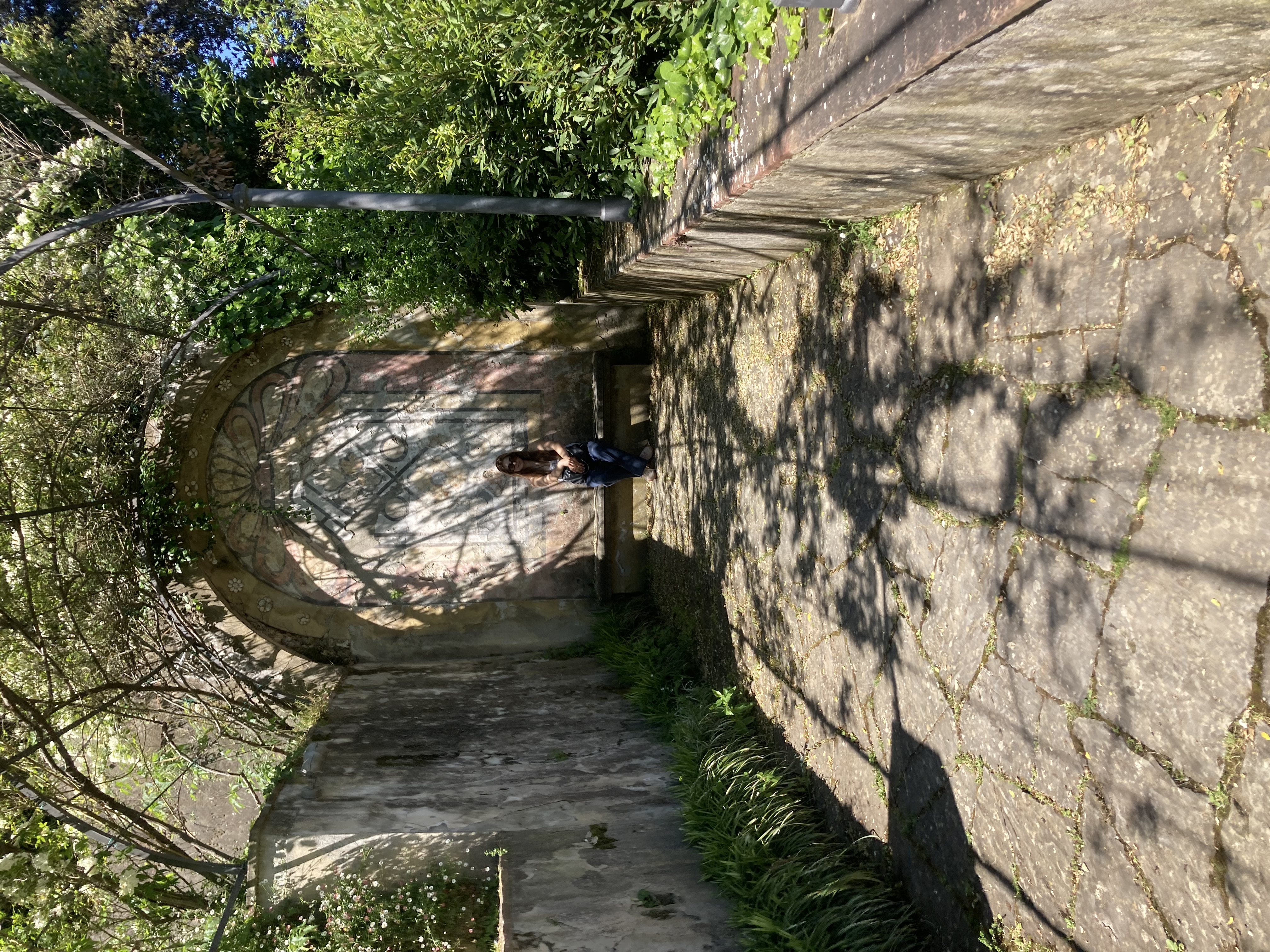 It’s worth noting now that since we got off the train from Monterosso on Monday, we have not been on any vehicles — with the exception of the ebikes from the tour yesterday. All day, all week, we have been walking around on our own feet. And we have been moving about a fair bit. Our legs and feet are starting to get worn out a bit.
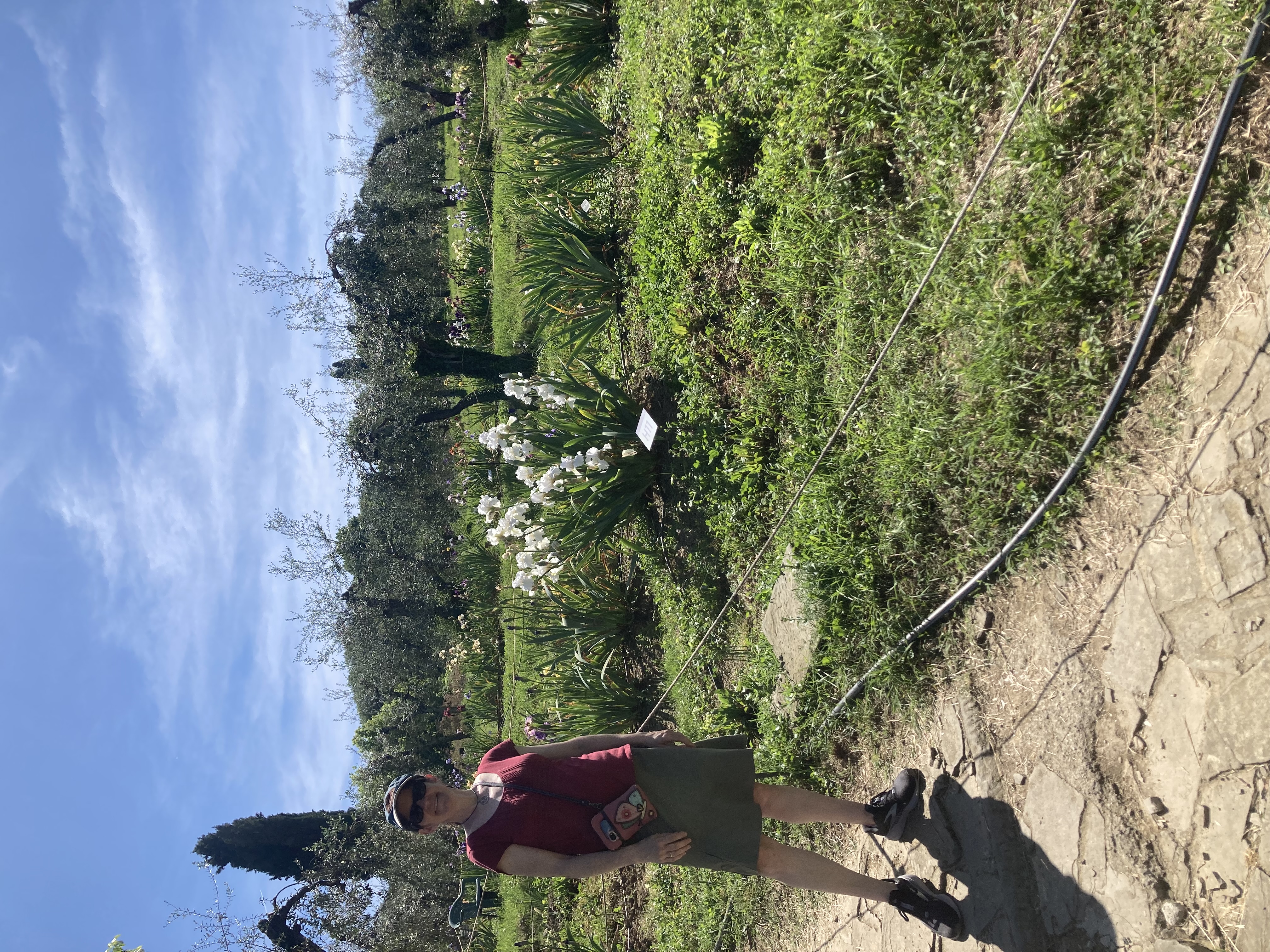 Once back in the hills, even Nadia got a surprise because a special portion of the gardens recently opened up for a month or so. For the second time today, our march up the hill was tempered by such beauty as to lift the spirit and move our feet steadily along. Flowers can do that to a person.
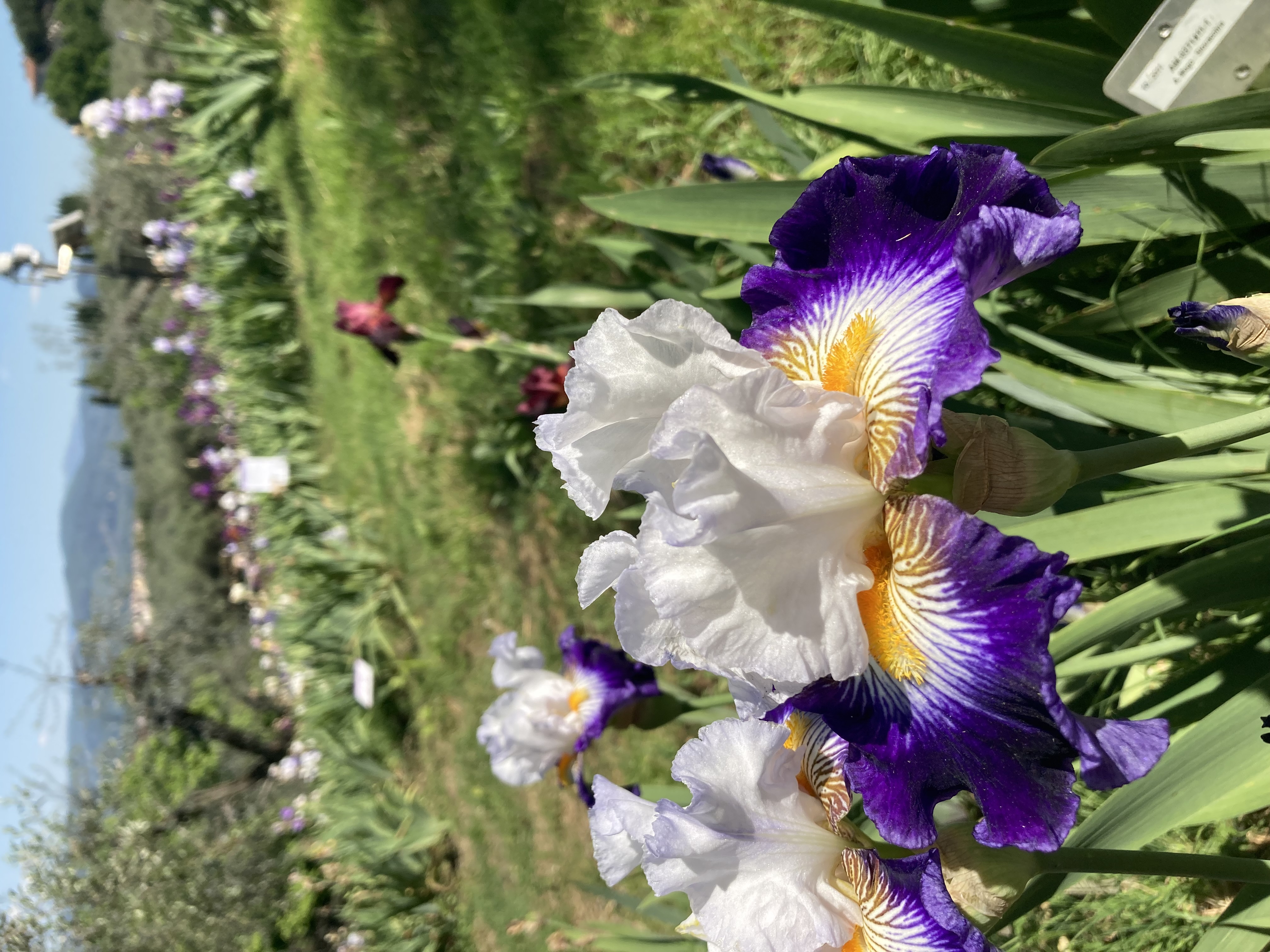 The top of the Iris Garden led directly to Piazalle Michaelangelo, which is the most popular terrace overlooking Florence for people who are not Amazing Race fans. Thankfully, there are stands there selling refreshments, because our Italian sandwiches were salty and the water fountains in the Iris Garden were labeled non-potable.
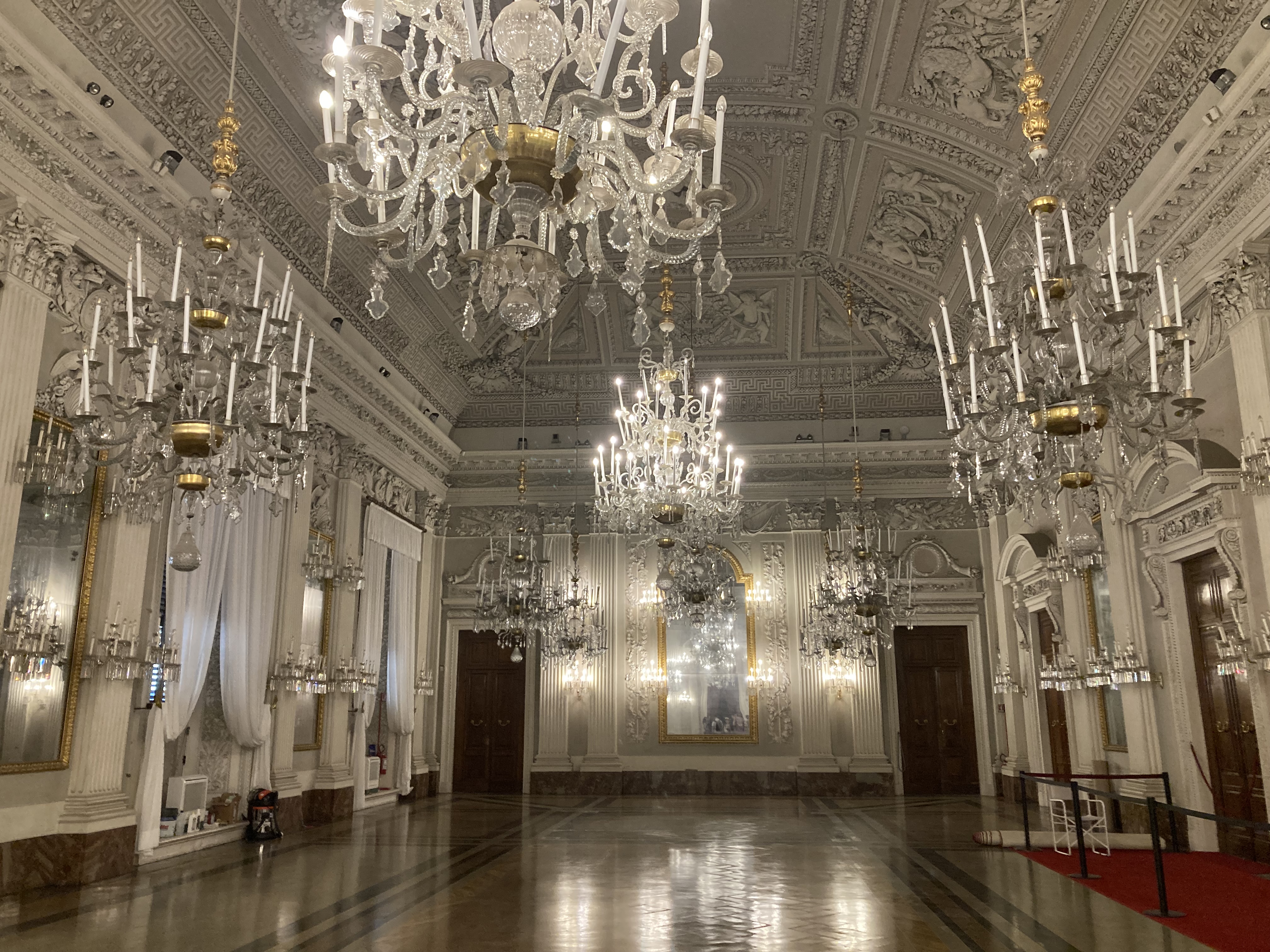 Then it was time to collect our bags, re-unite with Nadia at the station, and give our feet a rest while we enjoyed a two-hour train ride to Milan.