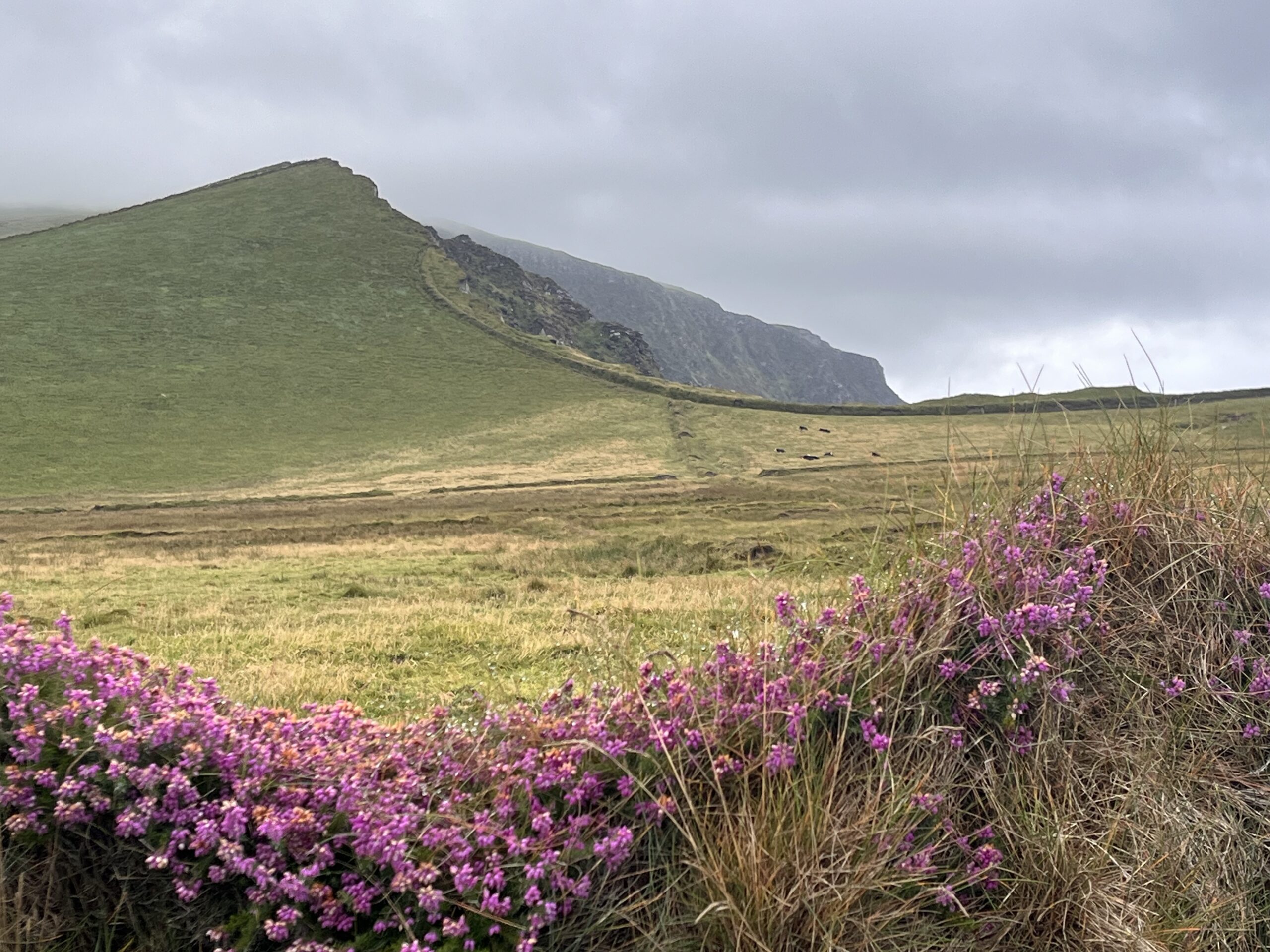
There seem to be two schools of thought on how to drive the Ring of Kerry, a famous scenic driving loop around the Iveraugh Peninsula. The most popular advice is to drive the ring clockwise, to avoid getting stuck behind the large tour buses that ply the route daily. The other point of view is to drive counter-clockwise, to avoid having to cross paths with the large tour buses.
Having driven here for a couple of weeks, and after going through vehicular disasters #1 and #2, Bob and I would put ourselves firmly in the second camp. The hardest part of driving here isn’t being on the wrong side, or shifting a manual transmission with your left hand, or dealing with the constant roundabouts. Those things, you get used to. The hardest part is unequivocally the narrowness of the roads combined with the disorientation of being seated on the wrong side of the car. We are constantly cringing and holding our breath when we come across oncoming vehicles of any kind, and large buses and trucks are a particular nightmare.
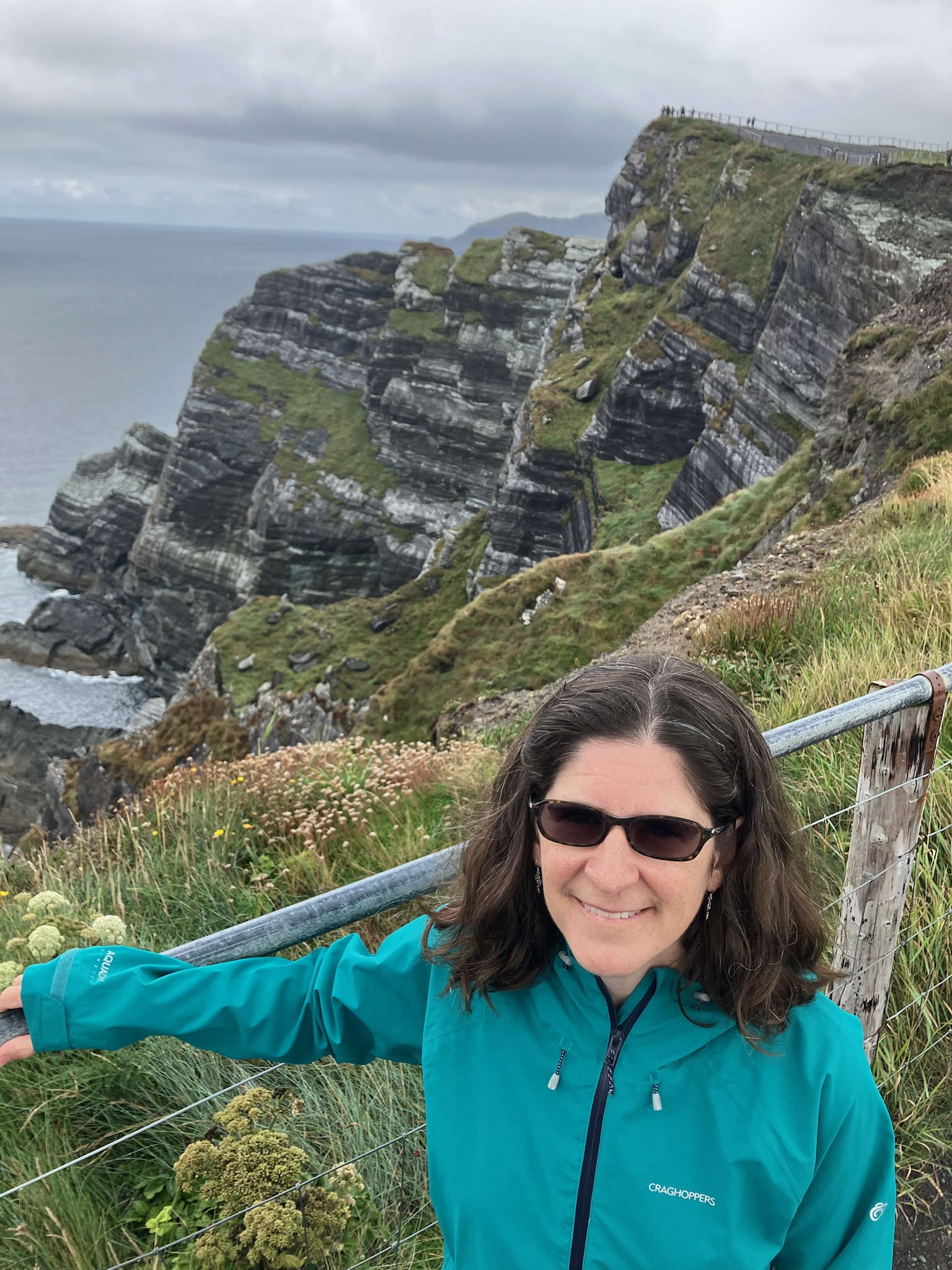
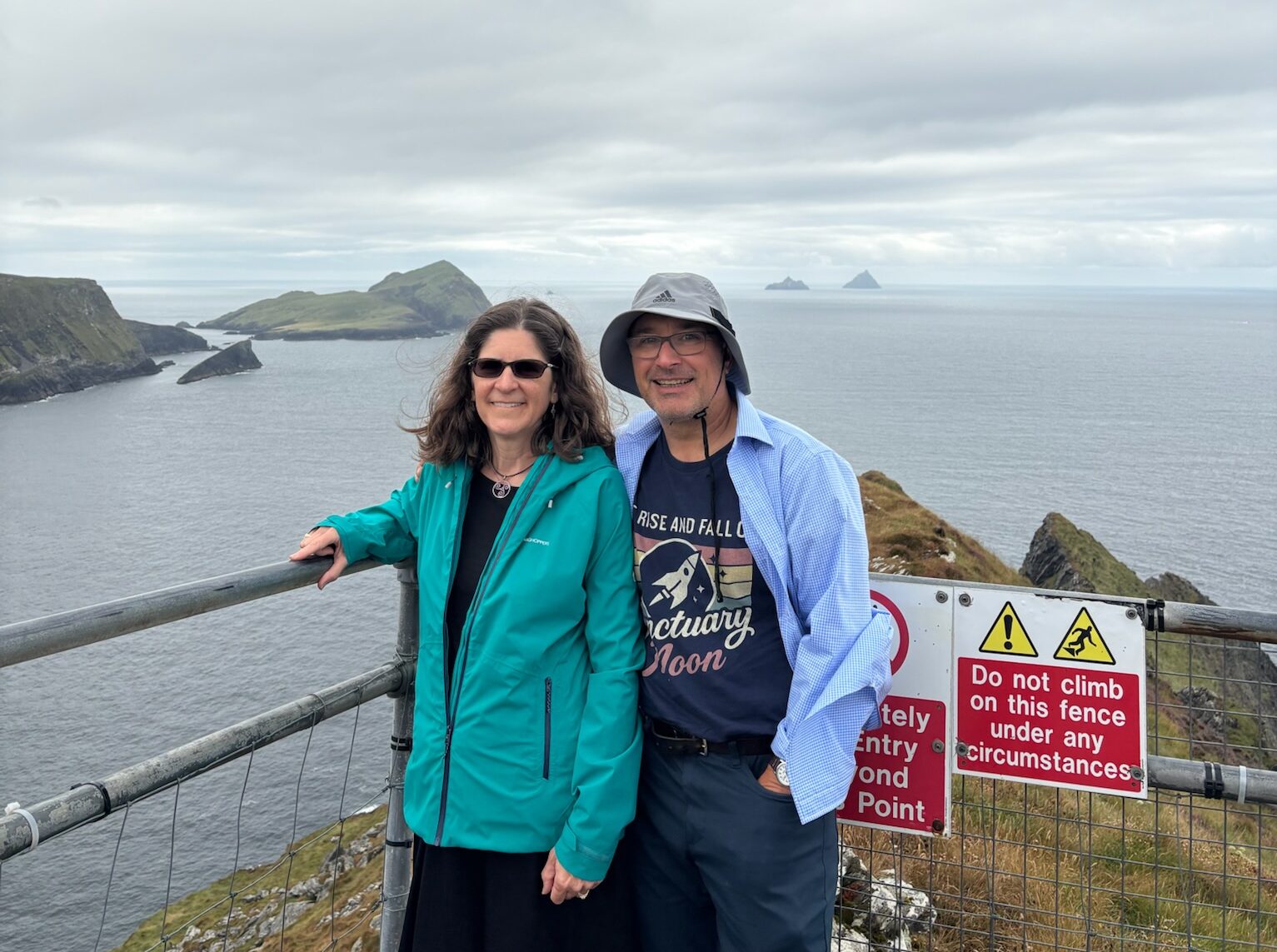
Following a bus, on the other hand, is great. We are in no rush, so we don’t mind the slower pace — and at least we’re not the ones causing the large backup by going slower than the rest of the traffic. Better yet, the bus serves as a kind of defensive line — other oncoming traffic moves well out of the way, and we figure if the cars can fit past the bus, then it should be no problem for us. Getting stuck behind a bus or a truck is our idea of a great stroke of luck.
Unfortunately, we already did the Killarney to Kenmare section of the Ring, so we were stuck with a clockwise strategy. Fortunately, there didn’t seem to be too many buses in evidence — I think we got out early enough that the buses leaving from Killarney hadn’t made their way all the way back around to us. Our big morning challenge was figuring out how to pack up all our damp clothing from the day before. The air must have been quite humid, because it didn’t seem that anything had dried at all overnight — my socks from the previous day were still completely soaking. We made good use of the hotel’s hair dryers to ensure that we at least had dry shoes to wear, but also ended up packing up bags of damp clothing to deal with later. (It was unlucky that this was the one time that we only had a one-night stay so had to pack everything up the morning after arrival.)
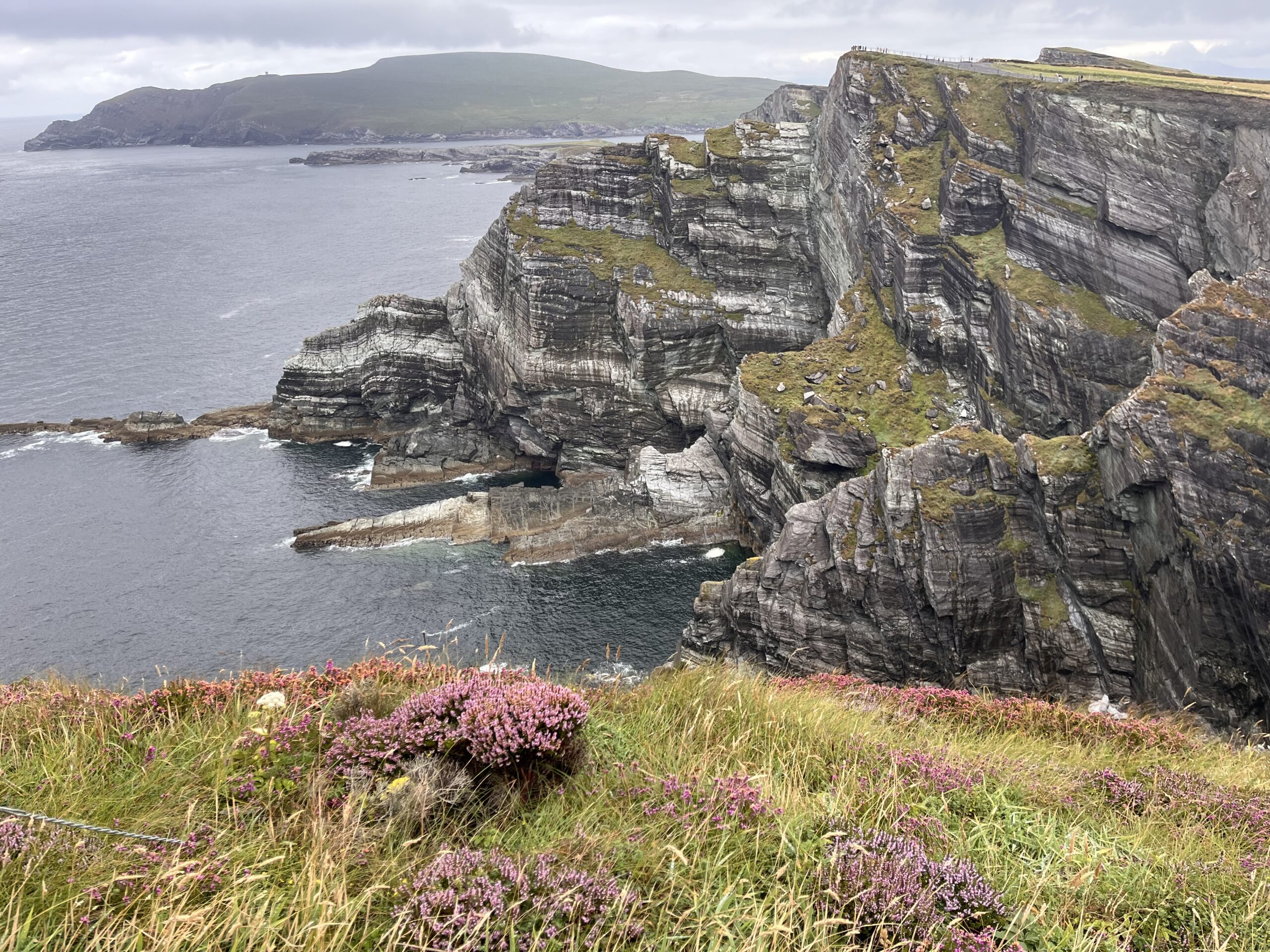
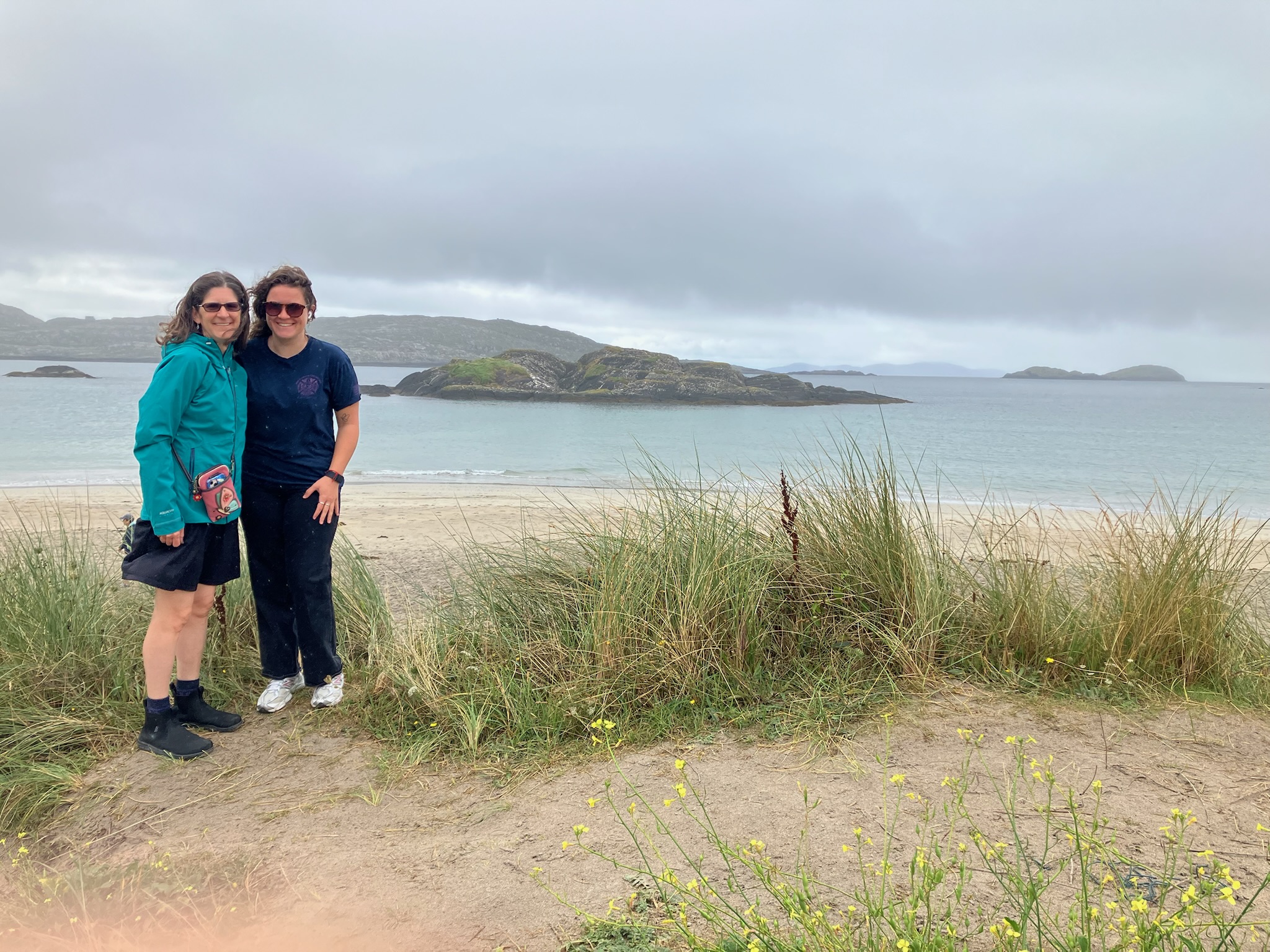
The drive was beautiful — winding along the coastline with expansive views of the sea and the mountains. We stopped at a few different viewpoints just to marvel at the scenery. Our first real stop was Derrynane Beach, which was also beautiful — but by this point it had started to drizzle again. Given that we were rapidly running out of dry clothing, we elected to cut our visit short rather than risk getting drenched.
Our innkeeper host in Kenmare had told us to make sure to drive the Skellig Ring, even though it added a bit of time to the trip. This is an optional add-on to the Ring of Kerry that takes you out a bit further on the southern peninsula. (If you have good weather and plan ahead you can even take a boat ride out to Skellig Michael, a dramatic and historic island that was used for filming multiple Star Wars movies. Since the weather was uncertain and the tour takes 4-6 hours, we decided to skip it.).
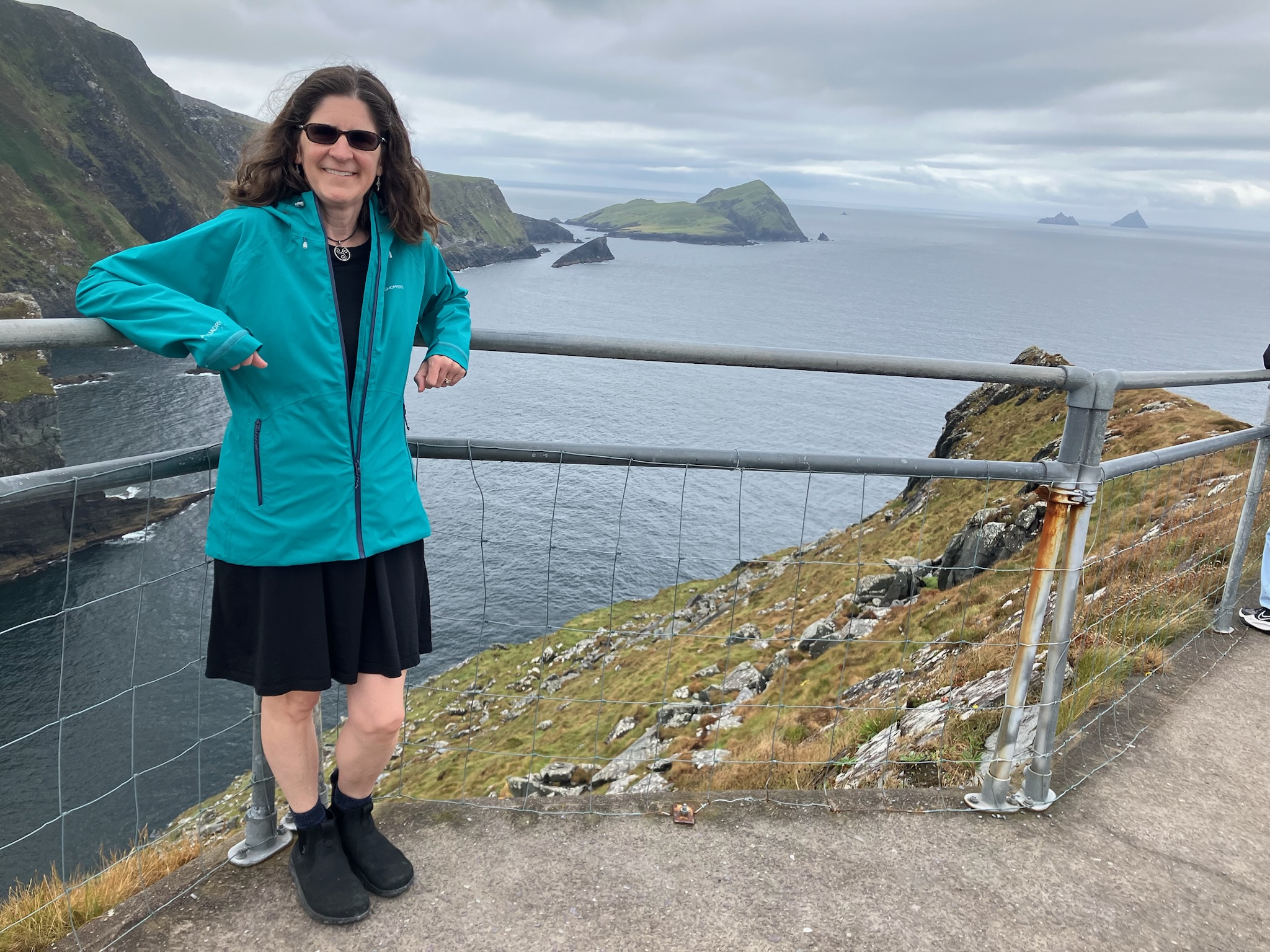
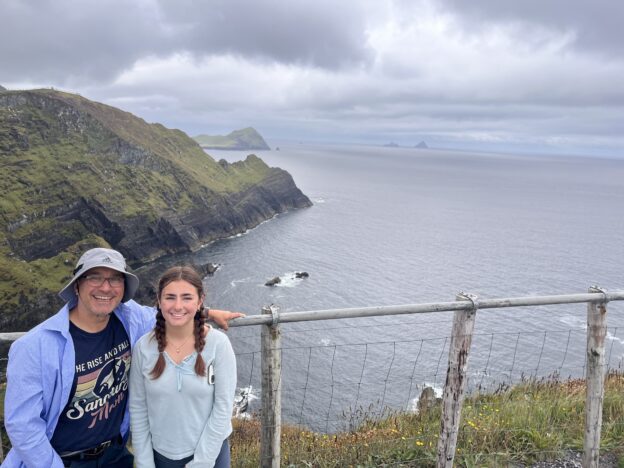
The main destination on the Skellig Ring is the Kerry Cliffs, which are actually higher than the Cliffs of Moher (and far less visited). I had actually thought about cutting the Skellig Ring from our itinerary, given our driving difficulties, but I was so glad that I didn’t. The cliffs were amazing and the site’s owners had set up a series of viewing areas, each one more breathtaking than the last. We spent a fair amount of time wandering around here, taking dozens of photos or each new vista.
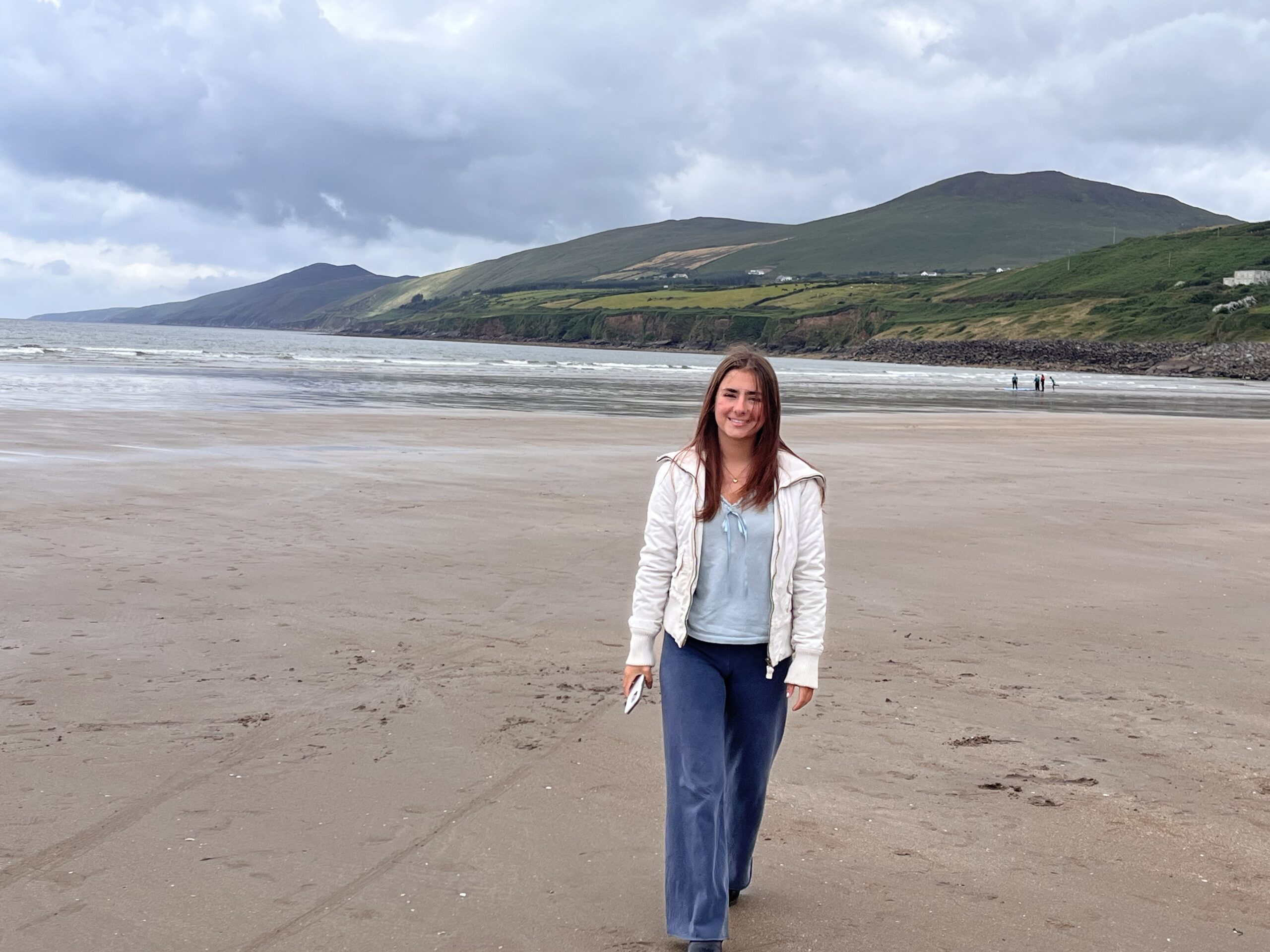
We made one more stop before arriving in Dingle Town — Inch Beach. This was a huge, wide beach which must mostly disappear at high tide, given that almost all the sand was hard-packed and damp. There was a large area where cars were parking right on the beach itself, but our innkeeper had warned us against this. “People get excited about driving on the beach, then they get stuck in the sand,” he’d said darkly. The last thing we needed was to get stuck in the sand, so we didn’t even consider driving onto the beach. Fortunately we found a spot in the nice paved parking lot. We’re especially missing Zoe when we visit all these beaches, as she would have liked nothing better than to go for a swim in the chilly waters.
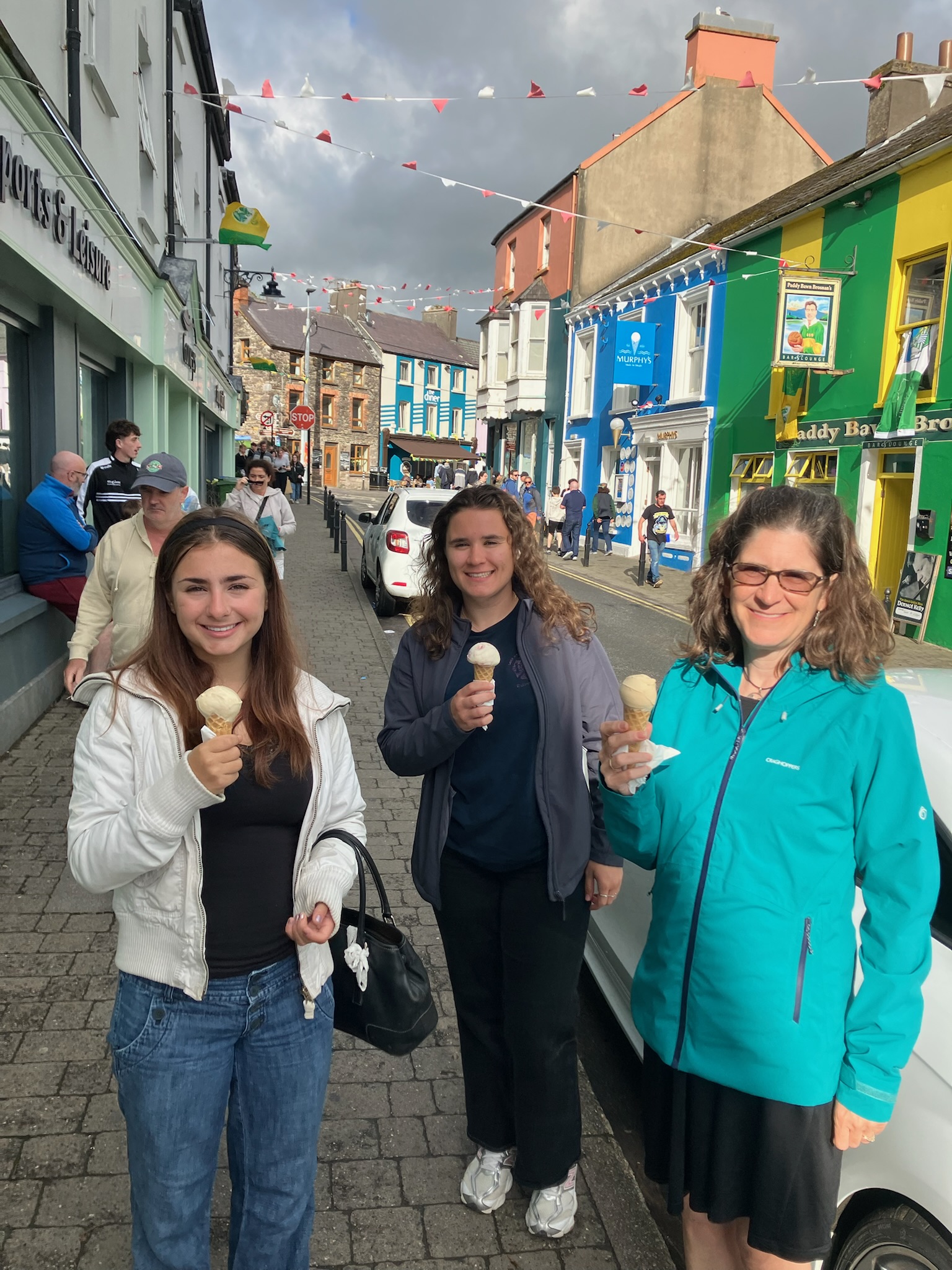
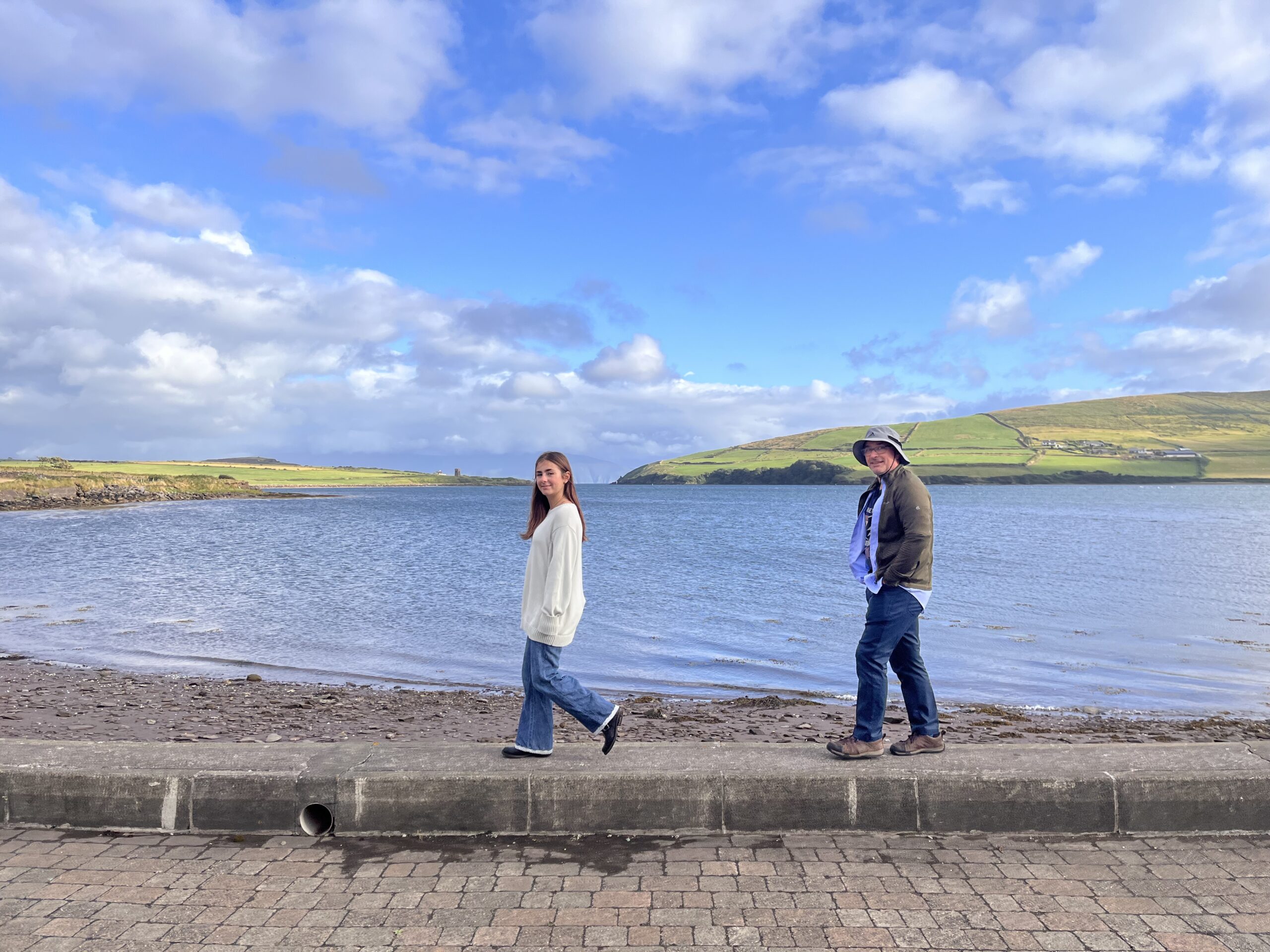
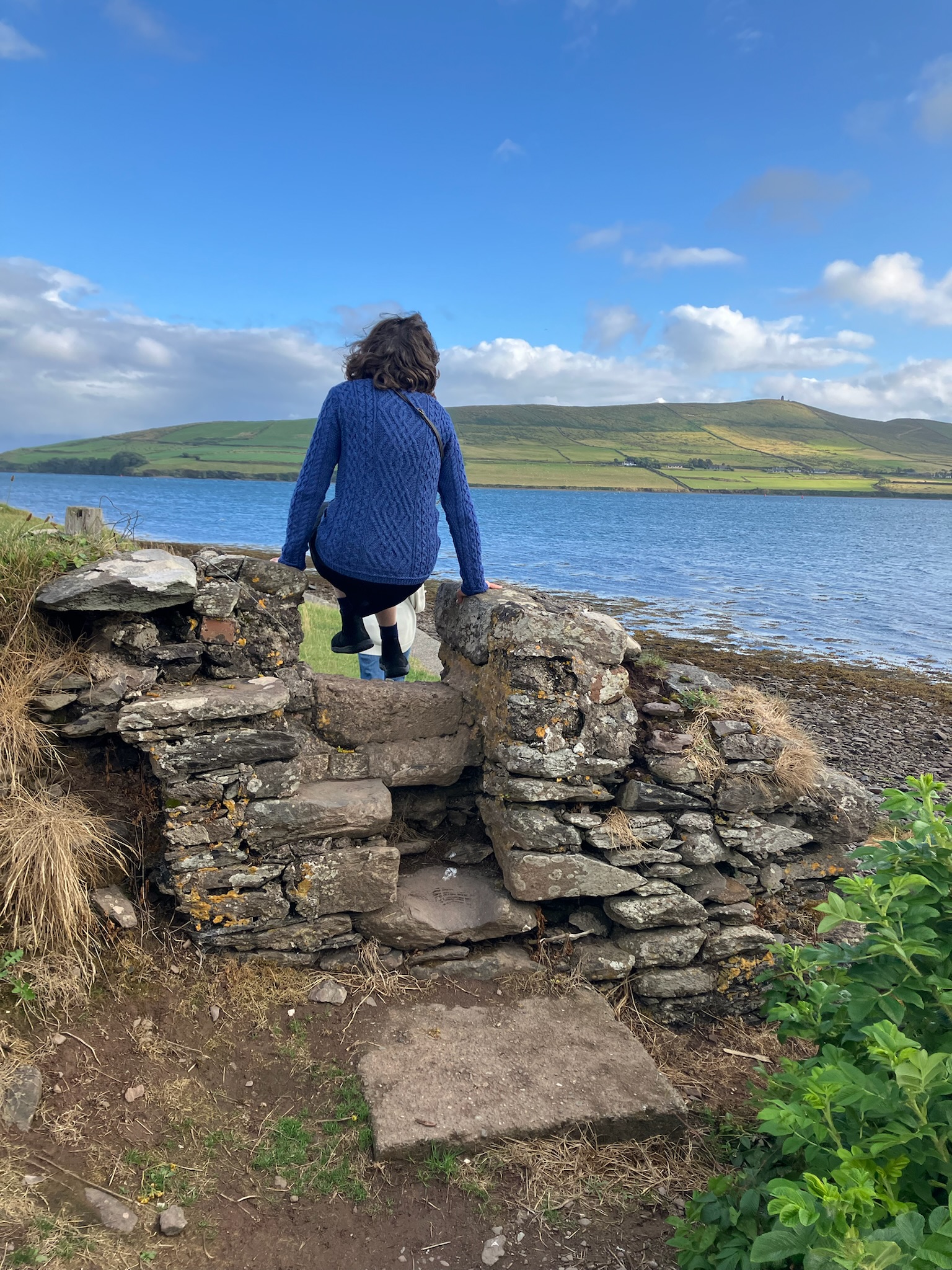
We arrived at our inn in good time and saw that it was set on a hillside across the street from the water, with expansive sea views. (Throughout the Dingle Peninsula, the land rises sharply from the sea up to the mountainous interior, so you have gorgeous views almost anywhere you go.). We then spent a little time exploring Dingle Town, which, like everywhere we’ve been, was quaint, bustling, and immaculately well kept up. We ate an outdoor dinner near the dock, sampling some of the local beer and whisky. (Like Iceland, people make the most of outdoor spaces here, despite the chill.)
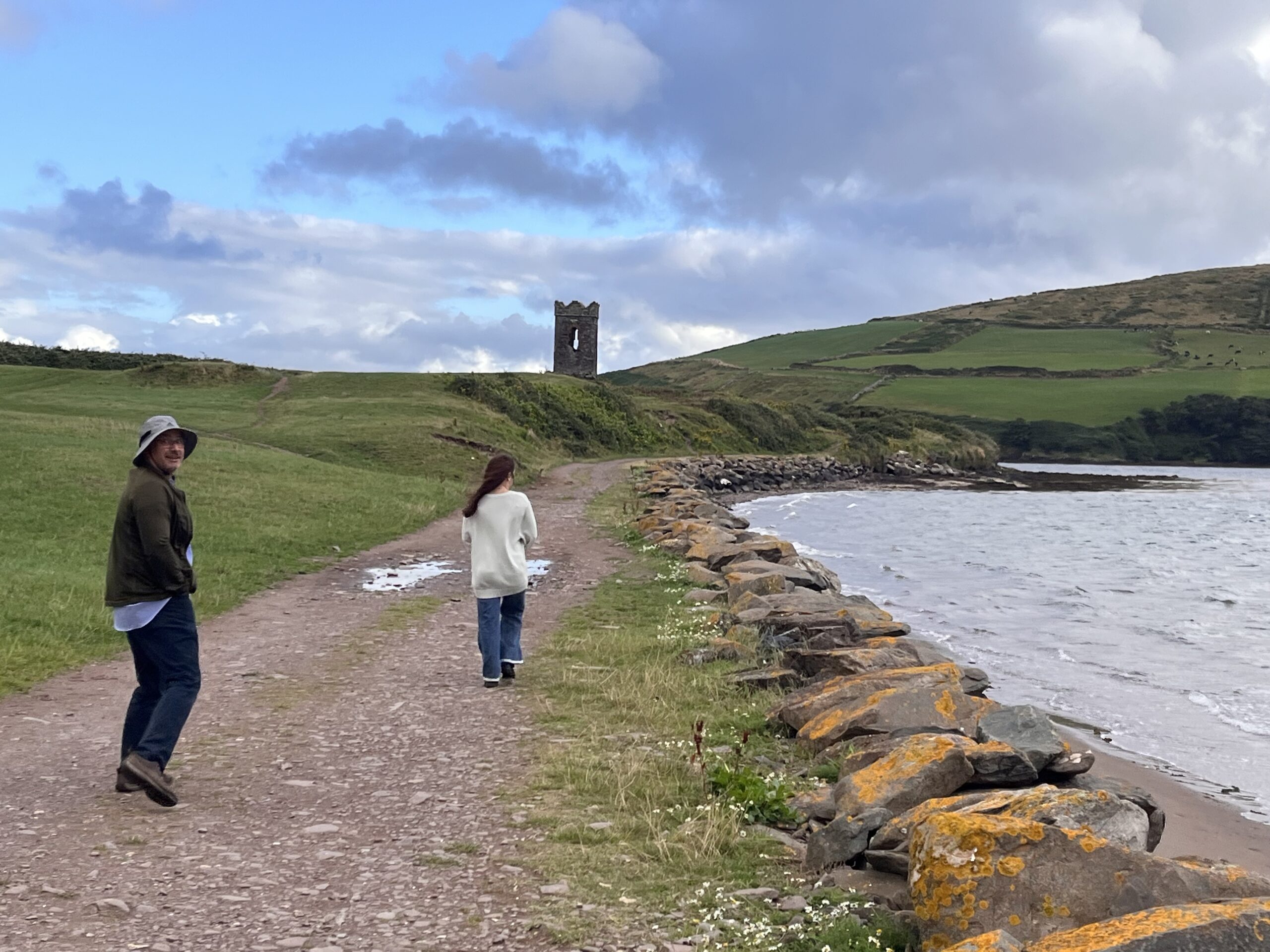
We’d had an early dinner (having eaten a large breakfast at our B&B and basically skipped lunch), so afterwards Bob, Lanie and I set out for a walk along the water. It was extra beautiful in the evening light, and we were able to wander along the cliffs and beaches until we reached the ruin of an old watchtower. The lovely scenery triumphed over our sore feet.