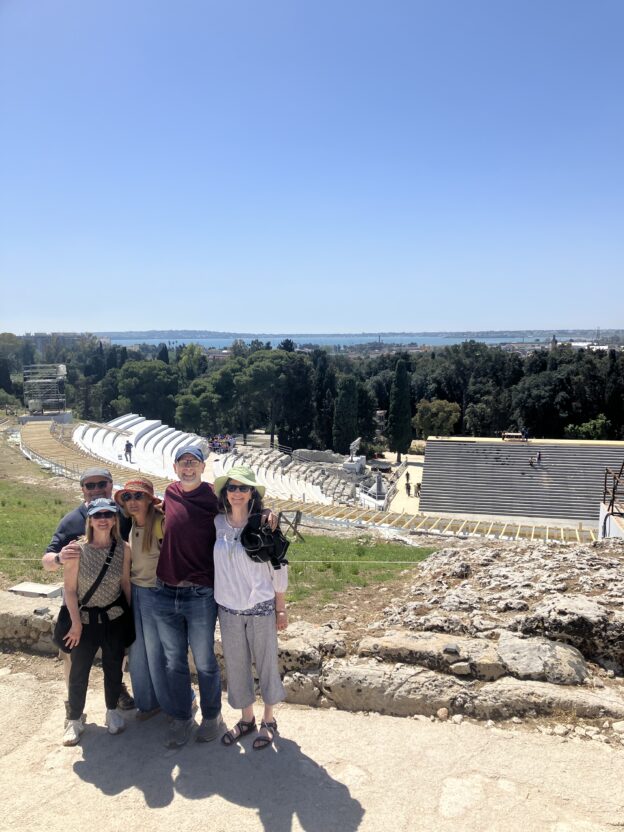
Never underestimate the power of six people who are able to motivate and coordinate each other in such a way that all of them are ready to hit the road at 7:30. Just this feat suggests extraordinary accomplishments are possible.
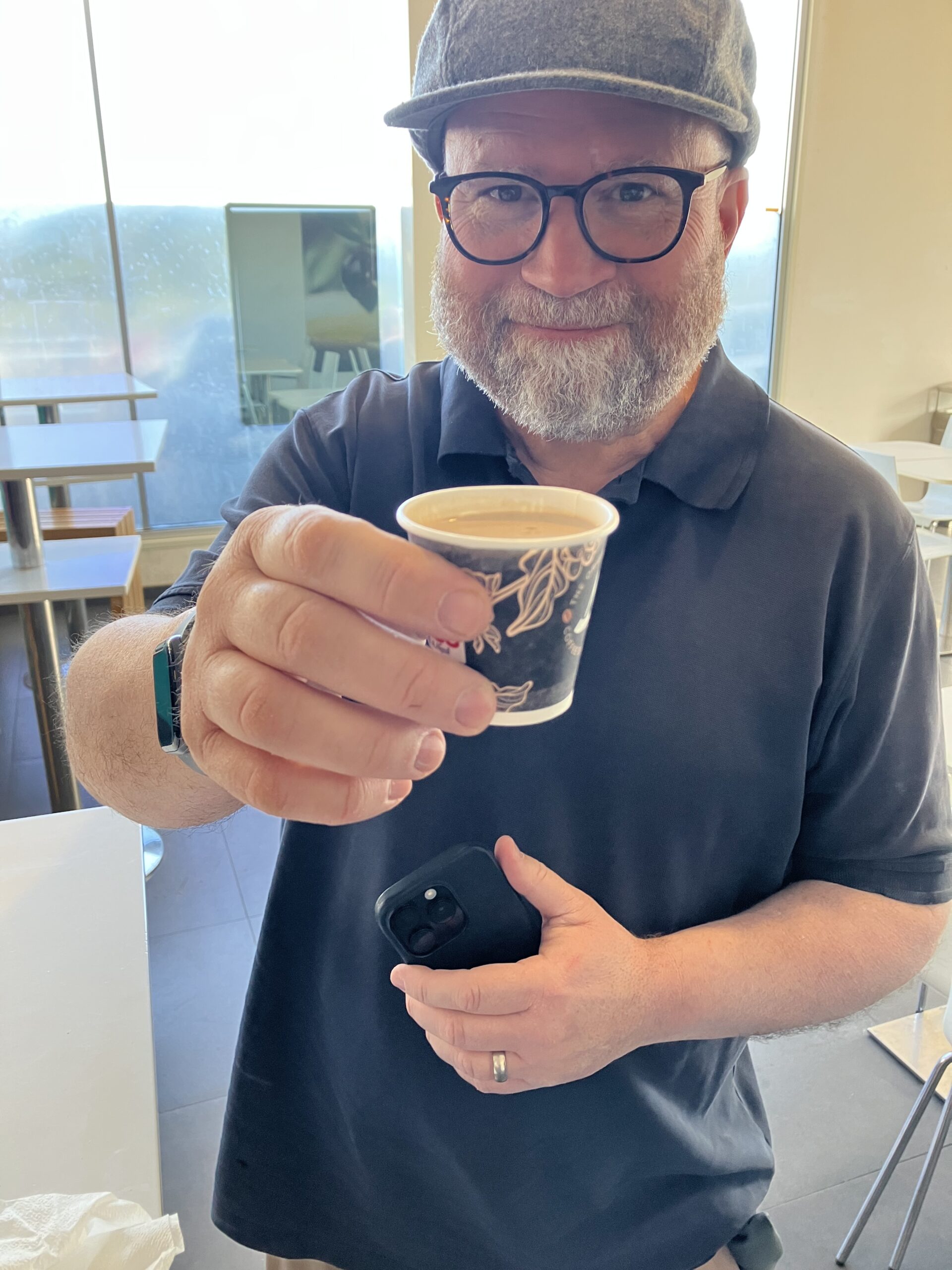
Thus, we were feeling full of potenial as we headed out this morning for the city of Siracusa, about three hours away. Along with the pleasant sunshine and windshield-filling views of Mount Etna, one other thing buoyed our spirits. It was a tiny cup of goodness called Crema Freda — so good it could only be served in thimble-sized contaners at the highway rest area close to Catania. Ours got passeed around, and even people who only got a few sips were smiling for hours afterwards.
We got to Siracusa and parked our car well before the pleasant feelings wore off. Our mood was barely scratched by the ranks of school groups at our first tour stop of the day, the Necropolis Archeological Park. If getting up and out by 7:30 were not enough, now we would hop a few millennia back in time to when the Ancient Greeks had a colony in this area of Sicily. They built a grand amphitheater on a hillside, using stone quarried from higher up the hill. The resulting structure still stands largely intact, and the holes made by the quarrying are visible and explorable after serving a variety of functions, including as tombs, over the past 2,000 or so years. Much of the original rock of the amphitheater is currently covered by wooden planks because the place now serves as a venue for a summer concert series. This dampened the effect a little, but the location is still stunning — from the top you can look out over trees and city streets to the sea.
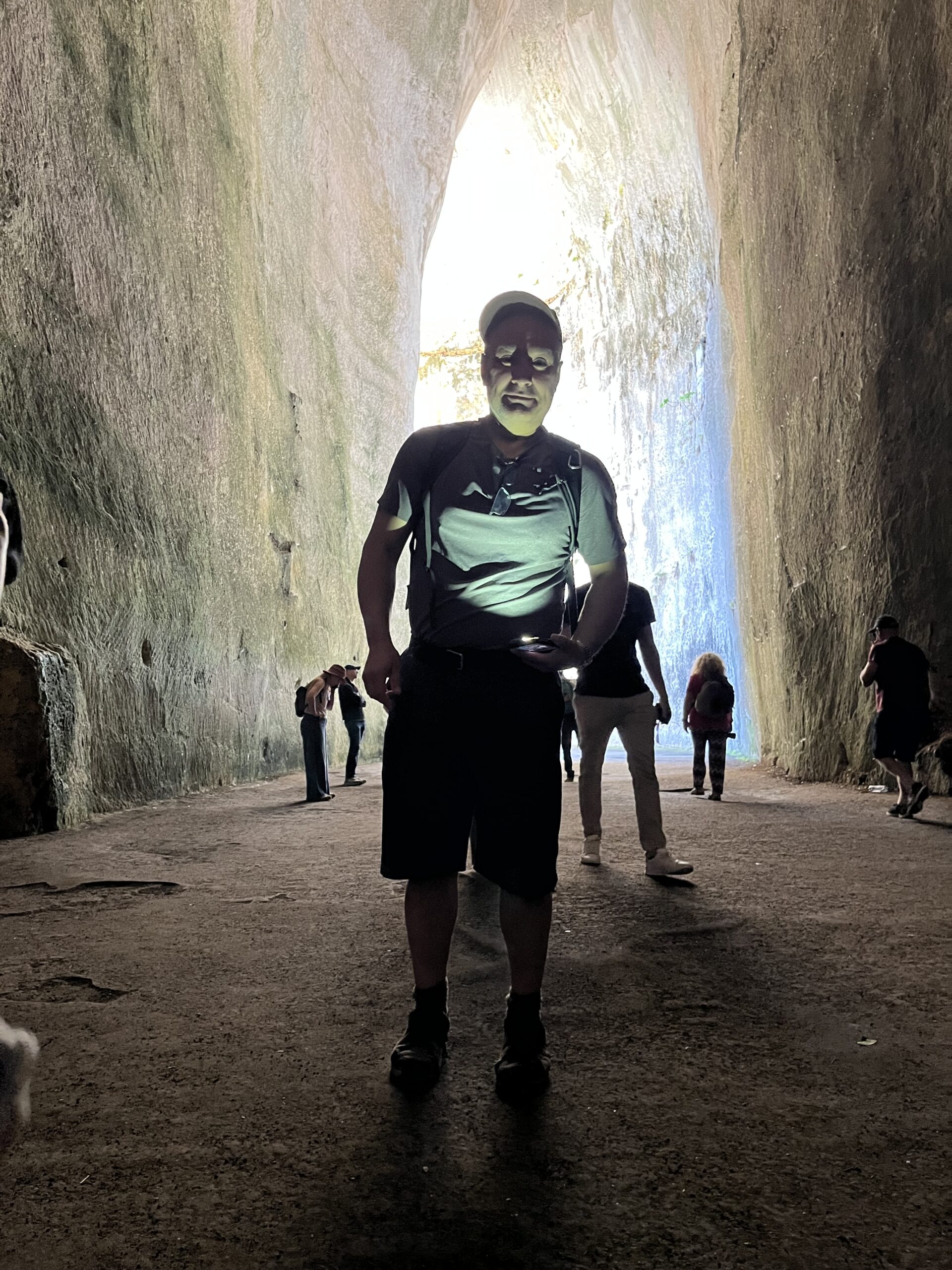
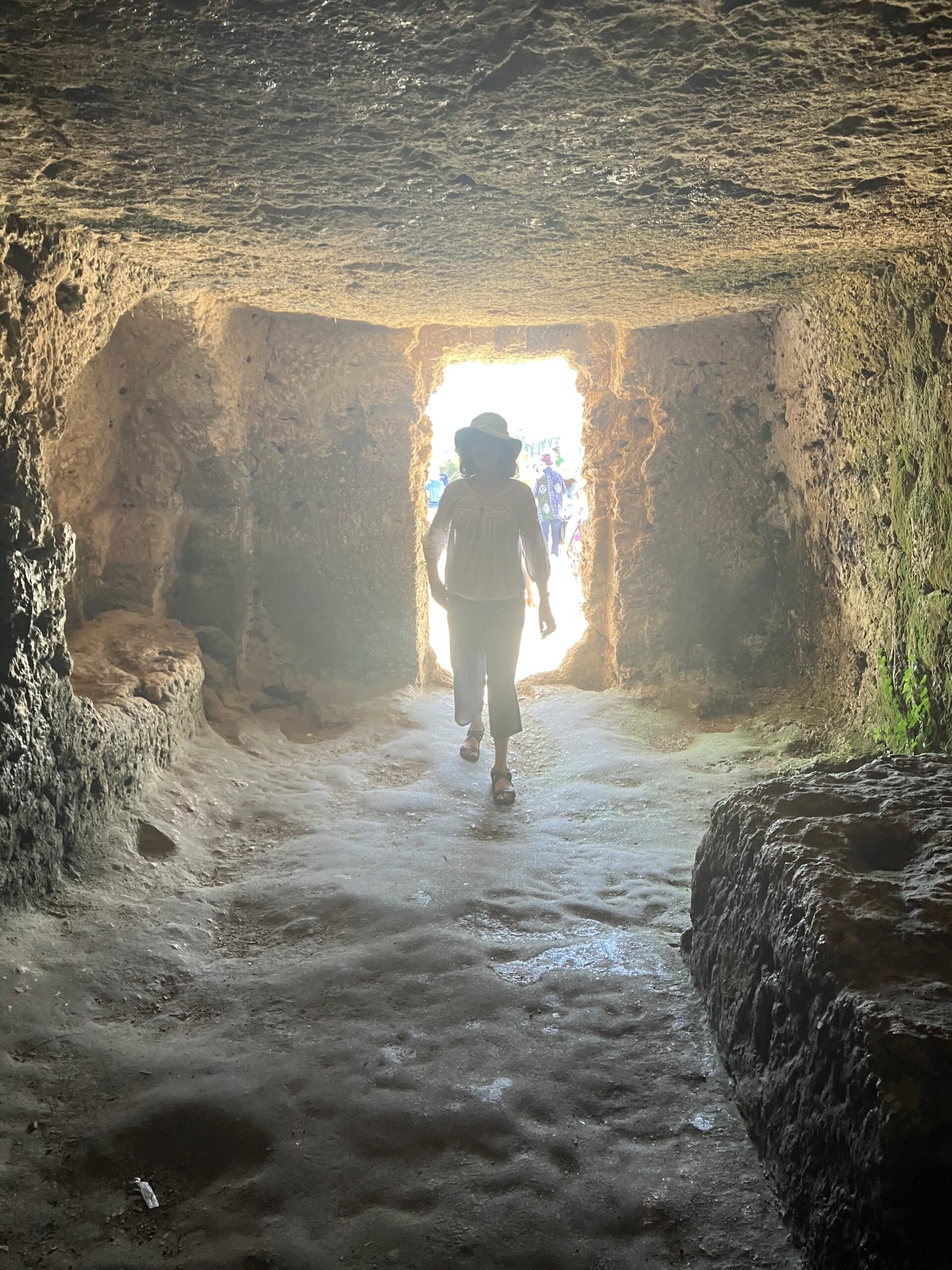
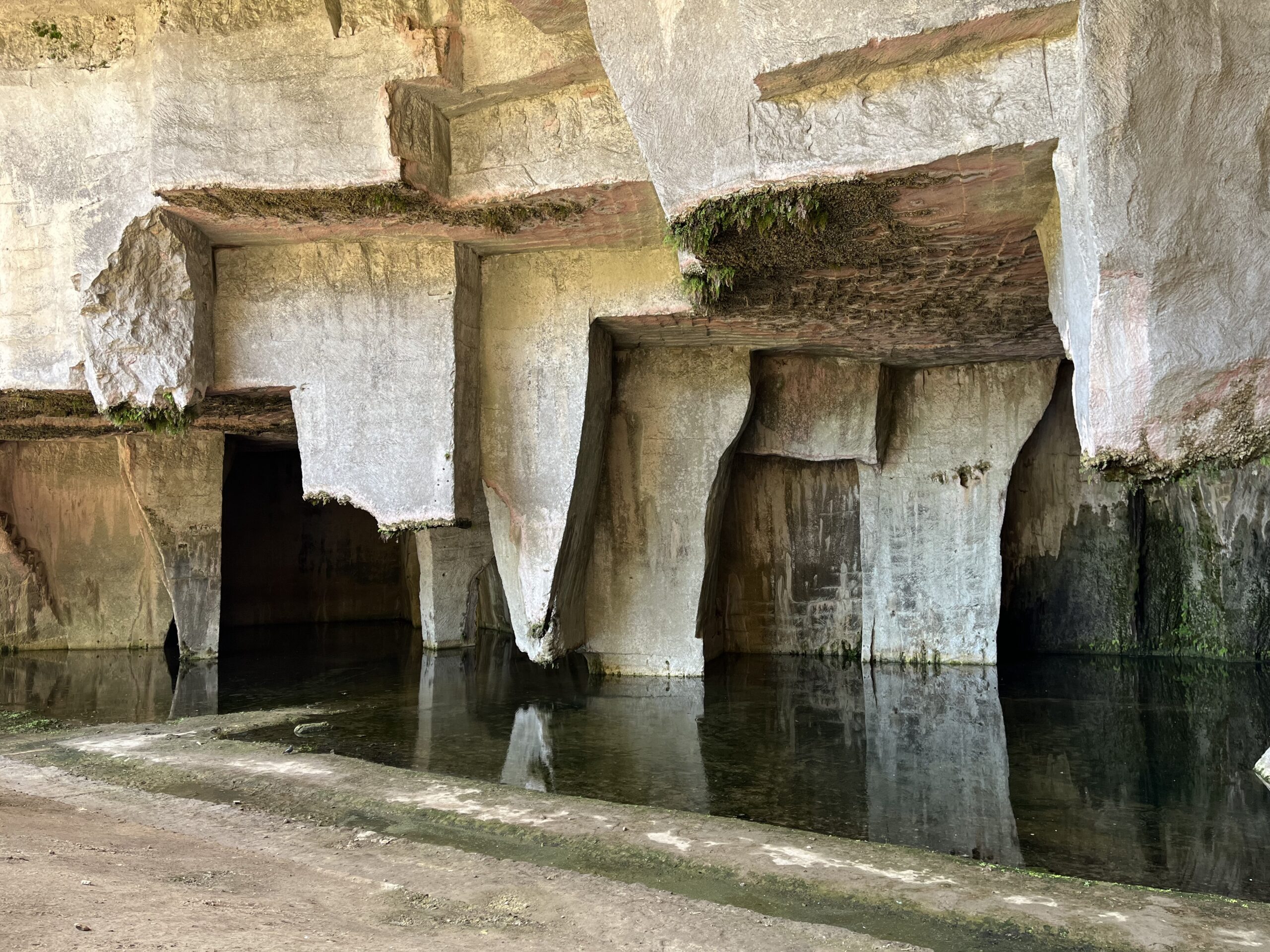
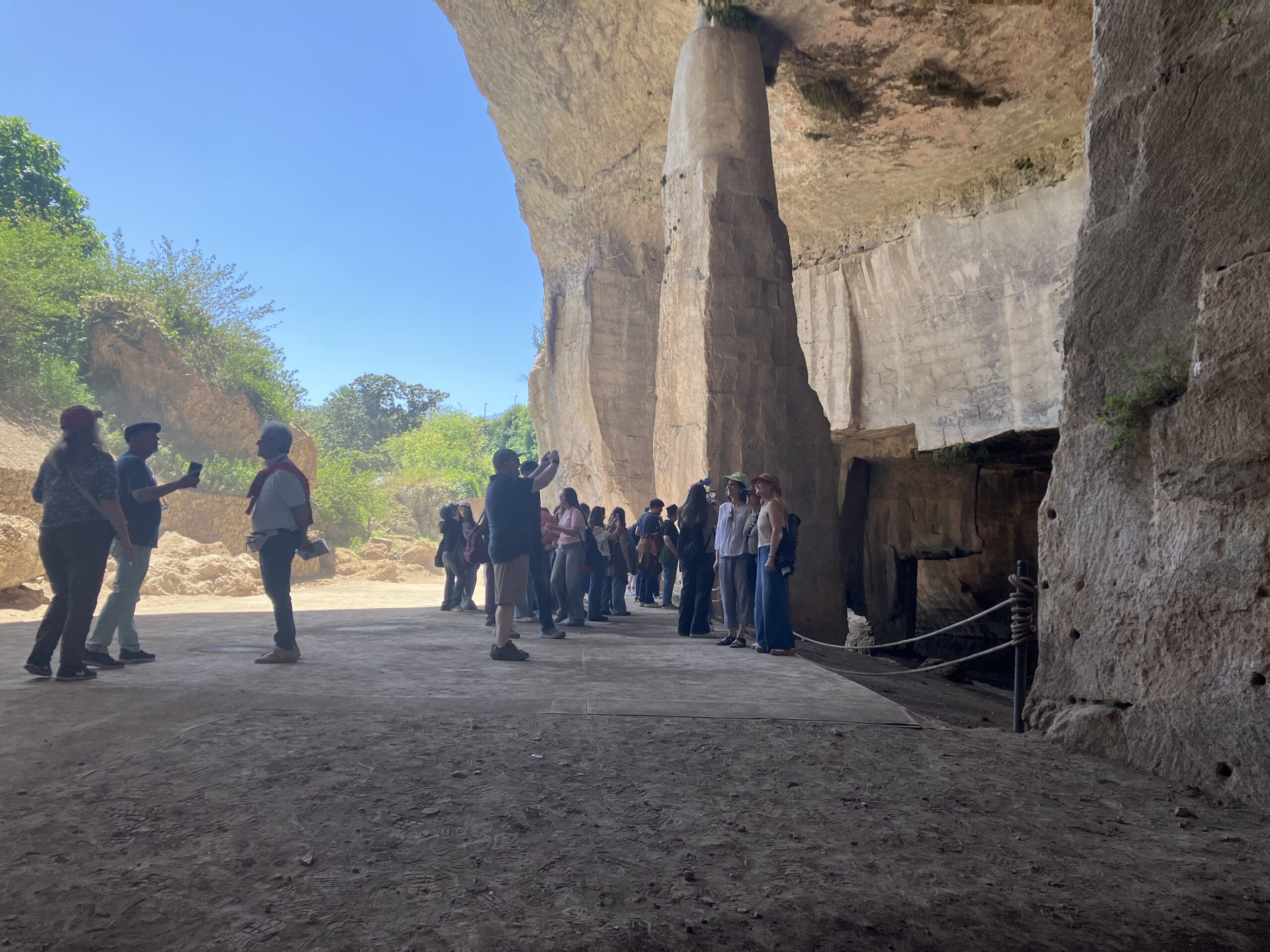
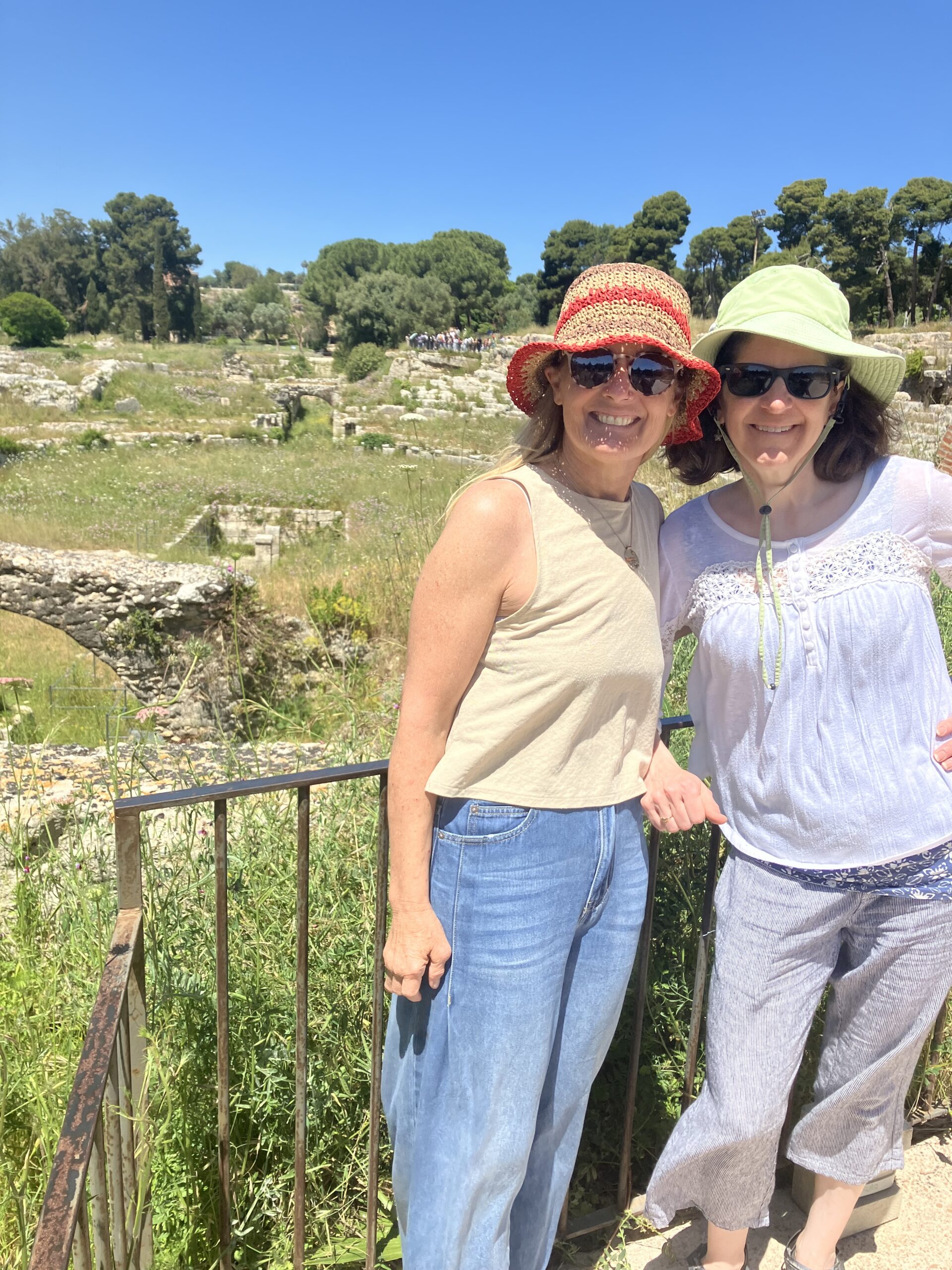
Also, we weren’t done time traveling yet. After a stroll through another quarry that left sizeable grottos that we could walk through (and whose accoustics the school groups could test out by screaming and whistling persistently) we found another amphitheater built by the Romans slightly fewer millenia ago than the first ruins we saw. This one seems to have less concert venue potential these days, but it did serve nicely as a wildflower breeding ground. The school groups were unimpressed and didn’t make it past the first viewing point.
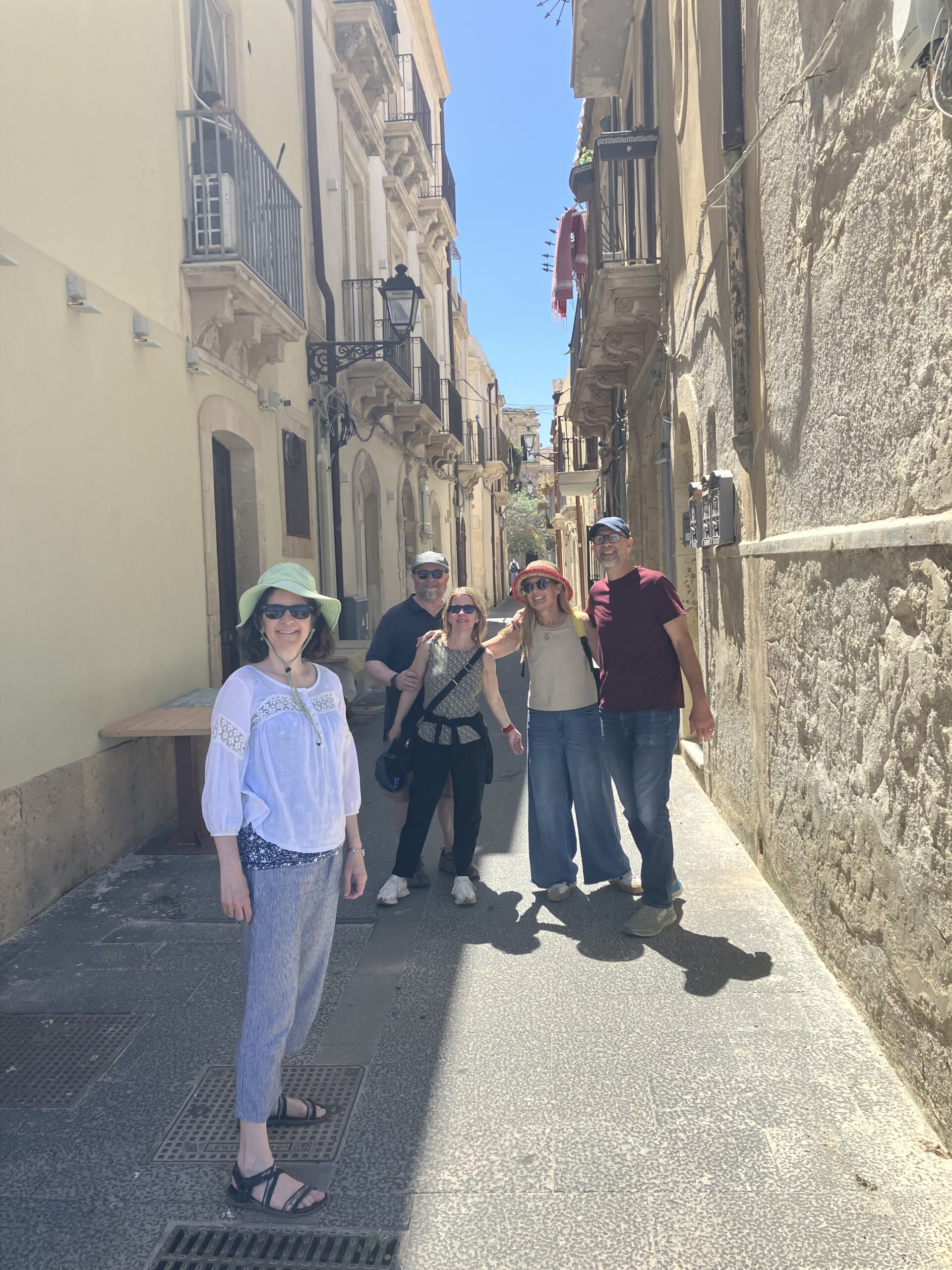
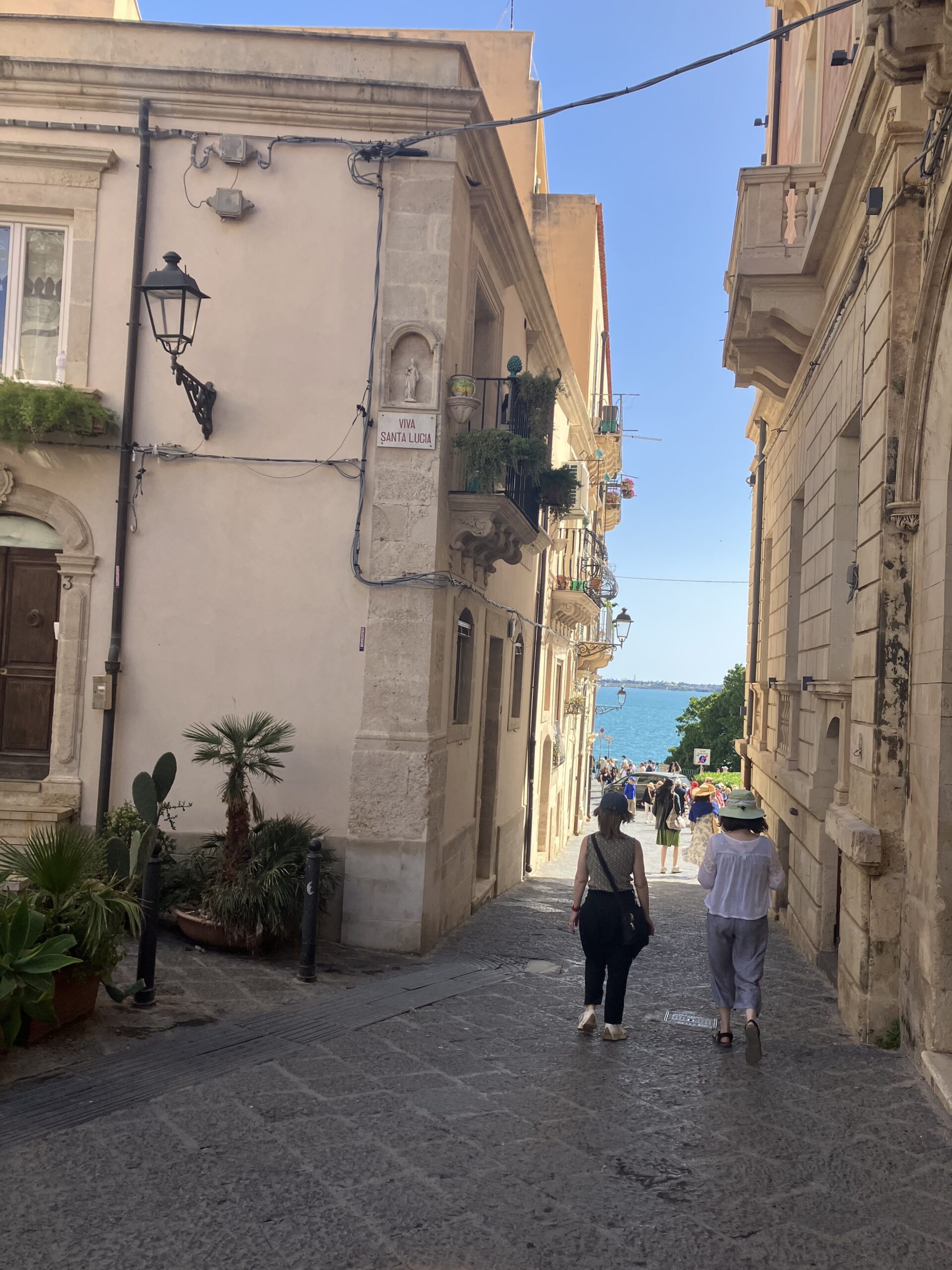
Of course, by this time it was pretty much lunch time, and we had a general destination in mind: the island of Origia which is connected to the city by two short bridges and which shares the brunt of Siracusa’s tourist traffic with the Archeological park. People who like narrow cobblestone foot-traffic passages though sun showered two-story residential canyons would be very happy to get lost wandering around here. We were those people, even a little bit past the pont where were started to hope that the passage we were on would lead us to lunch, which one of them eventually did.
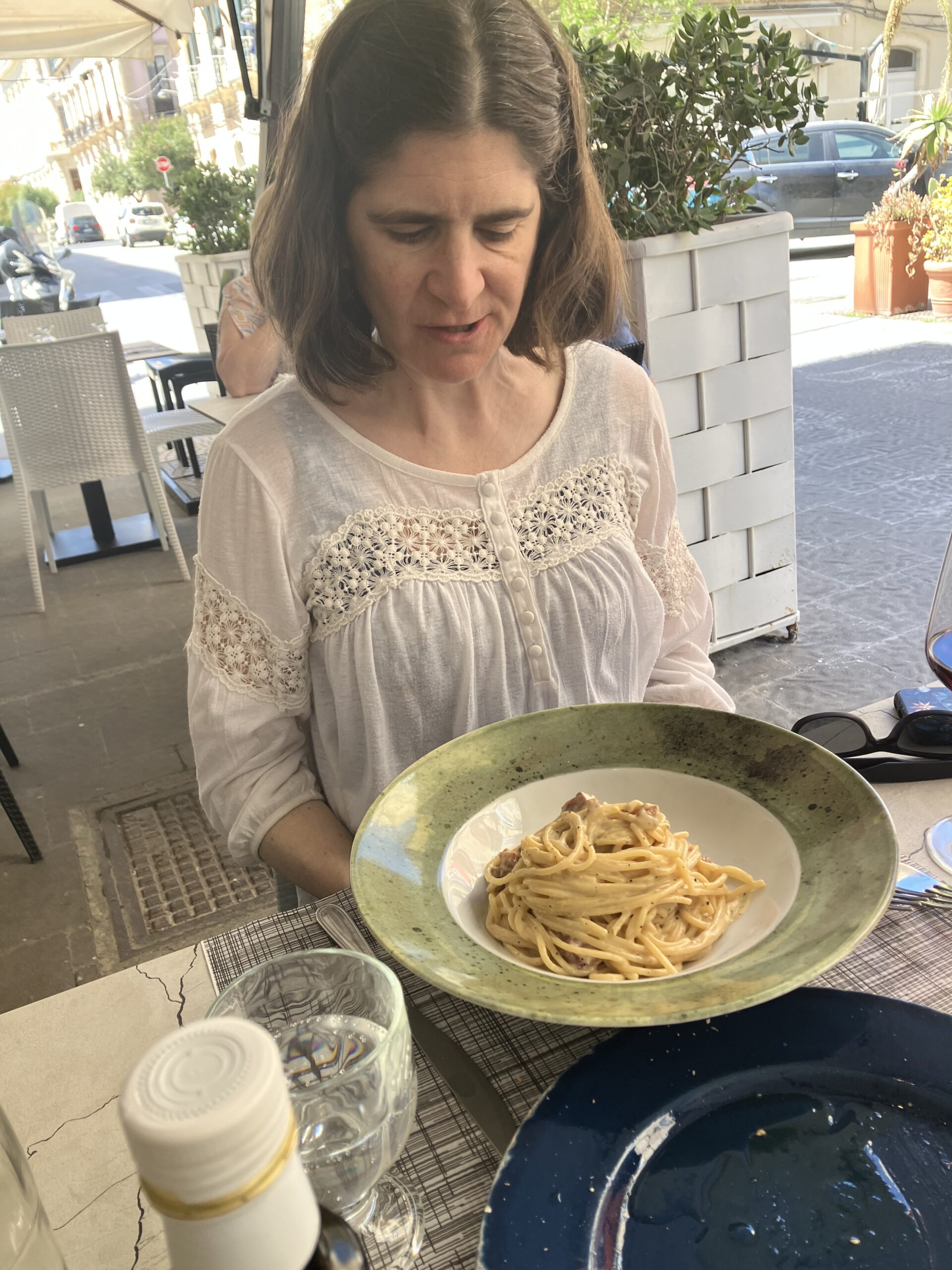
This was our first real pasta meal of the whole trip, and it did not disappoint, though only one of us decided to pursue Ortigia’s reputation for seafood. The penne with swordfish and eggplant was quite good, as were, reportedly, the carbonara, lasagna, pasta norma, and ragu.
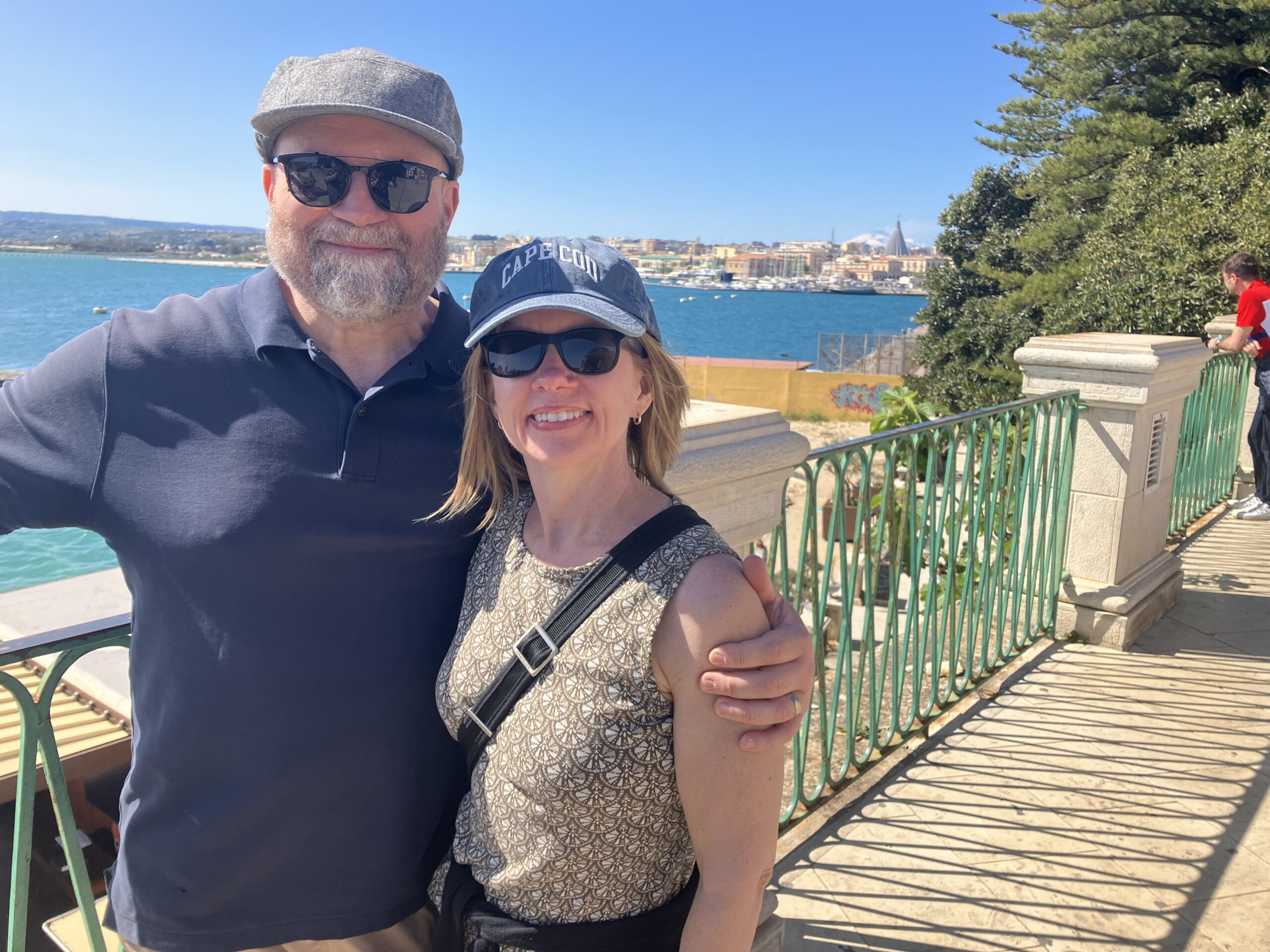
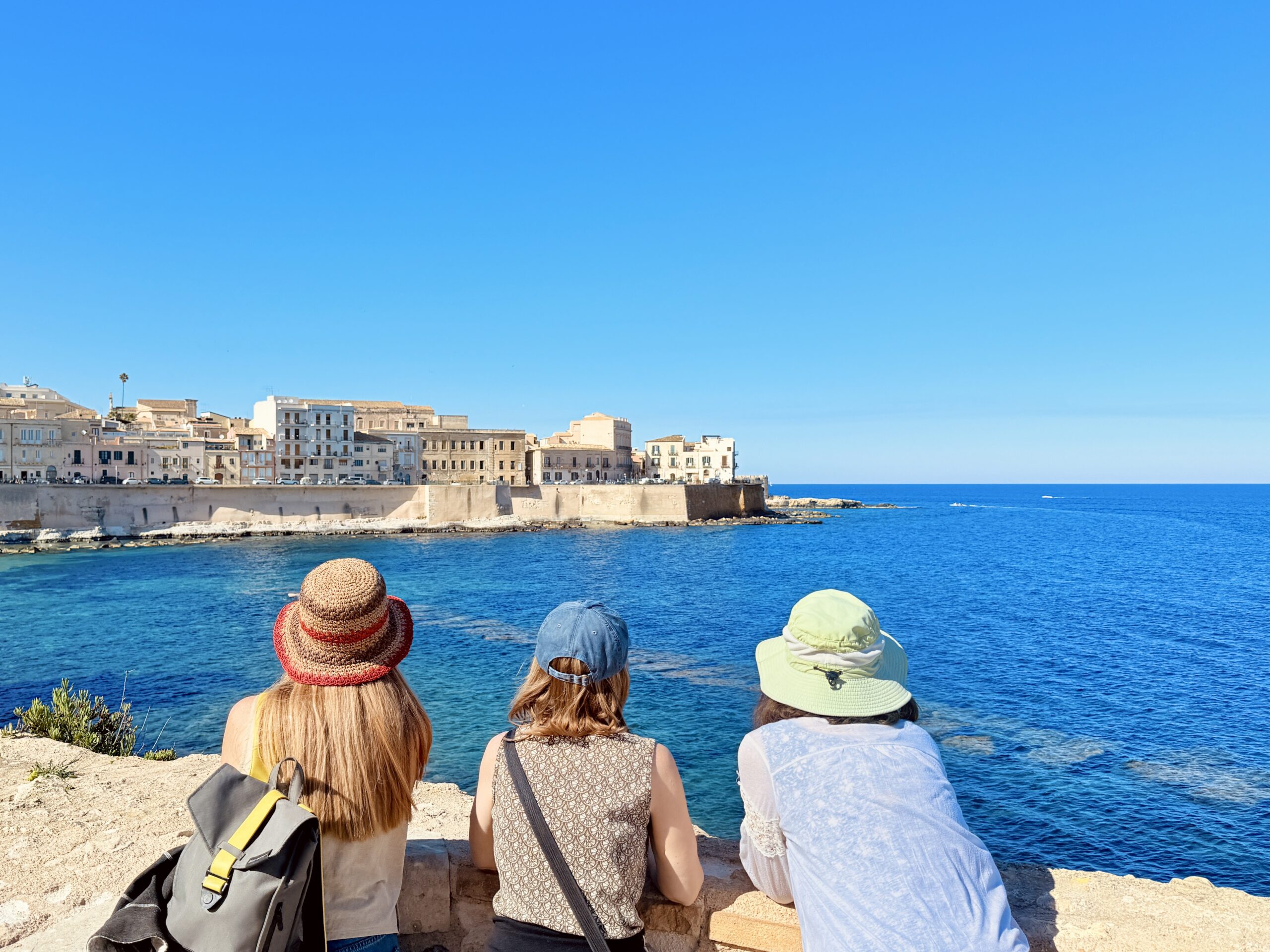
From lunch we followed a general touring plan that was designed to hit major points in Otigia, which featrured multiple views of the Mediterranian. Perhaps the best view was back toward the city of Siracusa on the mainland with the white top of Mount Etna loomng above.
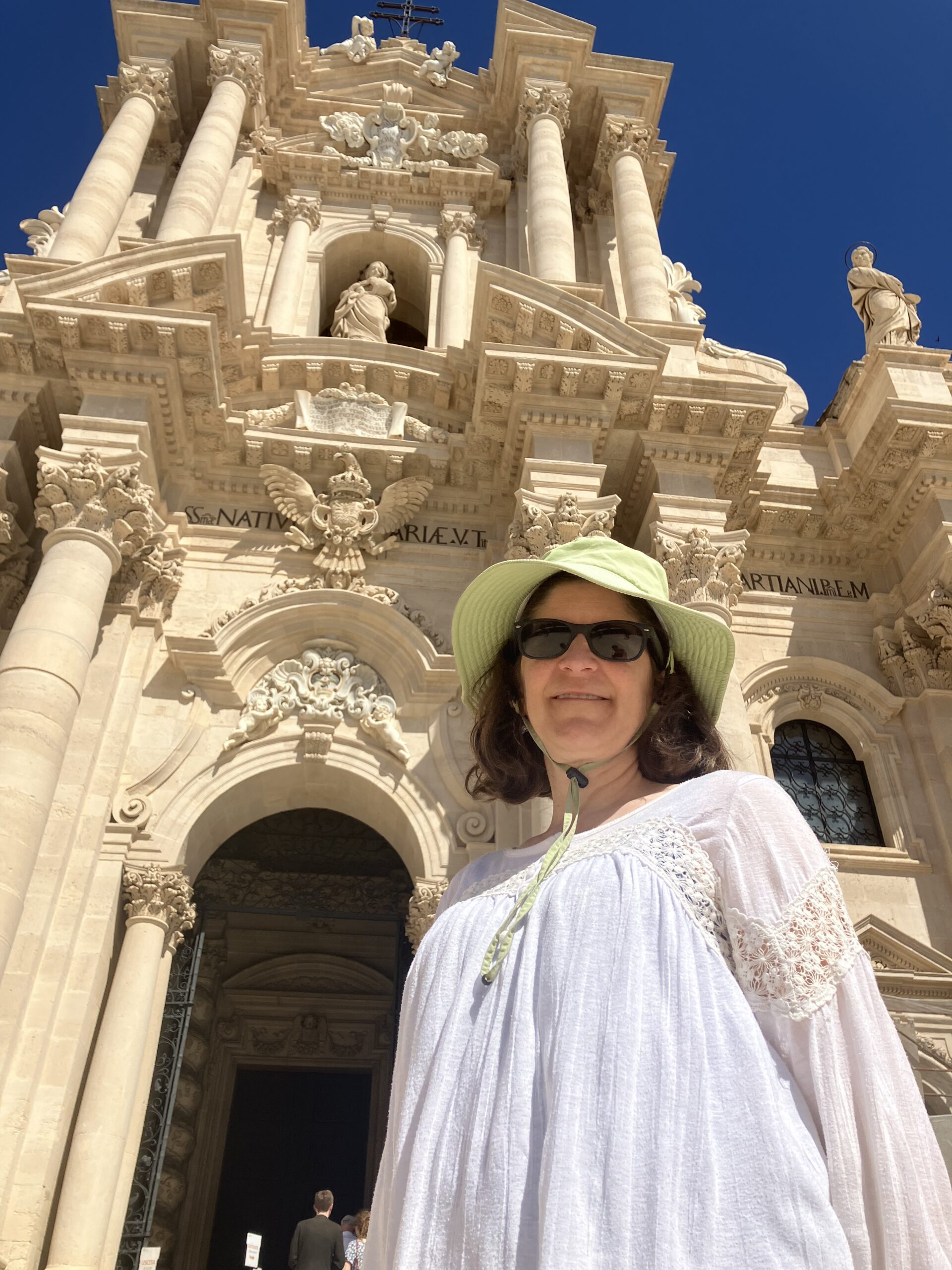
We also saw the island’s Duomo, which was built in the fifteenth century AD, incorporating pillars and other elements from a temple to Athena dating to the fifth century BC. This was not our first Duomo, but was quite memorable.
From here, we continued wandering until we reached the very tip of Ortigia, where the Maniace Castle projects a rather fort-like military presence with stark, thick walls all around and stairways leading off in improbable directons.
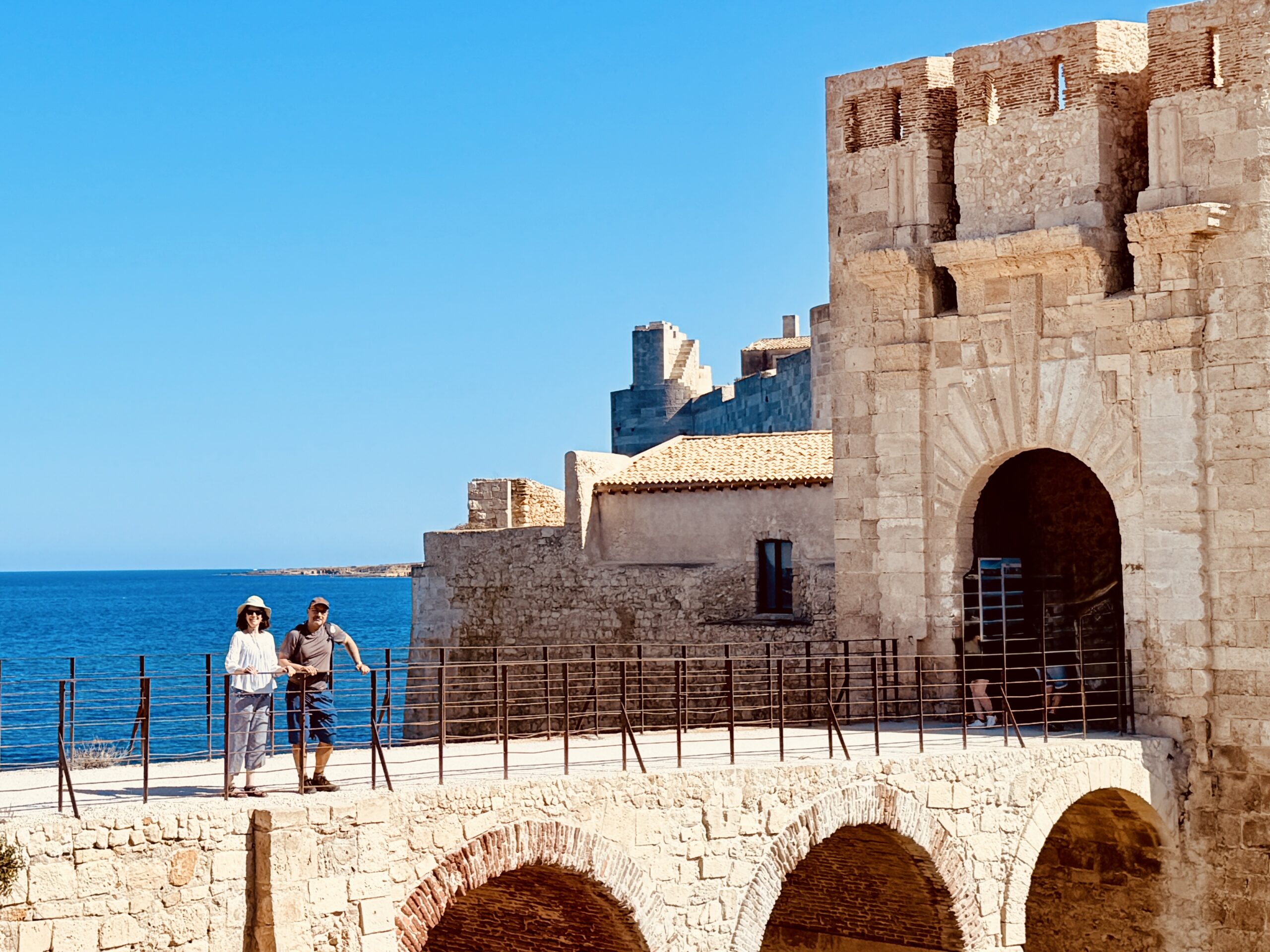
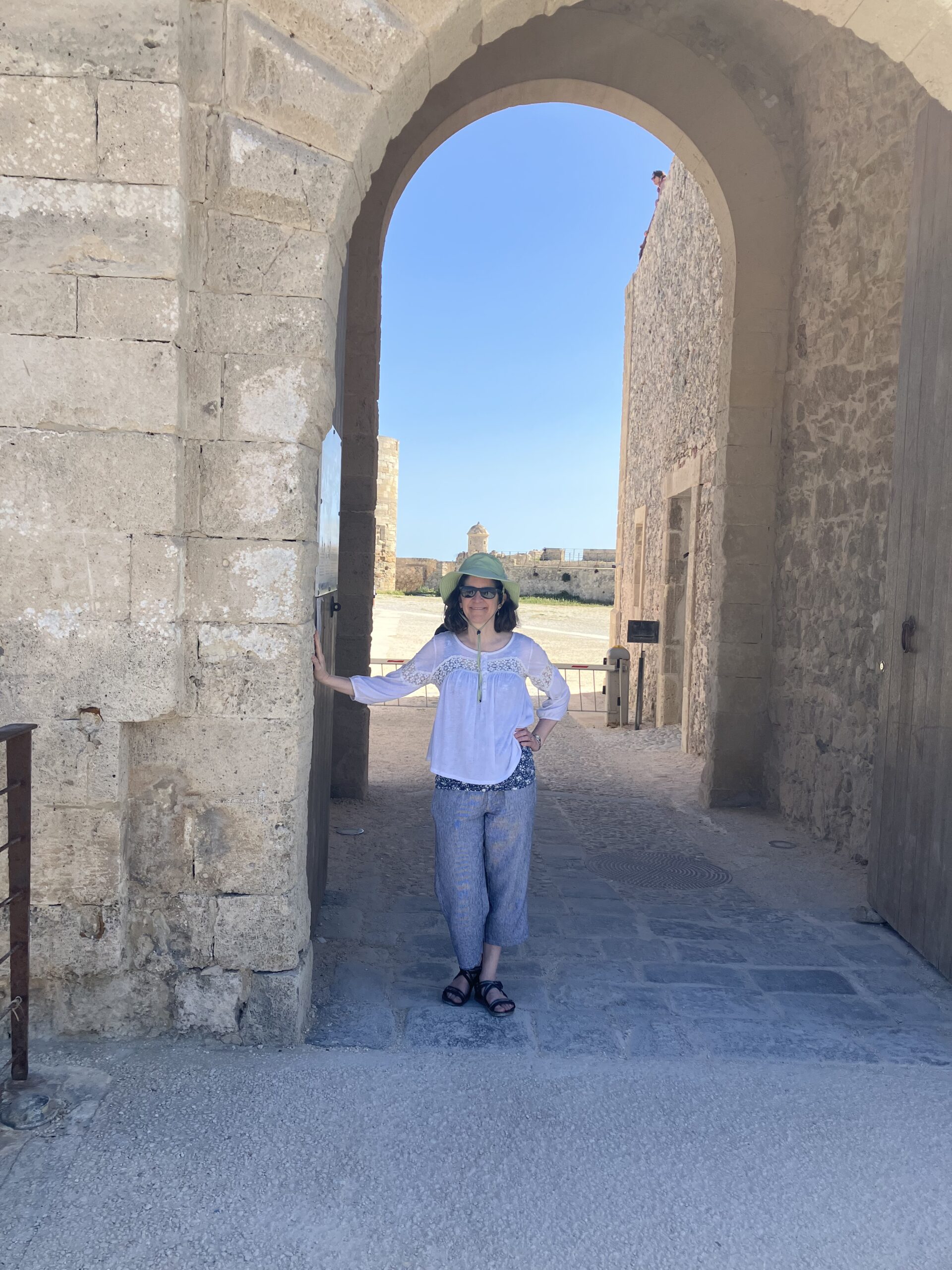
We didn’t actually go inside because our parking was about to run out.
Still, the walk back to the parking lot was as scenic a jorney as anyone in our mild state of hurry could hope for. We followed the shoreline on the opposide side of the island, which included some beaches where several people seemed to be considering the idea of wading into the still-chilly Mediterranean.
Wow! Quite an adventure!