Author Archives: Bob

A day for everyone

Here was the big day—our dalliance into Dingle Peninsula. Since her semester abraod, Jen has pronounced this her favorite part of her favorite place. We have been working up to this for at least the past 12 days here, probably a few decades longer for some of us.

We took in an early, light breakfast at our lodgings; we looked (warily) up at the mostly clear and sunny sky, and we headed off on the Slea Head Loop around the end of the peninsula.
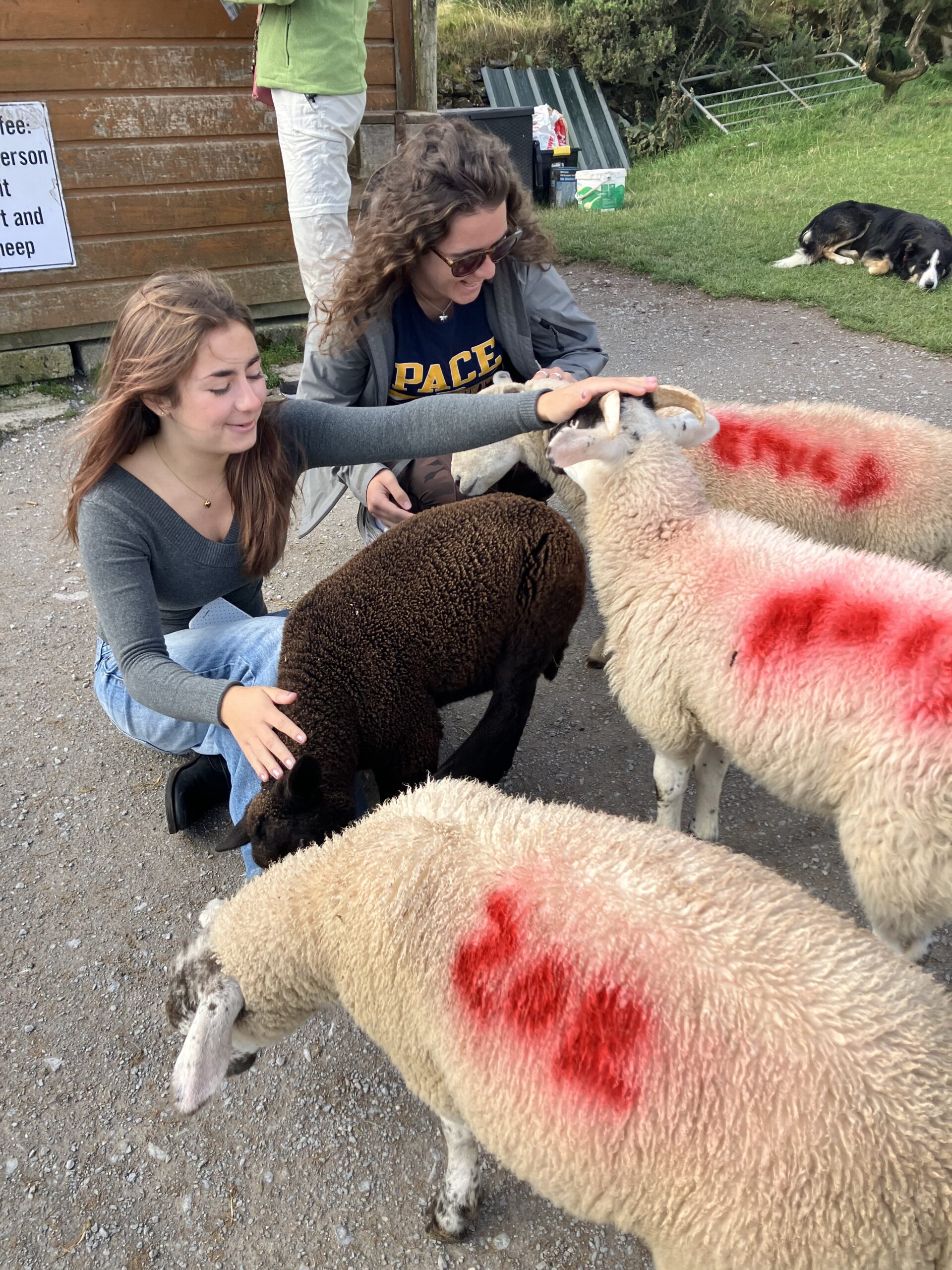
For anyone expecting a rhapsodic description of the dramatic scenery, yes, that will come; but the main thing to say about the outer stretches of this peninsula is that the people here have figured out what visitors really need from Ireland: closer interactions with livestock.

Within the first half hour of our drive we had encountered four establishments offering hands-on exposure to sheep. This after seeing thousands of the beasts all over the country and not getting within arms length of the suspicious little devils. The Dingle-ites have cornered the market on lambs as far as the non-gustatory uses of them go.
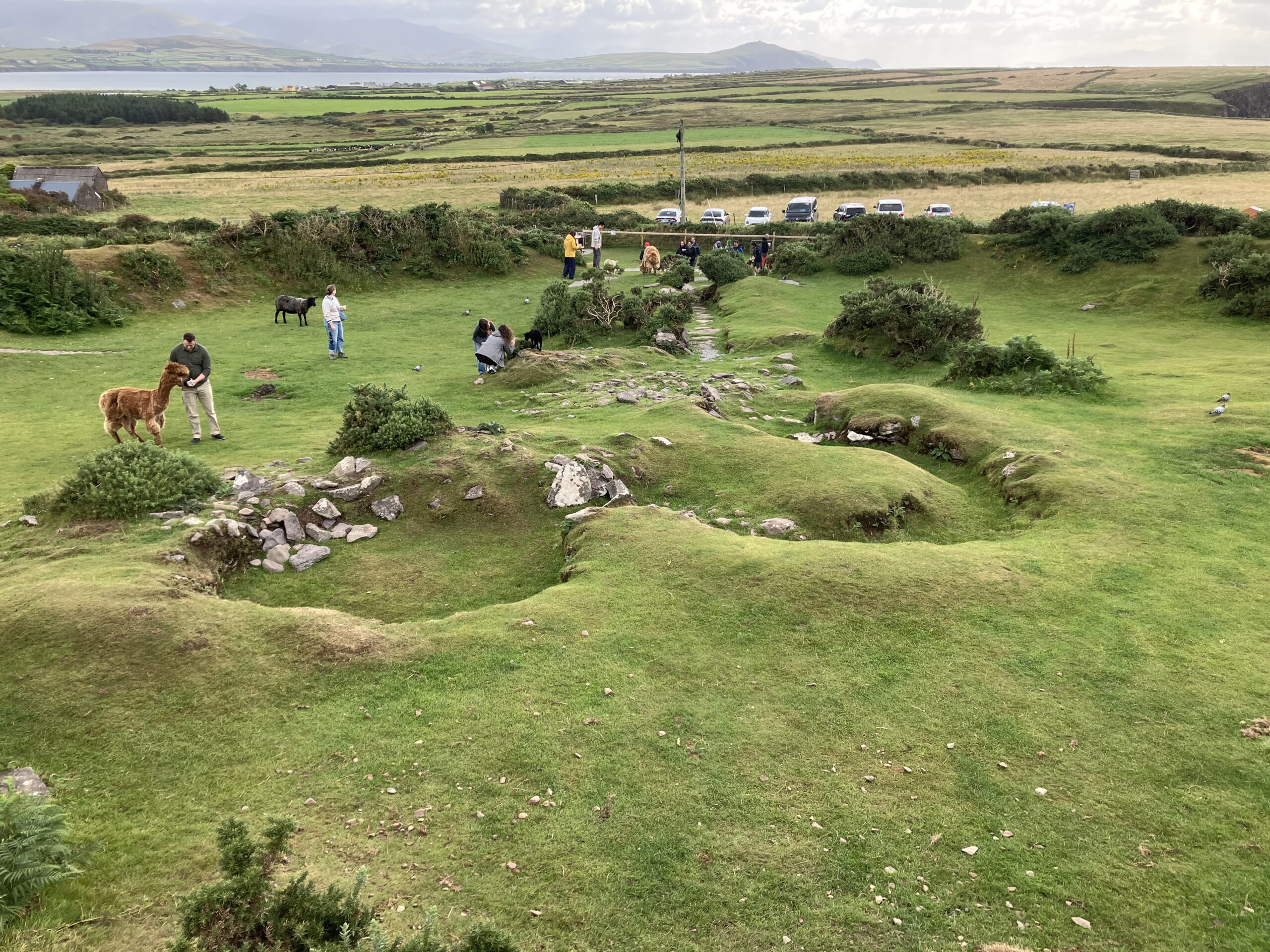
So, when we pulled over for our first stop, which advertised a “fairy ring fort” (the remains of an ancient circular settlement still pocking the green hillside), we thought we were going to get a dribble of Irish hisotry. Except the entire hillside was populated by cuddly sheep, goats, alpacas, and horse that dearly wanted to be fed and petted. In a total reversal of roles, now the sheep were following us around.

It was like the island of approachable animals — the only animals that you couldn’t feed by hand were the two large lumbering pigs. Many furry friends were just wandering around in the fairy ring fort, not even fenced off from us. When it was time to wash hands after all the petting, a large ewe nudged me out of the way to get a drink from the faucet.
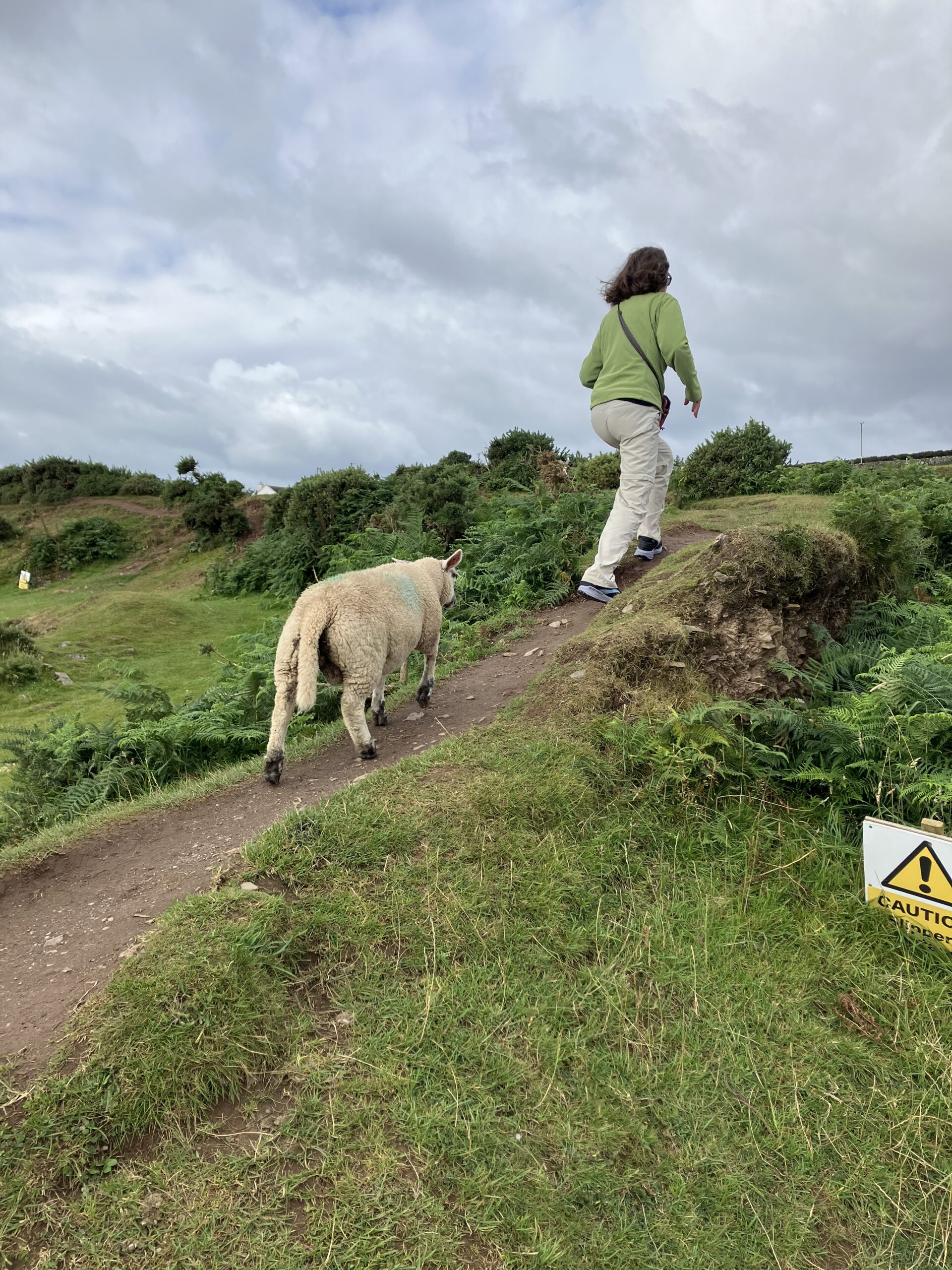
If you are like us, you are thinking that Zoe is sadly absent from this trip. Worry not. There was a sheep who, inexplicably, had “Zoe” spray painted in orange right on its wool. Our Zoe had a wooly proxy for the morning.
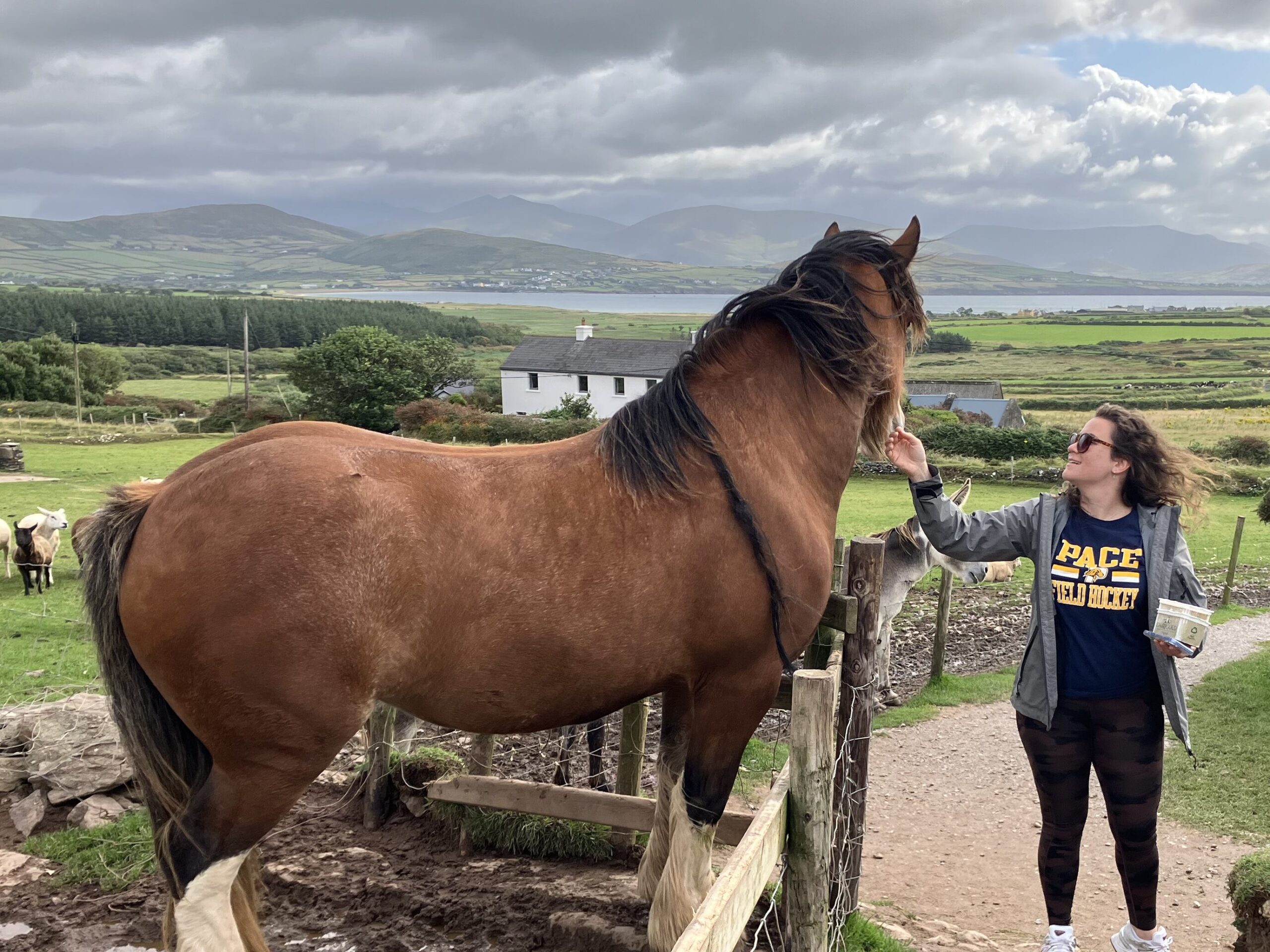
It was all very difficult to believe, but it seems to have actually happened. Digital pictures don’t lie.

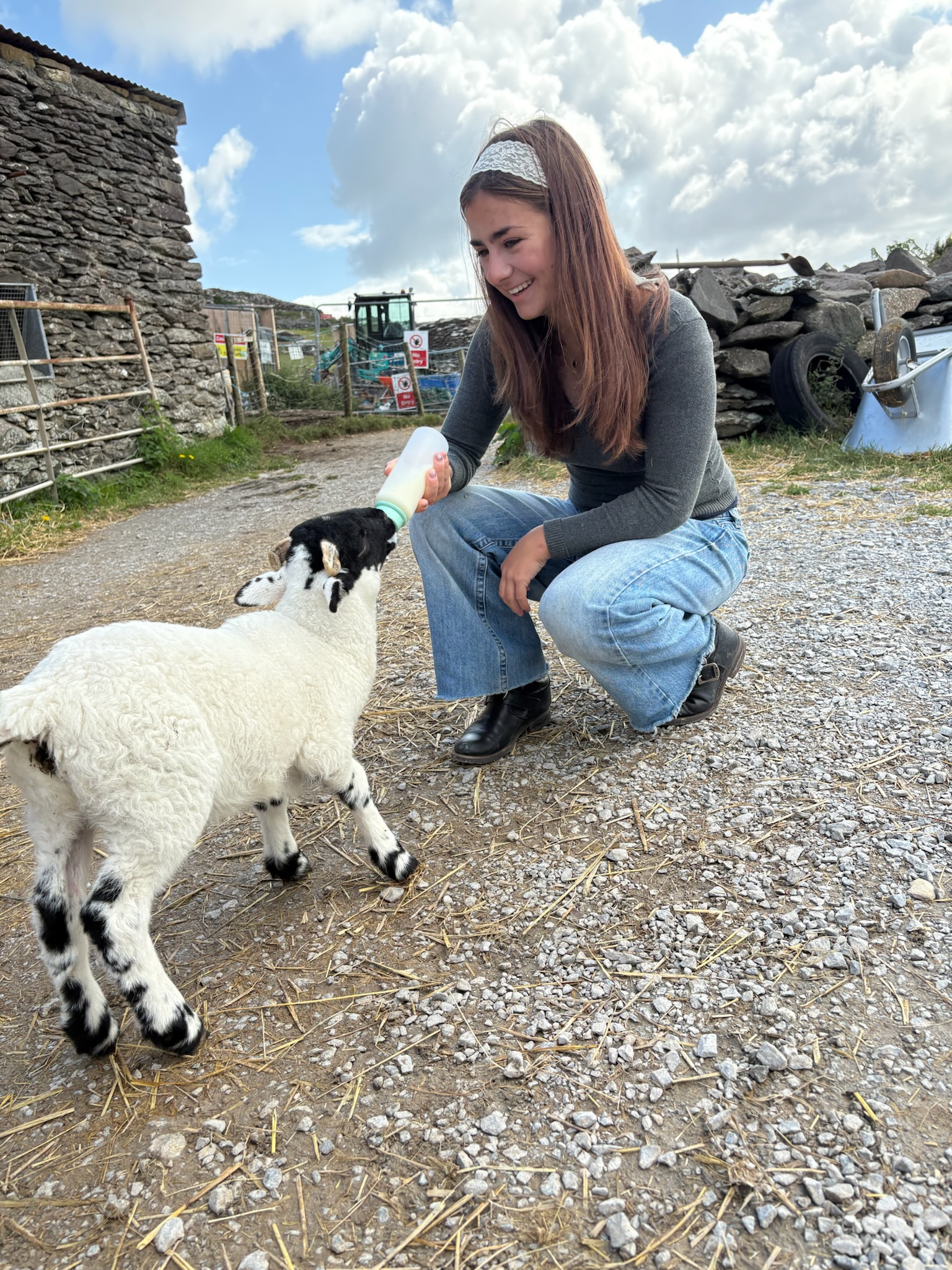
Our second stop was, if possible, even better. We visited a hillside farm where we had booked an appointment online. The name of the operation — at least as we saw it on the internet — was “Hold Baby Lamb.” It was hard to resist the allure way back home in the planning stages, and the experience was true to its marketing. That is all we can ask for.
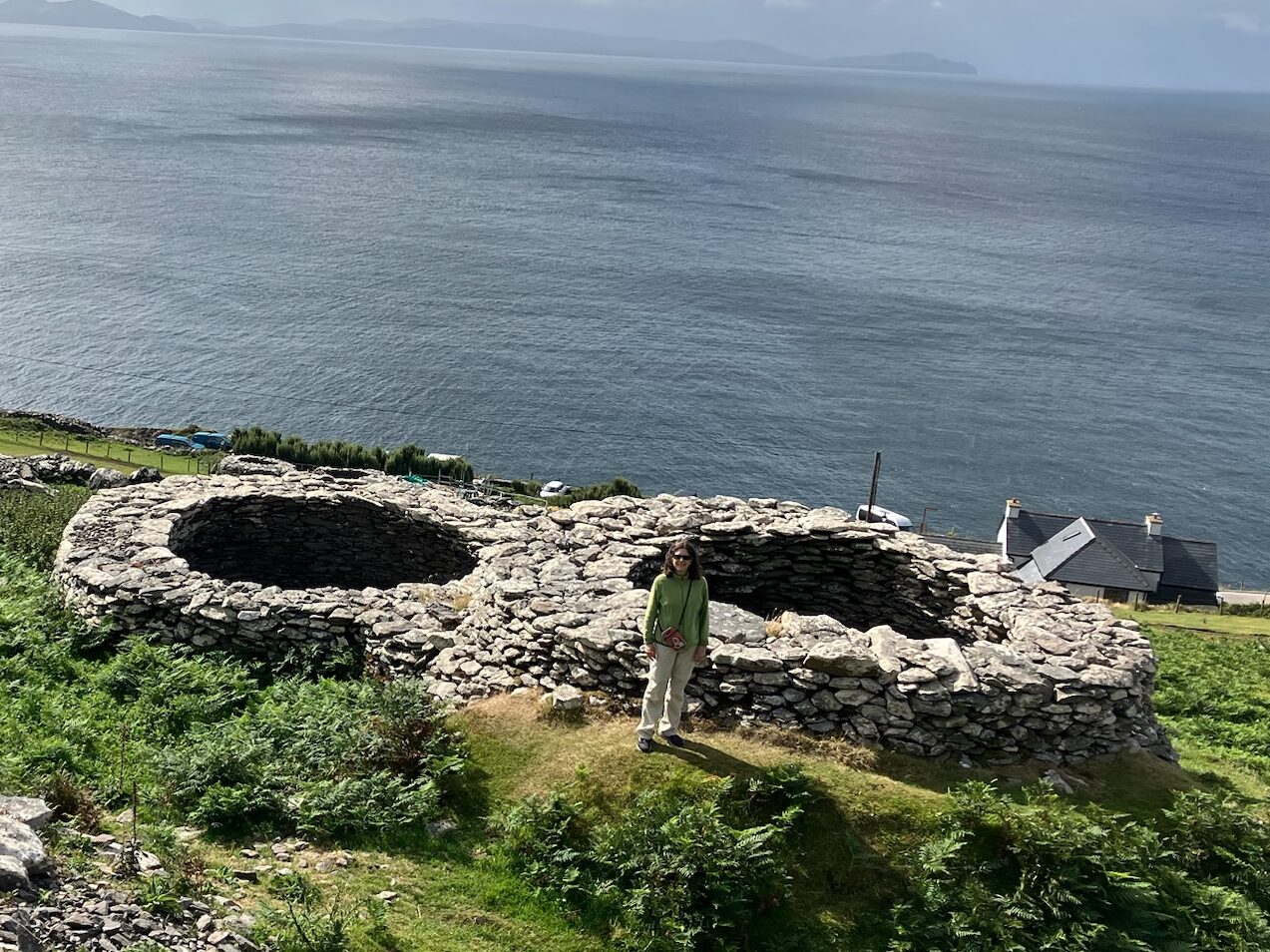
Hold Baby Lamb also featured several bee hive huts, advertised on a large poster with a Star Wars-flavored font (though at no point during our time at this stop did anyone claim these actual bee hive huts appeared in The Last Jedi or any other Star Wars movie). We could walk up the hillside and see them up close, and turn around to catch glorious views of the ocean and the near-lying Blasket Islands. The marquee view was inexplicably not even mentioned in any of the marketing materials.
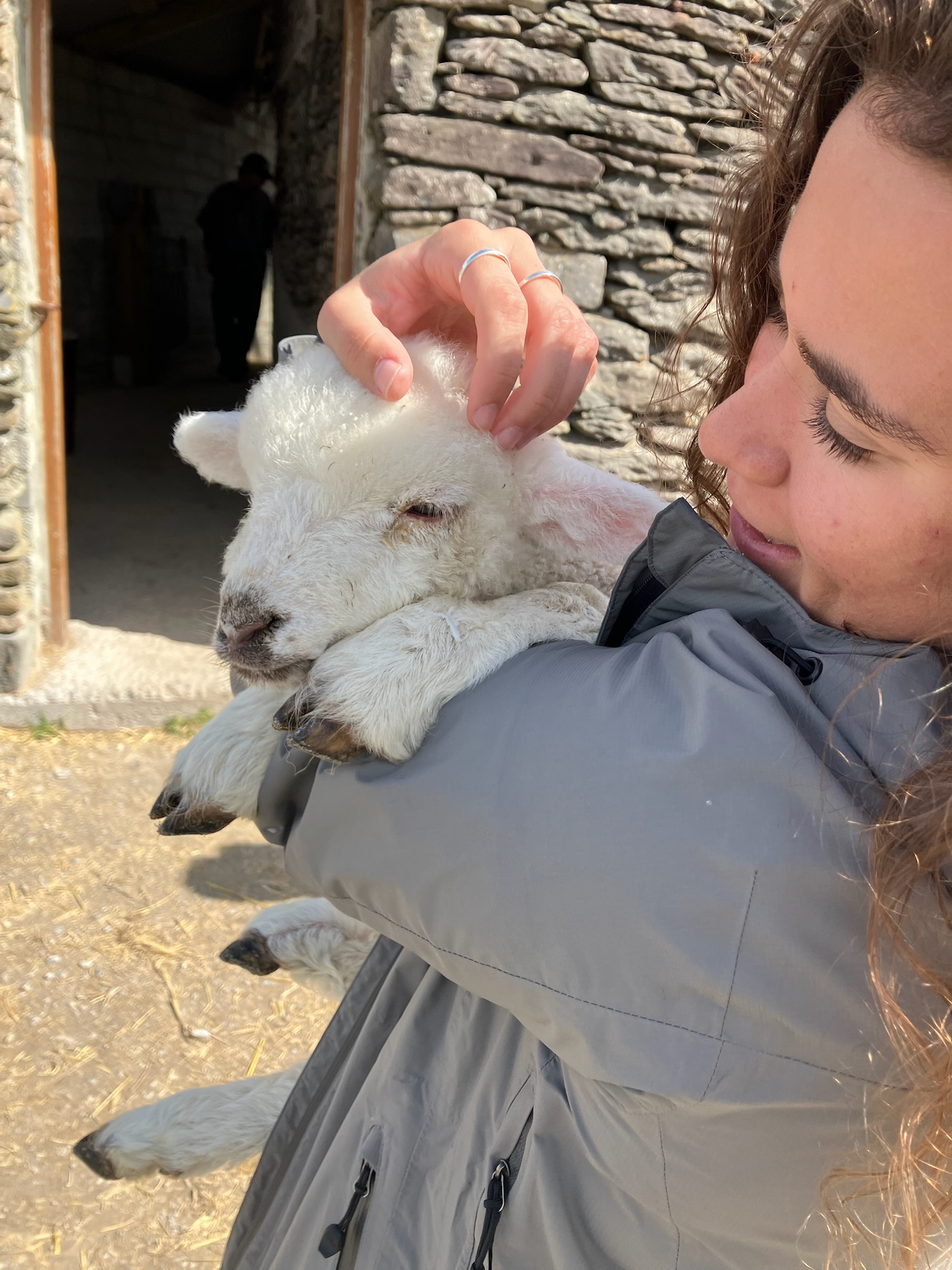
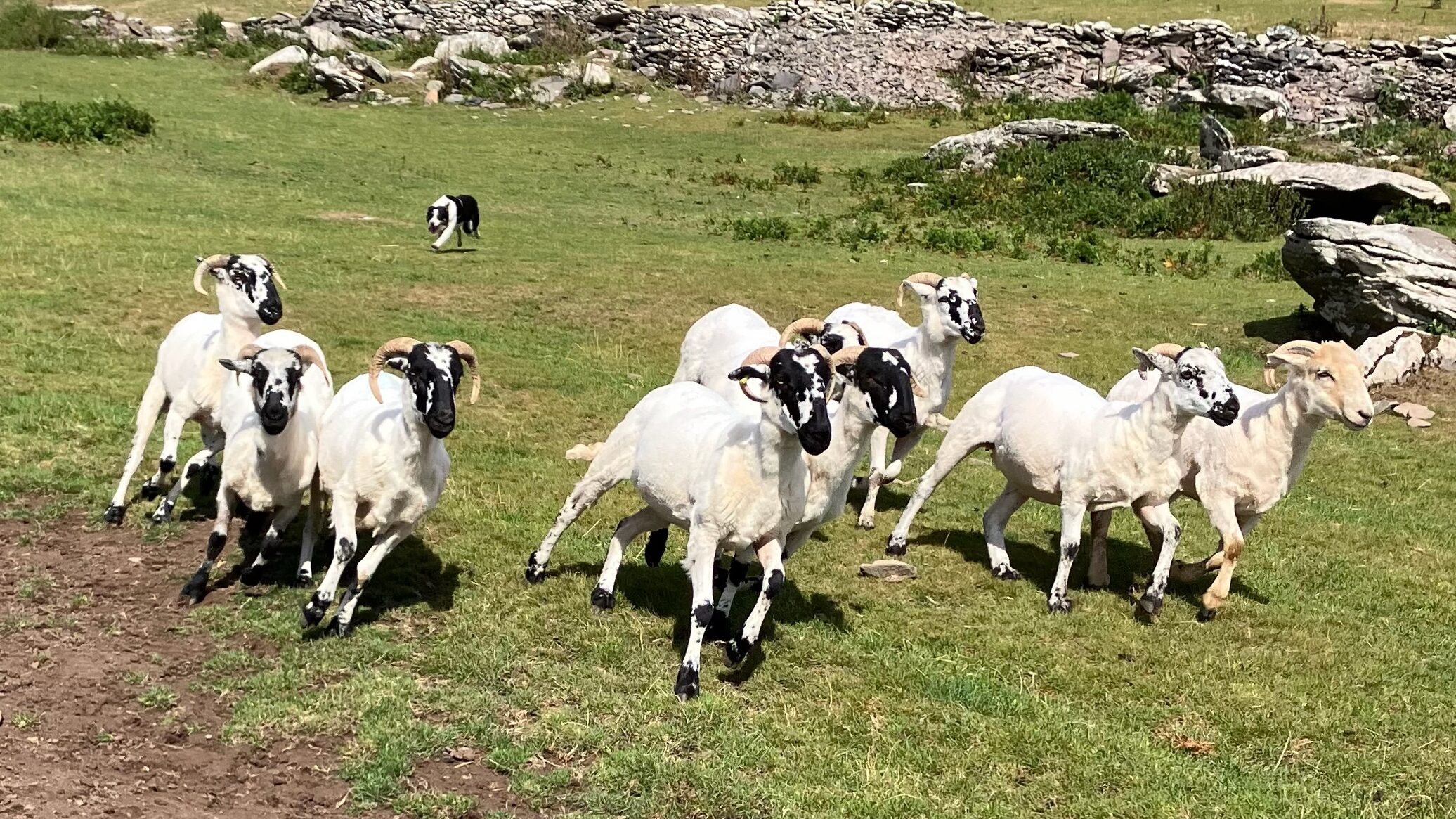
That’s because the lambs are the main players here. Nadia and Lanie each got to feed a lamb with a bottle and pick the lamb up and carry it around for a while. We all were treated a little while later to a sheep dog display during which Dave the sheep dog efficiently guided a small flock around a field while the farmer communicated his commands in whistles and calls.
After this, we continued to drive until we fulfilled Jen’s wish of taking a scenic hike in the area. A stop at a hidden cove and beach also offered access to Dunmore Head at the very tip of the peninsula. Traversing this gave us and eye-popping view of Great Blasket Island — so close we could almost look in the windows of the five or six habitations out there. Just standing in the sloping, wind-blown field at the apex of Dunmore Head was an exciting experience.
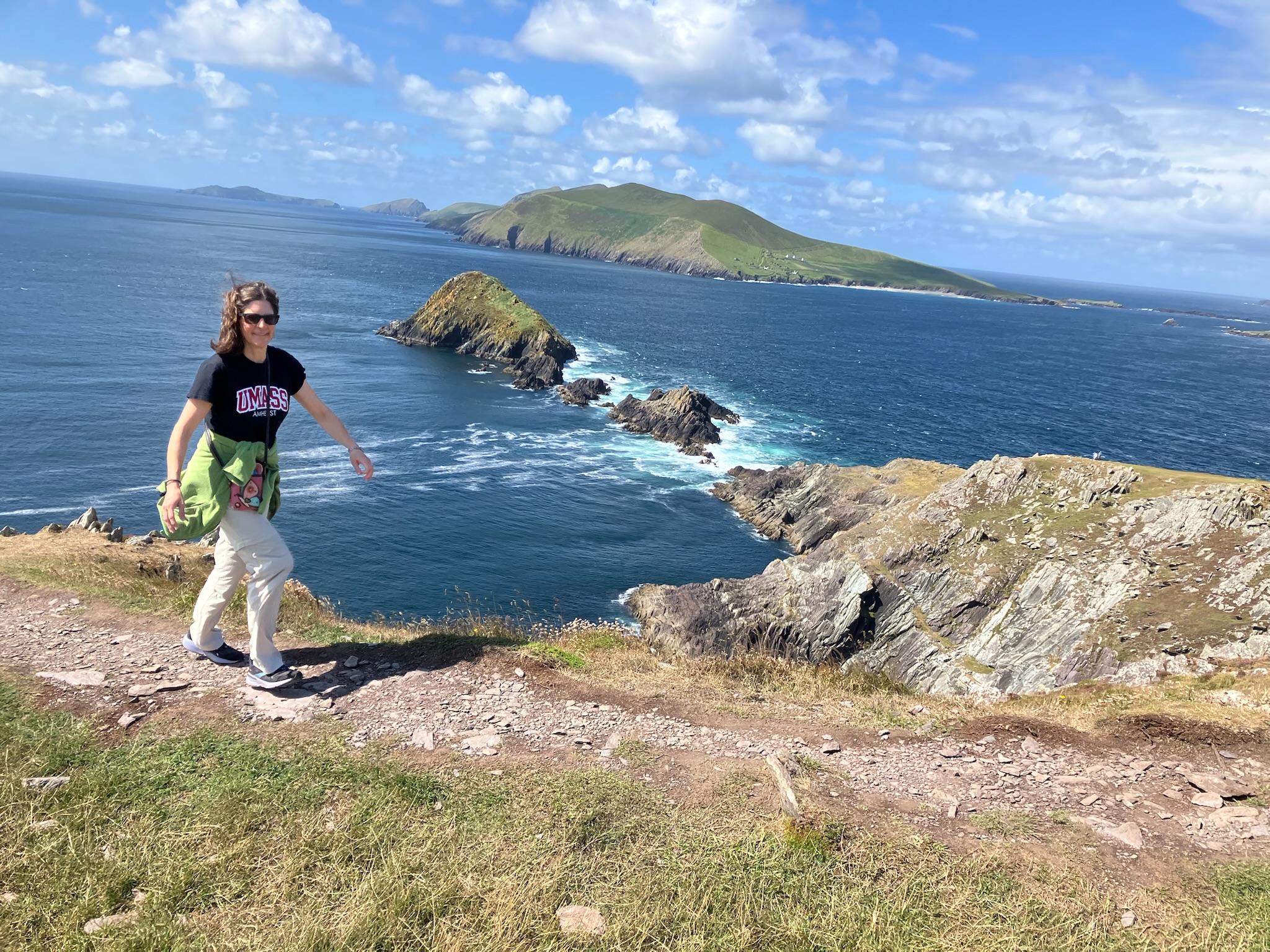
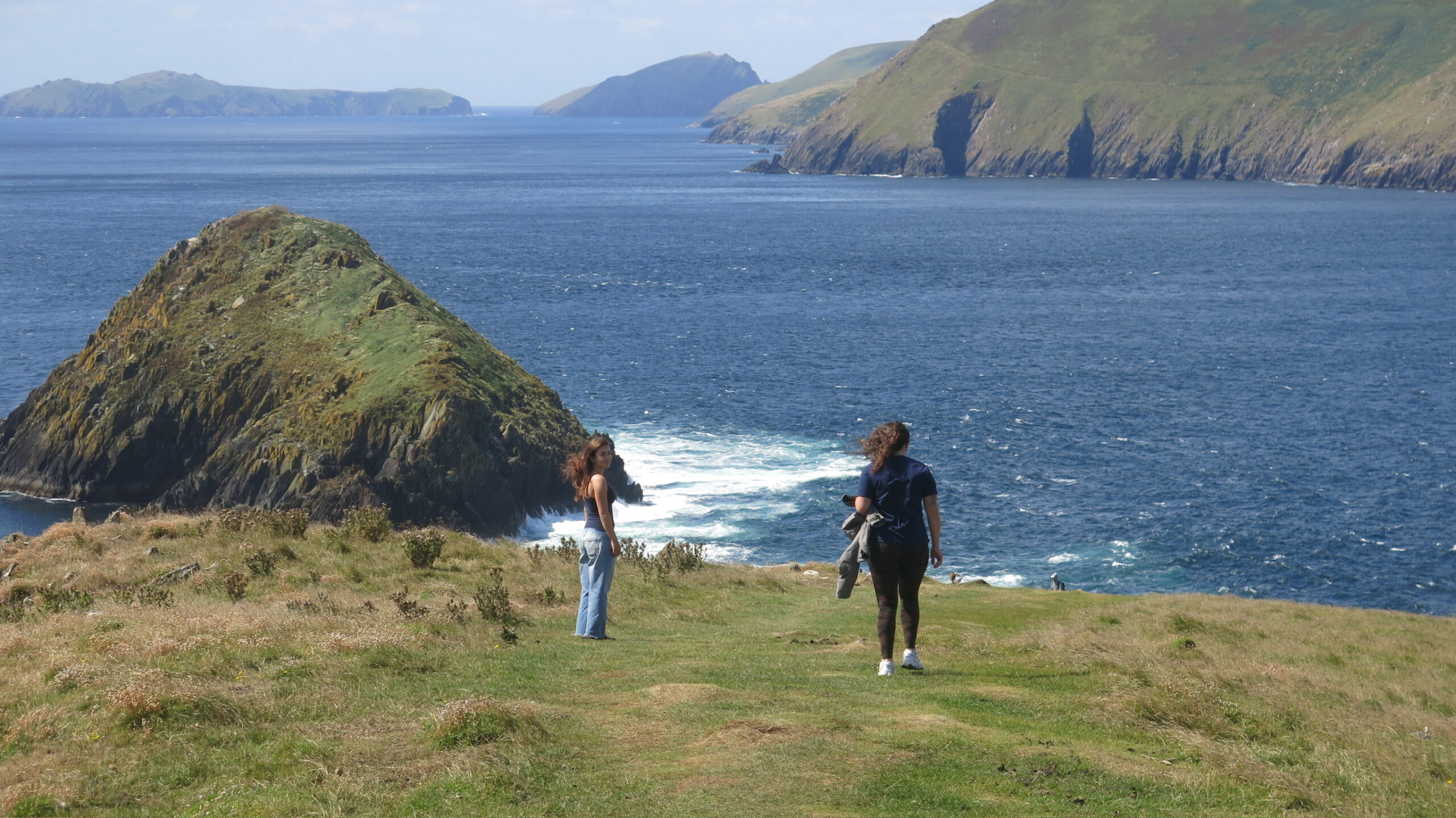
I now feel inclined to rhapsodise about the view. The ocean is 30 to 100 meters below us, depending on where we are in the hike. Its waters reflect the (still miraculously) clear skies, ranges in color from a dark blue at it deepest points to an aquamarine near the beach or over rocks. It is a color we normally associate with tropical paradises. All along the coast, white foam courses over dark grey jagged rocks, sometimes shooting several meters into the air if the wave is big enough.

The few clouds in the sky add drama to the scene — there are dark ones that might be bringing rain to somewhere in the distance, but we are still in steady sunshine. We can see to the horizon; that view is only blocked by the deep green Blasket Islands and the grey outlines of other shapes in the distance (are they the Maharee Islands that we saw yesterday off Kerry Head?). There is only the narrow span of Dunmore Head behind us. The remainder of our perspective, perhaps 300 degrees, is water view. We could sit and stare at it for hours and ponder its depths and its constant changes.
But, we were getting a little hungry.

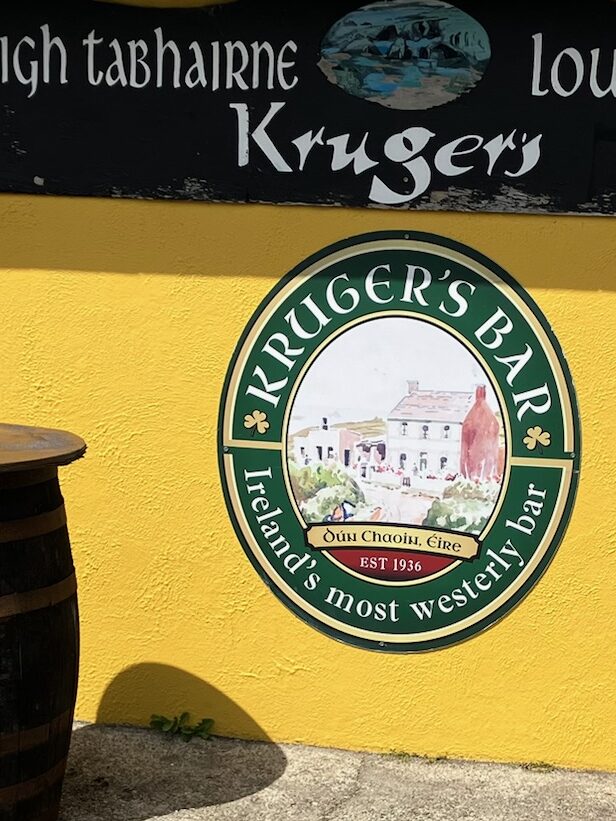
There are few conceivable situations where lunch could top this morning’s activities, but what if I told you we were able to take our meal at the Westernmost Bar in Europe?

I know! We thought we had already done that, too. During our trip to Achill Island we happily dined at Gielty’s Bar with its proud sign proclaiming this honor. But the details of the bragging rights, even in this day of global positioning systems, seem to depend on whom you’re talking to. So we left nothing to chance and ate at Krugers’ Bar all the way out on the end of the Dingle Peninsula. I would rate the fish and chips here at a dead even tie with the ones further north and (possibly) east at Gielty’s last week.
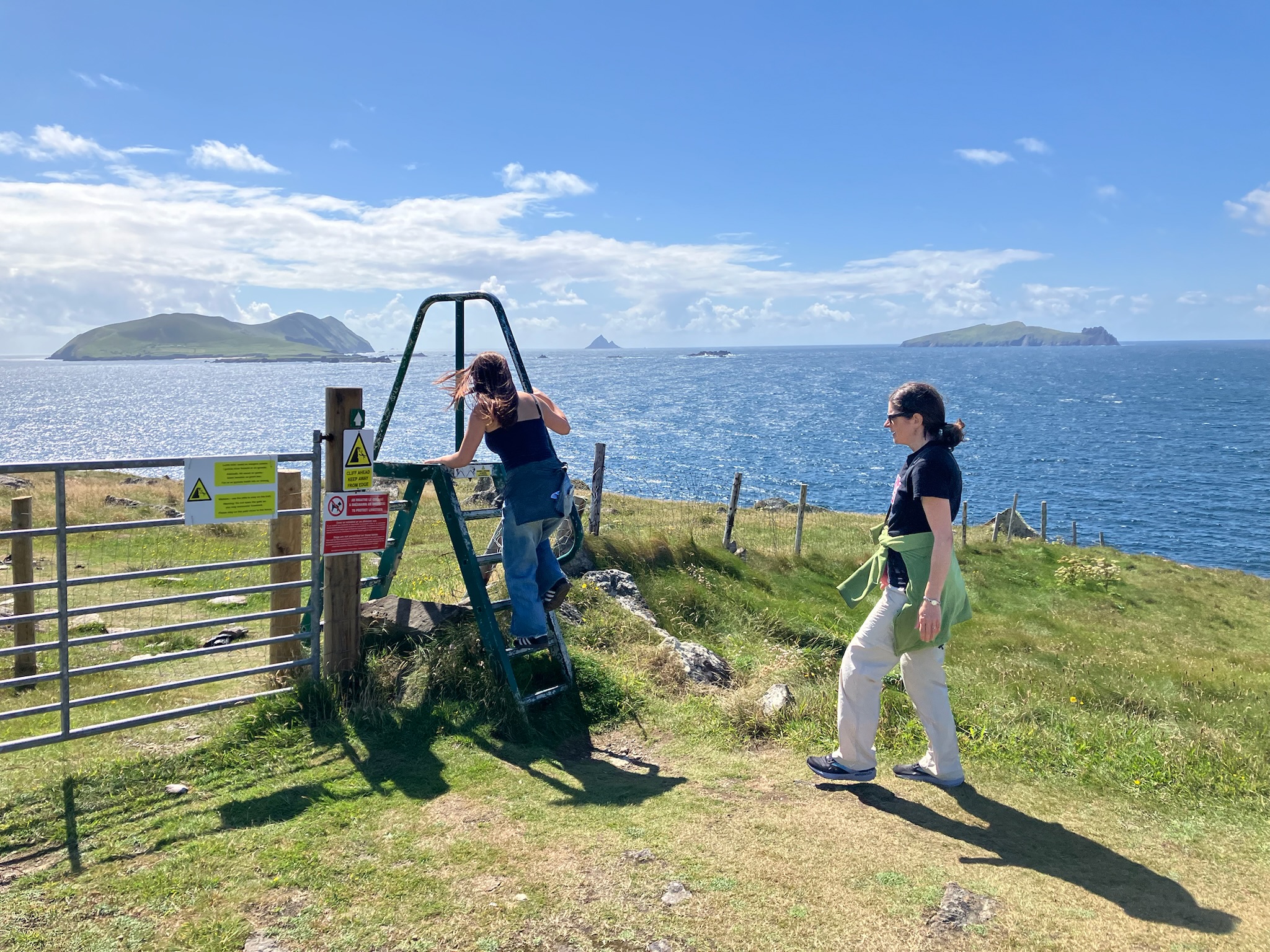
Of course, now we had a meal to work off, and the nearby Blasket Center offered not just a full-sized parking lot (a rarity in these parts) but also a five-kilometer loop trail that climbs into the hills and brings you back through sheep pastures along the craggy shore. It is on a list of Ireland’s national loop trails. Ireland, like ourselves, appreciates not always having to do out-and-back hikes.

Consider lunch worked off.

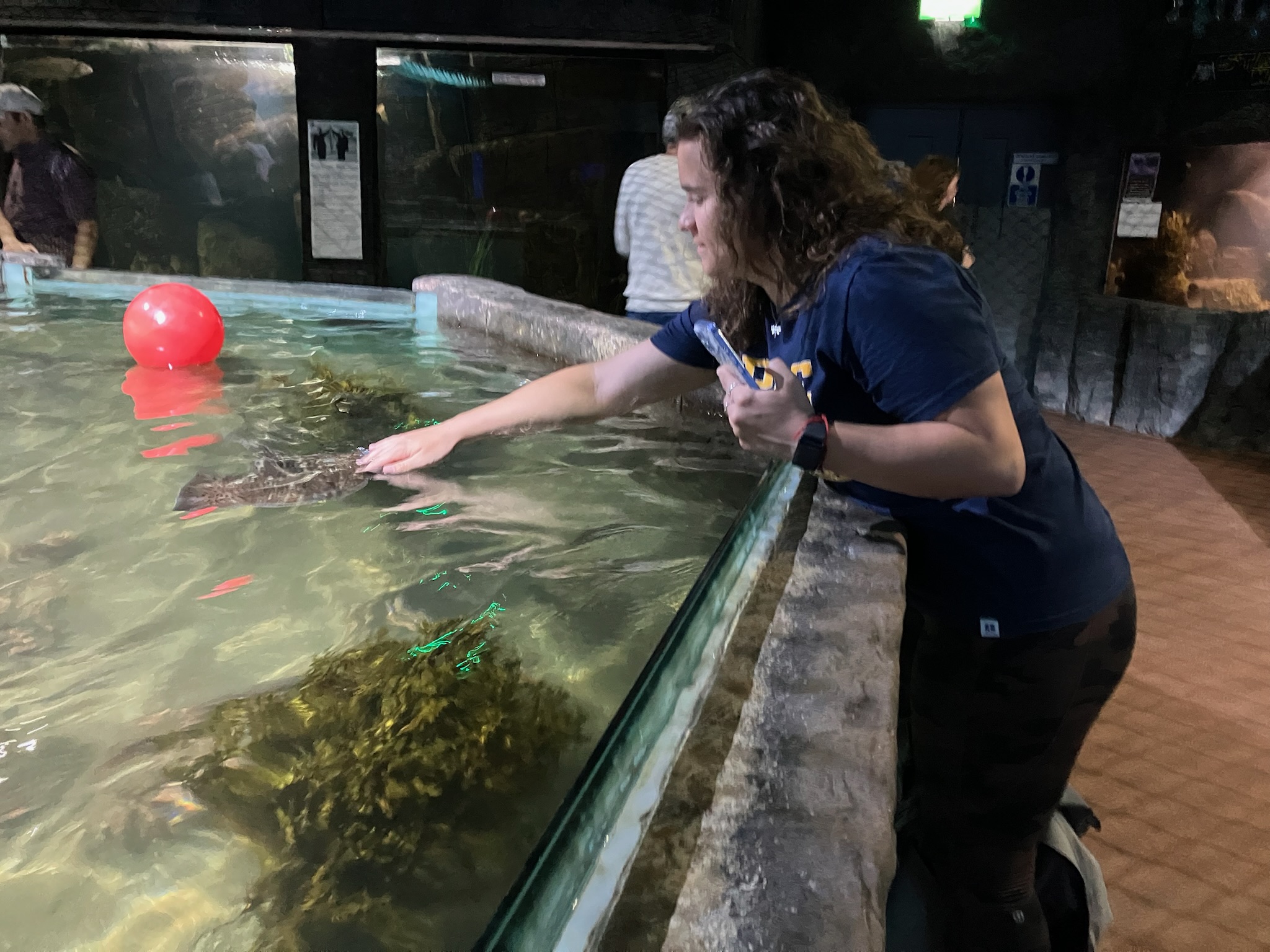
Having achieved so much already, we abandoned a portion of the Slea Head Loop, along with its predictably adequate roadway, for a cutoff road through the hills that got us back to Dingle town before the local aquarium closed. Nadia got a double wish today, lambs and sting rays to pet.
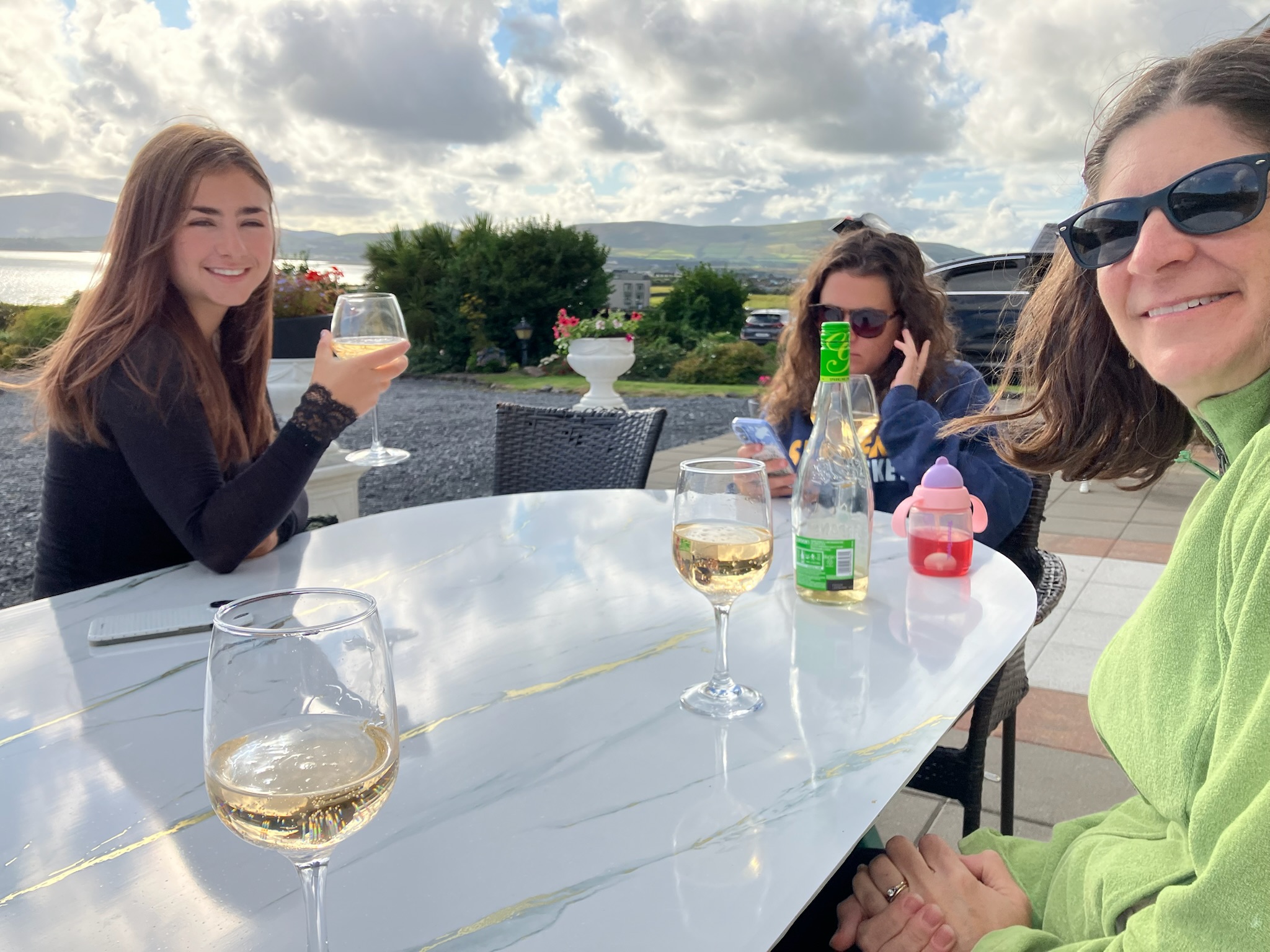
We even had time for a cocktail at our inn before heading to town for our second-to last dinner of the trip. This was the last normal dinner, and we opted for Italian. Tomorrow’s dinner — the last one of our trip — will be a banquet in a restored medieval castle.
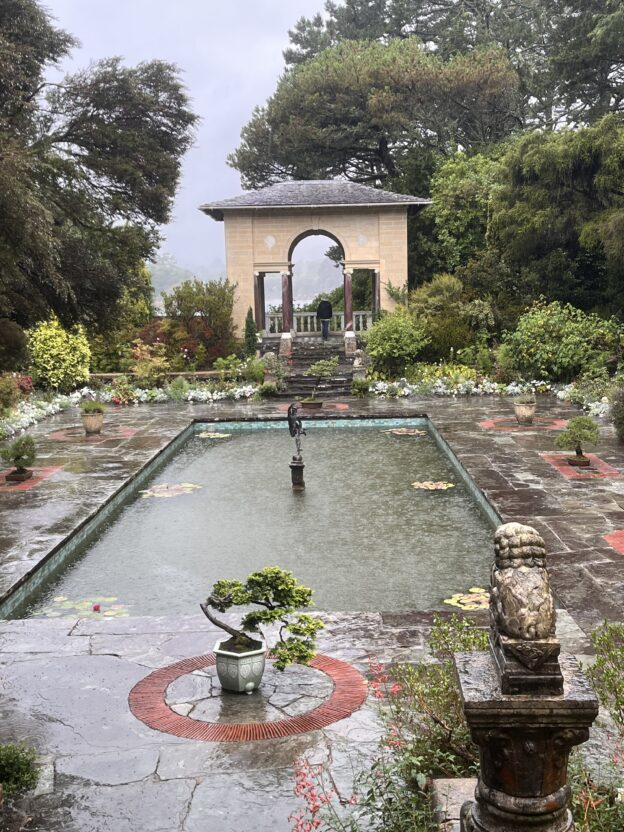
We get all wet

This was another tour and travel day, and it followed a pattern that we’re slowly beginning to recognize. A little too slowly.

Brilliant morning sun convinced us that we were in for a dry spectacular day, and several of us decided to wear non-fast-drying clothes. You probably know where this is going, but we were still — even after a week here — optimistic, and perhaps a little naive.

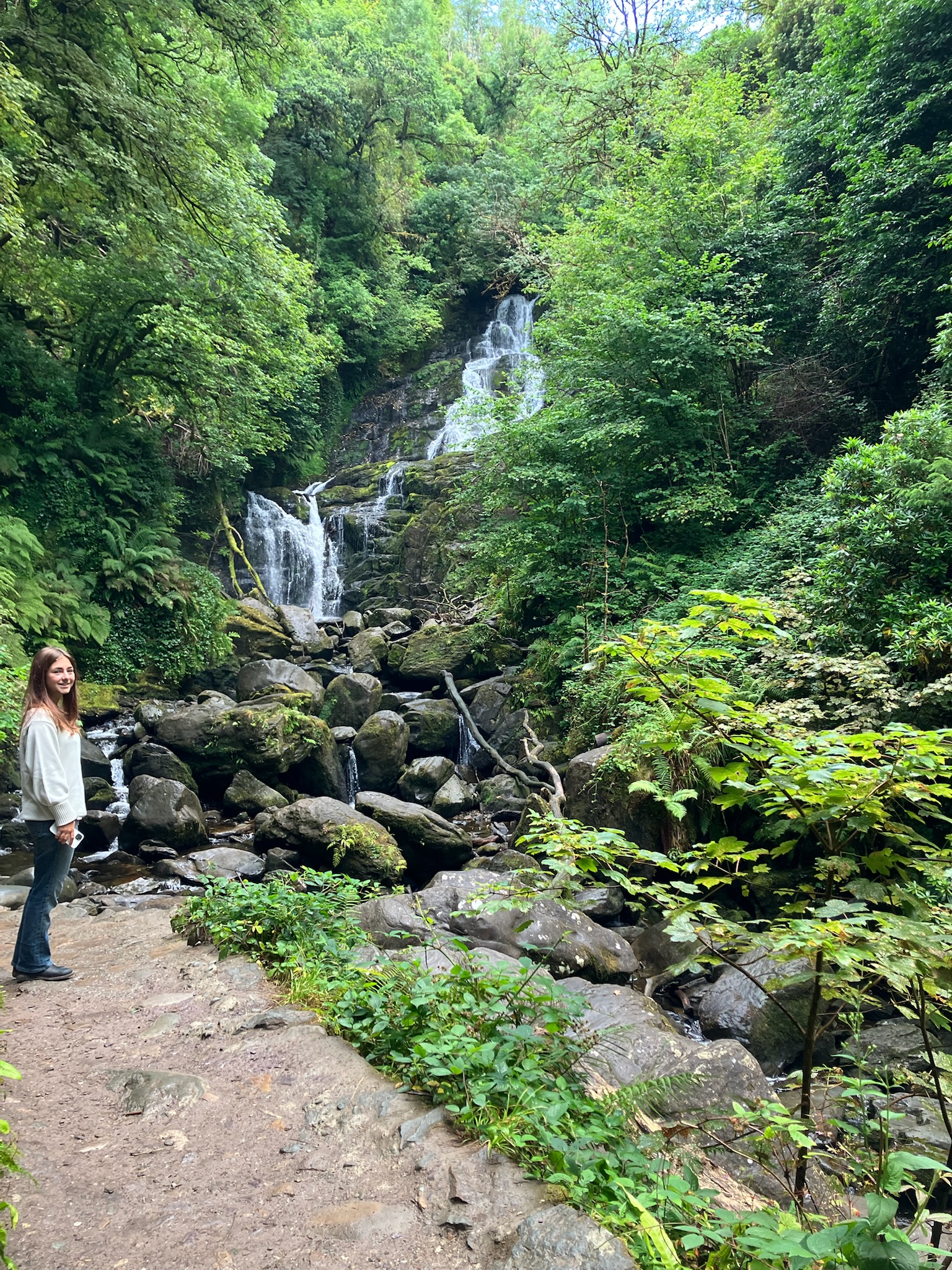
We packed up all our stuff, including the garments that would hold up well to getting soaked, and we set off for a nearby waterfall just on the outskirts of Killarney. Is this a true account or is it dramatic foreshadowing? It’s possible for it to be both.

We continued on towards Kenmare with a song in our hearts and several roadside scenic views in our path. Of course, the skies darkened and it started to rain a little, but it was not near enough to affect the driving or really obscure the views.

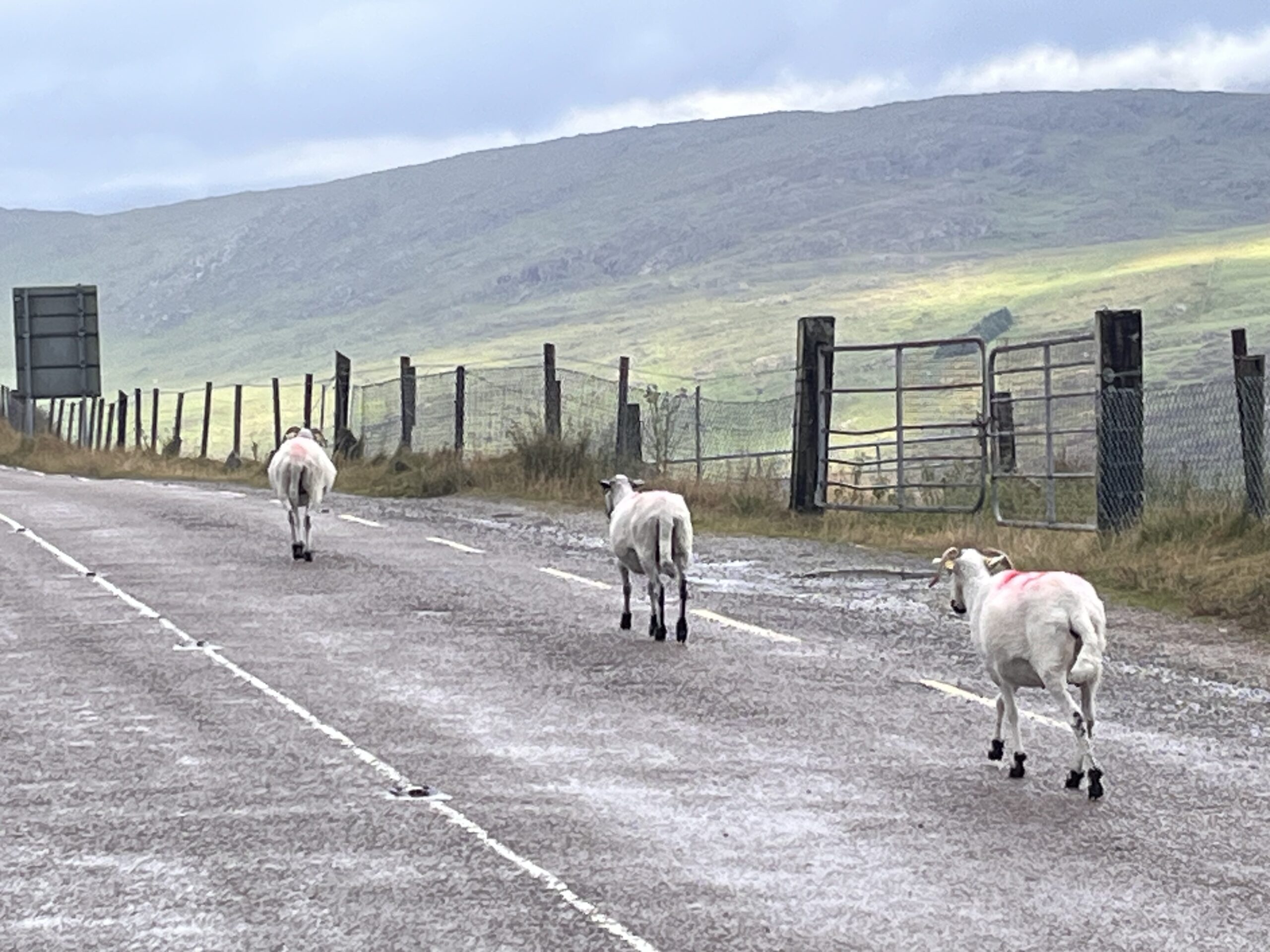
Then, at one point, we made a mistake — not tragic, but unfortunate. At one roadside attraction that was located at an intersection of roads, we chose to park on the wrong street facing the wrong direction. Perhaps we were lured this way by the proximity of the grazing sheep. They are quite persuasive, those sheep.

The problem lies here: When it was time to route to our next waypoint, which, I think was Kenmare itself, the computer wayfindng device took the direction we were facing into account. Perhaps it knows how narrow the roads were and thought it best to avoid telling us to turn around. Instead, it thought it best to let us go straight and then turn onto a six-kilometer country lane that looked like a normal road on the screen.

Even when we saw it, with its lack of a shoulder and even grass growing down the middle, we chose to trust the system. We were naive this morning, remember. The first kilometer passed without us seeing another motorist. Then, two appeared in the distance coming the opposite direction in close formation. The first pulled driver into a pre-set pull-off area well in advance of our approach. Good lad. The second car tried to follow, maybe? I might be giving that rat bastard a little too much credit here, but it’s likely there was not enough room for both cars to fit in the pull off.

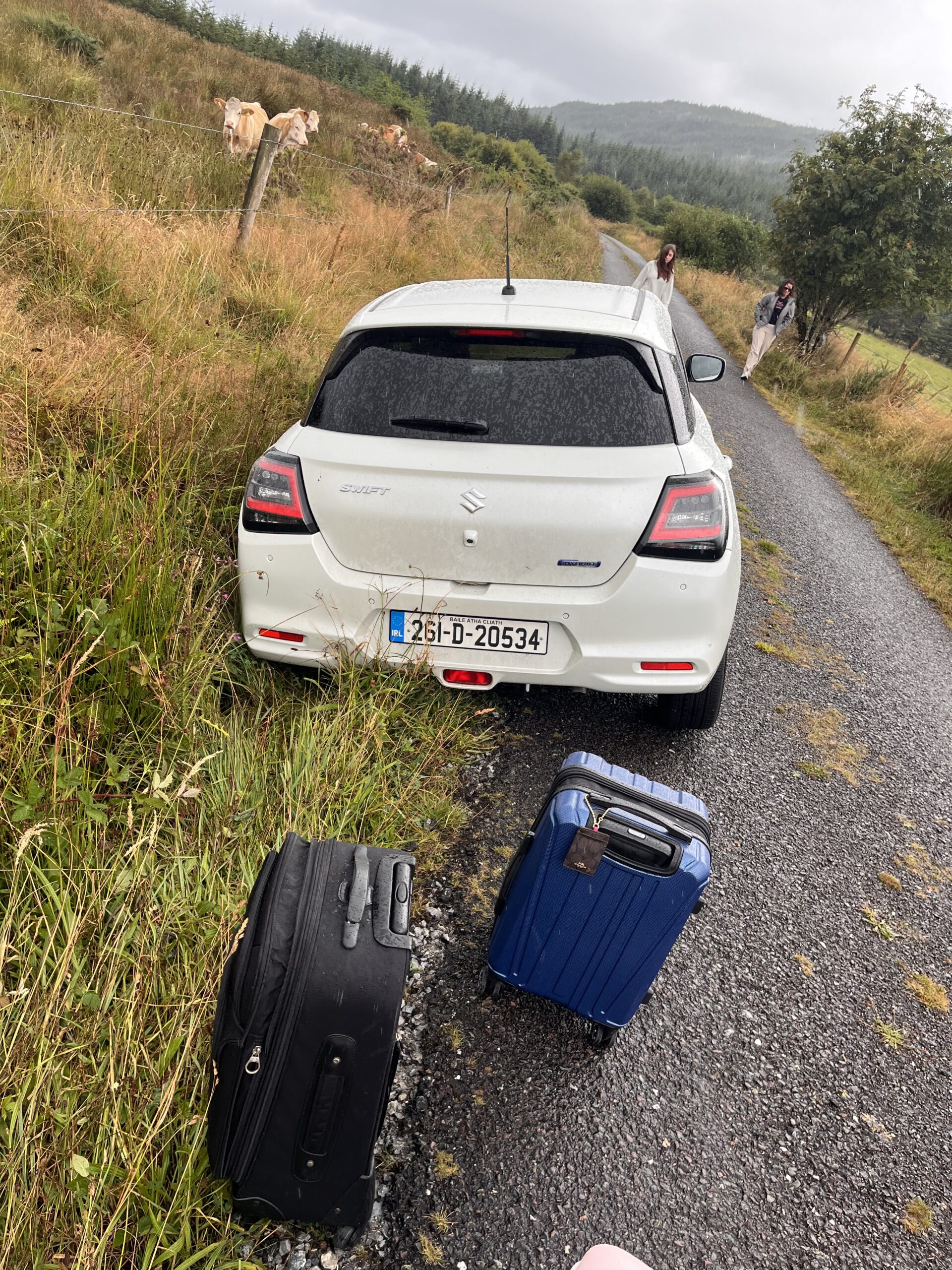
There was no room for us to get past the second car. The thing to do would have been for us to back up, possibly a half kilometer or so, we’d been taking note of the pull-off, and it was a while since we last passed one. Instead we tried to utilize the grassy verge on our left side to squeak past. Remember, this was a road that bleeding Google Maps though we should be able to navigate.

The grassy verge turned out to be some tall grass covering a ditch, and we got stuck in the ditch. Our beleaguered front passenger side was down in the trough and the driver side rear tire was slightly off the ground. Just as when we found the parking space immediately fighting our blowout, though, we were very fortunate here, too. A third vehicle came just as the dust was settling and it was driven by a local farmer who cheerfully back up and retrieved his tractor. With this, he pulled us out of the ditch and had us on our way within 20 minutes of foundering ourselves.

He was good at it, too. He said this was definitely not the first time he’d have to pull a car out of a ditch. We gave him all our cash —$ 7 — and hopefully this bought him a pint this evening. He claimed to have done many of these extractions, and did not act like it was a big deal. Still, he appreciated the pint.

Back on the road, we turned ourselves around at the next intersection and carfully retraced our steps. It wasn’t even that long before we got to Kenmare — if we had only parked facing the different direction at our last scenic view stop, we would have cruised right into town..

As it was, it wasn’t even late enough to check into our room yet. We had a quick lunch and then found an adventure to pursue. About 25 minutes away there was a place where we could take a short boat ride to an island of well manicured gardens. We’ve had good luck with both islands and gardens this trip, so it all made sense.

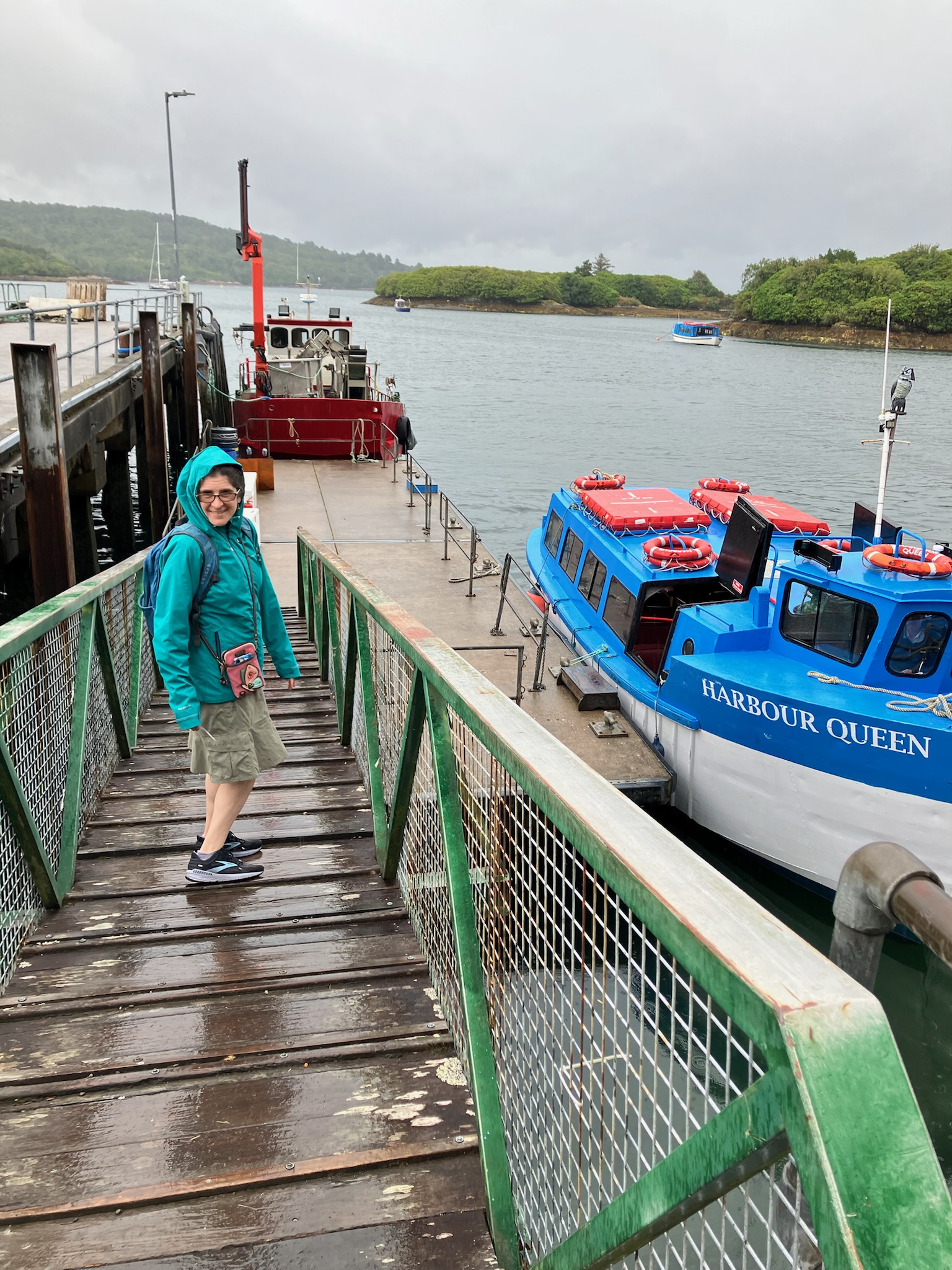
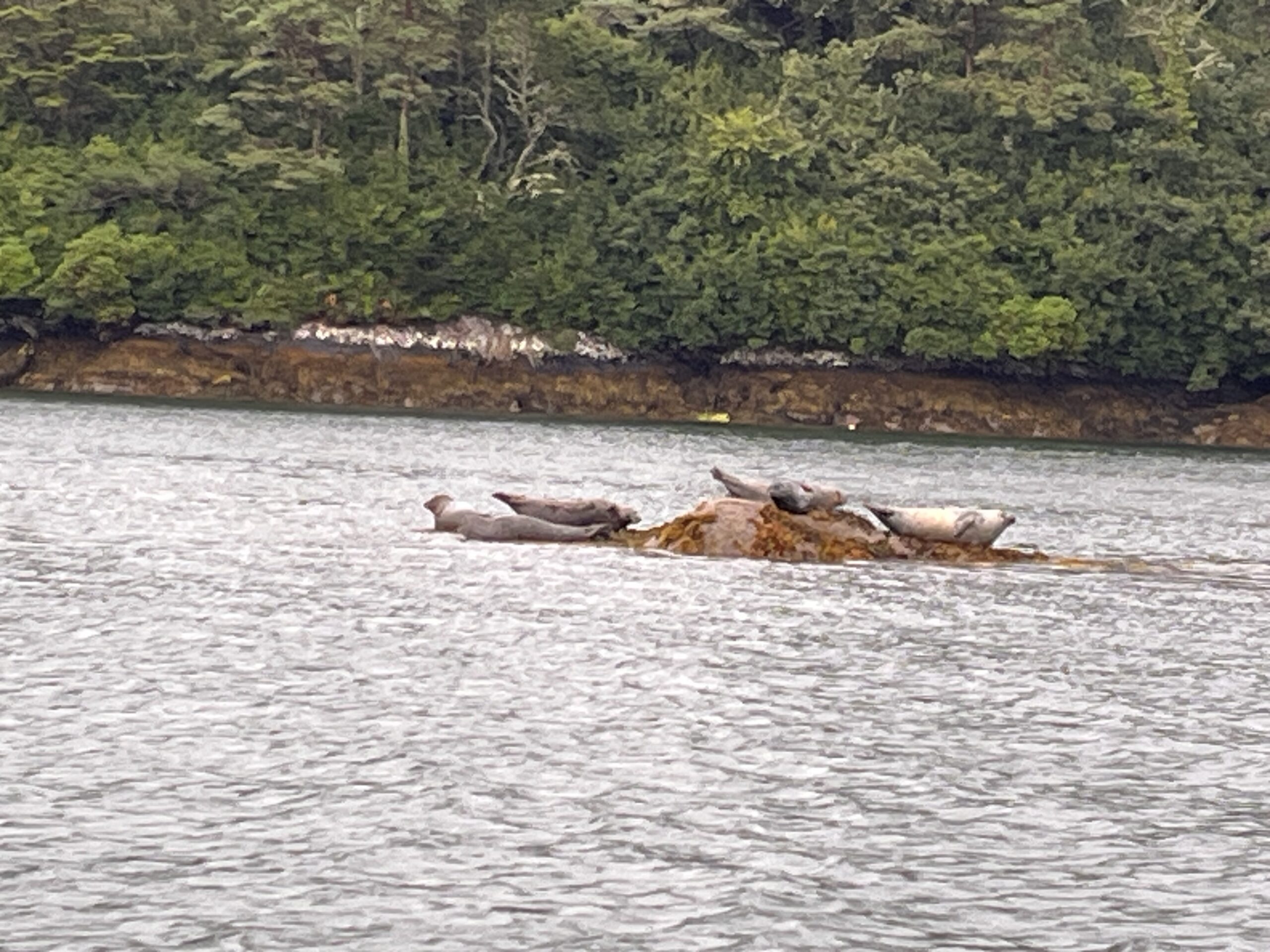
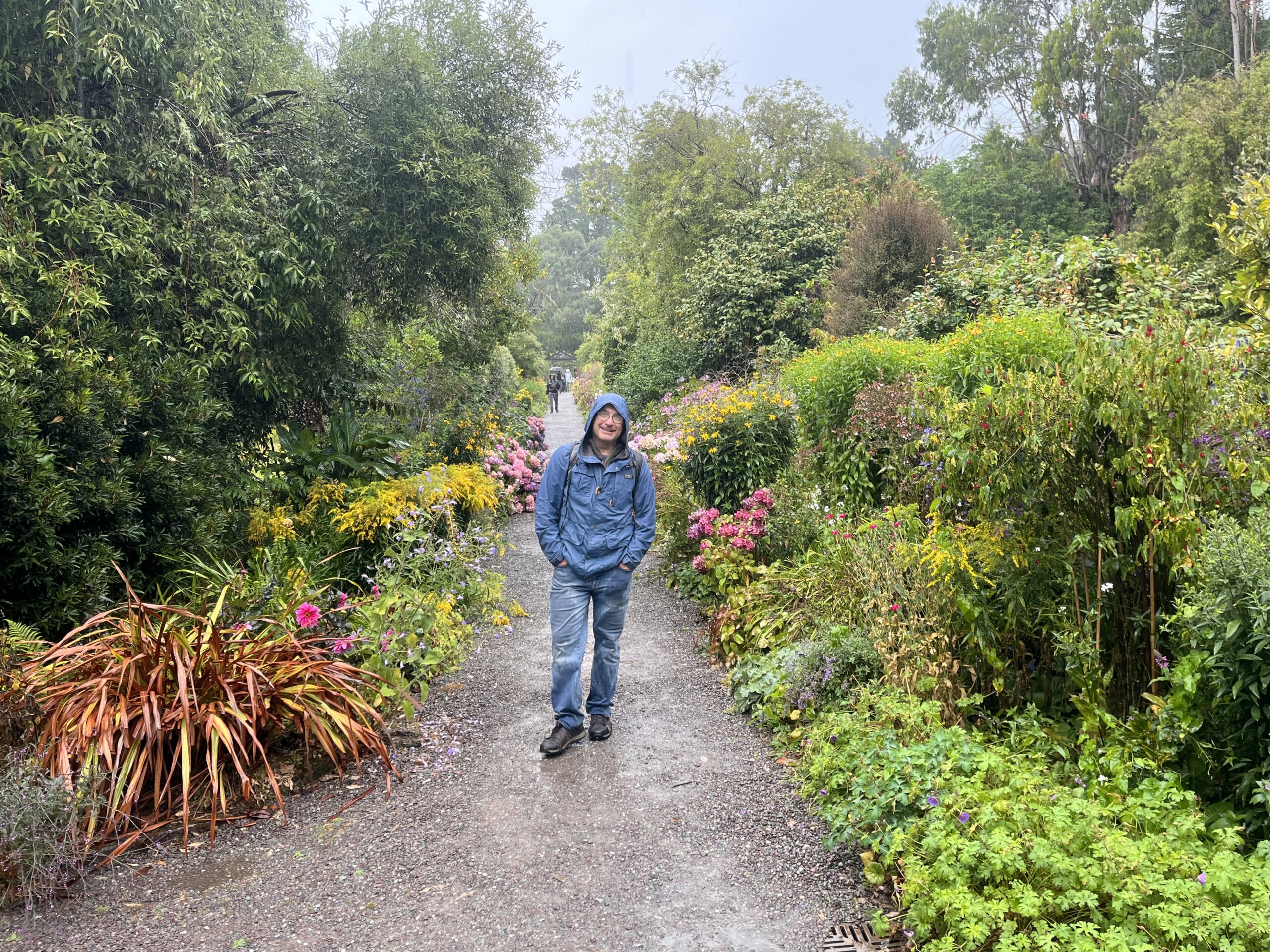
At Glengarrif Harbor, we found the Harbor Queen, and she took us to Garnish Island. It was only a 10-minute boat ride and it took us past a seal colony. The island has been owned by the Republic since the 1950s, and it has been well maintained for tourism purposes. The person who had the gardens made bought the island from the government in the mid-1800s — it had previously been used as a military installation and there is still a tower/fort in the one corner that is not landscaped for artistic purposes.

Another cool fact is that the island (and the harbor landing) are in County Cork. We’re really piling on the counties.

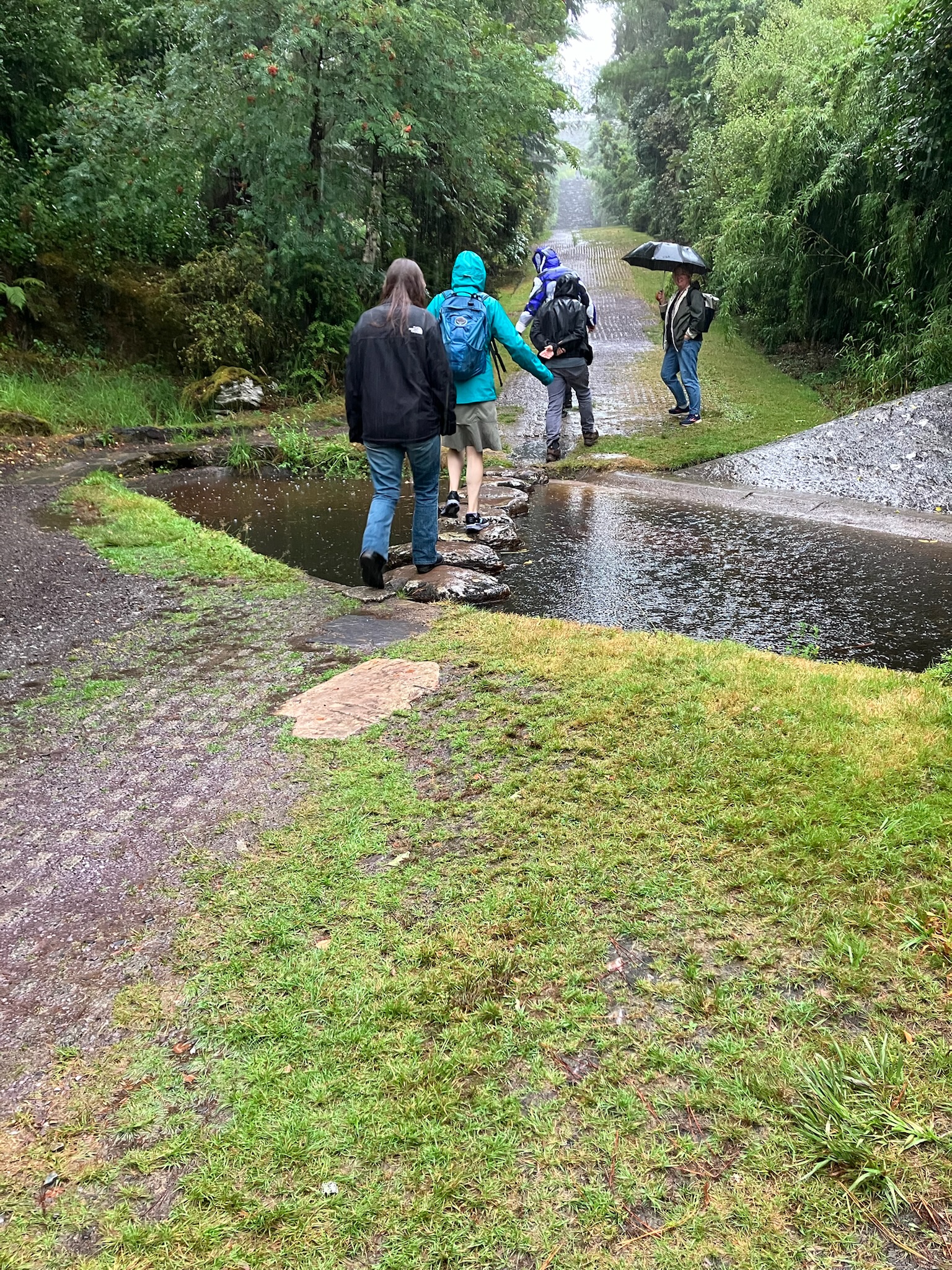
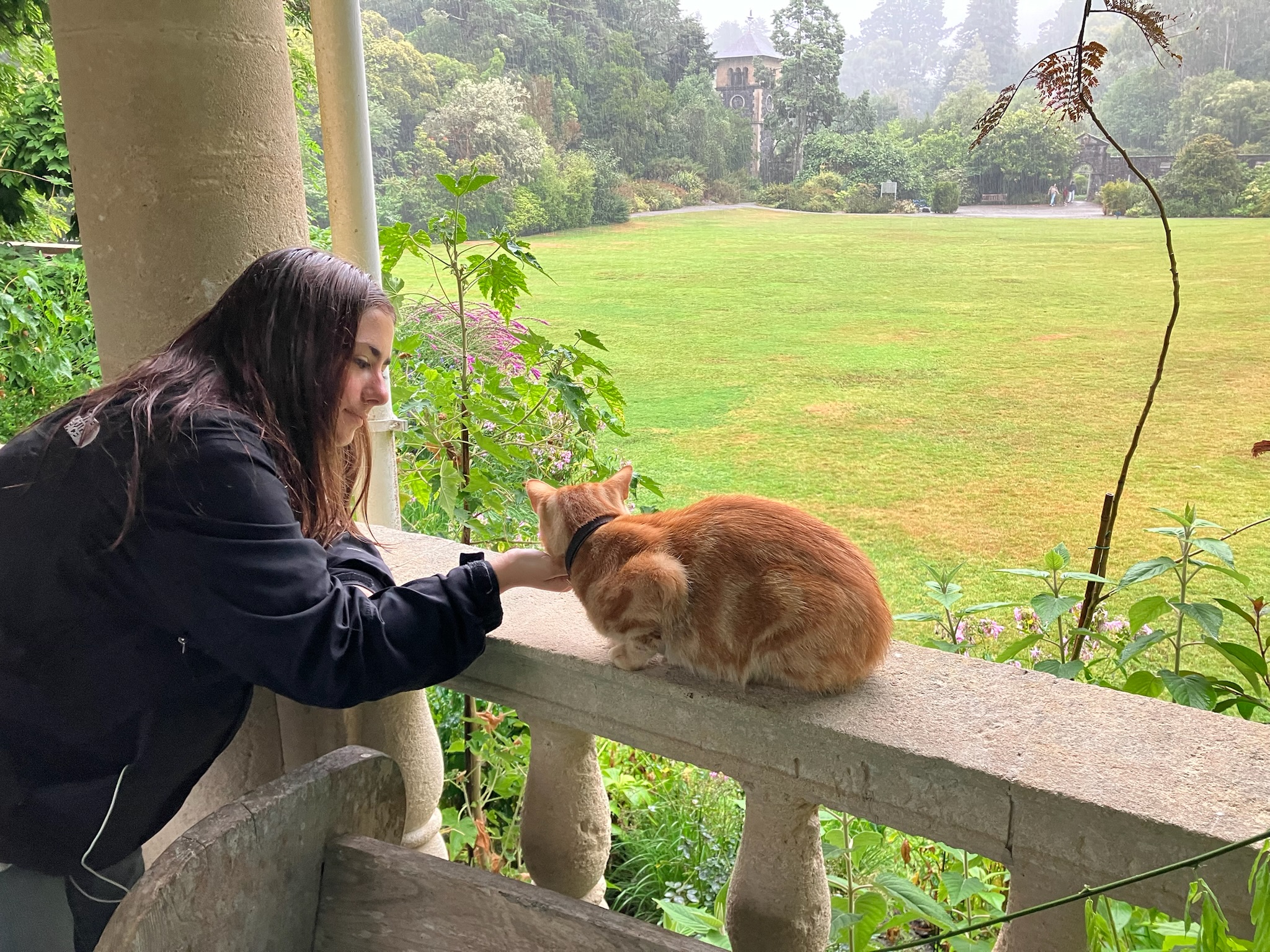
It is a beautiful island, and it rained heavily for almost the whole time we were there. This was really the only big downpour we’ve seen here. Sure, it’s raining all the time, but this was really raining. We were intrepid explorers, though, and we became very wet.

A day later, and many of our things are still wet. One unfortunate coincidence is that we got the most wet on this trip on the day where we’re only staying one night in this location. That means we couldn’t lay our wet things out for long enough to get dry before having to pack up again. It’s a little smelly in the car.

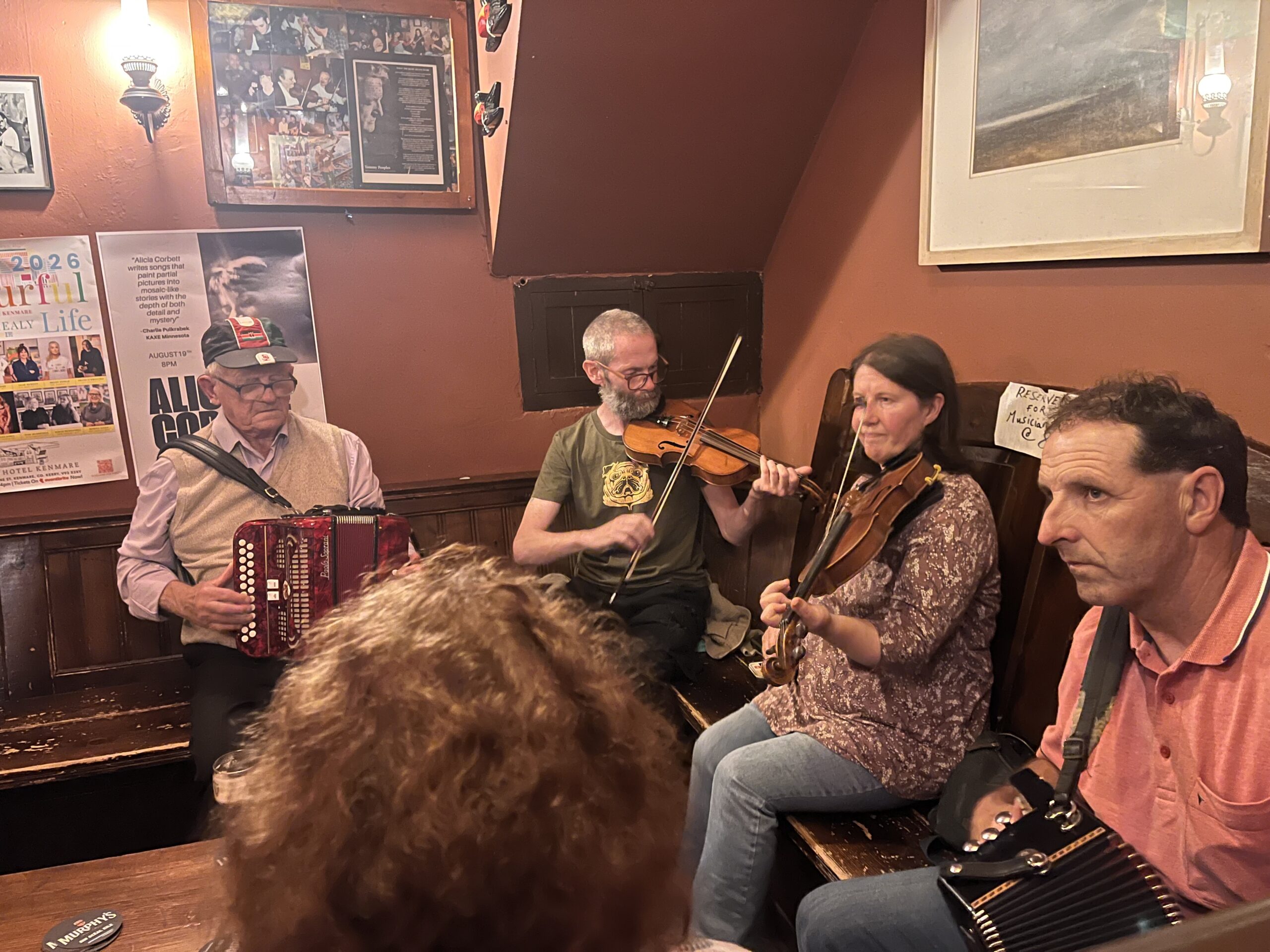
But that’s not Kenmare’s fault. The town has even provided us with a four-minute walking path to connect the city center with the neighborhood where our inn is. We made it into town for dinner and then for an Irish Cream dessert in a pub where a local music session was going on.

Then we got rained on again as we walked home, doubling our supply of wet clothes.

In the Burren with time to burn

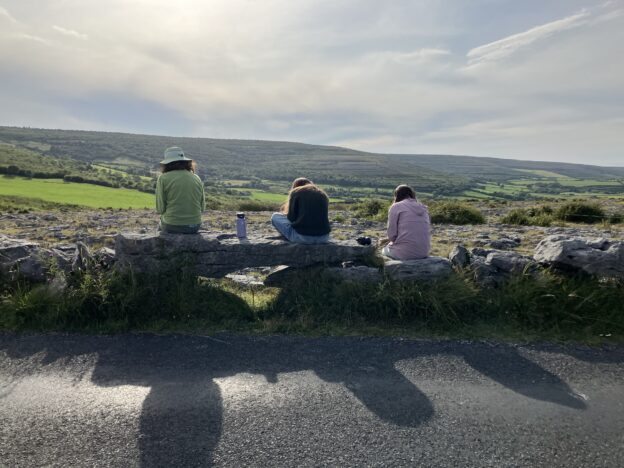
Yesterday’s return trip from the Aran Islands not only gave us a wonderful perspective of the Cliffs of Moher, the boat ride also give us a preview of the landscape we would soon be driving through, the unique rocky terrain of the Burren in County Clare. This section of the coast is where Ireland goes from green to gray. Its limestone hills remain largely uncovered by vegetation — it is as clearly visible from the ferry as the cliffs were. Up close, the landscape is supposed to be suggestive of walking on the moon.

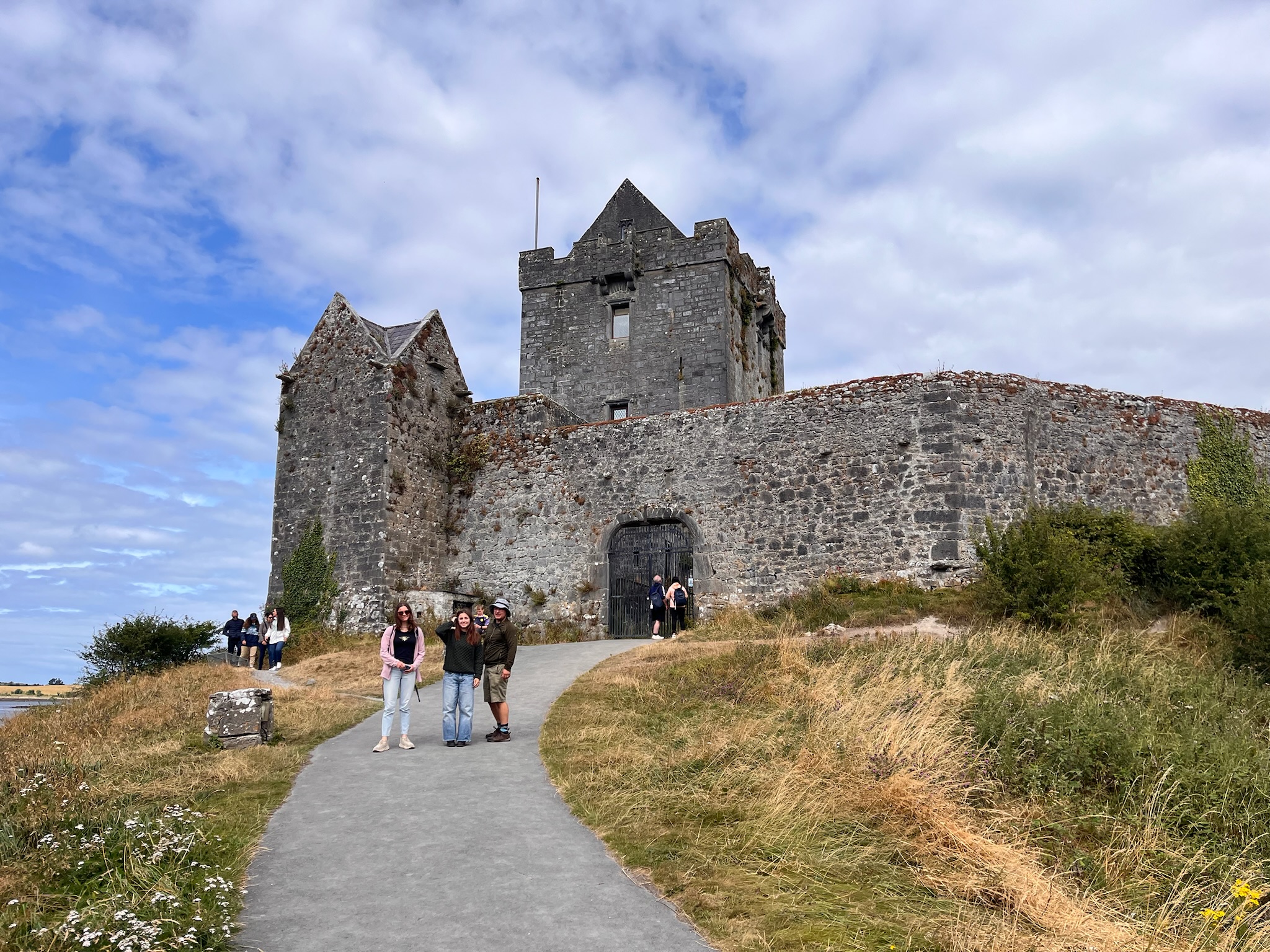
We snuck in a castle this morning, too. It was conveniently by the side of the road.

But, we wouldn’t get to see it too closely. We would drive through the Burren, but not stop for any appreciable time. Today’s time has been doled out in such a way that there would be a fair bit of driving to get us to Killarney with little time for stops in Clare.

Economics factored into our planning: We selected our major stop of the day based on the fact that it would provide us with three separate and varied experiences. How separate and varied? Here’s what the Aillwee Burren Experience offered:

  1. Cheese tasting (the cheese is made right there on site)
  2. Bird/raptor education and entertainment show
  3. Guided tour of the Aillwee Cave
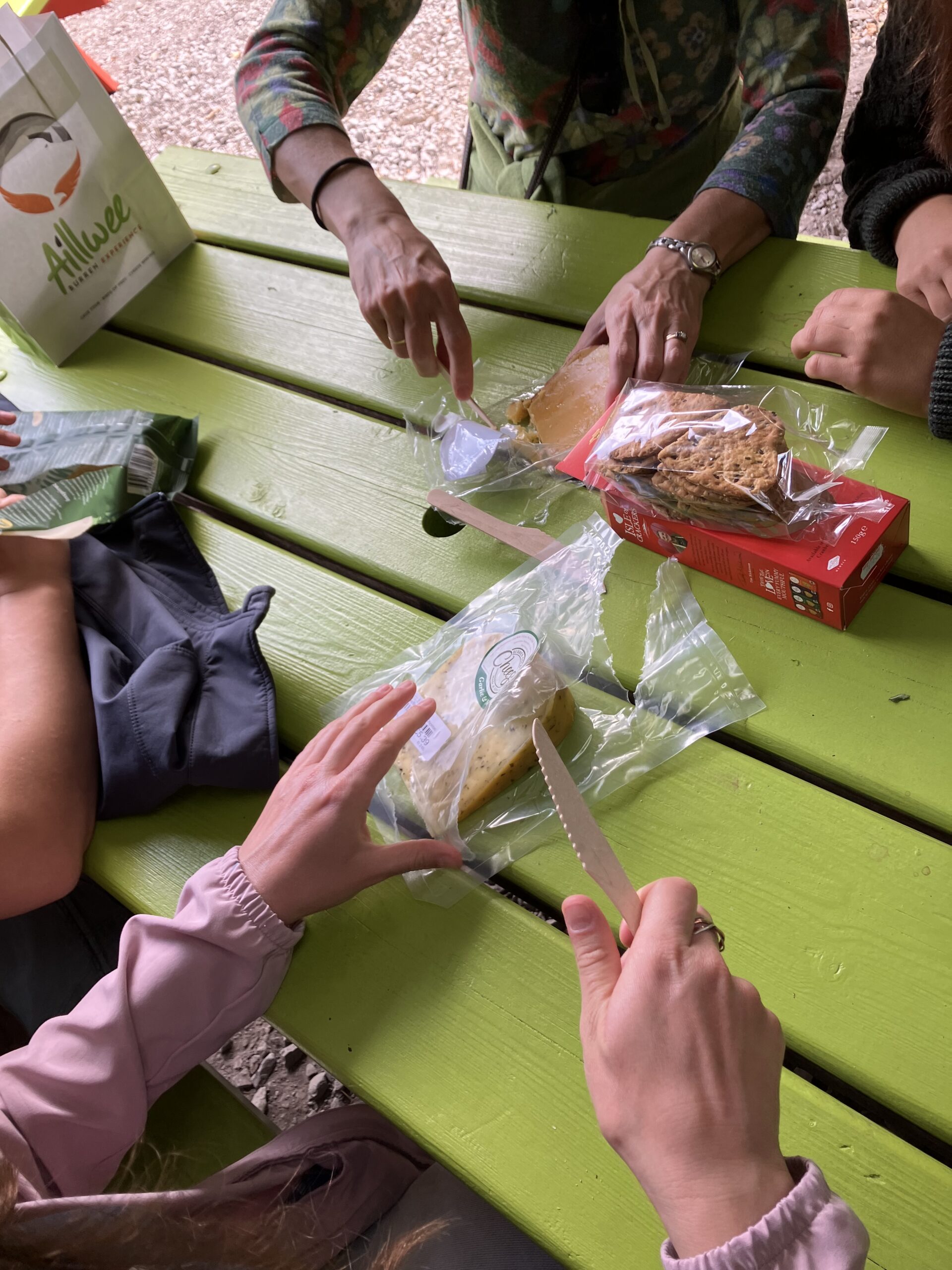
Cheese feast

That’s not a bad list of options, and none of them disappointed. Though, one might expect there to be a greater presence of sheep milk cheese in the line up of locally made cheeses. The farm shop here did sell sheep cheese, but it was not included in the tasting, and we played it safe by getting two of the standard cows’ milk cheeses, which were pleasant to eat with a Gouda-adjacent flavor. We had some with crackers for lunch.

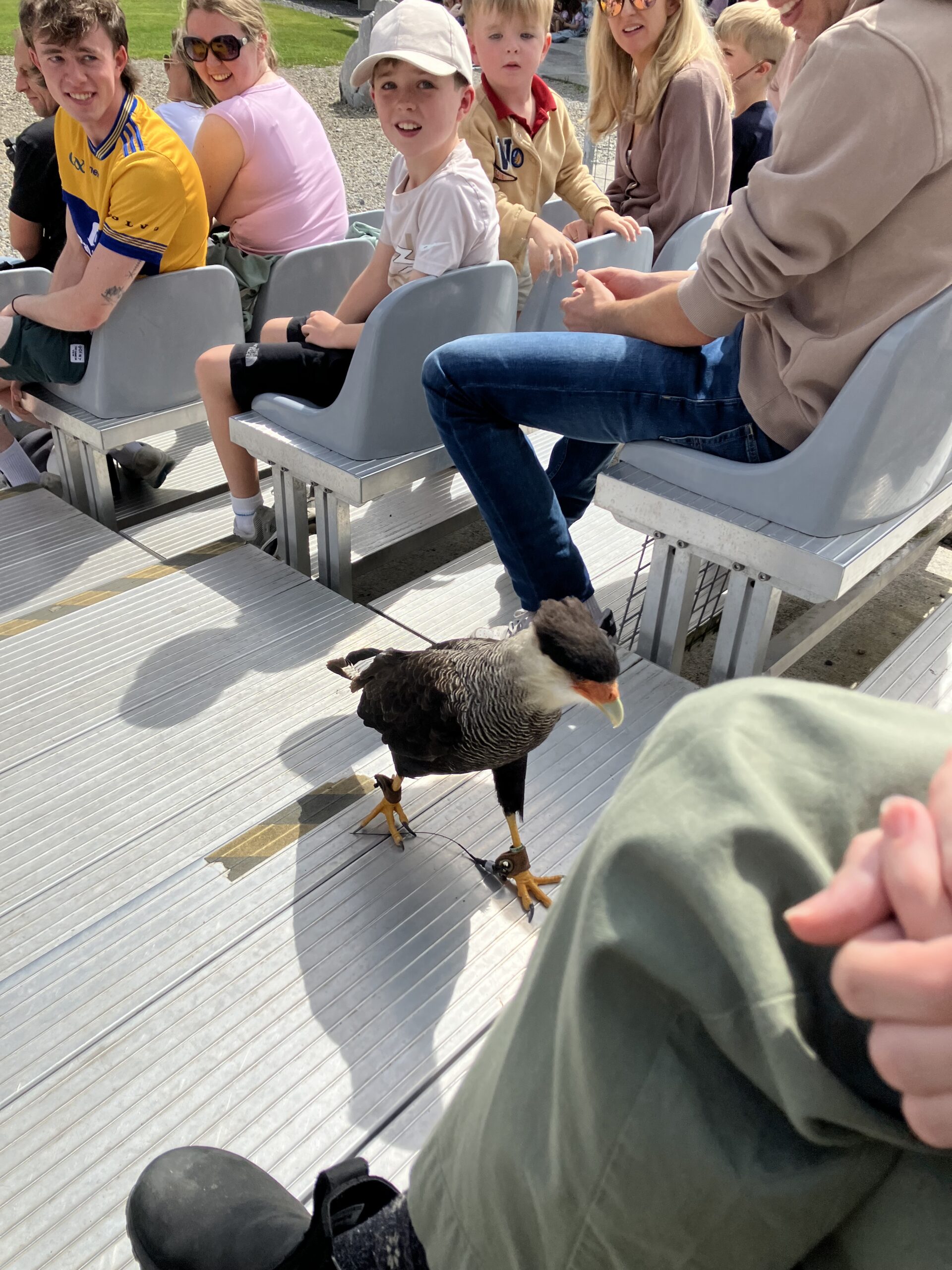
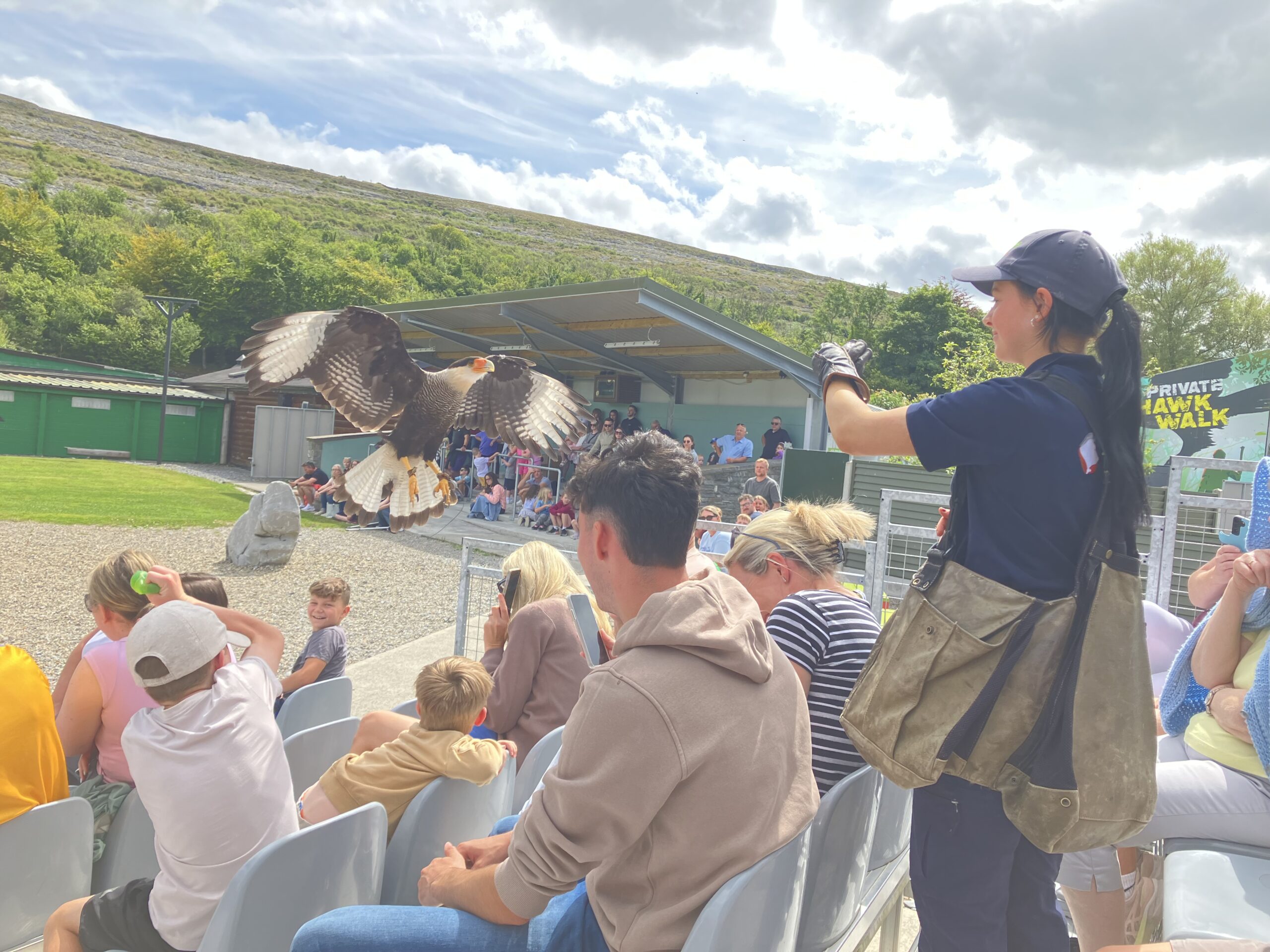
The bird show was unexpectedly interactive, with kites flying inches above the audiences’ heads, and caracara birds hopping around in the stands browsing among our feet. Selected audience members got picked to put on a glove and hold the birds (the lineup also included a snow-white barn owl), but none of us got selected, even though someone else in our section of the stands go called on the hold birds twice.

This bird is actually looking for things to steal.
Note the audience members scrambling for cover.

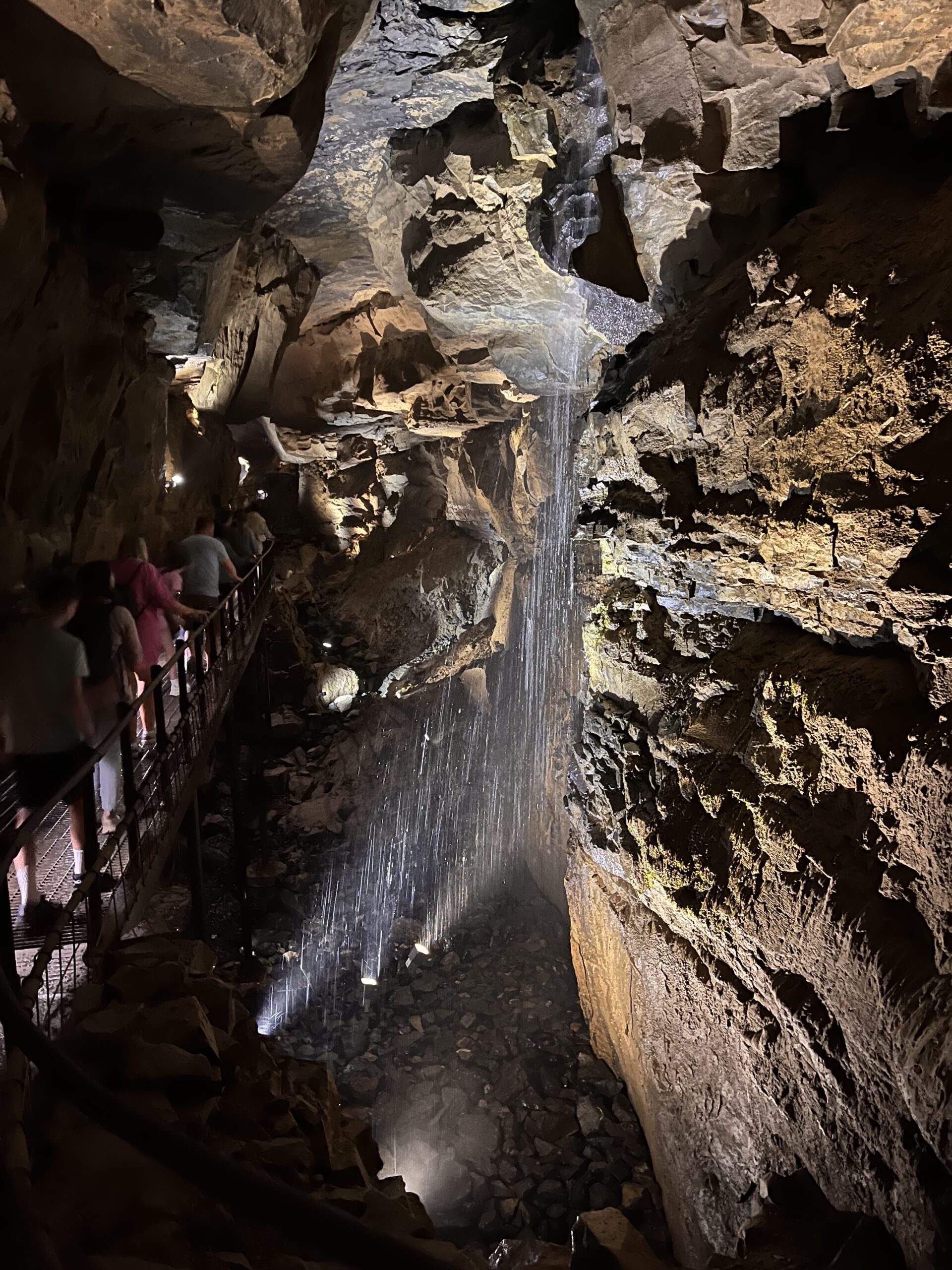
The last part of the trinity was a standard caving tour experience, and as such was reminiscent of earlier family trips when we were going into caves practically every other day.

There was a chance for a fourth adventure here. Above the cave complex rose the rocky landscape of the Burren. The Aillwee cave is actually inside one of the rocky hills. A trail led off between the bushes of the lower level and onto the limestone striations above, but we knew we had a long drive and we didn’t feel like we had the time to wander around too much. Unfortunately, the Burren was not ours to explore.

In the cave

One of the reasons we were eager to be on the road was because our inkeeper in Killarney seemed to be an interesting character. He texted Jen a few days ago to let her know that he was baking us a loaf of bread. This is fairly singular in our experience with inkeepers. We texted him this afternoon to ask about a restaurant that we might make a reservation at (we’ve recently had trouble getting into places amid the crush of the Galway Races crowds, so we wanted to be careful). Our man was on the job.

So we set off from three-pronged adventure park (I do consider cheese tasking an adventure — a culinary adventure), and drove through that mysterious landscape.

Until we couldn’t drive any more because we had developed a flat tire. This situation seemed somewhat dire — we were rather in the middle of nowhere (not a lot of cities, or even houses on the lunar Burren landscape), and there was not flat tire in our boot. Cars just don’t have them anymore.

There was a substantial good fortune involved as well, though. The blowout happened only a few meters from an expansive parking area for a section of the Burren National Park. Several people were parked there and offered us help — though none of them had a tire or even a spare to lend. Jen called the roadside assistance number that rental car company offered and we waited.

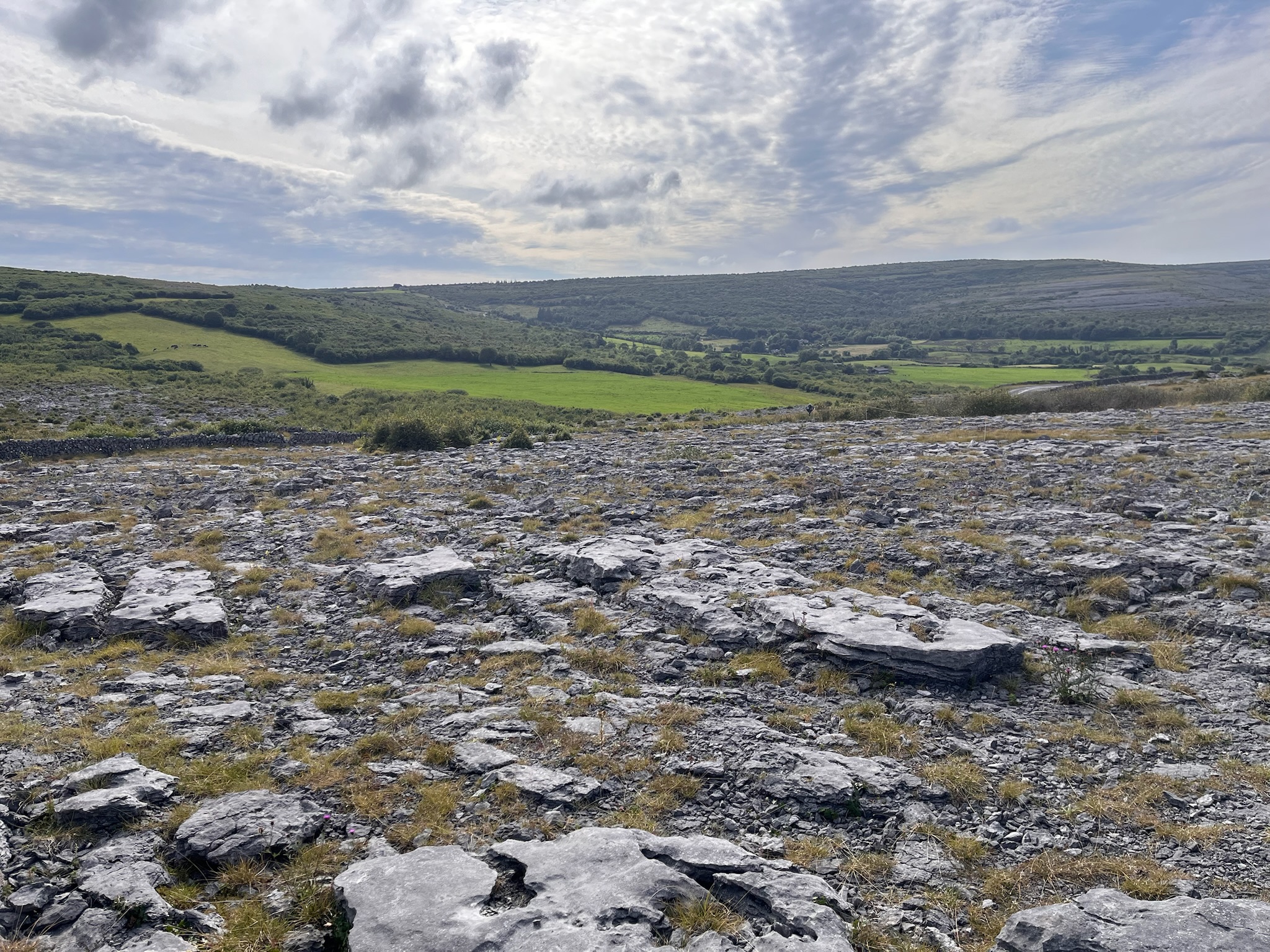
Hey, here was our chance to explore the Burren! It’s pretty rocky!

Note the limestone

This episode ended up taking several hours to remedy (even though Jen told the assistance person on the phone that we had no spare and our current tire was likely unusable, they sent someone out in a van to confirm those two points — there’s two hours waiting right there), but we eventually got back on the road. We texted our inkeeper to let him know that we no longer needed the reservations, as there was no longer any chance that we would reach Killarney during dinner hours. We actually had to be quite direct in our driving to make it there at a reasonable hour at all. The innkeeper had noted that he would need to show us around the place when we got there, and we didn’t want to keep him awake any longer than necessary.

We ended up getting food for a snack/dinner at a convenience store, and we were surprisingly happy about it. We’ve been eating in a lot of restaurants lately; convenience store food was a rare treat. It was right around 11:15pm when we finally rolled into Killarney.

Note from Jen: Bob is being very kind here by not mentioning that the flat tire was likely caused by me hitting a rock or something while veering off onto the shoulder of the road, when an oncoming car came zipping around a hairpin turn very close to, or maybe over, the center line. The roads here are quite narrow and it’s hard to avoid the impulse to veer too far to the left, given that the bulk of the car is on the opposite side than what you’re used to.

The lay of the land in Galway

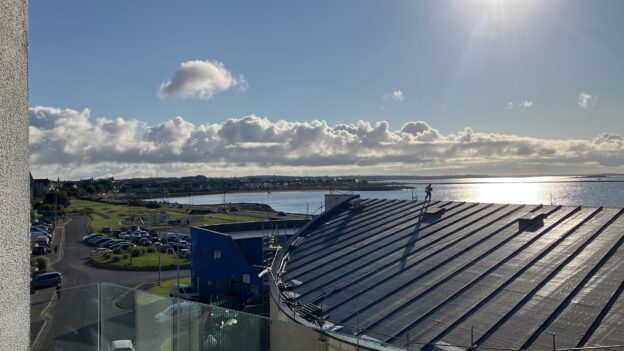
This would have been a good day to get an early start. Our fourth-floor balcony showed blue skies out above the aquarium (which is immediately beneath our balcony), Galway City (which is off to the left, a little in the distance), and Galway Bay (which makes up most of the rest of our view). I could study a lot about the lay of the land from the balcony, but we could not really get into it until we had a quorum of people who were awake and ready. And yesterday we did climb a huge mountain, so everyone feels like they have the right to sleep in today.

The early morning hours hint at a remarkably favorable weather day — it’s even hot on the balcony from the direct sunlight at 7:30 — but we cannot take this sort of thing for granted. Sure enough, by the time four of us are ready to go out and explore, clouds are slowly starting to gather.

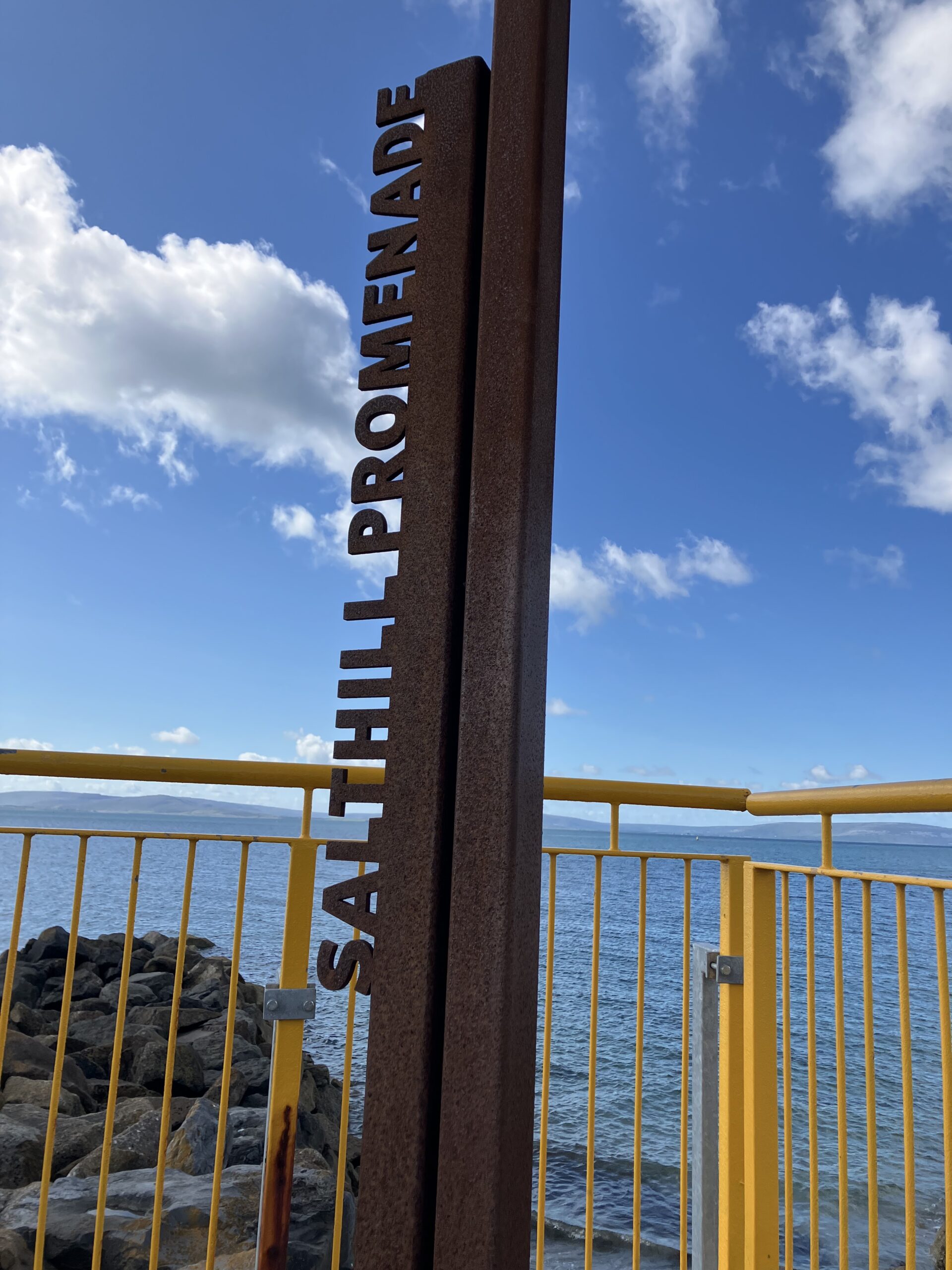
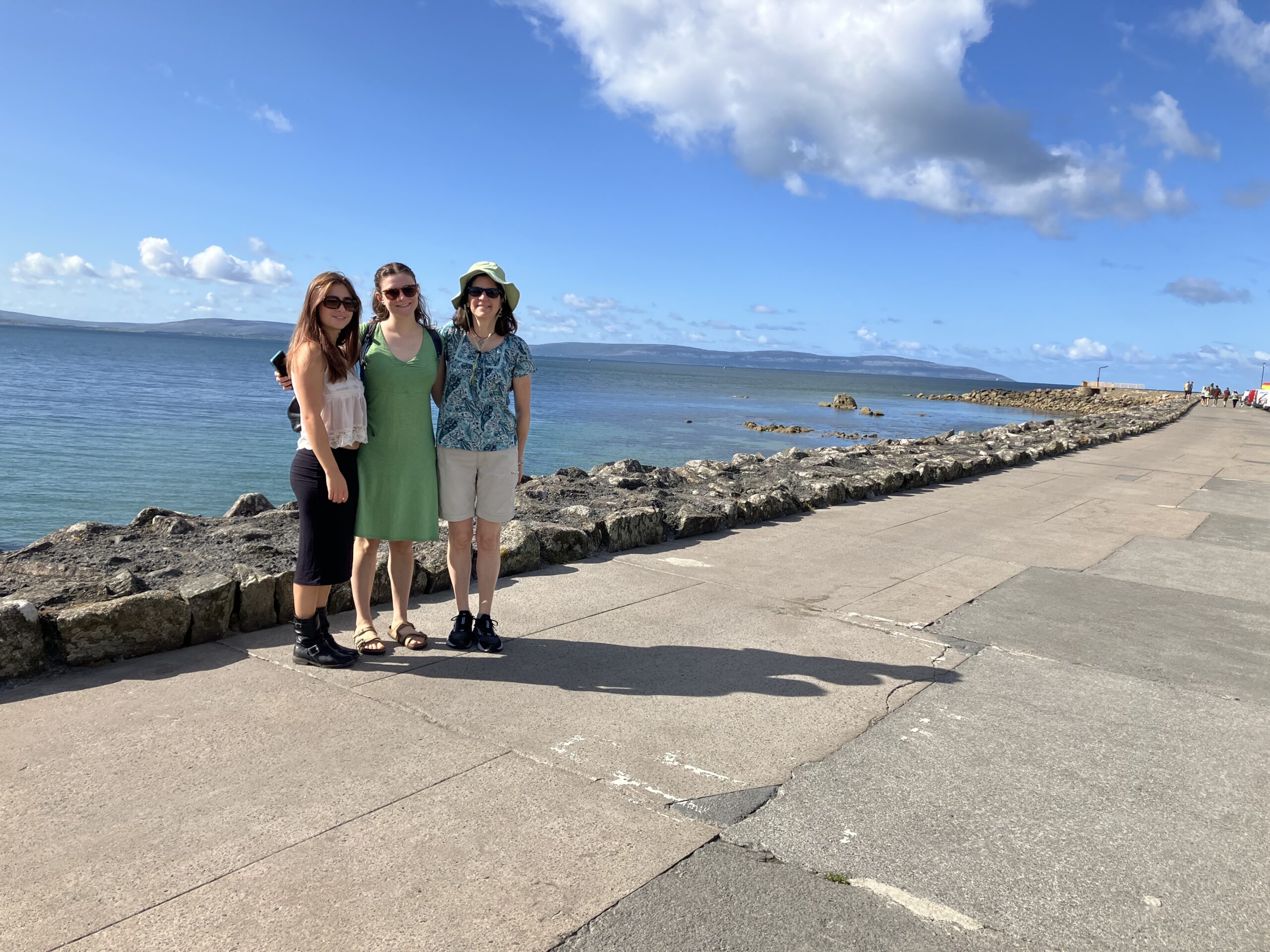
Fortunately, we are steps away from the Salthill Promenade, which stretches for miles along the shore of the bay, and we are able to pick out some a few must-do activities as we explore. Here’s a truth about Galway, though, if you don’t plan your time wisely, you’re not going to be able to do all the things you want to.

And we’ve already gotten off to a late start!

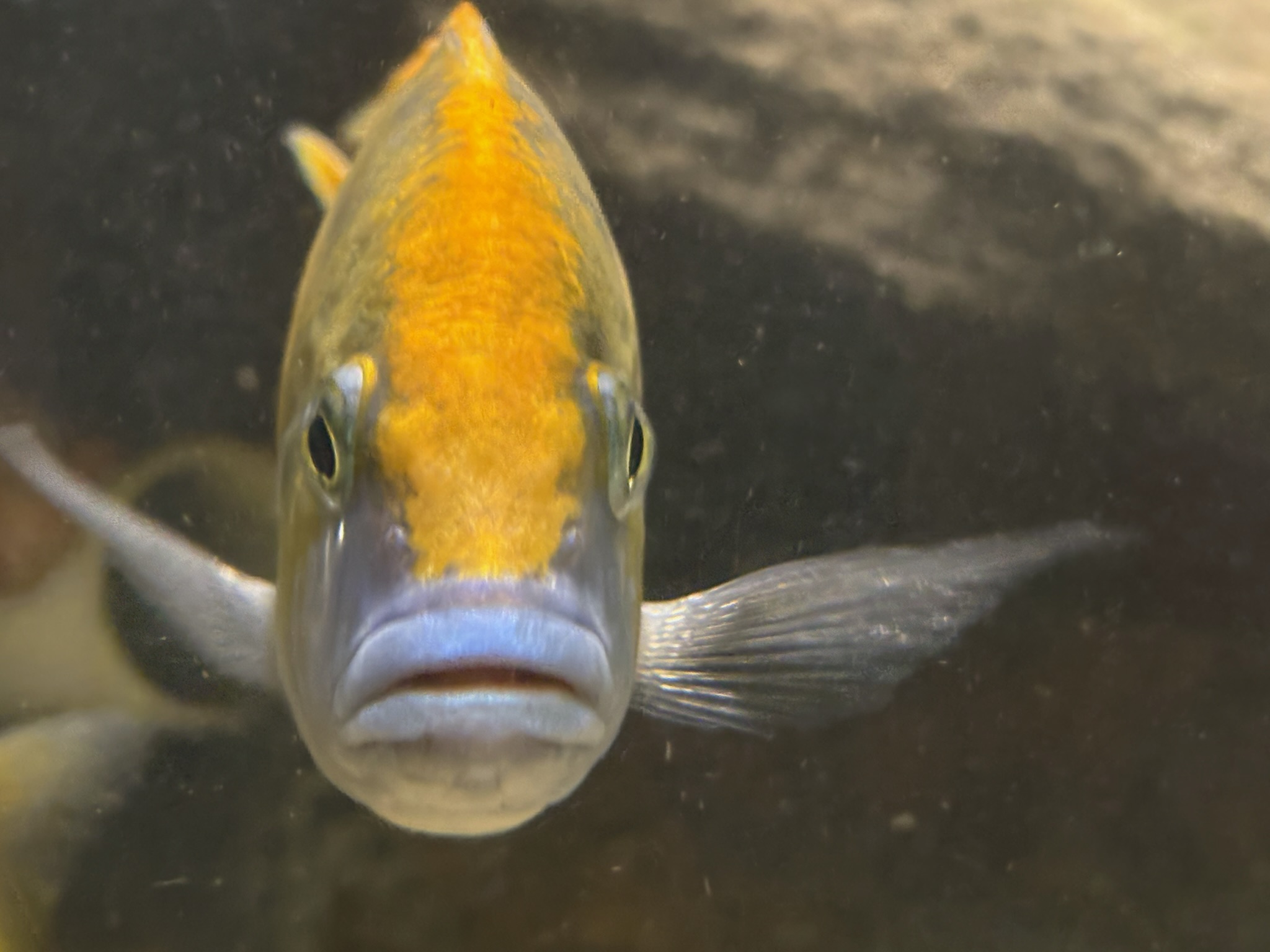
Stop 1 (as soon as all five of us are ready). The aquarium, which is very few steps from the door of our building. It is also a nice way to spend an hour or so. Interesting fish and such.

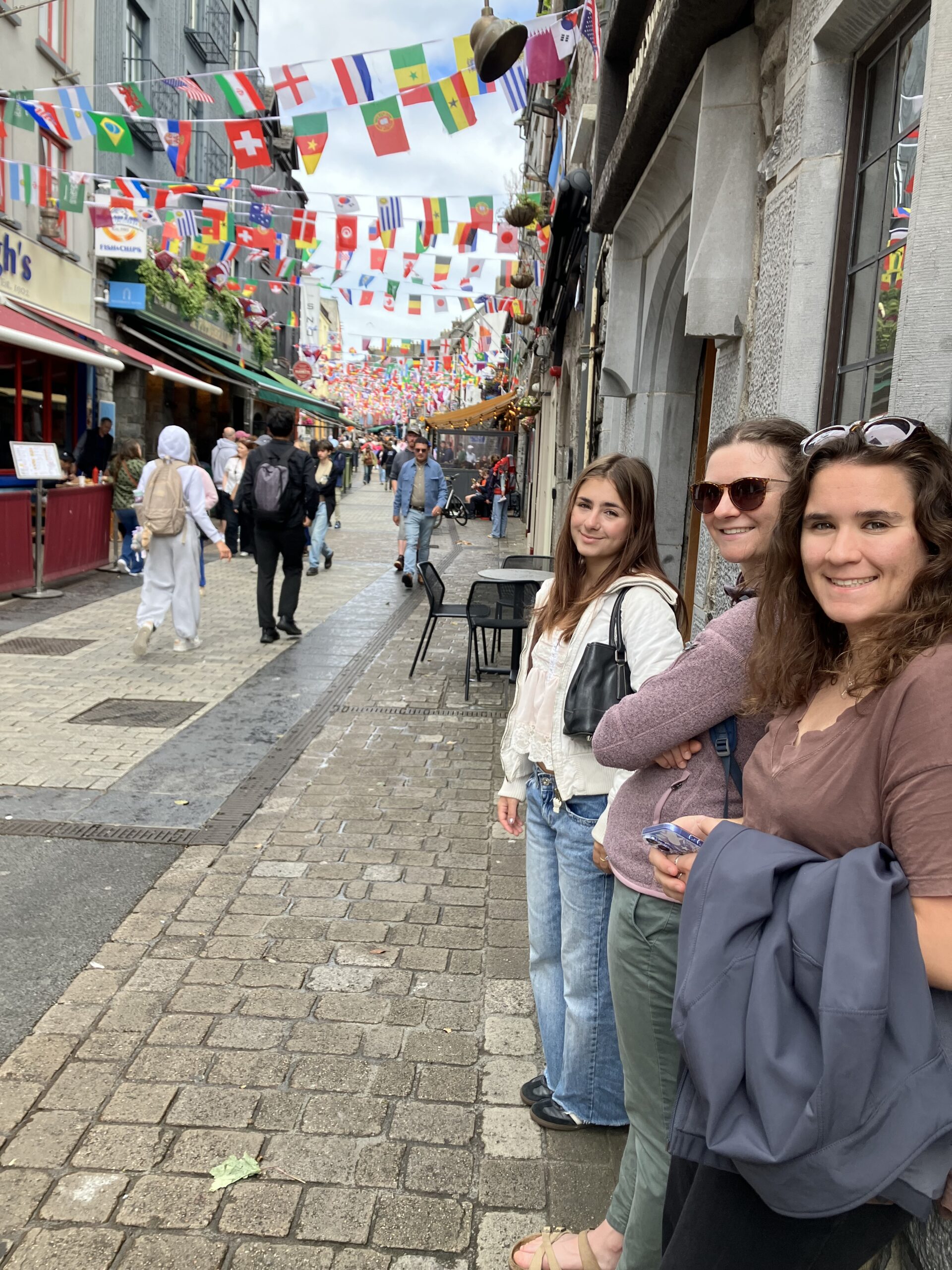
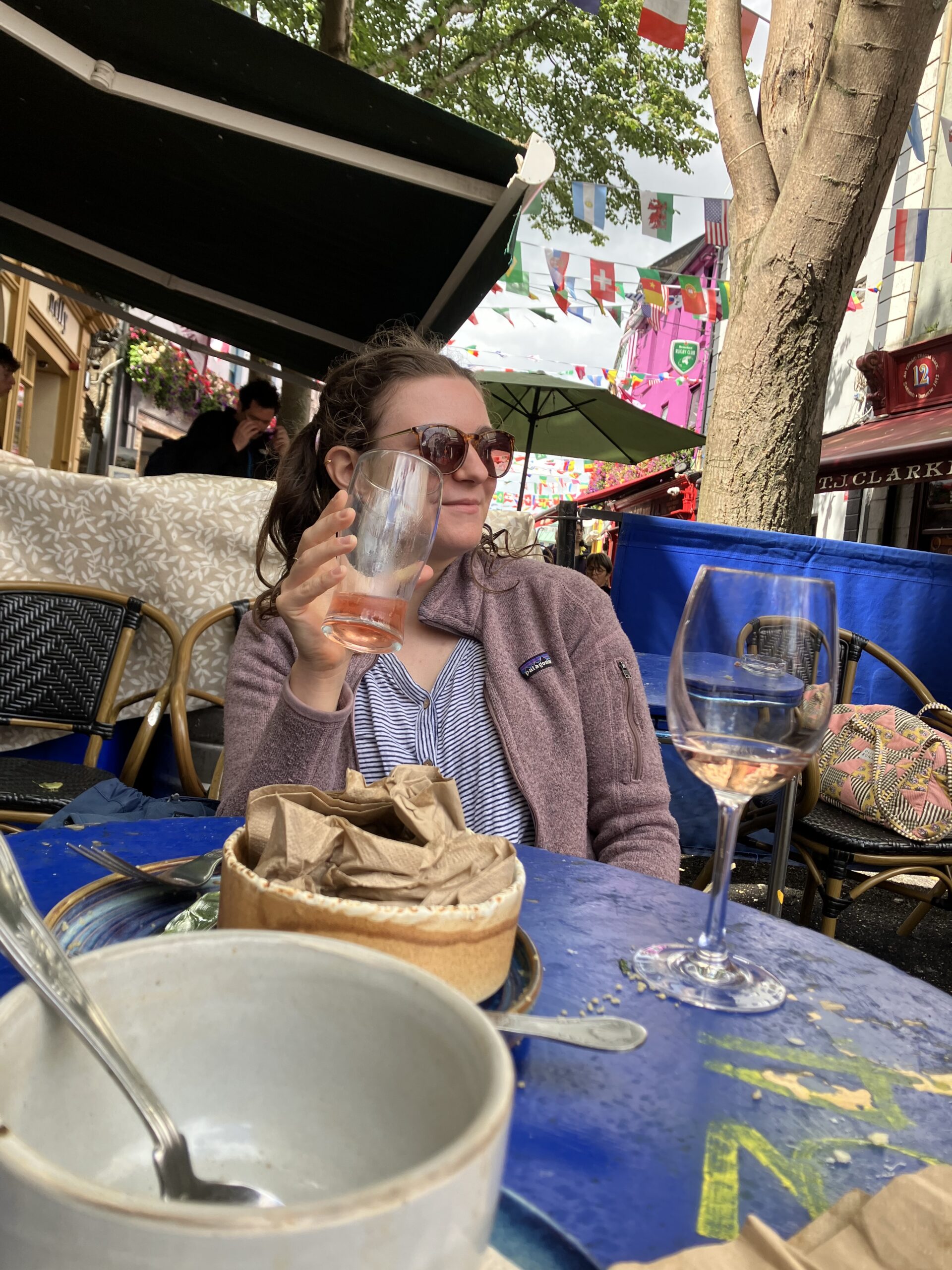
Stop 2. The downtown, which is well-visible from our balcony and only a 20-minute walk from the aquarium. The downtown that we find is bigger than Westport and Sligo, more tourist friendly than Limerick. There is an intricate canal/river system that meets the bay right about where we enter the city. A multi-colored row of houses lines one edge. A very festive pedestrian way branches off in the opposite direction. Which way will we go? We’ll do both, of course. Walking around cities is one of the things we do best, and Galway is a great place to walk around. We even sat outside a pub with some snacks and drinks and watched as most of the city seemed to pass us by.

This happens to be the time of the Galway Races Summer Festival, which is a week-long event where the fun includes, but is not limited to, horse racing and betting. Today was “Most Stylish” Day, or perhaps “Ladies’ Day.” There were many well-dressed people walking around either on their way to or after having visited the race track. It was rather like prom night, but on a larger scale given that it was people of all ages dressed up.

Step 3. The mysterious island at the end of a long causeway into the bay. We could see the causeway this morning from our balcony. It might be the only slight disappointment that Galway had for us today. The mysterious island at the end of the causeway is a water treatment plant.

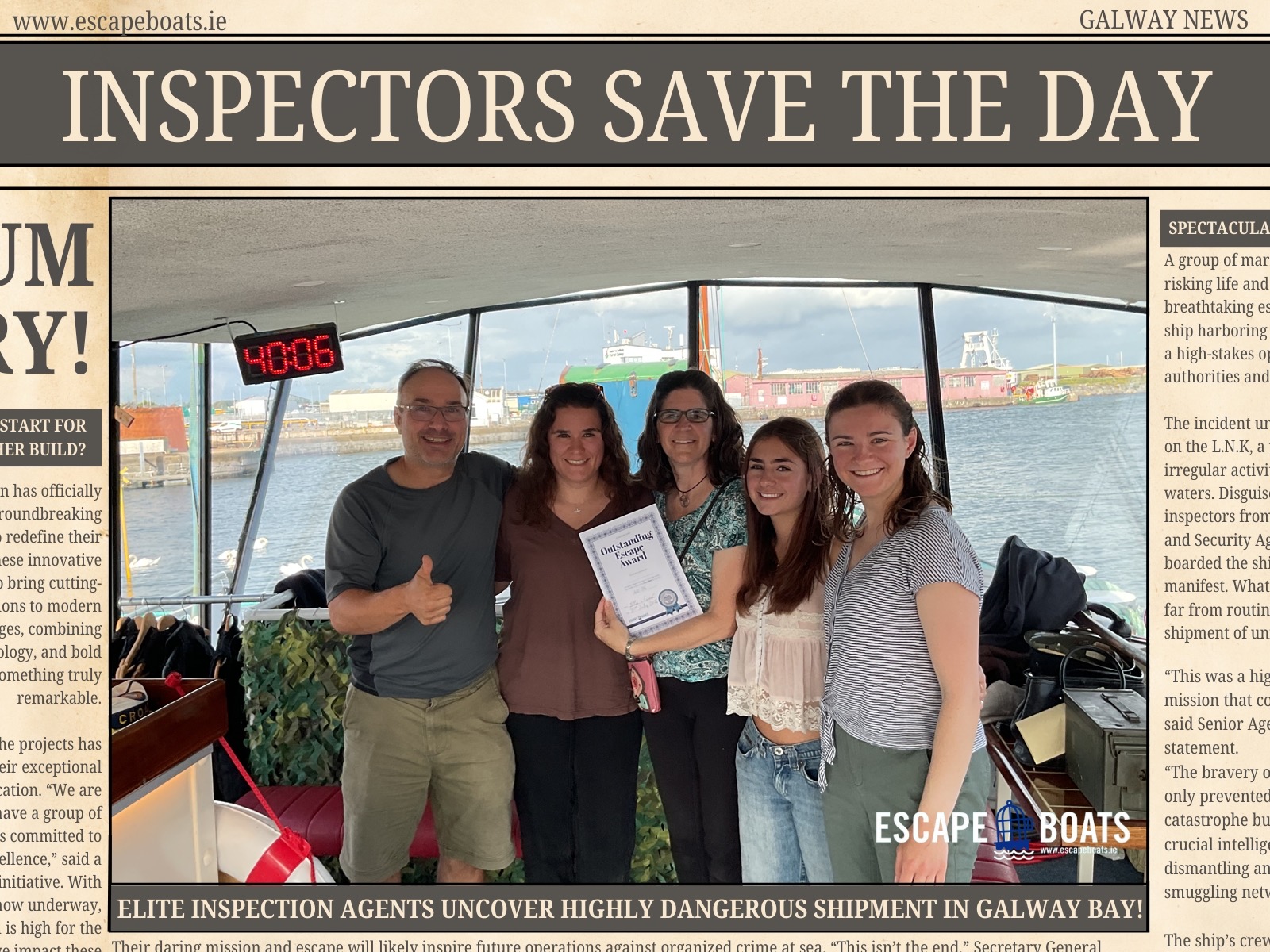
Stop 4. We’ve never done an escape room on a boat before. What’s that like? It’s pretty cool, though we can’t share too much about it because someone reading this might want to try it for themselves some day. I can say that there are a lot of cool props in this one, including an entire tank — on a boat! Is that giving away too much? I don’t think so. We got a certificate for finishing in such good time. I don’t think they give those to just anyone.

Stop 4. Dinner. We got Italian, and wasn’t the restaurant filled with dressed up people — mostly groups of young women in all styles of dresses. As the evening progresses, there is ever more style on the streets. We’re practically getting run over by style by the time we’re walking back to Salt Hill.

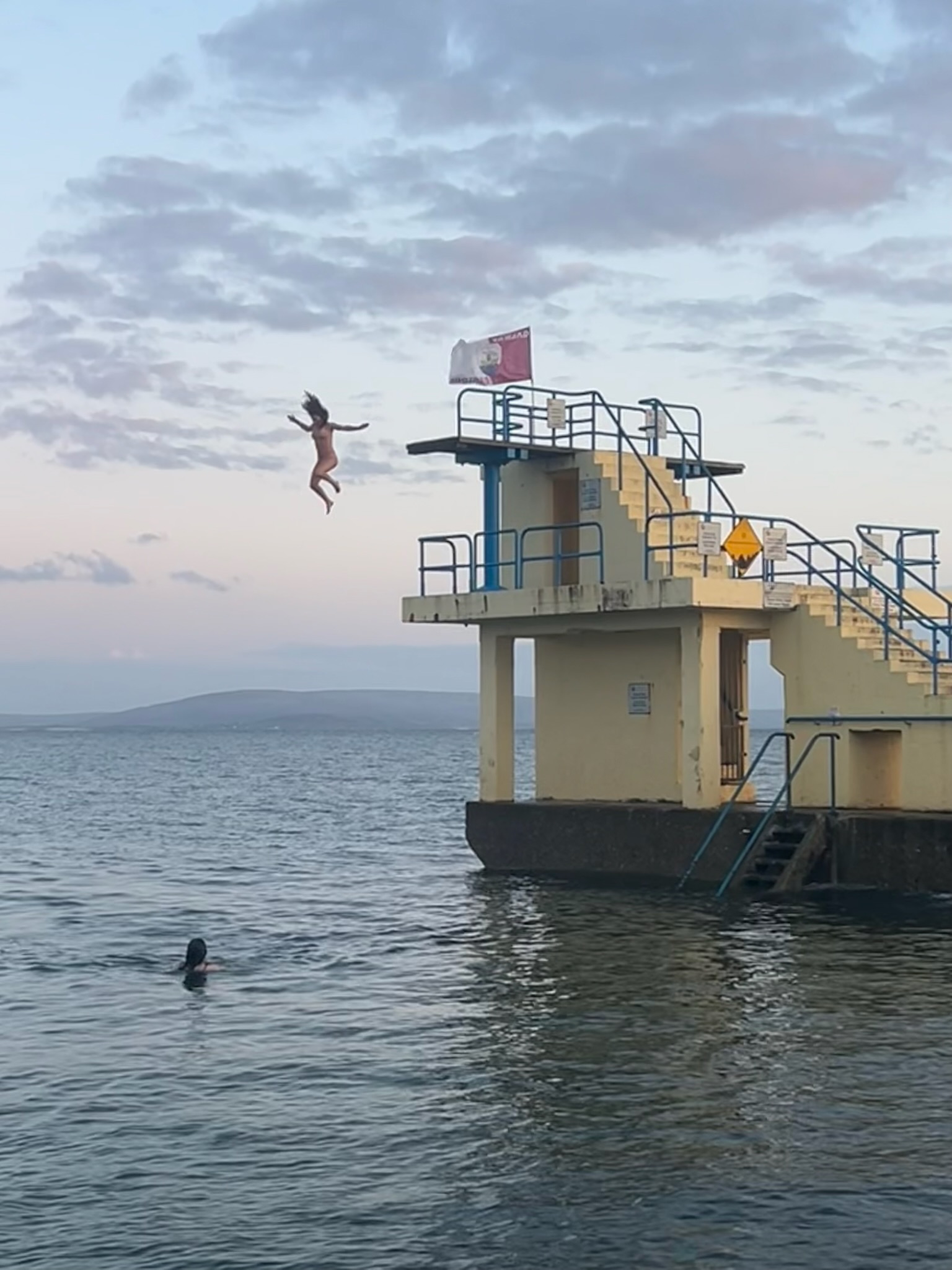
Step 5. Jump in the water off a large tower. We found the Blackrock Diving Tower during our morning walk, but Zoe and Lanie had to wait all day for the tide to come in. It did not look like a good idea at low tide. Of course, the sun was mostly a memory by the time we came back this evening, so it didn’t look like a good idea to jump now for a totally different reason. But this reason did not stop them.

The West of the West

Today, while most of County Mayo slept off its second day of championship hangovers, we set out to maximize our remaining time here in this lovely and inviting section of the country. Our itinerary took us to the island of Achill, whose windy roads constitute some of the best views along all of the Wild Atlantic Way, particularly when it’s not raining and fogged in.

We could see clearly now.

It did rain today, though, so we had to settle for more dramatic mist and speculation for much of the drive. During periodic breaks in the weather, though, we could see quite well, and we made several stops at pull-offs to explore seaside fields, peer over cliffs, and converse with roadside sheep.

This is all leading up to two big Achill Island finales.

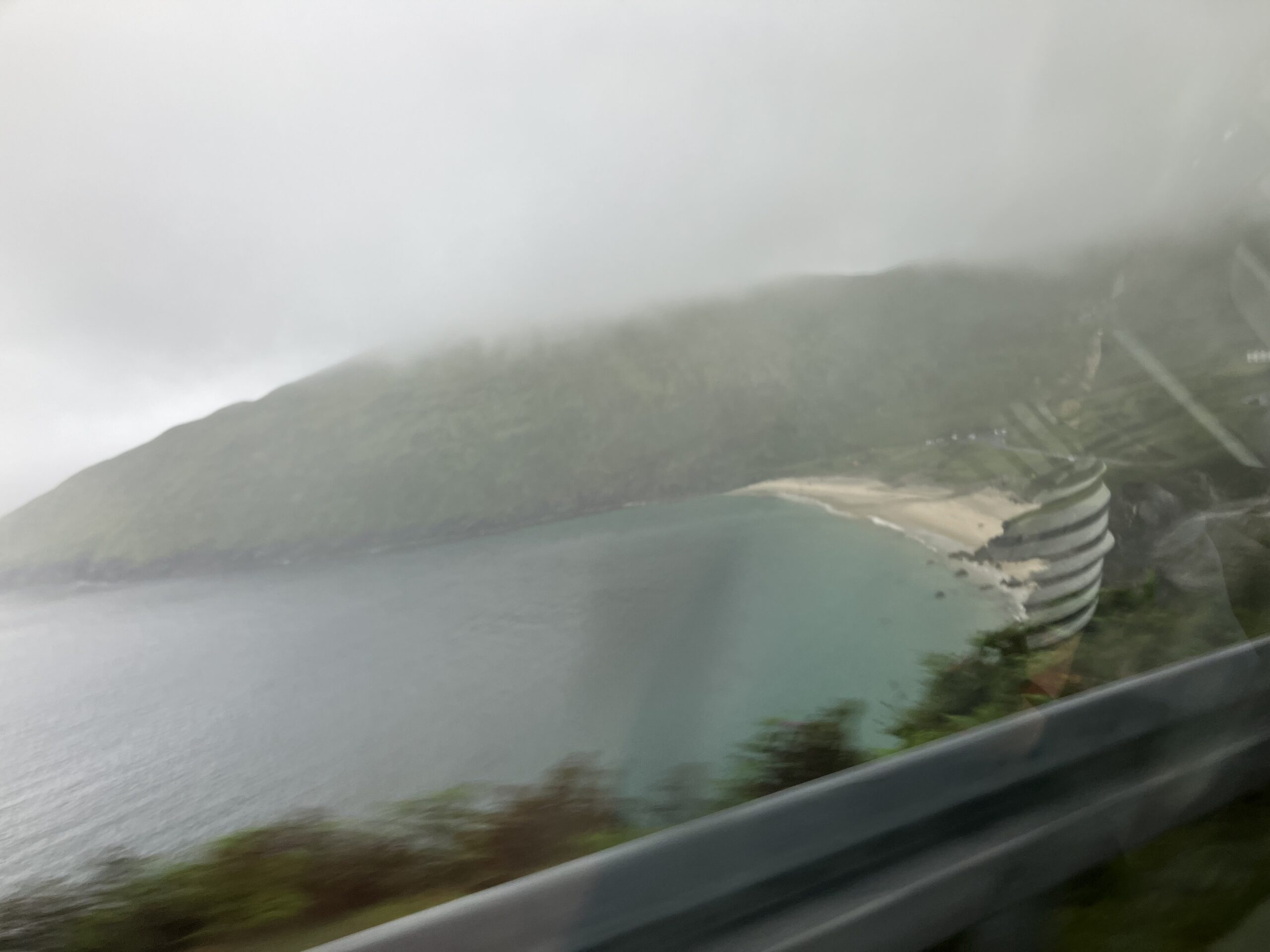
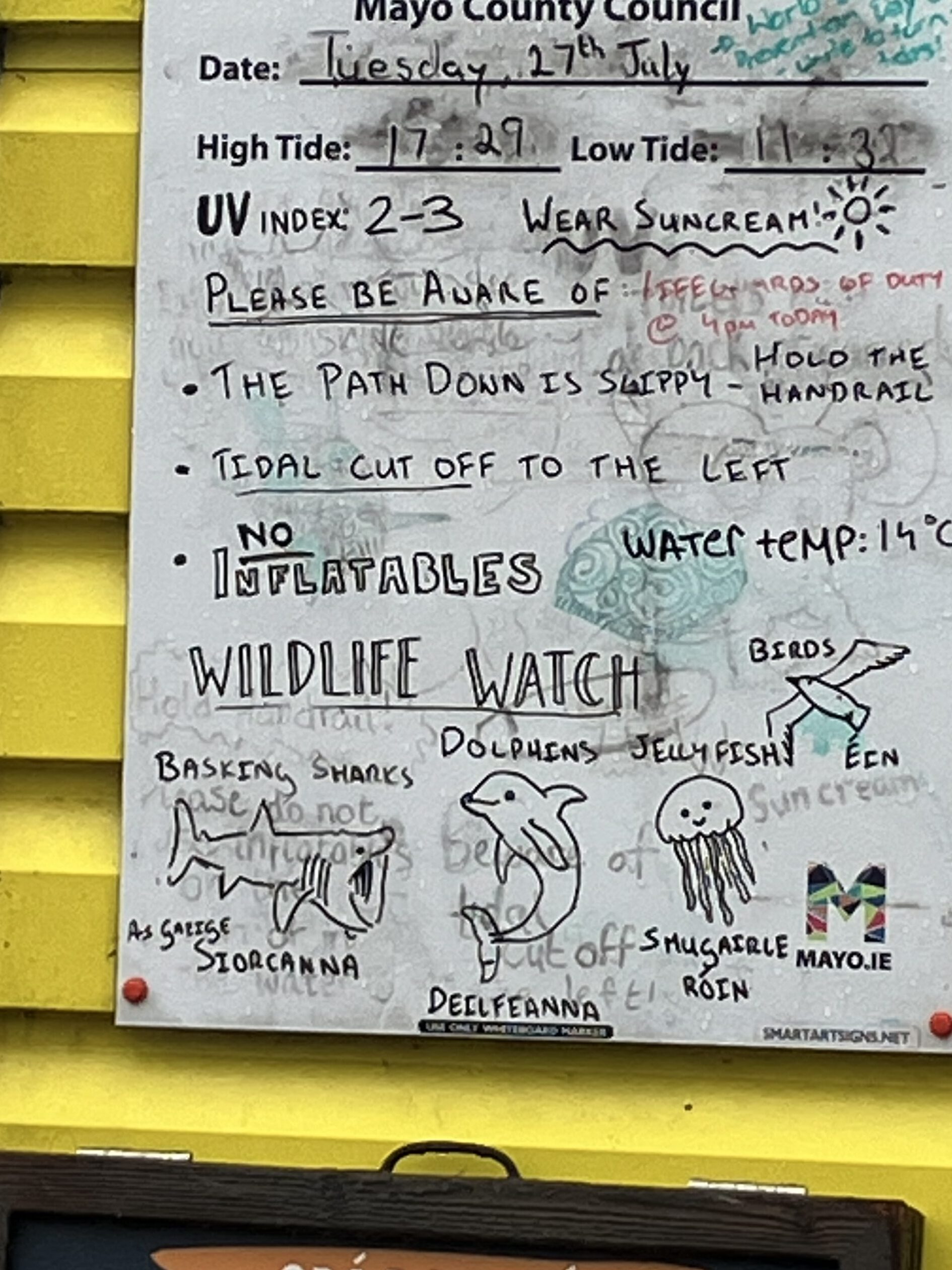
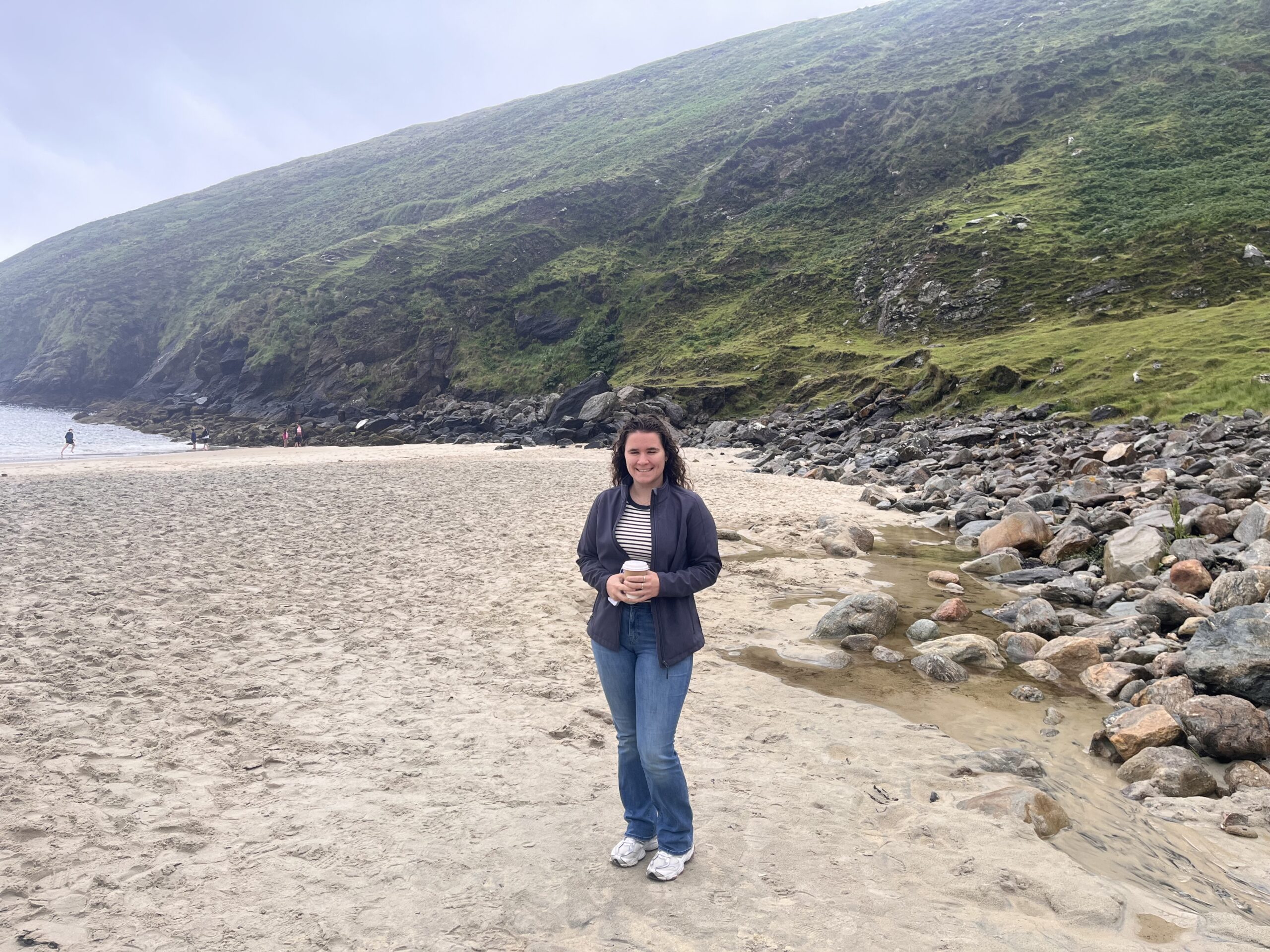
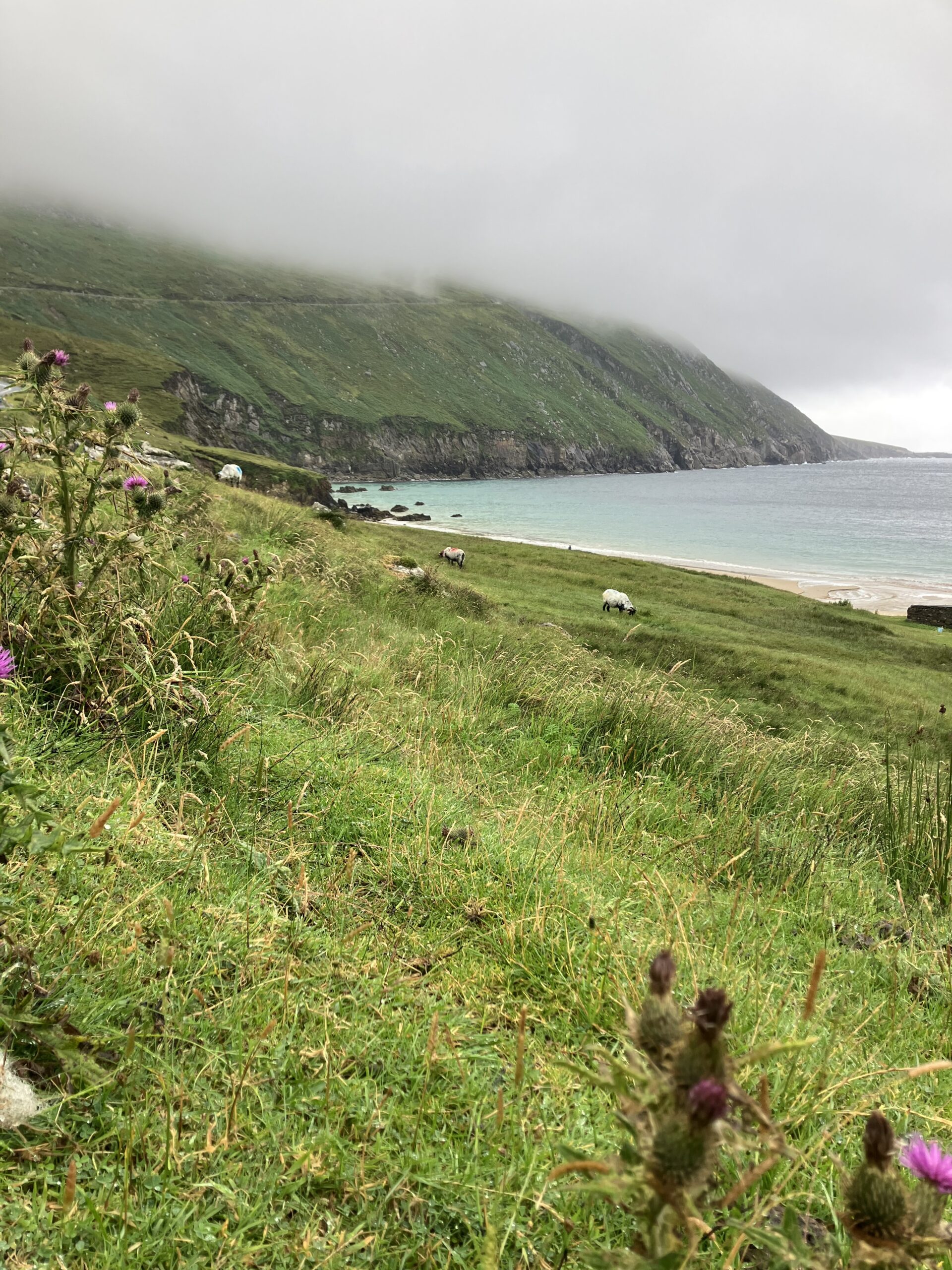
The first, rather breathtaking one was the beach at Keem, declared by some to be the most beautiful in the world. We didn’t even catch it on its best day — the lifeguard hut’s whiteboard posted the water temperature at 14 degrees C — and it was still a stunning place to visit. The approach, via a cliff-hugging access road that seemed to be an engineering marvel in the same way that bungee jumping seems to be a good way to see the underside of a bridge, definitely added a sense of adventure.

We could see…hold on a sec.
We could see the beach from the cliff!

The fact that sheep were grazing mere feet from the beach reminded us it was Ireland, but the stretch of sand leading to teal-colored water in a protected cove suggested more tropical climes. There was also the advertised prospect of seeing a basking shark, a species that frequents the waters here, or some dolphins. Of course, there was the mist and the water temperature reminding us where we actually were. How cold is 14 degrees C? Google translates it to 57 degrees F. Zoe, who decided this was another good swimming opportunity, said, “It’s very cold.” For reasons unexplained, she decided not to use the sauna located in the parking lot to recover from her dip.

She recovered in her own way, and was back in her regular clothes for the trip back up the cliffside as we back-tracked to Achill Island finale number two, Gielty’s Pub, the westernmost bar in Europe. If we missed this and just kept driving, we wouldn’t have found a bar until Greenland. How can one beat that for adventure and excitement? Before you answer, I’ll tell you that their cod and chips, with the cod fried in a seaweed tempura and possibly scooped out of the waters across the street minutes before we arrived, was the best meal I’ve had in Ireland so far.

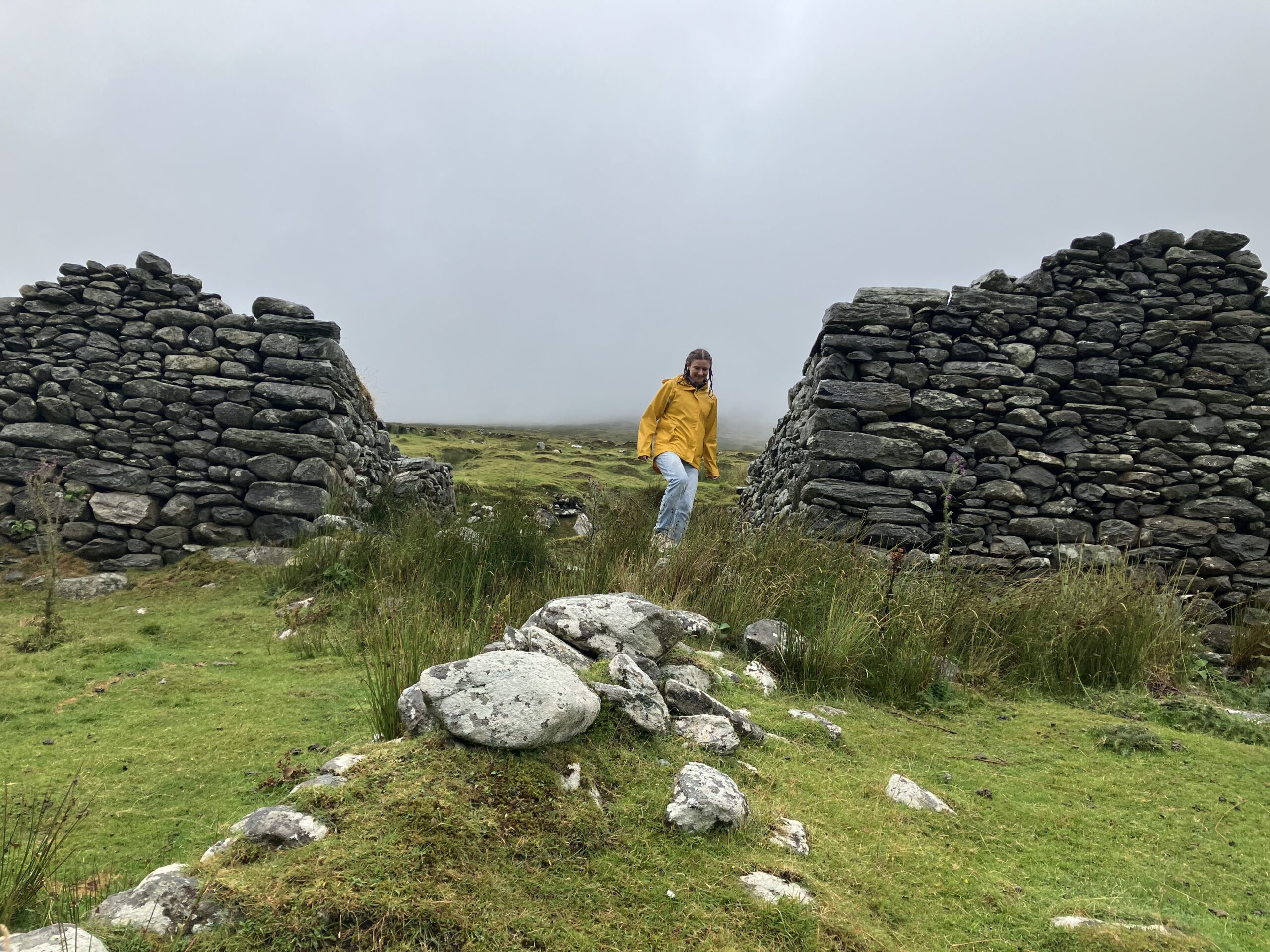
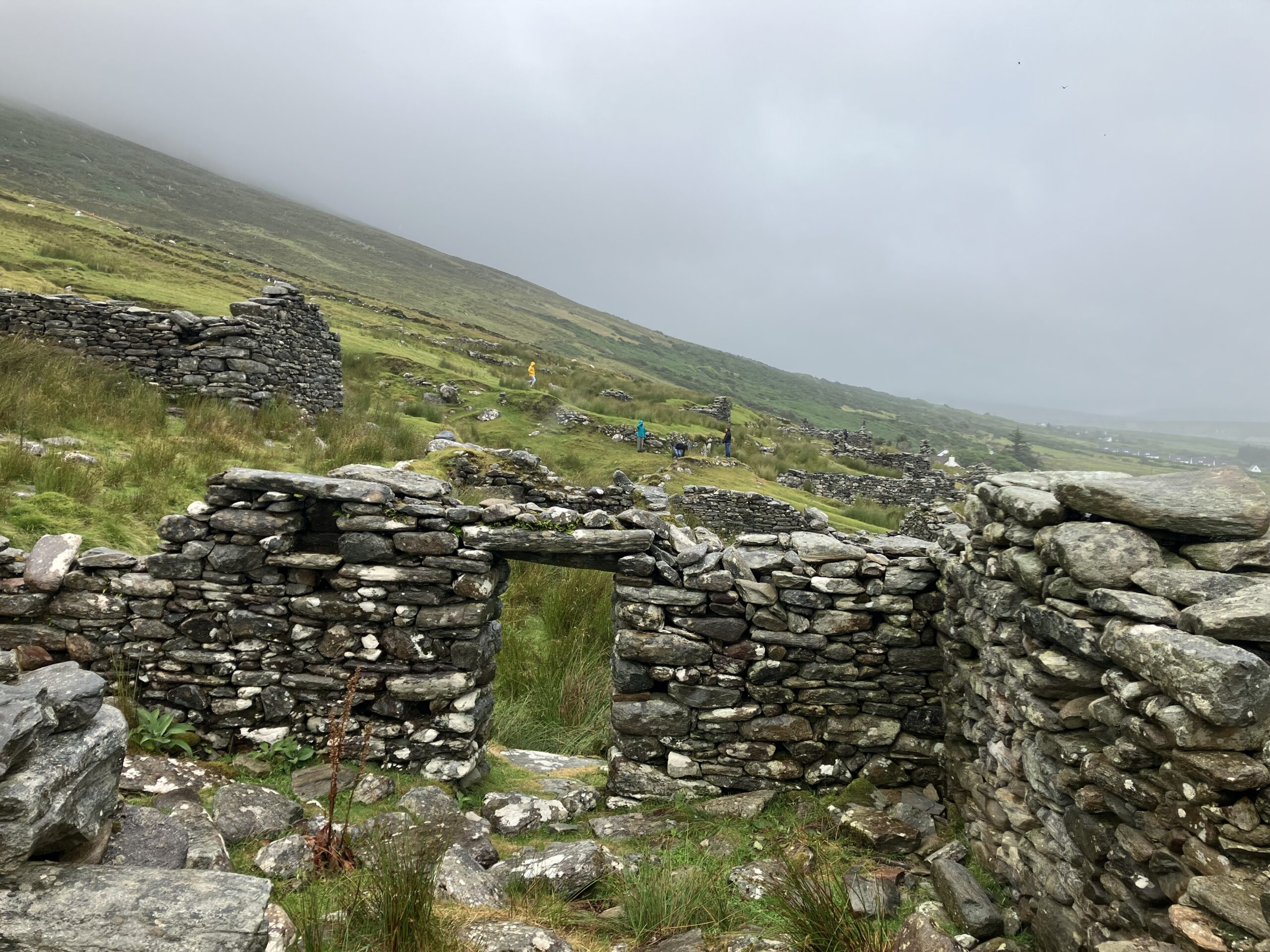
We were wet and maybe a little cold — even those of us who had not gone swimming, but we were also pretty happy with the trip. Plus, after the pub adventure, there was one more post-finale stop. A few miles back towards civilization is Slievemore, or at least the remains of it. Slievemore had been a sizable village a few centuries ago, but it was ravaged by in the mid-1800s by the Great Famine, and it was deserted completely by the early 1900s. Many walls still exist and sheep keeps pathways nibbled clear. We spent a good 45 minutes there and might have lasted longer had the rain let up. (The village was on a hillside and small streams seem to have taken over many of the walkways, so our feet were pretty wet by the time we had hiked up to the site.)

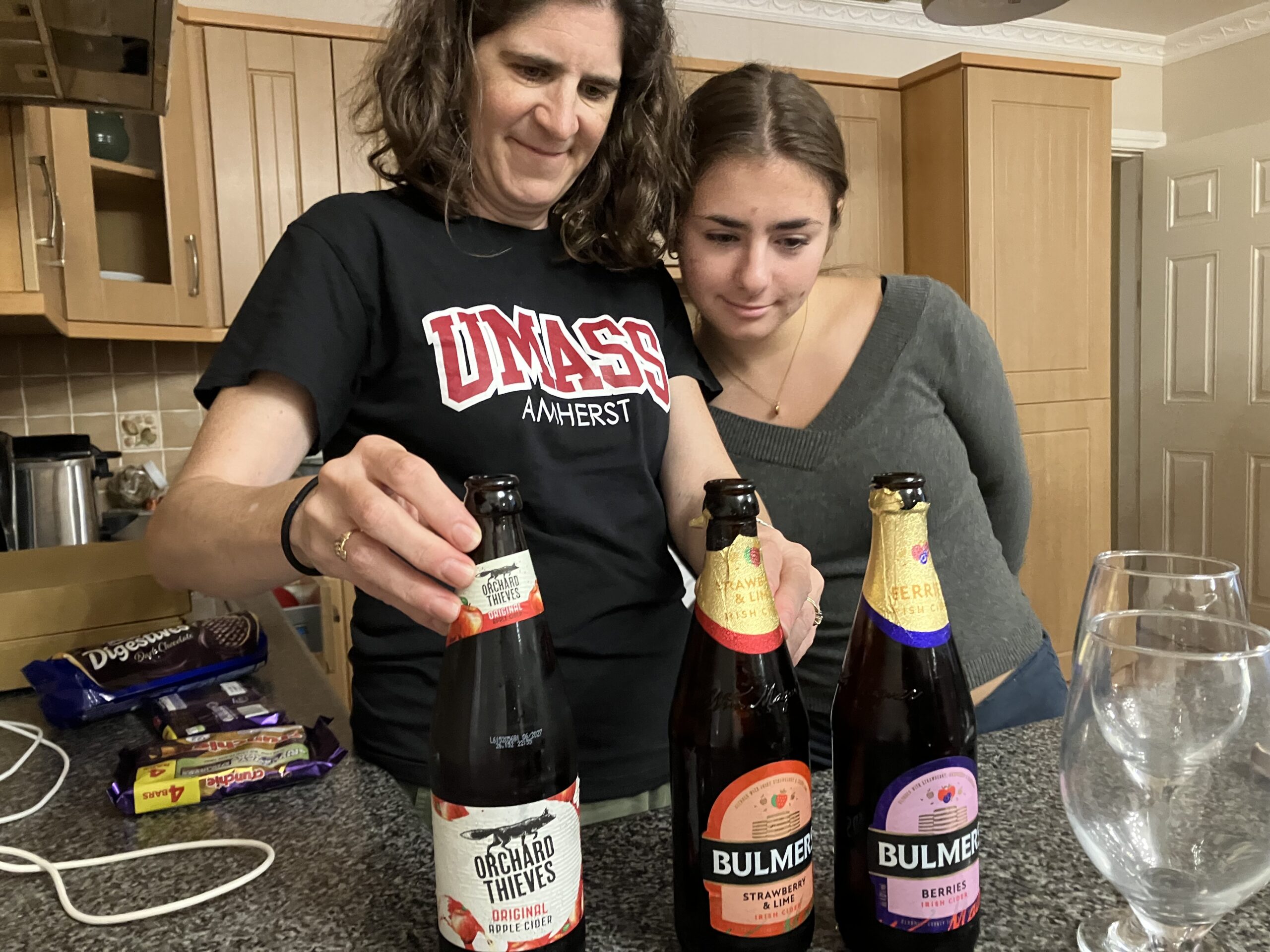
This constituted a full day for us, and, anyway, after lunch we were not even interested in taking a meal in any establishment wasn’t superlative in some manner or form. So Jen and Zoe ran out for a few pizzas and they came back with an array of ciders to sample. We hooked into the tv’s streaming menu, and were happy to find we could watch The Sheep Detectives using our amazon passwords.

In between the raindrops

People probably don’t need a primer on Irish weather. It’s rainy. Our first day in Sligo suggested otherwise, but our second day of soggy mountain climbing and drizzly beachgoing proved the original postulate.

Of course, Ireland is also said to be quite a magical place, and in between the raindrops on day three we got proof of this as well.

We took to the road again on a slimmed-down version of Jen’s original itinerary, which had us traveling farther north. That was partly due to yesterday’s heavy driving to Shannon and back, and partly due to a general late start as our bodies are all still processing the marathon travel day that started this trip.

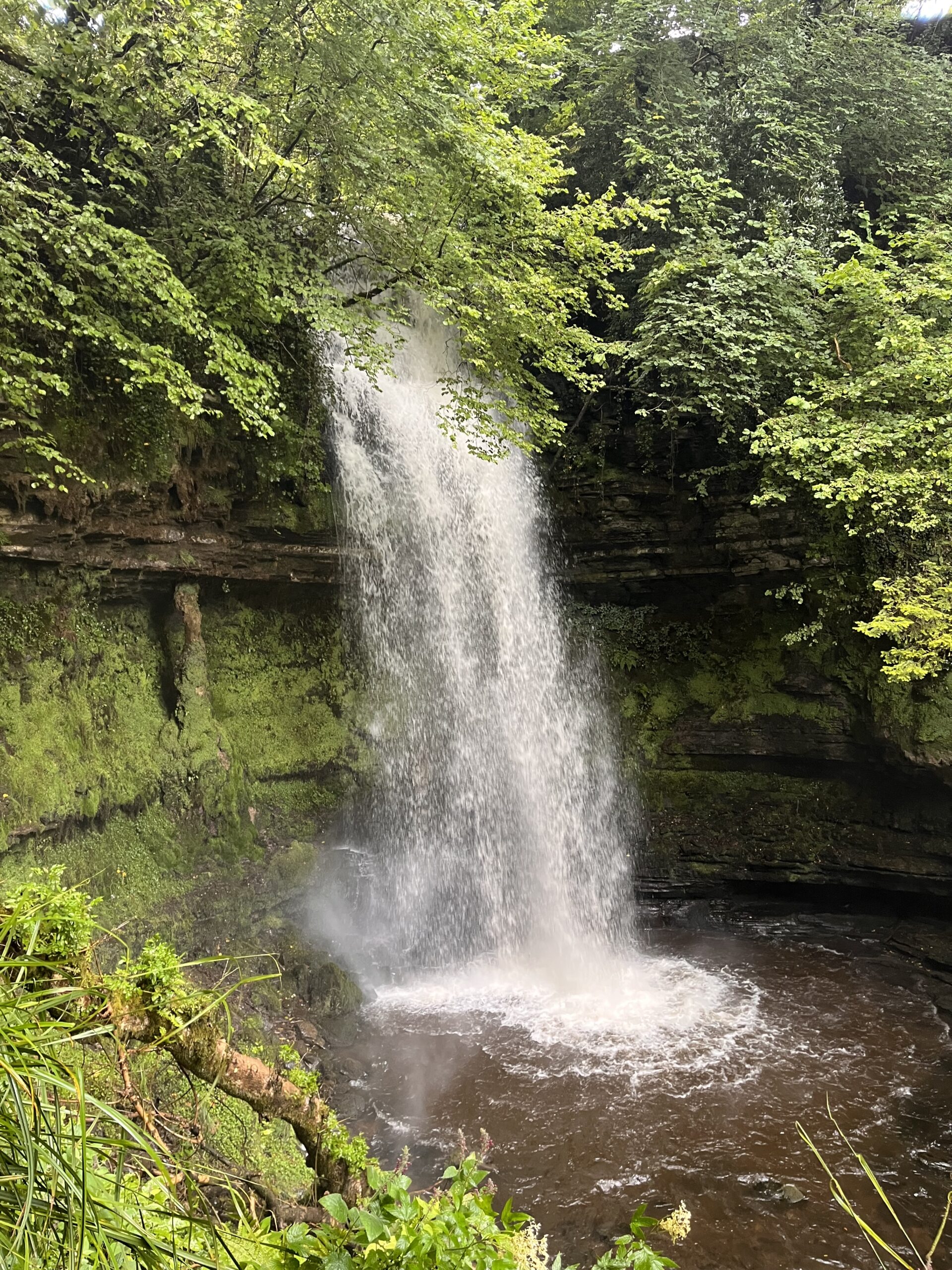
The poet Yeats himself very likely drew inspiration from this waterfall and adjacent tea shed.

Our inkeeper, who has been spot on with his restaurant recommendations so far, was very positive about a few of the closer locations on the spread sheet. He also said one of the places on our spreadsheet also had a good restaurant connected to it.

Another likely inspiration for the Poet Yeats: sheep-dotted hillsides.

That’s how we ended up first at the Glencar Waterfall just over the border in County Leitrim. It was a short walk, overseen by a curious army of sheep, and we managed to coordinate the end of our walk with the opening of the excellent tea shed near the car park.

Another waterfall was reported to be just a few minutes up the narrow, narrow road, but there were no parking spaces and also no tea room in evidence, so we kept on going to our next featured stop: Streedagh Beach on a fine finger of land only 20 minutes drive away.

Here we found plenty of surf and sand playing host to a healthy community of kite surfers. At this point we also discovered today’s particular brand of Irish magic. It rained fairly steadily while we were in the car, but at both of the first two distinations, the rain stopped as soon as we parked. This was a pattern that would happily hold for us the entire day.

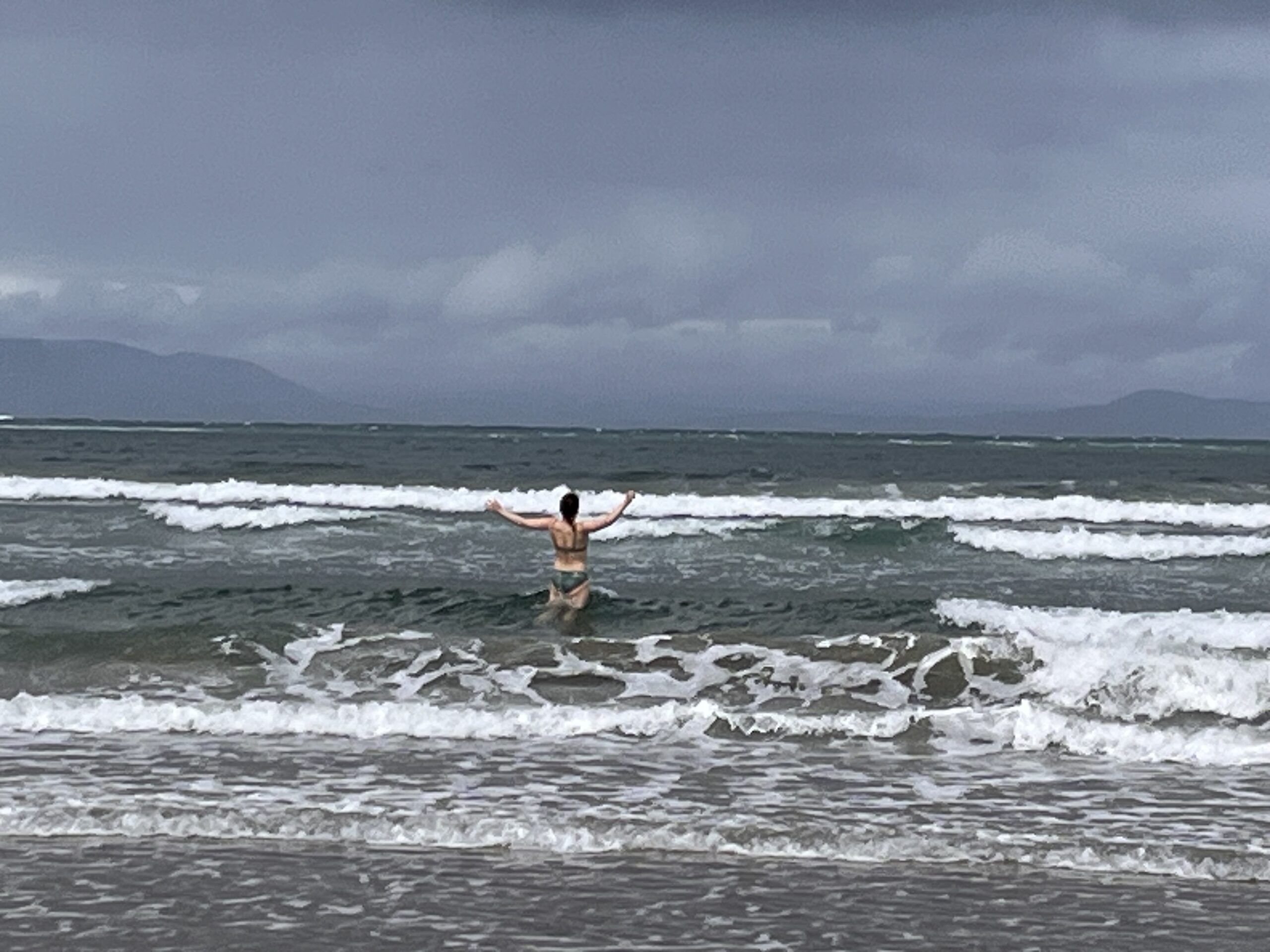
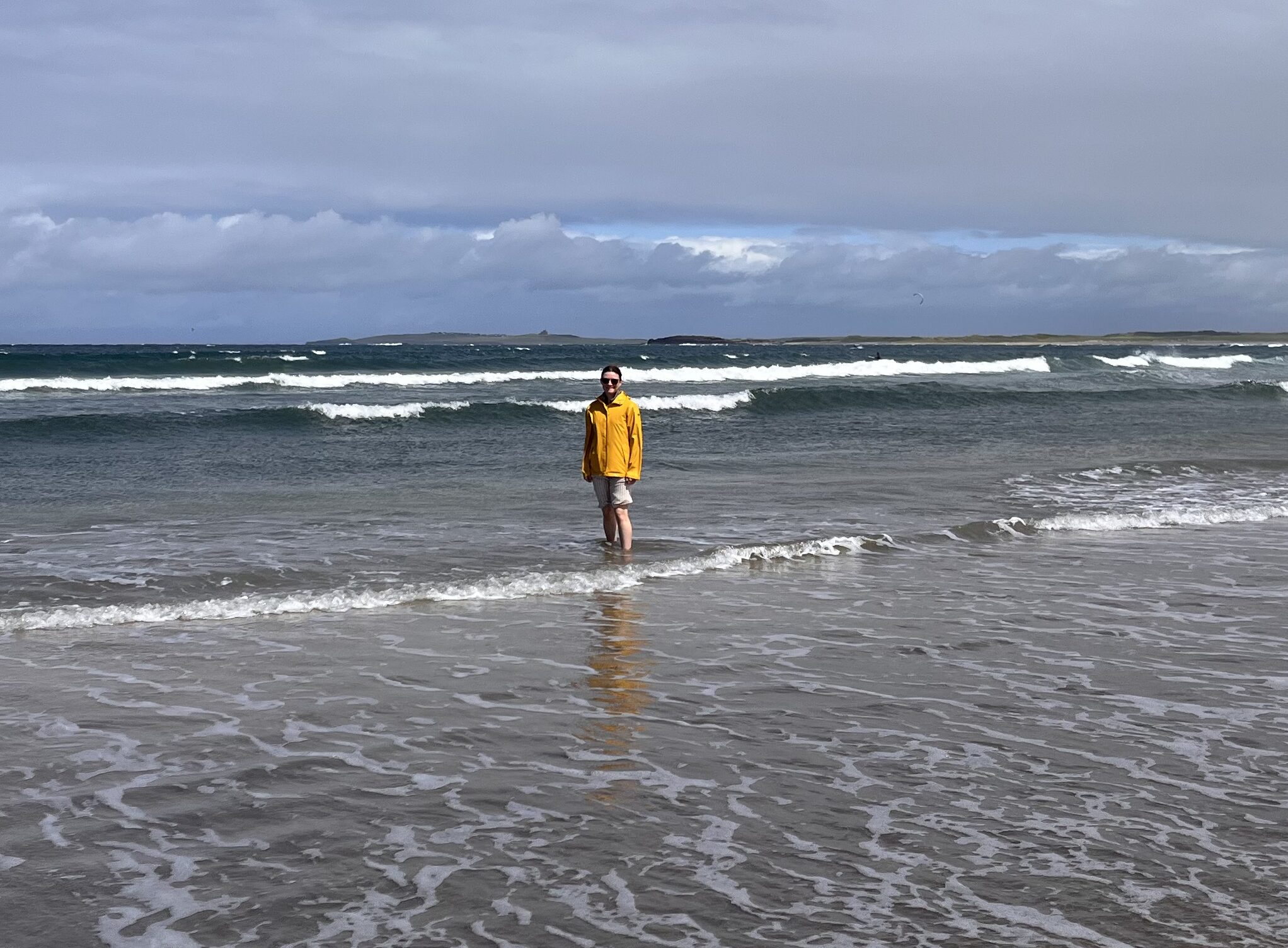
It was so sunny and non-rainy that Zoe decided it was time for a swim. None of us came to the same conclusion.

Zoe hatches a plan and puts it into action.
The castle stays in the background.

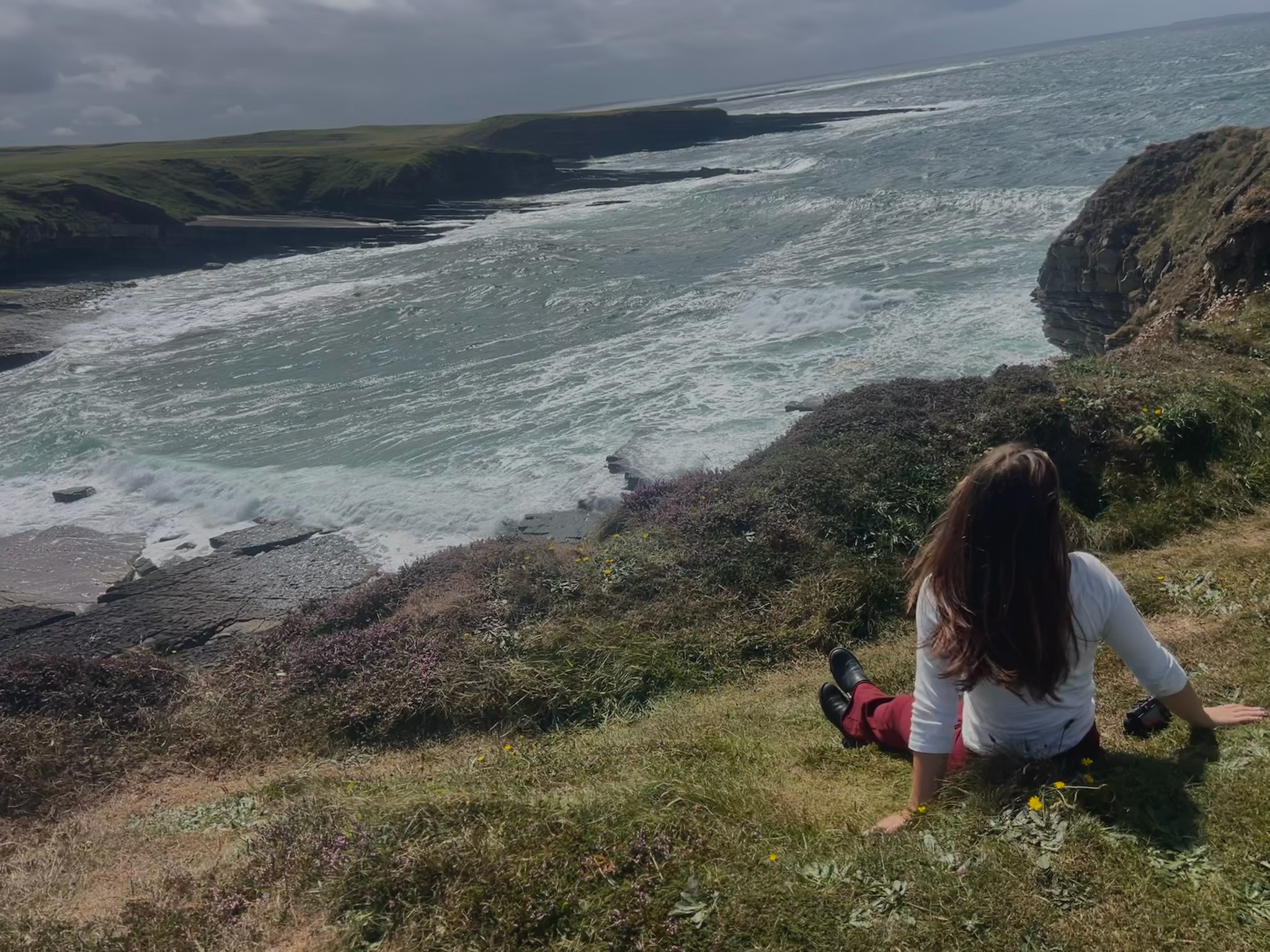
Not that the rest of us were opposed to the sea. The sea is good. So when clouds started to roll in at the beach, we scurried Zoe out of the waves and got back in the car for the next leg of our trip, a driving tour of the Mullaghmore Peninsula. This lovely section of what is now known as the Wild Atlantic Way (it was previously just known as the west coast of Ireland) gave us our first real taste of the drama that awaits every time the ocean comes into contact with this particular land mass.

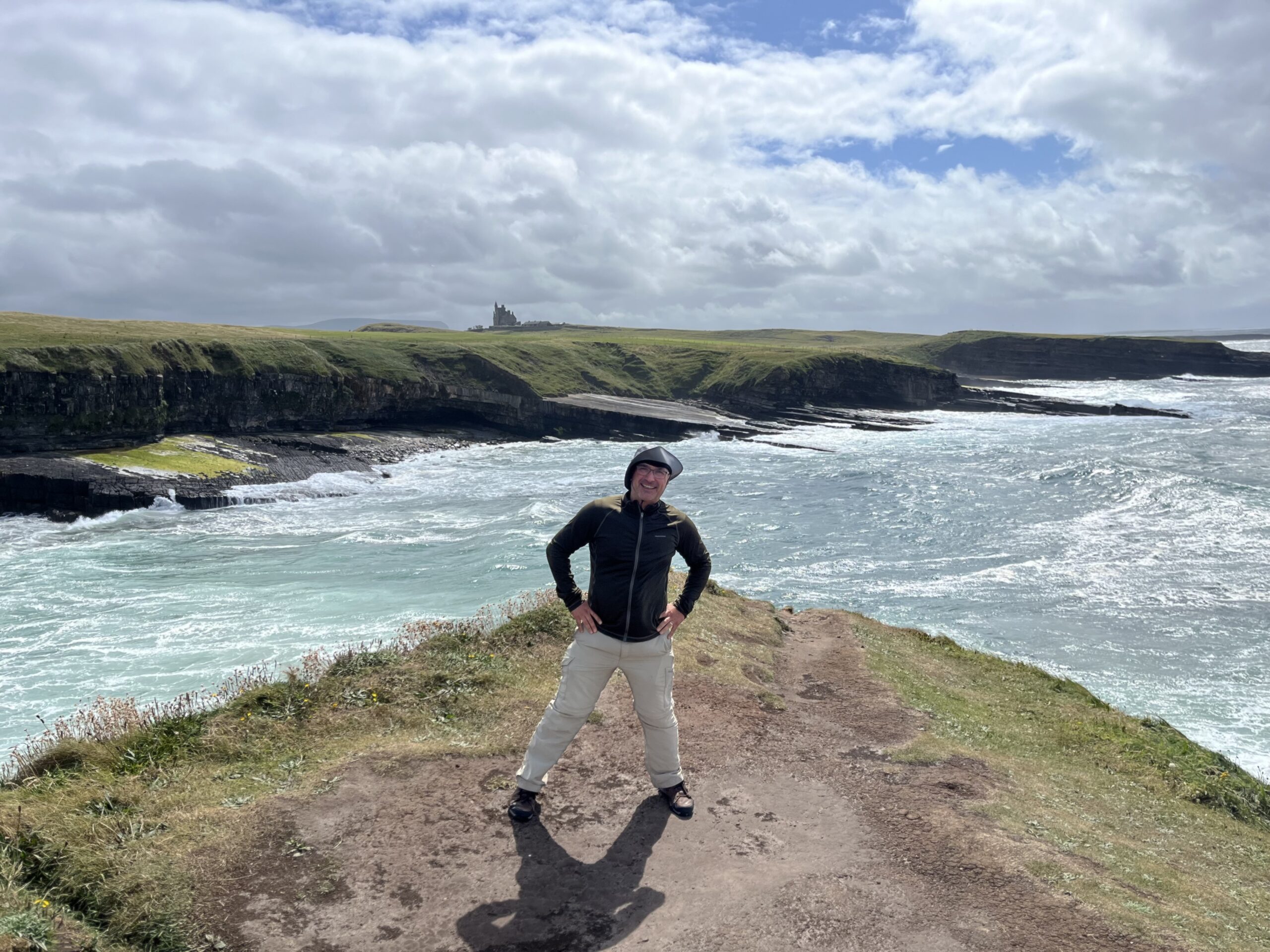
There is a castle here, but they are smart about it and keep it in the distance so it doesn’t compete with the sea foam and rocks and such. The area is peppered liberally with sheep, which is also a good call because their aloof demeanor seems to fit into any setting. Add to the picture some improbably placed stone walls and a needlessly thin ribbon or roadway and you have a good idea of what it looks like.

It looks even better when the rain stops and the sun comes out as soon as you pull over onto the meager verge.

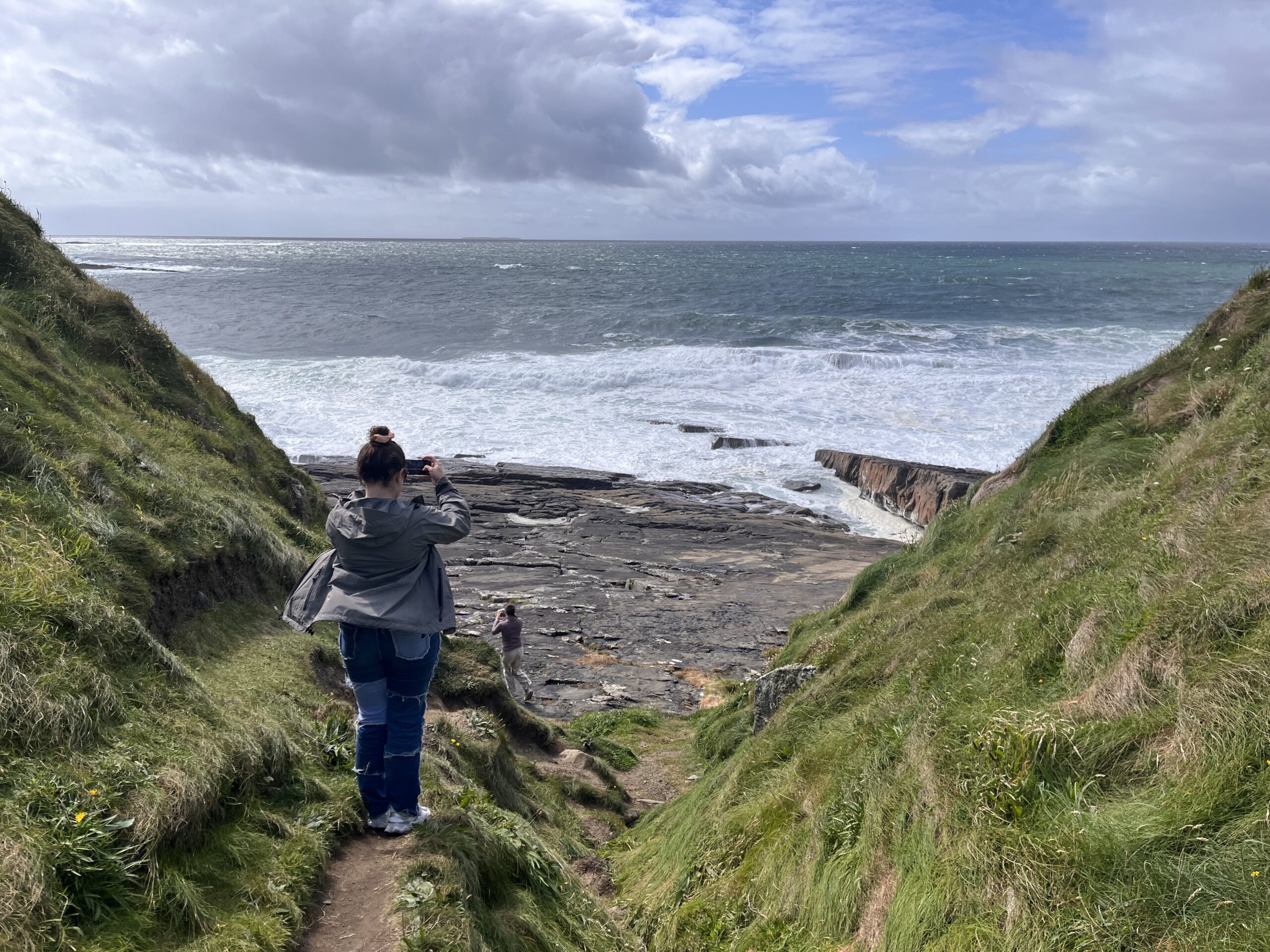
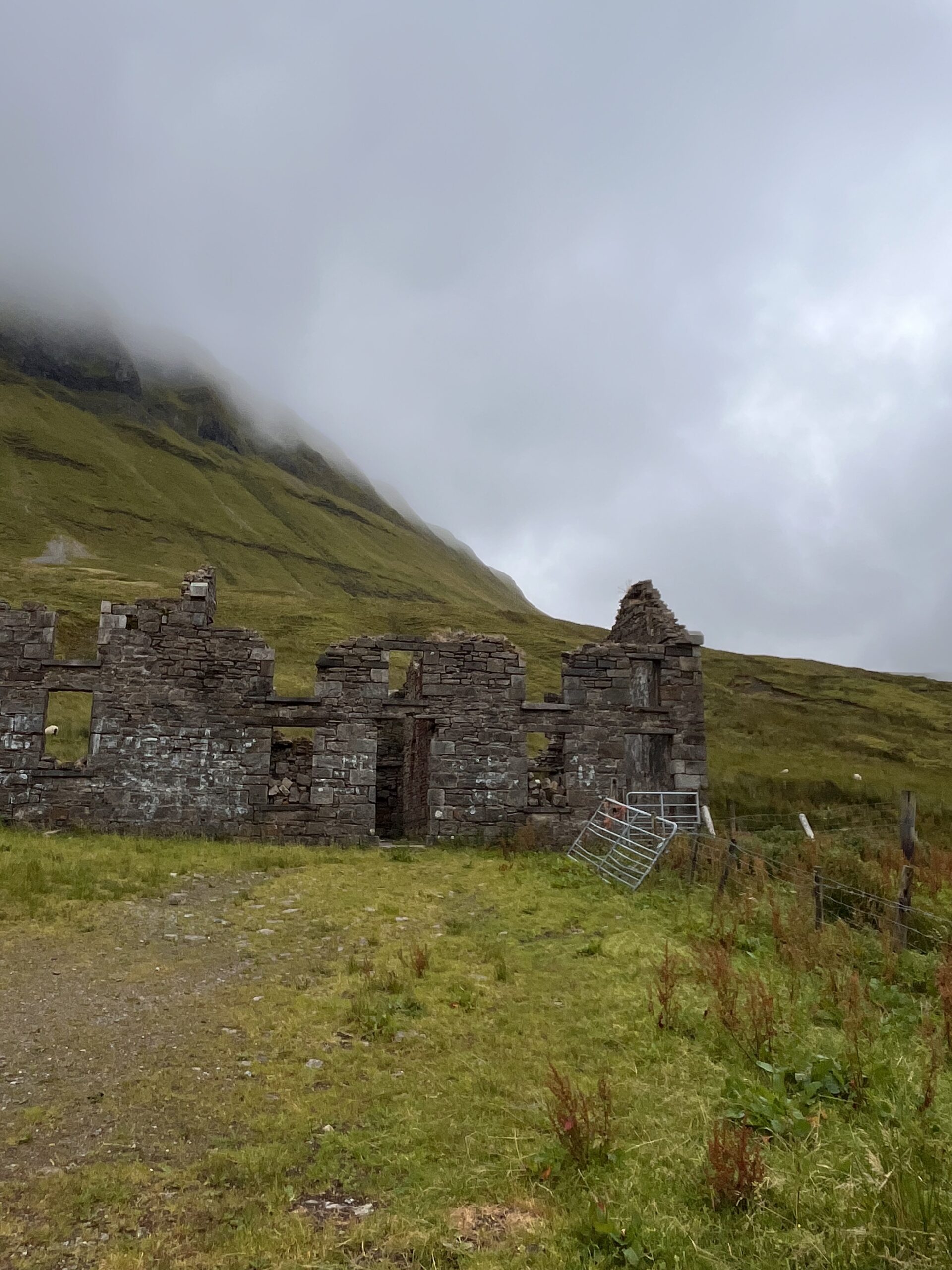
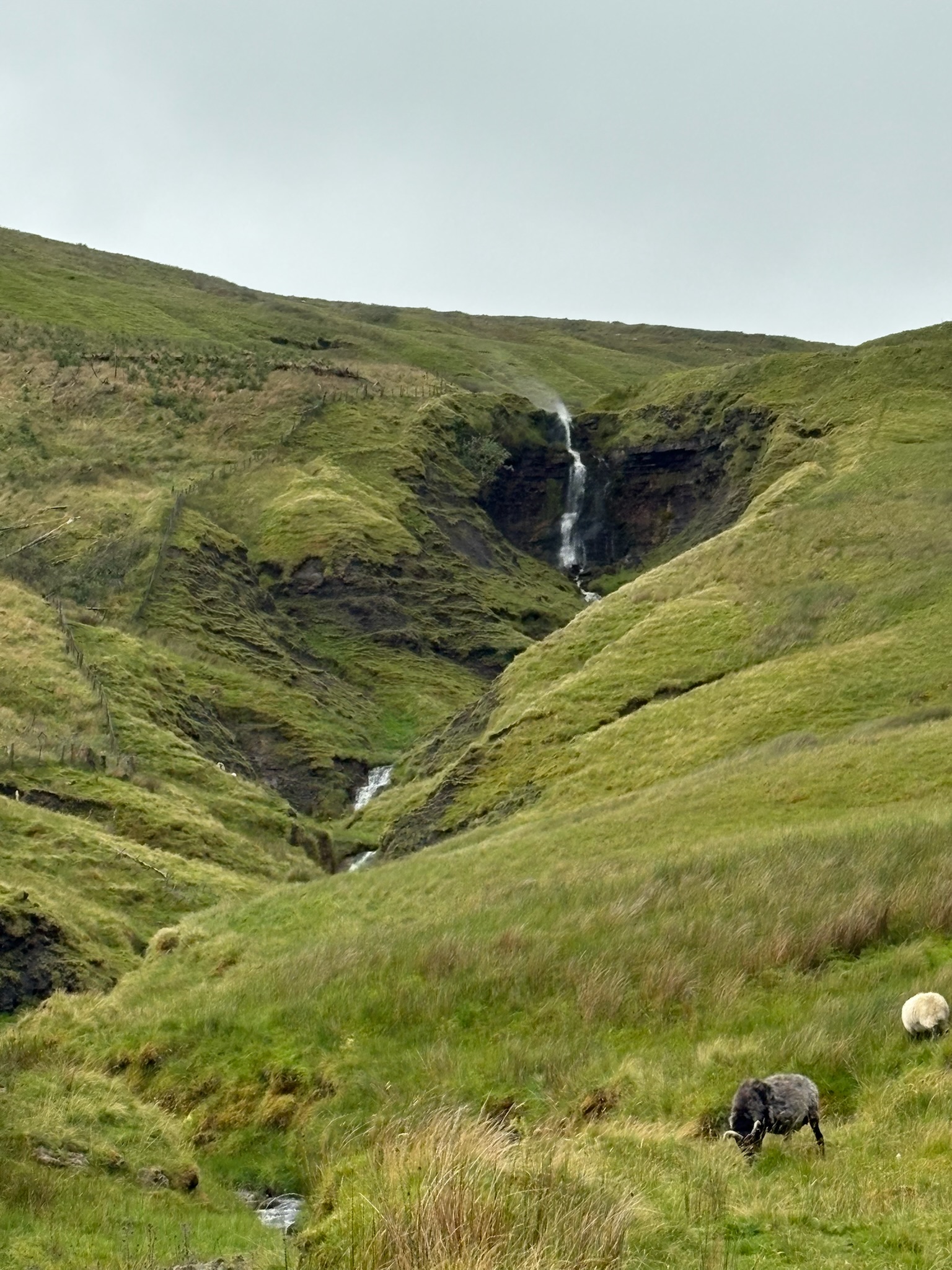
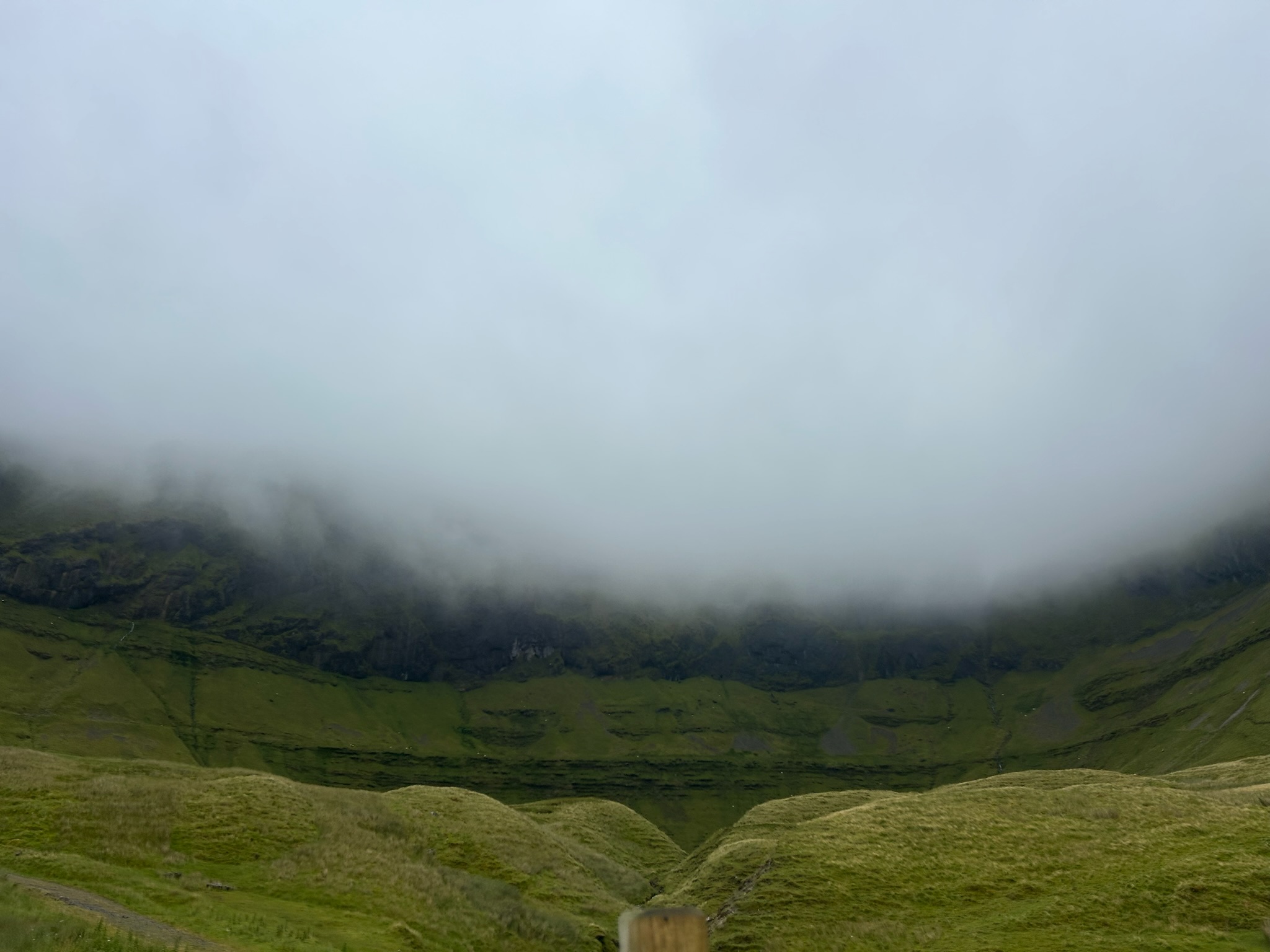
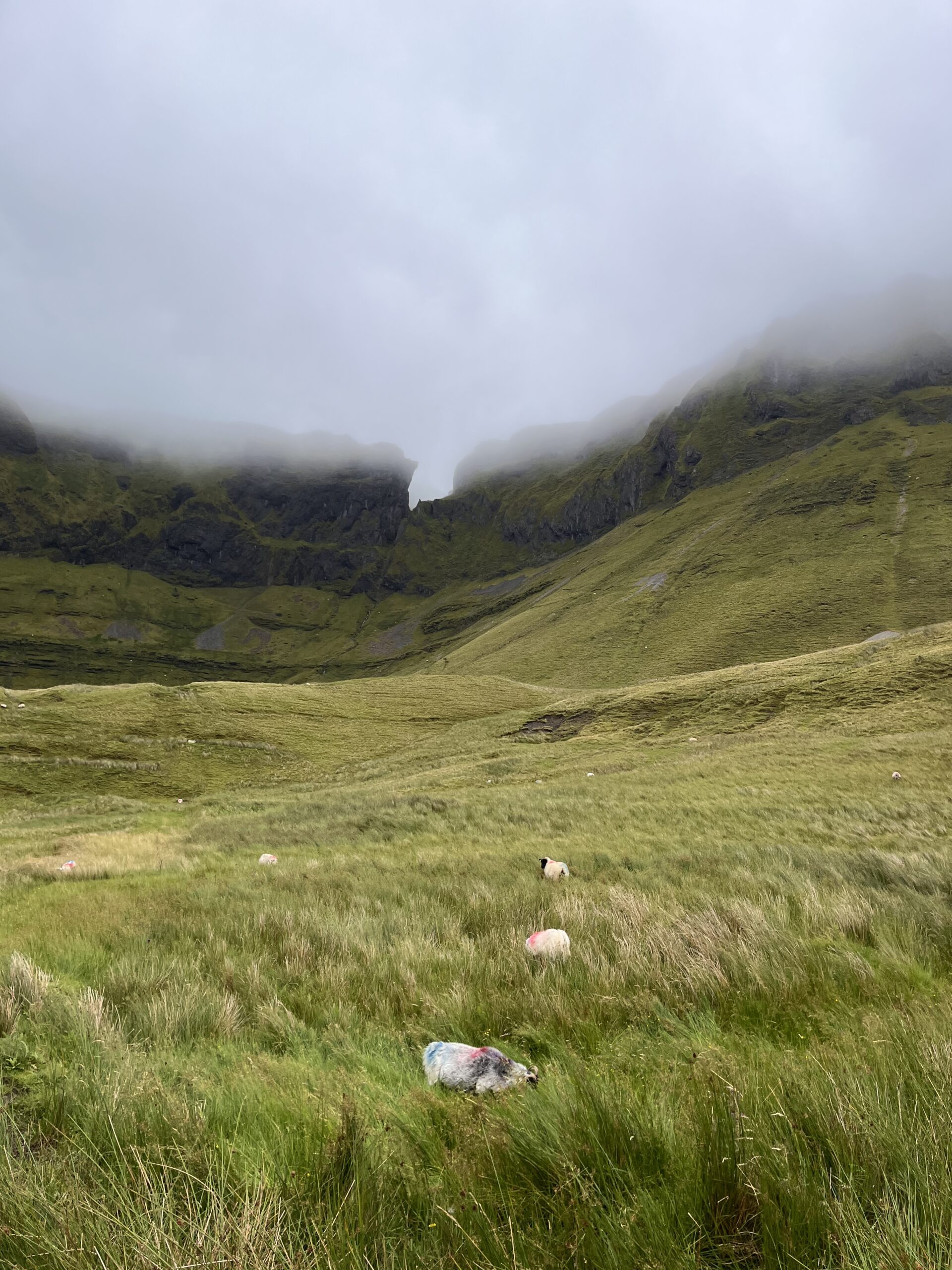
Once again in transit as soon as the rain re-appeared, we found ourselves in the last attraction of the afternoon, the Gleniff Horsehoe. Here we navigated a winding half-loop into a canyon with steep green sides and seemingly no peaks. Everything ended in the day’s low clouds, until, of course, we stopped a particularly dramatic location with a waterfall, abandoned farmhouse and sheep clinging to impossibly steep hillsides way, way above the valley floor.

Then, the rain stopped and the clouds gradually thinned, unveiling craggy mountain tops with drama. The drama rivaled that of the sea earlier in the day. .

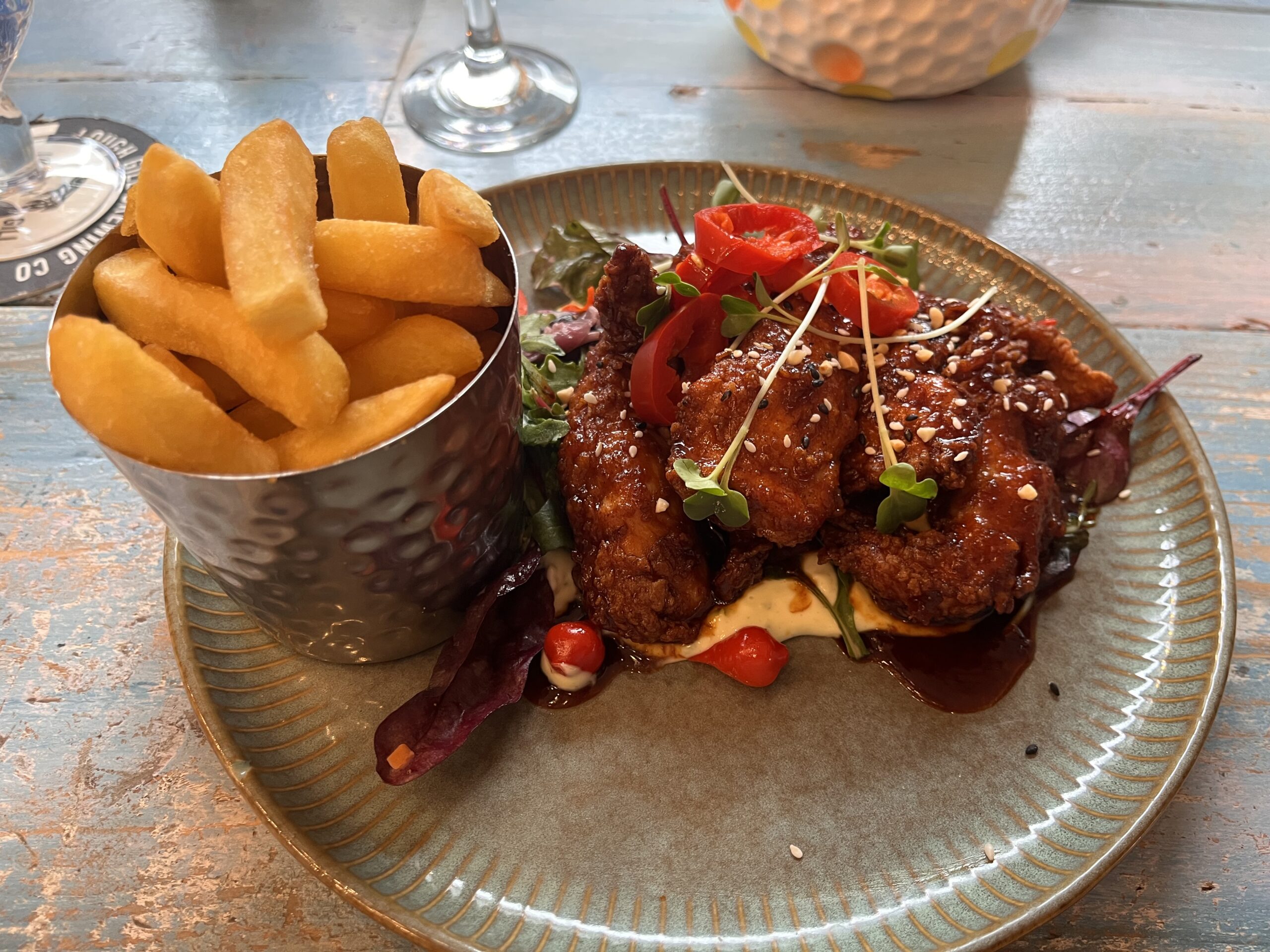
After that, there was little else to do but return to the lodge (by day three, the driving part is becoming less of a story) and find a place for dinner. An interesting note: tonight’s dinner was remarkable not because the recommendation came from our inkeeper. Jen’s Korean fried chicken was very proudly advertised as “As seen on TikTok.”

Score one for the socials.

Our first day in Ireland

A scheduling snafu left us in Shannon Airport without a reserved rental car for 24 hours. We are quick thinking people and we thought of a work around that led to at least two significant consequences:

1.) We ended up getting a lot of practice over our first two days in Ireland on how to drive here. I’ll mention more about this later.

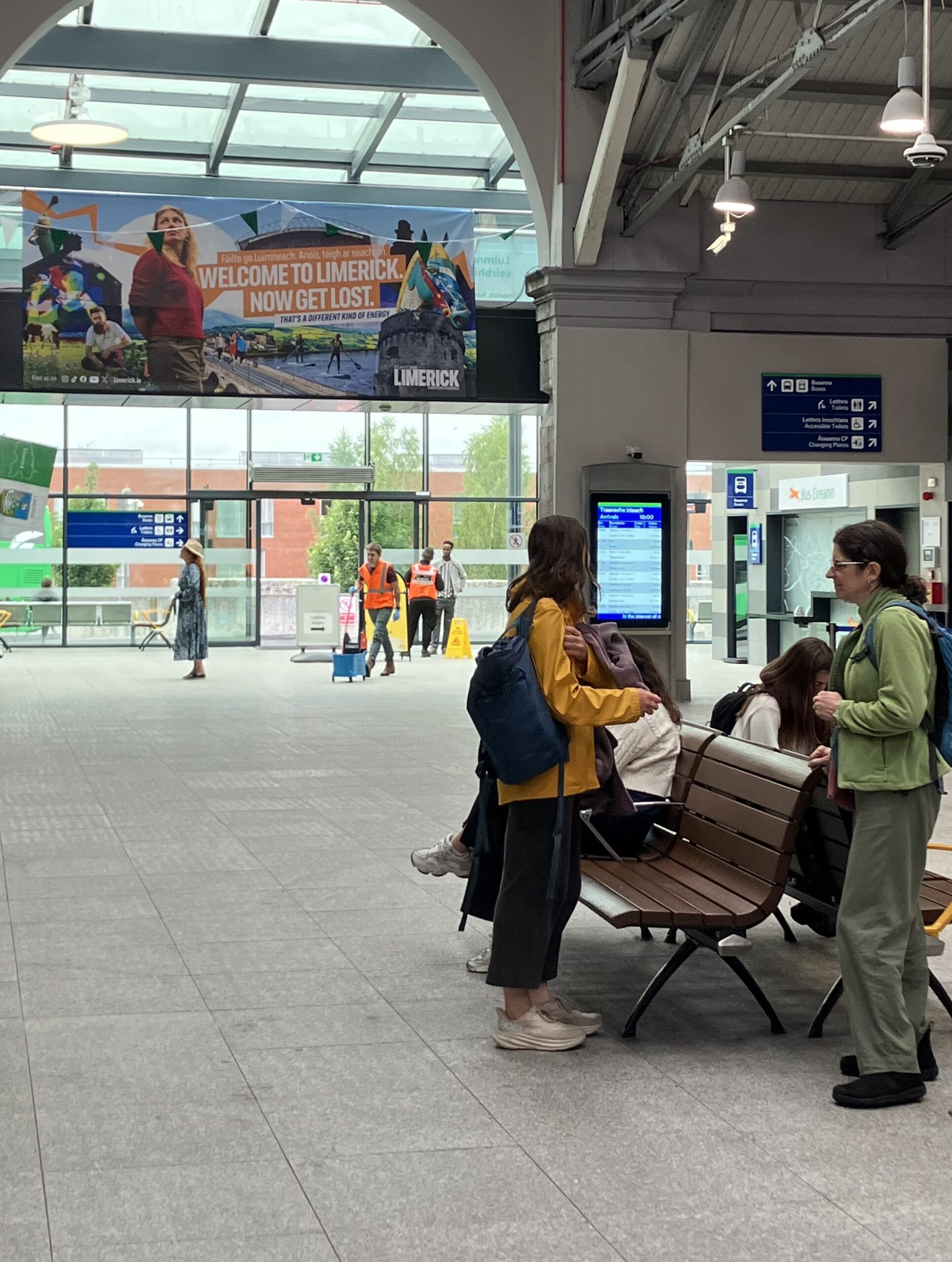
Limerick even has a tough ad campaign. They were very nice at the station, though, and found a place for us to store our luggage while we walked around town.

2.) We got to go off-script and visit the closest major city, Limerick, which happened to have a rental car available for us for the day. Here’s how that went:

We took the #342 from right outside the airport door to the Limerick bus/train station. It was a lovely bus with a second floor that the girls (mostly) enjoyed, but it took a convoluted, stop-riddled path. That is one of the reasons we need a rental car here — there are few direct buses. They’re always stopping to pick people up and drop them off. Downtown Limerick is about a 20 minute drive to the airport, but it took an hour for bus #342 to get there.

Not to worry, our one-day rental car would not be available for a few hours, so we were able to wander the town. What do we like better than wandering the town? Very little.

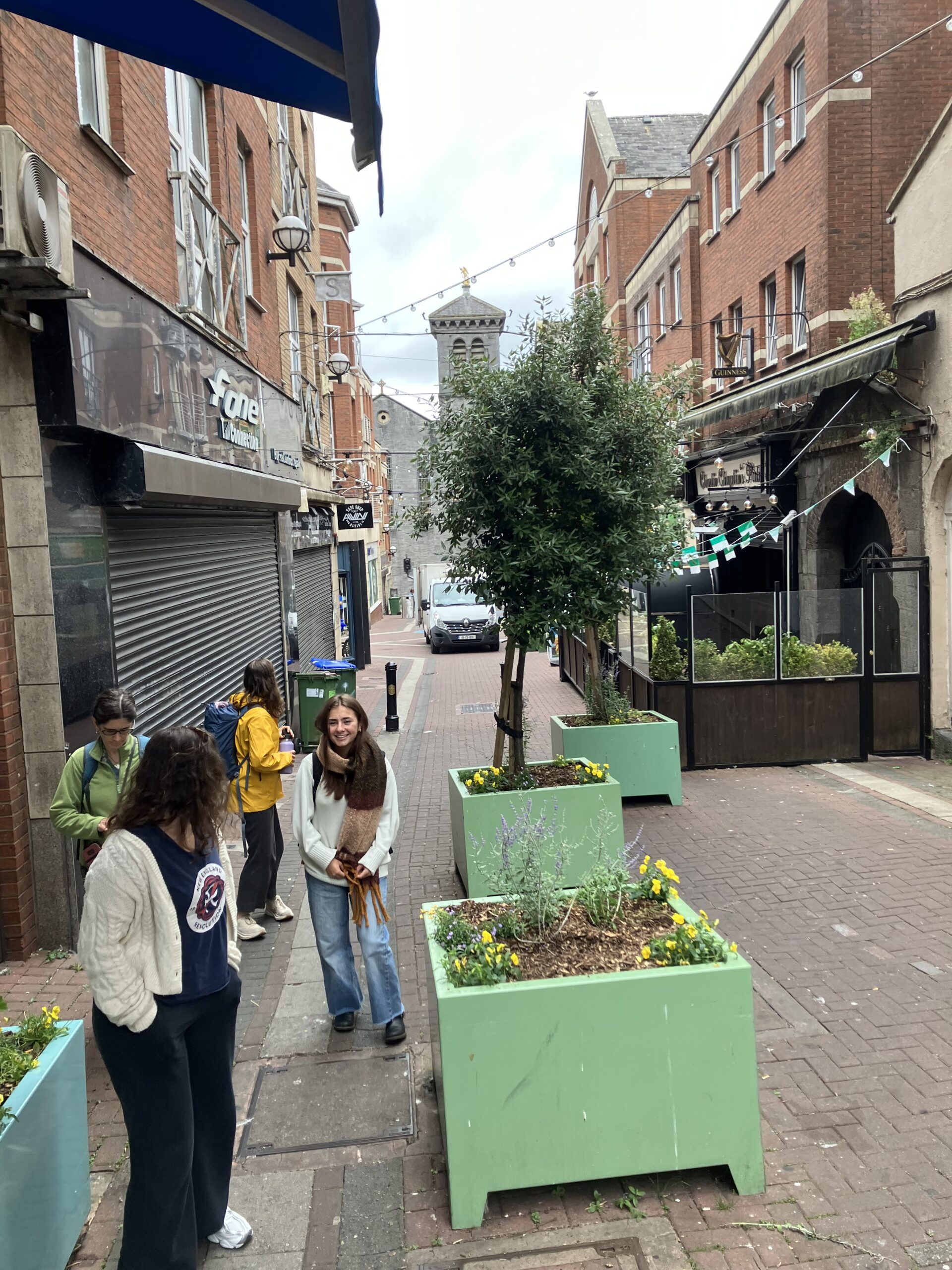
Limerick, like a lot of Irish cities, I bet, is well set up for wandering. The downtown area surrounding the station features several parks and lots of narrow streets that are easy to cross. There are lots of things and people to see and look at. Despite a name that might conjure thoughts of poetry and whimsy, Limerick is a little grittier than many of the more touristy towns we’re going to visit during this trip. It was very welcoming, though.

Our very enthusiastic tour cathedral guide

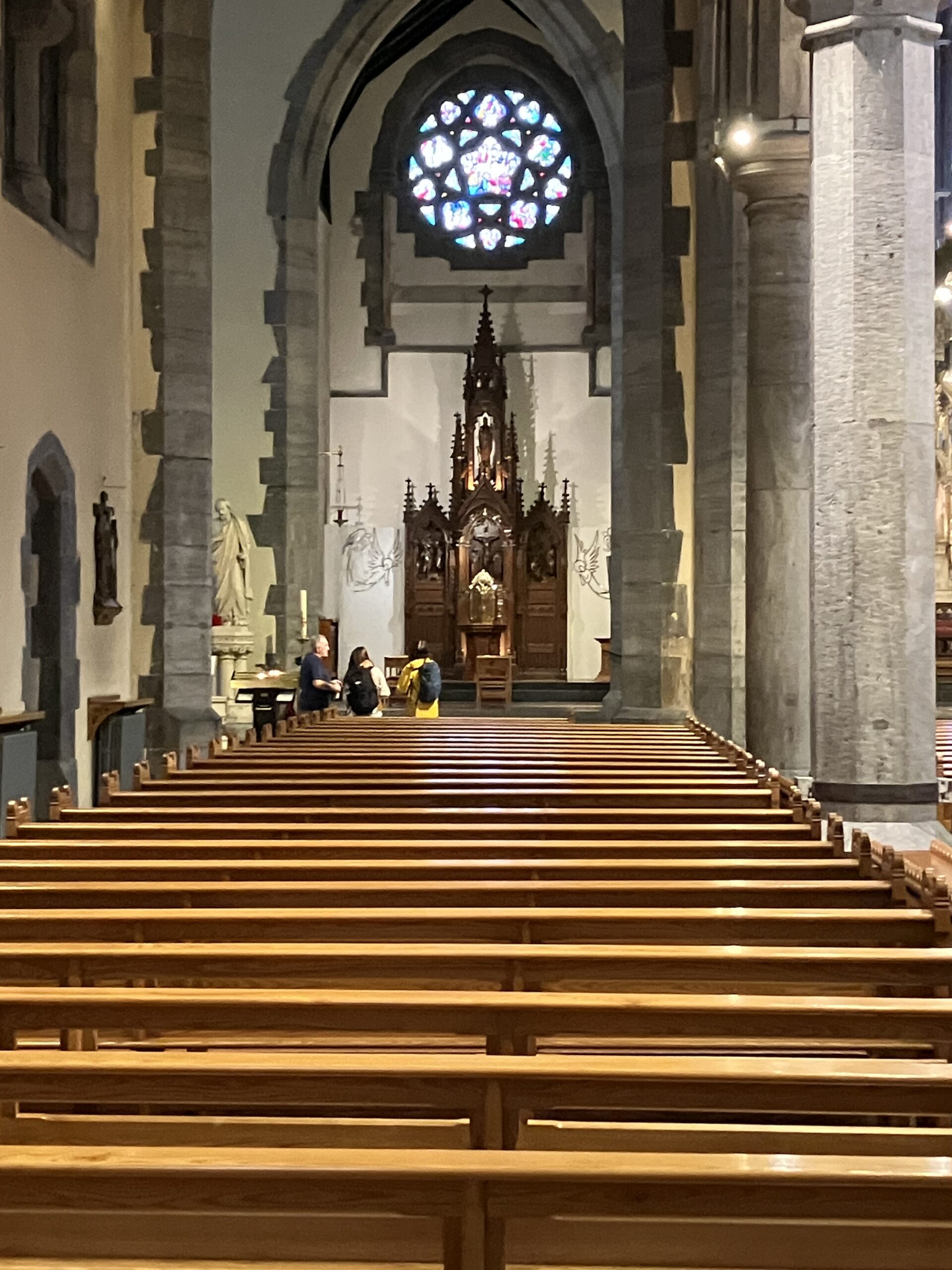
We have been warned by Jen that the people we meet in Ireland are likely to be extremely kind and courteous. This matches the welcome we received here, particularly by the gentleman who gave us a tour around the inside of St. John’s Cathedral. He was careful to point out the elaborately painted pipes of the organ in the choir loft, and he showed us the location of three of the five bishops buried under the church floor. It is unclear if the man works for the church — maybe he is a bishop himself, only off-duty. He was certainly knowledgeable and very kind.

It was not difficult to fill a few hours in Limerick, but we were eager to get ourselves back on track. This city was not on the final spreadsheet of tour locations, so it was an extra benefit, but there was still a lot that we had to see.

Limerick looks after its pedestrians. Take that, Florence.

The plan had been for us to pick up our rental car at the airport and drive two and a half hours to our lodgings in Sligo City. We were able to pick up this trail from Limerick, a few hours later and several kilometers farther away than originally intended. Still we were enthusiastic about finally being in Ireland, a place Jen has been promising to bring for years — some of us for decades.

There was a small army of helpful people waiting for us in the downtown rental car office — they even provided us an excellent breakfast recommendation. More importantly, they actually had a car we could use. We have been conditioned to recognize the major difference between a rental car reservation and an actual car to drive. The agents in Shannon asserted that there was a serious lack of cars available.

A lovely employee lead us out the back to a small lot with two five-seaters, and helped us wind our way with our luggage between them. There, previously invisible from our view, hid a tiny Hyundai earmarked for our use.

Seeing the subcompact with our name on it was not exactly a record-scratch moment, but we were all instantly able to do the spacial arithmetic to figure out that we were in for a tight ride.

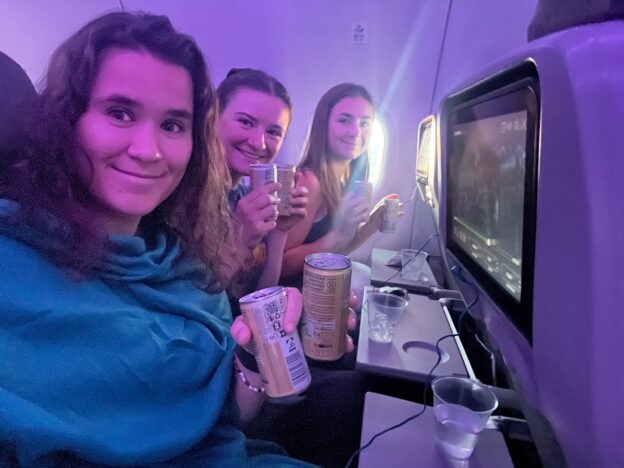
We should take a minute to examine our emotional and physical state. Our previous transportation plan had not worked out and we spent considerable energy finding a plan b. We were generally unsettled by the situation, and we were working on very (if any) little sleep due to our red-eye flight the night before. Some of us might have still been a little nauseated by the hour-long bus ride from the airport — particularly those who didn’t factor in that the top floor of the bus rocks around a lot more than the bottom floor. Another thing — and this may or may not have been a factor — Aerlingus will give you two cans of wine even when you only ask for one.

Positivity still ruled the day. We used Tetris skills to fit as much baggage as possible into the minuscule hatch area; then we used similar skills to work our bodies and the rest of our baggage into the somewhat meager (for our needs) passenger portion. Thus settled in, we were ready for the almost-three-hour drive to Sligo.

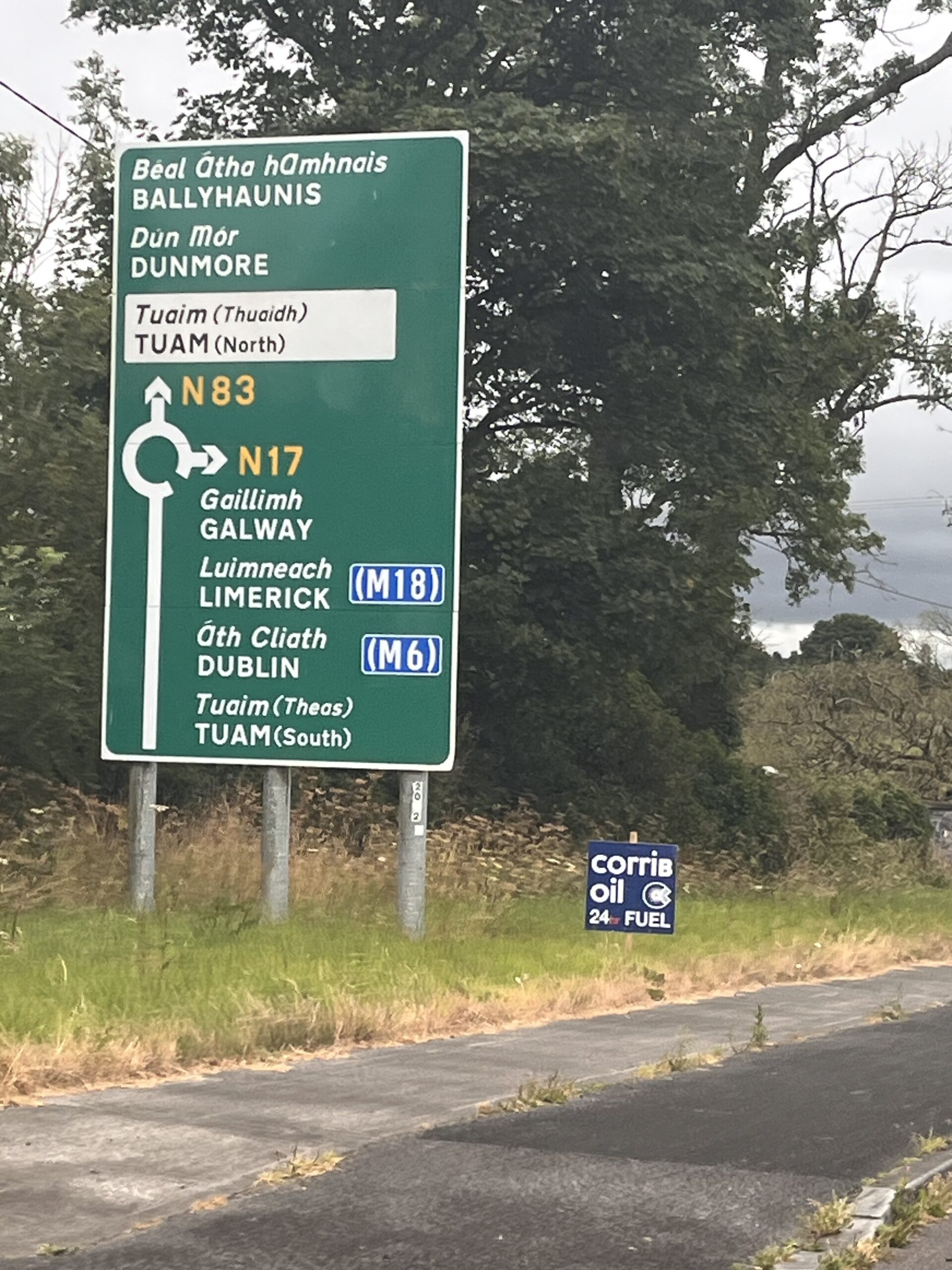
Note the clockwise direction of the rotary. Please. Please note the direction of the rotary.

Here comes the bit about driving in Ireland, are you ready?

It takes flexible thinking and a clear acknowledgement of the differences and similarities to normal driving.

Differences:

— drive on different (left) side of the road
— driver sits on opposite (right) side of the car
— shifter is to the left of the driver
— rearview mirror is up and to the left (not up and to the right, like we’re used to)
— traveling lane is on the left, passing lane is on the right
— direction of travel in (omnipresent) roundabouts is clockwise in order to facilitate driving on the left

Similarities:

— foot pedals go in the same order: clutch — brake — gas
— pattern of shifter — location of gears 1-5, plus reverse — is the same as we’re used to (with the slight exception that our car at — home has a six-speed transmission and it’s possible that if we really tried to put a car here into sixth gear we might end up putting it into reverse by mistake)
— directional signal and windshield wiper control are the same as we’re used to

Words to drive by

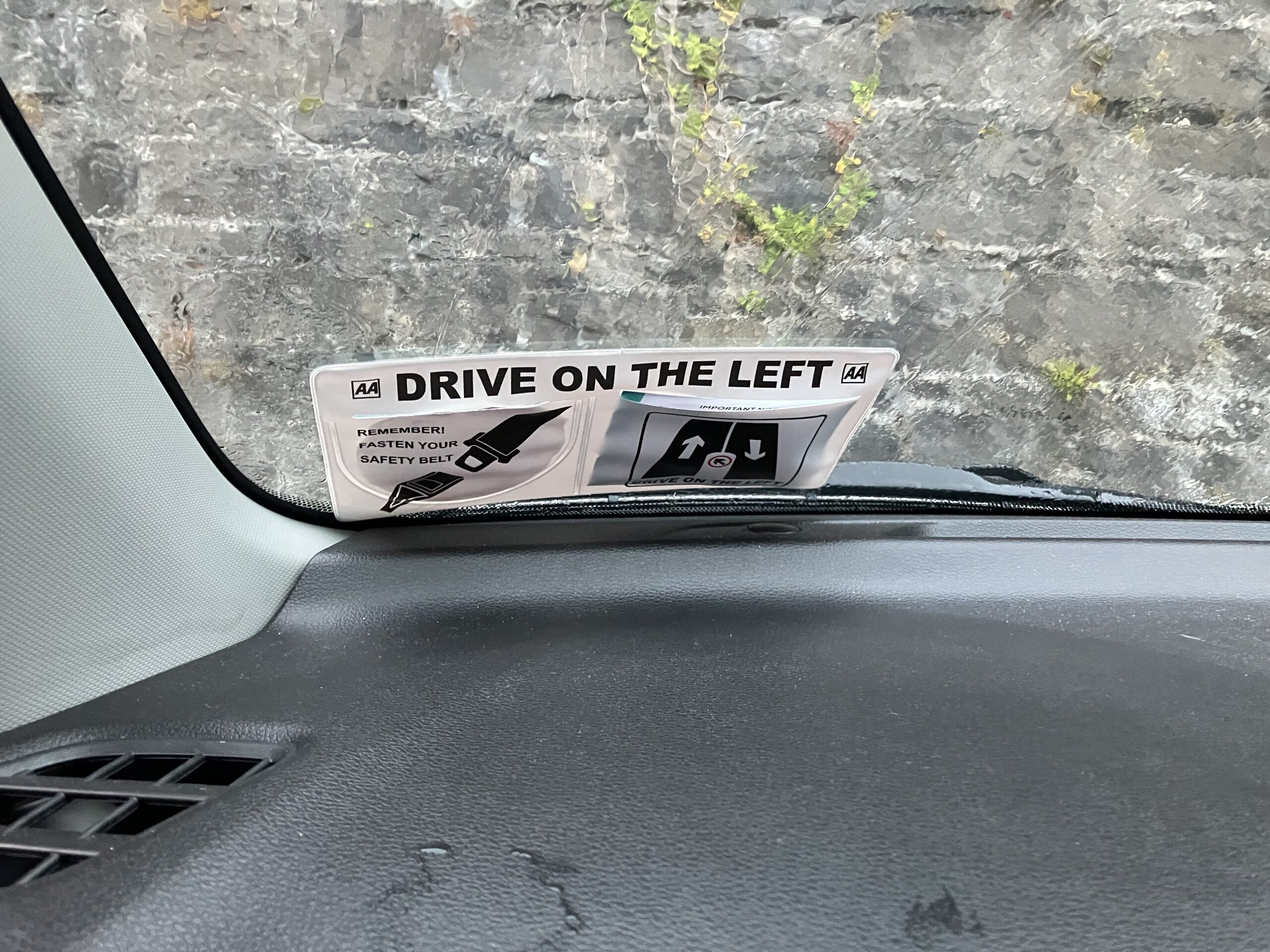
Driving here is a lot about focusing one’s mind and keeping track of what is the same and what is different. Reserving courage to deal with extremely narrow roads also helps. We have been helped by the fact that the people here seem to be patient drivers and that we have a good navigation system and passengers/copilots who are helpful and encouraging. Also, it seems that we are not the first people to struggle with adjusting to Ireland’s rules of the roads. Ireland itself has taken some ownership of this situation and posts frequent reminders, including the on the inside of our rental car that says, “Drive on the left.” This is a new mantra for me. They even post arrows in the crosswalks to remind pedestrians that the first direction they should look is right because that’s where the first traffic will be coming from.

Cider and song

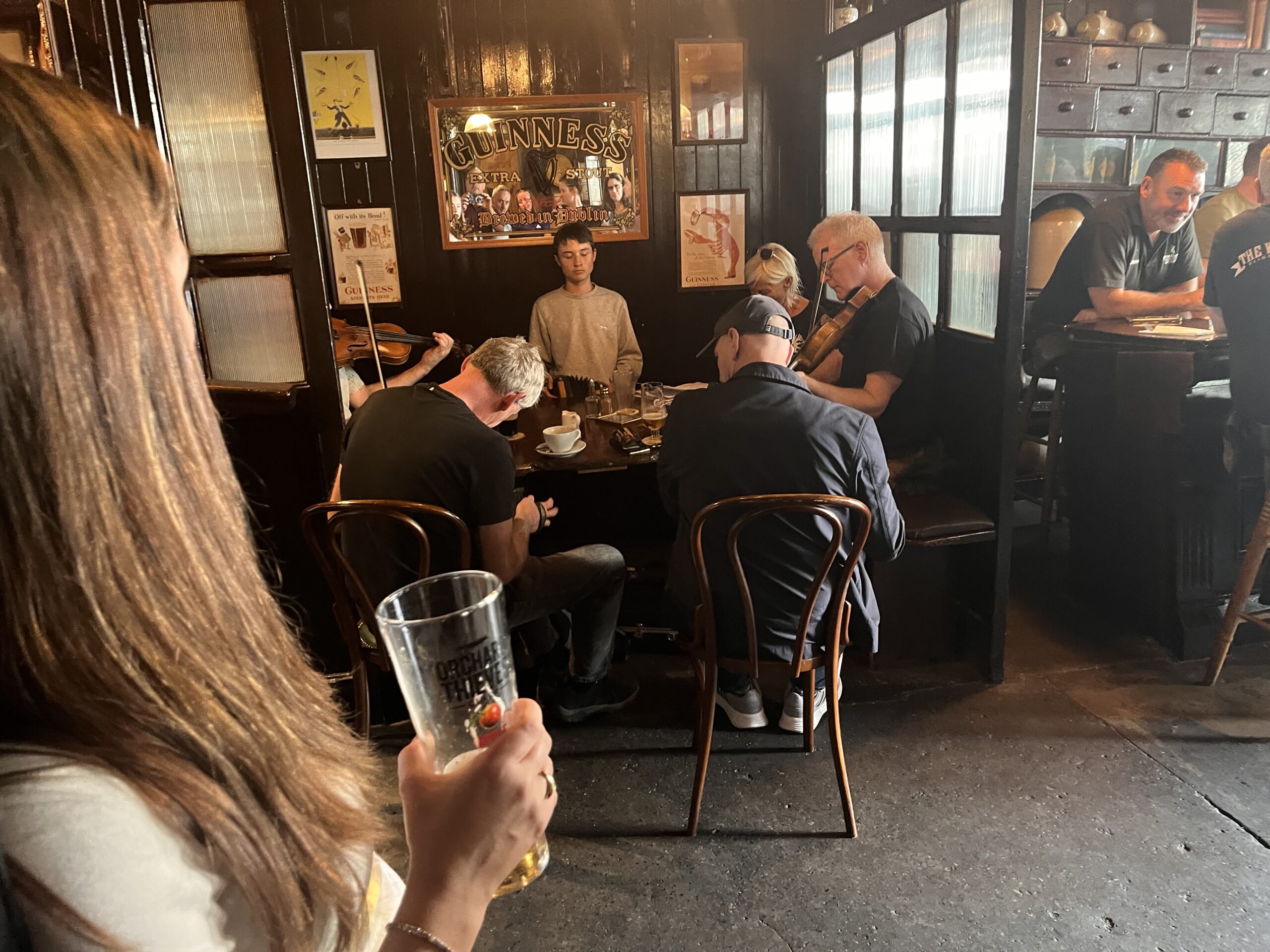
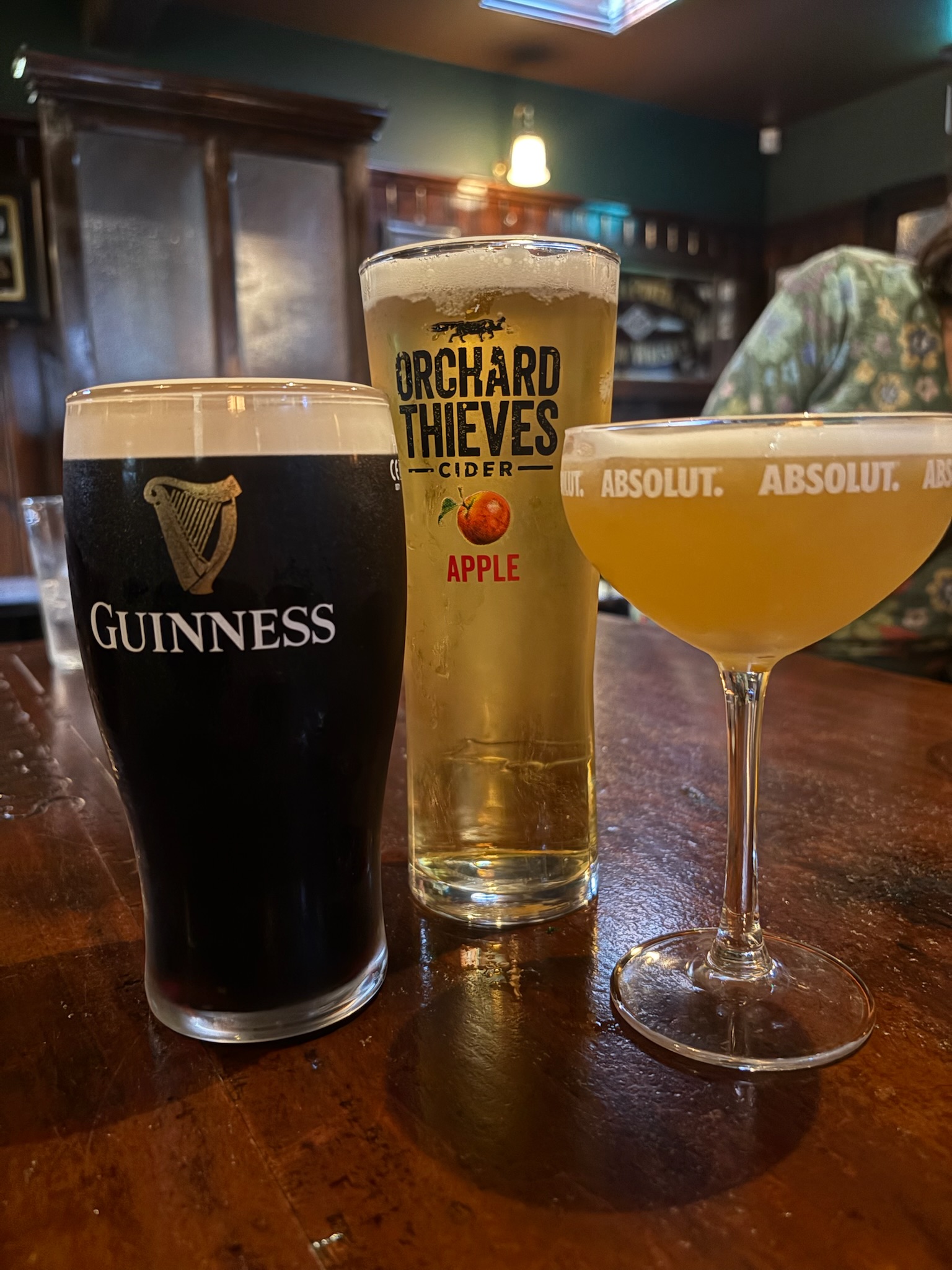
By the end of day one, we were able to cross streets throughout Sligo City safely and comfortably, though very much wearily because we had barely slept during our flight over (it left Boston at 6:30 pm and arrived at Shannon at 5 am local time and we had a meal and two snacks in between to keep us occupied). Still, we managed to stay up long enough to approximate a normal bedtime here. A fine dinner a downtown pub, featuring Guinness, cider, and live traditional music helped us stay awake through the afternoon.

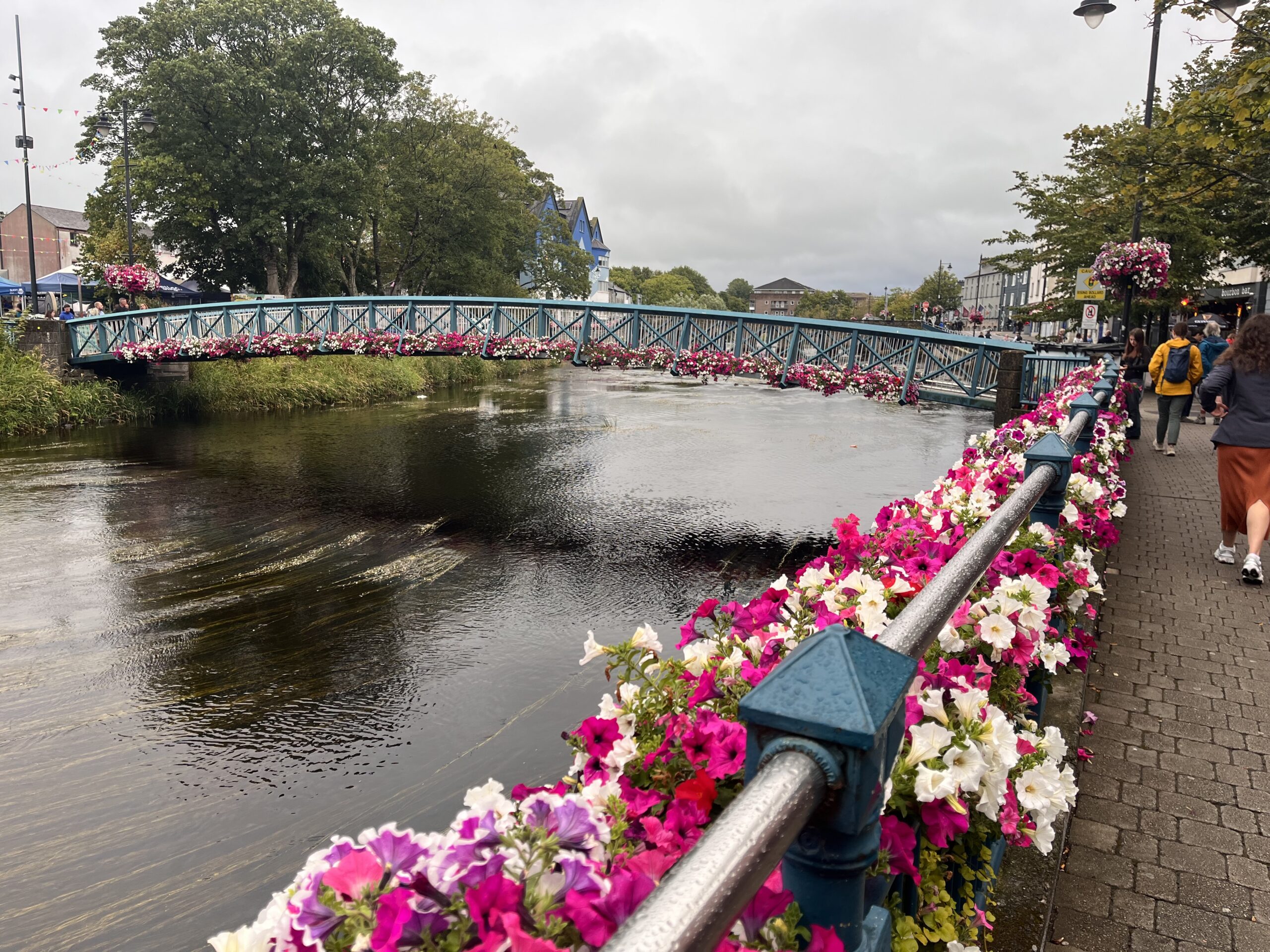
Sligo itself was also very helpful. We came with eyes open to the realities of Irish weather, but the afternoon here was clear and bright. The city does seem more visitor-inclined than Limerick. That’s too harsh. There were lots more flowers hanging about — this and the sunshine made everything seem cheerier here than they were this morning.

Sligo is overrun with petunias.

That’s not to say it was difficult to pull ourselves from the lively scene in favor of having a 6 pm bedtime. But is was good to know that this all will be waiting for us when we eventually wake up tomorrow.

The Best of Sicily (according to us)

(Guest Blogger Tom starts the review)

Climbing Mt Kilimanjaro, swimming the English Channel and folding a fitted sheet; all daunting challenges, I’m sure.  But none as difficult as selecting a single highlight from our recent Sicilian get-together with the Brookses and Pavliks. 

Nevertheless, Bob has requested we do just that, so here goes… 

First, Karen and I should acknowledge all of the preparations and plotting done by our gracious hosts, Chris and Wendy.  They gauged our interest in seeing little, some, or most of Sicily.  We settled on “whatever,” and were rewarded with a comprehensive sampling of highlights which have already been well-chronicled here by two superb writers.  I will happily echo their appreciation of Palermo, Chefalù, Siracusa, Agrigento and Catania.  Each of these places offers something for everyone, from lively music to phenomenal food and abundant history.  Frankly, it was exhausting in the best way possible.  Every turned corner resulted in proclamations like “Wow!”, “Amazing!” and “Watch out for that Fiat!” 


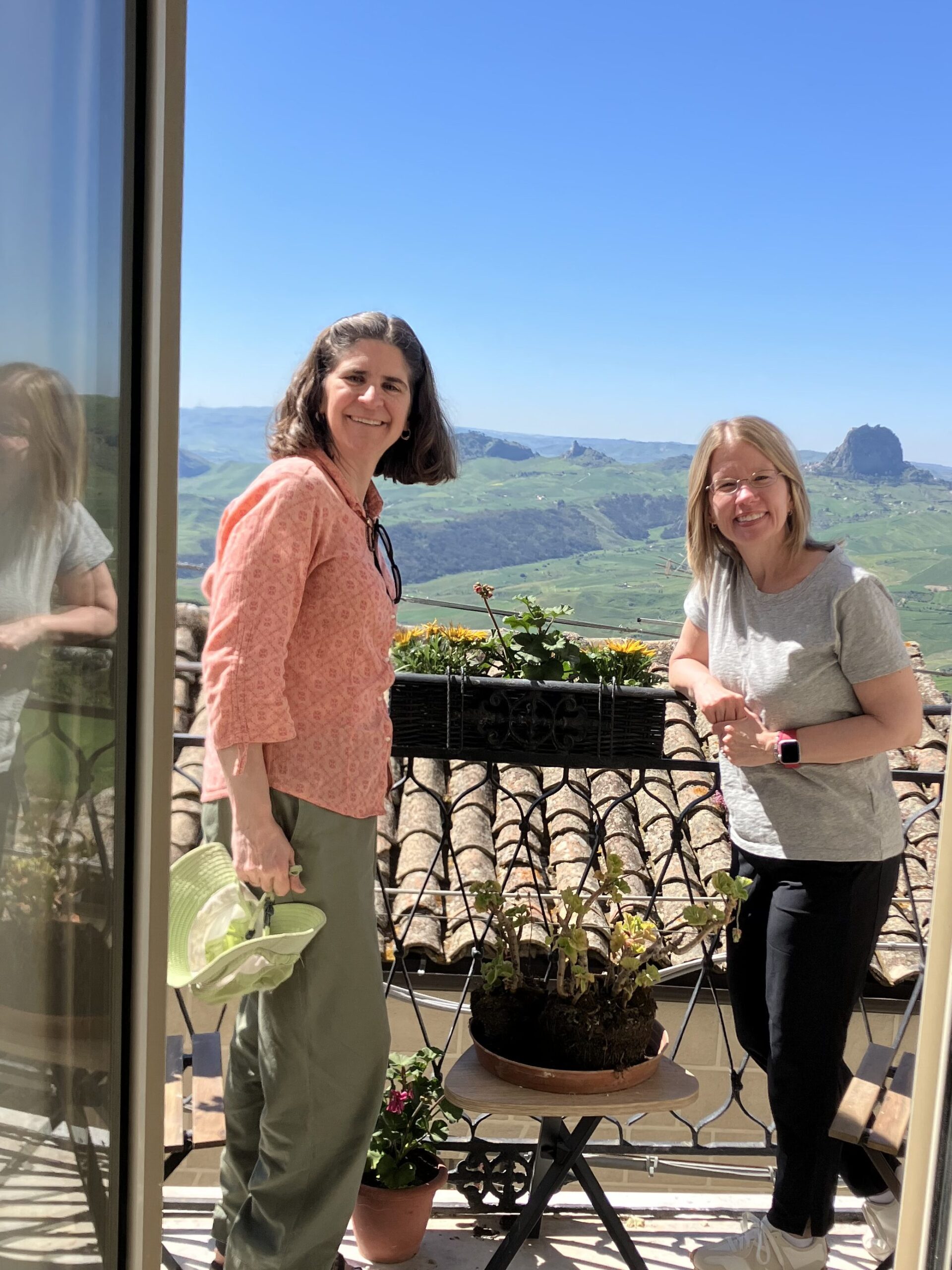
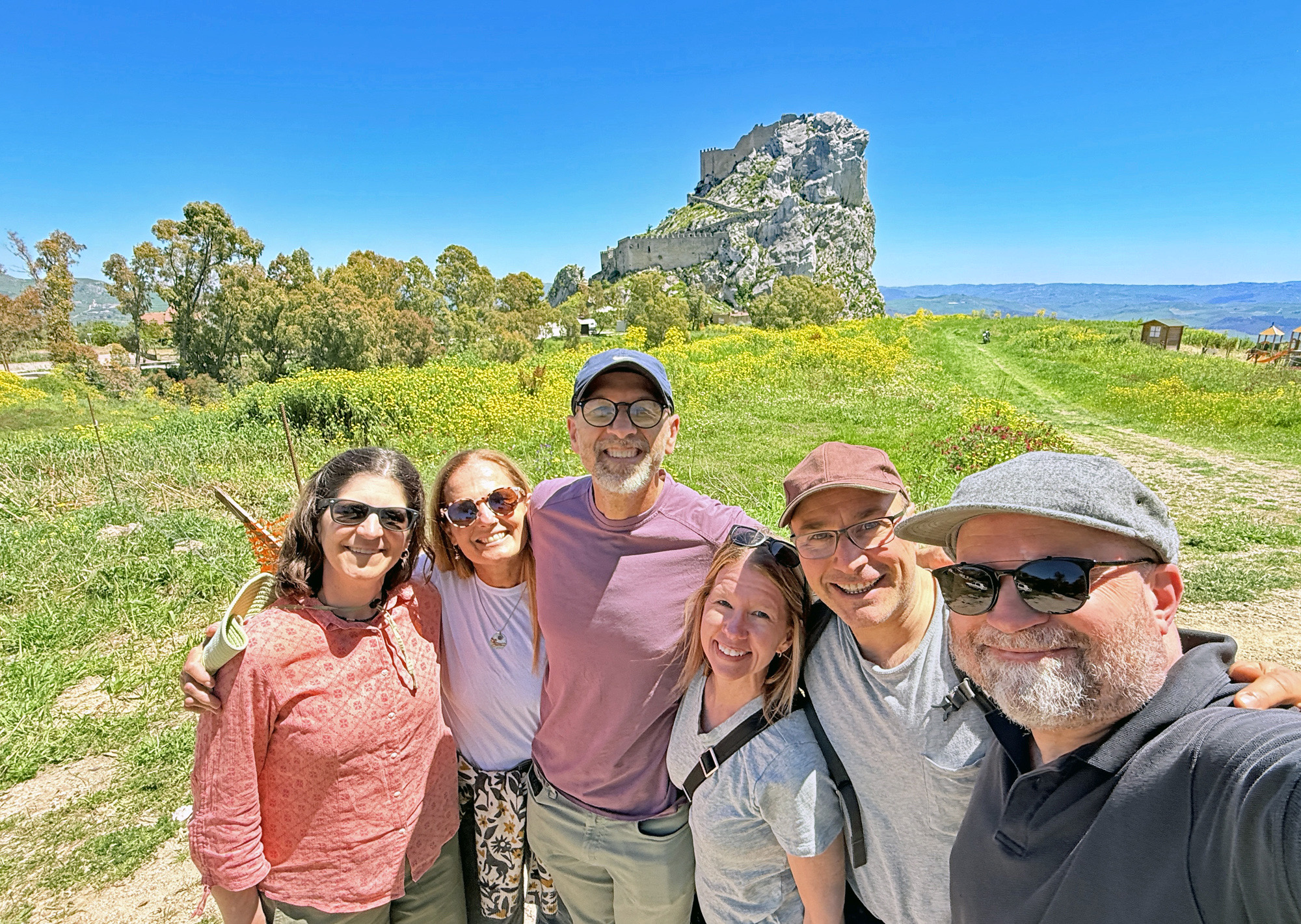
But atop this list of highlights sits our preference: Joining the Pavliks in hanging out with Brookses in their adopted city of Mussomeli.  “Way to kiss up to the Pavliks and Brookses”, you say?  That’s fair, but I’ll explain.  There’s just something about seeing familiar faces in foreign lands.  Seeing Chris and Wendy at the airport in Catania, after a red-eye flight, put us immediately at ease.  And it only got better from there. 


Here’s the thing – Rick Steves will tell you a lot about “must-see” landmarks in any given tourist destination and that’s great.  But will he introduce you to Enzo the baker in Mussomeli?  I doubt it.  How about Mario the coffee roaster or Fabio the pet groomer?  Nope.  Can Fodor’s acquaint you with Gianni, a personable artist with a garden to die for?  Fat chance.  Can Lonely Planet  get you a seat at the community potluck, rich with diverse food and personalities?  I don’t think so. 

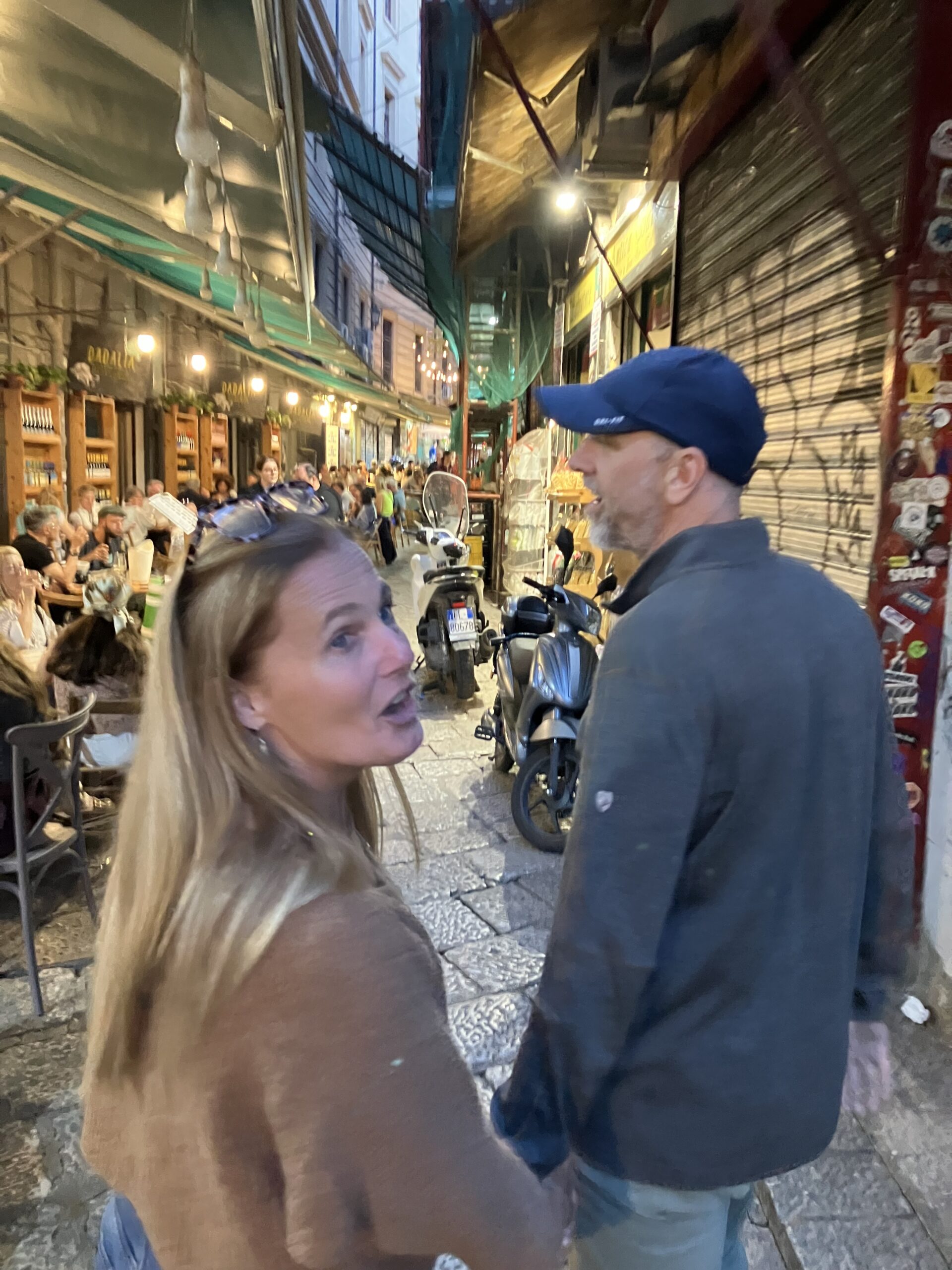
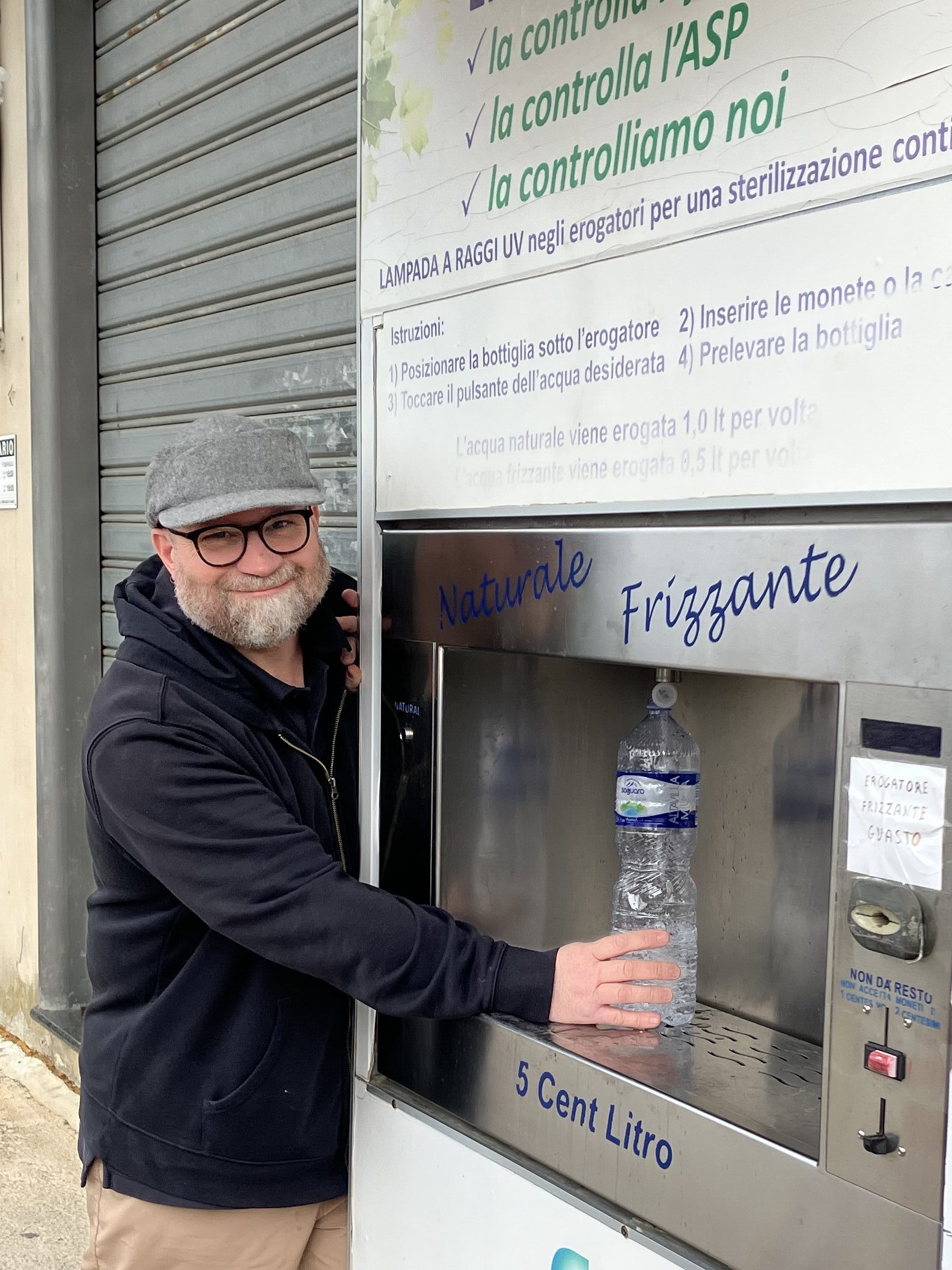
The Brookses can and did!  Even going to the local grocer or filling water bottles in town were mini adventures.  I’ll tell you this;  there is nothing mundane about walking two lovable and huge Newfies through the narrow cobblestoned corridors of Mussomeli at night.  Even the feral cat population, which is considerable, took intense interest. 


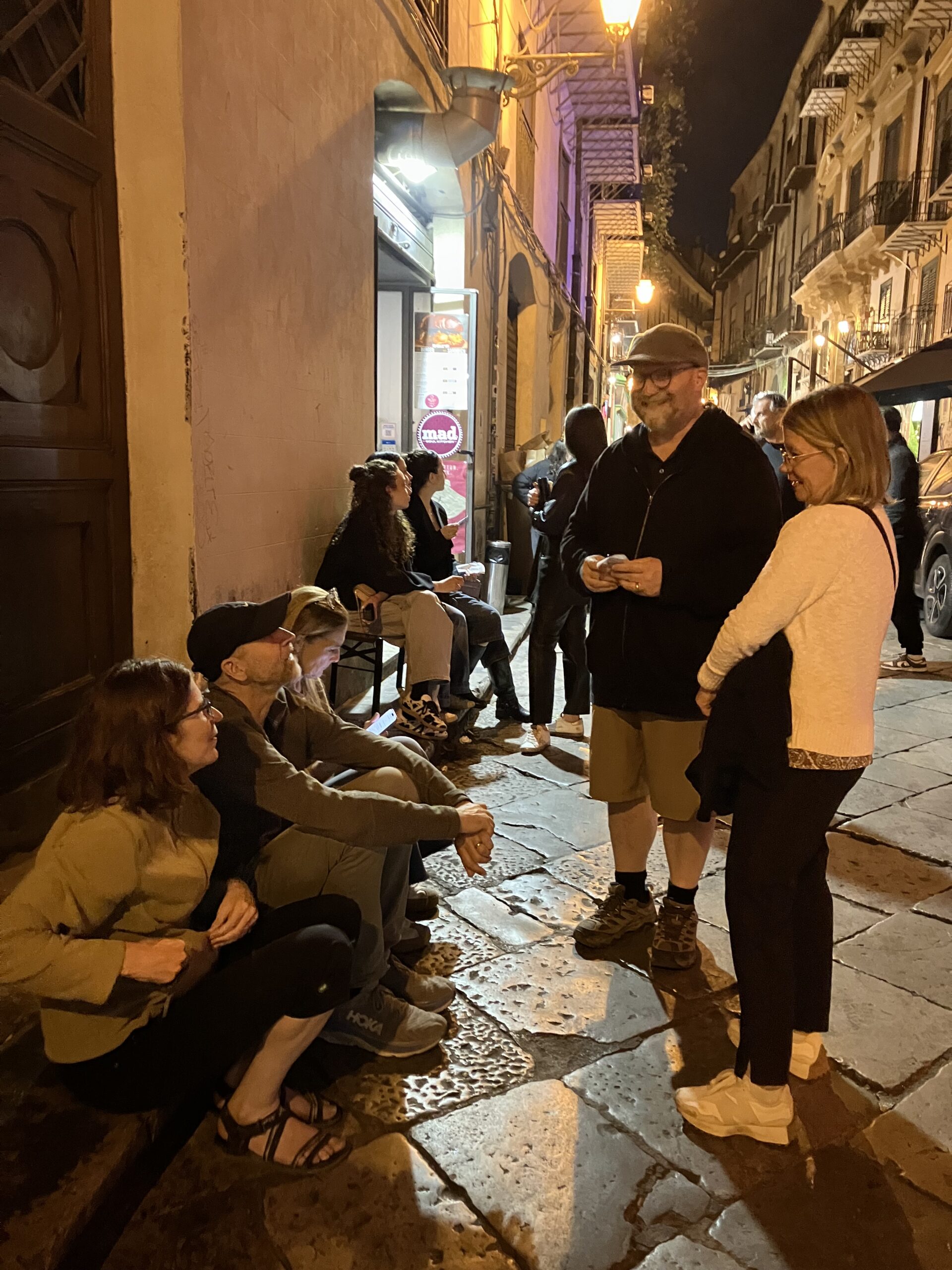
While Karen and I enjoyed touring through Palermo on an unofficial and delicious food tour (our shared runner-up highlight), seeing a remote Sicilian city through the eyes of new locals was just great.  Even better was sharing that privilege with Bob and Jen.  The six of us sitting on the piazza, fresh-baked bread and hot espresso in hand, sharing both a good laugh and a million-dollar view was as good as it got.  Everything else was delicious gravy.


Tough to argue with that, Tom.

We were extremely fortunate to have such high-caliber hosts and accommodations for our week in Sicily. Most tourists do not get even a smidge of the concierge-level treatment that we received from Chris and Wendy — the advanced scouting and reservations, the flexibility, the Italian language skills, the kittens. Just the transportation services alone were beyond a point where we could attach a value. It surely is possible for visitors to navigate their own way through Sicily, but none would be able to do it as efficiently (and bravely) as Chris.

Chris regularly used the Force to get us back to our parking spot without hitting any of his neighbors’ houses.

As a result, we got to see pretty much the width and bredth of the island with minimal stress to us. That might be the best part of the trip (aside from the cameraderie and sharing it with friends, of course). We got to see the mountains, and we got to see the sea, and we got to see a nice, liveable home environment as well.

Maybe you could say it was a Mediterrenian version of the New Hampshire home we are all so fond of.

Except with better nightlife….

and breakfast traditions

and sunsets

and photo ops

and castles

and means to settle disputes, however few there truned out to be.

Mini vacation, part due

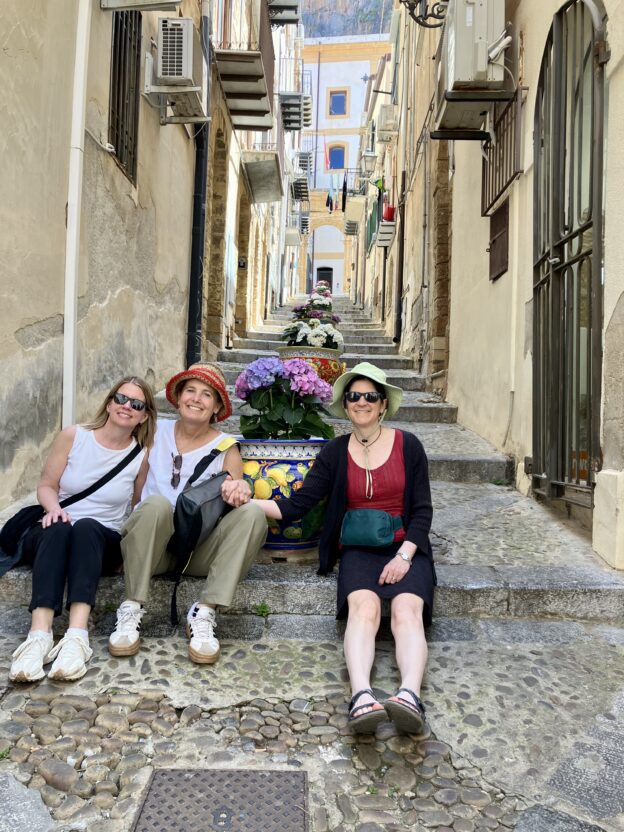
Part two of our mini-vacation-within-a-vacation started slightly earlier than we expected. Although Jen and I got the prime bedroom — its windows opened onto a courtyard rather than the street, so it was presumed to be quieter. The courtyard, however, seems to be home to a rooster, who crowed at about 5 am. We managed to get back to sleep a bit, but there was some pressure this morning to get up and out early. Our checkout time was 10 am, and there were still things in Palermo that we wanted to see.

Palermo does not seem to be a place that would feature livestock in its courtyards. It very metropolitan, with many wide streets and sidewalks, and lots of traffic and bustle. Our accommodations were a block from the central train station, and there is an electric trolley that zips past our door. (Unexpectedly, there are small trains of the type that might chug around amusement parks — we have seen several of these here, only these wind right down the traffic lanes, presumably giving tourists a close up view of local commuters.)
Of course, Palermo has its share of narrow, cobblestone streets. Some are officially dedicated to pedestrian traffic, which appreciably cuts down on the number of cars trying to navigate among the walkers. Others are traditional Italian “yield to whomever blinks last” byways.

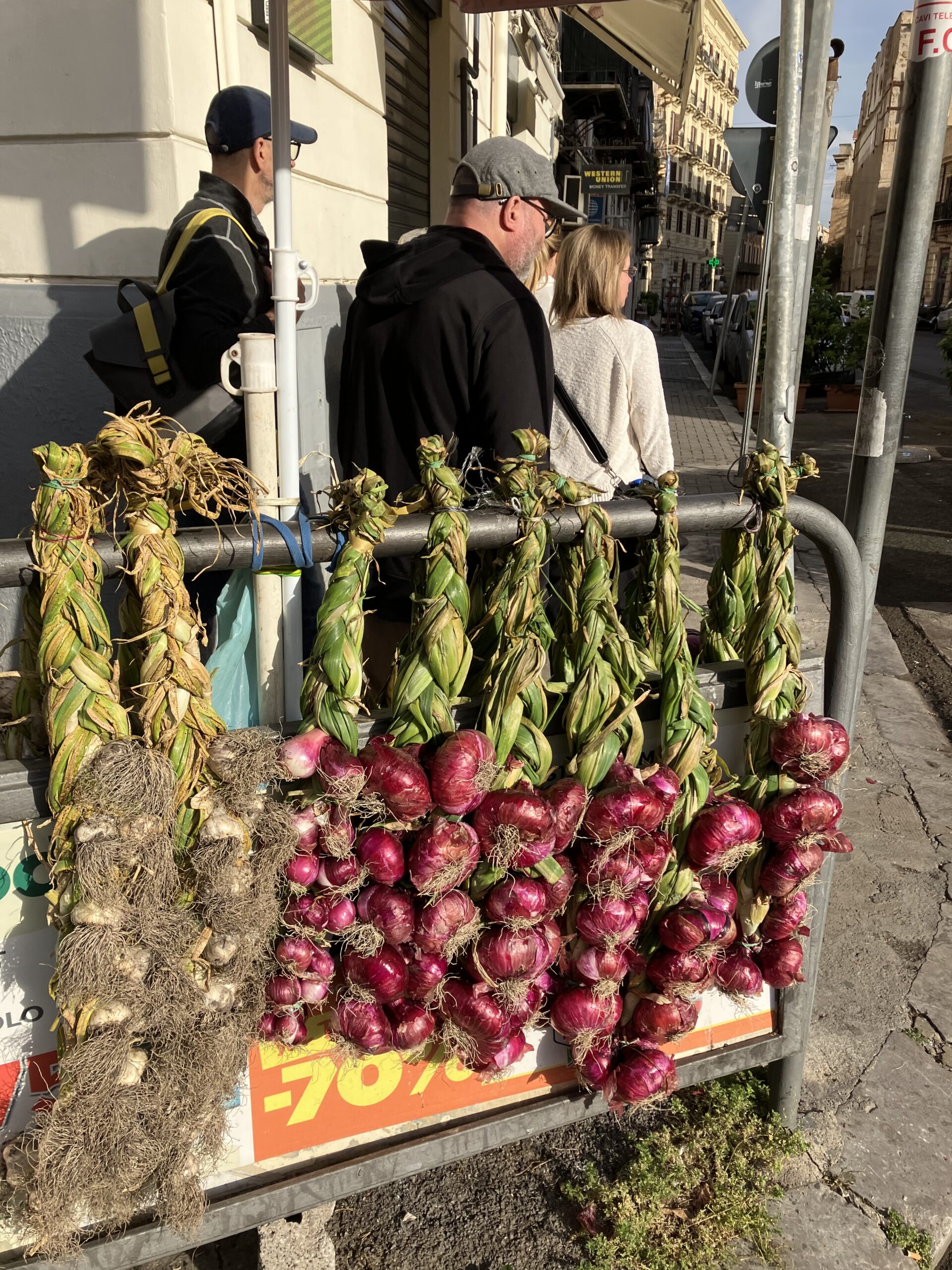
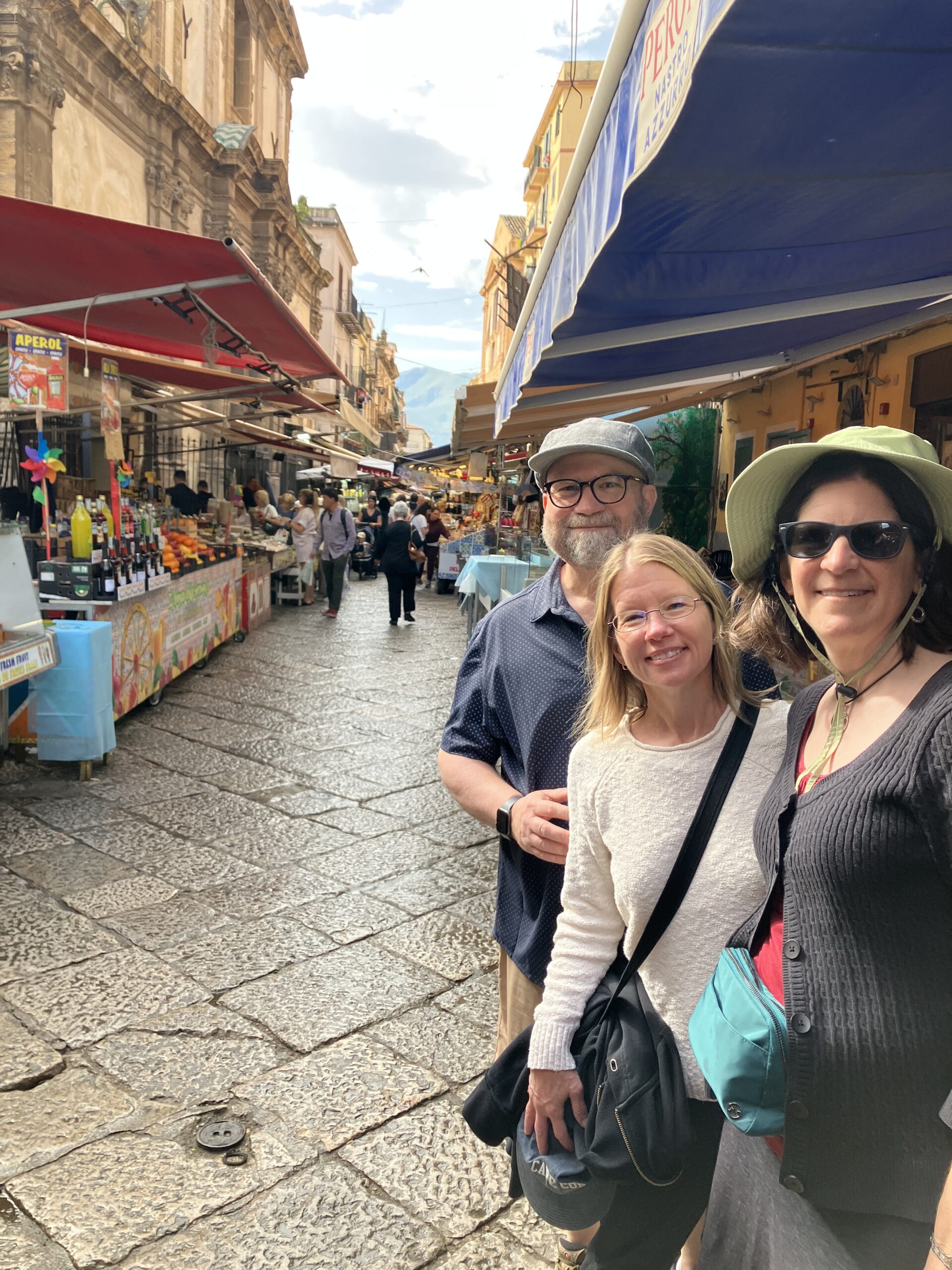
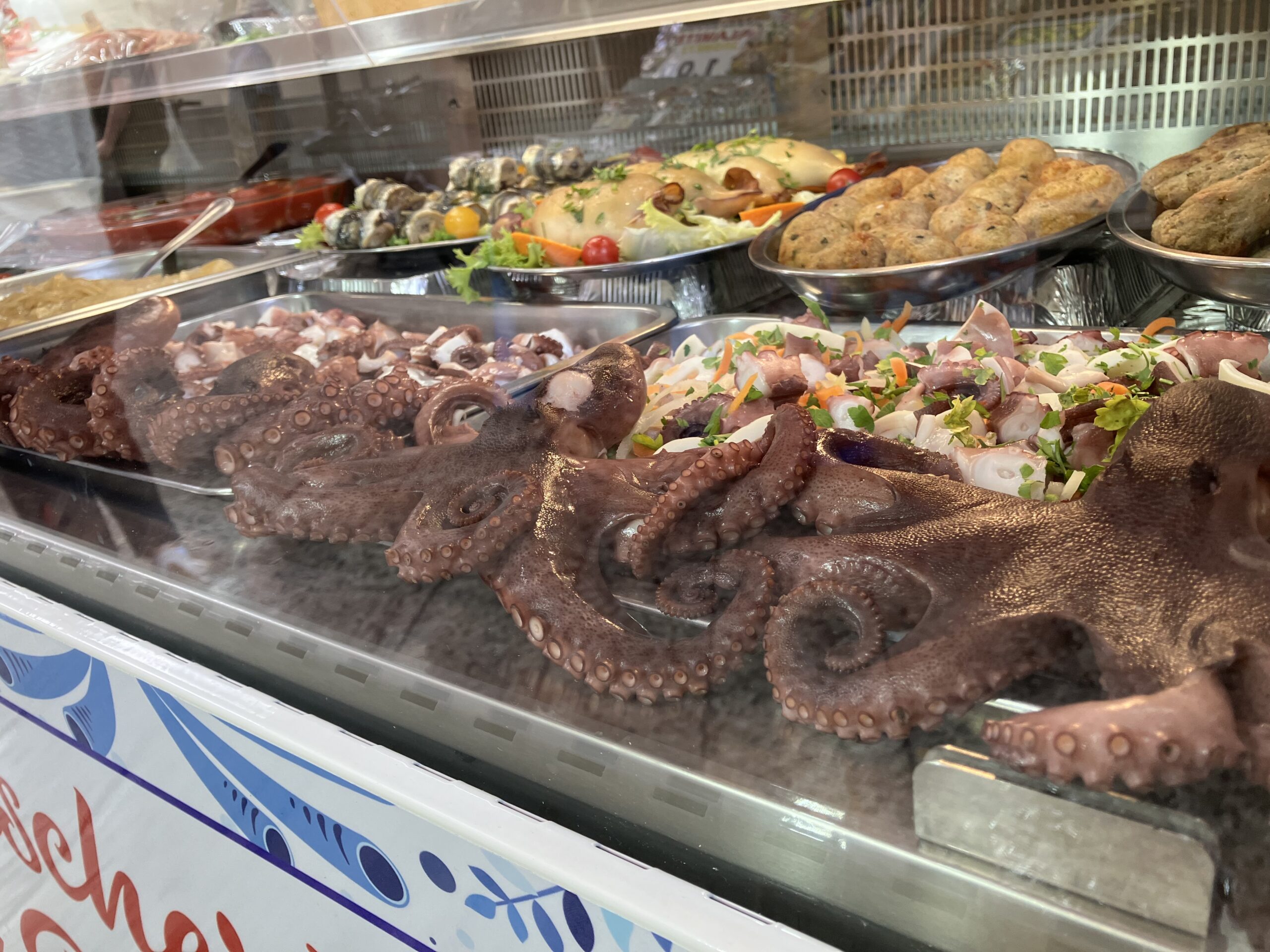
And then there are the streets that we looked for this morning — those lined with all kinds of fruits and vegetables, all manner of sea creatures, lots of spices and kitchen accessories. The Palermo food markets foiled us yesterday by closing down at 3 pm. We had planned to visit these markets for our street food dinner crawl last night, but everyone had already packed up shop. We ended up doing alright, of course, but we did want to walk through to get their flavor.

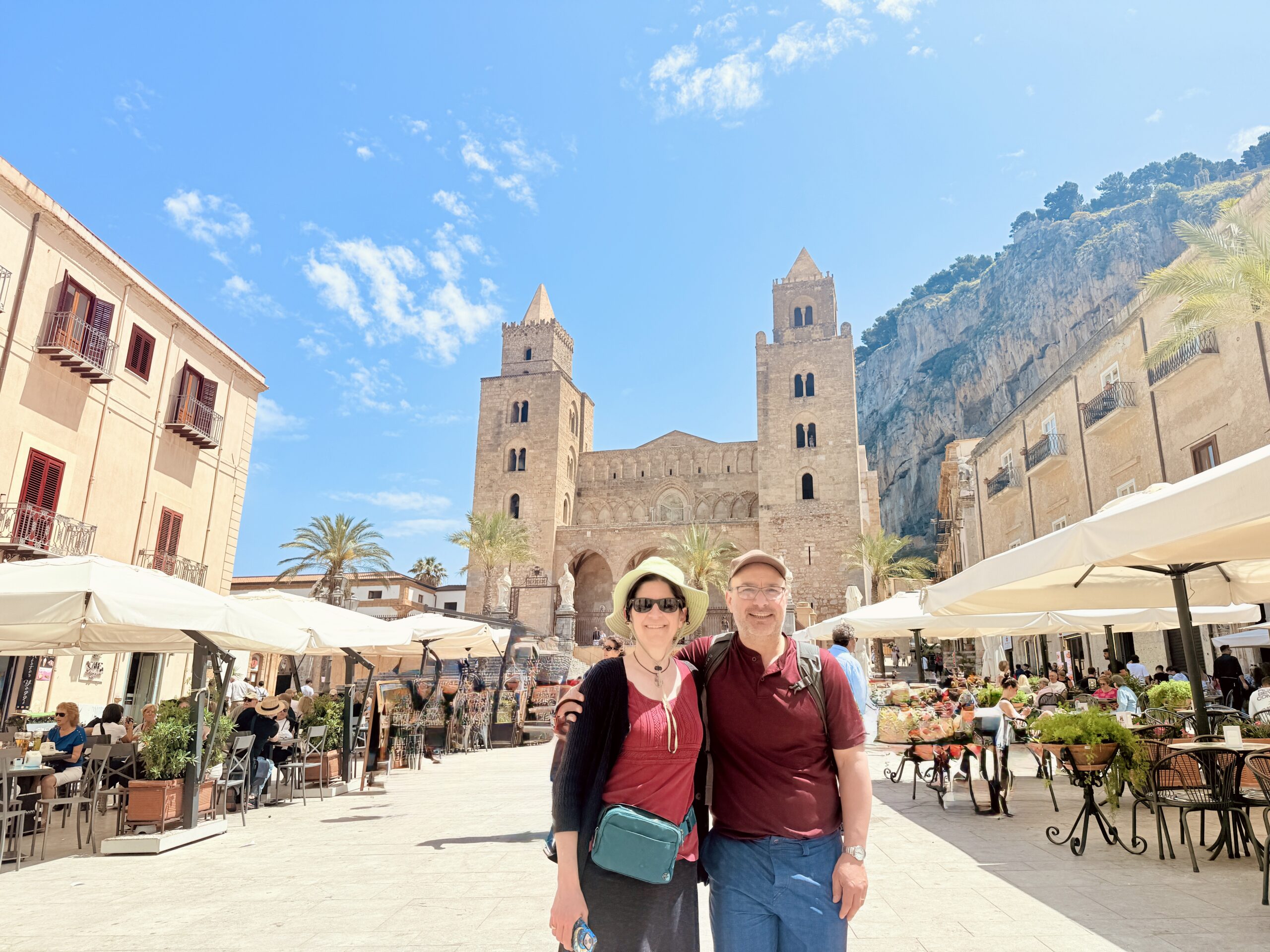
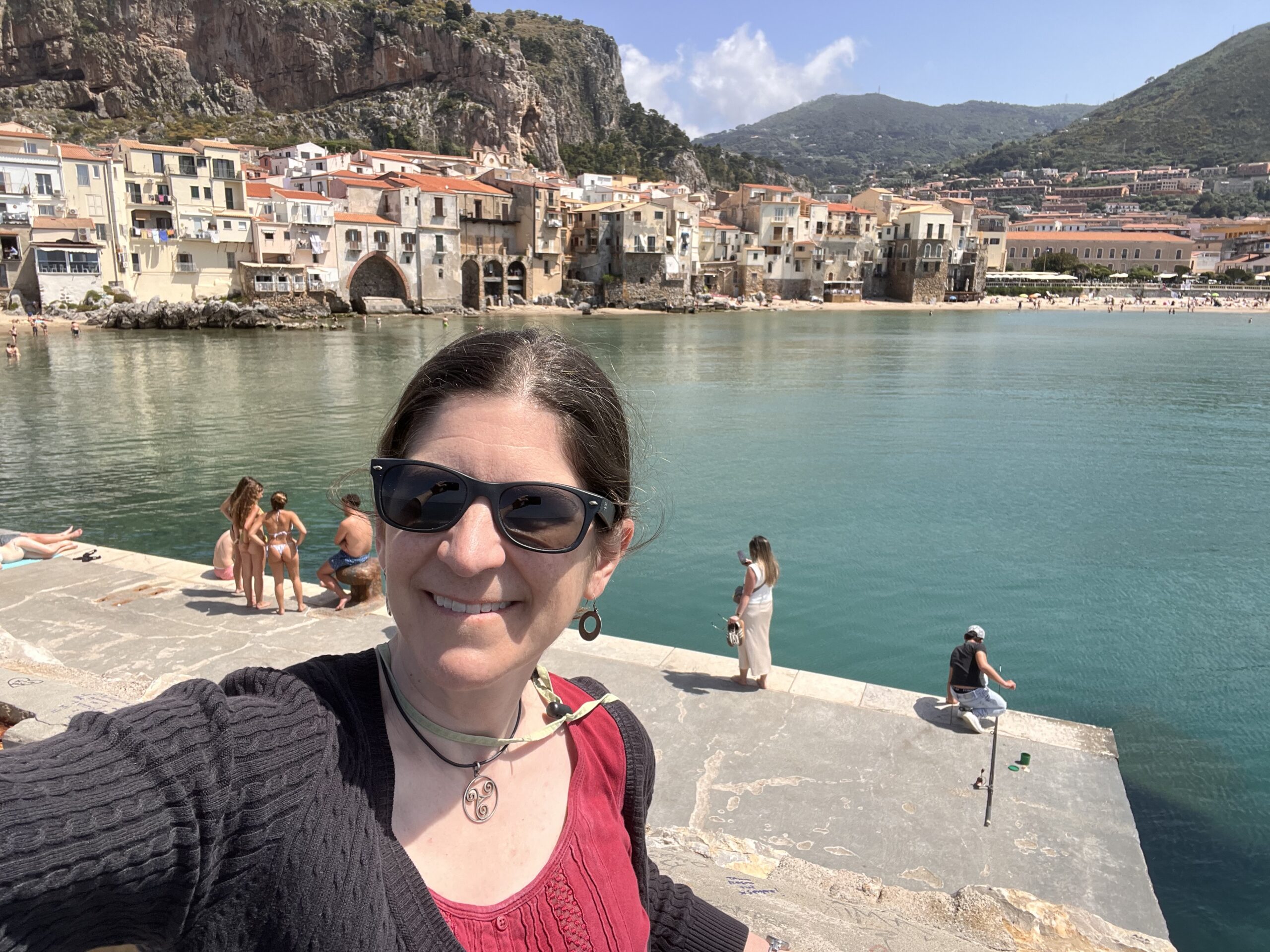
Then it was time to pack up the dogs and head out of town and up the coast. Cefalu is a beach community that shares a lot in appearance and atmosphere with the Cinque Terre villages we visisted last April. It is a little bigger, and less picturesqe than any of those towns, but it is much more accessible.
We had a fine afternoon exploring with the dogs in tow. We ate lunch in an alleyway just off the main square, then worked our way down to the shore where a stretch of sandy beach started where the city blocks ended. It was protected by a sturdy rock jetty that we could walk out on. From its furthest point, Jen took a 360-degree panoramic video of the town, beach, distant hill, and blue-green sea.

It seemed too difficult of a prospect to not stop for gelato on our way back up, though a different set of cobblestone walkways than the ones that had brought us down to the water.

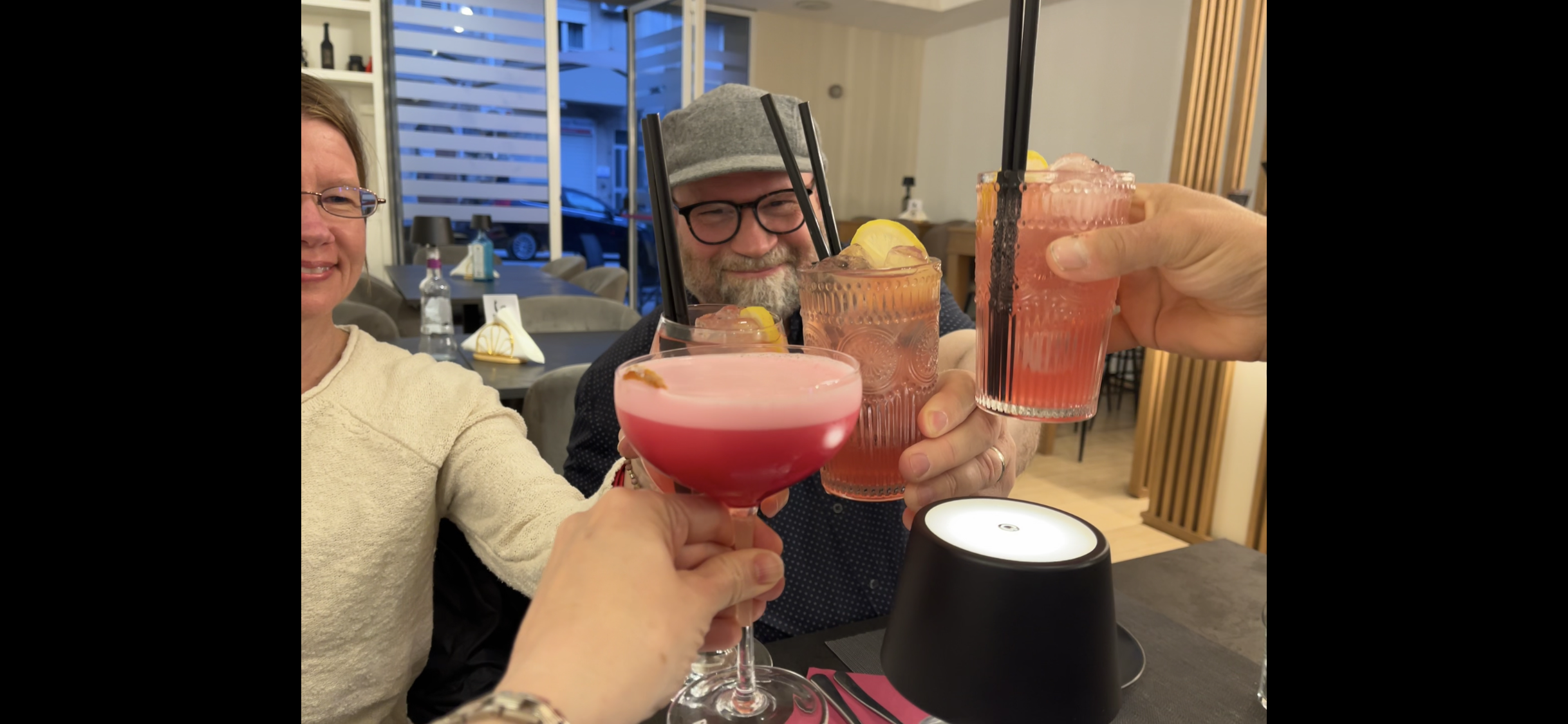
We motored back to Mussomeli and got ourselves psyched for this evening’s challenge: navigating a Sicilian restaurant without Chris and Wendy.(Our Sicilian super-hosts were double booked for tonight and obliged to attend a friend’s going away party.) Our adventure veered toward disaster when the wait staff had trouble comprenending our request for a small aperitivo plate to open our meal. They solved the problem by bringing us two large aperitivo plates. The crisis was averted when I ate just about every small sandwich and french fry within reach. We all then were able to bring the primi pasta plates that we had planned to eat after just a sampling of aperitivo. It ended on a high note when the restaurant’s owner — like most people here, a friend of Chris and Wendy — saluted us with a round of a limoncello-like liquor called Aqua de Cedri.

Traveling through time

Never underestimate the power of six people who are able to motivate and coordinate each other in such a way that all of them are ready to hit the road at 7:30. Just this feat suggests extraordinary accomplishments are possible.
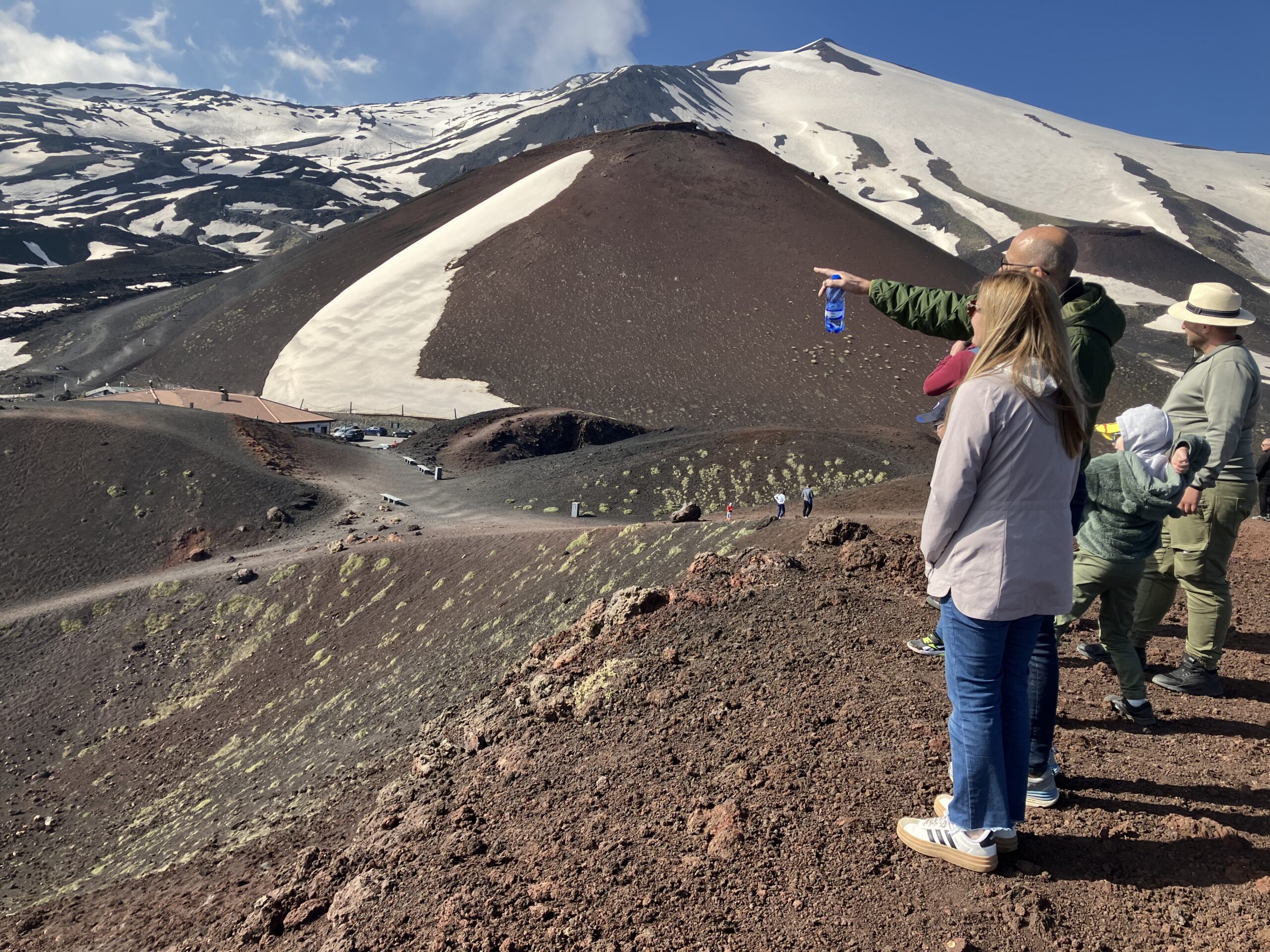
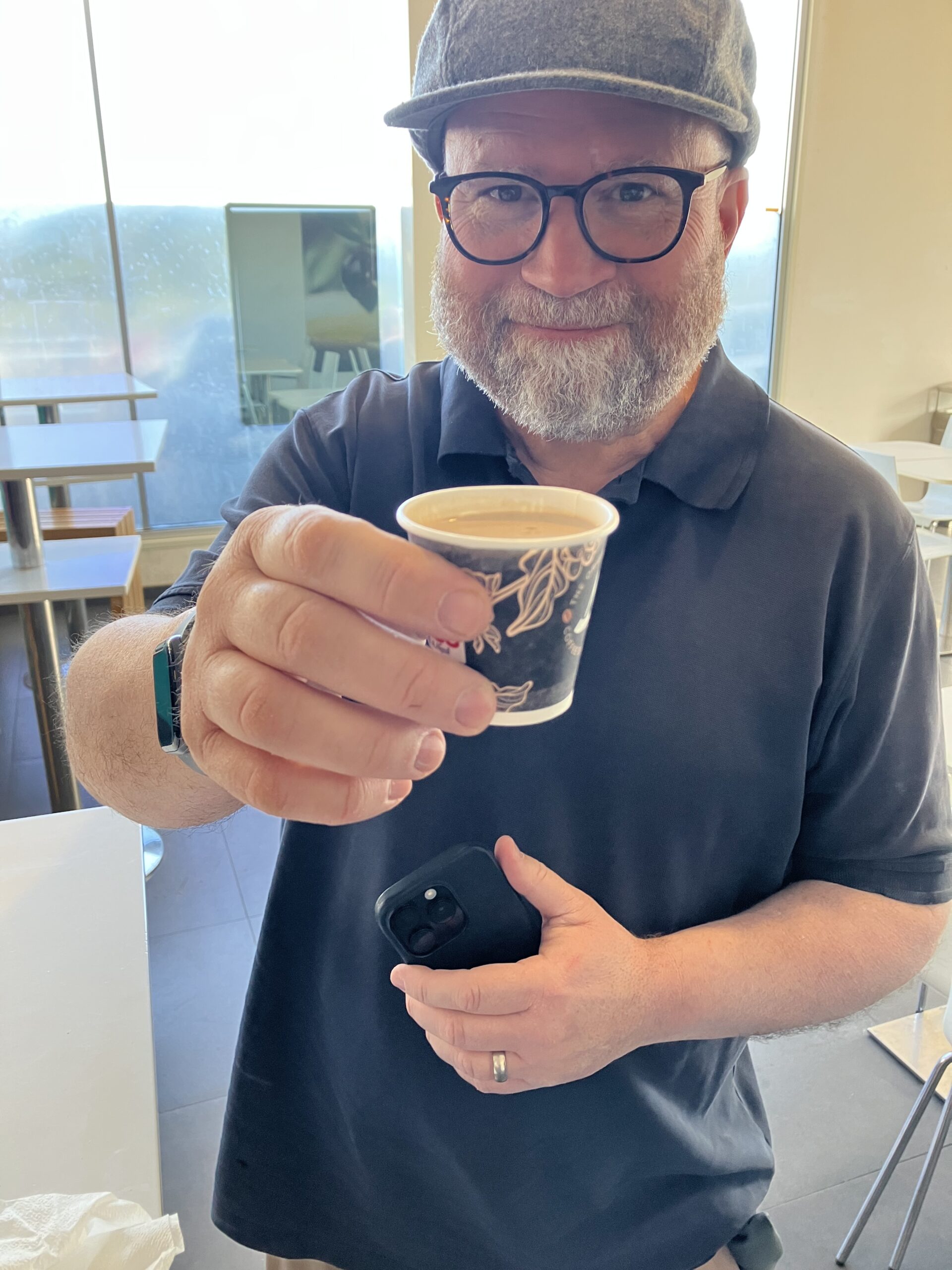
Thus, we were feeling full of potenial as we headed out this morning for the city of Siracusa, about three hours away. Along with the pleasant sunshine and windshield-filling views of Mount Etna, one other thing buoyed our spirits. It was a tiny cup of goodness called Crema Freda — so good it could only be served in thimble-sized contaners at the highway rest area close to Catania. Ours got passeed around, and even people who only got a few sips were smiling for hours afterwards.
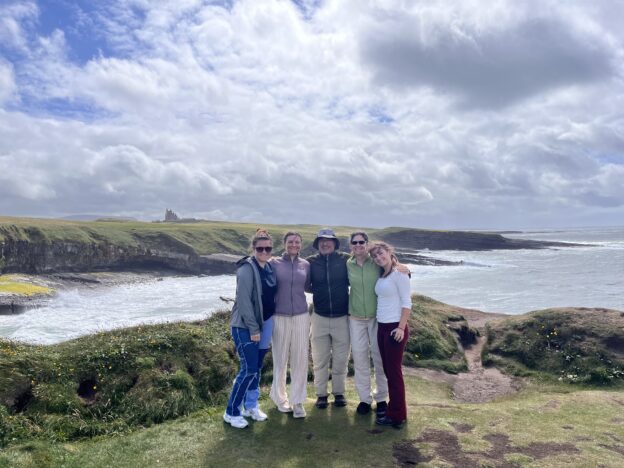


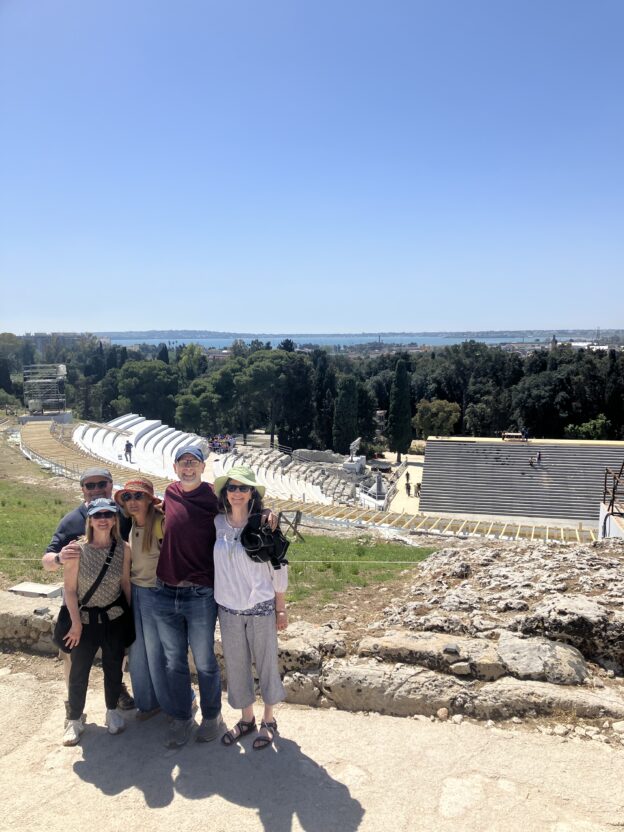
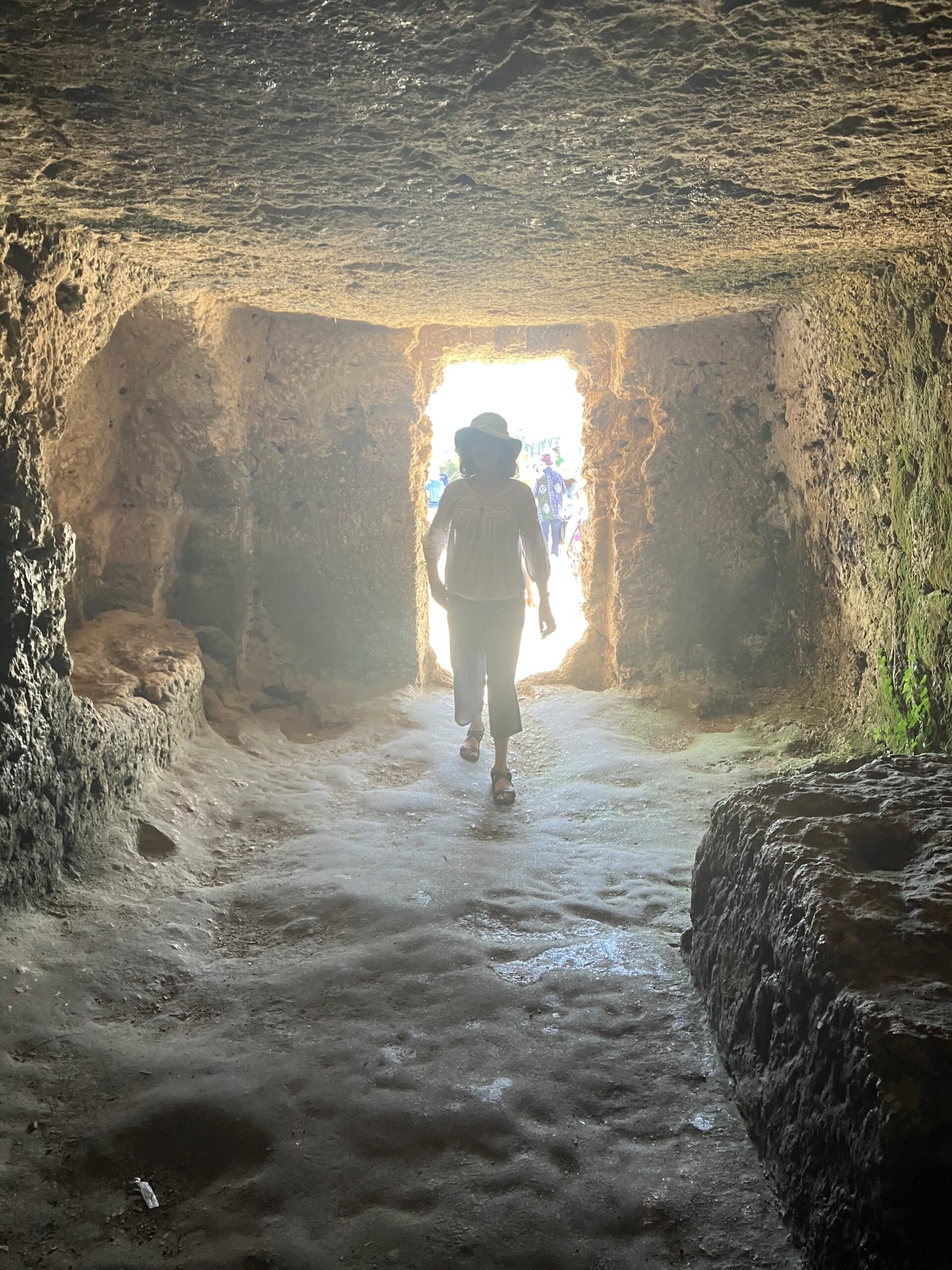
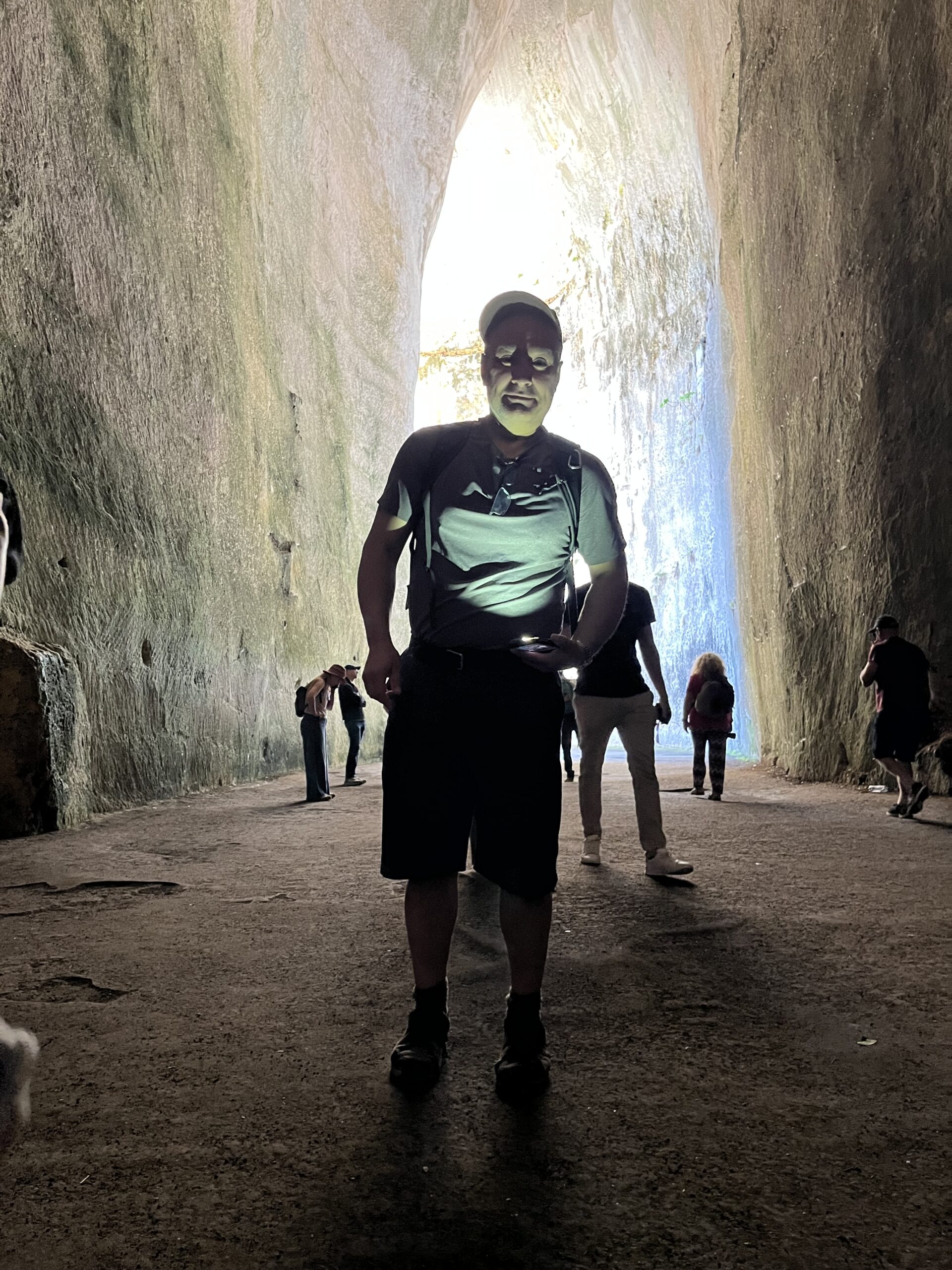
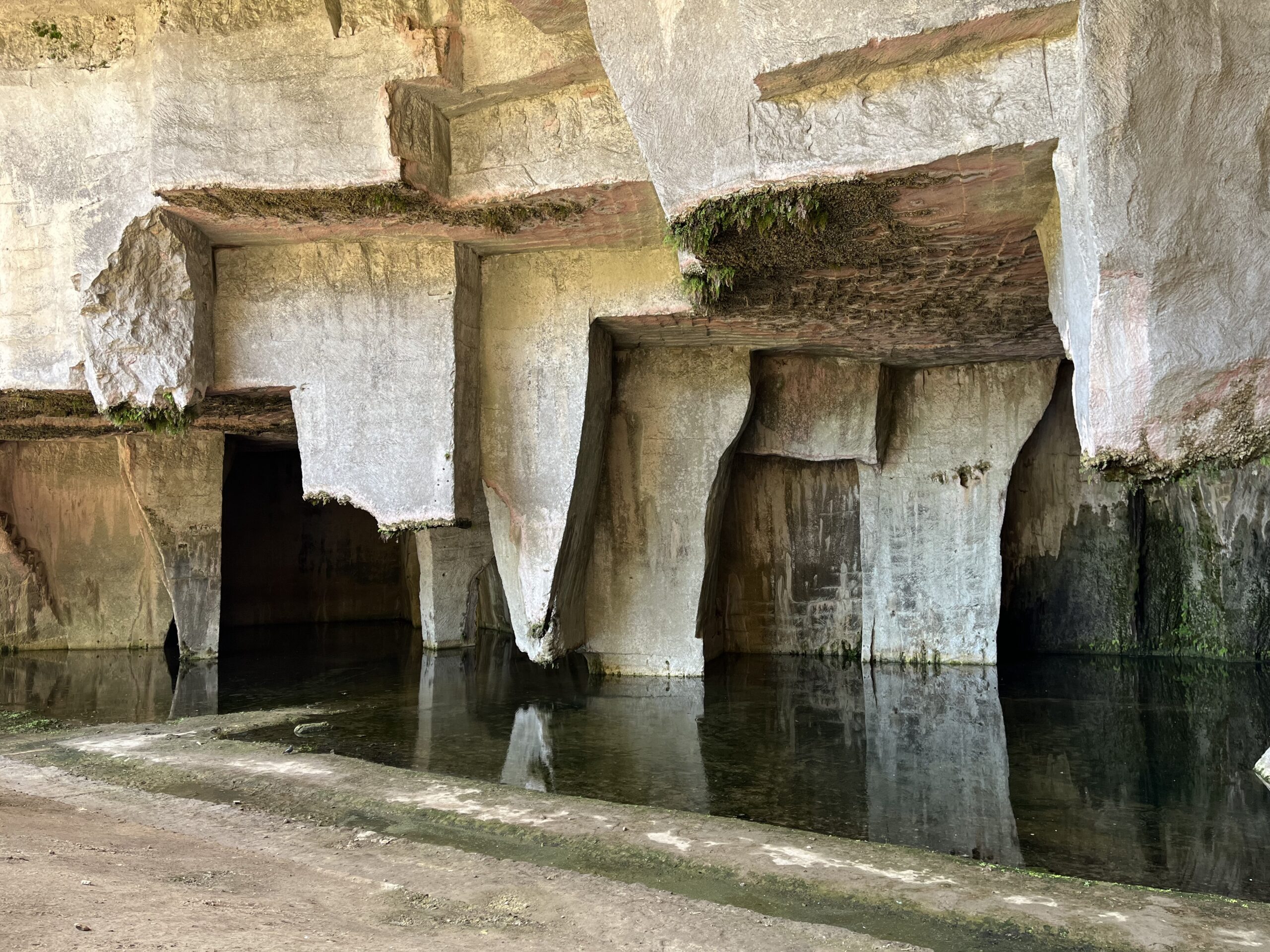
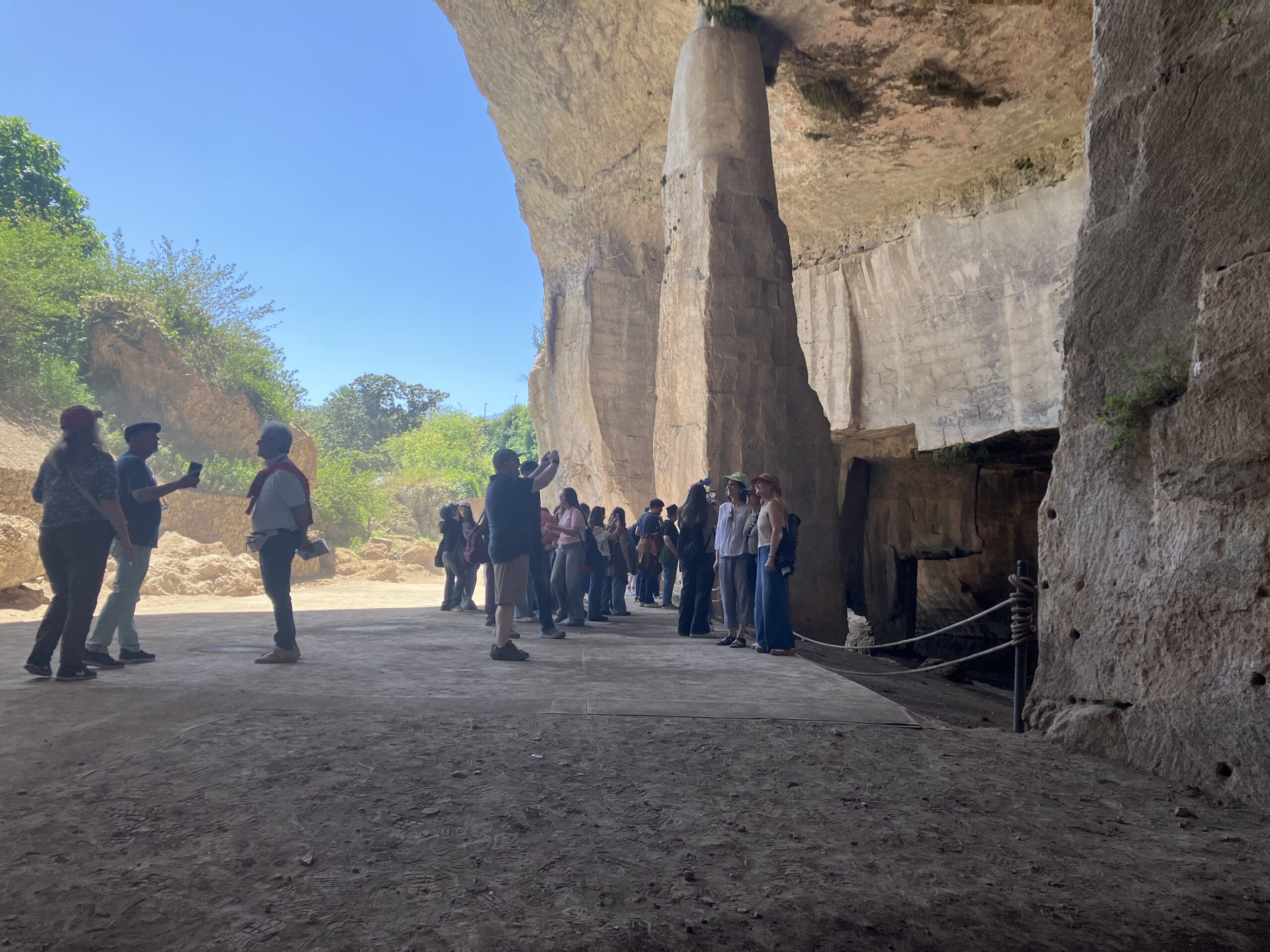
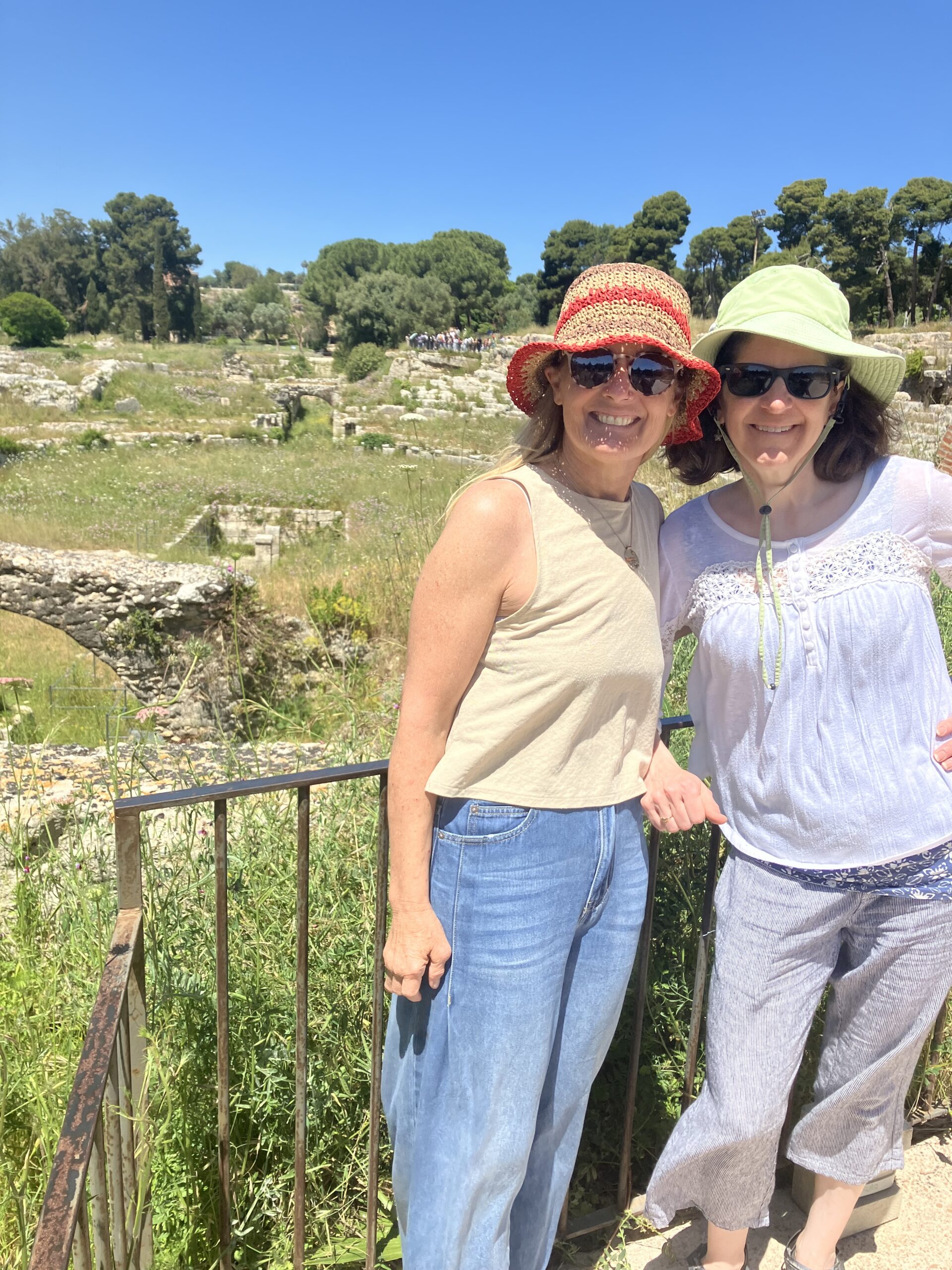
We got to Siracusa and parked our car well before the pleasant feelings wore off. Our mood was barely scratched by the ranks of school groups at our first tour stop of the day, the Necropolis Archeological Park. If getting up and out by 7:30 were not enough, now we would hop a few millennia back in time to when the Ancient Greeks had a colony in this area of Sicily. They built a grand amphitheater on a hillside, using stone quarried from higher up the hill. The resulting structure still stands largely intact, and the holes made by the quarrying are visible and explorable after serving a variety of functions, including as tombs, over the past 2,000 or so years. Much of the original rock of the amphitheater is currently covered by wooden planks because the place now serves as a venue for a summer concert series. This dampened the effect a little, but the location is still stunning — from the top you can look out over trees and city streets to the sea.


Also, we weren’t done time traveling yet. After a stroll through another quarry that left sizeable grottos that we could walk through (and whose accoustics the school groups could test out by screaming and whistling persistently) we found another amphitheater built by the Romans slightly fewer millenia ago than the first ruins we saw. This one seems to have less concert venue potential these days, but it did serve nicely as a wildflower breeding ground. The school groups were unimpressed and didn’t make it past the first viewing point.


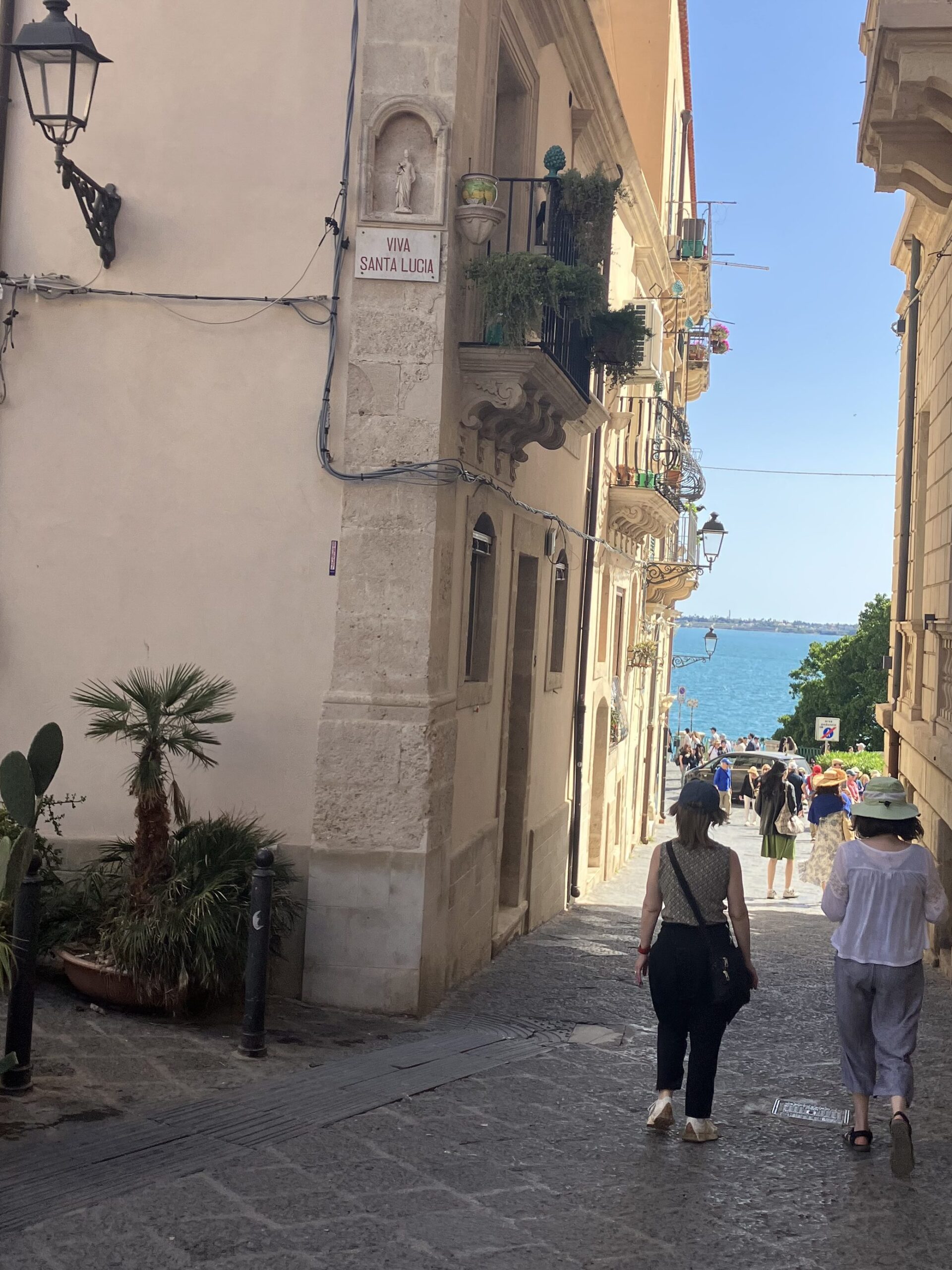
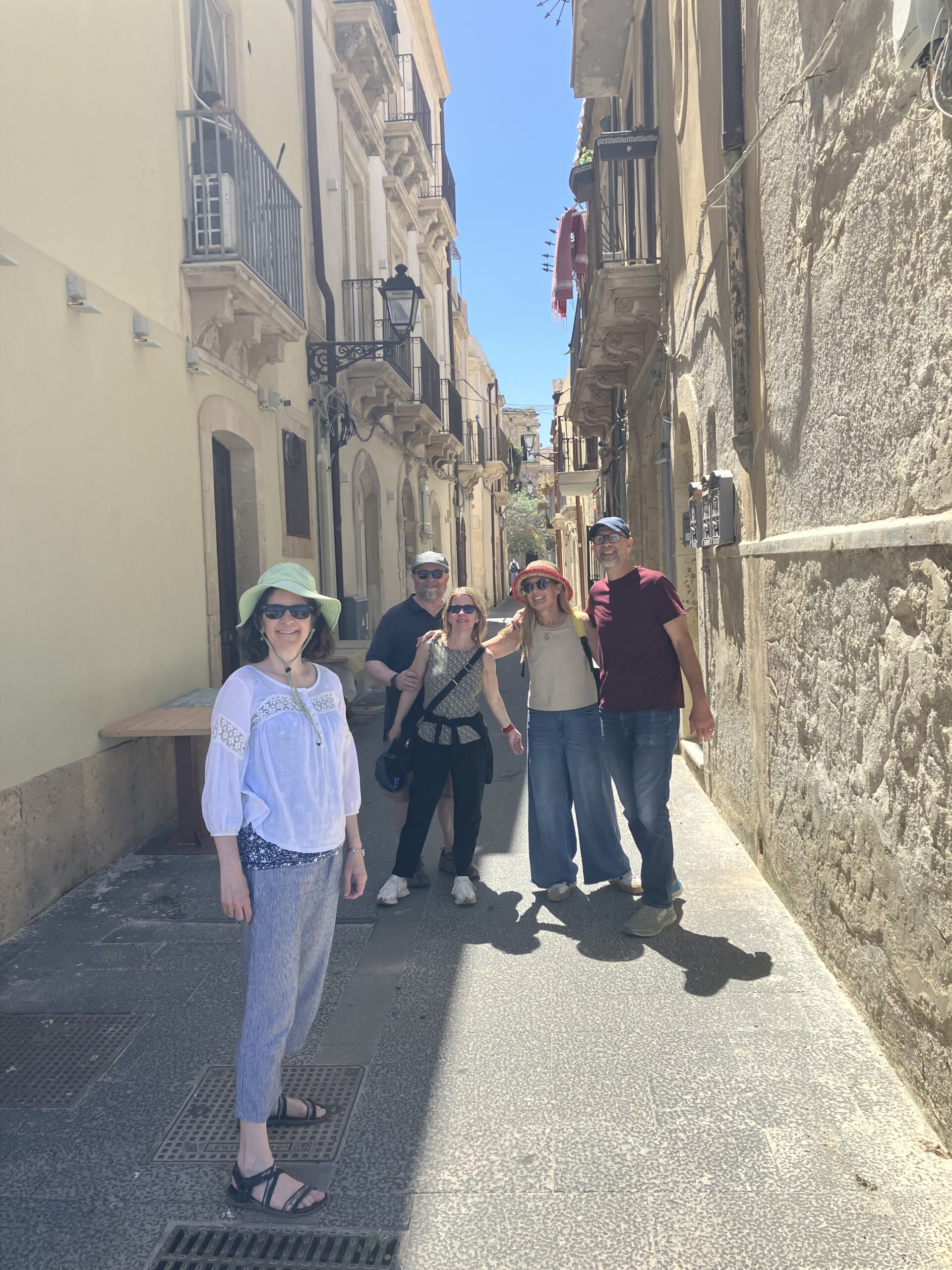
Of course, by this time it was pretty much lunch time, and we had a general destination in mind: the island of Origia which is connected to the city by two short bridges and which shares the brunt of Siracusa’s tourist traffic with the Archeological park. People who like narrow cobblestone foot-traffic passages though sun showered two-story residential canyons would be very happy to get lost wandering around here. We were those people, even a little bit past the pont where were started to hope that the passage we were on would lead us to lunch, which one of them eventually did.

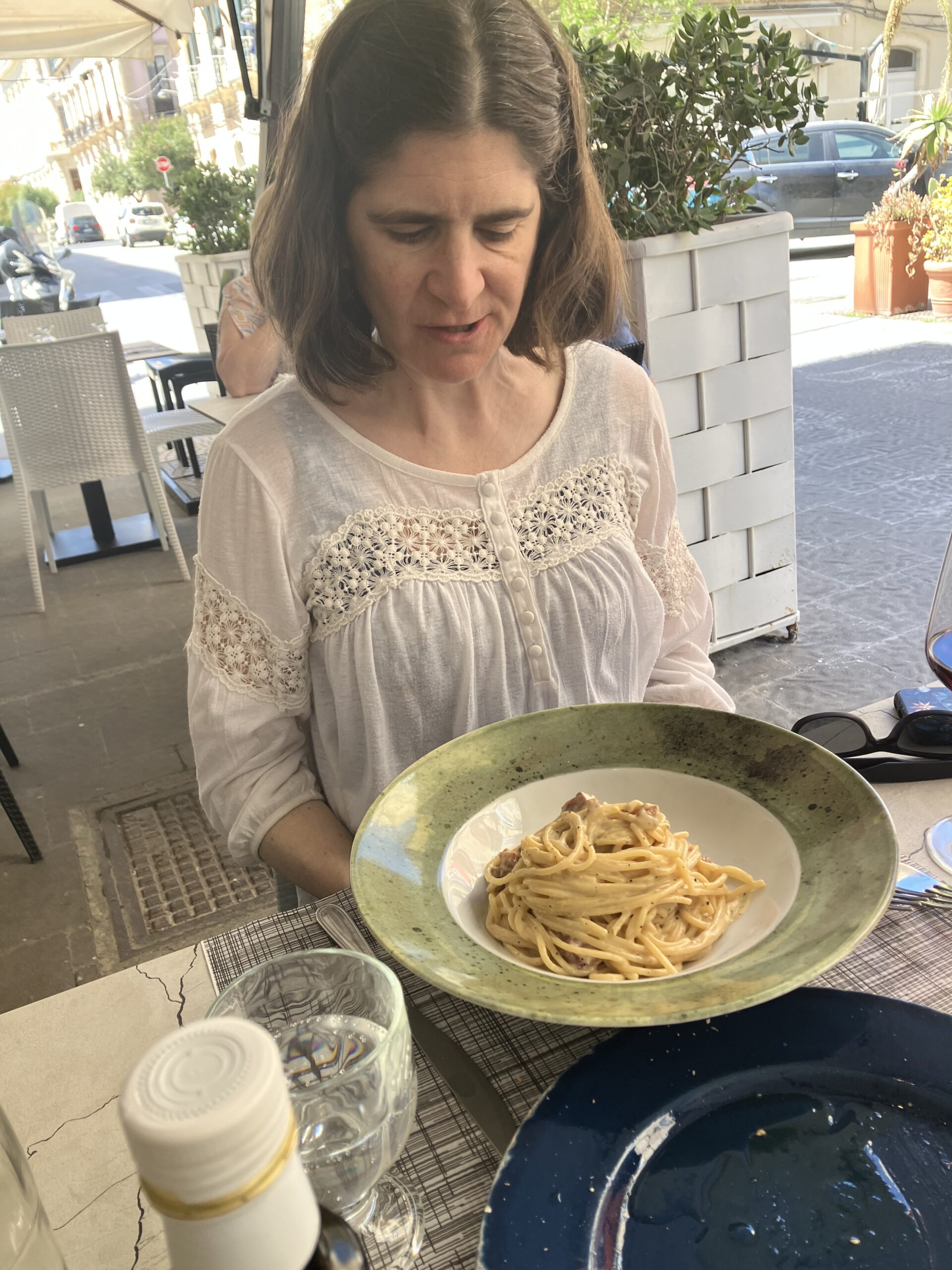
This was our first real pasta meal of the whole trip, and it did not disappoint, though only one of us decided to pursue Ortigia’s reputation for seafood. The penne with swordfish and eggplant was quite good, as were, reportedly, the carbonara, lasagna, pasta norma, and ragu.


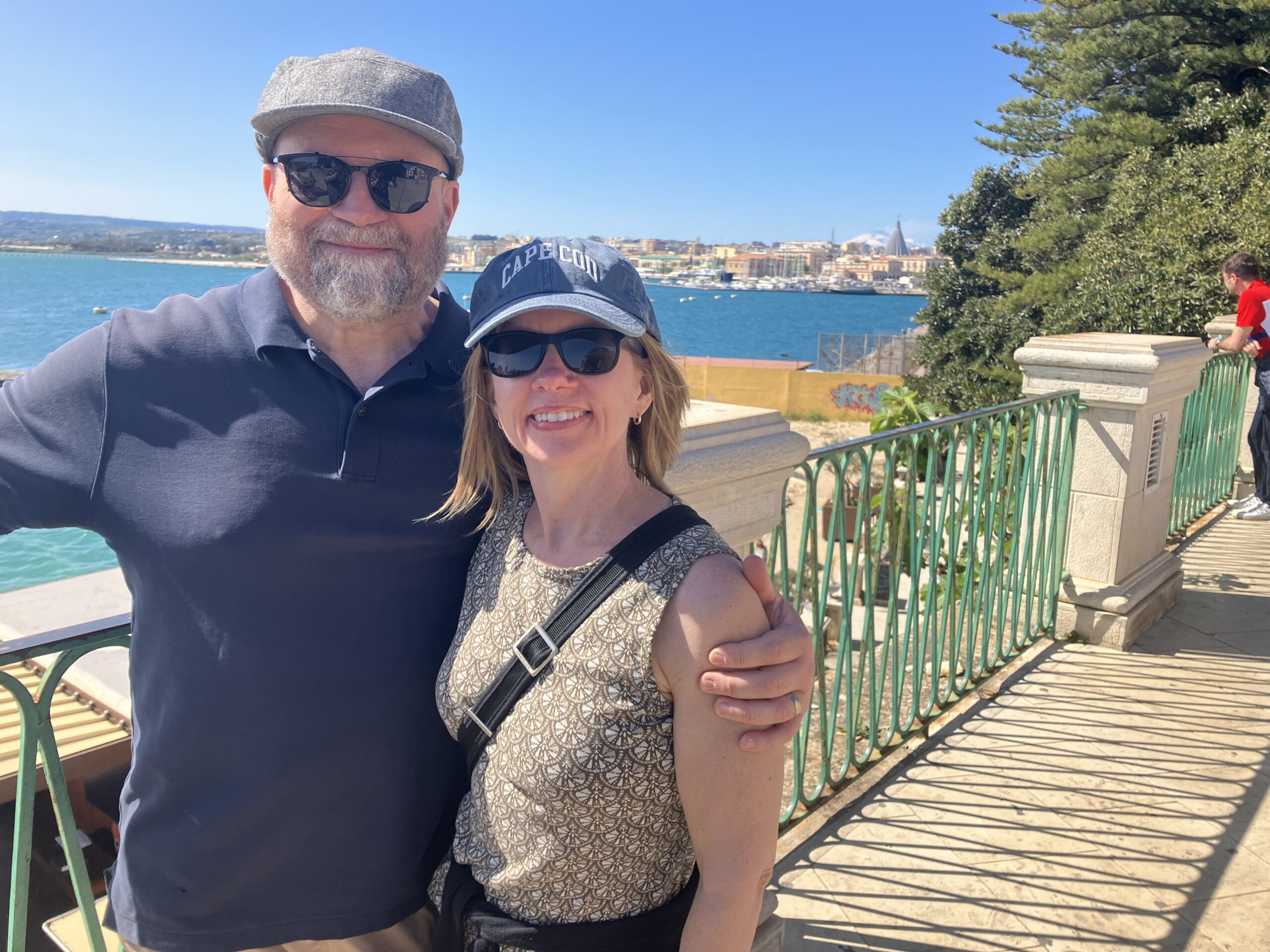
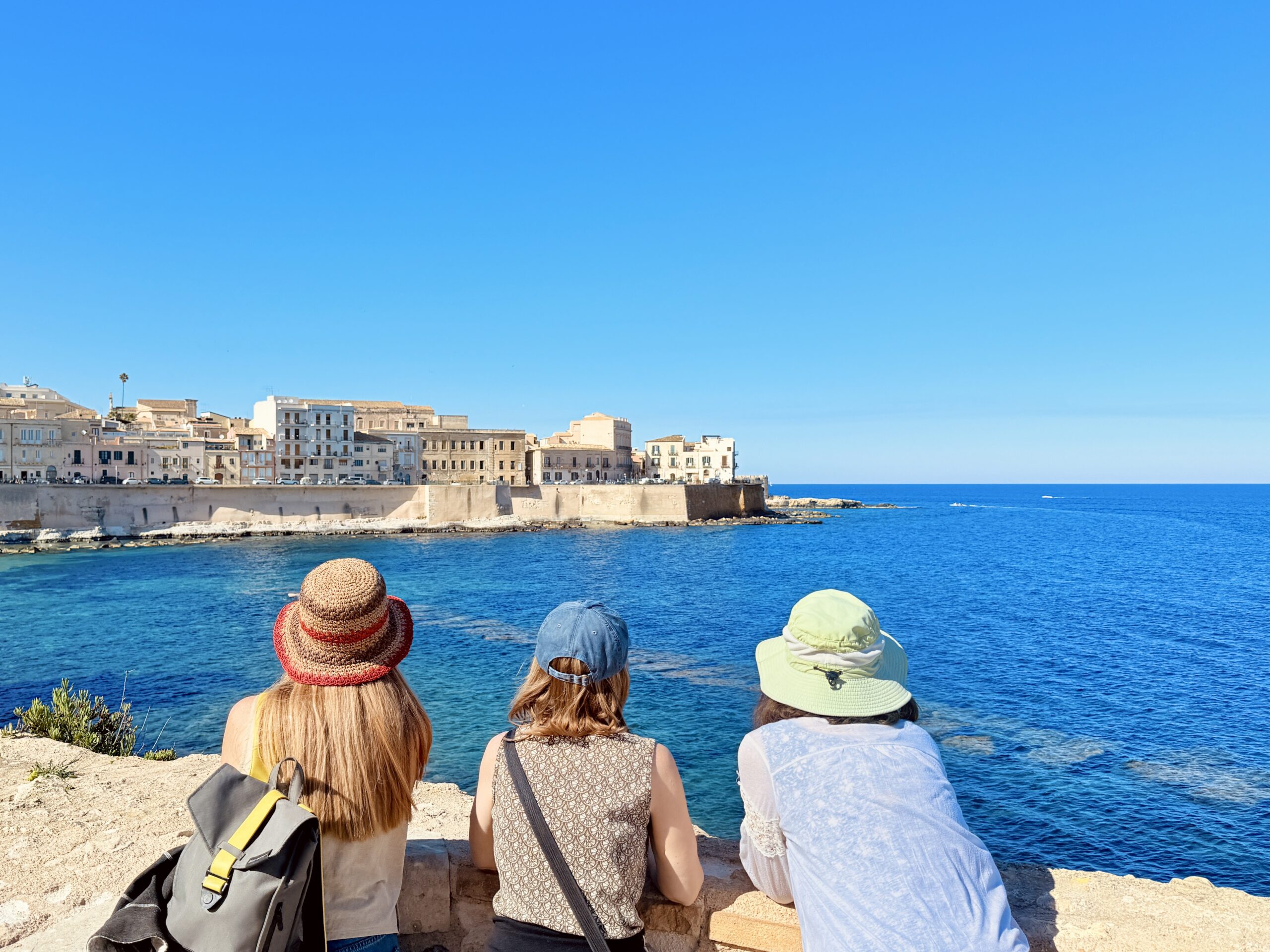
From lunch we followed a general touring plan that was designed to hit major points in Otigia, which featrured multiple views of the Mediterranian. Perhaps the best view was back toward the city of Siracusa on the mainland with the white top of Mount Etna loomng above.
We also saw the island’s Duomo, which was built in the fifteenth century AD, incorporating pillars and other elements from a temple to Athena dating to the fifth century BC. This was not our first Duomo, but was quite memorable.
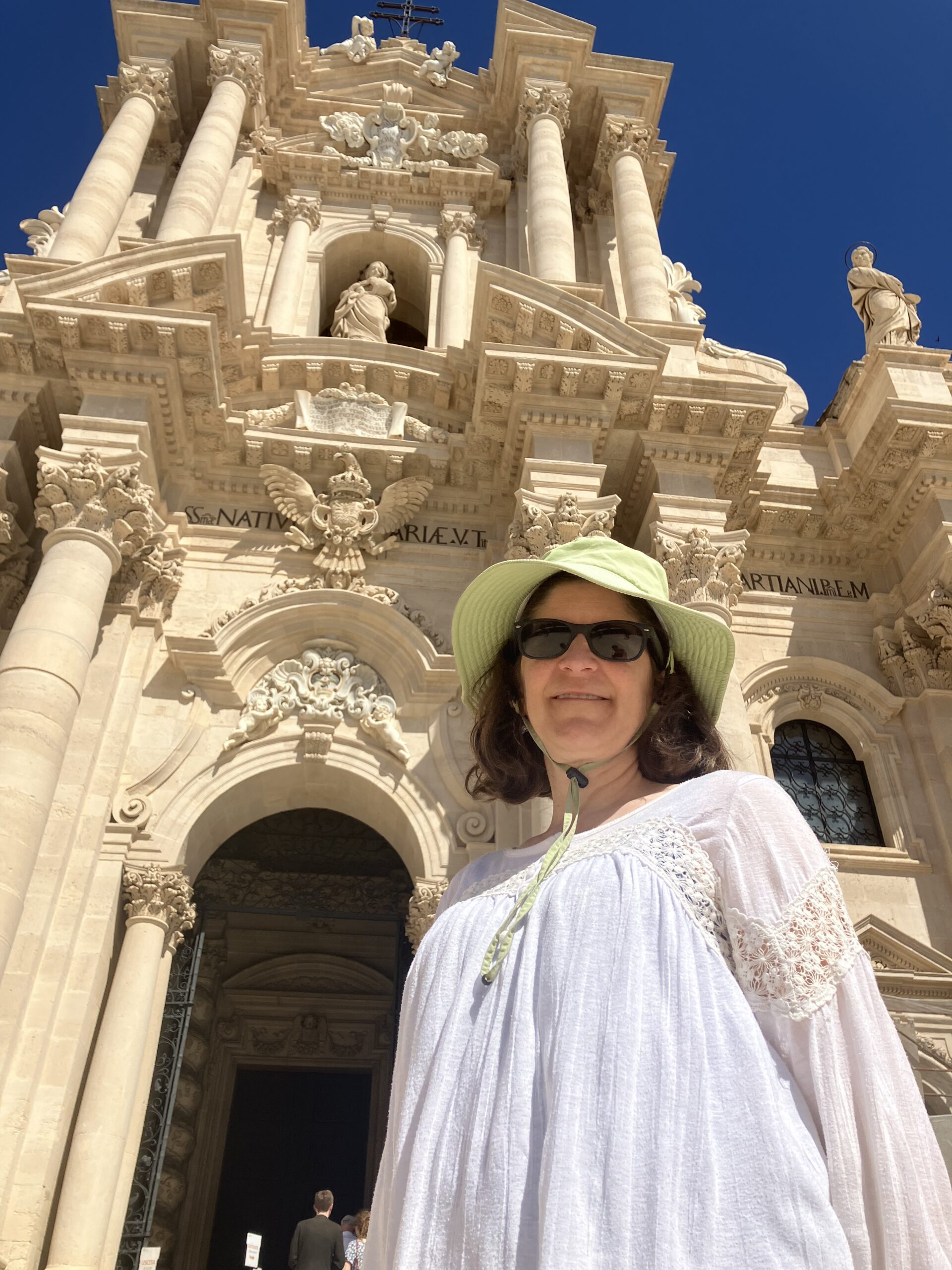
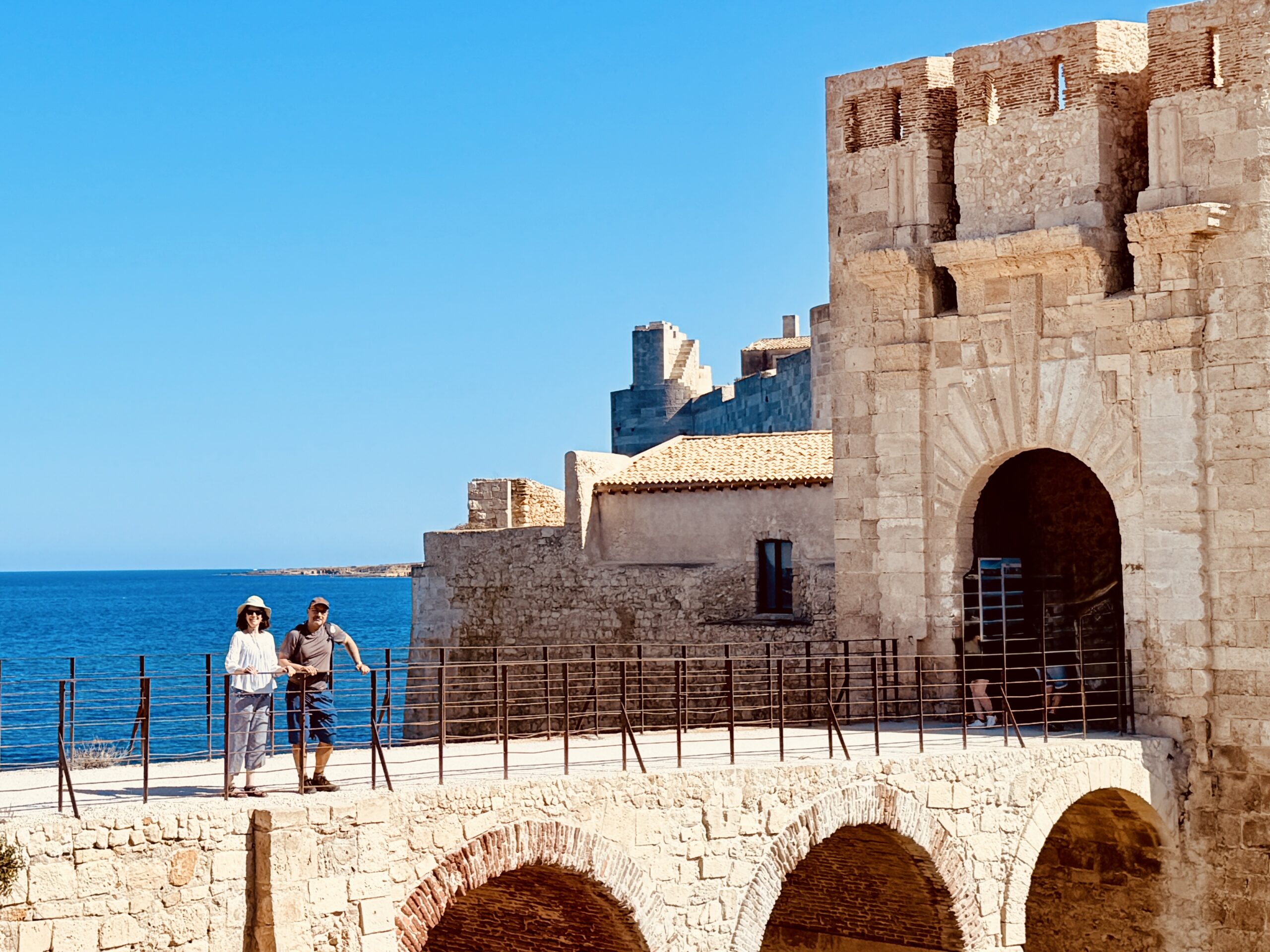
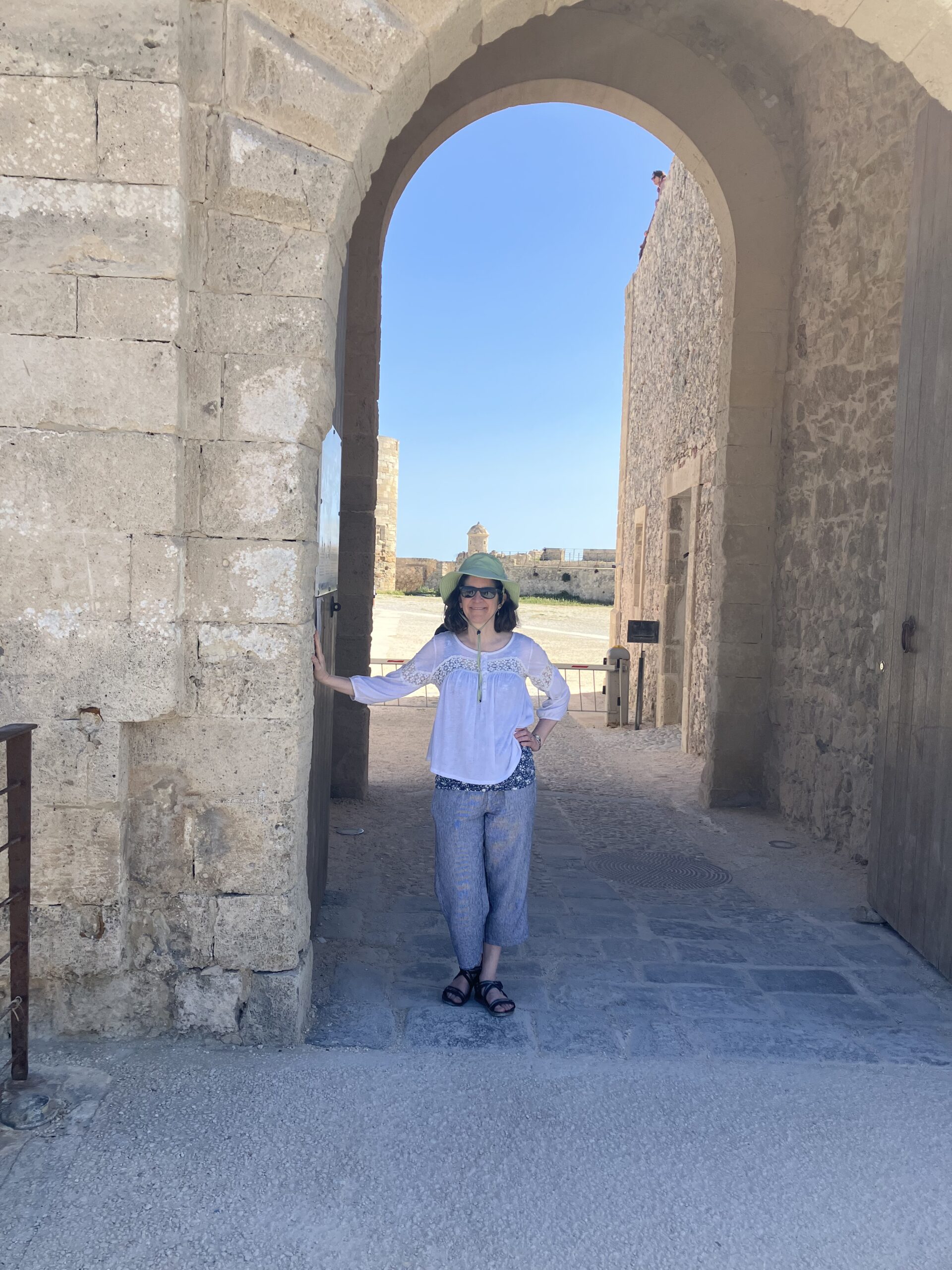
From here, we continued wandering until we reached the very tip of Ortigia, where the Maniace Castle projects a rather fort-like military presence with stark, thick walls all around and stairways leading off in improbable directons.
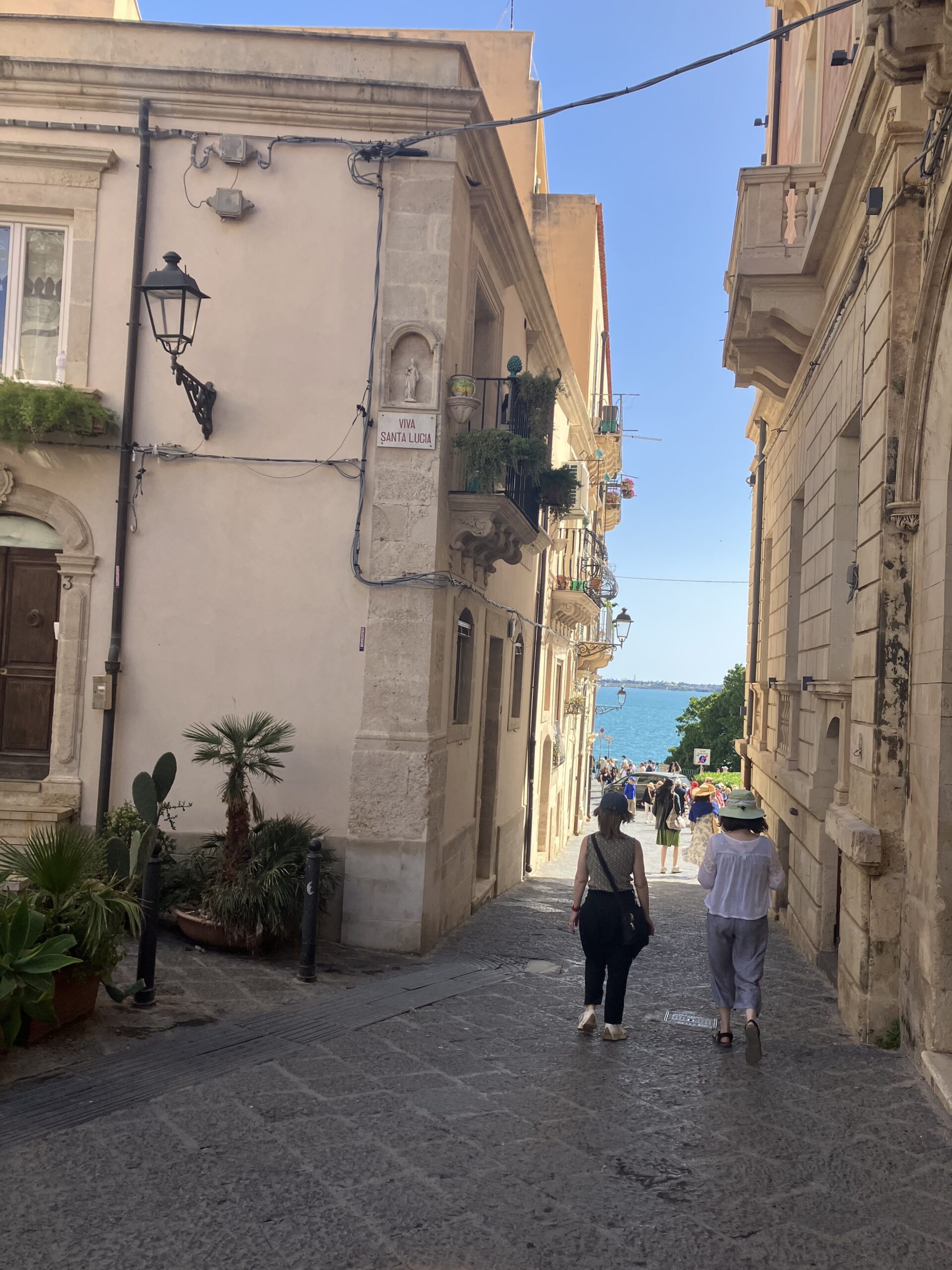
We didn’t actually go inside because our parking was about to run out.
Still, the walk back to the parking lot was as scenic a jorney as anyone in our mild state of hurry could hope for. We followed the shoreline on the opposide side of the island, which included some beaches where several people seemed to be considering the idea of wading into the still-chilly Mediterranean.