Author Archives: Bob

From sea to shining sea

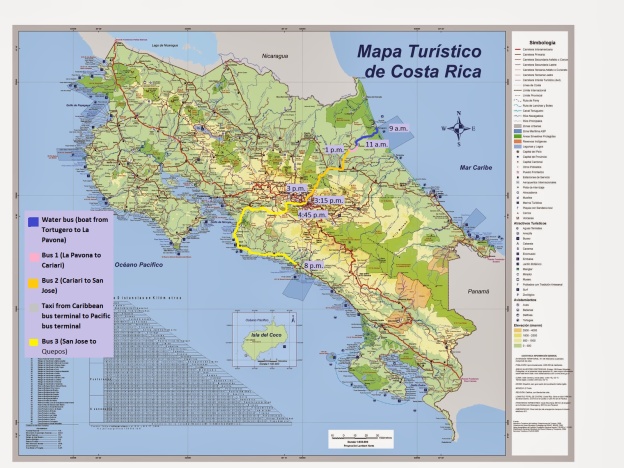
It wasn’t the Oregon Trail, or even Route 66, but it turned out to be a pretty long day of travel linking us from Tortuguero on the Caribbean to Quepos, where we are today, on the hills above the Pacific.

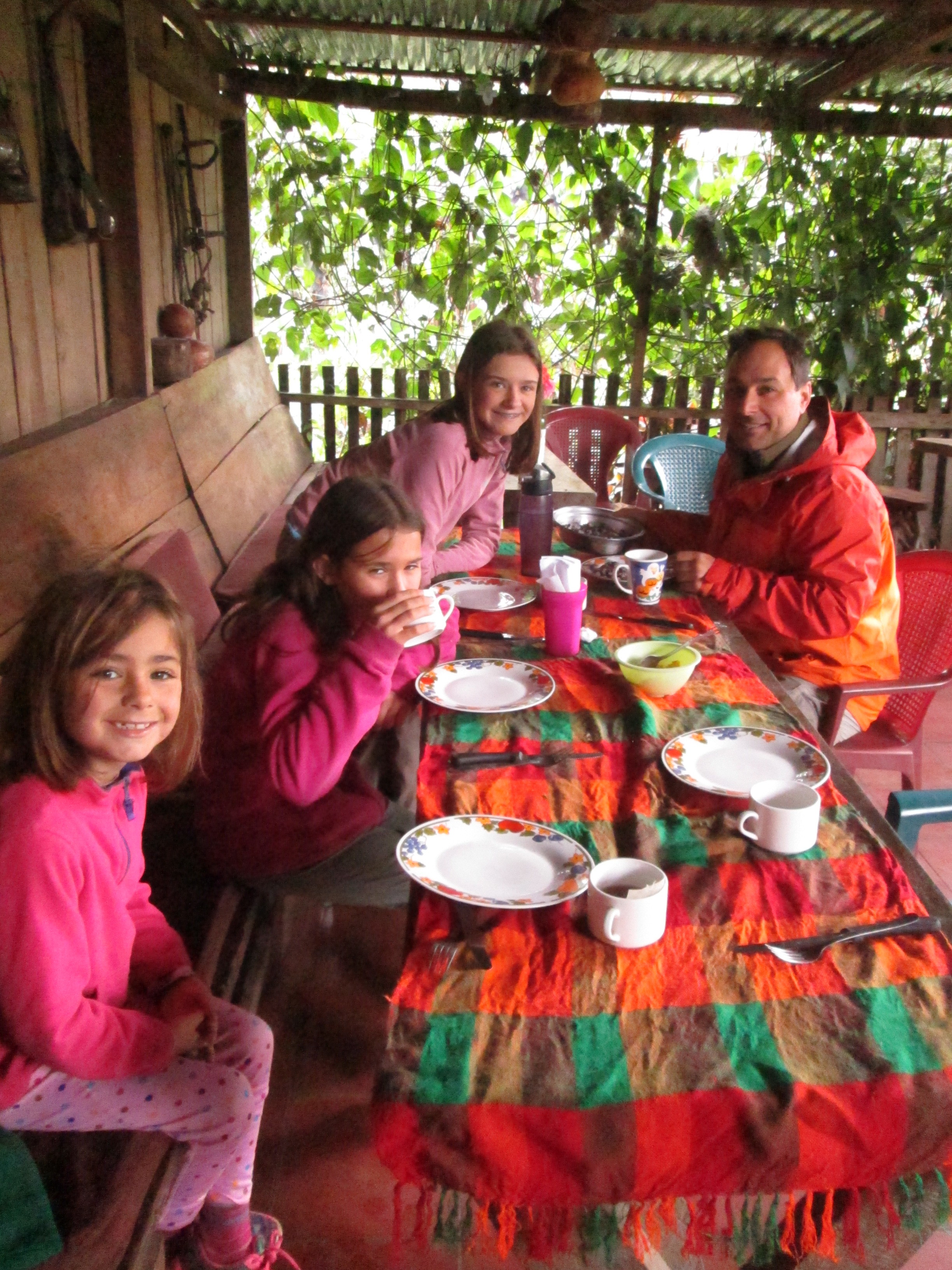
Yesterday’s breakfast was administered by Mrs. Beyette’s sleepy daughter, who was kept awake be the rain. She has to sweep out the breezeway, it seems, when the roof leaks, and she said she was up late doing that. Still, she was to fuel us up, and then, hopefully, take a siesta. I don’t think there were any other guests there when we left.
A rainy start to the morning commute, but no delays reported on Tortuguero's main artery.

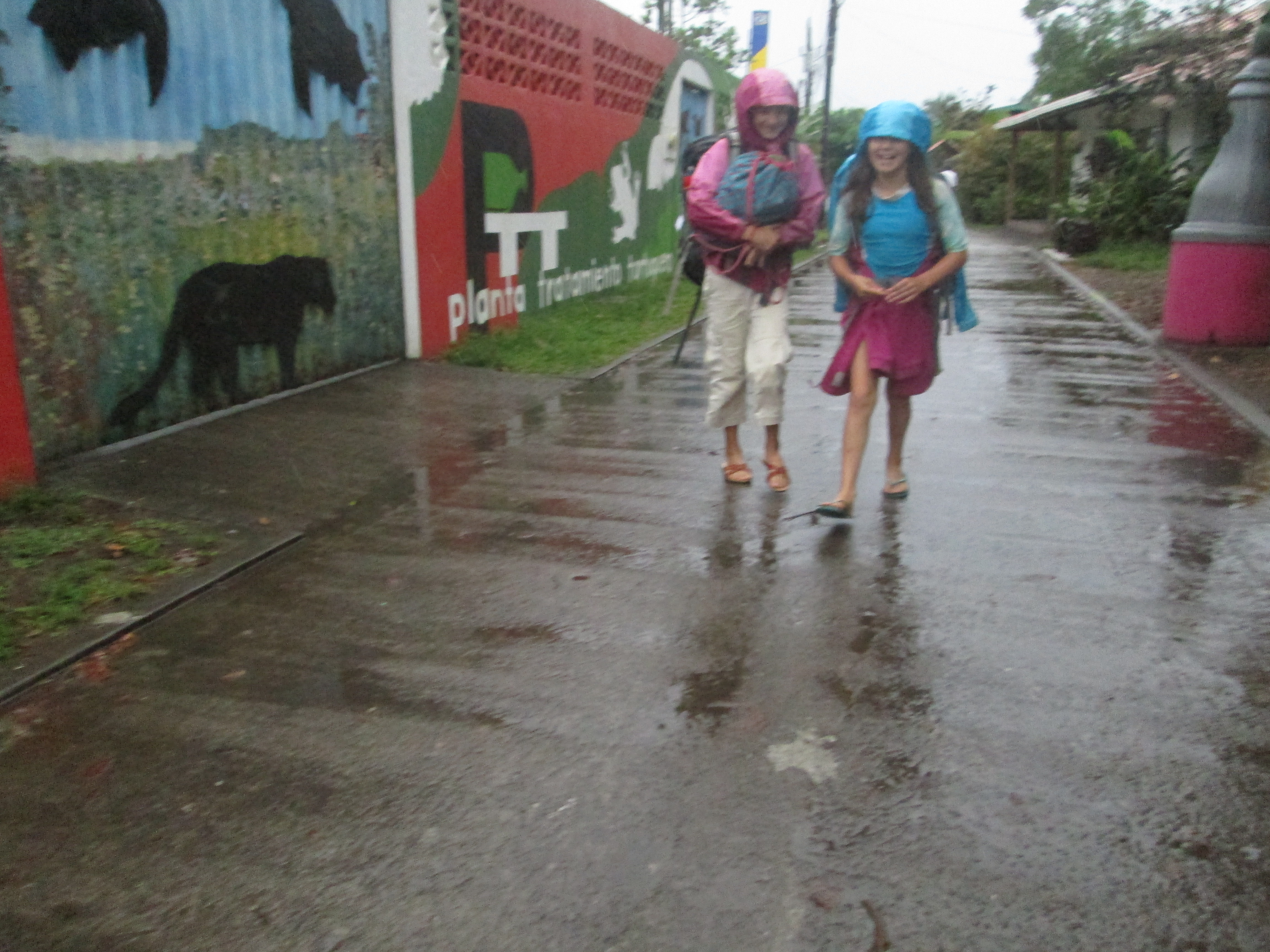
A rainy start to the morning commute, but no delays reported on Tortuguero’s main artery.

It was still raining as we hit the car-free road to the public boat terminal, which, surpisingly isn’t the nice town docks a little north of Mrs. Beyette’s place. Instead we walked a few minutes south to a place where the public water buses just slide up on shore a little.

We had purchased our tickets the afternoon before — 1,600 colones apiece plus 1,000 apiece for each of our big backpacks — to be sure we got on the 9 a.m. boat. An early start would be crucial in making all of our connections.
All we need now is the boat.  Plus the other boat for our luggage.

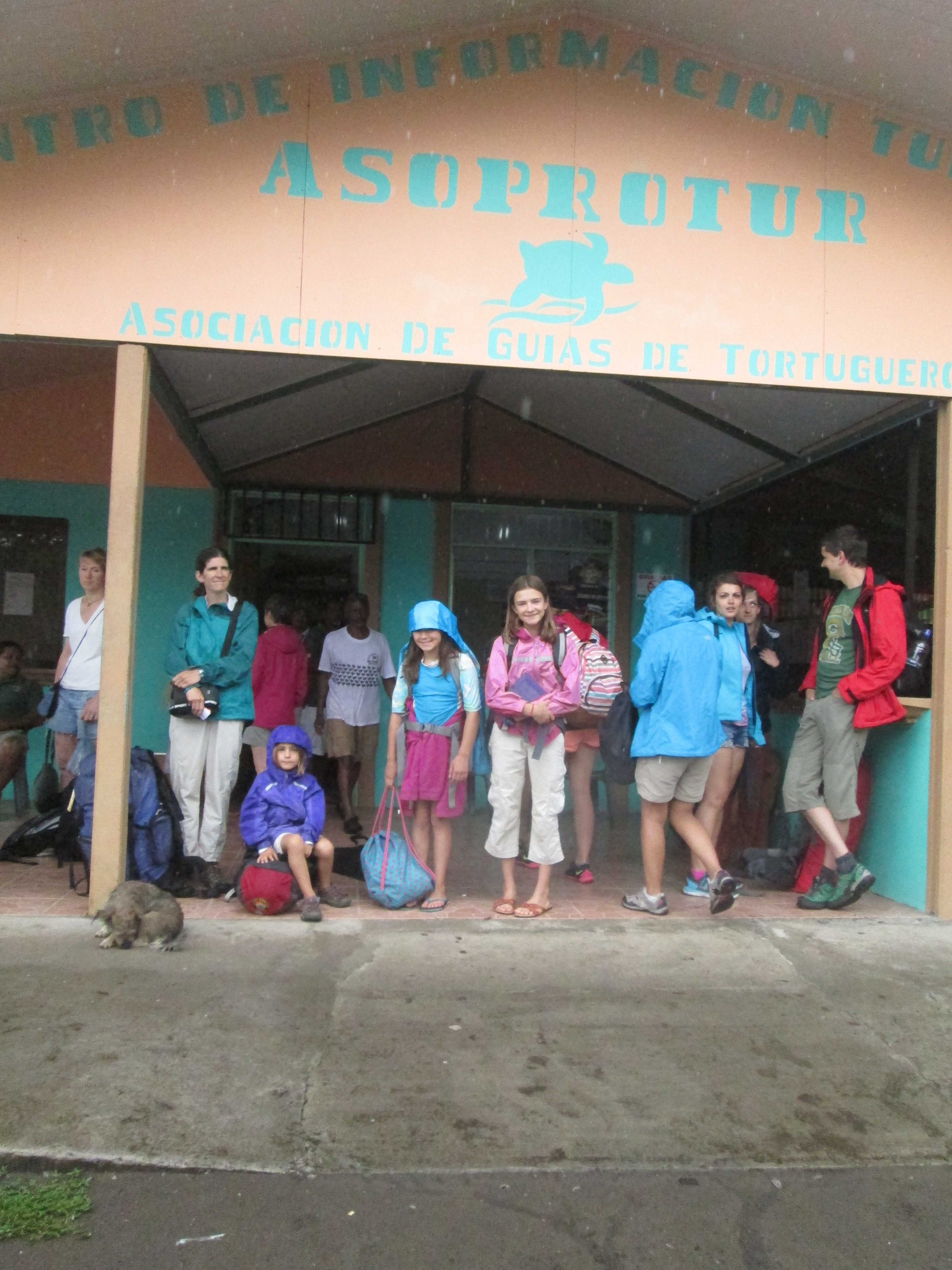
All we need now is the boat. Plus the other boat for our luggage.

The 9 a.m. water bus was sufficiently full of tourists and traveling locals that all our baggage was placed on a separate boat (and coveredy by a tarp). This proved important because not long into the trip we turned onto a small side stream that was choked with fallen logs, often very shallow, and flowing pretty consistently against our direction of travel.
IMG_7700

On the jungle cruise

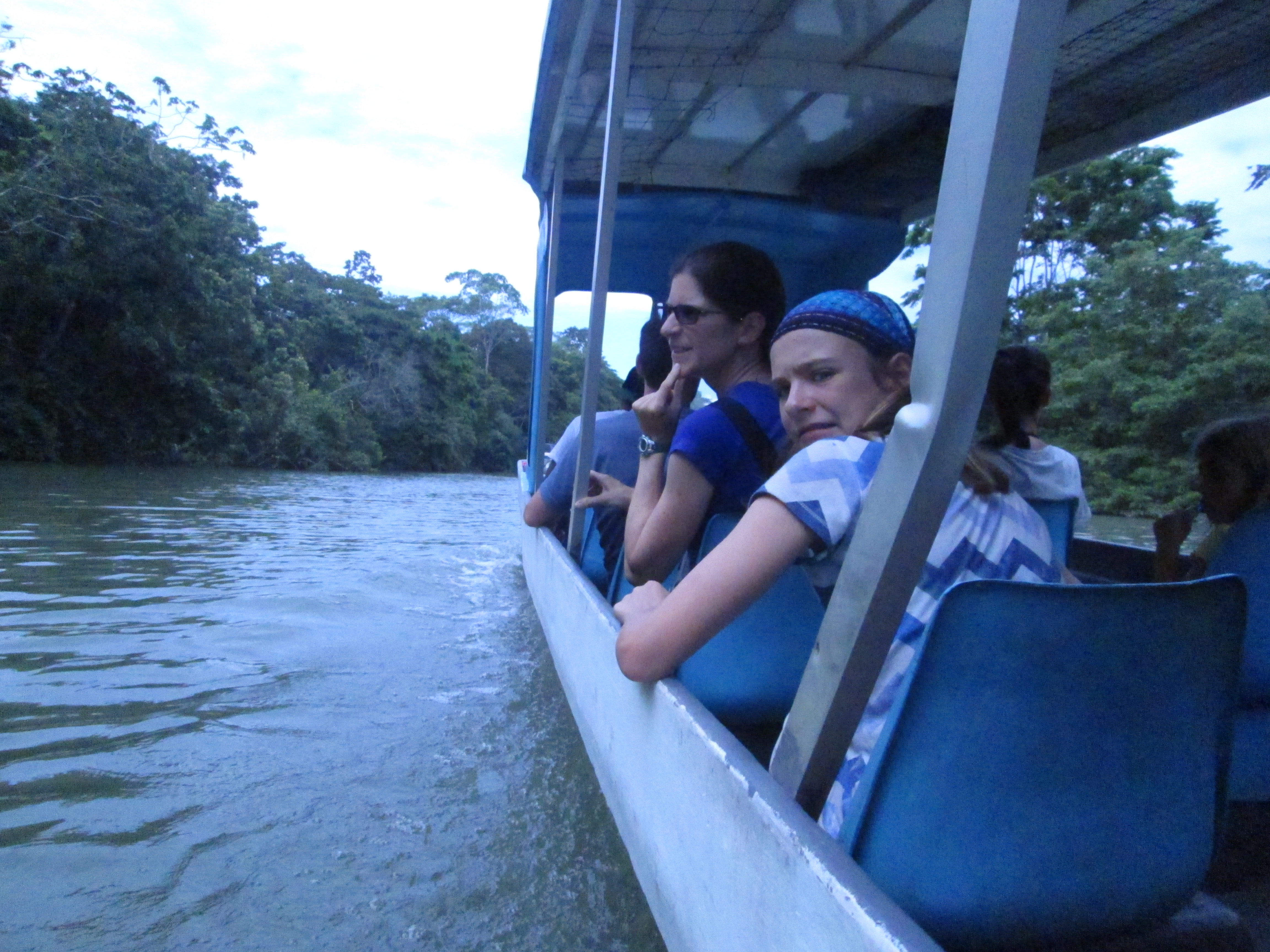
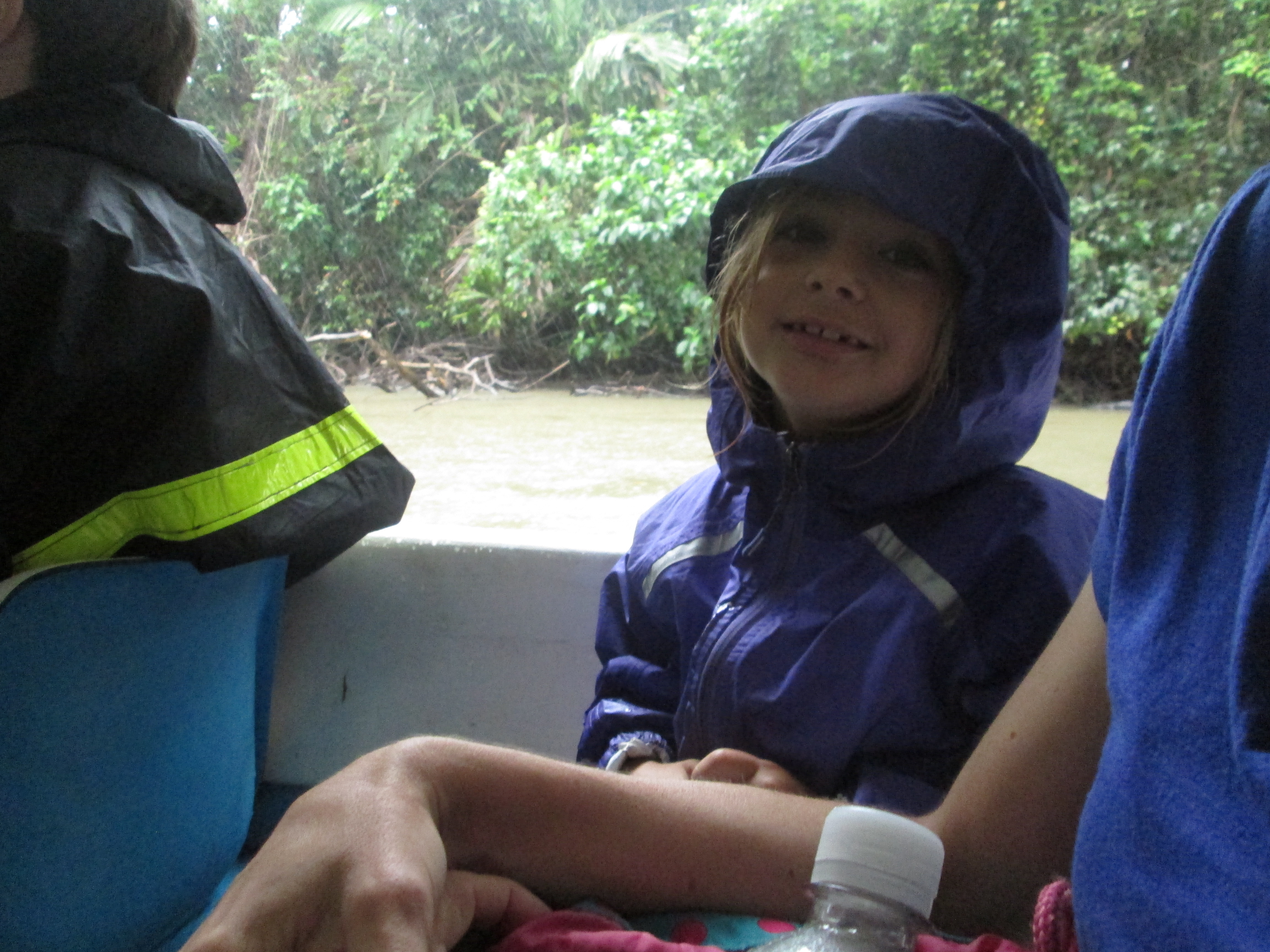
Carefully navigating upstream, looking out for empty soda bottles tied to submerged hazards, the captain made his way deeper and deeper into the jungle. Several times we bumped the bottom, often we had to pull over and cede the way to boats traveling downstream, and at some point during the two-hour trip I began to realize we hadn’t seen the luggage boat since we departed Tortuguero.  Maybe its skipper knew a short cut?
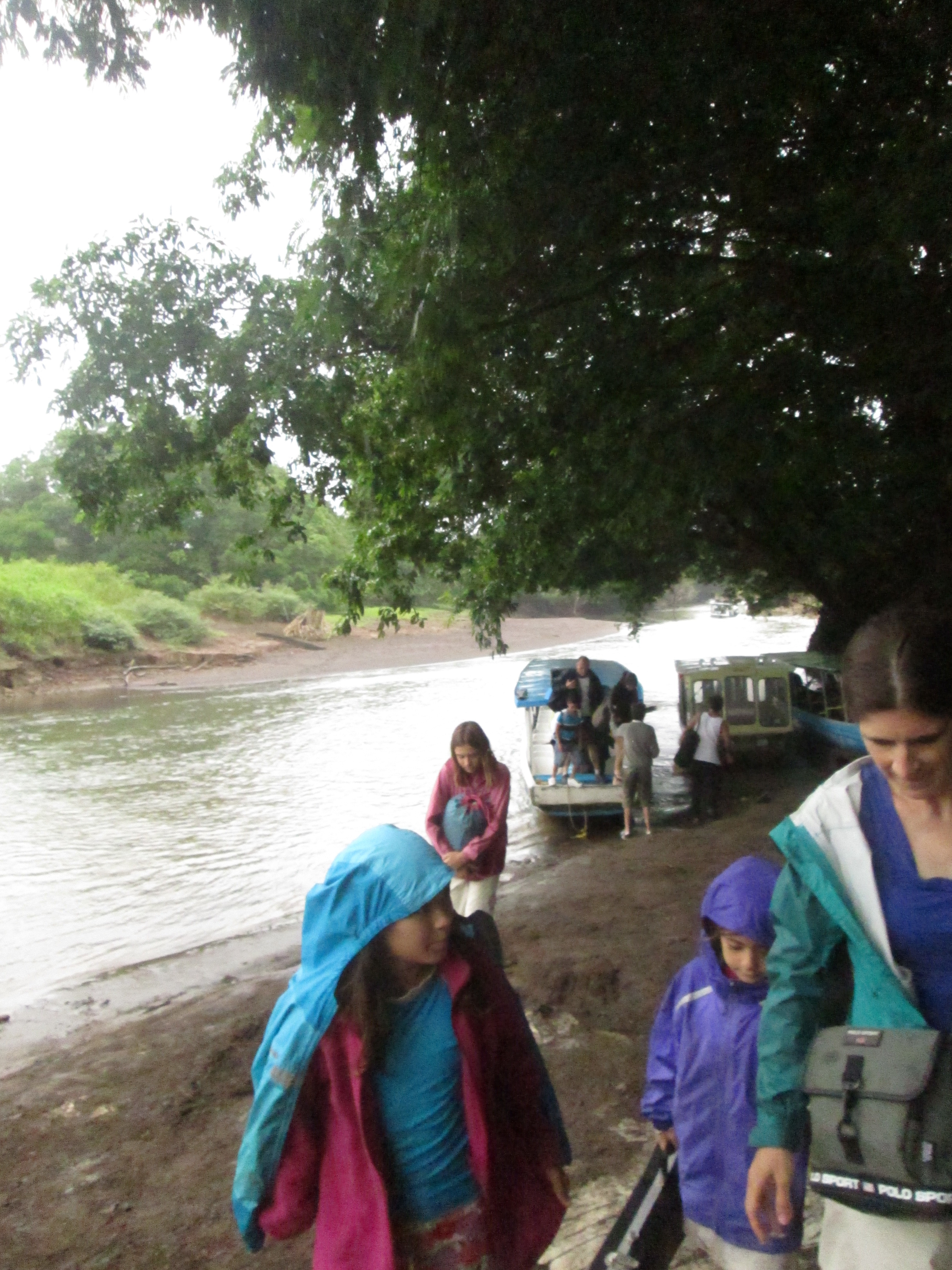
After the muddy landing at La Pavona, it was land travel the rest of the way

After the muddy landing at La Pavona, it was land travel the rest of the way

It ended, as all of our travle stories have during this trip, happily enough. The luggage boat passed us about an hour and forty minutes into the trip, a few extra tarps covering its payload.  Twenty minutes later we were pulling up to the muddy hillside that was the La Pavona landing.

At the top of the hill was a depot where most tourists from our boat headed for fancy tourism transit and we got assistance from the very kind driver of the local bus. He brought us to Carriari and informed us how to get to the terminal for the San Jose bus.

It was only three blocks away and it was nestled between a bakery and a smoothie shop, very convenient for lunch time connection. Even better, we only had a 45 minute wait for the direct bus to San Jose. An initial sketch of the day’s travel contained the possibility that we would have to take another bus to another town to catch a fast bus to San Jose. Also good news: Even though the bathrooms cost 150 colones to use, the lady let me in for free.  All the ladies in our group got hit by the tarrif.   It must be my new haircut.
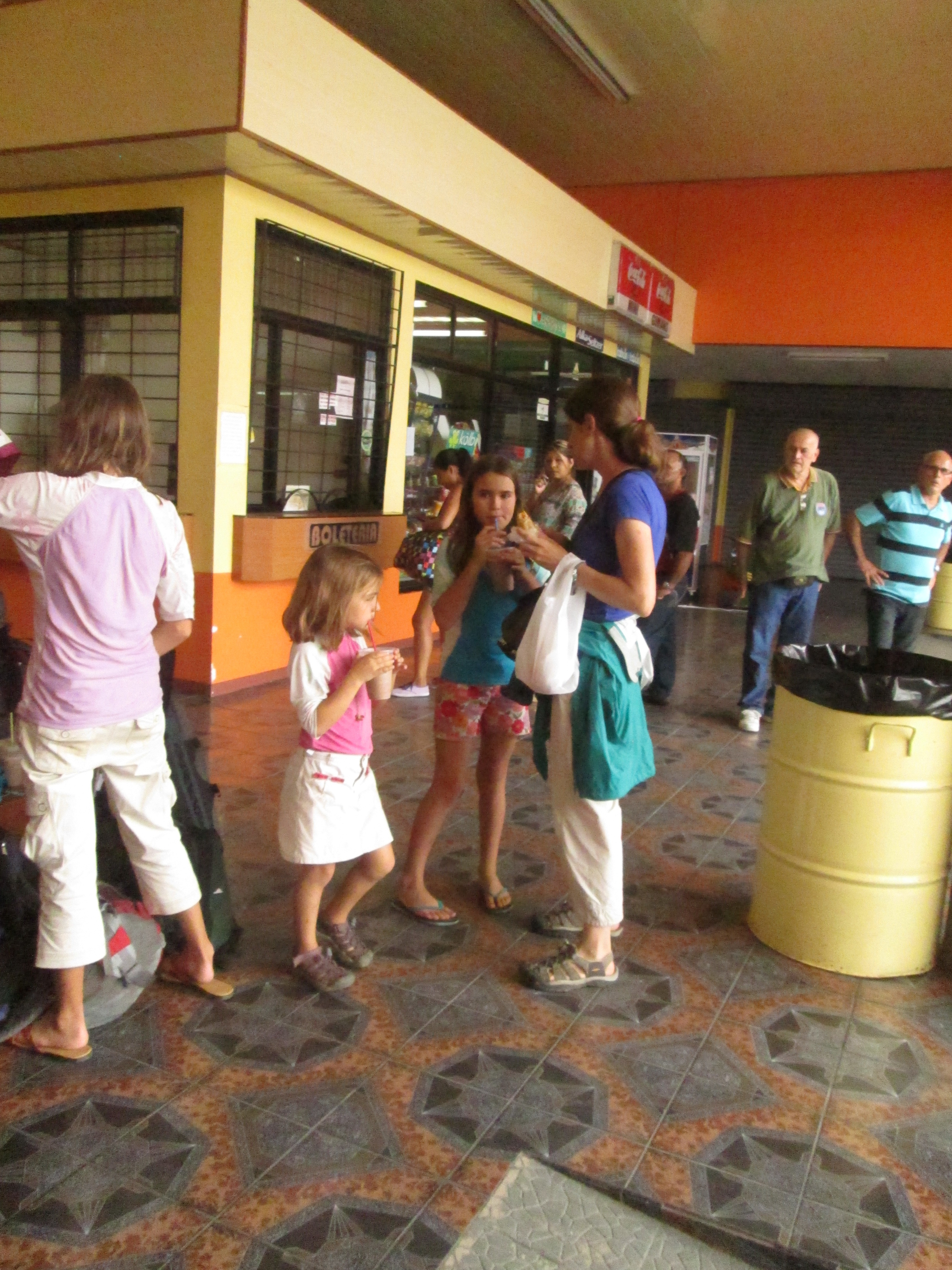
Lunch outside the ticket window in Carriari.

Lunch outside the ticket window in Carriari. Look for these places on the map. They really exist.

From there, it was like a highway to ever-increasing levels of civilization. We soon got back to the road we traveled to get to our rafting trip; this time we were going the other way. I recognized the large Pequeno Mundo store and the huge Taco Bell billboard well before we made it to the tunnel through the mountain. The inverse of the previous trip was true. Once we left the mountain pass and started to descend toward San Jose, the skies started to clear up.

It was dry by the time we reached the Caribbean bus terminal. A short taxi ride (very reasonable now that we know to seek out an official red taxi with an orange triangle on the side) brought us across San Jose and the public transport continental divide to the place where the Pacific-bound buses gather.

We had to wait an hour and a half for the next directo to Quepos. It was more than enough time to get a quick dinner at a corner cafe and for Zoe to inquire in the information kiosk if there was wifi in the terminal. (There wasn’t.)

The last bus trip showed just how civilized San Jose is. I spied a Walmart, P.F. Chang’s, Payless Shoe Source, Outback Steakhouse and a Pizza Hut. There was also a Simon Mall and an intriguing place called the Canada House, which featured a “Maple Market.”  Add all this to the Applebee’s I saw last week and it’s starting to feel like Stoughton.

The Sun had set by the time we reached the Pacific coast, leaving us the pleasure of seeing the sights for the first time when we venture out this morning.

Our bus driver was kind enough to drop us off a few minutes from our apartment and all that was left was a steep climb, guided by a night watchman, and the unfortunate discovery that bedroom #2, the one with the extra bed, was the one with the air conditioning unit. If not for the full day of travel behind us, Jen and I might have been nimble enough to alter the arrangements without anyone being the wiser.  The kids are attached to the room its coolness by now.  It’s pretty hot here.

Otherwise, we seem to have fine accommodations and we’re excited to see what this side of the continent has to offer us.

As a last note about today’s journey: This should be our last multi-stage public transport day (unless you count next week’s two-leg flight to Belize or the flight home, but those don’t have the drama that bus and water travel do).  We saw signs for flights we might have taken to get us across Costa Rica.  The flight from San Jose to Quepos is reported to take only 20 minutes, which is attractive compared to our three-hour bus ride.  Our travel today was efficient, both economically and ecologically, as public ground transportation usually is.   I don’t know how much the flights would have cost, but we were quoted some exorbitant rates for private shuttles to various points.  Here’s what yesterday’s intercontinental journey cost us (NB, we missed our window with Lanie; all the buses had signs that clearly said, “Children over the age of three pay full fare”):

Water taxi: 1,600 colones per person, plus 1,000 colonels each for five big backpacks =  13,000 colones or about $26

Bus from La Pavona to Carriari:  1,100 colones per person = 5,500 colones or about $11

Bus from Carriari to San Jose: 2,200 colones per person = 9,000 colones or about $18

Taxi between bus terminals in San Jose: 3,500 colones plus 1,000 colones tip = 4,500 colones or $9

Bus from San Jose to Quepos (directo with service to INVU, which is near enough our apartment that we wouldn’t need a taxi): 4,500 colones per person, plus 2,000 colones tip = 24,500 colones, or about $49.

Total trip cost: $113
Not out of adventure yet

P1010304

Actually, we didn’t all paddle. Mostly, it was just me and the guide, and even I stopped from time to time to gawk.

One might fear that we would be in danger, after 50-something days on this trip, of running out of new and exciting things to do. Worry not, oh follower of our adventures. New and exciting opportunities present themselves almost constantly here.

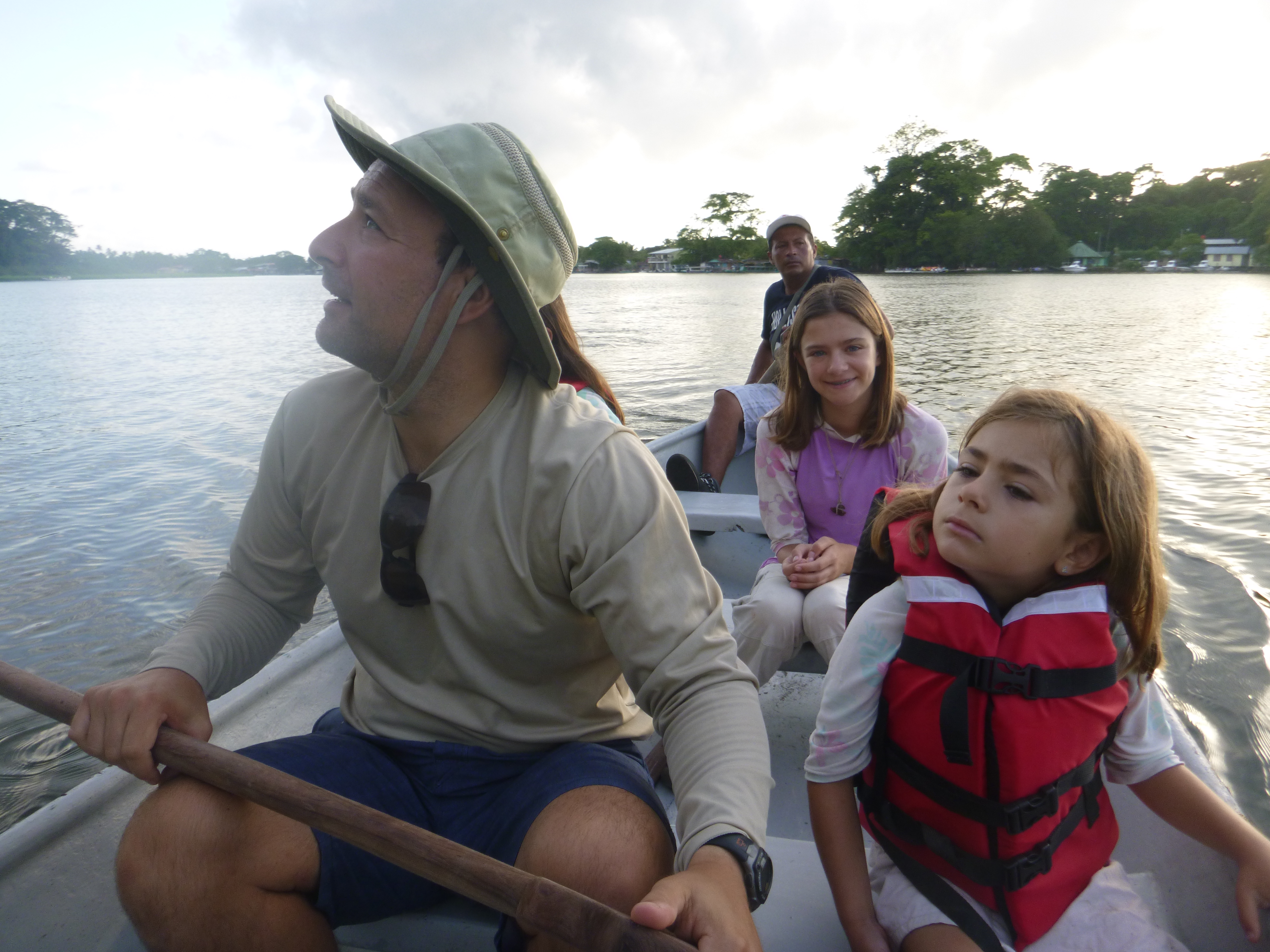
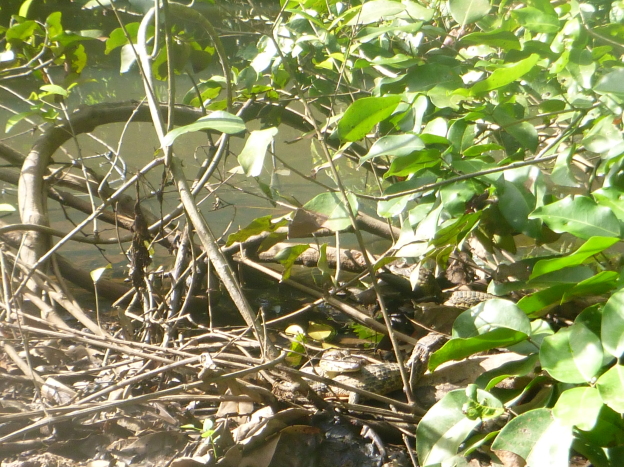
Jen woke up with a start the other day and said, “We haven’t been on a canoe yet during this trip!” And within an hour we were on the water paddling with our guide across the inland waterway. It was a new conveyance for us, plus we managed to encounter some new animals in the jungles and marshes. The family got to see some caimans in the wild (remember, they did not see the ones I saw on the boat ride here, and the one that was occupying the pond at the ASIS Project was practically in captivity, though it wasn’t a rescue animal and it nearly leapt out of its skin to catch a dog while we were observing it during coffee break).

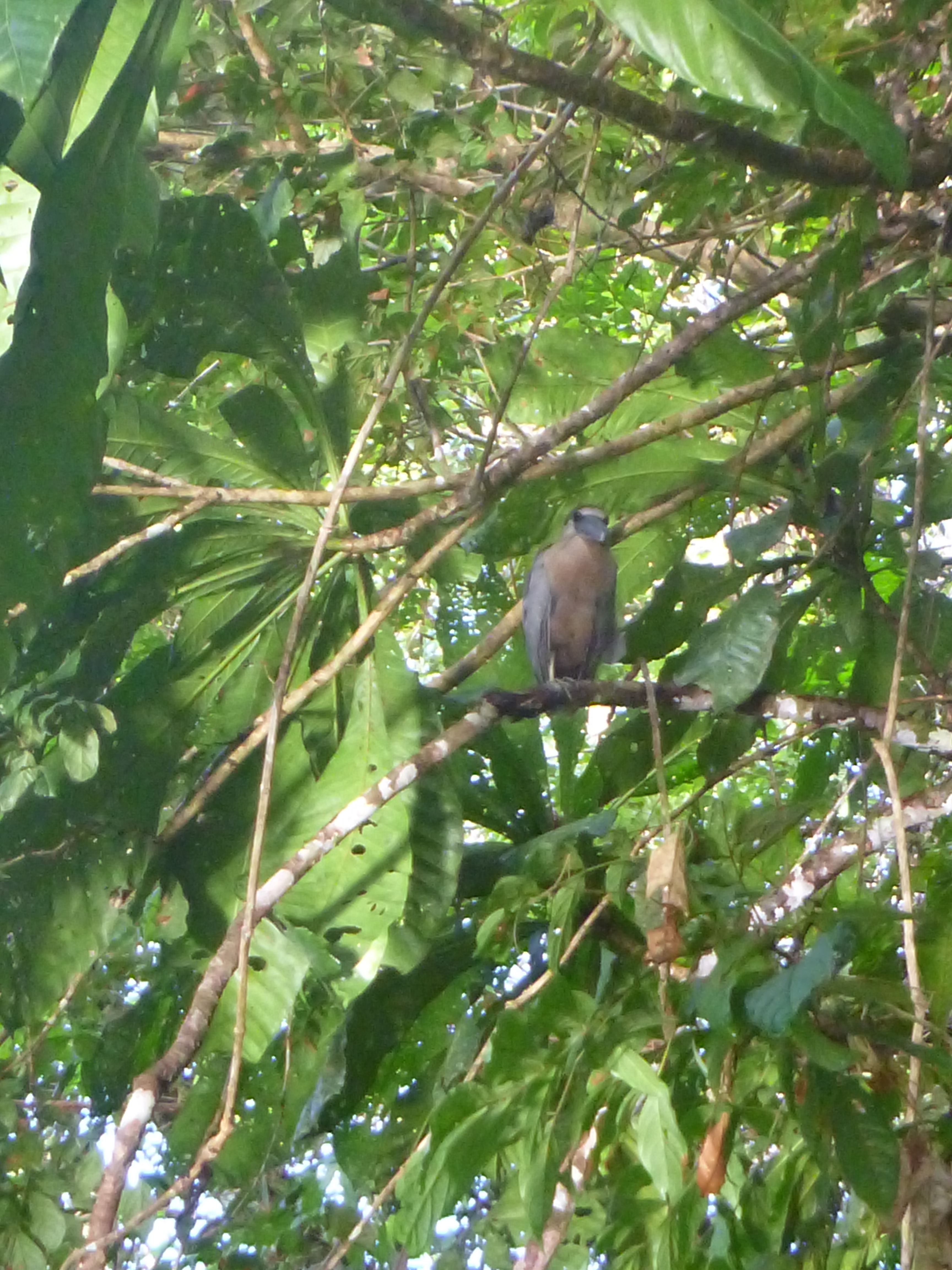
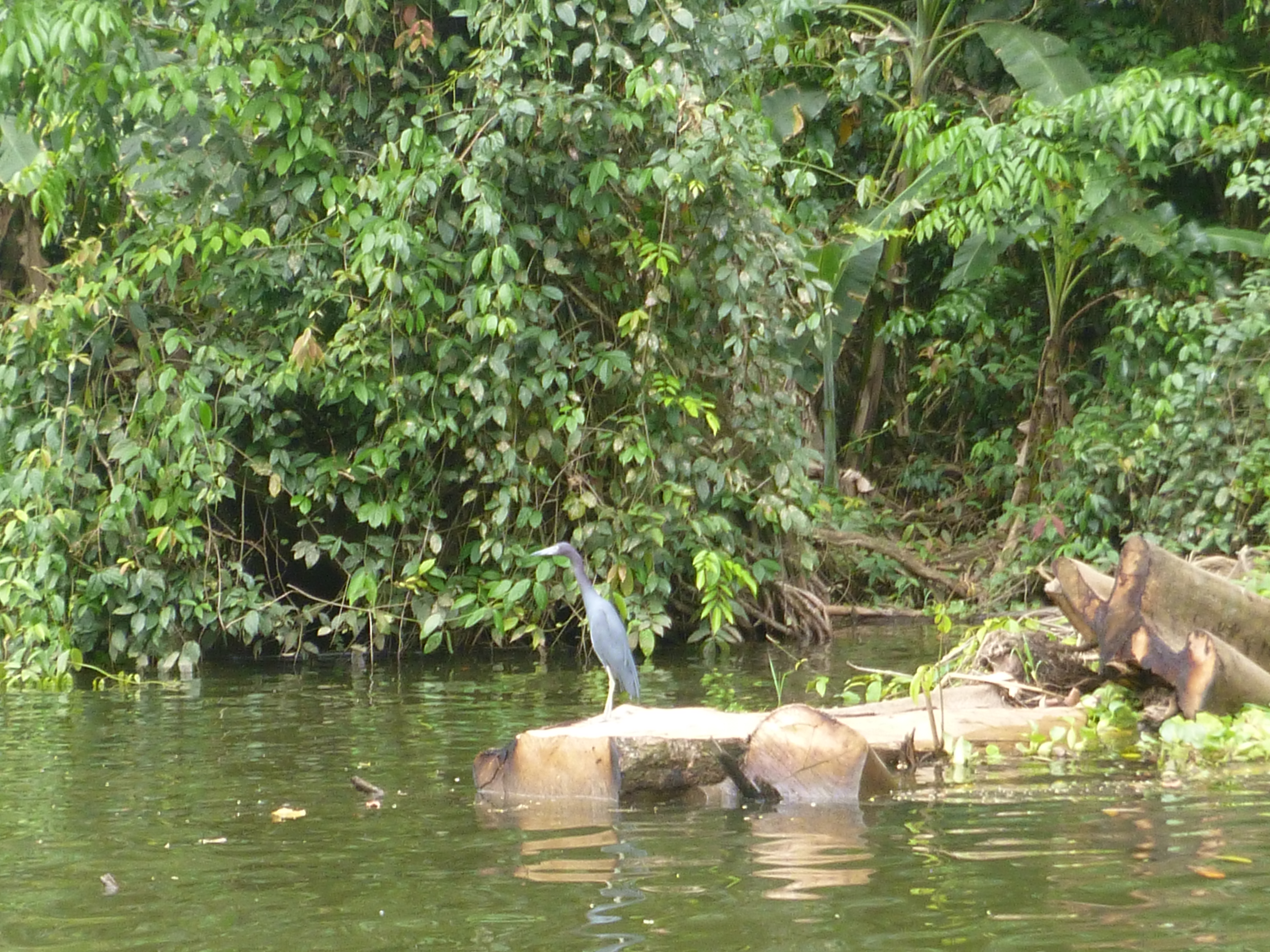
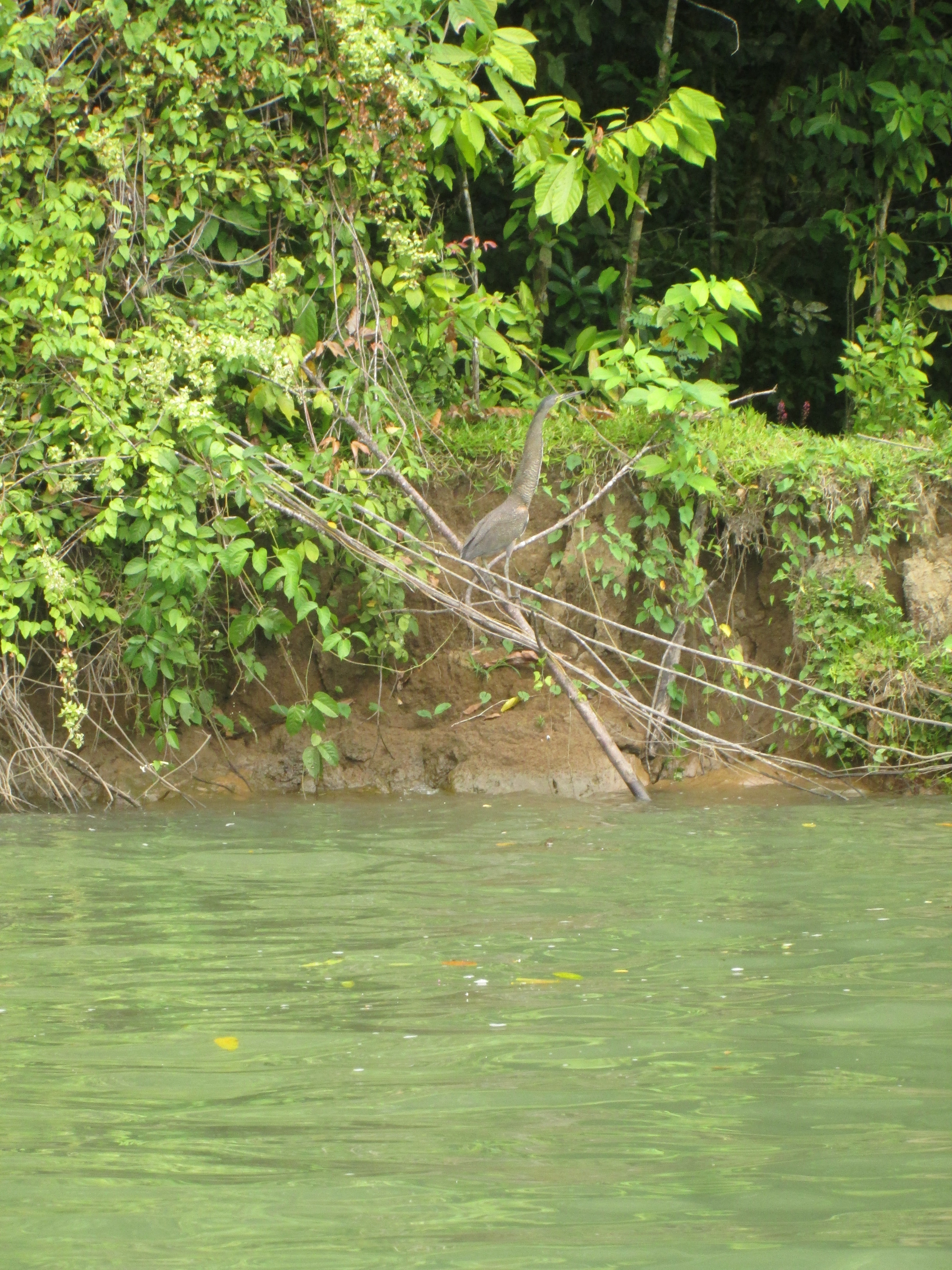
We got pretty close to the Night Heron.

We got pretty close to this Night Heron. Night Heron don’t care.

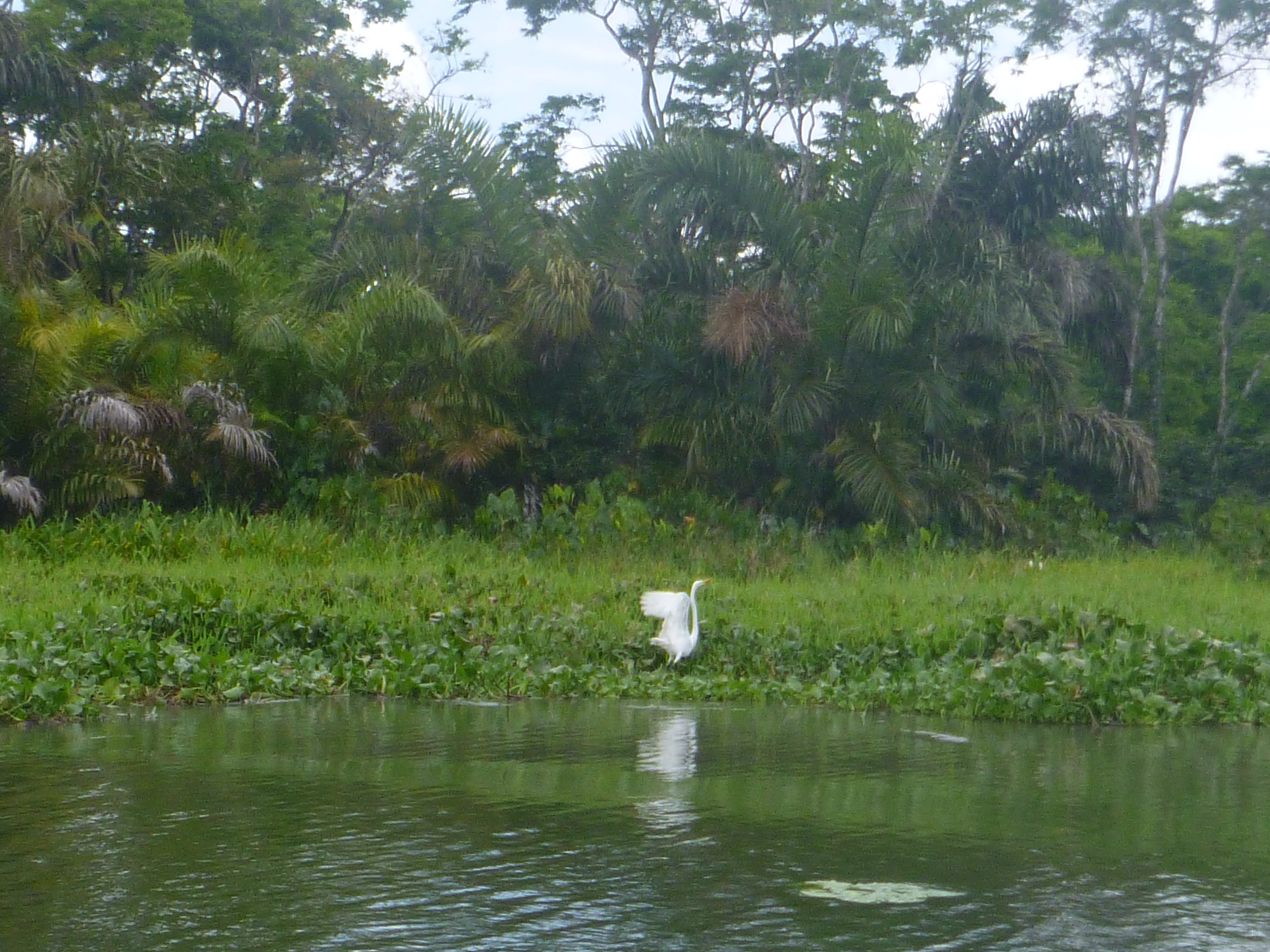
The green heron was cool and so was the night heron. We were able to get up nice and close thanks to the tranquilo nature of canoe travel (there were many boats out in the channels, even before 7 a.m., but many of them had motors). In fact, our guide did not seem concerned at all about getting close to the animals or even running into them, as was the case with the first caiman we saw. There were a few other near misses, including the above-mentioned herons. The birds, to their credit seemed unperturbed by our proximity.

It should be said that we’re starting to consider ourselves experts in jungle animals, to the extent that even though our guide told us we were seeing howler monkeys, some of us were doubtful, due to the fact that the monkeys seemed to be holding onto branches with their tails. At the ASIS Project we were told that spider monkeys were the only ones in Central America with prehensile tails. At least that’s what we thought we were told. We might have actually been told that spider monkeys were the only ones at the ASIS center with prehensile tails. According to Wikipedia, both spider monkeys and howler monkeys hold onto things with their tails. It’s a good thing I kept my mouth shut during the canoe tour.

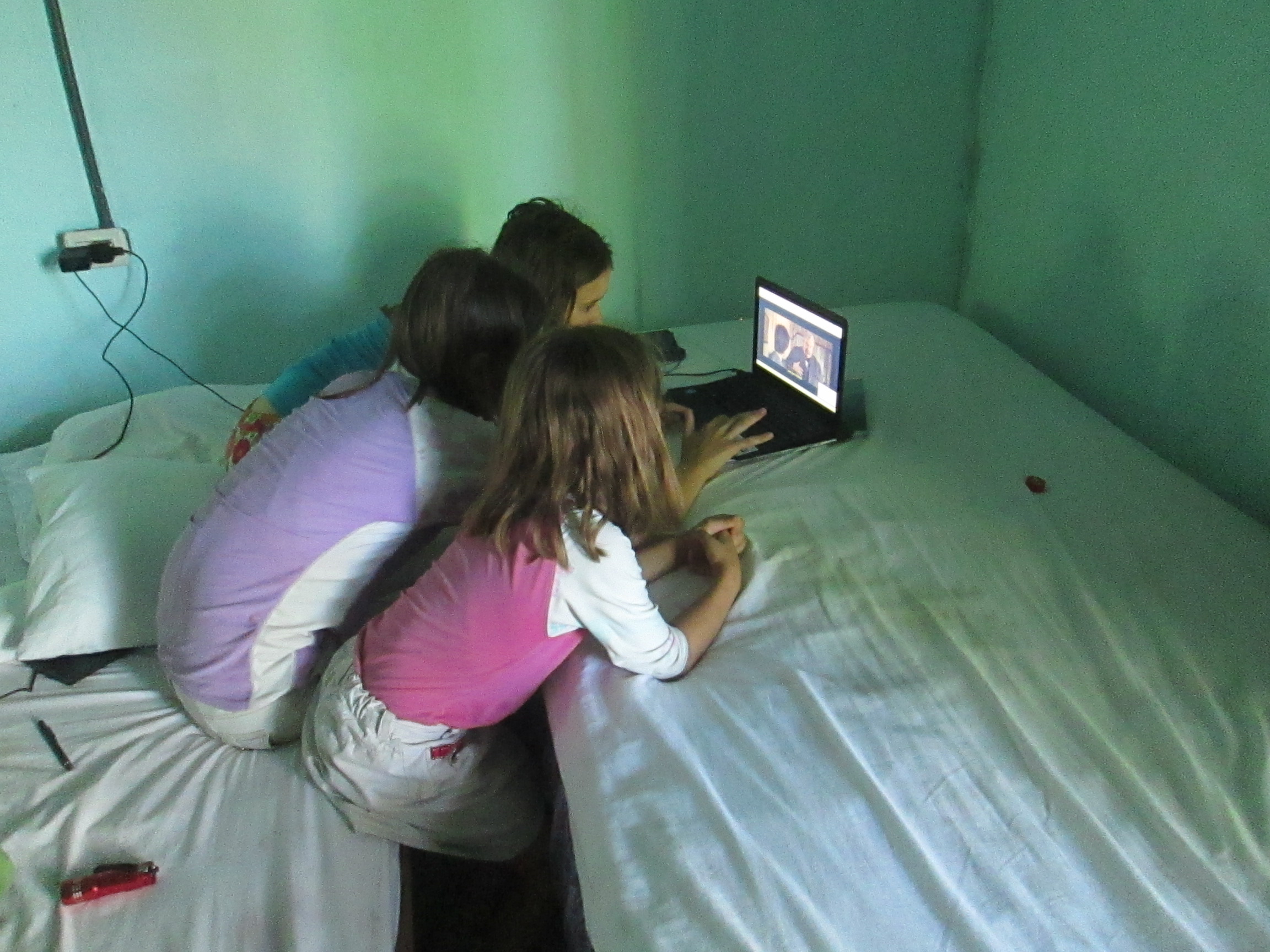
We took a homework break to watch a movie.

We took a homework break to watch a movie.

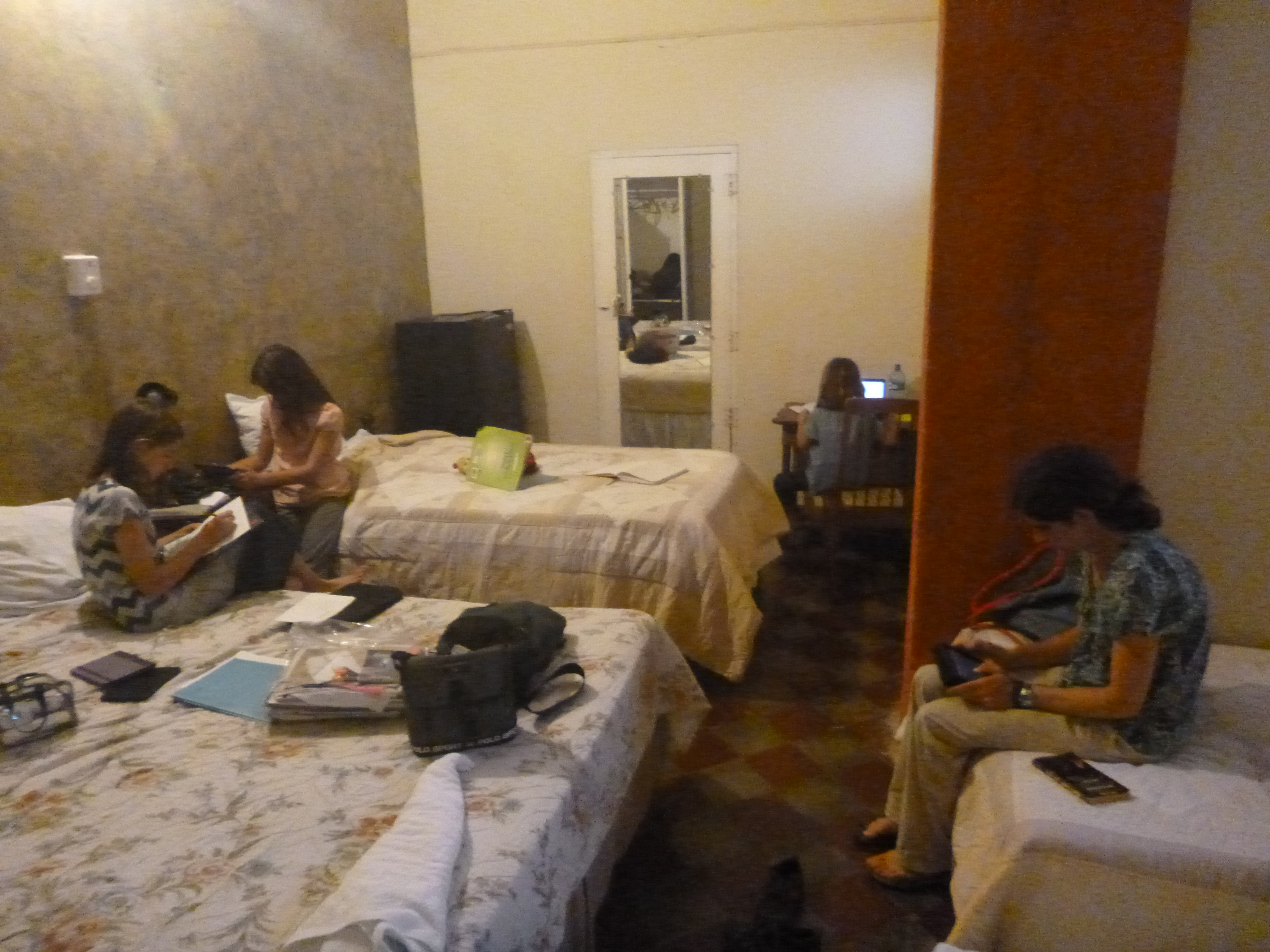
Other than that adventure and a brief walk through the National Park at the end of the main street here, we’ve been keeping a low profile. We’re not bored, mind you. The girls’ teachers have given enough homework, and the girls have waited long enough to get to it, that the days here have been filled with pretty productive study. I was even thinking of getting them some essay aid to make them get through their homework quicker. But they were pretty quick about it themselves so I just left them to it. The motivational factor is that in just over a week (!) we’ll be meeting up with our friend the Brookses in Belize, and who wants to still be working on homework with the Brookses around? Nadia’s mystery story is getting written (and quite suspense-fully, too), Zoe’s personal reading responses are flying out of her pen, and Lanie is tearing through math packets on money and measurement.

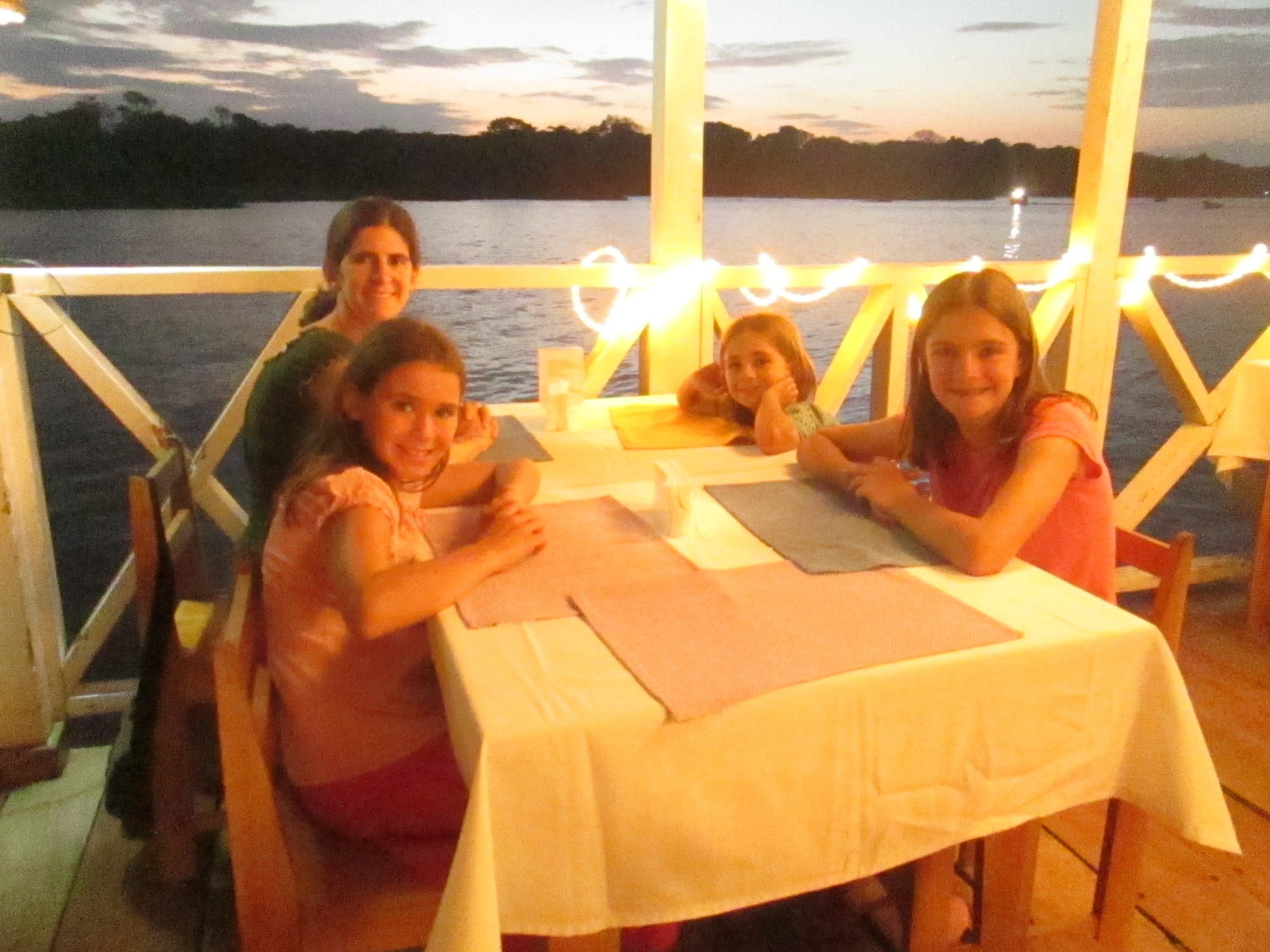
This restaurant was called the Buddha Cafe.

This restaurant was called the Buddha Cafe.

Going to restaurants for dinner every night is excitement, as well, though we’re rapidly making our way through the options available. I took the truly adventurous step of getting my hair cut at the barber whose shop is on the other side of Mrs. Beyette’s kitchen from us. Sadly, at press time no pictures exist of the results, but I was pleased enough that I told the barber I wasn’t going to be wearing my hat for a while. He said a lot of things I didn’t understand — that still happens here — and I wouldn’t let him change my part to the other side of my head, but it was not an unpleasant experience, and it will have grown in significantly by the time I make it back to the US. Also, I do still have my hat, in case the haircut honeymoon ends when I look in the mirror in the morning.

And lest we forget what true adventure is all about, tomorrow we have a trans-continental trek, Caribbean to Pacific, spanning, potentially, six legs of travel. That is adventure Central American-style. Our ipods are charged. There’s bread and peanut butter in the bag. We’ll write you again from Manuel Antonio.

The Amazon of Central America

We’re really on roll as far as adventure goes. We’ve rafted, snorkeled, battled monkeys for our lunch, and now we’re touring the Amazon. Almost.

Four hours on a boat? Check our forearms for anchor tattoos.

Four hours on a boat? Check our forearms for anchor tattoos.

Actually it’s a remote and watery region on the Caribbean coast of Costa Rica that is sometimes called “The Amazon of Central America.” We took a four-hour boat ride to get here, but when we leave the ride should be shorter.

This was another example of mobile tourism, like our raft ride that linked us between San Jose and Cahuita.  But unlike that trip, this one was calm and peaceful, and we stayed mostly dry — except me, who got misted whenever the captain cranked up the engine.

Main Street Makers luggage tags: beautiful, yes, but also rugged enough for the Amazon of Central America

Main Street Makery luggage tags: beautiful, yes, but also rugged enough for the Amazon of Central America

The boat ride took us from Limon, about 50 kilometers from the house we were staying in, through winding river passages and wide sections of inland waterways. We snatched views of the ocean and of tent communities of Semana Santa revelers. We also saw ranches and homesteads that seem to be accessible only from the water. The rivers became so shallow at some points that we needed to adjust our seating arrangement in the boat to make sure we didn’t get stuck.

P1010259

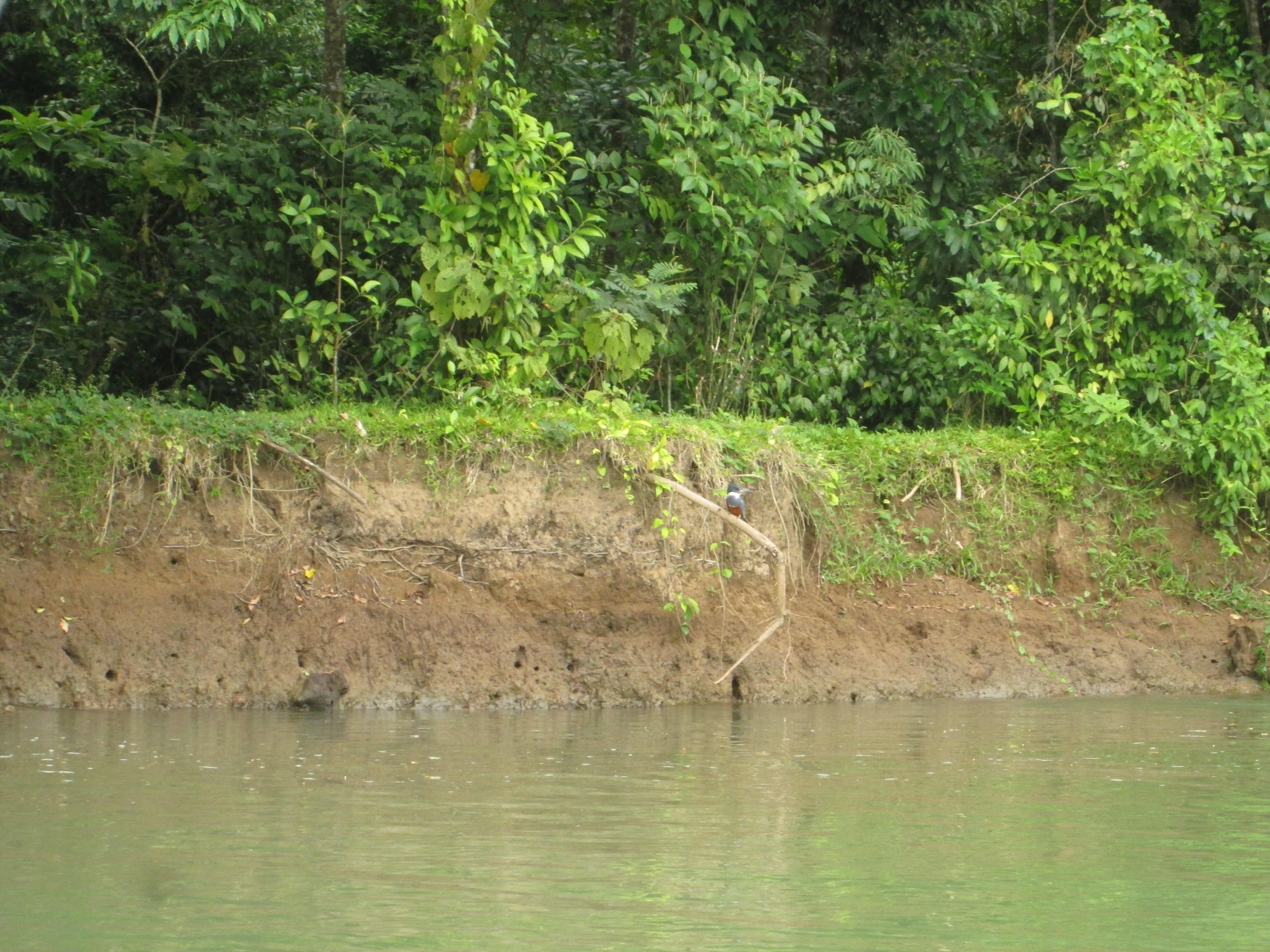
Birds of the inland waterway

P1010269 IMG_7619 IMG_7621

Welcome to Torguguero Village

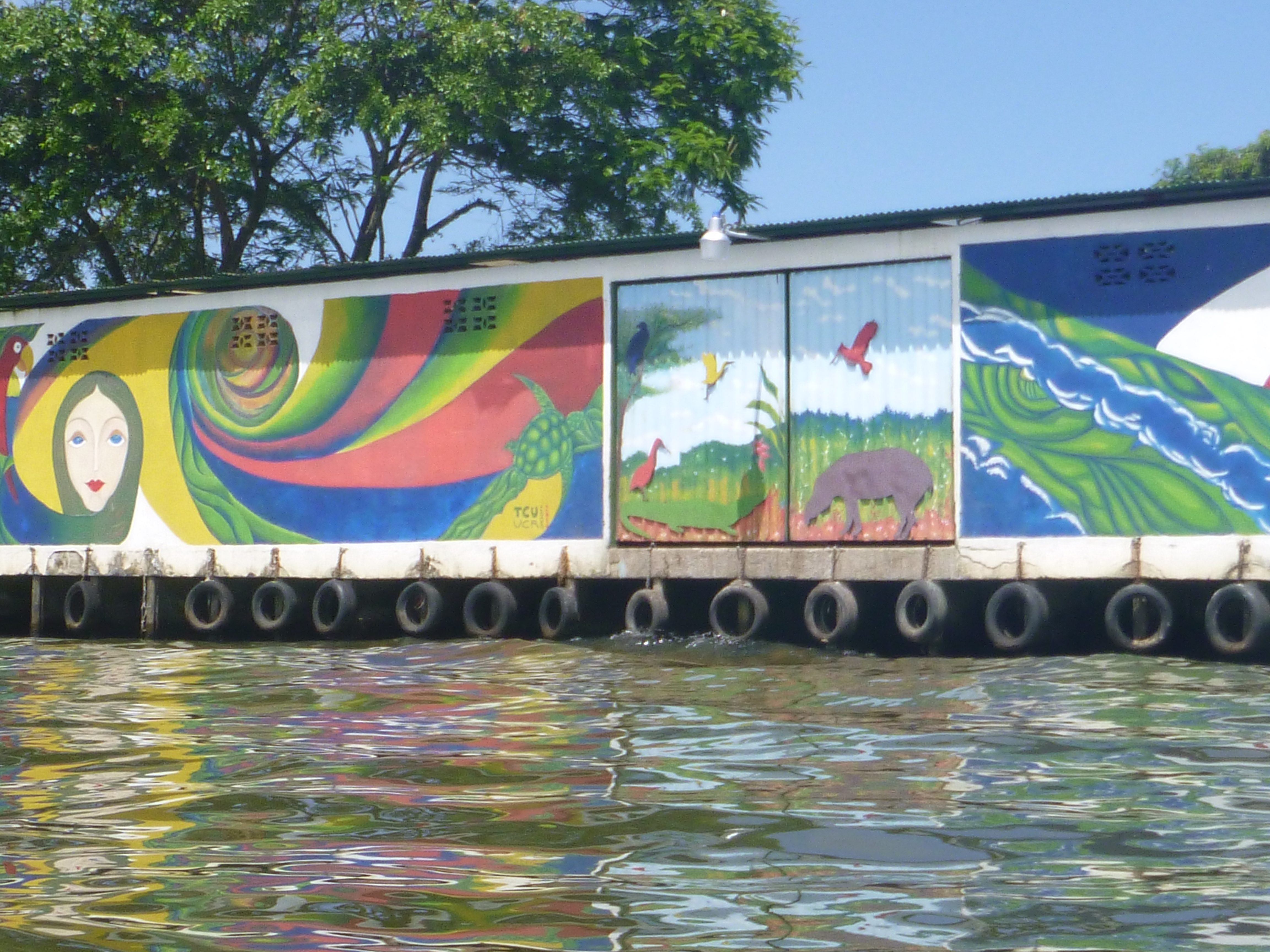
Welcome to Tortuguero Village

There was a fair amount of river traffic, but still over the four hours we were able to see lots of wildlife, especially aquatic birds. I did catch a few glimpses of caimans, and at one point I swear I saw a big iguana swimming across a wide stretch of river, but nobody else noticed these.
The destination point was Tortuguero Villiage, a community on a long, narrow strip of land flanked on one side by the inland waterway and on the other by the Caribbean.

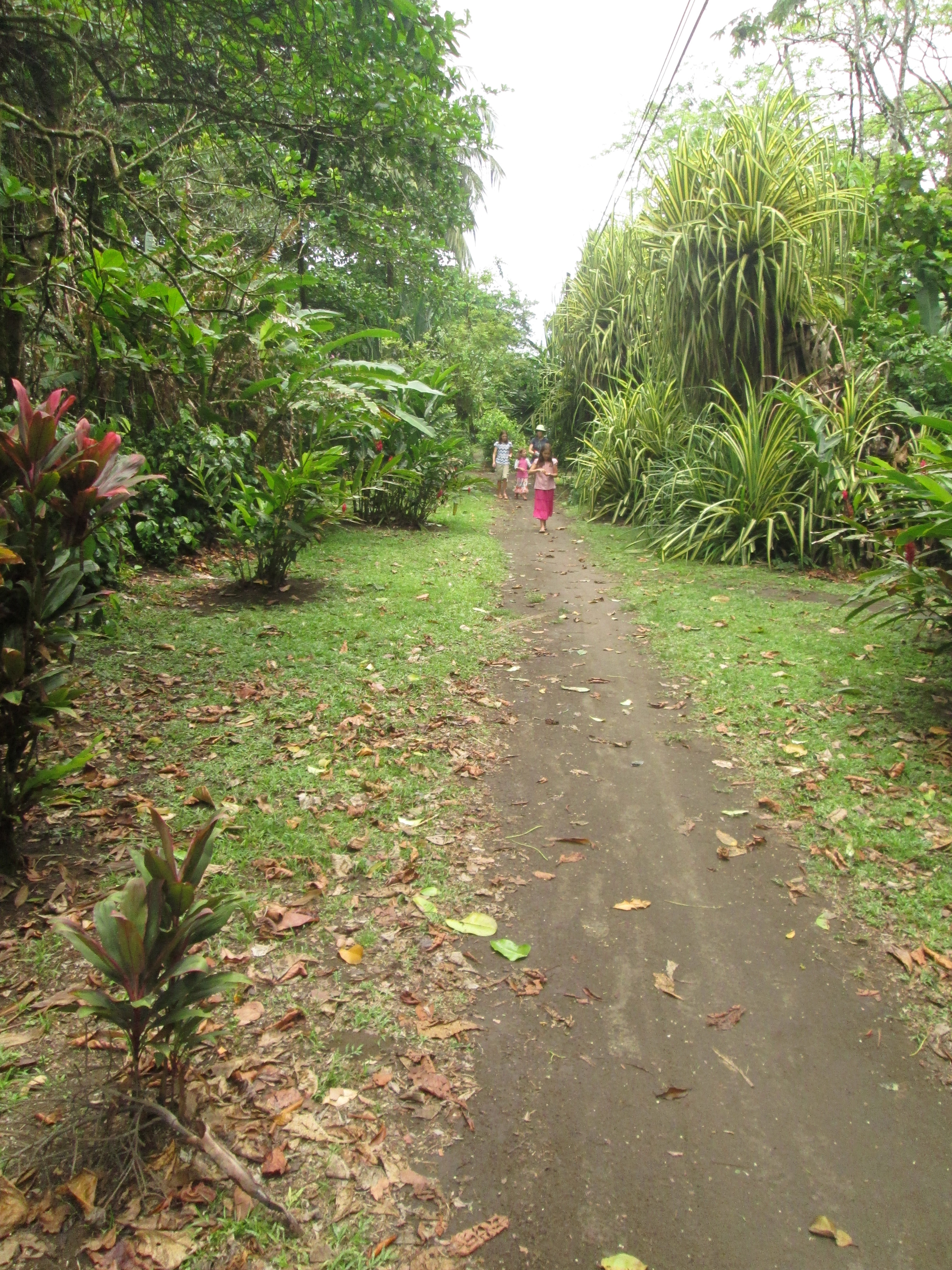
We walked quite a while on this trail, which was build a few years ago to allow turtle-watching tours to move around without disturbing the beach.

We walked quite a while on this trail, which was build a few years ago to allow turtle-watching tours to move around without disturbing the beach.

I overheard a tour guide tell his group yesterday that the island we’re on is at some points only 200 meters wide. We tried to walk to the end yesterday but finally gave up. It’s long and narrow.

It is also a National Park and a major nesting place for three species of marine turtles. Between boat rides into the jungle, black sand beaches, and turtle tourism, there is lots to draw people here. An additional draw is the fact that there are no cars here. Most of the commercial traffic her takes place on boat; the rest is carried manually or pushed on hand carts along the wide concrete sidewalk that is the main street of Tortuguero Village. This intriguing aspect reminds us our visit to Italy a few years ago when we enjoyed wandering the alleyways and cruising the canals of Venice. The Amazon and Venice in one trip. How can you beat that?

We may not see sea turtles, but we say this guy.

We may not see sea turtles, but we saw this guy.

The only snag we’ve run into is that this is not a great time for turtles. Peak season for the most plentiful species here, the Green Sea Turtle, doesn’t begin until June. This is technically Leatherback Turtle season, but Mrs. Beyette, our hostess, tells us that the season is just beginning and things are kind of slow. A few nights ago the tour group had to walk a long way to find a turtle; it was almost midnight by that point. Mrs. Beyette says the tour would be ok for adults, but she didn’t seem to think the kids would be up for it. If it didn’t involve walking well beyond midnight, I think we’d try it .

P1010296

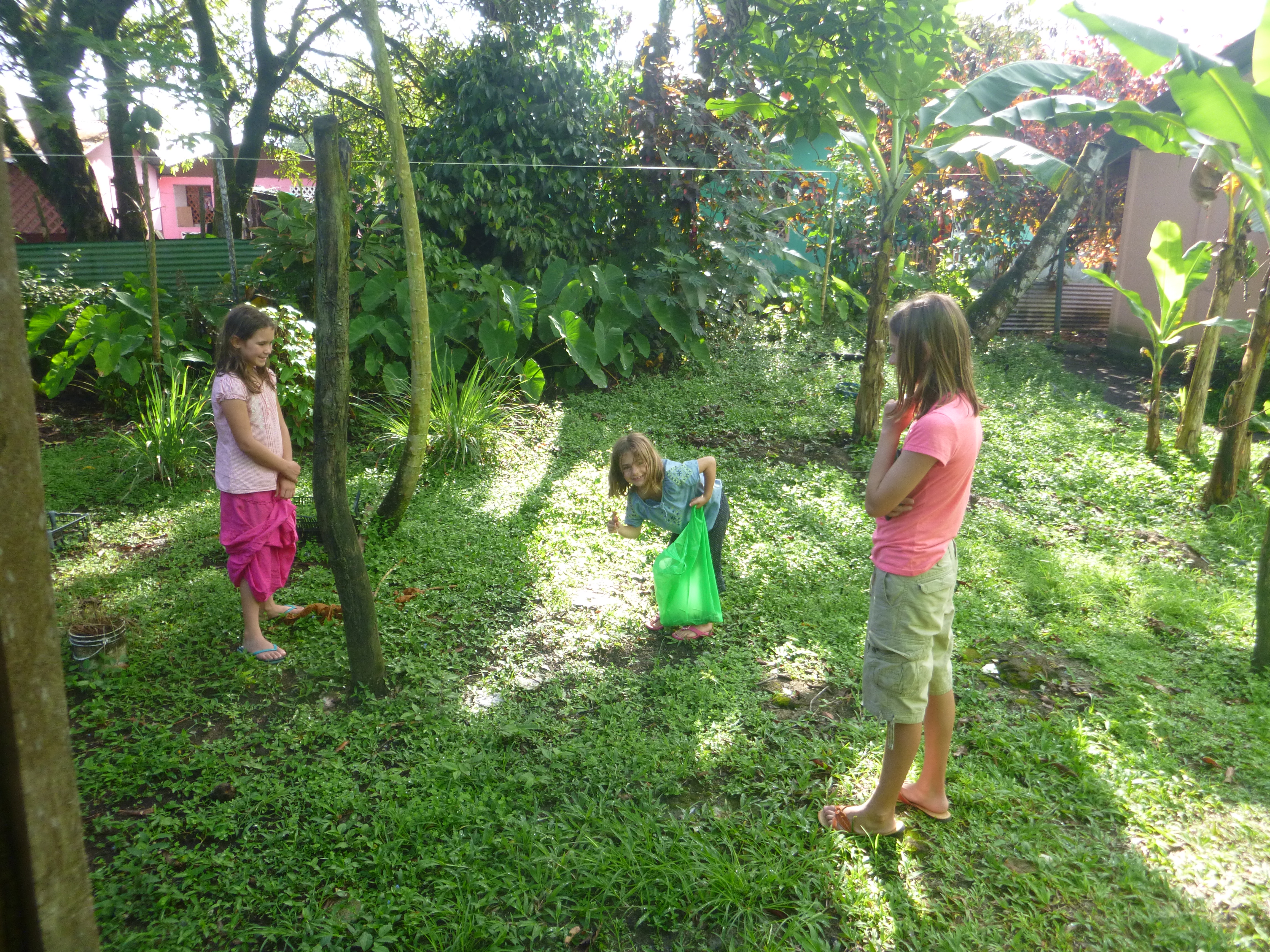
The Easter lollipop hunt ranged into Mrs. Beyette back yard.

P1010297

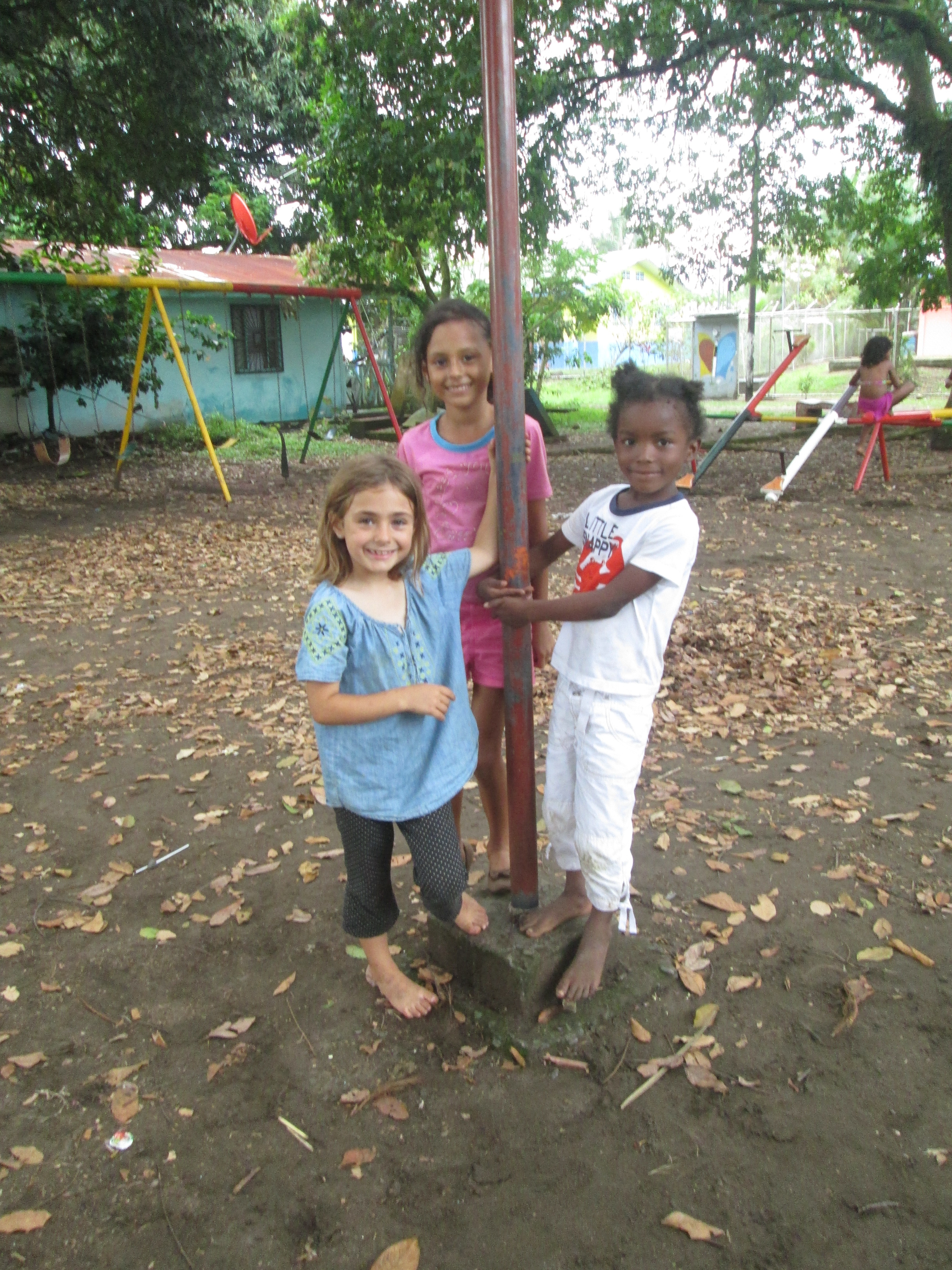
Instead, we’ve been moving forward on homework progress and also combing the plentiful gift shops of Tortuguero.  Lanie made some friends in the playground yesterday evening, and her sisters used the time to buy some candy and plot out an ersatz Easter Egg hunt.

Lanie's playground friends

Lanie’s playground pals

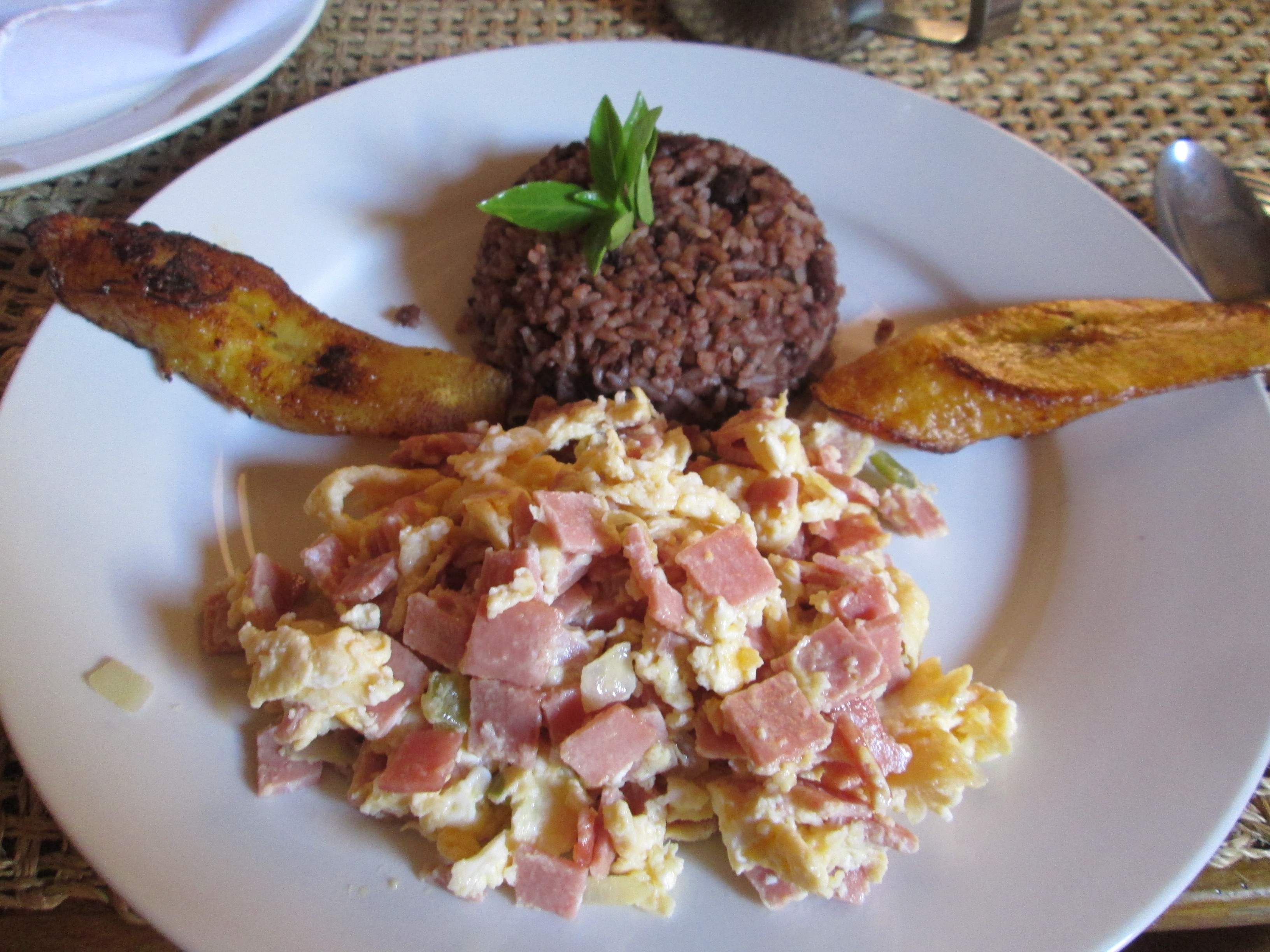
We’re limited by a lack of a kitchen here, but Mrs. Beyette’s family provides a nice breakfast for us — the Gallo Pinto here has more spices in it; it’s very good — and we’ve been managing to put together small lunches for ourselves.  There are multiple restaurants, some down winding foot paths, that offer us lots of dinner options.

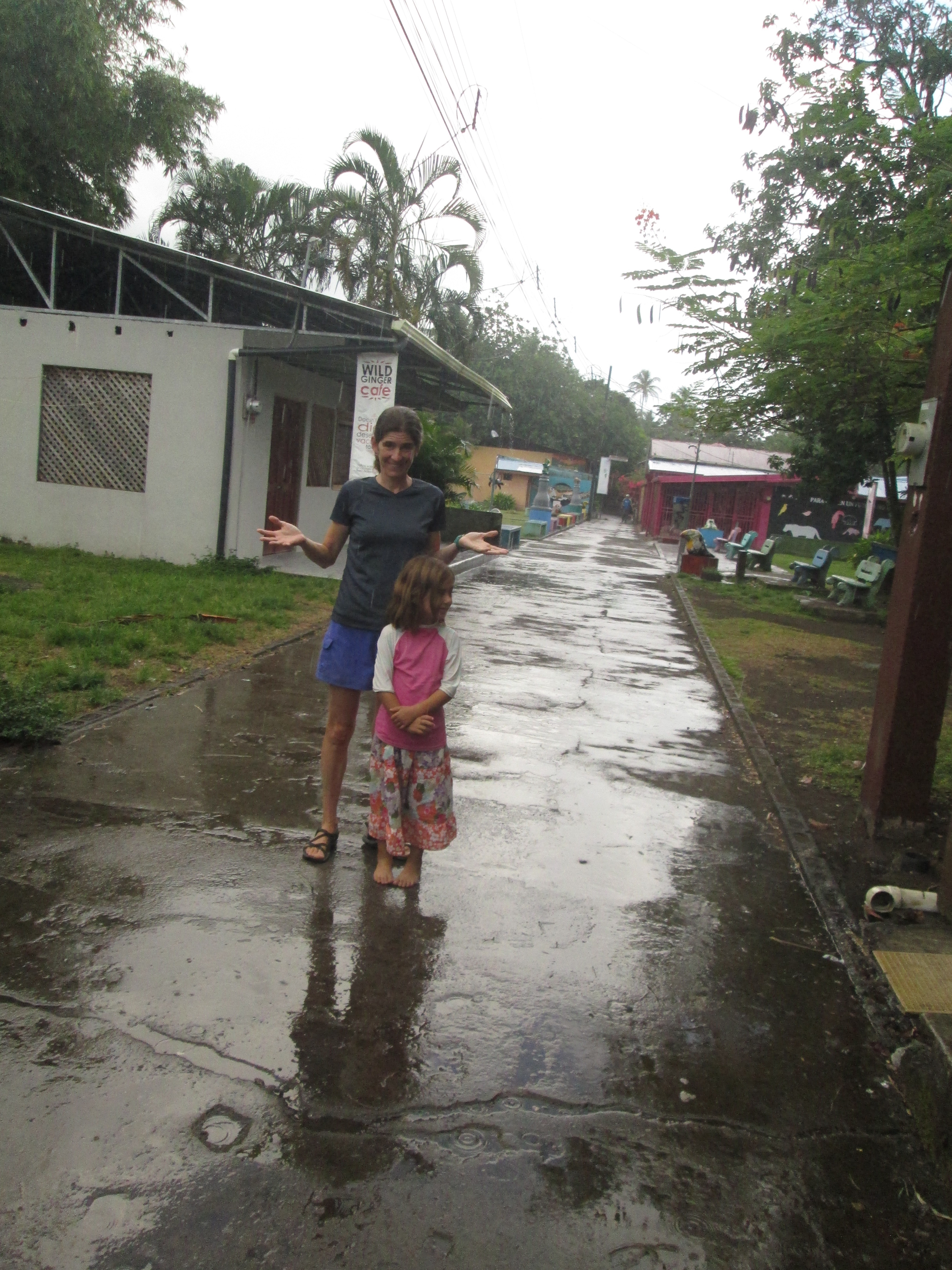
Otherwise, we’ve been enjoying some small pleasures.  The playground is a treat, as was the rainstorm yesterday morning.  It was the first significant rain we experienced since … probably since December or November, actually.

Jen and Lanie venture into Main Street to feel the rain.

Jen and Lanie venture into Main Street to feel the rain.

It was raining at bedtime, too, and the sound of it on Mrs. Beyette’s aluminum roof was very pleasant.  Plus, it helped to cool things down.

A canoe trip may be in the cards, but swimming in the ocean probably won’t. The waves are very big and the currents are strong. We’ve only been wading so far, and it most likely won’t go beyond that.

Best of Nicaragua, part II: A dining guide

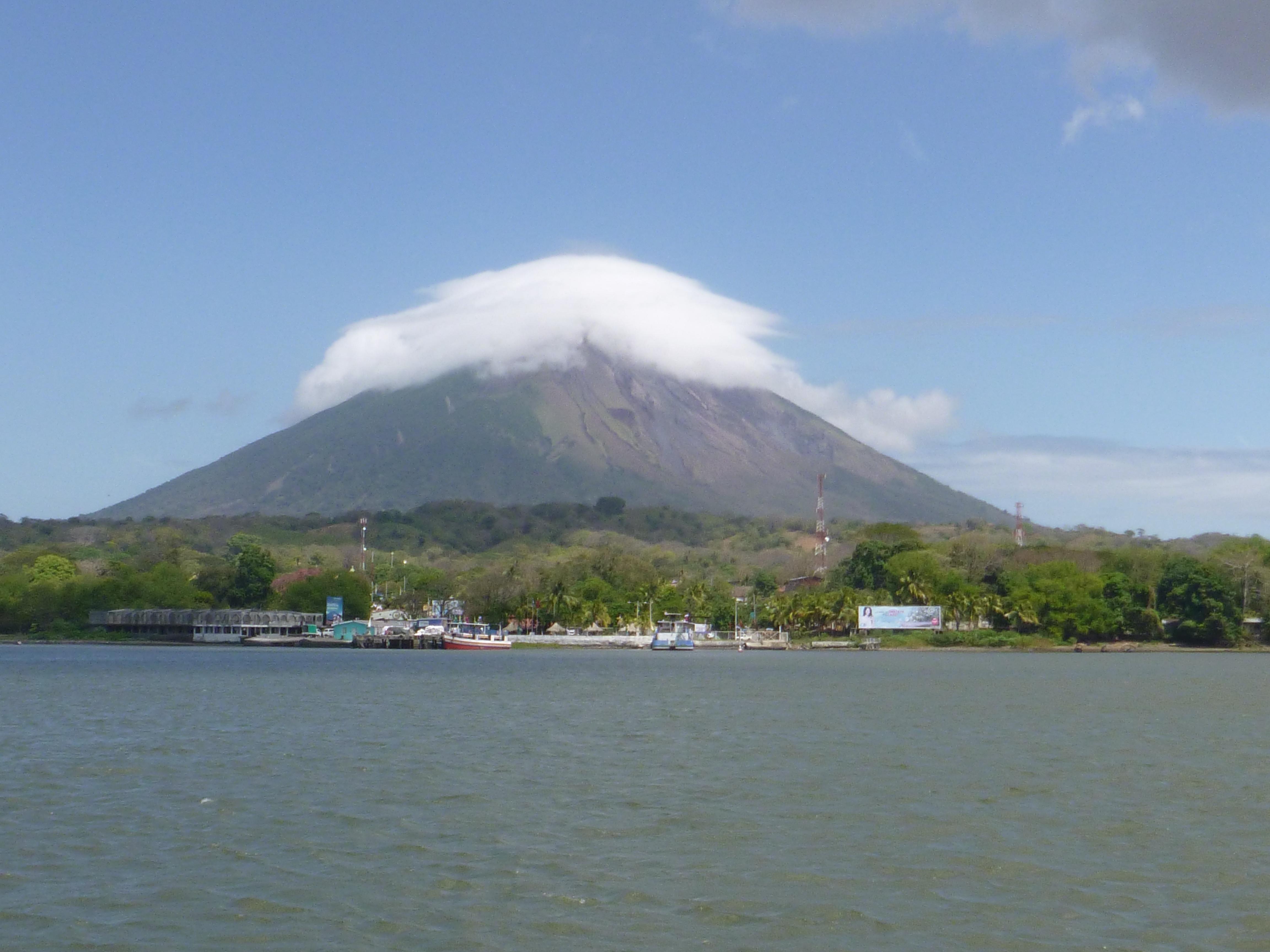
While we’re having a great time in Costa Rica, let us take a quick step back to Nicaragua for a minute. In particular, I’d like to consider Nicaraguan food. After conducting a family poll, I have found that the island of Ometepe is the dining sweet spot for most of our family in this Central American nation. Three of the five of us indicated our favorite meals and our favorite thing to eat in general came from Ometepe.

Ometepe loomed large in our family dining poll.

Ometepe, and Moyogalpa in particular, loomed large in our family dining poll.

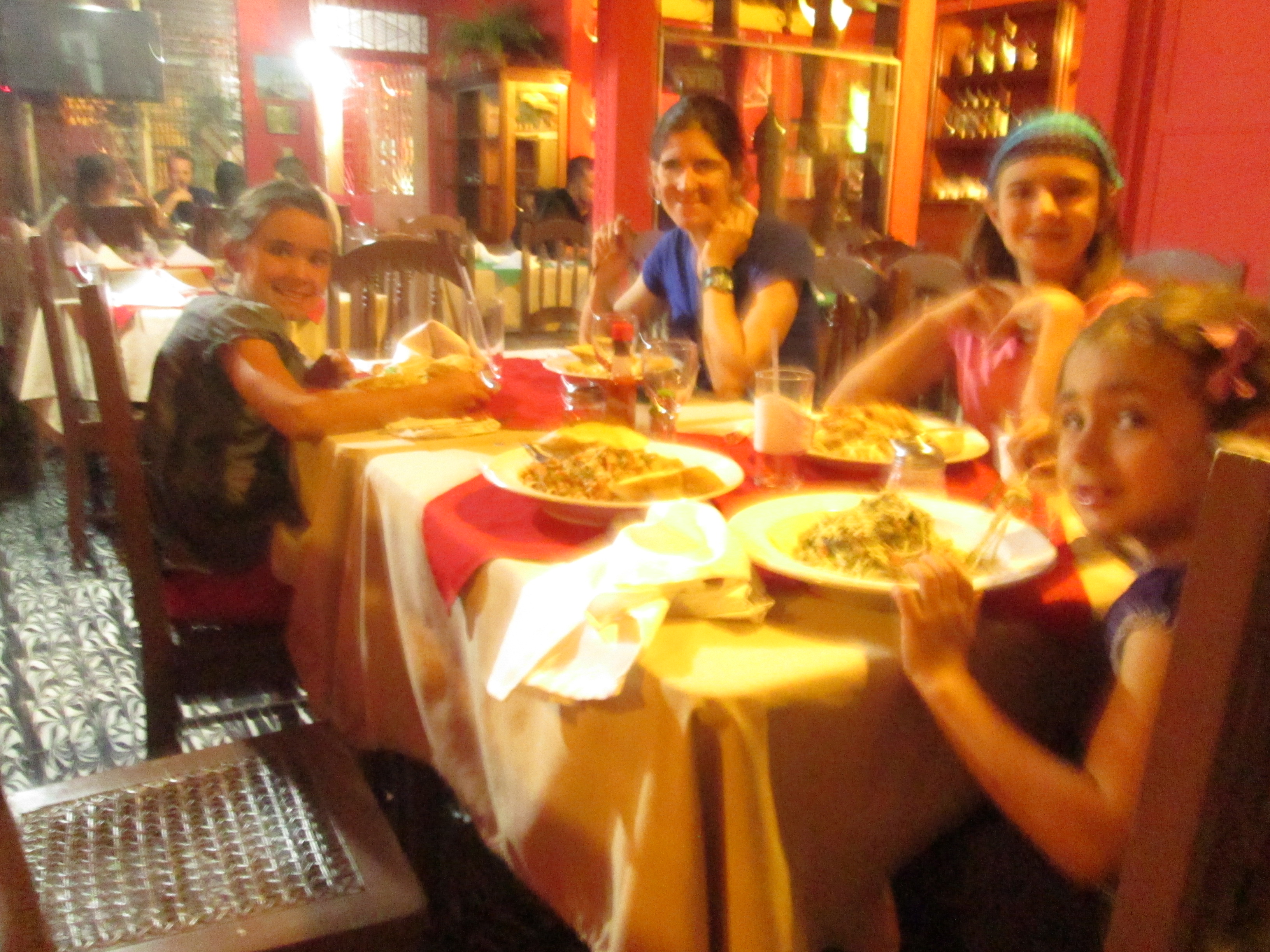
In fact, Zoe, Lanie, Nadia and I all picked our dinners from the same restaurant as our favorites, even though we all ordered different meals. This restaurant was the unassuming La Galeria on the main street of Moyogalpa, where we ate on our last night before heading for the border. It was actually our second-choice dinner spot for the night — we were all set for the pizza place across the street from our hostel, but for some reason the pizzas were backlogged and we were facing an hour-long wait before getting our food. It was all to our benefit, as Lanie ended up loving her pasta marinara and Zoe rated very highly the two plates she shared with Nadia — four cheese pasta and terryaki chicken.

The Galeria’s menu was flexible enough to allow me to continue my pursuit of the traditional Nico dish, chicken with jalapeno sauce. Typically, I don’t go out of my way to eat spicy things, but this one caught my eye at the Nicaraguita restaurant in Leon and I ordered it a couple of times after that. It consists of a grilled piece of chicken smothered in onions and jalapino slices and a light cream sauce. It is usally accompanied by rice, slaw and plantains. The plates varied slightly every time I ordere it. At the Nicaraguita, the onions and peppers were uncooked, giving a nice crunch and a fresh flavor. On the pedestrian promenade in Granada they were pretty well sauteed, adding extra sweetness to the cream sauce. At the Galeria, the vegetables were lightly sauteed giving a little crunch and a little sweetness, but I have to admit, I liked this restaurant’s version the best because it was the biggest. It featured a really nice piece of chicken. Nadia felt the same way about her liberally seasoned terryaki chicken.  There was a lot of food that night and no leftovers.
I should add that I liked eating chicken in Nicaragua because they know how to treat their chickens there. That is to say they let their hens, chicks and roosters walk around freely, scratching away in the leaves and twigs. These are happy chickens.

The breakfast, lunch and dinner table at Finca Ojos Lindos saw has seen the end of many a good pancake.

The breakfast, lunch and dinner table at Finca Ojos Lindos has seen the end of many a good pancake.

Jen has trouble deciding, but when pressed, she votes for the breakfasts at Finca Lindos Ojos in La Miraflor. The pancakes were excellent and the coffee was welcome in the chilly mountain air, but the steamed milk, fresh from the early-morning milking of finca’s cows, is what put these breakfasts over the top for Jen. She also says nice things about the Gallo Pinto and eggs put out by Marcial’s wife, the Lindos Ojos cook (she was also the bookkeeper). Remember, too, that the coffee itself was harvested at the finca, and we could see the bushes growing from where we ate our breakfasts.

Other meals mentioned during my poll were: the macaroni casserole on our first night at the Finca Lindos Ojos, all the fresh fruit that accompanies everything, the waffles at the Rancho Esperanza, the Japanese curry at the Rancho Esperanza, the banana pancakes at the Cafe Imperio in Meridia on Ometepe, and the club sandwich at the Casa Veccio in Esteli.

Nadia is about to meet the Casa Veccio's club sandwich.

Nadia is pleased to meet the Casa Veccio’s club sandwich.

I know.  You’re thinking: Pizza?  Pancakes?  Club sandwiches?  They’re not in Central America, they’re at an Applebee’s in Central Florida.  One look at that list confirms that not everyone got into the spirit of eating Nico food. We visited a lot of Italian restaurants and pizza places.

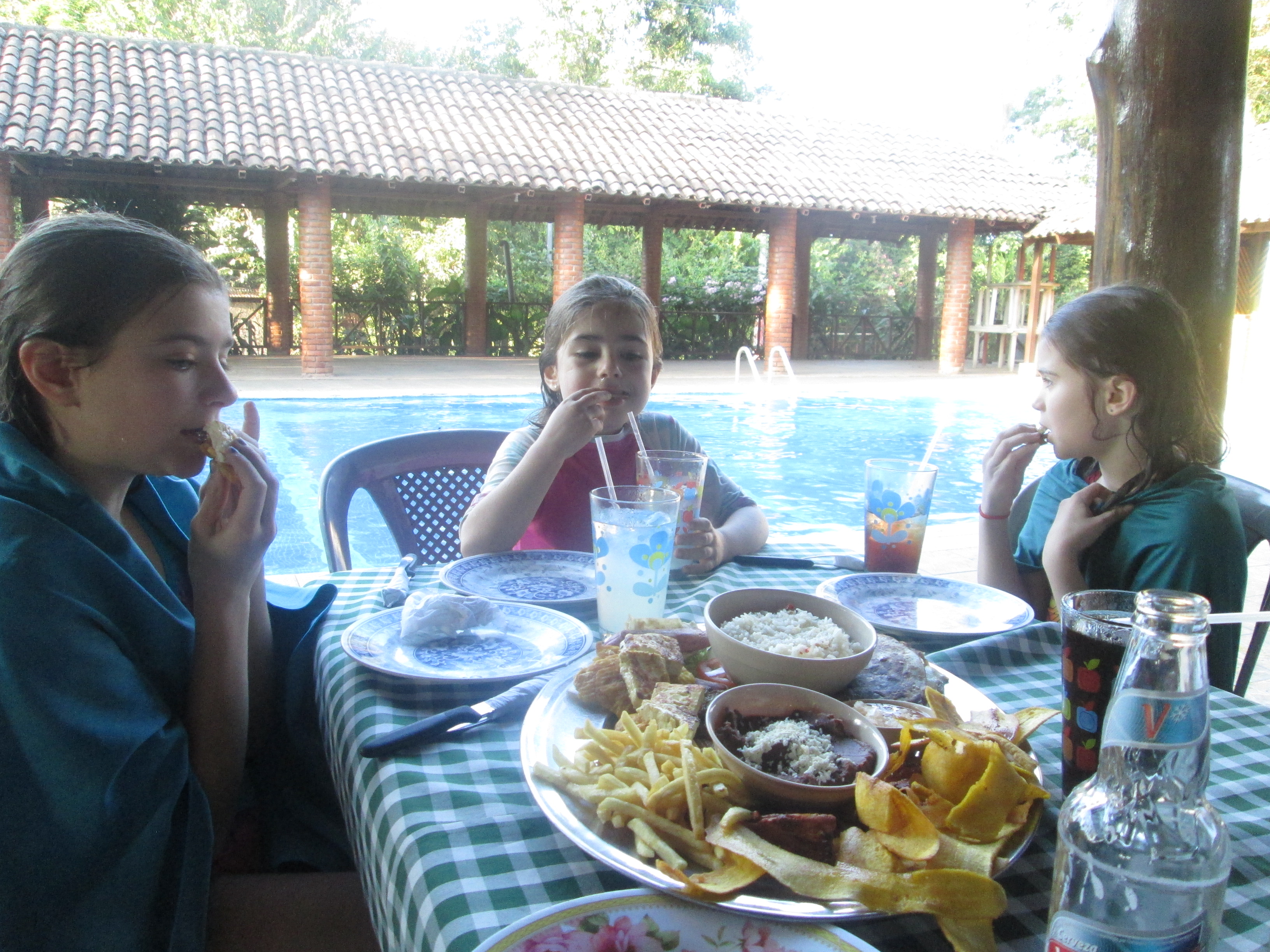
Besides my beloved chicken with jalapenos and a nod by Jen to the Gallo Pinto at the finca, the only other local dish to make our most-remembered list was the family plate at the swimming pool restaurant on our first night in Nicaragua.

Welcome to Nicaragua.  Here's a big plate of food.

Welcome to Nicaragua. Here’s a big plate of food: The family plate.

Perhaps this can be expected after two weeks of pristinely healthy food at the Mariposa School. I myself admit to being excited upon walking into the Hollywood Pizza in Leon and encountering a few pies, some beer and pitcher of orange soda.  Oh, and breadsticks, too.  I’m surprised that place didn’t make the list.

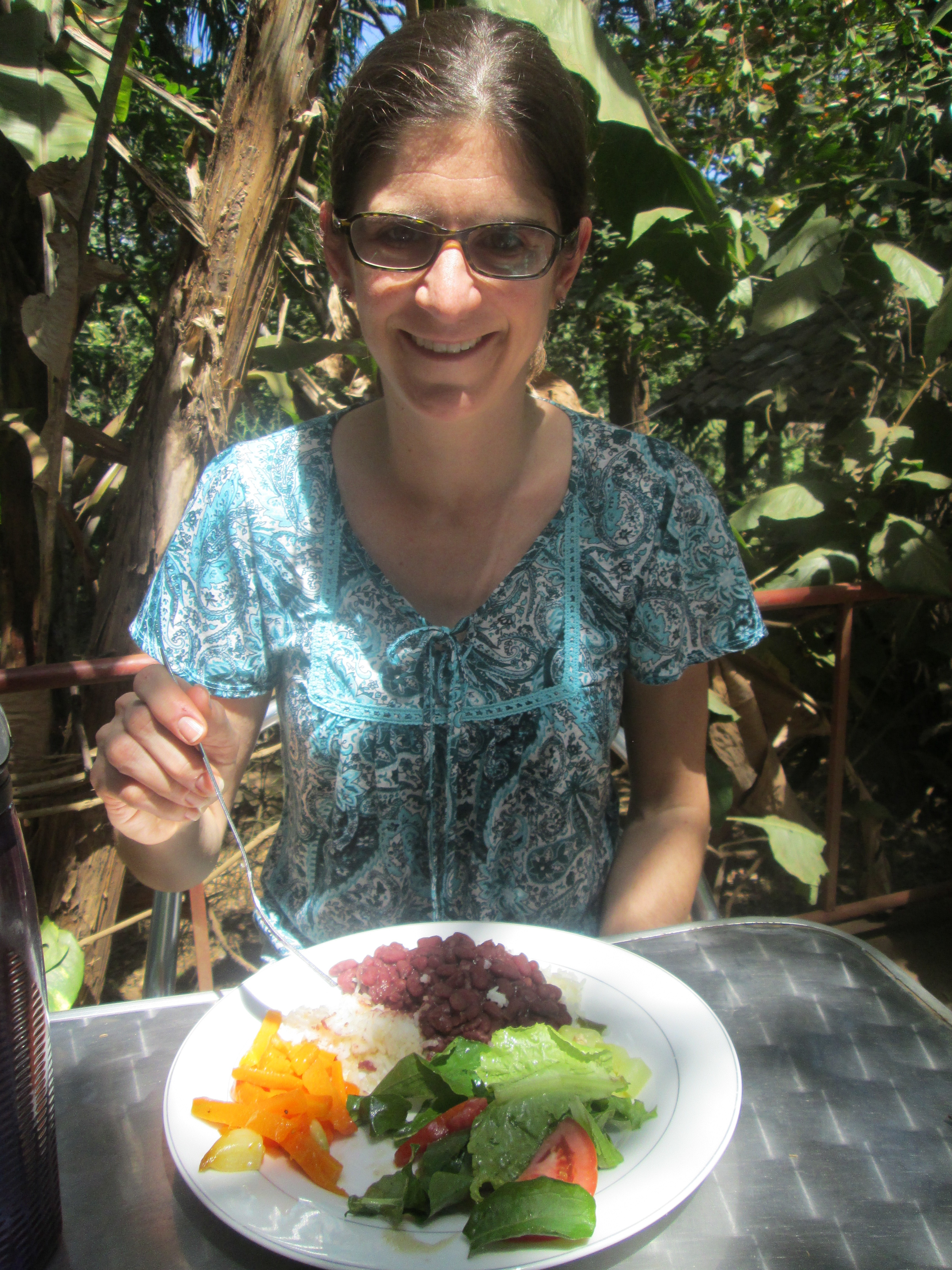
Good wife happily eating virtuous food.

Good wife happily eating virtuous food on the patio at La Mariposa School

The food at the Mariposa should not be discounted, though. It was all grown locally and prepared well. It was mostly vegetarian and the fresh vegetables shone. Even Jen was eating beets there. The beets were so sweet! (Also, they were omni-present, so they might have just worn Jen down.) I have often heard of people going on purges at home, cutting out sugar, alcohol, caffeine, salt and/or processed foods. Eating at the Mariposa was like that for us (except for the caffeine and alcohol, of which Jen and I partook, but only moderately). We were served very little wheat or dairy.  The mere absence of cheese help my waistline immensely.  There were deserts, but they weren’t over-the-top with sweetness.  It was a very easy way to accumulate two weeks of healthy eating.

Gallo pinto in Granada.  If it comes with eggs, it must be Jen's.

Gallo pinto at our hotel in Granada. If it comes with eggs, it must be Jen’s.

One more thing before we move on to desserts. Beans and rice are very popular here — particularly for breakfast, but some people eat it for every meal. Our farm guide Marcial claimed to eat it exclusively. He never ate any fruit, he said, even though all around him trees were bursting with mangoes, bananas and papayas. I tried to eat Gallo Pinto very chance I got, and I have concluded that, while the dish is fairly standard and straightforward, my favorite version was served at the Cafe Luz in Esteli because it had more onions and peppers mixed in with the beans and rice. Marcial may not have liked it, but I did.

The only other Nico dish that I can remember trying was a Nacatamale, which I also tried at Cafe Luz. It was cornmeal cooked in a banana leaf with some pork thrown in. It was good.  It maybe picked up a little banana flavor from the leaves.  I did not feel the need to order it again, though.

We had to eat so fast we didn't get a picture of the milk shakes.  It was not far from this spot that we got them, though.

We had to eat so fast we didn’t get a picture of the milk shakes. It was not far from this spot that we got them, though.

Ok, on to dessert, which is what gets represented when you ask my family what their favorite things to eat are and you don’t pin them down to an actual meal. Three of us still remember most fondly the banana coconut milk shakes we shared at the end of our waterfall hike in Ometepe. The idea of the milkshakes may have been as a bribe to keep everyone moving on the path.  In reality, they were expensive, but huge and very good.  Sweet, rich and refreshing after an eight-kilometer hike.  (We have all decided that the last kilometer of the reportedly six-kilometer hike had another kilometer hidden in it.)  I was not going to have any milkshake, but it was clear that as hungry as everyone was, they were going to have trouble getting through them. Also, our bus driver was waiting to bring us home. They were less milkshake and more of a consistency of a Blizzard at Dairy Queen or a Friendz at Friendly’s, and they were a perfect combo of big size and great taste. Using fresh ingredients surely helped.
Other dessert highlights mentioned: gelato in Leon, mango and chocolate ice creams at the Laguna de Apollo, and the banana cream pie at the Mariposa School.

Lastly, while we’re still in Nicaragua, I should recount a story that I’m surprised Jen left out of her account of our Volcan Maderas hike. While we were at the summit, peering into the crater, we spied the Shaman of the Volcano. Our guide said the Shaman, whose name is Tom, only appears on very clear days. If you see him, you can ask one question and he’ll answer it.

We approached the friendly looking man. His twinkling eyes beheld us from between his bushy beard and his Red Sox cap pulled low.  Before we could even get a question out, he answered in slightly Manchester-accented English (that’s Manchester, NH): “You had 16 pounds of laundry in Granada.”

It was not exactly the answer to life, the Universe and everything, but it at least was pretty accurate.  The truth is that we had 17 pounds of laundry in Granada.  There may have been a wet bathing suit in there or something.  It cost close to $20 to get it washed, dried and folded, but it was worth it.

That, friends, is why you should all hike up volcanoes when you get the chance.  At least on clear days.

Your daily dose of resplendence

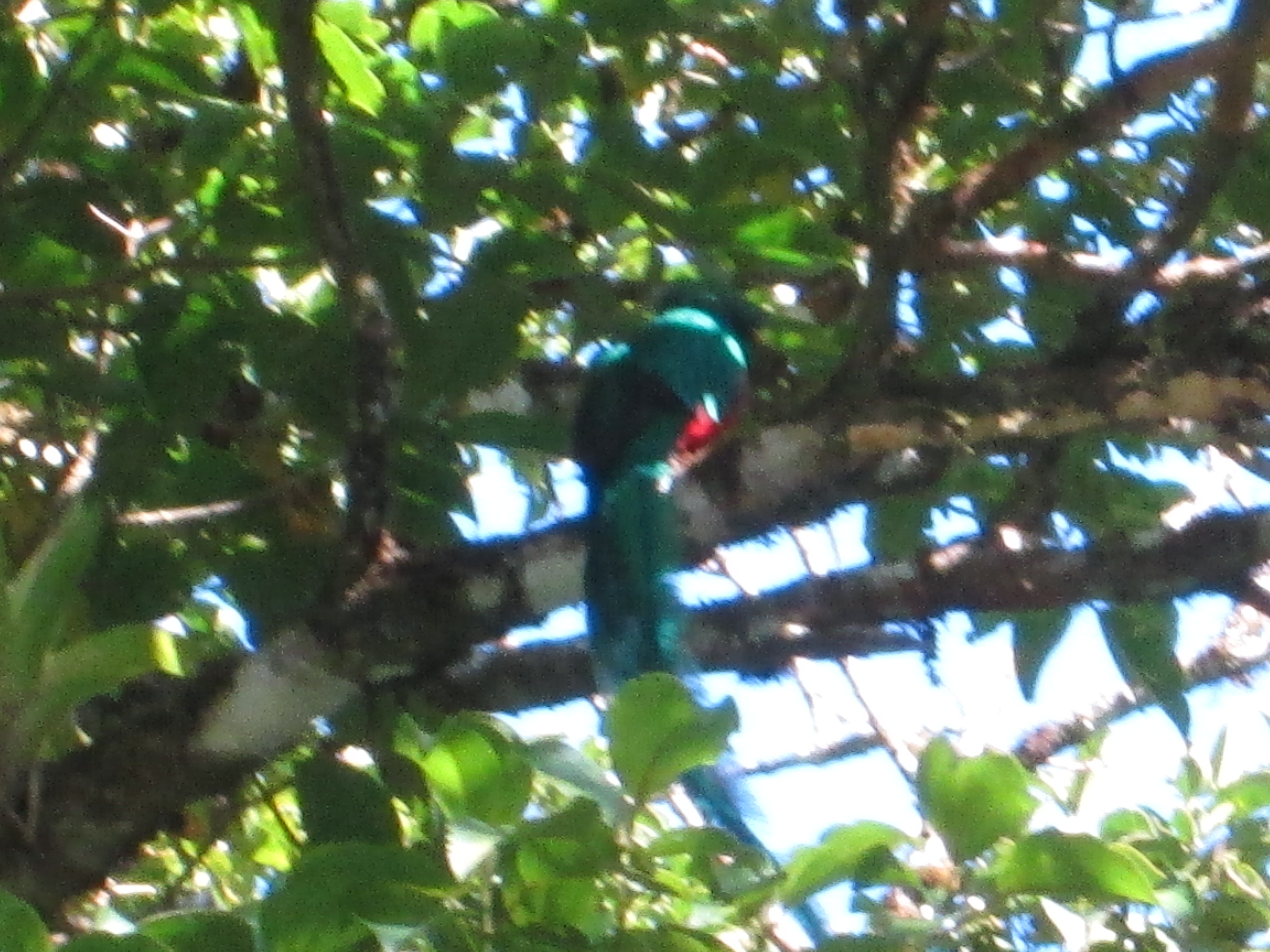
With apologies to our friend Carol, who trudged around Costa Rica for a week with one particular quarry in mind, and who left empty-handed, we can report that we visited the Monteverde Cloud Forest Reserve and saw her prized Quetzal before we even left the parking lot.

"Like a waterfall of teal"  See what I mean?

“Like a waterfall of teal” See what I mean? Kudos to Zoe for getting these pictures with our point-and-shoot camera.

It’s true. We walked to the reserve from our house, about 700 meters away from the front gates, and saw about 20 people standing in the parking lot looking up. Being a veteran of the US National Park System, I sensed something exciting was afoot. I asked a man who looked like a guide: “At what are everyone seeing here?” (This is an approximation of my Spanish now that I’m not speaking it every day.  Many people here speak fine English.) And he replied, “Why, the resplendent Quetzal, senor.” “Resplendent” almost always modifies this bird in these parts.

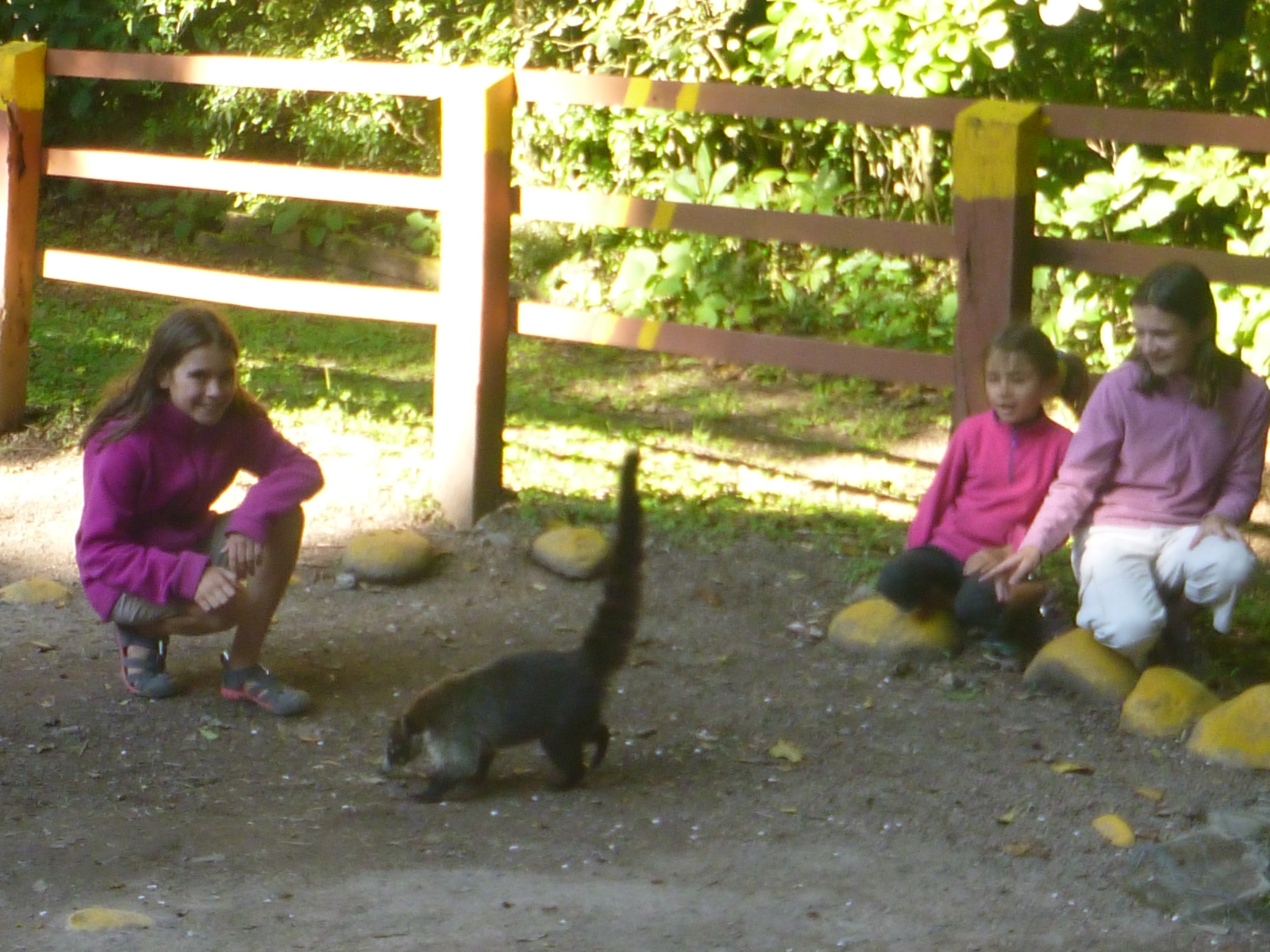
The girls didn't ignore the coati.

The girls didn’t ignore the coati.

Sure enough, like a waterfall of metallic teal feathers from a high branch in a tree, serenely sat the bird that brings thousands and thousands of expensive cameras with long lenses to Costa Rica. Moreover, as I was inside buying our tickets and inquiring if there was a chance of getting a guide through the preserve, Jen and the girls spotted two more Quetzals (slighly-less-resplendent females). Anyone who bothered to look down saw a trio of coatis, which are like mild-mannered racoons with long noses, practically doing synchronized acrobatics in a empty parking space trying to garner some attention.

Cool, yes.  Resplendent?  Maybe not.

Cool, yes. Resplendent? Maybe not.

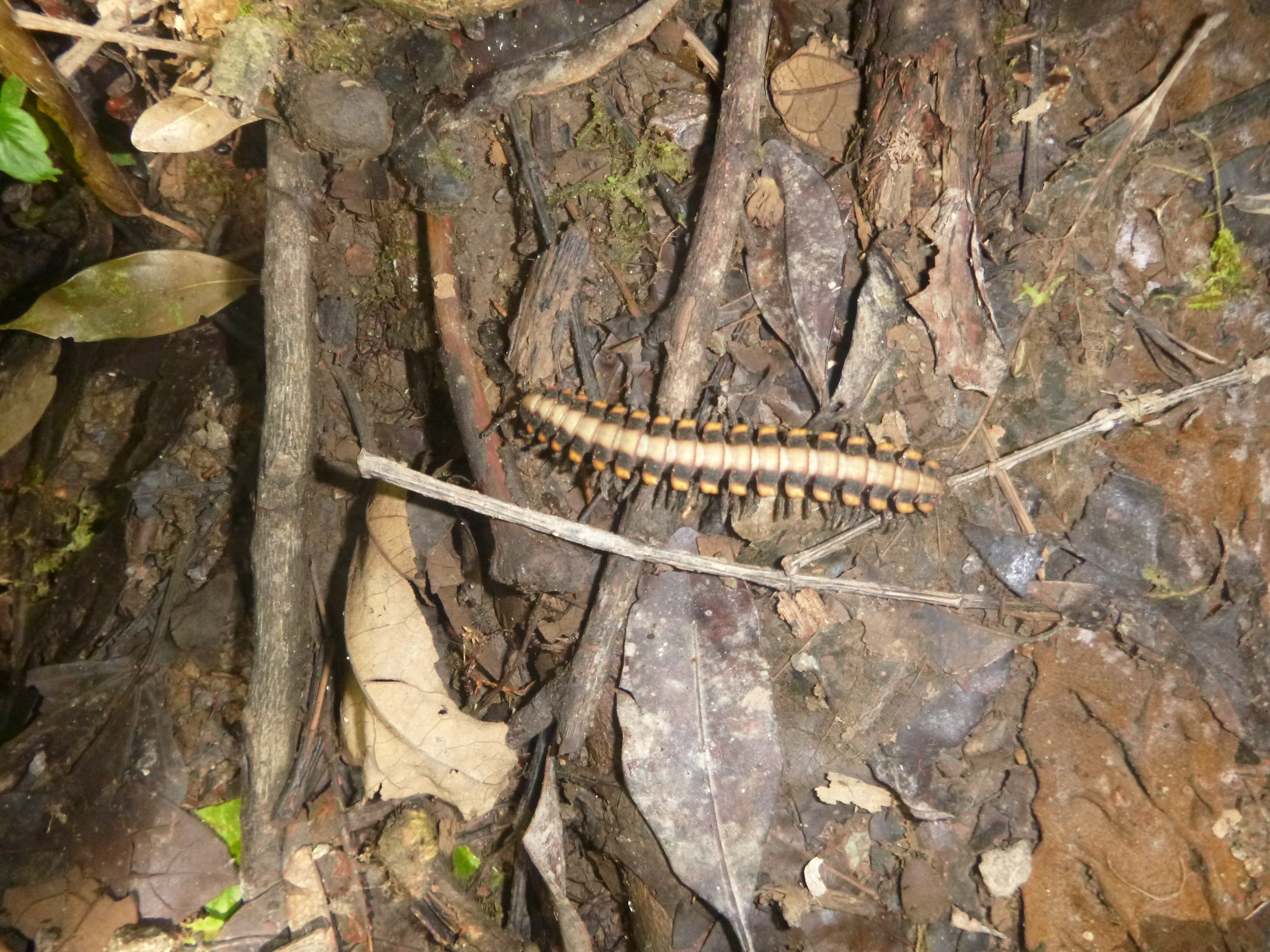
It was almost too much. As it turned out, it was almost everything we saw for the day. If animals were so easy to find you were in danger of parking your car on top of them, who needs a guide?  Am I right?  Actually, no. We guided ourselves through the preserve enjoying lovely scenery and appreciating the well-marked, well-maintained trails, but all we managed to observe of the fauna was a big millipede and several nondescript birds. To be sure, we must have walked by dozens of lovely specimens invisible to our un-trained and un-magnified eyes.

IMG_7266

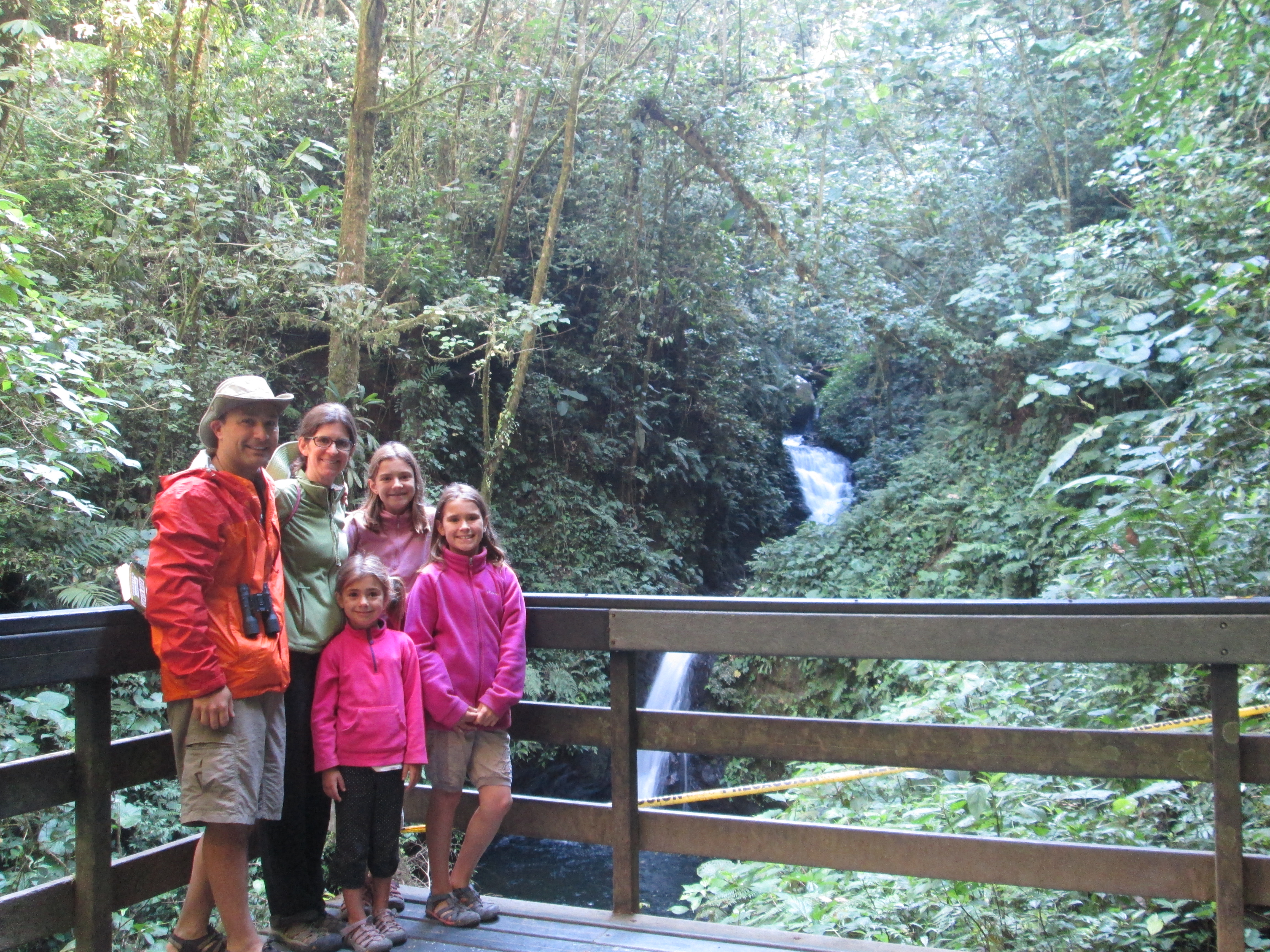
Now, a waterfall of water

IMG_7274

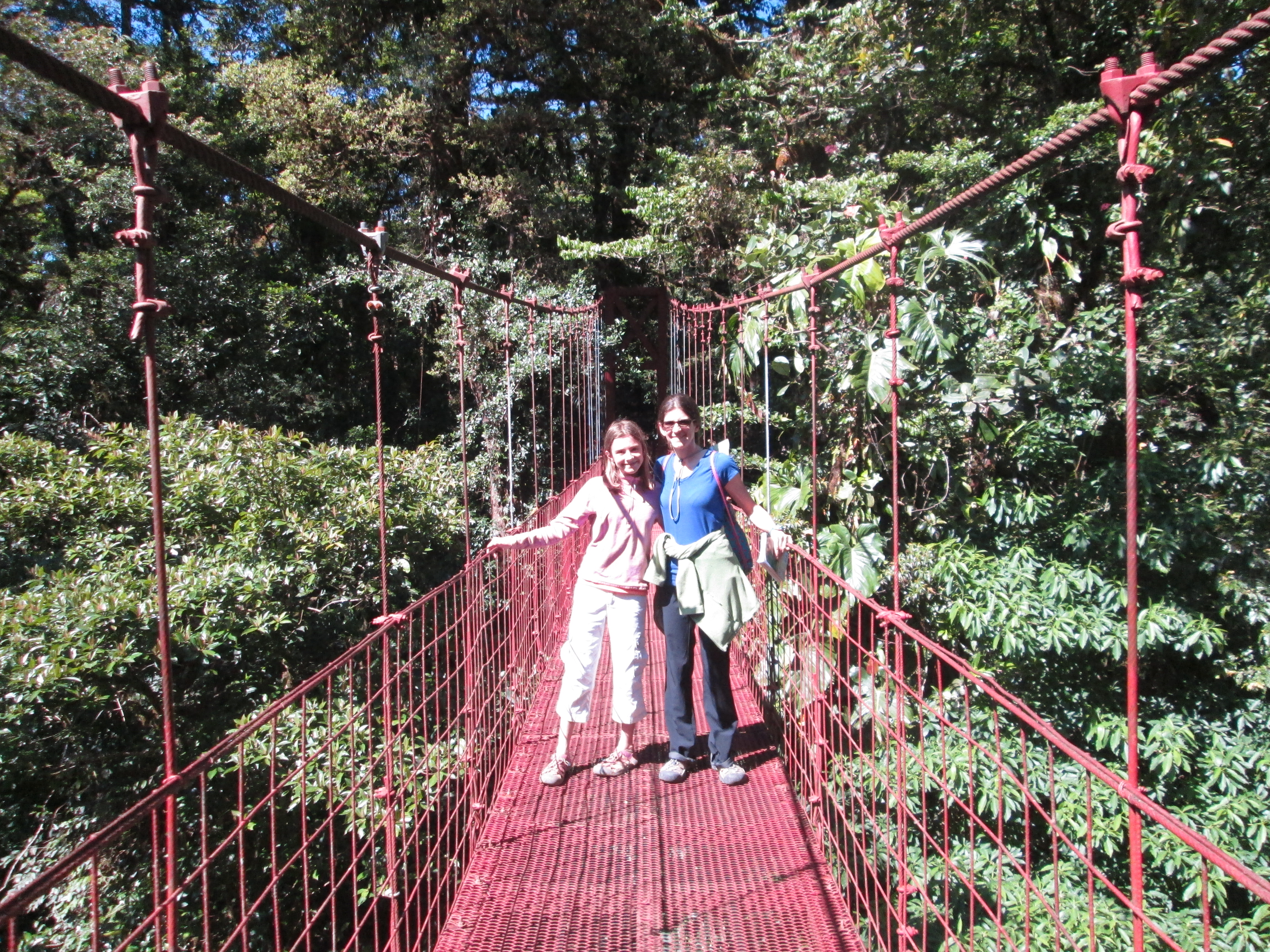
A suspension bridge gave a view into the top of the canopy.

We might have opted for a guide — they are highly recommended here — if we could have used a credit card to pay for his services, but all of the reserve’s guides were booked and the mercenary squad only accepts cash. Our visit to the Bank of Costa Rica was scheduled for the afternoon. Also, it seems that the pricing system here does not favor our family. One person can rent a guide for $18, it seems, but a family of five has to pay $18 per person, which sounded a little steep for us. Even after the guy told us he’d waive the fee for Lanie it was a little steep.

The reserve turned out to be a nice place to stroll. We saw a waterfall, lots of cool flowers (which also might have benefitted from a guide’s description) and nice views from a lookout point.

After visiting the reserva, we headed back to our house. (The Quetzals had migrated, but the coatis were still scampering around the parking lot.) Nadia and I walked a few kilometers into town to visit the cajero automatico, then we met the rest of the family at a pizza place that turned out to be several degrees nicer than we expected or were dressed for. Who puts a nice restaurant two miles out past where the paved road ends? At least we were there early enough that there were few people to offend with our emphatic lack of resplendency.

During our walk, Nadia and I also checked out a store run by a cooperative of local artisans. It was a Monteverde version of Durham’s own Main Street Makery. It’s good for us that our travel schedule restricts us from buying large items. The furniture, particularly the hand-made wooden chairs in Nicaragua, were beautiful. The hammocks are appealing, too, but even these are just too big for us to haul around.  Save our money for more tours, that’s what I say.

Tomorrow we’ll take the rest of the family to the coop to see what they think.

Nicaragua Farewell

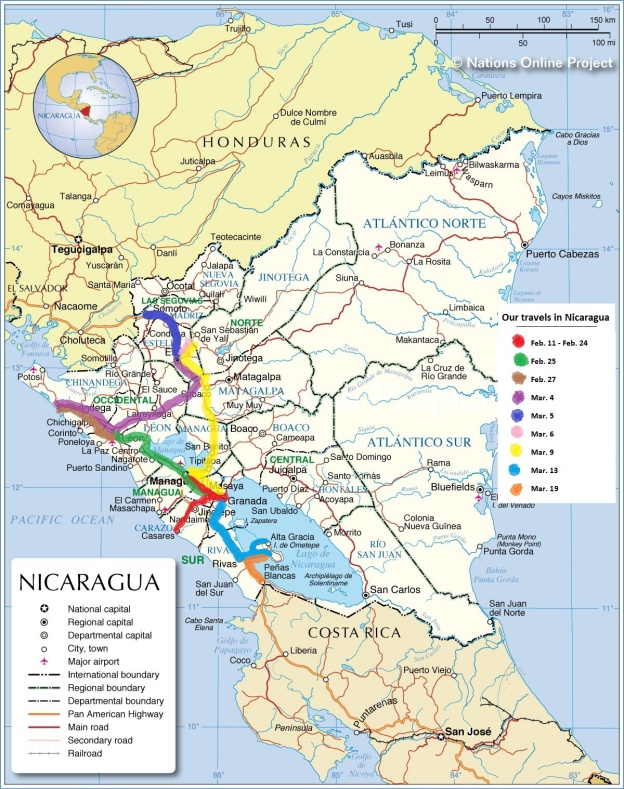
Ometepe was our last stop in Nicaragua. From there, after a comfortably uneventful ferry to the mainland (aided in some quarters by Dramamine), we accepted a taxista’s offer of a $25 ride to the border — about 45 minutes south — and began our walk into Costa Rica.

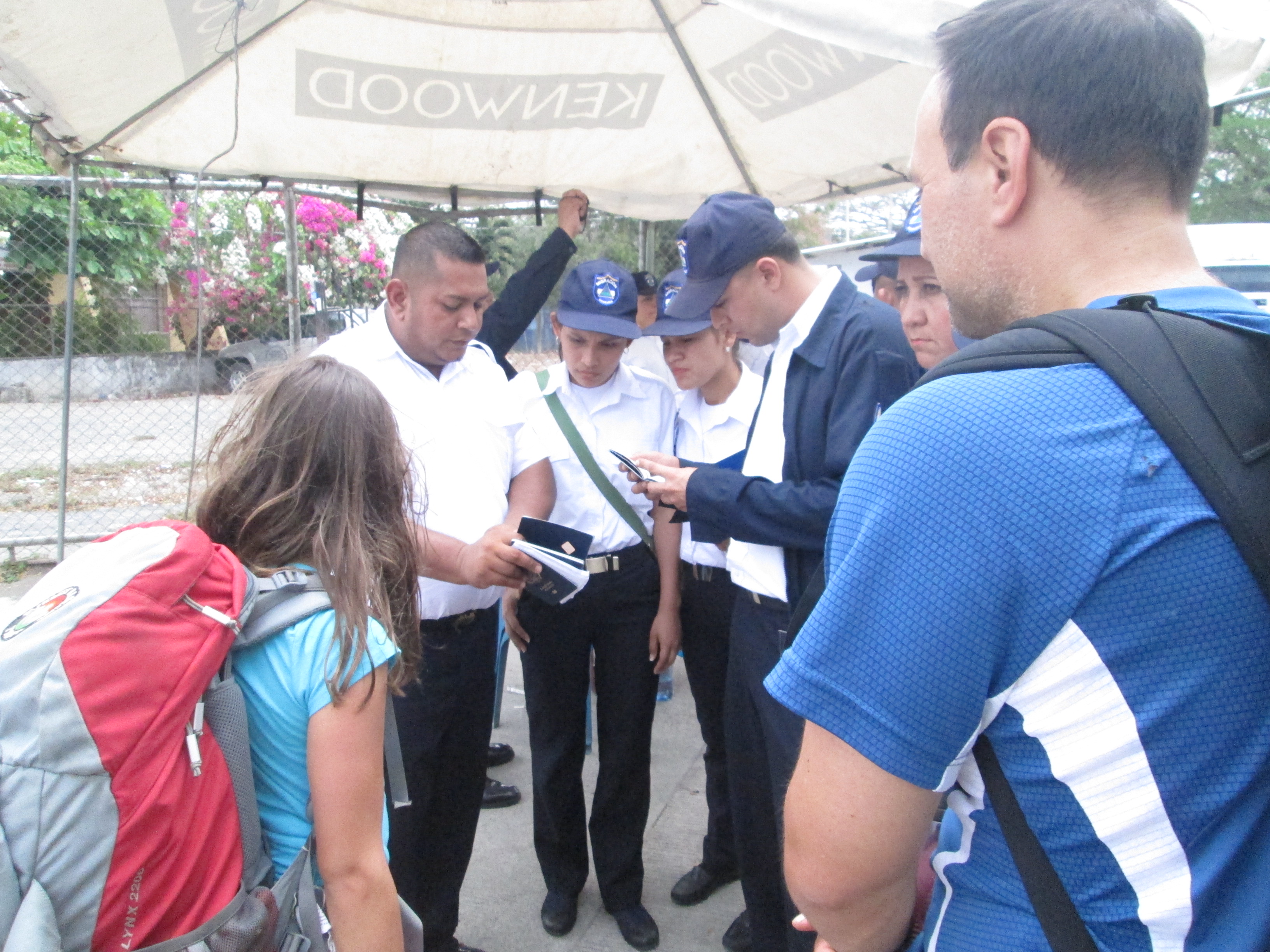
A family of five from the USA makes for a fine seminar in document checking.  Most of these people are trainees for the Nicaraguan border service.

A family of five from the USA makes for a fine seminar in document checking. Most of these people are trainees for the Nicaraguan border service.

The border crossing was not really straight forward. It was more of a zig-zag across a large tractor-trailer parking lot. It suggested some acrimony between Nicaragua and Costa Rica, as if they needed 300 meters and a double row of semis to keep the respective populations from throwing rocks at one another.

Our taxista pointed out disused buildings on both sides of the road about 10 km from the trucks and the parking lot that he said used to be the border. “They were having problems in San Jose and we took some land from them,” is what the taxista appeared to say. “It was many years ago.” I asked him if San Jose (the capital of Costa Rica when I don’t call it San Juan) got angry over that. “Who knows what they think?” the taxista said.

You have to love the Nicaraguans. They took very good care of us, from Leopoldo the night watchman at La Mariposa, to the guy with the potleaf hat on the microbus to Managua, to Marcial in La Miraflor, to this last taxi driver, who gave me tips on speaking Spanish with the Costa Ricans. Basically, after the first major city we got to, Liberia, where many Nicaraguan emigres live, everyone we’ll meet will speak very fast and use strange words. Instead of saying “tranquillo,” the Costa Ricans will say, “pura vida.”

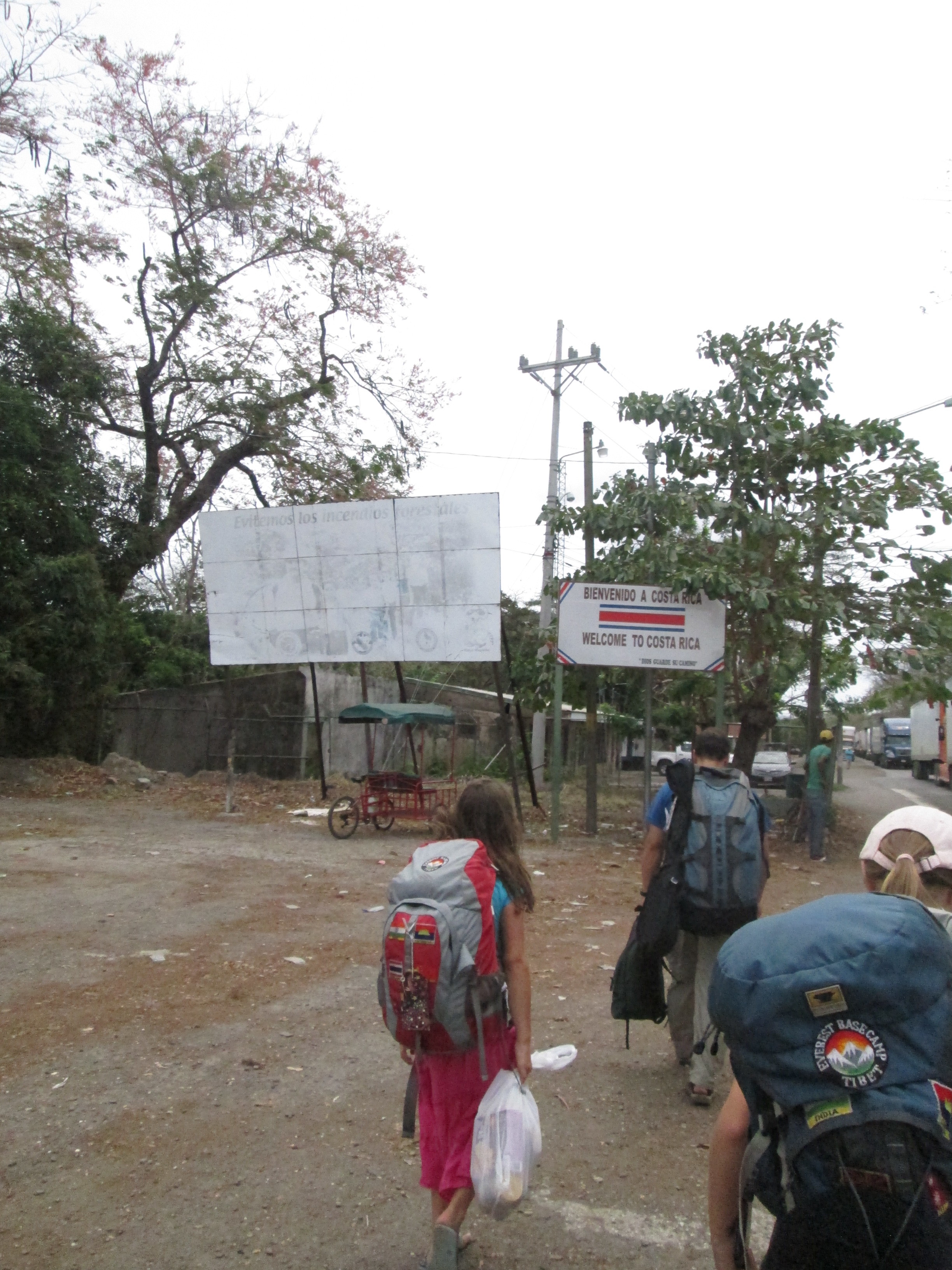
After a long line of tractor trailers, Costa Rica beckons.

After a long line of tractor trailers, Costa Rica beckons.

It’s more expensive in Costa Rica, too. Many people have told us. “Any question you have, you’ll have to pay $5 for the answer,” somebody once told me. When I express how much we’ve liked Nicaragua, a common response from Nicaraguans has been, “yeah, it’s cheap here.”

So there is a bit of an inferiority complex here, but the Nicos persevere. And they have made a great impression on us. Among the things we’ve appreciated the most has been the public transportation system, which promises to take you anywhere you want in the country provided you switch buses enough times and can get across the larger cities from one terminal to the other. Some American told us early in our time here, “Well…you have to understand that the buses don’t leave until they’re full…” This is a slanderous remark, in Nicaragua at least. Every bus we took (ferries, too, for that matter) left exactly at the posted time. Of course, they have been pretty full, and they tend to get more full as they go along. Still, we found them a very efficient — and yes, cheap — way to get around.

Just a quick word on the term “Chicken Bus,” which is what some people call the local buses.  It should be said that while almost all of the local, intercity buses we took were converted school buses, often heavily laden with people and produce, we did not see a single chicken in or on top of a bus. True, we did see one tied to a pillar in the Esteli bus station, but it might have been part of the concession. There was just about every other kind of food imaginable at the terminals.

In fact, I came to the conclusion that it would be pointless to take a chicken on a bus from anywhere to anywhere in Nicaragua because no matter where you ended up, as soon as you got off the bus, there would be more chickens there waiting for you. Chickens are ubiquitous in Nicaragua, except on the buses. In a land of poultry saturation, where almost every night of sleep was perforated by crowing roosters, the chicken buses have been for us a chicken-free zone.

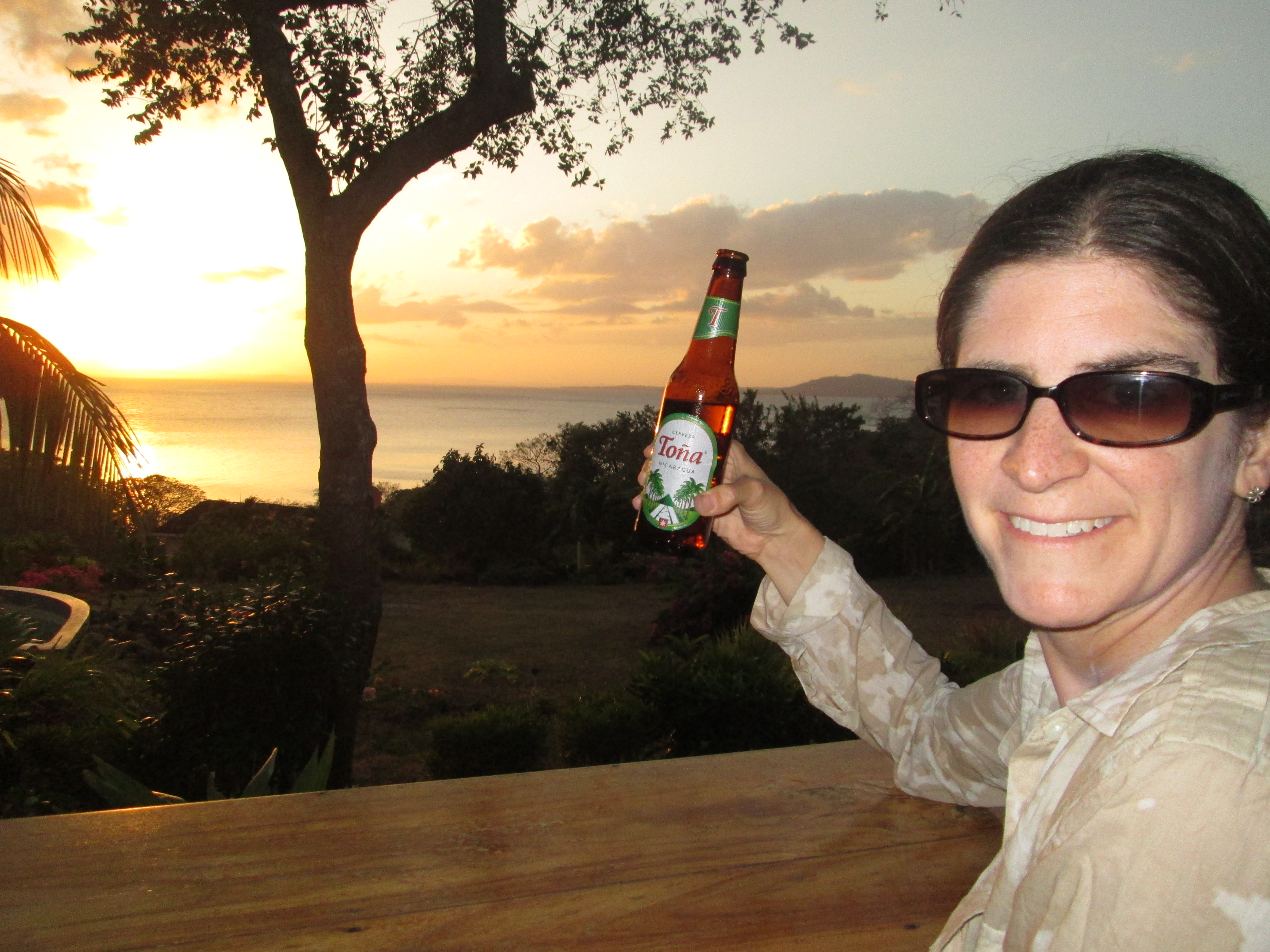
But buses are just one part of the appeal here. I have enjoyed the food, more so than the rest of the family, perhaps. I have become a connoisseur of gallo pinto and I’ve had several fine dishes of chicken with jalapeno sauce. The fruit and vegetables have been very fresh — I even eat beets now, though Jen seems to have abandoned the habit rather quickly. Most dinners have come with a side salad of chopped cabbage that I have liked. Tona beer has been a fine acquaintance on this trip, and the two-for-60 $C mojitos on the main tourist strip of Granada were fine friends, too.

The country boasts two tremendous assets even beyond its budget mixed drinks. The first is its people, kind and patient with my Spanish. Knowledgeable and cheerful, too, as a general characteristic. We have made many friends in Nicaragua. The second is the landscape and natural diversity. It’s been said that we’ll see more animals in Costa Rica, but I don’t know that we’ll have an experience as amazing as the bat cave at the Volcan Masaya National Park, or the crater of Volcan Masaya itself. We may not get as close to a sloth as we did on Mombacho, or as deep in the mud as we did on top of Volcan Maderas. Really, we have no complaints about our experiences in Nicaragua.

It was like a little bit of Durham history, right there in Ometepe.

It was like a little bit of Durham history, right there in Ometepe.

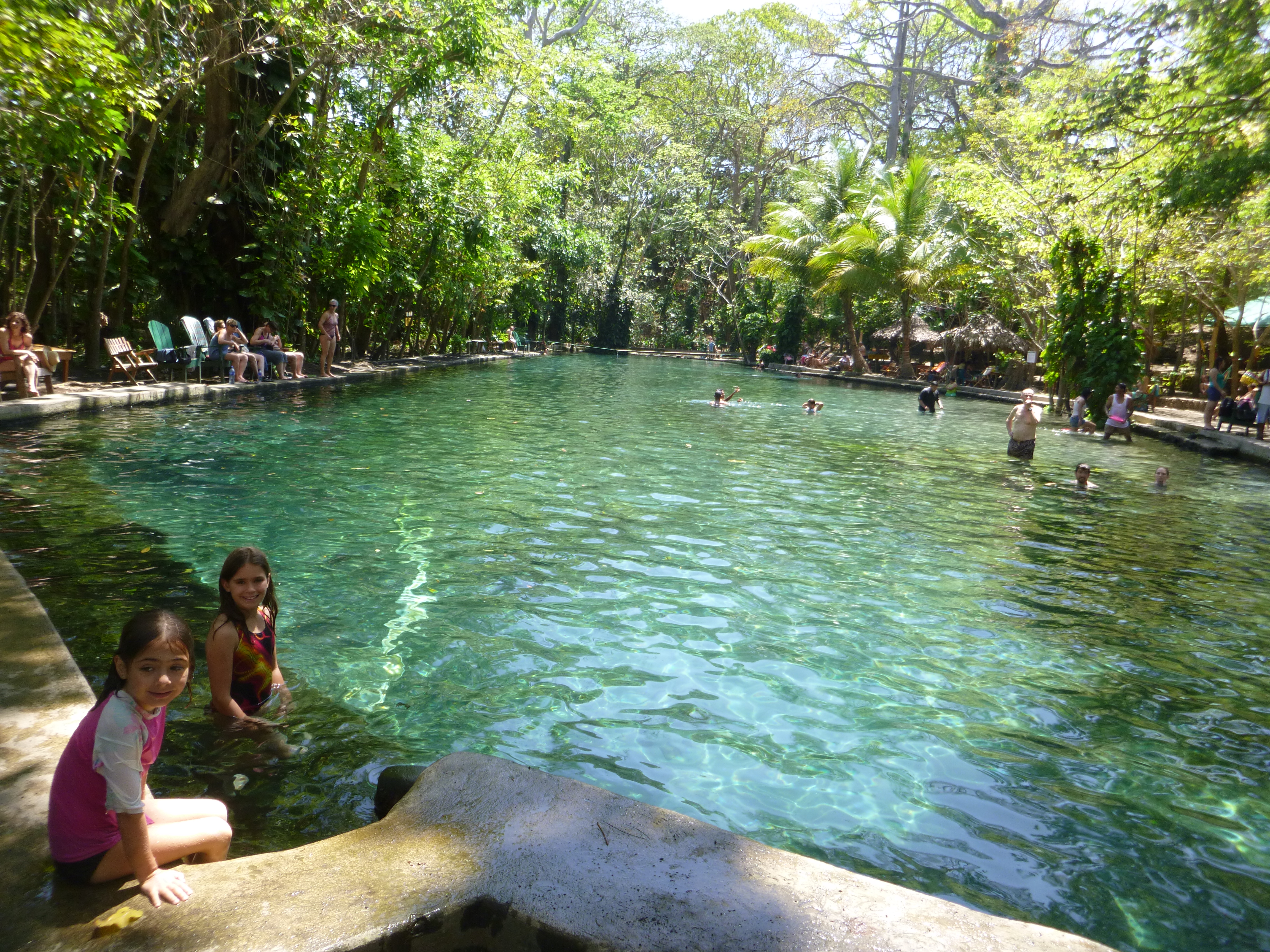
Especially since the country rolled out a special gift to us on our penultimate day in residence. Traveling from Hotel La Omaja back to Moyogalpa, where we would spend the night before taking the ferry back to the mainland, we stopped at a natural spring pool called Los Ojos del Agua. It was a beautiful spot that caught my attention because it seemed to attract Nicaraguenses and tourists in equal measures. Then Jen pointed out that the pool reminded here of another spring-fed pool we used to frequent. Seacoast NH readers of this blog might recognize a little of the dearly departed UNH Outdoor Pool in the greenish blue water of Los Ojos del Agua. Nicaragua gave us a chance to remember one of our favorite places in Durham — albeit with a tarzan swing, grass-roofed huts, and palm trees — one last time before the future takes over our local outdoor swimming lives. It made us even more sad to say we’re on our way.

When I’ve told Nicaraguans how much I like it here, they frequently ask (after noting how cheap it is) if we’ll come back. I almost always say yes, though I’m not really as sure as I sound. There are many places to visit in this world and we have a limited amount of time to travel. We definitely plan to stay involved in the country, possibly by helping to fund Paulette’s projects in La Concepcion or the orphanage in Ometepe where our hotel owner volunteered.

If we do ever return, it’s not clear that we’ll be coming back to the same place. Most tourists we’ve talked to seem to agree that Nicaragua is poised for major changes in the coming decade. It’s likely we’ll find more paved roads with extra lanes, more walled communities, more mega resorts, fewer drink deals. I hope that the Nicaraguans don’t get left out of this. It’s worth noting that every place we stayed in, except for our hotel in Granada, was owned by foreigners. I don’t think we consciously discriminated against Nicaraguans. It’s possible that foreigners are more savvy about marketing themselves online, where Jen does her research. I hope that some Nicaraguans studying at UCA in Managua today learn to use this tool and become able to grab some of the flood of tourist dollars for themselves. There certainly are tons of reasons why people reading this blog should consider coming down for a week or so, and it would be nice to think of some of our friends, or their children or nieces, benefiting from your patronage.

Welcome to Fantasy Island


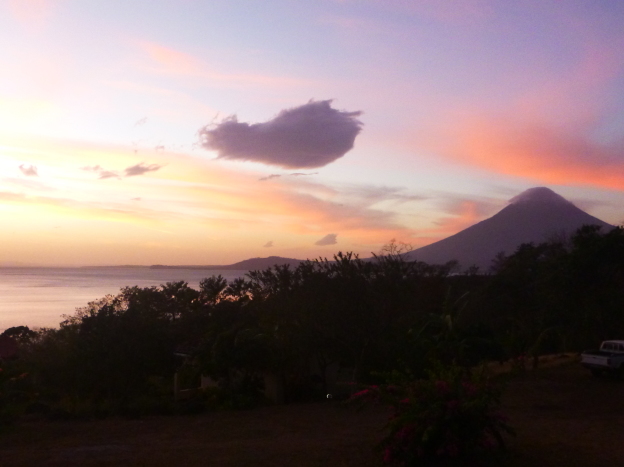
Ometepe is the first place Jen described to us when she starting laying the plans for this trip.  It is an island with twin volcanoes rising  more than a thousand meters out of the middle of massive Lake Nicaragua.  On the map the figure-eight-shaped land mass seemed very remote and exotic.

Nice view from the bar, eh, Tattoo?

Nice view from the bar, eh, Tattoo?

From the ferry,  taking in the imposing cones draped in their own cloud tops, we felt like we were arriving at Fantasy Island.  Those of us who are older than 40 felt that, at least.

The port city of Moyogalpa welcomed us with a few blocks of multi-colored houses and a very Carribean feel.  Our hotel was less than an hour away, on the south half of the island.  It is at the base of the shorter, dormant volcano, Volcan Madera.  It is the most posh place we’ve stayed at during our time in Nicaragua.

Straight from the guidebook?

Straight from the guidebook?

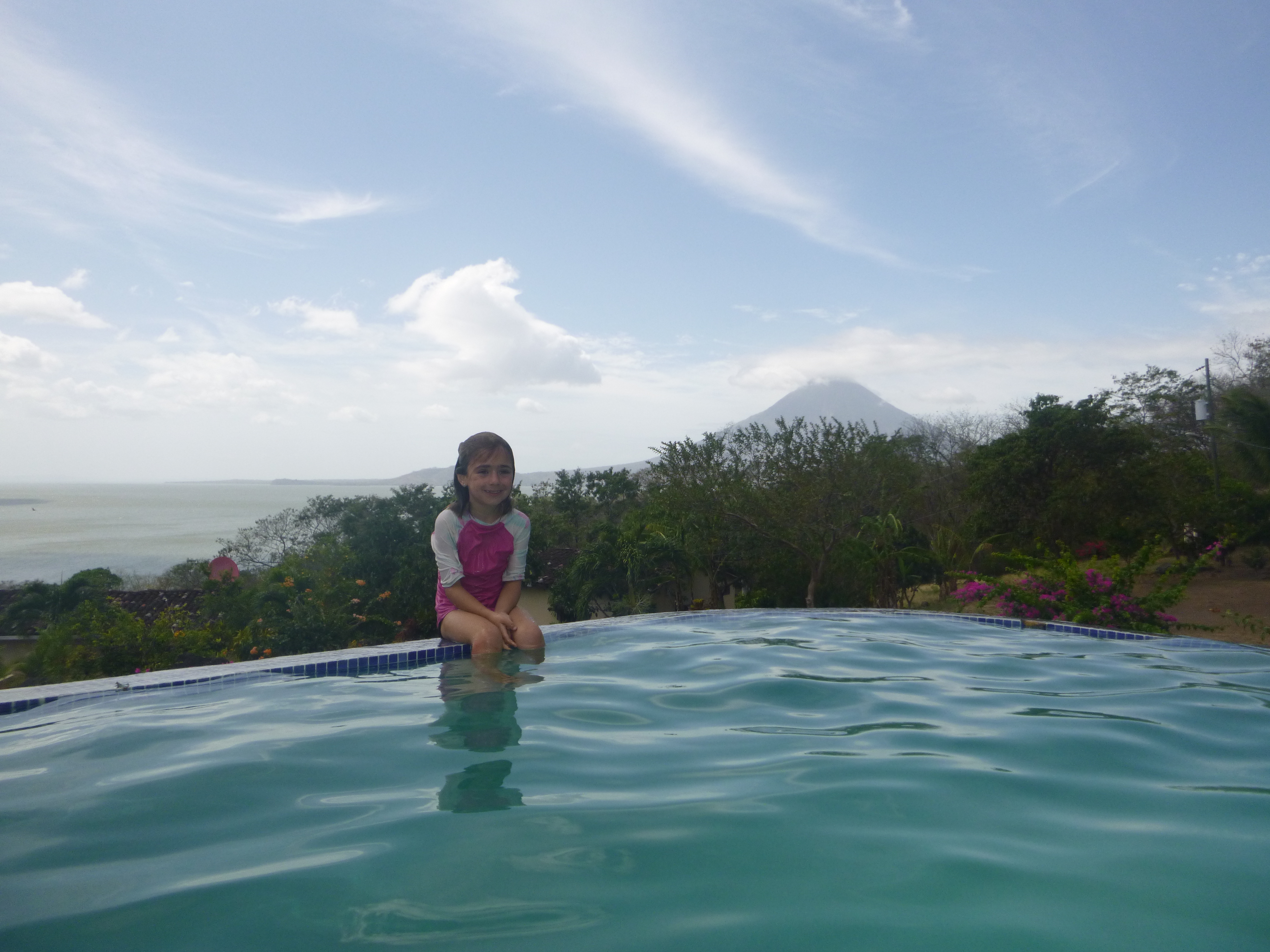
We did not find Mr. Rourke at the Hotel Omaja, but after a quick glance at the infinity pool with the cone of the the larger volcano, Volcan Concepcion, strategically placed in the background, Jen realized that the scene was familiar.  “I’m almost certain that this was in the one of the Nicaragua guidebooks I used,” she said.  It definitely was a view worthy of a guidebook cover.  Anyone who wants to check up on Jen’s suspicion can visit the travel guide section of the Durham Public Library and compare it to the pictures in this blog.

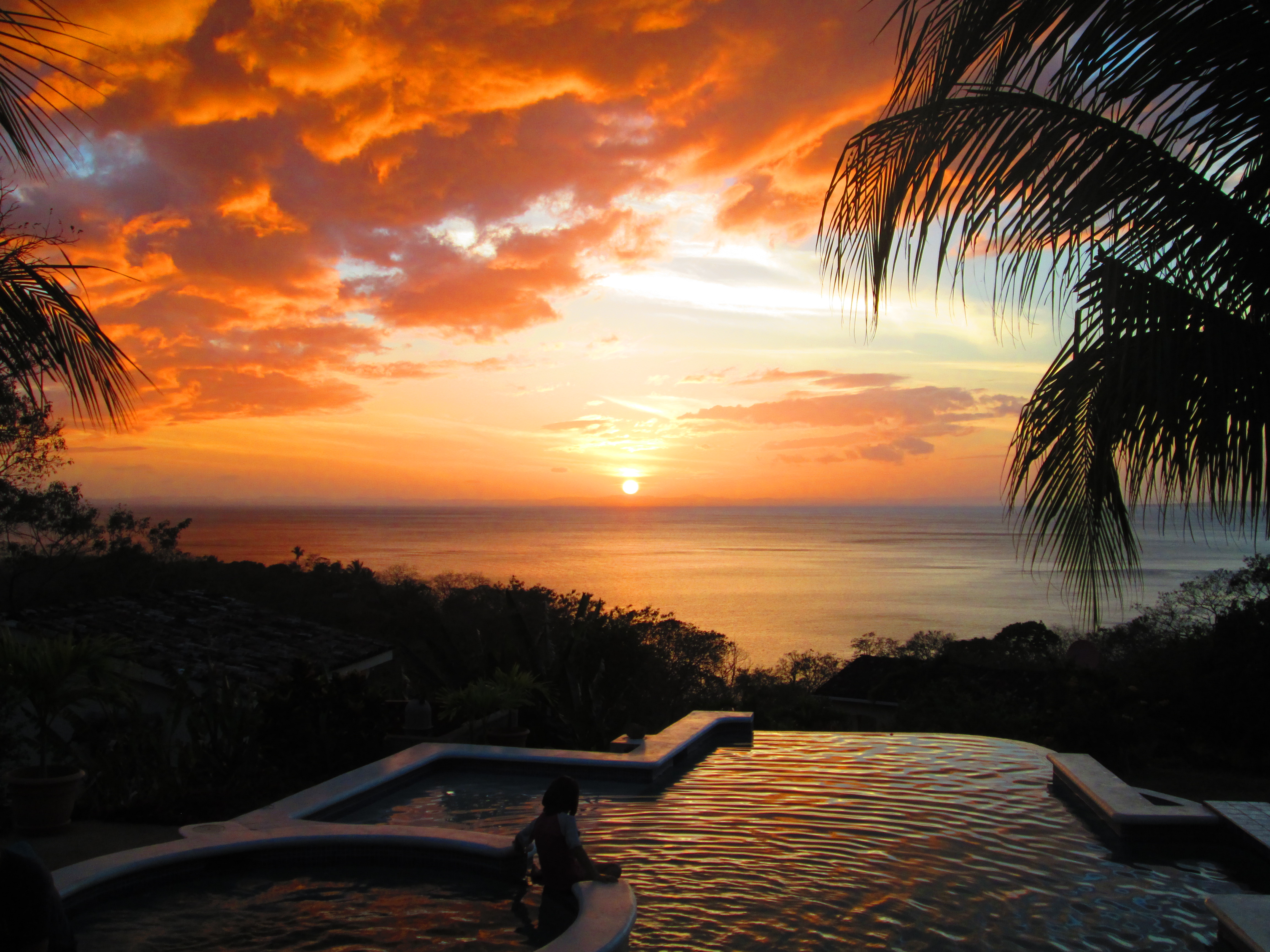
The sun sets; Lanie snags the hot tub.

The sun sets; Lanie snags the hot tub.

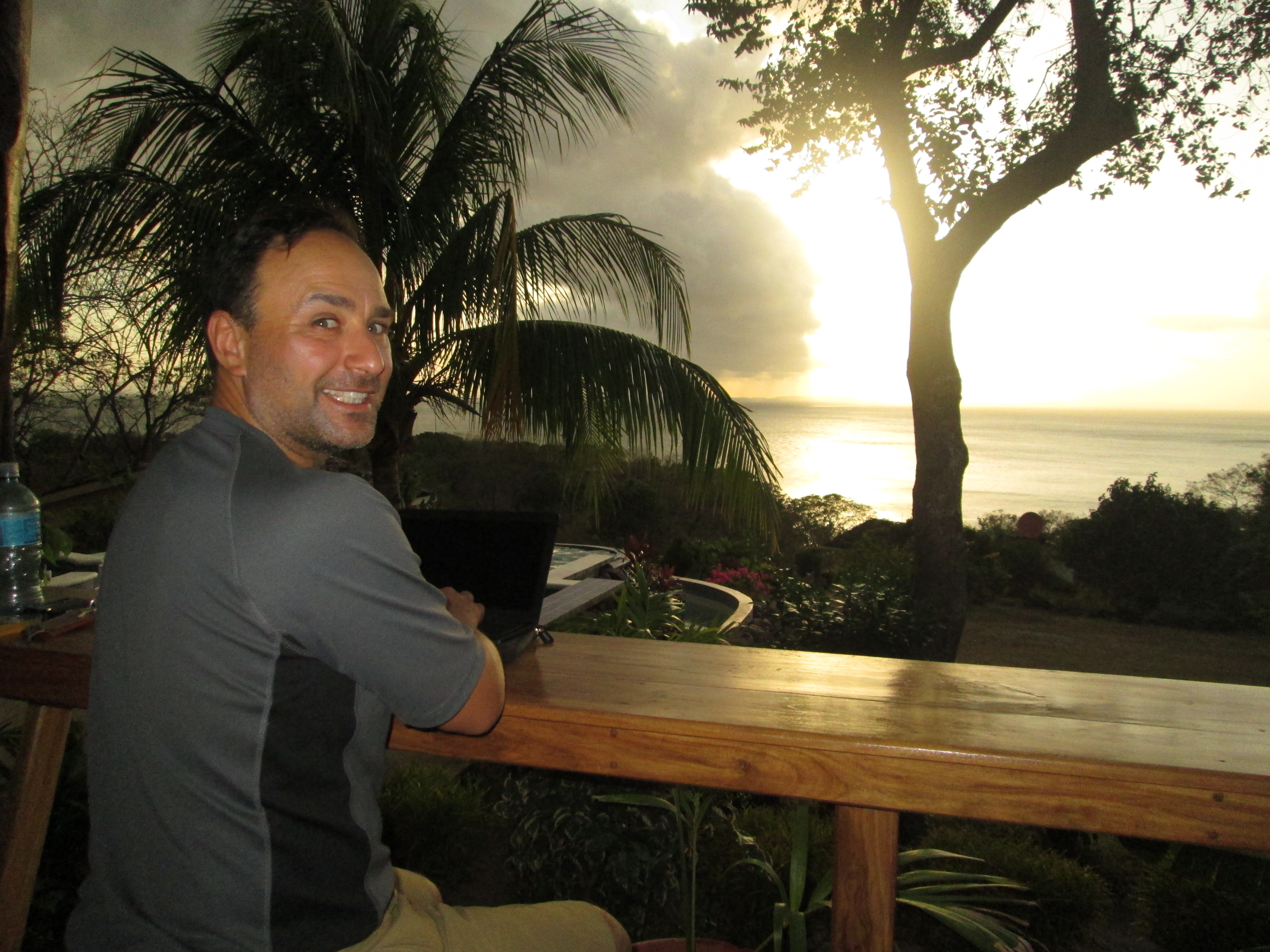
The hotel treats us to sunsets that compare to the sunsets from the surf camp in Jiquilillo.  It also has plates of pasta that the girls can’t finish, which is impressive.   It has satellite tv with gloriously unadulterated, non-subtitled English programming.  And, an almost complete novelty for us in Central America, when you turn on the left handle of the bathroom sink, hot water comes out.   The shower has hot water, too.

Jen takes a break from Mojitos.

Jen takes a break from Mojitos.

So there’s not much more we can ask for.  But here’s what we do ask for:  mojitos for Jen (this is her new favorite drink); fruit smoothies for the girls (the restaurant in the pueblo at the bottom of the hill has two types: one mixes the blended fruit with milk and another mixes the fruit with water.  They are both very enjoyable.);  pancakes (the banana ones at the restaurant in the pueblo are world-class, particularly with local honey on them; and extra towels.   Also, the girls don’t ask, but they wait patiently for the heat to be turned on in the hot tub — then they wait no-so-patiently for the 20-somthings visiting from Canada to get out of the hot tub.

Did we mention there are volcanoes on this island?

Did we mention there are volcanoes on this island?

Mostly, Ometepe has simply been a pleasant place to be — more than worth the uncomfortable ferry trip from the mainland.  We have hiked around a little, once to a waterfall on the side of Volcan Madera, and once through the pueblo to a few beaches on Lake Nicaragua.  We’ve gotten to know the pueblo, Merida, a little bit.   The girls have a favorite little tienda where the lady is very nice and has lots of candy on her counter that costs a half cordoba apiece.    She also sells these fried round pastries with sugar on them.   I asked her what they’re called.  She said donuts.

This is a seriously tall waterfall.

This is a seriously tall waterfall.

Today was a rest day.  We’re recovering from yesterday’s six-kilometer hike to and from the waterfall (possibly the highest waterfall I’ve ever seen) and preparing for a summit attempt of the mighty  Volcan Madera, 1,400 or so meters above our hotel.  We currently have no plans to take on 1,600-plus-meter Volcan Concepcion, but we’ll see how our legs feel tomorrow.  Actually, we’re not sure how far we’ll make it up Madera.   Several people have suggested a lookout point about half way up as a good stopping point for us.  Then again, they don’t know about the boot camp training Lanie went through this winter.


The day that (almost) had six legs

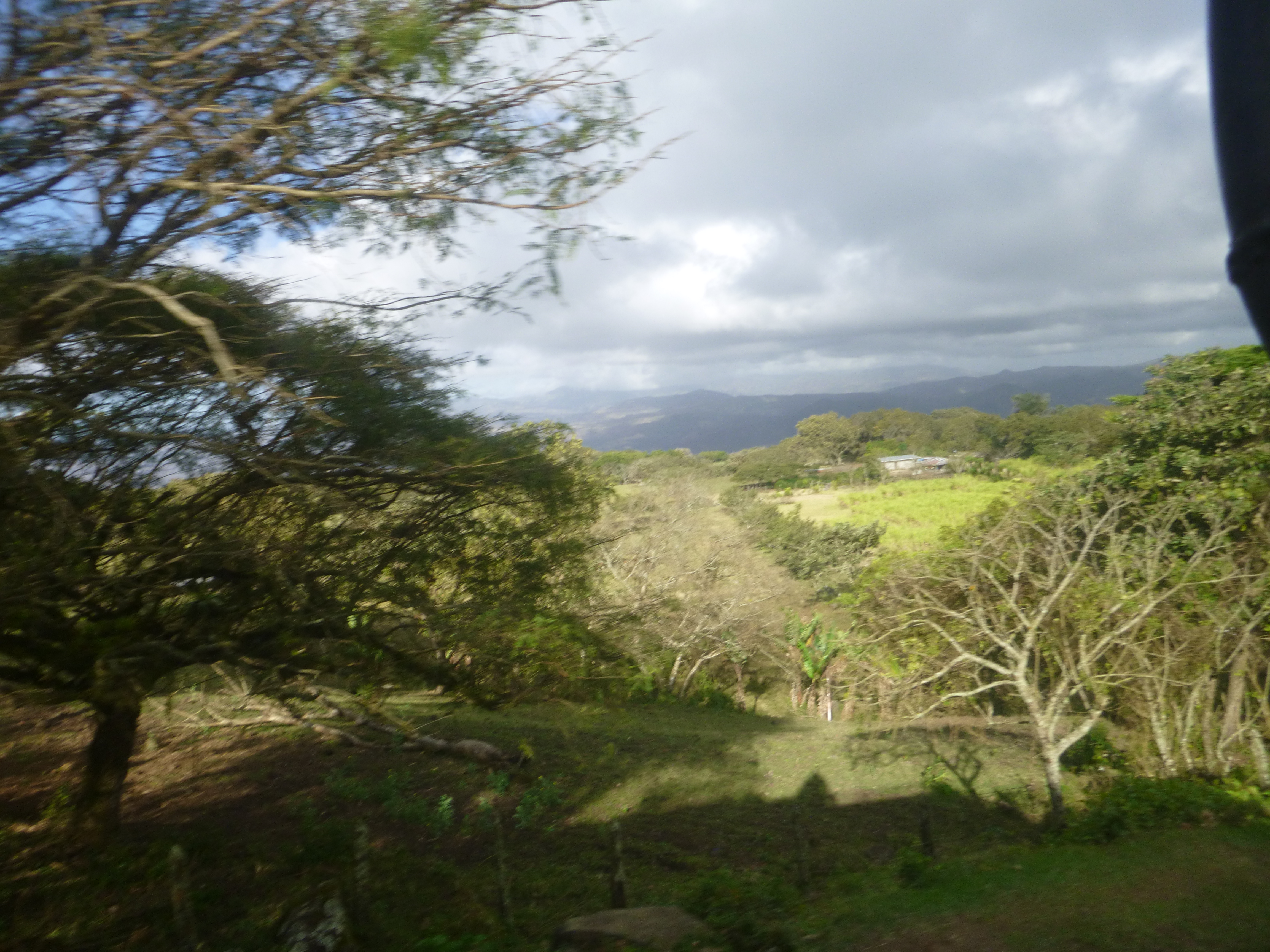
Beautiful views of La Miraflor as we head for Esteli

Beautiful views of La Miraflor as we head for Esteli.

We started yesterday in the grey mist of a Miraflor morning. One last batch of pancakes, then a short walk to the main road for the 6:30 bus back down towards sea level. Despite multiple offers of substantial money — up to $70 that we would have split equitably with our friend and fellow Lindos Ojos guest Senor Joe — our hosts could not find anyone with a pickup truck who wanted to bring us to Esteli. I even heard Marcial call out to one friend in a coffee finca while we rode past on our horses the other day, but the friend’s truck was out of commission, or so the friend claimed.)

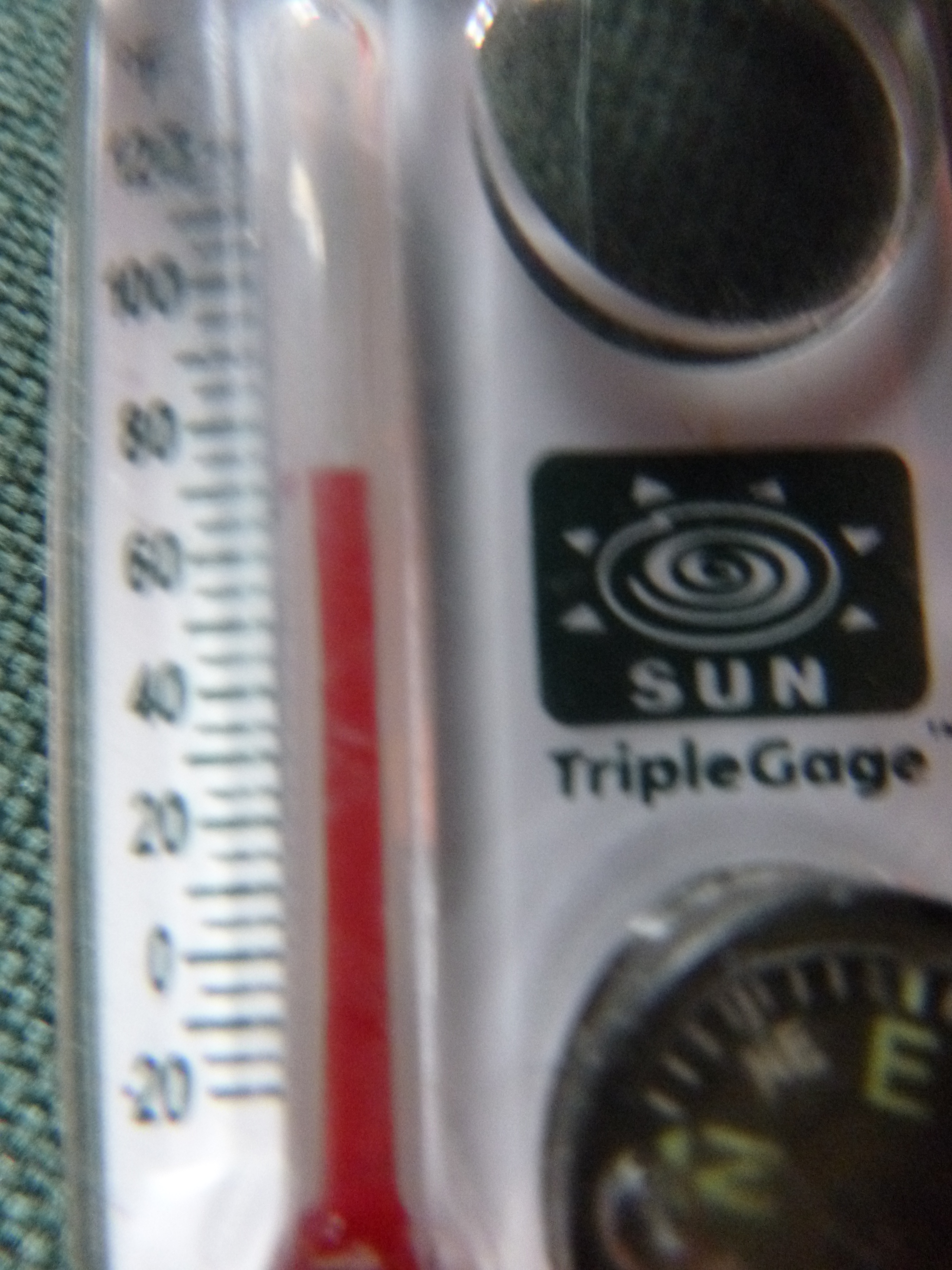
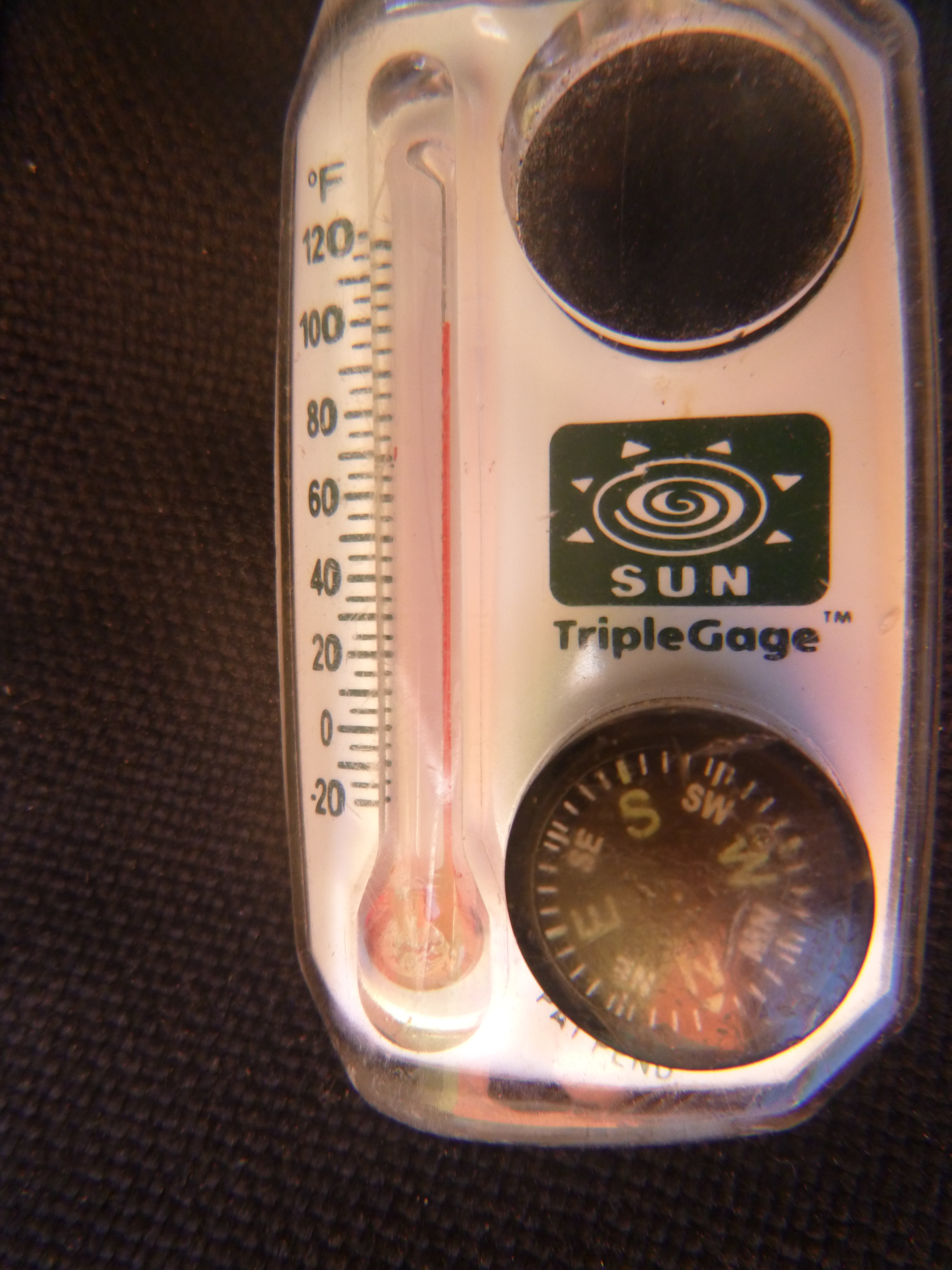
Zoe's LL Bean thermometer, compass, magnifying glass zipper pull is being a little generous here.  It was in the low 60s when we started our trip.

Zoe’s LL Bean thermometer, compass, magnifying glass zipper pull is being a little generous here. It was in the low 60s when we started our trip.

That means we sat at the bus stop with six legs of transportation between us and our hotel in Granada. At least we hope it was our hotel. Without Internet (and without cell phone service due to the poor communication skills of Mobal International Telephones) we had to ask the finca’s owner Katharina to call hotels for us when she went home to Esteli on Sunday. She sent back a note with her ever-dutiful daughter that said Granada was almost full, but there was a hotel with room of five. We would have to call and confirm before we got on the bus in Esteli.

One hint that my backpack made it inside the bus: the Main Street Makery luggage tag hanging from the overhead rack.

One hint that my backpack made it inside the bus: the Main Street Makery luggage tag hanging from the overhead rack.

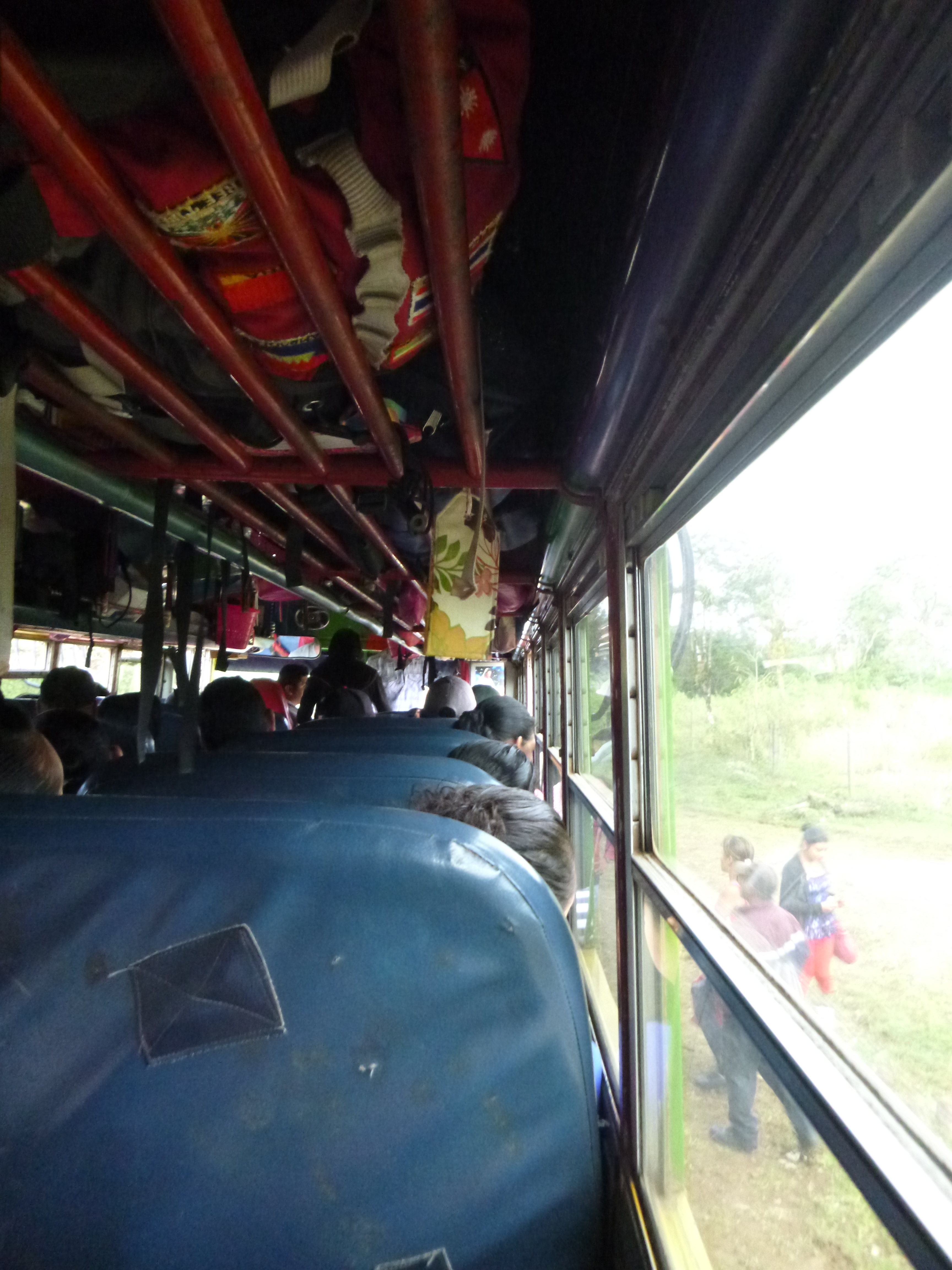
Leg 1: Although there would be an express bus later in the morning, we chose the 6:30 bus because it was more likely to have space for all five of us (six counting senor Joe) and our luggage. We get up early here anyway, and we pack up quickly. Not only did we not have trouble finding seats, our luggage got to ride with us in the main cabin. (You may remember that my backpack had to ride on top of the bus on the way up to La Miraflor.)
Two and half hours later, leg one was complete. In the hubbub of the Cotran Norte bus terminal — very near the spot where Jen was kidnapped a few days before — we tried to reach the Granada hotel on Katharina’s daughter’s cell phone. Nobody answered. Cue suspenseful music.

Leg 2: Ok, now back to the peppy Benny Hill music to accent our travels. A short walk out of the terminal to a crosswalk on the Pan American Highway. A man assured us that the cars would let us cross if we started walking into the road. Miraculously, no one even beeped. A small taxi stopped for us, even though the taxista’s girlfriend was taking up the passenger seat. All five of us sat in the back this time. The drive is only about a kilometer. It costs 40 $C. Why does every city in Nicaragua need multiple bus terminals? The taxi lobby must be very strong.

Greyhounds on the seat covers -- a true mark of luxury.

Greyhounds on the seat covers — a true mark of luxury.

Leg 3: A man in the Cotran Sur Terminal seemed interested in giving Jen a ride to Managua, then he saw the girls and me and pointed us to the ticket window. We bought tickets for 70 $C per person. The local to Managua was just about to pull out. No way, buddy. Tickets for us. Individual seats. Baggage storage below. An hour more of our lives to enjoy at the end of line.

We decide to break a $20 bill by buing something to eat in the well-appoined terminal. A few pieces of pound cake, a few tortas filled with pina and three packets of Ritz crackers peanut butter sandwiches leave us with plenty of change.

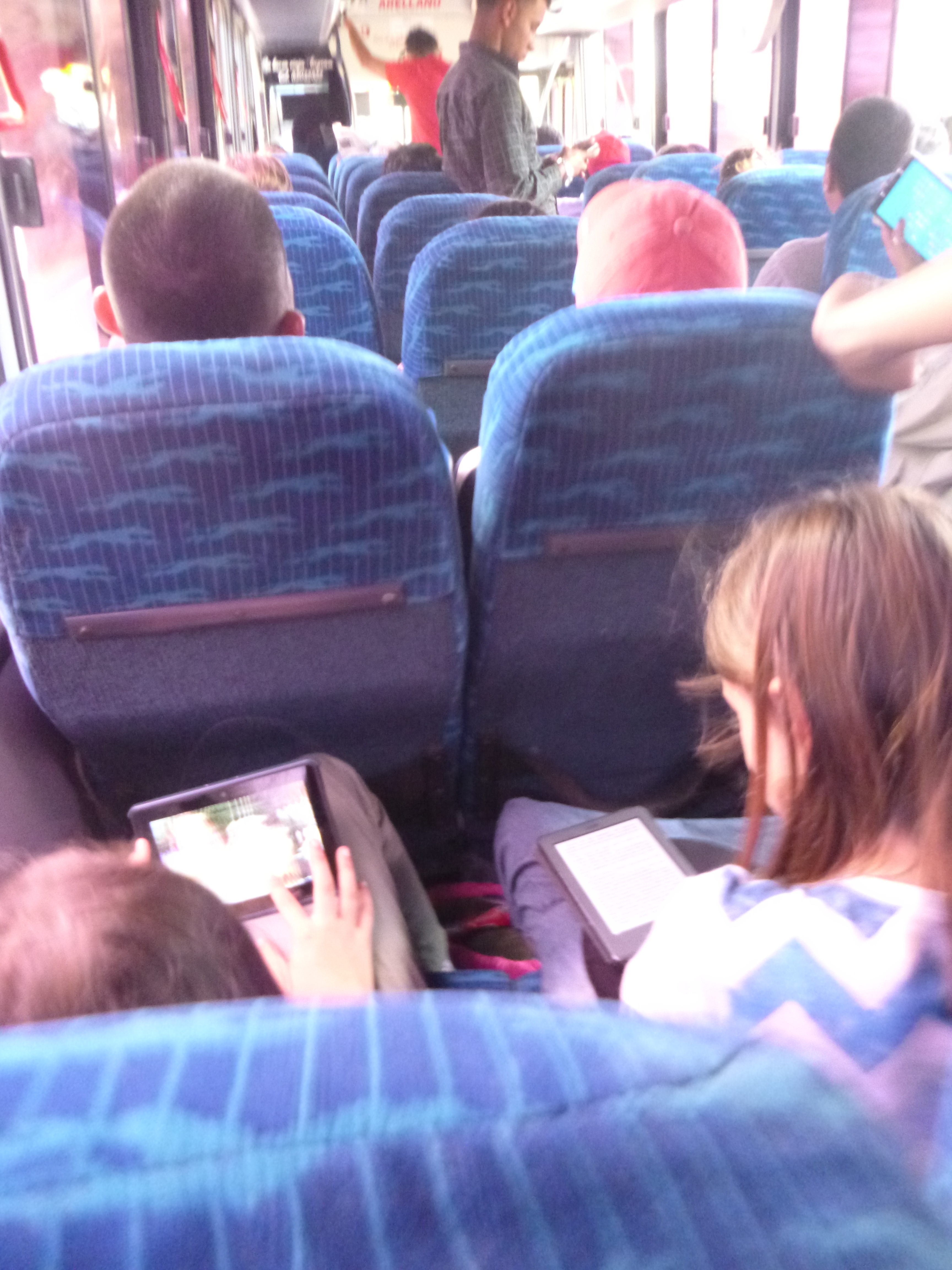
The seats on the bus recline and they even have arm rests. Observant passengers notice the cloth seat covers feature a greyhound pattern. No retired school bus this time.
We’re in Managua in just over two hours.

Leg 4: A few steps outside of our greyhound charriot, Jen encountered a taxista who could take us cross town to the Granada buses. But why not let him take us all they way to Granada? He offered $50. Jen declined. He comes down to $40. Legs five and six of our journey vanished into the air.

One of the nice things about taxi rides, and this should really be factored into the price, is that they become a Spanish lesson for me. I sit up front with the driver and we chat for a while.   It’s great practice with a captive audience.  The taxistas tend to speak a brand of Spanish that is more opaque to me than the Spanish our Mariposa professors used, and it’s a lot closer to what people speak on the street.  I nod my head a lot and say, “Si. si.”  Chances are that’s appropriate.

This ride was only an hour but taxista Edgar was amiable and informative. He drove us through the tony Managua neighborhood where foreign diplomats live. He pointed out the huge estate of a former finance minister who has opened up a chain of Walmart-like stores in Nicaragua in his retirement. I saw a fortaleza on top of a mountain that the Sandanistas liberated and turned into a boy scout camp. We looked out over the Laguna de Apollo from the opposite side from where we swam.

Edgar almost met his match finding our hotel, but after asking directions several times he got us there. Then he gave us his number in case we were ever in Managua again. And he took our names and phone number, too. Who knows when he’s going decide to go New England? I think he even gave his number to the clerk at our hotel. Edgar really gets around.
And guess what — it turned out to be our hotel after all. My new friend Mario had a room for five ready for us, with a/c and breakfast included. A big hurrah for the Posada San Jose, two blocks south of the cathedral in Granada, Nicaragua.

In the welcoming embrace of strong wifi.

In the welcoming embrace of strong wifi.

Everyone quickly settled into the free wifi, but Mario suggested I go across the street to the Corral Restaurant (where, as guests of the Posada San Jose, we get 10 percent off) and watch the Champeons’ League match between Real Madrid — Mario’s favorite team — and Schalke from Germany. I only watched one half but there was plenty of scoring and the beer only cost 28 $C. It was a fine way to spend part of the two hours we gained through greyhound buses and direct taxis.

In Granada later in the day, it got well into the 90s.

In Granada later in the day, it got well into the 90s.

Aside from the wifi and European soccer, Granada offers us many other luxuries. We noticed one of them as Edgar picked his way through the city. It was a laundromat and it will charge us by the pound to do our washing. Our clothes are certainly dirty, the only question is how much it will set us back to get it done.

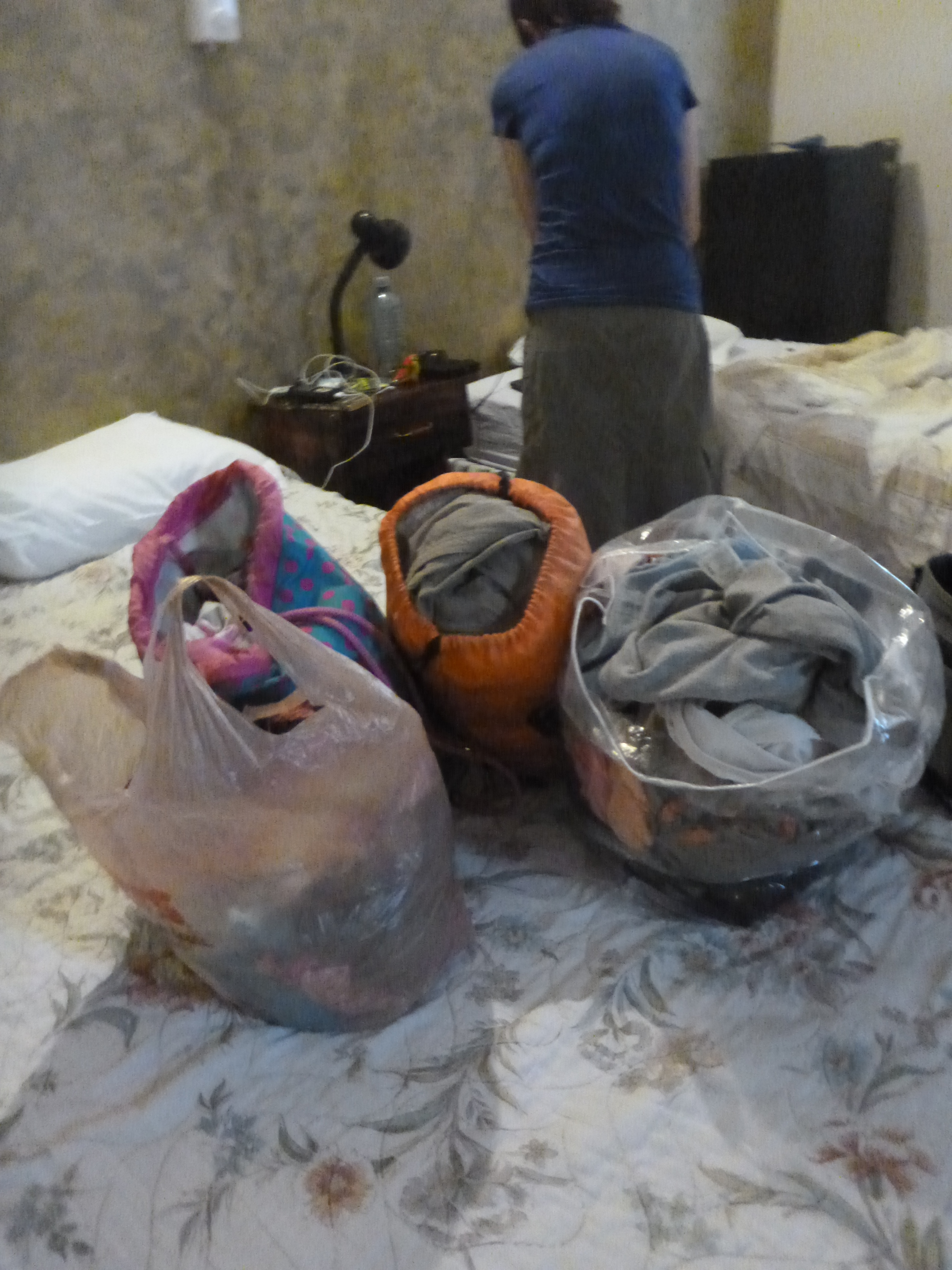
How heavy does this laundry look to you?

How heavy does this laundry look to you?

What do our blog readers think? How many pounds of dirty clothes can a family create over two days in Leon, two days in Esteli and four days in La Miraflor? Post your guesses here or on Facebook. The person with the closest guess will get his or her name published in our blog in the form of a fictional Nicaraguan who crosses our path. and touches our lives forever.

What’s louder than a rooster on a remote mountaintop farm?

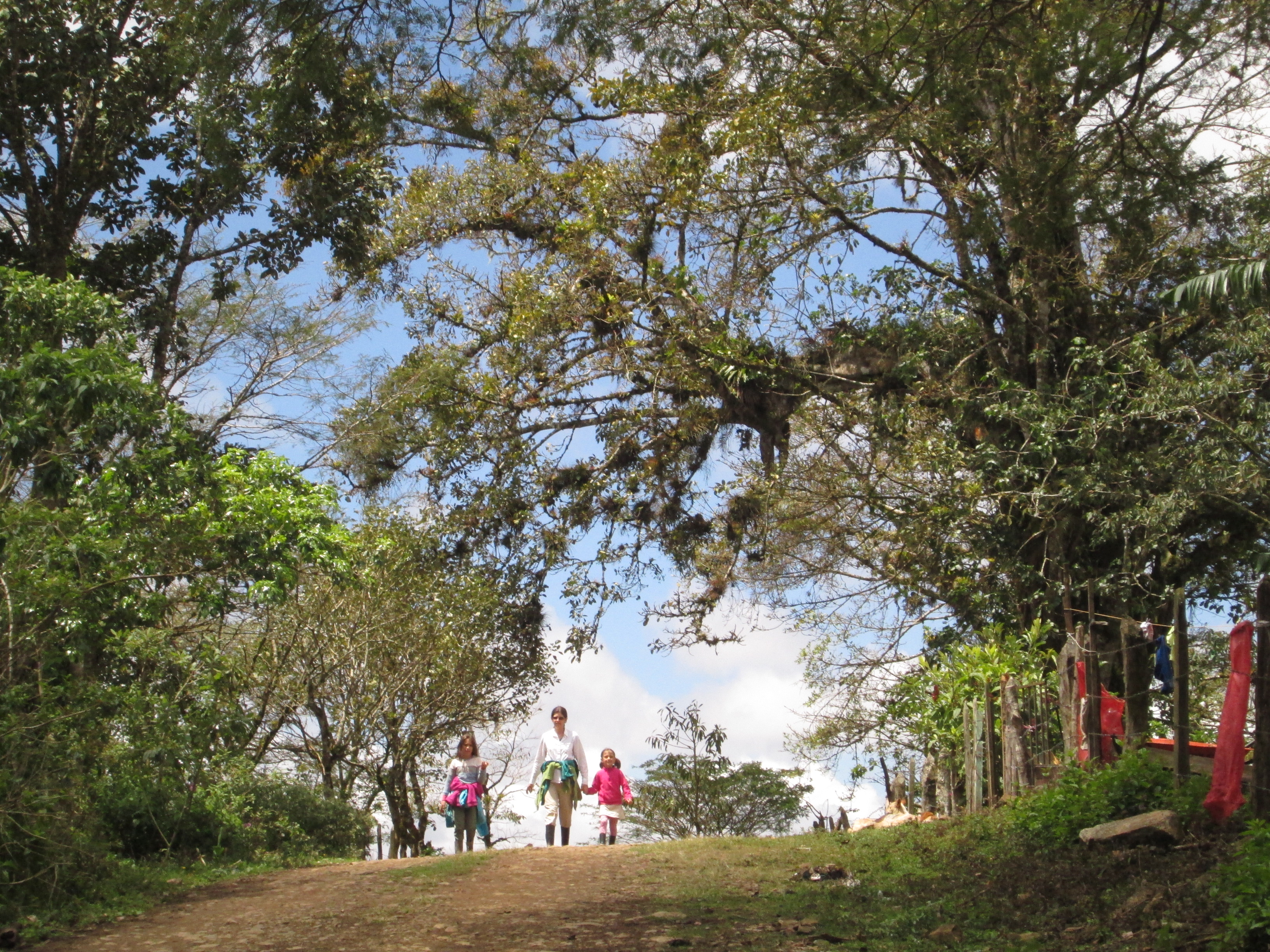
The day started to clear up before lunch, so we took a walk to a nearby community

The day started to clear up before lunch, so we took a walk to a nearby community

Here at 4,000 feet, still in the middle of this Honduras Clipper that brings clouds, wind and an inconsistent drizzle, you could look to the horizon the other morning and see blue sky.  It wasn’t raining in Esteli, maybe 25 kilometers away.  It’s probably been hot there all day.  In the Miraflor, we are learning why we’ve lugged these raincoats and fleeces around for three weeks.  We’re also very happy we have the use of some sturdy rubber boots, courtesy of the finca.  It would not do to wear our sandals around and get our socks all wet.

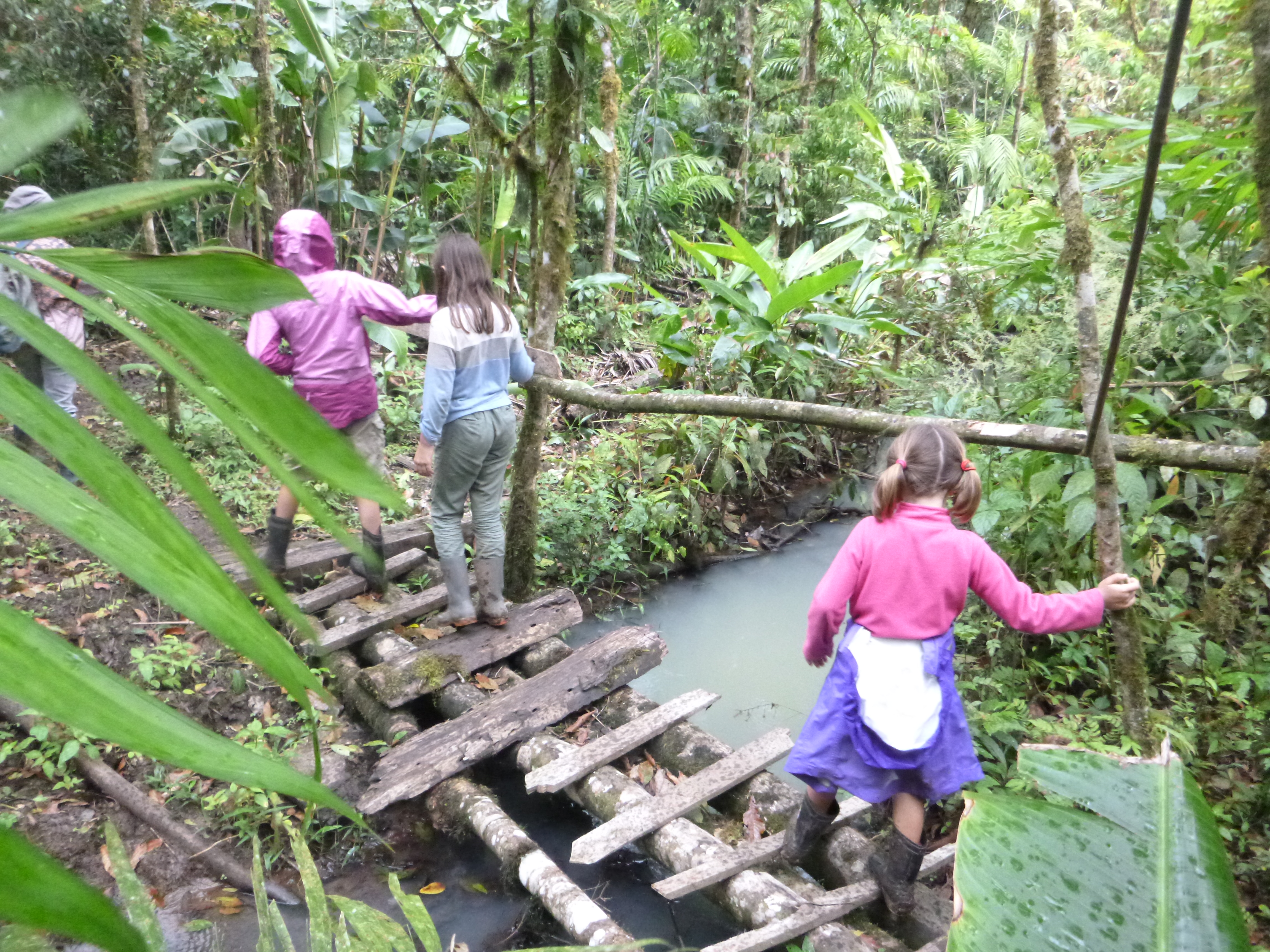
Making our way through the woods

Making our way through the woods

The hope was that that the storm would pass overnight, but it’s still grey, particularly so in the morning.  The wind is probably not that strong, but because of the way our lodging was built — there’s between half and inch and two inches of open space between the top of the walls and the bottom of the roof — when the breeze picks up, it flows right through this gap and sounds like a subway train is passing directly above the cabana. It drowns out the rooster on the other side of the finca.

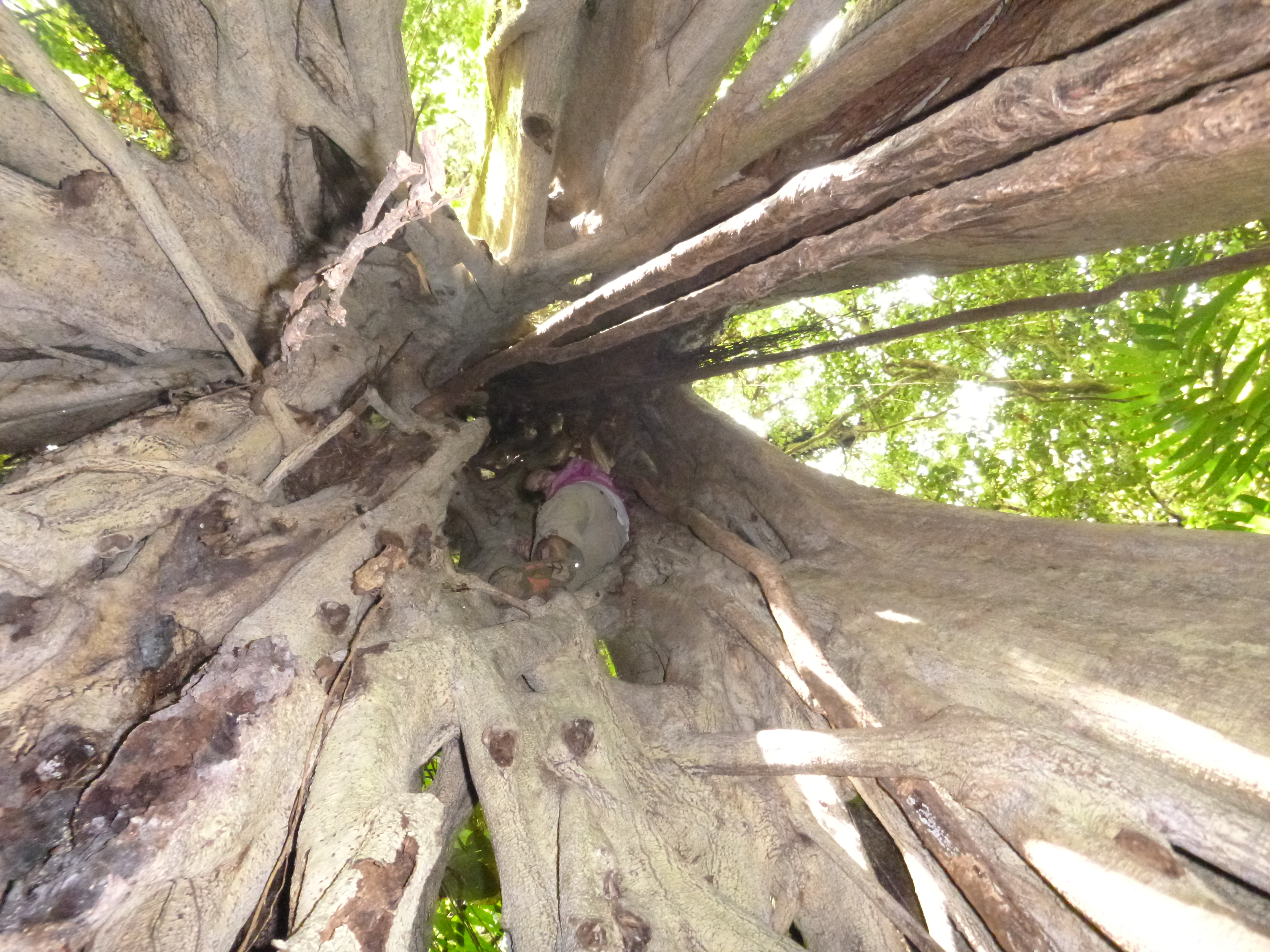
The strangler fig is empty because the tree it grew around died and rotted away.  This left space for Zoe to climb in.

The strangler fig is empty because the tree it grew around died and rotted away. This left space for Zoe to climb in.

Marcial, our first day’s finca tour guide and our assistant host, said this morning that the day would calm, and it did.  After lunch, the girls were able to climb around in the 20-meter-tall strangler fig without fear of it toppling over in the wind.  This is actually a valid fear.  We saw several mature trees lying on the ground and Katharina, the owner of the finca and our guide for the day’s forest walk, says this is the result of an uptick in wind this year combined with an the emergence of a swamp in the middle of the forest.  Nobody can tell her why the swamp is forming, but the past three days of intermittent rain in the middle of the dry season will only contribute to the situation.

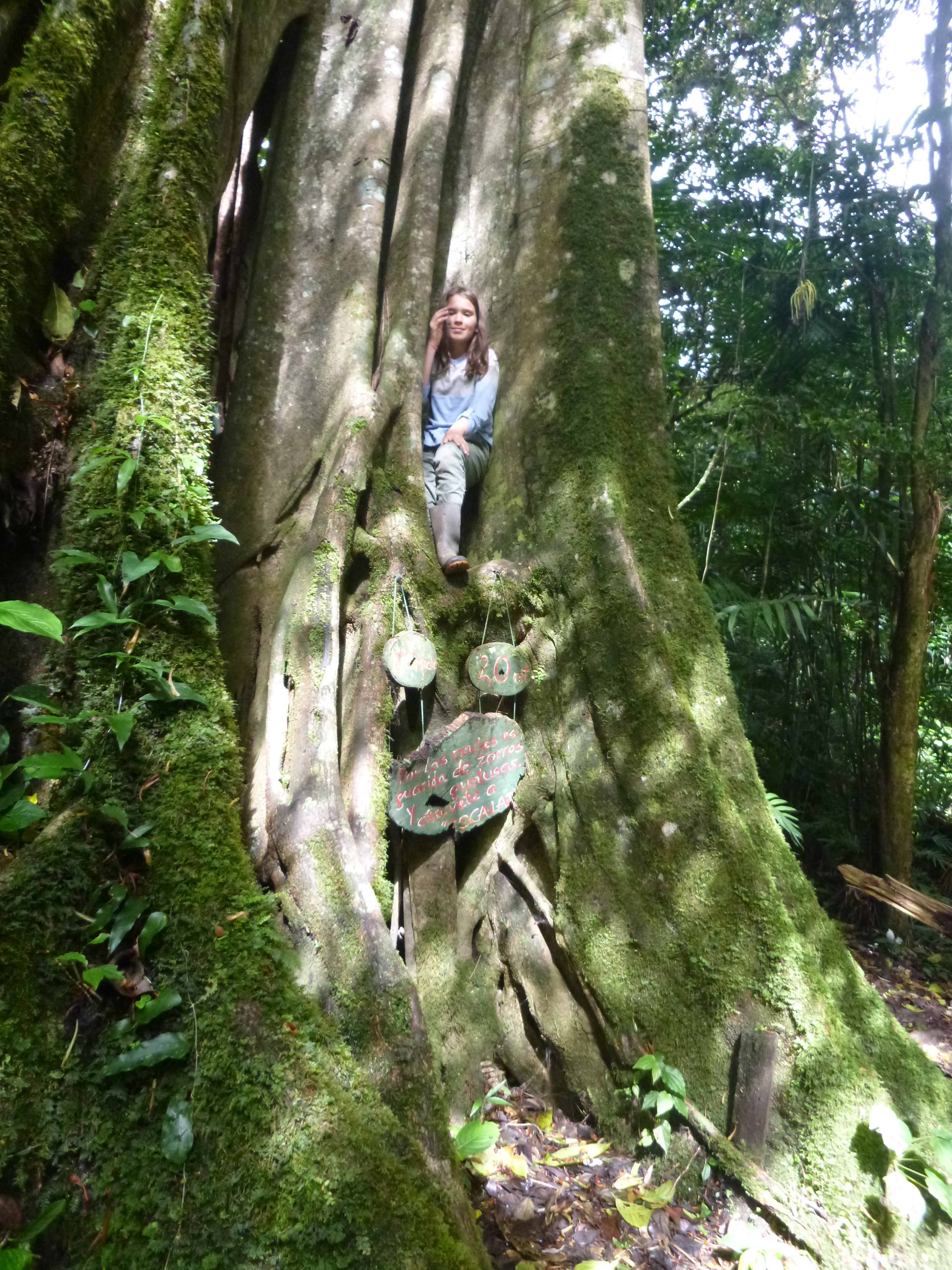
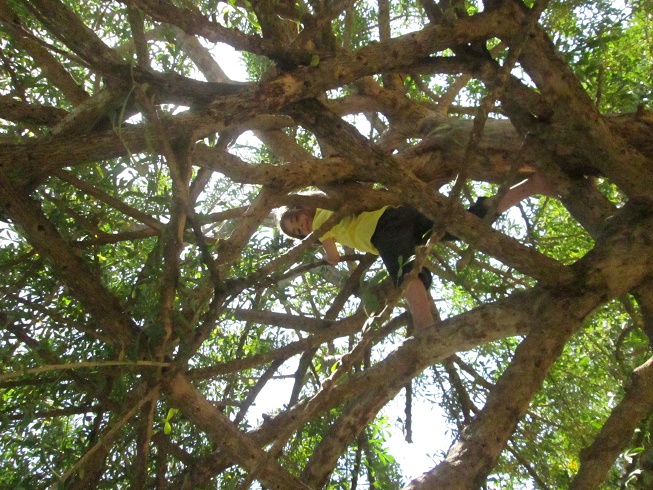
The outside of the tree was good for climbing, too.

The outside of the tree was good for climbing, too.

The monster strangler fig is a major attraction in the forest here, and it sadly appears to be a candidate for windfall.  It was listing several degrees from vertical, but it did not lose its footing when Zoe managed to reach a window about 12 meters up.

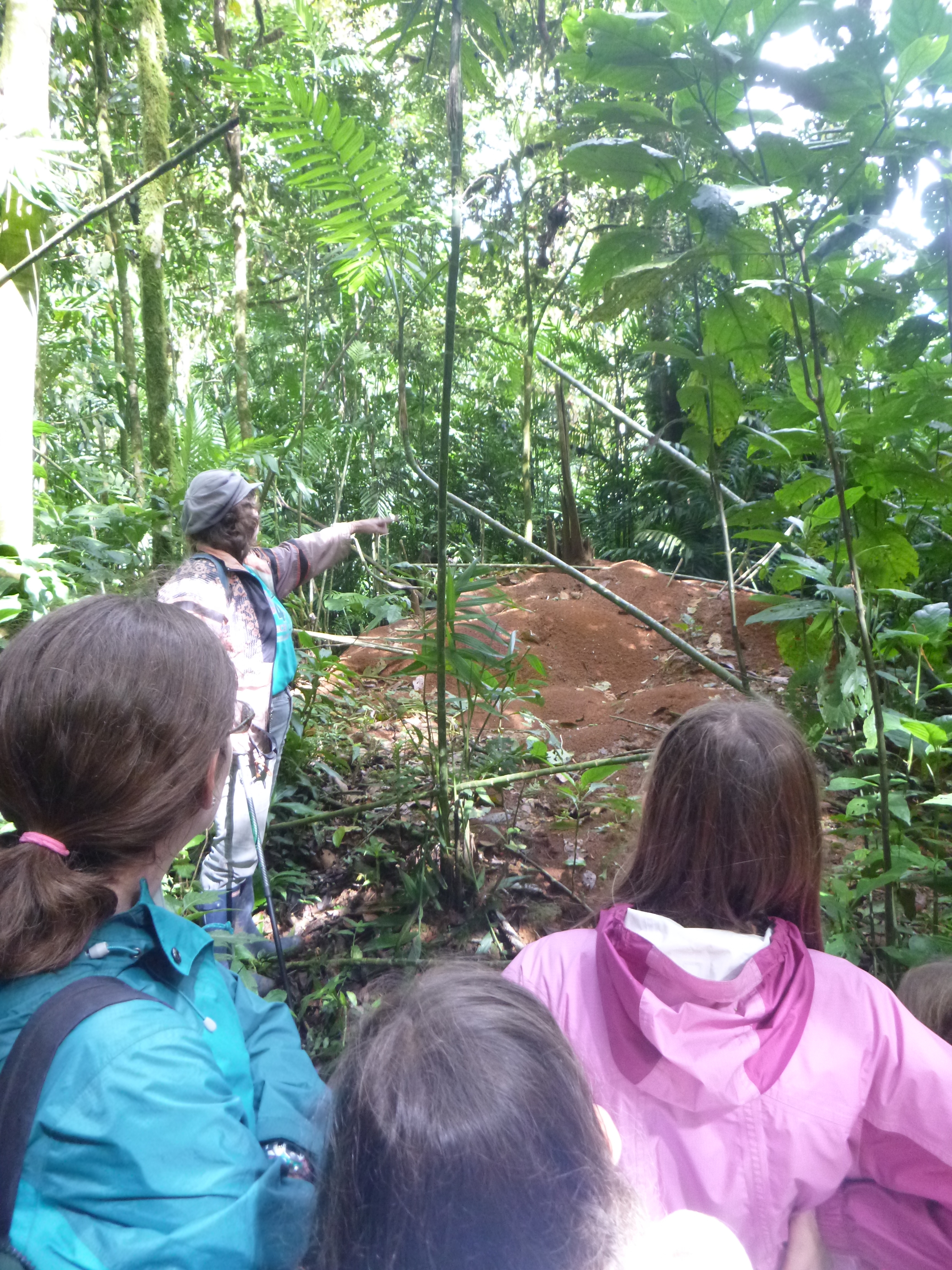
Katherina points to the huge ant hill.  The ants bring back leaf pieces to feed a huge fungus inside.  Then the young ants eat the fungus.

Katharina points to the huge ant hill. The ants bring back leaf pieces to feed a huge fungus inside. Then the young ants eat the fungus.

When the climbing was done, we were treated to a wonderful display of nature in the form of a leaf-cuter ant highway leading to the ants’ huge colony.  Their order and economy among the chaos of the forest was incredible.

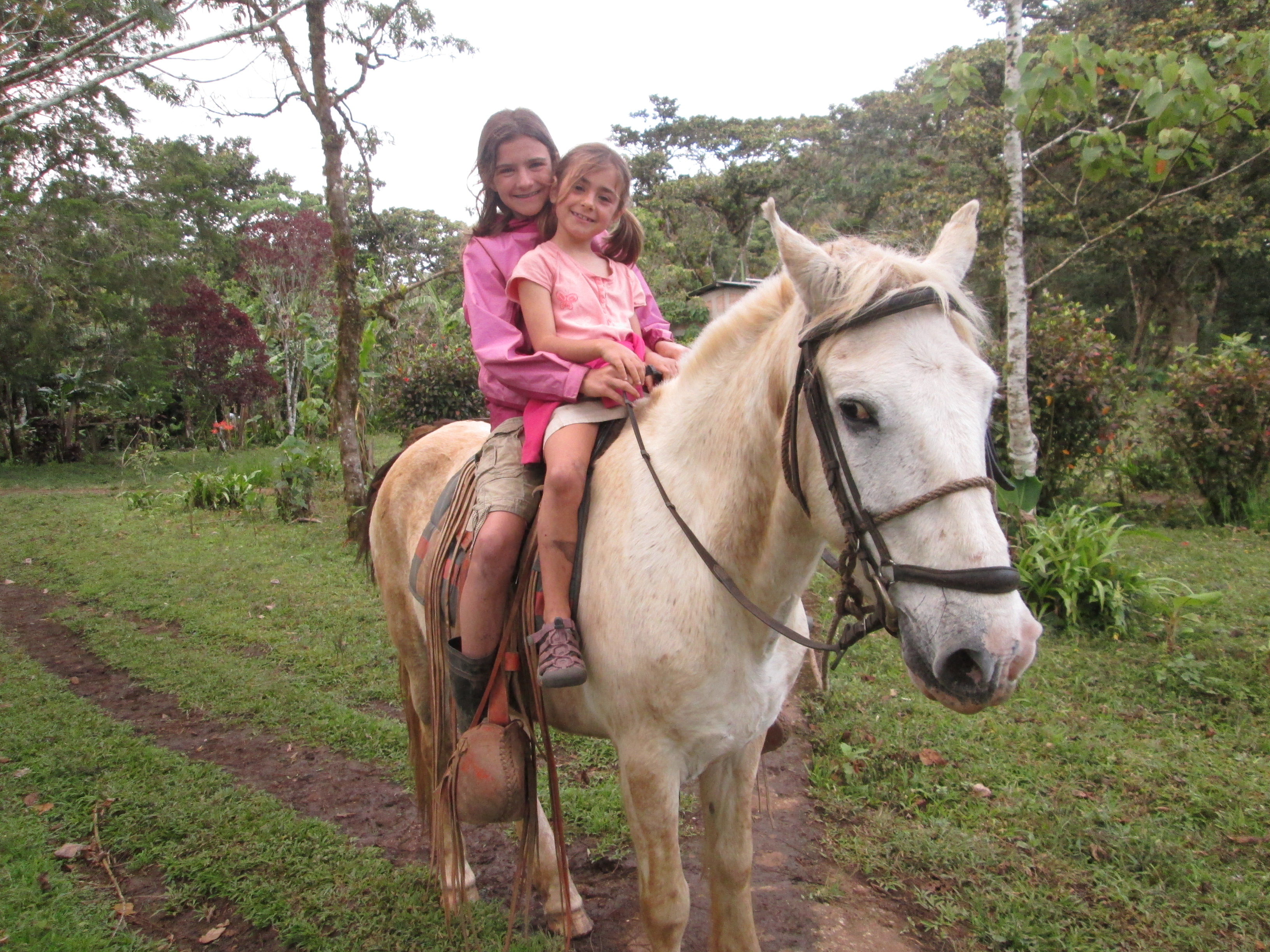
The afternoon held one more treat;  Katharina’s daughter saddled up her horse and let the girls ride around the yard.  Even Lanie got a lift.  They also got a brush to groom the horses as the horses grazed around the compound.  This was more than we could expect, and the girls enjoyed it immensely.

Next up is our big horse ride, possibly to a waterfall.  Marcial seems to think the weather will break and we’ll have a good day for riding.  Let’s hope he’s right.IMG_7016

Is this for you?

I think that some poeple may be reading our blog and thinking: “Maybe I want a Loompa Loompa,” or “Maybe I want a trained squirrel.”

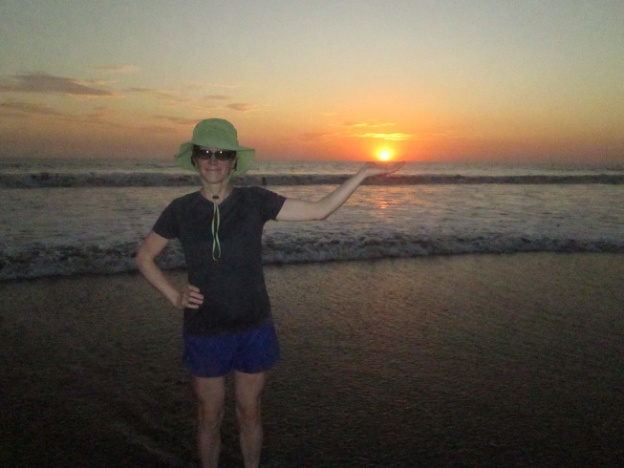
Now I’m not saying that all our friends go running around like Veruca Salt or undertake San Diego tennis lessons all the time; but it’s easy to imagine someone looking at this picture of Jen holding the sunset (no Photoshop needed — those are all Jen’s natural curves!) and then looking out their window at the snow drifts, and then wishing they were here.
But do they really wish they were here, or, in attempting to gain some respite from winter, would they find all this Nicaragua stuff is the equivalent of a bad nut (or a bad egg, if you’ve only seen the movie)?
Let’s find out. Here is a list of things that make our trip to Rancho Esperanza seem like the greatest beach vacation of our lives:

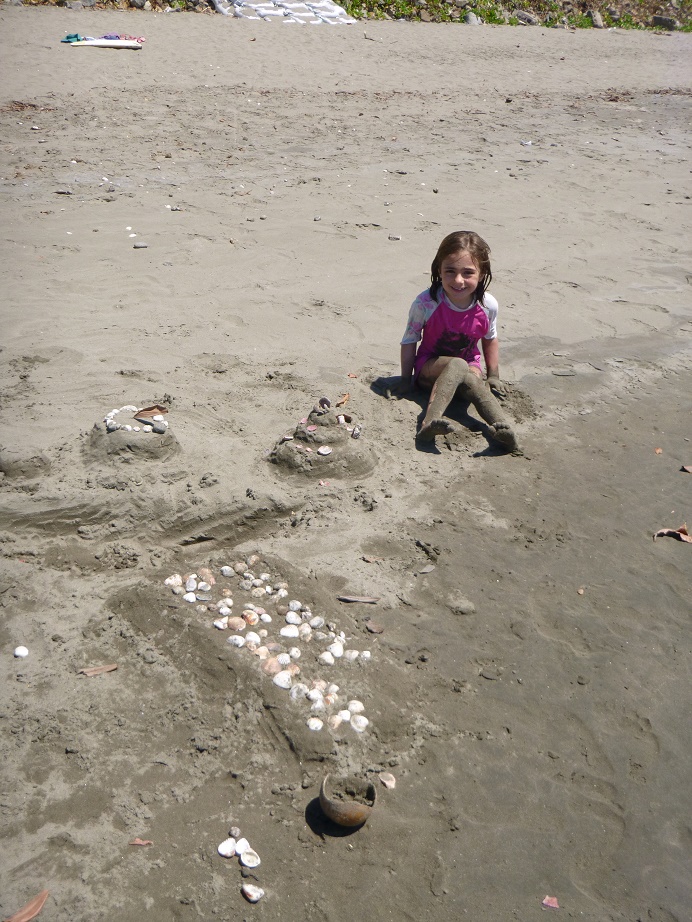
Really good sand and shells

Really good sand and shells

Perfect climate — Will it rain tomorrow? “It hasn’t rained here in three months,” says Ross, who is kind of like the camp counselor here. Every day since we’ve been at el Rancho has been sunny and virtually cloudless. Even in Masaya and Leon, it was almost all sun all the time. It’s hot, but that’s what you want at the beach. There’s no humidity and very few mosquitos. And it won’t rain again here until winter, which for this place begins in April or May — some time after we leave, anyway.
Perfect beaches — Well, near perfect. The sand is soft (and very hot during the afternoon) and not rocky, but there is a lot of plastic stuff tumbling about in the breeze. Sunday also seems to be the day to burn your trash in the community surrounding the Rancho. But in general, it is a beautiful beach with lots of space to walk around and very few people getting in the way. To the north, towards El Salvador, you can see distant mountains, which I think are still in Nicaragua. There are also cool shells, but we’re not experts like my parents, so I don’t know exactly how cool they are.

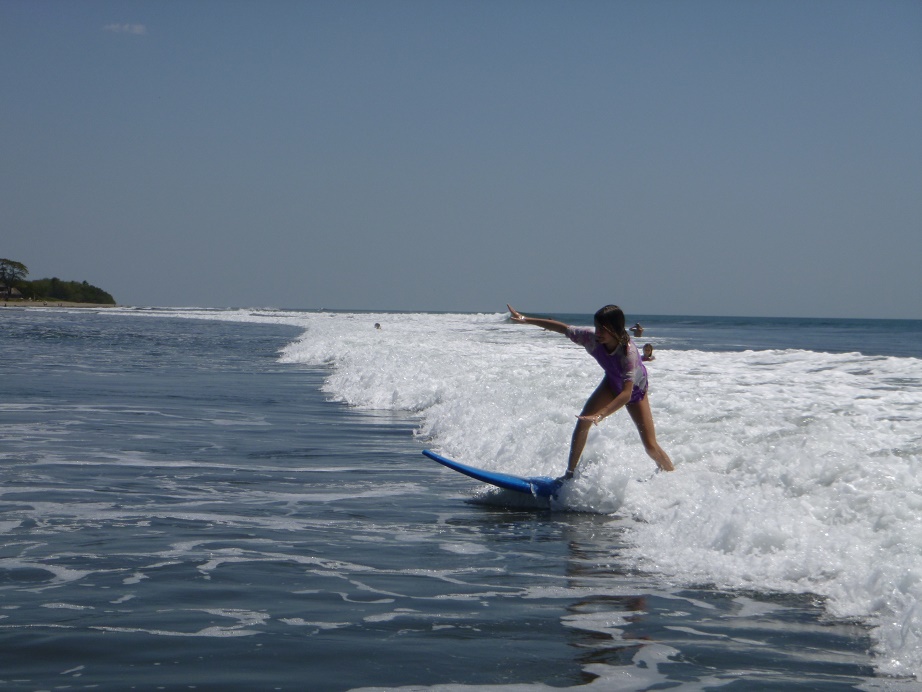
Zoe surfs

Zoe surfs

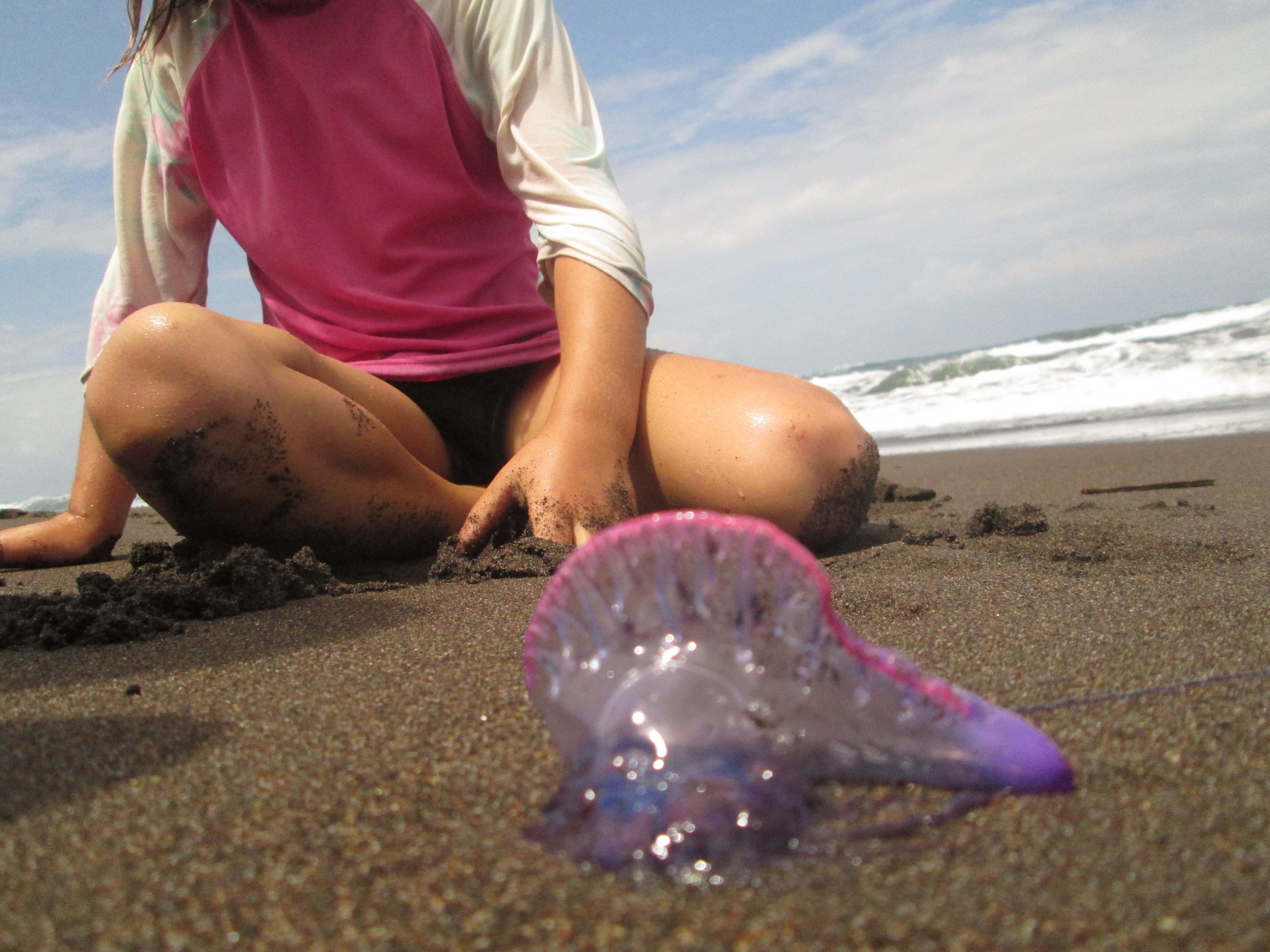
Perfect water — The water temperature has to be in the high 80s. There’s no acclimation process needed for entry. Even Jen, who sometimes takes more than ten mintues to get herself fully submerged in the ocean, just walks right in here. The waves are strong but not threatening. There is no undertow. The sea floor is flat, smooth and gradual. We’ve seen no jellyfish or algae blooms, or seaweed of any kind, for that matter. No toe nipping crabs.

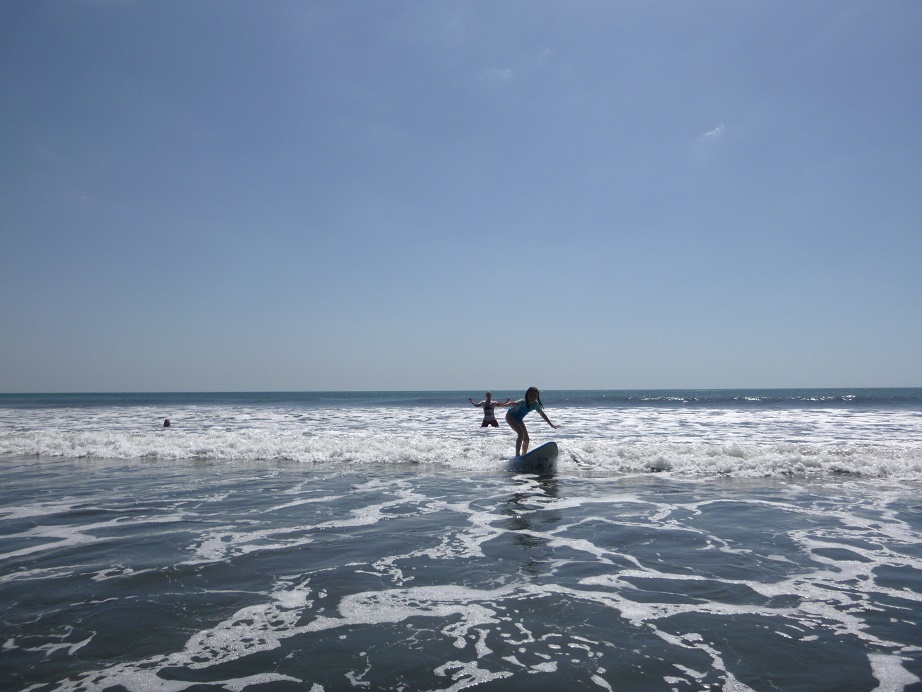
Nadia surfs; Ross cheers

Nadia surfs; Ross cheers

It’s pretty cheap — I don’t know what the rooms cost, but it’s not terribly high given we can hear the ocean from our room when the roosters are resting (more roosters, I know!). The cooks will make you a peanut butter sandwich for $1. A big plate of gallo pinto (beans and rice) costs the same, and it’s terrific. Bottles of soda and cans of juice are 90 cents each. A litre bottle of cold beer big enough for Jen and me to share is $2.50 For that same price you can get five choco-bananas. The only thing that seems relatively expensive here are the breakfast items. Anything involving bagels reaches into the $4.50 range, but you get a big plate of fruit with it.

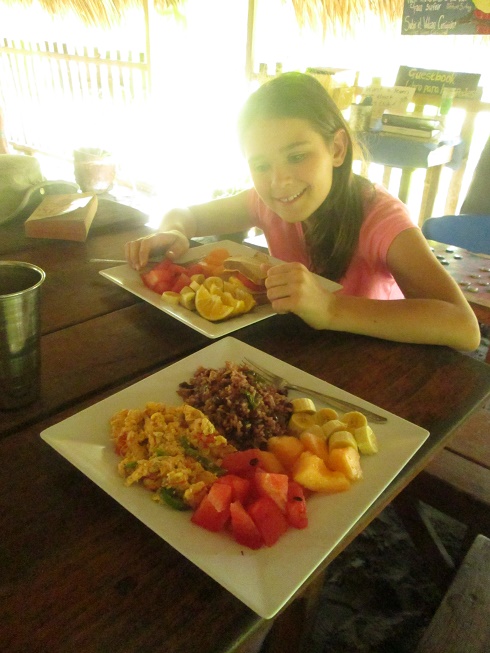
Good food

Good food — breakfast all day!

Plus, breakfast is available all day. Such an offer cannot be beaten.
You don’t have to go anywhere — There are several really cool-sounding activities available here, including surf lessons and horseback riding on the beach (both of which we have tried here) and they all come to us. The horses picked us up on the beach . The surfing teacher gave the girls lessons right at our complex. Actually, the surfing teacher is Ross the camp counselor. Zoe and Nadia had a great time with him today. The rest of us have our lessons tomorrow. (It should be noted that the lessons are cheap, too. An hour-long one-on-one lesson costs $10.) Also on our to-do list is a coconut tree-climbing class and a kayak tour of the mangrove estuary. We might have to walk to get to those. Although this doesn’t appear to be a highly developed area, we’re told there is a place that sells fried chicken a few doors down, and we passed a pizza place on our way in (though so far, the food they serve here has been excellent, inexpensive and easy to get our hands on).

Here's another sunset.

Here’s another sunset, but don’t book your ticket ’til you read the whole post

hammock

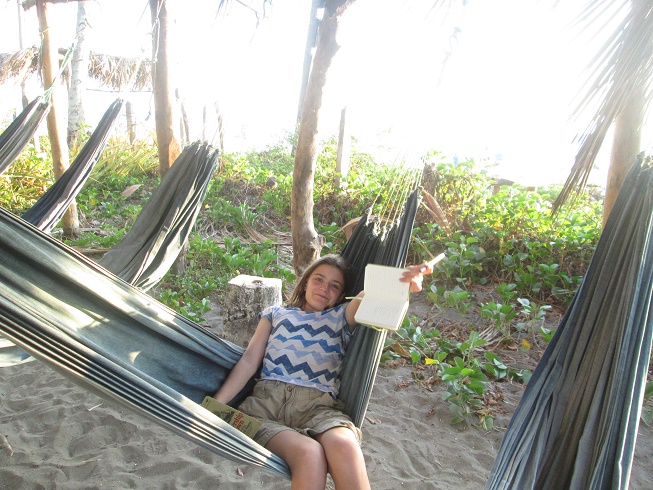
Plenty of hammocks

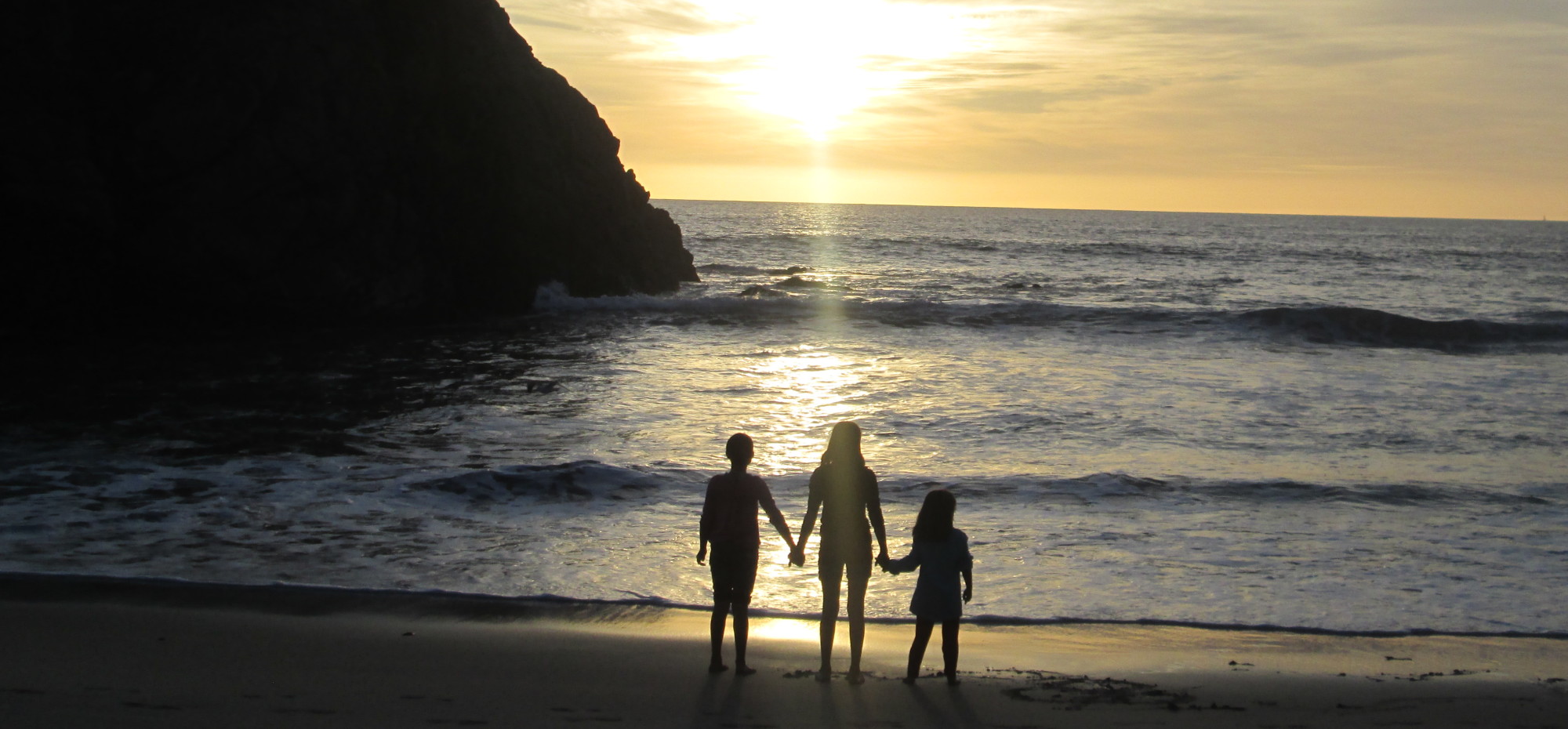
Sunsets over the ocean — We have seen three tremendous sunsets so far here (Zoe and I saw this evening’s while we were in the water practicing her surfing skills) and there’s every reason to believe the next two will be just as good.
Ready to book your trip yet? Here are a few of the downsides that may make you decided to stay home and do a jigsaw puzzle of a Polynesian scene instead.
It’s tough to get here — We were fortunately able to meander our way to these parts. The drive from Leon was less than two hours. People who came here straight from Managua said it took them four hours and a few bus transfers. If you have the time, like we do, it’s best to make your way here in stages. Leon was a nice stopover. Also, there are not a lot of things to do in the area once you get here. There is a volcano to hike, but there are no notable cities. (Apologies to the residents of the city of Chinandega )
The atmosphere isn’t totally family friendly — There is a pleasant goofiness to how the Rancho is set up. If you’ve been the the Fabulous Umbrella Factory in Charlestown, RI, you might recognize the hippie vibe these two places share. But the clientelle is decidedly younger. One guy visiting from Colorado seems to me to be in his late teens, though I am looking though the fog of age. This might not have effected us as much had we not spent much of the last three weeks at the Mariposa School, which didn’t have a lot more kids as guests while we were there, but it did have a guest community that was decidedly more interested in us and our kids. A few people have talked to us here, but mostly we’re ignored. Except by Ross, who has been saying nice things about Zoe and Nadia all evening long. While we’re comparing it to the Mariposa School, we should say that the organizational setup is different. At the Mariposa, they scheduled excursions and you signed up for them if you wanted to go. Here you have to request the activities, and negociate the timing of them. There are benefits to this latter system (just ask the poor Mariposa students who didn’t get to hike the Volcan Masaya), but Jen and I found it less stressful having it put up on the board all laid out for us.

Practicing for the coconut trees

Practicing for the coconut trees

Internet access is limited and not free — That is why our blogging is not as consistent as it had been. As I’ve been writing, Jen has taken two trips over to the one computer on the compound that is connected to the Internet. Both times someone else was using it.
Finally, and this may be the deal breaker for you Veruca, there are neither flush toilets nor hot showers — Remember the hippie vibe thing I was talking about? It goes pretty deep. Actually, the composting toilets are good for the environment and are probably necessary here because of the scarcity of water. Also they don’t smell and you can throw your toilet paper in them (which you can’t do in many of the flush toilets around here). The showers haven’t been a big deal at all. The air is pretty warm here and the water that comes out is room-temperature. Showering has not been unpleasant, which is good because after a day in the ocean, it is necessary to rinse off pretty well.

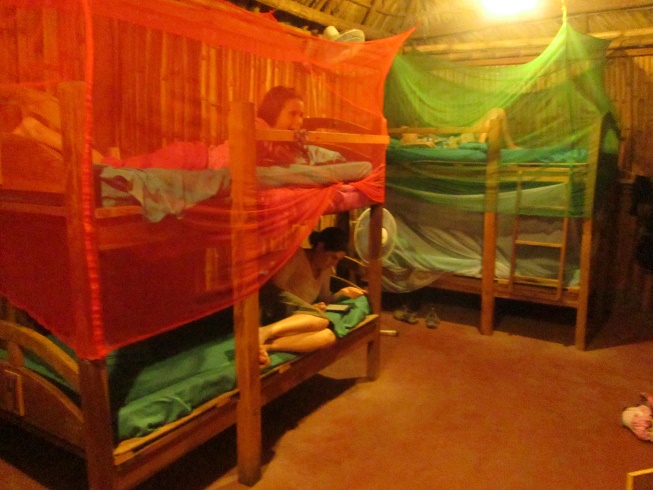
Our room features multicolored mosquito nets.

Our room features multicolored mosquito nets.

So there you have it. Do you value flush toilets over predictable sun and warm, comfortable surf? Does ease of access trump a low bar tab?
Whatever you decide, I hope you find your oasis from the snow drifts. And if you decide to stay with winter, I hope our blog is giving you a warming glimpse of the summer to come. Short of that, have your Loompa Loompa bring you some hot chocolate and set to work on that Polynesian puzzle.