Life at La Mariposa

IMG_6334We’ve settled into a nice routine here at La Mariposa.  It’s been an extremely easy way to get our feet wet in Central America, since all our needs are taken care of and we pretty much just have to show up.

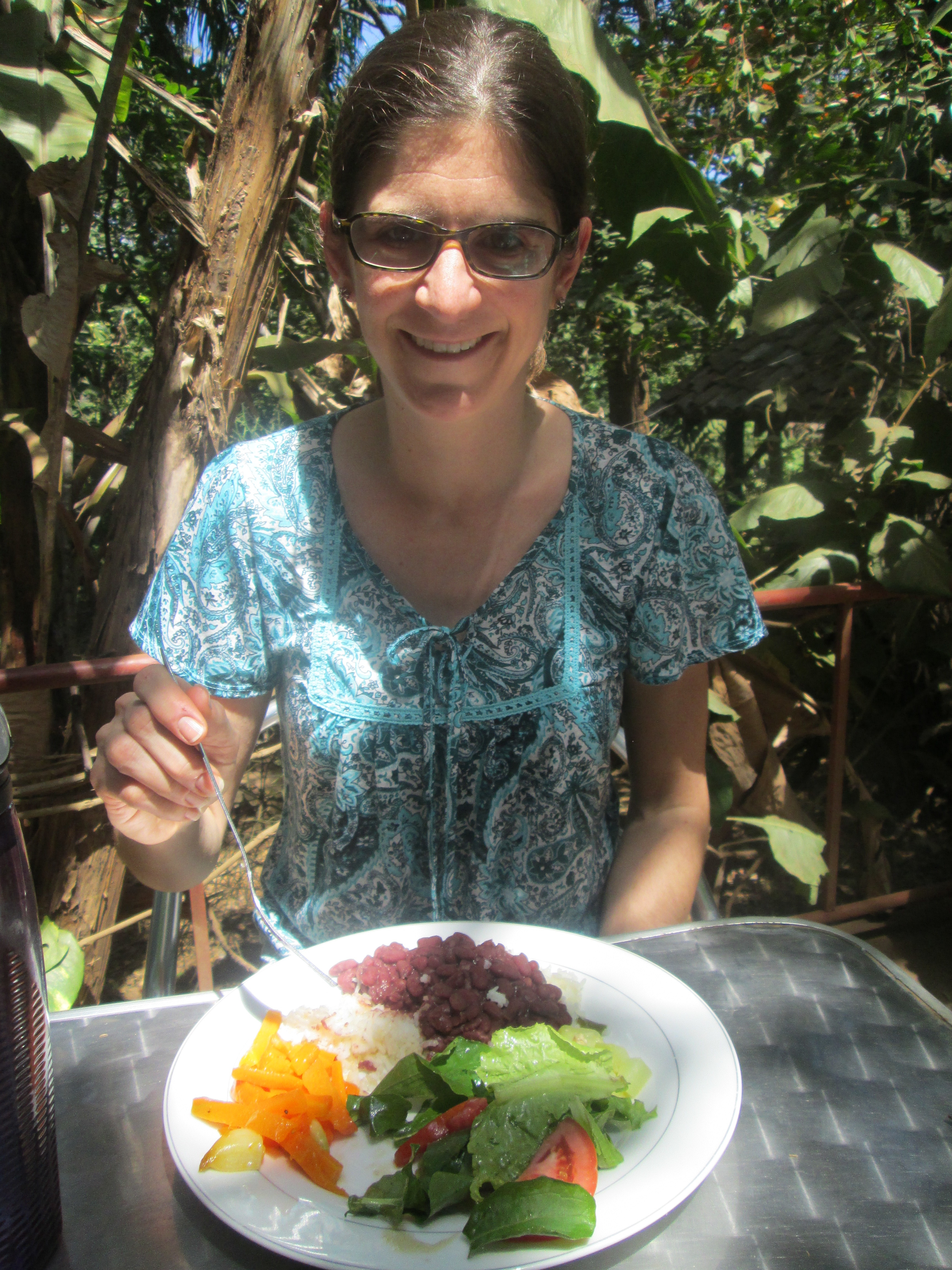
The food here is great, and this is probably the healthiest we’ve ever eaten.  Lots of fresh fruit, vegetables, and (of course) beans and rice.  The other thing Bob and I are noticing is we aren’t snacking, and we aren’t missing it.  Out of sight is out of mind when it comes to junk food, and this confirms that most of our snacking is probably due to cravings or boredom rather than actual hunger.  (Of course, the girls are still the first ones to race out during the occasional visits of the ice cream man.)
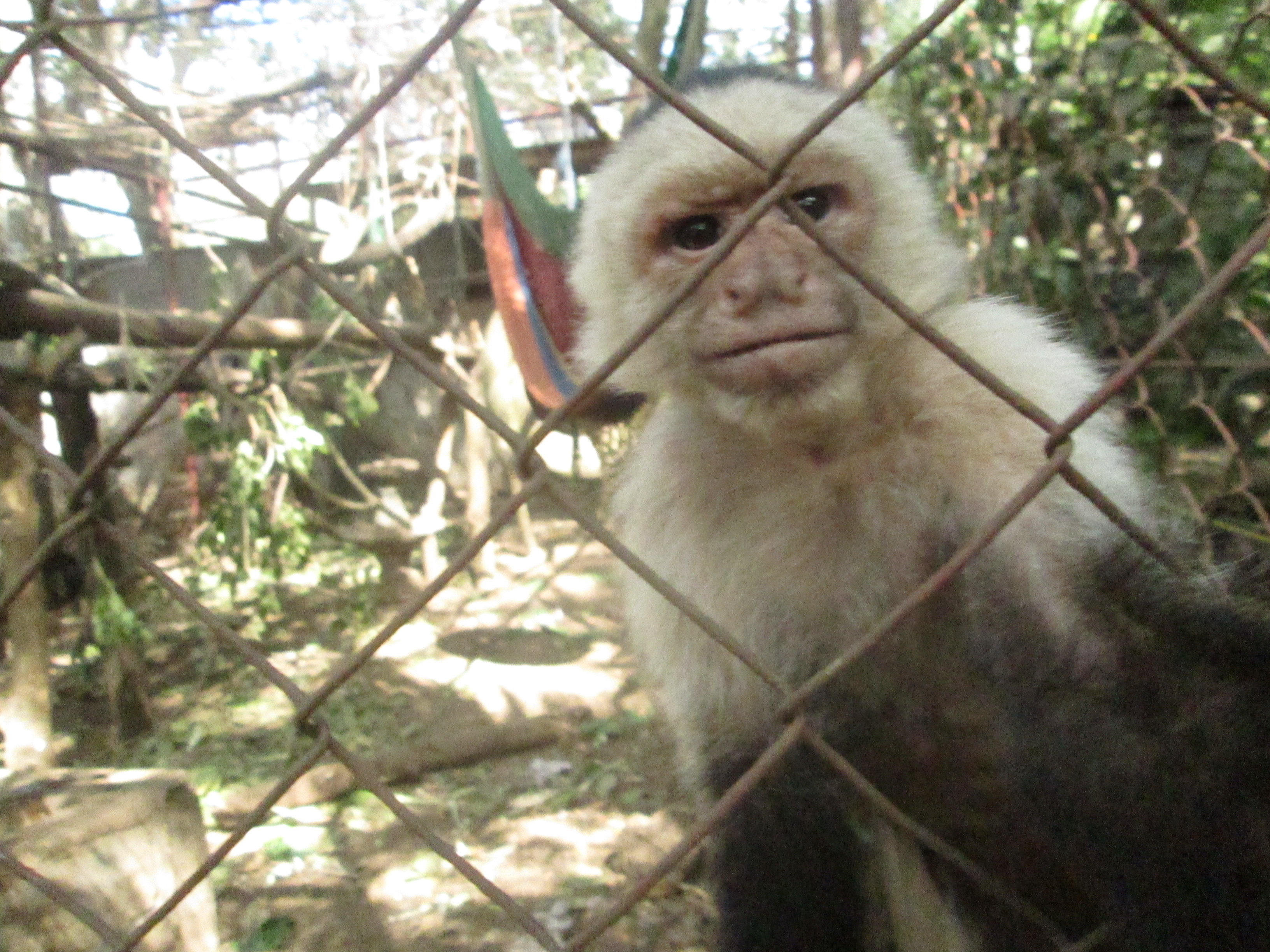
Monkey at La Mariposa.  He grabs us when we walk by if we're not careful.

Monkey at La Mariposa. He grabs us when we walk by if we’re not careful.

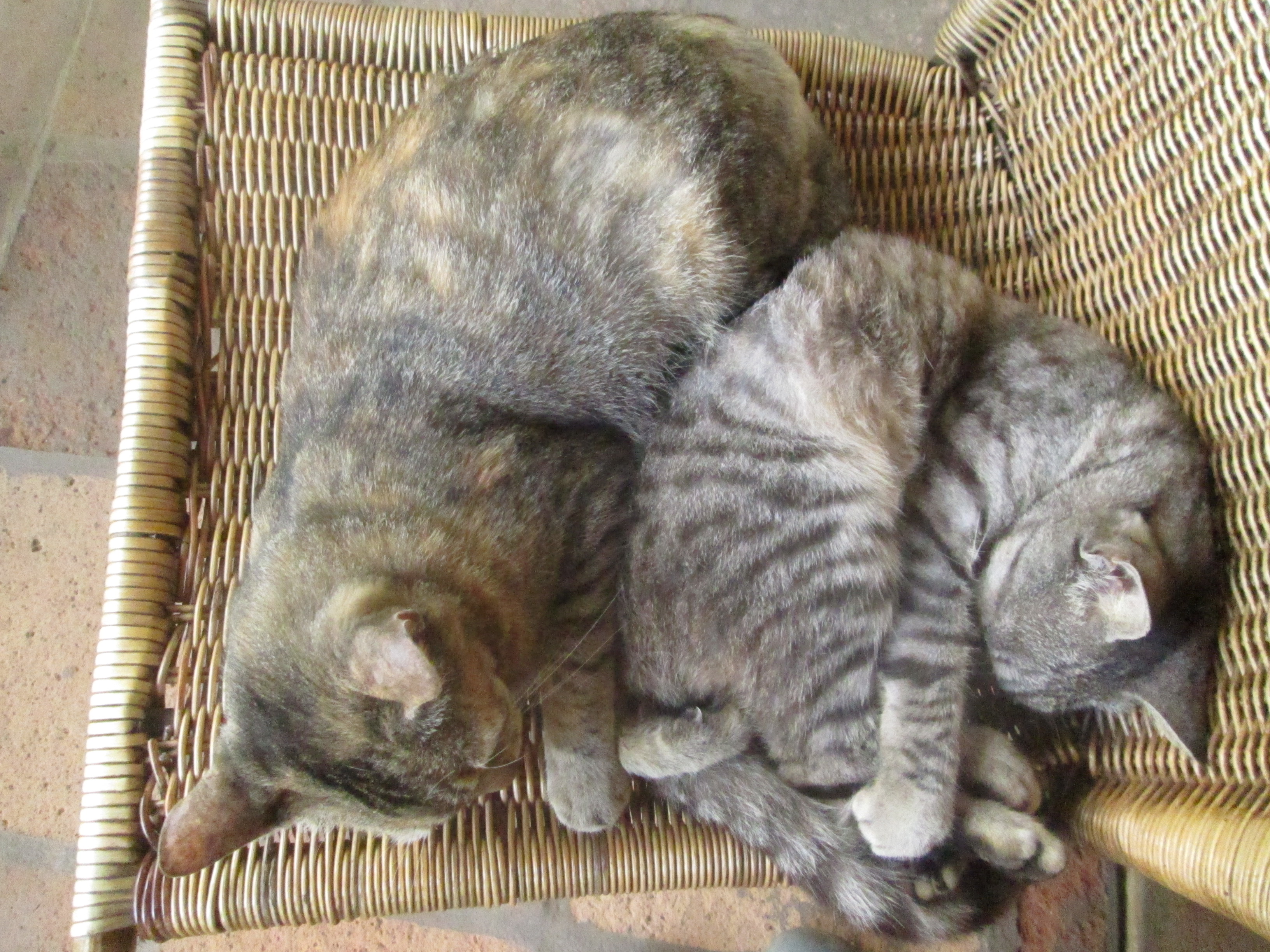
Our day begins with breakfast at 7:15.  Well, except on the days when Lanie drags us up with her to do her “morning rounds”.  She does several laps around the garden, stopping frequently to pet some of the many dogs and cats that abound here (and for some reason infuriating the monkeys, who reach out and bare their teeth as we barrel past).
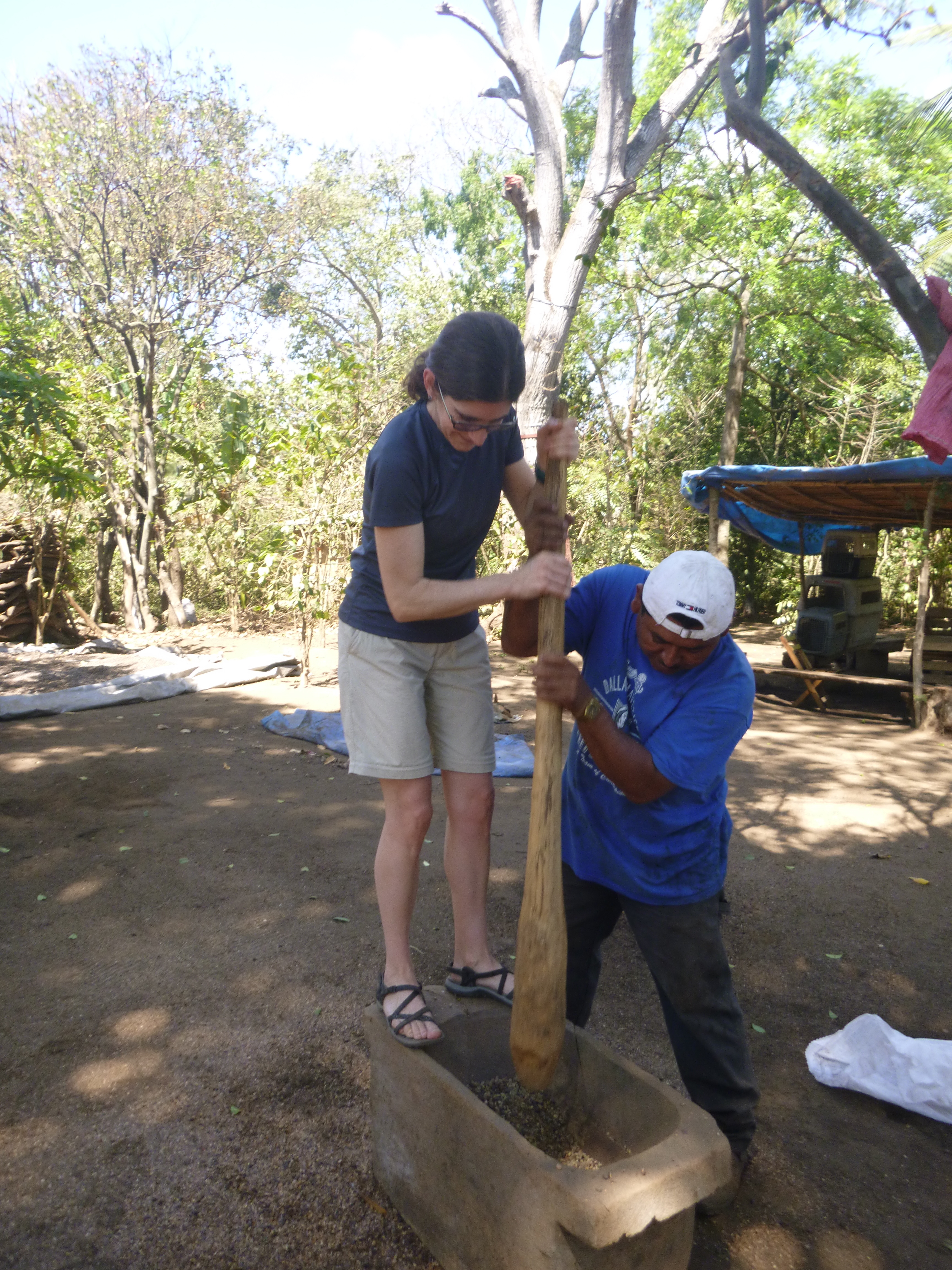
Bismark did not feel that I was very talented at coffee-making, but was too polite to say so.

I think that Bismark did not feel that I was very talented at coffee-making, but was too polite to say so.

Anyway, back to breakfast.  Every day there is a huge platter of very fresh, ripe fruit — bananas, watermelon, cantaloupe, papaya — most of it grown in the gardens here.  The coffee is grown here too.  (The other day I walked to the gardens with my teacher and was able to try my hand at crushing the shells off the beans.  They do it old-school here, with a big stone bowl and a very large wooden club.  I appreciated the coffee more after I gave it a try.)  There’s also granola, cornflakes, and bread.  A little later the kitchen ladies bring out a hot breakfast too.  This varies quite a bit — scrambled eggs with tomatoes, rice and beans, crepes, oatmeal.
P1000089At 8am they sound the chimes for the first class.  We meet with our individual teachers and scatter throughout the grounds to various nooks that hold our outdoor classrooms.  We each have one two-hour grammar class and one two-hour conversation class per day.  Today in my grammar class I had to take a 1+hour-long test of regular and irregular verbs (conjugations, and using in a sentence).  By the end I was exhausted and desperate to be finished.
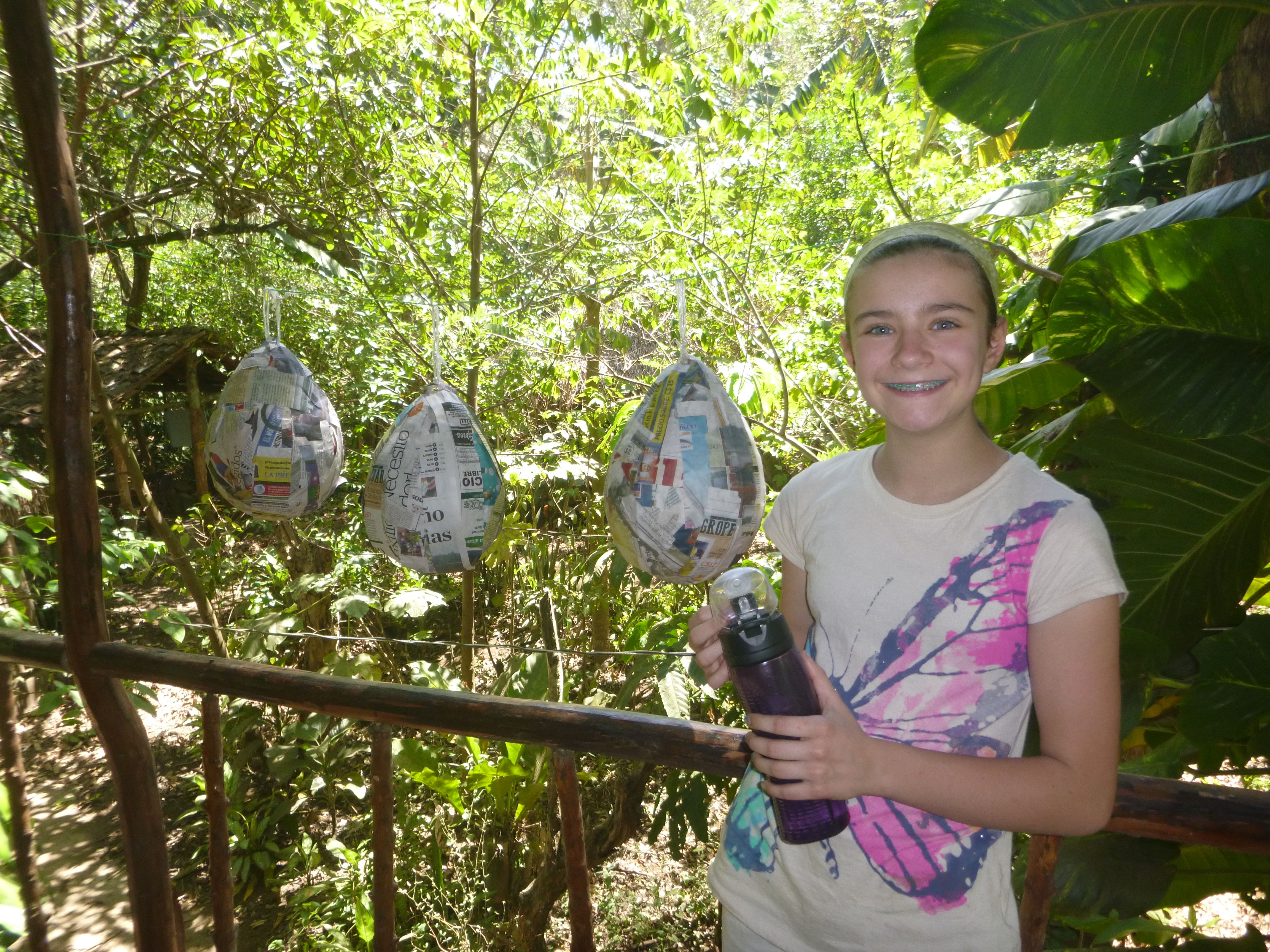
The unfinished pinatas
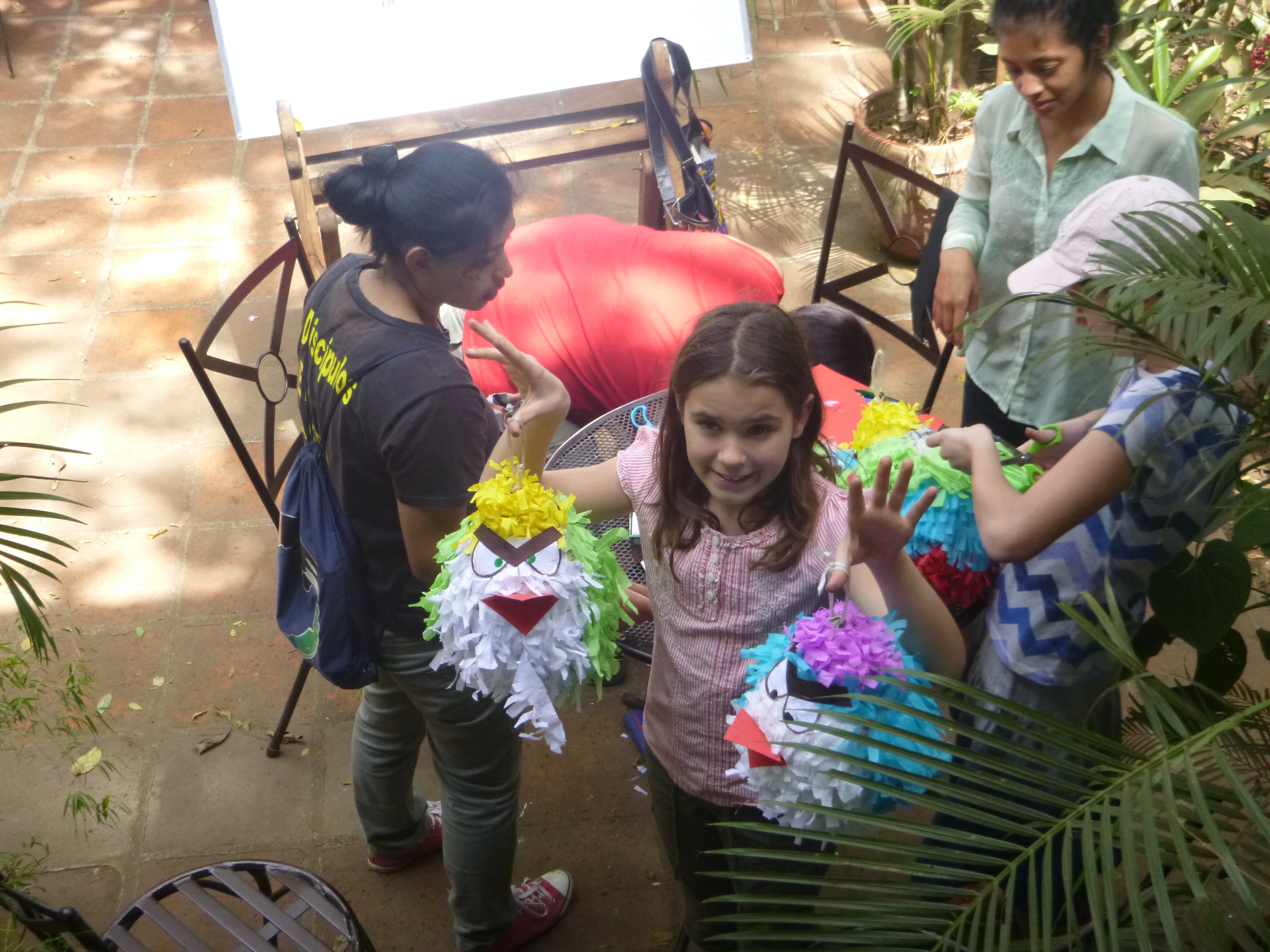
The unfinished pinatas

The finished pinatas (yes, "angry birds" theme)

The finished pinatas (yes, “angry birds” theme)


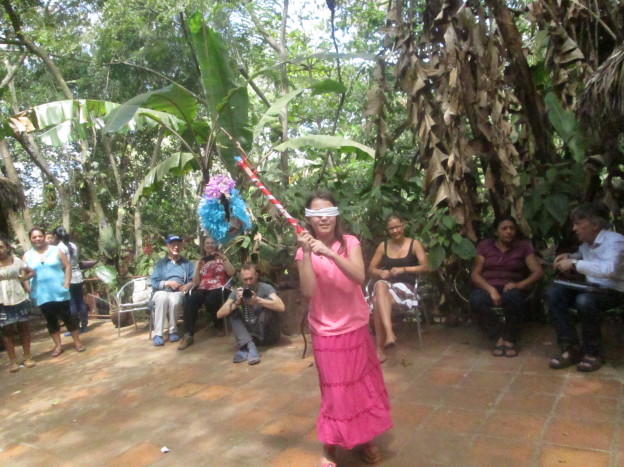
We have a brief break around 10am, then begin our second class.  For our conversation classes, we sometimes walk around the grounds or into town to talk to people.  The girls have had a week-long project of making pinatas.  Today was the culmination, and most of the school ended up gathering around for the festivities.   We were given a dance lesson and then attacked the pinata in turns.  (Apparently here you’re supposed to dance while doing this.  Below is a video where Heidi demonstrates the proper procedure.)
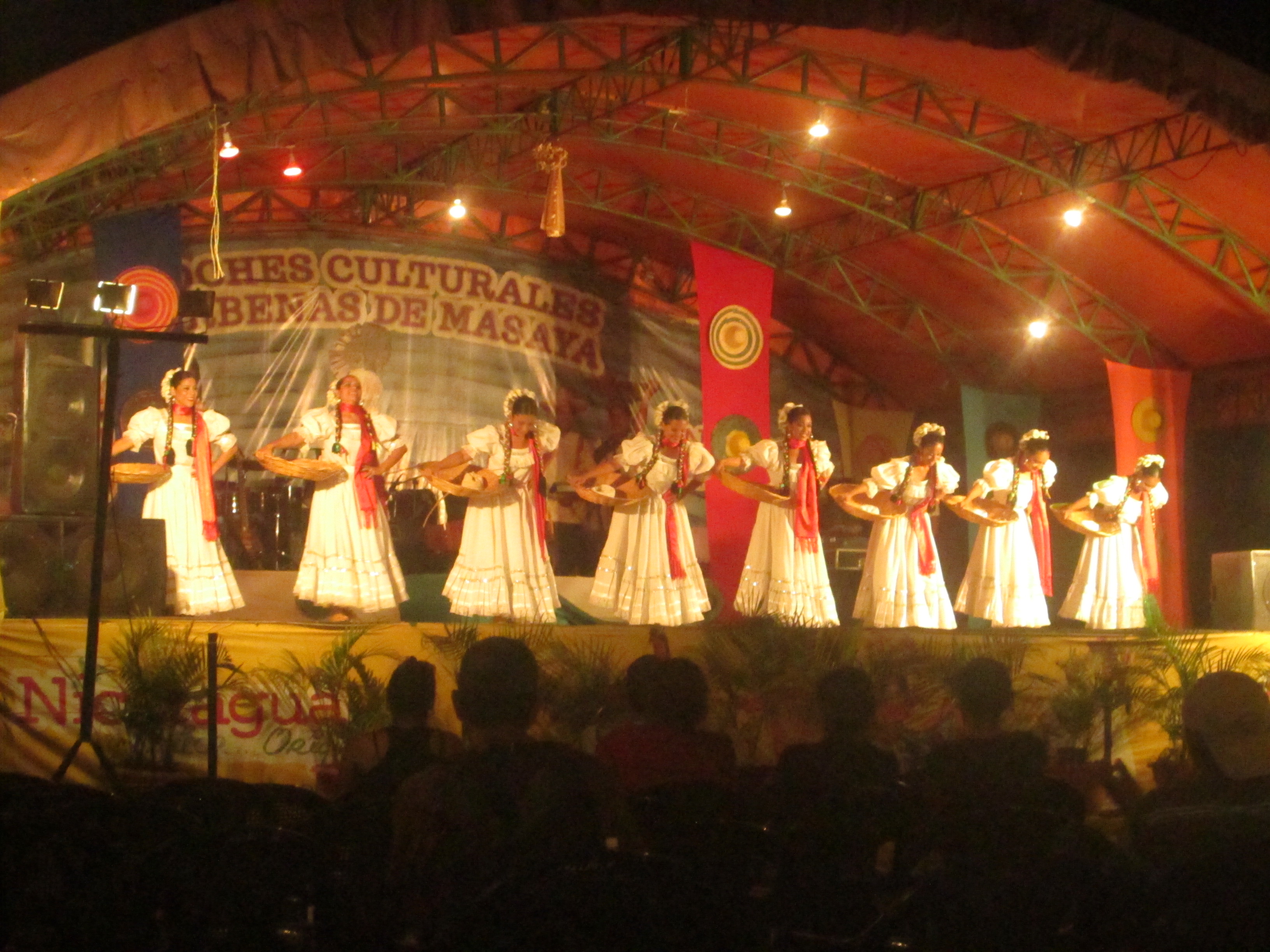
Folklore show at the Mercado Masaya.

Folklore show at the Mercado Masaya.

Lunch follows around noon.  (Interestingly, there is fresh fruit juice at lunch and dinner, but not at breakfast.)  After lunch we usually have some free time, and then an optional excursion.  We’ve gone on most of them, but have skipped a few that don’t return until late at night.  Last night was one such trip, to the famous (but in my opinion rather disappointing) markets of Masaya, and Zoe and I went along and left the others at home.  Overall it was not the most exciting of excursions, but Lanie and I did get new dresses:
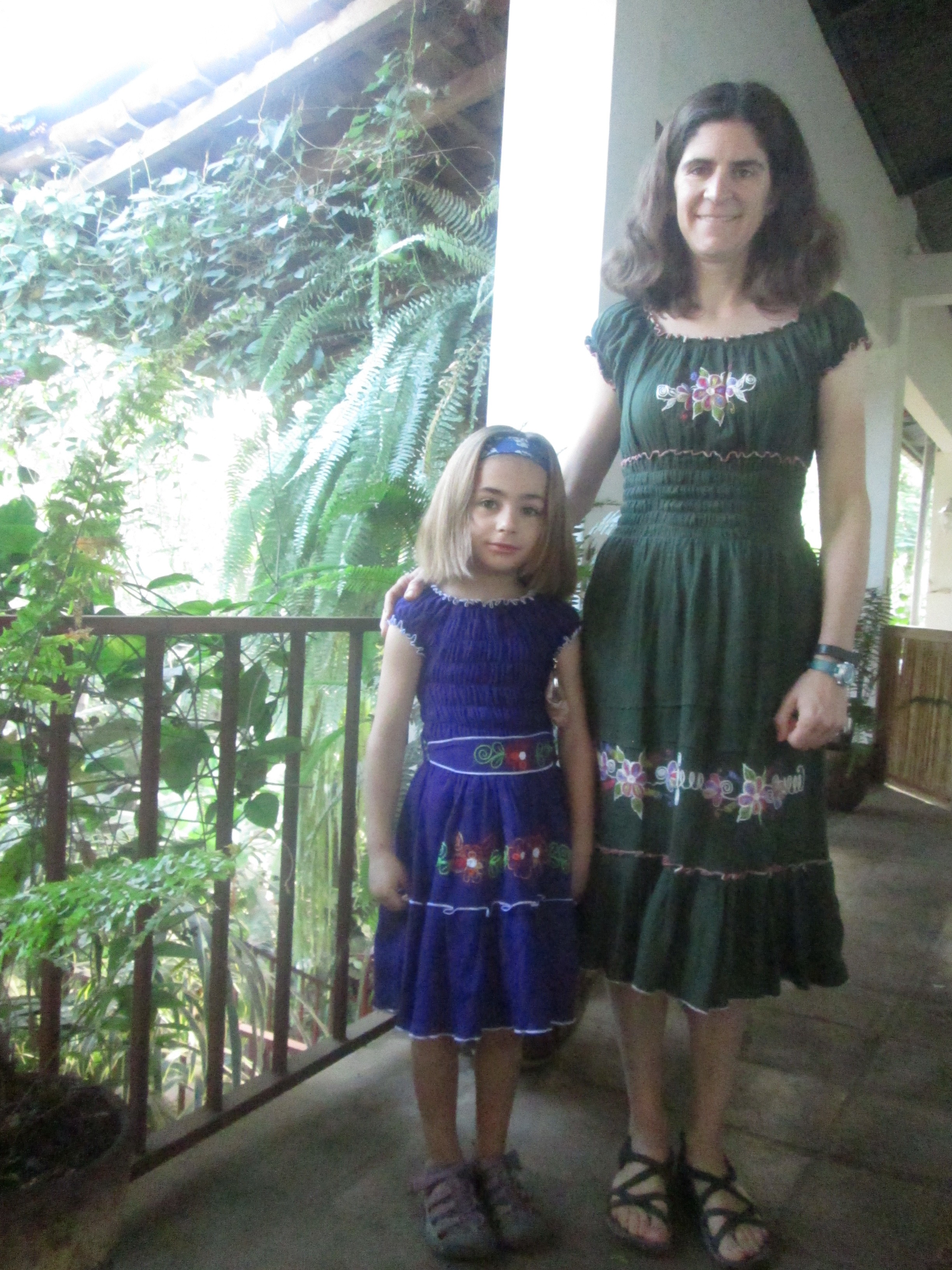
IMG_6603

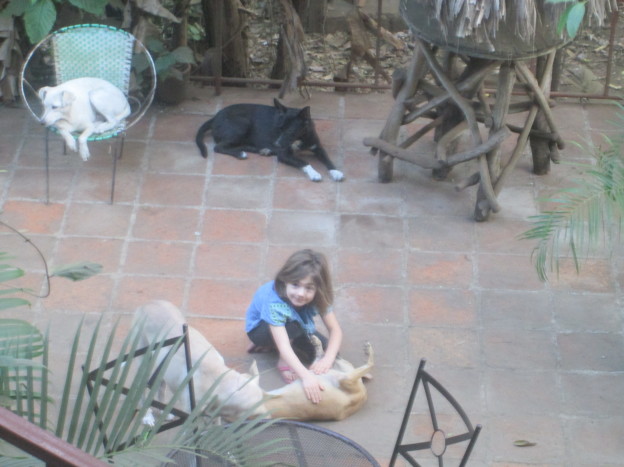
Lanie made it a project to take photos of every animal here.  I have a lot of these.

Lanie made it a project to take photos of every animal here. I have a lot of these.

Dinner is at 6, and usually includes some kind of dessert.  Afterwards we read or relax, and generally head to bed fairly early.  (We’ve grown accustomed to the roosters/dogs/etc. and are sleeping much better these days).

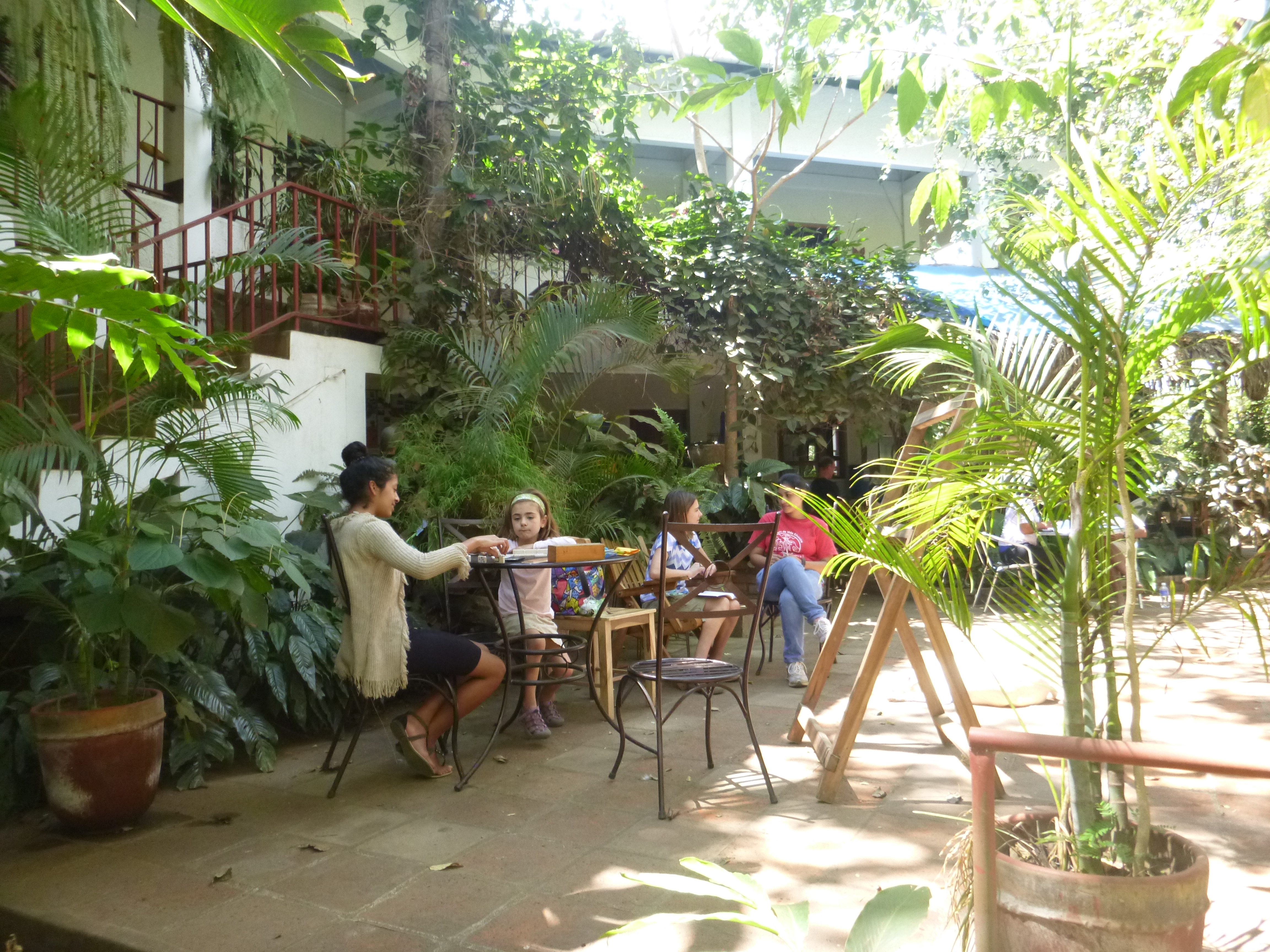
The weather here is beautiful — around 80 and sunny every day, with no humidity.  To our surprise, mosquitoes and other bugs seem to be quite limited.  (Our beds have mosquito nets, but we haven’t had to use them — except Lanie, who considers hers a canopy.)  Most of our living is done outside, as seems to be the case for the country as a whole.  Our meals are eaten on a terrace overlooking the gardens.  We read and work on our balcony.  This is our de facto living room:
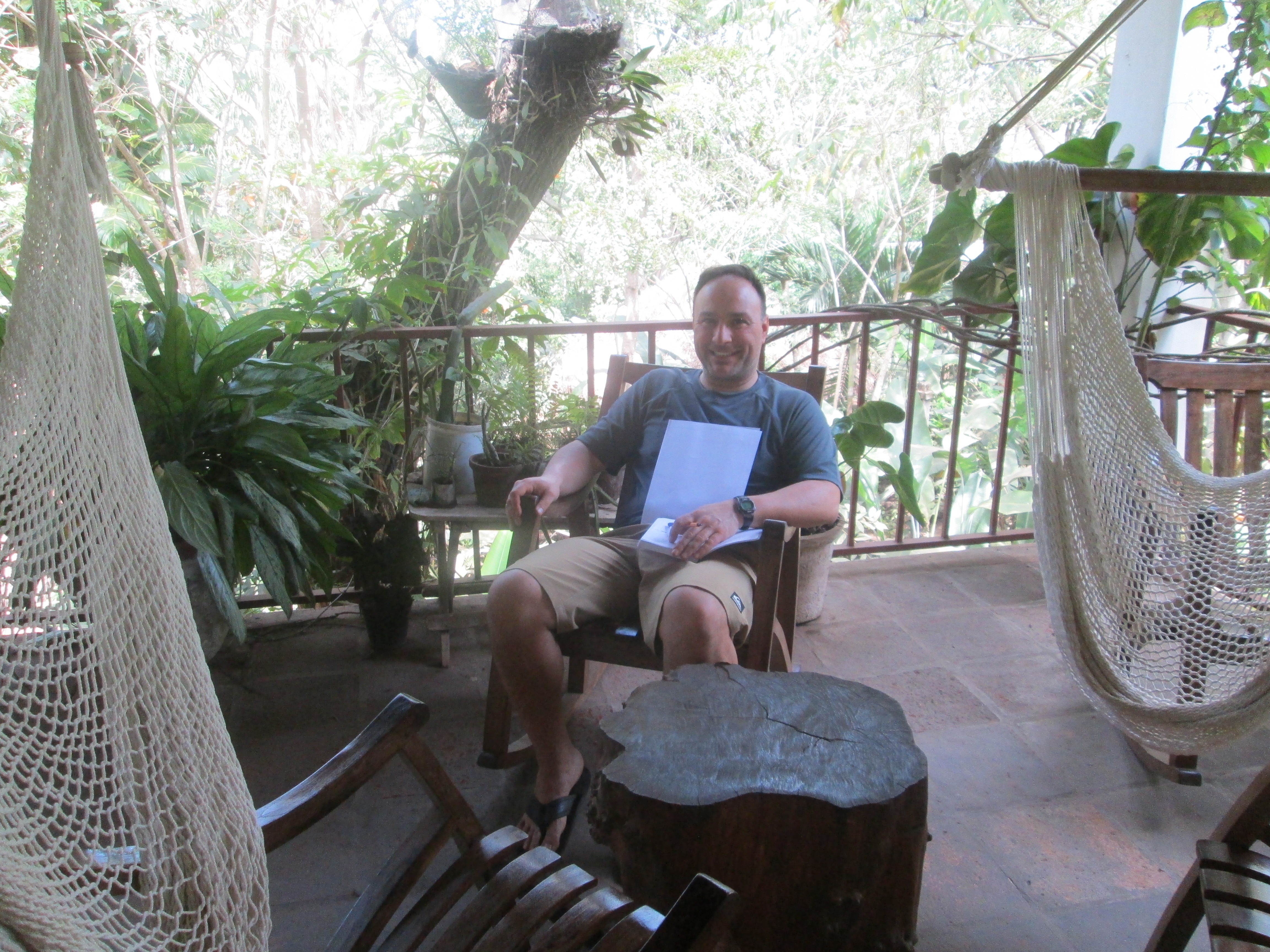
 

Bob is dutifully doing his homework right after class ended.  The rest of us procrastinated.

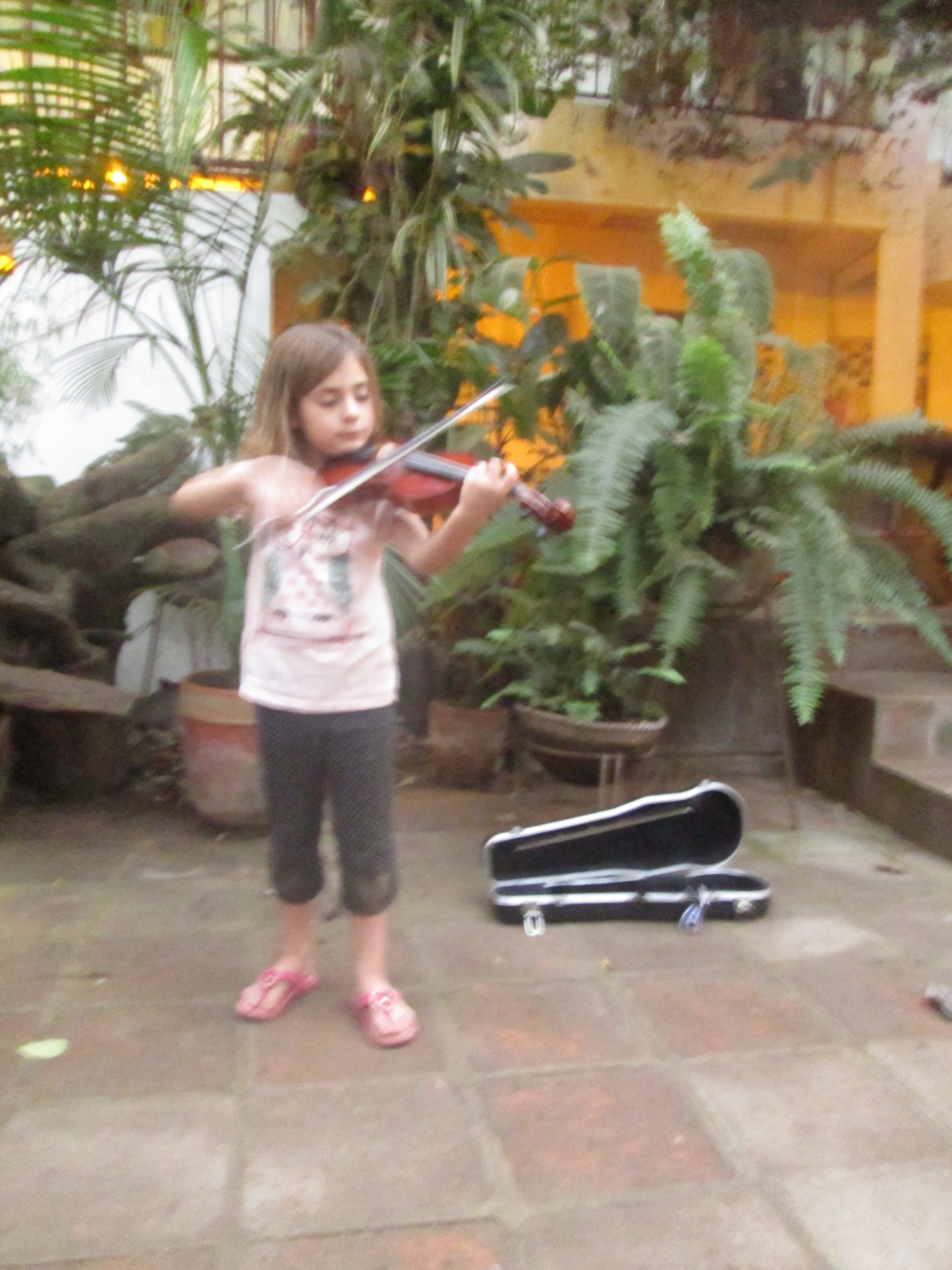
IMG_6519The best thing about this place is the freedom we all feel.  The kids have the run of the place — the abundant greenery makes it feel large, but it’s small enough that they’re never far out of our sight.  There are no other kids here (except a 1-year-old who arrived yesterday), but the other guests have been very welcoming (and our kids, perhaps desperate for conversation with someone who (a) is not in their family and (b) speaks English, are often ready to talk their ears off).  Lanie has taken up busking after dinner, and has gathered up several coins in her violin case.  Zoe loves to do laundry.  And Nadia has made several friends here, whom she regularly chats with about horses and what we’ve done that day and horses.

It will be tough emerging from our cocoon here, and having to deal with our own transportation and meals and entertainment (and without Richard the head guide to translate for us and tell us what’s what).  But I think we’re feeling ready to face the wide world again.
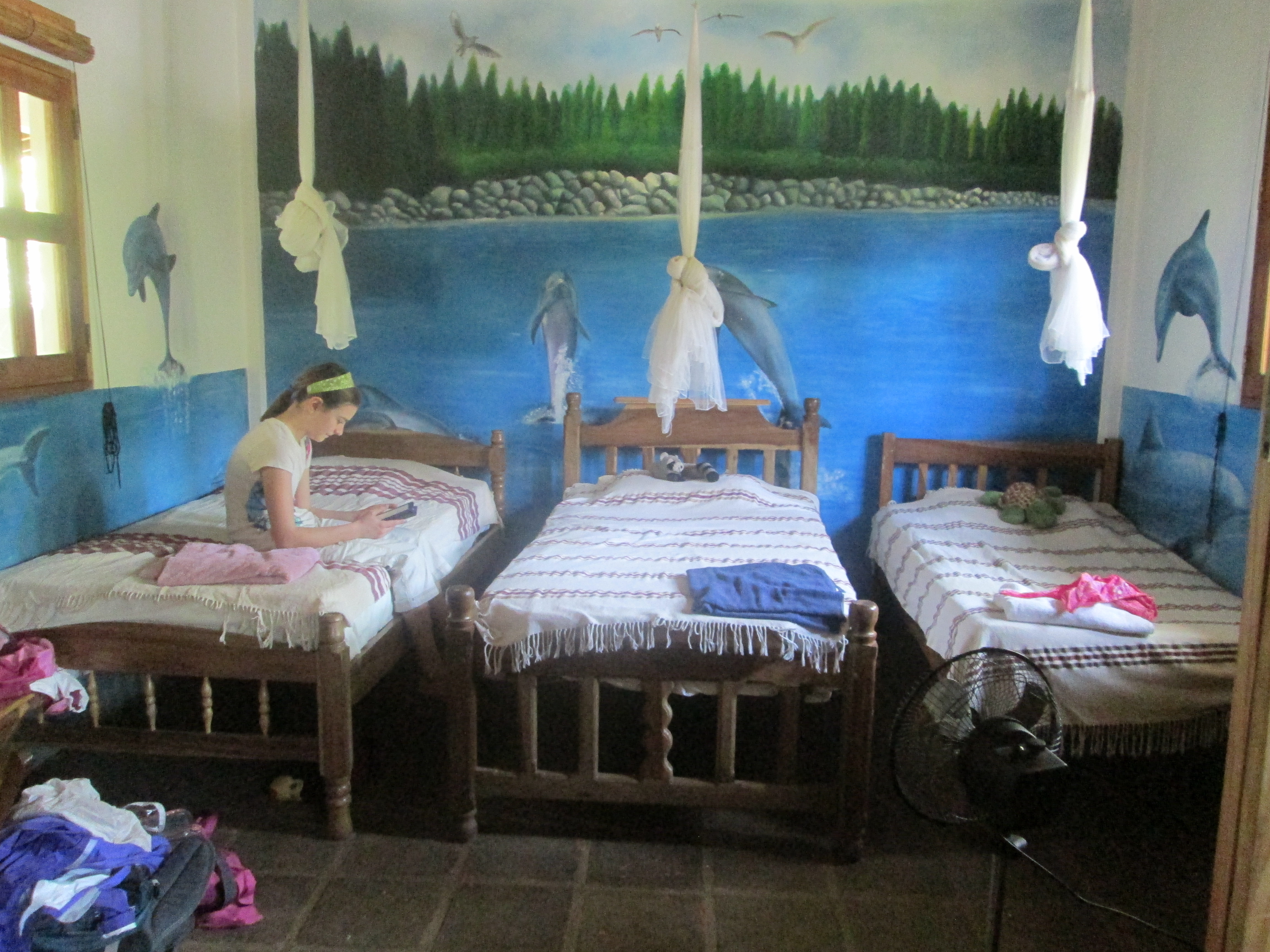
The kids' side of  our family room is painted with beautiful murals
The kids’ side of our family room is painted with beautiful murals
Flirting with volcanoes


Frequent readers of our blog may remember that during our equine expedition on Saturday we enjoyed a great view of a smoking volcanic crater from the top of a nearby mountian. This will not be our last mention of volcanoes by a long shot. In fact right before we leave our Spanish school here, we hopefully will undertake a night hike up to that very same smoking crater. Volcanoes on this trip are going to be like caves were on our cross-country drive in the Getaway Van.

P1000114

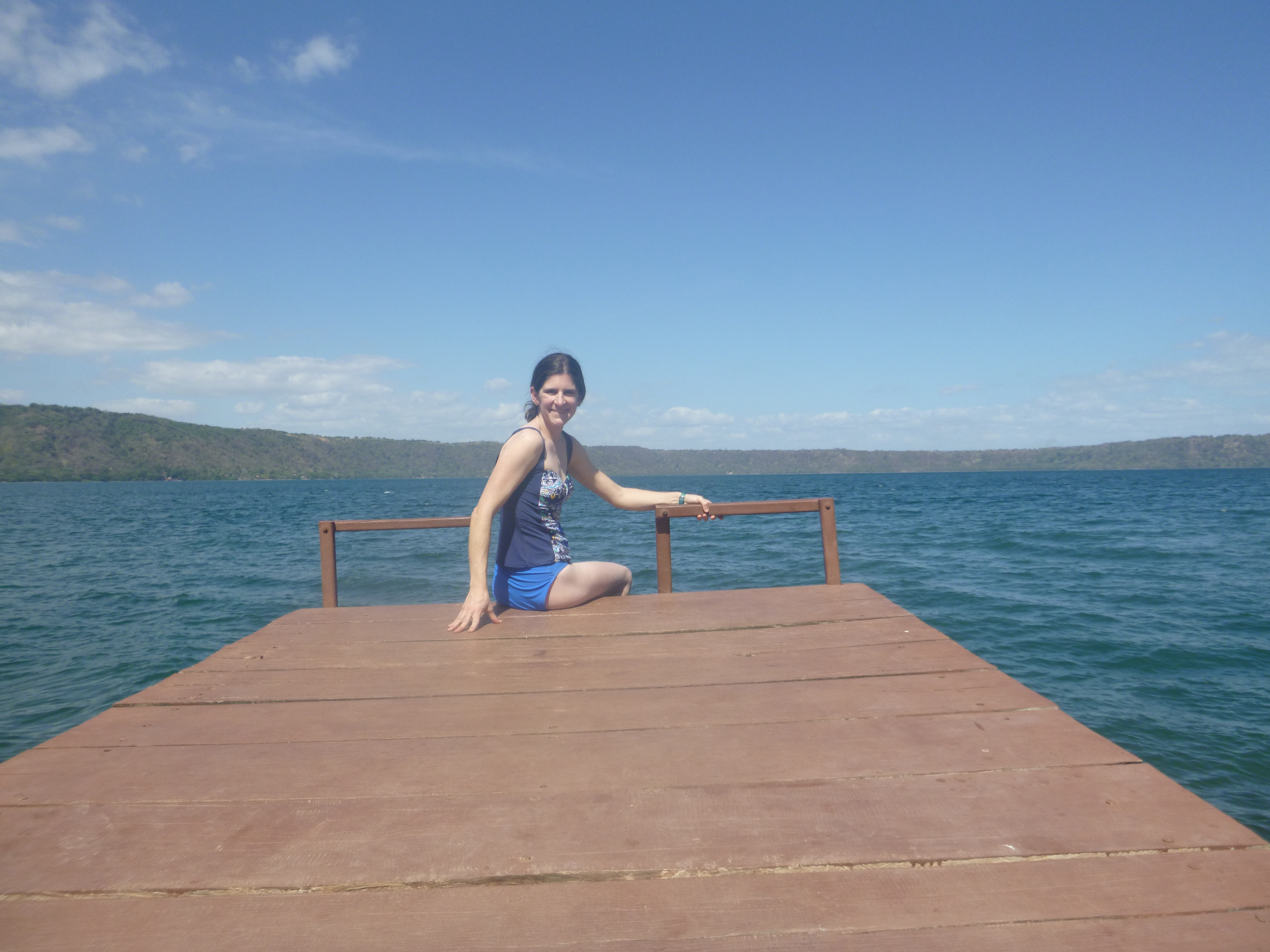
Note the characteristically clear February Nicaraguan sky.

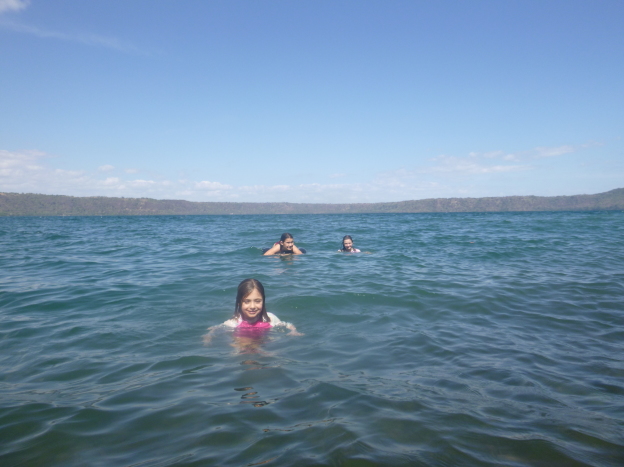
But we’re not diving right into volcanoes, we’re wading in slowly. Quite literally. Yesterday we drove to a nearby lake that has formed in a crater of a not-quite extinct volcano. La Laguna de Apoyo is known as the best place to swim in Central America that is not in the ocean. There is some volcanic activity deep down in the caldera here, the water is not very cold, but because there is not much volcanic activity and a lot of water, the water is not very warm either. It’s sort of like lukewarm water.

Coconut ginger (l) and mango (r)

Coconut ginger (l) and mango (r)

It is also very beautiful and profoundly deep. The bottom of this crater is the lowest point in Central America (if you believe Jen). Something like 130 meters below sea level. The surface of the lake is significanly above sea level, so the lake goes down pretty far. The drop is pretty immediate, too. Five feet from shore and you’re in up to your knees. Fifteen feet from shore and you’re in way over your head.

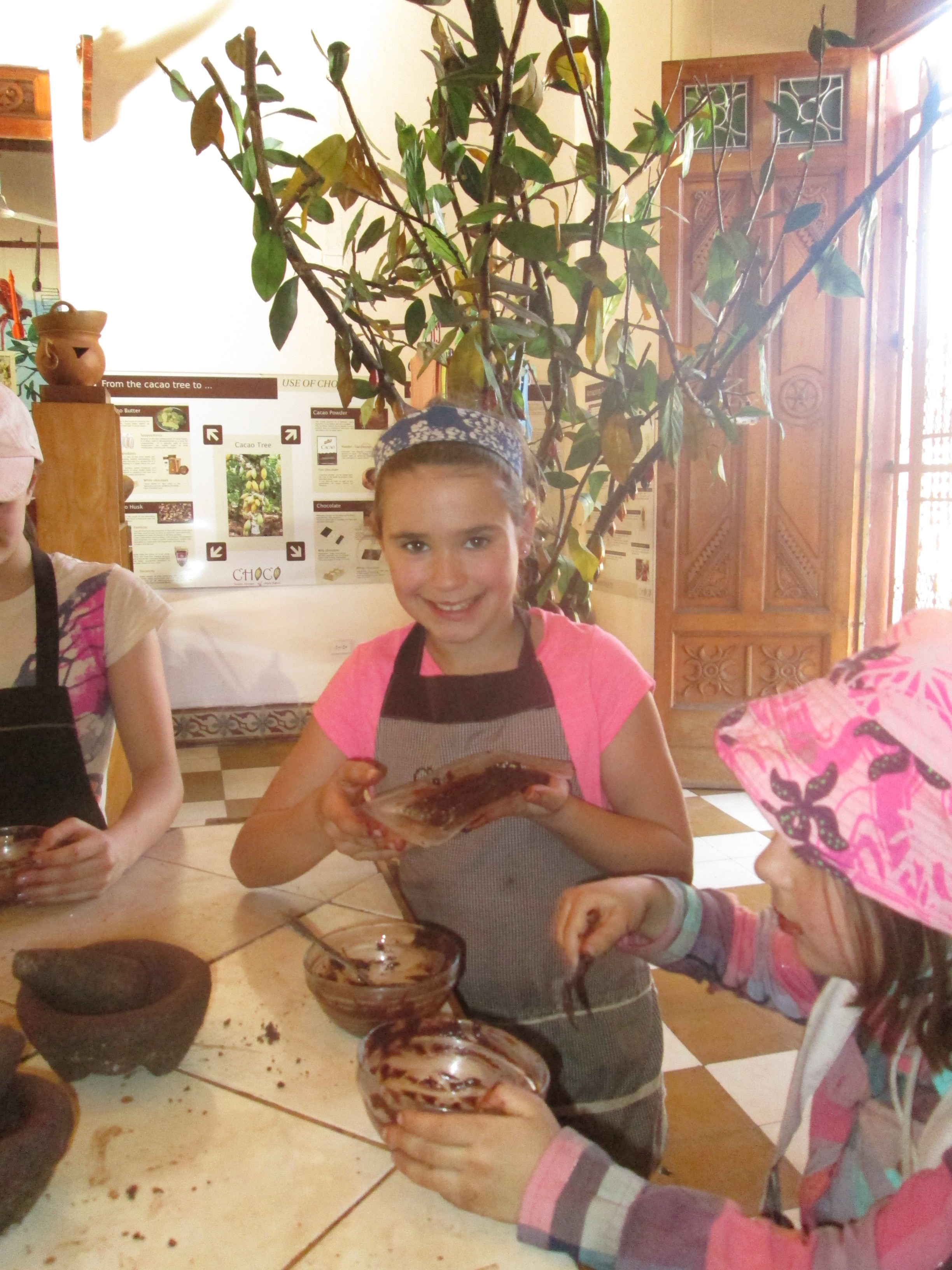
You can probably see the chocolate on her face if you look closely.

You can probably see the chocolate on her face if you look closely. No, wait. You don’t even have to look closely.

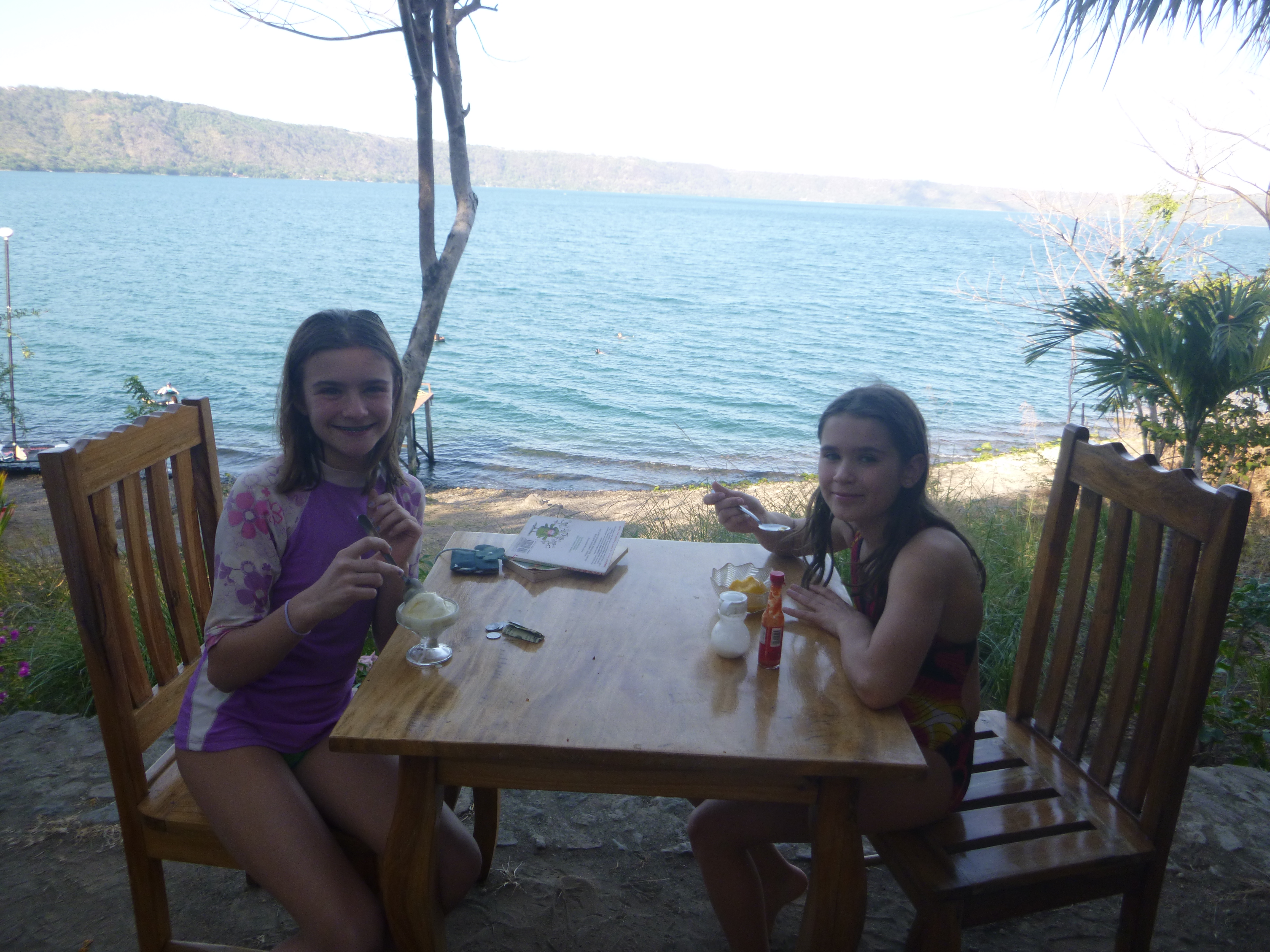
We were driven inside the crater to a hotel on the water and paid $5 apiece to use the beach facilities, including kayaks and inner tubes. No one was brave enough to take the catamaran out, though there was a nice breeze. As nice as the scenery was, ice cream won the day if we consider the hearts of the girls. Nadia’s mango and Lanie’s chocolate contended for the title. Zoe’s ginger coconut wasn’t bad, either.


Our camera has a panorama feature.  Note the Pavliks in the kayak.

Our camera has a panorama feature. There are some Pavliks in the kayak on the left.  It really is a big round lake, although that’s not what this picture conveys.  Think of the milk at the bottom of your cereal bowl — if your cereal bowl were 500 meters deep.

Monkeys, parakeets, and a happy birthday

The girls

The girls’ Spanish class

We’re back in the thick of our Spanish classes again, and they are proving to be challenging. Today, one of my teachers gave me the terrifying news that tomorrow she and I are going to walk into town where I can practice by talking to random people.  I know from experience just how this will go: after much thought, I will slowly manage to put a sentence together (most likely in the wrong verb tense and with incorrect genders), and then I will nod, smile, and stare blankly as I listen to a reply that I don’t remotely understand.  I also discovered that apparently yesterday, while I was smiling and nodding, she was telling me that on Friday I have to give some kind of presentation.  I haven’t yet figured out what this entails, but I’m hoping to get some hints tomorrow without having to flat-out admit that yo no comprendo.

IMG_6559

El mono!

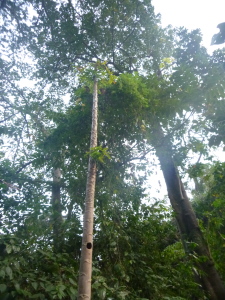
This afternoon we traveled to a nature preserve, El Chocoyero.  (After initially seeing it on the schedule, we were a bit disappointed to realize that in fact it has nothing to do with chocolate.)  The ride was beautiful — we’re in the mountains here, with steep green hillsides rising and falling to the horizon, and an active volcano smoking in the distance — but we now understand why in Central America it can take an hour to travel a few miles.  After leaving the main road, we were on a rutted dirt track that descended steeply into a sharp valley — so sharp that at times we felt like we were driving through a tunnel, with almost vertical dirt walls pressing in on either side.  After bouncing around in the van for what seemed like forever, we arrived at El Chocoyero.

P1000063P1000082


P1000076

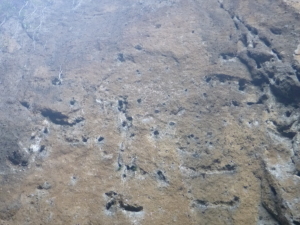
The holes where the birds nest

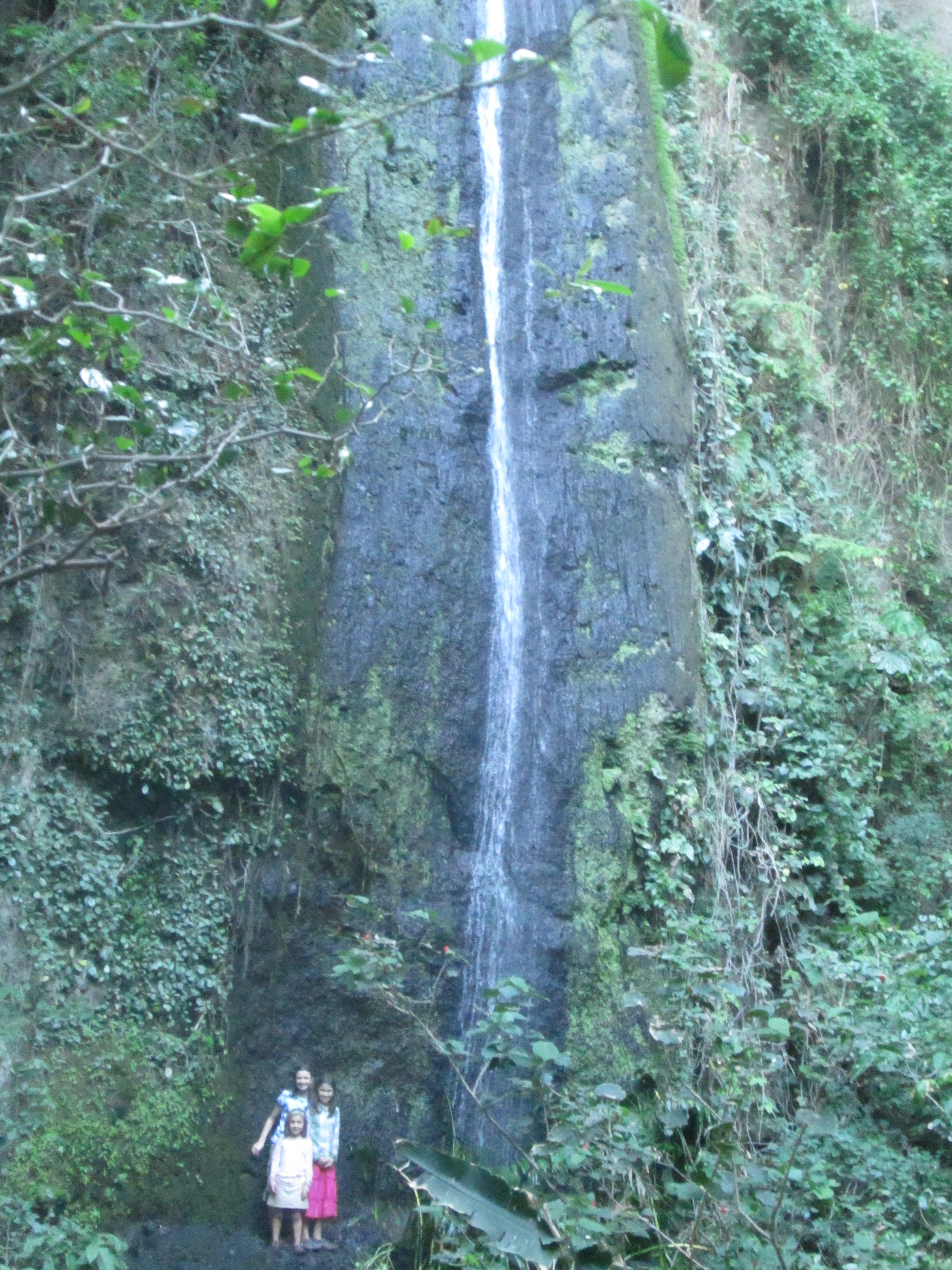
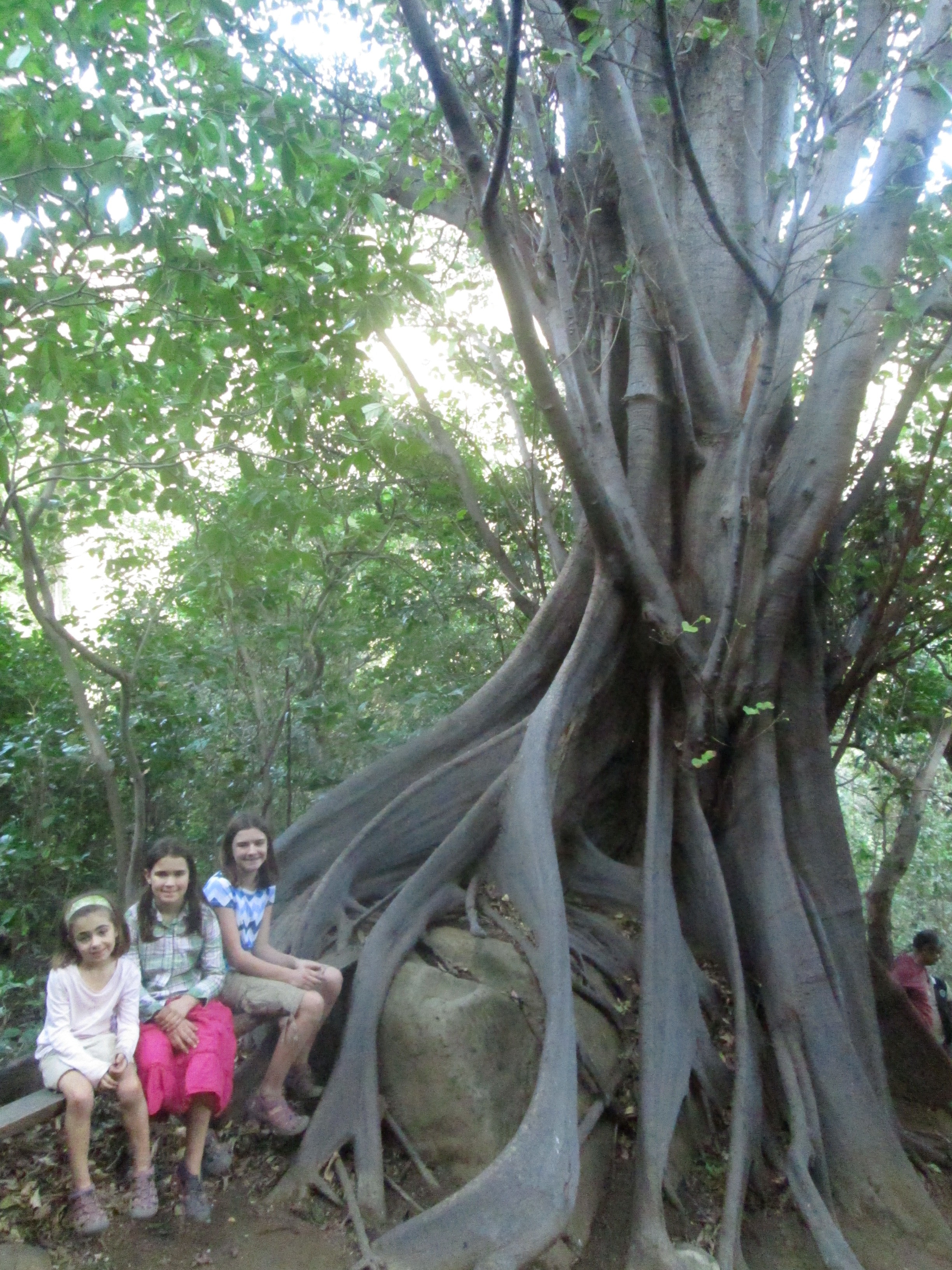
This place’s claim to fame is its bright green parakeet, the chocoyo.  They travel in large packs, and live in tunnels in a rock wall beside a waterfall.  We had a guided tour through the reserve, timed so that we would arrive at the waterfall to see the birds returning to their holes for the night.  During the walk, we also saw (and heard) our first wild monkeys!  There were also many interesting trees and plants, but I didn’t get to hear much about these because for some reason Lanie became obsessed with discussing the theme of her next birthday party (in September) and could not be silenced.

IMG_6579 IMG_6558

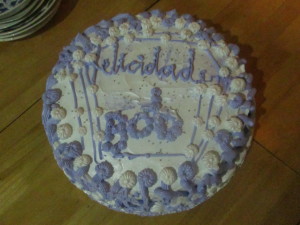
Upon our return, it was time for dinner and a small celebration.  Today being Bob’s birthday, I had asked the kitchen ladies if it would be possible to buy a cake.  One of them agreed to go home and make one during the day, to be ready for after dinner.  I was expecting something small and modest, but when it was unveiled it was quite impressive:

IMG_6580

It fed the whole compound here, with plenty left over.

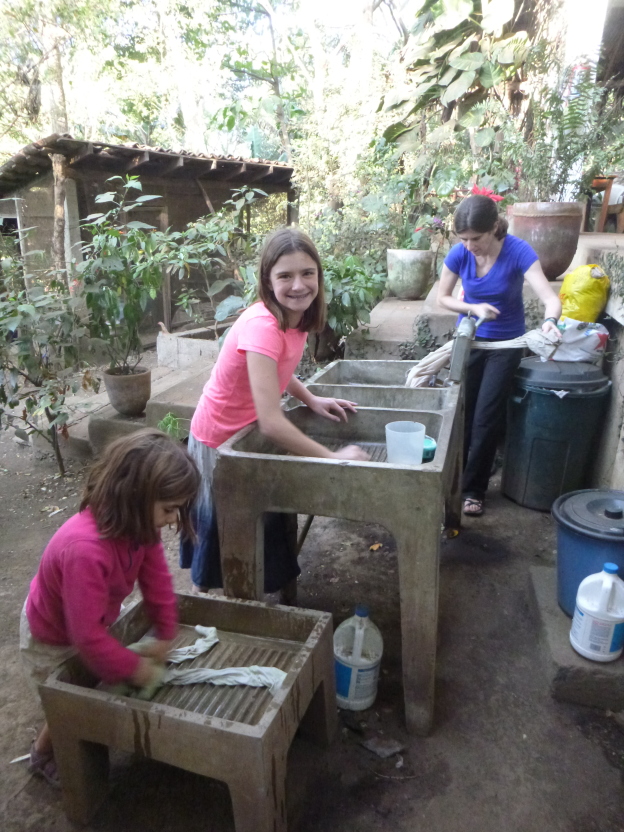
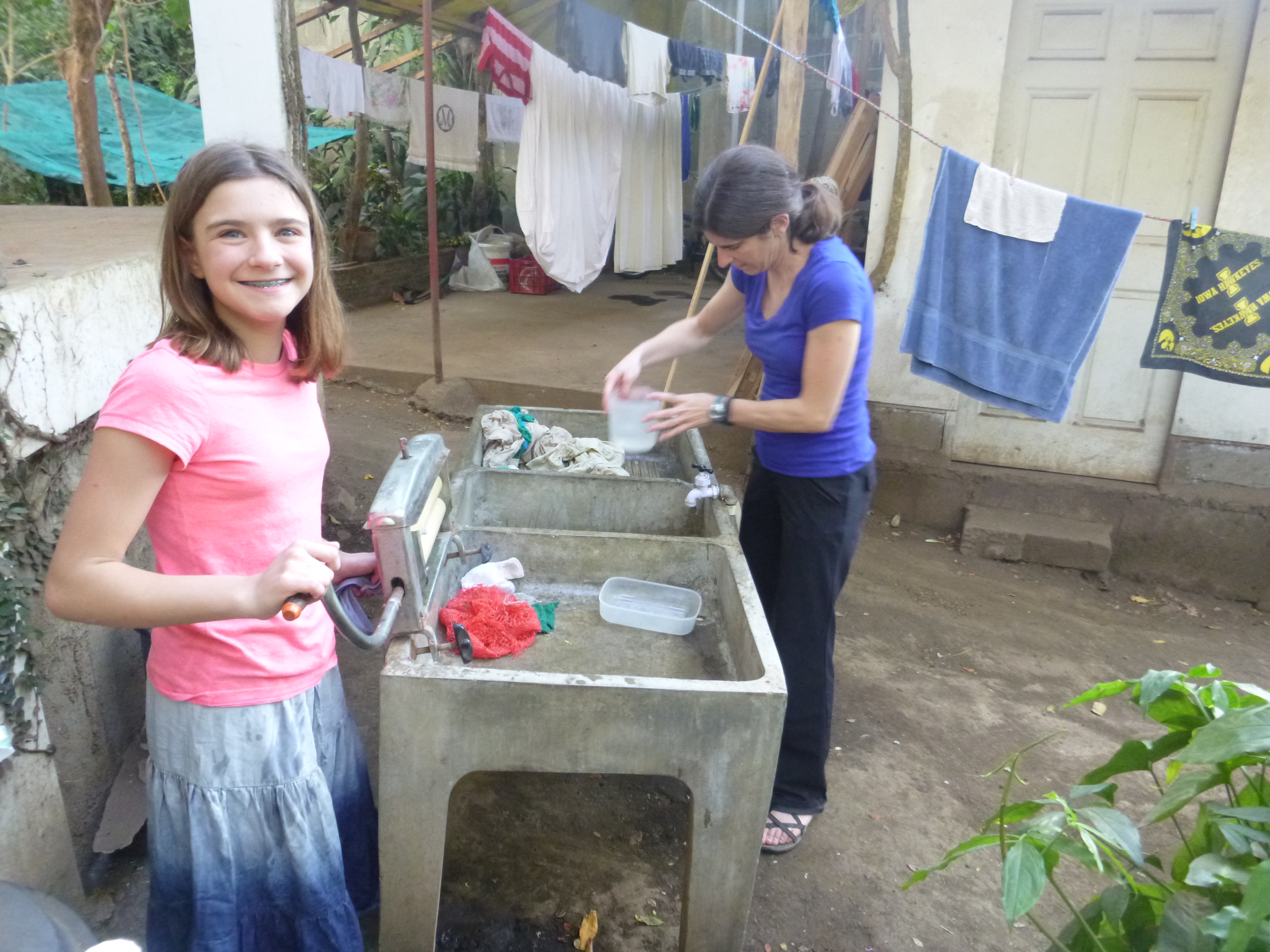
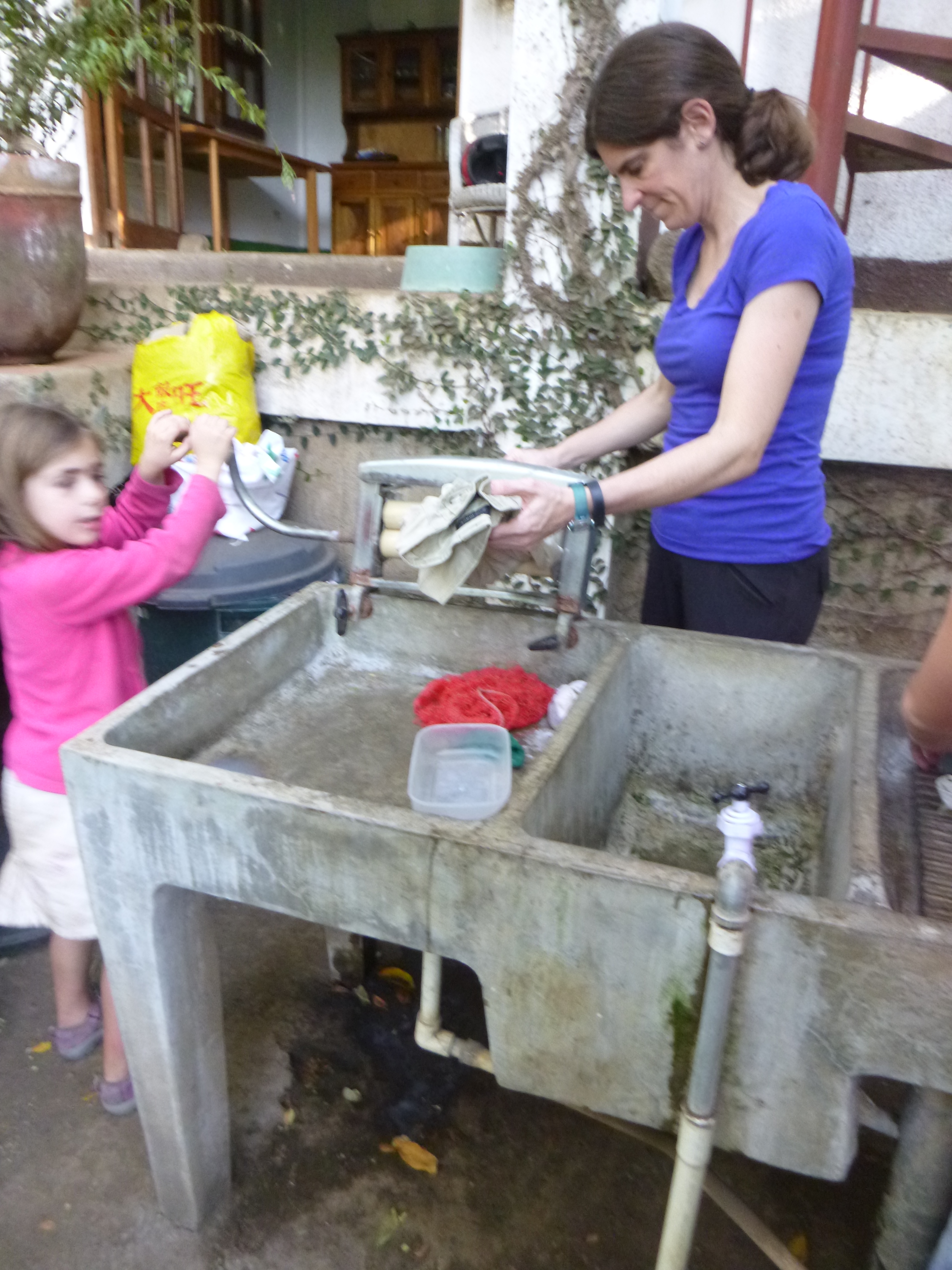
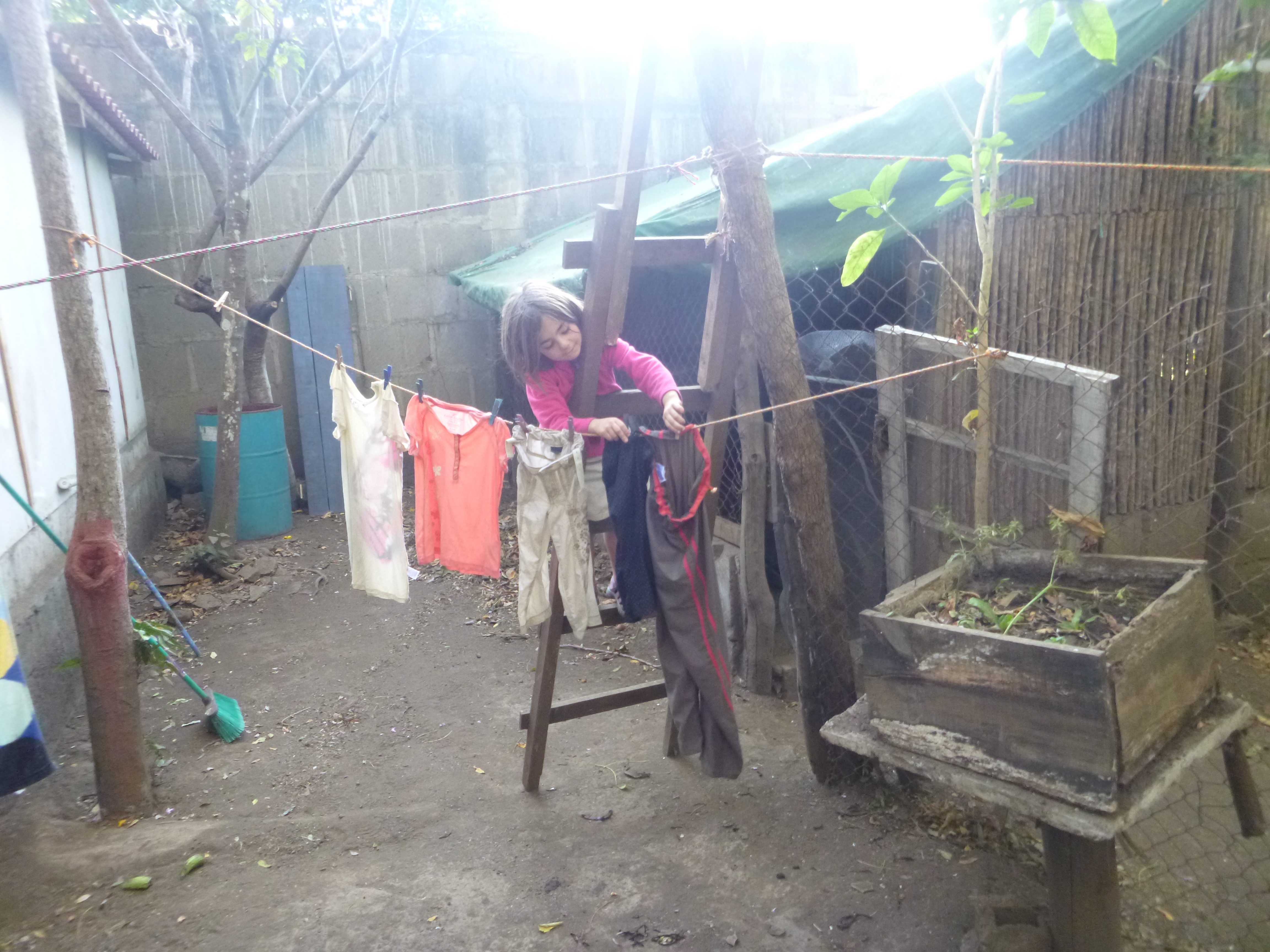
At least we’ll get our washing done

Washing clothes this way was fun, if not completely effective.

Washing clothes this way was fun, if not completely effective.

It was a quiet day here at La Mariposa.  Lanie did get me up to run around the hotel this morning, but we only mustered two laps.  We all got back into our classes, and two of us — Zoe and I — got a fair bit of homework.  We focused on some homeschooling this afternoon, but the best lesson might have been what I’m calling the “experiential exercise” of washing clothes by hand.

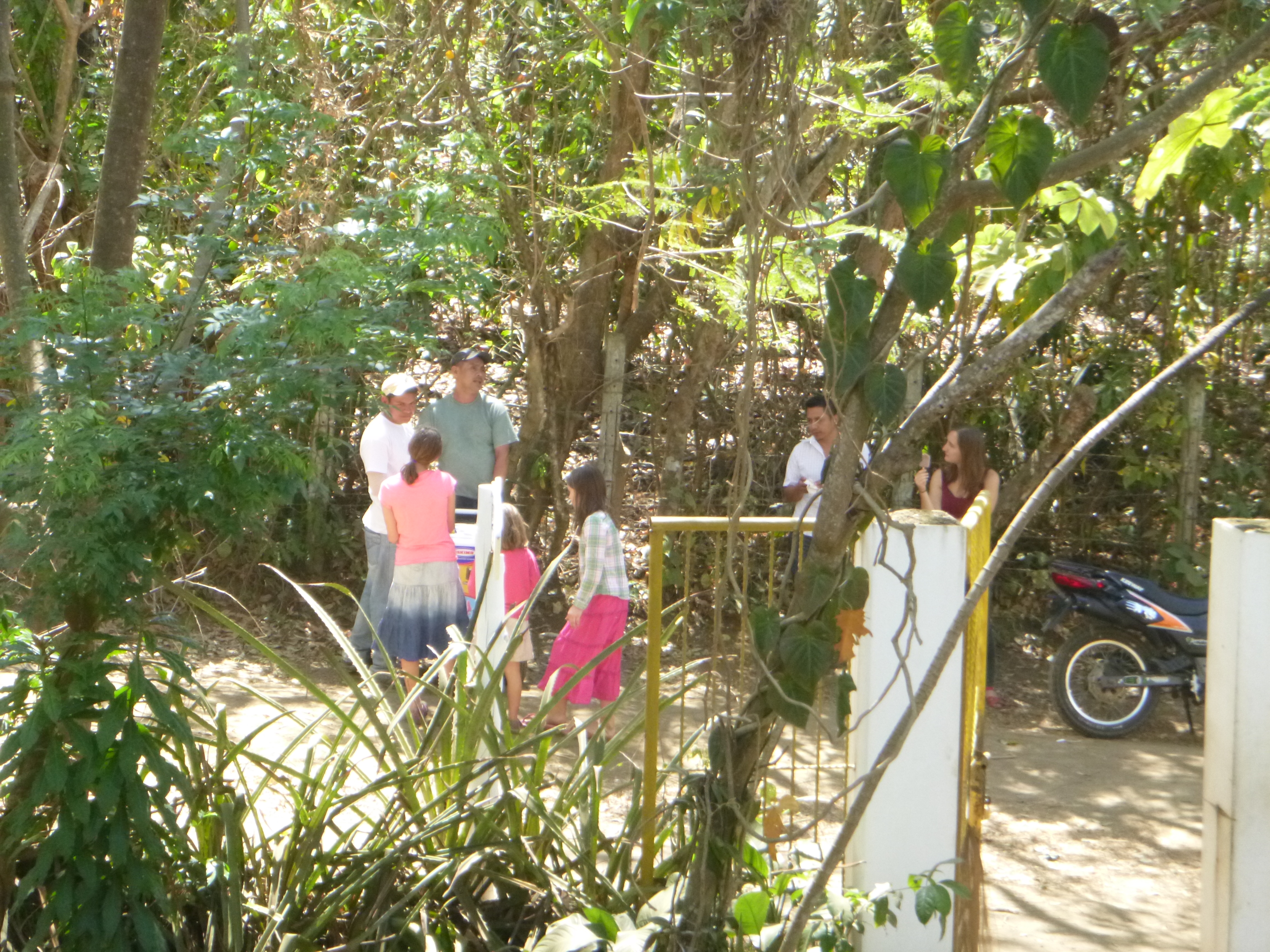
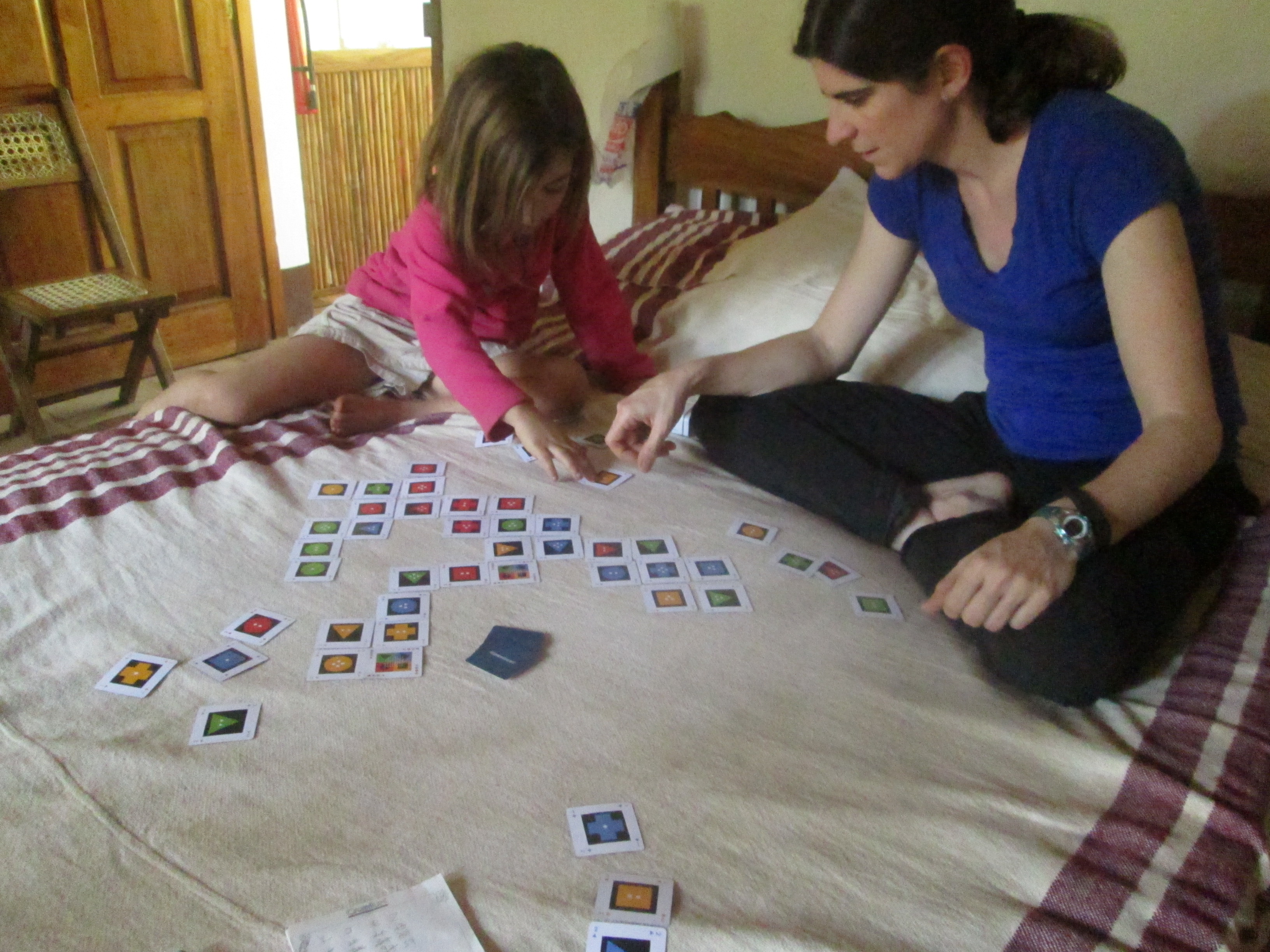
It was not all work, though.  We got in a game of Iota, and girls finally found out that an ice cream cart swings by the front gates most days at about lunch time.

P1000039


P1000036

The jig is up.  Ice cream can be had for Cordovas in the street.

The jig is up. Ice cream can be had for Cordovas in the street.

Final Iota tally: Bob, 123; Jen 148; Zoe 158; Lanie 186.

Final Iota tally: Bob, 123; Jen 148; Zoe 158; Lanie 186.

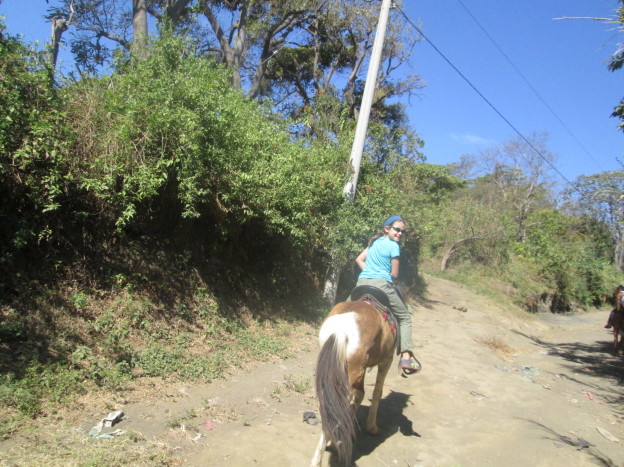
Nadia takes the family horseback riding

IMG_6489

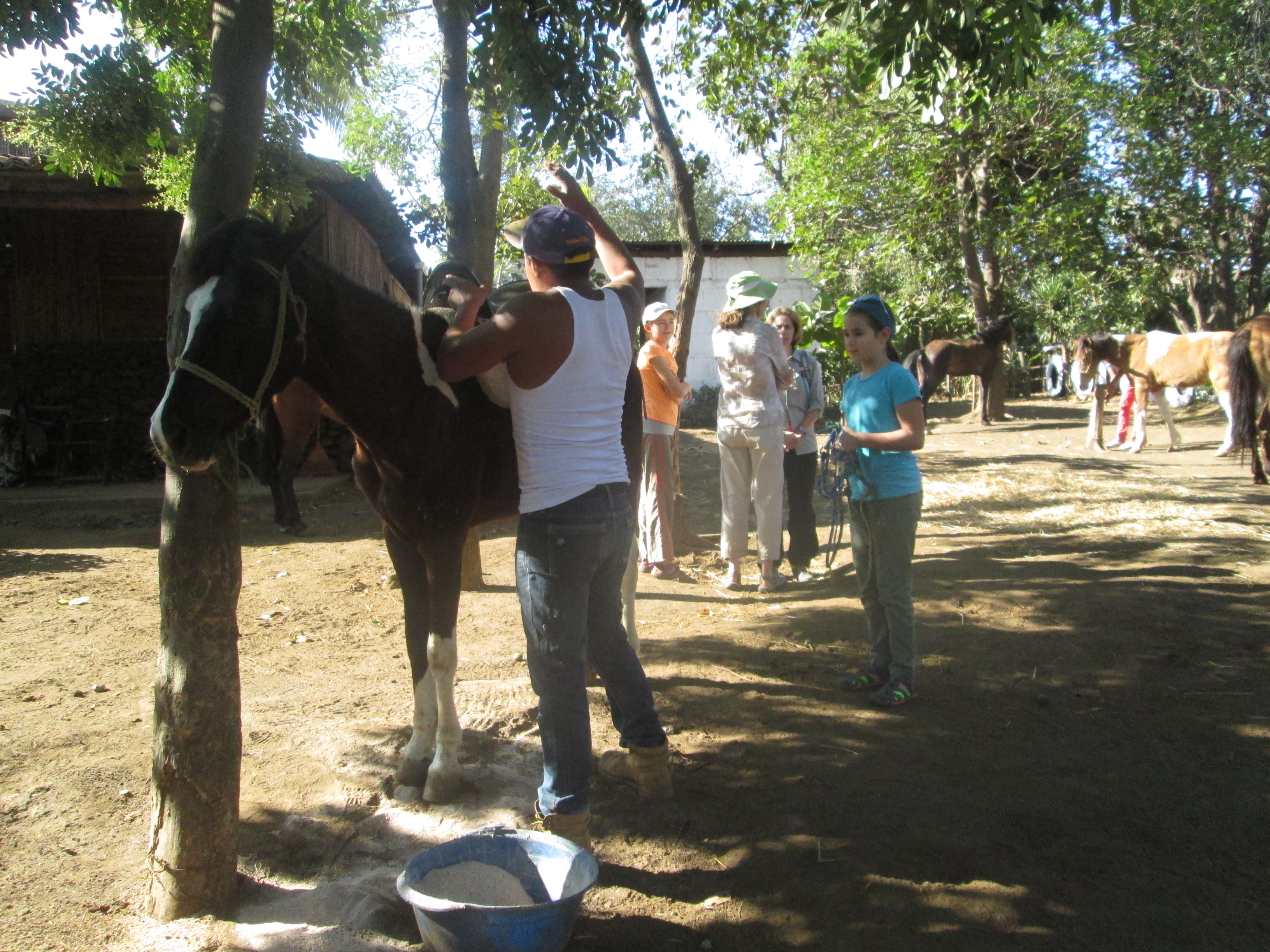
Nadia helps Ariel tack a horse called Karen.

From Nadia’s journal: Salir a caballo

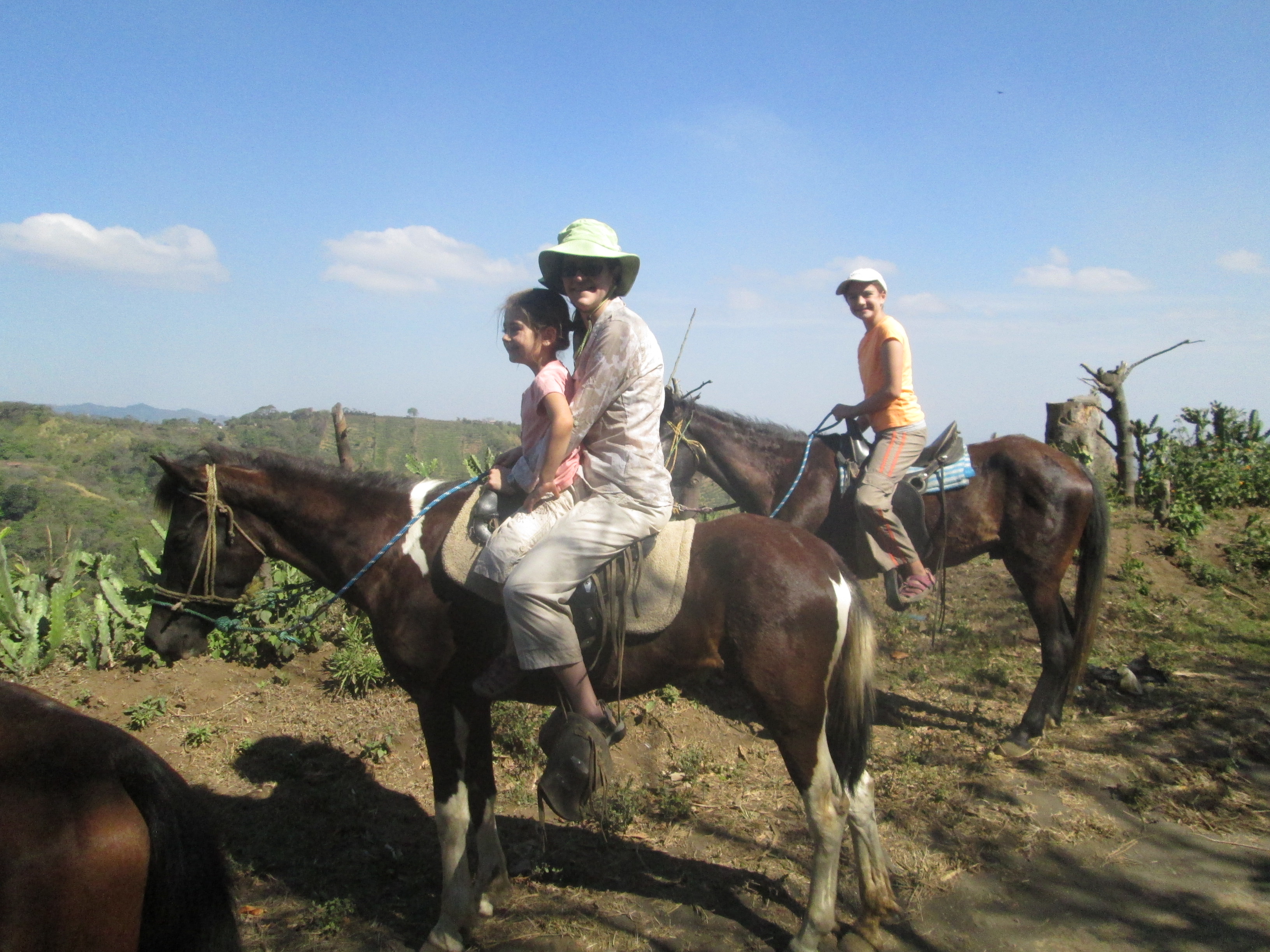
Today we went horseback riding. I rode a chestnut tobiano. A tobiano is when a horse is a solid color, in this case chestnut, with white patches. I rode in front because my horse was fast, and if another horse got in front of him, he would go faster to pass it.

We rode for about two hours. While we rode we saw a volcano with smoke coming out of its crater.

IMG_6498

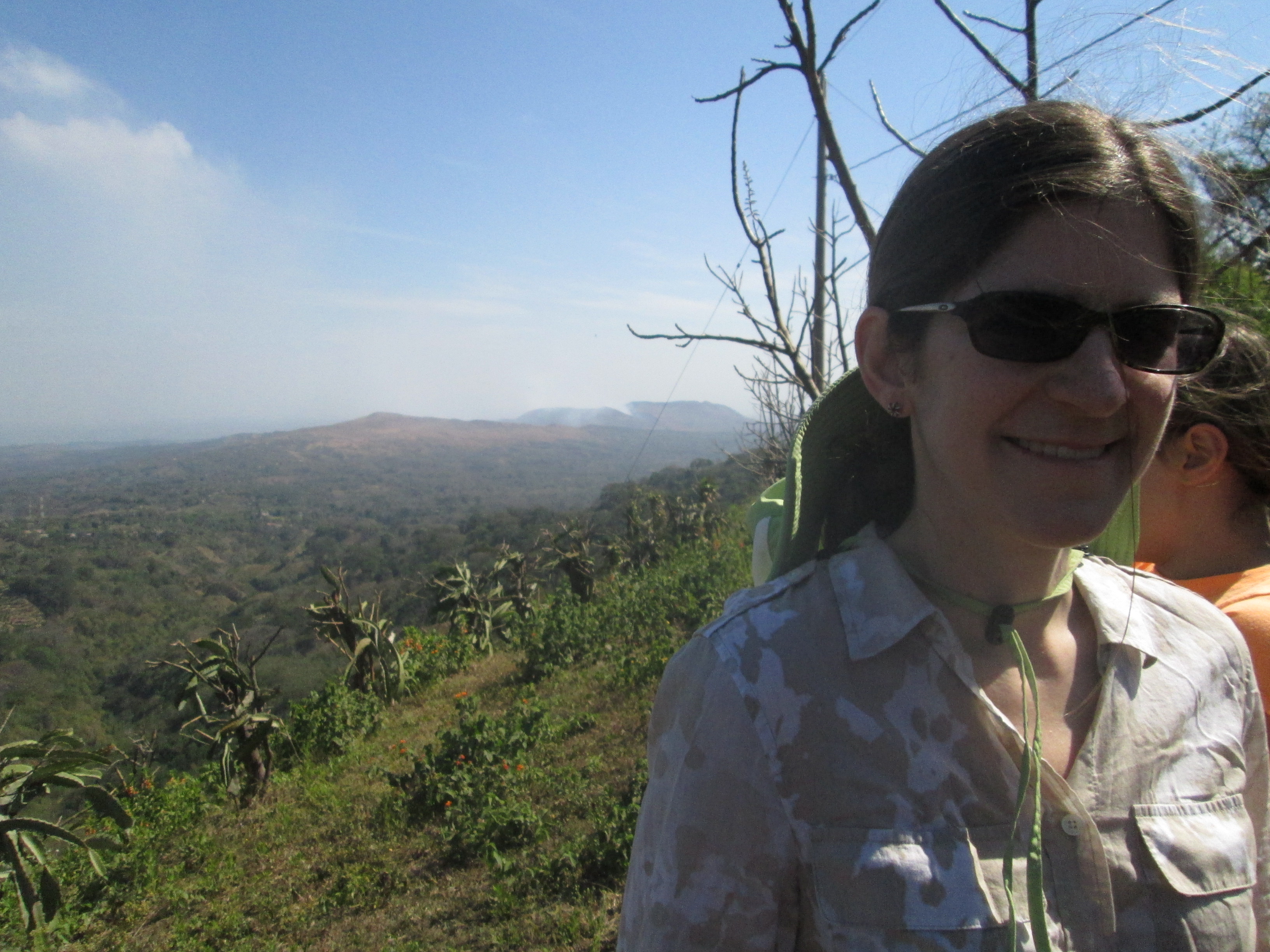
There’s the smoking crater, right over Jen’s shoulder. We visit that next week.

IMG_6494

At the top of the mountain, above a valley full of pineapple and dragon fruit farms.


IMG_6507

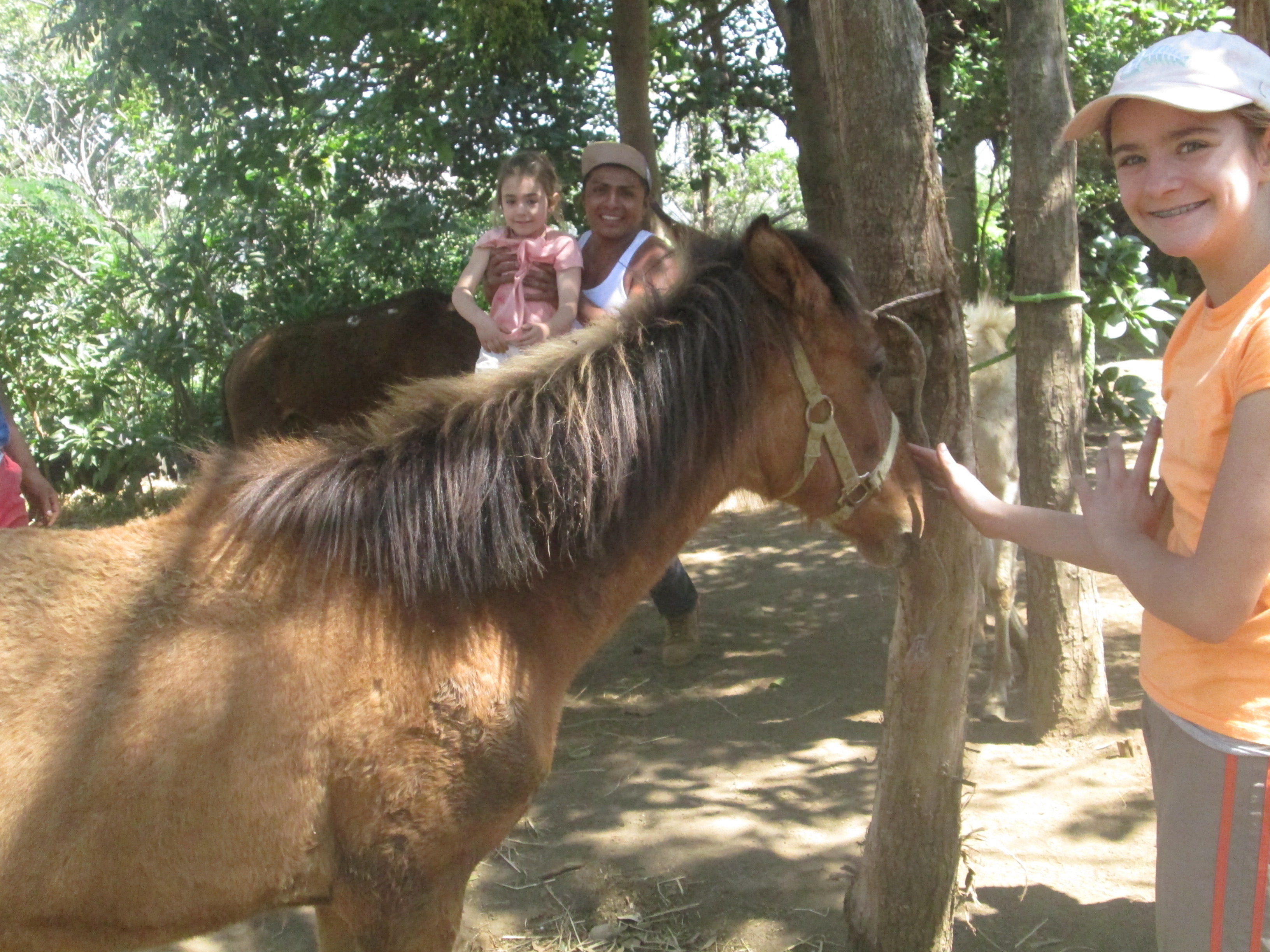
Lanie gets a lift onto Nacho the colt.

After that, I got to meet a five-month-old albino foal and sit on a seven-month-old colt named Macho. Macho was brown with a black mane and tail and a star and a snip. He was realy nice.

Lanie’s take on Nicaraguan Food

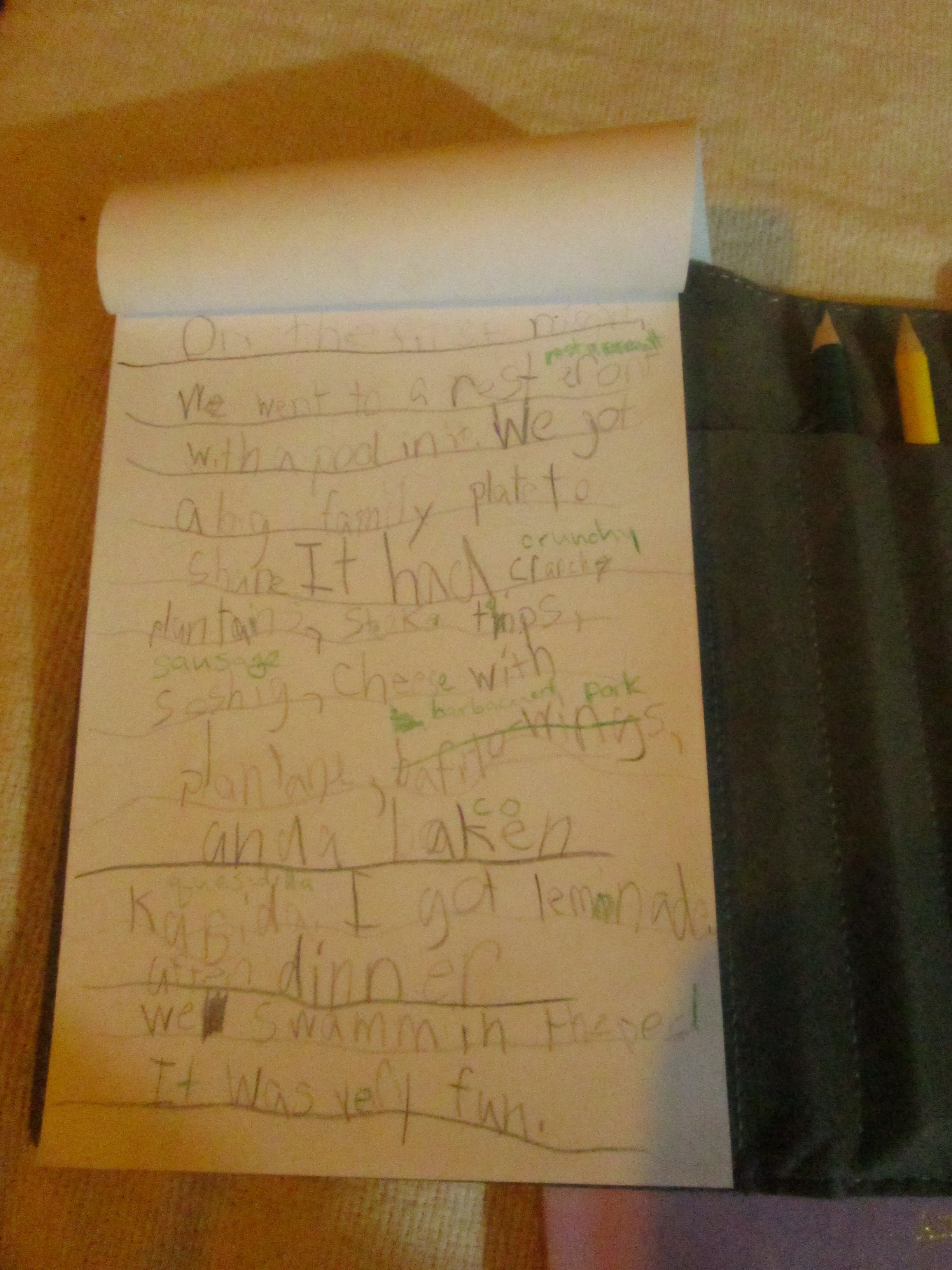
Excerpt from Lanie’s journal:  Day 2, the restaurant with a pool

Fun fact: This is actually Lanie's third journal entry.  She currently leads the family in journaling.

Fun fact: This is actually Lanie’s third journal entry. She currently leads the family in journaling.

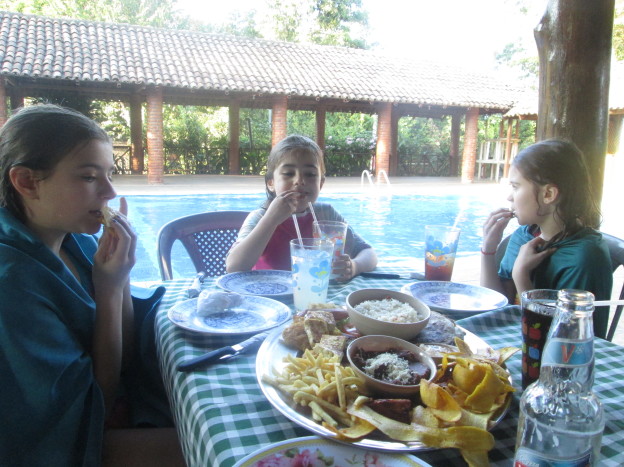
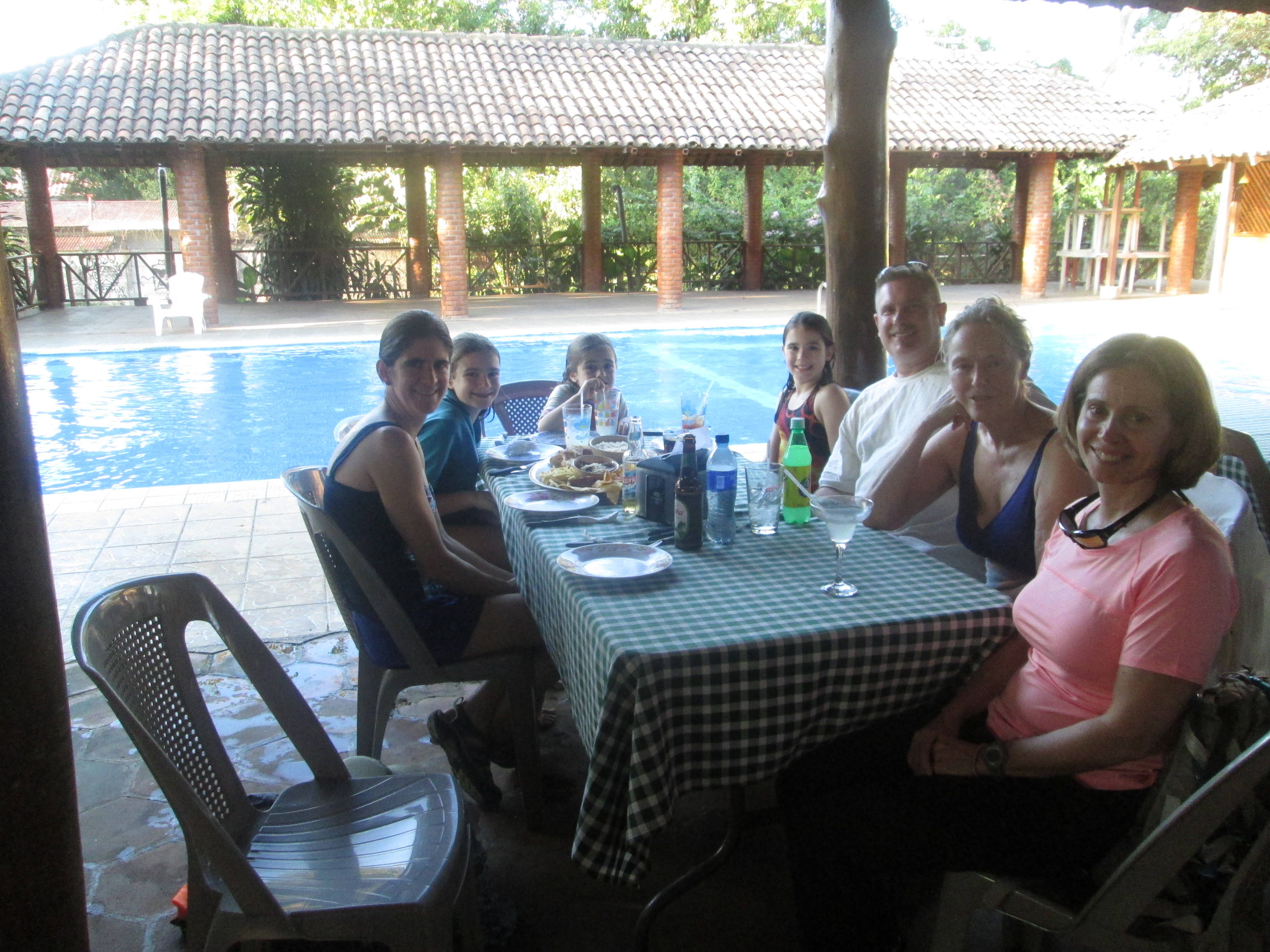
On the first night we went to a restaurant with a pool in it. We got a big family plate to share. It had crunchy plantains, steak tips, sausage, cheese with plantain tostones, buffalo wings *, and bacon quesadilla.

I got lemonade.  After dinner we swam in the pool.**  It was very fun.

* It was actually barbecued pork — Ed.
** Lanie and several others swam before dinner as well — Ed.

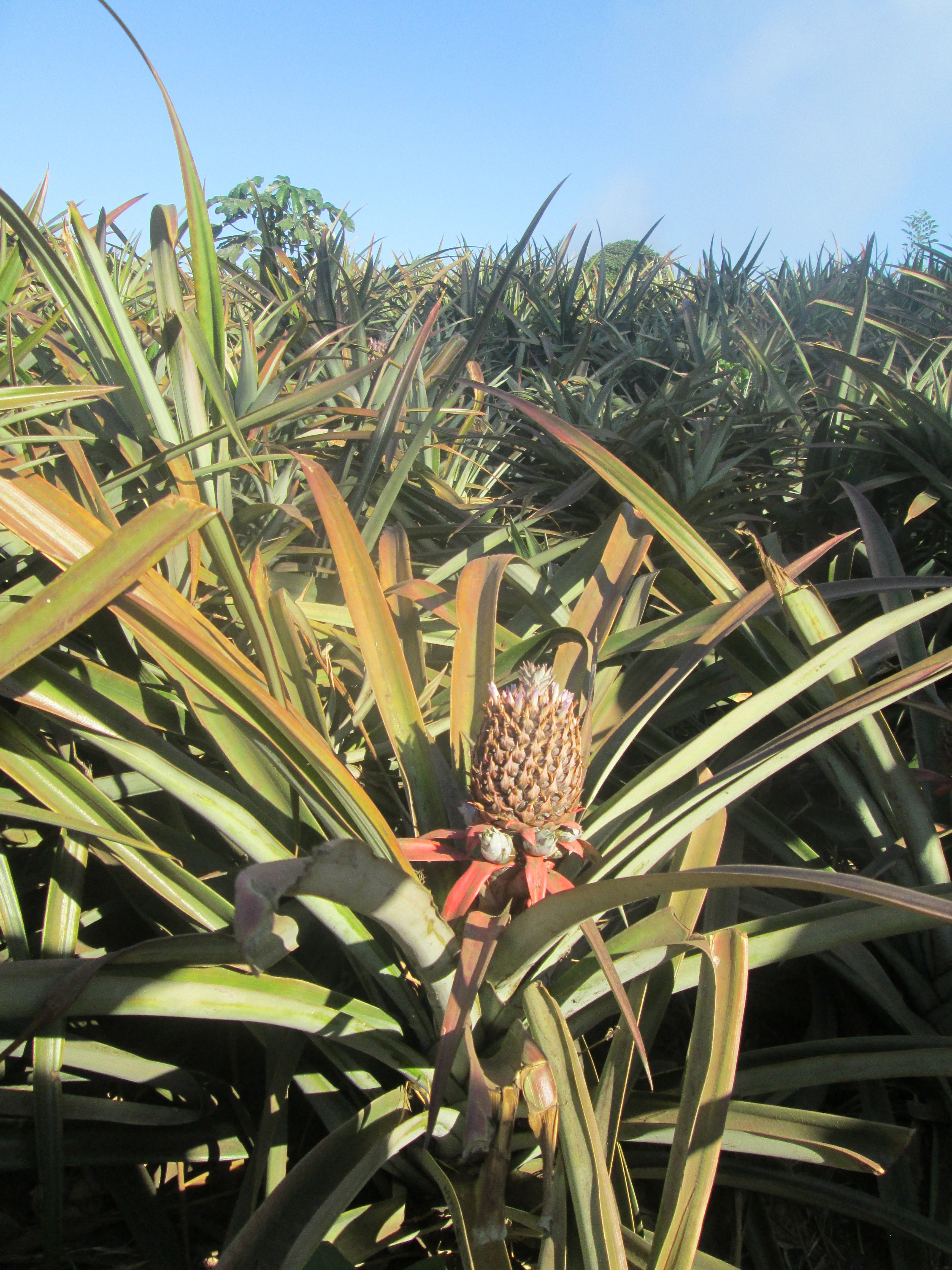
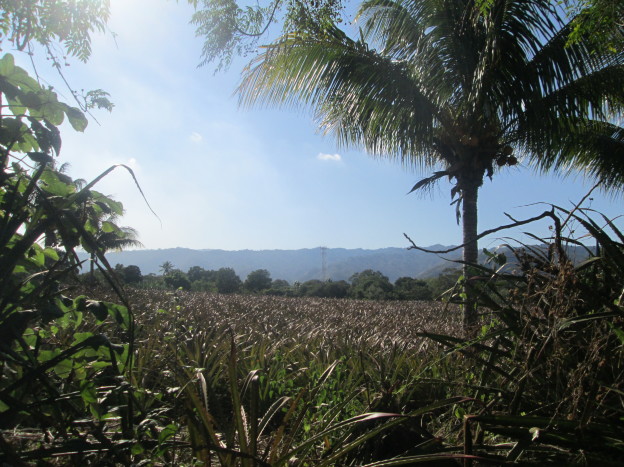
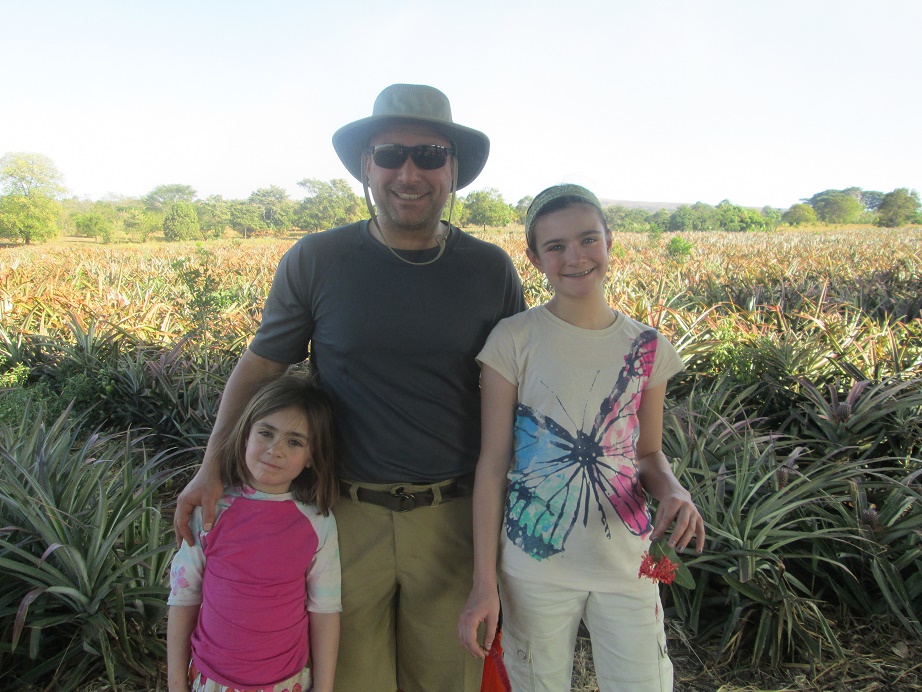
Zoe’s view of the pineapple farm

Excerpt from Zoe’s journal: Day 2, La Finca de Pina

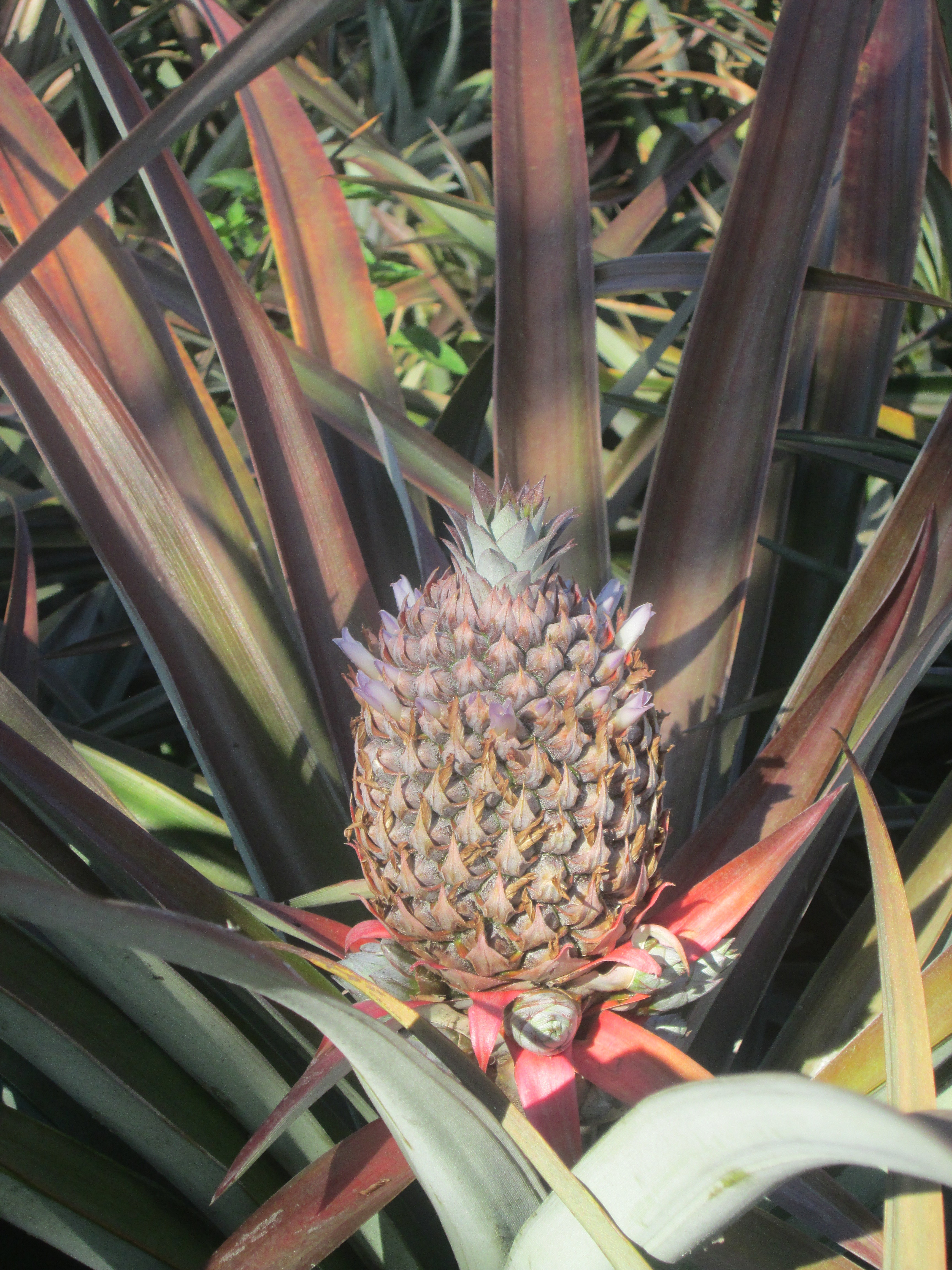
Yesterday we went on an excursion to a pineapple farm. I always imagined pineapples growing on trees, but they don’t. They grow on small plants that have lots of long arms sticking out like yucca or aloe. The pineapple looks like it doesn’t belong on the plant. It perches on top, in the center of the plant.

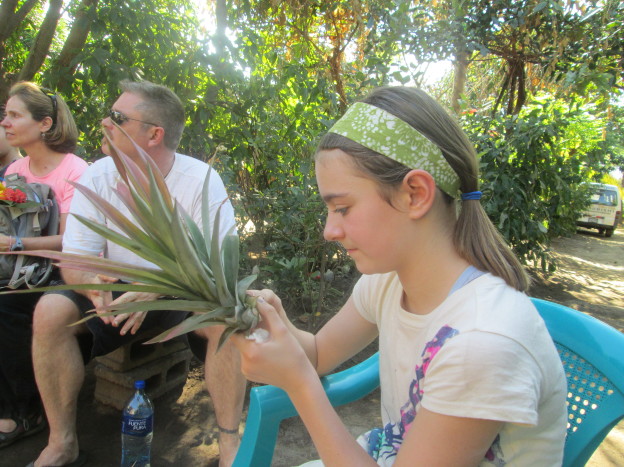
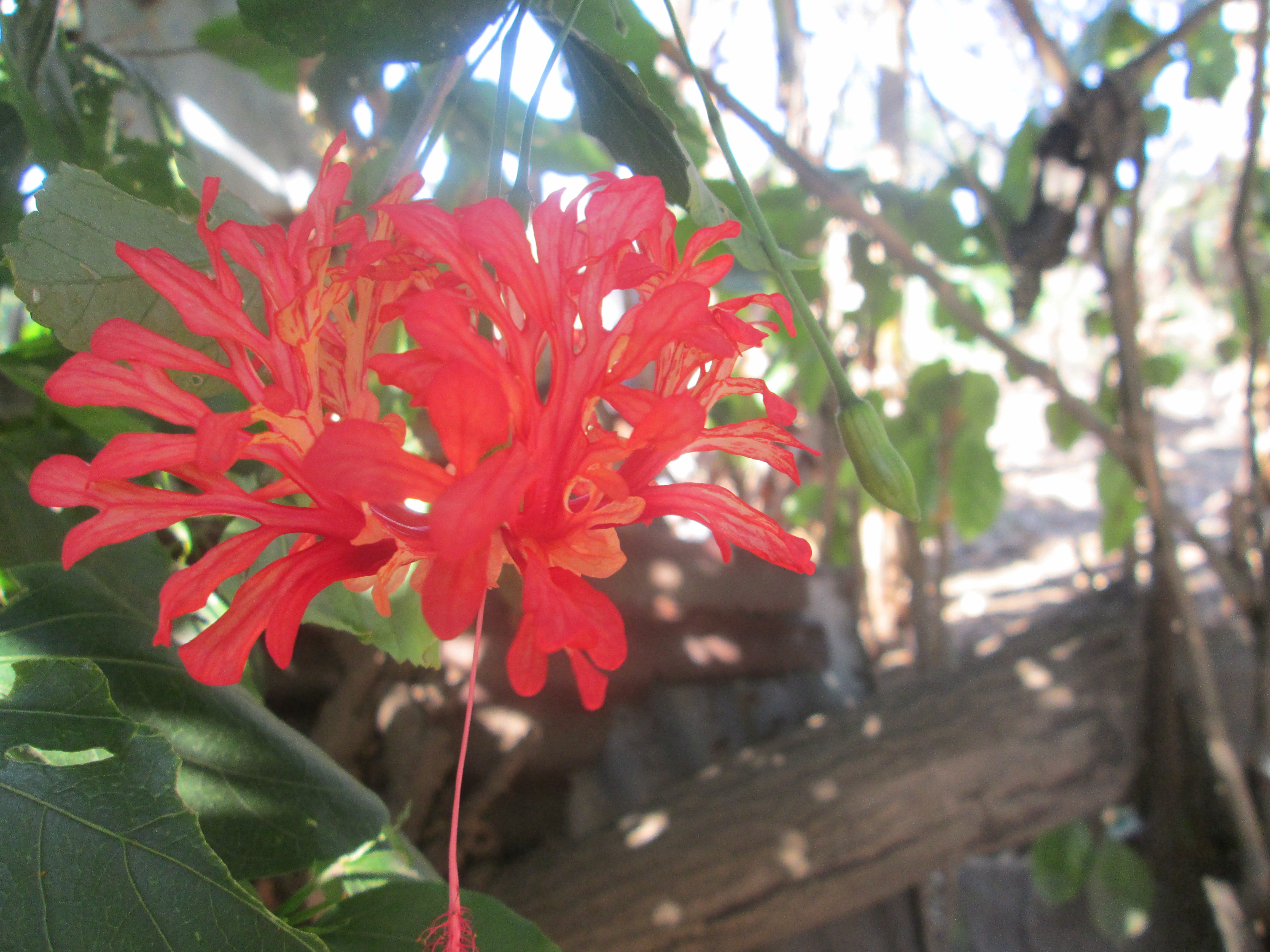
IMG_6360 The pineapple farmer told us all about how pineapples are gown. he spoke only in Spanish, so someone who came with us from La Mariposa translated for us. There were lots of exotic flowers around. The farmer picked some and gave them to us. One of them was really strange looking. It hung upside down from its plant and had a long tail hanging down with a tassel-y thing at the end.

At the end of the tour we got some pineapple samples. The pineapple was a different kind than what we eat at home, much softer.  It was lighter color and very sweet and juicy. it was very good.

I learned that farmers have to wait a year and a half to get the first fruit from a pineapple plant and even more time to get the second. I will think differently when I eat a pineapple from now on.

IMG_6346

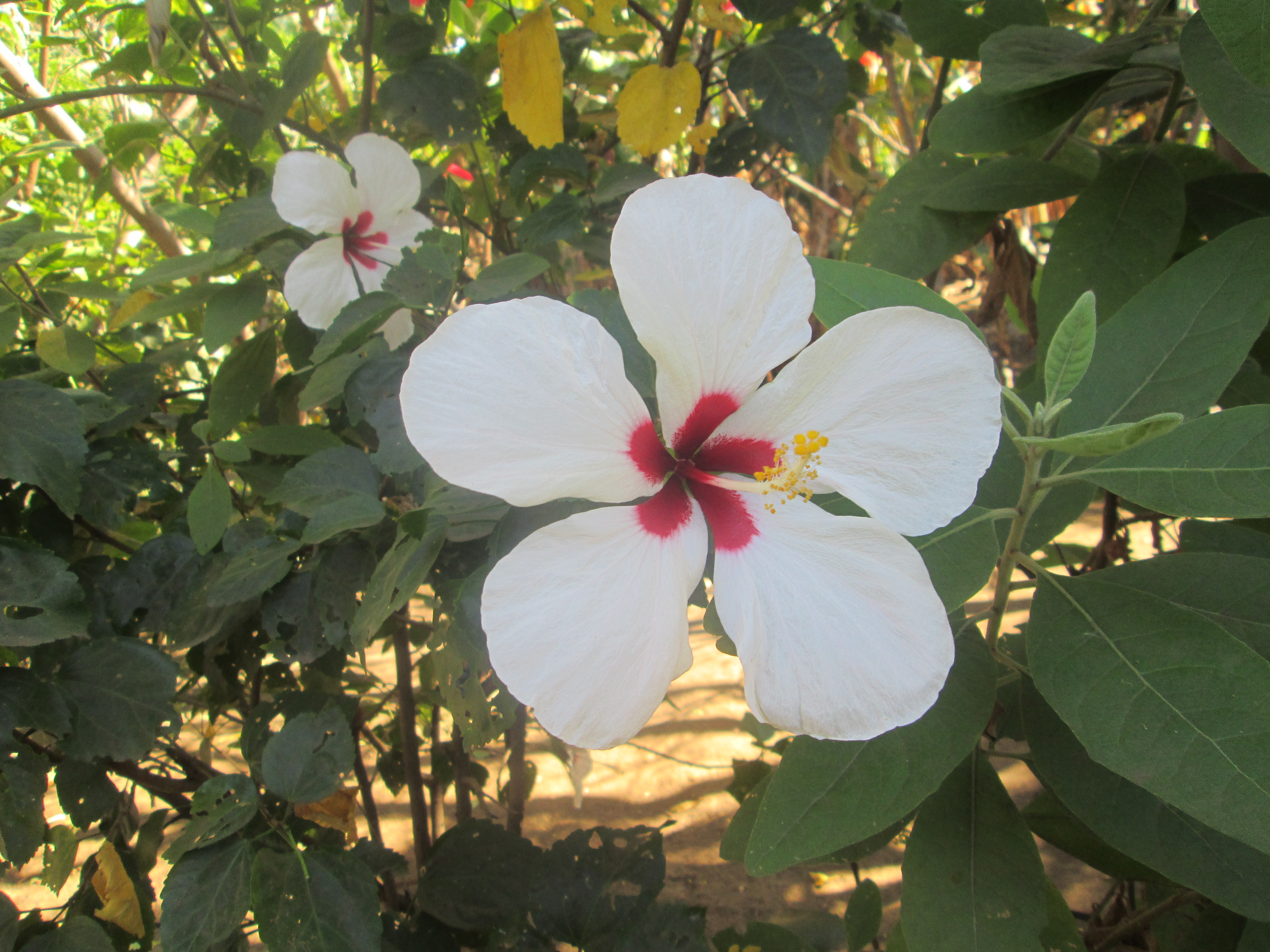
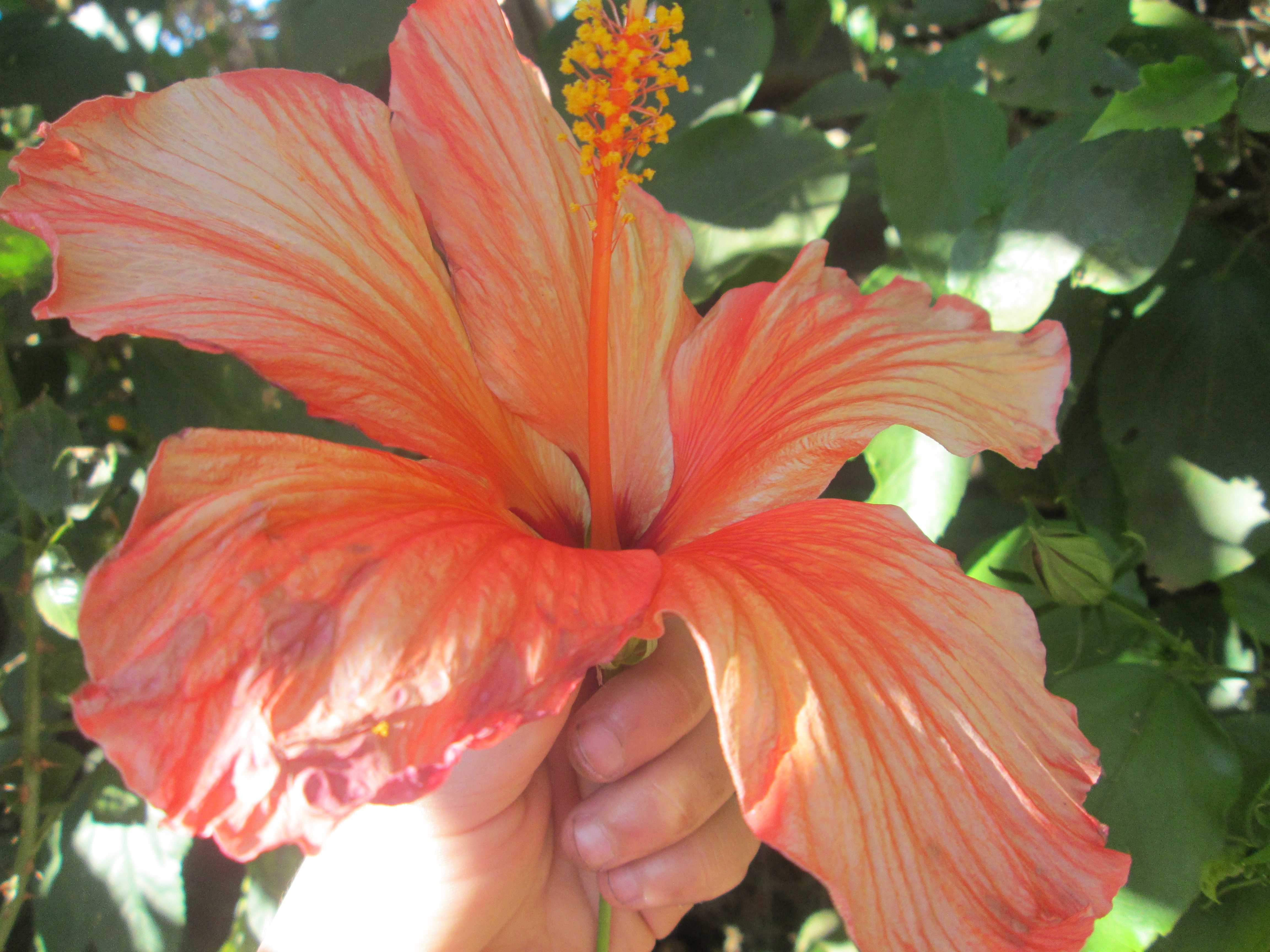
Some more flowers from farmer Wilmer’s garden.IMG_6342

Carriages, towers, and chocolate – oh my!

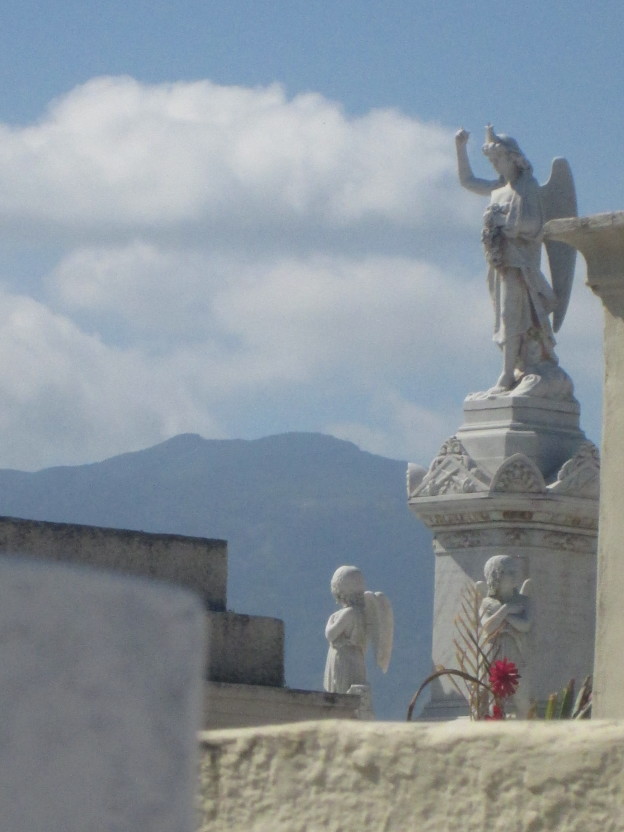
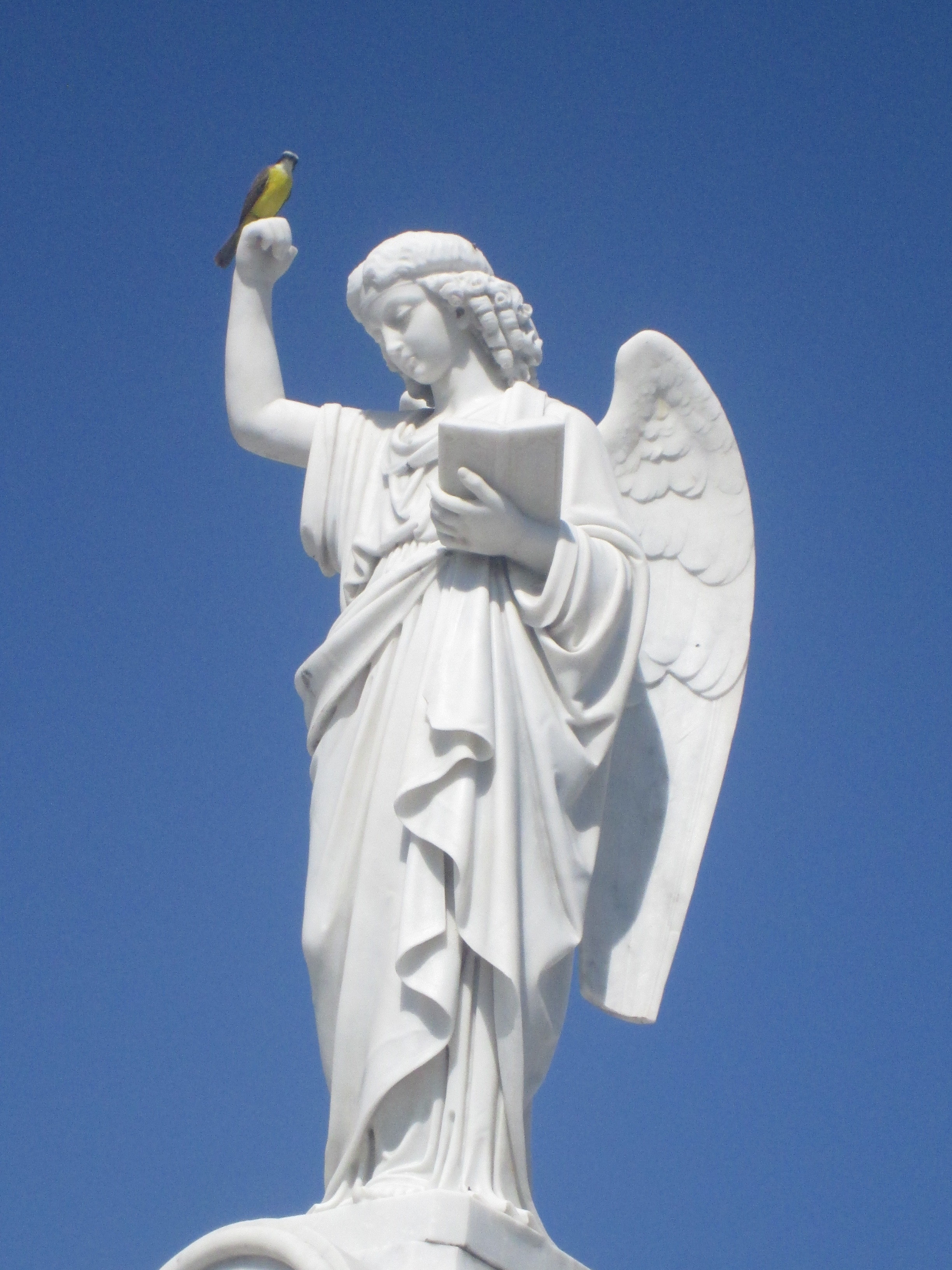
Granada cemetery (that's a real bird!)

Granada cemetery (that’s a real bird!)

On Saturdays La Mariposa offers up full-day excursions for those with enough energy to take them on.  Accordingly, yesterday at 8 am we were piling into the butterfly-festooned van for a trip to the city of Granada.

The trip took about an hour in the van, but the girls kept themselves entertained by playing “Stop the Bus” through the whole alphabet.  (This game involves thinking up three categories, then picking a letter and seeing who can first think of something in each category that starts with that letter.)  Before long the whole back half of the van (none of whom were under 50) were playing along.  The nice elderly British gentleman sitting next to Zoe got quite enthusiastic and won several rounds before his wife told him to cut it out.  (His entries for “book character” were things like “Agamemnon” and “Beowulf,” while the rest of us were basically coming up with Harry Potter characters.)IMG_6428

Granada is a lovely Colonial-era city, with palm-lined boulevards and brightly-colored houses.   One side is bordered by the enormous Lake Nicaragua, so big that it looks like an ocean.  Another has the Mombacho volcano looming up over it.   Almost every building seems to have a beautiful open-air courtyard at its center, filed with greenery and sunshine and blue sky.

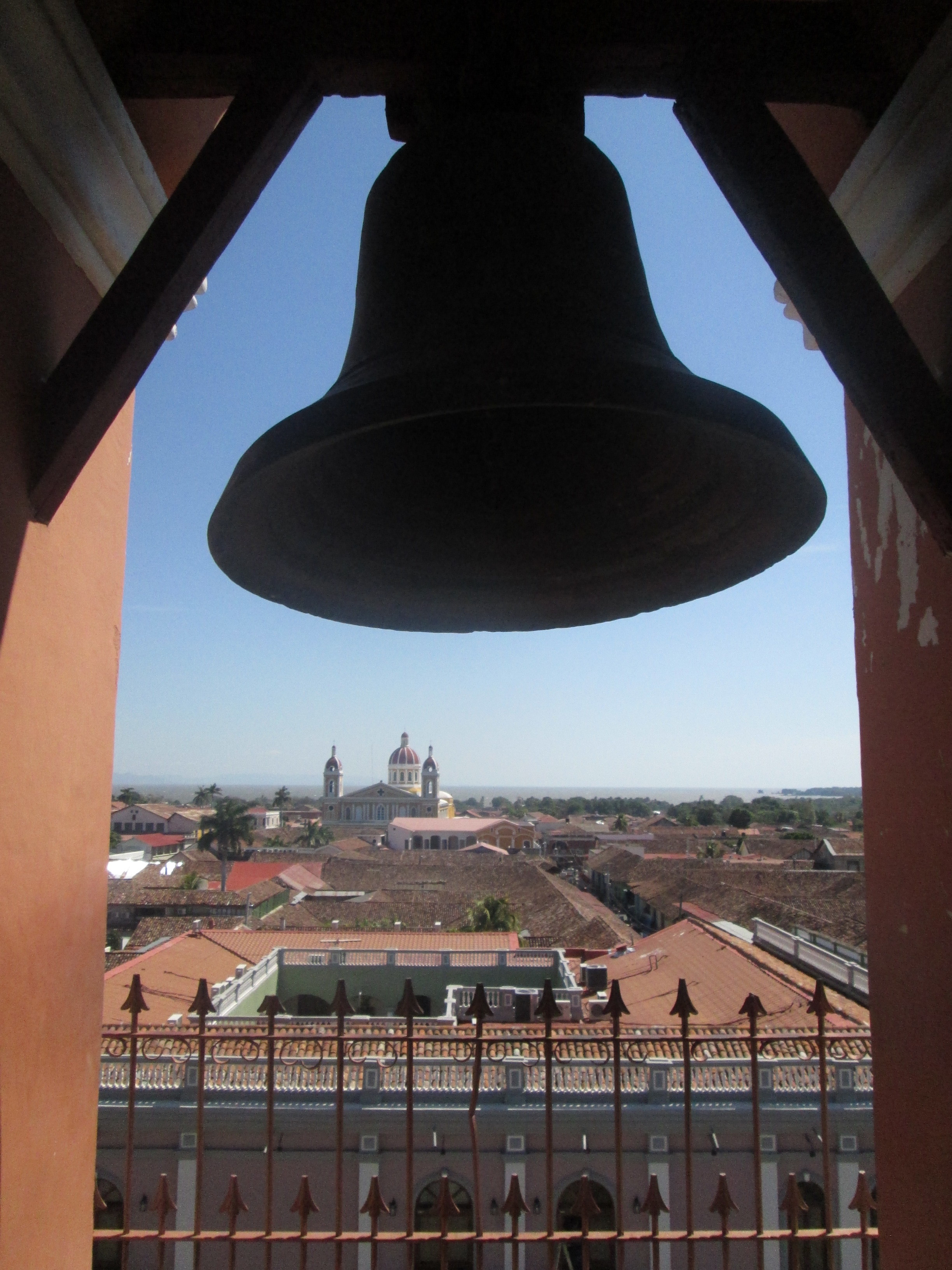
Bell tower at La Merced

Bell tower at La Merced

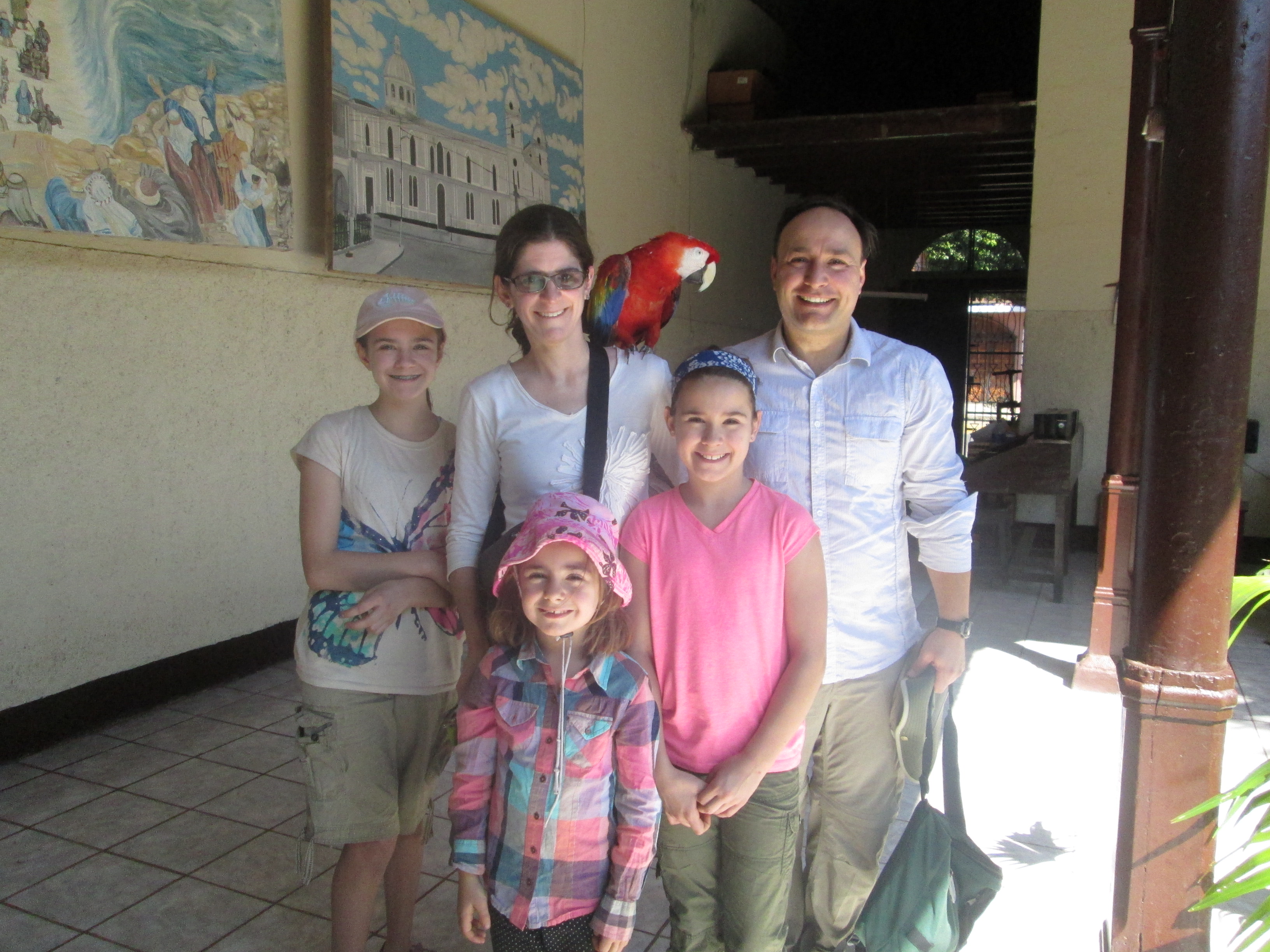
It’s probably the most touristy spot in Nicaragua, and accordingly has a lot of tourist activities.  For the first part of the day, Richard from La Mariposa showed us some highlights — a gorgeous cemetery where the rich are buried (“mucho dinero”), an old fortress, the Colonial Merced church, where we could climb up in the bell tower and see sweeping views of the city.  Our family almost decided to skip out on the cigar factory tour, but in the end it was lucky we didn’t.  The “tour” consisted of a quick stop to watch two people rolling and wrapping cigars, but Lanie managed to charm the workers enough that when she noticed a huge parrot in a cage in the courtyard, they took him out and let him sit on our shoulders (adults only, sadly).

IMG_6443We did break off before the next museum, choosing a horse-drawn carriage ride around the city instead.  Our driver initially stopped at most of the places we’d already visited with Richard, but the girls just took the opportunity to get out and pet the horses (who incidentally were named “Mercedes” and “Benz”).  He also brought us down to the shore of the lake, where powerful winds swept into the city and whipped the water into whitecaps (making me glad we’d decided to skip the rather expensive boat tour later that afternoon).
We met up with the group again for lunch, and the restaurant did not seem well-equipped to deal with a group of our size.  Our food came at wildly varying times, and poor Lanie (who’d ordered the simplest of meals, pancakes) didn’t get her food for an hour and a half, after everyone else had finished (and I had reminded the waitstaff three separate times).  However, it was popular with Zoe, who’s grown a bit tired of rice and beans and greatly enjoyed her bacon cheeseburger.

Botta botta chocolatta!

Batta batta chocolatta!

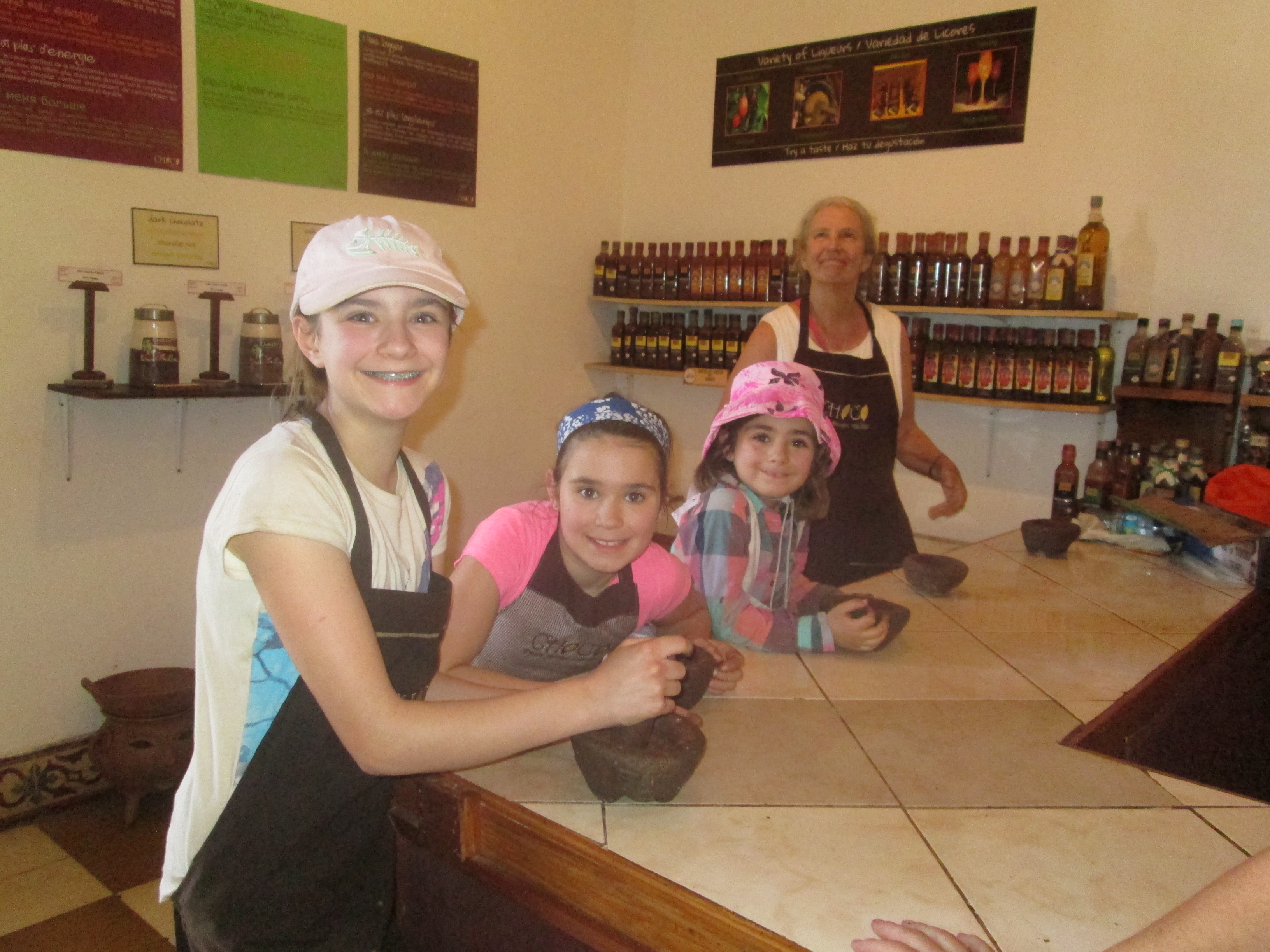
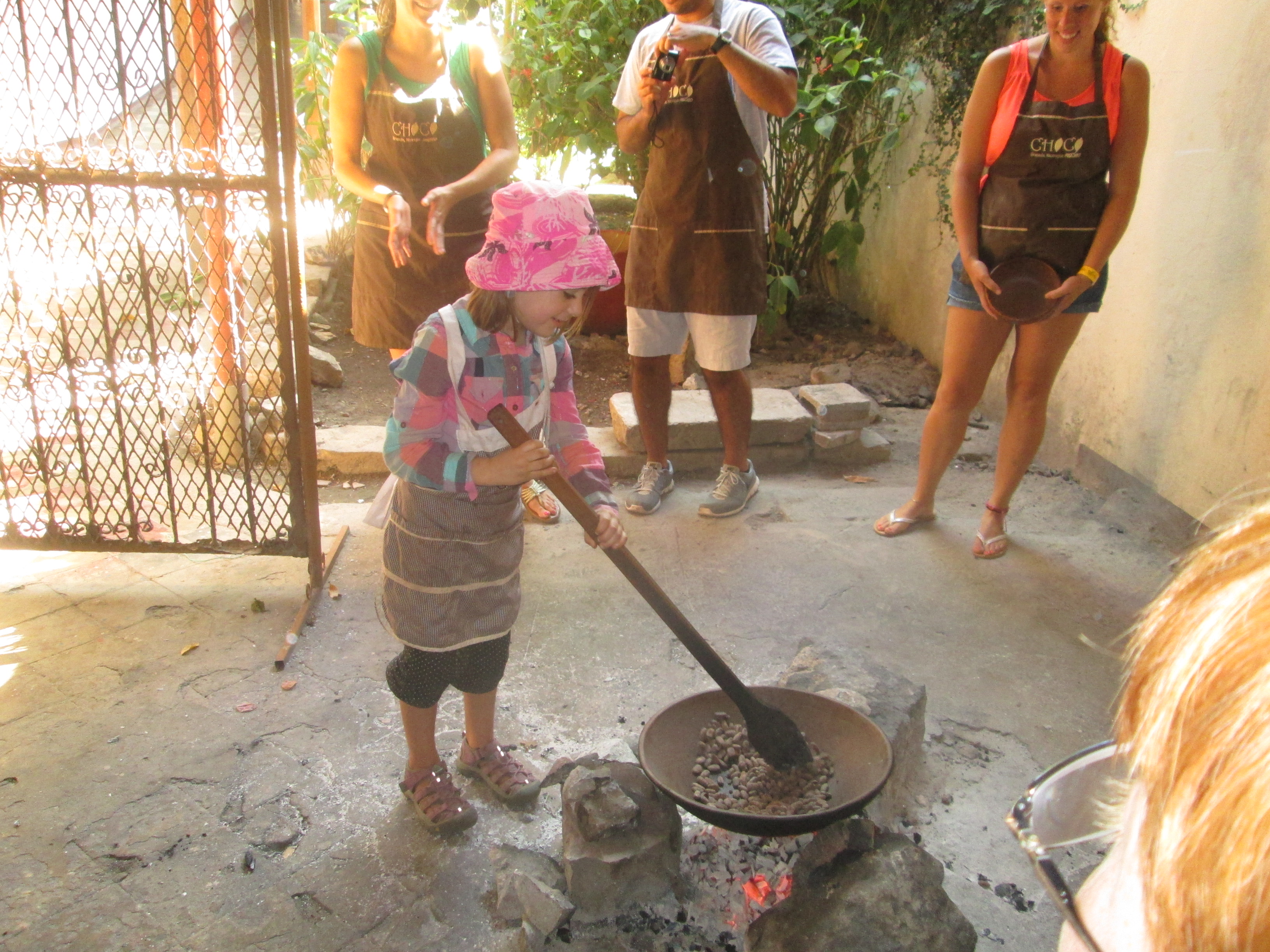
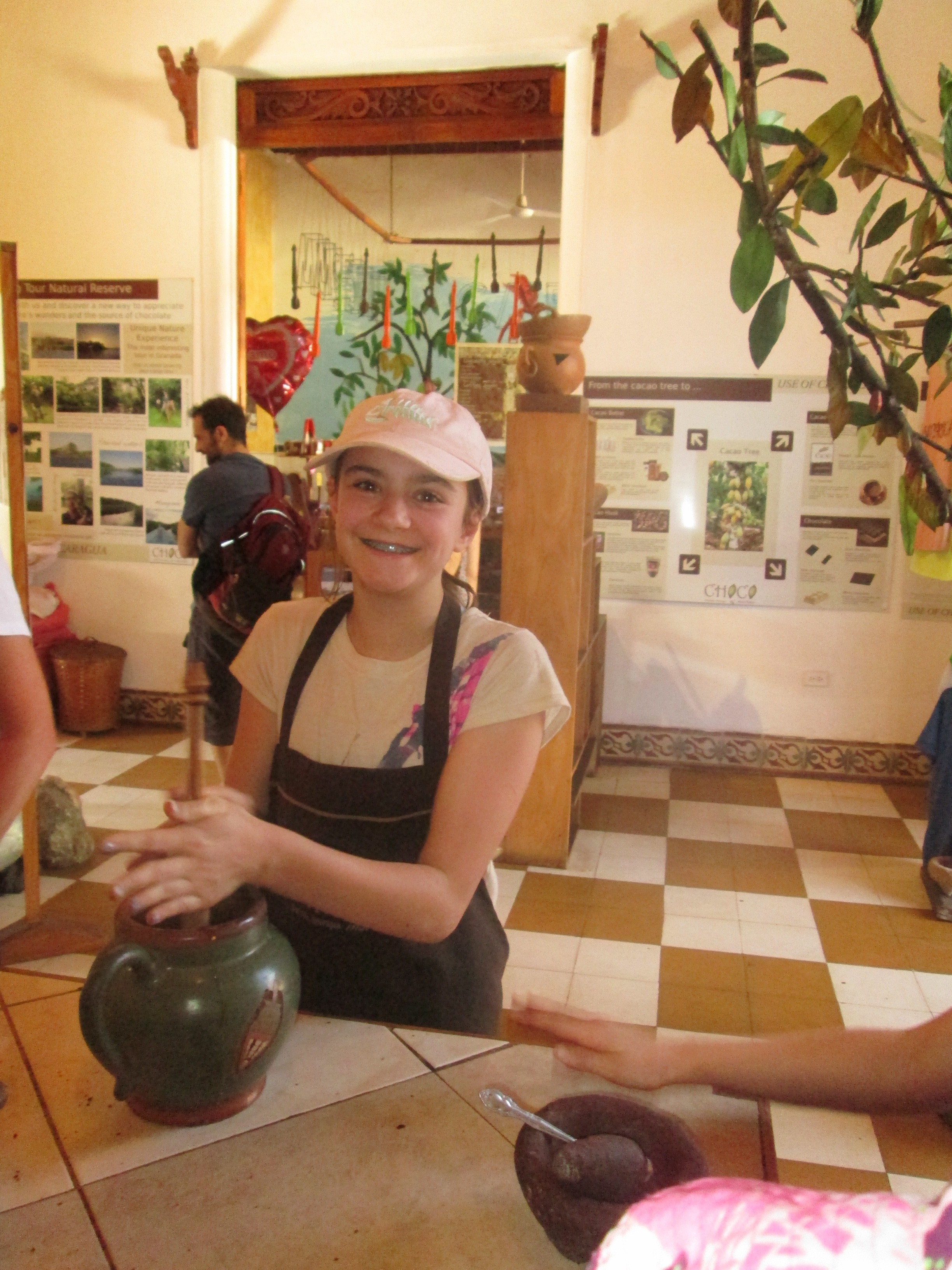
Friday I googled, “what to do in Granada with kids” and one thing that kept popping up was the Choco Museo.  We mentioned this on the van ride in and many in the group seemed very interested in the idea.  In the end, Jane from Colorado decided to skip the boat ride and join us.  We arrived just in time to join in the 1.5-hour chocolate-making class, and soon we were wearing aprons and dancing around a fire chanting, “Batta batta chocolatta” (or something along those lines) while we stirred the roasting beans,  After we shelled them and ground them to paste with our mortars and pestles, the teacher used the paste to make two drinks — one like the Aztecs used to prepare (with honey, hot water, cinnamon, and chili pepper), and the other in the Spanish tradition (with sugar, hot milk, cinnamon, and vanilla).  And the crowning glory was when we were each given a bowl of chocolate and allowed to pour our own bar, mixing in our choice of a wide range of ingredients.  (Lanie went with peanut butter/marshmallow/sea salt, and Zoe and Nadia had some sort of concoctions involving coffee and cinnamon.)  The variety of chocolate down here is different than what we’re used to, but very good.  Even the roasted beans plain were pretty tasty.

IMG_6476 IMG_6474


Disaster threatened when he told us to return for the bars in an hour and a half, and we needed to meet our bus in 20 minutes.  Luckily, a quick trip into the freezer allowed them to expedite the process for us.  We made it back to the van only a few minutes late (and considerably stickier).  The boat trip people all regarded us enviously.

IMG_6469

It’s all tranquilo

Are we jumping into this head-first or not? It’s true that the going to the Mariposa School is a good way to ease ourselves into Central America. Most of our needs are taken care here at the school, and the excursions into the countryside are set up for us. There are plenty of people around for support.

Still we found ourselves yesterday, less than 24 hours after landing in the country, standing in the middle of a pineapple farm trying to follow along as Wilmer the campesino described (in Spanish) the ins and outs of the citrus economy of the region.

A little later on we were in a restaurant with a swimming pool, trying to decide whether it costs 200 Cordovas to swim in the pool or if you could swim in the pool if you spent 200 Cordovas on food (we’re pretty sure it was the latter, but the placard on the table was a little opaque). Our tour guide/translator had taken off on his motorbike and our driver stayed in the van. It was up to us to make our way through the dinner. Quite surpising to me, I was the most seasoned Spanish speaker (our group contained three extra adults aside from the five members of our family, but apparently they all took French in high school).

I had to come up with the questions for the waitress and manager, such as:
Can we swim before dinner, or do we have to buy dinner first? (This was largely a moot point because Lanie was 3/4 of the way into the water before most of our group was out of the van.)
Can we pay in US dollars? With credit cards? Separate checks?  Yes, yes, and yes.

Ordering from the menu was fine, except that we all initially failed to translate chicken wings despite the presence of a picture of a chicken wing right there on the page. The food was great — we got a family plate of plenitude; other people got big bowls of meatball and vegetable soup. (More details on the meal to come.)

It was my great pleasure when the manager hailed me as “Jefe” (“Chief” — I was chief among the foreigners this day), even though he continued to address me with a concern. Our driver had departed to run an errand and the manager seemed worried that we were going to stay in the restaurant all night. Indeed, the girls had become quite ensconced on the see-saws in the adjacent playground. On one hand, it was only 5:30 in the afternoon; but on the other, there were only two other customers in the restaurant besides us.  The Thursday evening dinner crowd didn’t seem to be happening, yet with a dynamic chief like me, our party could easily have lingered on well past 7:45, and the girls were going at the see-saws with gusto.

We worked it out. The driver returned, the bills got paid (fyi: in Nicaragua they add a 10-percent “voluntary gratuity” right onto the bill for you), and we were out by 6:15. As we pulled out of the driveway we saw them closing up the restaurant, even though the other two people were still hanging out at their table.

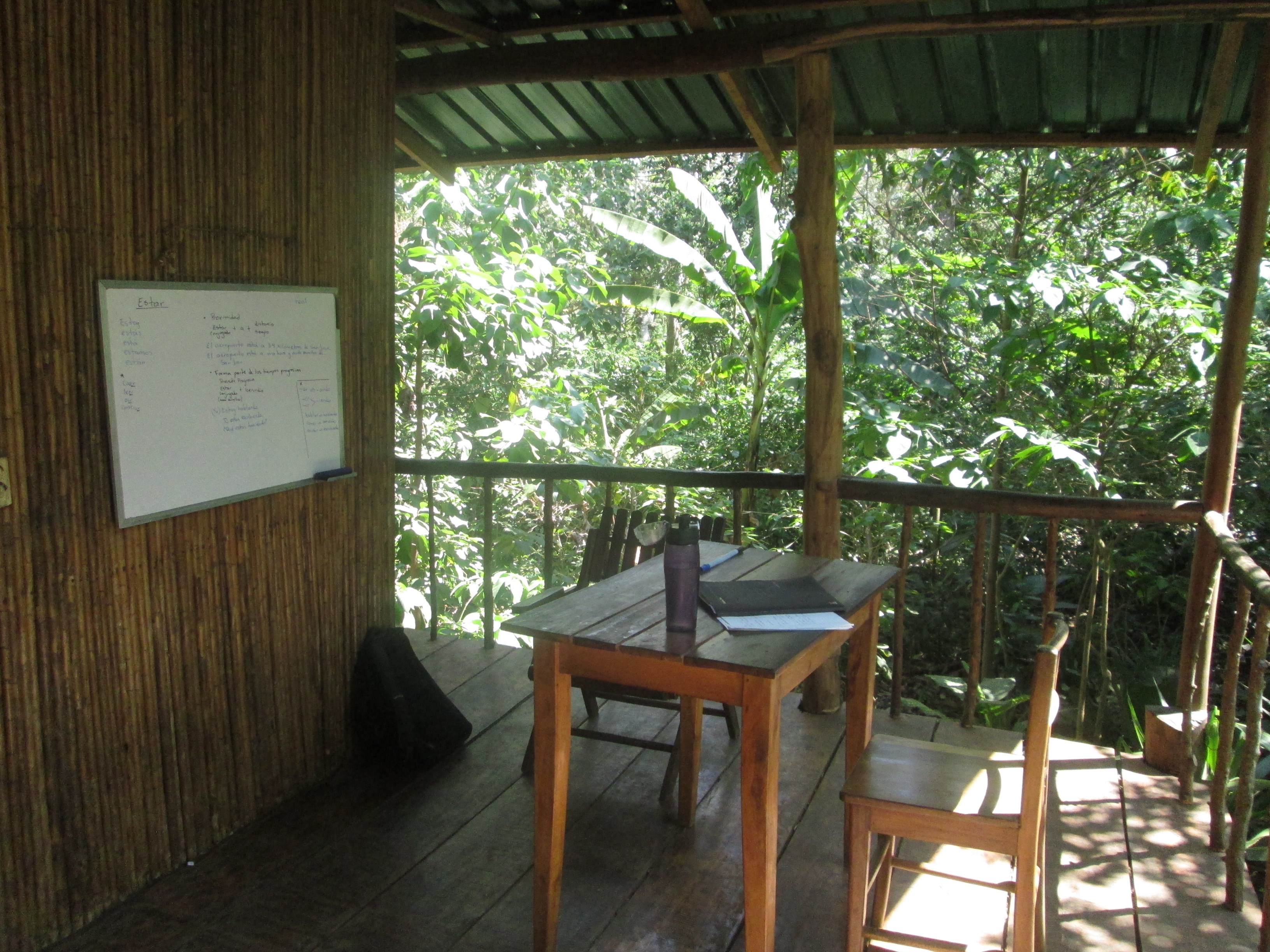
Jen's classroom today.

Jen’s classroom today.

Despite the manager’s temporary concern, it’s been pretty relaxed here. None of us panicked when the tour guide departed or when the driver and van took off. Nicaragua seems to value calmness. When someone asks how you are, you say “tranquilo”.

That sounds nice, doesn’t it?
We’re all tranquil down here.

IMG_6378

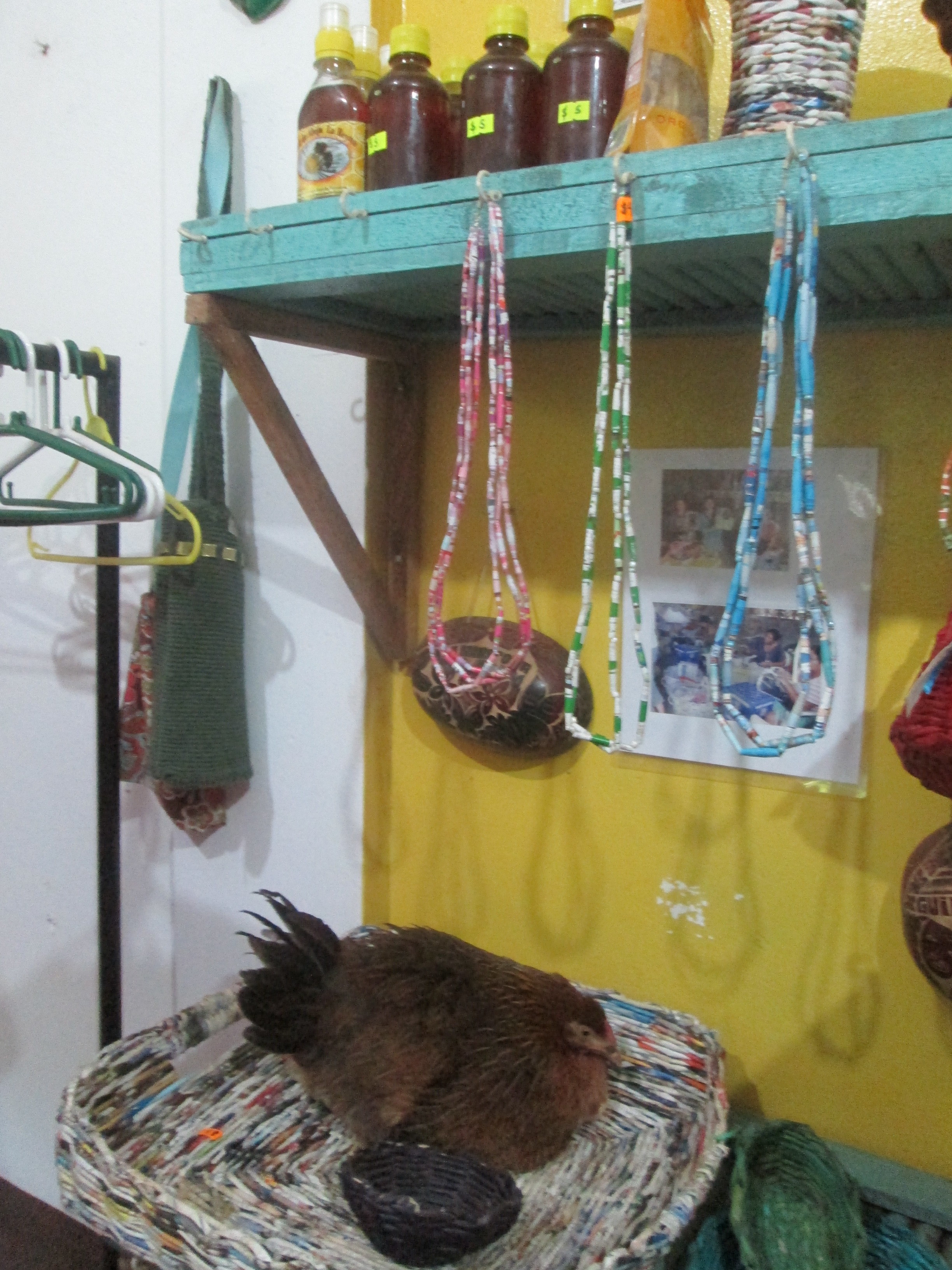
Aside from the dogs, there are chickens here, too, including this one, which lives in the library/gift shop.

Particularly today, our second day at La Mariposa.  Today’s Spanish classes were a little bit easier (despite my teacher’s assertions yesterday that they would be less “suave” after day one). No excursions planned for the afternoon.  We worked on homework and music lessons.

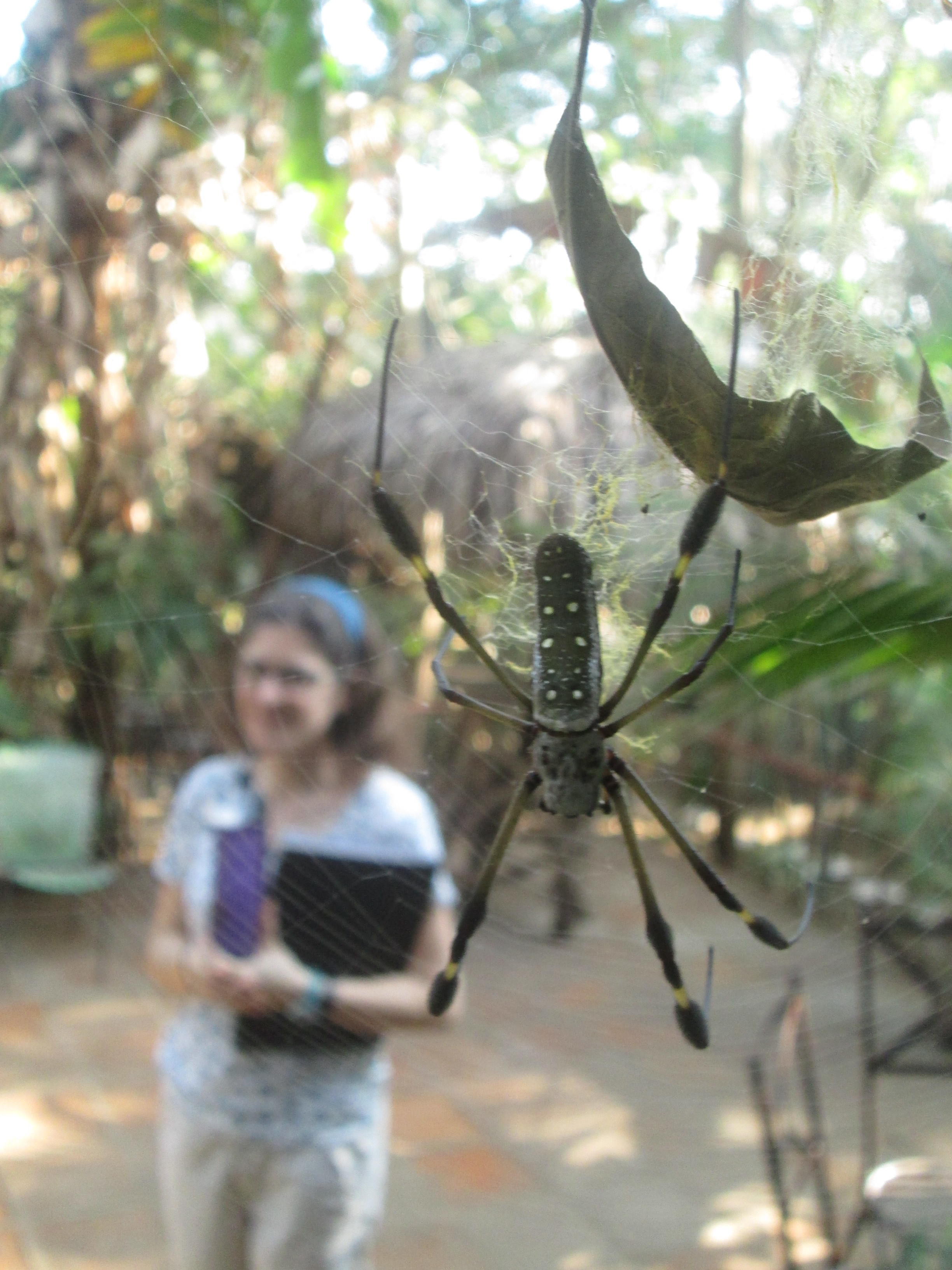
IMG_6381

This fellow also lives here, right next to the patio. It’s ok. The spiders here are tranquilo.

We had dinner at one of the big tables downstairs.  We played several rounds of Spot It!. We read a few chapters of The Prison of Azkaban.

Tonight I even took a shower and washed some clothes — at the same time!  Also at the same time I conserved water by letting it fall into a basin by my feet.  We’re supposed to use the water to help flush the toilet.  This would probably feel like a hassle at home, but not here. It’s tranquilo.

We did make one small excursion today, a quick walk into San Juan de Concepcion to check out a nature preserve.

We actually did make one small excursion today, a quick walk into San Juan de Concepcion to check out a nature preserve.

Day 1 at La Mariposa

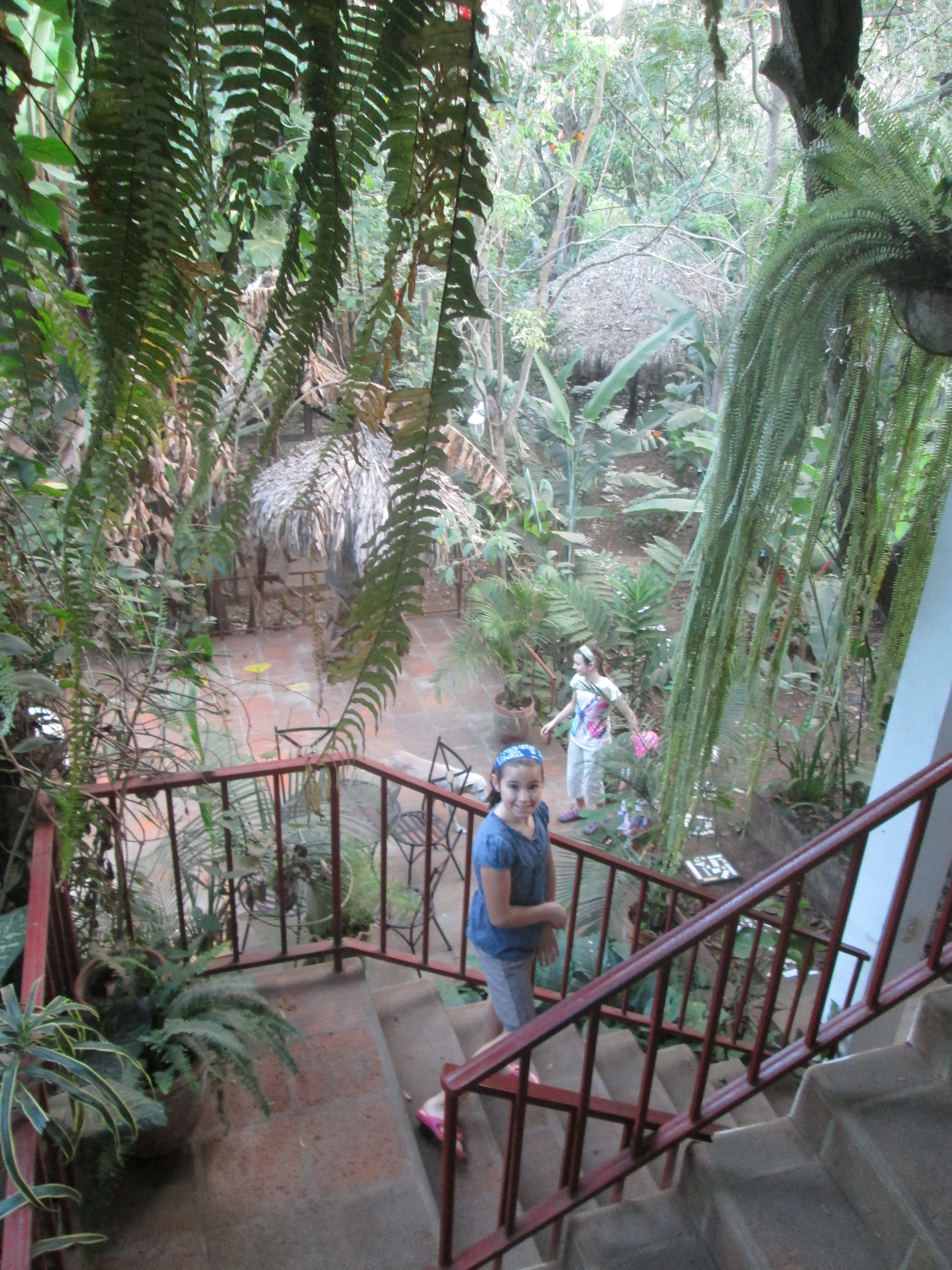
The girls head down the stairs from our room to explore

The girls head down the stairs from our room to explore

As peaceful as this place seems in the daytime, after dark the volume goes way up. Our first night’s sleep was repeatedly interrupted by birds squawking, dogs barking, and a rooster who crowed repeatedly ALL NIGHT LONG. (Last night we were smart enough to crank up the fan, not because it’s hot but to create some white noise.)

Despite this, Nadia and Lanie were up at 6am, clattering around unpacking their suitcases, looking out the windows, and talking in what they may have mistakenly believed were soft voices. Eventually we couldn’t contain them anymore and they, followed closely by Zoe, headed out to explore the gardens outside our room. There were large wire enclosures holding rescued birds and monkeys, and friendly dogs everywhere. (There are a lot of stray dogs here, and this place takes them in.) The grounds here are very secluded and private, and the kids have the run of the place. They were in heaven.

Bob is dutifully doing his homework right after class ended.  The rest of us procrastinated.

Bob is dutifully doing his homework right after class ended. The rest of us procrastinated.

At 7:15am we were called to breakfast. There are no other kids here at the moment, but in general everyone was very welcoming of them. (At breakfast time we were looking around for Lanie, to tell her to come and eat, and eventually found she was already at the head of the line, being helped by some random other guests.) Then it was time for Spanish class. The classes here are one-on-one, and we were each assigned two teachers — one for two hours of conversation practice, and one for two hours of grammar lessons. Then off we went with our teachers to separate corners of the compound. Our “classrooms” were little nooks with chairs and whiteboards tucked into the balconies and treehouses scattered through the grounds. The sun was shining, a breeze was blowing, and it didn’t feel much like work at all (except when I had to take a test that I’m sure I failed pretty miserably).

Not a bad life.

Not a bad life.

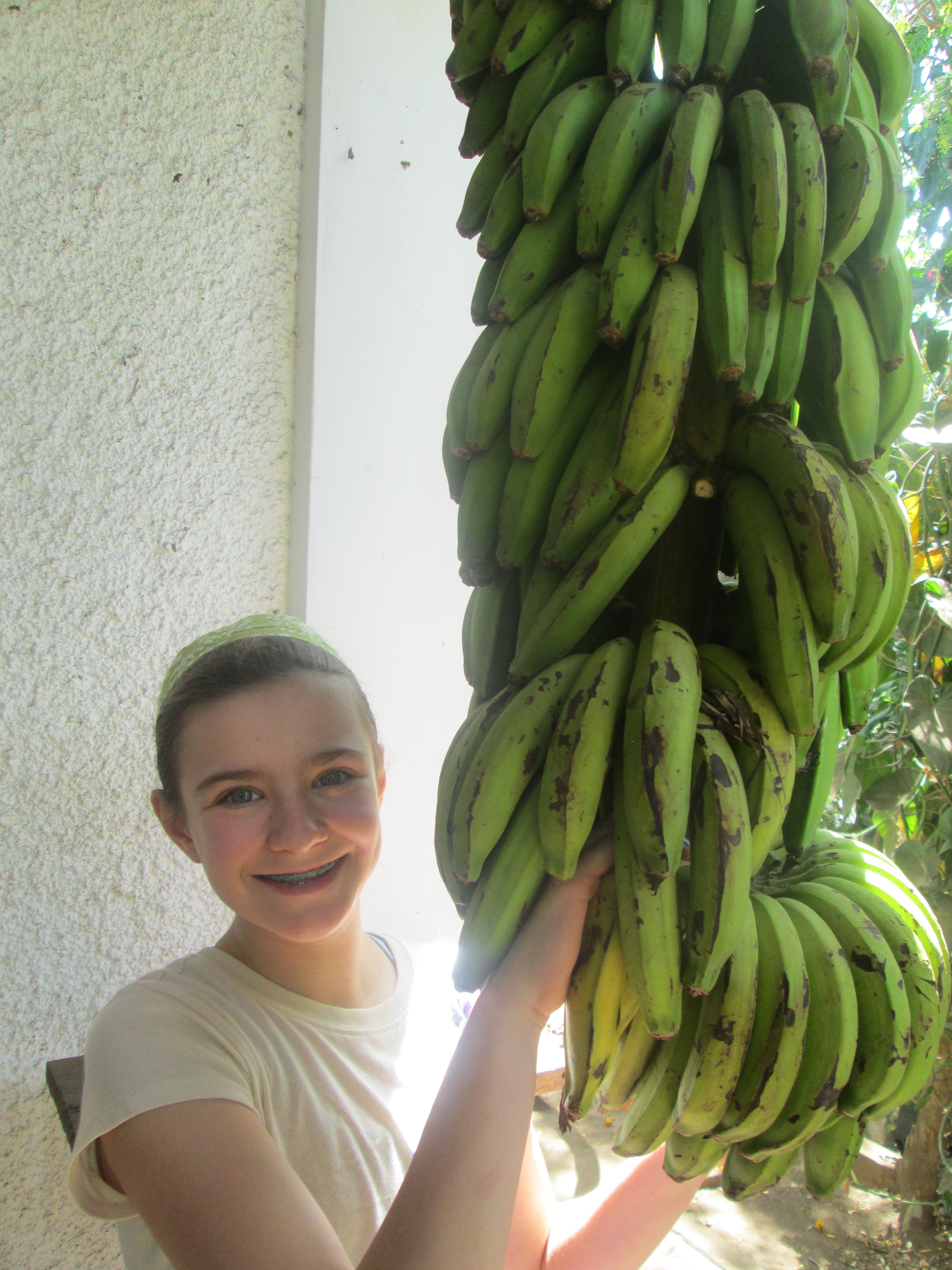
Fresh bananas for the taking!

Fresh bananas for the taking!

The girls’ lessons were well tailored to their ages. Lanie played Uno with her teacher to learn colors and numbers, and they all got to walk around the grounds during their lessons as a break from sitting still. I think they’ll be happy to go back for more tomorrow.

IMG_6361Yesterday afternoon we signed up for the day’s excursion — a trip to the finca de pina (pineapple farm), a beautiful place tucked into the mountains. It was a far cry from the industrial farms of the US. Along the dirt track beside the field there were plantain, mango, and coconut trees, one of which held a nest with a mother bird and her chicks. Tomato plants grew in between the rows. When asked about pests, the farmer mentioned that foxes sometimes eat the pineapples — and when asked if he did anything to control them, the he shrugged and said, “Foxes have the right to eat too.” (Mind you, all of this was in Spanish. Bob was the only one in our group who appeared to understand most of what was being said, but fortunately the guide from our school provided some translations.) The girls were starting to drag a bit by the end, but were quickly revived by bowls of fresh pineapple. It was a different variety than we typically get in the US — paler, softer and juicier.IMG_6356

The next stop was what they were really waiting for — dinner at an open-air restaurant that had a pool. Our group from the school had some moments of confusion about the proper procedures, since our guide disappeared when we went in, but we soon sorted it out and had food ordered (and kids in the pool). We were all confused by the menu, so our family just ordered a “family platter” with some things that sounded vaguely familiar. It turned out to be delicious, and a great sampling of Nicaraguan cuisine. (All the meals served at the school are vegetarian, so this may have been the last meat we’ll have for a while.) Bob and I ordered local beers, which turned out to taste pretty much like Budweiser (but since they cost about $1, we didn’t complain).

IMG_6371Then back to La Mariposa for some family reading (Harry Potter and the Prisoner of Azkaban).  Bob made note of the fact that the temporally-challenged rooster did not start crowing until 10:14pm.  Tomorrow I’m tempted to continually poke him with a stick during the daytime so that he’ll sleep at night.


At the finca de pina

At the finca de pina