Here was the big day—our dalliance into Dingle Peninsula. Since her semester abraod, Jen has pronounced this her favorite part of her favorite place. We have been working up to this for at least the past 12 days here, probably a few decades longer for some of us.
We took in an early, light breakfast at our lodgings; we looked (warily) up at the mostly clear and sunny sky, and we headed off on the Slea Head Loop around the end of the peninsula.
For anyone expecting a rhapsodic description of the dramatic scenery, yes, that will come; but the main thing to say about the outer stretches of this peninsula is that the people here have figured out what visitors really need from Ireland: closer interactions with livestock.
Within the first half hour of our drive we had encountered four establishments offering hands-on exposure to sheep. This after seeing thousands of the beasts all over the country and not getting within arms length of the suspicious little devils. The Dingle-ites have cornered the market on lambs as far as the non-gustatory uses of them go.
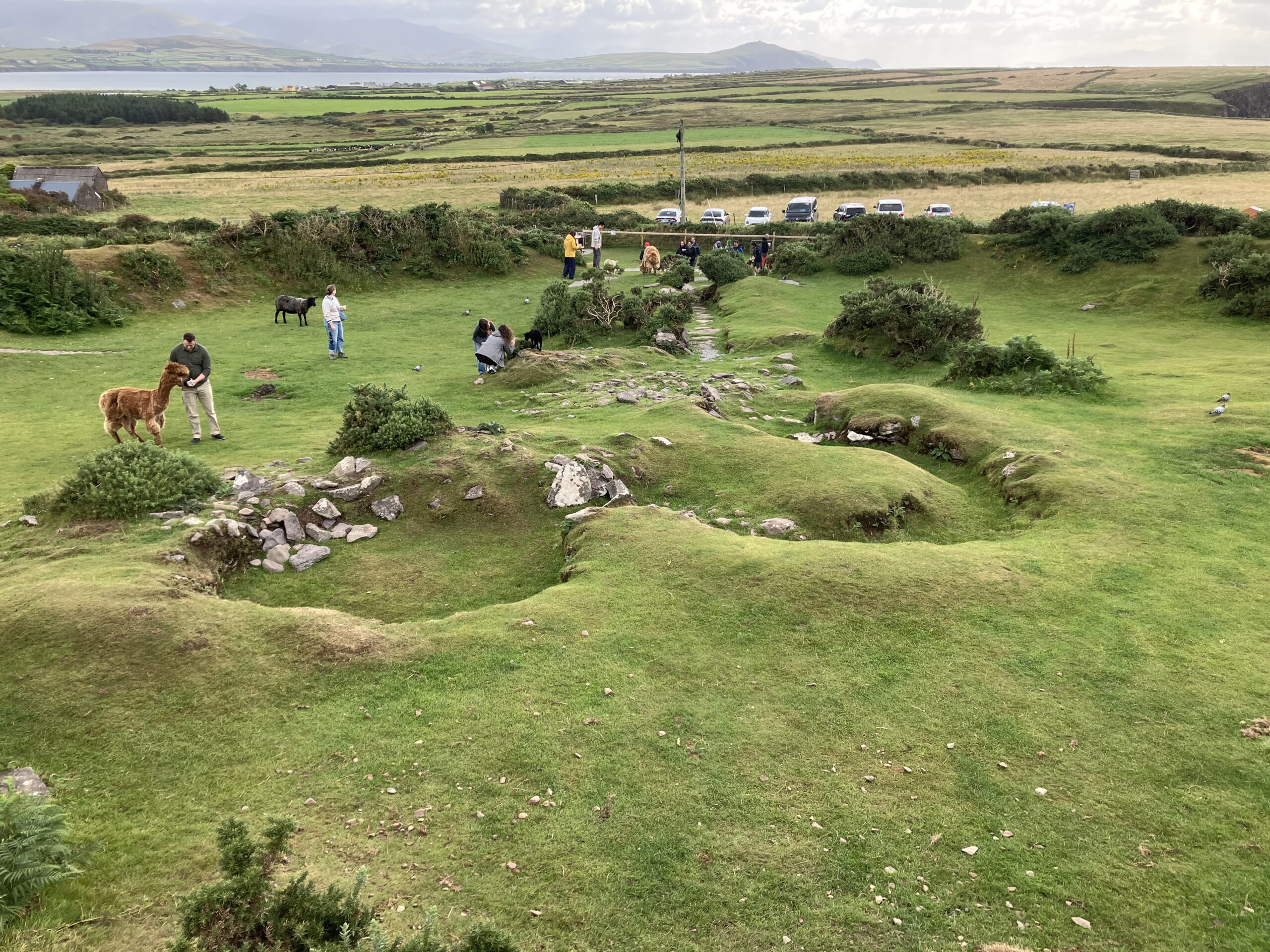
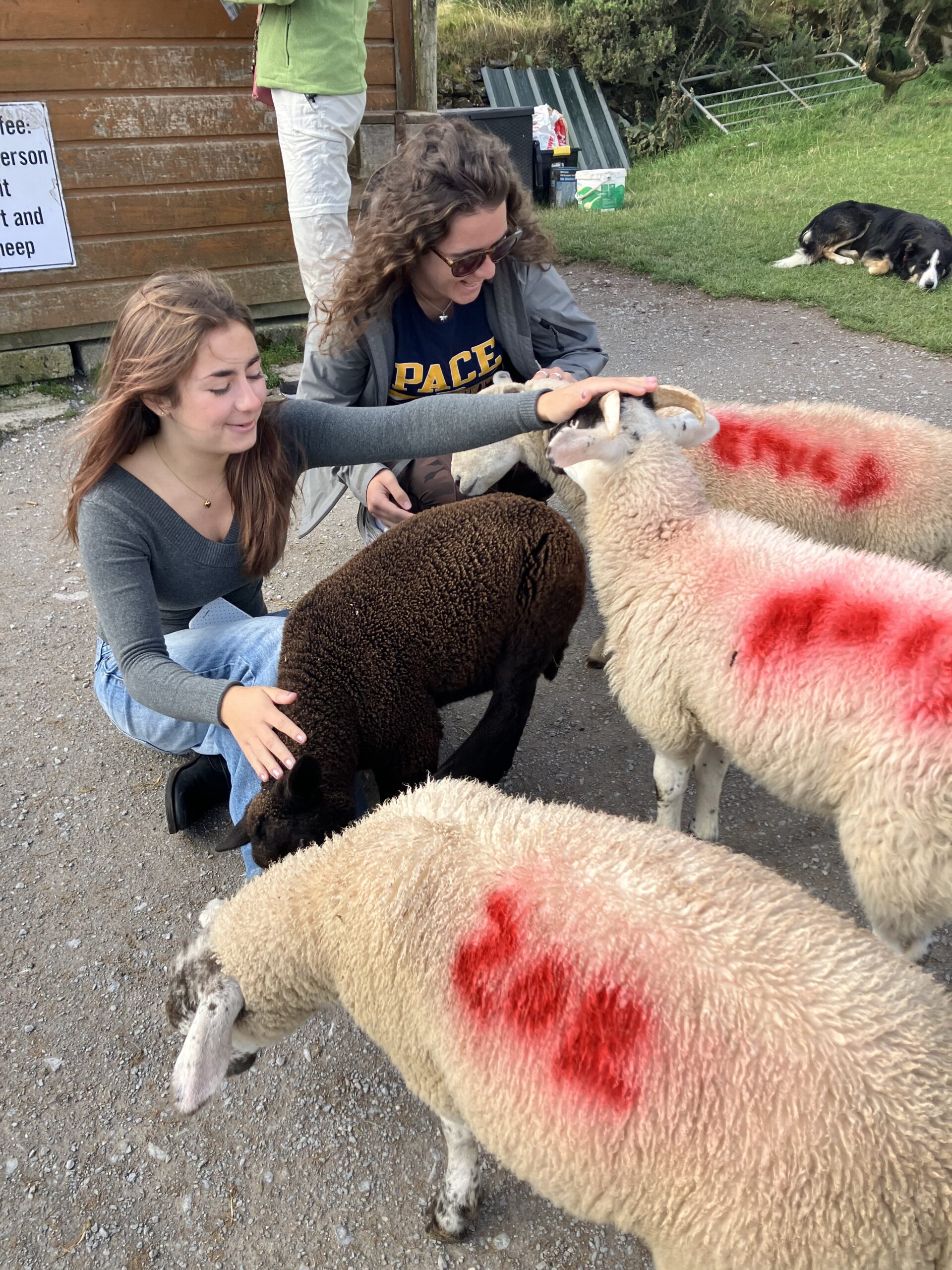
So, when we pulled over for our first stop, which advertised a “fairy ring fort” (the remains of an ancient circular settlement still pocking the green hillside), we thought we were going to get a dribble of Irish hisotry. Except the entire hillside was populated by cuddly sheep, goats, alpacas, and horse that dearly wanted to be fed and petted. In a total reversal of roles, now the sheep were following us around.
It was like the island of approachable animals — the only animals that you couldn’t feed by hand were the two large lumbering pigs. Many furry friends were just wandering around in the fairy ring fort, not even fenced off from us. When it was time to wash hands after all the petting, a large ewe nudged me out of the way to get a drink from the faucet.
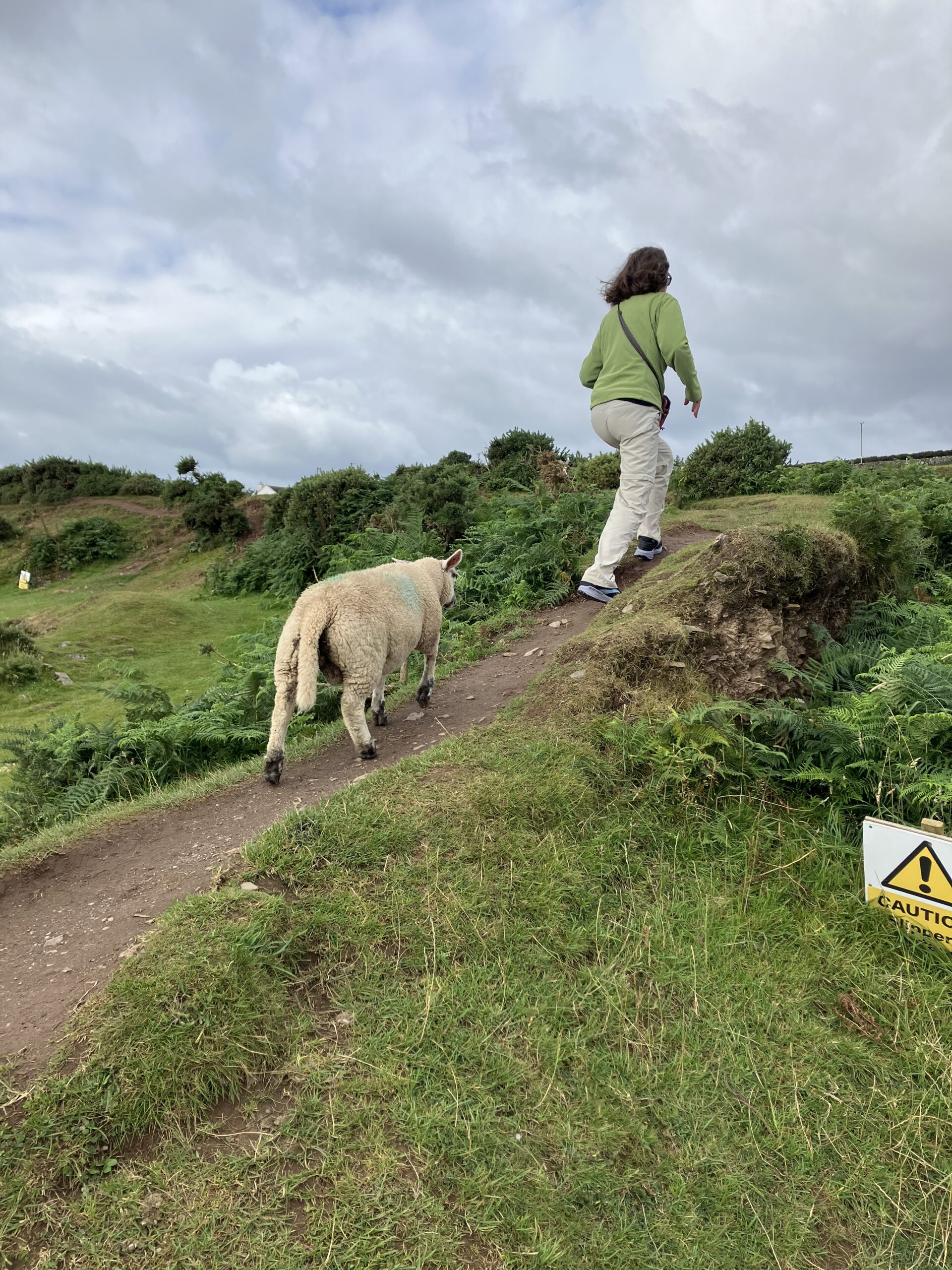
If you are like us, you are thinking that Zoe is sadly absent from this trip. Worry not. There was a sheep who, inexplicably, had “Zoe” spray painted in orange right on its wool. Our Zoe had a wooly proxy for the morning.
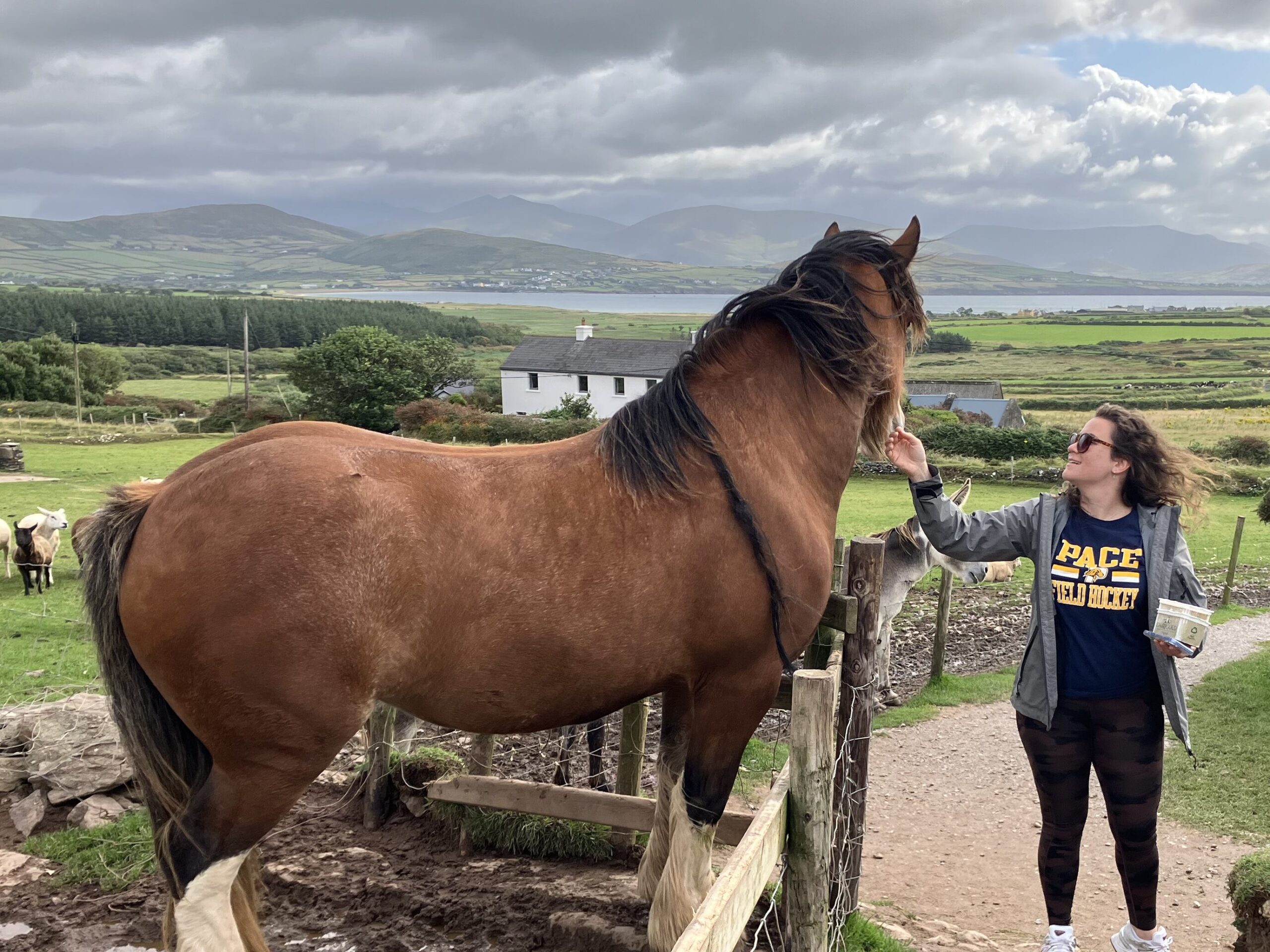
It was all very difficult to believe, but it seems to have actually happened. Digital pictures don’t lie.
Our second stop was, if possible, even better. We visited a hillside farm where we had booked an appointment online. The name of the operation — at least as we saw it on the internet — was “Hold Baby Lamb.” It was hard to resist the allure way back home in the planning stages, and the experience was true to its marketing. That is all we can ask for.
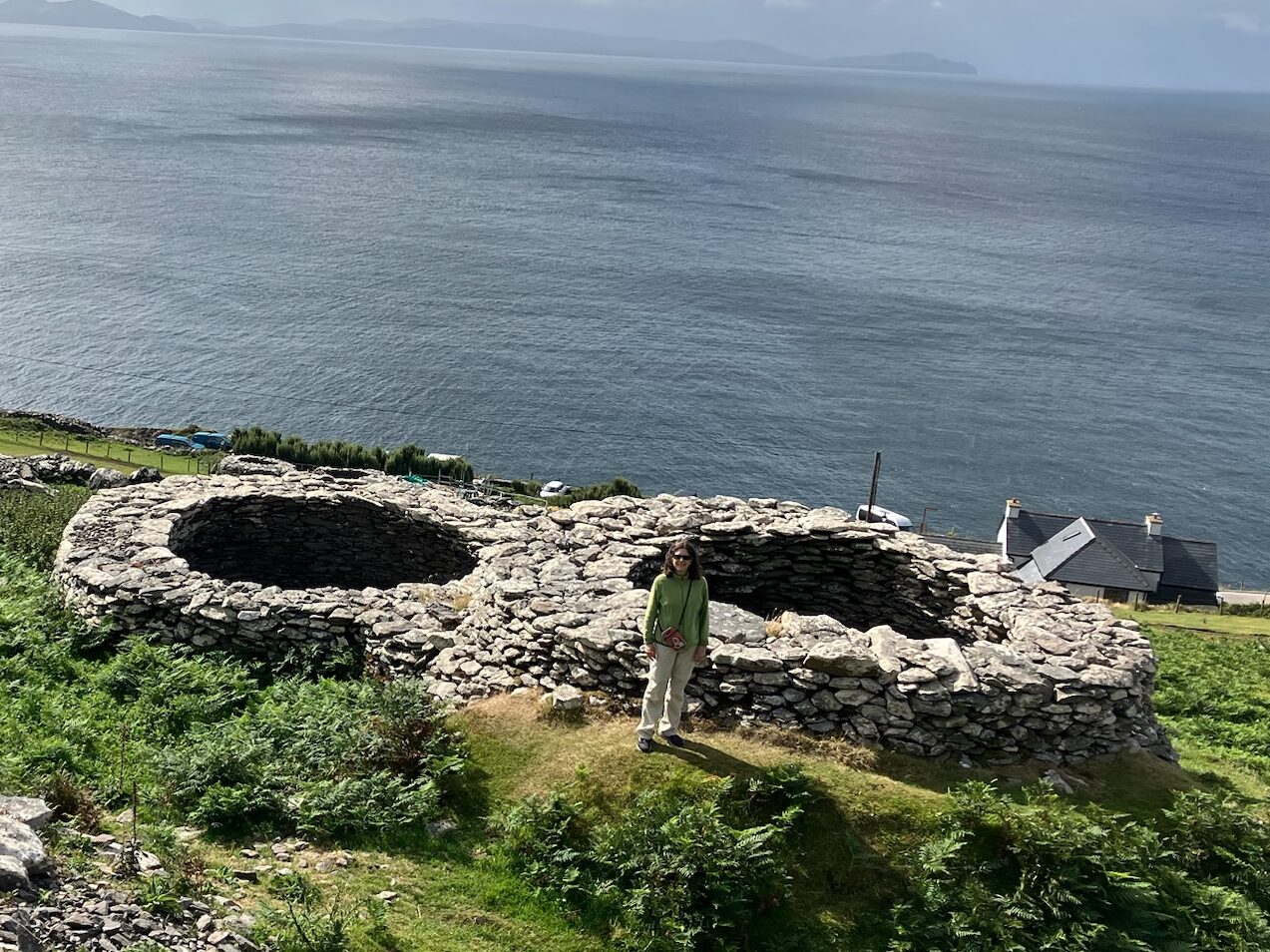
Hold Baby Lamb also featured several bee hive huts, advertised on a large poster with a Star Wars-flavored font (though at no point during our time at this stop did anyone claim these actual bee hive huts appeared in The Last Jedi or any other Star Wars movie). We could walk up the hillside and see them up close, and turn around to catch glorious views of the ocean and the near-lying Blasket Islands. The marquee view was inexplicably not even mentioned in any of the marketing materials.
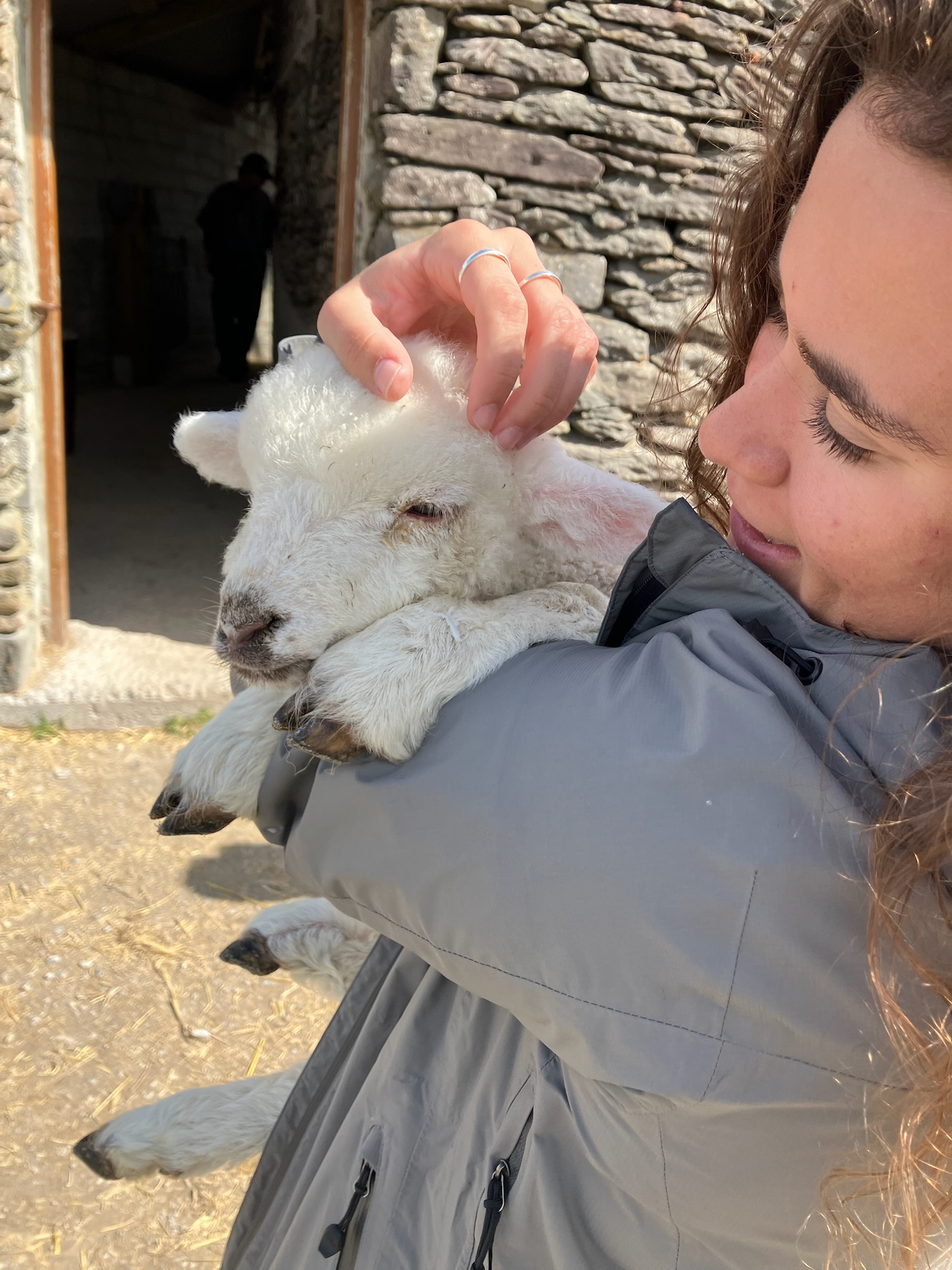
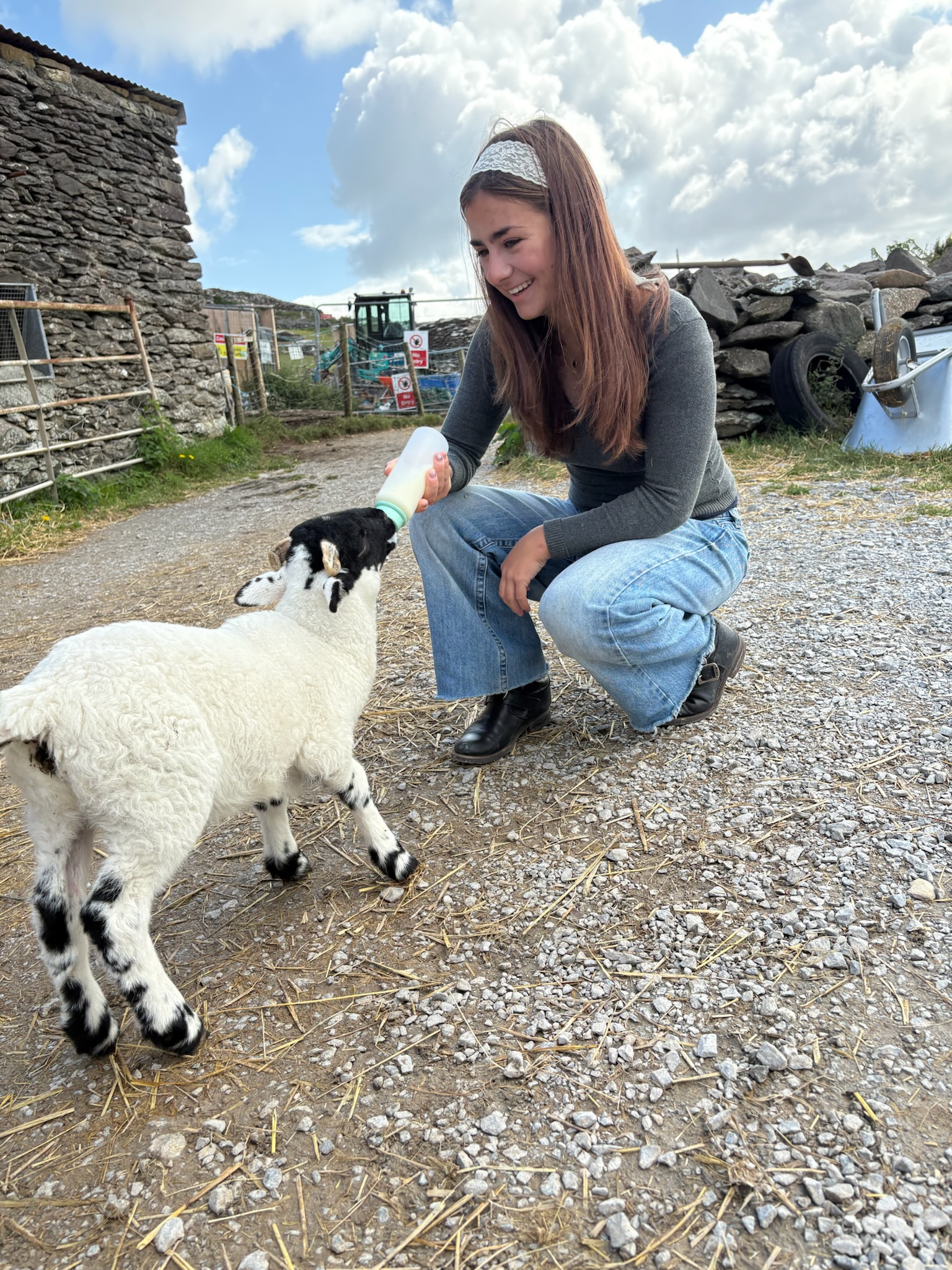
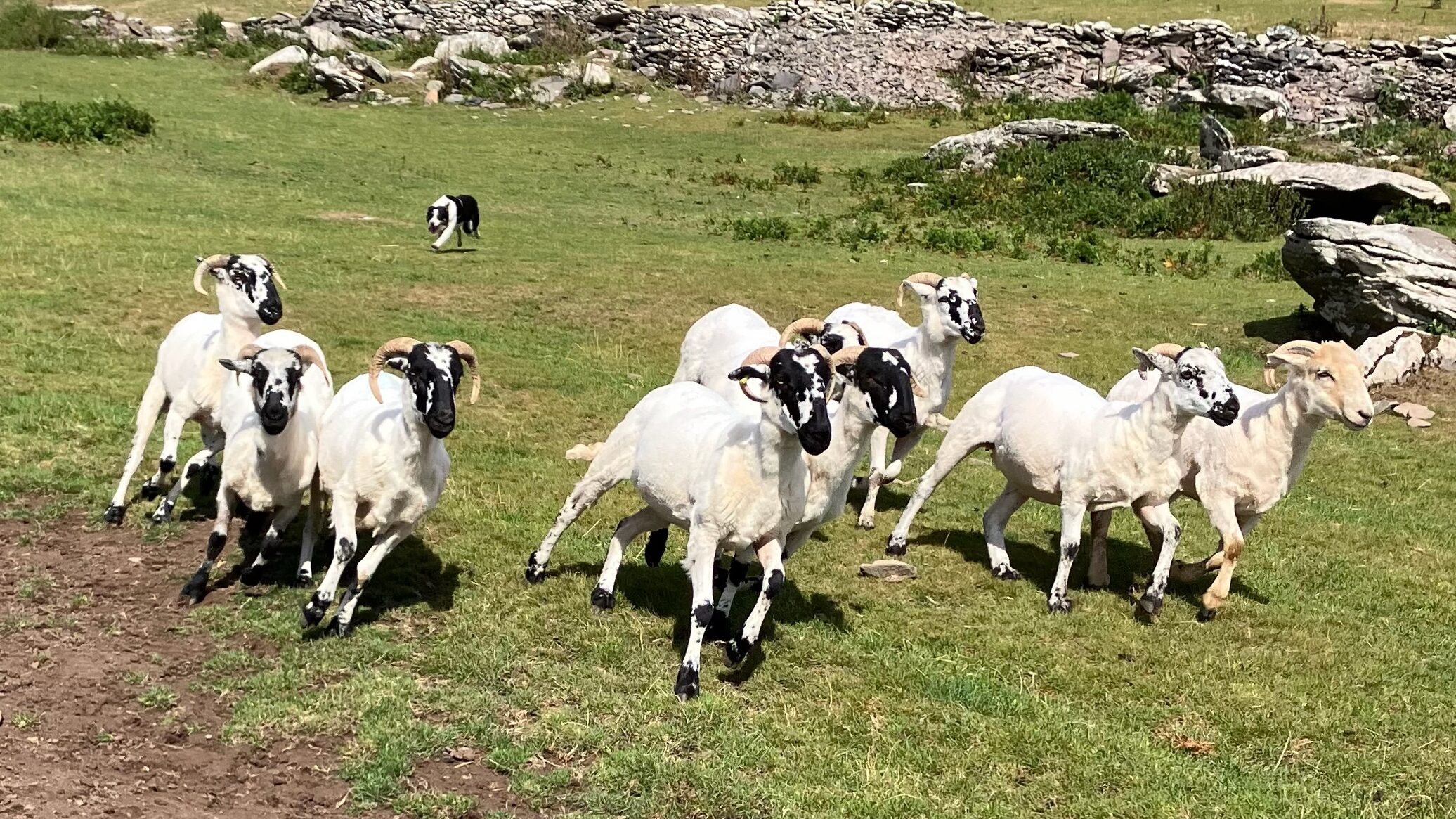
That’s because the lambs are the main players here. Nadia and Lanie each got to feed a lamb with a bottle and pick the lamb up and carry it around for a while. We all were treated a little while later to a sheep dog display during which Dave the sheep dog efficiently guided a small flock around a field while the farmer communicated his commands in whistles and calls.
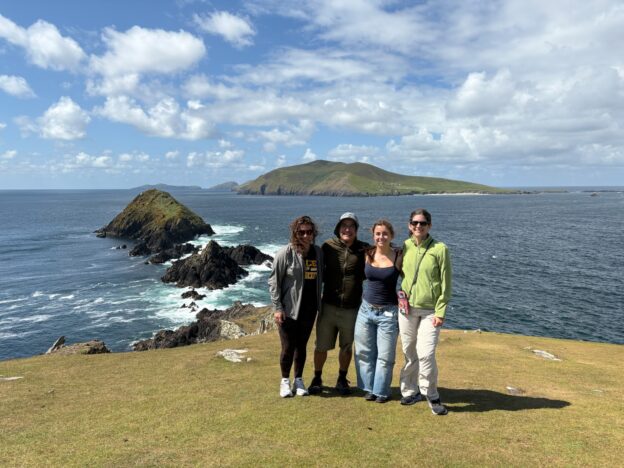
After this, we continued to drive until we fulfilled Jen’s wish of taking a scenic hike in the area. A stop at a hidden cove and beach also offered access to Dunmore Head at the very tip of the peninsula. Traversing this gave us and eye-popping view of Great Blasket Island — so close we could almost look in the windows of the five or six habitations out there. Just standing in the sloping, wind-blown field at the apex of Dunmore Head was an exciting experience.
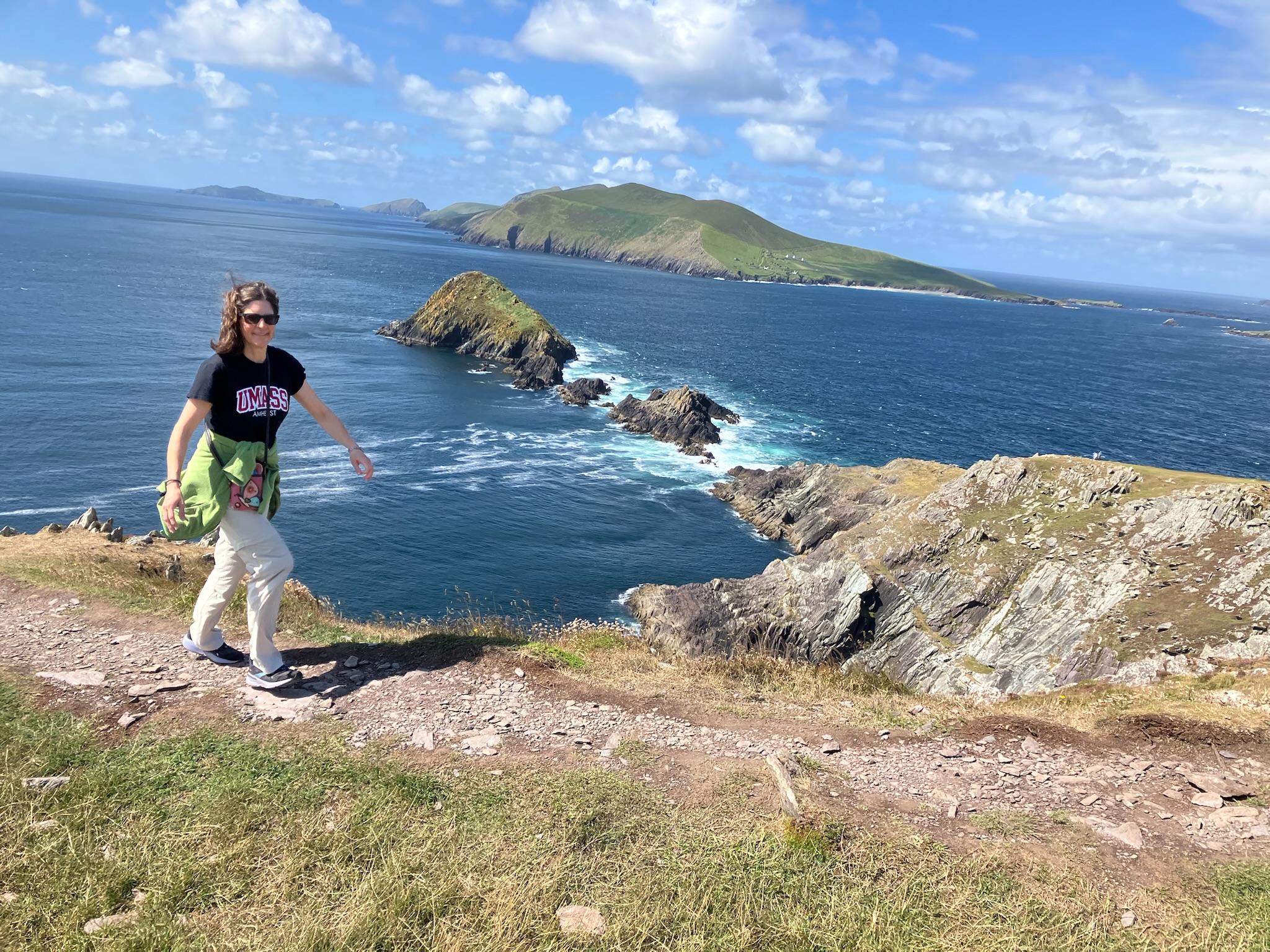
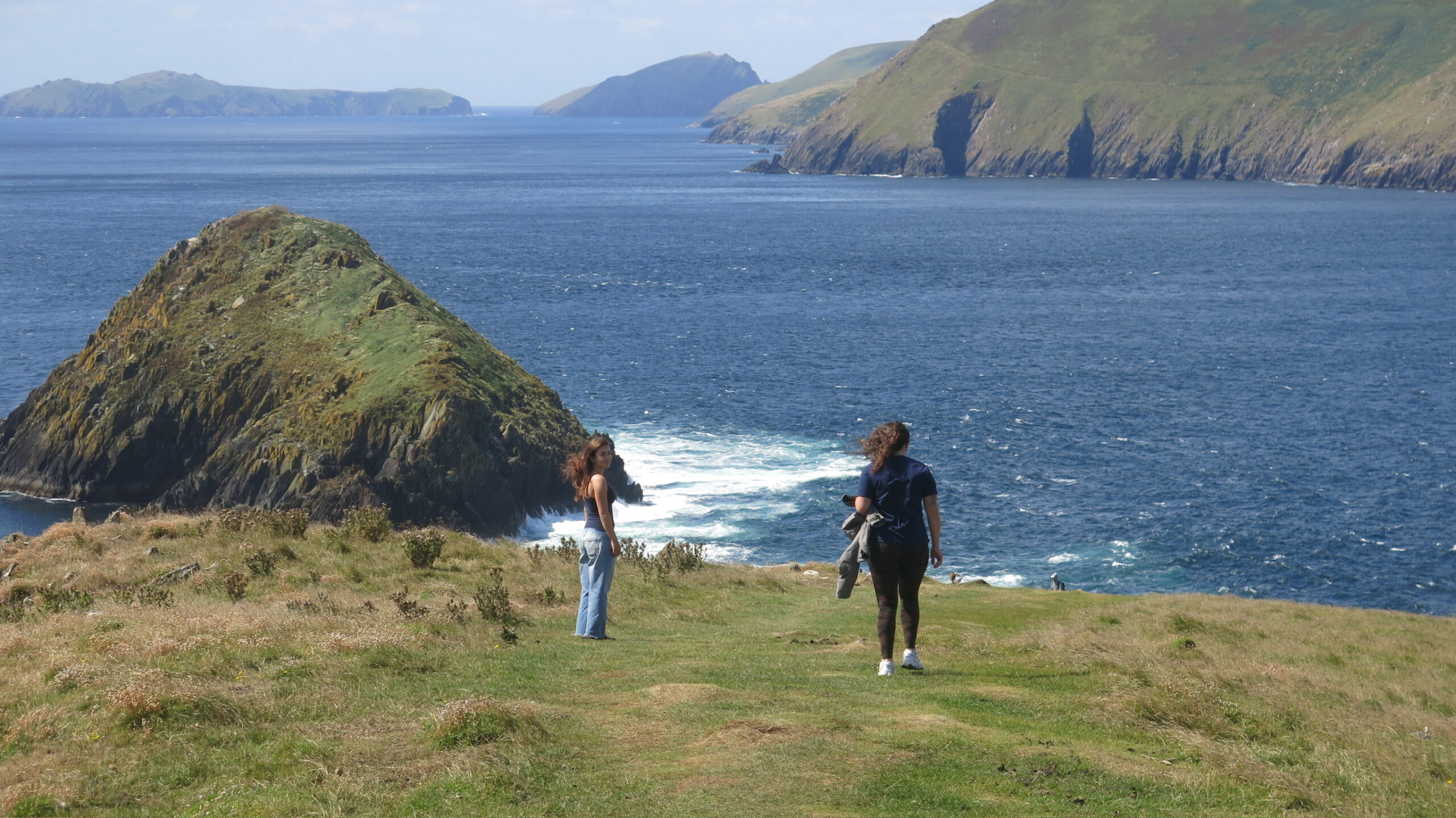
I now feel inclined to rhapsodise about the view. The ocean is 30 to 100 meters below us, depending on where we are in the hike. Its waters reflect the (still miraculously) clear skies, ranges in color from a dark blue at it deepest points to an aquamarine near the beach or over rocks. It is a color we normally associate with tropical paradises. All along the coast, white foam courses over dark grey jagged rocks, sometimes shooting several meters into the air if the wave is big enough.
The few clouds in the sky add drama to the scene — there are dark ones that might be bringing rain to somewhere in the distance, but we are still in steady sunshine. We can see to the horizon; that view is only blocked by the deep green Blasket Islands and the grey outlines of other shapes in the distance (are they the Maharee Islands that we saw yesterday off Kerry Head?). There is only the narrow span of Dunmore Head behind us. The remainder of our perspective, perhaps 300 degrees, is water view. We could sit and stare at it for hours and ponder its depths and its constant changes.
But, we were getting a little hungry.
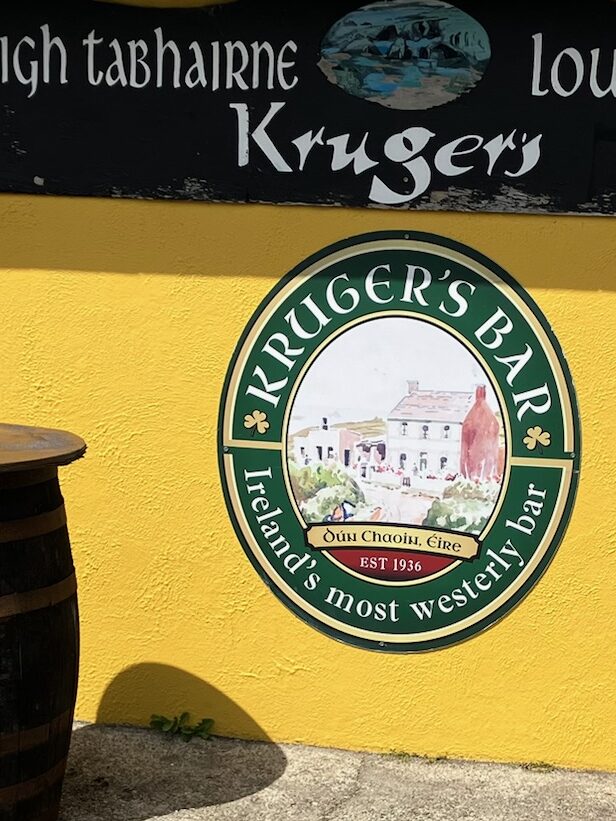
There are few conceivable situations where lunch could top this morning’s activities, but what if I told you we were able to take our meal at the Westernmost Bar in Europe?
I know! We thought we had already done that, too. During our trip to Achill Island we happily dined at Gielty’s Bar with its proud sign proclaiming this honor. But the details of the bragging rights, even in this day of global positioning systems, seem to depend on whom you’re talking to. So we left nothing to chance and ate at Krugers’ Bar all the way out on the end of the Dingle Peninsula. I would rate the fish and chips here at a dead even tie with the ones further north and (possibly) east at Gielty’s last week.
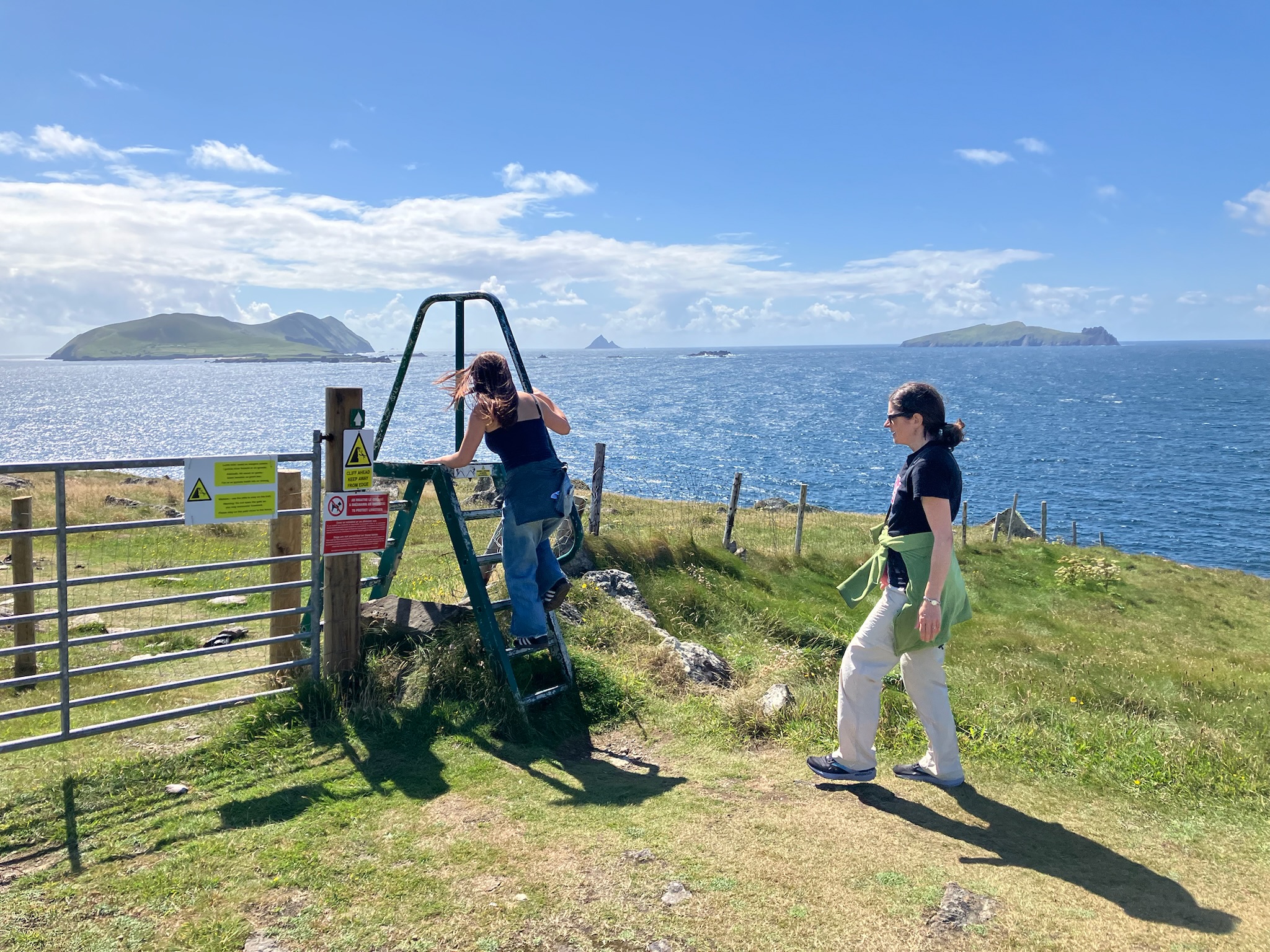
Of course, now we had a meal to work off, and the nearby Blasket Center offered not just a full-sized parking lot (a rarity in these parts) but also a five-kilometer loop trail that climbs into the hills and brings you back through sheep pastures along the craggy shore. It is on a list of Ireland’s national loop trails. Ireland, like ourselves, appreciates not always having to do out-and-back hikes.
Consider lunch worked off.
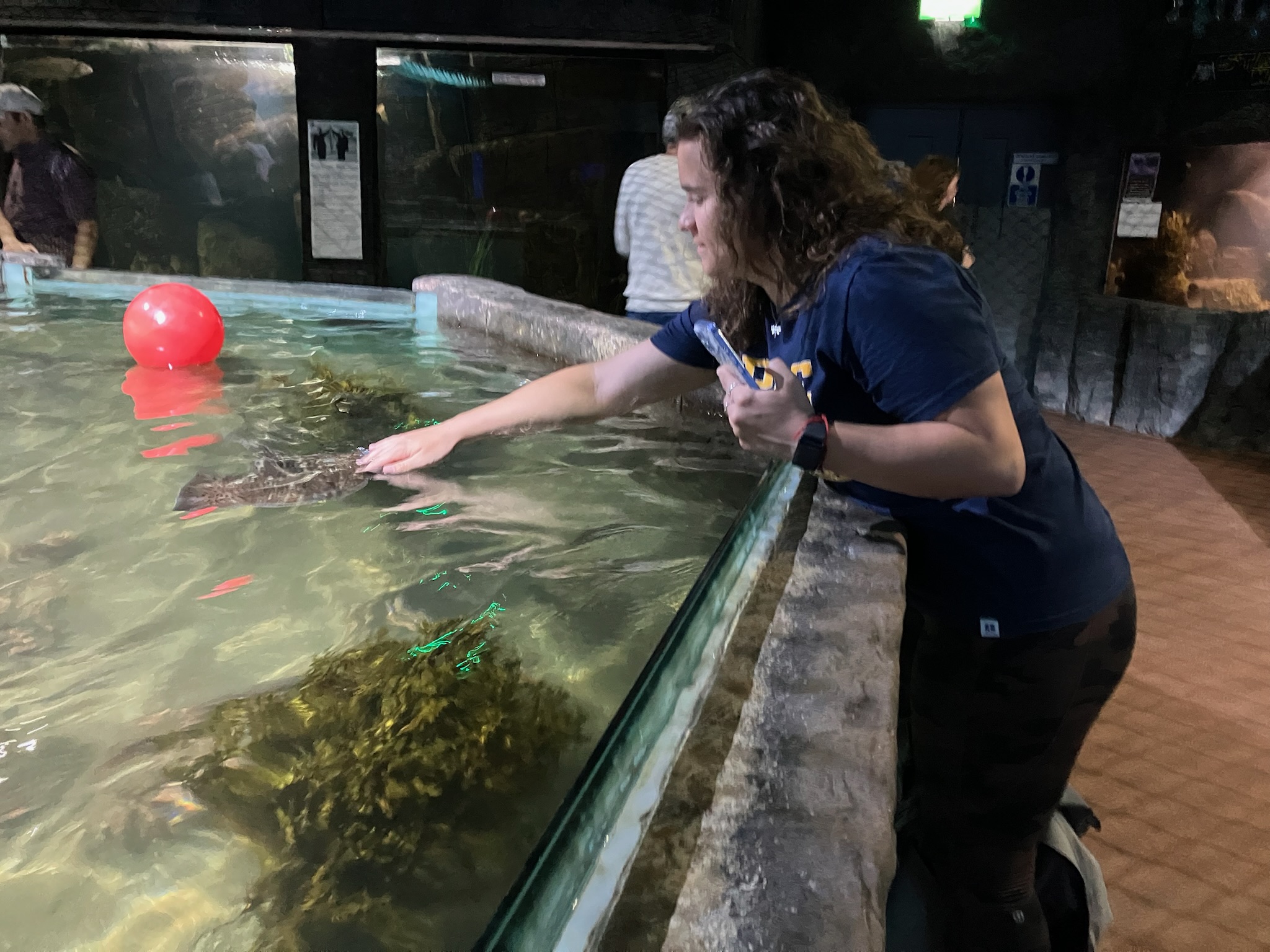
Having achieved so much already, we abandoned a portion of the Slea Head Loop, along with its predictably adequate roadway, for a cutoff road through the hills that got us back to Dingle town before the local aquarium closed. Nadia got a double wish today, lambs and sting rays to pet.
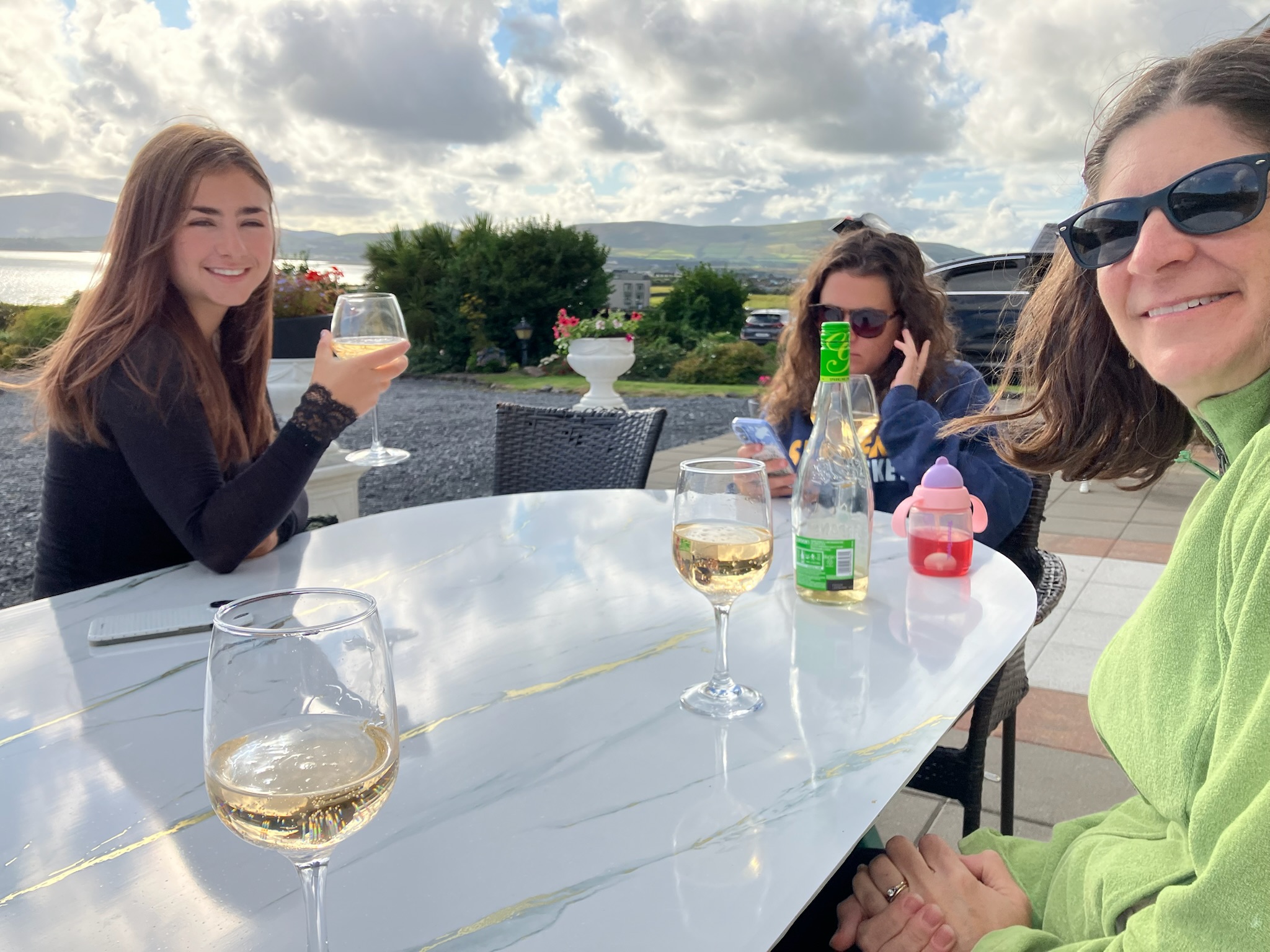
We even had time for a cocktail at our inn before heading to town for our second-to last dinner of the trip. This was the last normal dinner, and we opted for Italian. Tomorrow’s dinner — the last one of our trip — will be a banquet in a restored medieval castle.