 We’ve been talking about how different it is to travel with Friendship Force, and stay in people’s homes, than it is to travel as a regular tourist. We feel we’ve experienced so much more of the culture and have had such deep and meaningful experiences here. Today was a good example.
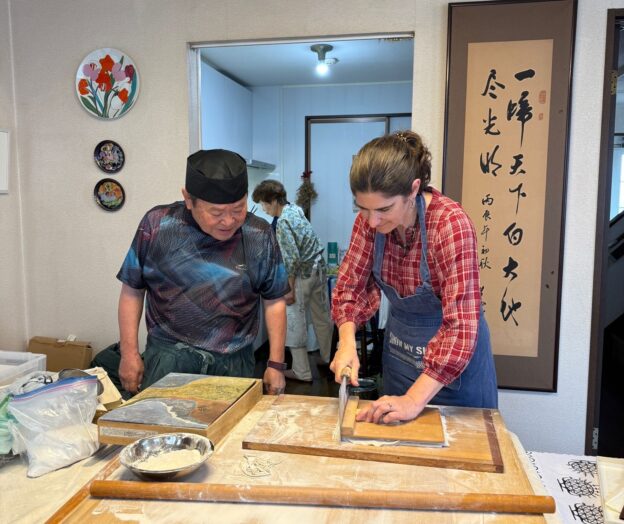
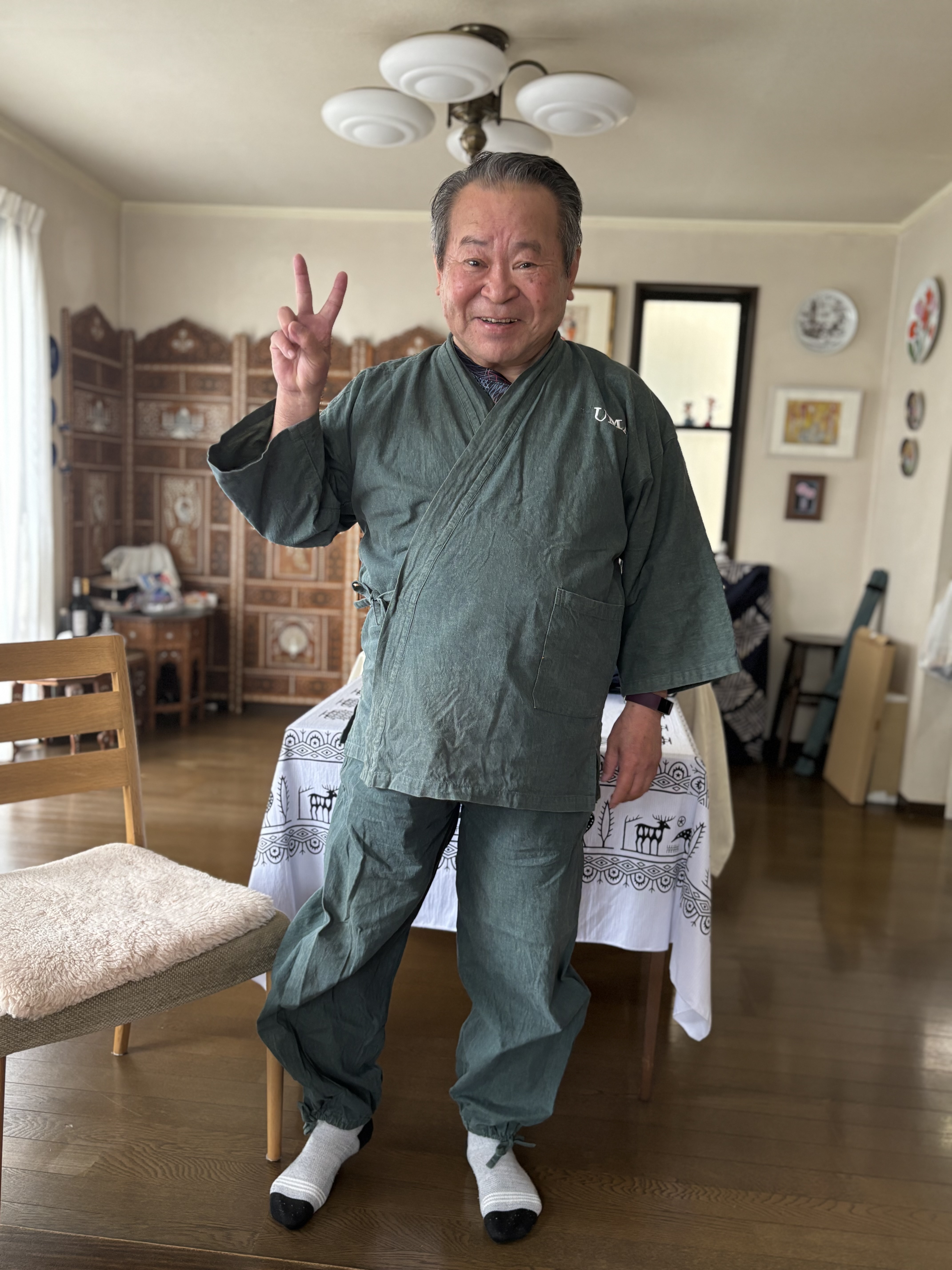
Our host Yoshi’s brother-in-law Kimi, in his retirement, took up the hobby of making soba noodles. He became so good at it that he now teaches at a cooking school. (He also does amazing woodworking and wood carvings — another example of how the Japanese seem to never stop learning and exploring.) Today he came to Yoshie’s house to teach us. His wife, also an excellent cook, came to demonstrate making tempura (battered and deep-fried vegetables, fish, or meat). We’ve had a fair amount of tempura here, and have been amazed at the light yet crunchy texture — never heavy or greasy. No matter what’s inside the batter, it’s invariably delicious.
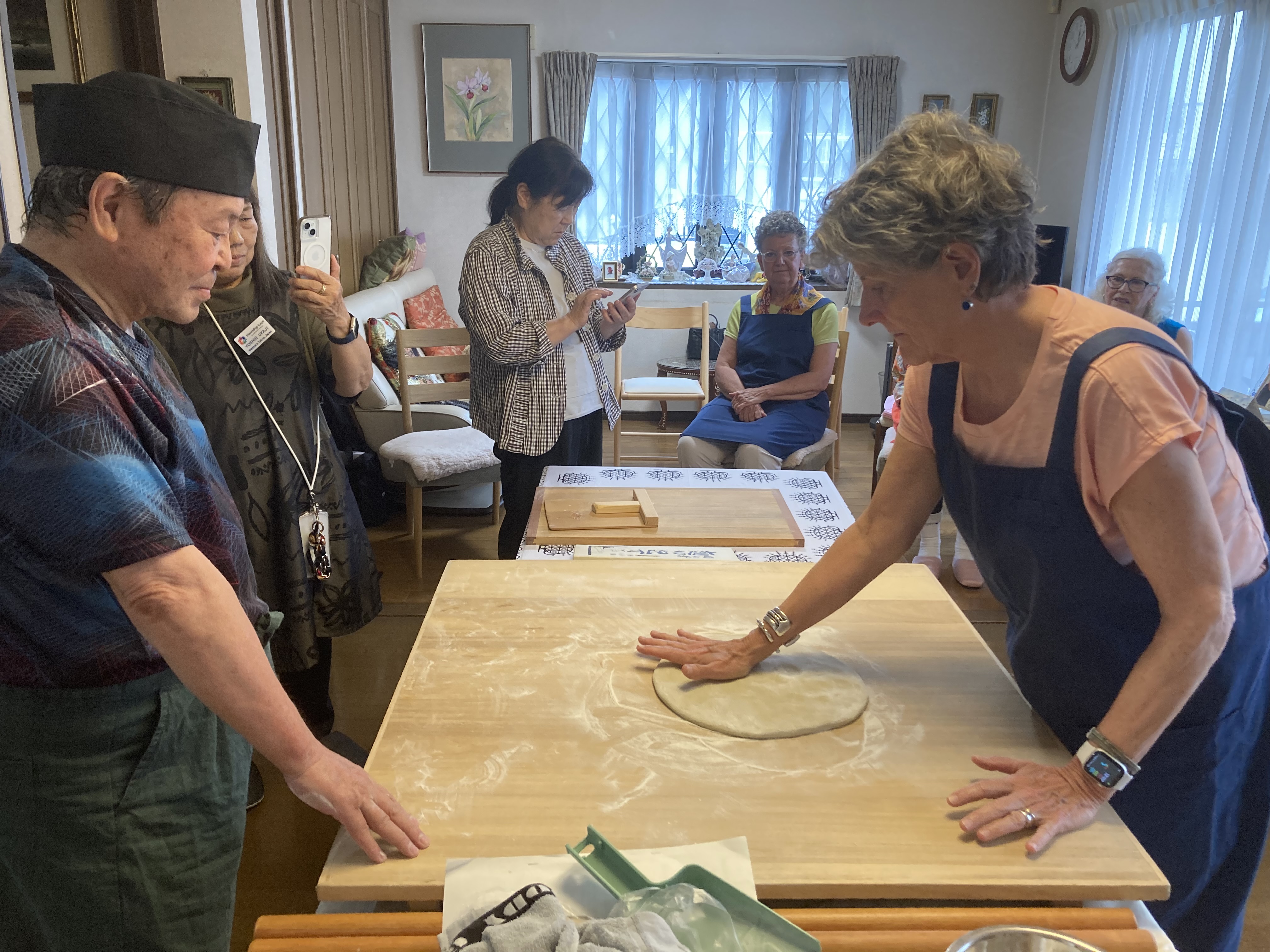 We were also joined by Debbie and Caroline, while the other half of the group went to a Japanese drumming show. Kimi arrived with a large pile of gear, including a chef’s outfit, a big wooden surface, a long skinny wooden rolling pin, a beautiful homemade box for holding the noodles before they were cooked, a wooden plank for holding the dough steady while cutting it, and a big-ass knife. He and his wife didn’t speak much English, but we were able to communicate through Yoshie and with Google Translate.
 Kimi followed a very precise process of mixing, kneading, and
 rolling the dough, with us attempting to follow him. We added water to the flour in four separate steps, mixing after each. Then it was time for a LOT of kneading. Once the dough because a smooth spherical ball, we shaped it into a round disc, then used a special rolling technique to transform this into a large, very thin square. When he thought it was ready, Kimi brought out two metal sticks 2 mm thick and set them on either side of the dough, then used the rolling pin to ensure that the dough was thinner than the sticks.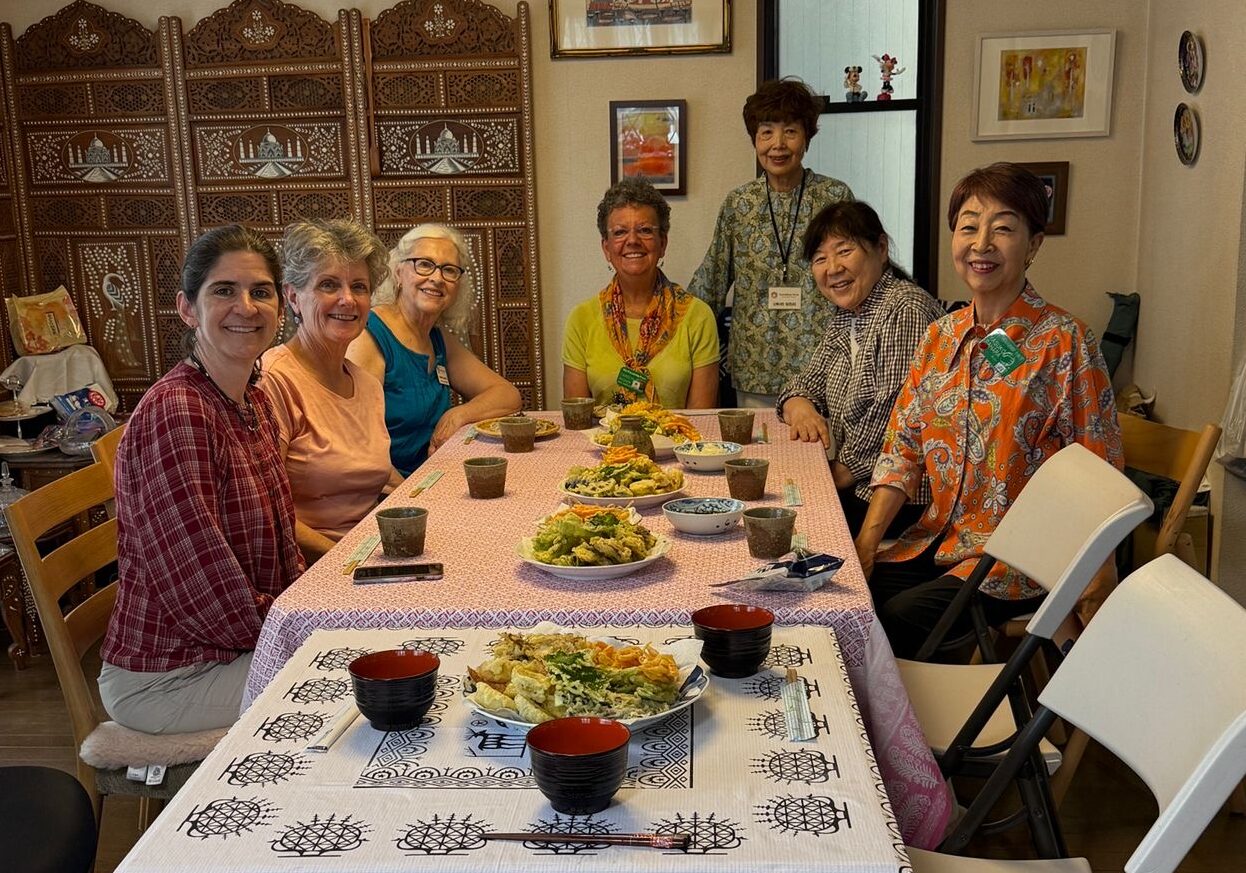
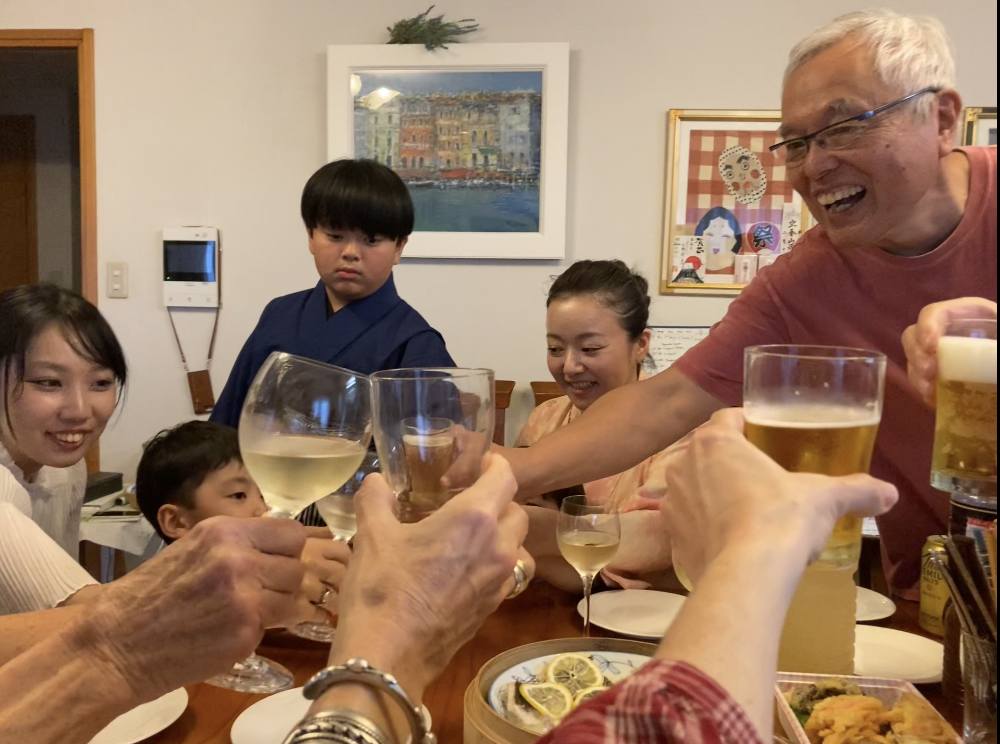
Kan pai!
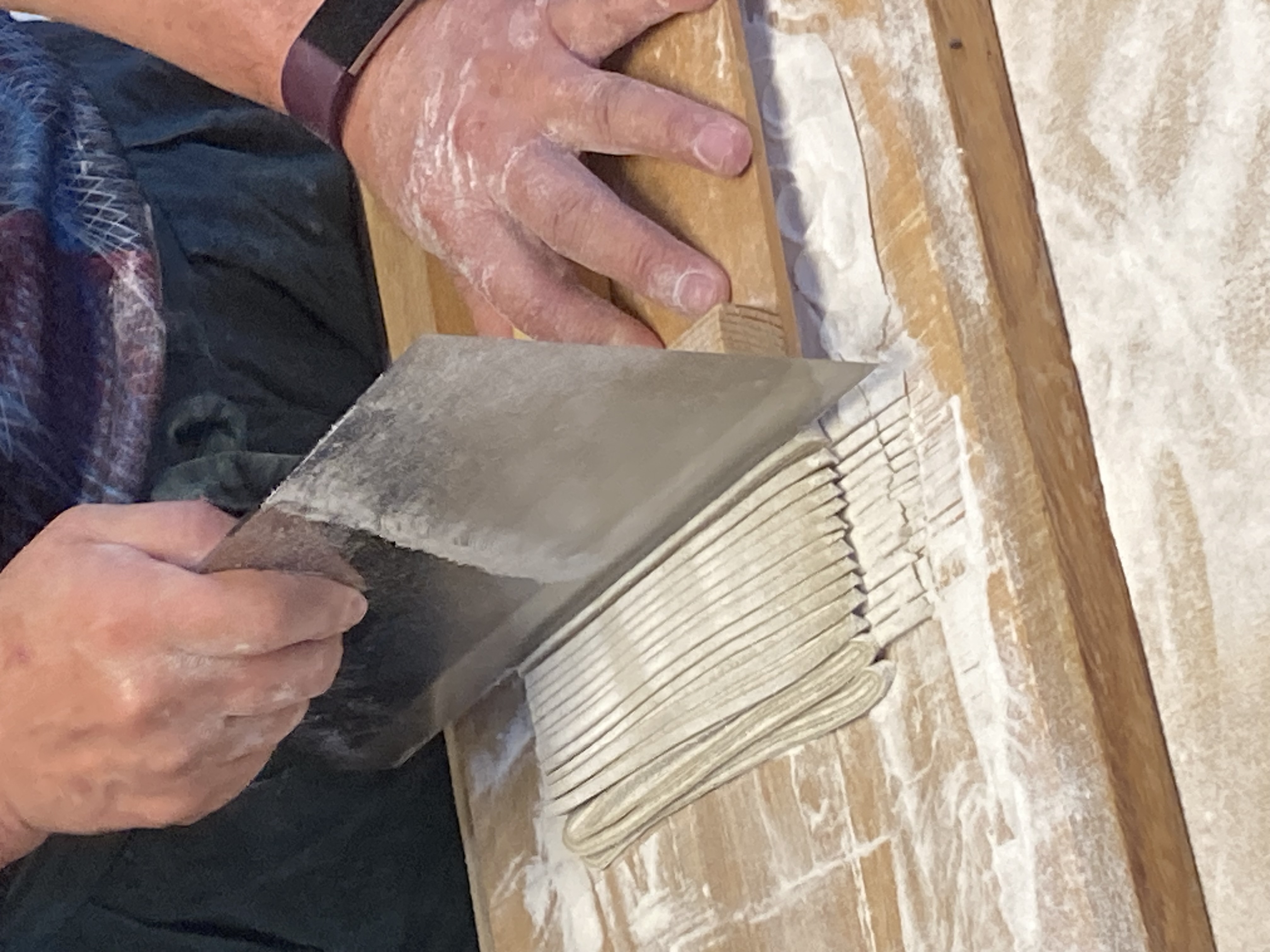
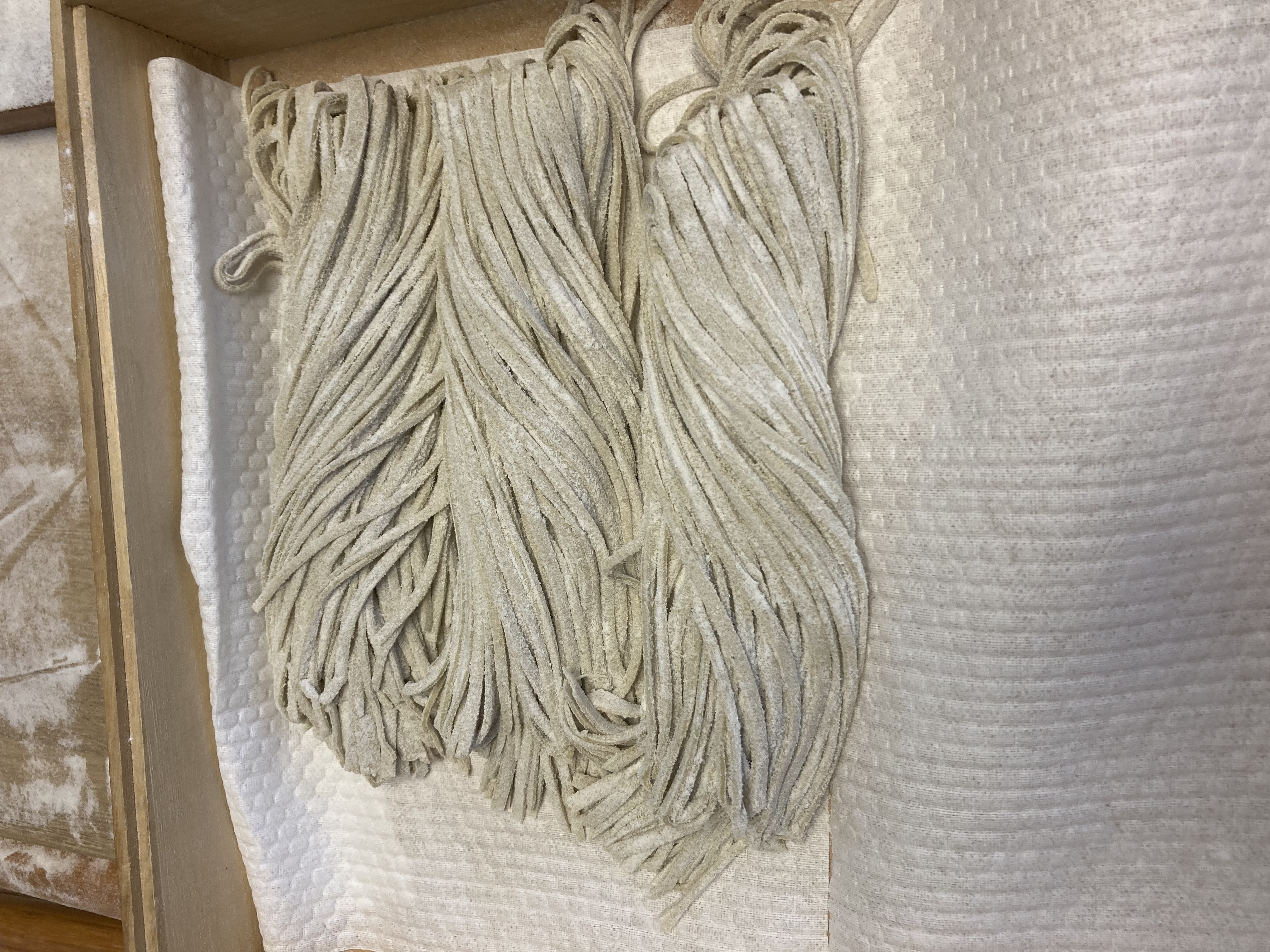
The square of dough was then folded three times to form a stack of dough, and then it was time to cut. The trick is to make the noodles very thin. A wooden plank holds the dough steady, and you want just a little to peek out the edge to be cut with a very large knife. Then you tilt the knife very slightly against the plant to move it over just a tiny bit, and cut again, proceeding this way until all the noodles are cut. Our noodles weren’t quite as thin and uniform as Kimi’s, but we comforted ourselves that Yoshie and Misora didn’t really do any better.
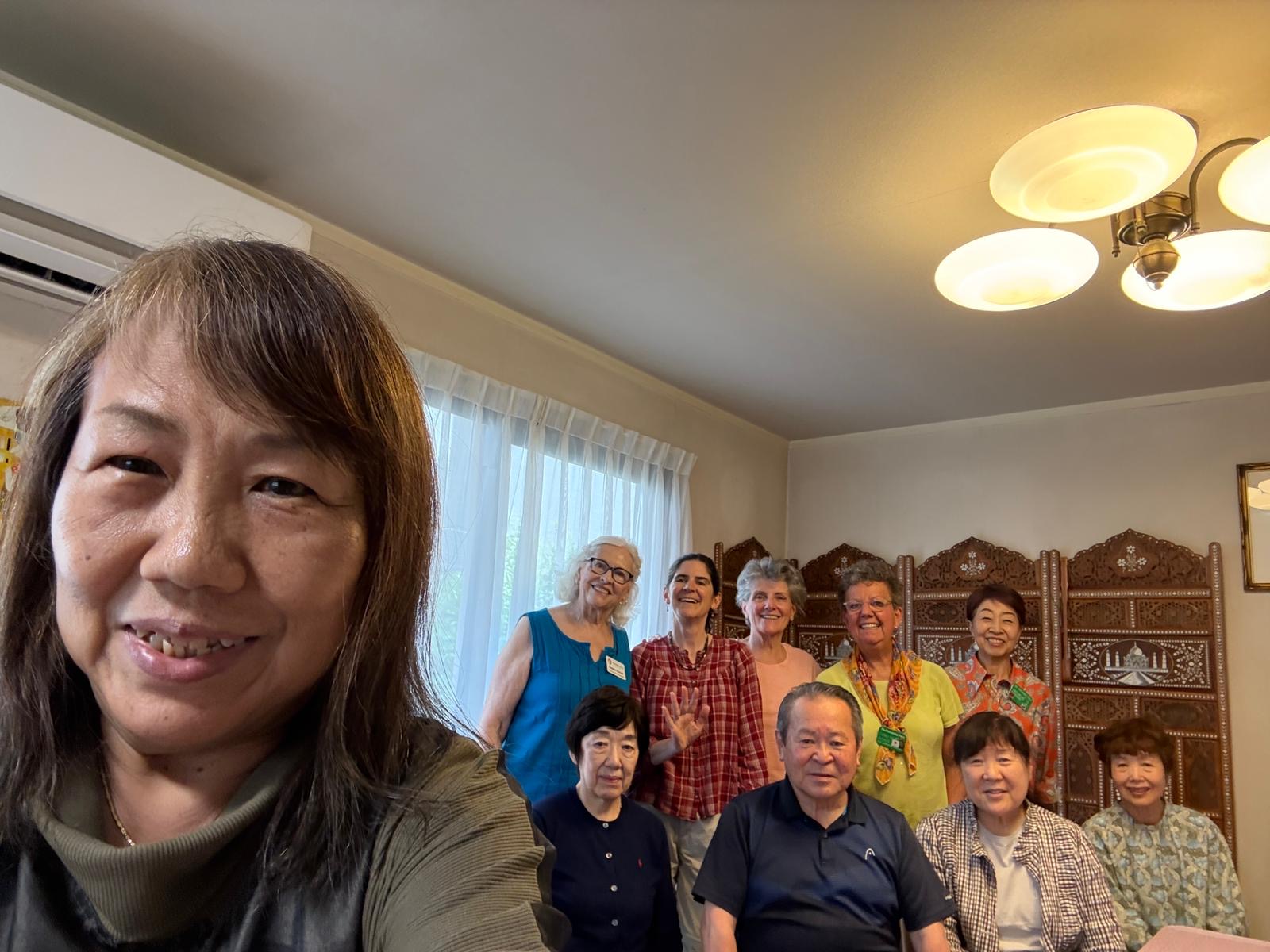 Meanwhile, Kimi’s wife had been in the kitchen making tempura for hours. She cooked at least seven different types of vegetables — corn, carrots, eggplant, mushrooms, lotus, sweet potato, pea pods — and I’m probably forgetting some. Once the soba noodles were cooked, it was time for a feast. We each had a bowl of broth/sauce that we used for dipping our tempura and noodles in. Everything was delicious and as usual we ate way too much — especially when dessert came out. There was a fruit salad, and Yoshie (who’s taking an international cooking class) had made a tiramisu. Margaret and I had to go for a walk after lunch to work some of it off.
 After what seemed no time at all, we were told that it was time to head off — for dinner. We’d been invited to another hosts’ home — the Togasakis’, where Joan and Annie were staying. There was not parking at their apartment, so we had to park at a nearby supermarket. Yoshie was kind enough to let us make a quick run in there, as I’ve been on a mission to find and buy Japanese KitKats, which come in myriad different flavors. (Why does the US have to
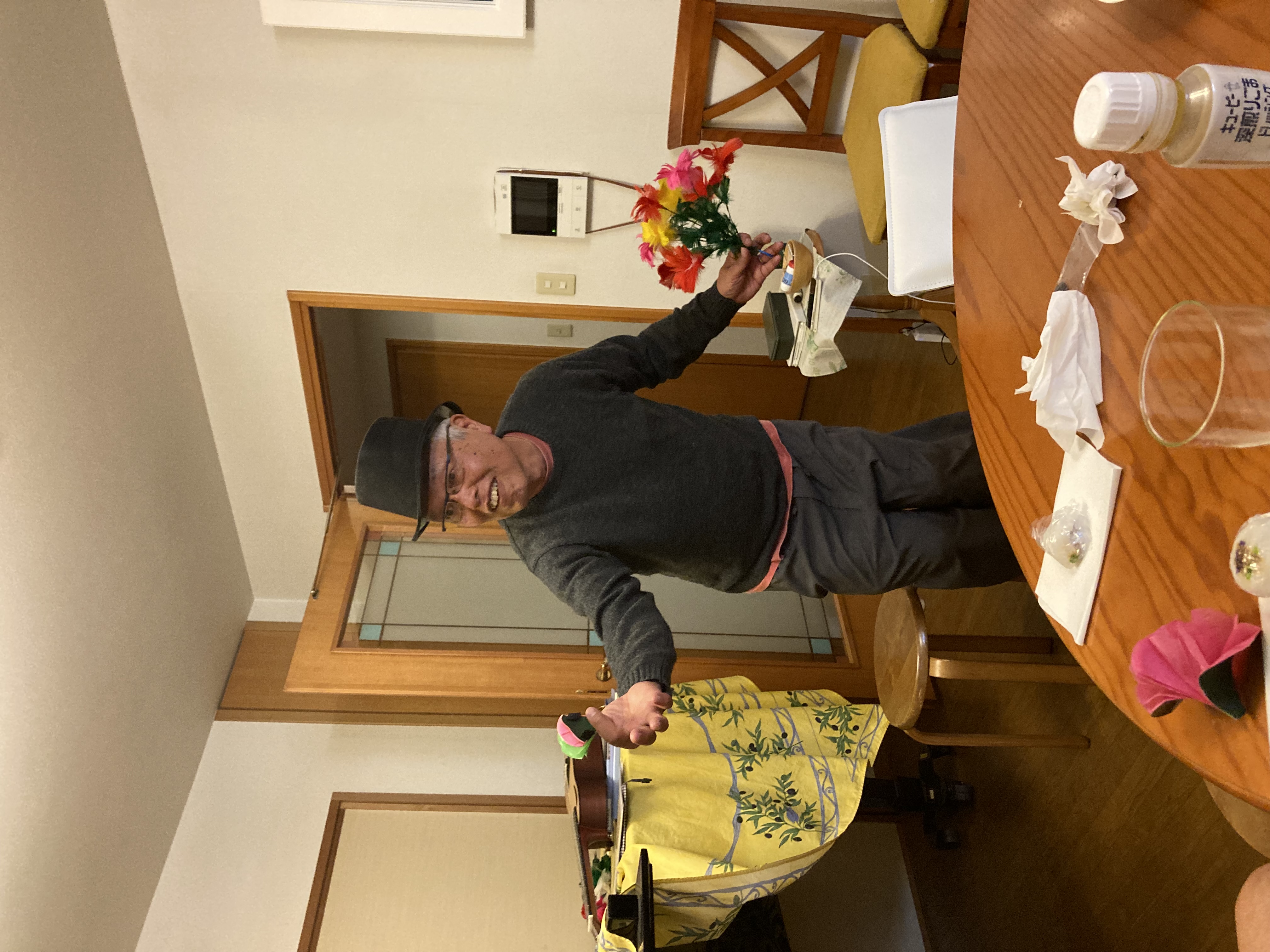
Toga was also an aspiring magician
survive on one measly KitKat variety?) This was Nadia’s particular request, as she remembered the ones I’d bought as stocking stuffers in an Asian store in New York City a few years back. I’d already bought some special edition Mount Fuji ones in Hakone that were blueberry cheesecake flavor (and declined to buy the sake and wasabi flavors). In the grocery store I found FIVE more varieties — matcha, caramel, milk tea, chocolate orange, and strawberry. I’d later find cookies and cream ones in the train station, bringing my haul to a total of seven flavors. (The airport also had cherry and banana, but at exorbitant prices.)
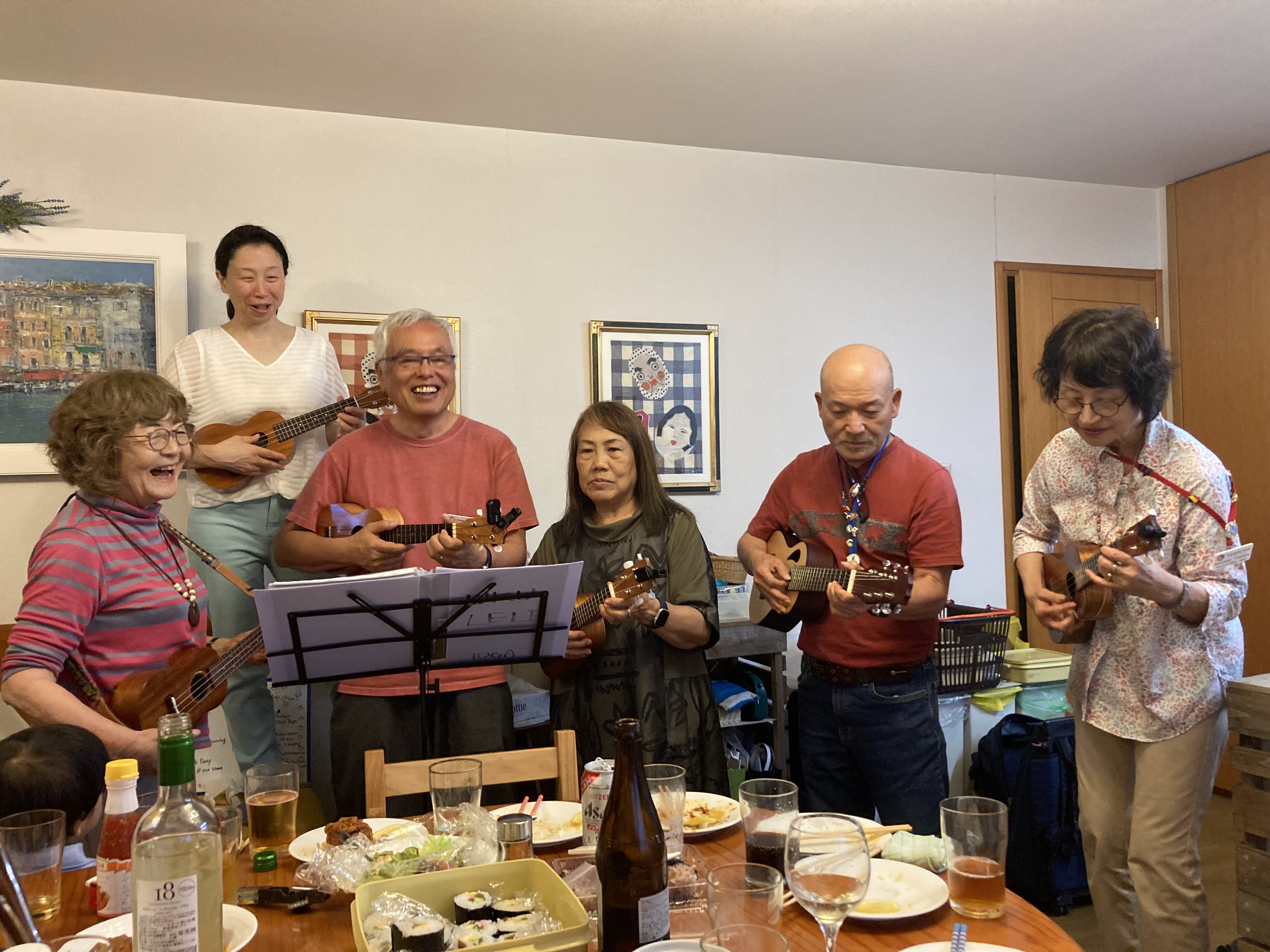
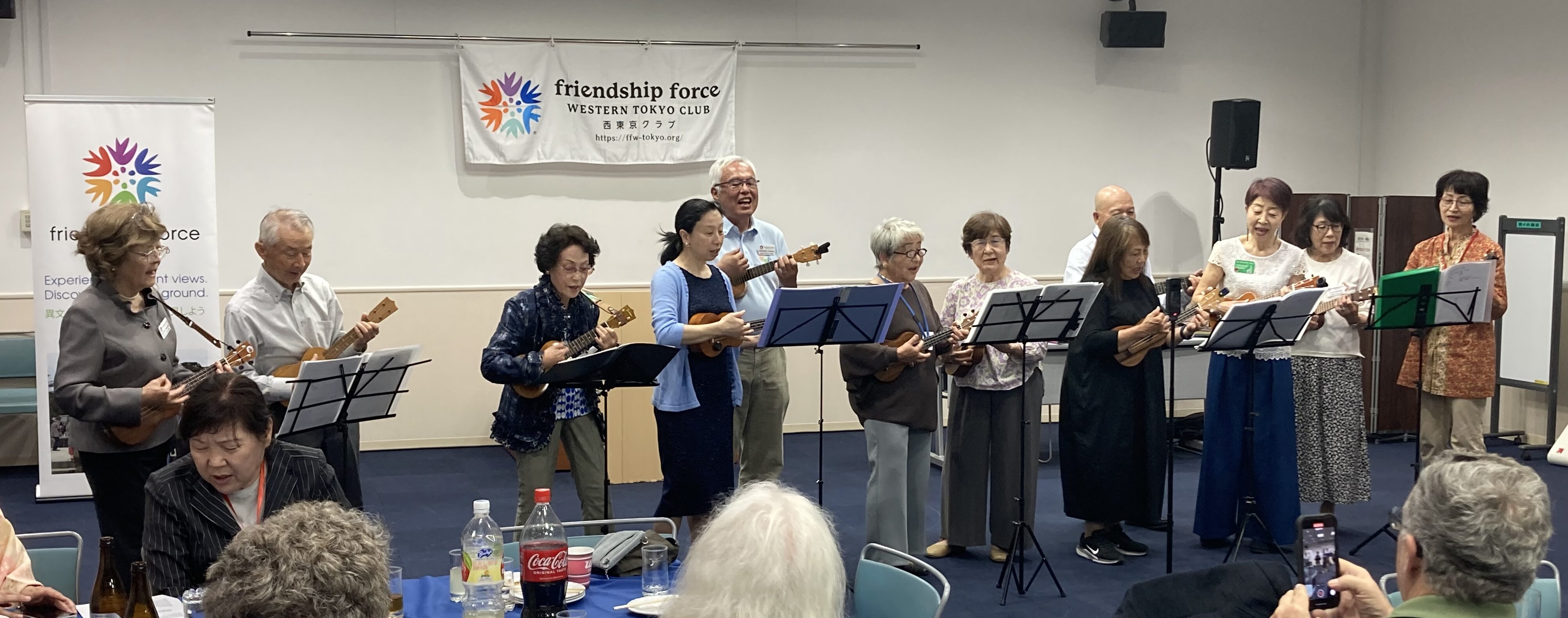
The party was lovely. In addition to us and the Togasaki’s, several other members came by. One of them brought his daughter, her niece, and grandchildren, so their was a big,  cheerful crowd. The Togasakis had a grand piano (that I would estimate took up about 25% of the floor space in the apartment), and Toga and Mitch played throughout the evening. There was also an encore performance of the ukelele club, with everyone singing along. The member’s daughter performed a mini tea ceremony for us — her family has been doing them for generations — and people told funny stories. It was a great way to spend our second-to-last evening.
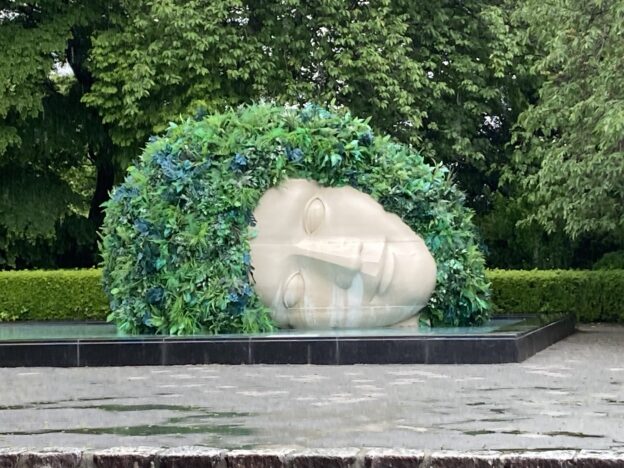
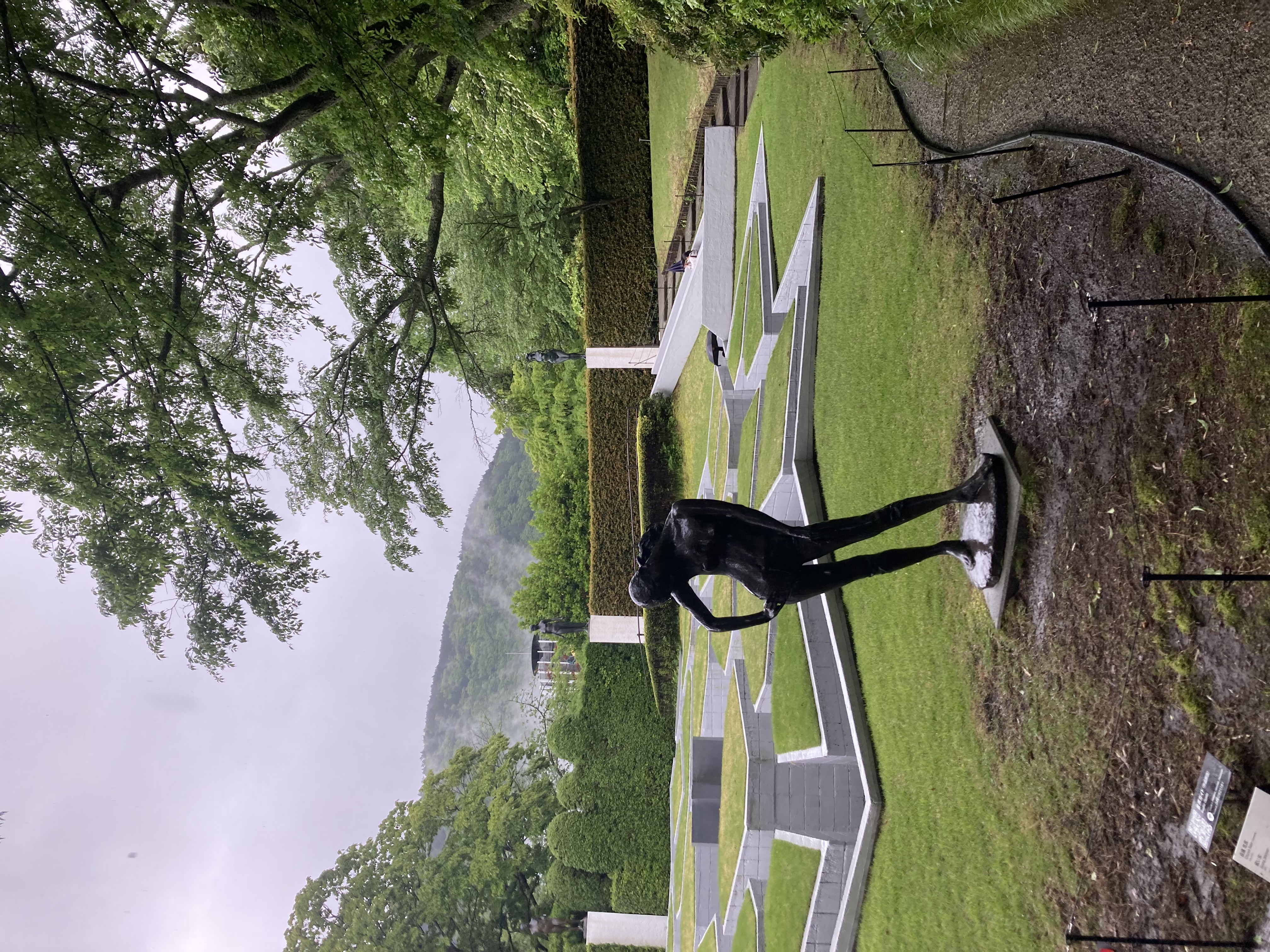 We’ve been pretty lucky weather-wise on this trip. We had a little rain on our second day in Kyoto, but since then, the skies have been clear. If anything, most days we’re feeling overheated. But today our luck ran out. We awoke to a steady drizzle, and things went downhill from there.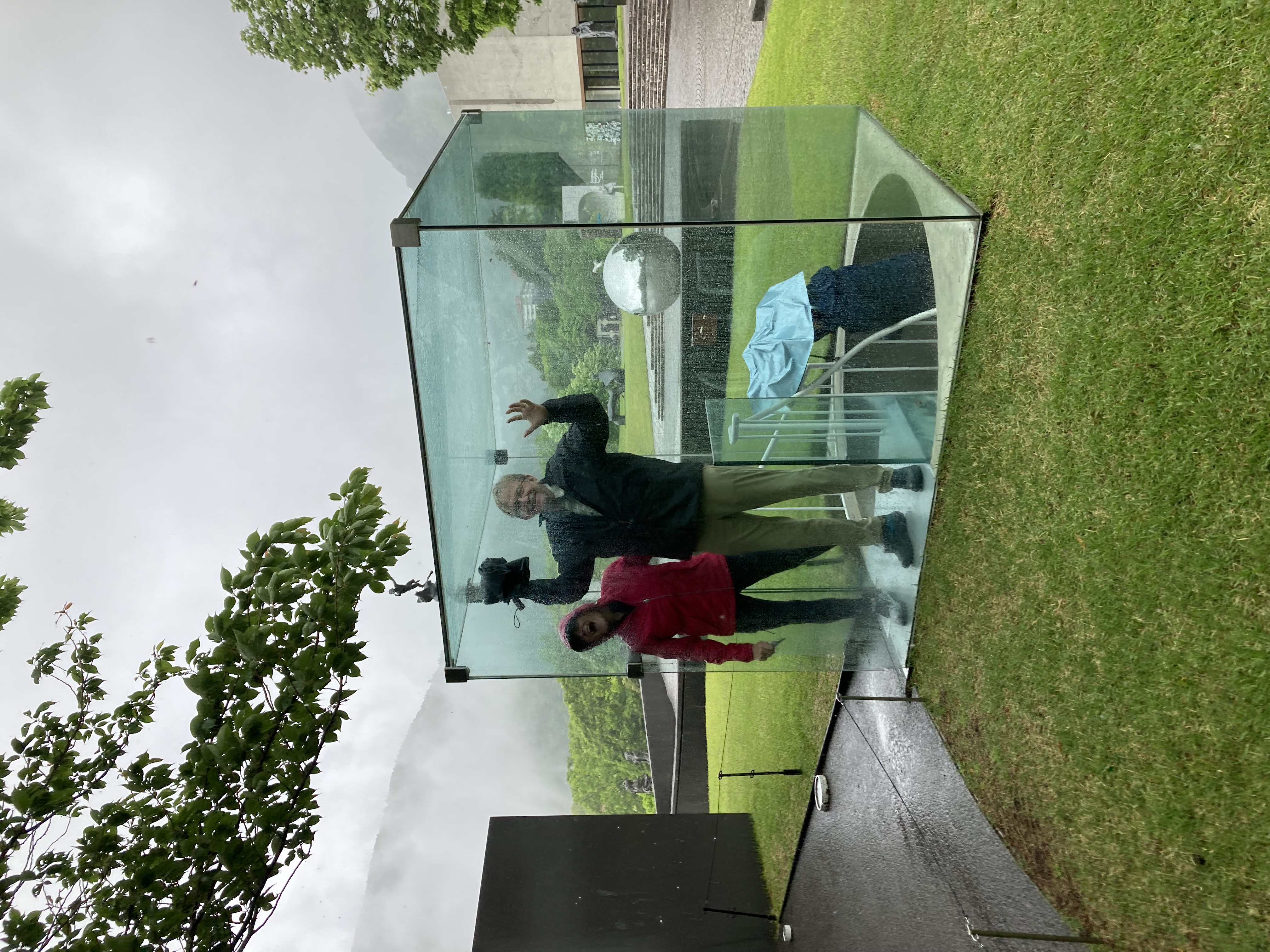
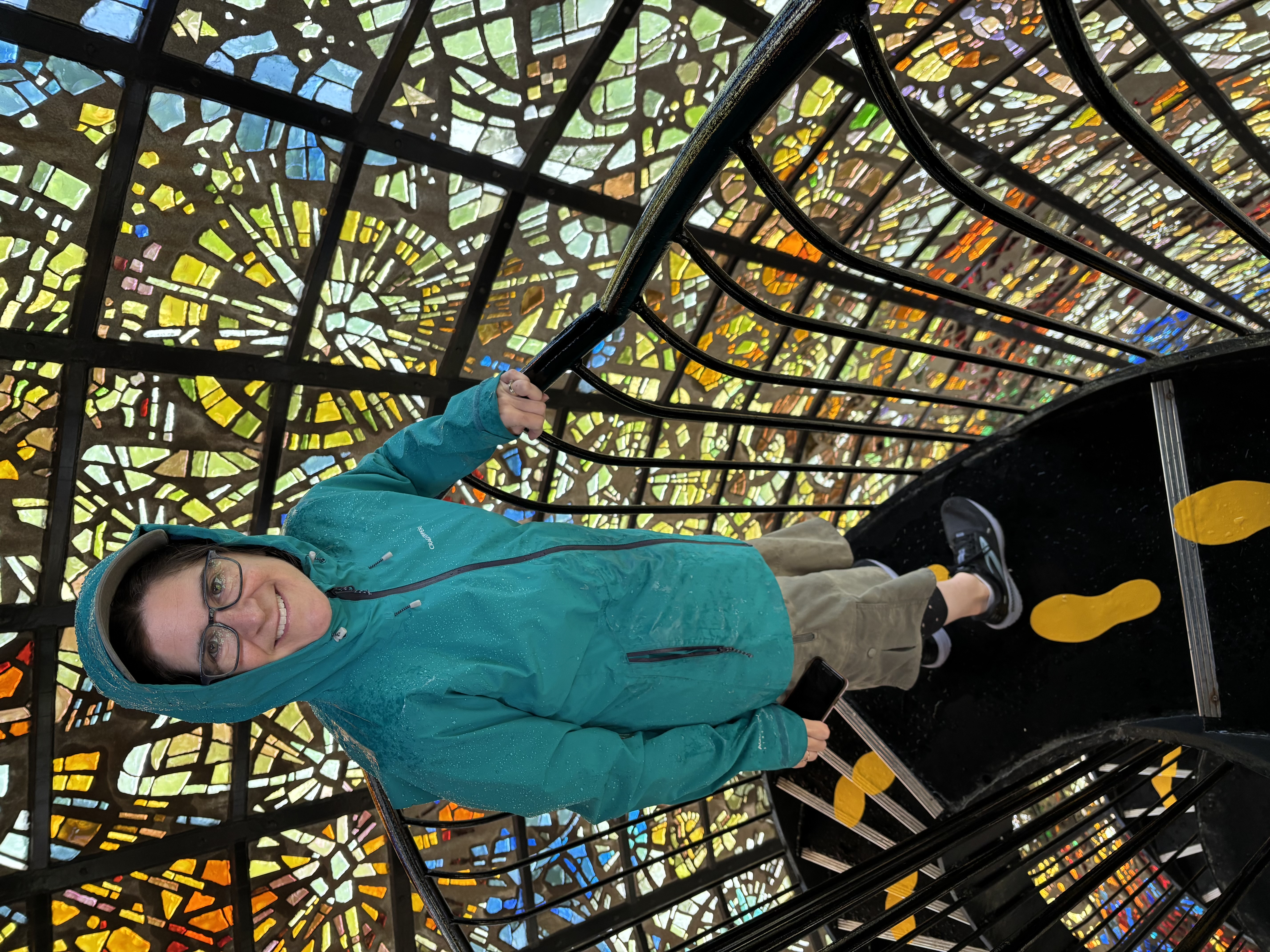
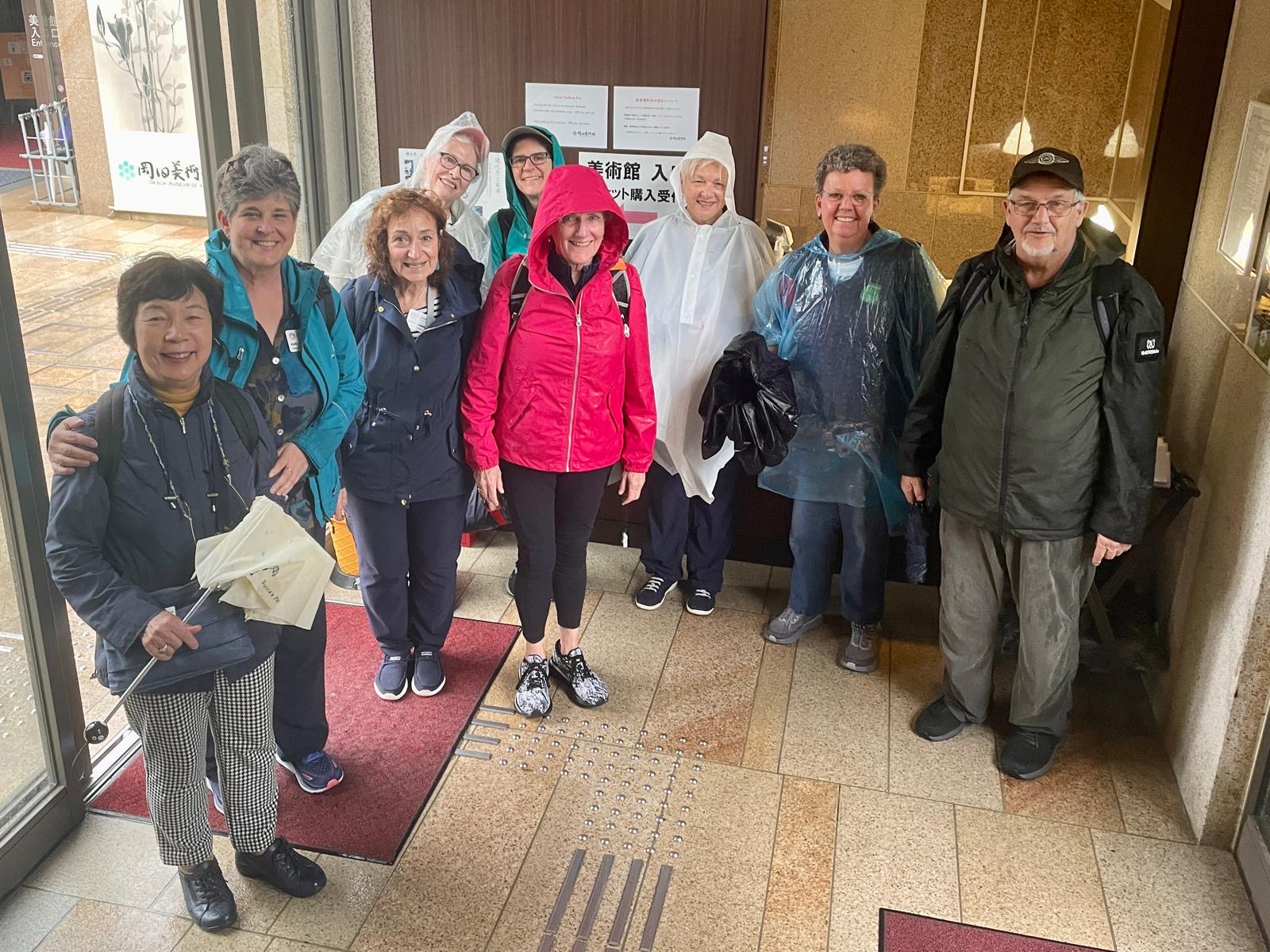
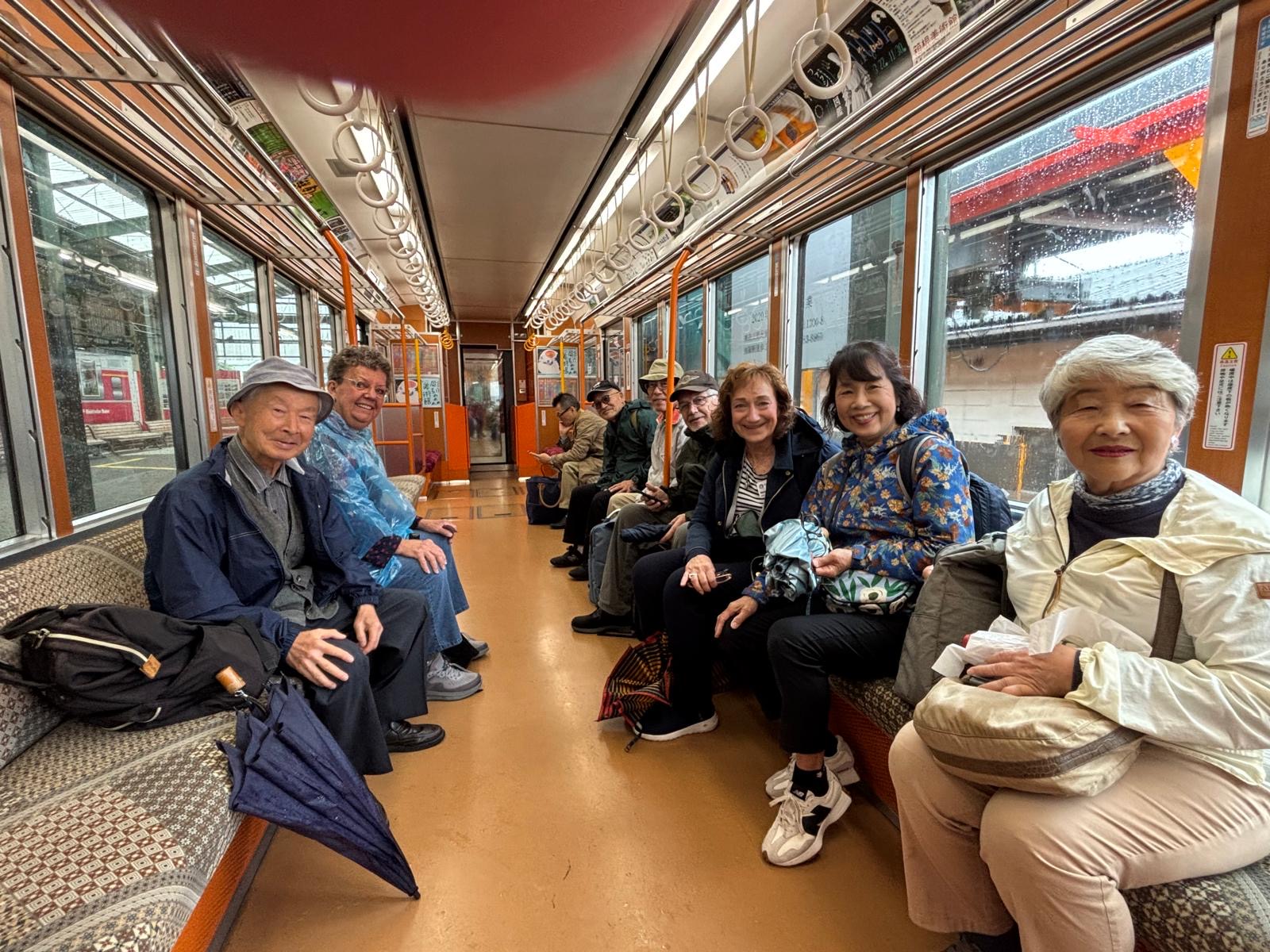

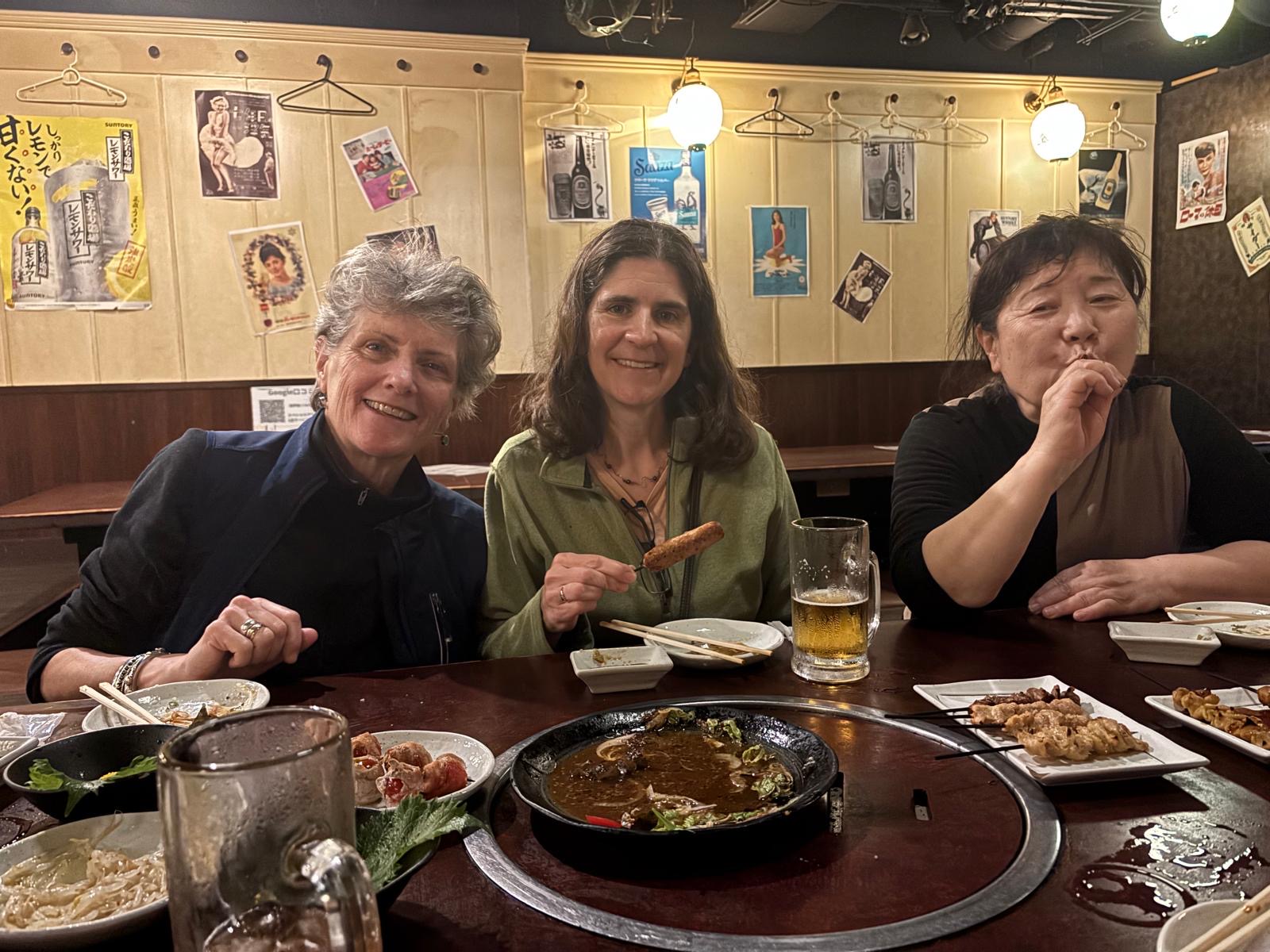
 What a treat we had in store for us today! The Tokyo group had arranged for us to spend two days outside the city in Hakone — an area of mountains, lake, and natural hot springs. We got up bright and early and Yoshie (who didn’t go on this trip) kindly brought us by train to our meeting point at Machida Station. From there we took another train (called the “Romance Car” for some reason) into the Hakone region, then a bus that wound up into the mountains, climbing steep switchbacks on a narrow road. (It reminded me a bit of our
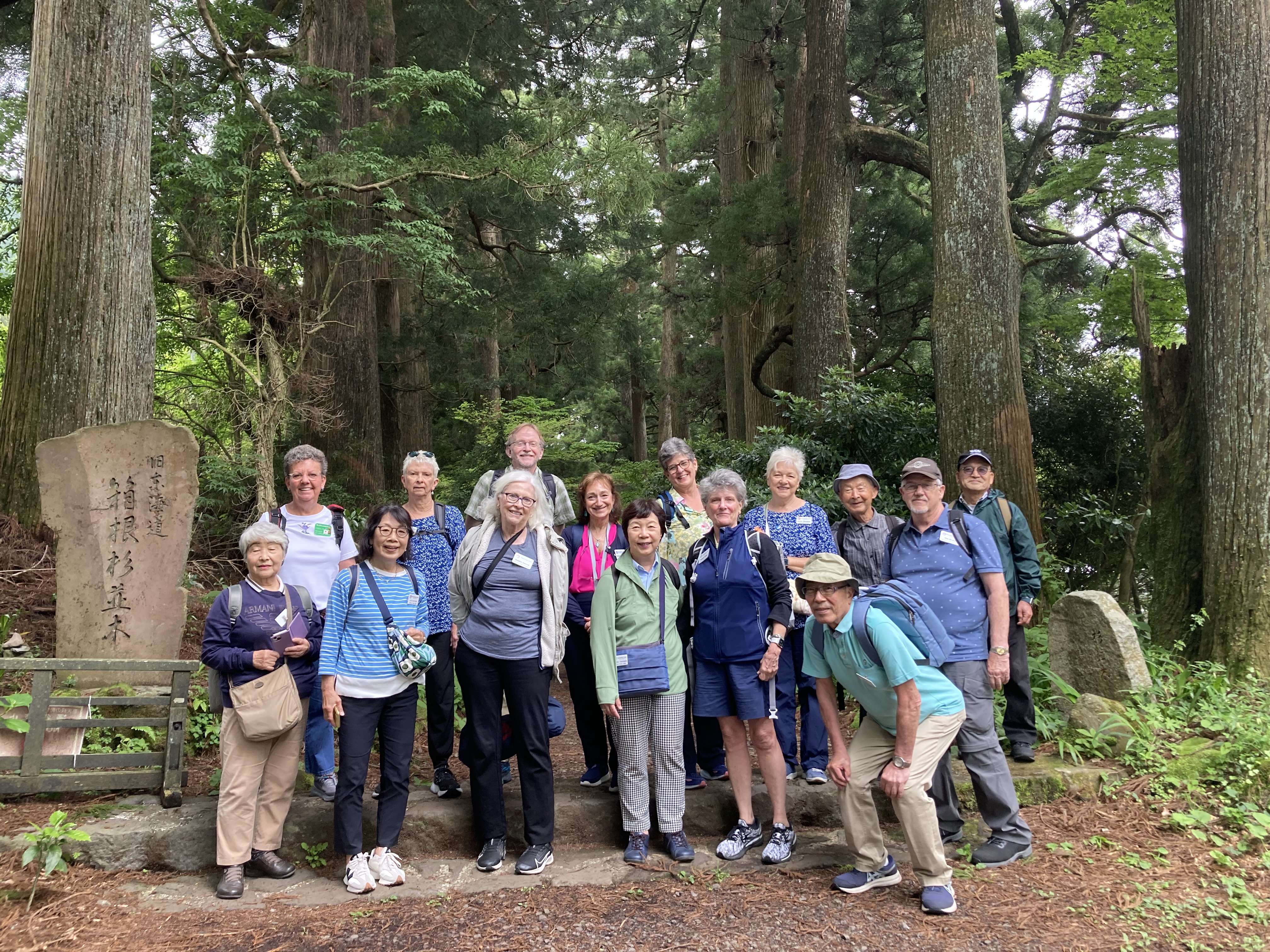
  Our day covered a lot of ground and was so well planned. We used several forms of transportation to explore all over the Hakone area, never retracing our steps. Our first stop was the Old Tōkaidō Road Ancient Cedar Avenue. This was a forest footpath that used to be the main route all the way from Tokyo to Kyoto, and a small section has been preserved here. It’s lined with giant, ancient cedar trees that were supposedly planted in 1618. It was amazing to think that this same route had been walked by countless Samurai soldiers several centuries earlier.
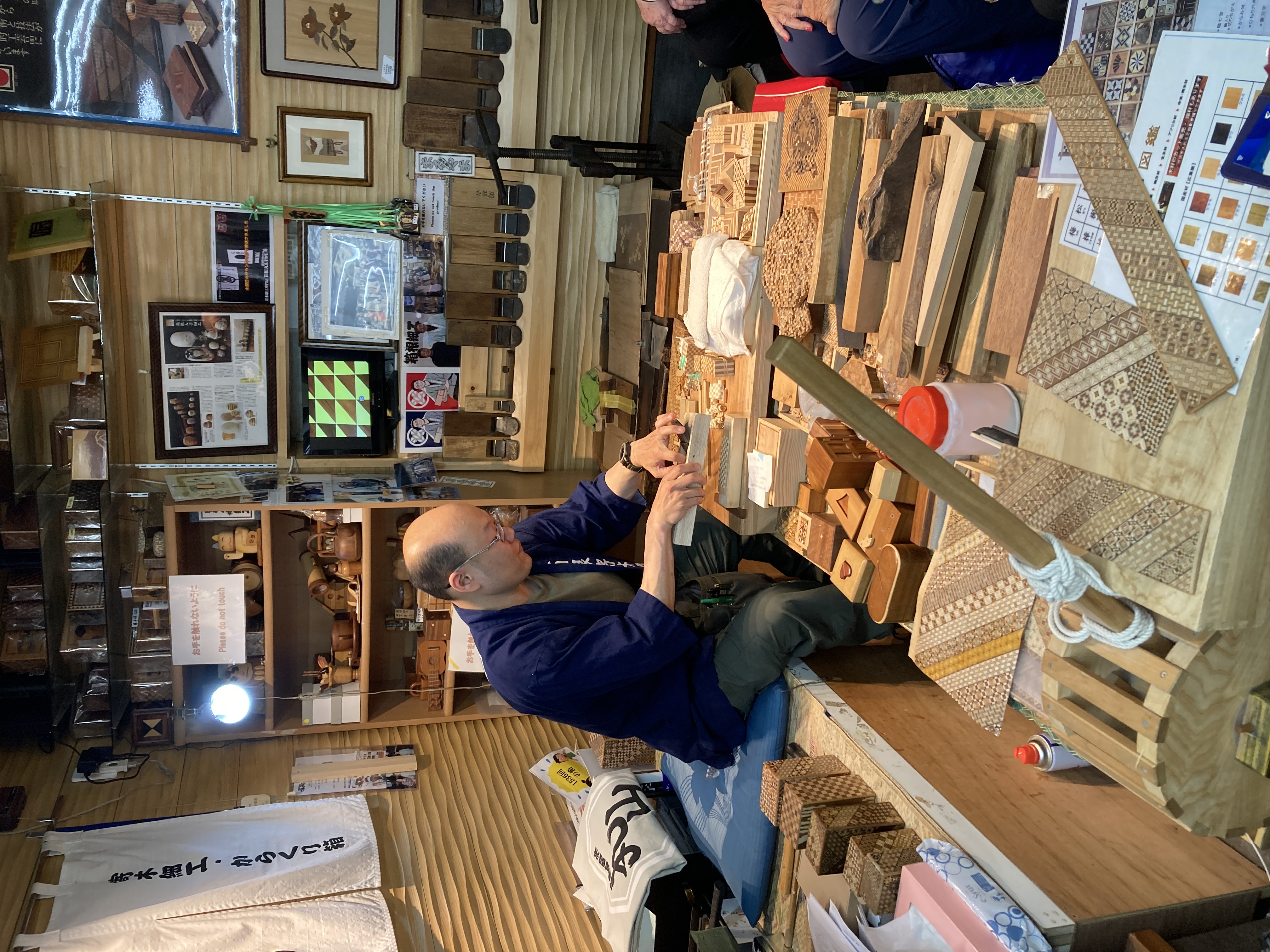
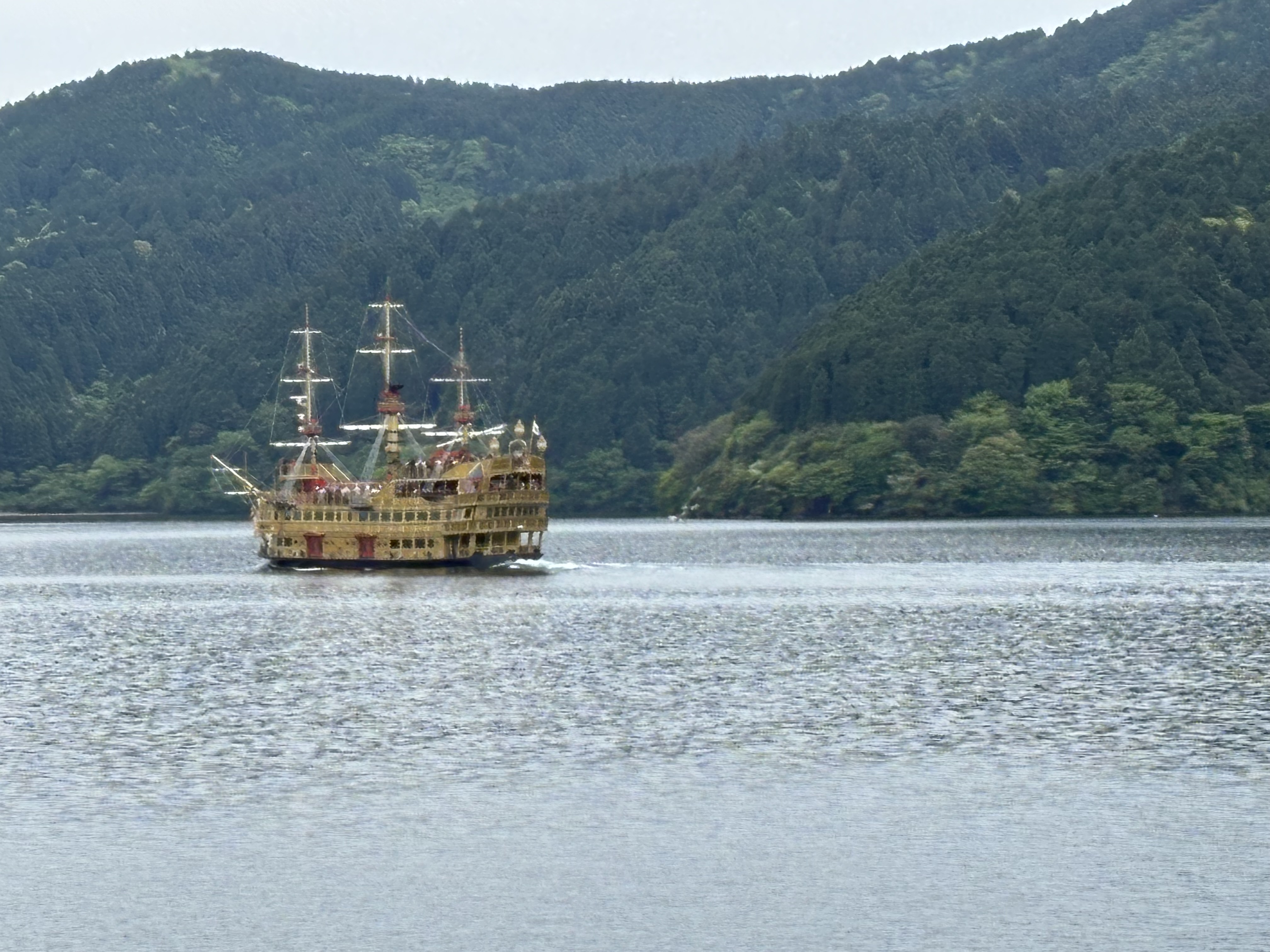 exhibits, there are some fascinating shops lining the streets. We went into one and saw a demonstration of a craft called Yosegi Zaiku that’s been practiced here for centuries. It involves combining different types of wood into elaborate patterns, then using a special blade to shave off thin slices of the design. The result looks like thick paper and can be glued into furniture, boxes, wall hangings, etc. The shop specialized in Japanese puzzle boxes, which use Yosegi Zaiku to create beautiful boxes that require an elaborate series of steps, or other clever mechanisms, in order to be opened. We saw a demonstration of several, including one that involved 54 steps (the craftsman
 demonstrating got through it in a matter of seconds), and one that started out as an oval and had to be twisted into a heart shape in order to be opened. The craftsmanship was amazing.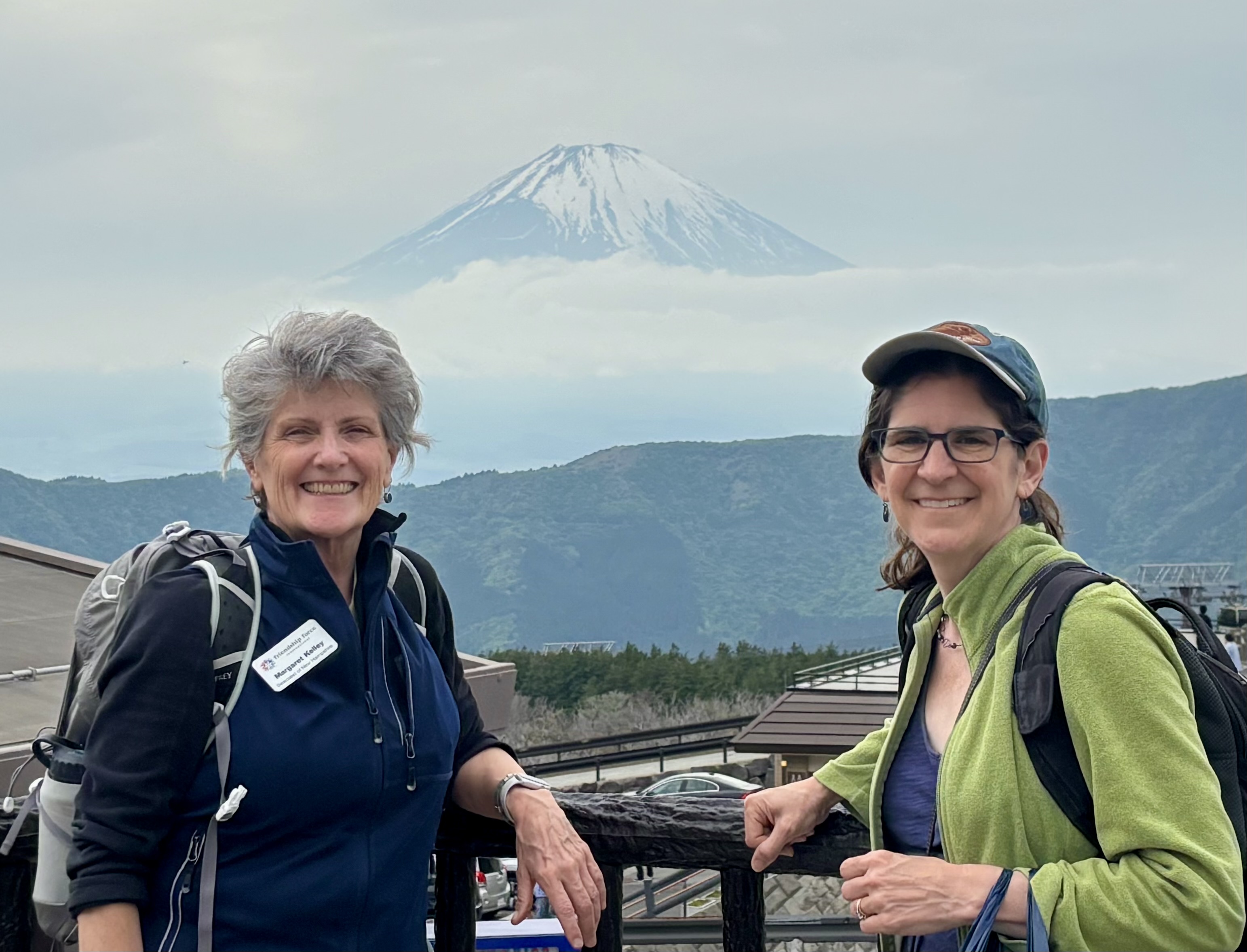
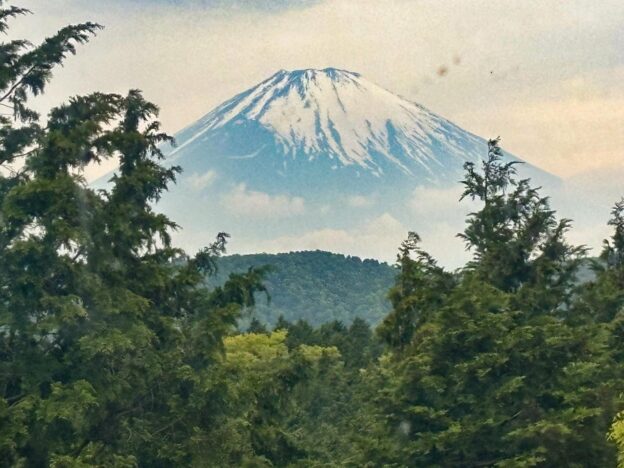
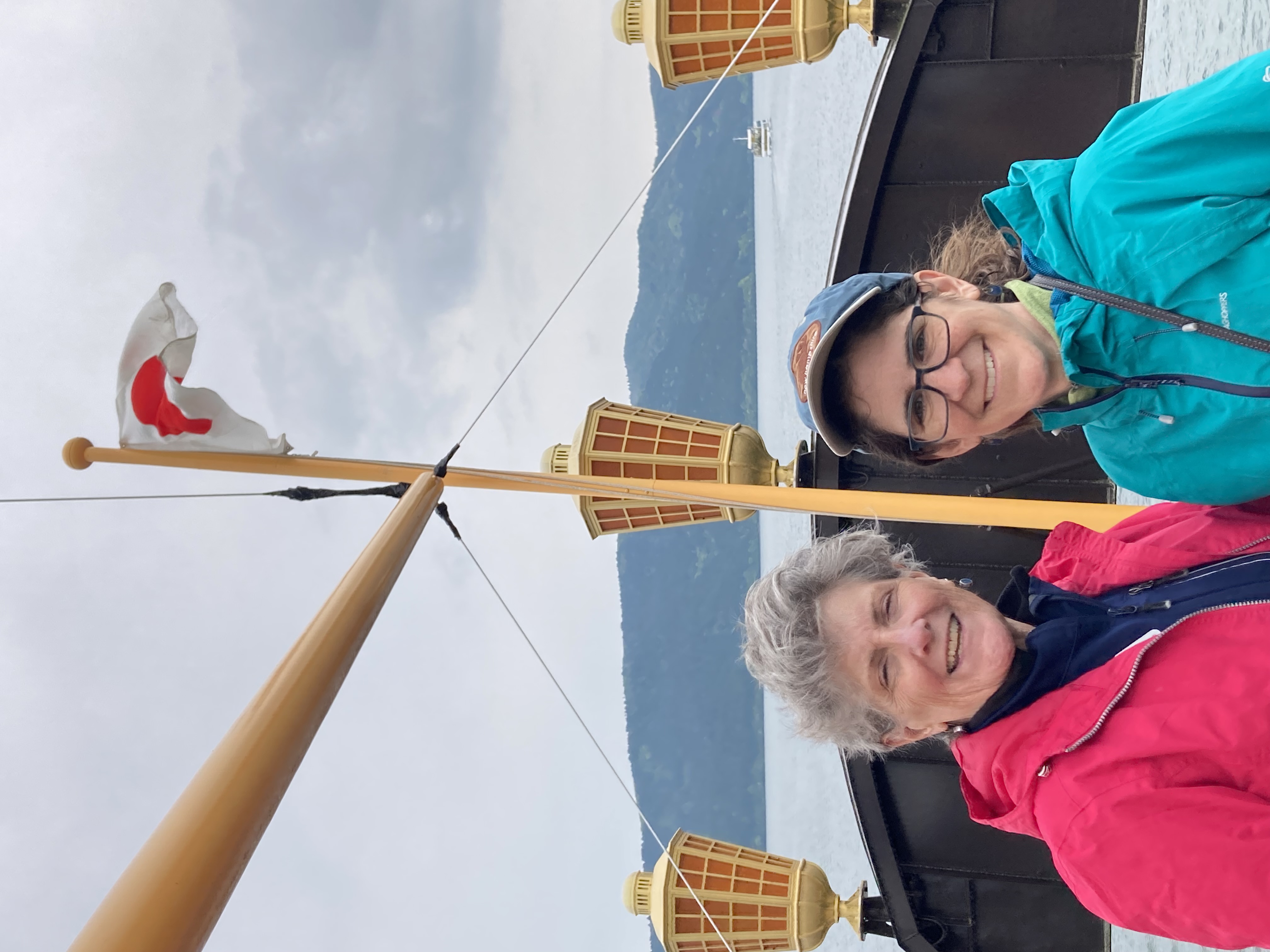
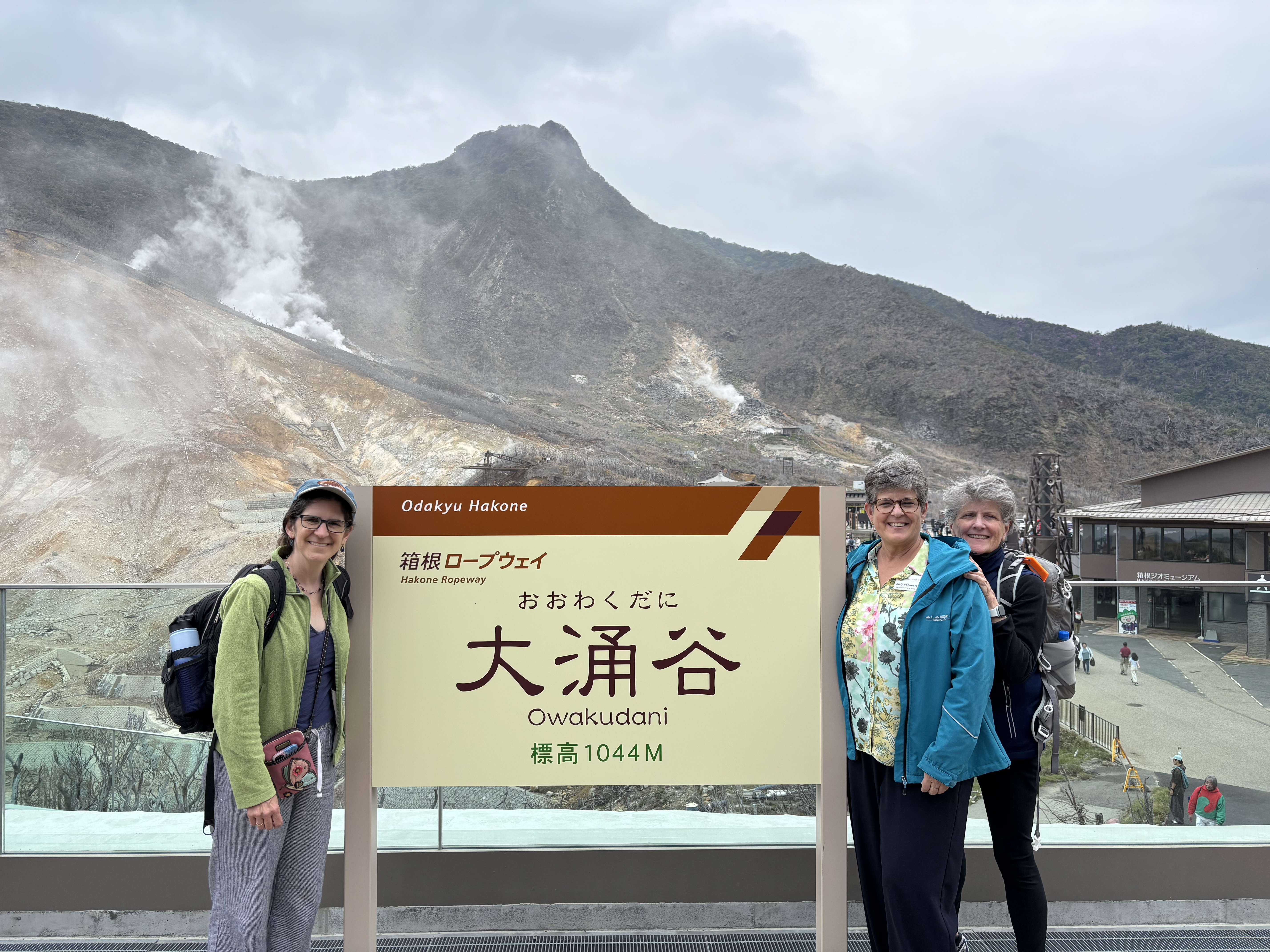
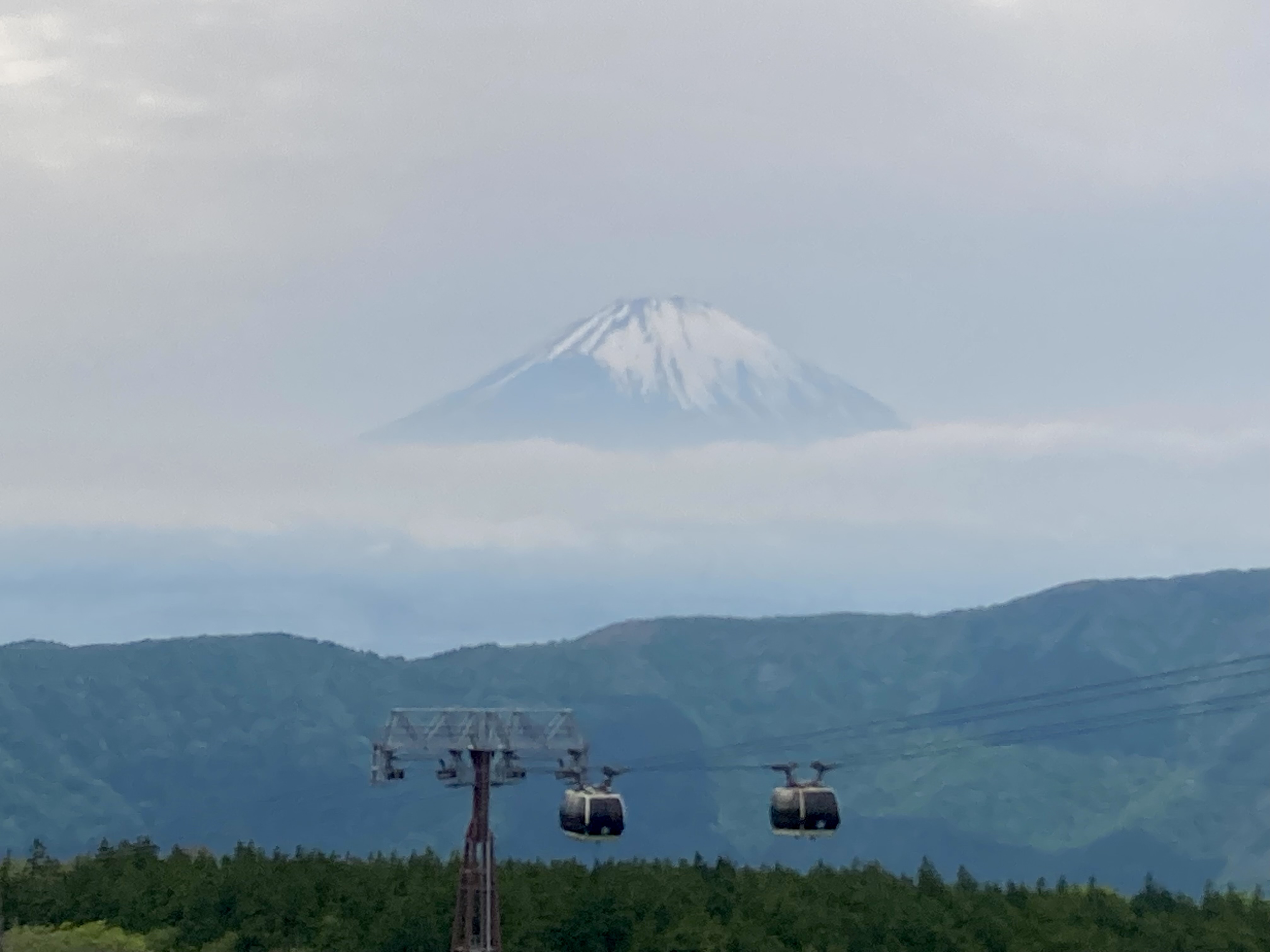
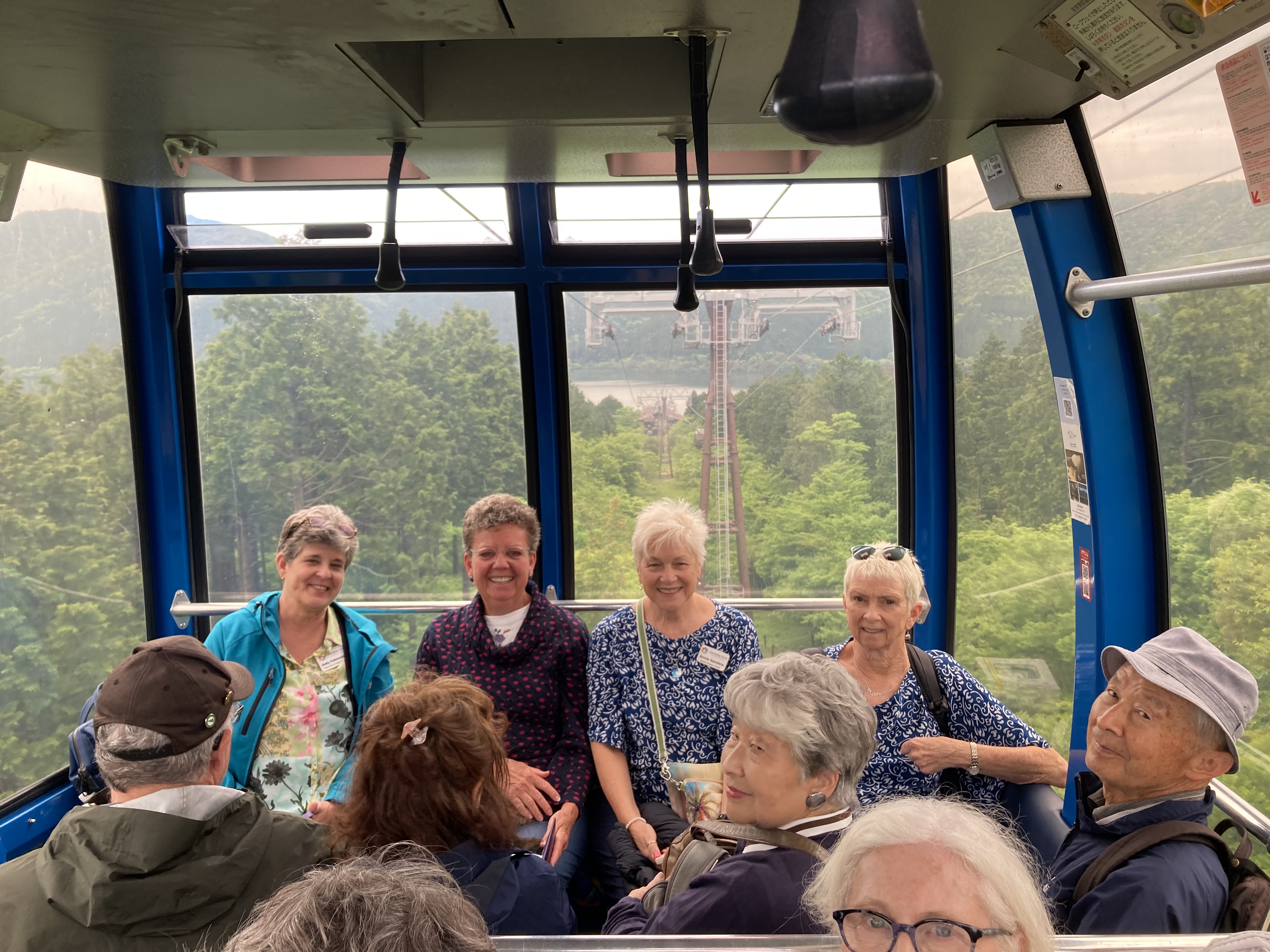 The boat dropped us off near one of the stations of the Hakone Ropeway, a series of cable cars that traverses the mountains and allows you to get from place to place without relying on roads (while also offering spectacular views in the process). During the ride, one of our hosts cried out “Fuji!” and we all turned around to see that the famous mountain had emerged from the clouds and was looming dramatically off to the side of the car. Never have I seen such a dramatic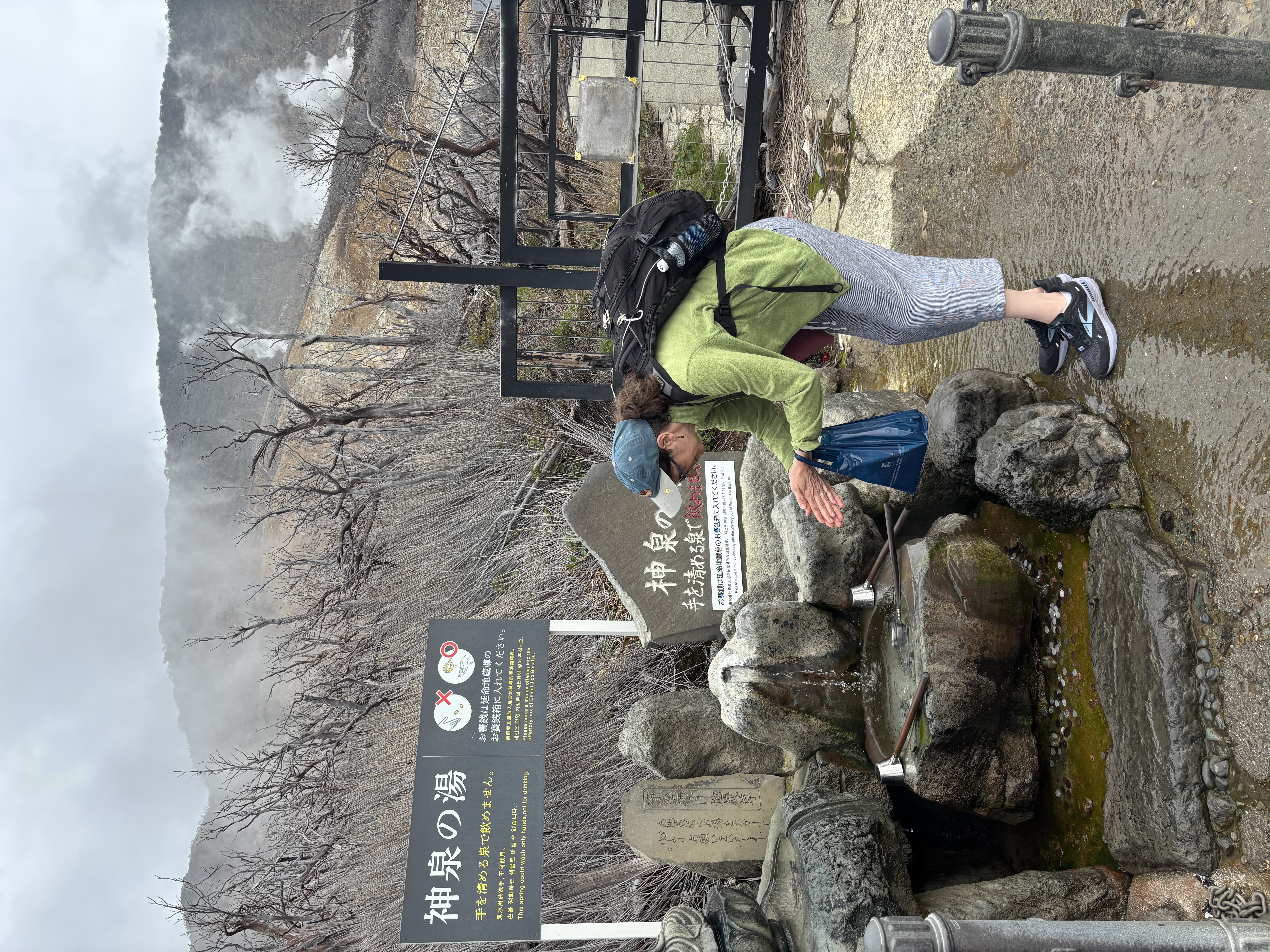
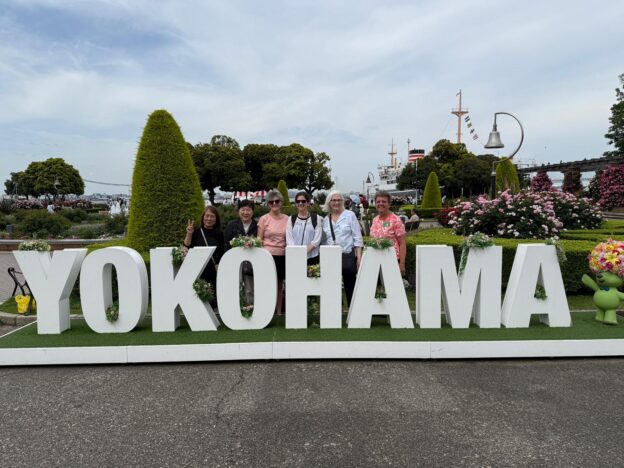
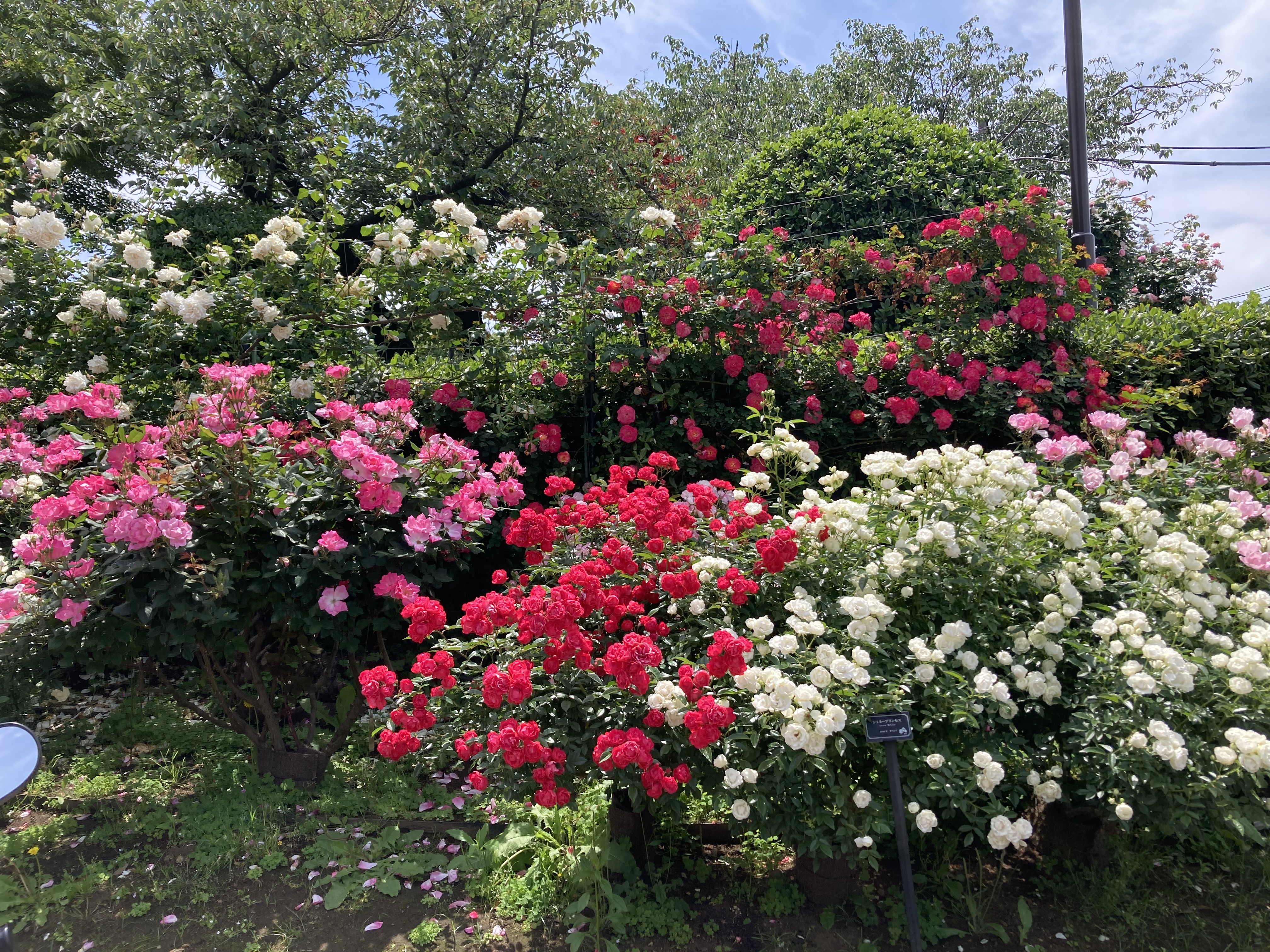
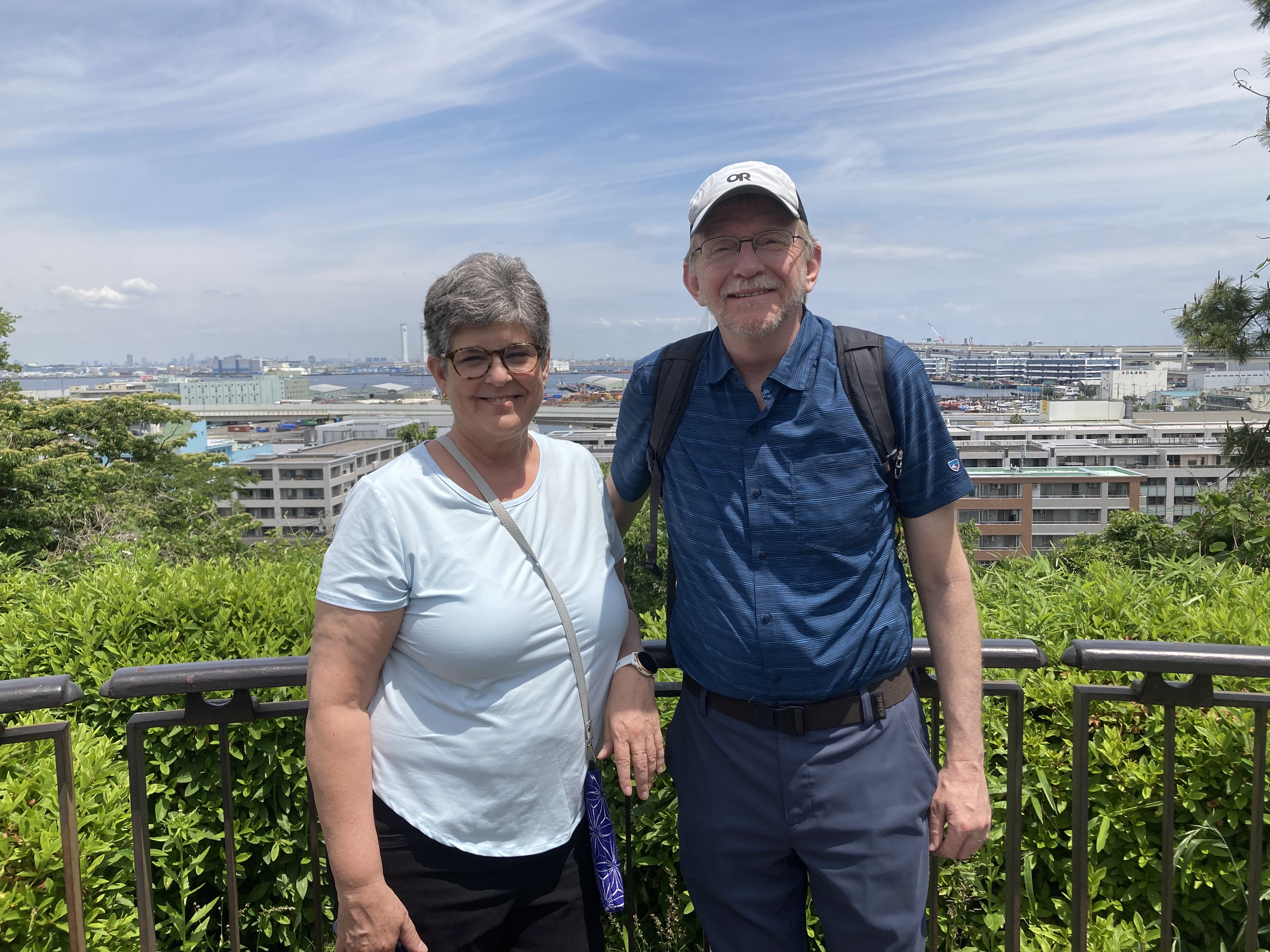
 This morning we set out to explore Yokohama, the city where Yoshie lives. Though a suburb of Tokyo, it’s also the third-largest city in Japan. We set off on the train with just Margaret, Yoshie, and I, but over the course of the day we gradually met up with other group members.
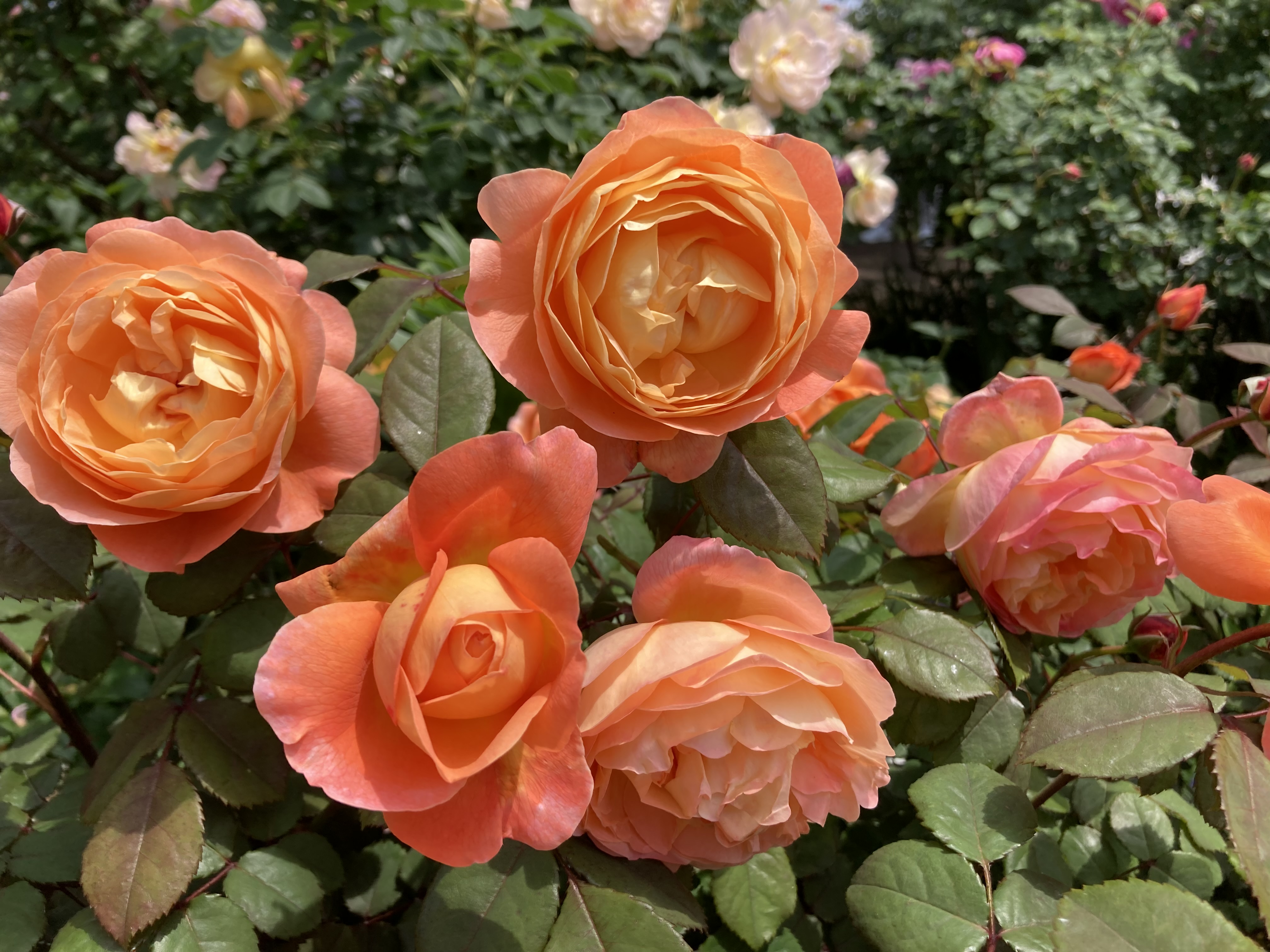
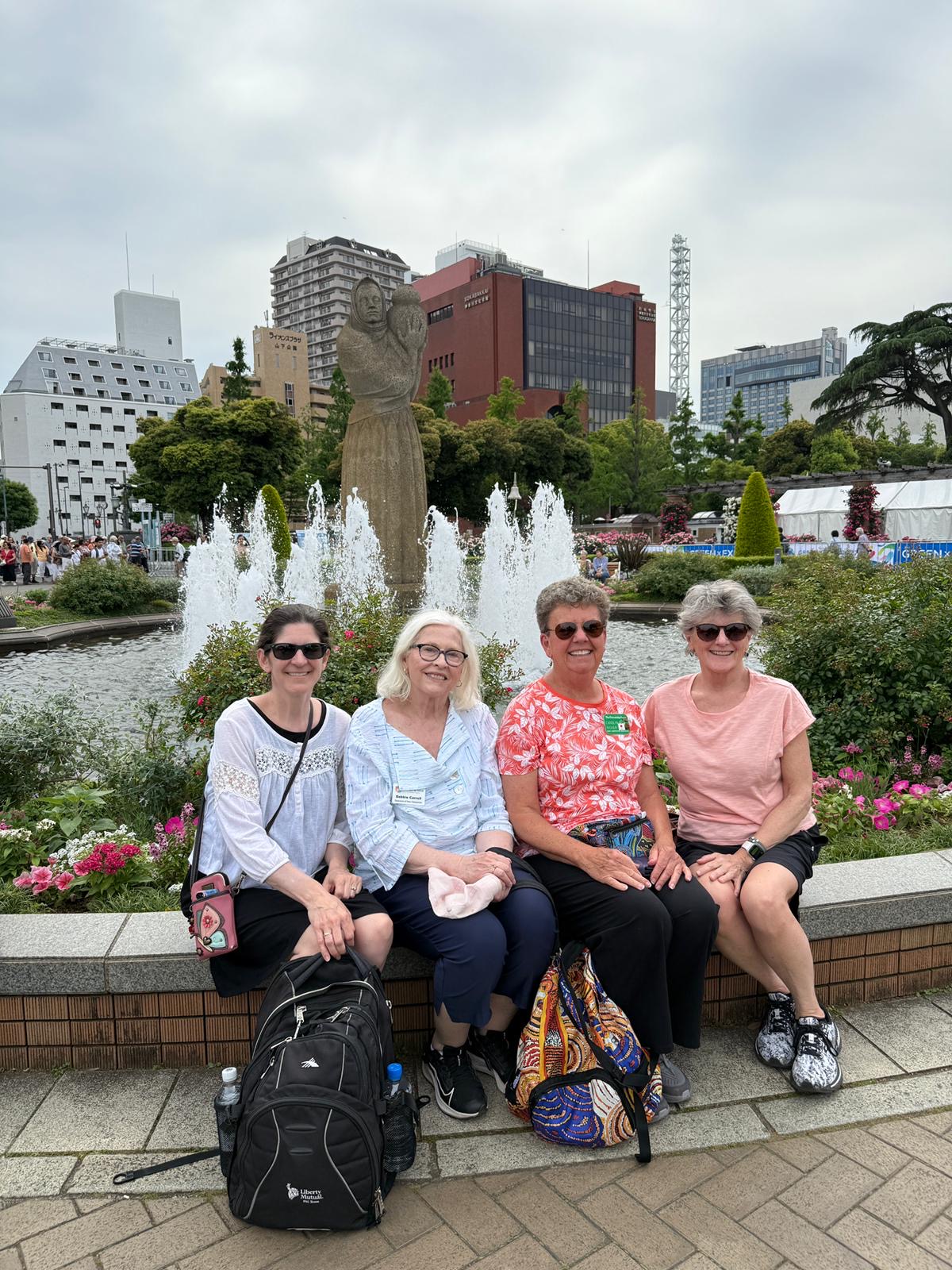
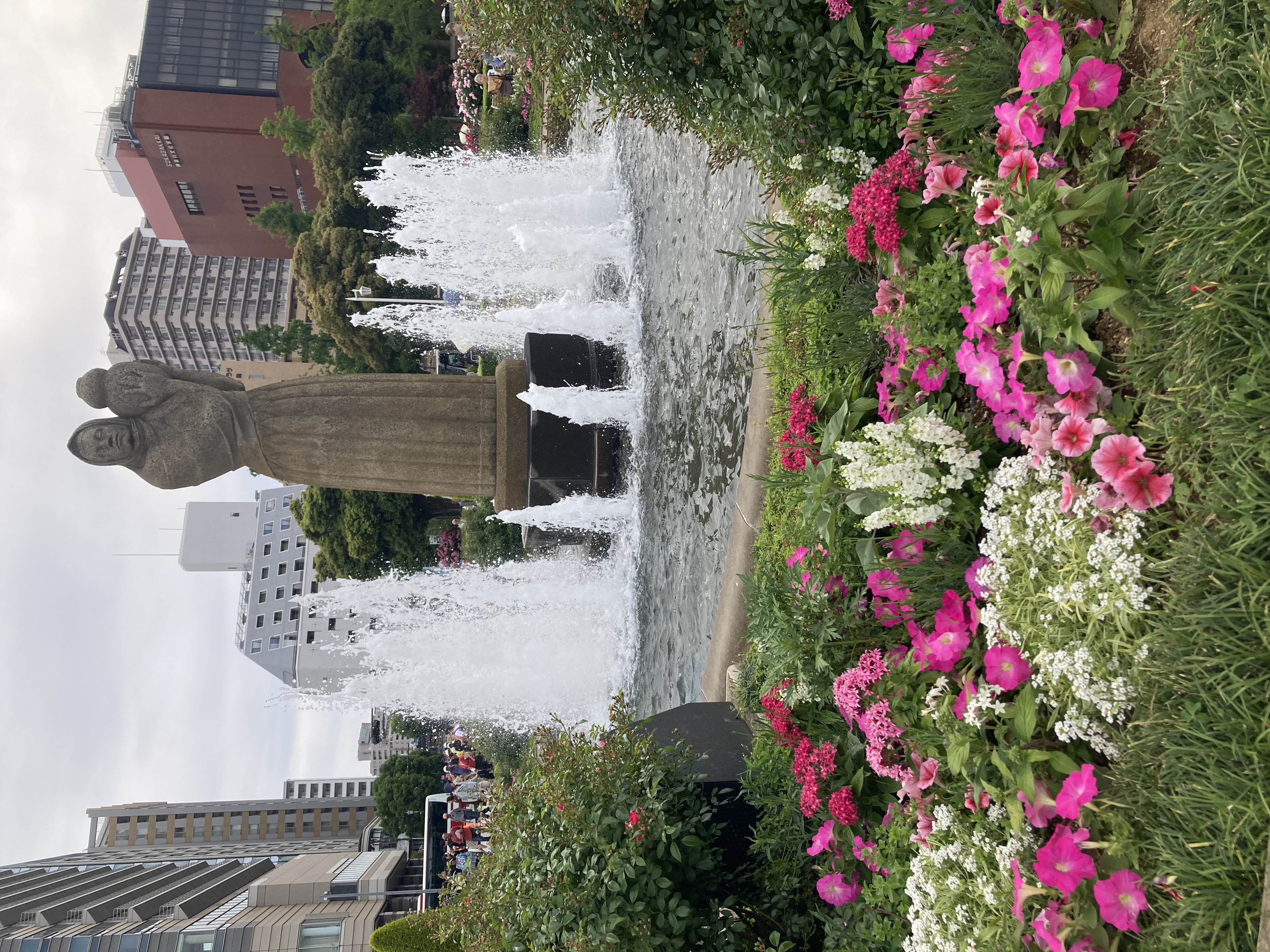 surrounded by bursting blooms on all sides. Photos don’t really do it justice, but it was lovely strolling along with lush paths and under the rose-laden arbors. We came across a whole procession of people with tiny, elaborately-styled dogs in baby carriages, lined up waiting for professional photographs to be taken. The garden was also along the coastline, so we could see the harbor and the Yokohama skyline on the far side. The harbor breeze was a relief, because the day was quite hot. (Most Japanese women carry double-layer umbrellas to shield themselves from the sun — maybe that’s why they all look so young.)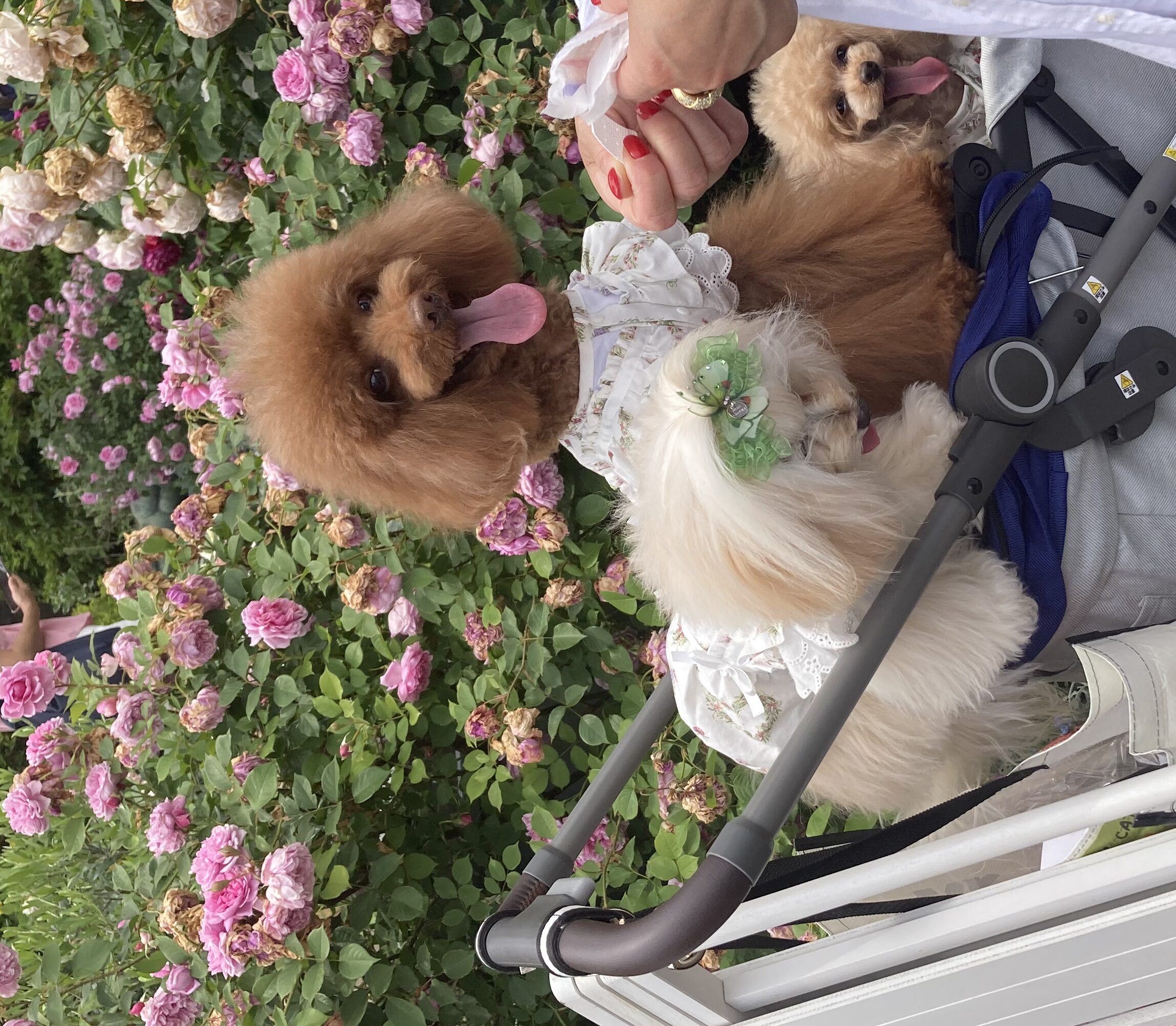
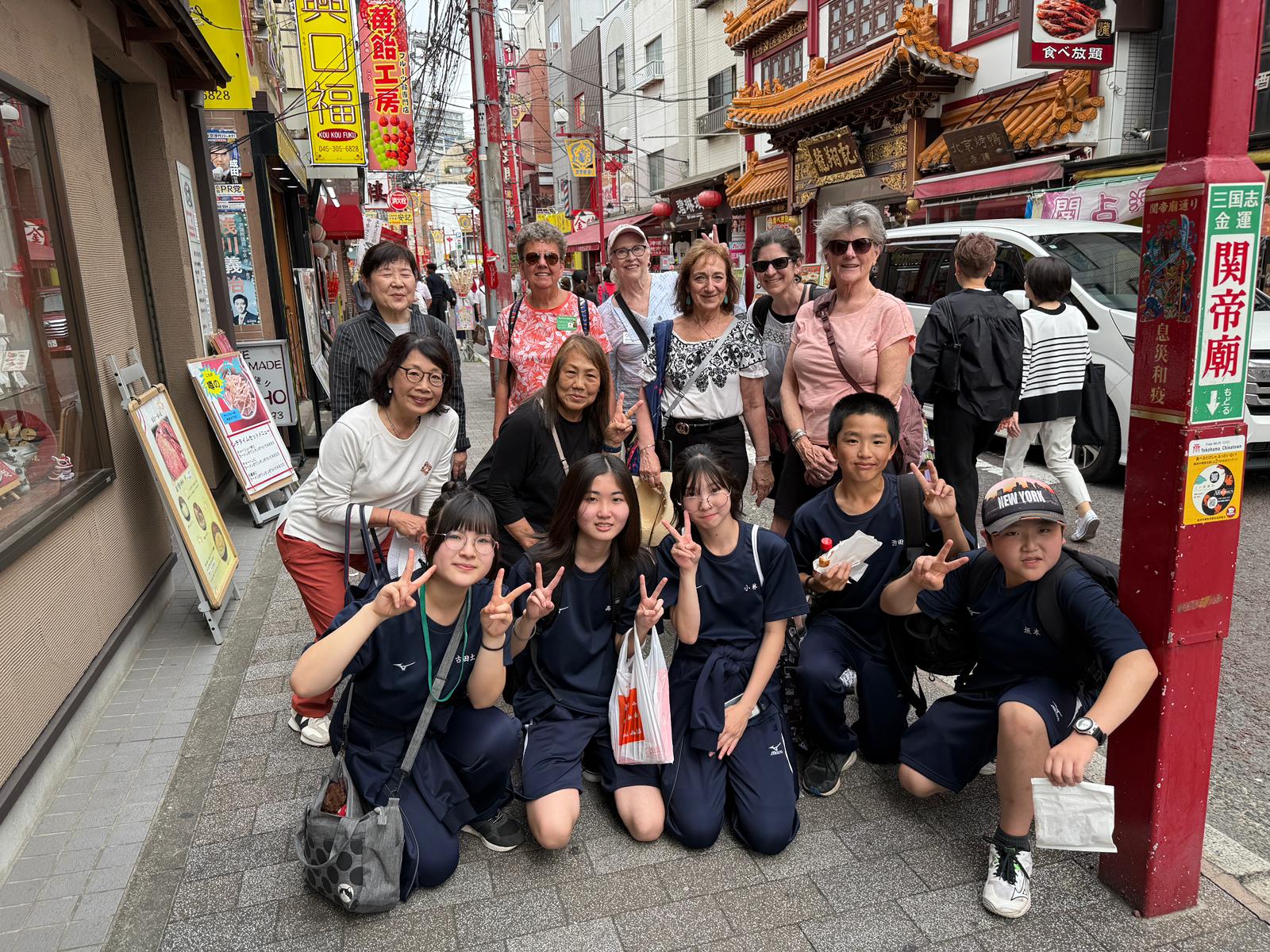
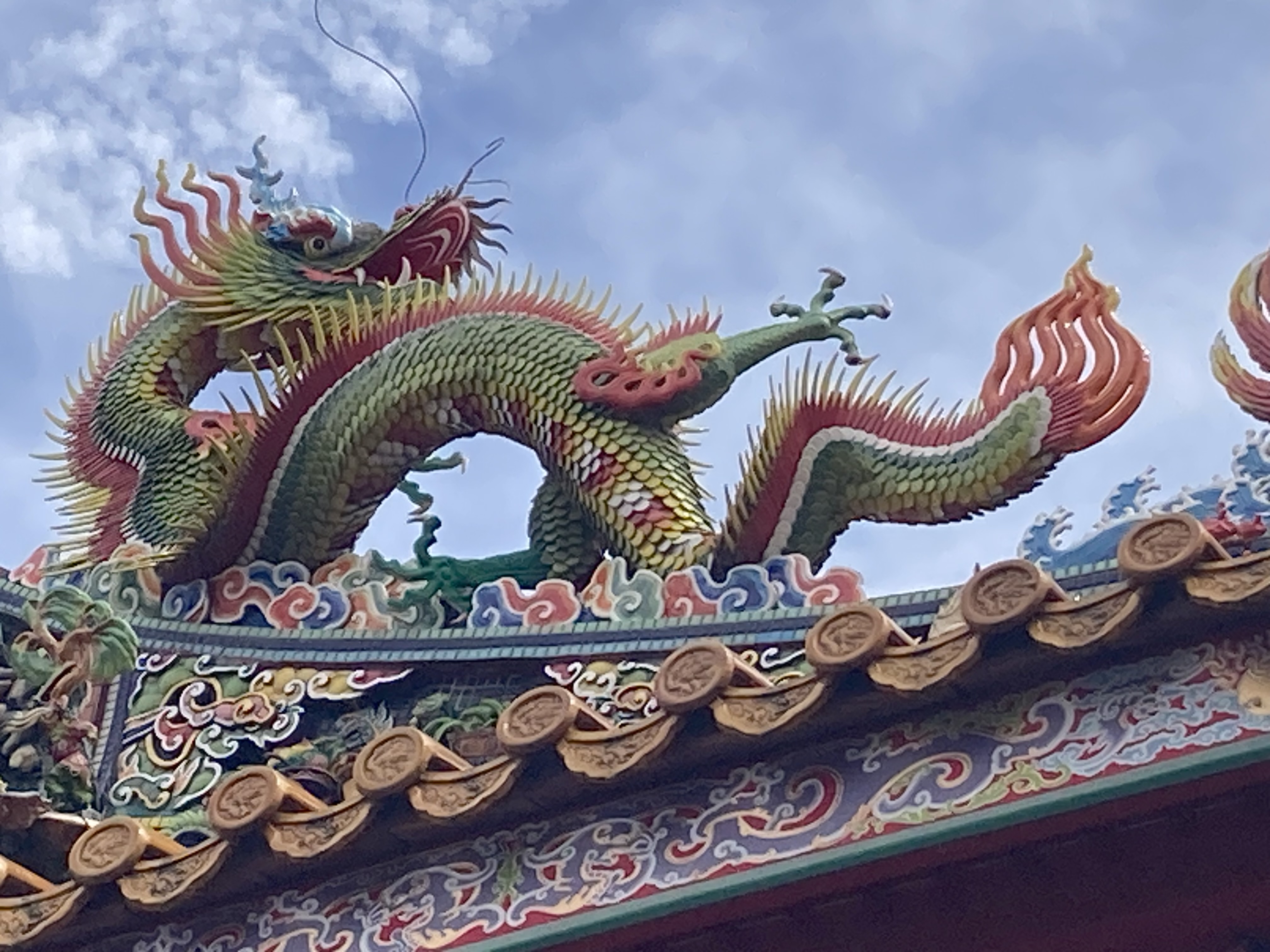
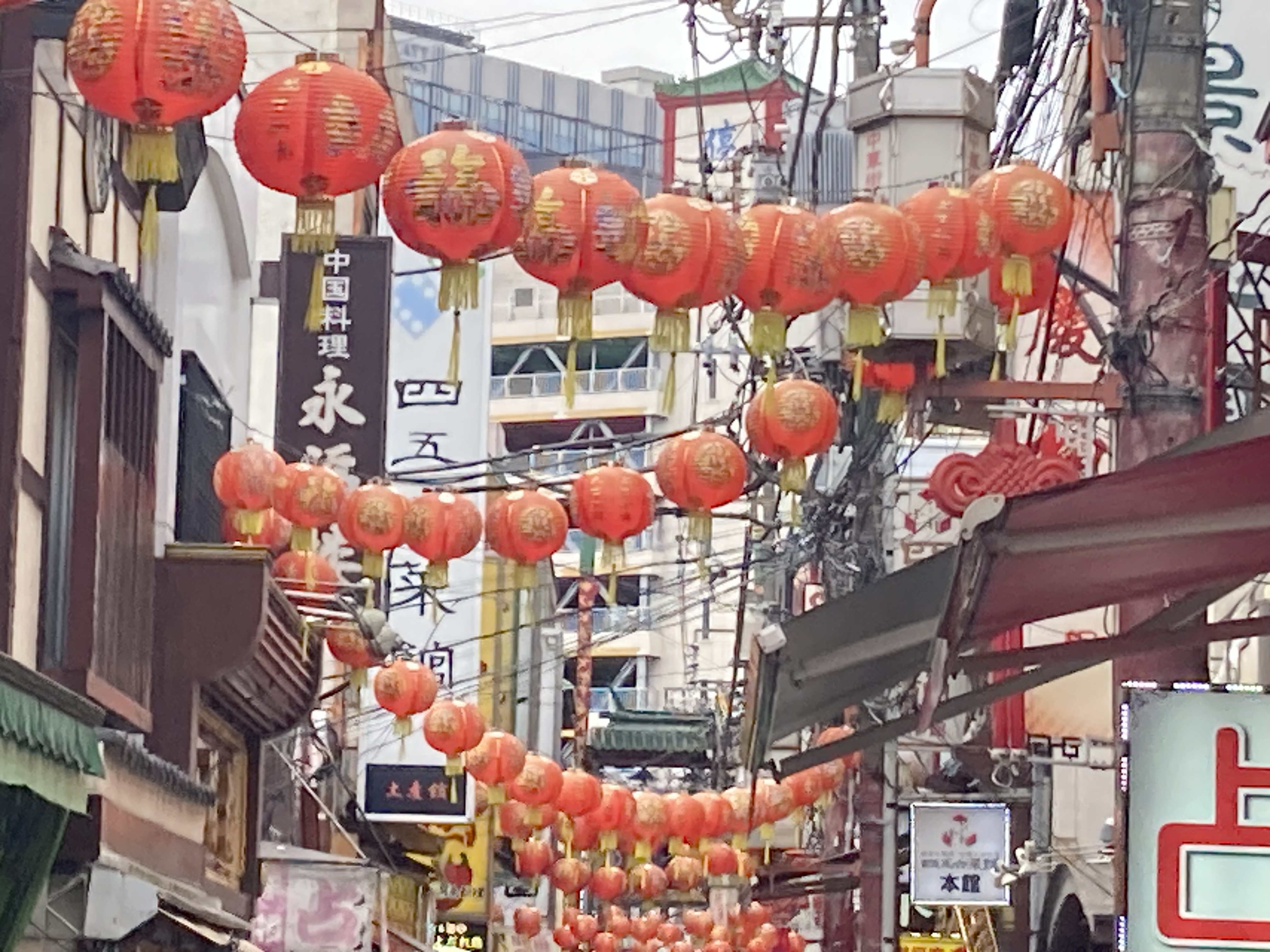
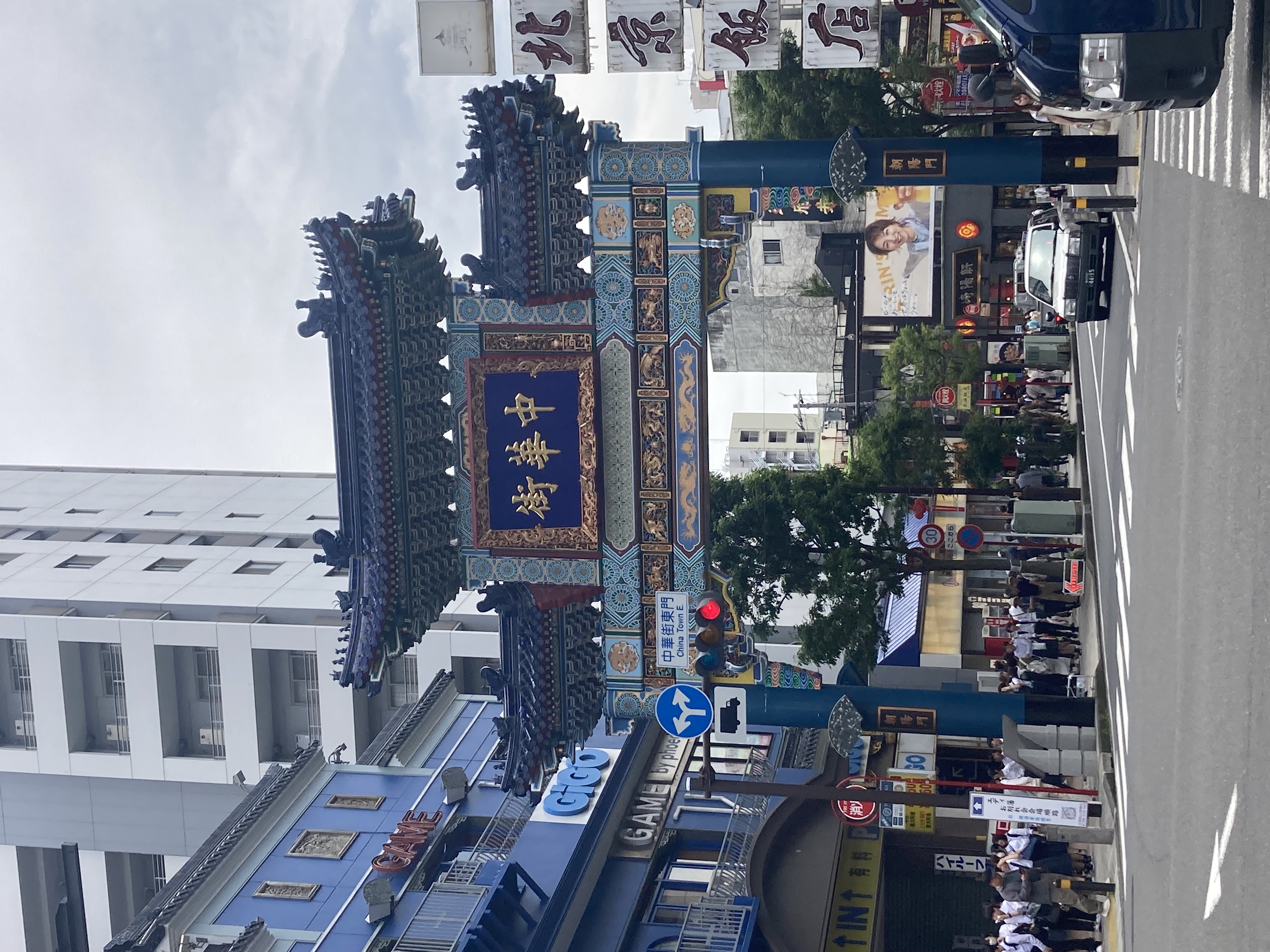 marking the entrance, and walked down narrow streets lined with Chinese shops and restaurants, paper lanterns hanging overhead. We had an excellent “lunch set” meal, containing soup, dumplings, an entree, rice, and dessert for about $6, in our own private room in the restaurant. Afterward we went around the corner to see an elaborate temple, with colorful dragons carved into every corner of the exterior. We came across a group of Japanese middle school students who chatted with us for a bit (they were just starting to learn English) and posed for a photo.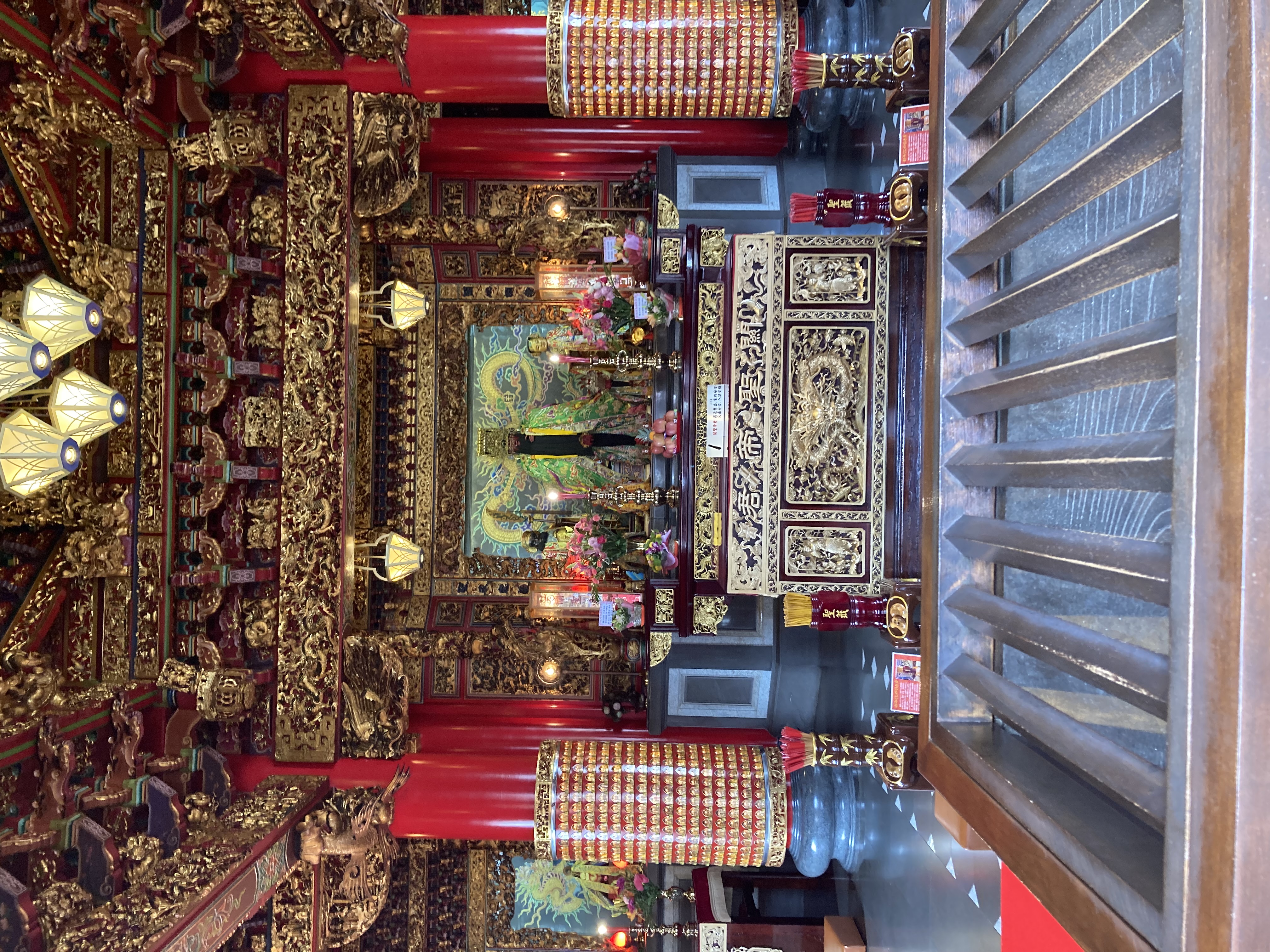
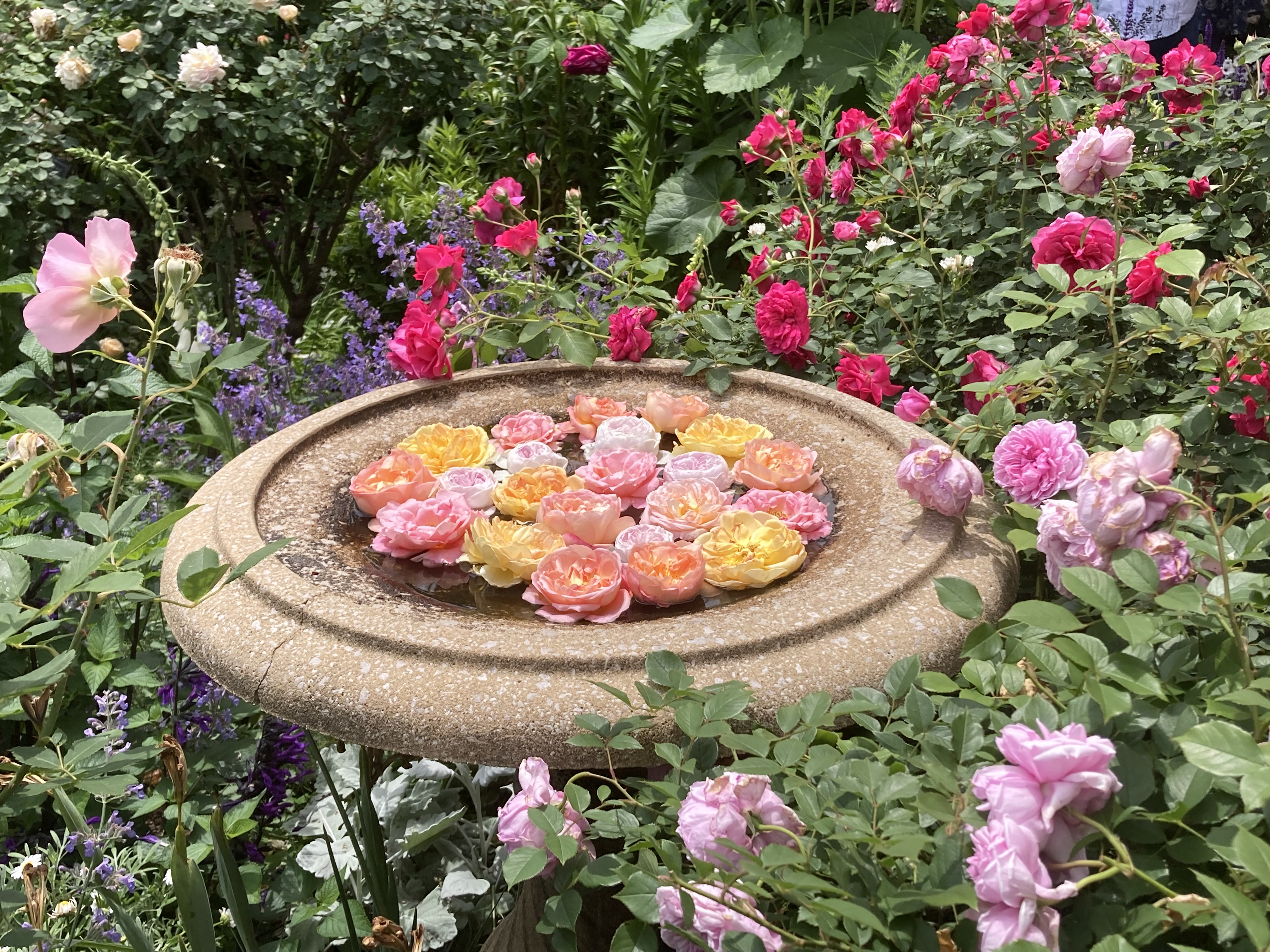
 Right down the street was yet another beautiful rose
 garden, bursting with blooms. We took a quick stroll through then went to the nearby ship terminal. The top of the building is a small park where you can see nice views of the harbor. This is a major stop for cruises, and is built to accommodate large ships, but there were none here today.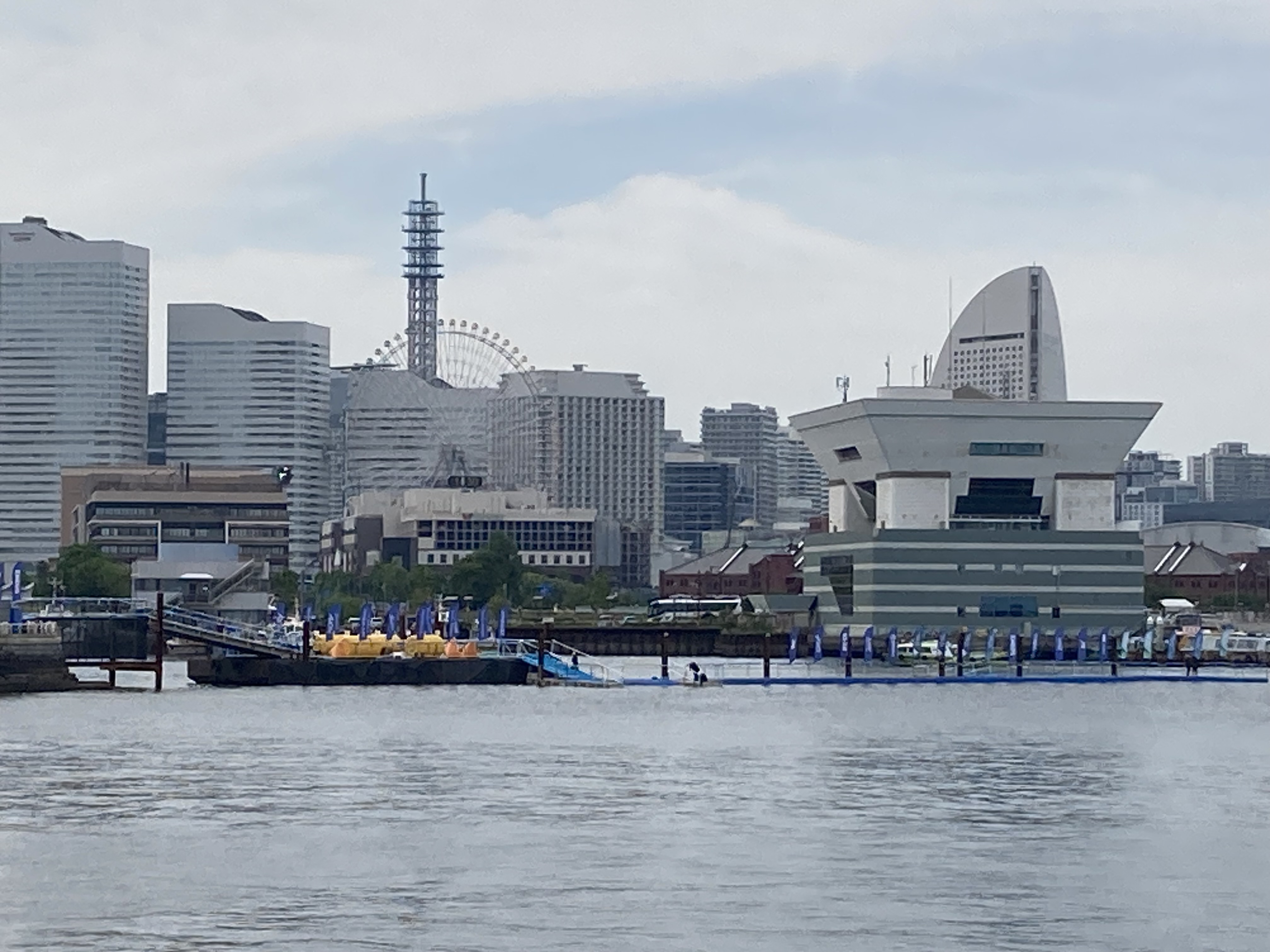
 In the afternoon we traveled to the government offices of nearby Machida. We were introduced to a few of the government officers
  (I can’t remember what their title was), and sat in the room where their city council meets. It felt more like a visit to Congress, with a room full of desks for each member with microphones and voting buttons. We were able to ask questions about how their system works and what challenges they’re facing. Apparently the biggest problem right now is drastic population decline. The man speaking to us said that in his birth year, 70 years ago, there were 7500 babies born in the city — and last year it was under 3000. Young people are not getting married at very high rates. Based on what we’ve gathered about the system here (men are required to go
 out drinking with their boss until all hours, while women go home after work to take care of children and the house), it’s somewhat understandable to us why more of the women aren’t signing up! Machida, like everywhere in Japan, is having to close and consolidate schools. (This was somewhat counterintuitive to us, because we saw hordes of schoolchilden EVERYWHERE. If there were three times as many, I’m not sure how the trains and streets could accommodate them!)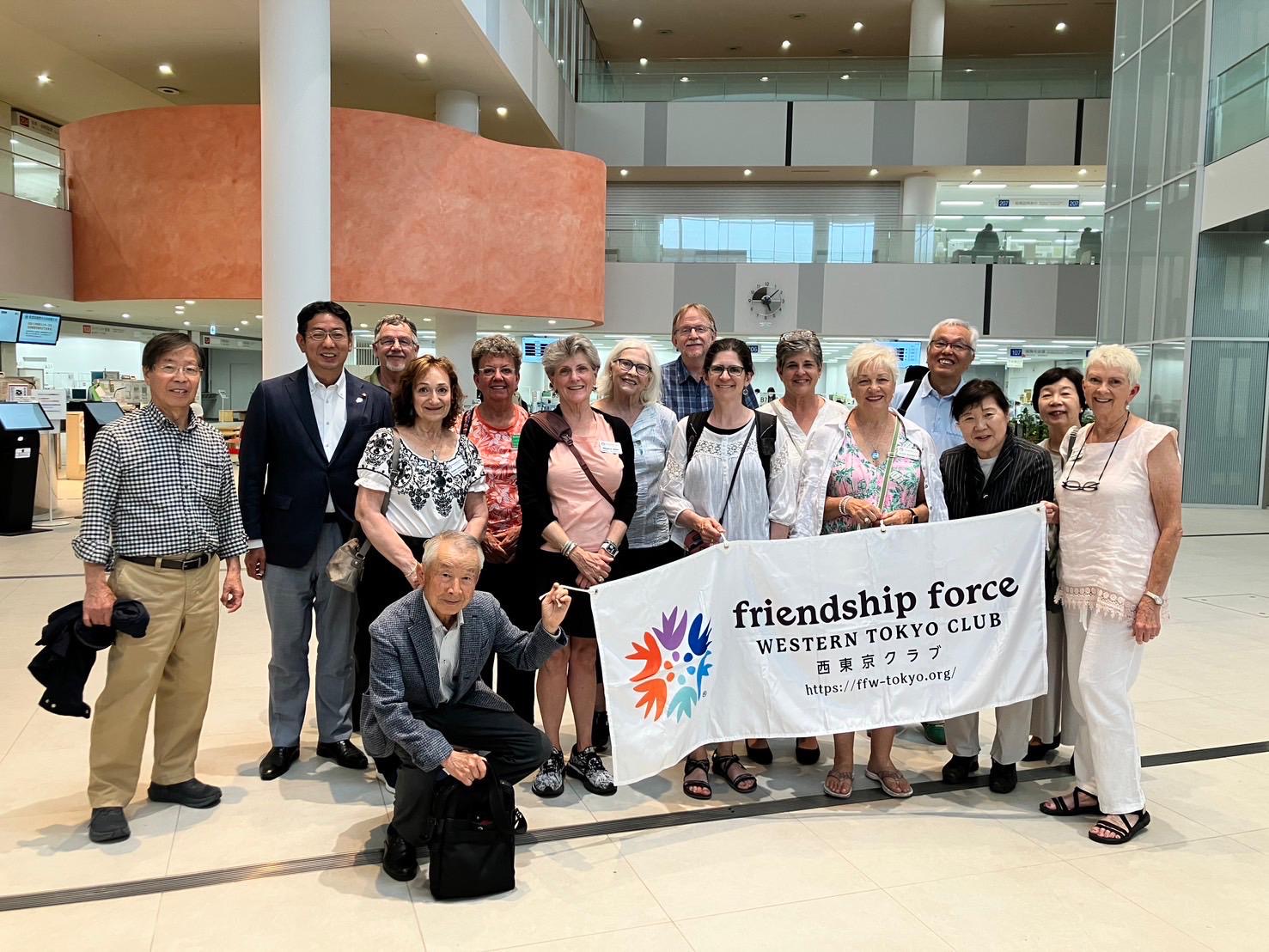
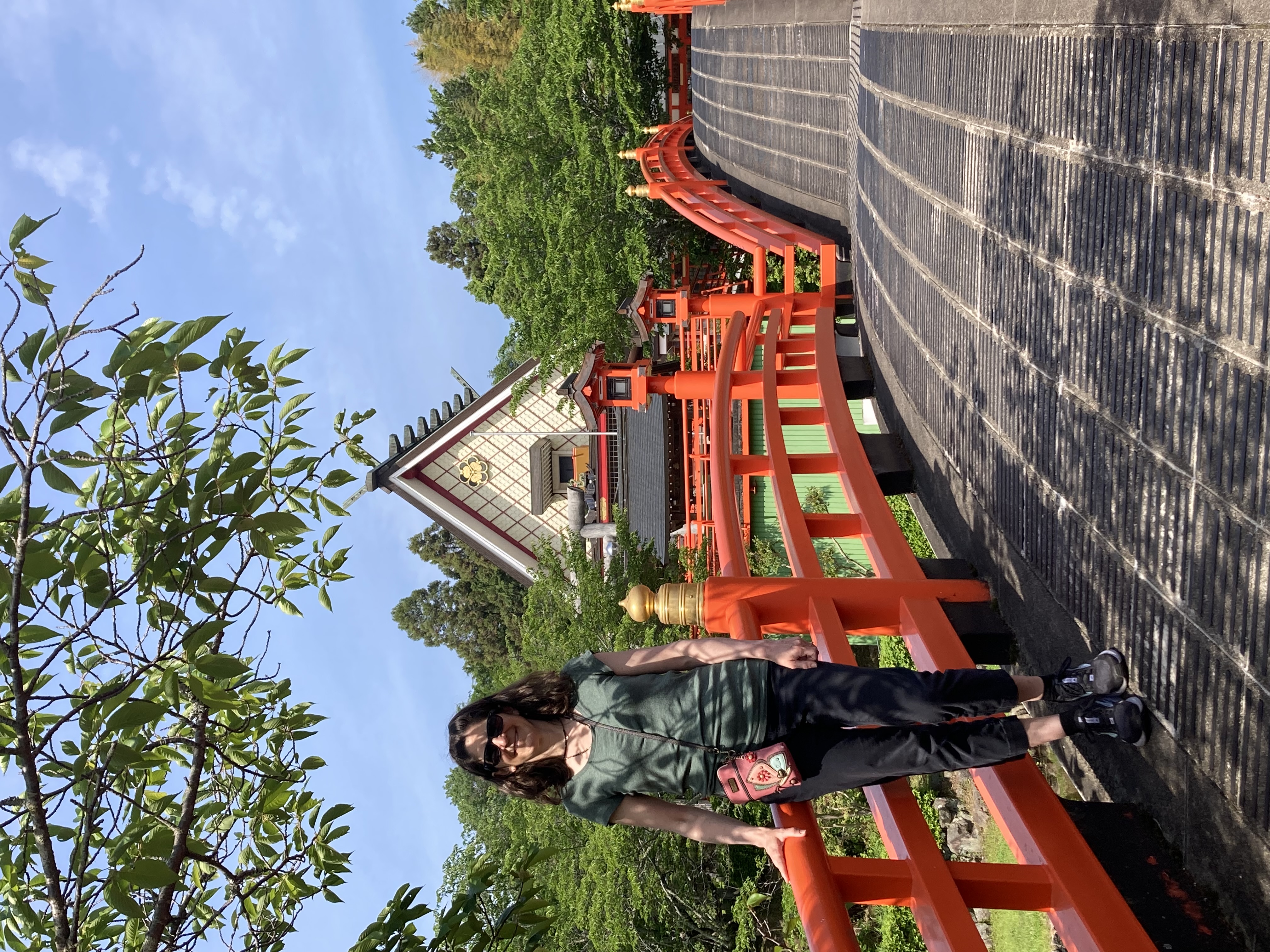
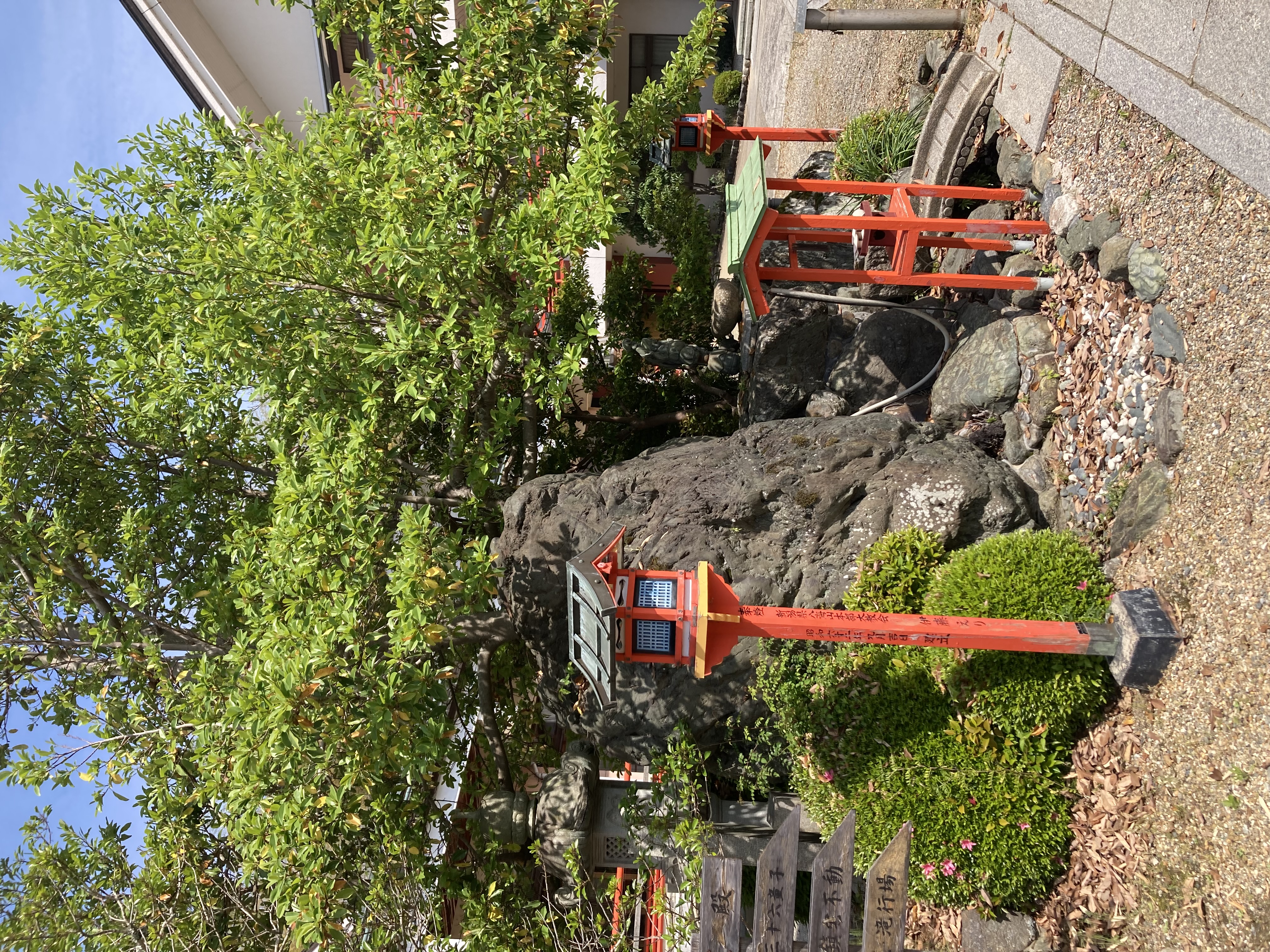
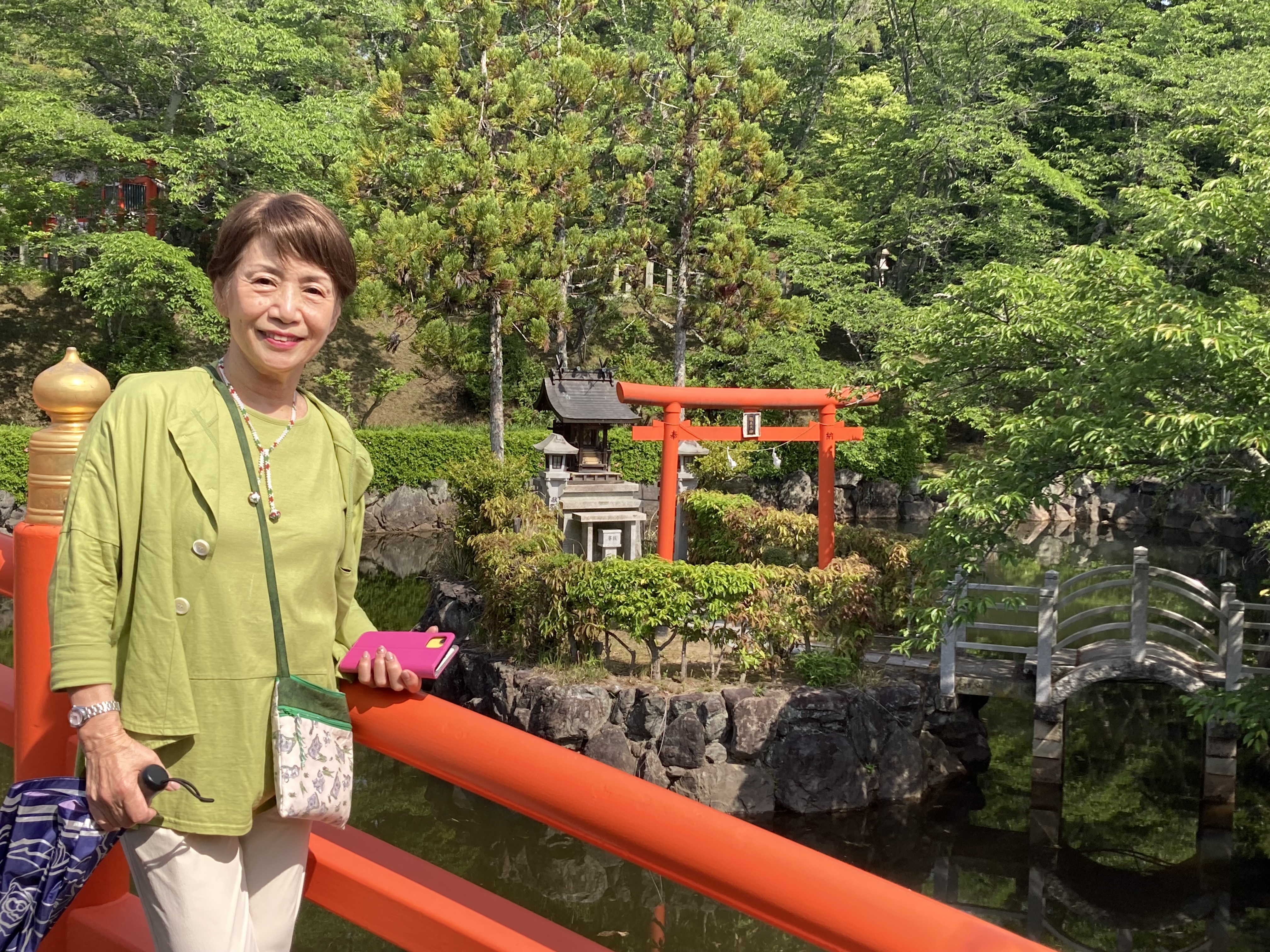 stillness. Today I got my wish. The only other person around was a monk, chanting and beating a drum from within the shrine. Non explained the significance of the various statues and writings around the shrine, and showed me a round marble ball engraved with good wishes for various aspects of life (including one for successful travel). (I thought it would be easy to look up the name of this shrine, but I have been foiled — so I’ll need to ask Non and update this later.)
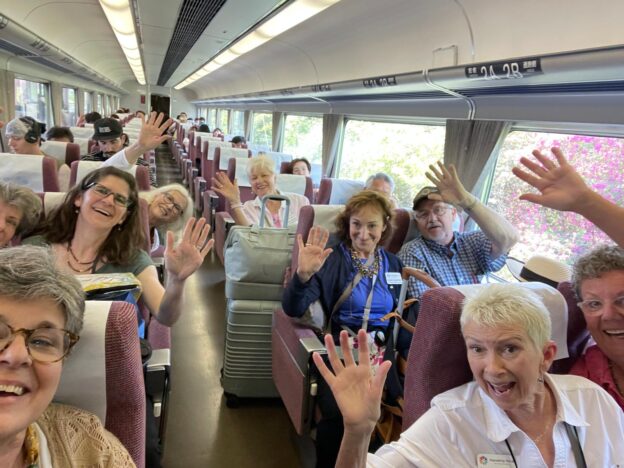
 We had to take one train from Nara back to Kyoto, then get on the bullet train (Shinkansen) bound for Tokyo. We had a bit of a snag because we’d lined up in the wrong place for our assigned seats, and had to race to get everyone on the train in time. (Japan trains are extremely reliable — even one minute late is considered unacceptable — so there is no wiggle room if you’re too slow to get on.) We were still on the wrong car, so we had to traipse through several cars full of curious school children, hauling our luggage behind us and probably bumping into people left and right. Despite some trepidation we managed to navigate Kyoto Station successfully, figure out where to line up, and get onto the right train car. (In Japan, people line up in neat queues when waiting for a bus or train.)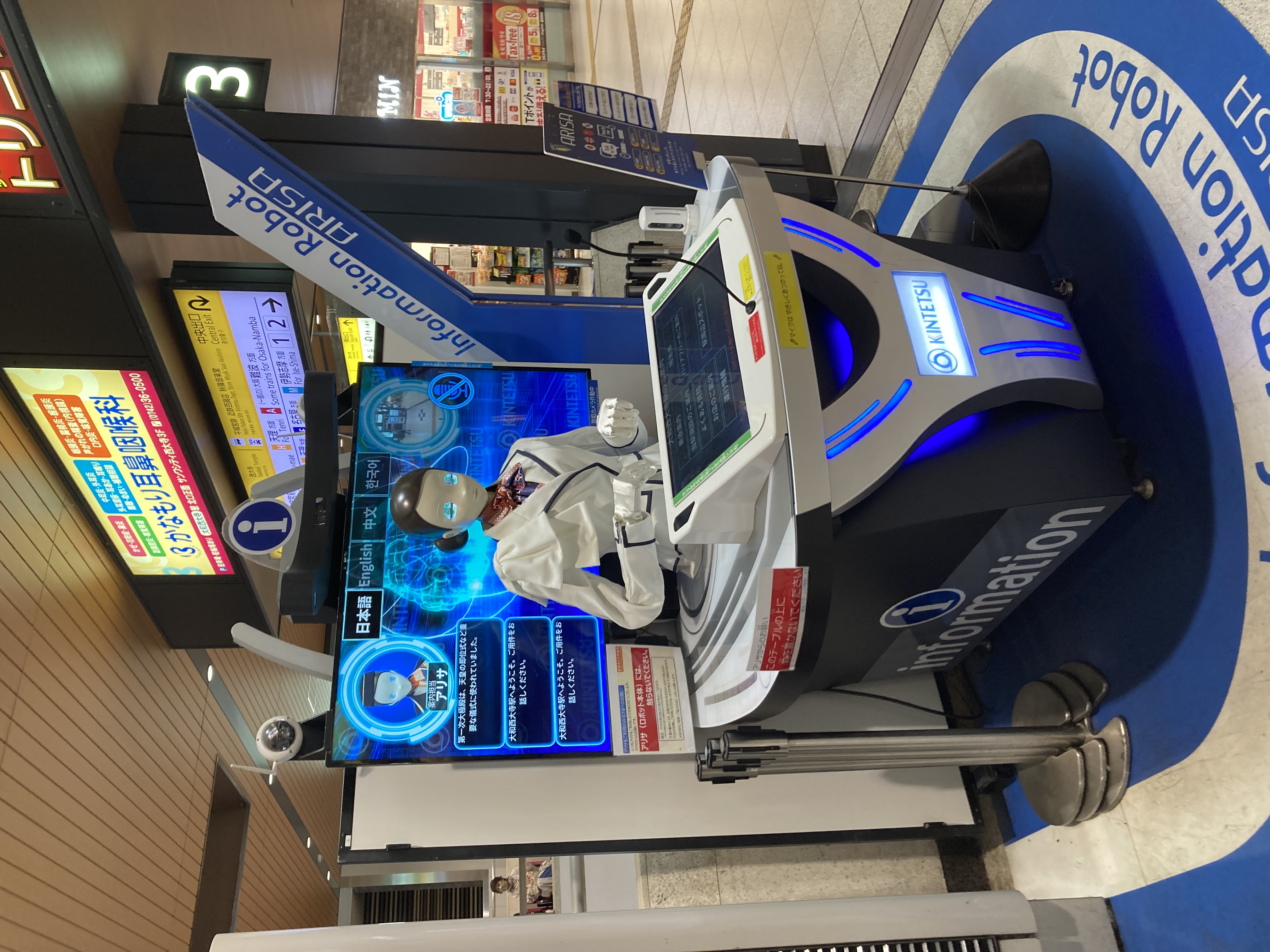
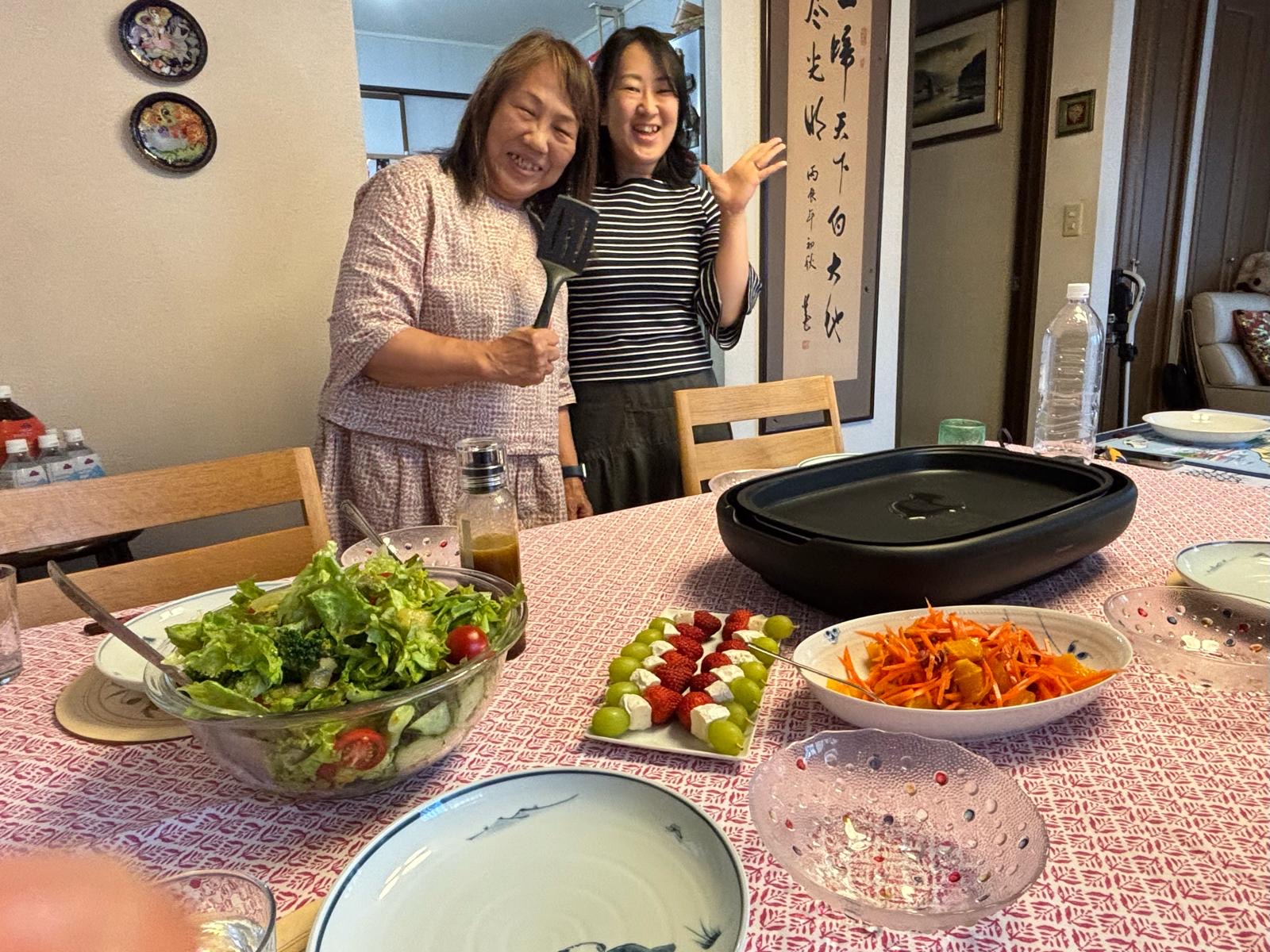
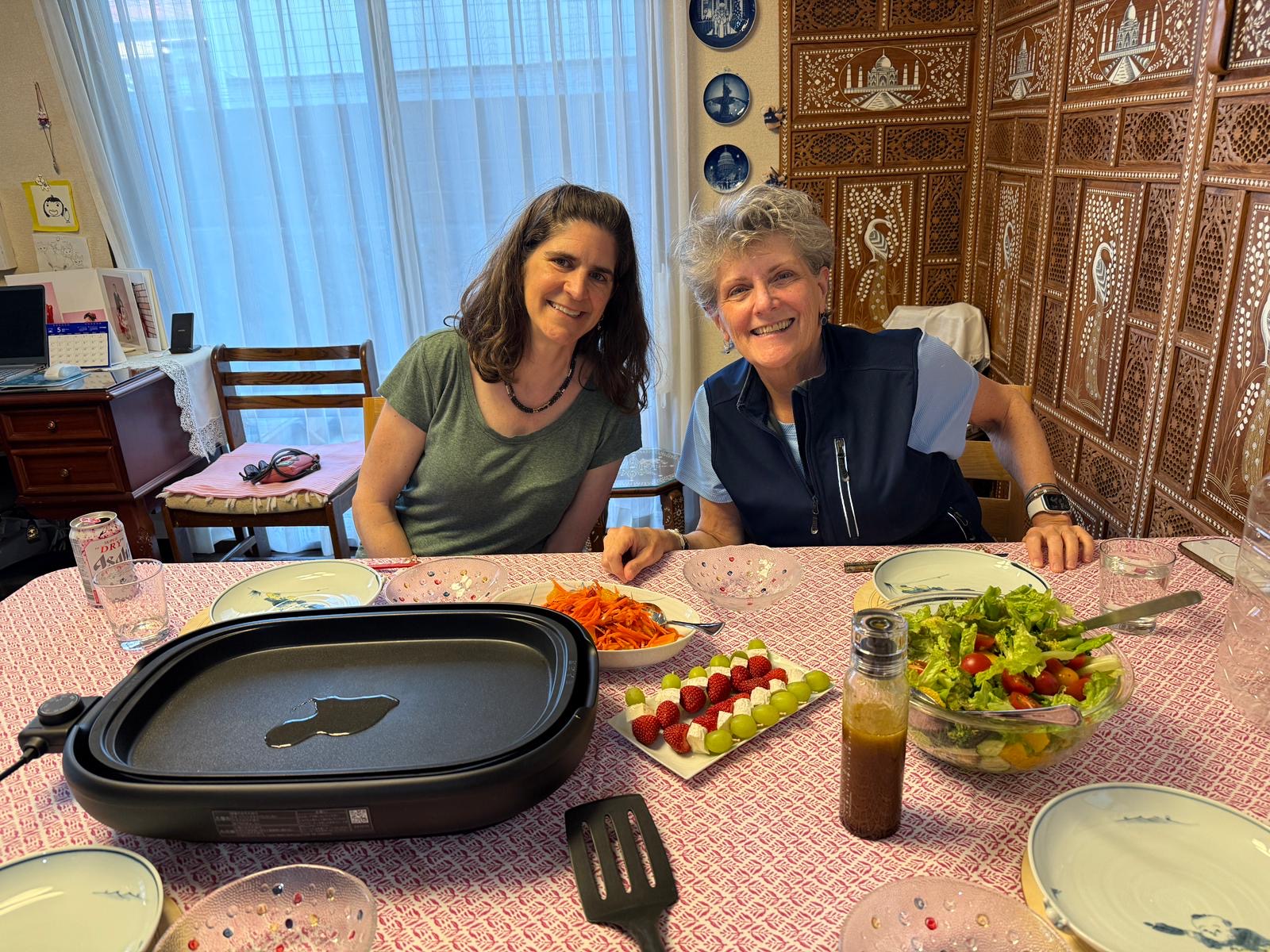 A little later on Yoshie’s daughter came over to help prepare dinner for us. She made okonomiyaki — Japanese pancakes with cabbage, egg, yam, and seafood (which Yoshie calls “Japanese soul food”) — similar to what we’d had in Nara. It was delicious, just as before. Yoshie’s daughter was also very kind and welcoming (and as seems to be the norm, looked far younger than her age of 38). Later on Yoshie’s granddaughter, age 12, joined us as well, after completing her school day. She goes to a private school, and has class 6 days a week — plus long days and homework.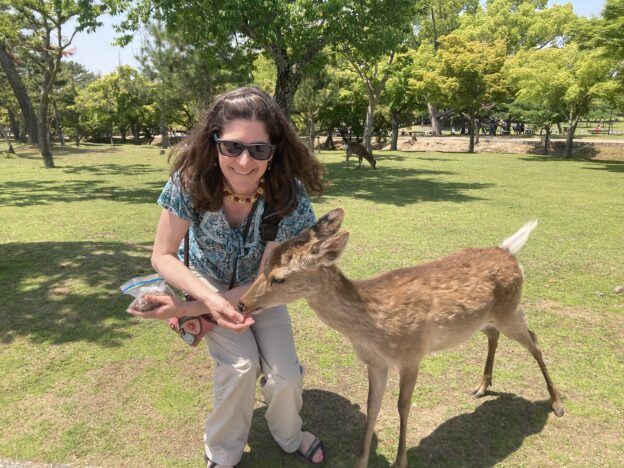
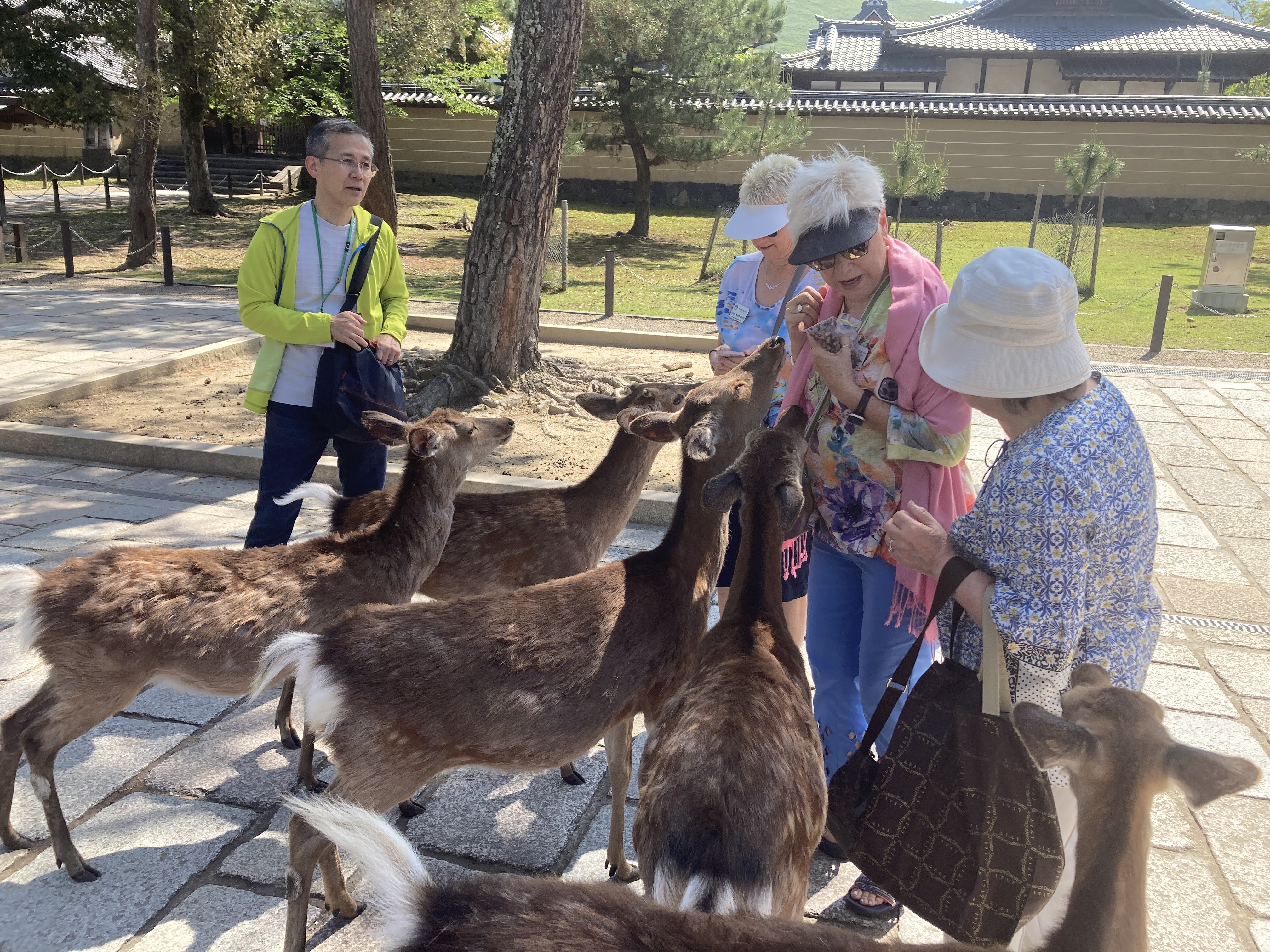
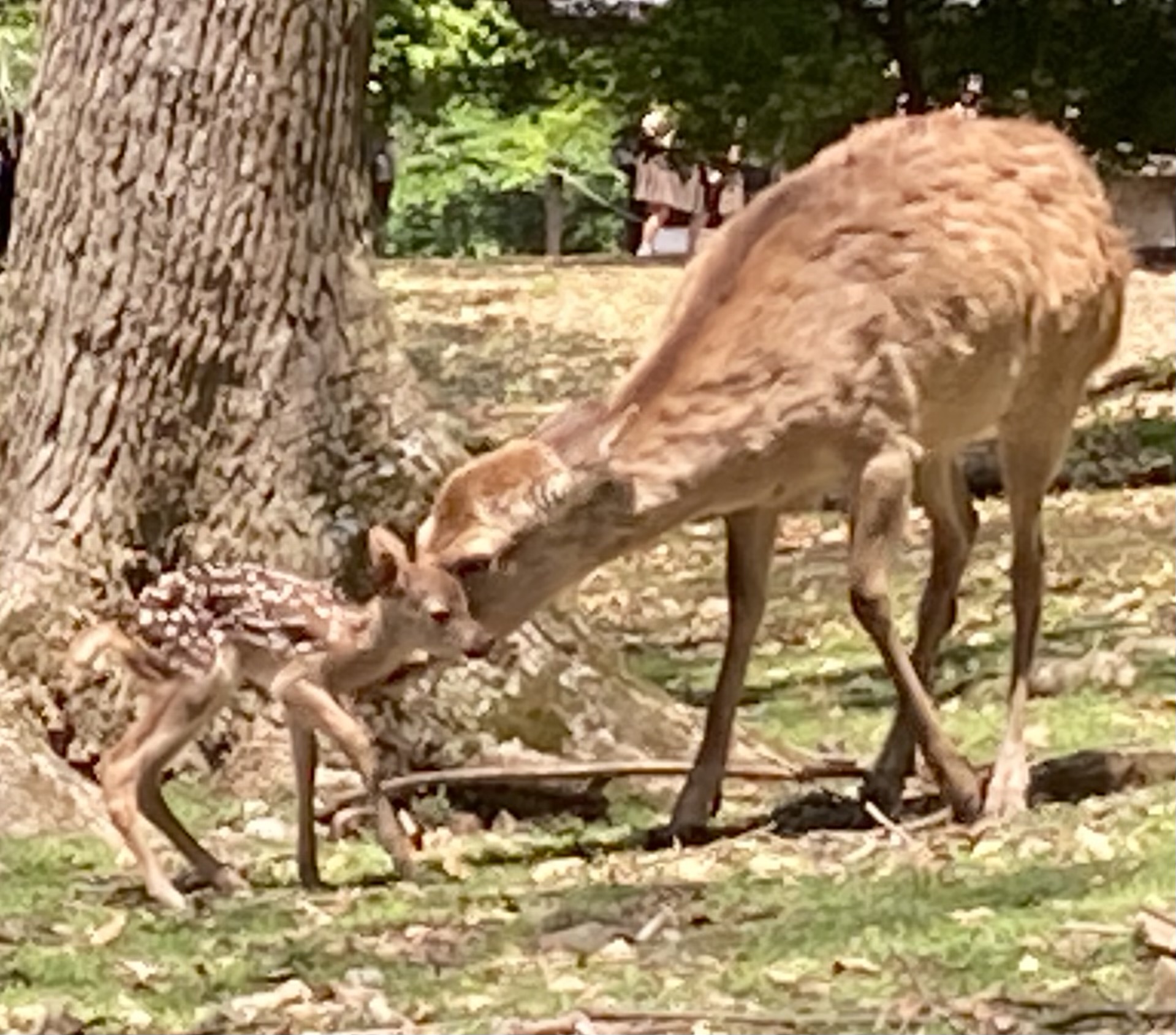
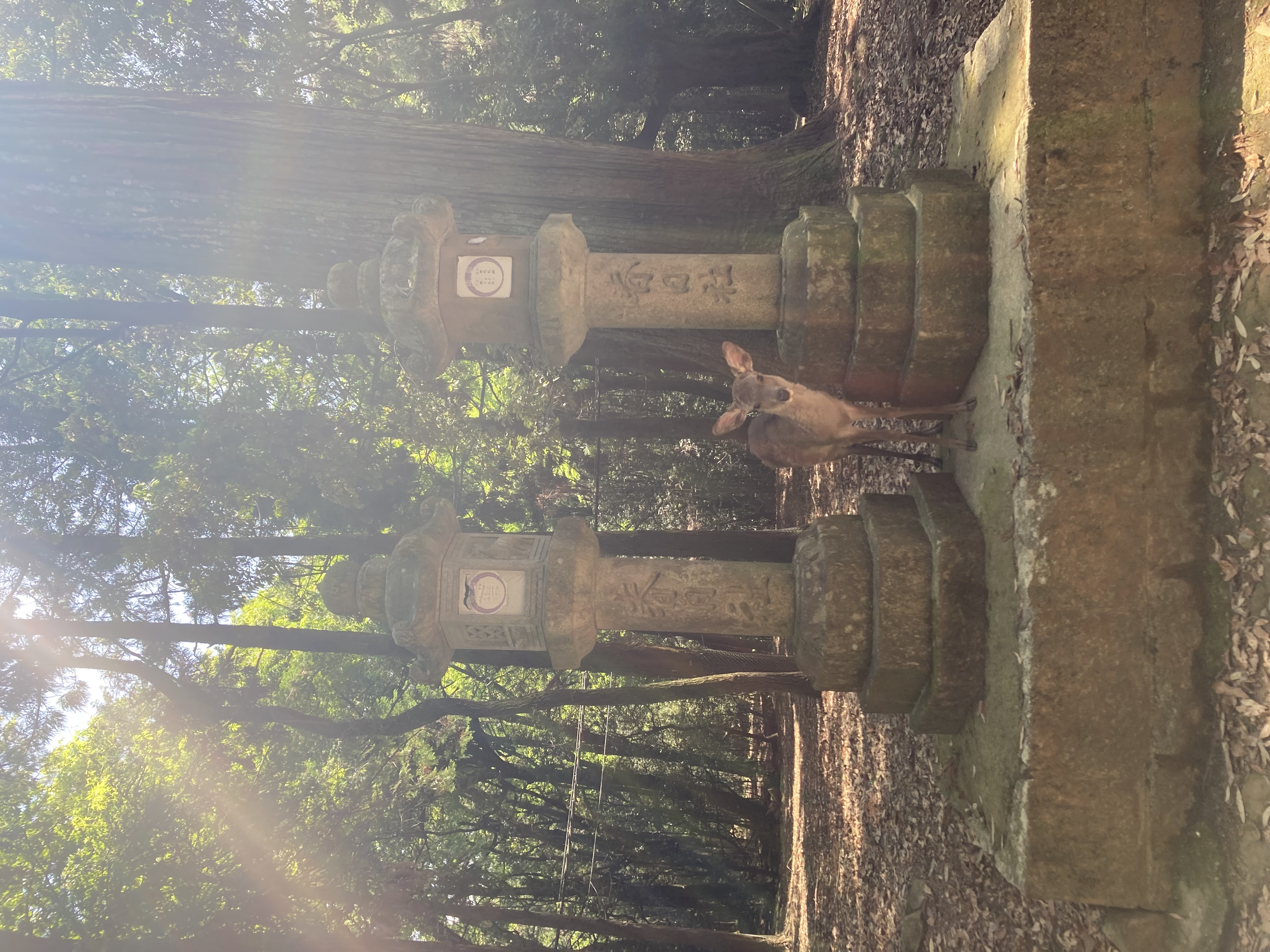
 protected in this park for over 1300 years, and have become very tame. Yoshi, the club member who was our guide in the park, told us that the deer have been studied, and have different DNA than regular wild deer. Tourists come to the park to feed the deer special deer crackers, but one of our hosts kindly took the time to gather each of us a large bag of acorns to use as deer food. Amazingly, the deer have learned to bow to you when asking for food. It’s very cute — until you come upon
  one of the few aggressive deer who doesn’t want to take no for an answer. Then you have to make a quick retreat before your acorn bag is snatched from your hand.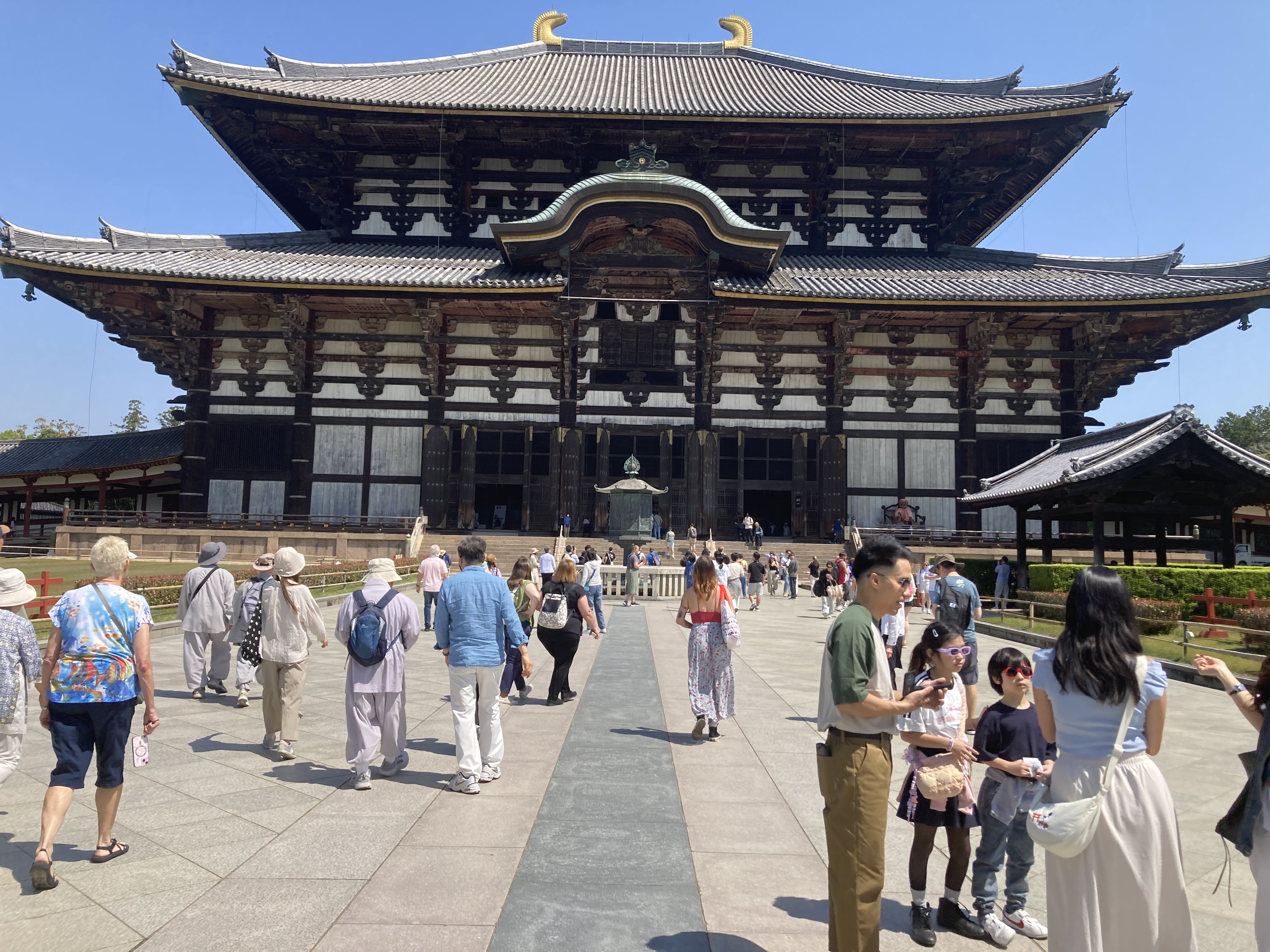
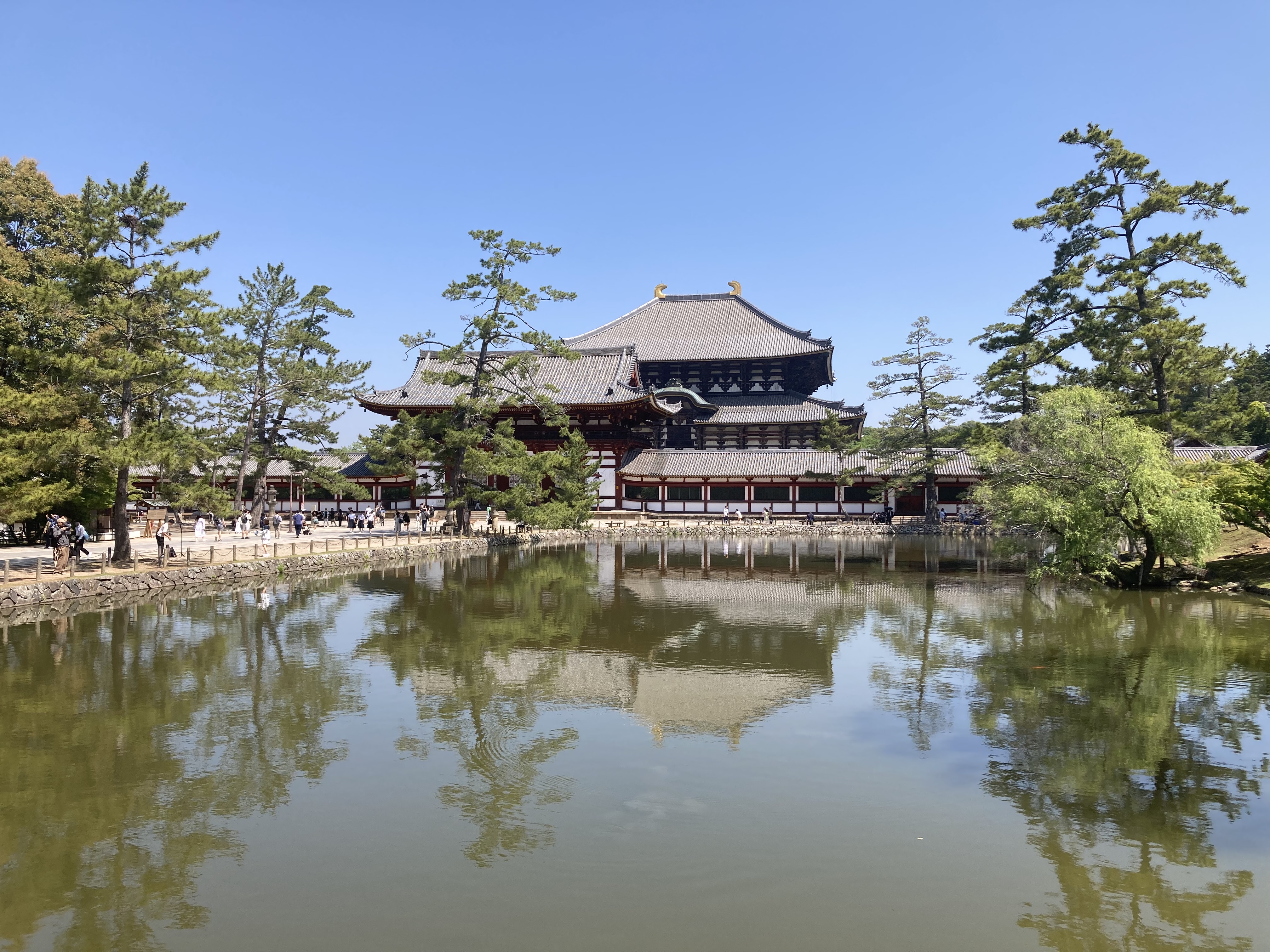
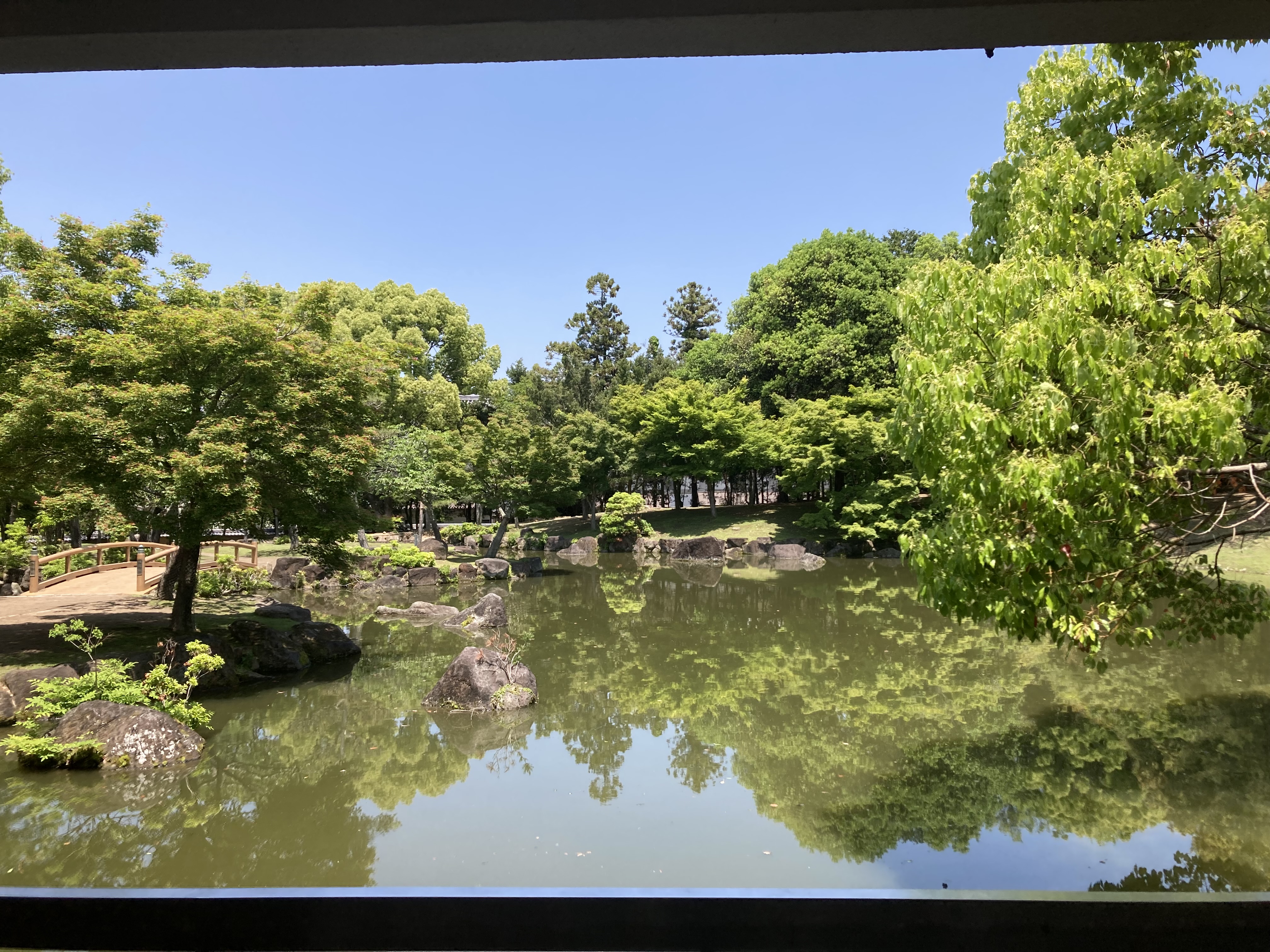
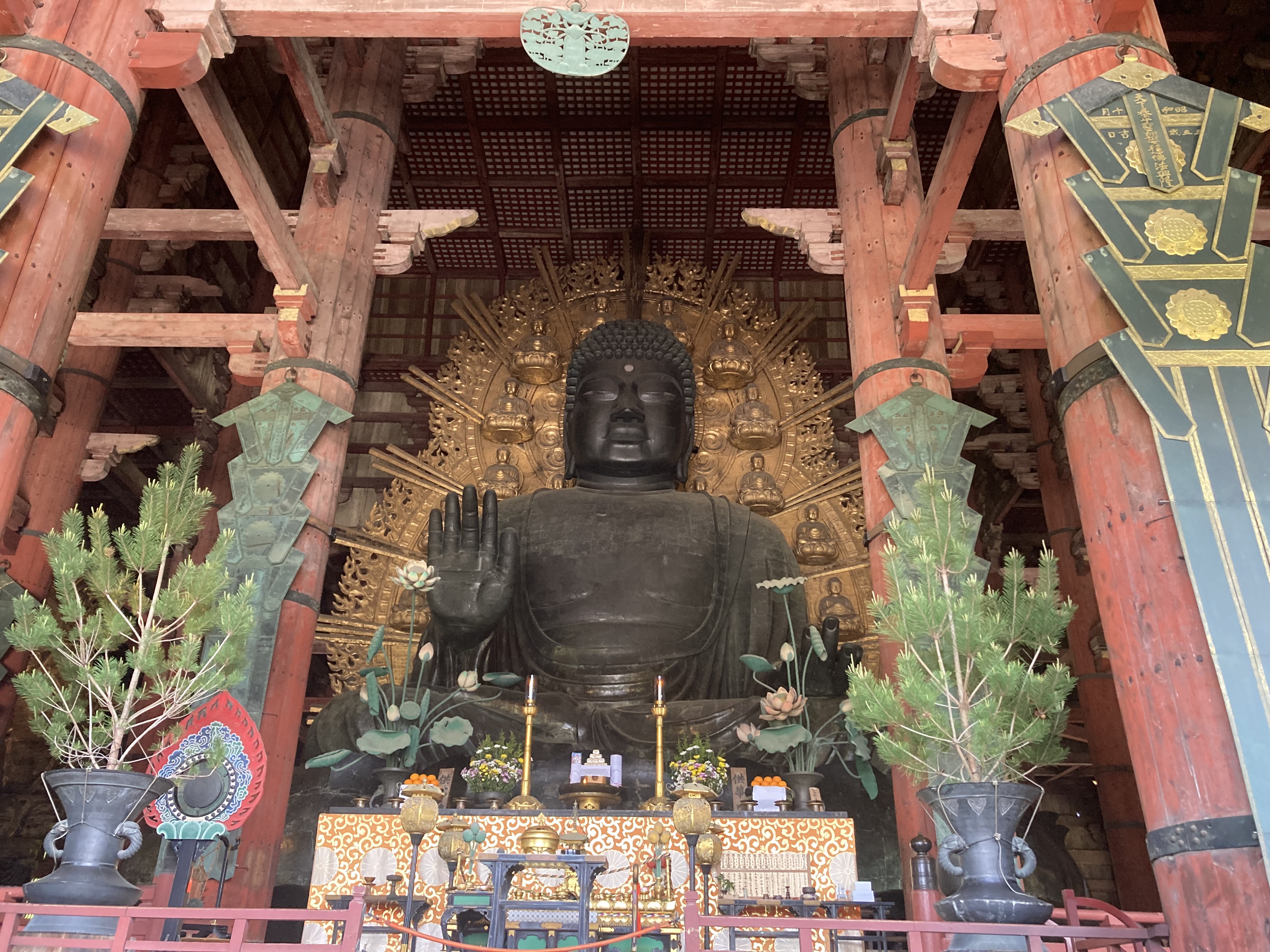
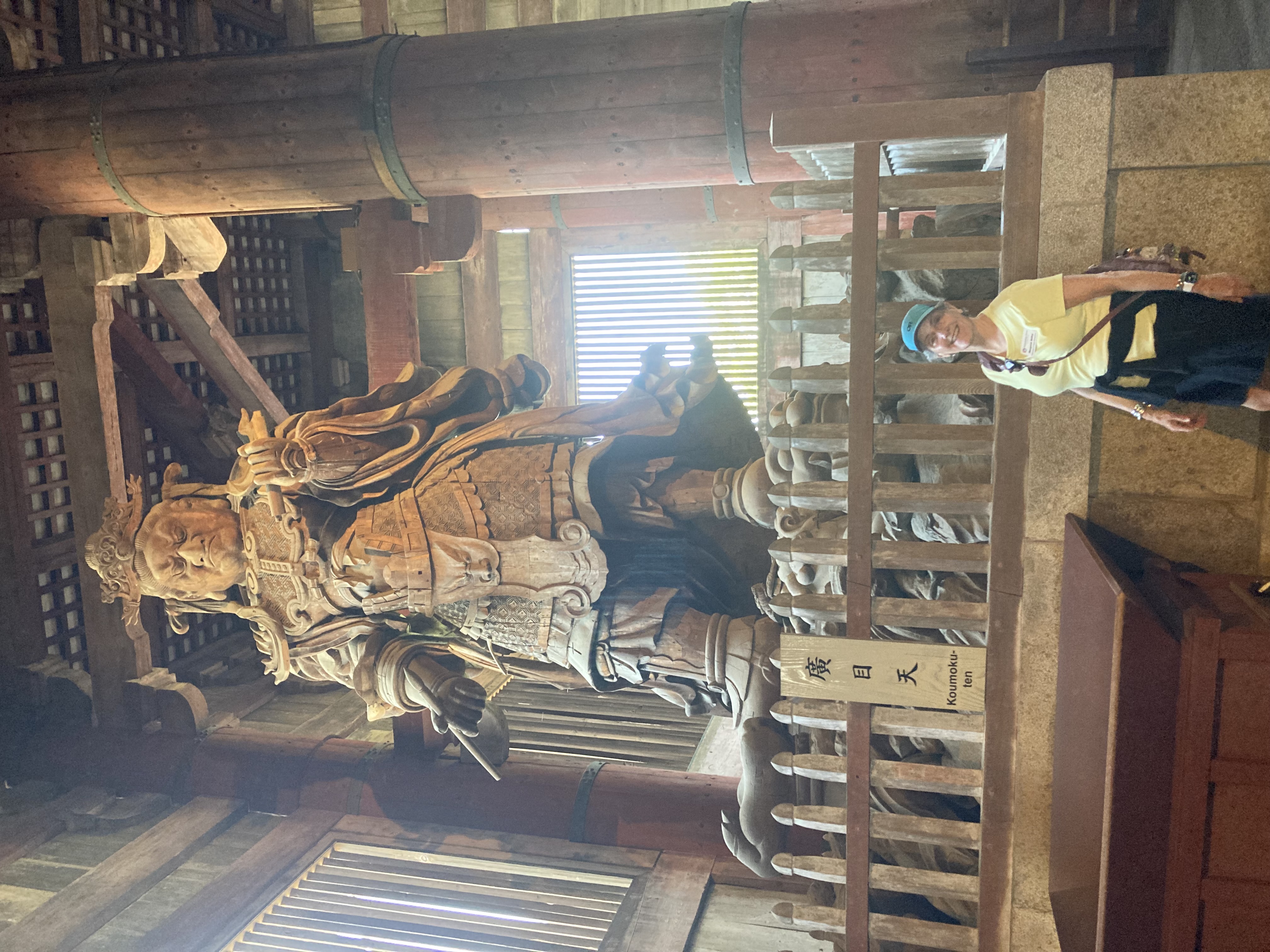 The main building is huge, with soaring ceilings, to accommodate multiple enormous statues, including a huge golden Buddha. Until recently it was the largest wooden building in the world — but prior to its destruction by fire a few hundred years ago, it was 1.5 times larger! Yoshi led us through and explained the significance of all the different elements. At the base of one of the pillars is a hole that is the same size as the giant Buddha’s nostril. You can squeeze through it for good luck. None of us attempted this feat, but we saw many schoolchildren doing it.
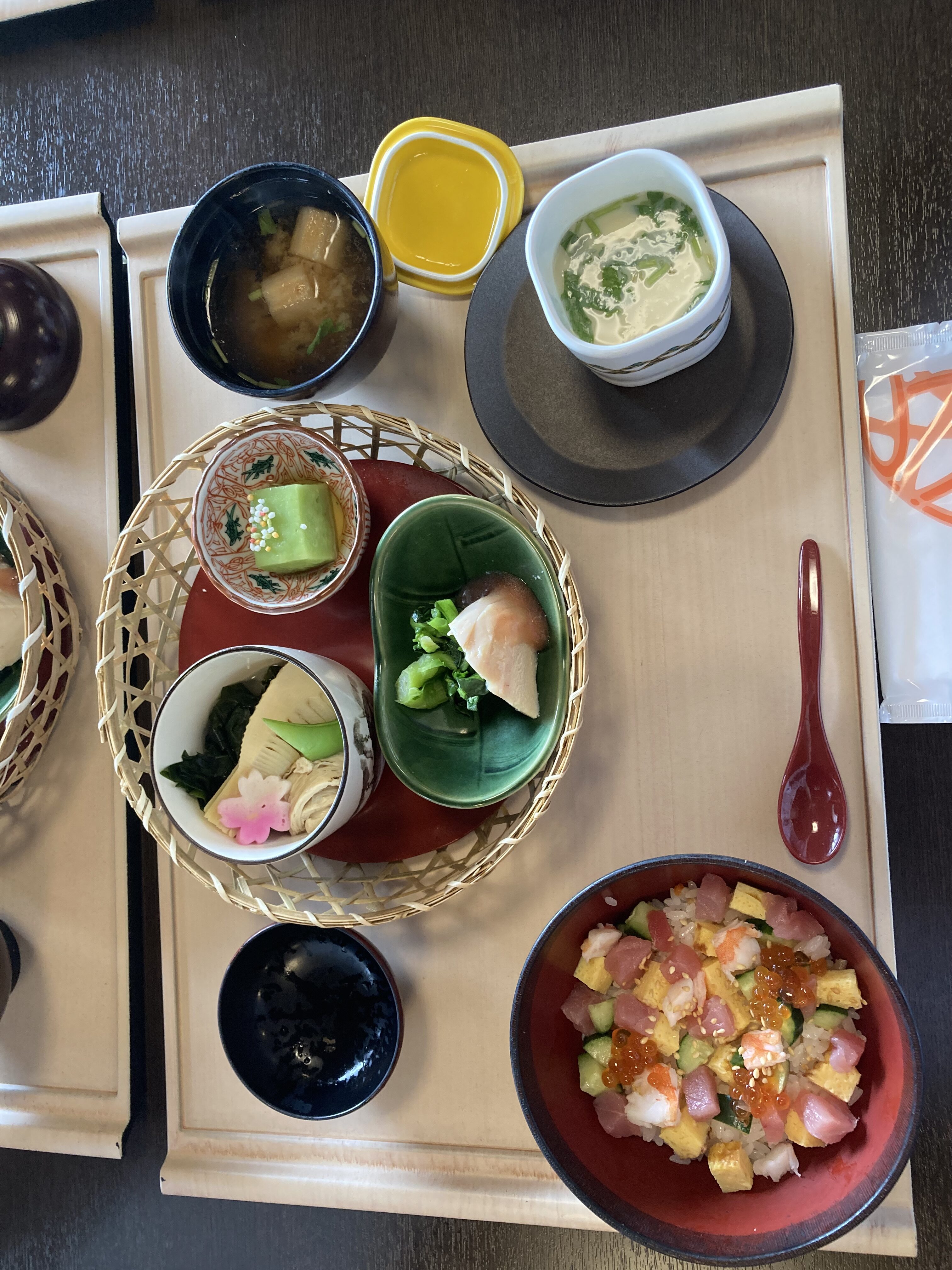
 For lunch we were provided with another classic Japanese experience — the bento box. In the kind of
 After the park we did a little shopping then refreshed ourselves with lemonade and iced lattes at a nearby cafe. (It was a pretty hot day. Even though the thermometer only registers in the seventies, we’ve found the “real feel” to be much hotter here.) When we got home, Non said we had 30 minutes until leaving for dinner. I was thinking about a bit of a rest and cleaning up from the day, but not five minutes later she was calling me to head out. Toko and her husband had arrived in a bright pink car to ferry us to the farewell
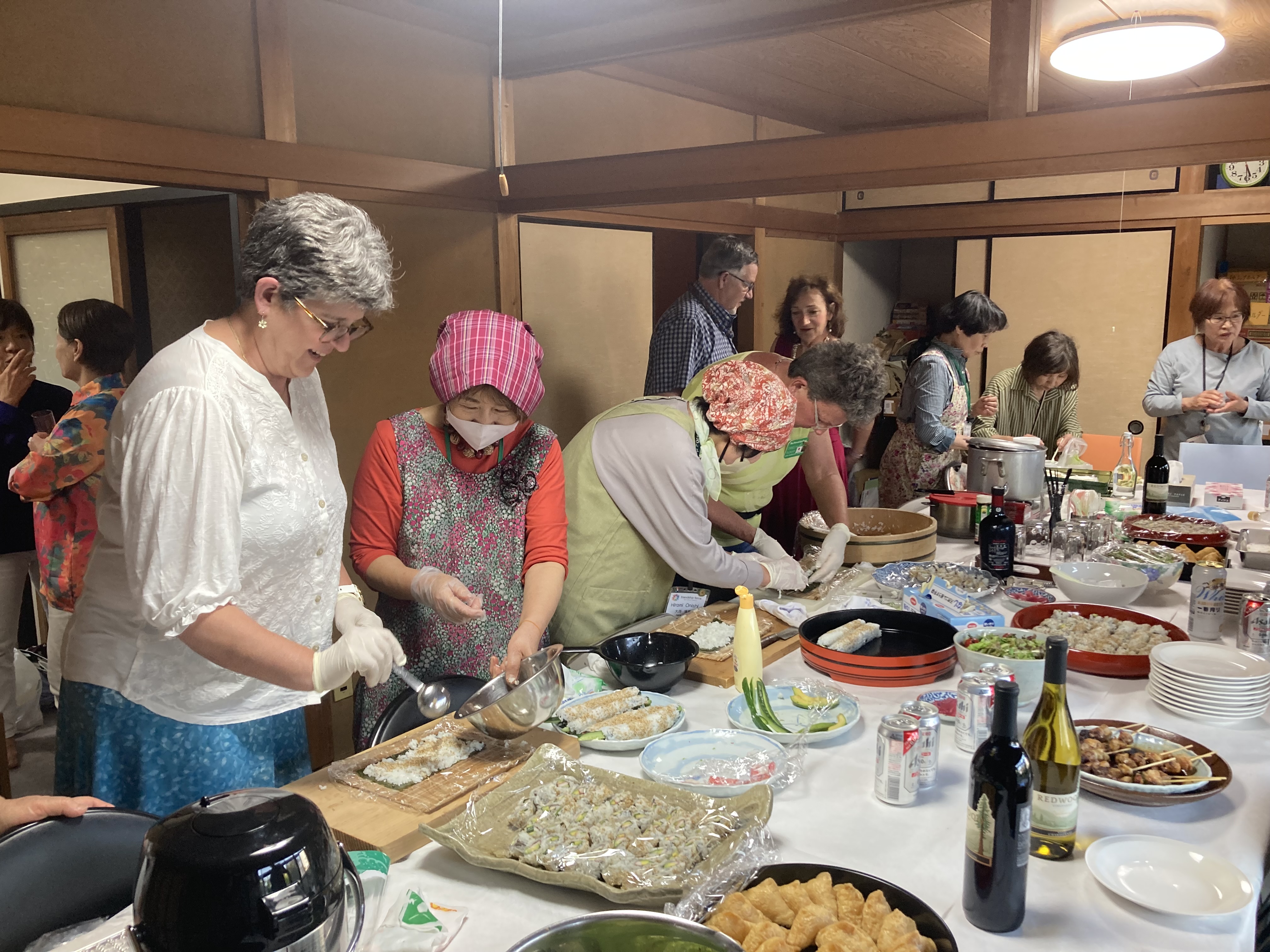 dinner.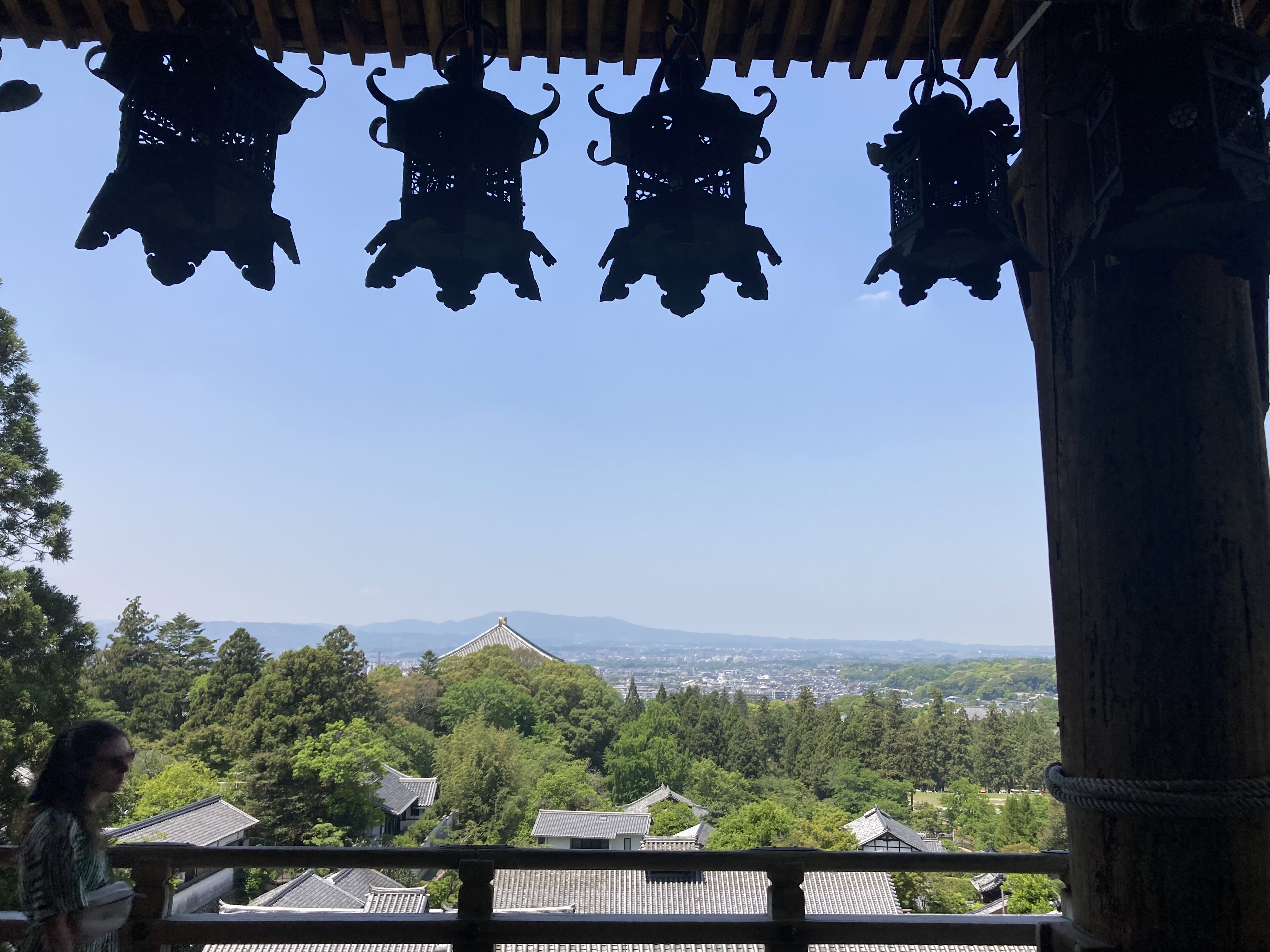

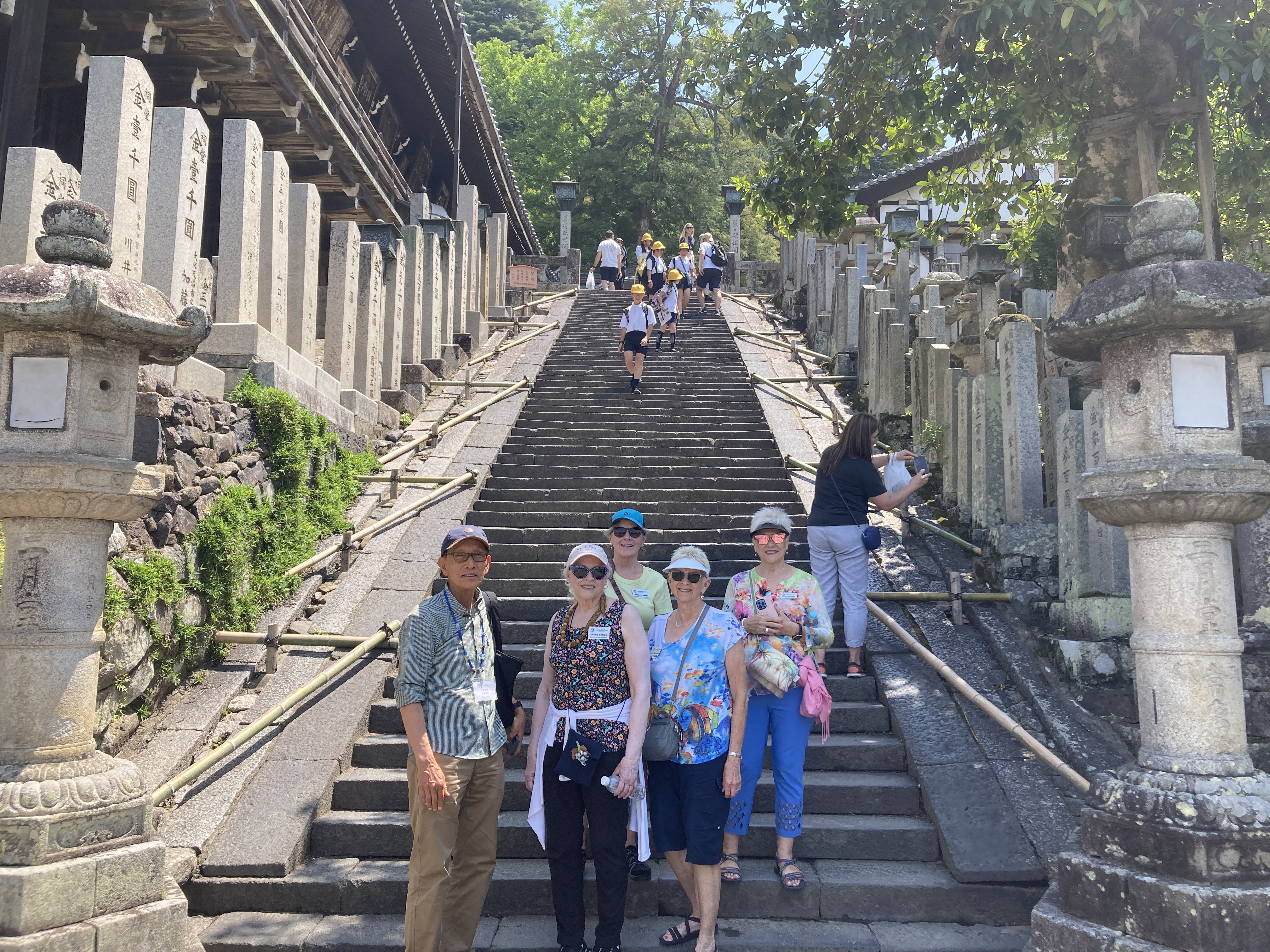
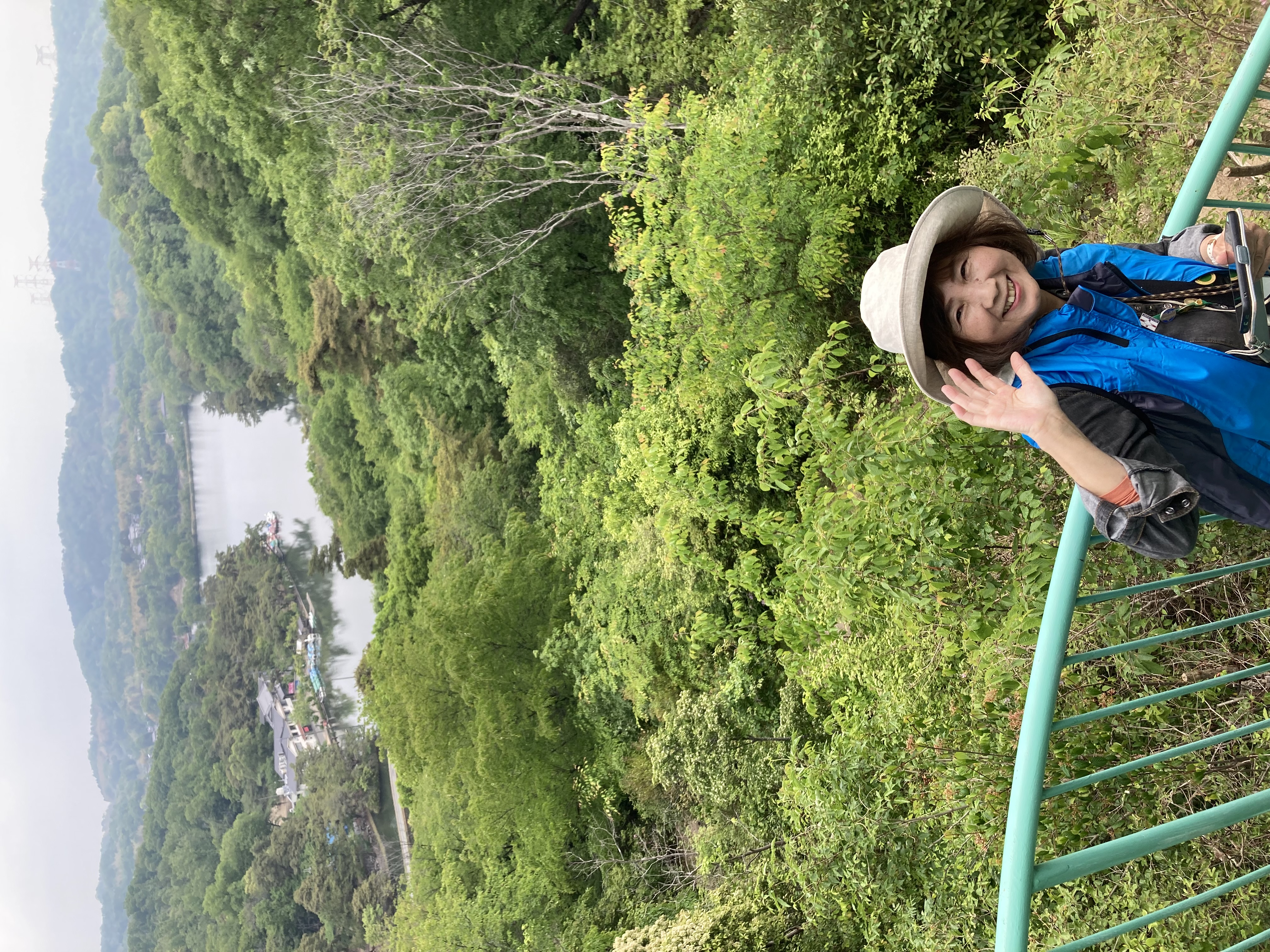
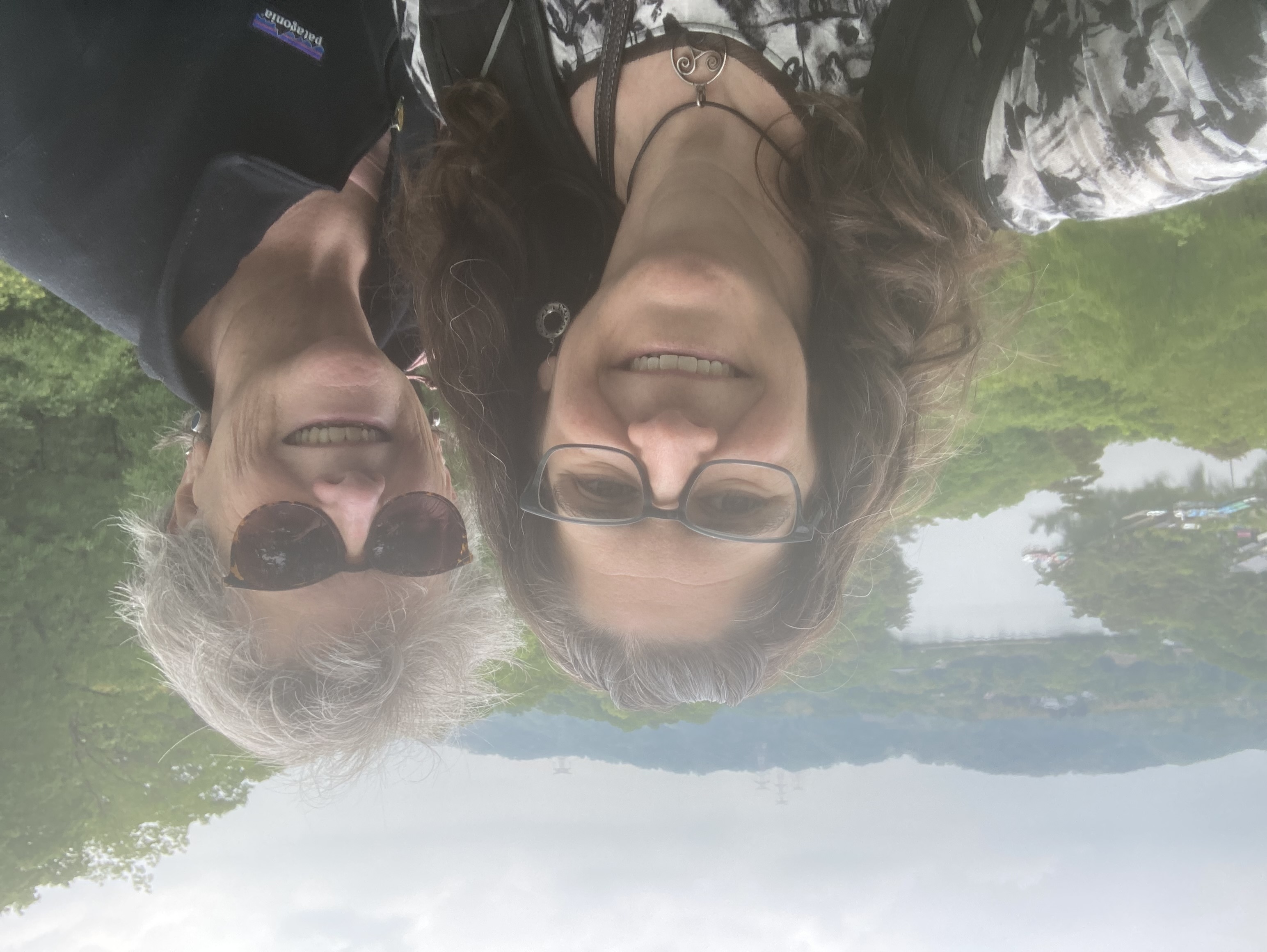 Today began with a hike and picnic in a nearby park. We walked along a path around a pond, and up quite a lot of stairs to get to a viewpoint across Nara. Many of the Japan club members hiked with us, including their oldest member — who we think we heard was 85. It was amazing seeing her climb all those steps.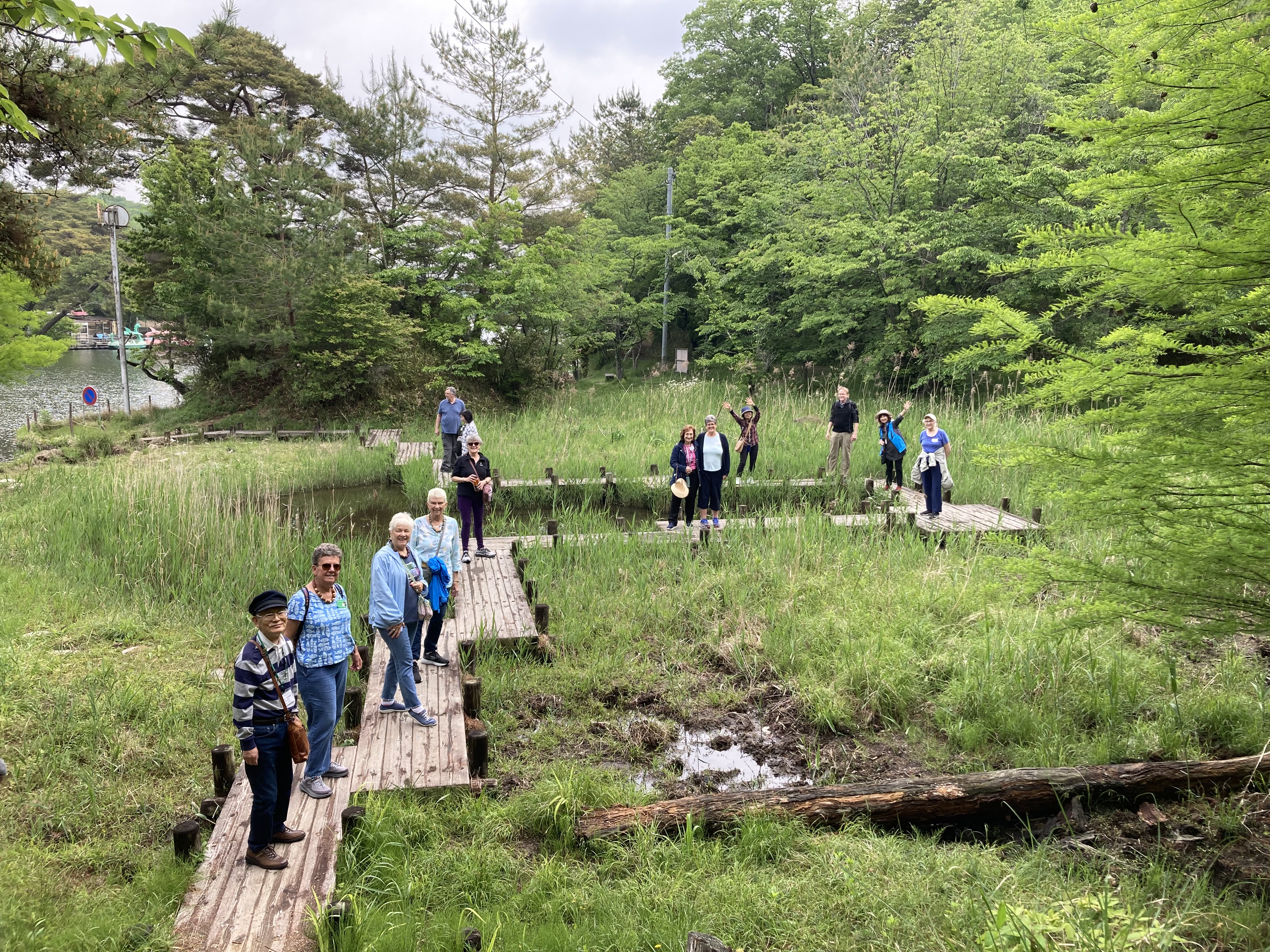
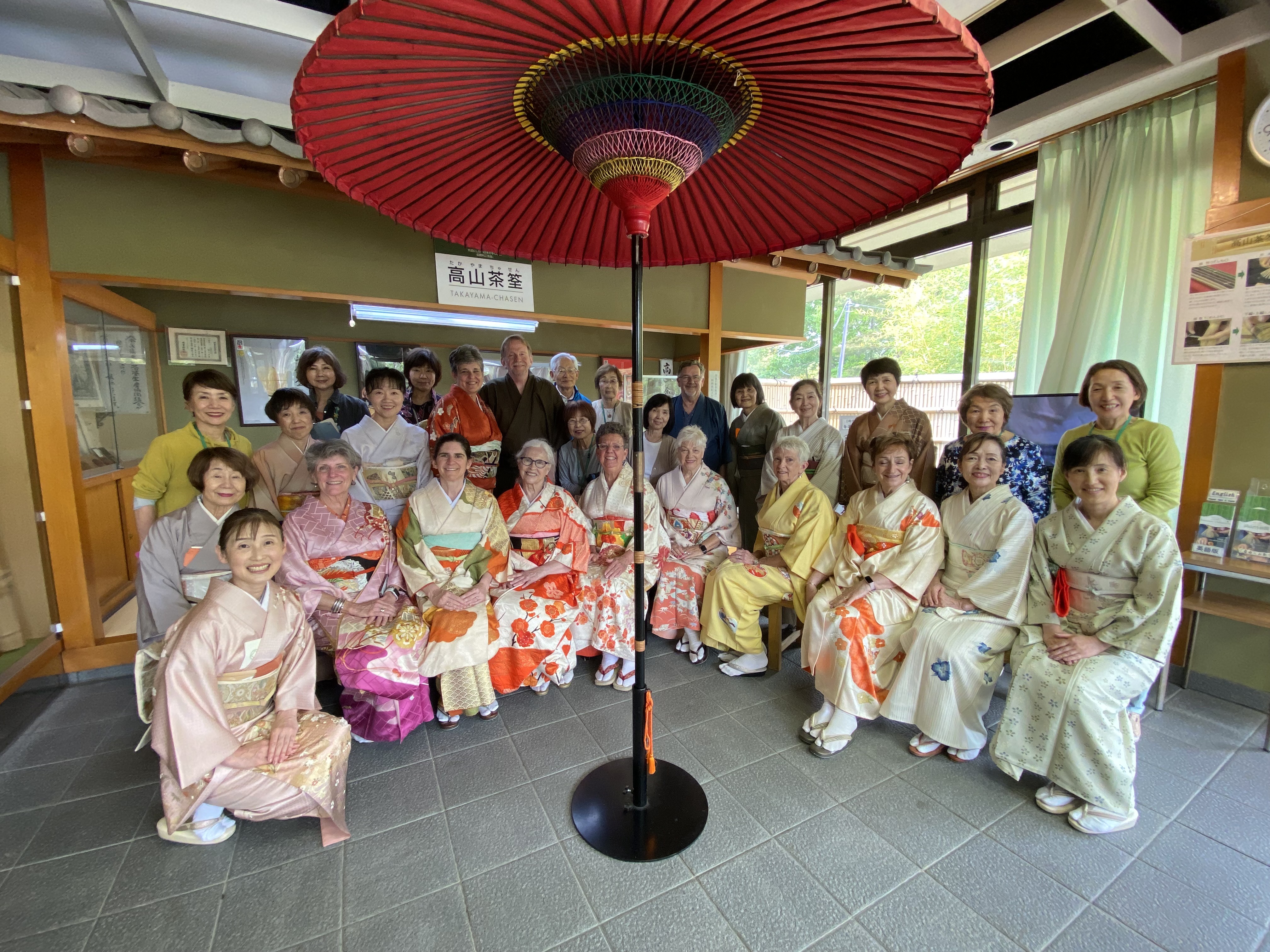
 welcomed by other club members who hadn’t been on the hike. They were dressed in beautiful kimono, and whisked us into a dressing room to be prepared for a Japanese tea ceremony.
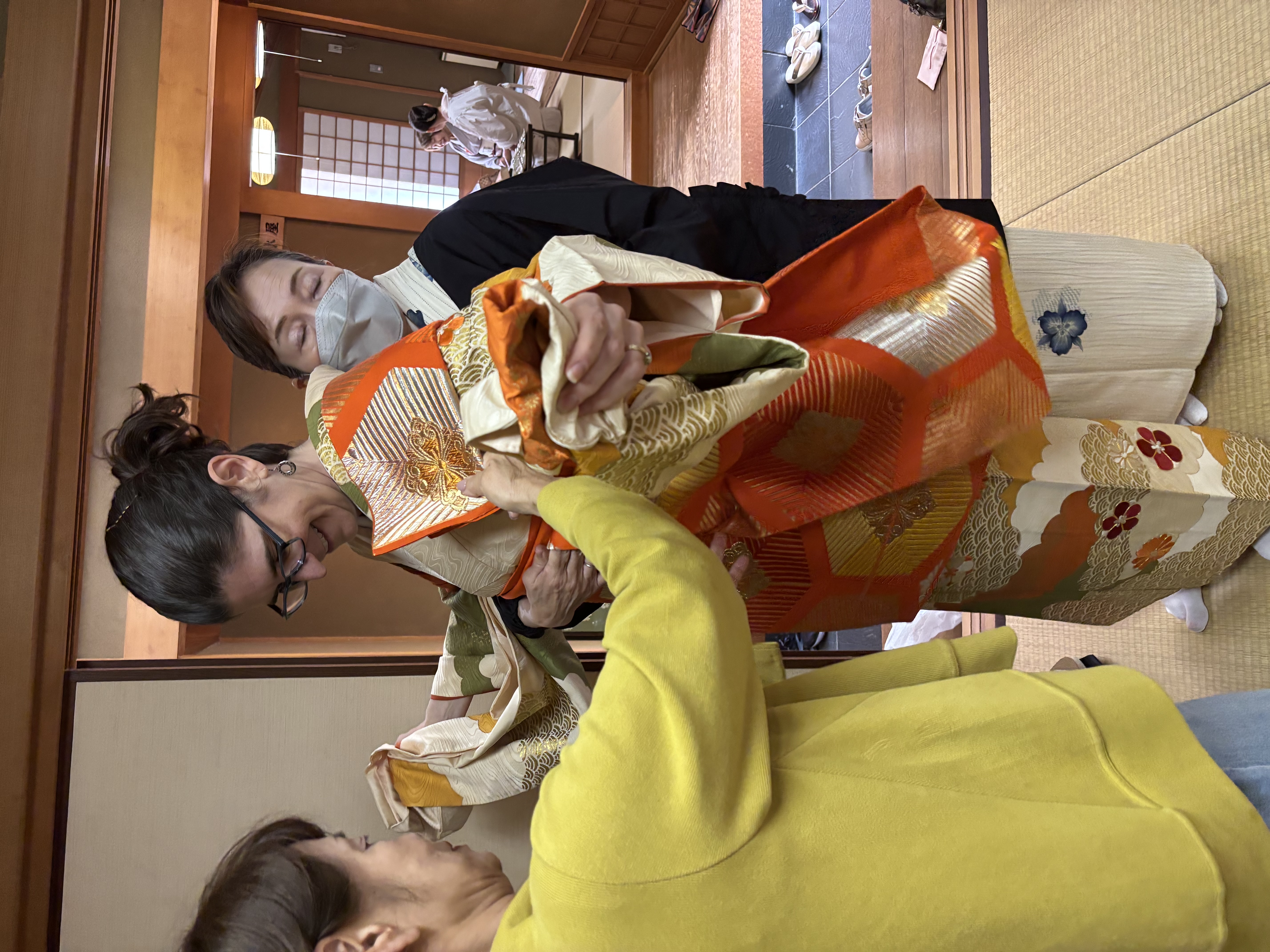
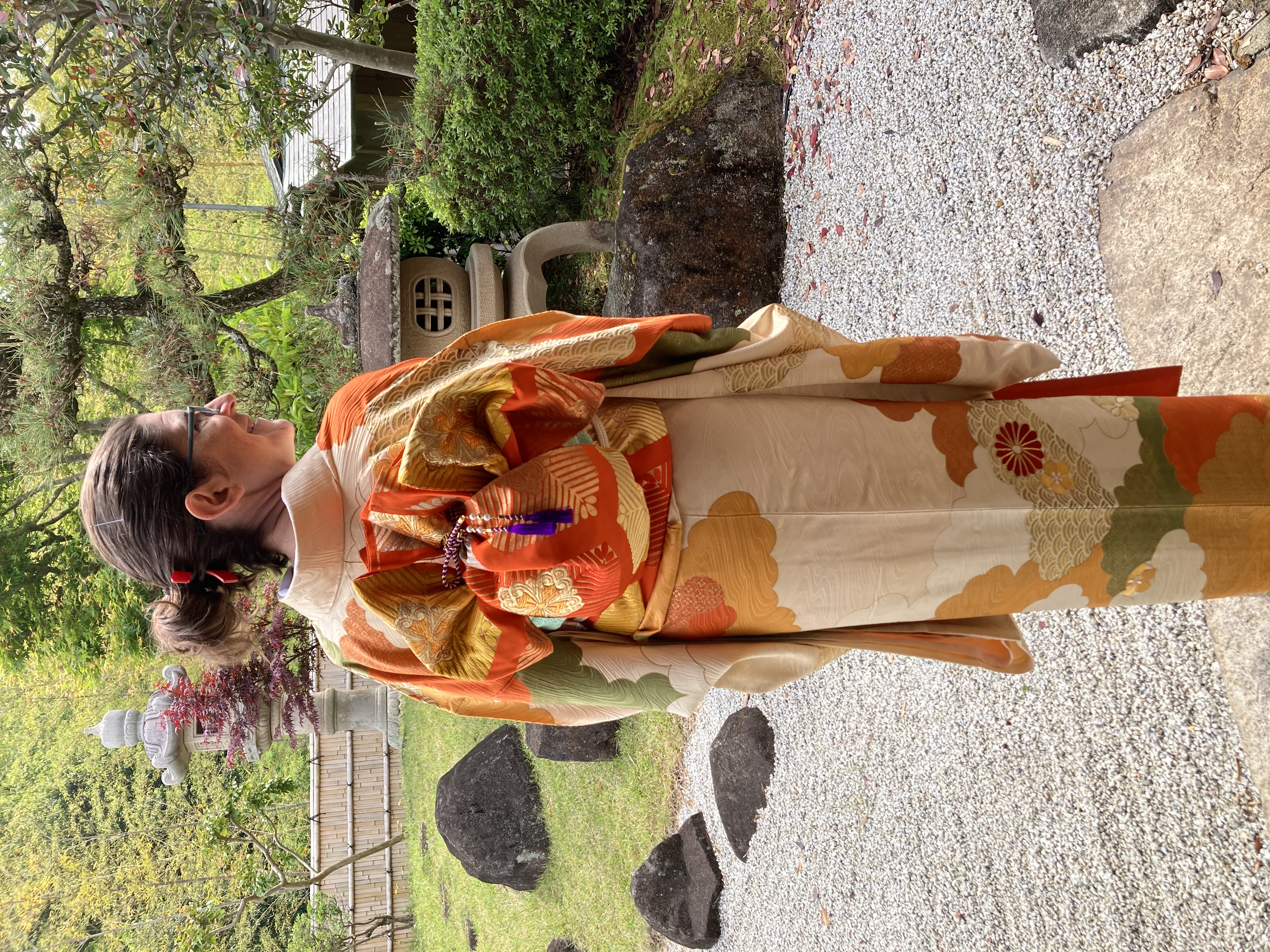 share with us, which made the event even more special. Non’s friend Toko brought me a kimono to wear that had been hers when she was 20 years old — over 50 years ago! It was still in perfect condition. Toko used to work in a kimono shop, so I had a real professional taking care of me. I have no idea how women manage to put on a kimono by themselves — both Toko and Non were working hard, one in front and one in back, to
 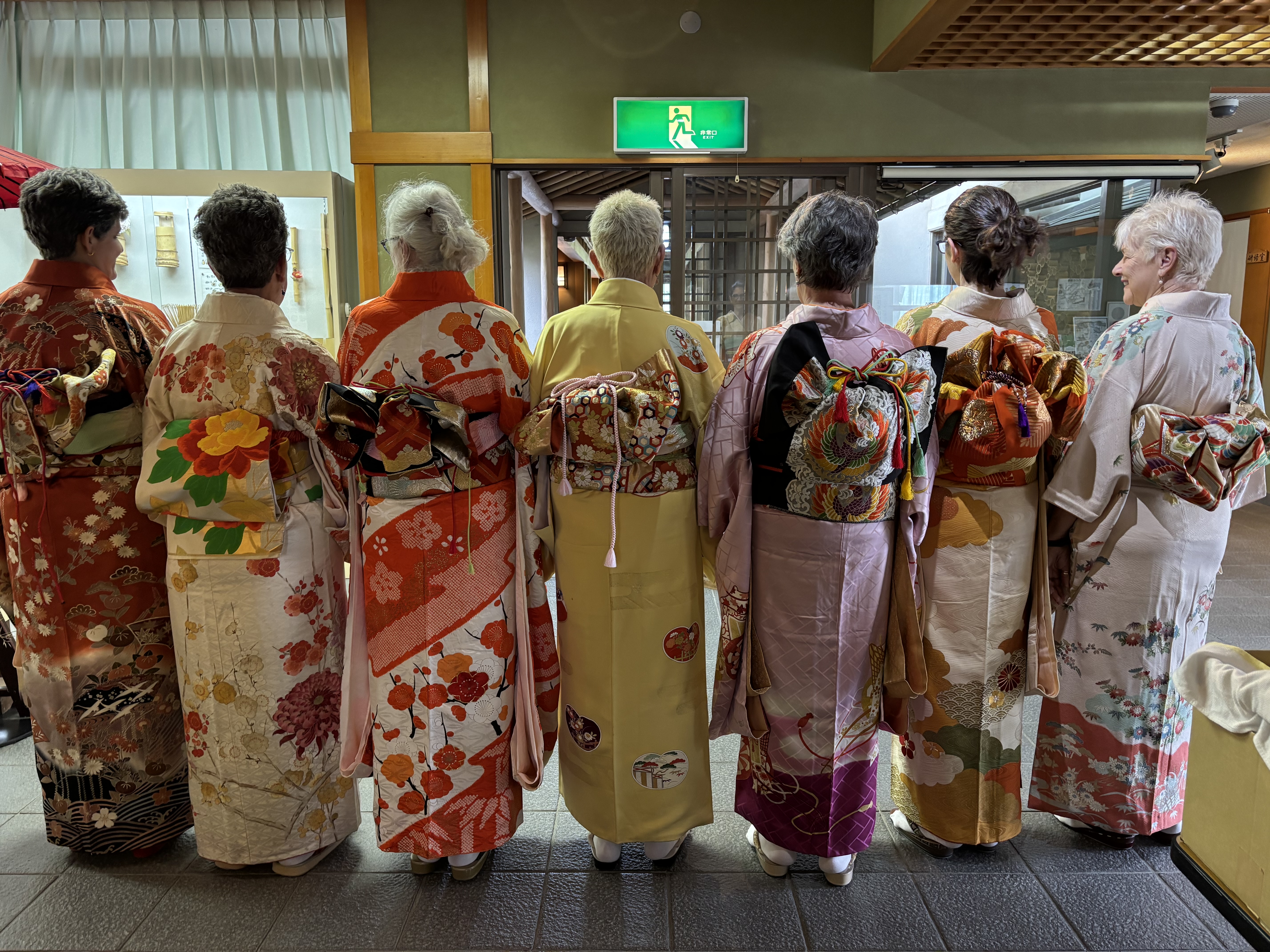 get me strapped in. There were innumerable belts and ties to hold the kimono (and your ribcage) tightly in place, and many many different layers of fabrics. We felt a bit like the women in the old movies who had to hold on to the bedpost while their maids laced them into corsets. My kimono fit me reasonably well, but I couldn’t take a very deep breath and had to take very small steps.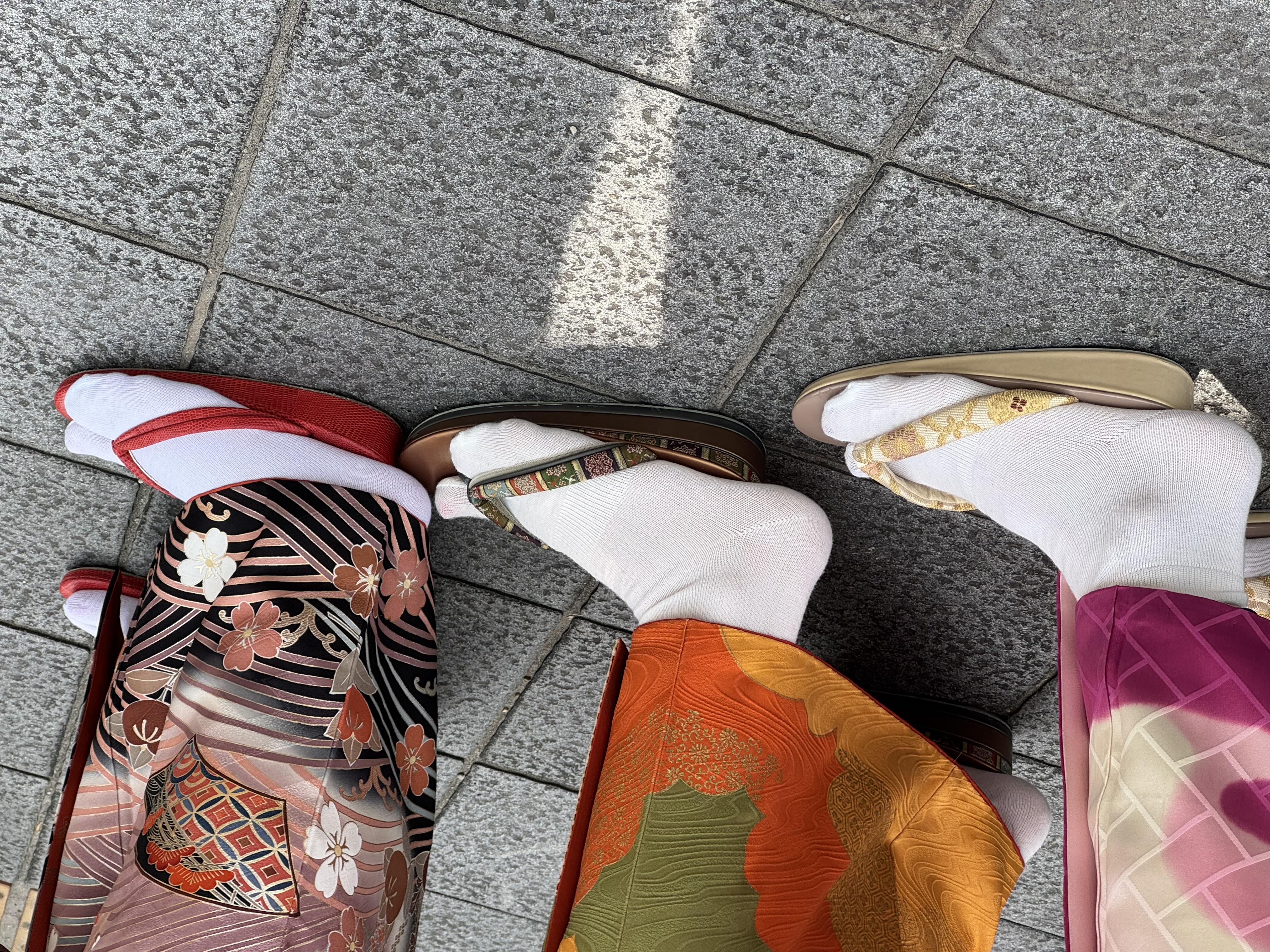
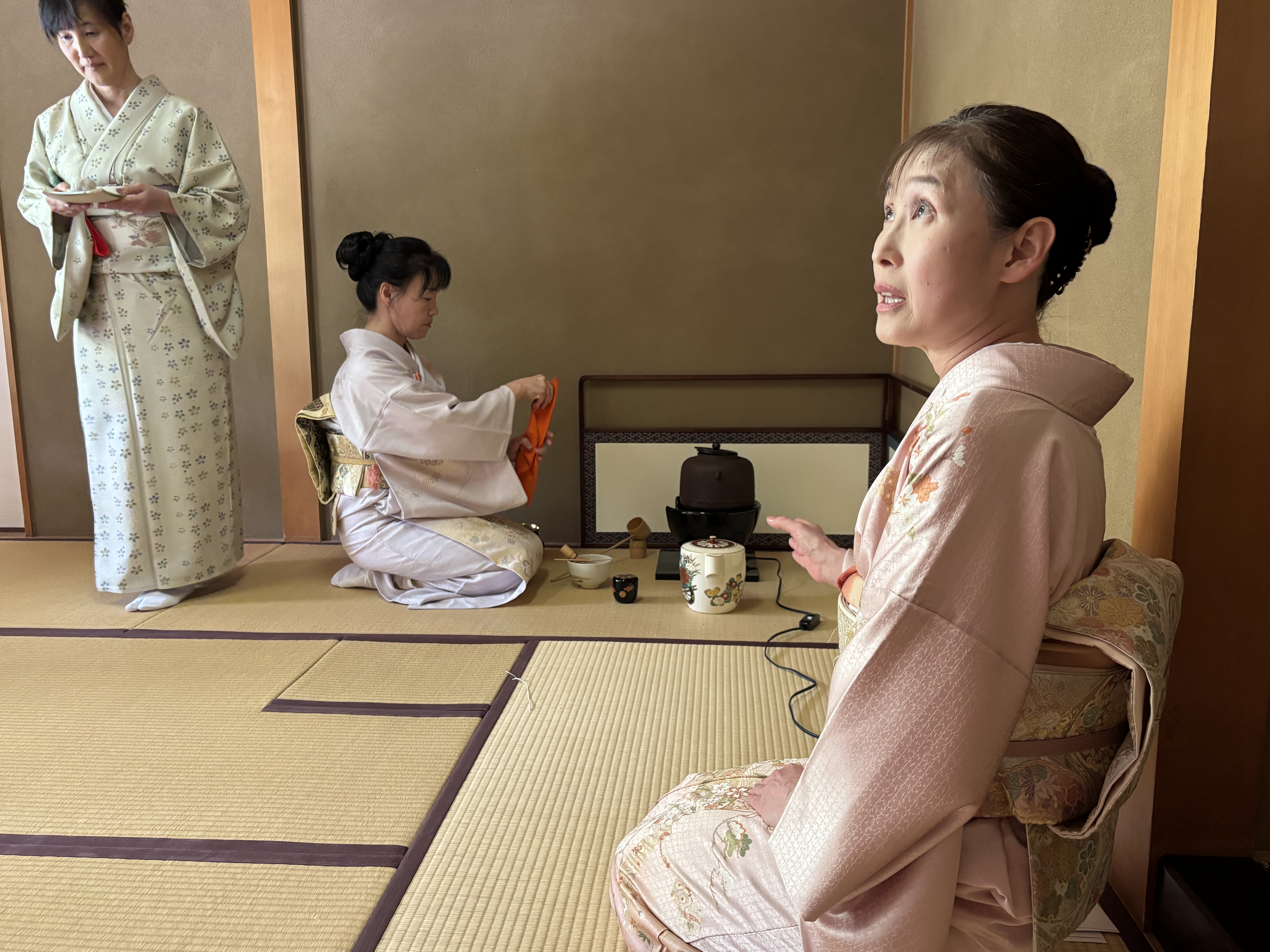 The building featured a beautiful Zen garden with lovely landscaping and the ground covered with stone raked into a spiral pattern. The traditional tea ceremony room looked out onto the garden. One of the members led a traditional tea ceremony, with others helping to serve. We had the customary sweet Ichigo Daifuku, which is mochi (a rice dough) stuffed with sweet bean paste and a whole strawberry inside. This was meant to counteract the bitterness of the bright green matcha tea that was served next. We all really enjoyed the whole experience and were so grateful to the Nara club members who worked so hard to make it
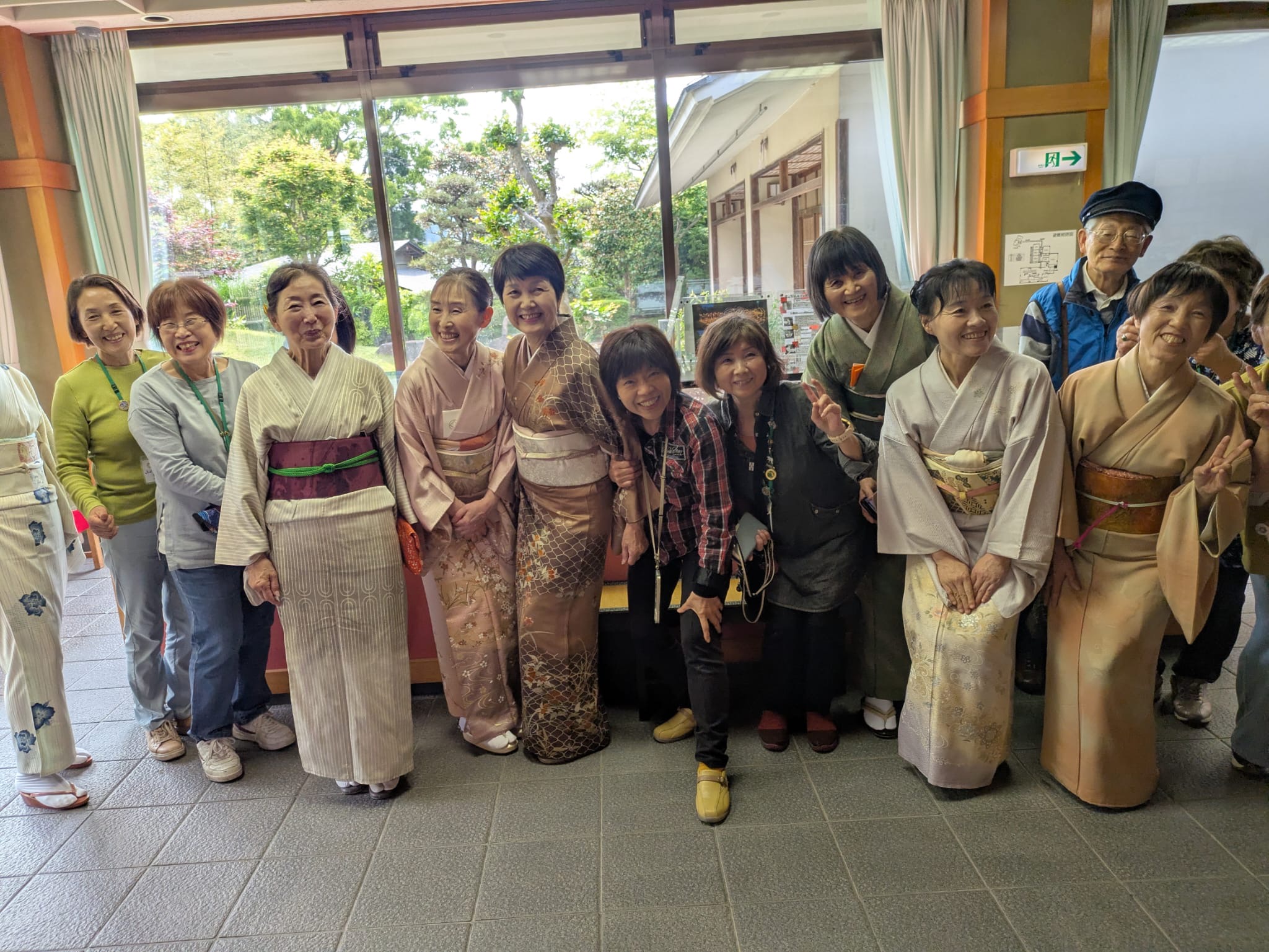 happen. (We were also grateful to get out of our kimono and back into our own comfortable clothing after a few more pictures! It was amazing to watch the Japanese ladies pack up the kimonos so efficiently and yet with such precision — it was almost like they were doing origami.)
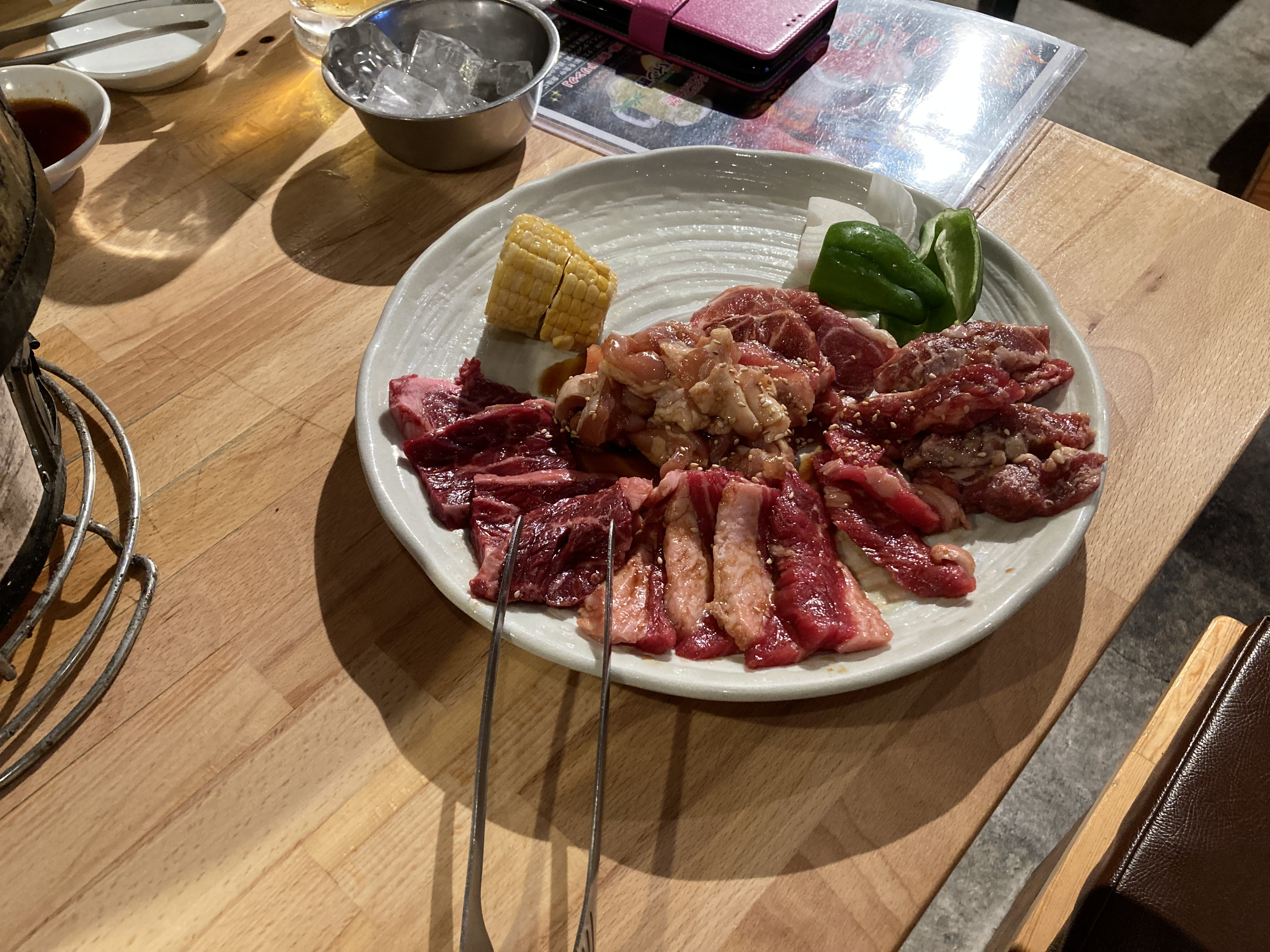 restaurant, there is a small charcoal grill at your table when you arrive (with coals in just the right state; you have to reserve ahead). You order various kinds of meat, fish, and vegetables, and grill them yourself right at your table. Non and Toko ordered us a nice variety of things to try and everything was delicious. We’ve also been sampling sake at each of our dinners — this time we had sweet sake, served warm, at the end of the meai. As a special treat, on the way home we stopped for tea and to check out the house that Toko rents out on airbnb — highly recommend if you are coming to Nara!
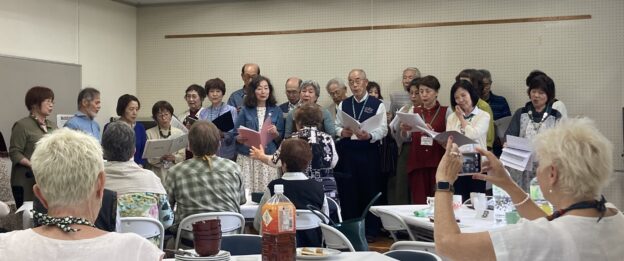
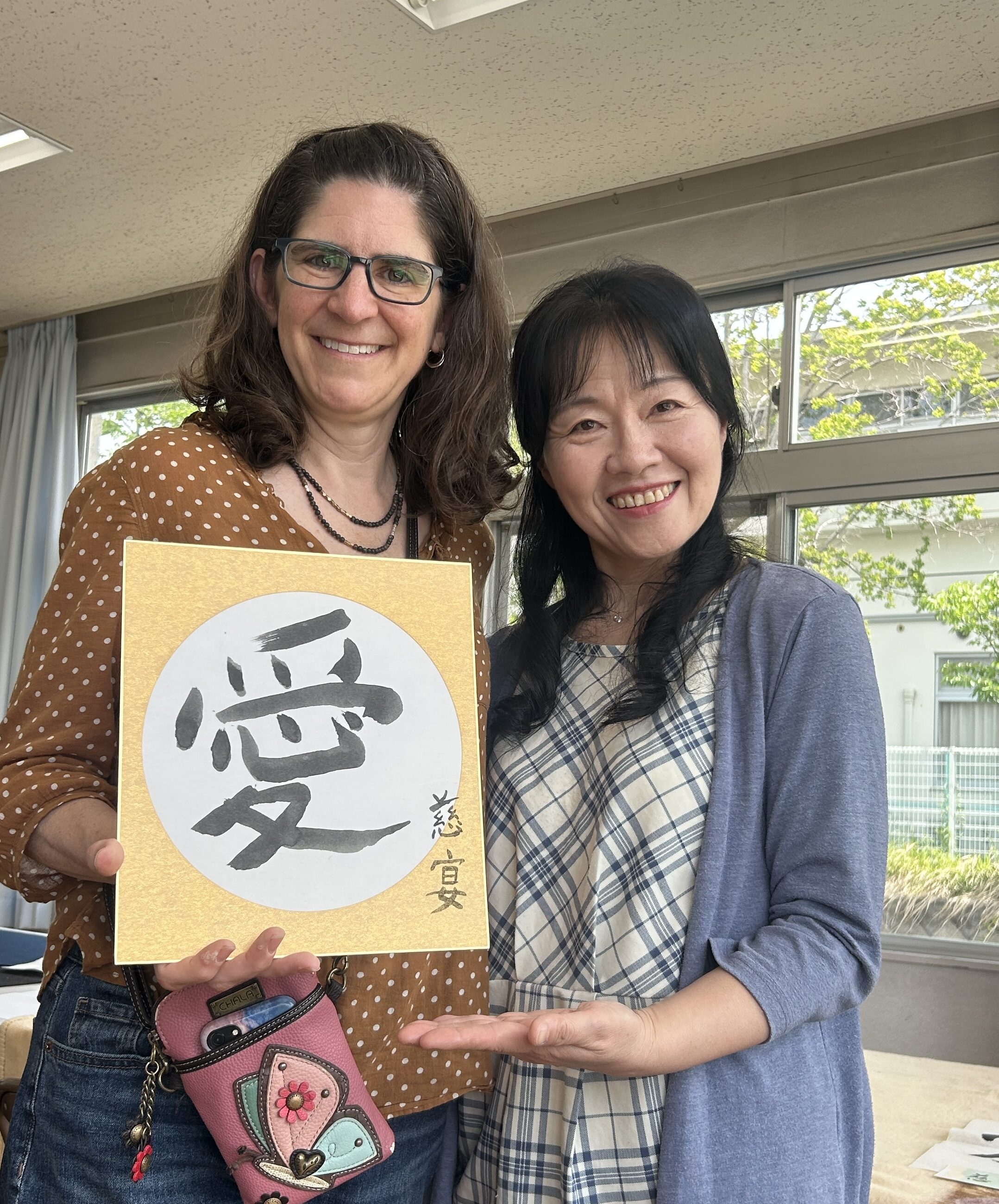 My day began bright and early with a delicious and substantial breakfast, excellently prepared and meticulously presented. It was a lot more food than I usually eat in the morning, but my inner clock is 13 hours off, so I was actually somewhat hungry. Soon, Kazumi and Margaret picked us up for the day’s activities.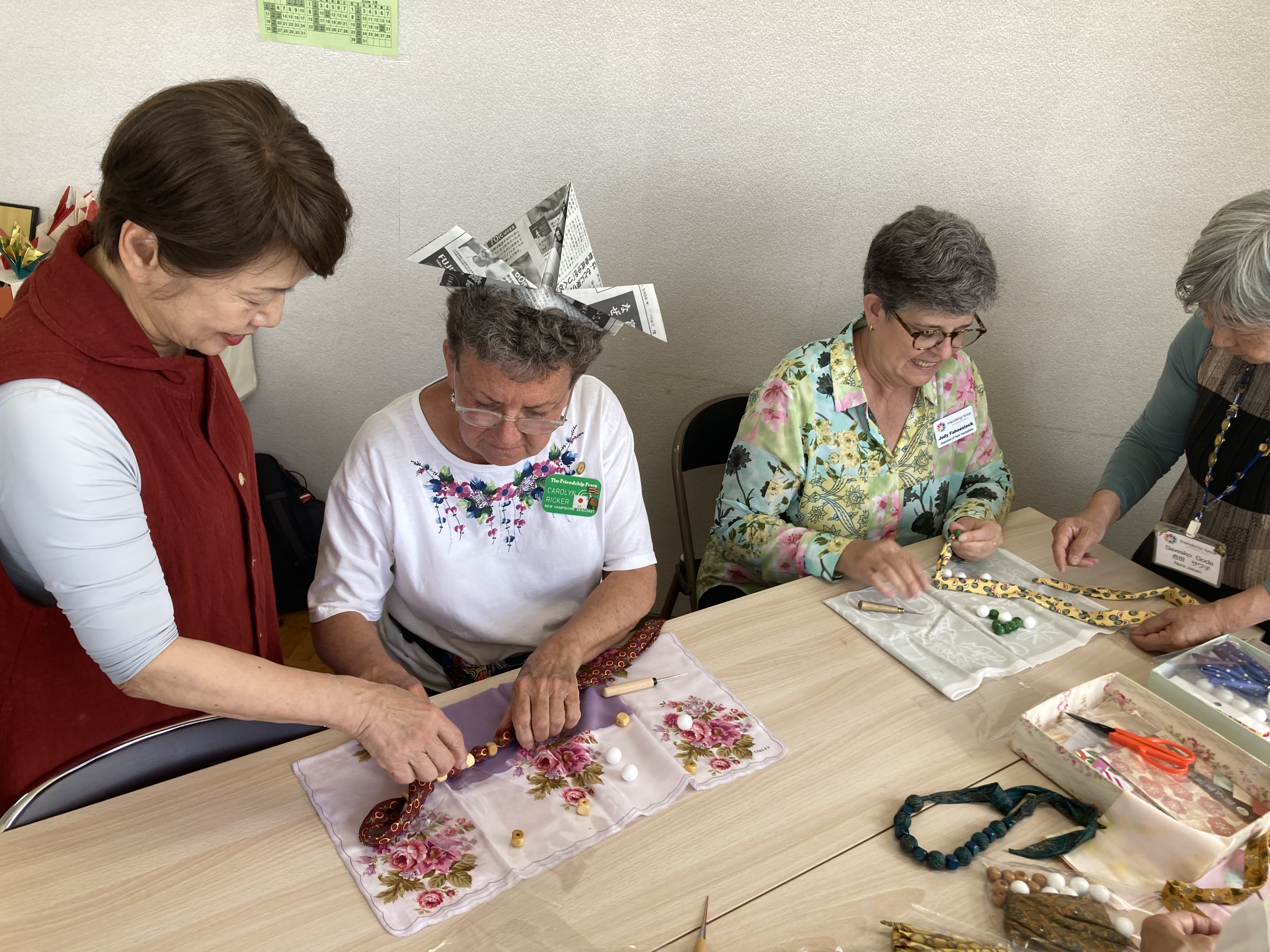
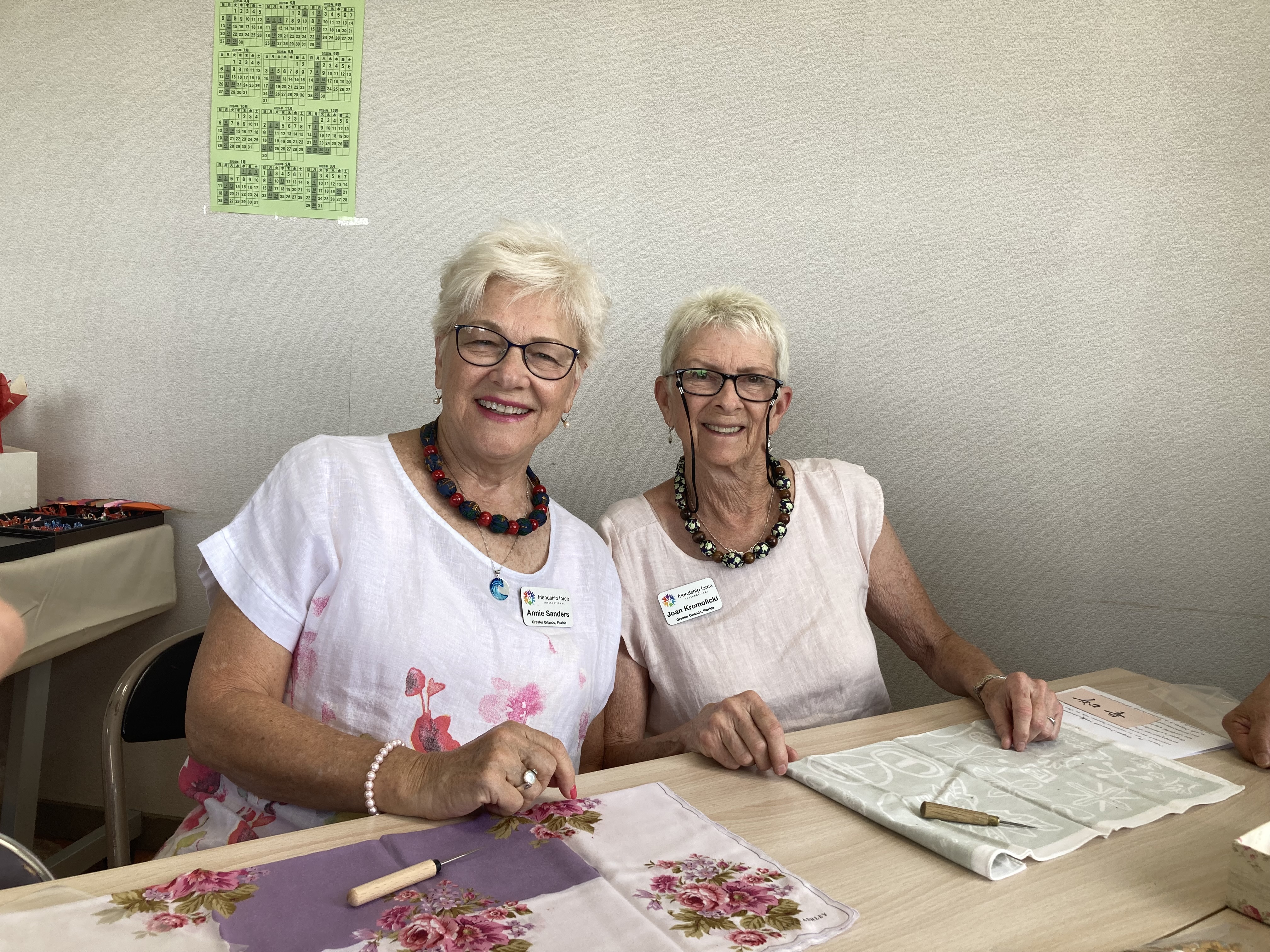
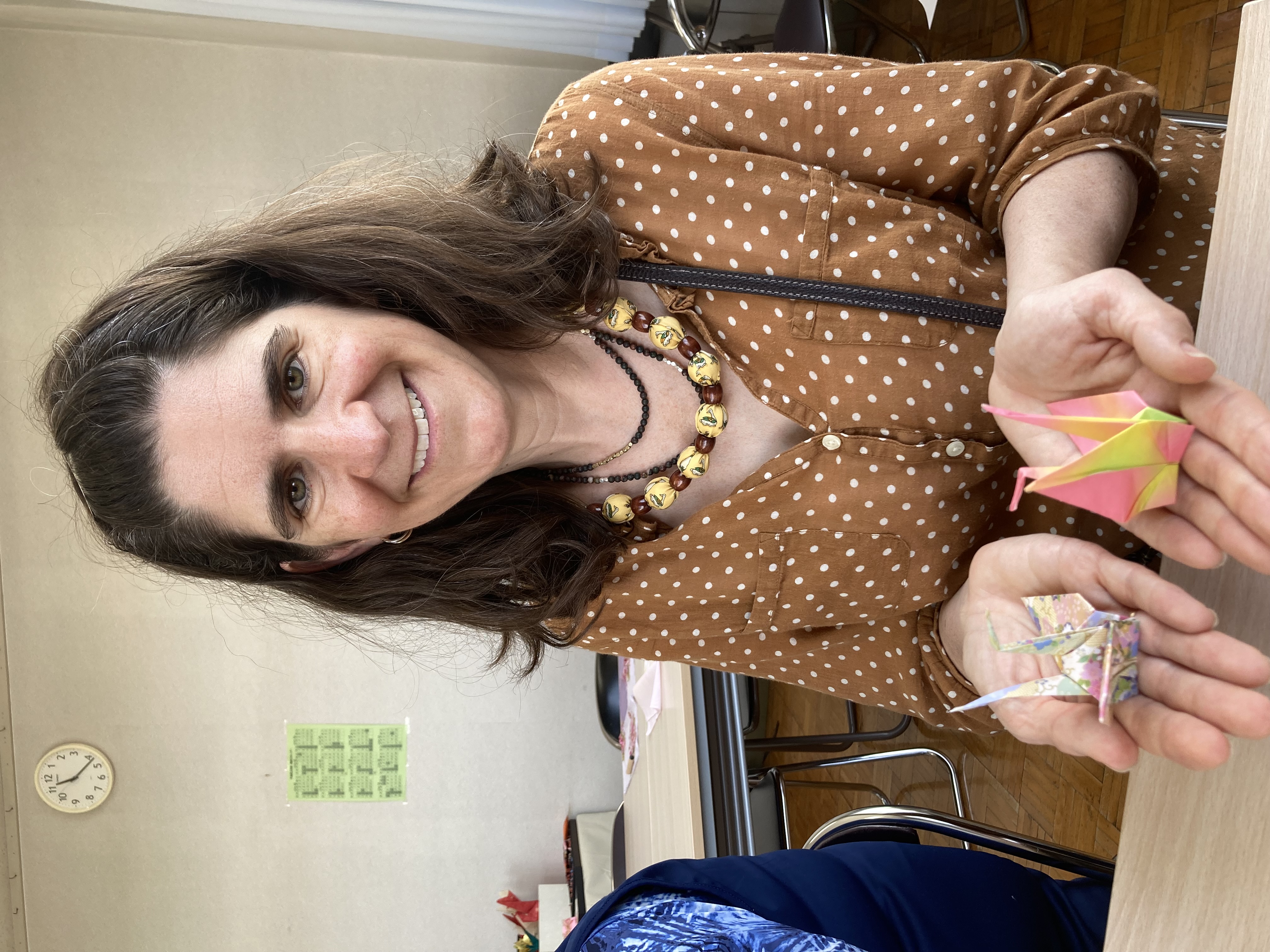
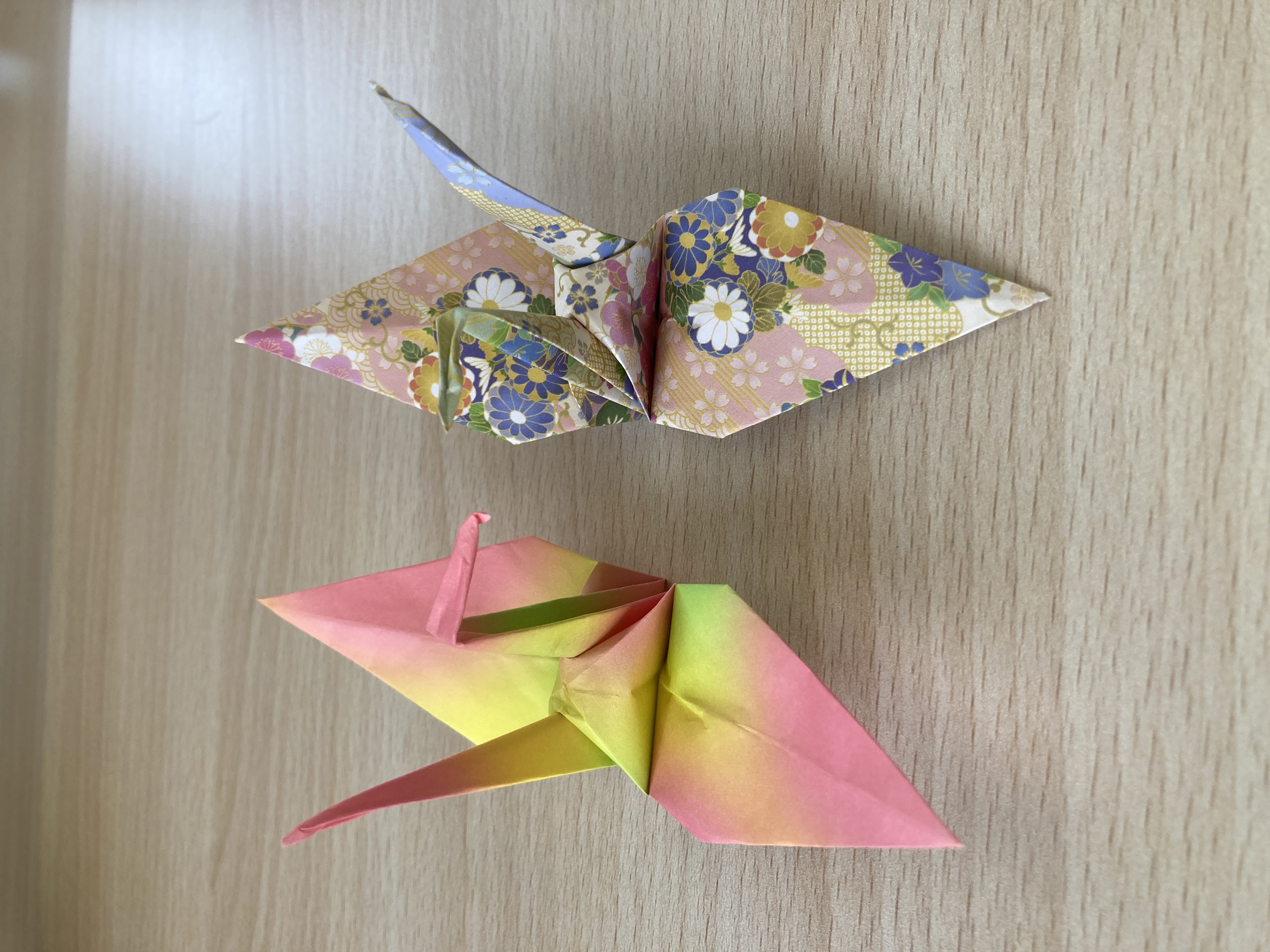 Finally, I moved to the origami table. Luckily my friend joined me again, and walked me through the process of making a crane. Next up we tried out a peacock, although even she needed a little help with that one. Some others made deer in honor of Nara’s famous deer park (which we’ll visit later in the week). We’ve noticed that origami is incorporated into a lot of things here, like a wrapper that comes around chopsticks.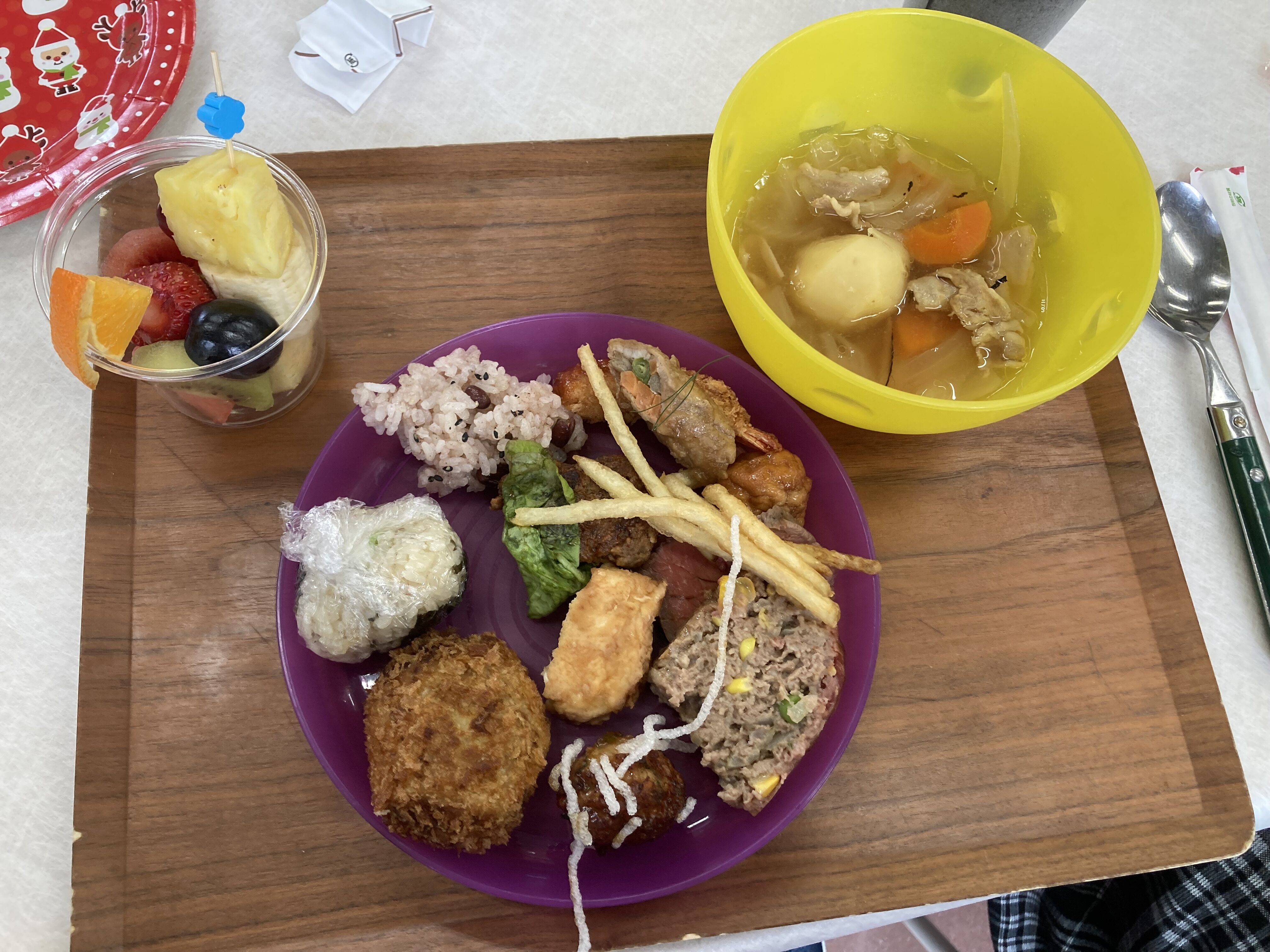
 woman who played the piano beautifully. (We later found out that she’s performed in Carnegie Hall!) They sang some Japanese songs, as well as some sing-a-longs like Edelweiss and It’s a Small World. They brought down the house with a sing-and-dance-along tune called “Oh, Champs-Elysee”, which I remember learning in high school French class.
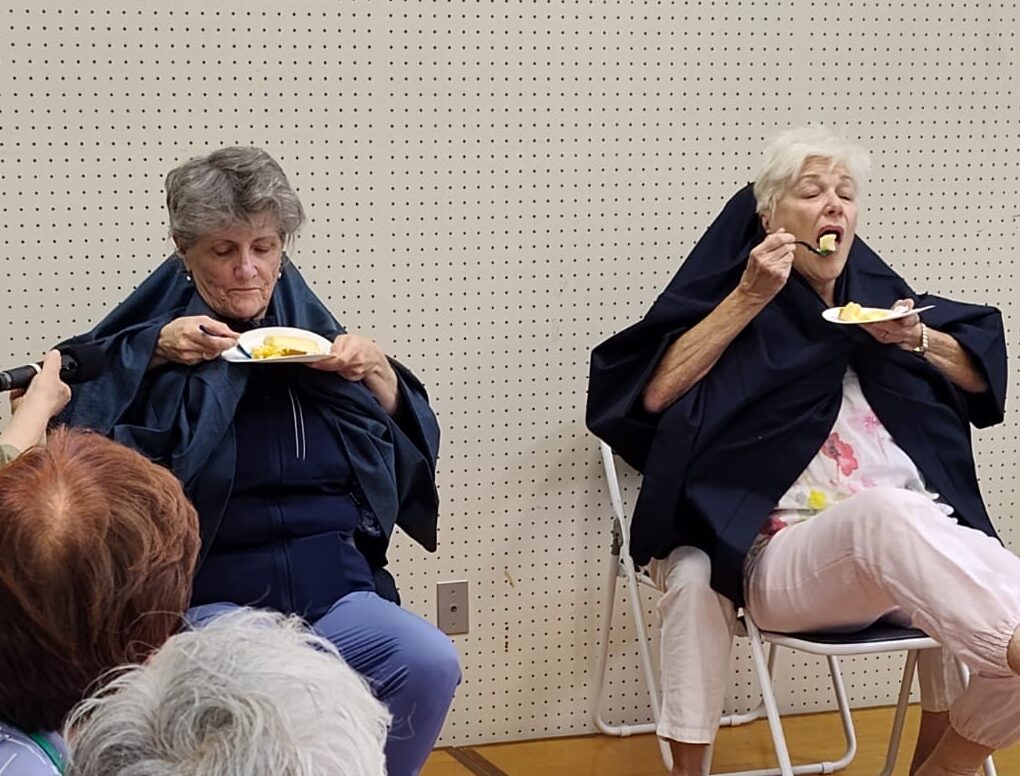 Next up they had a game planned that definitely destroyed the stereotype that Japanese people are always very formal. Four men got up — two sat in chairs and the other two got under large kimono coats with their hands sticking out. They had to sit behind the other and be their “arms” — trying to feed them a piece of cake while not being able to see. Then it was our turn. First the couples went up (with the women immediately volunteering to be under the kimono rather than eating the cake), but then we’d run out of men. Margaret and I, and Joan and Annie from Florida, were brought up next. Margaret kindly agreed to eat the cake, even though both of us were very full by this point. It was difficult work under the kimono but we managed to get the job done with minimal mess. The activity was such a good ice-breaker and had everyone
 laughing together immediately (though none of the Japanese women volunteered!)
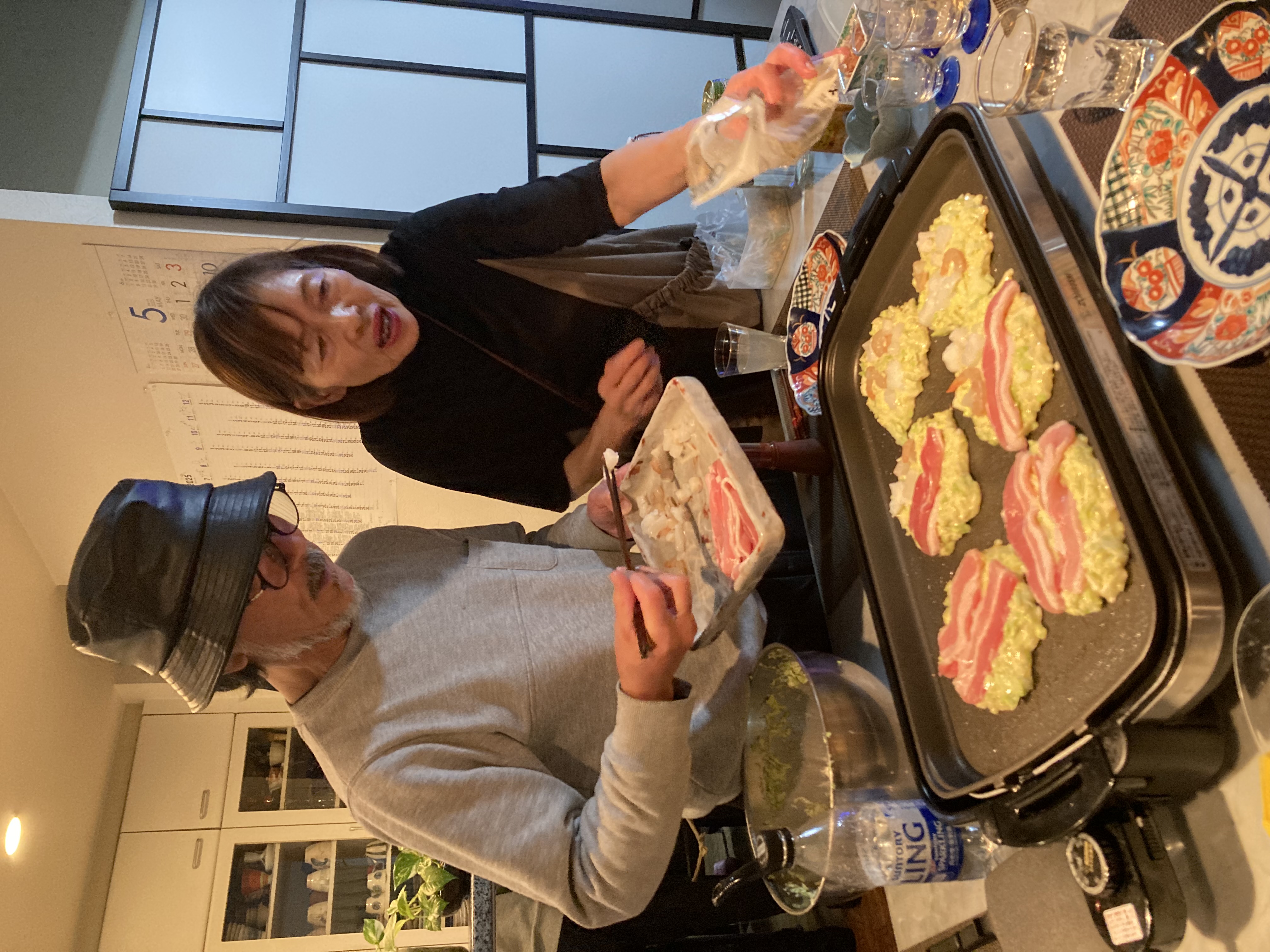 husband topped the pancakes with pork, shrimp, and scallops. When ready they were flipped and cooked on the other side. To eat, we topped them with mayonnaise, a special okonomiyaki sauce, bonito flakes, and nori flakes. Then there was a second round of pancakes with leeks and potato. (They made one with fermented soybeans also. They gave me a bit to try but told me I probably wouldn’t like it and that I didn’t have to eat it. I guess it is an acquired taste.) Everything was delicious, but I felt like I’d have to roll home (especially after we then had dessert).
 We’d gotten onto the platform by scanning our credit cards at the turnstile, as instructed by Kei and Kazumi– then grabbed a group of seats together. After we got onto the train, there was a series of announcements indicating that on this train, you needed both a reservation and a ticket to ride, and if you didn’t have a reservation, you must exit the train immediately. Again, on our own we probably would have panicked at this point, but Kei and Kuzomi seemed unmoved, so we stayed put. No one ever checked our tickets, so I’m not actually sure if we somehow had a reservation, or if we were being scofflaws.
 they’ve become more fluent that I would have though possible. They have so much energy, even those that are in their 80s. I think of them like hummingbirds — beautiful, dainty, and in constant motion. (We Americans are more like Golden Retriever puppies —we mean well and try to please, but tend to bumble around and knock things over )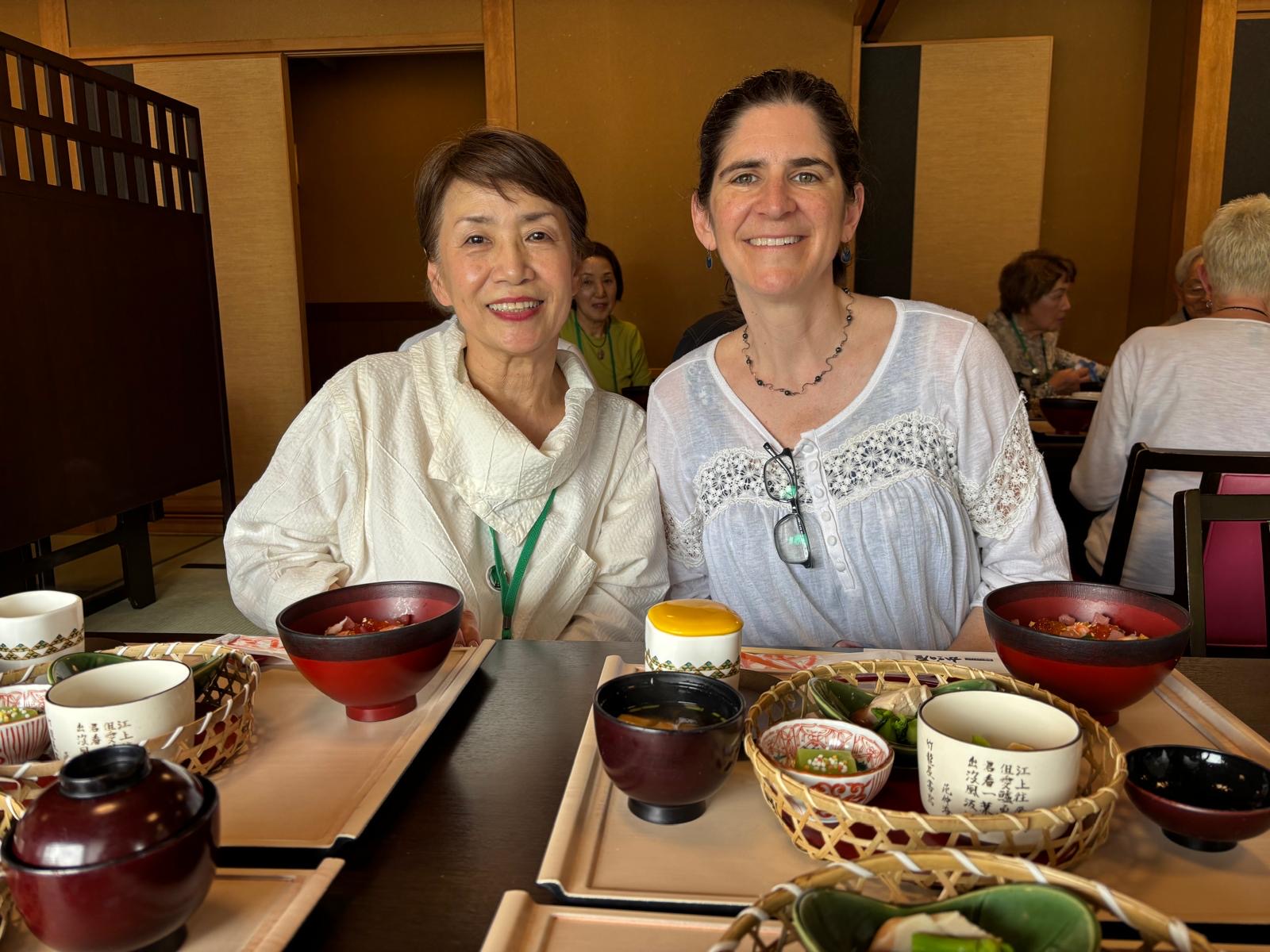
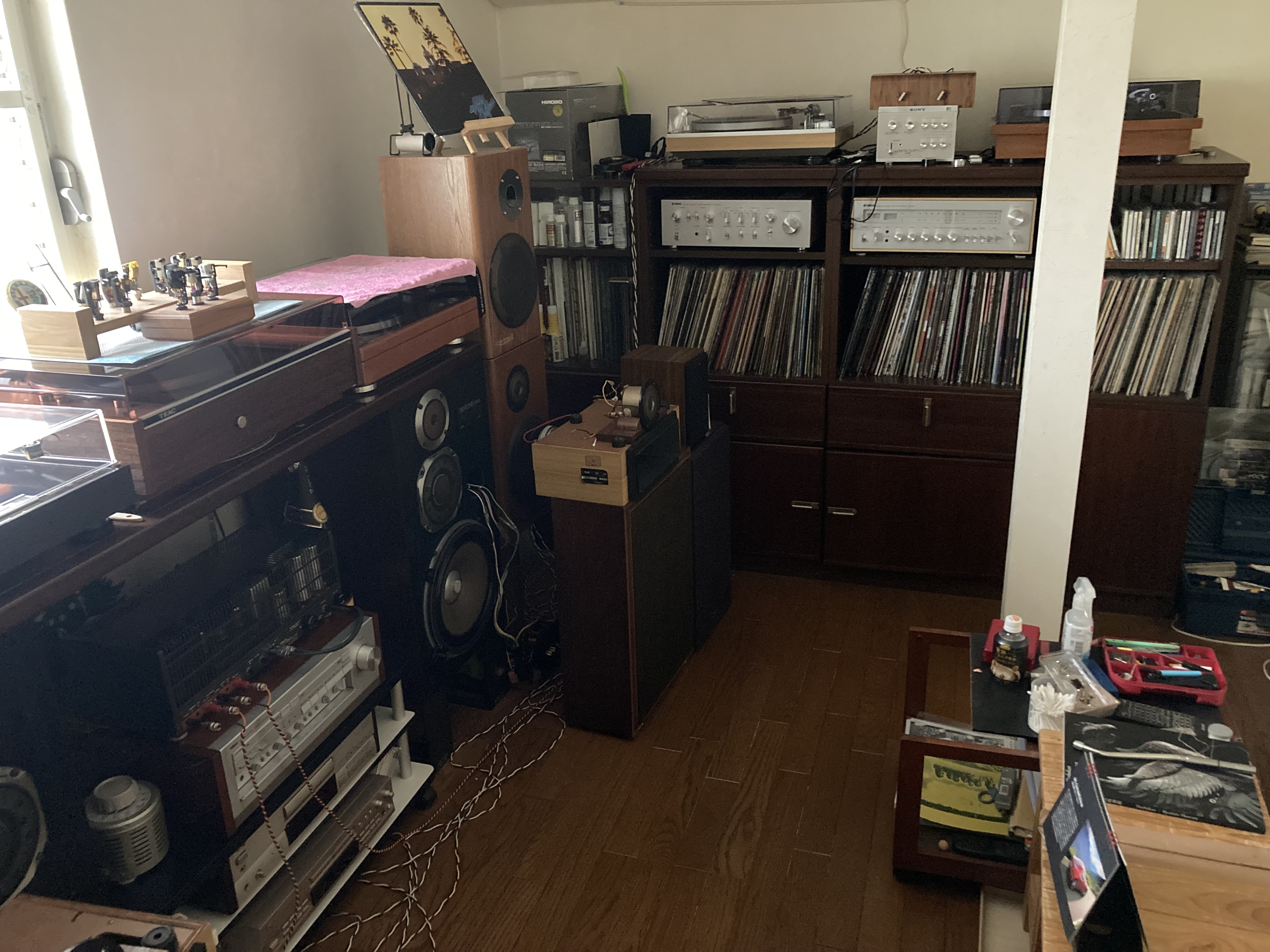 speakers and loves to come up here to listen to music.
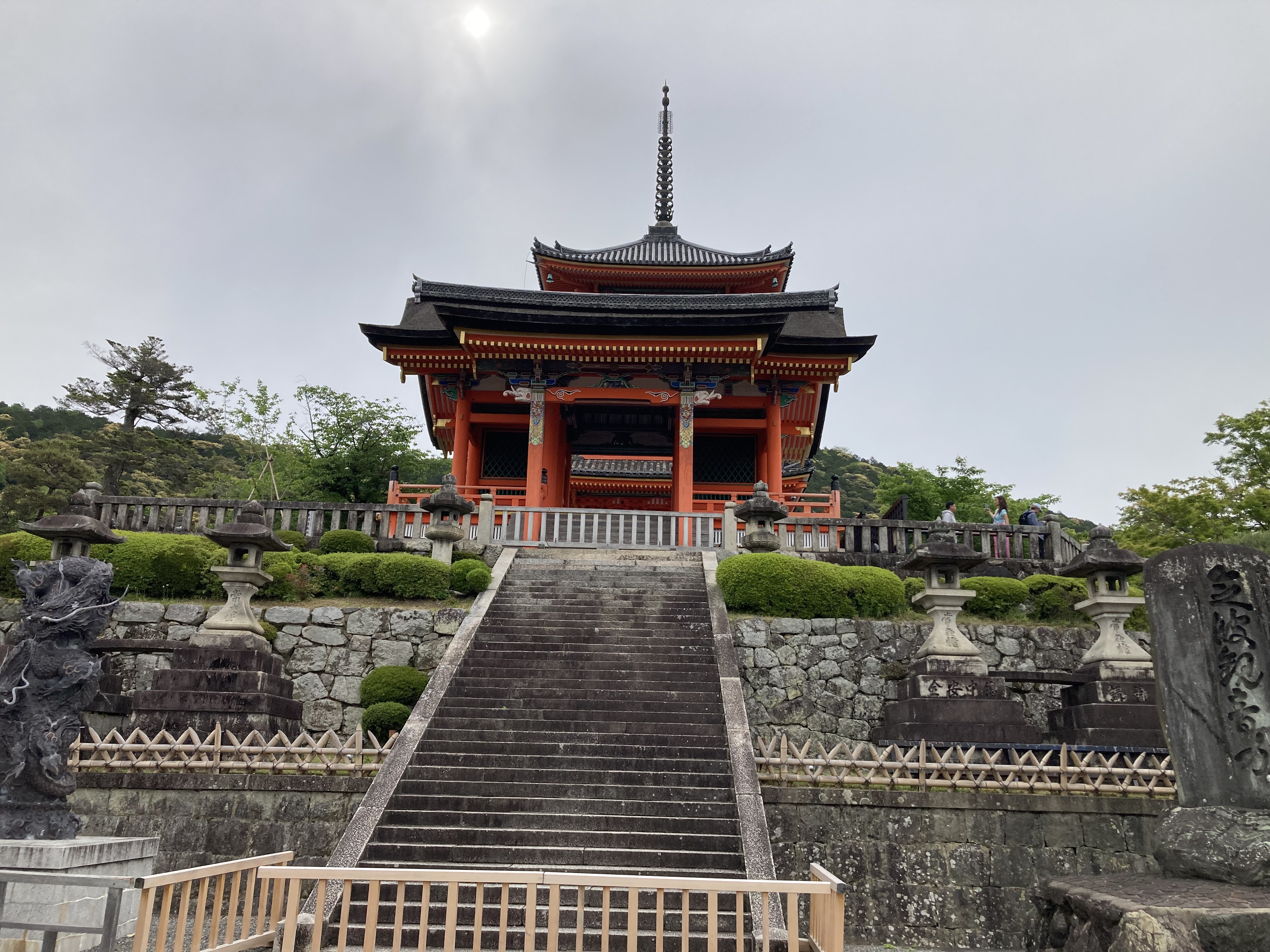 Today we planned a day-long tour to get the most our of our last day in Kyoto. We had to catch the 7:20am shuttle from our hotel to Kyoto Station to meet our tour guide, so Margaret and I had to get out to the 7-11 pretty early. We found the selection to be even better. Today for breakfast I had Japanese-style spicy fried chicken and an egg roll. Margaret had some salmon sushi. Once again, a quality breakfast.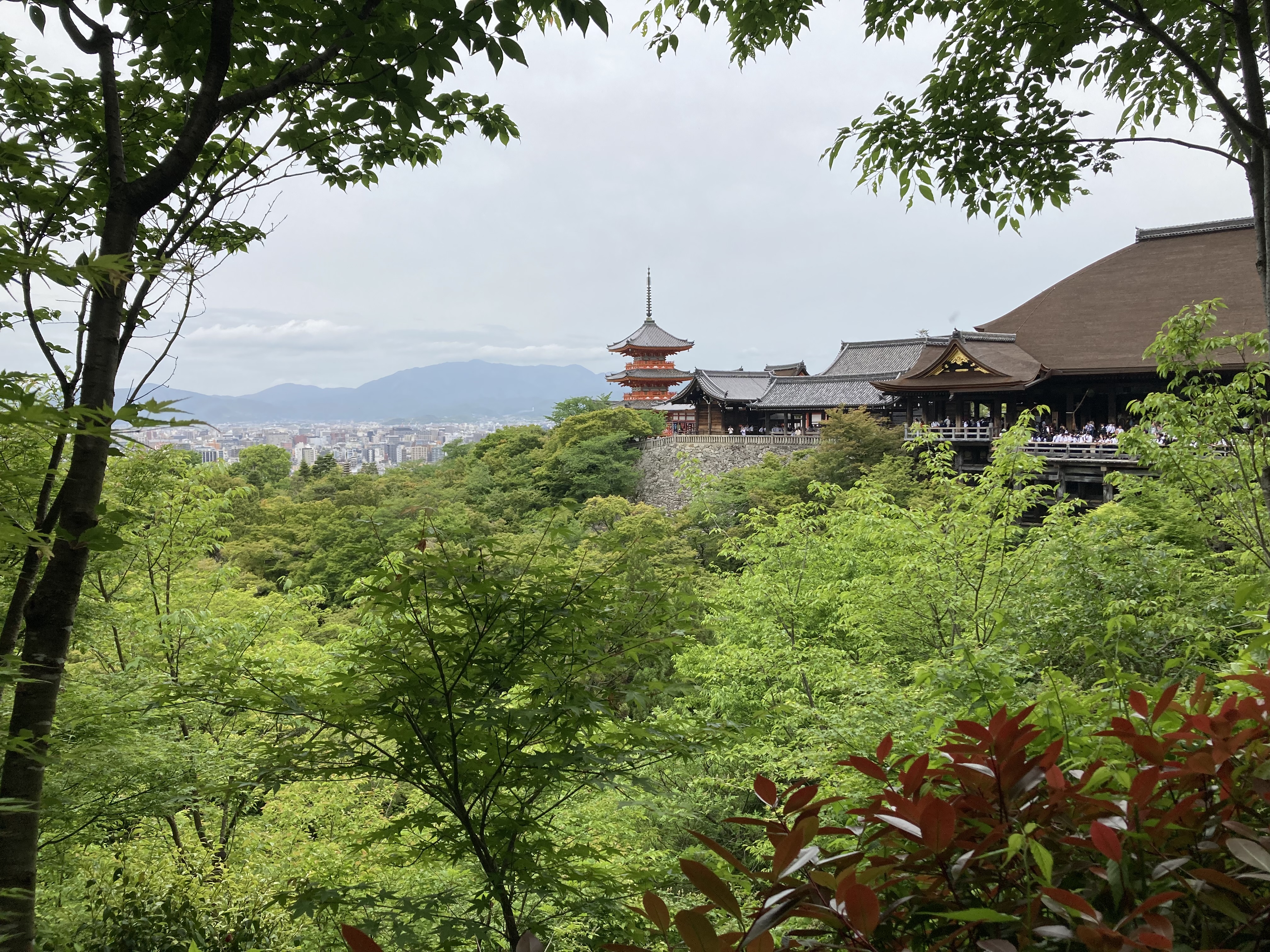
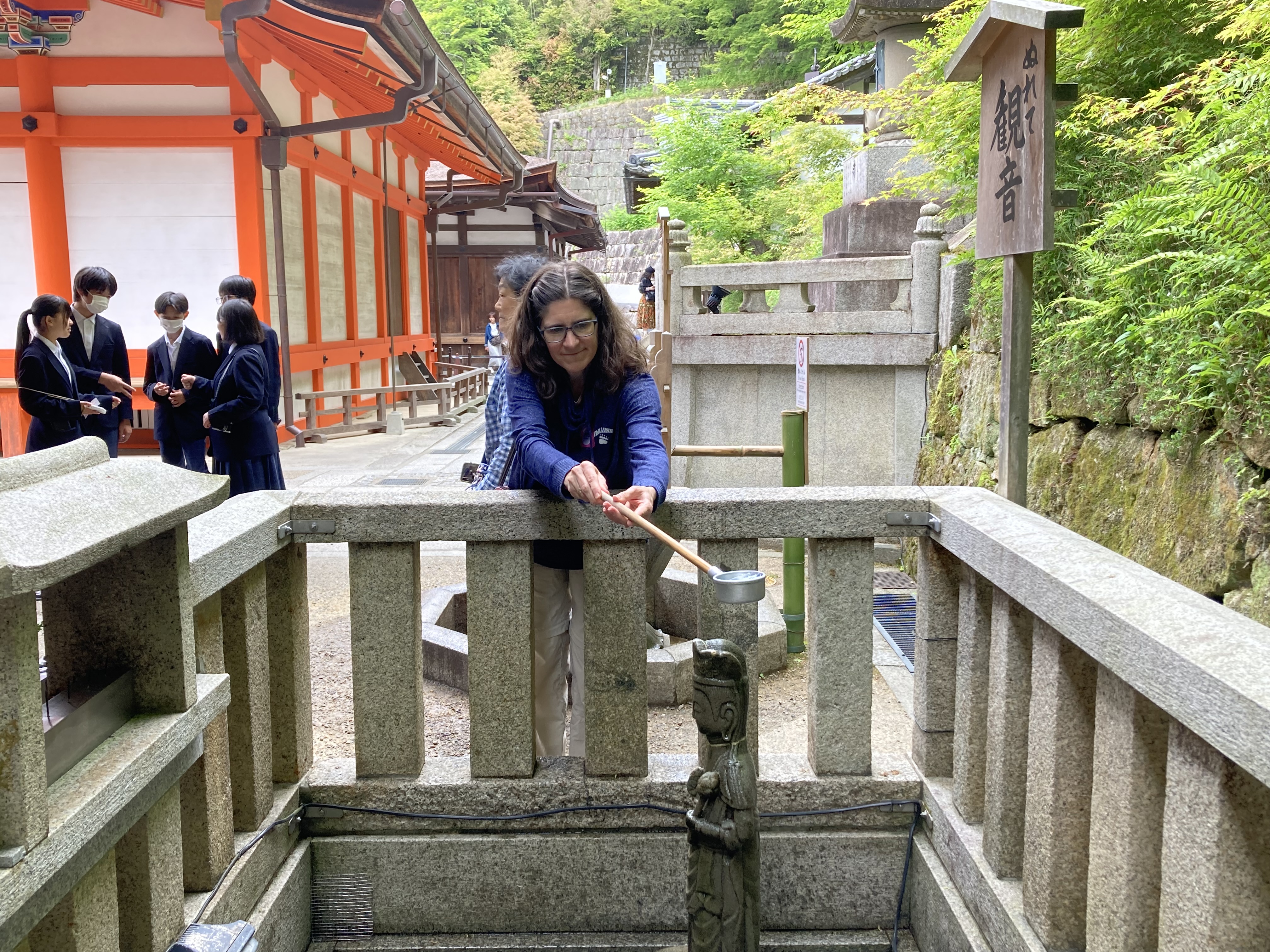
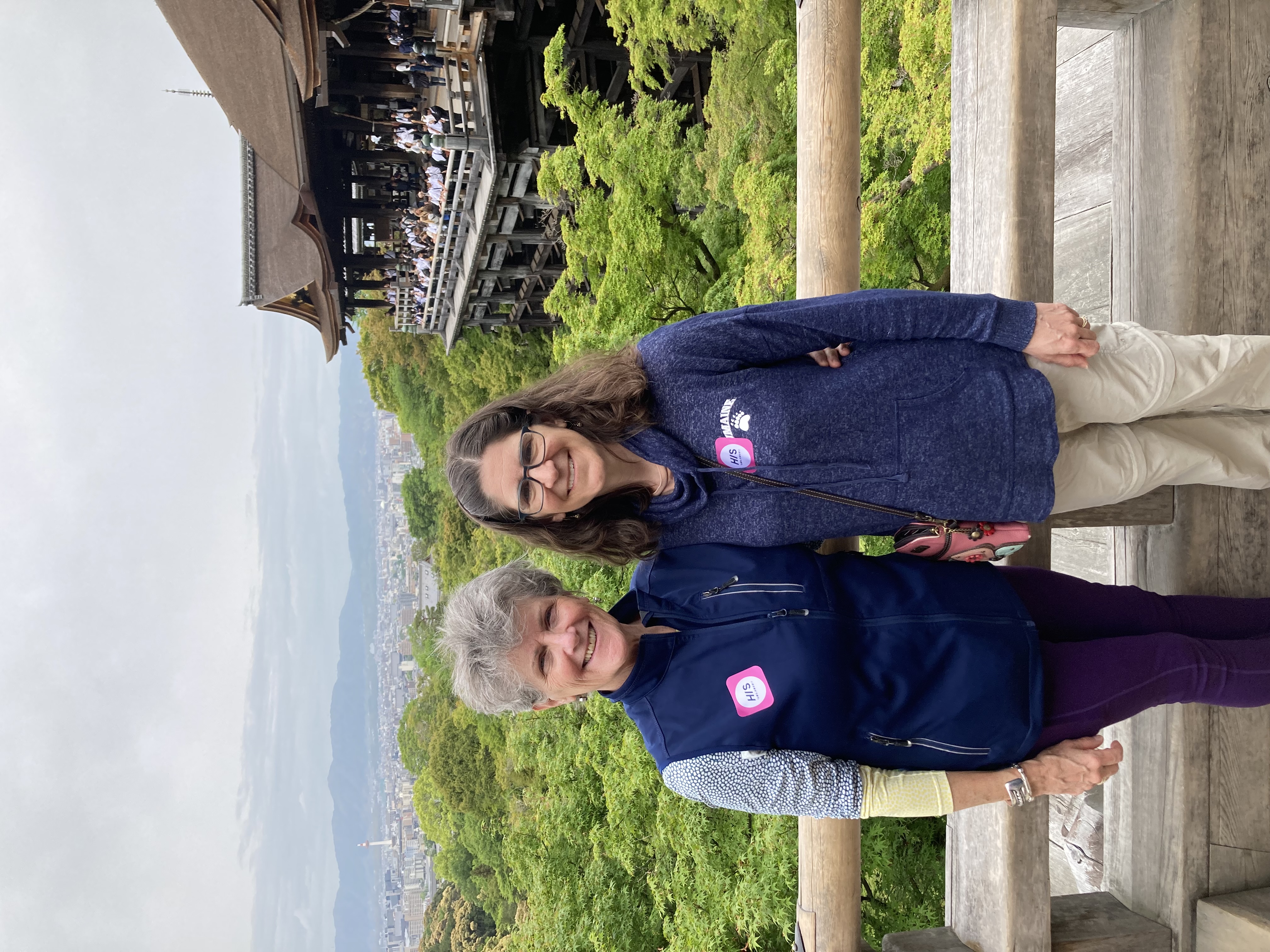 taught us how to throw a coin offering, then perform the correct series of bows and claps while making a wish. (Reflecting on how things are going in the US right now, I think many of us shared a similar wish.) Here we also saw what was to be a constant for the day: huge crowds of tourists. Much like Florence, we were surrounded by people from all over the world come to see the sights of Kyoto.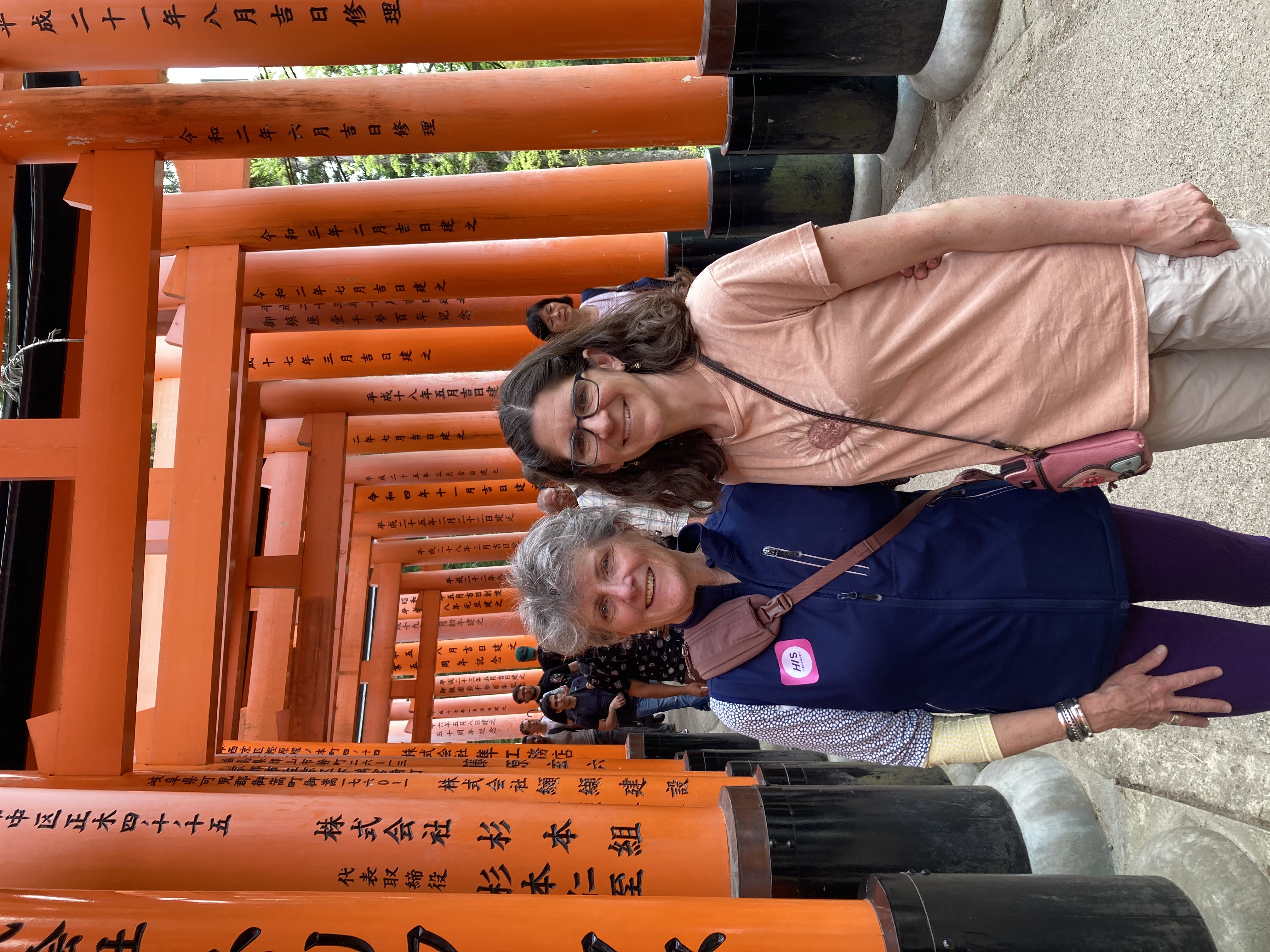
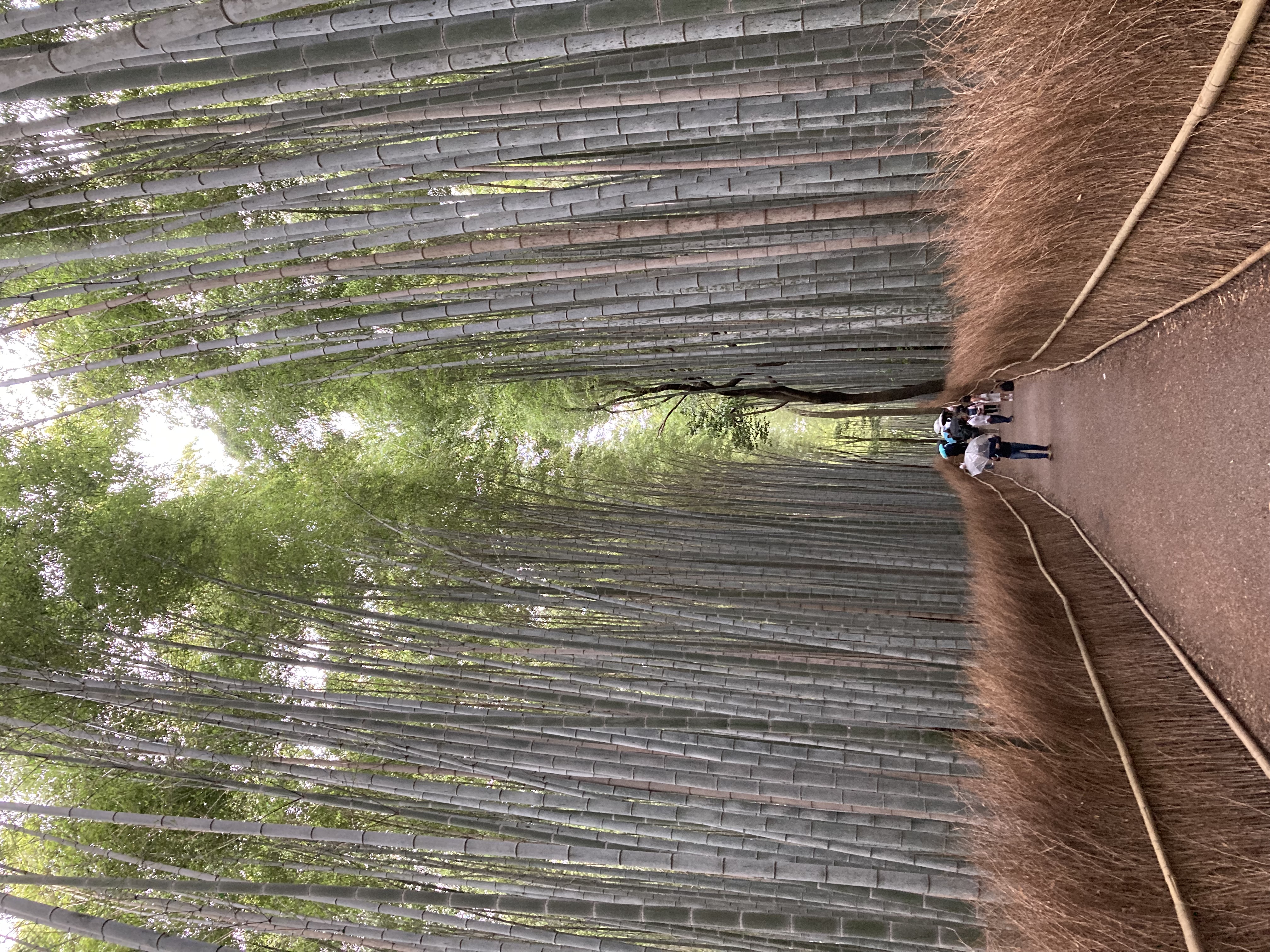
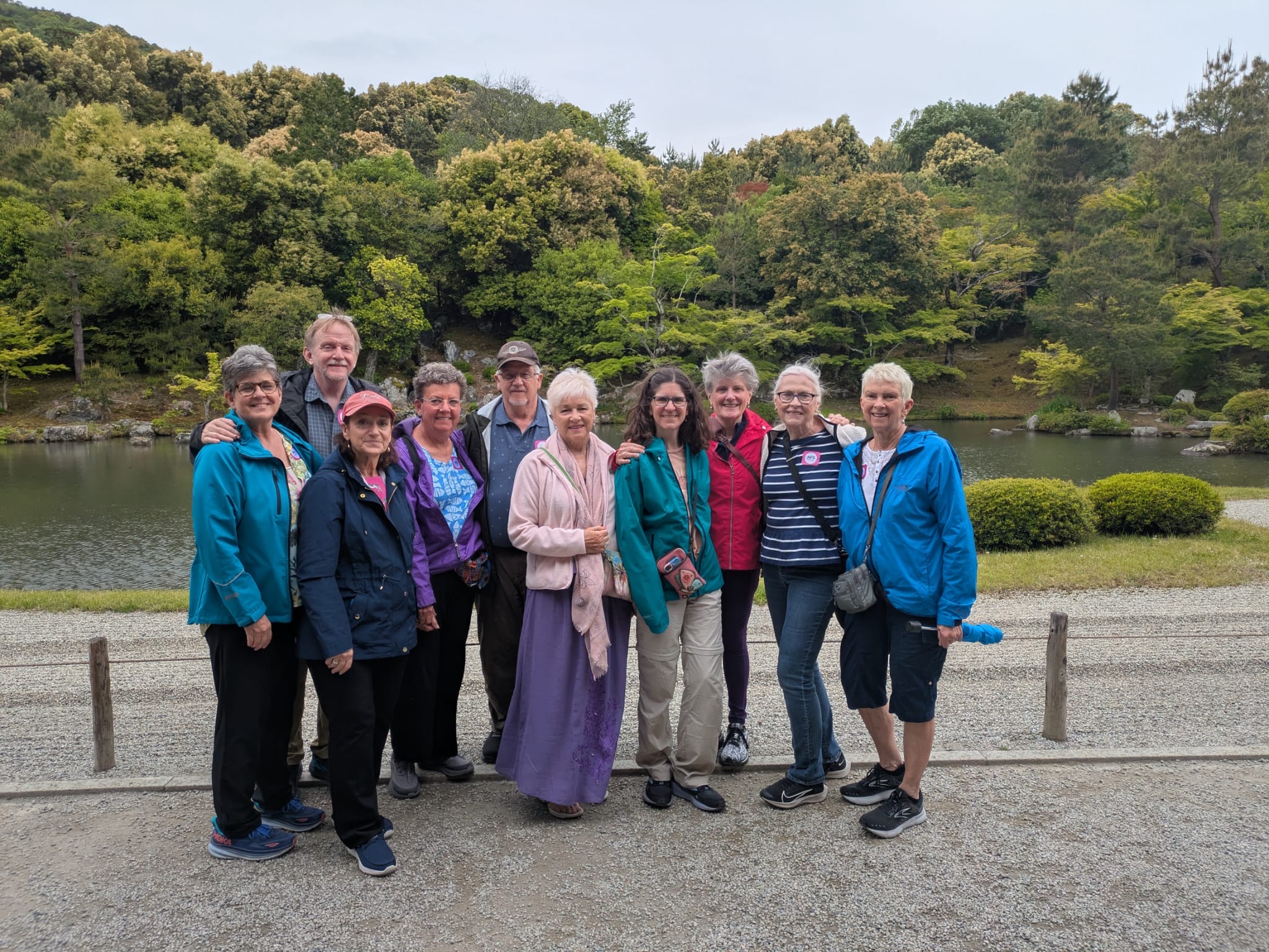
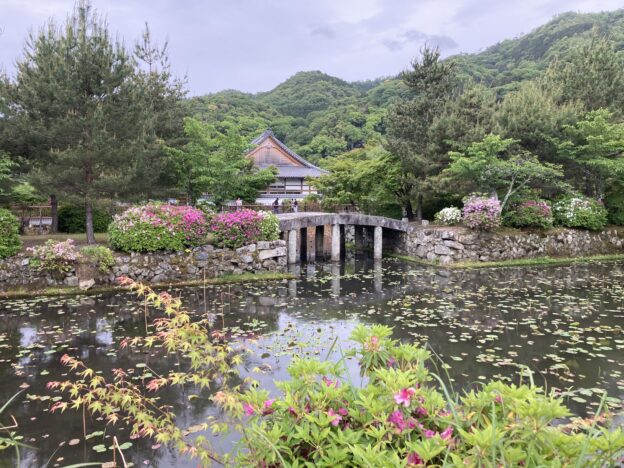
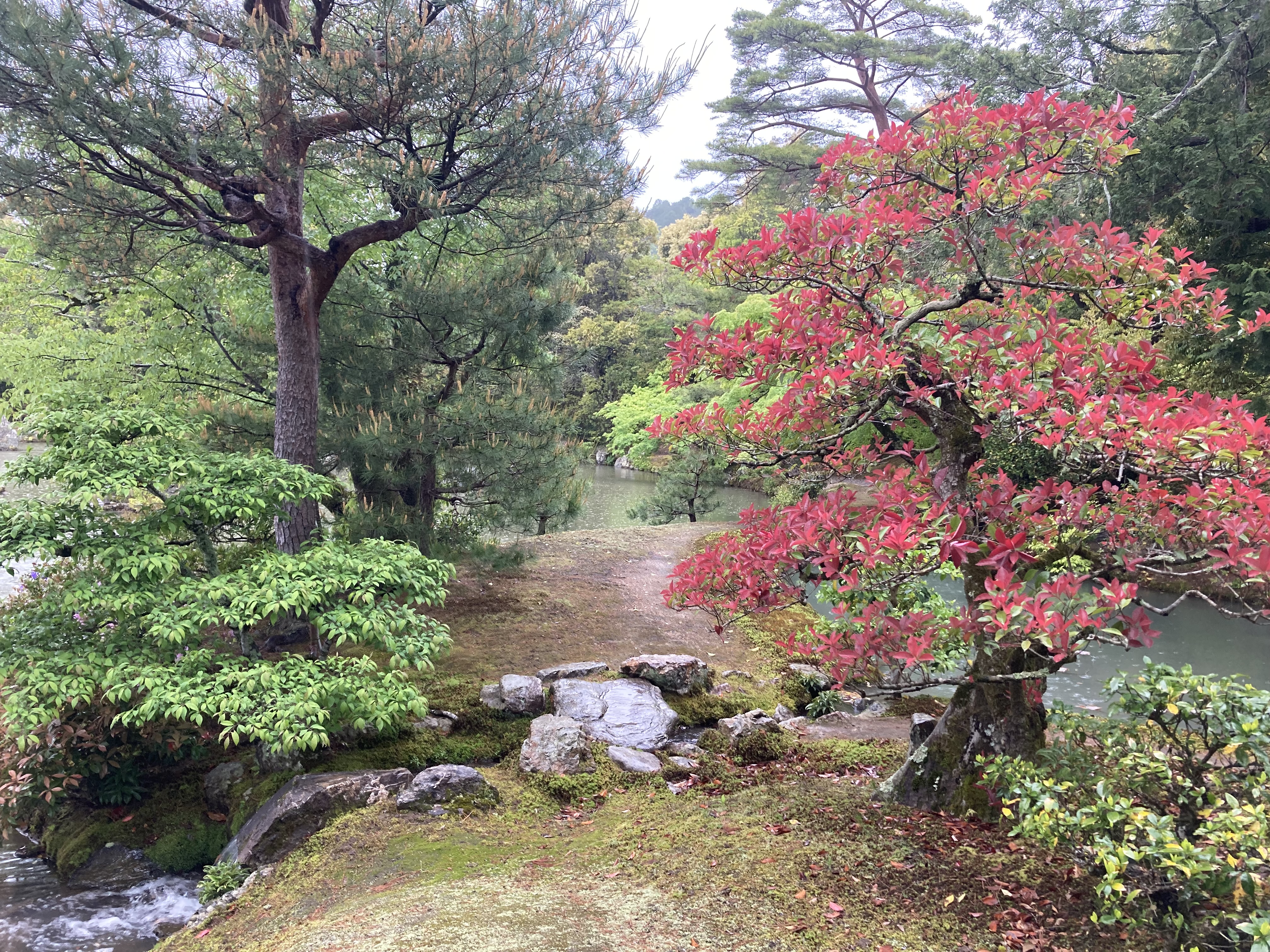 time in order to create the perfect effect. Judy, Margaret, and I spent a fair amount of time wandering the various paths around a pond and across a hillside, even though by then it was raining. The many paths of the garden, and the rain, also allowed us to escape the crowds for a bit!
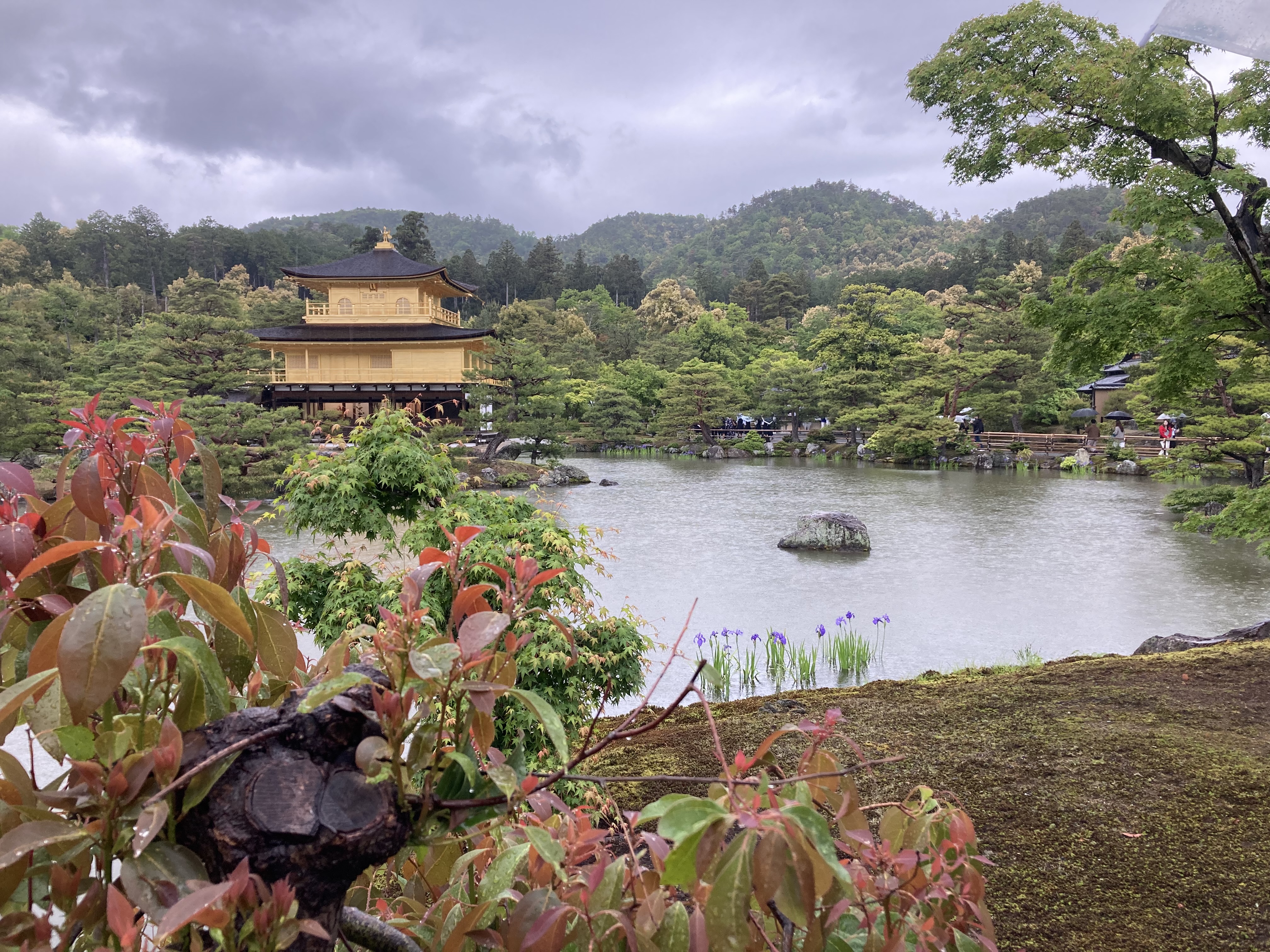
 Our final stop was one more temple — the Kinkakuji Temple, known as the Golden Pavilion. This temple is covered in gold-plating, and shines out dramatically behind a large pond. We weren’t
  able to go inside, but the grounds around the temple again were stunningly beautiful and meticulously cared for.